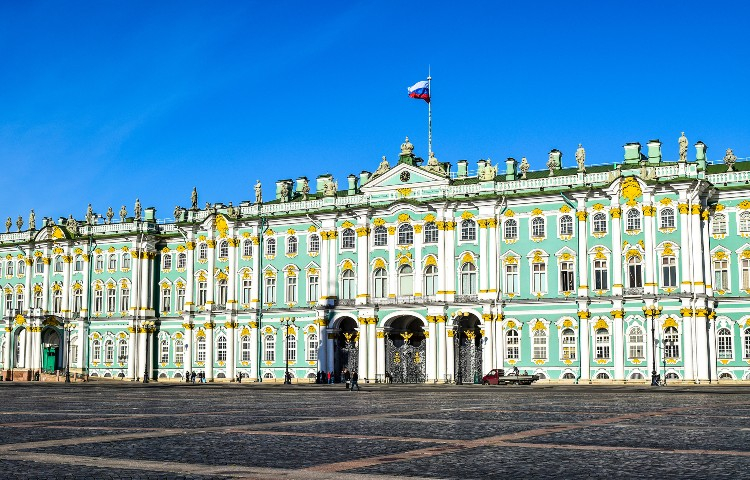
(The Winter Palace, St. Petersburg, Russia)
All novelists who engage in historical fiction must develop their subject matter by conducting the necessary research, creating a cogent and believable story, and presenting it in a well written and engaging manner. This criteria has been easily met in John Boyne’s THE HOUSE OF SPECIAL PURPOSE as the author has chosen a well known topic that has already produced hundreds of historical monographs and works of fiction. What sets Boyne’s effort apart from others is a fascinating storyline and wonderful characters integrated with historical events. Some might refer to the work as Nicholas and Alexandra Volume II and criticize it for stretching the genre of historical fiction. However, the point is that it is fiction, and well done fiction as the author has accomplished in previous novels such as THE BOY IN THE STRIPED PAJAMAS and THE HEART’S INVISIBLE FURIES.
The novel encompasses the period from World War I through 1981 witnessing the Russian Revolution, the reign of Joseph Stalin, World War II, to a time when cracks in the Soviet edifice begin to appear. Boyne organizes the novel around the life of Daniil Vladyavich Jachmenev (Georgy) who we first meet in his eighties as he looks back on a lifetime where he experienced the usual range of aches, pains, and failures, highlighted by his devotion to his wife, Zoya who is dying of cancer but had a rich marriage undaunted by the many hardships and tragedies they endured. The book is organized as a double narrative as Boyne begins in 1981 as Georgy visits the British Museum library where he worked for decades and provided him with a sense of security and a life of books that began when Tsar Nicholas II allowed him access to the Romanov library. From that point we turn to 1915 and the deteriorating situation in Russia and alternating historical periods that will come together in an interesting, somewhat implausible conclusion.

(Tsar Nicholas II and Tsarina Alexandra)
Georgy’s amazing life carries him from a small village in Kashin, Russia to St. Petersburg and the Winter Palace as he is appointed the guardian of the Tsarevitch, Alexei after achieving heroic status by inadvertently stopping a bullet meant for the Tsar’s uncle and commander of Russian forces during WWI. He will develop a relationship with one of the royal daughters as he is ensconced in the royal palaces with the Romanov family. Boyne maintains his pace as he shifts the locus of the story to London during the German air blitz where he works at the British Museum library and lives with his wife, Zoya, and daughter Arina.
Boyne possesses an excellent command of world history as he weaves major events and characters throughout the novel. The author presents insightful historical and personal observations especially dealing with the hypocrisy of Romanov rule during WWI as the Russian upper class maintains their lifestyle as the situation on the war front rapidly deteriorates. Boyne does an exceptional job creating dialogue which he invents but seems real, i.e.; conversations between Nicholas II and Georgy, and conversations between Rasputin and Georgy.

(Rasputin)
Georgy and Zoya are forced to escape the Bolsheviks in the early 1920s beginning a lifelong desire to return to St. Petersburg, a wish that seems would never be unfulfilled. These feelings are among the many poignant experiences depicted throughout the novel. Among these include certain characters like Rachel Anderson, a lonely English woman who becomes a surrogate grandmother to Arina, earlier as Georgy develops a relationship with Anastasia, a royal daughter, or how Georgy treats Zoya who suffers from a deep depression for most of their marriage. Boyne is a wonderful storyteller and creator of numerous characters. One who stands out is Mr. Tweed or perhaps his name is Mr. Jones who works for the British War Office during WWII who recruits Georgy as a translator. Throughout the novel Georgy and Zoya consider themselves refugees despite the fact they spent five years in Paris and over twenty in London. They had to cope with suspicious neighbors, co-workers and others on a daily basis because of their accents. This led to an insular life as they tried to remain isolated from the larger society, which was difficult, particularly hiding in the Underground tunnels which served as a shelter from German bombing during WWII.
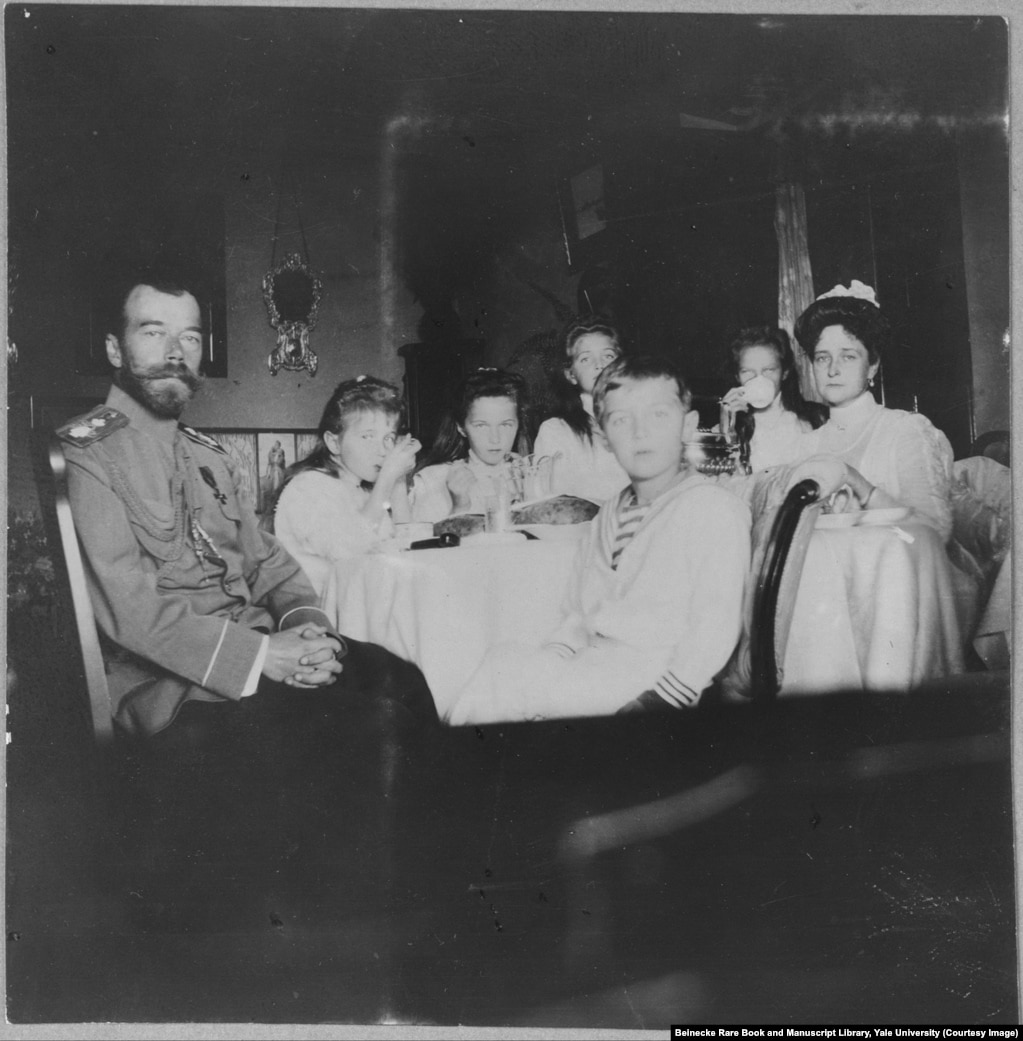
(Nicholas II and his wife, Empress Aleksandra (far right), with their four daughters and son. The tsar was forced to abdicate in 1917 and he and his family were shot and stabbed to death by Bolshevik troops, in 1918, before their bodies were doused in acid and dumped into a mine shaft.)
Boyne expertly conveys the mood of his characters throughout be it the Russian Imperial family during WWI, Georgy and Zoya who constantly fear being identified and captured by the Bolsheviks, and how they react when their daughter is killed in a car accident and the driver responsible tries to apologize.
Many important historical characters play a major role in the novel including the mad monk, Rasputin; the hated German princess, Alexandra, the Tsarina of Russia; Nicholas II, Tsar of Russia; and even Winston Churchill and Vladimir Lenin will make appearances. Georgy’s role in events involving these characters is presented seamlessly applying the memories of Georgy and Zoya.
The expanse of the novel is intriguing as Boyne carries the reader from place to place through diverse historical periods. The ending of the novel is a bit far fetched, as are many scenes in the book, however, it remains a wonderful fictional rendition of history. Despite this the reader is left with high quality fiction, and a spellbinding, passionate story as he brings a fresh eye to important historical events and characters. I highly recommend Boyne’s work and I expect to enjoy many of his other historical efforts especially his latest, ALL THE BROKEN PLACES.

(The Winter Palace, St. Petersburg, Russia)
 Doc's Books