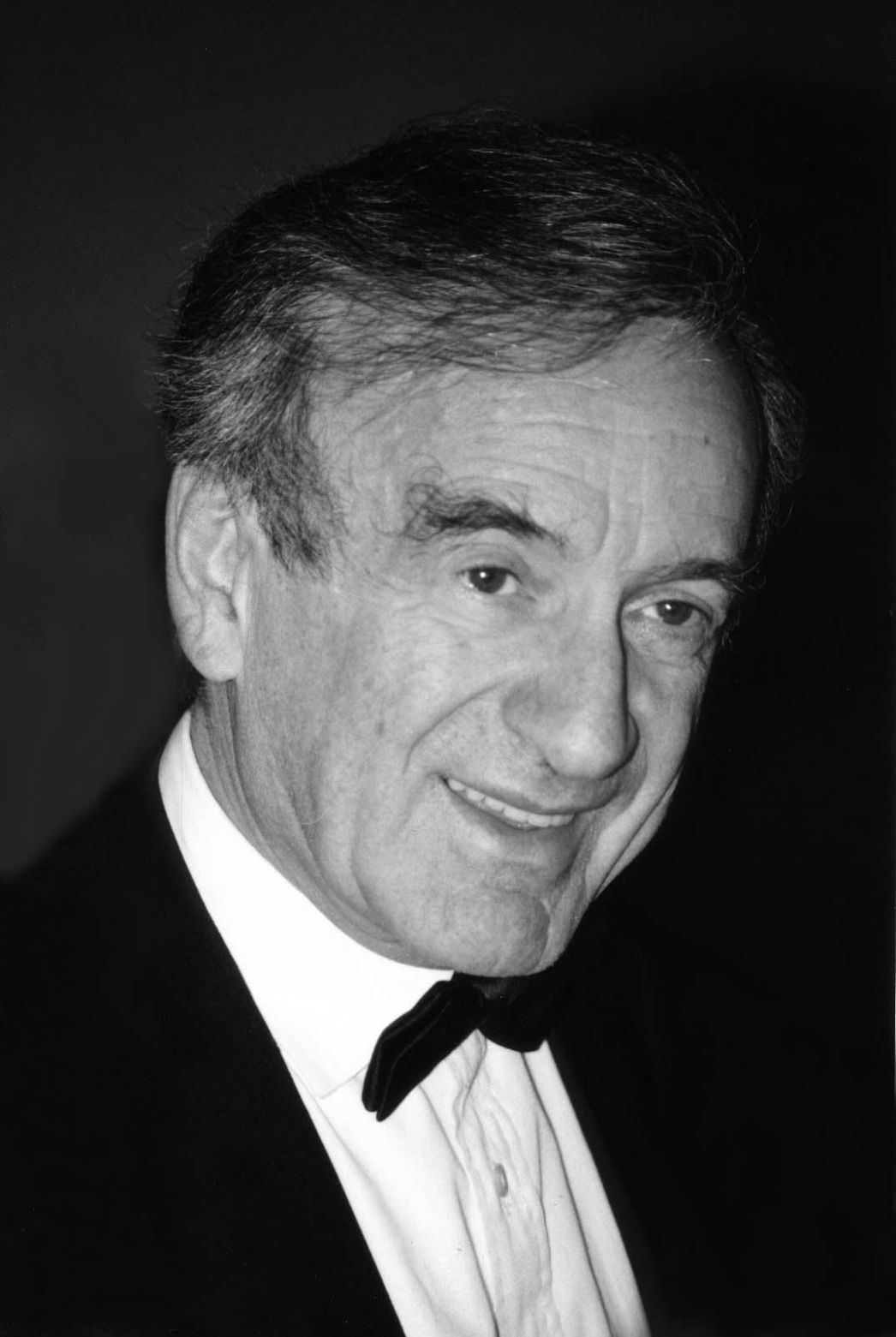
(Elie Wiesel)
Before I turn to my review of Joseph Berger’s latest work, ELIE WIESEL: CONFRONTING THE SILENCE I must put forth a disclaimer concerning the subject. First, my father’s side of the family lived north of Krakow, Poland before World War II about two hours from Auschwitz. Some were fortunate and left before the war and went to Palestine, France, and the United States. The majority did not and perished in the gas chambers. This has always brought me to an uncomfortable place having been educated in an orthodox Yeshiva in Brooklyn and grown up with children of survivors. Where was God? How could he allow his people to be slaughtered? Why didn’t he answer their prayers? After the Holocaust how could I remain a believer? In the 1970s I turned to the works of Elie Wiesel, beginning with NIGHT and continuing through most of his novels and his memoirs as they were published availing myself of the opportunity to be exposed to Wiesel’s wisdom, commentary on the horrors of the Holocaust, elements of Hasidic mysticism, Biblical portraits and other subject matter and came away with a deeper understanding of my emotions and values from a voice that was like no other. I sought answers, but to be honest on an intellectual level I remain in a quandary as to my belief system.
I consider myself very fortunate to have witnessed remarks by Wiesel in person two times during his quest to educate the American public on the dangers of racism, antisemitism, and the plight of refugees and persecuted people worldwide. First, at the Washington Hebrew Congregation in 1978, and later in 2008 at Boston University. After a twenty year gap in listening to Wiesel in public it appeared the man who the Nobel Prize Committee referred to as “a messenger to mankind,” had grown more pessimistic about the future.

(Main square in the village of Sighet, Romania before WWII)
Berger has written a powerful biography of Wiesel exploring his tortuous experiences as a victim of the Nazi Final Solution. He delves deep into a myriad of topics within the larger scope of Wiesel’s life story and intellectual journey integrating excerpts of his memoirs, novels, works of non-fiction, speeches, articles, teaching, and countless interviews from his boyhood in Sighet, Romania to evolving into the messenger or conscience of the Holocaust. The volume is not a traditional biography as once Wiesel is liberated from Buchenwald and makes his way to France the sense of chronology largely disappears, and Berger presents a series of chapters which in part can stand alone as separate essays. The volume includes important experiences apart from Auschwitz and Buchenwald to include becoming the voice of Soviet Jewry; his involvement and key role in the creation of the United States Holocaust Memorial Museum, taking “Hollywood” to task for its representation of the Holocaust; confronting the Reagan administration over its visit to the Bitburg cemetery where 49 members of the SS were buried, his work championing the plight of refugees, speaking out against apartheid; the plight of the Cambodian and Vietnamese people; and indigenous people in Central America; his approach to the academic classroom and teaching; and being awarded the Nobel Prize.
Berger’s work is more of an intellectual journey that Wiesel has undertaken his entire life. He has authored a penetrating portrait which focuses on a “frail, soft-spoken writer from a village in the Carpathian Mountains” who “became such an influential presence on the world stage.” Wiesel’s writing forms the back story for themes, arguments, and inner conflict as he tries to understand God’s role in the Holocaust, anger at the allies for doing nothing in terms of refugees and bombing the camps, along with his personal struggles to come to terms with what has happened to his family and the Jewish people. What comes across is a man who pulls no punches in educating all, including American presidents, Soviet government officials over its Babi Yar Memorial and refusal to allow Jews to emigrate, Hollywood moguls for its film representation of the Holocaust, his co-religionists, leaders of other faiths and almost anyone who he came in contact with.

(Elie Wiesel (right) with his wife and son during the Faith in Humankind conference, held several years before the opening of the United States Holocaust Memorial Museum. September 18–19, 1984, in Washington, DC.)
Berger presents Wiesel’s honesty based on a deeply emotional and evocative intellect which is present for all to see and cherish. Many of Wiesel’s feelings stand out that he dealt with his entire life; from his anger at his father’s naivete in remaining in their Romanian village, and wrestling with his relationship to God concluding, “I have never renounced my faith in God. I have risen against His justice protested His silence, and sometimes His absence, but my anger rises up within faith and not outside it,” to a life-long bitterness at western allies for their lack of action to assist victims of the Holocaust during the war.
Berger presents numerous poignant scenes particularly how the son became the father of the in the camps as Elie tried to avoid death, or Wiesel’s own relationship with his son Elisha. Further, Wiesel’s issues with the fledgling Israeli government in the late 1940s and their negative attitude toward Holocaust survivors, his frustration with the publishing world over accepting NIGHT for publication as they argued that there was no market for the Holocaust after the war, and lecturing President Jimmy Carter about aspects of faith and how it related to survivors.
At times Berger is able to unmask the lyrical nature of Wiesel’s writing particularly when speaking of visiting a Moscow Synagogue while pressuring the Kremlin over its treatment of Jews. His book, JEWS OF SILENCE went a long way in obtaining the emigration of over 250,000 Soviet Jews in the 1970s. Another event that catapulted Wiesel on the world stage was the Six Day War and the resulting Israeli victory which created a new Jewish self-concept and a proliferation of new histories, novels, and films dealing with the Holocaust. It is at this time that Wiesel began to acquire the role of spokesman for his brethren. Applying his Talmudic education, his knowledge of Hasidic mysticism, and his biblical knowledge he was perfect for the task.

(President Bill Clinton (center), Elie Wiesel (right), and Harvey Meyerhoff (left) light the eternal flame outside on the Eisenhower Plaza during the dedication ceremony of the United States Holocaust Memorial Museum. April 22, 1993)
Perhaps one of the most important questions people have asked Wiesel concerns his writing. When asked, Why do I write? He responds, “Perhaps in order not to go mad. Or, on the contrary, to touch the bottom of madness….Not to transmit an experience is to betray it. I owe them [the dead] my roots and my memory. I am duty-bound to serve as their emissary, transmitting the history of their disappearance, even if it disturbs, even if it brings pain. Not to do so would be to betray them, and thus myself….To wrench those victims from oblivion. To help the dead vanquish death.”
Berger’s perceptive biography presents the humanity of Wiesel as he hid a lifetime of suicidal bouts, depression, agonizing cries tinged with haunted memories of the evisceration of his home village. Miraculously, Wiesel was able to overcome these issues with the help of his wife, Marion, who was a partner in his work to educate the world and create as Diane Cole writes in her recent Wall Street Journal review of Berger’s work, “a legacy that compels us to bear witness in his absence and continue to confront the silence.”
 Doc's Books