THE KING’S PLEASURE: A NOVEL OF HENRY VIII by Alison Weir

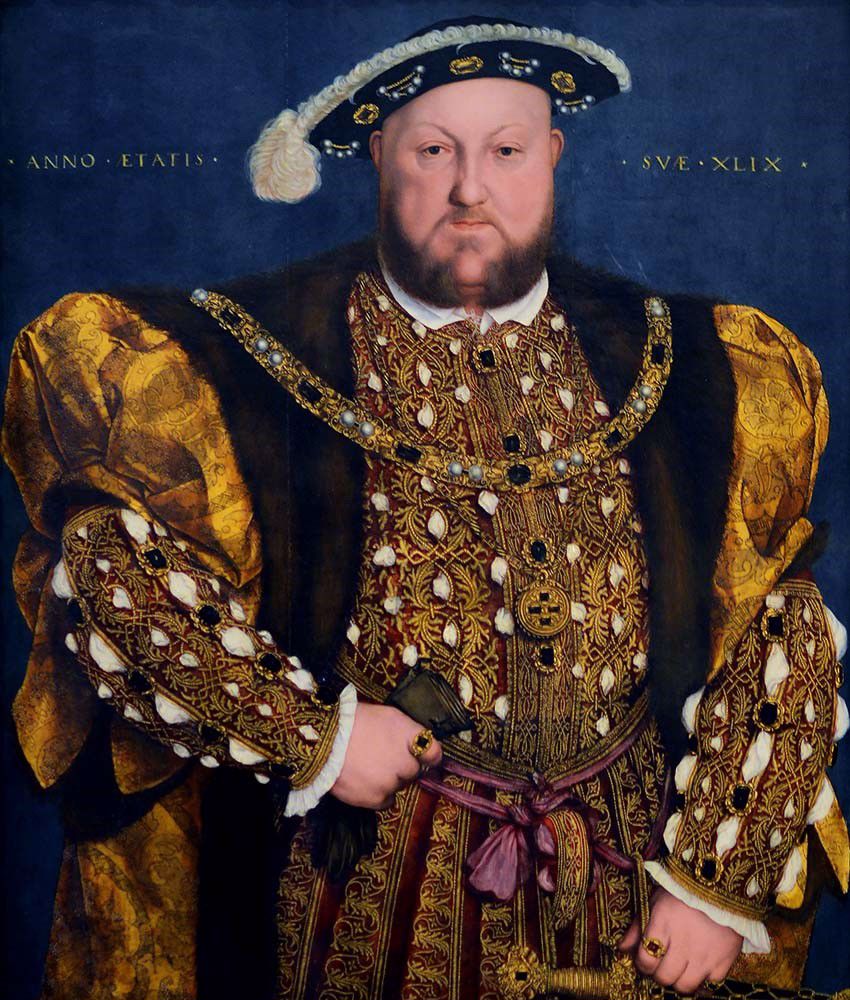
Holbein - Henry VIII
(Hans Holbein the Younger, Portrait of Henry VIII, 1540, oil on wood, Palazzo Barberini, Rome)

The concept of “popular history” has proven to be a bone of contention between writers who engage in the genre and more academic historians.  According to one definition popular history is “dramatic storytelling often prevails over analysis, style over substance, simplicity over complexity, and grand generalization over careful qualification.”  In response author Alison Weir argues that history is not only for academic historians who engage in deep research and hope to uncover a new thesis that plays well in the academic community.  For Weir the author of seventeen works of historical non-fiction and fourteen works of historical fiction history belongs to all of us and if it is written in an entertaining manner based on extensive research it can be labeled “popular,” if so I am proud to be one of its practitioners!

Weir’s latest work of historical “popular” fiction is THE KING’S PLEASURE: A NOVEL OF HENRY VIII, a novel that purports to tell its reading audience the life of the outsized English monarch from his point of view.  After writing the six Tudor Queens series, individual novels which explore the lives of Katherine of Aragon, continuing with Anne Boleyn, Jane Seymour, Anna of Cleves, Katheryn Howard, and Katherine Parr, Wier decided it would be useful to present Henry’s views to balance those of his detractors.  Wier has also written a work of non-fiction about the life of Henry’s mother entitled, THE WHITE ROSE: A NOVEL OF ELIZABETH OF YORK.

Catherine Of Aragon Engraved portrait of Catherine of Aragon (1485-1536), the first queen of Henry VIII of England. She holds a bible in one hand. (Photo by Stock Montage/Getty Images)

(Katherine of Aragon)

Weir’s Henry VIII was a sensitive young man who lost his mother at the age of eleven shortly after his brother Arthur had passed away.  The loss of his mother who he truly loved plays an important role in Henry’s view of women throughout his life. 

At eleven, Henry had mastered French, Latin, and Italian and loved to engage in physical exercise and excelled at horsemanship, the longbow, fencing, jousting, wrestling, and swordsmanship.  As his humanistic education developed he showed great interest in the classics, literature, and poetry and saw himself as a true Renaissance individual.  Weir bases her novel on years of researching the history of the Tudors and though she might be considered a “popular historian” her knowledge of her subject and the detail she presents are quite impressive.  An early example involves his relationship with his father Henry VII following the death of his brother and the negotiations involved in Henry VIII marrying his widow, Katherine of Aragon.  As is her wont, Weir analyzes the political implications of the death of Queen Isabella of Spain, the debate as to whether Henry VIII can marry his brother’s widow, the relationship between father and son, particularly how Henry VIII becomes angrier and angrier at his father’s refusal to allow Henry to marry following the papal dispensation approving the marriage.

Anne Boleyn

(Anne Boleyn)

Henry VIII is seen as loving and very solicitous of Katherine for years until she is unable to meet Henry VIII’s obsession to produce a male heir when he rationalizes casting her aside because of the security needs of his kingdom.  As one reads on, the novel transports the reader to 16th century England with all major events and characters involving Henry wonderfully portrayed.  The likes of Cardinal Wolsey, Thomas Cromwell, Sir Thomas More, Francis I, Charles V, King Ferdinand, Emperor Maximillian, Pope Clement VII, and Henry’s wives are all presented in an accurate manner.  The diplomacy of the period particularly involving shifting alliances between England, France, the Holy Roman Empire, the German states, and the Papal states are all discussed in terms of the European balance of power and the significance of marriage diplomacy.  As one reads on one must keep in mind that Henry’s actions and reputation must be seen in the context of the time period in which he reigned.

The machinations at court are vividly portrayed.  The constant attempts at manipulation by many of the characters mentioned previously abound, particularly after Henry has his marriage to Katherine of Aragon annulled and he marries Anne Boleyn.  This would eventually lead to a break with Rome, Henry’s excommunication, and the creation of the Church of England, with Henry at its head.  With Lutheranism spreading in Germany conservative and reform factions emerge in England and Henry must deal with revolts in addition to worrying about the diplomatic games played by his fellow monarchs.

The author seems to enjoy relating life at court describing the entertainment, jousting, feasts, royal decorations and castles etc.  In fact, at times she seems to go overboard which detracts from more substantive events and movements.  Apart from the details of Henry’s marriages and their shortcomings in his eyes, she does relate how he stood up to Martin Luther, and  writes a book in defense of the church and Pope Leo reflecting the king’s intellect and desire to be seen as a defender of the faith.  As Henry ages, Wier presents a man who begins to realize the loss of his virility reflecting an explosive temper when it came to acts he saw as personally disloyal.  Much of his later physical deterioration is due to infections in his legs which made it difficult for him to get around.  The older he becomes, even after Jane Seymour provides an heir he becomes more and more difficult to be with.  From his viewpoint the state of health in his kingdom with sleeping sickness and plague abounding he realizes that he must produce a second heir which drove him to three more marriages, two of which did not end well.

A portrait of Jane Seymour, queen of England from 1536 to 1537 as the third wife of Henry VIII. Jane is remembered for being the only wife to provide Henry with a son and male heir (the future Edward VI). Jane died on 24 October 1537, most likely from puerperal, or childbed, fever. (Photo by Popperfoto/Getty Images)

(Jane Seymour)

Weir digs down deeply into important relationships that Henry was involved with, both men and women.  His anger at Anne Boleyn and Katheryn Howard are fully explained and from his perspective seem quite reasonable as both women knew how to successfully manipulate him until their pasts emerge humiliating and embarrassing him.  One must wonder whether Wier is correct as she plays on Henry’s own guilt when he allows both women to be executed.

In the end I believe that Weir is correct when she writes that she hoped she has provided insights “into the mid of a brilliant, autocratic, vain, intellectual, ruthless, and romantic king who changed the face and institutions of England forever and whose memory is still vividly alive five centuries after he lived.”  Whether you accept Weir’s interpretation of Henry’s life, the book is well written, an easy read, and does not get bogged down with fact after fact and dense writing offered by many historical tracts – for this she should be commended.

(Henry VIII)
GRAND DELUSION: THE RISE AND FALL OF AMERICAN AMBITION IN THE MIDDLE EAST by Steven Simon


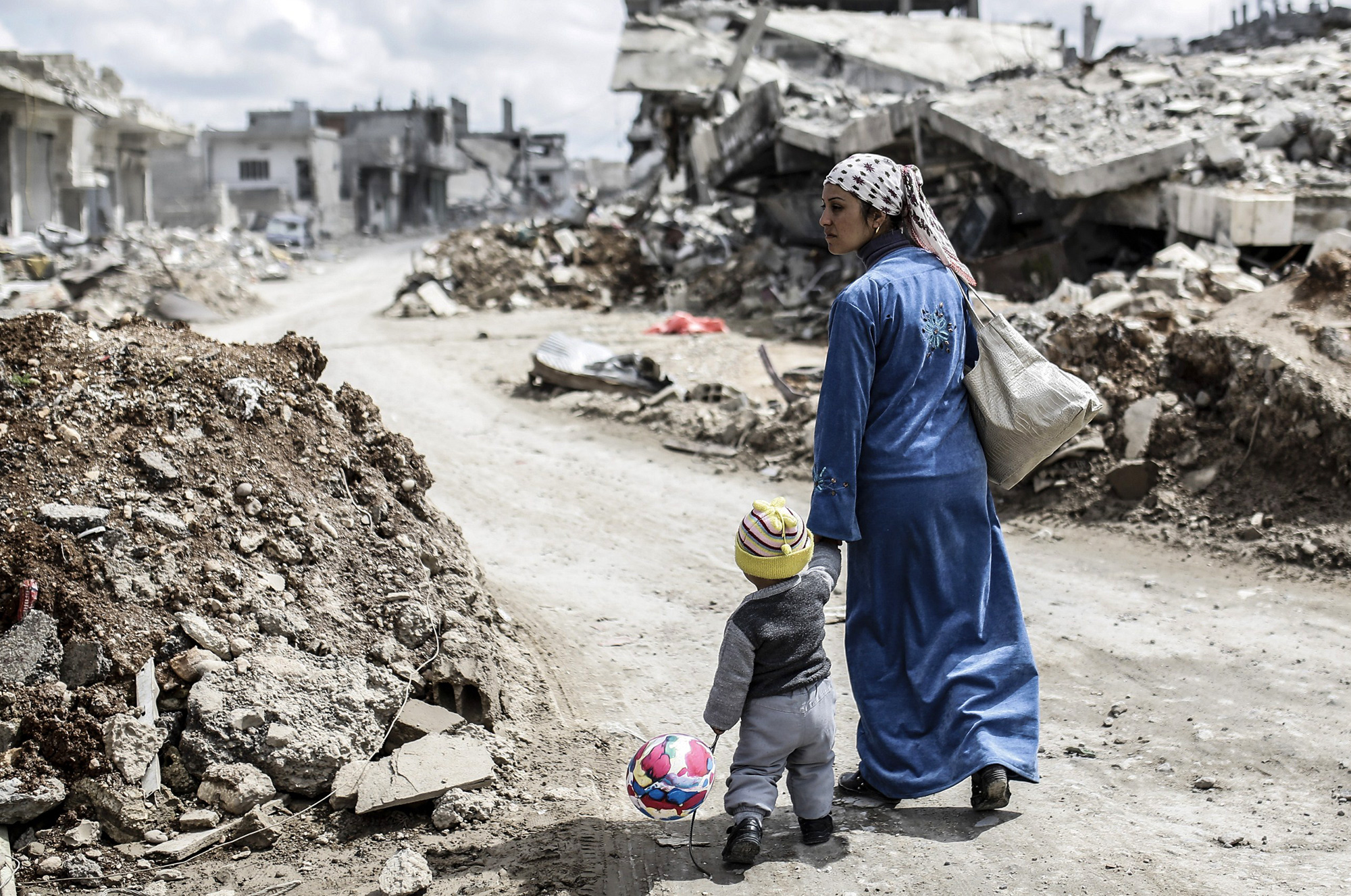
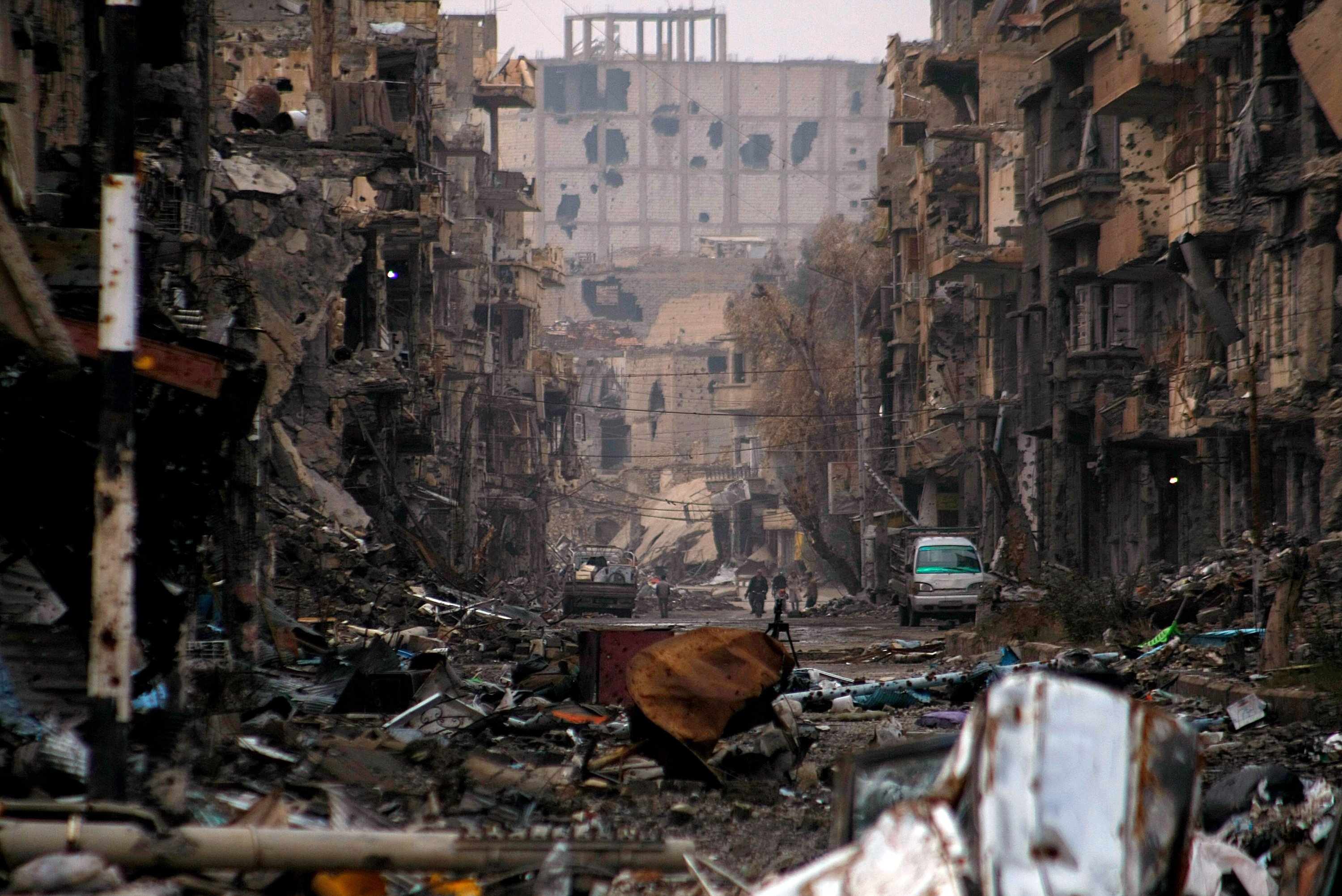
Syrians walk along a severely damaged road in the northeastern city of Deir el-Zour, Jan. 4, 2014. (AFP)

(Syrian Civil War)

Today the Middle East borders on chaos.  In Israel, Prime Minister Benjamin Netanyahu is under indictment and as a means of retaining his administration pushes to reduce the power of the Israeli Supreme Court resulting in roughly 20% of the country taking to the streets in protest.  Further, Israeli reserve pilots have threatened to refuse missions in dissent.  The West Bank is experiencing renewed violence highlighted by a recent Israeli incursion and a continuing power struggle between Hamas and Islamic Jihad.  In Yemen, the brutal  civil war continues as Saudi Arabia and Iran are fighting a proxy war.  In Iran, the government is still dealing with domestic discontent particularly by the younger generation, exporting weapons to Hamas, Hezbollah in Lebanon, and drones and other support for the Russian war in Ukraine.  In Jordan, opposition to King Abdullah increases each time Israeli troops crack down on Palestinians.  Egypt remains a repressive autocracy.  Lastly, Saudi Arabia’s government under the leadership of Mohammad bin Salman further consolidates power of his repressive regime and spreads its wealth seemingly worldwide as it finds itself disagreeing with the Biden administration more and more. 

The above is symptomatic of a failed attempt by the United States to reorient the region toward its goals and in so doing according to Steven Simon in his new history/memoir GRAND DELUSION: THE RISE AND FALL OF AMERICAN AMBITION IN THE MIDDLE EAST, the region has undergone a forty year period whereby Washington has evolved from deep engagement to a period of retrenchment. 

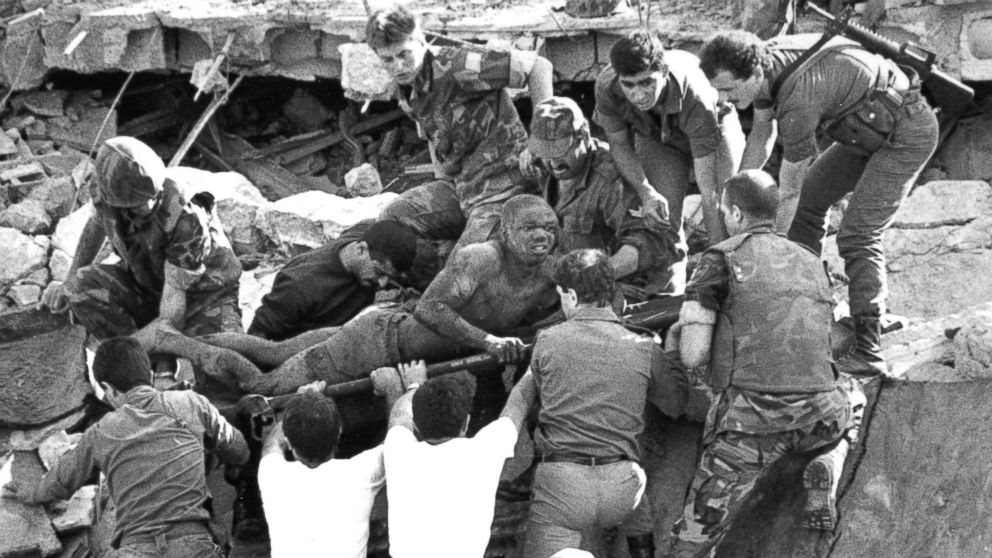
PHOTO: British soldiers assist in rescue operations at the site of the bomb-wrecked U.S. Marine command center near the Beirut airport in Lebanon, Oct. 23, 1983. A bomb-laden truck drove into the center collapsing the entire four story building.

(1983 bombing of the US Marine barracks in Lebanon)

According to the author, the process began with the Iranian Revolution and the overthrow of the Shah during the Carter presidency which brought about a collapse of the American position through the final weakening of US resolve under Barack Obama.  In between the Reagan, Bush, Clinton, and Bush II administrations tried to retain American hegemony in the region, attempted to foster an Israeli-Palestinian settlement, dominate Iraq, and support Saudi Arabia.  This came to an end as Obama held Israel and the Gulf states in open contempt, failed to arm and train Syrian rebels in a civil war he referred to as “the shit show,” intervened in Libya, stalled in attempts to foster democratic transitions during the Arab spring, dealt with the Islamic State, was unable to forge a constituency for a nuclear deal with Iran, and witnessed a bitter end to the Israeli-Palestinian peace process.  Obama’s successor, Donald Trump acquiesced in this situation, periodically threatening different parties and trying to see how he could achieve political and personal gains. 

The question is how did the present situation evolve resulting in America’s propensity for self-deception and misadventure in the region particularly after 9/11 – Simon, whose career included a fifteen year career at the State Department, and service on the National Security Council staff as senior director for Middle Eastern and North African affairs provides interesting and evocative answers.

From left, Yitzhak Rabin, Bill Clinton and Yasir Arafat in 1993.

(Israeli Prime Minister Rabin, President Clinton, and PLO Chairman Arafat, 1993)

Simon has written a personal account of his diplomatic career involved in the Middle East, offering many historical observations and insightful analysis.  The monograph seems to offer two major themes.  The first, after the overthrow of the Shah in 1979 the United States changed from a period where American troops where not actively deployed in the region, instead CIA operations, vast military sales were tools used to spread influence, and Washington relied upon autocratic to achieve its goals.  Once Ronald Reagan assumed the presidency for better or worse, American troops at times  became active in the region from Lebanon, Iraq, Afghanistan, Saudi Arabia, and bases in the United Arab Emirates, and Bahrain.  In the case of Iraq, the policy has been a disaster which in the end destroyed the region’s balance of power and elevated Iran to being a major player.  This period came to an end with the final withdrawal of US troops from Iraq in 2011.  The second major theme that Simon explores was American policy toward Israel and Saudi Arabia.  Since the end of the Second World War, the United States sought to facilitate Israel’s survival in a hostile Arab world following the Holocaust and preventing any Soviet inroads involving Saudi Arabia.  Up until recently these policies have been mostly successful.  However, the emergence of a right wing Israeli government under Bibi Netanyahu and his ultra-orthodox allies, and the elevation of Mohammad bin-Salman as head of the Saudi government has led to policies that at times are designed to “get even” with President Biden’s comments during the 2020 election his cruelty and repression zeroing in opposition within Saudi society, in addition, his hope of achieving regional super power status does not bode well for the future of American success in the region.

Simon does an excellent job developing the background history for each presidential administration’s policies.  Beginning with President Carter and taking the reader up to the present, the author describes the significant issues that each occupant of the White House faced, the internal debates over policies, the personalities involved, the final execution of the decision-making process, and the ramifications once the dust cleared.  Beginning with Carter’s attempts at Camp David and the Iran hostage situation, Simon moves on to the haphazard NSC decision-making process in relation to the deployment of US Marines to Lebanon and the Iran-Contra scandal under Reagan; the debate in the first Bush administration over whether to remain in Iraq and achieve regime overthrow after Desert Storm, and the Madrid Conference designed to facilitate an Israeli-Palestinian peace;  Clinton’s need to know whether Saddam’s WMD had been catalogued and destroyed, and his inability to lure Iran to the negotiating table, as well as Clinton’s refusal to issue a presidential decision directive on the Middle East; George W. Bush facing the repercussions of 9/11 leading to an ill fated war in Iraq as well as creating a disastrous policy in Afghanistan; Obama’s attempts to reset US policy in the region, not enforcing his self-imposed red-line dealing with Syria, and achieving the Nuclear arms deal with Iran.  Next, Trump was indifferent to the mechanics of foreign policy and “his ignorance of the conduct of foreign policy clouded his occasionally sensible, if crudely formulated, impulses,” i.e.; pulling out of the Iran nuclear deal allowing Tehran to enhance its nuclear program, the Abraham Accords between Israel, the United Arab Emirates, and Bahrain, and abandoning the Kurds to Turkish President Erdogan  Lastly, President Biden who inherited unresolved conflicts with Iraq, Iran, and a Saudi relationship whereby Jared Kushner was able to ingratiate himself with Mohammad bin-Salman.  For Biden, faced with deteriorating relations with China, the issue of Taiwan, the Russian invasion of Afghanistan, and difficulties with Iran leave very little time to devote to the Middle East.  I agree with Simon’s conclusion that the Saudis and Persian Gulf states see Biden as “a speed bump on the road to a more accommodating Republican administration.”

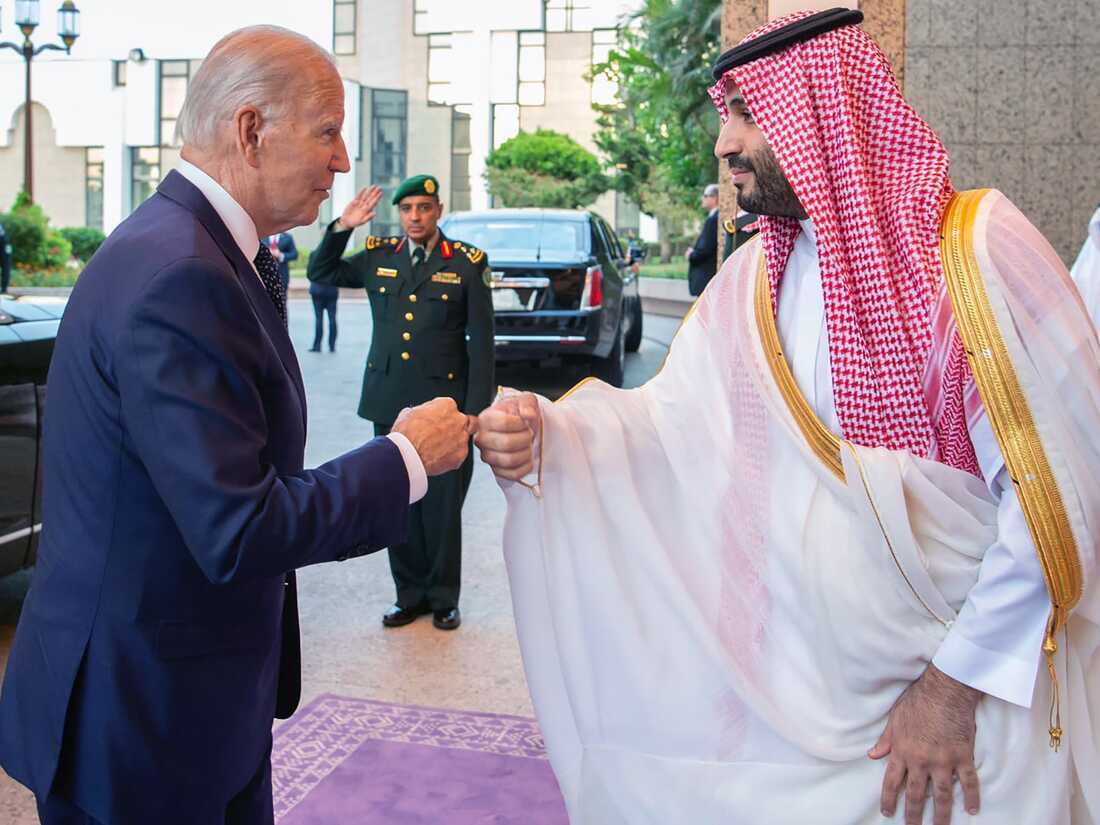
(In this photo released by the Saudi Press Agency, Saudi Crown Prince Mohammed bin Salman and President Biden bump fists as they begin meetings in Jeddah)

Many of the major characters aside from presidents are discussed in Simon’s presentation.  Jimmy Carter employed Zbigniew Brzezinski, Cy Vance and others, though at times he was his own Secretary of State.  Under Ronald Reagan, George Schultz, Casper Wienberger, Robert McFarlane, and William Casey played significant roles.  For George H. W. Bush, James Baker, Colin Powell, Dick Cheney stand out.  President Clinton, who had little foreign policy experience relied upon Warren Christopher, Madeleine Albright, Sandy Berger, and William Cohen.  George W. Bush relied heavily on Dick Cheney, Donald Rumsfeld, Condi Rice, and to a lesser extent on Colin Powell.  Barack Obama worked well with Hillary Clinton, Susan Rice, and Robert Gates.  Donald Trump had a series of individuals who he eventually fired and brought in sycophant’s who would do his bidding.  For Biden it is too early to know the impact of those around him particularly Jake Sullivan, Lloyd Austin, and Anthony Blinken.  All of these figures play prominent roles in Simon’s presentation and analysis, and it is interesting to compare the types of people and their experience before they served their respective administrations and how impactful they were.

Simon has written a thoughtful, well-constructed work of fusion that will be useful for the professional and general audience. His viewpoints are based on years of involvement in the region and his commentary is succinct and for the most part dead on no matter which administration he is discussing.   He has done a wonderful job exploring a series of presidential administrations and how they approached the Middle East and must be commended for his ability to synthesize information as each chapter in of itself can be developed into a book of its own.

SYRIA-KURDS-CONFLICT

(Syrian Civil War)