
The concept of “popular history” has proven to be a bone of contention between writers who engage in the genre and more academic historians. According to one definition popular history is “dramatic storytelling often prevails over analysis, style over substance, simplicity over complexity, and grand generalization over careful qualification.” In response author Alison Weir argues that history is not only for academic historians who engage in deep research and hope to uncover a new thesis that plays well in the academic community. For Weir the author of seventeen works of historical non-fiction and fourteen works of historical fiction history belongs to all of us and if it is written in an entertaining manner based on extensive research it can be labeled “popular,” if so I am proud to be one of its practitioners!
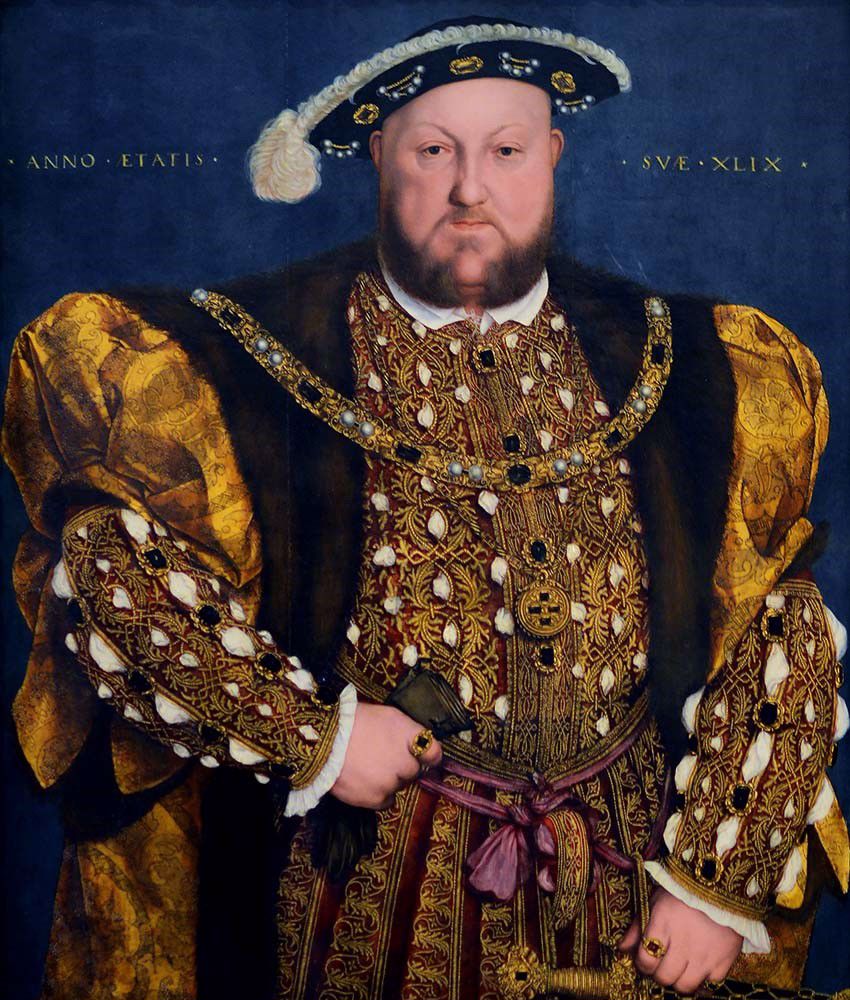
Weir’s latest work of historical “popular” fiction is THE KING’S PLEASURE: A NOVEL OF HENRY VIII, a novel that purports to tell its reading audience the life of the outsized English monarch from his point of view. After writing the six Tudor Queens series, individual novels which explore the lives of Katherine of Aragon, continuing with Anne Boleyn, Jane Seymour, Anna of Cleves, Katheryn Howard, and Katherine Parr, Wier decided it would be useful to present Henry’s views to balance those of his detractors. Wier has also written a work of non-fiction about the life of Henry’s mother entitled, THE WHITE ROSE: A NOVEL OF ELIZABETH OF YORK.

(Katherine of Aragon)
Weir’s Henry VIII was a sensitive young man who lost his mother at the age of eleven shortly after his brother Arthur had passed away. The loss of his mother who he truly loved plays an important role in Henry’s view of women throughout his life.
At eleven, Henry had mastered French, Latin, and Italian and loved to engage in physical exercise and excelled at horsemanship, the longbow, fencing, jousting, wrestling, and swordsmanship. As his humanistic education developed he showed great interest in the classics, literature, and poetry and saw himself as a true Renaissance individual. Weir bases her novel on years of researching the history of the Tudors and though she might be considered a “popular historian” her knowledge of her subject and the detail she presents are quite impressive. An early example involves his relationship with his father Henry VII following the death of his brother and the negotiations involved in Henry VIII marrying his widow, Katherine of Aragon. As is her wont, Weir analyzes the political implications of the death of Queen Isabella of Spain, the debate as to whether Henry VIII can marry his brother’s widow, the relationship between father and son, particularly how Henry VIII becomes angrier and angrier at his father’s refusal to allow Henry to marry following the papal dispensation approving the marriage.

(Anne Boleyn)
Henry VIII is seen as loving and very solicitous of Katherine for years until she is unable to meet Henry VIII’s obsession to produce a male heir when he rationalizes casting her aside because of the security needs of his kingdom. As one reads on, the novel transports the reader to 16th century England with all major events and characters involving Henry wonderfully portrayed. The likes of Cardinal Wolsey, Thomas Cromwell, Sir Thomas More, Francis I, Charles V, King Ferdinand, Emperor Maximillian, Pope Clement VII, and Henry’s wives are all presented in an accurate manner. The diplomacy of the period particularly involving shifting alliances between England, France, the Holy Roman Empire, the German states, and the Papal states are all discussed in terms of the European balance of power and the significance of marriage diplomacy. As one reads on one must keep in mind that Henry’s actions and reputation must be seen in the context of the time period in which he reigned.
The machinations at court are vividly portrayed. The constant attempts at manipulation by many of the characters mentioned previously abound, particularly after Henry has his marriage to Katherine of Aragon annulled and he marries Anne Boleyn. This would eventually lead to a break with Rome, Henry’s excommunication, and the creation of the Church of England, with Henry at its head. With Lutheranism spreading in Germany conservative and reform factions emerge in England and Henry must deal with revolts in addition to worrying about the diplomatic games played by his fellow monarchs.
The author seems to enjoy relating life at court describing the entertainment, jousting, feasts, royal decorations and castles etc. In fact, at times she seems to go overboard which detracts from more substantive events and movements. Apart from the details of Henry’s marriages and their shortcomings in his eyes, she does relate how he stood up to Martin Luther, and writes a book in defense of the church and Pope Leo reflecting the king’s intellect and desire to be seen as a defender of the faith. As Henry ages, Wier presents a man who begins to realize the loss of his virility reflecting an explosive temper when it came to acts he saw as personally disloyal. Much of his later physical deterioration is due to infections in his legs which made it difficult for him to get around. The older he becomes, even after Jane Seymour provides an heir he becomes more and more difficult to be with. From his viewpoint the state of health in his kingdom with sleeping sickness and plague abounding he realizes that he must produce a second heir which drove him to three more marriages, two of which did not end well.

(Jane Seymour)
Weir digs down deeply into important relationships that Henry was involved with, both men and women. His anger at Anne Boleyn and Katheryn Howard are fully explained and from his perspective seem quite reasonable as both women knew how to successfully manipulate him until their pasts emerge humiliating and embarrassing him. One must wonder whether Wier is correct as she plays on Henry’s own guilt when he allows both women to be executed.
In the end I believe that Weir is correct when she writes that she hoped she has provided insights “into the mid of a brilliant, autocratic, vain, intellectual, ruthless, and romantic king who changed the face and institutions of England forever and whose memory is still vividly alive five centuries after he lived.” Whether you accept Weir’s interpretation of Henry’s life, the book is well written, an easy read, and does not get bogged down with fact after fact and dense writing offered by many historical tracts – for this she should be commended.

(Henry VIII)
 Doc's Books
