THE ISLAND OF EXTRAORDINARY CAPTIVES: A PAINTER, A POET, AN HEIRESS, AND A SPY IN A WORLD WAR II BRITISH INTERNMENT CAMP by Simon Parkin

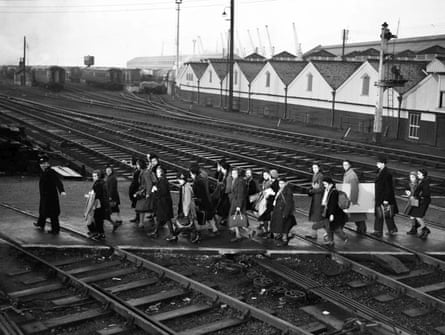
Young Jewish refugees (including Peter Fleischmann, carrying large art folder) arriving in England in December 1938.

(British citizens walking into Camp Hutchinson, Peter Fleischmann is carrying an art folio)

The concept of internment was employed during World War II supposedly as a strategy to protect the national security of the countries that implemented it.  The most famous example was the internment of Japanese Americans in the United States resulting in 125,284 individuals of Japanese descent rounded up and dispersed to 75 incarceration sites.  A lesser known example was perpetrated by the British government for suspected German agents sent to a number of facilities on the Isle of Man.  British policy is the subject of Simon Parkin’s latest book, THE ISLAND OF EXTRAORDINARY CAPTIVES: A PAINTER, A POET, AN HEIRESS, AND A SPY IN A WORLD WAR II BRITISH INTERNMENT CAMP.

Parkin’s main focus is the Hutchinson Camp which became the home of an eclectic and talented group of people.  The camp was populated with over 1200 prisoners predominantly refugees from Nazi Germany who had been living in England peacefully at the time of their arrest.  Parkin’s begins by exploring English paranoia concerning a “fifth column” as it appeared the Nazis were about to invade.  Prime Minister Winston Churchill authorized the arrest of thousands among them were “so-called aliens” resulting in the imprisonment of teenagers who fled Germany on Kindertransport trains among them was Peter Fleischmann one of the main characters of the monograph.  In an interesting description, Parkin places Fleischmann at a concert performed at Camp Hutchinson symbolizing how one could be imprisoned by one’s liberator.  For Peter it was a reminder of Gestapo roundups in a world he had fled.  Other prisoners included Oxbridge dons, surgeons, dentists, lawyers and scores of celebrated artists – a truly talented array of people, one of “history’s unlikeliest and most extraordinary prison populations.”
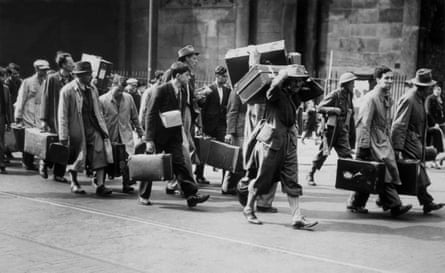
A group of people designated as ‘enemy aliens’ on their way to an internment camp in Britain in 1940.

(British citizens carrying their possessions entering Camp Hutchinson)

The author launches his subject by describing the story of Herschel Grynszpan’s odyssey leading him to assassinate a German diplomat in Paris as revenge against the Nazis for seizing his parents who wound up in the no man’s land between Germany and Poland.  The result was Kristallnacht launched by the Nazis in November 1938 a policy designed to terrorize Jews into leaving Germany.  After discussing the impact of the beatings, seizures, and destruction of Jewish property, Parkin relates Peter’s early life after the death of his parents, living with an insensitive uncle, life in a series of orphanages, and finally his arrival in England.  His story is one of abandonment and reflects British policy toward German refugees that they accepted and then arrested.  British policy was clearly a haphazard one with little thought and planning as they seized thousands of people who in no way were a threat to the “empire.”  Rather than carefully constructing tribunals made of knowledgeable people to make decisions they placed people totally unprepared and trained to make those decisions – the result was mass arrest.  Churchill was part of the process, and he ordered all enemy aliens between the ages of 16 and 60 seized– leading to the transformation of asylum seekers into enemy suspects.

For Peter his final arrest came on July 5, 1940, and along with thousands of others were subjected to the inhumanity and indignities of how the British processed the men stealing their limited possessions, deprived them of their civil rights, and saw themselves as having survived dangerous escapes from Germany to be imprisoned by their saviors.  Hitler laughed at British policy correctly pointing out how the British were copying the Nazis by rounding up so many Jews.  Parkin describes a number of British facilities and for many it took months to reach Camp Hutchinson.
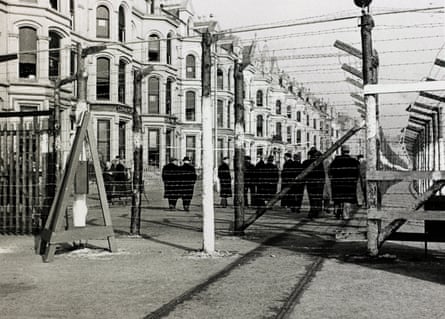
An internment camp on the Isle of Man in 1941.

(British internment camp on the Isle of Man)

Parkin correctly points out that internment brought lingering desperation and gloom, but it also brought the creative inspiration as a vehicle for survival as the men put their substantial musical, literary, and artistic talents to use.  Parkin describes concerts, classes of all types – academic to vocational, inventions, and other areas of prisoner expertise in great detail, a creative Hutchinson University.  What emerges is a communal type of living where talented people mostly share their expertise with each other to make their situation tolerable.

Parkin focusses on a number of important characters throughout the book.  Michael Covin, a former British journalist who survived the sinking of the refugee ship SS Arandora Star by a Nazi submarine to become a chronicler of what brought men to the camp and life under incarceration.  Klaus Ernst Hinrichsen, an art historian whose writing and commentary serves as an important source for the author.  Kurt Schwitters, poet and artist who served as a mentor for Peter.  Bertha Bracey, a Quaker who led a refugee organization working to gain asylum for children from Germany and securing the release of those incarcerated.  Ludwig Warschauer, the subject of a fascinating chapter as MI5 refused to allow his release as they correctly identified a German spy within their midst.  His wife, Echen Kohsen, an heiress who had cared for Peter in Germany will finally leave him when the truth comes out.  Parkin discusses many other talented prisoners and the effect prison life had on them emotionally and professionally.

Once the pressure on the Home Office grew and grew the government decided on a convoluted release policy which was almost as incompetent as their initial internment program.  Parkin describes hearings and judgements which made no sense, and of course Churchill did little to circumvent it.  For many like Peter the government offered release in return for joining the military.  Many agreed, and many refused to be blackmailed.  As many talented and influential people were released by 1941, Peter and hundreds of others remained interred.

TateImages_MA2610_preview
(Peter Fleischmann)

Parkin includes a final chapter in which he describes what occurred to people after release.  Finally, Peter will be accepted to an art school because of recommendations by camp artists and the work of refugee organizations.  This had been his life’s wish and finally he acquired people he could rely on and trust.

For the most part, Simon Parkin’s account is a riveting one reflecting a shameful chapter in British history which is also a testament to creativity and hope.  At times the author gets bogged down in the details of his subjects and it would have been interesting to compare women’s internment camps, which he mentions in passing in more detail.  But overall, a useful account of a forgotten category of a brutal British policy.
CROOK MANIFESTO by Colson Whitehouse

By 1971 New York was a city under siege.  During the liberal Republican administration of John Lindsay New York residents experienced a transit strike, a garbage strike, rampant crime, and the daily political corruption that seemed to dominate the city.  Colson Whitehead, who first addressed the plight of New York of the 1950s and 60s in his entertaining and substantive novel, HARLEM SHUFFLE returns with a sequel, CROOK MANIFESTO where Ray Carney once again has to navigate the city’s minefield.  As in the first novel, Whitehead breaks down his story into three components.  First, 1971 when Carney who had given up his ancillary career as a crook; 1973 focuses on Carney’s partner in crime, Pepper, and Zippo Flood, an old “colleague” of Carney who has inherited a substantial sum and is making a Blaxploitation film in Harlem; and third, how Harlem deals with the 1976 Bicentennial.  Whitehead uses his novel as a vehicle to investigate a neighborhood which finds itself at a tipping point in time accurately depicting the satire of this world and immersing himself into the hearts of his characters.

As the novel opens New York is in the midst of a shooting war between the NYPD and the Black Liberation Army which wants to overthrow the existing system.  Carney finds himself trying to stay legitimate as he has done for four years eschewing his “fencing” and “laundering” activities and keeping his furniture business afloat.  As the novel unfolds it becomes increasingly difficult for Carney to avoid “bent” activities.

Similar to HARLEM SHUFFLE in his new endeavor, Whitehead intersperses his social commentary throughout.  His first foray deals with the concept of revolution as seen by the Black Liberation Army which wants to overthrow the government and replace it with some type of socialist entity, and the Black Panthers who work partly within the system introducing social programs like free lunches and legal aid to minority communities.  Police corruption still dominates the novel as Detective Munson reappears and the policy of framing blacks for crimes continues unimpeded.  This led to the Knapp Commission under Lindsay to investigate police corruption and introduce Frank Serpico (the subject of a great film) to city residents.  The idea that the war in Vietnam and life in America’s ghettos have similarities takes hold under Whitehead’s rendering and provides interesting food for thought.  By the novel’s conclusion the depth of governmental corruption is fully laid bare.

Carney’s return to the world of crime is a function of his desire to be a loving father.  His daughter May is obsessed with the Jackson Five who are appearing at Madison Square Garden, and she begs him to get tickets for the sold out performance.  Desperate, Carney turns to Detective Munson who he is still paying “protection money” to try and obtain tickets.  This will lead Carney back into the “life” as he gets subsumed into Munson’s corrupt world of bribery, burglary, and murder.  It seems Munson and his partner Buck Webb have stolen jewels belonging to an organized crime headed by Notch Walker who also happens to be funding the Black Liberation Army.  It seems Webb and Munson have been called before the Knapp Commission and realize it’s time to tap out.  Munson’s plan is to screw his partner, rob an important card game created by another interesting character named Corky Bell and use Carney as his associate in return for the Jackson Five tickets.  For Carney, Whitehead’s description is spot on, “He had been straight for four years, but slipped once and everybody is glad to help you slip hard. Crooked states crooked and bent stays straight,  The rest is survival.”

Whitehead brings in two characters from HARLEM SHUFFLE and gives them a prominent role in the novel.  Pepper, an older “thug” has developed into an older brother figure in Carney’s life serving as a sounding board, a partner in crime, and in general comes across, despite his underworld activities somewhat sympathetic.  Another is Zippo Flood, a photographer that Carney had used in a revenge plot who emerges as a film maker having received a windfall from a Russian immigrant who escaped pogroms named “Heshie” who had taken a liking to him.  Zippo always wanted to be a film director and he uses the money to make the film; “Secret Agent: Neferititi” which Whitehouse uses to explain how black films are made and to integrate Chink Montague, a gangster that Carney is familiar with as an investor and the subject of a possible kidnapper of the film’s star, Lucinda Cole.  Once Pepper is hired by Zippo to find her the story becomes more interesting as he takes us through a “centric romp through the film industry, the Black comedy revolution, and the paradox of underground stardom.”*

Throughout the novel Carney is caught between recidivism and redemption, but as the bicentennial approaches events will catch up to him.  By 1976 Harlem was burning as “firebugs” were responsible for over a third of the 12,000 blazes that occurred.  Carney became distraught when he learned a young boy, Albert Ruiz, was injured in one of the fires and the furniture king decided he would find the person responsible.  He employed Pepper in the task, and it would lead to an interesting conclusion involving Alexander Oakes who was running for Manhattan Borough President.  It was the same Oakes that represented the best in Strivers Row and the man Elizabeth’s parents wanted her to marry, not the scum that her mother and father felt Carney represented.  This aspect of the novel is highlighted by Whitehead’s explanation as to how the city operated – City Hall corruption, burned out buildings, urban renewal, federal anti-poverty funds, insurance payouts, and pyromaniacs all linked in a push to clean up the city.  As I think back to growing up in the city at that time and driving a taxi in college, Whitehead’s theory makes a great deal of sense.

Jason Heller is correct when he points out that “What truly makes this series, or any series, work is the way it compels the reader to revisit its characters, to invest in them, to compel you to care enough to see their narratives through. Whitehead knows it, and CROOK MANIFESTO proves it. Ray, May, Elizabeth and Pepper in particular are by turns exasperating and aspirational. Life gets thrown at them, and they throw themselves back in return. These are people you crave to catch up with, and in Whitehead’s hands, the vast and intangible forces of society, injustice, morality, survival and love are distilled in them. ‘I want you back,’ sang the Jackson 5 so famously. It’s how Whitehead makes you feel the instant you close CROOK MANIFESTO does that mean it’s utterly necessary to go back and read (or re-read) HARLEM SHUFFLE before diving into its sequel? No. But it would be a crime not to.”*

* Jason Heller, “Crook Manifesto takes Colson Whitehead’s heist hero in search of Jackson 5 tickets,” NPR, July 18, 2023.

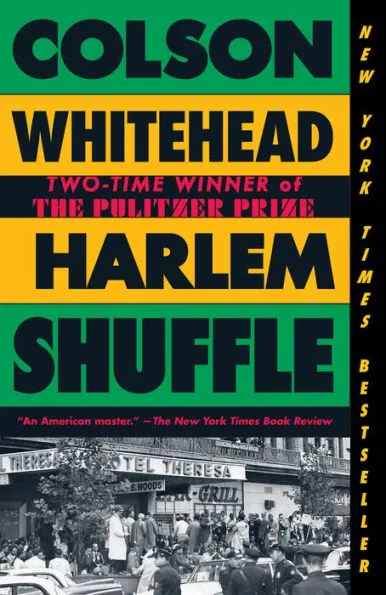
HARLEM SHUFFLE by Colson Whitehead

When someone begins a novel writing, “Carney was only slightly bent when it came to being crooked” you know the author knows how to engage his readers.  In this case, the author is Colson Whitehead who has already been awarded two Pulitzer Prizes  and a National Book Award  for the UNDERGROUND RAILROAD and THE NICKLE BOYS.  Colson is also the author of eight other works of fiction and non-fiction.    The prequel to his latest work, CROOK MANIFESTO recently released is HARLEM SHUFFLE which immediately introduces a fascinating and somewhat complex character in Raymond Carney, a furniture salesman who also fences jewelry and other items for his cousin Freddie.  When Freddie draws him into a larger heist the internal dilemma that always seems to rattle around in Carney’s brain takes hold between Ray the striver, and Ray the crook.

The novel is centered in Harlem in the late 1950s and early 1960s where Whitehead presents an accurate picture of the socio-economic condition of its residents.  Carney owns a furniture store on 125th street with a side door for other monetary opportunities.  Whitehead begins with an accurate description of the West Side Highway (a traffic abomination that I personally drove with my father at that time!).  Whitehead is clear about the dichotomy of downtown and uptown Manhattan into the Bronx and the types of “crooks” that exist in pinstripe suits with loafers and those who dress in a more casual style.

(125th Street, Harlem, circa 1960s)

This contrast is evident throughout the book as “negroes” living uptown strive for acceptance in white society and try and develop their own upper crust in Harlem.  The ambiance of small business during the period is emblematic of Carney’s store and other businesses and patrons he interacts with.  Whitehead expertly weaves the history of Harlem during the period throughout the novel.  The Apollo Theater, Adam Clayton Powell, Cab Callaway’s band, the Hotel Theresa, the “headquarters the Negro world” all make appearances.  Organized crime is a dominant force as the Italian Mafia makes inroads uptown and ally with local gangsters.

Whitehead delves into a series of themes that are highlighted through dialogue and actual historical events.  The racism of the period is on full display as Carney is ignored by white business types when he tries to conduct business.  Commentary dealing with light v. dark negro skin color is a harsh reflection of the self-concept of negroes as they try and fit in.  The Civil Rights movement makes an appearance through Carney’s wife, Elizabeth who works at Black Star Travel a business that tries to secure accommodation for negroes all over the country, particularly in the south.  As the book shifts to 1964 the author explores the Harlem riots and the motivations of protestors and police alike.  The violence and frustration of Harlem residents is obvious.  The split within the negro community is ever present with “uppity” negroes who control the Alexander Dumas Club which hosts the leading political and economic figures in Harlem.  It is interesting how Whitehead uses Carney’s father-in-law, Leland Jones, one of Harlem’s top accountants as the epitome of reverse negro racism as does Alma his wife who also abhors Carney and what he represents.

(Harlem, 1960s)

Corruption also dominates the novel as we see how the local mail service works.  It is made up of bribes and payoffs for protection as money is sequestered in envelopes to be delivered or picked up on a weekly basis.  This involves many policemen highlighted by Detective Munson who works with Carney.  Cops, drugs, pimps all interact as part of the “accepted system.” Political corruption is a daily occurrence under the regime of Mayor Robert Wagner and Tammany Hall as nothing seems to get done in the city without a payoff.

Other themes that come to the fore include racism in America’s segregated army during World War II reflected in Pepper’s experience in Burma.  Jewish-Black tension dealing with rents, jewelry and such though Mr. Moskowitz, a downtown jeweler seems somewhat honest as he fences gems for Carney, but also provides an education in dealing with jewels and their purveyors.

The plot goes round, and round as social commentary leaps off each page.  For Carney who has been swindled by Wilfred Duke, a banker and senior member of the Alexander Dumas Club, it is all about revenge.  However, that revenge leads him further into the nether land of Harlem’s underclass.  Further, there is poor cousin Freddie who seems to have crossed the Van Wyck family, one of New York’s finest, despite the undercurrent of bribery, and Chink Montague, a Mafia boss.  The problem is that his association with Freddie leaves Carney open to all kinds of extortion, fear, and in the end questioning if his lifestyle of half crooked and half not is worth despite its benefits.  With a successful business, a wonderful wife and two children, Carney has a lot to think about.

Overall, the novel is an extraordinary story about an ordinary man who lives a double life.  Whitehead writes with insight and humor and the story is an easy read.  Despite some mean characters, Whitehead has the ability to bring out their inner humanity, but overall, it is a story about how the straight world operated during the day and at night the bent got to work.  To sum up, Karan Mahajan in his 2021 New York Times  review states it perfectly, Whitehead rights the ship by the third section of the novel, “which focuses on another crime to which Carney is an unwilling accomplice, with potentially deadly repercussions for the people he loves. And the crime story, which had become inert, suddenly revs to life, reminding us that Whitehead, beneath all the shambling and high jinks, remains an American master.”

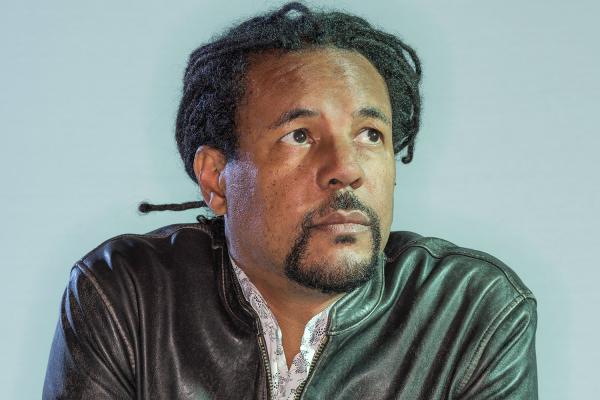
Colson Whitehead

(Colson Whitehead)

FRANCE ON TRIAL: THE CASE OF MARSHAL PETAIN by Julian Jackson

At the trial of Marshal Philippe P��tain (1856-1951) at Paris (France). In July 1945.

(August 1945 Trial of Marshal Petain)

In 1969, the two-part documentary film, “The Sorrow and the Pity” directed by Marcel Ophuls depicting collaboration between the French Vichy government and Nazi Germany during World War II was released.  Controversial from the outset, the film explored the reasons behind the collaboration, including anti-Semitism, Anglophobia, fear of Bolshevism and Soviet invasion, and the desire to acquire and maintain power during the German occupation.  By the end of the war, the entire Vichy experience fostered a deep fissures in French society and no one depicted this state of affairs more than Marshal Philippe Petain, the great World War One hero at the Battle of Verdun who led the Vichy government and after the war became the lightning rod dealing with French collective guilt and retribution.

Petain is the focal point in British historian Julian Jackson’s latest work dealing with France during World War II entitled, FRANCE ON TRIAL: THE CASE OF MARSHAL PETAIN.  In his comprehensive monograph Jackson zeroes in on Petain’s three week trial after France was liberated examining the central crisis of French history in the 20th century – the collapse of France within six weeks after the Nazi invasion in April 1940; the signing of an armistice with Germany; and Vichy’s policy of collaboration.

Pierre Laval

(Pierre Laval)

Jackson begins his narrative providing a photograph of a picture of Petain and German Chancellor Adolf Hitler shaking hands on October 24, 1940, and describes the symbolic importance of that act- a propagandas coup for the Nazis and a shock for the French public. The result of that meeting meant that France was no longer a combatant in the war and was now considered neutral, though the French public assumed that the hero of Verdun must be working behind the scenes with the British or the French resistance led by General Charles de Gaulle.  As Petain’s trial would show, he was not working behind the scenes with anyone and was collaborating with the Nazis no matter what his defense attorneys would argue.  The word “collaboration” became controversial when used in a speech on October 11, 1945, no matter how many times Petain denied that characterization of his government, it is part of the historical record.

Jackson describes the trial which opened in Paris on July 23 and ended on August 15, 1945, in minute detail.  He offers unique portraits of the major characters ranging from Petain; his lawyers, Jacques Isorni and Fernard Payen who despised each other, the prosecution led by Public Prosecutor Andre Mornet and Pierre Bouchardon; to Charles de Gaulle, Pierre Laval, and numerous other personages which include collaborators, members of the wartime resistance, and the role of past and future politicians like Paul Reynaud, Leon Blum,  and Francois Mitterand.  Jackson relies on trial transcripts, archival research, and most importantly to convey the mood of France during the trial and after, contemporary journalistic accounts.

Paul Reynaud

(Paul Reynaud)

One of the key themes of the book was to decide whether Petain was a hero or a traitor.  Each side in the debate had its own agenda.  Some wanted to protect their reputations as many served the Vichy government, others wanted to maintain Petain’s reputation as the epitome of a French hero who had given his life in service to the French people.  Taking place after Liberation, the trial witnessed the return of many French persons returning from deportation and forced labor and the liberation of the Nazi concentration camps.  Many call this period as the “Epuration,” or purge of the French body politick as so many had worked with and for the Germans. 

Jackson draws a number of important conclusions drawn from interrogations of Petain.  First, his answers reflected “a mixture of evasiveness or forgetfulness, self-delusion, blame shifting or mendacity, and self-pity….,” with some believing what else could be expected from an eighty-eight year old man.  Since he was quiet at the trial, witness interrogation offered a glimpse as to what his real views were.  Third, Petain’s hatred for Charles de Gaulle is readily apparent, though their earlier careers saw them working together.  Fourth, his lawyers were at a disadvantage as Petain provided little to create a more positive narrative for the events between 1940 and 1944.  Defense attorney Isorni had to invent the Petain that he needed as he had little to work with.  Fifth, rivalries among former Vich courtiers remained intense, and lastly, when evidence emerged against Petain, blame would be shifted to Pierre Laval.

The Acte d”accusation zeroed in on Petain’s responsibility for signing the armistice on June 22, 1940, and three constitutional acts promulgated on July 11, 1940, which went beyond the powers that he had previously been given which lent credence to the idea that he was involved in a plot against the Republic before the war.  The second charge dealt with tracing Petain’s treason after July 1940; for example, contributing to the German war machine, allowing the Germans to use French airfields in Syria, and firing on allied troops in North Africa in November 1942.  Lastly, he was charged with being fully behind the “abominable racial laws” and creation of a special section to enforce them.  All in all, he was guilty of attacking the internal security of the state and colluding with the Nazis to favor his own ambition which correlated with those of the enemy.

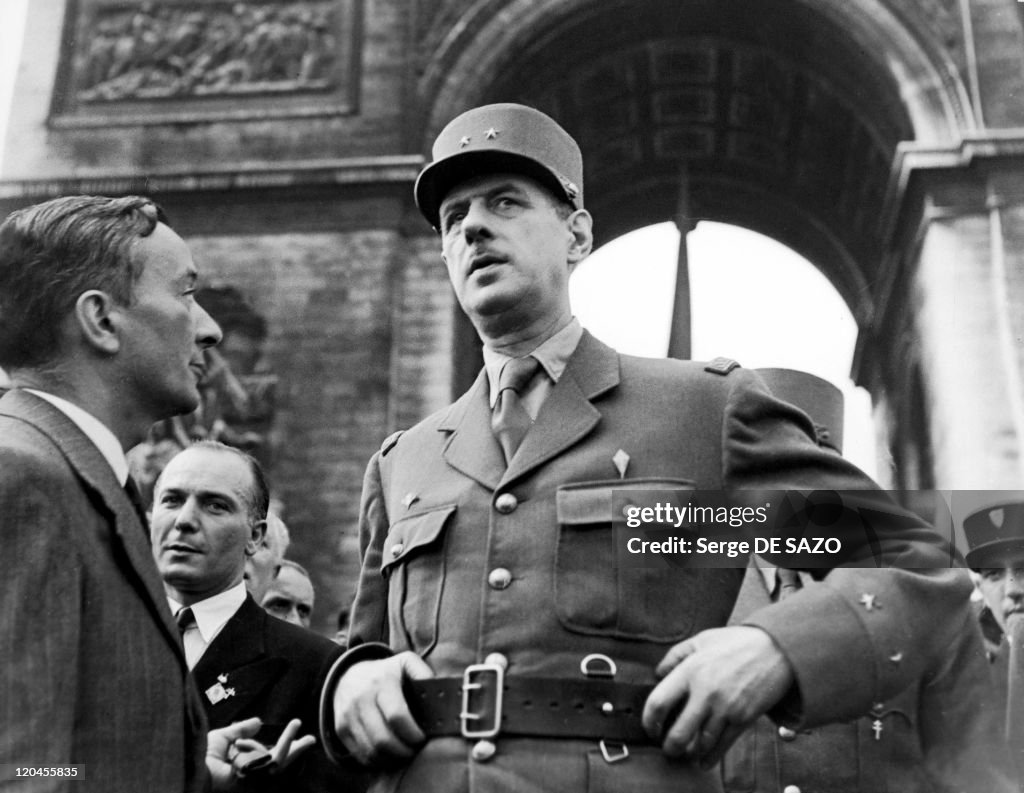
Charles De Gaulle And Georges Bidault In Paris, France On August 26, 1944 -

(Charles de Gaulle)

Jackson describes Petain’s demeanor during the trial which mostly appeared to be one of indifference, impassivity, as if he were in another world, though there were a few short outbursts defending himself.  Petain’s defense argued that by collaborating Petain “cunningly outwitted the Germans while allowing the subordinates to pursue a secret resistance .”  Further it was argued that Petain did not join the allies in North Africa after November 1942 because he believed his mission was to stay with his people.  Petain was therefore a “sacrificial martyr who supposedly had secret contact with the British and secretly supported the allied landing in North Africa in November 1942.  Lastly, Petain was not a “free agent,” he was answerable to Laval.  In the end this defense was not effective.

As far as the fate of the Jews is concerned, very little was mentioned at trial.  But, it is clear from the work of American historian Robert Paxton proves that under Vichy Jews were excluded from the civil service and other professions, the internment of Jews in the Unoccupied Zone, and the French carried out the arrest of Jews at the behest of the Germans.  Interestingly, Jackson points out as occurred in other countries when Jews returned to their homes after the war the atmosphere became poisonous as they tried to reclaim their property.   In fact, the Vichy Commissioner for Jewish Affairs, Louis Darquier (who Petain referred to as “the torturer), and the head of the French police during occupation, Rene Bousquet had no regrets concerning their role in sending Jews to Auschwitz and other camps.

An area of controversy discussed involves the United States which hoped to woo Vichy away from the Germans.  The US had diplomatic relations with Vichy and during the trial Washington was afraid that old wounds would be brought out, particularly French distrust for the United States.  Historian William Langer tried to whitewash the American relationship with Vichy, but Jackson, Paxton and others reported the truth of American complicity with Vichy.

Apart from the trial itself, Jackson vividly portrays the anguish of retribution as those who had collaborated with the Nazis found themselves spit upon, physically attacked, had their heads shaved, and criminally charged for their actions.  The period following the trial makes up a quarter of the book whereby the author describes how Petain’s supporters continued to fight to resurrect his reputation and place in history, even after he died and is buried on the French island of Il’ Yeu. 

François Mitterrand

(Francois Mitterand)

After the trial ended and Petain was imprisoned on the island the physical trial may have ended for Petain, but not for France.  Petainists and anti-Petainists continued the arguments presented at trial through various organizations, publications, and the personal agendas of many.  One of the more interesting characters was Charles De Gaulle who seemed to want the support of both sides.  Isorni continued the fight trying to exhume Petain’s body and have it moved to the national cemetery at Douaumont to be buried with other heroes of Verdun and petitioning for a new trial to overturn Petain’s conviction.  Petain remained a “political football” for decades after his death forcing politicians to make decisions which remained problematic as many French persons refused to let his actions go undefended.

It is clear that what is referred to as France’s “darkest hours” according to Agnes Poirier in her The Guardian, review of June 11, 2023, was one of cowardice, bad faith, dishonor and moral ambivalence.”  I agree with her further characterization that “what is chilling in Jackson’s beautifully researched and meticulous account of the trial is the hopeless mediocrity of almost all people involved in it: from judges and jurors (résistants and parliamentarians) to lawyers’ prosecutors and witnesses. Everybody seemed animated by petty or self-serving feelings; they were either out of their depth or spineless, but above all most were morally ambivalent. Before it began, De Gaulle had presciently talked of Pétain’s trial as a ‘lamentable but inevitable’ event.”  If you have an interest in exploring France’s greatest moral downfall in its modern history then Jackson’s comprehensive efforts should satisfy. 

“As Jackson explains: “De Gaulle knew he was on thin ice when claiming that Vichy was illegal. For that reason, he generally preferred to talk about legitimacy.” In the end, the difference between Petain and De Gaulle, between Vichy and the Free French, was their idea of honor. France’s duty had been to fight on whatever the risks, whatever the sacrifices. De Gaulle and his army of resistance saved France’s honor by the skin of their teeth. And as far as this French citizen is concerned, Petain and his clique can rot in hell for eternity.”

Petain Trial 1945

(August 1945 Trial of Marshal Petain)