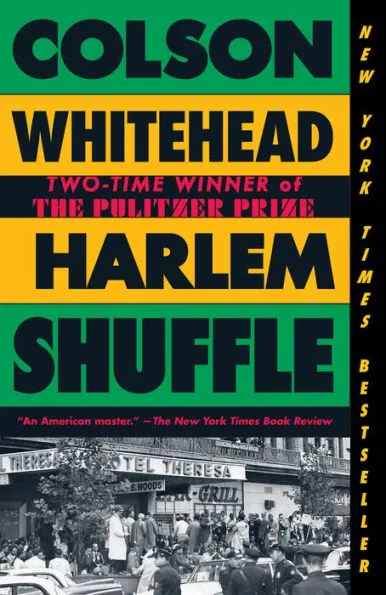
When someone begins a novel writing, “Carney was only slightly bent when it came to being crooked” you know the author knows how to engage his readers. In this case, the author is Colson Whitehead who has already been awarded two Pulitzer Prizes and a National Book Award for the UNDERGROUND RAILROAD and THE NICKLE BOYS. Colson is also the author of eight other works of fiction and non-fiction. The prequel to his latest work, CROOK MANIFESTO recently released is HARLEM SHUFFLE which immediately introduces a fascinating and somewhat complex character in Raymond Carney, a furniture salesman who also fences jewelry and other items for his cousin Freddie. When Freddie draws him into a larger heist the internal dilemma that always seems to rattle around in Carney’s brain takes hold between Ray the striver, and Ray the crook.
The novel is centered in Harlem in the late 1950s and early 1960s where Whitehead presents an accurate picture of the socio-economic condition of its residents. Carney owns a furniture store on 125th street with a side door for other monetary opportunities. Whitehead begins with an accurate description of the West Side Highway (a traffic abomination that I personally drove with my father at that time!). Whitehead is clear about the dichotomy of downtown and uptown Manhattan into the Bronx and the types of “crooks” that exist in pinstripe suits with loafers and those who dress in a more casual style.

(125th Street, Harlem, circa 1960s)
This contrast is evident throughout the book as “negroes” living uptown strive for acceptance in white society and try and develop their own upper crust in Harlem. The ambiance of small business during the period is emblematic of Carney’s store and other businesses and patrons he interacts with. Whitehead expertly weaves the history of Harlem during the period throughout the novel. The Apollo Theater, Adam Clayton Powell, Cab Callaway’s band, the Hotel Theresa, the “headquarters the Negro world” all make appearances. Organized crime is a dominant force as the Italian Mafia makes inroads uptown and ally with local gangsters.
Whitehead delves into a series of themes that are highlighted through dialogue and actual historical events. The racism of the period is on full display as Carney is ignored by white business types when he tries to conduct business. Commentary dealing with light v. dark negro skin color is a harsh reflection of the self-concept of negroes as they try and fit in. The Civil Rights movement makes an appearance through Carney’s wife, Elizabeth who works at Black Star Travel a business that tries to secure accommodation for negroes all over the country, particularly in the south. As the book shifts to 1964 the author explores the Harlem riots and the motivations of protestors and police alike. The violence and frustration of Harlem residents is obvious. The split within the negro community is ever present with “uppity” negroes who control the Alexander Dumas Club which hosts the leading political and economic figures in Harlem. It is interesting how Whitehead uses Carney’s father-in-law, Leland Jones, one of Harlem’s top accountants as the epitome of reverse negro racism as does Alma his wife who also abhors Carney and what he represents.

(Harlem, 1960s)
Corruption also dominates the novel as we see how the local mail service works. It is made up of bribes and payoffs for protection as money is sequestered in envelopes to be delivered or picked up on a weekly basis. This involves many policemen highlighted by Detective Munson who works with Carney. Cops, drugs, pimps all interact as part of the “accepted system.” Political corruption is a daily occurrence under the regime of Mayor Robert Wagner and Tammany Hall as nothing seems to get done in the city without a payoff.
Other themes that come to the fore include racism in America’s segregated army during World War II reflected in Pepper’s experience in Burma. Jewish-Black tension dealing with rents, jewelry and such though Mr. Moskowitz, a downtown jeweler seems somewhat honest as he fences gems for Carney, but also provides an education in dealing with jewels and their purveyors.
The plot goes round, and round as social commentary leaps off each page. For Carney who has been swindled by Wilfred Duke, a banker and senior member of the Alexander Dumas Club, it is all about revenge. However, that revenge leads him further into the nether land of Harlem’s underclass. Further, there is poor cousin Freddie who seems to have crossed the Van Wyck family, one of New York’s finest, despite the undercurrent of bribery, and Chink Montague, a Mafia boss. The problem is that his association with Freddie leaves Carney open to all kinds of extortion, fear, and in the end questioning if his lifestyle of half crooked and half not is worth despite its benefits. With a successful business, a wonderful wife and two children, Carney has a lot to think about.
Overall, the novel is an extraordinary story about an ordinary man who lives a double life. Whitehead writes with insight and humor and the story is an easy read. Despite some mean characters, Whitehead has the ability to bring out their inner humanity, but overall, it is a story about how the straight world operated during the day and at night the bent got to work. To sum up, Karan Mahajan in his 2021 New York Times review states it perfectly, Whitehead rights the ship by the third section of the novel, “which focuses on another crime to which Carney is an unwilling accomplice, with potentially deadly repercussions for the people he loves. And the crime story, which had become inert, suddenly revs to life, reminding us that Whitehead, beneath all the shambling and high jinks, remains an American master.”
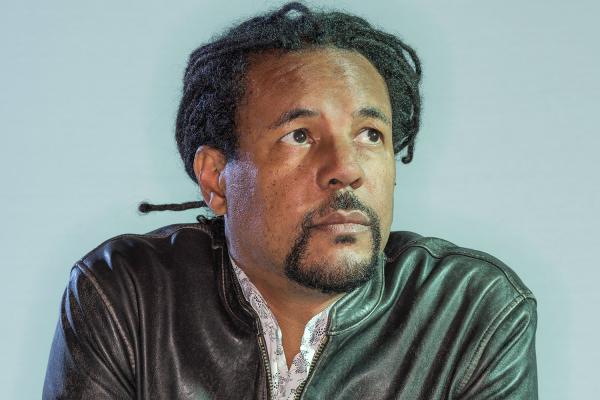
(Colson Whitehead)
 Doc's Books