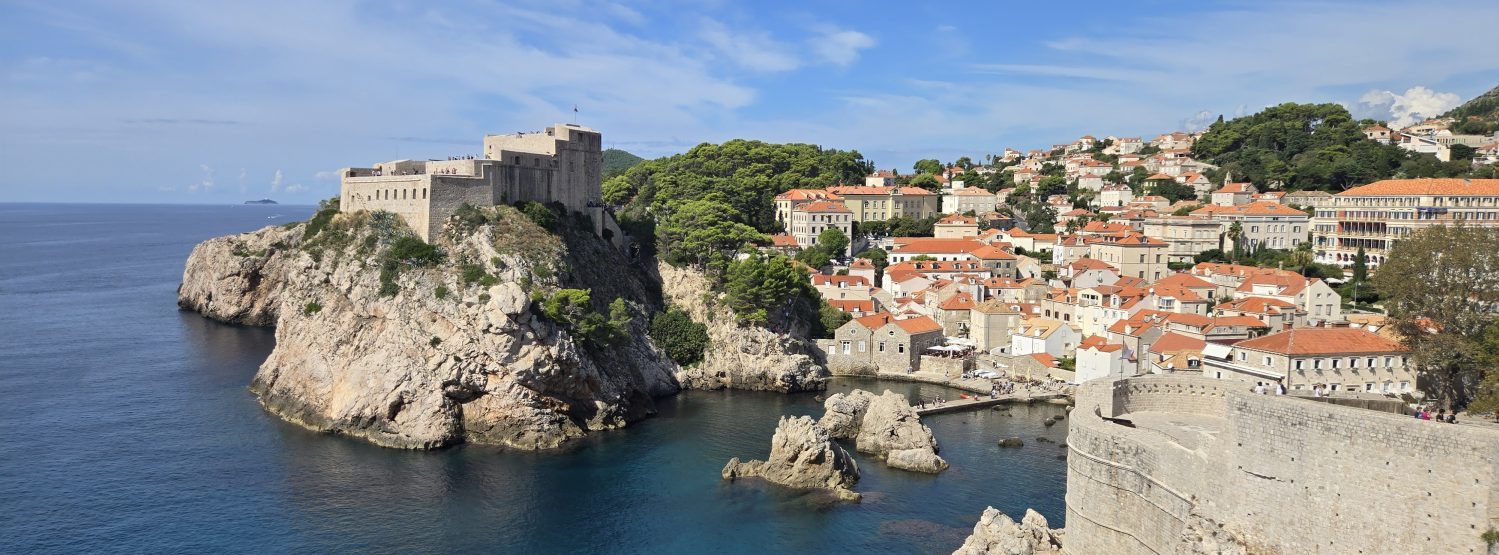

(The Kremlin, Moscow)
Since February 2022 when Russia launched its invasion of Ukraine a plethora of books have been published or reissued that deal with the mindset of Russian President Vladimir Putin. The most important include works by Philip Short, Steven Lee Myers, Catherine Belton, Masha Gessen, Mark Galeotti, Owen Matthews, Luke Harding, Christopher Miller, Serhii Plokhy, Angela Stent, Shaun Walker, and Samuel Ramani. These authors explore Putin’s rise to power, his Pan-Slavism ideology designed to restore the Kremlin to its previous world power status, his domestic agenda, and the reason behind his invasion of Ukraine. These monographs are works of non-fiction and rely on intensive research that includes interviews with the relevant personages and scouring available documentation to foster insights and critical viewpoints. Turning to the fictional genre it has a recent addition to this subject matter with the publication of THE WIZARD OF THE KREMLIN: A NOVEL by Giuliano Da Empoli that attempts to explain Putin’s realpolitik and other aspects of his reign employing the format of a novel.
The central character in Da Empoli’s work is Vadim Baranov, a lover of literature, also known as “the wizard of the Kremlin” who was a television producer before becoming Putin’s political advisor. After fifteen years at Putin’s side, Baranov decides to escape Putin’s grasp and explain the inner workings of the Russian state where Putin’s sycophants and oligarchs battle for the attention of the Russian Tsar. Russia finds itself in a dark place because of Baranov’s work as the Kremlin “spin doctor.” Baranov is ensconced in a system he helped create but realizes he must leave – not an easy thing to accomplish in Putin’s Russia.
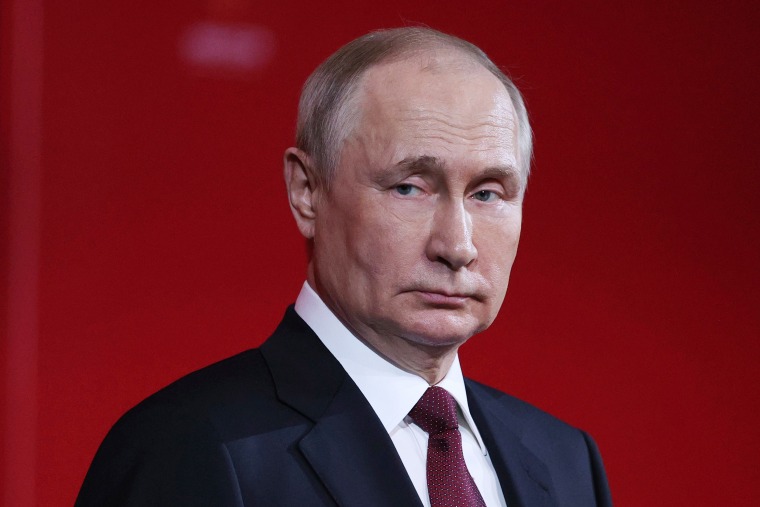
(Russian President, Vladimir Putin)
Da Empoli conveys his story by employing Baranov as a conduit for the narrator of the novel. The novel opens with an unnamed narrator visiting Moscow to research the early 20th century writer, Yevgeny Zamyatin. It turns out that Baranov is an admirer of the novelist and through social media the narrator visits Baranov in his remote country house. As the novel evolves Baranov shares his life story with his visitor moving with energy through Russia in the 1990s to the invasion of Ukraine.
As the Soviet Union comes to an end in 1991 it appears that Russia may be on the verge of some sort of democratic edifice with the end of censorship and a new cultural freedom. As we know this did not come to pass and Baranov, who resented the new intelligentsia realizes that the future will belong to more practical individuals as a result he will join Putin as a political/media advisor and consummate insider. In this capacity Da Empoli relates Putin’s rise to power and through dialogue with the Russian autocrat he explains in rather crude form his view of power, how it should be used, and what it can accomplish – the restoration of Russia as a force in the world.

(Russian oligarch, Boris Berezovsky)
Da Emploi’s fictional account borders on reality as he weaves in historical events and characters into his novel. We are witnessed to Putin’s actions and reactions to the sinking of a Russian submarine in the Barents Sea in which the entire crew drowned; terrorist attacks by Chechen rebels that some believe was carried out by the FSB; employing Putin’s large labrador in a meeting with German Chancellor Angela Merkel, knowing her fear of dogs, among many other examples. Influential figures appear and reappear. Oligarchs such as Boris Berezovsky, a billionaire who for a time owned ORT the main Russian television station; Mikhail Khodorkovsky, an opposition activist who had owed Yukos, the largest Russian energy company; Igor Sechin, Putin’s Deputy Chief of Staff and energy issues who would eventually take over Yukos; Yevgeny Prigozhin, a gangster who became Putin’s caterer and eventually opponent, and other important individuals.
.jpg)
(Igor Sechin, Putin’s Chief of Staff)
Da Empoli employs a sarcastic sense of humor and a great deal of irony in carrying out his plot as he compares the old Soviet state to the nouveaux riche of the new Russia. Through Baranov’s autobiography the author offers interesting comparisons of Joseph Stalin and Putin, and descriptions of Russia in the 1990s when it seemed to be on the cusp of some sort of democracy with the present autocracy. Da Empoli explains the need of the Russian people for stability and unity after the chaos of the 1990s – for Putin this could only be accomplished through raw power, never admitting an error, appealing to Russian nationalism by calling for a restoration of its Soviet Empire, interfering with the internal mechanism of western democracy, and never giving in to those who oppose him.
The author is right on as he parrots Putin’s critique of Russian docility toward the west under Boris Yeltsin. As Baranov recounts “our docility called for the harshest punishment. NATO flooded into the Baltic States, and American military bases into central Asia. The oversight of financial institutions was no longer sufficient; now they wanted to take power directly. Send us back to the basement and replace us with agents of the CIA and the International Monetary Fund. First in Georgia, then in Ukraine, the very heart of our lost Empire.” For Putin, American actions in Ukrainian elections and its move toward the European Union and NATO was the last straw resulting in the invasion.
The book is ostensibly about cunning and the manipulation of reality as Baranov, a wonderful storyteller that the reader falls under his spell. Baranov uses his prowess of creating a new reality, a vision of Russian specialness, a new national myth, and cultivates grievances against the west carrying out Putin’s mission. Da Empoli has created an important character to carry out his novel in Baranov, a cynic who possesses sharp political analysis. His character is loosely based on Vladislav Surkov, a politician and strategist whose Machiavellian approach to politics made him a perfect advisor for Putin as he accompanied him from St. Petersburg to the Kremlin. The novel succeeds as a work of fiction, but its origin in reality makes you shudder as you read on.

(The Kremlin, Moscow)
 Doc's Books