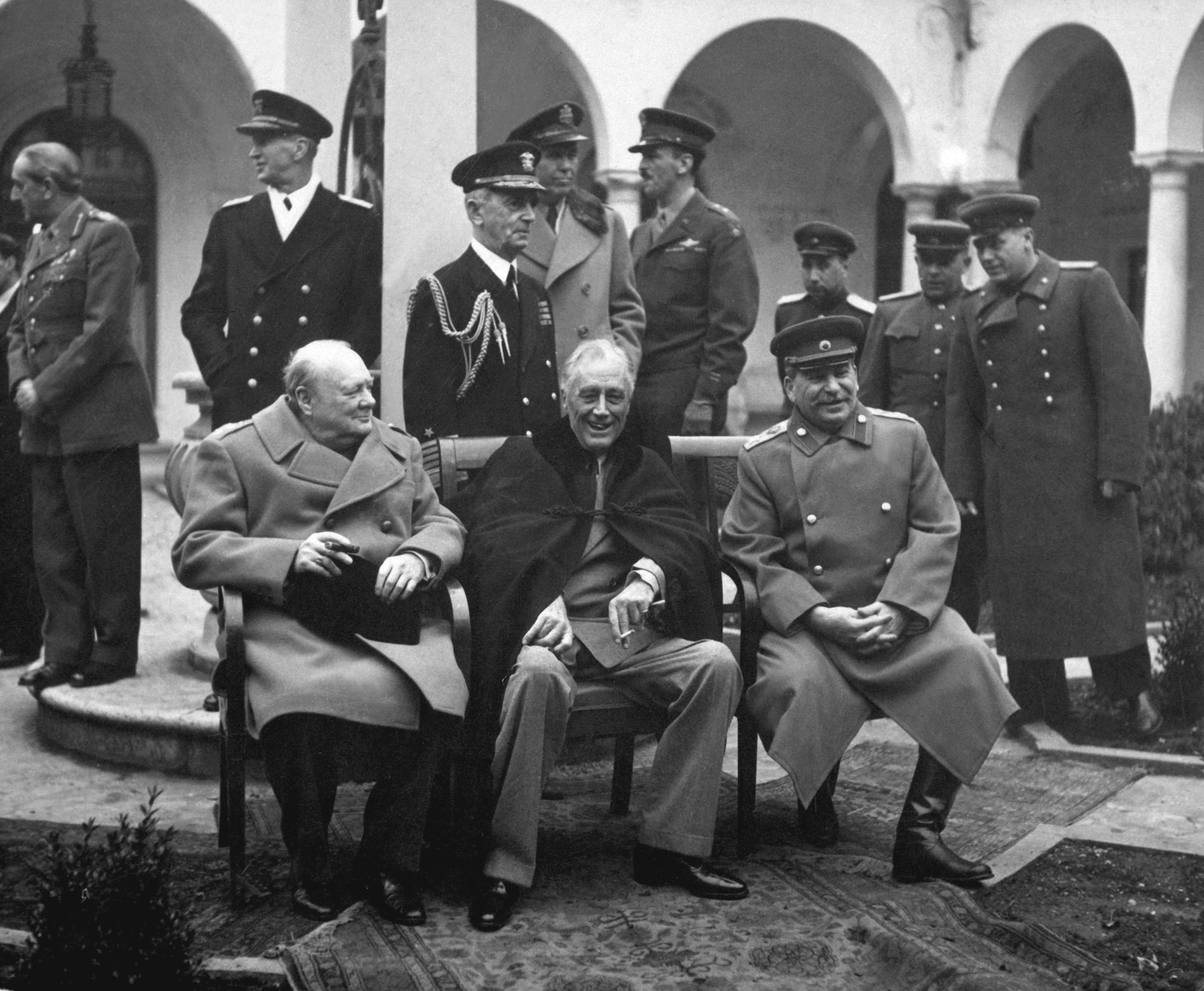
Many believe that the most important World War II conference between Winston Churchill, Joseph Stalin, and Franklin D. Roosevelt took place at Yalta. For those who despise Roosevelt it was at Yalta that the president was duped by the Soviet leader which would lead directly to the Cold War following the president’s death. Obviously, Yalta was of prime importance when one examines the post-war period, but in fact according to historian Keith Eubanks in his landmark study, SUMMIT AT TEHRAN, the agreements reached at Yalta and much of the postwar settlement were fashioned by the Tehran discussions.
Since Teheran was the first meeting of the “Big Three” coming at a time when it was becoming increasingly clear that the Germans were going to lose the war, anything the Nazis could do to prevent the allied leaders from developing plans to bring the war to a conclusion and what the post-war world would look like was imperative. For Adolf Hitler, if his commandos could disrupt the conference of perhaps kill allied leadership, new heads of state might be willing to develop more reasonable policies toward Germany other than the goal of “unconditional surrender” announced by Roosevelt at the Casablanca Conference on January 24, 1943. In Howard Blum’s NIGHT OF THE ASSASSINS: THE UNTOLD STORY OF HITLER’S PLOT TO KILL FDR, CHURCHILL, AND STALIN the author explores events and decision making surrounding the Nazi plan to assassinate allied leaders – code named Operation Long Jump. Blum’s effort is not a work of counterfactual history discussing what might have occurred had the Nazi plan been carried out, but an interesting historical monograph that unwraps how close the Nazis came to success.

(Walter Schellenberg as an SS-Oberführer in 1943)
Blum’s work reads like an engrossing spy thriller, when in fact it is a true story. It reads like a well written novel, but in reality it is a narrative history at its best. The monograph itself is presented on parallel lines. First is the competition between SS General Walter Schellenberg who headed Section 6 of the Reich Security Office (RSHA), and Michael Reilly, the Secret Service agent who was the head of President Roosevelt’s security detail. The author, having examined the pertinent documentation, delves into the mindset of both figures and the strategies they developed in order to achieve their goals. For Schellenberg it was to decapitate allied leadership, and for Reilly to thwart any assassination attempts and keep the “Big Three” safe. The second thread that Blum catalogues are the measures taken to protect Roosevelt and his allied compatriots and Nazi covert plans over a two year period to offset the fact that the war seemed lost by killing the “Big Three” and hoping that replacement leaders would be more amenable. Third, are the character studies of each of the important personages in the story. From Schellenberg and his commando operatives, allied and Nazi spies, to Reilly.
Blum’s commitment to detail is the highlight of the narrative. For example, the removal of tons of seized opium from smugglers stored in the basement of the Treasury building in Washington to create a safe space for Roosevelt after December 7, 1941, or the use of Al Capone’s automobile that was outfitted with amazing safety features for the time to protect the president. Other examples include Churchill’s capacity to ingest brandy and scotch and his lax approach for his own security. Blum delves deeply into the spy craft that was employed highlighting agents, double agents, recruitment of commandos, training for the assassination missions and other aspects of intelligence dexterity.
The author does a useful job discussing the competition within the Nazi bureaucracy exemplified by the relationship between General Schellenberg head of Section 6 of SS intelligence, and the head of Abwehr, the military espionage branch of the Wehrmacht, Admiral Wilhelm Canaris. Another example of this competition is highlighted by the Abwehr commando training program centered at Lake Quenz headed by Major Rudolph von Holten-Pflug produced jealousy on the part of Heinrich Himmler, head of the SS who ordered Captain Otto Skorzeny to create an SS version of Lake Quenz. It would be Skorzeny who had rescued Benito Mussolini from Allied control who would train the commandos and lead them into Teheran to assassinate their targets. Other key players include Franz Mayr and Roman Gamotha, German spies who had been dropped into Iran in 1940, one of which turned out to be a double agent; Julius Berthold Schilze-Holthus, a Nazi diplomat stationed in Teheran; Nasr Khan who led the Qashqai Tribe’s military arm who allied with the Germans; Lili Sanjari, Roman Gamotha’s secretary and Franz Mayr’s mistress among many other characters.
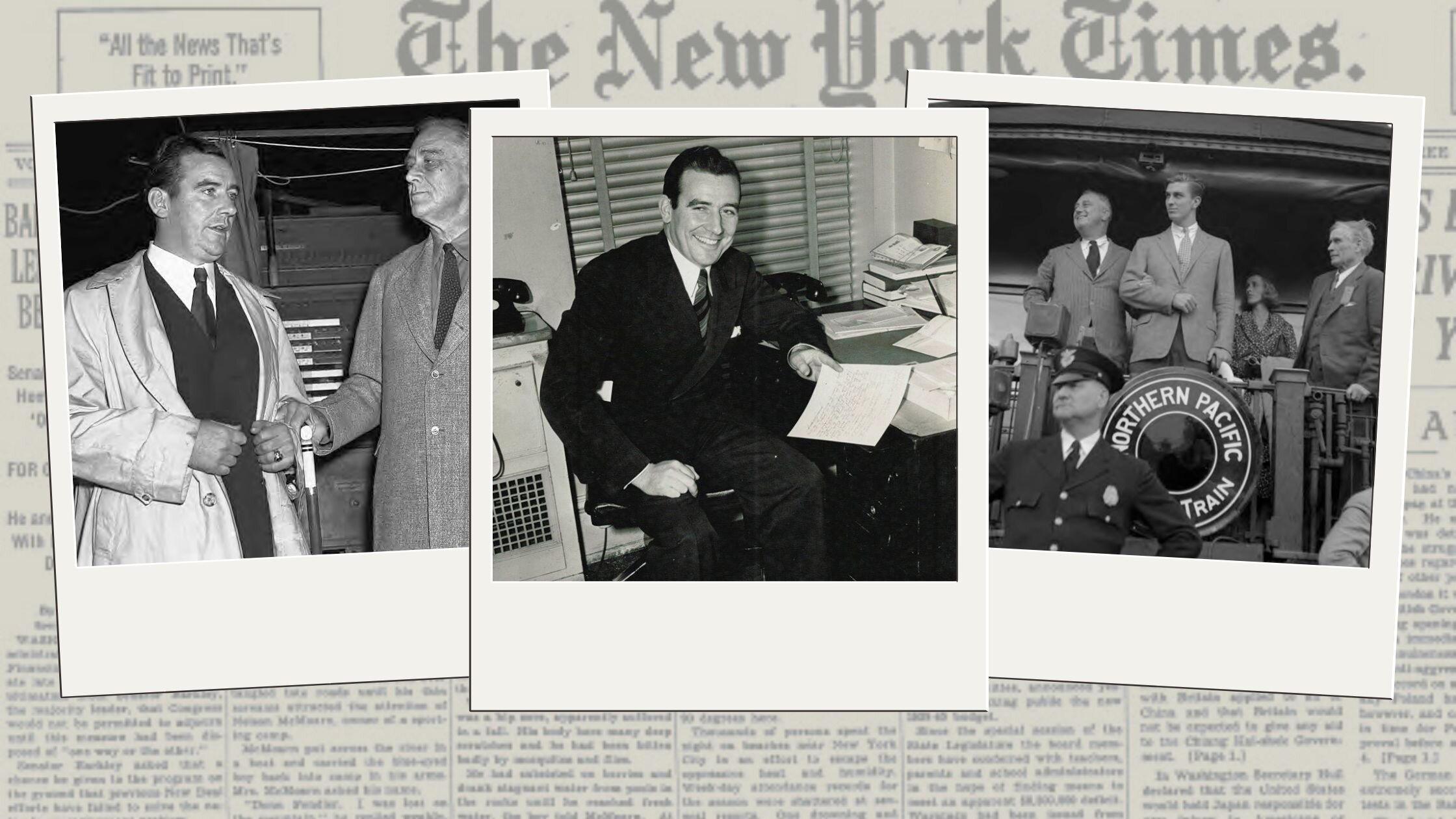
(Michael Reilly and FDR)
At various times it appears that Schellenberg’s plot would be successful. By November 1943, all the pieces he put into place had come together. Abwehr and SD agents had successfully gone undercover in Iran early in the war. Two agents remained active, one in Teheran, and the other in the tribal hill country. In previous operations commandos had parachuted into Iran and established the procedures for aerial insertion missions with the necessary equipment to carry out the plot. Further, the alliance with Nasr Khan remained firm. Lastly, Hitler had complete confidence that Otto Skorzeny, the very tactician who had supervised the training and execution for previous missions into Iran, could carry out a successful assassination mission.
It is interesting to explore how Reilly and the American secret service tried to keep the President and his entourage safe. Reilly had to deal with a stubborn president who enjoyed certain peccadillos of life that he was wanting to give up. Further, plans seemed to change almost on a dime especially as negotiations with Stalin to choose the site of the meeting constantly ran into roadblocks. Other aspects of the trip to Tehran after it was finally chosen were that Roosevelt, Churchill, and Kuomintang leader Chiang Kai-Shek would first meet in Cairo which created more headaches for Reilly and company.

(Otto Skorzeny in 1943)
The role played by the Russians is consequential for a country that was occupied by both the Soviet Union and the United States. During the war, Iran became a major transshipment route for American Lend-Lease aid to the Soviets, and thousands of American, British, and Russian troops controlled the major cities and ports, particularly Tehran. Blum shows the ruthless nature of the Soviet precautions as Soviet intelligence and secret police agents of the NKVD, the forerunner of the infamous KGB, began a massive sweep of Tehran to arrest any German national or potential sympathizer when the first hint of a conspiracy is heard. For Reilly, the role of Soviet intelligence was concerning with their nest of secret agents and posers in Teheran, and how he could work with his Soviet counterparts to ensure the safety of the “Big Three.” Reilly’s concerns were also evident when Stalin offered to have the American delegation moved to the Soviet compound in the city. The rationale was clear, the American embassy was just outside the city and would require a short car ride each day for the president creating an interesting target. A move to the Soviet compound would include Russian eavesdropping devices placed throughout where the American delegation would be staying – certainly, a dilemma for the Americans. Interestingly, Roosevelt was not keen staying at the British compound located near the Russians either.
Blum uses Russian archival sources only made public in the last twenty years along with an ample collection of other primary and secondary sources as he weaves a fast-paced story of how Nazi intelligence services and special commando units tried to infiltrate an assassination team into Iran. It is a story that would make Ken Follett, Robert Ludlum, and Ian Fleming proud. In the end the Germans would come closer to a successful suicide mission that is generally believed. Except for the usual difficulties of controlling foreign intelligence operatives-greed, stupidity, and bad luck, the Nazis might have gotten their commandos within lethal proximity to the “Big Three” and conducted a successful war altering mission.
If you would like to read an updated version of the story see Brad Meltzer and Josh Mensch’s THE NAZI CONSPIRACY: THE SECRET PLOT TO KILL ROOSEVELT, STALIN, AND CHURCHILL.




 Doc's Books