THE BOOKSHOP: A HISTORY OF THE AMERICAN BOOKSTORE by Evan Fliss

(The Strand Book Store, 12th and Broadway, NYC)

When I first graduated from college in 1971 I worked at a small family owned publishing firm in lower Manhattan called T.Y. Crowell and Company.  It introduced me to the process of book publishing and afforded me enough of a salary that every Friday when I was paid I would walk to Broadway and 12th Street in Manhattan, the home of the Strandbook store.  I would proceed to blow half my paycheck on remaindered/used books and have a falafel sandwich from the food truck in front of the store.  This behavior continued for about a year when Crowell was sold to Dunn and Bradstreet and moved the firm to 666 Fifth Avenue (the building the Saudis bailed out Jarad Kushner with $2 billion!) and the doom of sleaze of corporate America.  This led to my resignation when the office manager, affectionately labeled by my boss as “silly bitch” refused to allow me to hang my Bob Dylan poster on the wall.  I proceeded to graduate school to earn a Ph. D in history.

The thing I carried with me from this experience was my love of books.  Today I own a library of about 8500 volumes which has created a family problem when trying to downsize.  Over the decades I have spent an inordinate amount of time browsing and buying in bookshops.  The Strand, despite its commercialization since COVID remains my favorite.  As my wife and I have traveled across Europe and other places I make it a habit to visit a bookstore and purchase a book in every city visited.  Perhaps my favorite is Bertrand Bookstore located in Lisbon, Portugal, supposedly the oldest book establishment in Europe.  Strolling on Charing Cross Street in London also produces many bookshops which I have fond memories of.  In the United States among my favorites include Powell Books in Portland and Chicago; Haslams Books in St. Petersburg, Titcomb’s Books in East Sandwich located on Cape Cod, the Harvard Bookstore in Cambridge, MA, Water Street Books in Exeter,  NH, Douglas Harding Rare Books in Wells, ME, Old Number 6 Book Depot in Henniker, NH, Toadstool Bookstore in Peterborough, NH, and of course there are numerous others that I could list!

Powell's Books City of Books on Burnside

(Powell’s Bookstore, Portland, OR)

As I have spent so much time in bookshops I have developed a love for the ambiance, smell, and contact with other book buyers who share my affliction as a book-a-holic as I cannot leave a bookshop without a purchase.  Over the years I have looked for the best history of American bookstores.  Recently, I believe I have found it, Evan Friss’ latest endeavor, THE BOOKSHOP: A HISTORY OF THE AMERICAN BOOKSTORE

Friss has authored an ode or perhaps a love song to his subject – a warm historical recounting of the personalities, challenges, historical perspective, and pleasure people derive from frequenting these establishments.  Friss introduces his topic by describing a small bookshop located in New York City’s West Village which opened in the 1970s.  This marked his entrance into the wonderful world of books that I have loved since my early teenage years.

Over the years independent bookstores have been disappearing.  According to Friss, in 1993 there were 13,499 bookstores in America, in 2021 just 5,591.  Friss is correct in that, “if bookstores were animals, they’d be on the list of endangered species.”

Land vehicle, Automotive parking light, Automotive tire, Automotive exterior, Automotive lighting, Alloy wheel, Fender, Rim, Town, Vehicle door,

(Books are Magic Bookstore in Cobble Hill, Brooklyn, NY owned by author Emily Staub and her husband)

Friss lays out his monograph in chapters set in a series of book establishments that includes itinerant book people who used carriages pulled by horses in the 18th century onward, trucks filled with books, kiosks on streets, book delivery trucks (long before Amazon), and of course a brick and mortar shops.  These establishments produced amazing personalities that include Toby, the owner of Three Lives Bookstore, located in the West Village; Benjamin Franklin’s Bookshop in Philadelphia in the 1770s, Old Corner Books run by B. H. Ticknor, a friend of Nathaniel Hawthorne; George Harrison Mifflin and E.P. Dutton who also owned bookshops during this period; James T. Fields who also published The Atlantic Monthly, Marcella Hahner who supervised Marshall Field’s Department store large book section and greatly impacted the role of women as book sellers through book fairs, author presentations (i.e.; Carl Sandburg’s books on Lincoln), she could make a book’s success if she endorsed and ordered it – a 1920s Oprah!; Roger Mifflin who drove a truck selling books, as did Helen McGill.   Frances Steloff developed the Gotham Book Mart that specialized in literature that dominated the New York book scene including publishing for decades including World War II.  Ann Patchett, bestselling author opened Parnassus      Books in Nashville, as the city was losing bookshops and she believed with her partner Karen Hayes that the city needed an indie bookstore that thrived as she saw herself protecting an endangered species.  Lesley Stahl called Patchett “the patron saint of independent bookstores.” Lastly, how could you author a book about bookshops and not provide a mini biography of Jeff Bezos and how Amazon tried to take over the book trade.

Friss is correct that when entering a bookstore, it is a “sensory experience” – The scent of a book known as “bibliosmia” which I love while holding a book cannot be replicated with a Kindle.  These experiences have been greatly impacted through our sectionalist history.  Since most books published in the United States before the Civil War were in the northeast, authors have to avoid any discussion of slavery for fear of lost sales below the Mason-Dixon line.  This did not stop Tickner and Fields from publishing UNCLE TOM’S CABIN.  Soon Ticknor was taken over by E.P. Hutton and merged with Houghton, Mifflin.

  • NH – EXETER – WATER STREET BOOKSTORE – DOUBLE AWNING ENTRANCE - OPEN
  • (Water Street Books, Exeter, NH)

The role of book buyers is carefully laid out by the author.  It is in this context that Paul Yamazaki is discussed and his San Francisco bookshop  It was during the late 19th century that traveling bookstores emerged from Cape Cod to Kennebunkport, Northport to Middlebury, all the way to Lake Placid.  They would drive their carts, carriages, trucks all over making customers and friends. Yamazaki would order appropriate books and deliver them to his customers – especially important in rural areas.

Friss uncovers many tantalizing stories about the book business, particularly the relationships between booksellers and the evolution of how these interactions would later lead to the forming of publishing companies that set the market with book buyers of what was available for the public to read and purchase. Perhaps the best stories are presented in his chapter on The Strand Bookshop as it brought me back to 1971 and browsing their stacks.  The picture of the shop that Friss includes from the 1970s is exactly as I remember it..  The narrowness of the aisles, the smell of used books, and the store’s ambiance were perfect.  For me going downstairs where the 50% off publisher copies is located was my favorite.  Friss includes personality studies of Burt Britton and Benjamin Bass who owned and operated Strand for years.  Friss’ focus is on the evolution of the Strand from its 4th avenue Book Row location to 12th and Broadway.  Due to Covid and  Amazon the shop went under a more commercial transformation (it now offers pastries and “Strand blend coffee”) but it remains an iconic bookshop and tourist attraction, but it has lost some of its roots from the 1960s and 70s.

Friss correctly points out that bookshops had a significant role in American foreign policy aside from its domestic influence.  The Aryan Book store opened in Los Angeles in 1933 and evolved into the center of American Nazism managed by Paul Themlitz.  Book shops were also caught up in the anti-communist movement with over 100 stores run by the Communist Party of the United States.  Wayne Garland managed a successful socialist bookstore in Manhattan called the Worker’s Bookshop and also fought against Fransico Franco in the Spanish Civil War as part of the Abraham Lincoln Battalion.  Congress even held hearings in the 1930s about these stores, particularly the growing communist movement.  This would lead to further issues during the McCarthy period in the early 1950s as government officials believed that if you frequented certain types of bookstores it was an indicator of your politics and threat level.  Apart from the right components of the book trade Fliss nicely integrates the other spectrum, recounting counterculture shops.

(Author and ownerof Parnassus Books in Nashville, TN, Ann Patchett)

Fliss doesn’t miss any angle when presenting his history of bookshops as he discusses the life of Craig Rodwell who was known as the “sage of gay bookselling.”  Rodewell would open the Oscar Wilde Bookshop in Greenwich Village in 1967 with the store serving as the front line of activism after the NYPD launched  the Stonewall Raid which would lead to the gay pride movement.  All of these types of bookshops are important to American culture which today is under attack as more and more state legislatures are producing legislation to ban books.  Interestingly, freedom of speech does not seem to be part of the right wing interpretation of the constitution.

One of the most interesting aspects of Fliss’ research is the impact of the killing of George Floyd on the book market.  As the “Black Lives Matter” movement spread the increase in book sales to black owned bookshops skyrocketed.  Fliss provides a concise history of black owned bookshops dating back to the 19th century and his conclusions are quite thoughtful.

Fliss devotes the last section to the growth of large chain bookstores like B. Dalton, Borders, Waldenbooks, Doubleday, and the goliath of stores created by Barnes and Noble.  By 1997 Barnes and Noble and Borders accounted for 43.3% of all bookstore sales.   By 2007 Barnes and Noble had $4.65 billion in book sales and the competition was slowly withering away.  Fliss explains that 2019 what once was a battle between indie bookstores and the large chains evolved into a war between in-person bookstores and Amazon.  Barnes and Noble’s massive growth had stalled, and an investor group controlled by Waterstones, Britain’s largest bookstore chain, poured money into Barnes and Noble, who like others had significant issues caused by Covid.  Its resurgence in its fight with Amazon was led by James Daunt, known as a “bookstore whisperer” in England – his goal was to make Barnes and Noble more like an independent store.  Daunt has been very successful in recreating Barnes and Noble and Fliss correctly concludes that the fate of the chain is “intertwined with the fate of American bookselling and maybe even the fate of reading itself” as Amazon is always hovering over what we read and where we buy.

Fliss has authored a phenomenal book tracing the development of bookshops for centuries culminating with the threat of Amazon and Jef Bezos who wanted to put “anyone selling physical books out of a job.”  The situation grew worse with the Kindle resulting in 43% of indie shops being driven out of business and by 2015 with its $100 billion in books sales.  By 2019 Amazon sold 50% of the books purchased in the United states.  What is clear from Fliss’ somewhat personal monograph, bookstores were a public good – the benefit was the experience – the browse, interaction with others, a place of comfort and rejuvenation.  Fliss’ work is a treasure for anyone who loves books, and possibly for those who don’t!

Strand Book Store 1 Bookstores Greenwich Village

(The Strand Bookstore)

ALL THE GLIMMERING STARS by Mark Sullivan

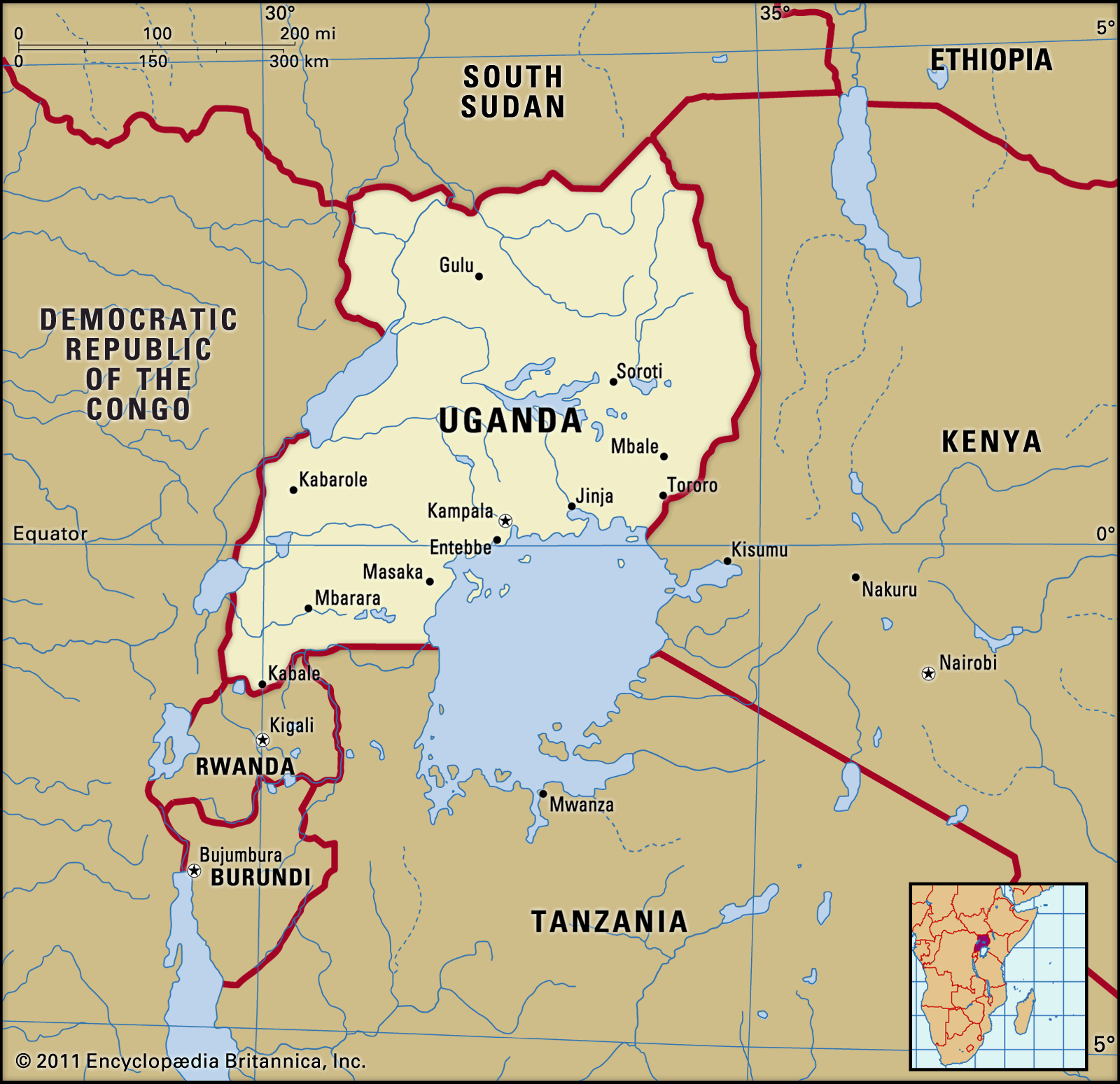
Uganda Kenya Border Map Image courtesy of Britannica Inc

Mark Sullivan’s grasp of story creation for historical fiction is exceptional.  He has the ability to blend storytelling with historical facts that transport the reader to different eras seeking to understand the interplay of human relations.  This talent was on full display in his previous two novels; BENEATH THE SCARLET SKY which centers on the rescue of Jews  during the Holocaust guiding and transporting them across the Alps, and THE LAST VALLEY which focuses on people caught between the pincer of Nazi Germany and Stalinist Russia during World War II Ukraine.  Sullivan’s remarkable story telling gift is on full display in his latest effort; ALL THE GLIMMERING STARS as two young people, Anthony Opoka and Florence Okori are kidnapped and forced into the fanatical Lord’s Resistance Army (LRA) in the early 1990s, though the story encompasses the 1987-2009 period.  Sullivan describes how these two and other victims try to navigate their captivity and survive.  The book is historical fiction, but it is based on the actual journey of Anthony and Florence.

Image

(LRA leader Joseph Kony)

In developing his plot line, Sullivan describes the daily existence in parts of Uganda where a primitive lifestyle full of disease, poverty, and civil war is the norm.  At the outset, the main characters are children.  Anthony Opoka is a fifteen year old when seized by the LRA, after a wonderful life with his family, particularly his father George, who spends his time instructing his son from an early age to be a good human.  Florence Okori, who lived 60 kilometers southeast of Anthony’s village comes from a family that believes in education, and she is a lover of school and her goal in life is to be a nurse.  However, nomadic warriors called the Karimojong  arrive at her school, strip her teachers and burn all educational facilities.  Florence is devastated as she had spent two years surviving a measles epidemic and now she has lost the thing she loves.

Anthony and Florence will meet in captivity and fall in love realizing that they can never go home again.  Under the threat of messianic warlord Joseph Kony and his LRA who continue to kidnap children to do their fighting, Anthony and Florence devote their lives to helping their fellow child captives escape bondage and return to their families by relying on their early education by their parents by following the stars.

No photo description available.

(Anthony Opoka and Florence Okori)

As the story evolves Sullivan lays out the psychological imprint that the LRA strives for as it brain washes its child recruits.  Joseph Kony sees himself as a messiah in the light of Jesus and his own version of Catholicism.  Military and mind training are developed through Anthony’s experiences and his friend Patrick Lumumba who saves his former competitor’s life on more than one occasion.  The combat experiences are vivid and hundreds of unarmed child soldiers are killed.  Dealing with Anthony’s psyche on multiple levels, Sullivan brings out the hidden survival skills taught by his father as he approaches a life as “a good human.”  For Anthony, who “not long ago had been a head boy, a top student, a leader, a revered son and brother, a running champion, a young man with a bright future in front of him,” all seem lost as he is absorbed into the LRA.  At first, Anthony seems to try and rationalize the benefits of his situation, but after facing combat as an unarmed teenager and a fully equipped soldier his attitude become one of bitterness against Kony believing his youth and promise has been stolen by a man who ruled with merciless fear, killing children or turning children into killers for his own insane ideas.

The situation for child  recruits is deplorable as they are used as cannon fodder in the LRA’s war to overthrow the Ugandan government.  The back story is clearly laid out as the LRA is allied with the Sudanese government which is threatened by the Dinka tribe in southern Sudan.  In return for the LRA fighting the Dinka, the Arab government supplies the LRA with weapons, money, and training.  Kony’s rationale is to employ his forces to defeat the Dinka, and once that job is completed take all they have acquired and learned and overthrow the Kampala government.

The story markedly changes when Anthony and Florene are abducted.  Their lives were now subject to Kony’s whims and the LRA with so many contemptible rules about all aspects of their existence.  Sullivan takes the reader throughout northeast Uganda and southern Sudan as combat rages and the death count rises, particularly among the child warriors.  Sullivan delves into Kony’s thought process as the guerilla leader’s goal was to create fighters out of 12 to 16 year old teenagers because their brains were not fully developed, weak, and ready to be brainwashed and trained.  His rationality rested on the lack of  anything good in their lives.  Kony’s convoluted belief system alleged that once they made it through their training ordeal and facing the enemy without weapons they would realize their value to Kony personally and the LRA in general.  They would then feel part of a family and a vision of the future which would link them to Kony forever.

Anthony Opoka

(Anthony and Florence on the left, the rest are family and friends)

As time passed, Anthony was accepted into Kony’s good graces as he rose to become his communication officer.  Despite his survival, Anthony grew increasingly bitter and angry toward Kony as he witnessed the seizure of thousands of child recruits and their resulting deaths.  For Anthony, Kony was a cruel megalomaniac.

Sullivan’s gift is his ability to write about the horrors of events in Uganda and southern Sudan in a manner that allows the reader to tolerate their revulsion as to LRA actions.  This is accomplished as Sullivan does not hammer the reader with repulsive descriptions but lays out events as “softly” as possible.

Sullivan introduces and develops a number of important characters that influence Anthony and Florence’s lives.  Mr. Mabior, a shopkeeper, educated Anthony as he lay dying and imparts his wisdom concerning the “four voices of suffering;” Mr. Alonsius, Florence’s teacher whose praise created her goal of becoming a nurse; Miss Catherine, a nurse whose care saved Florence from dying from measles;  Patrick Lumumba, Anthony’s racing competitor who will become his friend and guide him through the labyrinth of rules fostered by the LRA;  Anthony’s father, George offered much needed advice that was the key to Anthony’s survival – “whenever you were confused about what to do, always ask – what would a good human do?” and Josca, Florence’s mother, would always say, “there is nothing stronger than the power of love – whatever the problem, it could be solved by turning to love as the answer.”

The dichotomy of Anthony and Florence’s lives are on full display before and after their abduction.  Their eventual love for each other and their children will help them overcome practically anything as they both came from strong loving families, and they maintained the values their parents taught them throughout their lives.  Sullivan’s recreation of their life story is at times harsh, warm, with the ability to face and overcome whatever challenges they must confront.

Ugandan Rebel Leader Joseph Kony Makes Rare Appearance

(Joseph Kony and his followers)

Ultimately the novel describes two people who are madly in love, resilient, and the ability to persevere, exhibit tremendous courage, with a high degree of compassion.  Their upbringing, family values, and moral code allowed them to survive.  It is a story of a spiritual journey taken by two people which resound throughout the novel. Sullivan has authored an impactful story and hopefully his subject matter dealing with child seizures, war, and death will end quickly in areas of Africa.

To conclude, every time I read a Mark Sullivan novel the time expended is rewarding on every level.  I hope he is working on his next book which I will read with pleasure.  Sullivan continues to tell stories that are inherently moving, inspiring, healing and without doubt extremely meaningful for me and his many readers.

———————————————————————————————————————————————-

After the Ugandan Civil War, Kony participated in the subsequent insurgency against president Yoweri Museveni under the Holy Spirit Movement or the Uganda People’s Democratic Army before founding the LRA in 1987. Aiming to create a Christian state based on dominion theology, Kony directed the multi-decade Lord’s Resistance Army insurgency. After Kony’s terror activities, he was banished from Uganda and shifted to South Sudan.

Kony has long been one of Africa’s most notorious and most wanted militant warlords. He has been accused by government entities of ordering the abduction of children to become child soldiers and sex slaves. Approximately 66,000 children became soldiers, and 2 million people were displaced internally from 1986 to 2009 by his forces. Kony was indicted in 2005 for war crimes and crimes against humanity by the International Criminal Court (ICC) in The Hague, but he has evaded capture. He has been subject to an Interpol Red Notice at the ICC’s request since 2006. Since the Juba peace talks in 2006, the Lord’s Resistance Army no longer operates in Uganda. Sources claim that they are in the Democratic Republic of the Congo (DRC), the Central African Republic (CAR), or South Sudan. In 2013, Kony was reported to be in poor health, and Michel Djotodia, president of the CAR, claimed he was negotiating with Kony to surrender.

By April 2017, Kony was still at large, but his force was reported to have shrunk to approximately 100 soldiers, down from an estimated high of 3,000. Both the United States and Uganda ended the hunt for Kony and the LRA, believing that the LRA was no longer a significant security risk to Uganda. As of 2022, he is reported to be hiding in Darfur.*

*https://en.wikipedia.org/wiki/Joseph_Kony

THE WAR OF PRESIDENTS: LINCOLN VS. DAVIS by Nigel Hamilton

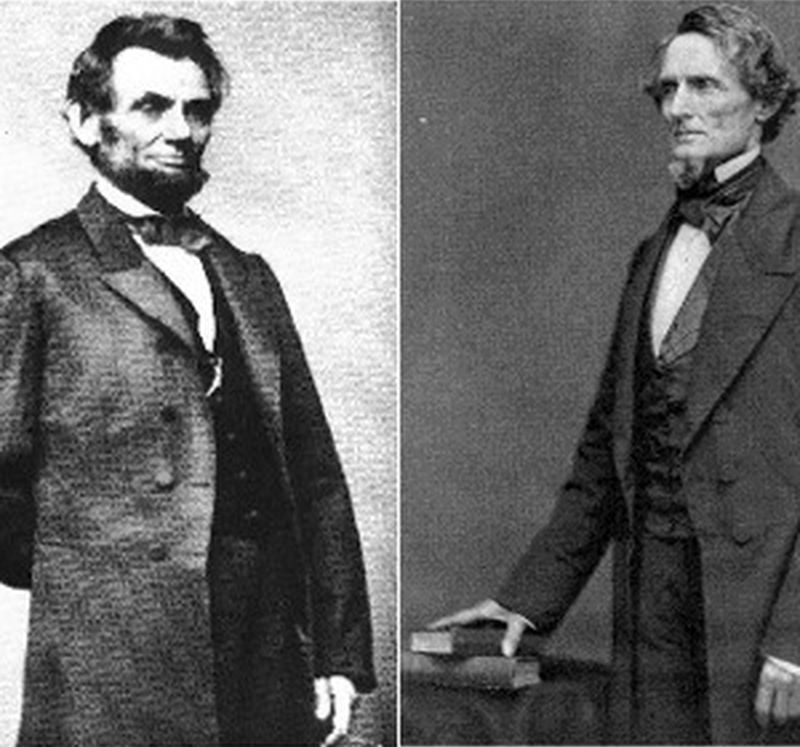
(Confederate President Jefferson Davis and President Abraham Lincoln)

One might ask if we need another book about the Civil War.  What angle might an author take that would appear new and consequential?  It appears that presidential historian  Nigel Hamilton, the author of a trilogy focusing on the presidency of Franklin D. Roosevelt, another on Bill Clinton, and finally one on John F. Kennedy has done so.  Further, Hamilton has also written a monumental multi-volume biography of British General Bernard “Monty” Montogomery and seems to have found his Civil War niche.  Hamilton’s latest effort entitled THE WAR OF PRESIDENTS: LINCOLN VS. DAVIS focuses on presenting a comparative biography of Abraham Lincoln and Jefferson Davis zeroing in on the first two years of the war and their viewpoints and actions.  Hamilton’s goal as he states in the preface is “to get into their warring minds and hearts – hopefully supplying enough context, meanwhile : to judge their actions and decisions, both at the time and in retrospect.” 

From the outset Hamilton raises an important question; how did the “rail-splitter” from Illinois grow into his critical role as Commander-in-Chief, and manage to outwit his formidable opponent, Jefferson Davis who was a trained soldier and Mexican War hero, while Lincoln, a country lawyer had served only briefly in the militia?  The answer  to this question is fully addressed by the author as he reaches a number of important conclusions, none more important than Lincoln’s refusal to name slavery as a cause and goal for the war in order to maintain border state loyalty and encourage a reunion with the Confederacy.  This was Lincoln’s mindset for two years as Hamilton relates his personal moral equation in dealing with slavery as he ultimately will change his policy and issue the Emancipation Proclamation in January 1863 freeing 3.5 million slaves without which the south could not fund their armed insurrection.  Once Lincoln made it clear the war was being fought over slavery European support for the south and diplomatic recognition necessary for the survival of the Confederacy would not be forthcoming – sealing the defeat of the south and the failure of Davis’s presidency.

William Seward

(Secretary of State William Henry Seward)

Hamilton’s methodology is to alternate chapters following the lives of both men.  From Davis’s arrival in the first Confederate capital in Montgomery, Alabama to Lincoln’s tortuous voyage avoiding assassination plots as he arrived in Washington, DC.  The key topics that Hamilton explores include a comparison of each president’s personality, and his political and moral beliefs including events, strategies, and individuals who played a significant role leading up to and the seizure of Fort Sumter.  These figures encompass role of Major Robert Anderson who commanded the fort and General Winfield Scott, who headed northern forces, the role of Lincoln’s cabinet particularly Secretary of State William H. Seward, who was seen by some as committing treason for his actions, Postmaster General Montogomery Blair who was against the war, and Secretary of War Edwin M. Stanton.  Hamilton goes on to lay out the catastrophe that was General George McClellan and his paranoia and refusal to take advantage of his overwhelming military resources and his incompetent “Peninsula Campaign.”

Hamilton does a wonderful job digging into the personalities of the major historical figures and how their actions influenced Lincoln and Davis and the course of the war.  The roles of McClellan, Fremont, Scott have been mentioned but the author also delves into the mindset of important military leaders such as Generals Joe Johnston, Pierre Beauregard, Stonewall Jackson, Irvin McDowell, and others.  Further, Hamilton also introduces a number of important sources that other historians have not mined as carefully.  For example, the diaries of State Department translator Count Adam Gorowski, a Polish aristocrat whose negative opinions of Lincoln are striking as it seemed Lincoln was unable to enforce the powers of his office and lack of military competence would have drastic consequences.  London Times war correspondent William Howard Russell’s opinions are explored in detail, in an addition to Elizabeth Keckley, a formerly enslaved woman who first served as a seamstress to Davis’s wife Varina, and later to Mary Todd Lincoln, and John Beauchamp Jones, a War Department clerk from Maryland who supported the Confederacy.

George McClellan, Portrait, Brady

(Commander of Northern forces, General George Brinton McClellan)

Hamilton’s view of Lincoln is rather negative for the first two years of the war as he writes, Lincoln, “had really no idea what he must do to win the war – or how to reconstruct a civil society in the slaveholding south, so dependent upon cotton, if he ever did.”  Interestingly, Davis wanted a defensive war to protect the deep south, he never favored a full blown civil war with the seizure of Washington, but was forced into it when more states seceded, he was called upon to protect them as they moved the Confederate capital to Richmond, Va.  Davis’ strategy was to bluff Lincoln until it was clear that McClellan’s Peninsula Campaign was foolish, then he went on the offensive. 

What sets Hamilton’s work apart from others is his writing style.  His narrative prose flows evenly and makes for a comfortable read.  His sourcing is excellent adding the latest documents and secondary sources available.   His integration of letters, diary excerpts, and other materials creates an atmosphere where the reader is party to conversations and actions between the main characters, i.e., Lincoln-McClellan interaction in person and in writing among many others.  Hamilton’s approach provides for subtle analysis, but he does not hold back, particularly in providing evidence for Lincoln’s mediocre performance as a military leader, who is overly worried about political issues.  This is evident in his approach to McClellan’s Peninsula campaign when the overland option driving south toward Richmond made much more sense than a complex amphibious strategy designed to go ashore in southern Virginia and drive north toward the Confederate capital.  By 1861 Hamilton argues that Lincoln seemed out of his depth as a military commander and appeared reluctant to make military decisions.  His reaction to John C. Fremont’s Emancipation Proclamation in Missouri is a case in point as he forced the General to rescind the order which was consistent with his refusal to have the issue of slavery affect the fighting.

Engraved portrait of John C. Frémont

(John C. Fremont- “The Pathfinder”)

Davis’ strategy was a simple one.  Fight a defensive war and gain European recognition for the Confederacy.  His problem was slavery was viewed negatively in European diplomatic circles.  Davis hoped that the need for cotton, necessitating England and France breaking through the northern blockade, would become more important than moral stances related to the enslavement of three and half million people.

Lincoln had difficulty accepting the fact it was slavery that allowed the Confederacy to fight as cotton provided the wealth to purchase weapons, slaves provided food to survive, and the overall manpower to run plantations when southern whites went off to fight.  Davis was fully aware of Confederate weaknesses; southern planters were against taxation, European recognition was not forthcoming, 5.5 million v. 23 million people, the extra expense and manpower to defend Kentucky and Virginia spreading his lines thinner and thinner until McClellan’s refusal to engage with superior forces provided Davis with a solution.

Perhaps Hamilton’s most important theme is “Lincoln’s eventual recognition in extremis, of his blunder would compel him, belatedly, to change his mind and agree to make the Confederacy’s use of millions of enslaved Black people – almost half the Southern population – a war issue.”  By doing so Lincoln poked holes through Davis’s southern fiction that the Confederacy had “a legal justification for mounting armed insurrection: defense of soil and family.”

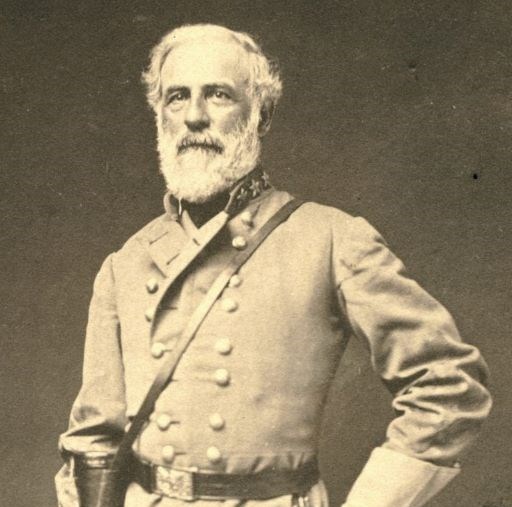
Robert E. Lee in a Confederate uniform.

(General Robert E. Lee, pictured here in 1863, never wore the Confederate uniform in this house. Three days after his resignation from the US Army, he was appointed commander in chief of Virginia’s military)

Hamilton argues that Davis did not defeat Lincoln because of hubris in the person of General Robert E. Lee who took Confederate troops north in 1862, and Davis’s failure to stop him.  Once the southern argument of self-defense was lost, Lincoln could finally pivot to his strongest position – emancipation.  Once the war became a conflict to end slavery, accepted by enough of the north, the south would lose hope of diplomatic recognition by European powers hungry for cotton.  The book will conclude on January 1, 1863, with the announcement of the Emancipation Proclamation.

Historian Louis P. Masur October 31, 2024, Washington Post book review of Hamilton’s work hits the nail right on the head as he writes: “Lincoln too would dramatically transform his side’s military strategy. Much to the dismay of abolitionists, and biographer Hamilton as well, Lincoln initially refused to take direct action to emancipate the enslaved in the Confederacy. Radical Republicans were especially enraged when, in September 1861, Lincoln forced Gen. John C. Frémont to rescind Frémont’s unauthorized order declaring martial law and freeing the enslaved in Missouri. Lincoln offered the legal and political argument that the order stood outside military necessity and served only to alienate the four slave states remaining in the Union, of which Missouri was one. Within a year, though, he decided on an Emancipation Proclamation that would liberate most of the enslaved people in the Confederacy; the multifaceted story of how he changed his mind, pieces of which are told in Hamilton’s book, is one of the most absorbing in all of Lincoln scholarship.

[BLANK]

(Secretary of War, Edwin M. Stanton)

“In truth,” Hamilton writes, “Lincoln had really no idea what he must do to win the war.” But “Davis had had no idea how to win the war, either.” These thoughts capture a truism — much of what we think about the past comes from understanding it backward. Neither Lincoln nor Davis, in the moment, knew what might work or what needed to be done or how to do it. This is why counterfactuals are so prominent in considerations of war. What if Lincoln had fired McClellan earlier? What if Davis had stopped Lee from invading Maryland? What if Lincoln had acted sooner against slavery? Hamilton is keenly attuned to the way hindsight can both enlighten and obscure, and he peppers the narrative with questions and retrospective speculations, sometimes excessively so.

There have been scores of books on Lincoln and Davis, but few that examine them jointly. Hamilton’s uncommon approach helps illuminate an observation once made by the historian David Potter, who suggested that “if the Union and the Confederacy had changed presidents with one another, the Confederacy might have won its independence.” The statement invites us to identify the qualities that distinguished Lincoln from Davis. There are many, but none more instructive than this: Over the course of four years, Lincoln grew into the job of president and commander in chief, whereas Davis remained set in his ways. This sweeping dual biography succeeds in dramatizing the reasons one triumphed and the other failed.”

(Mary Todd Lincoln and Varina Davis)

It is clear from Hamiliton’s monograph that the turning point in the Civil War did not take place on the battlefield per se.  Hamilton developed the Confederate strategy that in the end resulted in an invasion of the north through Maryland and an obnoxious Proclamation on the part of General Robert E. Lee.  Expecting Marylanders and Kentuckians to rally around the Confederacy, Lee and Davis were surprised when that did not come to fruition.  Once the south invaded the north, the rationale that the Confederacy was a victim of northern oppression was no longer valid and acceptable to European diplomats.  With the invasion of Maryland, Lincoln was driven into a corner and finally was willing to do something about slavery being the foundation for the Confederacy’s economy and military strength. Lincoln “bit the bullet” by employing the issue of millions of enslaved people as a military and moral issue.

His strategy was clear, the Emancipation Proclamation, freeing 3.5 million slaves as of January 1, 1863.  This would result in Europeans refusing to recognize the Confederacy with the war now being fought over slavery.  For Davis, it appeared the war would eventually be lost.  But it would be his decision to allow Lee to invade Maryland that drove Lincoln to the war of attrition.

 Hamilton has completed a remarkable work of narrative history with a unique approach which should be welcome to historians and Civil War buffs alike.