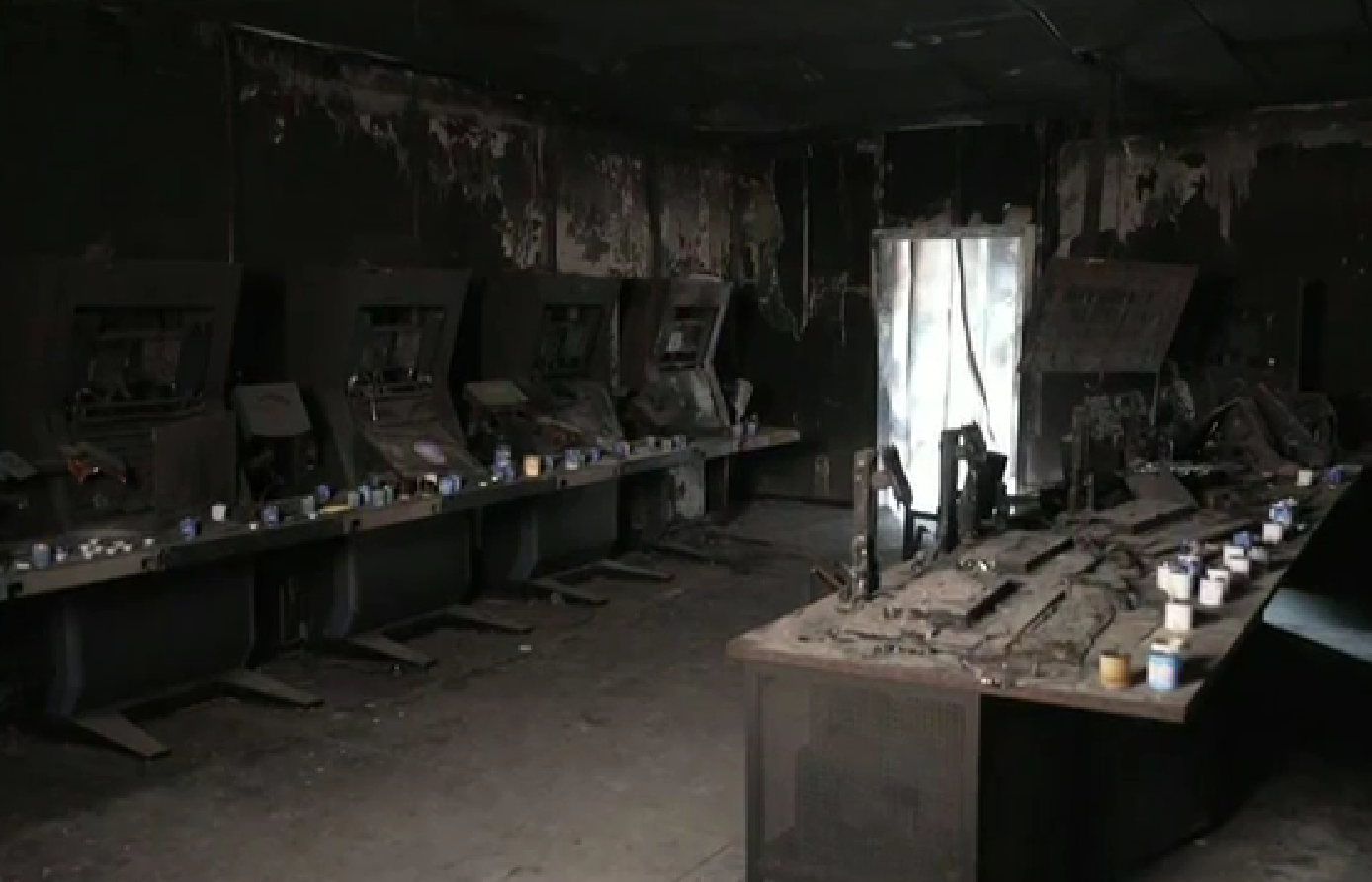
(Memorial candles line the charred desks in the destroyed command center of Nahal Oz base, February 23, 2024.)
One of this morning’s lead articles in the New York Times read “Fate of Bibas Family Recalls Trauma of October 7, Renewing Fears of Gaza Truce.” The crux of the article centered on the return of three Israeli citizen’s bodies, two babies and their mother. The problem emerged that the body of the mother was misidentified, it was another victim of this war. According to the article the “news set off a paroxysm of fury and agony in Israel rarely seen since the tumultuous days that followed the Hamas led attack on Oct. 7, 2023, when up to 1,200 people were killed and 251 were abducted, including Ms. Bibas and her sons, on the deadliest day in Israeli history.
For Palestinians, the devastation wrought by Israel’s military response to the Oct. 7 raids — a reaction that, among other consequences, razed Palestinian burial grounds and killed thousands of children including some younger than Kfir Bibas — has long overshadowed Hamas’s terrorist attacks at the start of the war.”
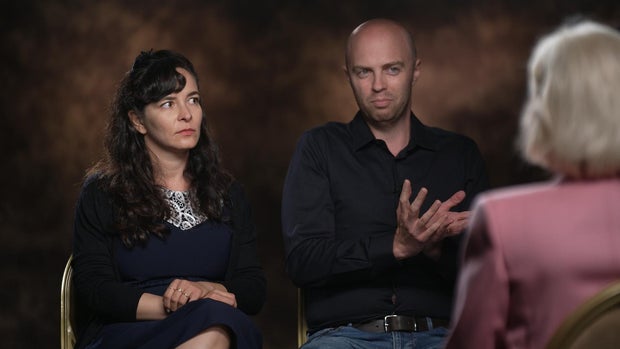
(Nahal Oz Kibbutz residents Miri Bernovsky-Tibon and Amir Tibon)
But Israelis remain deeply traumatized by the October assault, and the return of the Bibas boys, coupled with the uncertainty about their mother’s whereabouts and the disrespectful way that Hamas paraded the coffins on Thursday, revived the torment. The war has resulted in the death of between 40-50,000 Palestinians according to the Arab Red Crescent and the near total destruction of Gaza and its infrastructure.
The brutal attack by Hamas and the Israeli response has set the Middle East on fire resulting in an Israeli invasion of Lebanon targeting Hezbollah, a “pseudo-war” with Iran, and a long range conflict with the Houthis in Yemen. Currently, the region is experiencing a ceasefire in Gaza, which is only in its first phase and there are doubts it will continue to the next phase. The question is how did we get here, what was the experience of the attack like, and historically what events led to the attack. Answers to these questions are discussed and analyzed in Amir Tibon’s THE GATES OF GAZA. The superb monograph is part memoir as Tibon and his family reside in Nahal Oz, a Kibbutz that borders the Gaza Strip, and a historical look at events and outcomes as Tibon is an award-winning diplomatic correspondent for Haaretz, Israel’s paper of record.
One of the questions that is repeatedly asked is why Israelis settle on land so close to the Gaza border where rockets, snipers, intruders are a constant threat. The answer lies in Israeli defense policy that emerged in October 1953 when Prime Minister David Ben-Gurion and General Moshe Dayan argued that the border with the Gaza Strip needed more military installations in order to be totally fortified. The border itself was not an “internationally recognized” border, but a cease fire line drawn to end the 1948-9 Israeli War of Independence. As Tibor writes, “there needed to be civilian life at the border – especially agriculture – before the region would be completely safe. A permanent population to detect and deter attacks and to convince the Arab world that the young recently founded state of Israel was there to stay.” The kibbutz which the Tibon family settled on and was attacked on October 7 was founded by sixty men and women members of a military unit called Nahal in 1953.
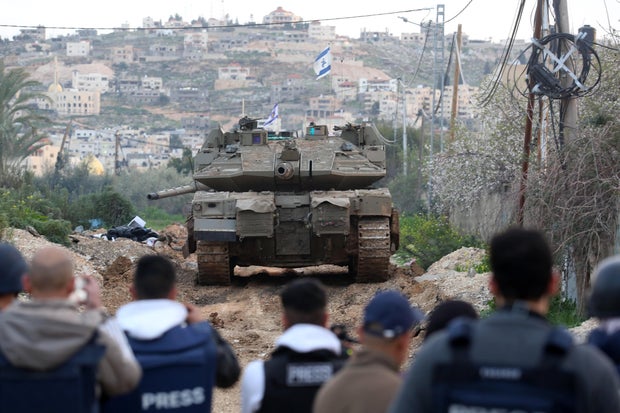
(Israeli tanks enter the city for the first time since 2002, in Jenin, in the northern West Bank, Feb. 23, 2025.)
The title of the book was derived from a speech given by General Moshe Dayan on a day when four couples were to be married. Instead, it became a funeral oration, “the Gates of Gaza,” which originated from the biblical story of Samson fighting the Philistines. In this case the speech was to honor Roi Rothberg who had been murdered by Egyptian fire as he patrolled the boundaries of the kibbutz and tried to return Palestinians who had crossed the “demarcation line” and entered Israeli territory. The Egyptians did return the “mutilated body” of their victim.

(Children’s toys and personal items lie on the bloodstained floor of a child’s bedroom, following a deadly infiltration by Hamas gunmen, in Kibbutz Beeri in southern Israel, October 17. REUTERS/Ronen Zvulun)
If one fast forwards to 2025 nothing has really changed between Palestinians and Israelis. Wars seem to break out every few years, constant rocket fire from Gaza with the inevitable Israeli response, border incursions from both sides leading to numerous deaths, and leaders on both sides whose ego’s, lust for power, and what I guess is called ideology dominate. Tibon focuses on these aspects throughout the narrative, along with his family’s personal journey and survival on October 7.

(Israeli military officers stand by a container in which bodies of the dead are stored before their relatives are called to identify them, in Ramla, Israel, October 13. REUTERS/Ronen Zvulun)
Tibon structures his book with alternating chapters. First we have the attack of October 7, then a history lesson. He moves on with chapters alternating between the events he and his family experienced on October 7, continuing with a careful historical analysis of events and personalities leading up to today. Tibon integrates the Hamas attack on his family, their escape into the “safe room” in their house to wait out the violence occurring outside the front door. Tibon assumed that the “all clear” would be sounded within a few hours as usually is the case, but much to his surprise this was different as the bullets, mortars, and rockets continued. Tibon would soon realize that this was not a random attack by a terror cell, but a large well planned operation that would not be over quickly. The key for Tibon was his two toddlers, Carmel and Galia, and his wife Miri. The task was to keep the children quiet as not to give the terrorists another family to murder. Tibon did not realize how bad the situation had become with a nearby military base overrun by Hamas and the hundreds of bodies scattered between Nahal Oz and the base – throughout the early hours, Tibon wondered where the Israeli Defense Force was. Women and children were being murdered, and the IDF was nowhere to be found.

(Israeli Prime Minister Benjamin Netanyahu)
The historical narrative and analysis are succinct and damning in terms of Israeli and Palestinian Authority and Hamas leadership. Tibon chooses certain historical aspects as a means of explaining how the Israeli and Palestinian people have reached the abyss they now found themselves in. A key turning point was reached in 1987 as Palestinians could no longer accept the loss of prime agricultural land, which in part led to the first Intifada. Interestingly, Yasir Arafat and the PLO ;leadership were totally caught off guard by events. As a result of the violence Sheik Ahmed Yassin and Palestinian Islamists formed a new organization called Hamas – Islamic Resistance Movement. The Intifada turned Hamas into a central force in the Palestinian community. The more forceful the Israel response, the more Hamas’ popularity and ideology were enhanced, reducing the influence and power of the PLO.
Two villains emerge in Tibon’s discussion. First is Israeli Prime Minister Benjamin Netanyahu who has been in office most of the last two decades. In 1993 Tibon argued that Netanyahu worked to prevent a peace settlement following the Oslo Accords. He worked to incite Israel’s right wing which led to the assassination of then Israeli Prime Minister and architect of Oslo, Yitzhak Rabin. Netanyahu would defeat Shimon Peres in the next election and slowed down the peace process increasing Hamas’ popularity at the expense of Arafat. He then ordered the assassination of Khaled Mashal, the head of Hamas’ Political Bureau. After the attempt was botched, Netanyahu agreed to release Shiek Ahmed Yassin, Hamas’ spiritual leader, and blocked the extradition of Mussa Abu-Marzouk who raised millions of dollars to fund Hamas, allowing him to settle in Jordan. If one fast forwards to October 7, Netanyahu’s fingerprints are all over the disaster even though he was thrown out of office in 1999.

(An aerial view shows damage caused following a mass infiltration by Hamas gunmen from the Gaza Strip, in Kibbutz Beeri in southern Israel, October 11. REUTERS/ Ilan Rosenberg)
Netanyahu would return to power in 2009 and would later be accused of corruption. The Israel Police began investigating Netanyahu in December 2016 and subsequently recommended indictments against him. On 21 November 2019, Netanyahu was officially indicted for breach of trust, accepting bribes, and fraud, leading him to legally relinquish his ministry portfolios other than prime minister. His legal problems led to legislation by the Israeli right wing in the Knesset designed to reduce the power of the Israeli Supreme Court which provoked enormous demonstrations in Israel in 2022 and 2023. For many, Netanyahu’s legal problems were a national security threat for the state of Israel as he put his own personal quest for power to escape prosecution above the needs of the Israeli people. Netanyahu’s behavior and policies further emboldened Hamas as he approved Qatari funding of Hamas whereby millions of dollars were used to build the tunnel infrastructure that allowed for attacks against Israel for years and finally the events of October 7.

(Israeli soldiers inspect the Al Shifa hospital complex, in Gaza City, November 15. via Israel Defense Forces)
Netanyahu also approved the trade of 1027 Palestinian prisoners for Gilad Shalit, an Israeli soldier seized by Hamas in 2007. Among those released in 2011 was Yihyia Sinwar, the Hamas tactician and ideologue who designed the plan that was carried out on October 7. Further damning of Netanyahu took place in 2016 as Defense Minister Avigdor Lieberman warned him, a right wing member of Likud that Israel intelligence uncovered a plot which would be catastrophic for Israel: “a secret plan by Hamas to cross the border fence at several points simultaneously, attack a long list of Israeli communities near Gaza, murder hundreds of citizens, and take dozens of hostages into Gaza. With this evidence and the fact that Hamas was using Qatari money to build tunnels and rockets, Netanyahu did nothing.
There are obviously others who deserve condemnation for the events of October 7. Yasir Arafat’s refusal to make peace in 2000, the corruption of the PLO and later the fecklessness of Arafat’s replacement Mahmoud Abbas and his corruption laden administration in the Palestinian Authority which was defeated by Hamas in elections and the battlefield. Sinwar is also a key figure who spent years in an Israeli jail for murdering Israeli citizens. While in prison he learned Hebrew and studied every aspect of Israeli life and politics he could and began to develop his plan for a massive incursion of Israel from Gaza. Even when released from prison Sinwar worked methodically applying Qatari money, Netanyahu’s errors, and the fact that by March 2023 Israel was being torn apart from the inside with many reserve soldiers and pilots refusing to carry out orders because of the demonstration by Israeli citizens against Netanyahu’s cohorts in the Knesset’s attempts to reduce the power of the Israeli Supreme Court for the benefit of its Prime Minister. Sinwar would ramp up attacks in the West Bank in the summer of 2023 in hindsight a diversion for October 7. Netanyahu sent 30 battalions of soldiers to the West Bank, leaving only 4 to defend the kibbutzim on the Gaza border. As this was occurring Netanyahu encouraged Qatar to continue to send millions to Hamas.

(Israeli military vehicles manoeuvre during the ongoing ground operation of the Israeli army against Hamas in the Gaza Strip, as seen in an image released on November 13. Israel Defense Forces/via REUTERS)
A key event which Tibon uses to tie Israeli history to the events of October 7 revolves around the first time Nahal Oz was attacked in 1956 when Palestinian fedayeen encouraged by Egyptian president Gamal Nasser crossed the border and killed Roi Rotberg, a young member of the kibbutz, and taking his mutilated body back to Gaza. As Max Strasser writes in his November 4, 2024, New York Times book review entitled “The Reckoning”; “The next day, Moshe Dayan, then the military’s chief of staff, delivered the most famous eulogy in Israeli history.
“For eight years they have been sitting in the refugee camps in Gaza, and before their eyes we have been transforming the lands and the villages, where they and their fathers dwelt, into our estate,” Dayan said. “How did we shut our eyes and refuse to look squarely at our fate, and see, in all its brutality, the destiny of our generation? Have we forgotten that this group of young people dwelling at Nahal Oz is bearing the heavy gates of Gaza on its shoulders?”

(Israeli soldiers take position during the ongoing ground operation of the Israeli army against Hamas, in a location given as Gaza, in this image released on November 13. Israeli Defense Forces/via REUTERS)
This was, Tibon writes, “a rare recognition by an Israeli leader of the Palestinian Nakba.” Dayan had identified Israel’s tragic endowment — a country built on displacement — and declared that the only response could be strength, a country where thriving in a kibbutz on a border forged in war would help secure peace.
But Tibon does not offer the whole quote. “We are the generation of settlement,” Dayan went on. “Our children will not have a life if we do not dig shelters, and without barbed wire and machine guns we will not be able to pave roads and dig water wells.”
In the epilogue, Tibon goes back to visit his deserted, bullet-scarred kibbutz and stands looking over the border at the rubble of Gaza. He rereads Dayan’s eulogy and wonders if his former neighbors at Nahal Oz will someday be able to return if peace with the people on the other side of the border is conceivable. It’s certainly hard to imagine, so long as the people of Gaza live with barbed wire and machine guns.”

(Shiri Bibas and her children Kfir and Ariel)
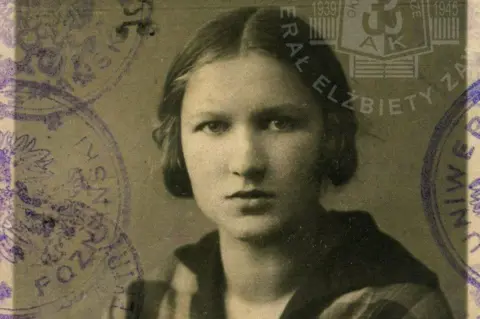 (The General Elżbieta Foundation, ToruńZo, as seen on her student pass, graduated from Poznań University with a higher degree in mathematics)
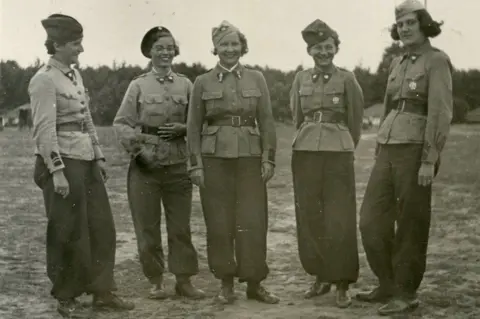 (The General Elżbieta Foundation, ToruńZawacka (centre) took the nom-de-guerre Zo after being sworn into the Polish resistance)
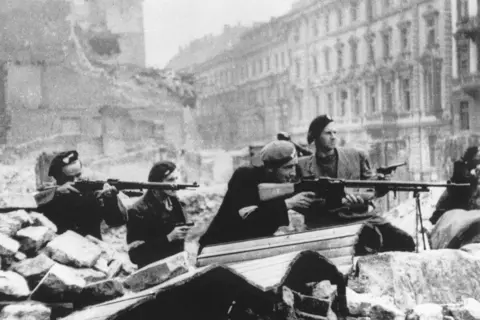 (Getty ImagesThe Warsaw Uprising was the largest organised act of defiance against Nazi Germany during World War Two)
 (Clare Mulley/A mural depicting Zawacka has been painted on the side of the communist-era apartment block where she lived in Toruń)
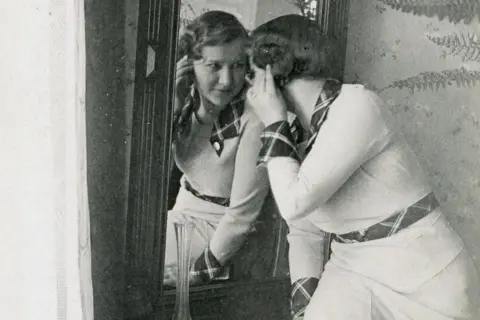 (The General Elżbieta Foundation, ToruńElżbieta Zawacka crossed international borders more than 100 times as she smuggled military intelligence to the Allies)




 Doc's Books