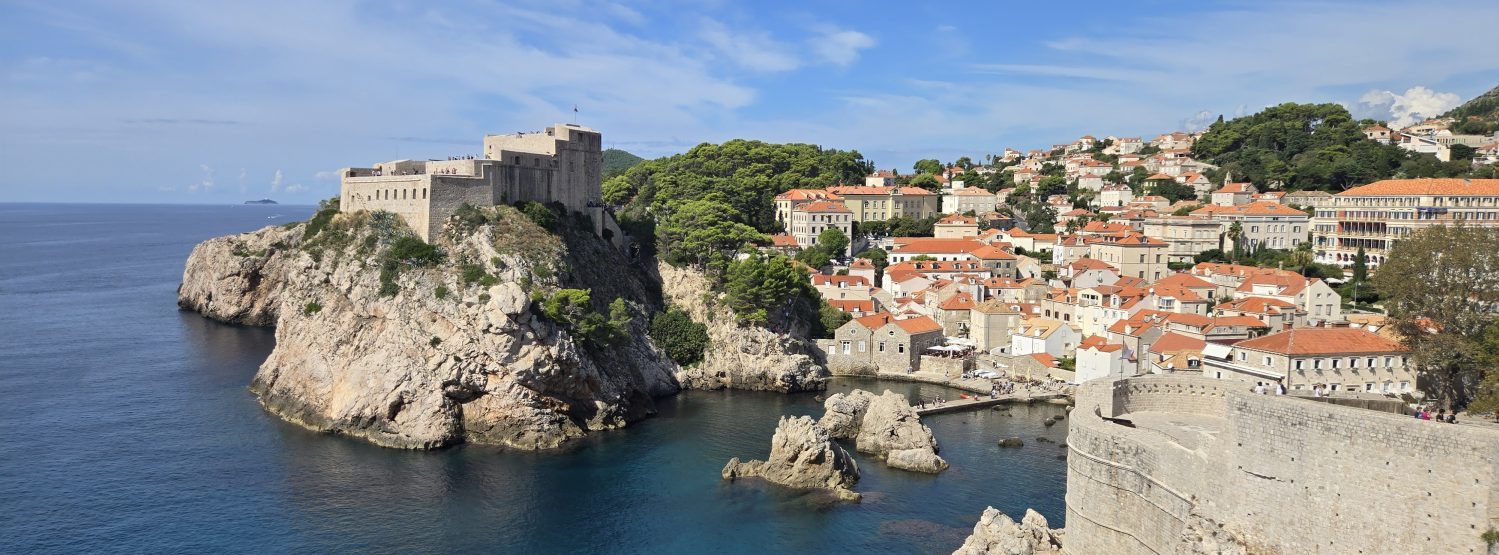
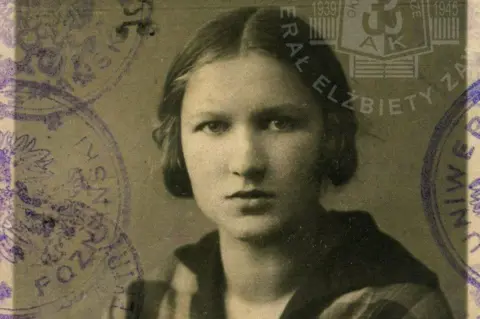
 (The General Elżbieta Foundation, ToruńZo, as seen on her student pass, graduated from Poznań University with a higher degree in mathematics)
During World War II Poland witnessed many individuals engaging in serious heroic actions. The list is long and includes people like Witold Pilecki, an intelligence agent and resistance leader who volunteered to enter Auschwitz to gather intelligence and then escaped; Arena Sendler, head of the children’s division of the Zegota Council for the aid of the Jews which smuggled 2500 children out of the Warsaw Ghetto; Jan Karski, a Polish soldier, resistance fighter, and diplomat who provided evidence of the Holocaust to western leaders, and acted as a courier for the Polish government in exile to western allies; Mordechai Anielewicz, led the Jewish Combat Brigade (ZOB) during the Warsaw Ghetto uprising, and numerous others. However, none are more remarkable than Elzbieta Zawacka, aka “Agent Zo,” the only female member of the Polish Elite Force during the war and took a leading role in many areas including the Polish uprising in Warsaw in August 1944. Her actions, and the actions of many of her compatriots in the Polish resistance during the war and after are accurately chronicled in Clare Mulley’s latest book, AGENT ZO: THE UNTOLD STORY OF A FEARLESS WORLD WAR II RESISTANCE FIGHTER ELZBIETA ZAWACKA.
Mulley presents a series of themes in her monograph, but none is more fascinating then how women were viewed by Polish and English authorities during World War II. Mulley correctly argues that thousands of Polish women rushed to defend their country in response to the twin invasions led by Germany in the west, and the Soviet Union in the East in September 1939. Eventually over 40,000 Polish women were sworn in as members of the Polish Home Army, 10% of which were soldiers, none more important than Agent Zo who was a member of the Cichociemni or “Silent Unseen” made up of Polish Special Forces paratroopers. The other 90% of women engaged in a myriad of activities ranging from acting as couriers, medical technicians, clerks, bomb makers, and gathering intelligence. Agent Zo and her partners passionately argued that women could fight as well as men and should be declared part of a “legitimate” military force to be covered by the Geneva Convention, which when finally recognized by Polish and British bureaucrats in London would save many lives. This theme pervades the narrative and provides great insight into the misogyny experienced by women in dealing with military and diplomatic decision makers during the war. For example, Colin Gubbins, head of the British Special Operations Executive which engaged in sabotage against the Nazis throughout Europe, upon learning of Zo’s exceptional bravery and accomplishments referred to her a “grand gal.”
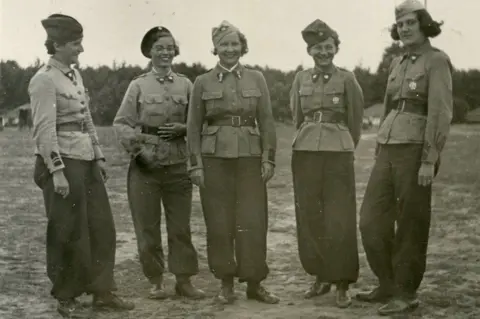 (The General Elżbieta Foundation, ToruńZawacka (centre) took the nom-de-guerre Zo after being sworn into the Polish resistance)
Agent Zo’s remarkable life is examined in detail. After explaining her familial roots Mulley examines Agent Zo’s rise from a senior instructor with the Polish “Woman’s Military Training Force (PKW)” to her varied assignments during the war as she craved serious military service once Nazi Germany had violated her country. Mulley does a remarkable job recounting Agent Zo’s various relationships with both men and women. All were Polish patriots with the same goals of working to keep the allies informed about Nazi atrocities, troop movements, and any intelligence they could gather. The author explains Agent Zo’s many relationships, who influenced her the most, and who she relied upon and trusted. A few stand out like Marianna Zaodzinska, a literary person and poet who was tactical instructor who would wind up as a commander during the Warsaw uprising. General Stefan Rowecki who worked to unite all Polish resistance groups and create the Home Army who was also Zo’s commander. Maria Witteck, Zo’s close friend and Commander of the Women’s Auxiliary Services. Emelia Malessa, Zo’s superior who oversaw the Farmstead, the Polish overseas communication team. Zofia Franio, supplied weapons to Jews fighting in the Warsaw Ghetto. Sue Ryder, who volunteered at the First Aid Nursing Yeomanry (FANY), lying about her age, further as part of the SOE she transported agents for the ”Silent Unseen.” Kazimierz Bilski, known as “Rum,” a member of the “Silent Unseen” and the Polish Sixth Bureau in London; and General Tadeusz Komorowski, “Bor,” Rowecki’s former deputy who succeeded him as head of the Home Army.
The role of female couriers was of major importance in the war. Their harrowing experiences crossing Europe to provide intelligence hidden on microfilm to London from Warsaw are fully explored. Zo and her fellow resistance fighters experienced numerous run-ins with the Nazis as they carried out their assignments. Their fears of arrest, torture, and death were constant, but they did not let their anxieties interfere with completing their missions. They provided evidence of Nazi atrocities, the Holocaust, technical information concerning Hitler’s miracle weapons – VI and V2 rockets, German troops positions, the needs of the Home Army, etc. These brave women accomplished remarkable things and were willing to sacrifice their lives for their country. A few examples include how Zo leaped from a moving train when Nazi soldiers entered and asked for identification on a trip in Silesia, or her parachute training which she had never done before the war leading her to jump behind Nazi lines.
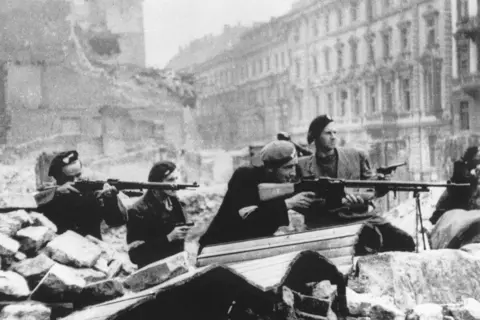 (Getty ImagesThe Warsaw Uprising was the largest organised act of defiance against Nazi Germany during World War Two)
From the outset of the war Zo argued for a Woman’s Auxiliary Officer Corps, which would eventually be ratified into law. British and Polish “higher ups” described Zo as “an insane feminist and pioneer of the liberation movement and equality of women….a hysterical women.” It took until October 1943 for a decree on “Women’s Voluntary Service,” providing women between 18 and 45 the same rights and duties as men in the armed forces. The result – thousands of Polish women came forward to volunteer.
Mulley’s research is impeccable, and she devotes a great deal of time to the political and diplomatic components of the war. A few stand out. It became clear to Zo that by the Fall of 1943 Polish influence and/or importance to the British government was waning, especially when there were no Polish diplomats present at the Tehran Conference. As the Soviet Union broke through in the east, Stalin’s plans for a post war Poland began to become clear. The Russian dictator planned to seize areas in eastern Poland, and shift Poland’s border westward in return. Stalin denied that Russian soldiers committed the Katyn massacre which took place in the spring 1940 which was a series of mass executions of nearly 22,000 Polish military and police officers, border guards, and intelligentsia prisoners of war carried out by the Soviet Union, specifically the NKVD, at Joseph Stalin’s orders. Stalin would not recognize the Polish government in exile and appointed his own government in Lublin, Poland toward the end of the war. Another egregious action or non-action by Stalin was his refusal to allow any military assistance, be it bombers, supplies, men, the use of Russian airfields in order to assist Polish resistance fighters as they rose up against the Nazis in Warsaw in August 1943. Stalin’s goal was clear – to wipe out any Polish opposition to Russian hegemony in Eastern Europe after the war. Franklin Roosevelt felt the need to appease the Russian dictator, in part, because the Soviet military had done the bulk of the fighting against the Nazis. Churchill had little choice but to go along.
The Nazis finally identified Zo, resulting in a price on her head in March 1944 as the Nazis b targeted all women in their thirties as a means of finding her. Mulley describes her clandestine life and travels in detail as she was ordered to remain in a convent to escape the Nazi dragnet. Finally, she emerges to play a key role in the Warsaw Ghetto uprising, but not as a fighter which was against her wishes. With her experience and knowledge of the city, its sewers, basements, and neighborhoods in general she was put in charge of organizing women to deliver supplies, make incendiary bombs, deliver medical supplies, organize ambulances, and use couriers as a means of getting the truth out to the world. In the end 18,000 resisters, and 200,000 civilians were killed in the uprising. Once the city succumbed, Zo escaped and spent her time trying to reorganize the Farmstead.
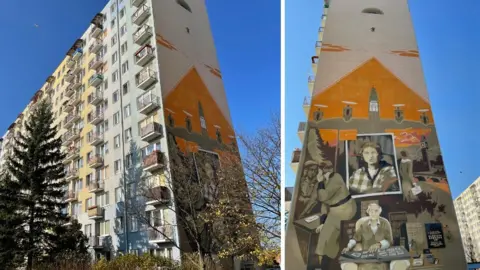 (Clare Mulley/A mural depicting Zawacka has been painted on the side of the communist-era apartment block where she lived in Toruń)
Once the war ended Zo’s personal battle for Polish independence did not end as the new communist regime imposed by Stalin began to show interest in her just as they wanted to destroy any remnant of the Home Army that may have remained. Stalin’s henchmen rounded up any Home Army veterans who they saw as part of a possible anti-communist resistance. For Zo, the peace she fought so long and hard for instead “she felt that her country’s occupation by one hostile foreign power had now been replaced by another, and Poland was still not free.” As Marissa Moss points out in her December 11, 2024, review in The New York Journal of Books; “Zo herself was sent to prison, arrested for being part of a network spying on the communist government. She wasn’t part of any such group but looked guilty simply because of her past. Like many of her compatriots in the Home Army, her real crime lay in telling the story of Poland’s resistance, a story that contradicted the official Soviet version.” She was tortured and imprisoned and finally freed after Stalin died in March 1953, but she was not allowed to teach because of her “criminal record” and her refusal to join the communist party. It was not until the arrival of the Solidarity movement and the collapse of the Soviet Union in 1989 that she could be sure that her secret archive detailing the Home Army would be secure, as she was determined to collect even more stories of the Home Army, especially the part played by women.
Zo was the recipient of many awards and medals for her bravery and devotion to her country, but to her what really mattered was the history through which she had lived. She created a vast archive, hoping to educate a new generation about their country’s history. This book serves her mission well.
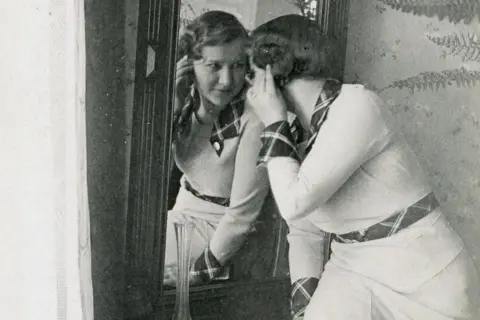 (The General Elżbieta Foundation, ToruńElżbieta Zawacka crossed international borders more than 100 times as she smuggled military intelligence to the Allies)
 Doc's Books