

(Vestre Prison, Copenhagen, Denmark)
A number of years ago I was browsing in a bookstore in Copenhagen, Denmark when the store manager suggested a Department Q novel written by Jussi Adler-Olsen. When my wife and I travel I love to buy crime novels written about foreign destinations by local authors. Adler-Olsen fit the bill and I have read all Department Q novels ever since. I purchased his latest LOCKED IN when it was published and haphazardly misplaced it. After watching Matthew Goode’s performance as DCI Carl Morck in Netflix’s new Department Q series I immediately conducted a search of my study and located the novel. Once read I can honestly state Adler-Olsen has not lost his touch.
Adler-Olsen’s latest takes place during the Covid-19 epidemic as Morck is charged with drug trafficking and murder which threatens to ruin his life and career. Imprisoned and surviving a number of attacks inside the incarceration facility, Morck’s colleagues at the Copenhagen Police Department, especially Marcus Jacobsen, the Chief of Homicide refuse to provide any assistance, and in fact they make his situation worse. The only support he receives is from his compatriots in Department Q, Rose Knudsen, Hafez El- Assad, and Gordon Taylor who imperil their own careers to assist him.
Adler-Olsen develops his plot slowly as a drug laden suitcase is found in Morck’s attack. Its contents were unknown to the Copenhagen detective, and it leads to a thirteen year old convoluted case whereby two of his team partners can offer no help. One, Anker Hoyer, a corrupt cop who died in 2007 and another, Hardy Henningsen, had been paralyzed by a bullet from the same drug case. Morck was unaware that Anker, a social climber, was working with a drug cartel which led to suspicions concerning Morck. The author creates a unique way that the Dutch/Danish drug cartel permanently removes those who were not loyal – using a nail gun to their skulls, hence the name “nail gun cases” that Morck is implicated with.
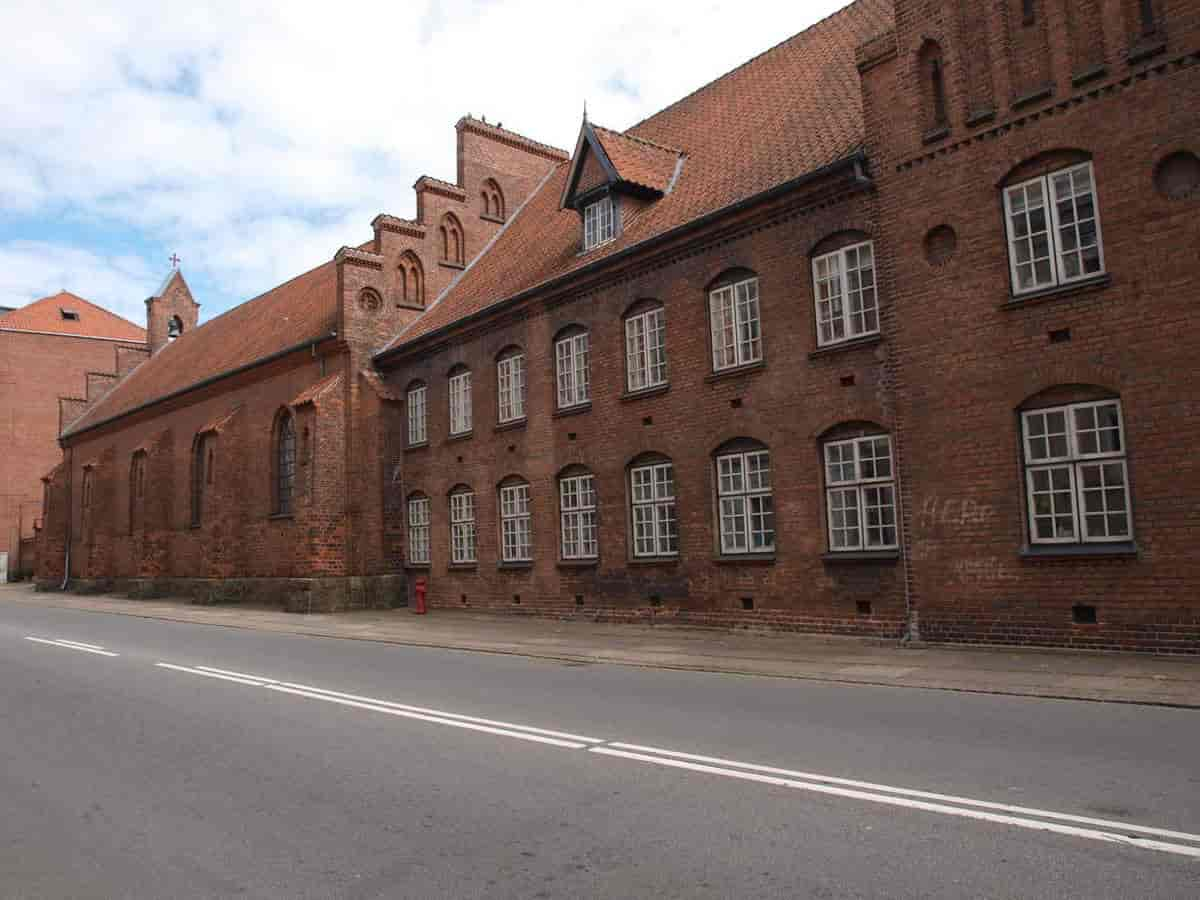
(Slagelse Remand Center, Copenhagen, Denmark)
Once arrested and taken to Vestre prison, Morck and his wife Mona are shocked to learn as a police officer he was not placed in protective custody, particularly because over the years Morck was responsible for placing a number of Vestre inmates in cells. Adler-Olsen has created a complex story involving police corruption and the attendant failure of human nature when it comes to earning a “little extra money.” A key character is Eddie Jansen, a Rotterdam police detective who was on the take for years and now his “bosses” want him to arrange Morck’s murder inside the prison. Once he fails to accomplish his task, Eddie is on the run with his family because the drug cartel “does not suffer fools gladly.”
Adler-Olsen excels at introducing his characters in detail, highlighting their motivations and actions. One such character is Malthe Bogegard, a drug enforcer who is imprisoned with Morck. He has a brother who is facing death from a rare disease. No doctor in Holland can save him, however there is an experimental operation that can be performed in a German hospital which might save him. The catch is money. When a large fee is offered by the drug cartel to kill Morck, Malthe believes his problem is solved. Another is Merete Lynggard who years earlier, Morck rescued her from imminent death after she was kidnapped. To repay her savior, she turns up visiting Morck’s wife Mona and offers her assistance. She is fully recovered from her ordeal and owns a security company with many inside contacts and resources. Lastly, Detective Bente Hansen who created her own drug business as a side hustle within her department.

(Matthew Goode as DCI Carl Morck in ‘Dept. Q’)
The author does an excellent job describing prison life – which prisoners ruled, the corrupt guards and administrators, and the outside criminals that can dictate events inside the prison. Adler-Olsen delves into the debilitating effect imprisonment has on an individual. In Morck’s case he begins to question his successful career, the impact on his wife and daughter since he was sure he was innocent. After a while he began to feel like a prisoner and felt sorry for himself. The novel shows how a person can be falsely accused and sent adrift by former colleagues allowing for the accused to acquire a reputation for duplicity, evil, and God knows what else in the eyes of the public. It also reflects on how people turn against a person of good reputations and an effective law enforcement officer.
Another interesting area of exploration is that of the “rag sheets” that present themselves as legitimate newspapers. In this case it is The Gossip, whose lead reporter is a rather sleazy type named, Pelle Hyttested who has carried a grudge against Morck for years, and his editor, Torben Victor, who at first decided to cooperate and help uncover the truth that Morck was being framed and rehabilitate his reputation with the public. However, Torben changes his mind under pressure from the Police Department and decides to hang Morck out to dry.
The author is a master creating plot lines that are unusual. The first to grab my attention was how Eddie Jansen decides to infect his own family with Covid 19 by taking infected tissues from a hospital waste area and have his family use it as a means of convincing his wife Femke to leave their home and go into seclusion as he could not tell her that a drug cartel was trying to kill him. Another, is the arrival of Hardy Henningsen who has spent years in physical rehabilitation from his injuries in the “nail gun case” visiting Morck in prison housed in a plastic suite with electronics that allow him a degree of mobility while offering to uncover the truth and free Morck.

(Author, Jussi Adler-Olsen)
The cold case investigation uncovers a series of murders, including Morck’s first lawyer, Adam Bang; Import-Export Company front DKNL Transport owner Hannes Theis, and Rasmus Bruhn, a major drug courier who was tortured and killed in Rotterdam in 2014, among others. As Department Q digs deeper and deeper they try to uncover who the assassins paymaster is; why do they want Morck dead; and which higher ups in the Police Department are complicit in the old drug case.
It will take Adler-Olsen about half the story to present a clearer picture of what happened in 2007 when he introduces Wayne Peters who he describes as discovering the joys of lying at the age of four. The reader is provided a brief discussion of Peters’ personality and how he developed a career that led to a drug empire and the murder of anyone who crossed him. Peters, who remains in the background with little exposure is the lynch pin of the drug cartel and his penetration of certain police departments is telling.
As Department Q defies police higher-ups it is clear that the final volume of the series is well worth reading. The one piece of advice I would offer is to catch up on prior novels in the series as a number of important figures from the department’s past make reappearances. LOCKED IN is a satisfying ending to Adler-Olsen’s Scandinavian noir series that has done a wonderful job of entertaining readers for over a decade, especially Caroline Waight’s translations.

(Vestre Prison, Copenhagen, Denmark)
 Doc's Books