THE CIA BOOK CLUB: THE SECRET MISSION TO WIN THE COLD WAR WITH FORBIDDEN LITERATURE by Charlie English

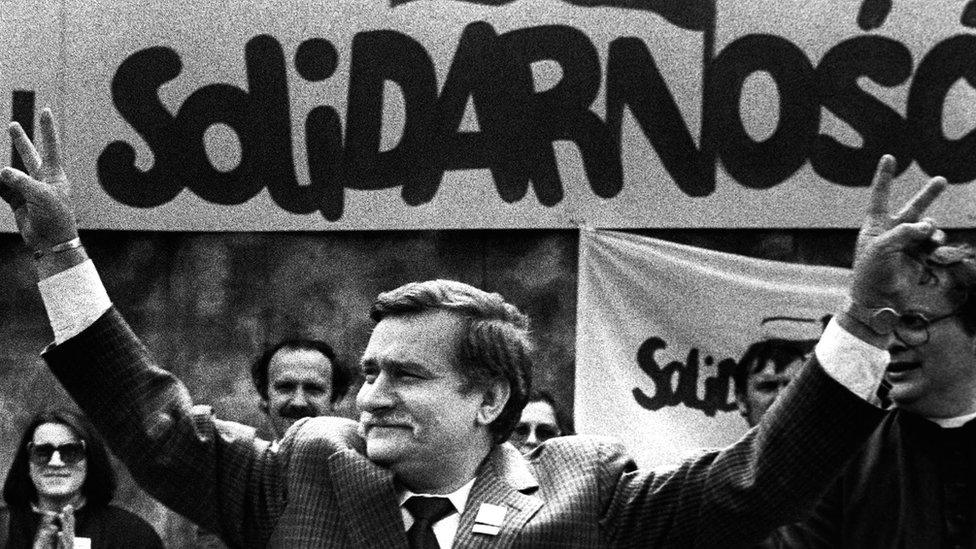
Lech Walesa

(Lech Walesa remains a hero to many Poles for having led the Solidarity movement)

At a time when book bans and censorship has gained popularity in the United States among certain elements in society it is interesting to explore a book that does the opposite.   Charlie English’s new work, THE CIA BOOK CLUB: THE SECRET MISSION TO WIN THE COLD WAR WITH FORBIDDEN LITERATURE examines how the CIA used the distribution  of books as an overt and covert weapon against the Soviet Union and the Eastern Bloc during the Cold War.  The monograph focuses primarily on activists who sought to liberalize Polish government and lessen Soviet influence in the 1980s and the role the CIA played primarily in the background.

The purpose of a book ban is to deprive people of the opportunity to choose or read  particular reading material because it does not conform to the beliefs or political agenda of certain groups.  Schools, libraries, school boards mare among those that have been targeted by such groups during the last decade or so complaining about certain books as being offensive that have no place in educating children.  Books like MAUS by Art Spiegelman and THE HANDMAID’S TALE  by Margaret Atwood have been challenged as have been classics like TO KILL A MOCKINGBIRD, CATCHER IN THE RYE, and THE COLOR PURPLE have been recently placed under the microscope.  It is interesting to note that book bans are a tool of authoritarian regimes to block the spread of ideas they disagree with for the general public, so it is fascinating to examine a historical example from the Cold War as the CIA employed manuscripts as a means of winning the battle for the hearts, minds, and intellect of people residing under communist rule in Eastern Europe.
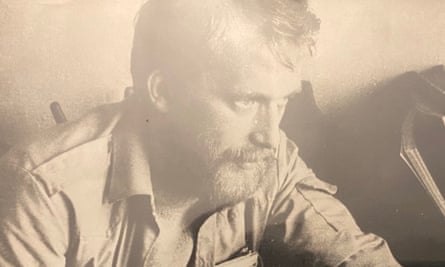
Dissident publisher Mirosław Chojecki.

(George Minden)

English’s narrative focuses on the “CIA Book Program,” a covert intelligence operation led by George Minden whose goal was to offset Soviet censorship and misinformation to provoke revolts in Eastern Europe by exposing people of that region to different visions of thought and culture.  A classic example is the dissemination of George Orwell’s 1984 of which thousands of copies were made available behind the Iron Curtain during the Cold War.  This was one of the millions of titles that arrived illegally in Poland, which was just one country in the Soviet Bloc that received great quantities of banned publications.   Books arrived by every possible means: smuggled in trucks, yachts, sent by balloon, mail, even a traveler’s luggage.  Increasingly, the underground would public homegrown titles, as well as those from foreign publishers.  Polish activists argue that the contribution of literature to the revolt against the Soviet Union was a key element in the eventual victory.  A major contributor was the role of the CIA which sought to build up circulating libraries of illicit books, and support primarily with funds the burgeoning underground publishing industry in Poland.

There are a number of key figures that English describes throughout his narrative.  Perhaps the one that stands out the most is Miroslaw Chojecki, a Polish publisher who was arrested 43 times and treated as you would expect by the Polish version of the KGB, the SB.  The description of his internment is right out of Alexsanr Solzhenitsyn’s GULAG ARCHIPELAGO with beatings, isolation, forced feedings, interrogations, and hunger strikes.  In September 1977 Chojecki created the Independent Publishing House “NOWa” which constituted the largest publishing house operating outside official communist censorship, becoming its leader.   Initially, Chojecki wanted “NOWa” to publish historical books on topics officially forbidden or ignored by the communist authorities, but other oppositionists convinced him to also issue works of literature, including the Czeslaw Milosz and Gunter Grass.  In August 1980 he organized the printing of publications of the “second circuit” (as underground press was known in Poland at the time). He was re-arrested but was released and joined Solidarity to free the Polish people from the Soviet grip.  In October 1981 he went to France when the imposition of martial law by the government of General Wojciech Jaruzelski occurred. He remained in exile in Paris and published a monthly “Kontakt”, produced films on modern Polish history, and organized support for the underground in Poland, and oversaw the smuggling of books and other written items into Poland.  His chief ally and mentor were Jerzy Giedroyc, a Polish writer, lawyer, and political activist who for many years worked as editor of the highly influential Paris-based periodical, “Kultura,” disseminated throughout Poland.  Another important figure English delves into is Jozef Czapski who would be sent to Washington to raise funds and support from the United States and would be codename QRBERETTA by the CIA.

(Miroslaw Chojecki in 1981)

Other characters and the roles they played in smuggling books, printing presses, printing materials, etc. into Poland include Helena Luczywo, the editor of the “Mazovia Weekly,”  her husband Mitek, Marian Kalenta and Jozef Lebenbaum, Swedish publishers who were very effective smuggling all items needed by the underground from Malmo and Stockholm until they would go a step too far.  Each character is explored by English, relating their backgrounds, especially those who had escaped the Nazis, went into exile and returned to Poland.  These individuals and the younger Polish generation were all part of the Polish underground movement whether living inside or outside Poland working to overthrow and undermine communism.

English nicely intersperses the history of the anti-communist movement in Poland throughout the narrative.  The events of 1980 as the Warsaw regime raised food prices leading to a strike at the Gdansk Shipyard  which would provide for the emergence of Solidarity and Lech Walesa as its leader.  After what was seen as a victory by the workers, the Jaruzelski regime resorted to an internal coup on the night of December 12, 1981, rounding up thousands of political prisoners in what is referred to as the “Winter War” by Zomo units or Motorized Reserves of the Citizens’ Militia who were empowered by the government and were synonymous with police brutality.  Martial law was declared, and the underground had to resort to increased smuggling which English describes in intimate detail as the achievements of 1980 were lost.

One might ask what was the response of the Reagan administration to these events.  It moved very slowly, pushed ahead by Daniel Pipes, acting NSC head, Zbigniew Brzezinski, Jimmy Carter’s former NSC head, and CIA Chief William Casey, who was sort of a “cowboy” who always favored overthrowing governments when he could.   It took until September 1982 for Reagan to authorize new CIA covert action in Poland, but the remit was small involving funds, and non-lethal aid to Solidarity and other moderate opposition groups to put pressure on the Warsaw regime – it was referred to as “QRHELPFUL.”   They built upon the work of George Minden who had developed a long standing book smuggling operation in Eastern Europe, and Solidarity emerged as the nerve center of the opposition.  CIA Deputy Director Robert Gates used the money for printing material, communications equipment, and other supplies to fight an underground political war. 

Jerzy Giedroyc, Maison-Laffitte, 1987, photo by Bohdan Paczowski

(Jerzy Giedroyc, Maison-Laffitte, 1987)

English has written dual history which converges into one.  At first, he describes the role of Solidarity figures and the Polish literary underground who were intimately involved with standing up to the Soviet Union and its puppets in Warsaw.  Once the Jaruzelski government succumbed to Russian pressure instituting a crackdown in December 1981 the author’s focus shifted to the Kremlin’s goal of destroying Solidarity and its leadership.  As far as the CIA’s role throughout the narrative, it was designed to pay for all the clandestine activity institutes by the likes of Miroslaw Chojecki and find ways to carry prohibited equipment across the border.

English highlights many examples of where funds came from to support the Poles.  His description of the Ford Foundation is fascinating as they provided funds and probably continued their 1950s role as a CIA proxy.

The author also provides an in depth discussion of the development of underground newspapers and the varied opinions it produced.  It was clear that no uniform arguments as to how to proceed would be agreed to, but they all believed in the goal of ridding Poland of Soviet influence.  English details how the underground was able to work around martial law, and the risks activists were subject to.  Disagreement and risk are highlighted in the chapter entitled “The Regina Affair” as Marian Kaleka favored an enormous smuggling operation that would provide over $250 million worth of equipment, supplies and books.  Chojecki opposed this as being too risky, and in the end he turned out to be correct as the first mission was a success, but Kaleka got “cocky” and sent an even larger mission which was broken up by the Polish SB.

English points to other aspects of the underground and key figures like Father Jerzy Popieluszko, a Catholic priest who preached against totalitarianism in his sermons.  He would be killed by the Polish army and become a martyr, a grave error that reenergized the opposition to the government.  The underground publication of Popieluszko’s sermons in November 1984 assisted by CIA assets was a defeat for the Polish government.  The underground’s work was soon to be enhanced by technological changes emerging in the mid-1980s with the advent of computers, video, and video-related equipment, cassettes, and access to satellite communications funded by the CIA.

File:Helena Łuczywo.jpg

(Helena Luczywo)

As one reads English’s monograph one begins to question the role of the CIA for the greater part of the book.  Finally, by the last third it’s role begins to emerge in a clearer fashion as the author recounts the events of 1989 which would bring Solidarity to power.  The book’s title leads one to believe that the CIA was in charge of smuggling books and related material into the region, but the most important component was the resisting activists themselves.  Joseph Finder is dead on in his July 13, 2025, New York Times Book Review as he writes; “Today, when “subversive” is the standard accolade for a campus poet, English’s book is a bracing reminder that, not so long ago, forbidden literature really could help tip the balance of history. He persuasively argues that the ferment in Poland, fueled in part by Minden’s cultural contraband, was a catalyst for the chain reaction that led to the fall of the Berlin Wall and the crumbling of other Eastern Bloc governments. “Soft power” wasn’t so soft.

That’s why the publication of “The CIA Book Club” feels perfectly, painfully timely. As President Trump takes a sledgehammer to U.S.A.I.D., Voice of America and Radio Free Europe — institutions of cultural diplomacy once backed by both parties — this chronicle reads like arequiem. George Minden types were convinced of the geopolitical force of ideals such as free expression and the rule of law because they actually believed in them. ‘Truth is contagious,’ Minden said. Our new stewards of statecraft, by contrast, seem to see the world in purely transactional terms, and to assume everyone else does too. English’s book is a reminder of what’s lost when a government no longer believes in the power of its own ideals.”
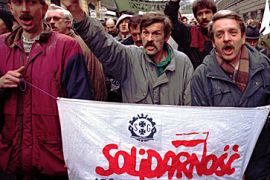
Solidarity protesters, Warsaw, Poland, 1997

MARK TWAIN by Ron Chernow

Author Mark Twain poses for a portrait in 1900.

(Mark Twain)

The life of Mark Twain spans the growth  and expansion of the United States from a rural economy to an industrial giant as the leading manufacturing country in the world.  By 1910, the year of Twain’s death the United States transversed the Mexican, Civil, and Spanish-American wars leading to America’s status as a world power as World War I approached.  Twain’s life’s work and commentary provide an excellent perspective and his personal impact on the period.  If there was one author who can give Twain’s life justice it is Ron Chernow.  Previous biographies by the Pulitzer Prize winning author include, THE WARBURGS, JOHN D. ROCKEFELLER, GEORGE WASHINGTON, THE HOUSE OF MORGAN, HAMILTON, AND GRANT.  All are deeply researched and are considered among the best works on their topics by historians and critics alike. 

However, his latest work, MARK TWAIN  does not measure up to previous books, though aspects of it reflect Chernow’s talent.  The main criticism of the book centers around an approach that can be tedious, and at times boring.  In the first third of the book he gets bogged down in the minutiae of Twain’s life.  For example, when Twain and his family travel across Europe he describes each village and city they visit in detail.  The same can be said as Twain embarks on the lecture circuit.  If one were to prepare a t-shirt of Twain on tour it would list each stop on the back and would probably have earned the author and humorist extra funds to offset his prodigious spending which also leads Chernow into greater details.  Later in the narrative, Chernow makes the same error as he provides so much travel detail of the Twain families nine year European exile that a reader might question continuing with the book.  Further as Graeme Wood writes in New Yorker, “Chernow is not a literary scholar-he is best known for his lives of American political, military, and business figures-which may explain his relative neglect of Twain’s literary output….the biography contains no new interpretations of Twain’s novels….instead Chernow devotes a hefty portion of his 1039 pages to Twain’s personal tribulations, a depressing series of bungles and calamities starting in the author’s middle age.”

This may contain: an old black and white photo of two people standing next to each other in front of trees

(Olivia [Livy] and Mark Twain)

A useful example of excessive detail surrounds the cost of building his home in Hartford, CT, the acquisition of furnishings and decorations, and later the additions and renovations.  This detail is not necessary and can be considered exasperating for the reader and would have saved the publisher many pages of the narrative.  The length of the book is also an issue.  If one does not possess strong hands or suffers from arthritis holding the book can be a challenge as it totals almost 1200 pages.  Perhaps the book could be presented in two volumes to ease the reader’s experience.  This may seem nitpicky, and once you arrive at the 40% mark in the book, two of Chernow’s best chapters emerge.  The first, encompasses  the writing and publication of HUCKLEBERRY FINN, especially Twain’s use of the “N” word, and the second, a chapter entitled “Pure Mugwump,” reflecting his growing political and societal radicalization.  From this point on the narrative seems to flow better, and the author does not get as bogged down in as much detail until the last third of the book.

Despite these drawbacks Chernow has written an important work of history which will supersede  previous biographies of the man from Hannibal, MO.  Twain’s impact on American history cannot be dismissed.  Chernow presents a nuanced view of his subject which should stand the test of time as the most impactful work on an incomparable man.

Chernow seeks to capture the essence of Twain (I will use the subject’s pen name throughout as opposed to his given name, Samuel Clemens) describing him as “a waspish man of decided opinions delivering hard and uncomfortable truths.”  He held little that was sacred and indulged an unabashed irreverence in most of his work be it lectures, political or social commentary, or his many written articles.  According to Chernow, Twain was not a contemplative writer, but a man who thrust himself on to American culture.  Twain can be described as a dilettante as he engaged in many vocations; for example, a Mississippi boat pilot, printer, miner, journalist, novelist, publisher, pundit, polemicist, inventor, crusader, and most importantly, an eccentric non-conformist.  Chernow delves into each avocation that Twain engaged in and provides the true sense of the man through his experiences and the people that he met.

This may contain: an old black and white photo of three children standing in front of a picnic table

(Twain with Livy and their three daughters)

Twain establishes himself as a celebrity early on after attempting a number of occupations.  Once he became a writer and lecturer he stands out as “he created a literary voice that was wholly American, capturing the vernacular of western towns and small villages where a new cultural world had arisen far from the staid eastern precincts.”  This can be seen in the publication of TOM SAWYER and HUCKLEBERRY FINN as he defines a new American literary style which many critics found offensive as he dealt with matters of slavery and race. 

Apart from his life as an author Twain pursued many business interests.  He would spend a lifetime pursuing hairbrained schemes and failed business ventures which the author reveals throughout the narrative.  These business decisions would lead to poor investments which became an obsession as no matter the warning signs, i.e.; with the Paige Typesetter and the publication of THE LIBRARY OF AMERICAN LITERATURE he would continue to see things as a panacea to great wealth.  He would spend a good part of his life in debt, and even when he finally emerged from his  financial travails, he would try again risking his newfound financial security.

Twain was a complex individual who repeatedly reinvented himself and developed new people, for example; a northeastern liberal, a political and social radical far different from his earlier roots on the Mississippi and his Missouri upbringing.  He would engage in many controversial issues, many of which centered around race and slavery.  Chernow describes these activities, lectures, and writings that at the time were considered radical including; slavery, reconstruction, religion, monarchy, aristocracy, and colonialism.  He also supported women’s suffrage, contested antisemitism, and waged a war against municipal corruption.  When confronting Twain’s views, one must realize how far he traveled intellectually from his conservative upbringing in Hannibal to a person who educated himself with an unparalleled intellectual curiosity.  Chernow is correct in   stressing the duality of Twain’s belief system as it seems he cannot make up his mind if he admires the life of common people and their troubles or his personal drive to identify with and become a plutocrat.

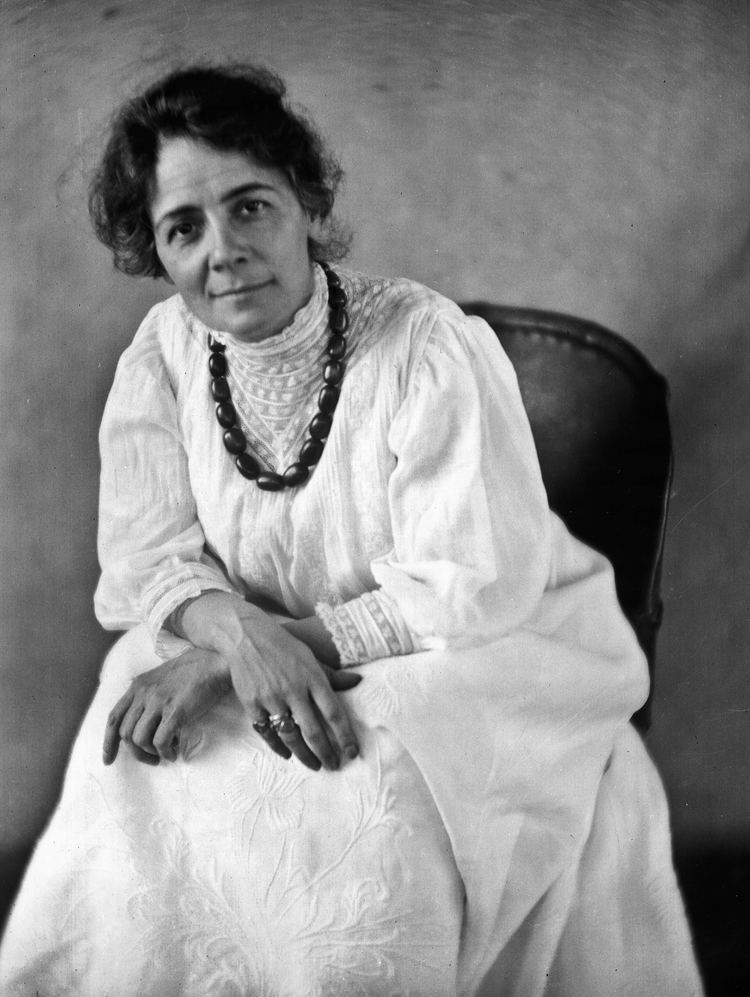
Picture of woman in her thirties with short dark hair in a light dress with a necklace of dark beads sitting in an ornate wooden chair and holding a fan in her right hand and with her left hand clasping her cheek and chin.

(Clara Clemens c. 1907)

Chernow takes the reader on an intellectual journey throughout the post-Civil War period in American history.  By detailing many of Twain’s writings starting with the GILDED AGE and other works we witness his intellectual growth and societal awareness and his intensity when confronting important issues.  Twain was horrified how America evolved after the war between the states into a country controlled by big business, burgeoning cities, and what he termed as a “carnival of greed.”  He despised the rampant materialism, and the “incredible rottenness” and “moral ulcers” he saw in America.  Interestingly as his fame brought wealth, Twain would become a prisoner for his own desire to accumulate affluence and reap the benefits of his earnings which would often lead him to further poor business decisions and the loss of a great deal of money.  During his “business” career Twain was stubborn and usually blamed others for his own decisions to the point where he would seek revenge against those he felt wronged him, when in fact they did not.

Chernow does an excellent job describing the courtship and relationship between Twain and his wife, Livy Langdon, the sister of a close friend.  Twain remained enthralled with her throughout their marriage despite her health issues and her ability to reign him in.  In fact, a good part of the time she held the reins of power within the family, and she would become his chief editor and confidant in all matters and was able to imbue him with social graces and smooth over his rougher edges and personality – in a sense she civilized him!  Twain loved his family, and his three daughters would become his audiences and critique a great deal of his work.

(Jean Clemens)

In addition to his celebrity status, Twain wanted to be known as a “thinker,” not just a humorist commenting on American society.  He also wanted to be in control of his own writing as he never trusted his publishers and Chernow delves into his difficulties with editors and certain publishing companies.  This would lead him to take over the publication and distribution of his works beginning with LIFE ON THE MISSISSIPPI in 1882 and begin his own publishing company, Charles L. Webster and Company in 1884 once HUCKLEBERRY FINN was completed.   The company had an auspicious beginning with his own works and the publication of Ulysses S. Grant’s Memoirs, but Twain pushed to publish other Civil War generals works, a step too far and it cost great profits.  The silver lining was Twain’s friendship with the former president.  Eventually his decision making in terms of what to publish and how to market those items would prove disastrous.

During his long career Twain would undergo a series of intellectual shifts.  A useful example despite his desire to join the plutocracy is his realization, reflecting the dichotomy of his thinking that the flame of radicalism burned deep inside him.  He even referred to himself as “a Sans-culotte” resulting in the publication of A CONNECTICUT YANKEE IN KING AUTHUR’S COURT.  Despite heretical thoughts concerning American society, Twain saw himself as a true patriot who frowned upon European aristocrats as he remarked that “we Americans worship the almighty dollar!  Well, it is a worthier god than hereditary privilege.”

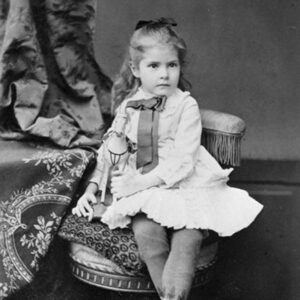
(Olivia Susan Clemens)

Chernow delves into all members of the Twain family in minute detail.  One of the major themes that percolates through the biography is Twain and Livy’s deep devotion and support for each other.  The section that deals with her ultimate death later in the book, and the pages spent describing her ailments and Twain’s search for doctors who could cure her are fascinating, particularly how his “revenge” would fall on those who promised to cure her but failed.  Twain and Livey’s three daughters garner a great deal of attention.  Chernow looks at each through the eyes of their father, and each individual daughter.   Susy, his favorite who was involved with another woman much to the disgruntlement of her parents, was quite ill and when she died at twenty-four Twain was devastated as he was stuck in Europe and unable to return to America in time for the funeral.  This would provoke extreme guilt which would stay with him for the remainder of his life.  The middle daughter, Jean, a talented young lady would suffer from epilepsy and along with her mother was one of the causes of the families meandering throughout Europe seeking cures.  The eldest daughter, Clara, a talented singer and writer who suffered from depression was tied to the family against her wishes to care for her mother and sister.  She would grow bitter and Chernow describes a certain happiness when her mother dies, freeing her to a large extent to live her life as she saw fit.  Later in the narrative the author spends a great deal of time on the extreme behavioral aspects of Jean’s illness, and her father’s inability to cope with her.  Another major character is Isabel Lyons, arguably the woman who would replace Livy’s role following her death.  Chernow traces Lyon’s rise and fall as someone who was indispensable to “the king” as she called him and in the end would be hated for her actions against his daughters and her obsession with Twain.

A key figure in Twain’s life was Henry Huttleston Rogers, an American industrialist and financier who made his fortune in the oil refining business, becoming a leader at Standard Oil, a great admirer of the author and humorist.  Rogers would repeatedly save Twain from financial ruin, and they would become good friends for the remainder of Twain’s life continuously saving him financially from himself.

Later in the narrative Chernow revisits the evolution of Twain’s thinking; support for women’s rights, funding former slaves, his progression from a southerner to a northerner, developing a pro-plutocracy attitude from a radical supporter of labor and a close friendship with Henry H. Rogers.  His intellectual journey will continue later in life, particularly after he returned from Europe and settled in New York as he still could not afford to live in his mansion he and Livy built in Hartford, CT.  He would lecture and write against American imperialism after the Spanish-American War and supported Emilio Aguinaldo, the Philippine rebel leader; railed against southern lynchings; spoke in favor of the Boxer Rebellion in China and against Christian missionaries; backed Seth Low the progressive mayor of New York City, among his many causes.  This came about after Livy’s death as she was no longer the bulwark against his radical beliefs.  As Chernow explains; “no longer content wrap his views in fables and fictions, he resorted to direct, biting prose.  He went after things – religion, politics, and patriotism – where citizens felt virtuous and didn’t care to hear contrary perspectives.”  He did not regret losing supporters, and in fact he would pick up many new ones as he went after the Romanovs after the St. Petersburg Massacre that led to the 1905 Revolution in Russia, and his diatribes against Leopold II and Belgium’s massacre of the Congolese natives.

Isabel Lyon About Isabel Lyon Twain39s Social Secretary and more

(Isabel Lyons)

If there is an aspect of the book that Chernow should have left out is his attempt to a psych historical analysis of a number of characters.  The chapter that focuses on Twain’s dreams applying pseudo Freudian principles shows he is out of his depth.  The theme can also be applied to what Chernow describes as “Angelfish,” a euphemism for Twain fascination with young girls as the author writes, his obsession was “for a bitter and lonely old man, the Angelfish represented a brighter world.

After reading Chernow’s work I feel like an interlocutor observing the Twain family and learning so many intimate details. There are aspects that could have been treated with greater care particularly Livy’s slow deterioration resulting in her death on June 5, 1904, Twain’s guilt over the death of Susy, and details of Jean’s frequent bouts with epilepsy, Clara’s dissatisfaction with her position within the family, and Twain’s repeated illnesses and health conditions.  Chernow does sum it up well by stating; “because of bankruptcy and Livy’s illness, the Clemens family had gone from a happy life firmly rooted in Hartford, to many years of exile.”

A question that must be raised was Twain “fundamentally a dupe or a genius” based on Chernow’s presentation.  From my perspective it is a little of both based on my reading of the narrative which is as long as Leo Tolstoy’s WAR AND PEACE.  Chernow doesn’t seem to overlook any aspect of Twain’s life, and his error of judgement rests on what he chooses to emphasize .  Our image of Twain is of an ungainly, easy going storyteller, but in reality it was a carefully thought out stage persona which does not come across enough in the biography.  At the outset Twain’s life reflects a Horatio Alger success tale, but once Twain’s publishing company and typesetting machine go bust his life changes as he must go into European exile as a means of paying off his many creditors, in addition to the deterioration of the health of family members.

Whatever the flaws in Twain’s make-up one cannot question his impact on the period in which he lived and the people he interacted with.  As with his subject, Chernow’s work has flaws, but overall if you have the hand strength and perseverance reading the book is an education in itself and worthwhile.  Mark Dirdra’s conclusion in his Washington Post review of the book sums it up well; “All of which said, Chernow’s “Mark Twain” does underscore how dangerous biography can be: While knowledge of Twain’s life can enhance our understanding of his writing, the man himself turns out to have been self-centered, loving but neglectful of his daughters, foolishly gullible, something of a money-hungry arriviste and vindictive to a Trumpian degree. Of course, he was also a genius — at least in a small handful of books, perhaps only one really. Was it not for “Huckleberry Finn,” would we really think of Mark Twain as one of America’s greatest writers? I wonder.”

Mark Twain

(Mark Twain)