THE OLIGARCH’S DAUGHTER by Joseph Finder

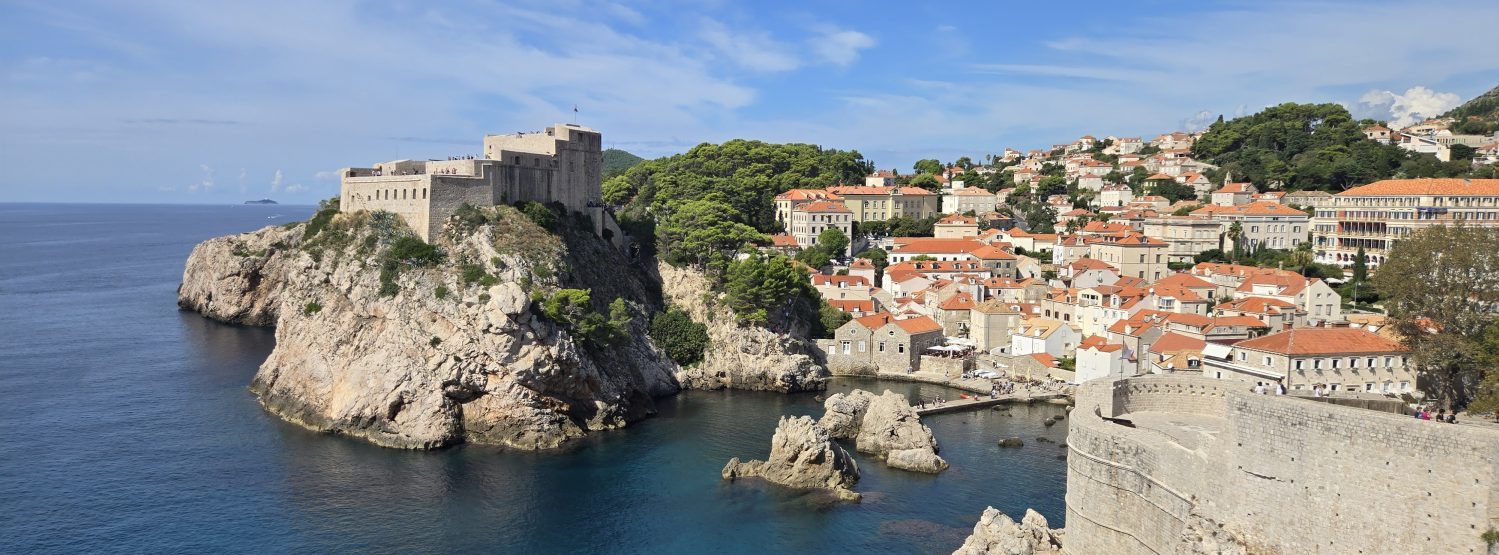
(View of the Kremlin from across the Moskva River, 2012)

In 1963, Jimmy Soul sang; “If you want to be happy for the rest of your life, never make a pretty woman your wife, for my personal point of view get an ugly girl to marry you…….”  This advice is very prescient for Paul Brightman, alias Grant Anderson in Joseph Finder’s latest spell binding novel, THE OLIGARCH’S DAUGHTER.  Brightman, an analyst and investor at Aquinnah Capital in Manhattan marries a photographer named Tatiyana Belkin.  It turns out she is the daughter of Russian oligarch, Arkady Galkin who runs AGF, a financial investment firm, also in New York City.  From the outset, Finder has hooked the reader as he has done in his sixteen previous suspense novels.

The author starts the novel rather placidly, but within a few pages a violent scene plays itself out as Grant Anderson, a boat builder is aboard his friend Lyle Bourdeaux’s boat substituting for him to lead a fishing excursion for a customer named Frederick Newman.  We soon learn that Newman was sent by a Russian oligarch to kill him.  Anderson turns the tide on Newman and after escaping Newman’s grip and gun, feeds him to the sharks.  It turns out that Anderson is not who he appears to be, having arrived in Derryfield, New Hampshire five years earlier and learned the boat building trade from “Old Man Casey,” and becomes involved with a teacher named Sarah Harrison.  But Anderson has a past, with a different name, and a few hours later two Russian thugs come to his house and kill his friend Alec Wood, a local policeman.  The FBI immediately becomes involved, and Anderson finds himself on the run from two divergent groups.
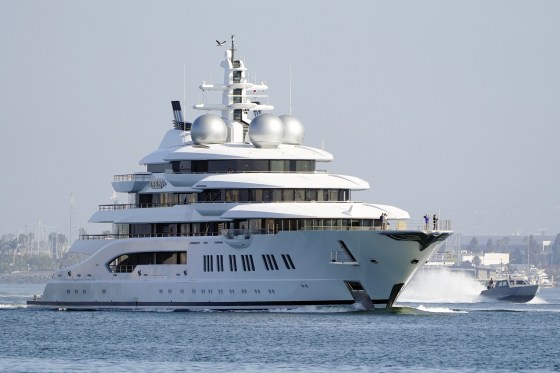
Super yacht Amadea

(The superyacht Amadea in Coronado, Calif., on June 27, 2022)

Finder organizes his novel by alternating between the past and the present over a six year period as he engages in sudden shifts in time.  “It’s Finder’s very effective method of ramping up threat and suspense. The revelations of modern espionage here—like ‘the only uncrackable safe is one that no one can find to crack’—come in quick bursts of surprise, seasoned by a gently sardonic viewpoint.”  He takes the reader back and introduces Paul Brightman who has a successful career and a rising star on Wall Street until he meets Tatiyana Belkin who he immediately falls in love with, unbeknownst to him she is the daughter of a Russian oligarch who appears to work  for the Kremlin.  Soon Aquinnah Capital goes under, and Arkady Galkin offers Brightman a job tripling his pay.   He will be approached by Mark Addison, an FBI agent who investigated Russian oligarchs and how they laundered their money and convinces Brightman to engage in aspects of spy craft for the government.  Brightman is in a quandary; he loves Tatiyana whom he marries but finds himself investigating his father in law.

It is easy to see where this is going.  Brightman takes on a new identity, that of Grant Anderson to escape Galkin’s revenge.  The novel moves quickly from scene to scene as first Anderson is on the run, and we are filled with further background pertaining to his real identity.  Finder keeps the reader on the edge of his seat as each scene unfolds.  However, at times the author makes assumptions without enough detailed explanation.  For example, when Brightman is first approached by Addison to engage in “dirty work” for the FBI he agrees almost without question, not weighing the possible risks enough and how it would impact his personal life.

(Author, Joseph Finder)

Finder’s description of the life of a Russian oligarch is fascinating and provides the reader a great deal of insight as to how they conduct their businesses and private life.  As Finder relates in a January 28, 2025, interview on NPR; “It is real. It is real. But, you know, what’s interesting about these oligarchs is that they are billionaires. They own sports teams. They are also patrons of the art in the U.S. They are sort of – I call them the new Medicis. And they are – and were, I should say – princes of the realm, princes of capitalism, in a sense, until the war in Ukraine began. And then they were persona non grata. They – overnight, they were forced out of the country. And this transformation – going from being somebody that you wanted on the board of your museum or your hospital or your university to someone who you wouldn’t acknowledge was, to me, humanly fascinating, and it made this an interesting story to tell.”

Another interesting aspect of the novel that Finder develops is how easily a person can disappear in the digital age.  The novel relates that the secret these days is to find a small town where they don’t have CCTV cameras and to live a life based on cash. Do not open a bank account. Or if you open a bank account, don’t earn any interest.  The key is not to pay taxes, because once the IRS learns who you are they are very good at tracking you down.  Further, Brightman/Anderson is able to employ many of the skills his “off the grid father” taught him.  It is clear that Finder has conducted a great deal of research to make his story authentic. 

Sometimes the novel becomes a bit complicated, but in the end all plot lines come neatly together in this ever surprising plot as Paul will have to unravel a decades-old conspiracy that involves the highest members of government.  This is not a novel about espionage as such; it has more to do with how espionage is being financed. It is, if you can believe the story, whose ending is not predictable, but in the end rather convincing in true Finder style.
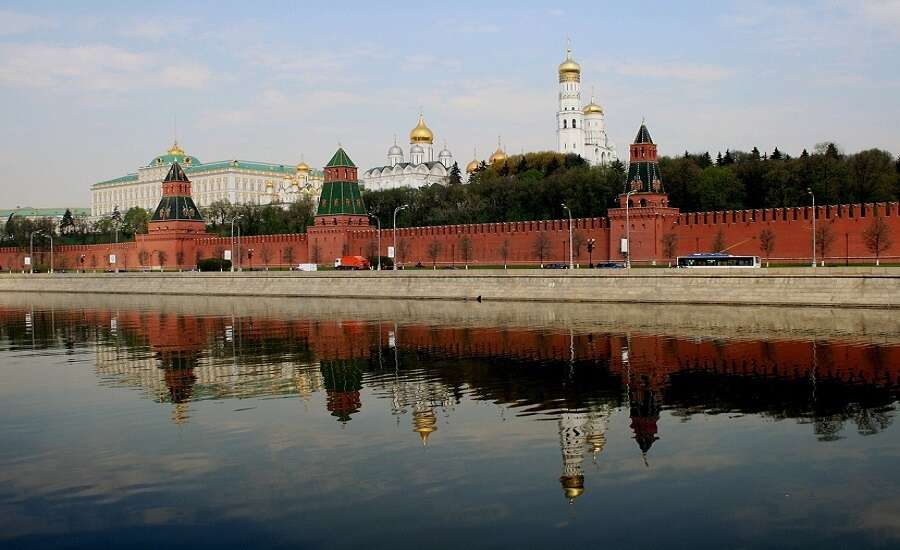
The Moscow Kremlin in Russia today

(The Kremlin)

HOTEL UKRAINE by Martin Cruz Smith

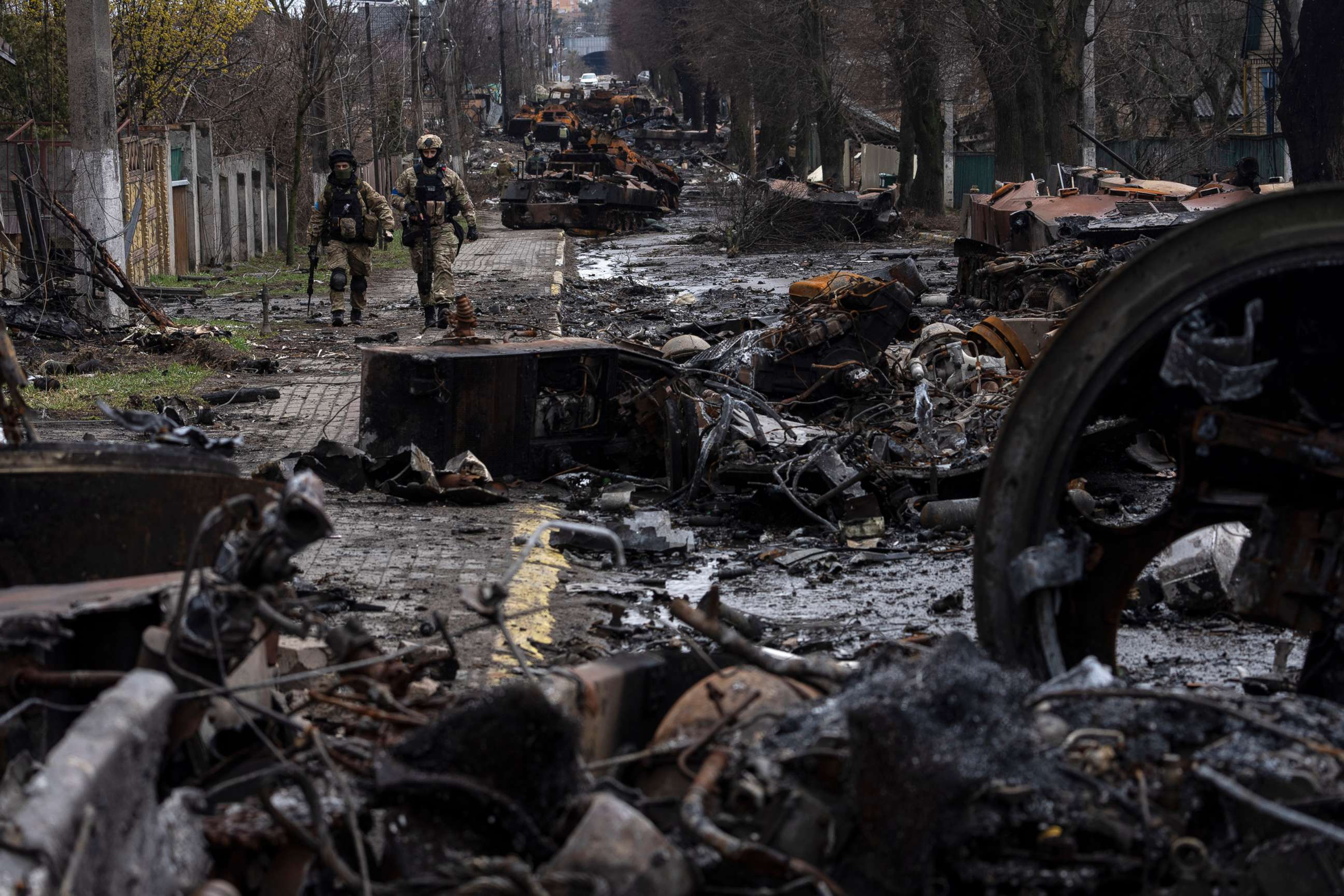
PHOTO: Soldiers walk amid destroyed Russian tanks in Bucha, in the outskirts of Kyiv, Ukraine, April 3, 2022.

(Soldiers walk amid destroyed Russian tanks in Bucha, in the outskirts of Kyiv, Ukraine, April 3, 2022. Ukrainian troops are finding brutalized bodies and widespread destruction in the suburbs of Kyiv, sparking new calls for a war crimes investigation and sanctions against Russia)

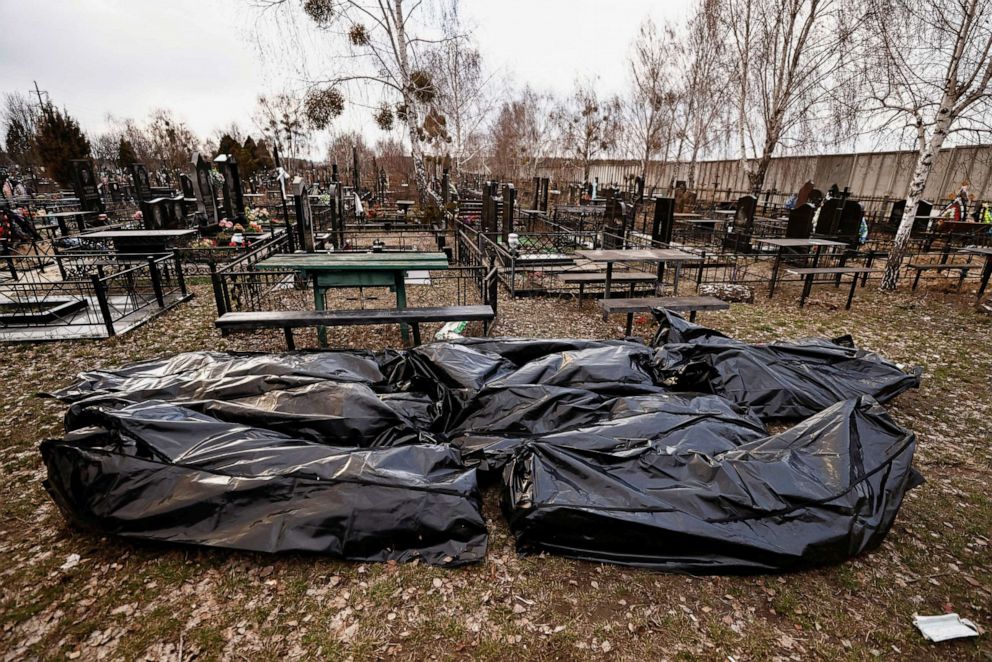
On February 24, 2022, the Russian military following the orders of Vladimir Putin launched an invasion of Ukraine.  The Russian autocrat believed his forces would take Kyiv in short order.  However, as in most wars things did not go as planned as the Ukrainian army stopped any advance on their capital and as Russian forces receded they committed numerous savage atrocities in the Ukrainian city of Bucha.  Fast forward three and a half years the war continues with no end in sight as it appears that Putin has no desire for peace as evidenced by his meeting with President Trump two weeks ago and the failed diplomacy that followed.  This summer Russian bombing of Ukrainian cities has increased and there does not seem to be an end in sight.  The ongoing war in Ukraine serves as a backdrop to Martin Cruz Smith’s eleventh and final installment of his Arkady Renko novels entitled HOTEL UKRAINE.

This map shows the locations of known Russian military strikes and ground attacks inside Ukraine after Russia announced a military invasion of Ukraine. The information is current as of March 1, 2022 at 11 a.m. eastern time.

In previous novels we learn that Renko, Smith’s Moscow based investigator suffers from Parkinson’s disease and his symptoms have grown worse.  At the outset of the novel, we find Renko in Pushkinskya Square among Russian citizens demonstrating against the invasion of Ukraine.  Renko meets his son Zhenya who is arrested for shouting anti-war slogans, and he is grabbed by the police and arrested.  This will be the first instance in the novel that Smith mirrors actual events as he is charged with using an illegal word, “war,” as Russian authorities refer to events in Ukraine as a Special Military Operation.

The next day Renko is assigned by Prosecutor General Zurin to investigate the murder of Alexei Kazasky, one of twelve Deputy Ministers of Defense who was killed at the Hotel Ukraine.  Almost immediately Renko is reintroduced to a former lover, Marina Makarova, an FSB agent who wants to pin the murder on Yuri Blokhin, a second class advisor at the Ukrainian embassy who turns out to be an SBU agent (equivalent to an FSB agent).  Renko’s investigation proves Blokhin is being set up and an angry Makarova is forced to release him.  She wants to control the investigation and eventually gets Renko removed from the case by outing him to his superiors that he suffers from Parkinsons.

There are a number of interesting characters that are introduced particularly Renko’s son Zhenya’s friends and compatriots in opposing the war, Misha and Margarita who are members of the Black Army – a group of hacker activists who do their best to educate the Russian public as to the truth of the war in Ukraine.  They research the truth and put it out on social media, attack Russian websites, for example, ministries, links, infrastructure and businesses like Gazprom, in addition to doing the same to Putin’s ally, Belarus.

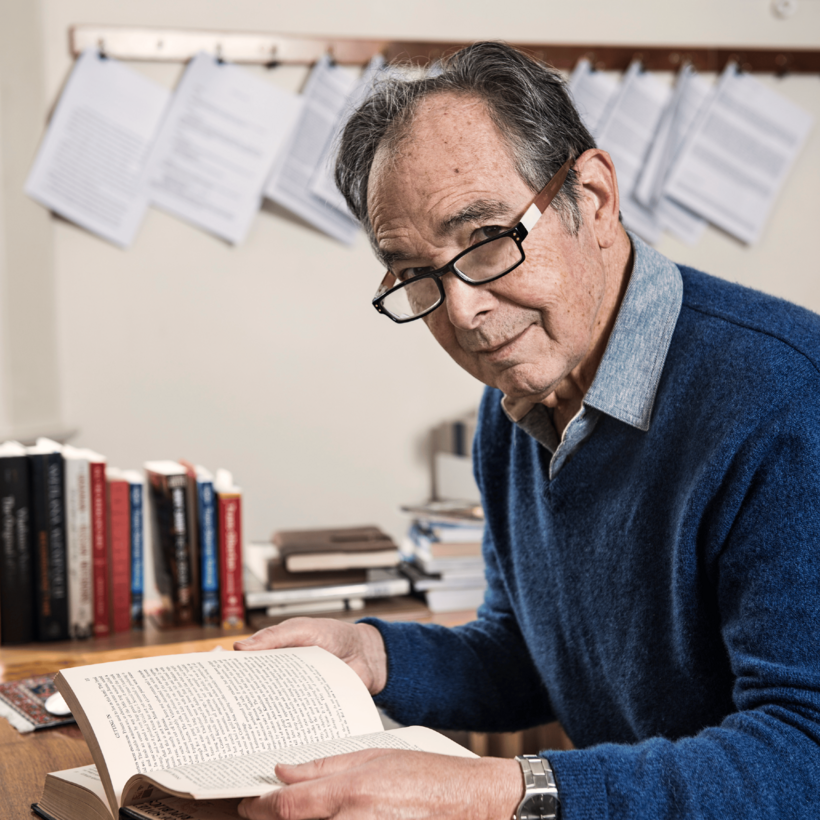
(Martin Cruz Smith)

As the novel progresses more and more Smith integrates real events and people into his story.  A case in point is Lev Volkov, a former Spetsnaz soldier who fought in the first Chechen war.  Volkov founded a private army called the 1812 Group which fought in Crimea in 2014.  The group is funded and armed by Putin and Smith recounts their activities particularly in Central Africa and Mali as they take over mine complexes and control the extraction of valuable resources.  Volkov was an oligarch, warlord, and political operator who mirrors the real life Victor Prigozhin and his Wagner Group who engaged in the same activities in Africa and was used by Putin as a surrogate army in Ukraine until Putin’s “former cook” went too far and perished in a plane crash.  There are other examples of the real war portrayed including the role of sanctions and its economic impact on Russian society, the shortages that develop especially medicines to treat Parkinson’s etc.

The novel takes a major turn as Renko after viewing a thumb drive that hackers make available to suspects that the murder of Kazasky is linked to a suspect who was in Bucha and used a similar weapon to commit atrocities as was used to kill the former defense functionary.  Renko’s girlfriend Tatiana Petrovna, an investigative reporter for the New York Times convinces Renko to go to Bucha to explore the possibility that what he saw on the thumb drive is the key to solving the murder.  The problem is that Renko has been put on leave and was ordered to stand down.

Renko himself realizes that his Parkinsons have slowed him down, but he is intrigued by the case.  It is interesting that the author suffered from Parkinsons for over thirty years and on July 11, at the age of 82 he succumbed to the disease almost to the day that his last Renko novel was released.  Renko and Tatiana go to Bucha avoiding the problems caused by the war and arrive “going the long way around” from Athens to Warsaw to Ukraine. 

HOTEL UKRAINE  brings Arkady full circle as it is a prominent location from an earlier Renko novel, GORKY PARK.   A tense meeting occurs between Lev Volkov,  who is tired of Tatiana’s storylines, and it is possible he will have her killed.  Smith offers  powerful scenes, such as when Arkady’s consciousness makes the hallucinatory transition from thinking that he’s undergoing an extreme attack of Parkinson’s, to the realization he’s been poisoned.  The sequence is probably derived from Smith’s own experience, which lends a high degree of authenticity to the novel.  Smith’s reality transferred to Renko, the ongoing war in Ukraine which has caused the death of over million people and has destroyed Ukrainian villages and towns all appear in a story whose end is sad as we realize will no longer have this novelist and his characters to entertain us and make us think about the realistic stories and characters he has created.

(Bags containing bodies of civilians are seen at the cemetery after being picked up from the streets before they are taken to the morgue, amid Russia’s invasion of Ukraine, in Bucha, Ukraine April 4, 2022)

WALTER O’MALLEY AND THE DODGERS AND BASEBALL’S WESTERN EXPANSION by Andy McCue

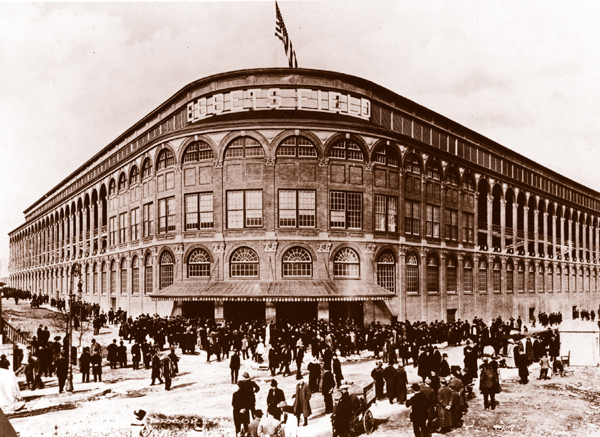
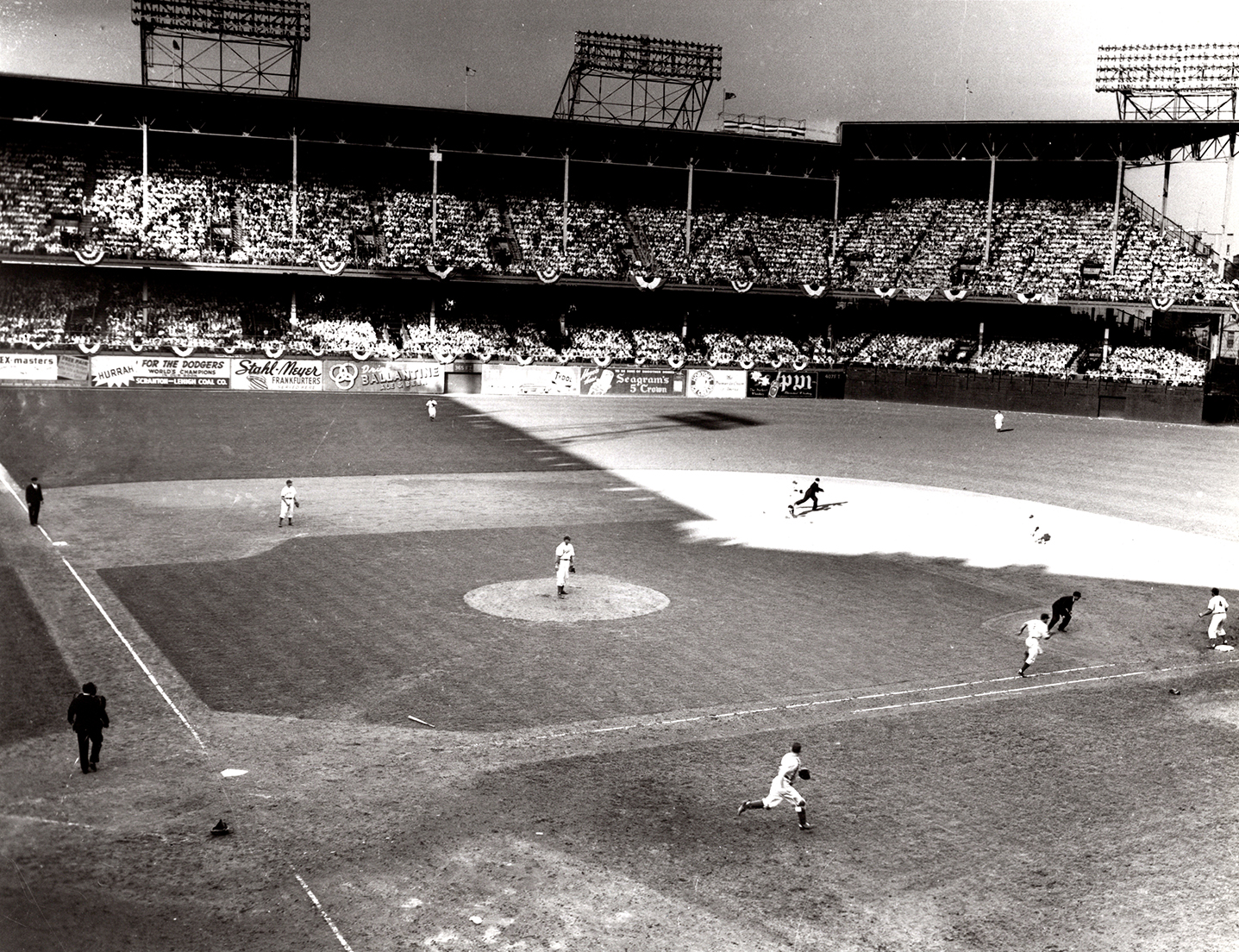
The iconic main entry of Ebbets Field was located at the intersection of Sullivan Place and Cedar Street (later renamed McKeever Place). (Photo: SABR-Rucker Archive)

(Ebbets Field, Brooklyn, NY)

As a little boy in 1956 my father took me to Ebbets Field to see the Brooklyn Dodgers play the Cincinnati Reds.  We sat behind the Reds dugout, and I carefully watched men like Vada Pinson and Frank  Robinson.  I looked out at the green expanse, and I saw my heroes; Duke Snider, Gil Hodges, Pee Wee Reese and was overwhelmed.  I do not remember the final score of the game, but what I do remember 70 years later was how wonderful the experience was.  I would never return again to Ebbets Field, not because my parents refused to take me, but because Walter O’Malley, a man who would be vilified and hated by the Flatbush faithful, would move the “beloved Dodgers” to the west coast.  I have read a number of books on the move, the best being Neil Sullivan’s THE DODGERS MOVE WEST, but none zero in more on the man responsible for changing baseball from a conservative midsize business that resided on the east coast to a national, and then international game earning billions of dollars.  The publication of Andy McCue’s exceptional biography of O’Malley and the history of the move, WALTER O’MALLEY AND THE DODGERS AND BASEBALL’S WESTERN EXPANSION fills that void.

McCue goes right to the heart of why O’Malley wanted to move the Dodgers to Los Angeles.  After spending about a third of the book providing background material relating to the development of baseball and the Dodgers in particular.  He integrates  O’Malley’s upbringing, his early career, which was primarily focused on the law and business, even though he was involved with baseball, but with a special emphasis on real estate transactions.  Further he does well integrating the machinations within the Dodger organization from the 1920s on as different factions vied for control of the ball club.  What emerges are wonderful portraits of Branch Rickey, Buzzy Bavasi, and Leo Durocher, among others.  But more importantly he drills down as to how O’Malley was able to acquire his controlling interest in the team.  Once McCue reviews this material he goes right to the heart of why O’Malley wanted to move the Dodgers to Los Angeles. 

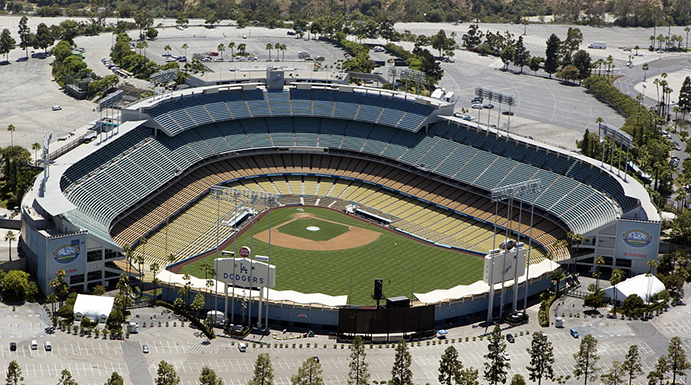
Walter O’Malley’s grand baseball ballpark — Dodger Stadium — opened on April 10, 1962.

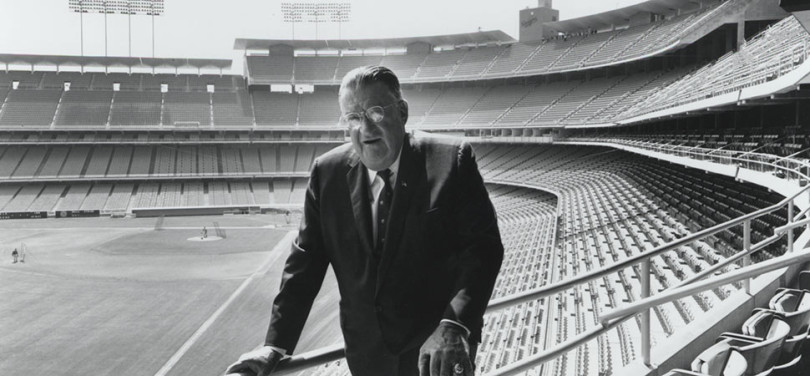
(Walter O’Malley outside of his office on the Club Level at Dodger Stadium)

In a chapter entitled “A New Stadium-Economics,” McCue outlines the state of the Dodgers in the early 1950s getting to the core of O’Malley’s concerns.  One of the primary themes of the narrative is that O’Malley was a businessman foremost, and to a lesser extent, a baseball fan.  By the early 1950s Brooklyn underwent a demographic and racial change especially where Ebbets Field was located.  The area, known as Flatbush, was becoming less white and more diverse.  Brooklyn in general experienced the same thing as between 1950 and 1957 the borough “lost 235,000 Caucasians and added 100,000 non-whites.”  Brooklyn was losing population as people fled to Nassau country, Long Island, and Queens.  In addition, the borough was also losing manufacturing jobs, and as a result people’s discretionary spending for baseball was drastically reduced. 

At the same time Dodger attendance was on a steady decline going from 1.8 million in the late 1940s to roughly 1.1 million right before the team left for Los Angeles in 1958.  This ate into the team’s profitability and O’Malley’s answer was a new ballpark.  By the mid-1950s Ebbets Field was located in a neighborhood rife with vandalism, in fact New York Daily News  sports reporter Dick Young stated that O’Malley had told him “the area is getting full of blacks and spics.”  The ballpark itself was in bad need of refurbishing as toilets didn’t work, too many seats were behind support beams, and seating was only 32,000 compared to 70,000 at Yankee Stadium and 54,000 at the Polo Grounds.  O’Malley’s solution was to build a new ballpark.

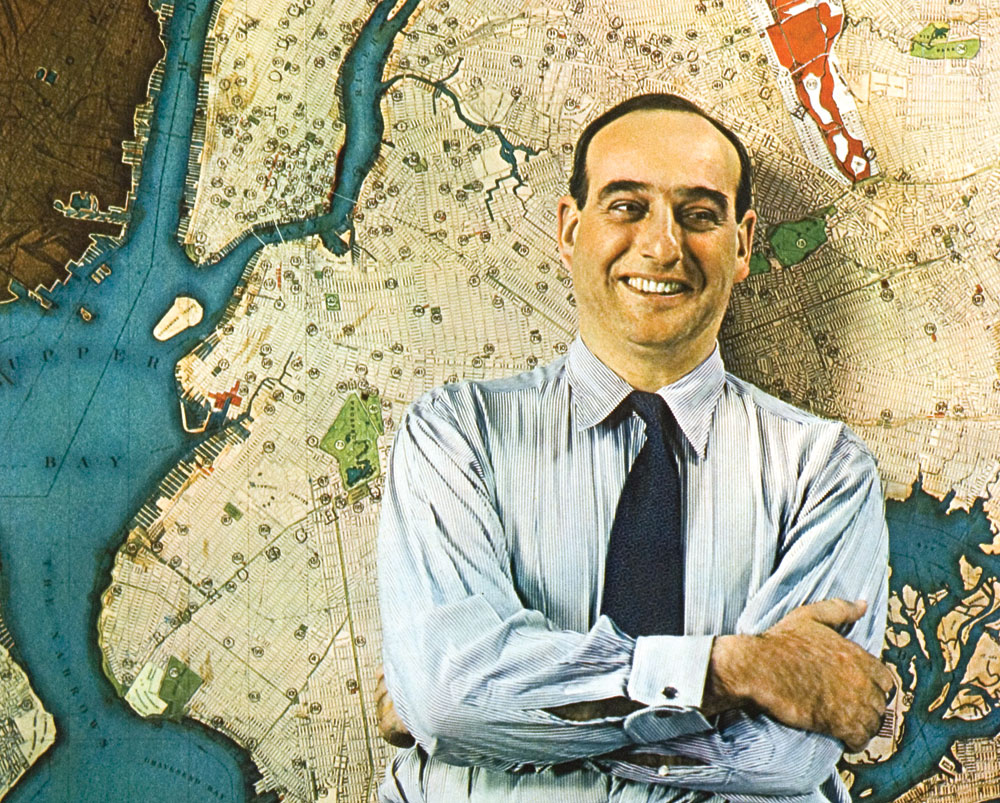
Young Robert Moses standing in front of a map of New York City

(Robert Moses)

McCue delves into the role of Robert Moses, who was Long Island State Commissioner and the head of the Triborough Bridge Authority and one of the most powerful men in New York.  As O’Malley pushed for a new stadium in Brooklyn, Moses became the main roadblock to his vision as he was clear that a baseball team could not use public funds set aside for slum clearance, even if it were part of a larger project that was involved in improving the neighborhood and creating public housing – throughout negotiations over the next few years, Moses would not change his mind.  It is clear from McCue’s discussion; Moses did not like O’Malley, which played a major role in their talks.  O’Malley tried a number of scenarios to break the impasse but got nowhere.  Moses would offer the future site of Shea Stadium in Queens, but O’Malley would not leave Brooklyn.  Further impacting talks were Mayor Robert Wagner who never believed that baseball was a priority.

McCue delves into the weeds as he first recounts negotiations with New York officials and then moves on to discuss talks with Los Angeles businessmen and politicians.  In both cases the main issues centered on a site for a new stadium, cost of construction, taxation, infrastructure costs, leases, and ancillary aspects including mineral rights, and recreation areas and who would be responsible for paying for these items.  What emerges is personality conflict as many involved had their own agendas, but if one is looking for who to blame for the move apart from O’Malley a great deal falls on the people of Brooklyn whose attendance at Dodger games declined precipitously over the previous decade.

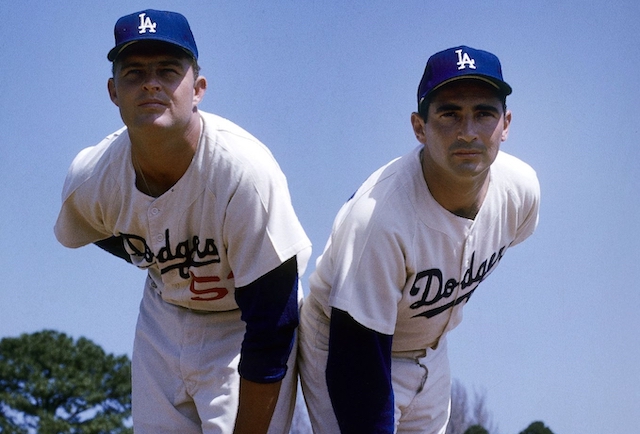
Los Angeles Dodgers starting pitchers Don Drysdale and Sandy Koufax

(Don Drysdale and Sandy Koufax)

One of the most important questions McCue raises is when O’Malley made up his mind to move the Dodgers to Los Angeles.  There is no conclusive answer be it after the 1956 World Series, Spring Training 1957, or at some point in negotiations with New York officials.  The answer to the question probably depends on your opinion of O’Malley and the process that resulted.

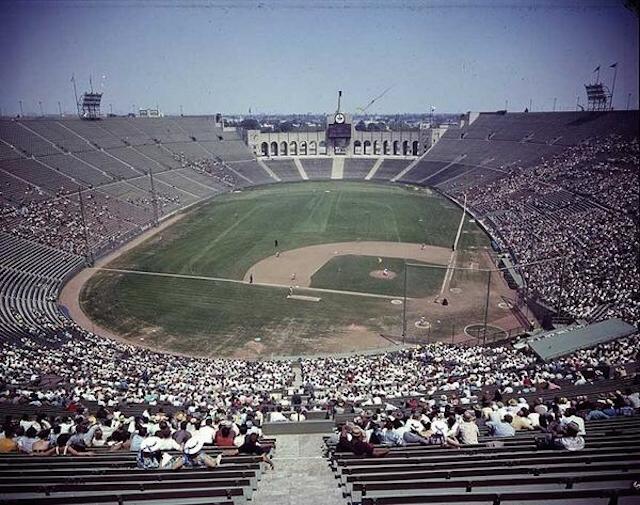
Once the decision was reached to move the team O’Malley’s biggest problem was where the Dodgers were going to play.  Wrigley Field, which he purchased was too small with little parking, the Los Angeles Coliseum was too large, and its configuration was not conducive for baseball to the point the Rose Bowl in Pasadena was considered.  The key to negotiations was the Los Angeles Coliseum Commission and Los Angeles City Council member, John Holland, who opposed the move and did his best to postpone any construction after a deal was struck with numerous lawsuits and slow walking approvals for construction. 

(Los Angeles Coliseum)

One of the most interesting aspects of the process was how the Coliseum would be retrofitted for baseball – not an easy task as a new field needed to be created, more comfortable seats added, reduction in capacity by 10,000, and the cost of renovations.  A key person in all aspects of the move was Harold Parraott who joined the Dodgers in 1943.  Officially, he was traveling secretary, but his duties included much more as he was in charge of attendance receipts while on the road, needed to know baseball, the newspaper business, and had a knack for figures – Parrott met all of these qualifications.

McCue’s work is more than a biography.  It is an intricate portrait of the Dodger owner, but it is also a unique description of the inner workings of the Dodger organization focusing on decision making relating to finally deciding to leave Brooklyn and the myriad problems that developed in Los Angeles including the economics and politics involved.  The role of Buzzy Bavasi and Branch Rickey stand out as McCue takes the reader through the history of the Dodgers.  But importantly, the author provides a history of Chavez Ravine, the final site for the new stadium, and all the roadblocks that were created to prevent its completion.  Once the site was chosen O’Malley had to deal with a referendum on the contract with Los Angeles authorities which would produce a “holy alliance”  between groups of various parochial interests who wanted to stop construction.  C. Arnholt Smith, the owner of the Pacific Coast Leagues, San Diego Padres financed the opposition, and a fascinating political battle emerged led by John Holland on the conservative side, and Roz Wiener, a liberal on the Los Angeles City Council.  The result that a stadium that was to cost around $10 million would rise to $16 million.

Dodger Stadium

(Dodger Stadium, Los Angeles, CA)

In the end O’Malley becomes a towering baseball figure bringing baseball to the west coast, moving  his own team but convincing New York Giants owner, Horace Stoneham to move his team to San Francisco.  O’Malley’s actions fostered a new sense of unity and identity for Los Angeles which had the reputation of being “72 suburbs in search of a city.”   McCue presents a nuanced account  showing O’Malley as a shrewd and daring businessman who saw the future of baseball differently than other owners.  The narrative fosters a well-researched and even handed account of a man who could be compassionate and generous but also mean-spirited and insensitive.

Paul Dickson’s review in the April 4, 2014, Wall Street Journal captures the essence of the man and what he accomplished: “The real insight of Mr. McCue’s book is that O’Malley was a man who embraced risk and adapted well to new situations. In the late 1960s, as the players union gained in strength under the leadership of Marvin Miller, the adversaries became friends. ‘He is the one baseball owner I respect,’ said Miller. ‘O’Malley is a hard, realistic businessman who is part of this century and who does not pretend that baseball is something it isn’t.’  While other owners saw their battles with Miller and his union as a test of their manliness, O’Malley approached the fight over player salaries more practically. His negotiations with Miller were conducted with civility and what Miller termed ‘the cut-and-thrust between two New York boys—even if many of the fans in their home city still hated at least one of them.”

The Ebbets Field grandstand is packed with fans during Game 3 of the 1941 World Series between the Brooklyn Dodgers and New York Yankees. (SABR-Rucker Archive)

(Ebbets Field, Brooklyn, NY)