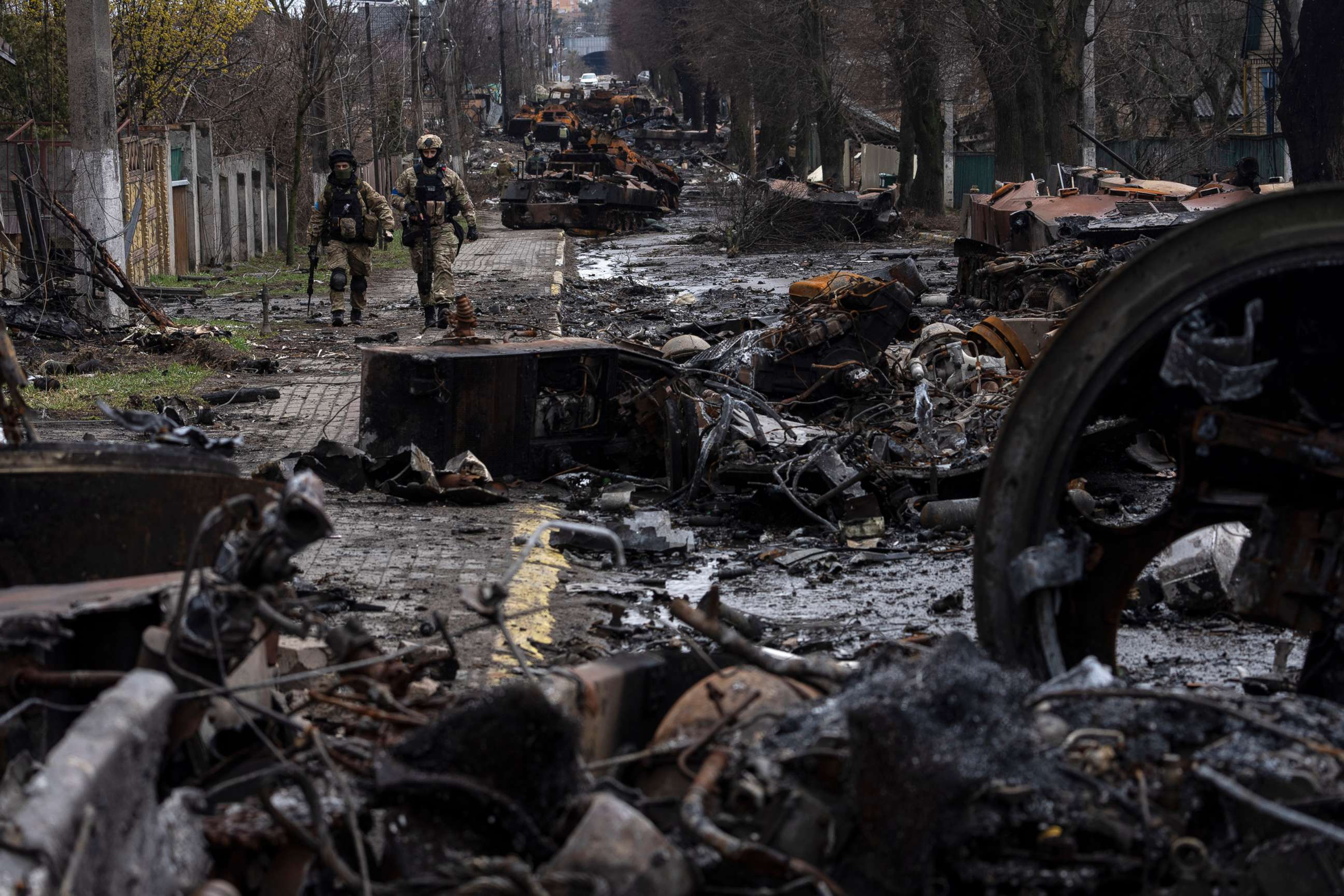
(Soldiers walk amid destroyed Russian tanks in Bucha, in the outskirts of Kyiv, Ukraine, April 3, 2022. Ukrainian troops are finding brutalized bodies and widespread destruction in the suburbs of Kyiv, sparking new calls for a war crimes investigation and sanctions against Russia)
On February 24, 2022, the Russian military following the orders of Vladimir Putin launched an invasion of Ukraine. The Russian autocrat believed his forces would take Kyiv in short order. However, as in most wars things did not go as planned as the Ukrainian army stopped any advance on their capital and as Russian forces receded they committed numerous savage atrocities in the Ukrainian city of Bucha. Fast forward three and a half years the war continues with no end in sight as it appears that Putin has no desire for peace as evidenced by his meeting with President Trump two weeks ago and the failed diplomacy that followed. This summer Russian bombing of Ukrainian cities has increased and there does not seem to be an end in sight. The ongoing war in Ukraine serves as a backdrop to Martin Cruz Smith’s eleventh and final installment of his Arkady Renko novels entitled HOTEL UKRAINE.

In previous novels we learn that Renko, Smith’s Moscow based investigator suffers from Parkinson’s disease and his symptoms have grown worse. At the outset of the novel, we find Renko in Pushkinskya Square among Russian citizens demonstrating against the invasion of Ukraine. Renko meets his son Zhenya who is arrested for shouting anti-war slogans, and he is grabbed by the police and arrested. This will be the first instance in the novel that Smith mirrors actual events as he is charged with using an illegal word, “war,” as Russian authorities refer to events in Ukraine as a Special Military Operation.
The next day Renko is assigned by Prosecutor General Zurin to investigate the murder of Alexei Kazasky, one of twelve Deputy Ministers of Defense who was killed at the Hotel Ukraine. Almost immediately Renko is reintroduced to a former lover, Marina Makarova, an FSB agent who wants to pin the murder on Yuri Blokhin, a second class advisor at the Ukrainian embassy who turns out to be an SBU agent (equivalent to an FSB agent). Renko’s investigation proves Blokhin is being set up and an angry Makarova is forced to release him. She wants to control the investigation and eventually gets Renko removed from the case by outing him to his superiors that he suffers from Parkinsons.
There are a number of interesting characters that are introduced particularly Renko’s son Zhenya’s friends and compatriots in opposing the war, Misha and Margarita who are members of the Black Army – a group of hacker activists who do their best to educate the Russian public as to the truth of the war in Ukraine. They research the truth and put it out on social media, attack Russian websites, for example, ministries, links, infrastructure and businesses like Gazprom, in addition to doing the same to Putin’s ally, Belarus.
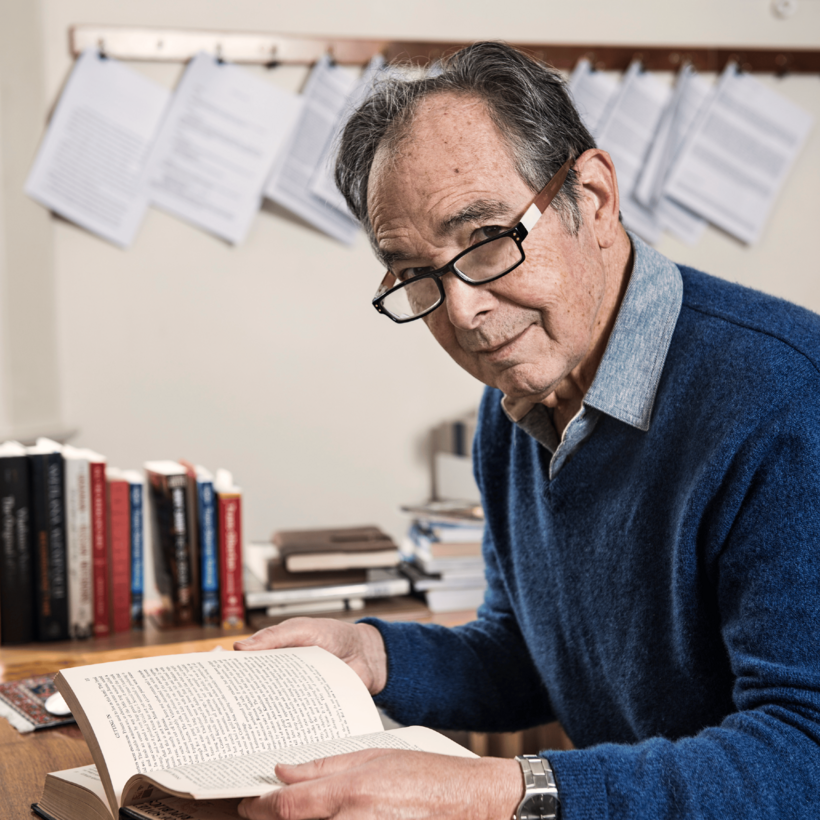
(Martin Cruz Smith)
As the novel progresses more and more Smith integrates real events and people into his story. A case in point is Lev Volkov, a former Spetsnaz soldier who fought in the first Chechen war. Volkov founded a private army called the 1812 Group which fought in Crimea in 2014. The group is funded and armed by Putin and Smith recounts their activities particularly in Central Africa and Mali as they take over mine complexes and control the extraction of valuable resources. Volkov was an oligarch, warlord, and political operator who mirrors the real life Victor Prigozhin and his Wagner Group who engaged in the same activities in Africa and was used by Putin as a surrogate army in Ukraine until Putin’s “former cook” went too far and perished in a plane crash. There are other examples of the real war portrayed including the role of sanctions and its economic impact on Russian society, the shortages that develop especially medicines to treat Parkinson’s etc.
The novel takes a major turn as Renko after viewing a thumb drive that hackers make available to suspects that the murder of Kazasky is linked to a suspect who was in Bucha and used a similar weapon to commit atrocities as was used to kill the former defense functionary. Renko’s girlfriend Tatiana Petrovna, an investigative reporter for the New York Times convinces Renko to go to Bucha to explore the possibility that what he saw on the thumb drive is the key to solving the murder. The problem is that Renko has been put on leave and was ordered to stand down.
Renko himself realizes that his Parkinsons have slowed him down, but he is intrigued by the case. It is interesting that the author suffered from Parkinsons for over thirty years and on July 11, at the age of 82 he succumbed to the disease almost to the day that his last Renko novel was released. Renko and Tatiana go to Bucha avoiding the problems caused by the war and arrive “going the long way around” from Athens to Warsaw to Ukraine.
HOTEL UKRAINE brings Arkady full circle as it is a prominent location from an earlier Renko novel, GORKY PARK. A tense meeting occurs between Lev Volkov, who is tired of Tatiana’s storylines, and it is possible he will have her killed. Smith offers powerful scenes, such as when Arkady’s consciousness makes the hallucinatory transition from thinking that he’s undergoing an extreme attack of Parkinson’s, to the realization he’s been poisoned. The sequence is probably derived from Smith’s own experience, which lends a high degree of authenticity to the novel. Smith’s reality transferred to Renko, the ongoing war in Ukraine which has caused the death of over million people and has destroyed Ukrainian villages and towns all appear in a story whose end is sad as we realize will no longer have this novelist and his characters to entertain us and make us think about the realistic stories and characters he has created.
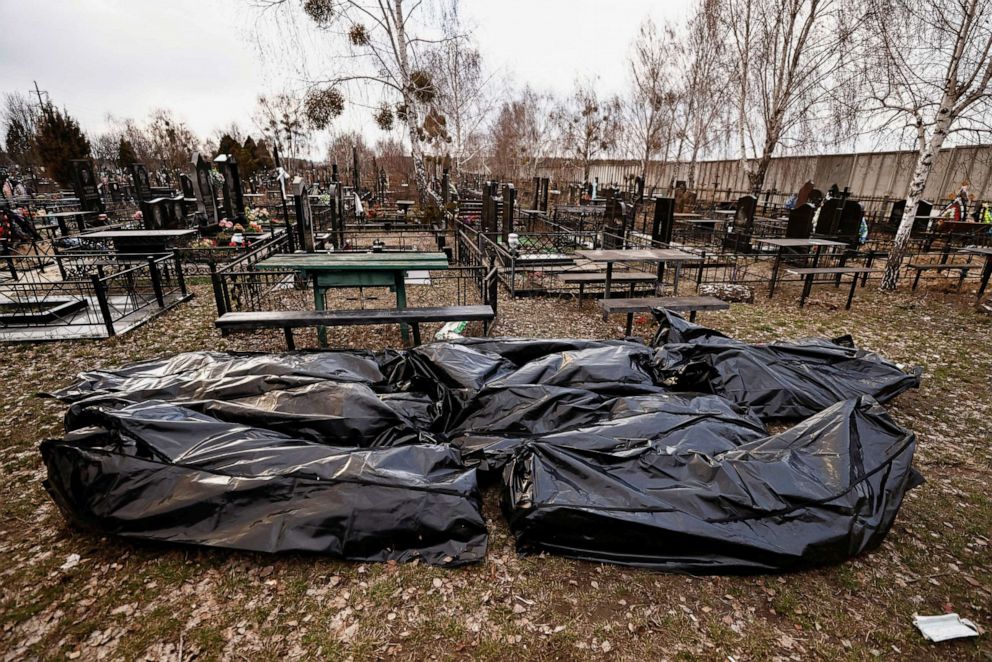
(Bags containing bodies of civilians are seen at the cemetery after being picked up from the streets before they are taken to the morgue, amid Russia’s invasion of Ukraine, in Bucha, Ukraine April 4, 2022)
 Doc's Books