OUR FRIENDS IN MOSCOW: THE INSIDE STORY OF A BROKEN GENERATION by Andrei Soldatov and Irina Borogan

(People walk in snowfall on Red Square in Moscow, Russia, on Nov. 15, 2022)

By 1991 Russian President Mikhail Gorbachev had resigned, a coup failed to bring conservatives back to power, and Boris Yeltsin would lead the new Russia through a period of corruption and kleptocracy that by the end of the 1990s saw the former Soviet Union at a precipice.  Would it continue to try and improve relations with the west, or would it turn inward?  However, a watershed moment took place as Russian President Yeltsin resigned on December 31, 1999, and appointed Vladimir Putin as acting head of the government.  According to historians Philip Short, Steven Lee Myres, and Catherine Belton, that behind the scenes Putin, after serving as the Director of Federal Security Service (FSB) and as Secretary of the Security Council, had cut a deal to protect Yeltsin and his family from any criminal charges emanating from his presidency, and that Yeltsin resigned in order to give his protégé a leg up in the coming presidential election to insure that protection.

Once Putin was elected and took firm control Russia engaged in a series of wars, first a massive military invasion and occupation of Chechnya to restore federal control which lasted until 2009.  By 2008, Putin had decided that moving closer to western economic interests was not going to be Russia’s future and invaded Georgia in support of separatist regions of South Ossetia and Abkhazia.  The five day war resulted in Russian occupation of these territories which are internationally recognized as part of Georgia.  According to Andrei Soldatov and Irina Borogan in their new book OUR DEAR FRIENDS IN MOSCOW: THE INSIDE STORY OF A BROKEN GENERATION by 2011Putin came to an understanding that globalization with its ideas and technologies was the major threat to Russia and him personally.  Since 2011 Russia engaged in a series of actions and maneuvers to detach Moscow from the West.  In 2014 in response to Euromaidan protests, Russian forces took control of the Crimean peninsula.  In addition, Russia initiated a war in the Donbas region of eastern Ukraine, supporting separatist forces.  On February 24, 2022, Putin unleashed a large-scale invasion of Ukraine with the goal of quickly toppling the Zelensky government in Kyiv and installing a regime that was pro-Russian and would not make any moves toward the European Union or NATO.  In a few weeks, the war will enter its fourth year and no matter the pipe dreams of Donald Trump it appears Putin has no inclination toward making peace particularly as American support for Ukraine has eroded.
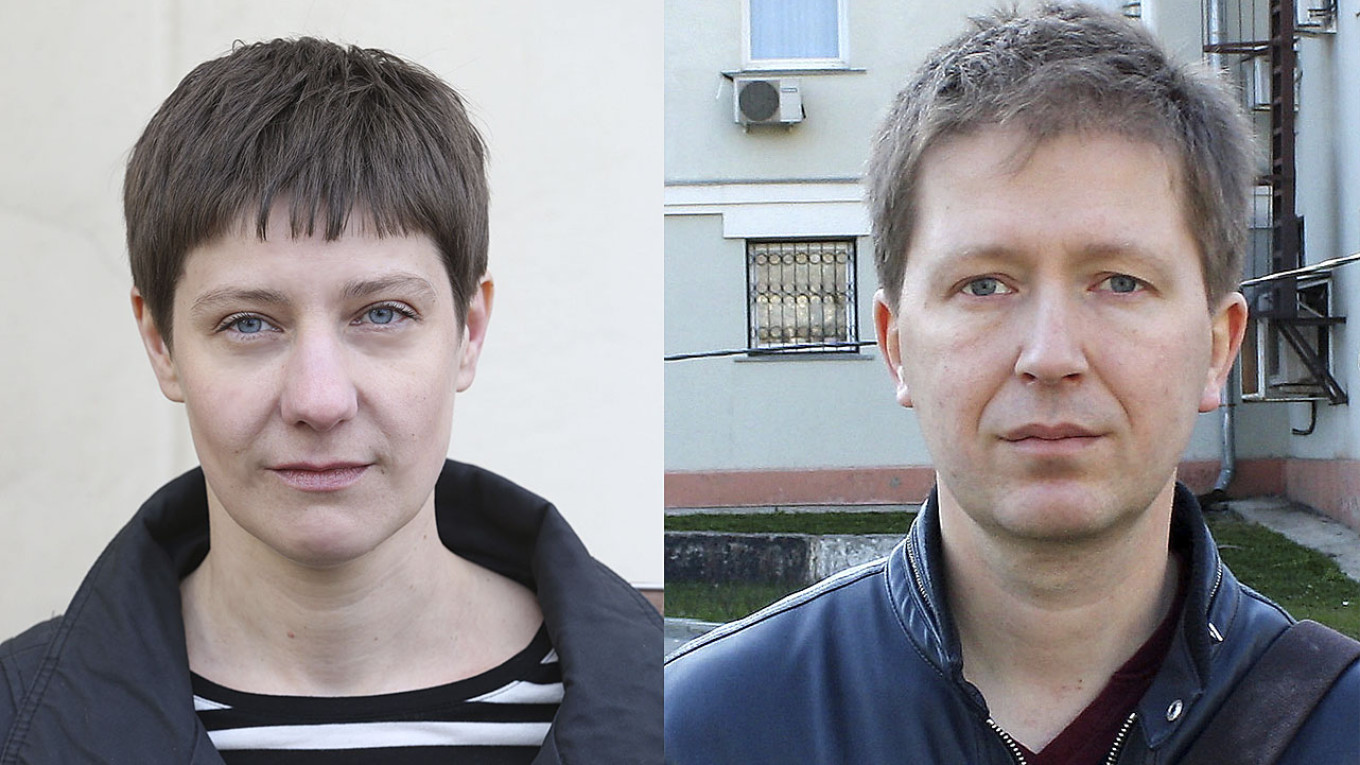
(the authors)

In their new book Soldatov and Borogan explore former friendships with people dating to the spring of 2000 following Putin’s election who met at the Russian daily newspaper, Izvestia.  By 2022, some of those friends in Moscow were serving Putin in one way or another.  At the same time, the authors were in exile in London separated from family and were wanted by Russian authorities.  Why had those friendships which had been so close evolved in the way they had?  How did former friends end up on such violently opposed sides?  The answer to these questions form the core of a fascinating and heart rendering book as the authors reconnected with a few of their former friends and follow this group from the optimistic years of the early 2000s, a time of brief liberalism under Dmitry Medvedev, the annexation of Crimea and the repressions that followed between 2016-2021, and the current war in Ukraine.  It is a journey that describes a soon to be global society with tremendous aspirations to “a dismal walled-in fortress.”

The authors spend the first segment of the book tracing their careers as they move from one newspaper or media outpost to the next.  In their discussion they integrate a series of friendships and the belief systems of those who they see as their compatriots.  Among the most important individuals that the authors discuss is Evgeny Krutikov who at one time was head of the Political Department at Izvestia and over the years developed extensive contacts in the Russian intelligence community.  The authors would work with him at the newspaper.  Petya Akopov emerges as another important relationship.  Akopov is a scion of Moscow intelligentsia who was the chief correspondent in the Political Department at Izvestia.  He and his wife Marina were always critical of the west and were against liberal values and believed Russia was a more spiritual civilization than the west.  Zhenya Baranov was an intrepid war correspondent for a Russian television channel who was good friends with Akopov. Olga Lyubimova, a television host with connections to reactionary film maker Nikita Mikhalkov.   Lastly, Sveta Babayeva who replaced Krutikov as head of the Political Department, an individual who had been a member of the Kremlin press pool attached to Putin.

Apart from their newspaper work Soldatov and Borogan launched a website, Agentura, “a ring of spies,” that was designed to be a community for journalists to write about security services for different newspapers.  At the outset, the FSB did not interfere because it sought to improve its image  and hoped to consolidate positive news reports on its actions.  At the same time, they launched their website, Vladimir Putin’s presidency  was experiencing difficulties.  The brutal Chechen civil war which led to repeated terror attacks was ongoing; and the sinking of the nuclear submarine Kursk while Putin was on vacation in Sochi became a propaganda nightmare.

Microphones on long booms extend out from a circle of journalists, some writing in notebooks with as a man at center ansers questions. A gridded glass roof is seen above.

(Microphones on long booms extend out from a circle of journalists, some writing in notebooks with as a man at center ansers questions. A gridded glass roof is seen above.Journalists question Russian Prime Minister Vladimir Putin in Moscow, on Dec. 15, 2011).

At this point, the authors should have realized that they were not on the same page as their compatriots who found nothing wrong with Putin undergoing cosmetic surgery at a time when Russian sailors were drowning inside a submarine.  Akopov and others blamed the west for interfering in the crisis causing the authors to realize they could no longer work at Izvestia.     This would begin a journey of employment at a series of media outlets after resigning from Izvestia after a number of editorial conflicts over articles dealing with Russian security services.  The authors would hook on with Versia, a weekly tabloid which had worked with the KGB in the past and they suspected was corrupt, but they needed a job.  On October 23, 2002, Putin’s political problems reemerged as terrorists seized the Dubrovka Theater.  Special Forces would rush the theater and three days later 130 people, 5 terrorists were killed out of 1000 hostages taken.   Putin declared victory over terrorism as he did not want to appear weak despite the fact most were killed when government forces unleashed poison gas which backfired.  When Soldatov and Borogan posted an article entitled, “Not True” on their website and Versia picked it up the result was an FSB raid , interrogation at the infamous Lefortovo  prison and new employment.  The authors would move on to the Moscow News which coincided with the Brelan school massacre in the North Caucusus which consisted of 334 dead hostages of which 186 were children.  Their friend Baranov would praise Putin’s response and  made a derogatory and false documentary describing the leader of Georgia.  By this time, it was clear Baranov and Krutikov were propagandists working for security agencies.  Shortly thereafter, the authors were let go by the Moscow News.                                                                                                                                                                                                

Russian Minister of Culture Olga Lyubimova attends a ceremony in Moscow

(Russian Minister of Culture Olga Lyubimova) 

Soon the only place they could publish was on their website and a new platform, Ej.ru which was a home for anti-Putin liberals.  By this time, the Russian economy was booming due to oil revenues.  People began experiencing economic improvement and wealth seemed to touch a large segment of the urban population.  Putin saw this as an opportunity to crack down on any opposition resulting in the assassinations of Anna Politkovskaya, an anti-Putin journalist at Novaya Gazeta, and Alexander Litvinenko, a former FSB officer.  Anyone who opposed Putin was a target including Mikhail Khodorkovsky, the head of the largest energy company in Russia who was accused of tax evasion, embezzlement, and assassination and would be imprisoned for over ten years and find his wealth confiscated.

The authors do an excellent job integrating their journalistic journey with events in Russia.  By 2008 Putin will invade Georgia expanding on his belief that the breakup of the Soviet Union was the worst thing that ever happened to Russia.  It was the first step in a two decade long campaign to restore Moscow to its proper place in the world order.  Putin would emerge from the Georgia imbroglio with an 88% popularity in Russian polls.  2008 was also a watershed year for the authors as they learned the murder of Anna Politkovskaya involved an FSB officer leading to their newspaper firing them.

Soldatov and Brogden’s thesis trying to understand how their compatriots had wound up on the other side of the political spectrum from them has a clear answer – the signs were evident from the outset of their friendships as they learned the views and backgrounds of these individuals.  Akopov’s belief in the monastic traditions of the Russian Orthodox Church as an alternative to western philosophy should have been a warning sign.  Even Baranov spoke of the orthodox faith  as he reported on Channel One, the main Russian television station.  As Putin decided to make Russian orthodoxy a national ideology, the authors should not have been surprised.
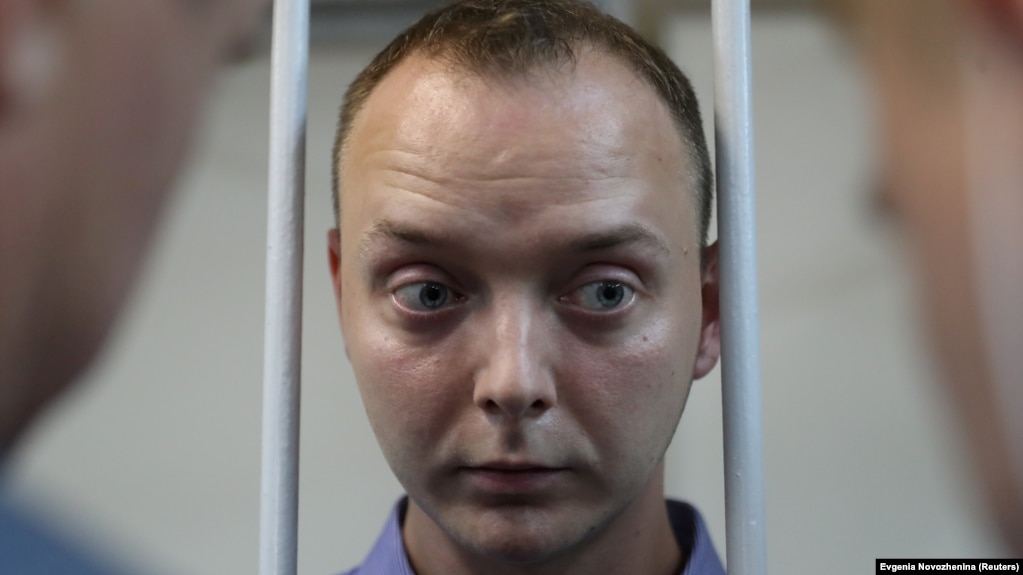
Former Russian journalist Ivan Safronov before a court hearing on treason charges in Moscow on July 7.

(Former Russian journalist Ivan Safronov before a court hearing on treason charges in Moscow on July 7, 1997)

Many believed the term of Dimitri Medvedev symbolized a more liberal Russia.  But it was clear Putin was making the decisions in the background and would soon resume the Russian presidency.  Once Putin returned and seized Crimea and attacked the Donbas region in Ukraine it was clear what his ideology was and would continue to be.  Soldatov and Borogan’s disappointment in their friends would continue as  they chose the path of going along with the government as their Izvestia  friends showed their true colors.  In 2014 Baranov was a presenter for Channel One, the Kremlin propaganda channel, pushing a narrative of Nazis in Ukraine and Nato aggression, while his wife crossed the almost non-existent line between state and press to become Deputy Minister of Culture the following year.  Akopov authored a triumphalist essay, published in February 2022: ‘Putin has resolved the Ukrainian question’; it was swiftly removed from the internet when the Ukrainians stopped the Russian army outside Kyiv.

One would ask why these people made the choice of becoming government propagandists.  They were well educated, intelligent people, but financial need, family, health issues carry great weight in decision making or perhaps it was nostalgia for the power of the Soviet Union – for each individual it is a personal choice once Putin’s direction was clear.   Journalists had little choice if they hoped to make a decent living but to work for state media and get in line with the official ideology. Putin was suffocating the independent media and civil society that emerged in the early 2000s and by 2014 that suffocation was complete.

The depth of the author’s break with past friends is evident as Douglas Smith writes in the August 3, 2025, edition of the Wall Street Journal;  “In the eyes of their friends, Mr. Soldatov and Ms. Borogan were either traitors or fools. In 2012 Mr. Akopov called them “scum” and implied they were foreign agents for their investigations into the security services. Ms. Lyubimova, who built a career making patriotic films and eventually climbed the government ranks to become the minister of culture, mocked the notion that Russia could ever be moved from its authoritarian historical foundations. Resistance was futile, submission was the only option. In what became known as the “Lyubimova Manifesto,” she stated that the way to survive was to give in, as she did, like a rape victim: “I lie on my back, spread my legs, breathe deeply, and even try to enjoy it.” 

By February 24, 2022, the day Putin unleashed his attack on Ukraine the authors had already moved to London, however there was and is a target on their backs.  They have been followed, warned by police that they were in danger, and in June 2022 the Russian Interior Ministry issued an arrest warrant for them.  They have had to resort to what they learned about spy craft during their journalistic careers as part of their survival strategy.

(People walk in snowfall on Red Square in Moscow, Russia, 2022)

THE FINEST HOTEL IN KABUL: A PEOPLE’S HISTORY by Lyse Doucet

Kabul, Afghanistan - July 25, 2023: Aerial view of Intercontinental Hotel Kabul Stock Photo

With the recent American incursion into Venezuela to capture the country’s dictator Nicolas Maduro and President Trump’s comments that the United States was now in charge of the South American country the situation has reintroduced the terms “nation-building,” and “forever wars” into the American lexicon.   This has fostered memories of our twenty year war in Afghanistan along with thoughts of loss of life and treasure.  Lyse Doucet, a Canadian journalist and the BBC’s chief correspondent’s new book, THE FINEST HOTEL IN KABUL: A PEOPLE’S HISTORY explores the war in Afghanistan from a novel perspective that being the staff and guests of the luxury Hotel Inter-Continental Kabul which opened its doors in 1969.  Doucet presents the views of many individuals she met after first checking into the hotel in 1988.  From inside the hotels’ battered walls she experienced events until 2021 when the hotel finally shuttered its doors for good.  From her perch in the hotel, she weaves together the many stories of Afghans who kept the hotel in business despite the violence, political corruption, and death that seared their lives.  Doucet’s approach is richly imaginative as she narrates the war through the eyes of those people who worked in and passed through the hotel for over two decades.

Doucet first traveled to Kabul in 1988 to report on the Soviet withdrawal from Afghanistan.  From that time, she developed relationships with a myriad of characters who worked at the hotel or were its guests.  She reports that most people have lost old photographs, videos, or written documentation of the period because of the brutal aspects of Soviet rule, civil war and living under the Taliban.  However, one thing they maintained was their memories which allowed them to relate their experiences as the hotel tried to maintain its decorum and care for its guests under rocket fire, suicide bombings, or terrorist incursions into the hotel itself.

(A waiter at the Inter-Continental Hotel in Kabul)

Doucet does a remarkable job reporting on the lives of her subjects tracing the evolution of their attachment to the hotel at the same time events transpired in Kabul and its environs which they had no control over.  Doucet lets the reader know what her subjects are responding to on a daily basis, but the war itself does not overwhelm the stories of the many people who remained loyal to the Inter-Continental hotel.

Each individual that Doucet presents seems to possess the Afghan sensibility to humanity expressed by empathy and doing the best for others in situations that most would give up on.  She explores the daily lives of the hotel’s staff, their families, survival, and their hopes for peace in the future.  She begins with the threat of the Taliban’s return in 2021 as the United States withdraws its remaining troops under the Biden administration and the fears it produces, then she turns back the clock and begins to introduce the hotel’s staff juxtaposed to political and military events in the Kabul region.

Among the most important individuals she introduces is Hazrat, who in his early twenties comes to work at the hotel during its glory years of the 1970s.  He would begin his career as a busboy who would earn a certificate from the Department of Vocational Education at the Royal Ministry of Education.  Hazrat’s would be the focus of many events that Doucet reports upon.  He would moonlight as a bartender, which is interesting in a Moslem country.  The author follows Hazrat’s promotions within the hotel hierarchy as a tool to describe the events in Kabul throughout his five decades at the hotel.  He would join the housekeeping staff in 1978 and eventually would be placed in charge of maintaining the diverse floors of the hotel.  He would develop an intimate knowledge of the hotel, its repeated refurbishing and rebuilding due to the war over the decades.  It would come in  handy decades later in 2018 when three Taliban gunmen smuggled weapons into the hotel and proceeded to kill and maim staff and guests indiscriminately.  He and two younger staffers were able to escape because of Hazrat’s knowledge of a closet with wide steel piping where they could hide.

Guests at the Intercontinental Hotel

(Guests being served at the Intercontinental Hotel)

The author integrates her mini-biographies and the attendant stories seamlessly throughout the narrative interspersing events that affected the lives of staff and the general Kabul population over the decades.  She reports on the December 1979 coup that would lead to the Soviet invasion and ten years of war against Moscow and the growth of the mujahedeen armed by the United States who eventually defeated the Soviets.  The brutality of the war is presented clearly, but not in the usual political and military fashion.  Once Soviet Premier Mikhail Gorbahev announces in 1991 that Russia would no longer provide food and fuel to the Afghan people it would engender a decade of civil war that would produce the Taliban, a group of former mujahedeen who grew tired of the factionalism, warlordism, corruption, and violence that permeated Afghanistan during the period.  9/11 would become the watershed for the next twenty years as the United States and its Afghan allies would invade, defeat the Taliban, and install the corrupt regime of Hamid Karzai, a former mujahedeen, but a pragmatic and personal individual.  Doucet keeps these events in the background as she describes the plight of the hotel staff and the hotel itself.

Doucet exhibits a sense of humor despite the horrors she reports on.  A prime example is how warlord factionalism leads to so many governmental changes particularly as the Soviet took control.  Afghani leaders from the 1970s onward have overseen a period of intense volatility, shifting from monarchy to republic, communist rule, civil war, Taliban fundamentalism, and democratic transition. Key figures include Daoud Khan (1973–1978), who established the first republic; the PDPA communist leaders Nur Muhammad Taraki, Hafizullah Amin, Babrak Karmal, and Mohammad Najibullah (1978–1992); Mujahideen leaders such as Ahmad Shah Massoud and Burhanuddin Rabbani (1992–1996); Taliban leaders Mullah Omar (1996–2001) and Hibatullah Akhundzada (2021–present); and post-2001 presidents Hamid Karzai and Ashraf Ghani.   Each time a governmental leadership change took place the hotel workers took out hammers and nails and replaced portraits with new leadership photos which would adorn the hotel on a seemingly regular basis.

The hotel served many functions throughout.  During the early 1980s about 85,000 Soviet troops fought in Afghanistan and more and more Soviet generals wanted to use the hotel as a command post.  Over the years the hotel served as a base for journalists, diplomats, and even the calling of the first Afghan Loya Jirga (Grand Assembly),  a traditional, large-scale national gathering of elders and leaders to make critical decisions for Afghanistan which met for the first time in decades in 2002 which elected Hamid Karzai.  The hotel was also a multi-purpose site as weddings and other family events took place if the political and military situation allowed.

The author does not shy away from the damage caused by war as entire villages are levelled by the Soviet Union’s carpet bombing.  Villages were then looted by rampaging rebel troops, weed tangled fields were infested by land mines, the coercive beatings and torture of local villagers, all resulting in death, lost limbs, and the destruction of the fabric of Afghan society.

The role of the mujahedeen is carefully explored paying special attention to their view of modernity as it applies to the hotel itself.  The staff was used to portraying photographs, music, video, women interacting with men, and many other aspects of life that Islamists found reprehensible.  The staff, like many Afghans made the best of their situations and adapted as best they could to whoever was in charge.  Doucet describes how hotel staff tried to maintain decorum and service it was known for even as they were confronted by mujahedeen.  The factionalism of the 1990s saw fighters repeatedly stripping the hotel of its contents as Hazrat and his compatriots mourned the perceived death of their place of employment which was their second home.  Eventually Hazrat and his family were hit by rocket fire at their home resulting in severe injuries to Hazrat, the death of his brother, but the survival of his daughters.

The hotel itself was seen as a safe place after many renovations from war damage and the implementation of extensive security measures.  However, no matter what precautions were taken the hotel and its staff could not escape the horrors of war.  For most of the 1990s the hotel suffered damage but nothing that would close it down as by 2008 Kabul’s street had become an armed fortress.  However, on June 28, 2011, nine suicide bombers hit Kabul and the hotel.  The hotel was full of wedding guests with a separate security conference taking place.  Ten would die and many were wounded in the carnage.  It took place a month after Osama Bin-Ladin was killed and President Obama announced a timeline for American withdrawal.  This attack was seared into the memories of the Hotel’s staff, which was again victimized in 2018 when three gunmen went floor to floor killing people as described by Hazrat.

(Taliban at the Intercontinental Hotel Kabul)

Doucet’s portrayal of Mohammad Aqa is an excellent source and his life is a microcosm of the hotel’s plight over the decades and Afghanistan in general.  Throughout his career he was able to maintain his waiter’s graceful bearing and air of authority which no one could deprive him of, even after serving in the Afghan army between 1991 and 1994.  The easy optimistic air under the leadership of Karzai beginning in 2002 would shortly give way to greed, and in 2016 further the tension which was endemic to the rule of Ashraf Ghani.

The situation in the hotel called for constant repairs.  The man who would later be known as “Mr. Fix-it,” Amanullah provides a different perspective as the hotel tries to survive and outlive the fighting.  For Amanullah and others, the hotel is more than mortar and steel, it is a living structure that belongs to its workers who have given their lives for its survival.  Amanullah was a laborer at the hotel until serving in the Afghan army and when he returned in the early 1990s he held numerous roles including “income auditor” as there was no one else.  Amanullah would graduate from the Polytechnic Institute  and would marry his sweetheart, Shala in the hotel’s ballroom which ended early as there was firing from the heights above the hotel.  As the war kept damaging the hotel, Amanullah was put in charge of repairs and after an Abu Dhabi businessmen financed renovations, Amanullah traveled the region securing parts and overseeing reconstruction.

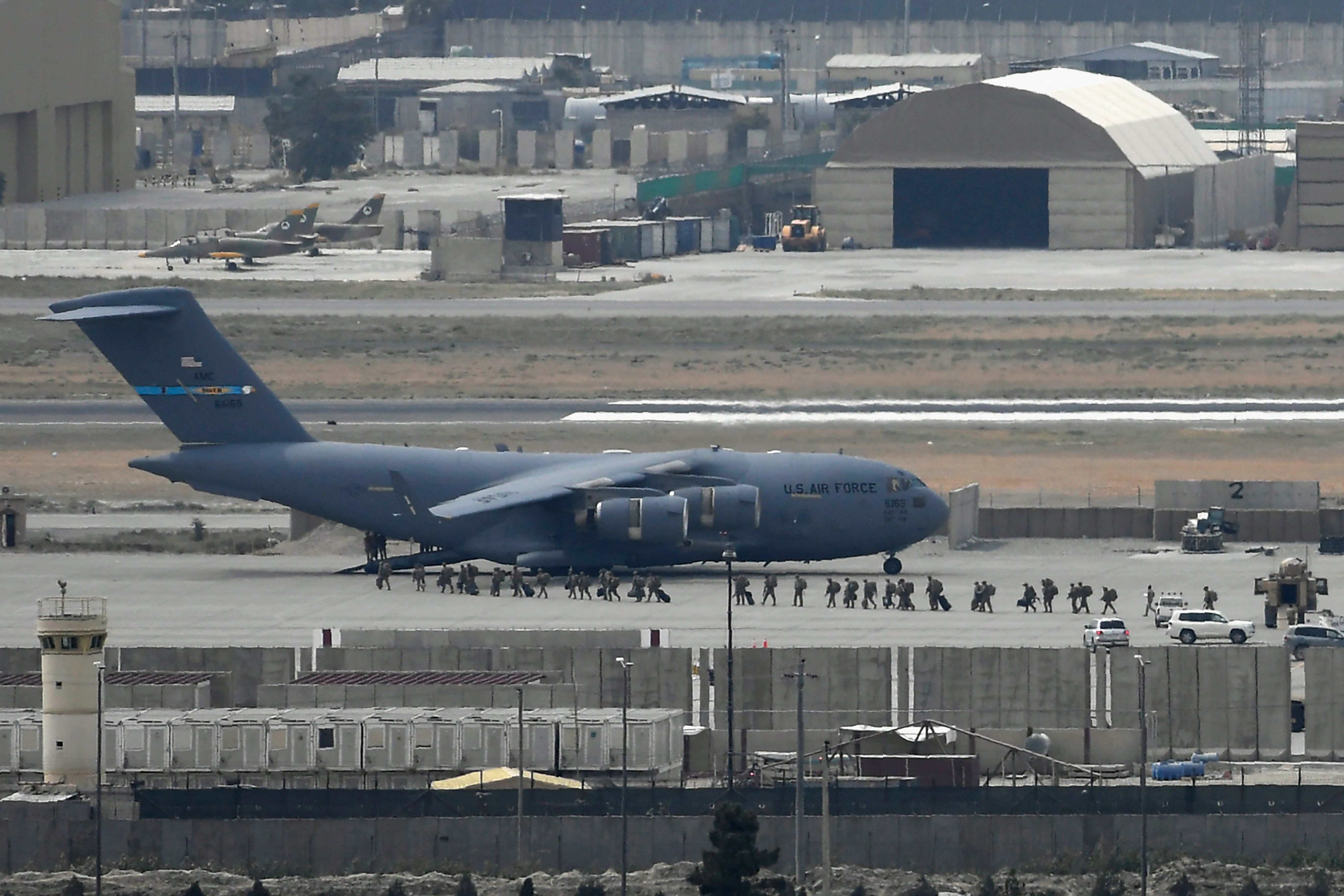
 US soldiers board an US Air Force aircraft at the airport in Kabul on August 30

(American soldiers board a U.S. Air Force aircraft at Kabul’s international airport on Aug 30)

Doucet relates many horror stories as Afghans tried to survive.  Perhaps the most poignant involved families trying to leave Kabul as the last flights out of the city took place as the Americans withdrew and the Taliban took over once again.  Stories like Abida Nazuri whose life story reflects the lack of rights for women and her battle to support her family after a life with a husband who was thirty years older from an arranged marriage, the burden of supporting seven children after he died, and her quest to become a chef at the hotel are all impactful.  Through Abida’s experiences we witness the chaos and inhumanity of the American withdrawal and the Taliban takeover that saw continued fighting, suicide bombers, and rocket attacks as people tried to escape the war zone for freedom.  In the end Abida and her family did not escape.

The arrival of the Taliban was described by hotel staff in 1996 and again in 2021.  Talibs ransacked the hotel repeatedly and the staff did their best to accommodate them.  Portraits of the different Taliban leaders are presented, the most important of which is Mullah Mohammad Omar, the “commander of the faithful.”  But the most important personalities in the book are the staff and Doucet does justice to the memory of those who did not survive and those who did.  As Doucet writes about the 2018 attack; “in just one night, more of the hotel had been destroyed than all the war-torn decades gone by….the ruin didn’t stop at marble, wood and steel.  The hotel’s people were broken.”

As Amy Waldman writes in her November 30, 2025, New York Times Book Review; “It’s those people who haunted me after I closed the book. They are at the mercy of the power hungry. They may believe their fate is in God’s hands. Yet their sheer determination to survive, to feed and house their families and keep them safe, and to improve their children’s chances, never flags. If their absence of flaws doesn’t ring completely true, Doucet’s choice to highlight their ordinary heroism in this deeply felt account is understandable.”

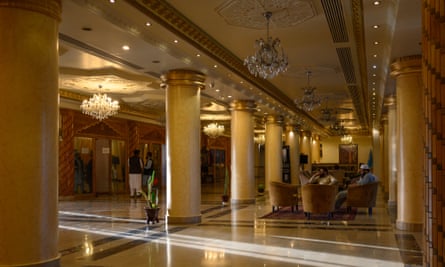
The lobby of the Intercontinental Hotel in August 2023.

EVERYDAY IS SUNDAY: HOW JERRY JONES, ROBERT KRAFT, AND ROGER GOODELL TURNED THE NFL INTO A CULTURAL AND ECONOMIC JUGGERNAUT by Kris Benson

(Robert Kraft, Roger Goodell, and Jerry Jones)

Major league baseball used to be considered America’s pastime.  Sometime in the early 1990s after a number of decades the National Football League overtook baseball as the dominant spectator sport in America.  Professional football always seemed to be in the news, even out of season with collegiate combines, the draft, off season practices, training camps and of course the season that lasted from July through February.  The coaching carousel, which today is in full swing, trade speculation, sports betting, player safety, new stadiums seem like normal dinner time conversation, in homes, bars, and elsewhere.  How did football achieve this exalted position in American culture and maintain it?  According to New York Times business writer, Kris Belson in his new book  EVERYDAY IS SUNDAY: HOW JERRY JONES, ROBERT KRAFT, AND ROGER GOODELL TURNED THE NFL INTO A CULTURAL AND ECONOMIC JUGGERNAUT the credit falls to a group of NFL owners who remade the league by taking a low scoring game dominated by defenses into a high scoring game dominated by unheard of athletic skill and controlled violence perfectly matched with a media revolution that is constantly seeking new content.  Benson’s narrative is an entertaining examination of what he has labeled “an immensely profitable American religion.”

Commissioner Paul Tagliabue stands with Gene Upshaw the President of the NFL Players Union during the 1993 NFL draft April 25, 1993 at the Marriott...

(Paul Tagliabue and Gene Upshaw)

The book itself is more than mini-biographies of the three figures mentioned in the title.  It explores the growth of the league going back to the 1960s and brings its focus to the 1980s onward emphasizing certain watershed dates and deals.  Other figures aside from Jerry Jones, Robert Kraft, and Roger Goodell emerge as important to the leagues growth and success and Benson is able with his many contacts and deep research to formulate a number of important themes that dominate the book.  They include a fascinating description of the evolution of NFL owner cliques that made the decisive decisions that led to the league’s unparalleled success – even describing how they fought for certain chairs at league meetings like a high school cafeteria.  Certain personalities dominate but Benson’s thematic approach includes the growth of billion dollar stadiums and their financing, labor negotiations that allowed the league to take off financially, rules changes that altered the game into high scoring entertainment, and how the owners policed themselves to avoid renegades like Al Davis and Dan Snyder to impact league decision making.

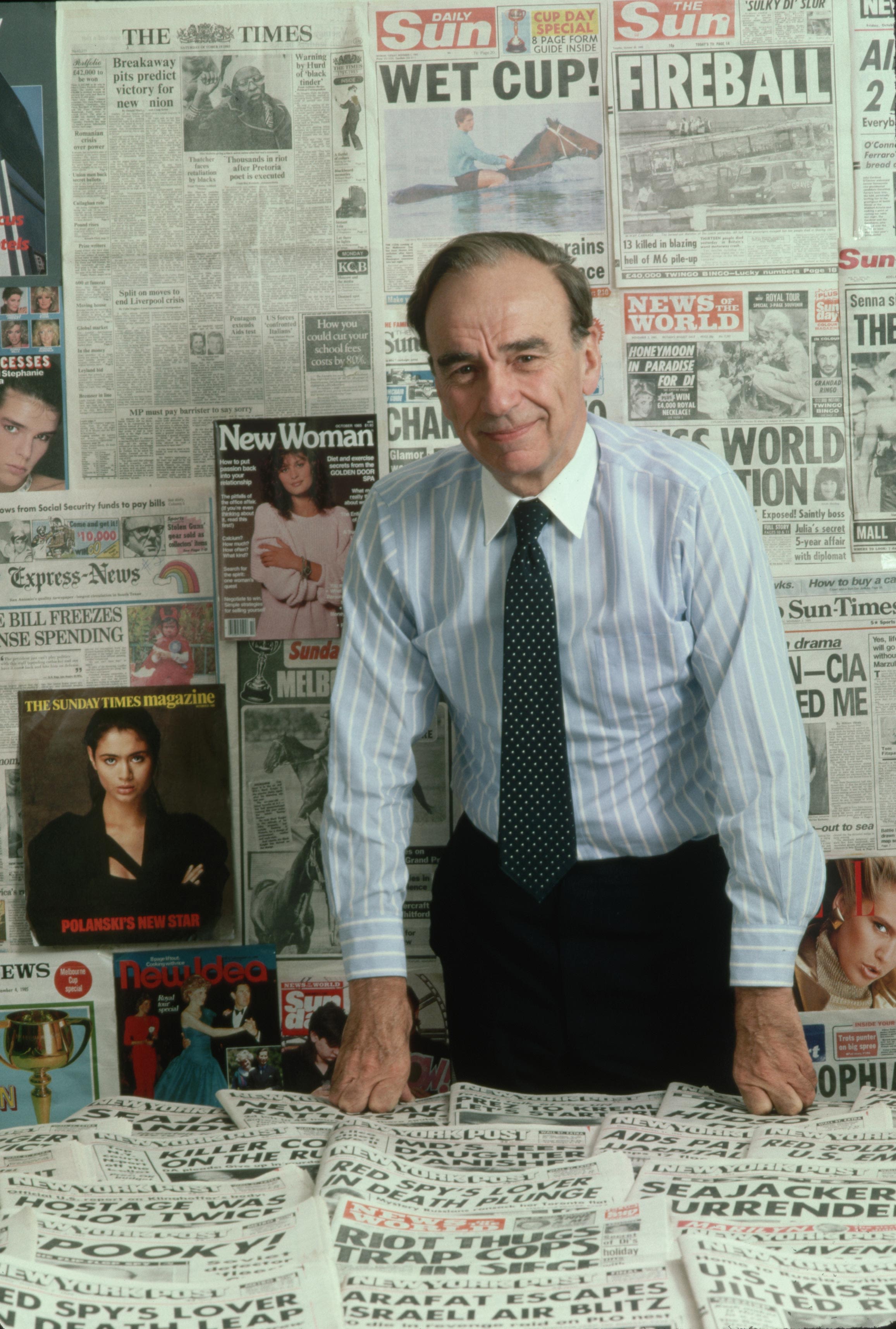
Murdoch poses in front of newspapers and magazines at the New York Post offices in 1985. That year Murdoch became a naturalized US citizen, and he purchased Twentieth Century Fox for $600 million. In 1986, he bought several US television stations and created Fox Broadcasting.

(Robert Murdoch)

Almost immediately Benson describes the NFL as more than a “sports league, it was an immensely profitable religion, complete with acolytes, pomp, and tax breaks.”   Benson is correct in arguing that 1989 is a watershed date  for the league as then commissioner Paul Tabliabue worked with players union head, former Oakland Raider offensive lineman, Gene Upshaw and owners like Dan Rooney of the Pittsburgh Steelers to craft a new revenue sharing agreement with a salary cap and free agency which still provides the economic foundation for the league today.  It was also at this time that Jerry Jones and Robert Kraft entered the NFL as owners and over the next thirty years built their teams into two of the world’s most valuable franchises and had a hand in every financial decision the league made.  Their partner in this endeavor was Roger Goodell, who craved being commissioner his entire adult life who always took a maximalist approach to growing the NFL.

Goodell and the owners have turned the league into a 365 day a year enterprise through record setting deals with networks and sponsors, and other businesses that have taken black Friday, Christmas day, and other sacrosanct holidays and turned them into NFL showcases.  Further, the Draft has morphed from a sleepy event for football addicts that now draws hundreds of thousands of fans, the NFL even unveils its schedule on prime-time television – there is no off season.  As a result, Benson is dead on when he states, it is highlighted by “measures of greed, corporate welfare, violence, misogyny, self-promotion, and bland officiousness.”  The violence of the game and its resulting injuries that linger throughout the player’s lives is not the focus of fans as games are too much of a narcotic.  Even the offseason provides drugs to feed the fan’s fix as owners created NFL films, NFL network and radio, with talking heads drawing fans in.

Benson describes in detail the labor deal of December 1992 that altered the trajectory of the league as it provided free agency for the players after five years in return for a salary cap and the credit goes to Tagliabue and Upshaw who got their constituents to agree to an almost 50/50 revenue sharing document.  Of all  the personalities not mentioned in the title perhaps the most impactful is Robert Murdoch the head of FOX television.  It was Murdoch who watched his Sports subscription service in Britain through Sky sports showing Premier League matches and its success in attracting viewers and revenue who applied the model to the NFL, creating the FOX sports network.  Benson explains how Murdoch outbid CBS, hired their football group, hired announcers like John Madden and Pat Summerall, created the glitzy pre and post-game programming in eight short months that created the foundation for the NFL to cash in on media revenue.  Despite the fact, Murdoch overpaid in every area, Benso refers to him as a genius if one looks at the results of his actions.

(At & T Stadium)

Benson seems to have a handle on all the major issues that impacted the NFL over the last three decades.  From spy gate and deflate gate involving Kraft’s Patriots to the problem the NFL had with women due to players like Ray Rice who was caught beating his girlfriend.  Benson takes a deep dive into the misogyny that afflicted the NFL and how reluctantly they remediate the situation through suspensions and fines as it needed to tap the female market to enhance its profitability – a term that dominates everything Goodell and the league are obsessed with.

The game of musical chairs conducted by teams is a highlight of the book as owners like Art Modell sneaked his Browns out of Cleveland in the middle of the night to become the Baltimore Ravens.  The movements of Al Davis’s Oakland Raiders from Oakland to Los Angeles and back, then Las Vegas is a fascinating story as are the Los Angeles Rams move to St. Louis leaving the second largest market in the United States without a football team.  In the end there would be two teams in Los Angeles, expansion to Charlotte, Jacksonville, Nashville, and Cleveland which would bring the owners billions of dollars into a system that is socialist in nature.  Roger Goodell, who replaced Tagliabue as commissioner in 2006 navigated the franchise game and in the end justifies a salary which approaches $60 million per year.

Perhaps the most important aspect of the monograph rests on the health of the players after they retire.  The policy as with all things for the NFL was profitability.  When Mike Webster died at age fifty of Chronic Brain Encephalopathy (CTE) and Junior Seau committed suicide at age forty-three the league would have to take notice.  Benson argues that CTE was one of the rare existential threats to the league.  His deep research into settlements and attitudes is eye opening as the NFL showed its true colors offering only $765 million to compensate players for ALS, Alzheimer’s and other illnesses without a trial or an admission of guilt.  Eventually more money became available as post career disabilities other than head trauma were added.  The depth of Benson’s discussion is highlighted by a 2020 discovery by lawyers that black players who filed dementia claims were denied more often than white players.  The root cause was algorithms designed to estimate a players cognitive abilities years before they joined the NFL.  The algorithms assumed Black players were less intelligent in theory and looked less demented later in life, so they did not qualify for restitution!

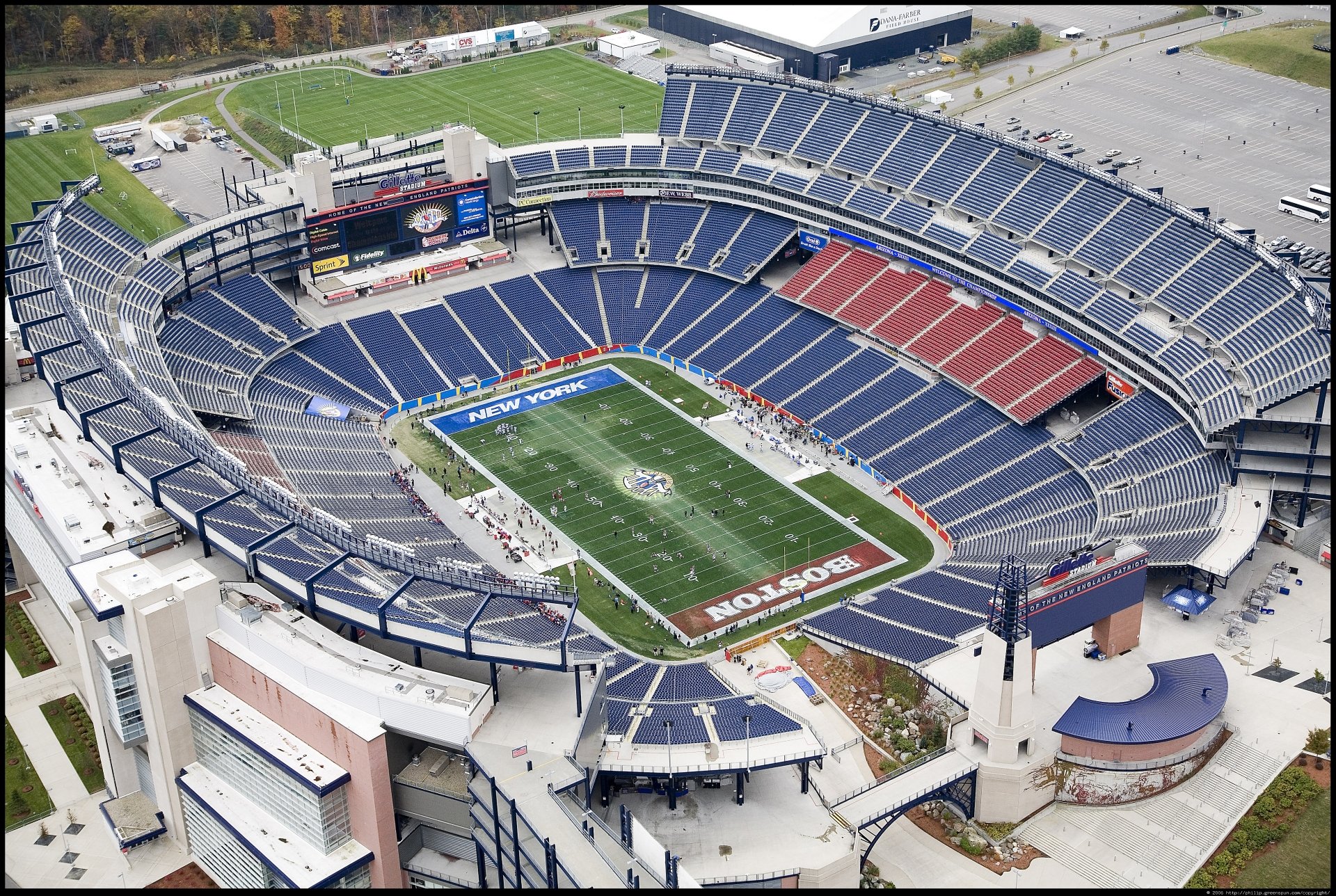
Download Man Made Gillette Stadium 4k Ultra HD Wallpaper

(Gillete Stadium)

Another important issue that Benson explores, second to CTE in terms of the impact on the league’s bottom line, centered on San Francisco quarterback Colin Kapernick’s protest over social injustice resulting in players kneeling when the national anthem was played.  Benson’s chapter analyzing the motivations and machinations of the owners who grew very uncomfortable with the situation when President Trump injected himself into the controversy does not reflect well on league executives.  Trump’s interference exacerbated the situation, and the owners were mostly concerned with the impact on their bottom line.  Benson relates the important roles played by Kraft and Goodell in defusing the conflict and reaching an accommodation that resolved Kaepernick being “blacklisted” by owners who were tone deaf when it came to issues of race.  As usual the resolution of the issue centered around the owner’s, as per usual, throwing money at the problem in the hope the league and the players would move on.

The league is forever seeking new streams of revenue and after years of warning players about gambling on games (the Paul Hornung and Alex Karas cases of 1963 come to mind) they are now in bed with Caesars, Draftkings, and Fanduel – which operate in a number of league stadiums.  Since the league is based on an addiction to the game, another addiction to gambling as a threat does not seem to bother them.  Goodell’s rationalization is that “we didn’t support making it legal…but we just have to adjust to whatever the law is.”

Benson has written a marvelous expose of the NFL and the men who drive profitability.  It does more than point out the negative aspects of decisions and Benson does devote pages to charities that men like Kraft, Jones, and other owners donate to.  Despite this it seems when the league donates money for spousal abuse, CTE research, civil rights issues etc. it is doing so more as a marketing strategy rather than actually alleviating a basic problem fostered by the league.

cover image Every Day Is Sunday: How Jerry Jones, Robert Kraft, and Roger Goodell Turned the NFL into a Cultural & Economic Juggernaut

38 LONDRES STREET: ON IMPUNITY, PINOCHET IN ENGLAND AND A NAZI IN PATAGONIA by Philippe Sands

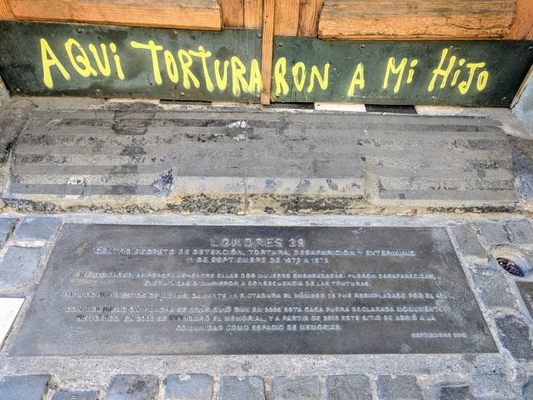
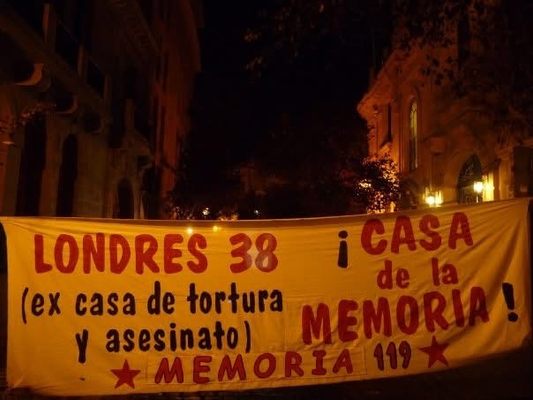
(The plaque outside explaining the site’s history)

In his latest book, 38 LONDRES STREET: ON IMPUNITY, PINOCHET IN ENGLAND AND A NAZI IN PATAGONIA, British-French human rights lawyer, Philippe Sands completes what he considers a type of trilogy which follows his previous works, EAST WEST STREET  and THE RATLINE. The three books are personally motivated studies of how the Nazi genocide of Jews during World War Two has shaped the world’s moral and legal understanding of justice and impunity.  As Lily Meyer asks in her review in the October 8, 2025, edition of the Washington Post; “All three books ask to what extent one country is another’s keeper.”  But this query becomes obvious in 38 LONDRES STREET which intertwines the story of Walther Rauff, the inventor of the gas extermination vans in which Hitler’s henchmen employed to kill hundreds of thousands of Jews before the extermination camp facilities were constructed, with the extradition trial of former Chilean dictator Augusto Pinochet in London in 1998, who after seizing power in 1973 oversaw the deaths and disappearance of over 3,000 people, the torture and imprisonment of over 40,000 victims, and the exiling of  hundreds of thousands of Chileans carried out by the secret police he created, the Direccion de Intelligence Nacional (DINA).

Sands organizes his monograph using alternating chapters delving into different aspects of his story that eventually fit together.  He focuses on a number of topics and situations.  Two of the most impactful are the crimes of Augusto Pinochet and the issue of immunity – does a former head of state have immunity for crimes he committed while in power in a sovereign nation.  This leads to a series of chapters highlighting the intimate details as indictments in Chile, Spain, and England favor the extradition of the former Chilean dictator to Spain to stand trial for the crimes he committed while leading Chile between 1973 and 1990.  As the narrative unravels a new element is introduced, the role of former Nazi Walther Rauff and his possible complicity in the crimes committed by the Pinochet regime.  Sands follows many leads and is very selective as to what he accepts for evidence and concludes that Rauff, in fact participated in some egregious disappearance of political prisoners and their torture.

The National Plebiscite was held on September 11 to approve the Political Constitution of the Republic of Chile, and to solidify the position of...

(Chilean dictator Augusto Pinochet in 1980)

Sands is a prisoner of his own detail as he was actually employed as a lawyer involved in aspects of the extradition hearings, developing relationships with a number of important characters and during his research and interviews learning many troubling aspects concerning his main subjects.  This formulates the backbone of his story as sources like; Leon Gomez, Samuel Fuenzalida; and Jorges Vergara are able to link Rauff to Pinochet’s crimes against humanity.

Pinochet was arrested on October 17, 1998, while visiting London to be extradited to Spain for crimes of genocide, torture, and disappearances during his reign in Chile.  On September 11, 1973, he played a leading role as Commander and Chief in the military coup against the Socialist government of Salvador Allende.  Pinochet was a staunch anti-communist and was supported by Richard Nixon and Henry Kissinger.  The title of the book 38 Londres Street was that the Socialist Party headquarters was turned into a secret interrogation and torture center.  Sands immediately describes Pinochet’s crimes focusing on the murder of Orlando Letelier and other assassinations within Chile and abroad, in addition to an abusive  prison system that encompasses the entire country highlighted by torture and beatings as more and more people kept disappearing.

Pinochet ruled Chile until he stepped down in March 1998 and became a Senator for life which gave him complete immunity as a parliamentarian, from legal proceedings in Chile.  As we will see, the immunity issue dominates the narrative but was only applied for crimes proven after 1998 not before.  By October 1998, Juan Guzman, a prosecutor in Santiago was investigating Pinochet’s personal role in allegedly authorizing the “Caravan of Death” operation where 97 people were assassinated across Chile organized by Pinochet.  The dictator was protected by the Amnesty Law he signed in 1978 for this and other crimes. 

The role of Henry Kissinger and the Nixon administration is important, and I wish Sands could have devoted more time to this aspect of the story as the then NSC head told Pinochet, “I am very sympathetic to your efforts in Chile, we wish your government well…..You did a great service to the west in overthrowing Allende.”  It appears Kissinger gave Pinochet card balance to murder Orlando Letelier.  On 21 September 1976,  the former Chilean diplomat and outspoken opponent of Pinochet, was assassinated in Washington, D.C  by a car bomb planted by agents of the Chilean secret police (DINA) as part of “Operation Condor.”   Declassified U.S. intelligence documents indicate that Pinochet personally ordered the assassination,] which was intended to eliminate a leading voice of Chilean resistance and disrupt international opposition to his regime.  Sands explores those responsible as a deal was made preventing any extraditions to the US.

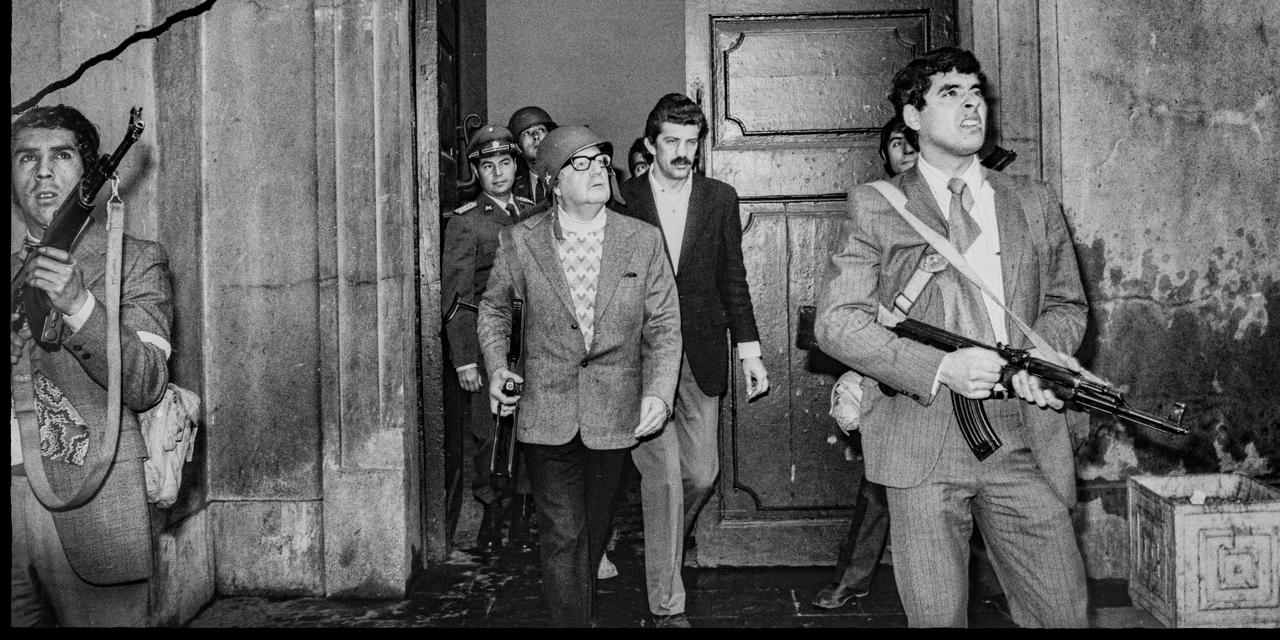
President Allende's last picture was captured at about 09:45 am, at La Moneda Palace, the formal seat of the Chilean government, Santiago, Chile, September 11th, 1973.
Photo by Leopoldo Victor Vargas (courtesy Contact Press Images)

(Salvatore Allende’s last speech during 1973 coup)

Once Pinochet arrived in London in 1998 he made himself a legal target.  Sands’ access to the many major players who sought Pinochet’s extradition is a key component of the book and what separates others who have mined this topic.  Sands knew Juan Garces, a Spanish lawyer who prepared the legal work for lawsuits brought by the families of Pinochet’s victims, and Carlos Castresona, the Madrid prosecutor who brought charges against Pinochet applying universal jurisdiction as the basis for his cases for international crimes committed in Argentina – terrorism, torture, and genocide.  Castresona sought to establish a legal precedent by going after Pinochet.

Interestingly, the case was personal for Sands as learned he was a cousin of Carmelo Soria, a Spanish-Chilean diplomat assassinated on July 16, 1976.   He was a member of the United Nations Economic Commission for Latin America and the Caribbean in the 1970s and  was murdered by Chile’s DINA agents as a part of “Operation Condor,” as he and his wife were friends with Salvatore Allende.  Sands provides the details of the later prosecution of agents for Soria’s murder through the Madrid legal system, and it came down to England’s extradition of Pinochet to Spain which dominates the narrative throughout.  Sands had access to the participants and came in possession of a treasure trove of documents.  The case would go back and forth as English courts took over since he was in London for medical treatment.  At times, the courts ruled that he should be extradited  as he was well enough to stand trial.  The case involved parliamentary courts led by the House of Lords,  Home Secretary Jack Straw and even former Prime Minister Margaret Thatcher.  The ultimate result was Pinochet would walk free claiming he was too ill and enfeebled to travel to Spain.  Upon his eventual arrival in Santiago, he seemed in the “pink of health.”  The question was why he was released.  Sands’ research points to a complex deal between England, Spain, Chile, and Belgium that allowed him to return to Chile.

(Walther Rauff in 1945)

The other major component of the narrative is the role of Walther Rauff, a former Nazi who was mentored by Reinhard Heydrich who tasked him to develop vans to be used for gassing people on the eastern front.  At the end of the war Rauff would wind his way through the labyrinth set up for Nazi’s to escape Europe and would eventually arrive in Ecuador where Sands provides evidence of his acquaintance with Pinochet, and then Chile.  Rauff would be arrested in December 1962, and Sands cites evidence of his nefariousness from documentation of the Eichmann Trial going on in Israel.  He soon became a target of the Mossad and Nazi hunter Simon Wiesenthal, but Rauff who was working for West German intelligence (BND) assumed he would be protected.  Because of Chile’s 15 year statute of limitations Rauff could not be extradited, and the BND cut him loose.

Rauff would be put charge of a fishing cannery in Punta Arenas called Pesquera Camelo                   after the 1973 coup which thrilled the former Nazi who would develop a working relationship with DINA and provided advice on naval matters.  Sands spends a great deal of time trying to link Rauff to Pinochet and concludes he was more than a “desk murderer” who pointed out communist targets for death, though other evidence and interviews Sands conducted point to a larger role.  For Sands there is a personal link to Rauff in addition to Pinochet.  Sands would learn that his mother’s cousin Herta, was most likely one of the thousands murdered in Rauff’s vans, Herta was twelve years old.

Sands takes the reader inside Pinochet’s reign of horror for thousands including DINA’s organizational structure and tactics interviewing perpetrators and victims at Colonia Dignidad an isolated colony established in post-World War II Chile by emigrant Germans which became notorious for the internment, torture, and murder of dissidents during the reign of Pinochet in the 1970s while under the leadership of German emigrant preacher Paul Schafer.  Schafer participated in torture of political prisoners, employed slave labor, and procured weapons for Pinochet.  Another example of Pinochet’s house of horrors was Dawson Island.   After the 1973 Chilean coup, the military dictatorship of Pinochet  used the island to house political prisoners suspected of being communist activists, including government ministers and close friends of the deposed President Salvatore Allende, most notably Orlando Letelier and others.  Roughly 400 prisoners were kept there at one time or another and were used for forced labor.

Former victims of Pinochet dictatorship return to their captivity places, in Santiago

(A hall is pictured at Estadio Nacional memorial, a former detention and torture center of the Augusto Pinochet dictatorship, in Santiago, Chile),

According to Samuel Fuenzalida, a DINA operative, Rauff was in charge of Pesquera Arauco, a  fishery that had refrigerated vans that transported political prisoners.  Fuenzalida saw Rauff at DINA headquarters at least three times in 1974 and was convinced the former Nazi worked for and consulted for the DINA.  Sands uncovers further evidence of Rauff’s role in a meeting in November 2022 with Jorgelino Vergara, another former DINA agent who claims Rauff was at the first “Operation Condor” meeting in 1974.  He places Rauff at a number of meetings that resulted in torture of prisoners, beatings, and death.  Rauff’s fishery plays an important role as they were used by DINA to carry out its torture, disappearances, even turning detainees into fish meal.

What is clear from Sands’ unparalleled research and intimate knowledge of his subject is that there is a link between Pinochet and Rauff who likely worked together through DINA.  Further, after spending an enormous amount of time explaining the legalities of Pinochet’s “immunity” fight and extradition, the former Chilean dictator was able to walk away from prosecution of his crimes.  By the time of his death on 10 December 2006, about 300 criminal charges were still pending against him in Chile for numerous human rights violations during his 17-year rule, as well as tax evasion and embezzlement during and after his rule.    He was also accused of having corruptly amassed at least US$28 million.

Sands describes the proceedings against Pinochet as the most significant criminal case since the Nuremberg Trials as never before had a former head of state been arrested in another country for international crimes.  Jennifer Szalai’s October 3, 2025, New York Times review  “Getting Away With it,”  captures the essence of Sand’s work; “Sands is also a consummate storyteller, gently teasing out his heavy themes and the accompanying legal intricacies through the unforgettable details he unearths and the many people — Rauff’s family, former military conscripts, British legal insiders — who open up to him.

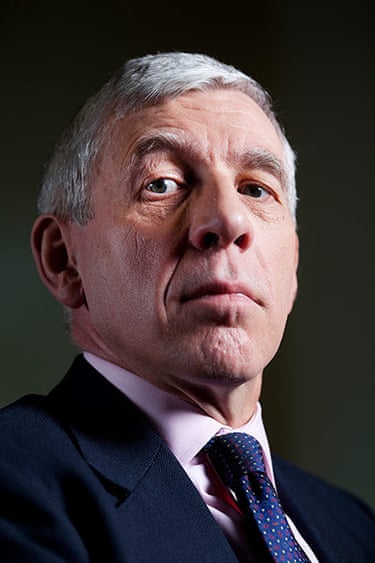
Jack Straw: Jack Straw: Life in Politics

(British Home Secretary Jack Straw)

Beyond the fact that Rauff and Pinochet were socially connected, the links between them are ghostly. “I wondered about proof,” Sands writes at one point. “I wanted evidence, not speculation, rumor or myth.” What he does find is that the two men embraced the deployment of state power to torture and murder human beings, even as each made every effort to deflect responsibility. Pinochet — who issued an amnesty law in 1978 to immunize himself and his government from prosecution — blamed the people below, insisting he could not control their “excesses”; Rauff blamed the people above, insisting that he was only following orders.

There is a measure of hope in this book, but Sands shows that even in the face of overwhelming evidence, justice is never a foregone conclusion, especially when it comes to holding the powerful to account. In the epilogue, a Pinochet confidant tells Sands that the Pinochet Foundation received a check for nearly 980,000 pounds from the British government, made out to Pinochet personally, to reimburse his expenses while he was in London. Pinochet’s critics were aghast, but his lawyer was unapologetic. “That’s the system,” he said.

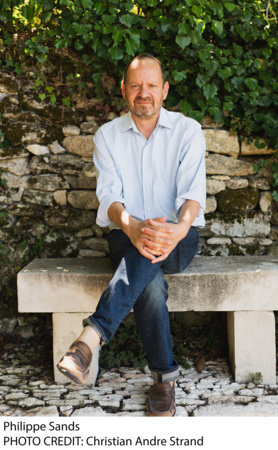
Photo of Philippe Sands

Lily Meyer sums up well stating that Sands “relays the court battles with precision and restraint, interviewing representatives of both sides and providing an account intellectual enough to nearly seem neutral, though his detailed, careful descriptions of Pinochet’s crimes serve as reminders of both the trial’s stakes and Sands’s own values. The government of Chile, which was democratic and socialist, opposed Pinochet’s extradition on the grounds that “it was for Chile, not Spanish judges or British courts, to deal with Pinochet’s crimes.” Central to Sands’s work, and to “38 Londres Street,” is the conviction that this claim isn’t true. The book convincingly argues that “torture, disappearance and other international crimes [can] never be treated as official acts,” and that international immunity for them dishonors their victims and undermines the very idea of human rights.”