
The Weimar Republic and the rise of Nazi Germany have been mentioned a great deal in American political circles of late because of the supposed similarities of repression and violence in late 1920s and throughout the 30s in Germany compared to what has been occurring in the United States recently. On a cultural level political figures in both time periods have tried to impact society whether it is on film, changing perceptions about history, literature, religion, immigration, and ethnic-racial relationships. These time periods lend themselves as wonderful opportunities to create historical fiction. Today’s obsession with autocracy and the loss of democracy are subjects which in the future will soon lead to many novels, but the Weimar and Nazi periods have already been mined deeply. A recent example is German author, Daniel Kehlmann’s latest work, THE DIRECTOR which follows other reconceived historical novels like, MEASURING THE WORLD and TYLL in which the writer bases important scenes on real life.
In his latest Kehlmann focuses the famous Austrian filmmaker, G.W. Pabst, who along with Fritz Lang and F.W. Murnau were the major filmmakers of the Weimar era. Pabst began his career as an actor and theater director, before becoming one of the most influential German-language filmmakers in Europe in the 1930s. With the arrival of sound movies, he made a trilogy of films that secured his reputation: “Westfront 1918 (1930), “The Three Penny Opera (1931), and “Kameradschaft (1931). Pabst was planning to develop his career in Hollywood which did not work out so he left for France when war was declared in 1939. Finding himself trapped he was forced to return to Nazi Germany. Under the auspices of propaganda minister, Joseph Goebbles Pabst made apolitical films for the Nazis, forever complicating his reputation.
In Kehlmann’s novel, Pabst receives word that his mother is ailing, and he travels to Austria to visit her along with his wife and son who now witness the brutal cruelty of the Nazi regime whose Minister of Propaganda wants to enlist him to make pro-government films. Pabst believes that he has free will and will not have to succumb to Goebbels’ persuasion, but that is a naïve belief. The novel explores the complicated relationships and differences between “art and power, beauty and barbarism, cog and conspirator.” Further, THE DIRECTOR is a parable about moral compromise and the seductions of art – and asks the question how far a person would go working with an evil taskmaster.
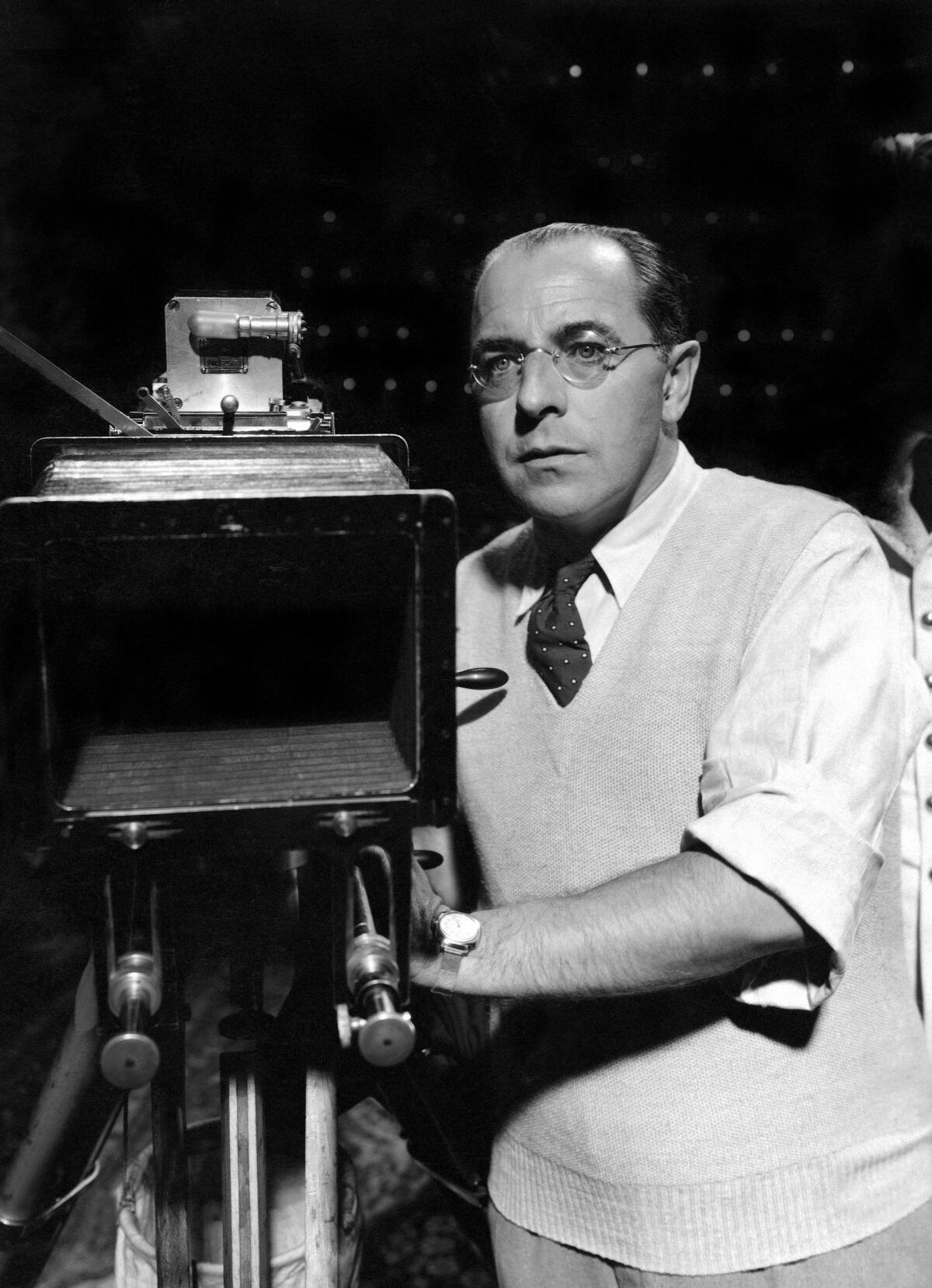
(Director G.W. Pabst, who briefly worked in Hollywood before returning to Austria and working with the Third Reich, inspired Daniel Kehlmann’s engrossing historical fiction)
The reader is indirectly introduced to Pabst as Kehlmann opens the novel with Franz Welzek and a friend who resided at the Abendruh Sanitorium traveling to Vienna for an interview with Hans Conrad on his “What’s New On Sunday” television program. Since Welzek had been Pabst’s assistant director at the outset of his career it was expected that his former mentor would be a topic of conversation, but it did not go well.
Soon Kehlmann leads us to a 1933 scene where Pabst is lounging poolside in Hollywood at a friend’s house ruminating about his idea for a film – “War Has Been Declared.” A pair of self-assured American studio executives arrive and try to convince Pabst to direct one of their films, but he refuses stating the script is weak. Instead, Pabst tries to persuade them to make his film, “War Has Been Declared.” The two ignore Pabst’s request and refuse to take no for an answer, but Pabst holds to his principles and begins to realize that he does fit into Hollywood’s artistical demands.
Fast forward once again and we find Pabst trying to convince Greta Garbo, (who owes the start of her career to Pabst) to star in his new film, but she has doubts and expresses her distaste for certain male actors. Garbo’s commentary are among the many keen observations that Kehlmann makes throughout the novel about human behavior and how unstable it is.
Pabst feelings about Hollywood are reinforced at a gathering of film directors and producers at Fred Zinneman, the producer’s house as the usual chit chat was ongoing. Two things emerge. First, Pabst is convinced he must leave Hollywood and return home. Second, a guest at the party, Kuno Kramer, a Nazi supporter tries to dissuade Pabst from returning to Vienna and settle in Germany where he would have the freedom to make the films he wants. A constant undercurrent in the novel is the treatment of Jews in Vienna as guests discuss their plight, and Pabst fears that the Nazis who will achieve Anschluss with Austria shortly will force him to make films for the government whether in Austria or Germany.
With this backdrop the author develops Pabst’s journey to agree to make films for the Nazi regime. After arriving in Vienna, then part of the Ostmark (Eastern March) as it was referred to after the Nazis seized Austria through the Anschluss of March 1938 Pabst and his family face a conundrum as they arrive at their Dreiturn Castle in the town of Tillmitsch to visit his mother Erika who seems to be suffering from dementia. Kehlmann introduces many unusual characters, the first of which is Karl Jenzabek and his wife Liesl and their two daughters who are the caretakers of the property. They are a strange family who carry on in a mysterious and abusive manner toward Erika and her family. Pabst decides they must leave especially after enduring a supposed accident on a ladder where he is injured. In the background Nazism permeates as Karl sees himself as an important local Nazi leader and the anti-Semitic overtones are clear as is his racist hatred of Jews (Pabst is considered half-Jewish). Pabst’s plan had been to visit his mother, get her settled and move on to Marseilles and travel by ship to New York to renew his film career in the United States. Hitler’s invasion of Poland on September 1, 1939, closes the Austrian border leaving the Pabst family trapped and under Nazi suzerainty.

(Author Daniel Kehlmann)
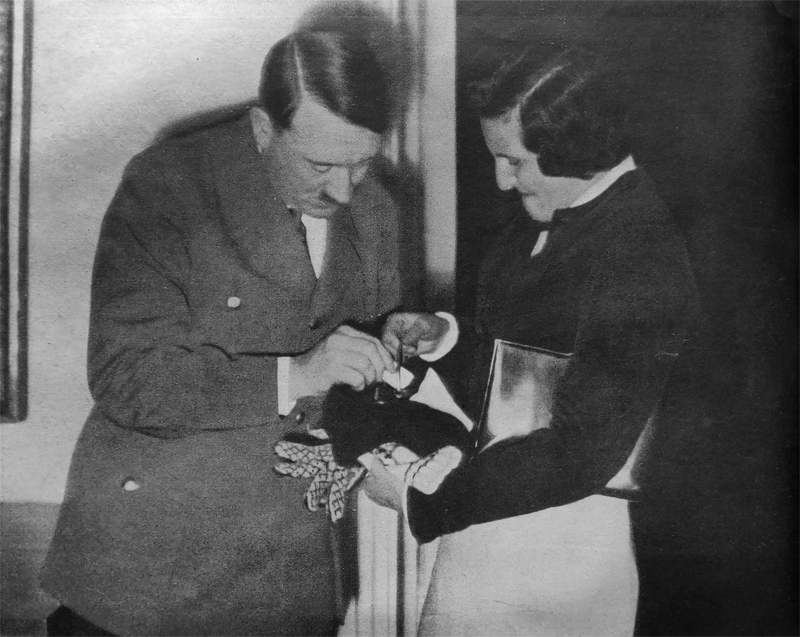
Kehlmann’s scene construction and dialogue are curious . When Pabst is on a ladder in his library and Jenzabek slowly moves it in a manner that creates fear resulting in the director losing his balance falling to the floor is puzzling. When Gertrude, his wife demands that they call the police he refuses as he realizes there are no police for people like them in the Ostmark. Other examples include Pabst’s interactions with Leni Riefenstahl who he helped begin her career in film and later would be his co-director, which she greatly resented. Kehlmann’s portrayal of the creator of the Nazi documentary “Triumph of the Will” and Hitler favorite is incisive and reflects her true nature – a woman who did not feel the need for a co-director and things got rather testy when they worked together, to the point she even threatened him with a concentration camp visit. Other examples reflect on the vapid nature of Nazi society as wives of government officials meet in a book group focusing on the mediocre novelist, Alfred Karrasch, which Pabst’s wife Gertrude attends and tries to gain cultural acceptance. Lastly, there are many scenes that reflect the technical nature of making films and the role of the actors. Interestingly, Pabst concludes that directors can be superfluous as the actors and technicians can carry on without them.
Kehlmann integrates incidents that highlight the cruelty of the Nazi regime. A case in point is Pabst’s son, Jakob’s encounter with friends, one of which is a bully. All are farm boys and avid Nazi believers, but Jakob comes to the realization that if you can defeat the bully, even by cheating you would be seen as a winner, and this would gain respect. Once the incident takes place and Jakob is able to beat up his counterpart the lesson is learned. You must always be seen as a winner, not worrying about how you won, but creating a positive perception by others no matter how you accomplish it. This is right out of the “autocrat’s playbook” – sounds familiar.

(Leni Riefenstahl and Adolf Hitler)
From this point on Kehlmann delves into the dilemma of collaboration with a murderous government that is on the verge of genocide. Pabst is asked to visit the Ministry of Propaganda in Berlin when he meets Joseph Goebbles who creates a moral dilemma, either making films for the government or perhaps he will be taken elsewhere. The dialogue is fascinating as Goebbels, who is never named by the author, first wants Pabst to admit the errors of his ways and do penance for making communist propaganda and being an enemy of the German people, but he doesn’t know how because he does not believe this characterization of himself. In their innocuous conversation Pabst finally rationalizes his decision to cooperate with Goebbels forceful requests. One of Pabst’s film colleagues puts it as best as he can rationalizing that “once you get used to it and know the rules, you almost feel free.” Pabst wonders if he is losing his mind and hopes to delay making a film until the war is over. Pabst rationalizes that “maybe it’s not so important what one wants. The important thing is to make art under the circumstances one finds oneself in.” He believes in Germany he will have good scripts and high budgets and the best actors, something that did not always occur in the United States and elsewhere.
In reality he had more creative freedom in the Third Reich than under the Hollywood studio system, but it came at a steep price casting concentration camp victims as extras in a pivotal scene. He also collaborated with Riefenstahl on her film “Lowlands,” which used prisoners from Maxglan in Salzburg, Austria where more than 230 Sinti and Roma were kept in prison as forced laborers. In Spring 1943, they were deported to an extermination camp. Wilzek justifies the film telling Pabst that “there’s nothing we can do; we didn’t make it happen. We can’t keep it from happening. It has nothing to do with us.”
Kehlmann’s recasting Pabst’s life through historical fiction is a Faustian tale that explores how far an artist will compromise with the devil to continue to make his art. In Pabst’s case we must wonder about his rationalizations as he is no better than Riefenstahl as he uses extras from a camp near Prague (probably Theresienstadt) in the last of the three films he made for the Nazis, “The Molander Case.” Pabst is desperate to complete the film before the Red Army arrives. He needs 750 extras taken from the camp to play as the audience in a concert hall. Pabst will murmur to himself that “not a single person. Will be harmed because of us. No one has been…the film must be finished.” For Pabst once again rationalizes that “his art will endure beyond any regime,” but isn’t this a final descent into complicity?
Kehlmann states “that art might warrant moral compromises, but how far do you go?” For the author he does not know what he might have done. In an intellectual exercise you hope you will do the correct thing.

(Nuremberg Party Rally, 1935)



![Serbs interned in the Jasenovac concentration camp in Croatia. [LCID: 85815]](https://encyclopedia.ushmm.org/images/large/1055b664-9fc4-4782-8ead-ae9def867ed9.jpeg "Serbs interned in the Jasenovac concentration camp in Croatia. [LCID: 85815]")
![View of the Jasenovac concentration camp in Croatia. [LCID: 67090]](https://encyclopedia.ushmm.org/images/large/28ac38b7-6a1d-42d9-86ee-6f030b49fc3e.jpg "View of the Jasenovac concentration camp in Croatia. [LCID: 67090]")






 Doc's Books