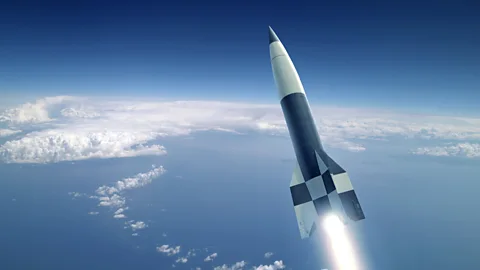
(V2 rocket)
As I wrote in my last review that evaluated Robert Harris’ most recent publication, PRECIPICE, there are few authors of historical fiction that I look forward to reading more. I have spent many hours engrossed and entertained by his novels and never completed one without feeling totally satisfied. PRECIPICE centers on the affair between English Prime Minister H.H. Asquith and Lady Venitia Stanley at the outset of World War I that turns into a spy novel. Among his other novels, are ACT OF OBLIVION brilliantly reimagines one of the great manhunts in English history, the search for two men involved in the killing of Charles I. CONCLAVE which presents the politics and machinations in electing a Pope; MUNICH examines the process that led to the infamous conference that provided Adolf Hitler with the Sudetenland; FATHERLAND, an alternate history with the Nazis victorious in World War II and its implications; ARCHANGEL a novel that is built around a lost diary of Joseph Stalin; ENIGMA, the reader is transported to 1943 as the allies try to break the German code as u boats wreak havoc in the Atlantic; AN OFFICER AND A SPY recreates the Dreyfus Affair as a Jewish officer is accused of selling war secrets to the Germans in the 1890s; THE SECOND SLEEP, a book whose power lies in its between-the-lines warning that our embrace of the internet represents some kind of sleepwalk into oblivion; THE GHOST WRITER, a thriller of power politics, corruption and murder involving the memoirs of a former British Prime Minister; finally there are Harris’ exquisite novels that are referred to as THE CICERO TRILOGY: IMPERIUM, LUSTRUM/CONSPIRATA, DICTATOR tracking the orator’s rise and fall, and the stand alone thriller POMPEII set during the Vesuvius eruption.
As the Second World War was reaching its conclusion in desperation Hitler and his Nazi regime resorted to unleashing its last secret weapon and the world’s first long-range guided ballistic missile called the V2 first striking London on September 8, 1944. This ushered in the missile age with supersonic, silent impacts, killing thousands, with over 500 hitting the city before the war’s end, leaving behind craters and memorials and causing devastating damage to areas of London. The V stood for “Vergeltungswaffe,” or weapon of vengeance, and was designed to retaliate for allied bombing of German cities. It was Hitler’s final “secret weapon,” designed to terrorize British cities. It traveled at three times the speed of sound, meaning it struck without any warning—unlike the slower V1 “doodlebugs”. Hitler believed he could finally bomb England into submission and is referred to in the propaganda of Joseph Goebbles and other Nazi officials as the key to victory when all seemed lost.
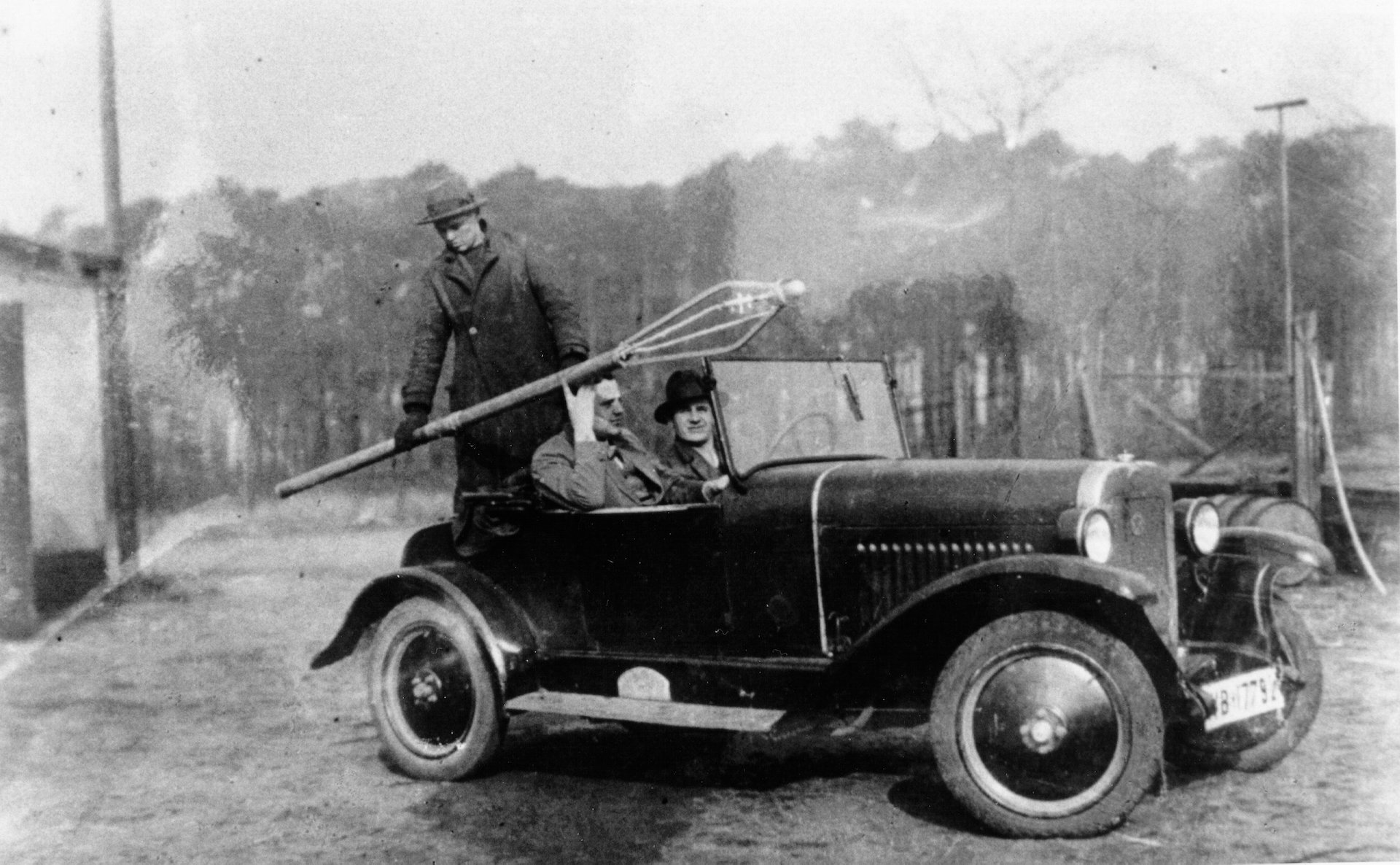
(1931, Werner von Braun in the driver’s seat and two colleagues)
V2 is a work of historical fiction set in November 1944 that explores the German rocket program and the British efforts to stop it. The story is inspired by the true history of the world’s first long-range ballistic missile and the extraordinary work of women in the British intelligence service. Harris was inspired to author the novel because of the work of Eileen Younghusband, a member of the Women’s Auxiliary Air Force (WAAF) during World War II. After reading Younghusband’s 2016 obituary in The Times, Harris was struck by her work during the war as she was sent to newly liberated Belgium to track mobile V2 launch sites.

(May 3, 1945. von Braun’s surrender to the Americans)
In V2 we are introduced to Rudi Graf, an engineer who always dreamed of building rockets and sending them to the moon. However, during the war he wound up working alongside Wernher von Braun, a friend he had known since he was sixteen years old launching rockets across the English Channel into London. Harris explores the moral conflict of scientists working under the Nazi regime through Graf who becomes a protégé of von Braun. The second important character is Kay Caton-Walsh who volunteered for the Mechelen Project in late 1944, a part of a team of eight WAAFs (Women’s Auxiliary Airforce) that was dispatched to the Belgian town of Mechelen. Their mission was to use advanced mathematics and slide rules to extrapolate the parabolic curves of incoming rockets back to their points of origin. Walsh’s goal was twofold, first she saw it as an opportunity to put some distance between herself and her affair with a superior officer, second and more importantly to work with colleagues to try and destroy the Nazi launch sites as attacks on London kept increasing.
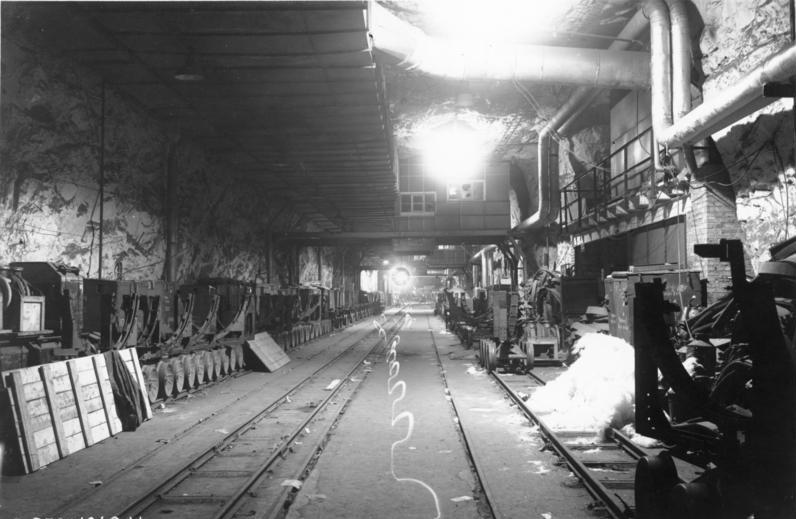
(Mittelwerk underground V2 production facility)
The novel unwinds slowly as Harris lays the foundation of the story he is about to tell, introducing a number of important characters apart from Graf and Walsh. The majority of characters are fictitious, but others are true historical figures who are accompanied with brief biographies. Werner von Braun plays a major role as Harris explores the “Faustian pact” he made with his engineers, who dreamed of space flight but accepted military funding to build weapons of mass destruction. General Hans Kammler was an SS-Obergruppenführer responsible for Nazi civil engineering projects and its top secret V-weapons program and thought nothing of shooting 500 villagers in retaliation for any resistance actions. There are cameos by men like Heinrich Himmler and others but other impactful characters include Clarence Knowsley, part of the Defense Fighter Command who developed a plan to track the V2; Sturmscharfuhrer Biwack of the National Socialist Leadership Office, a fanatical Nazi who is sent to Peenemunde to instill the proper loyalty for Hitler and spy on rocket engineers; Air Commander Michael Templeton in charge at the Mechelen base to locate V2 launch sites; Colonel Walter Huber, commander of the Artillery Regiment located at the Dutch seaside resort of Scheveningen; Barbara Colville, Walsh’s friend and fellow WAAF mate trying to determine Nazi launch sites, and a host of others.
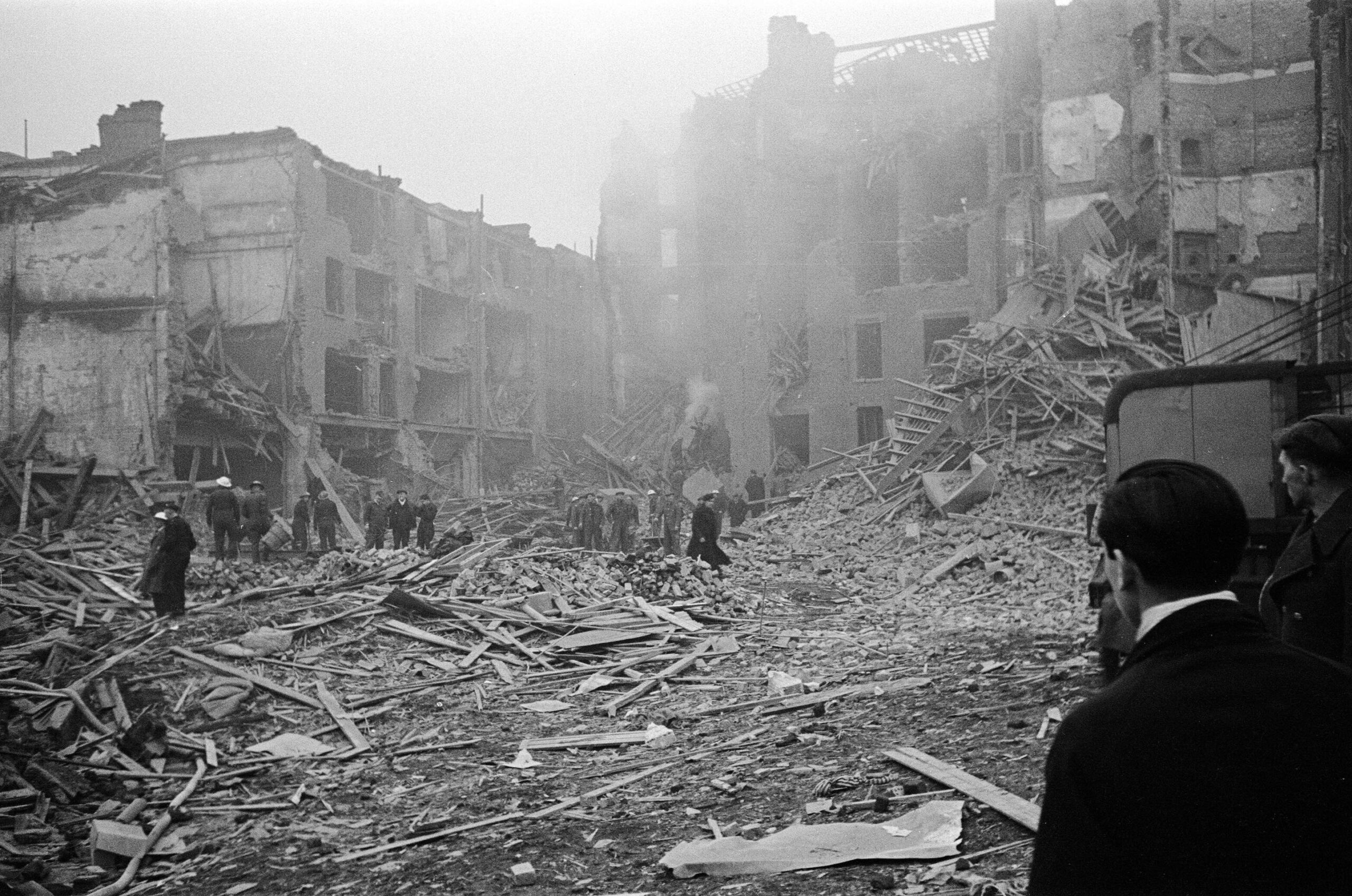
(November 10, 1944, Aldgate section of London. Damage from V2 rocket attack)
Harris alternates chapters centering on Graf and Walsh. Focusing on the German engineer Harris examines how the V2 was developed, transported to the launch sites, the actual launches, and his role in determining how effective the infrastructure of the rocket worked. As the launches continued Graf begins to question his loyalty as more and more the SS began to take control of the V2 launches and eventually takes certain steps that brought him to the attention of the Gestapo. Harris will then switch his attention to Walsh’s role in interpreting photographic intelligence from the Dutch coast where rockets were launched and her reassignment to Mechelen to try and apply her math skills along with seven other women to determine the launch sites of the V2.
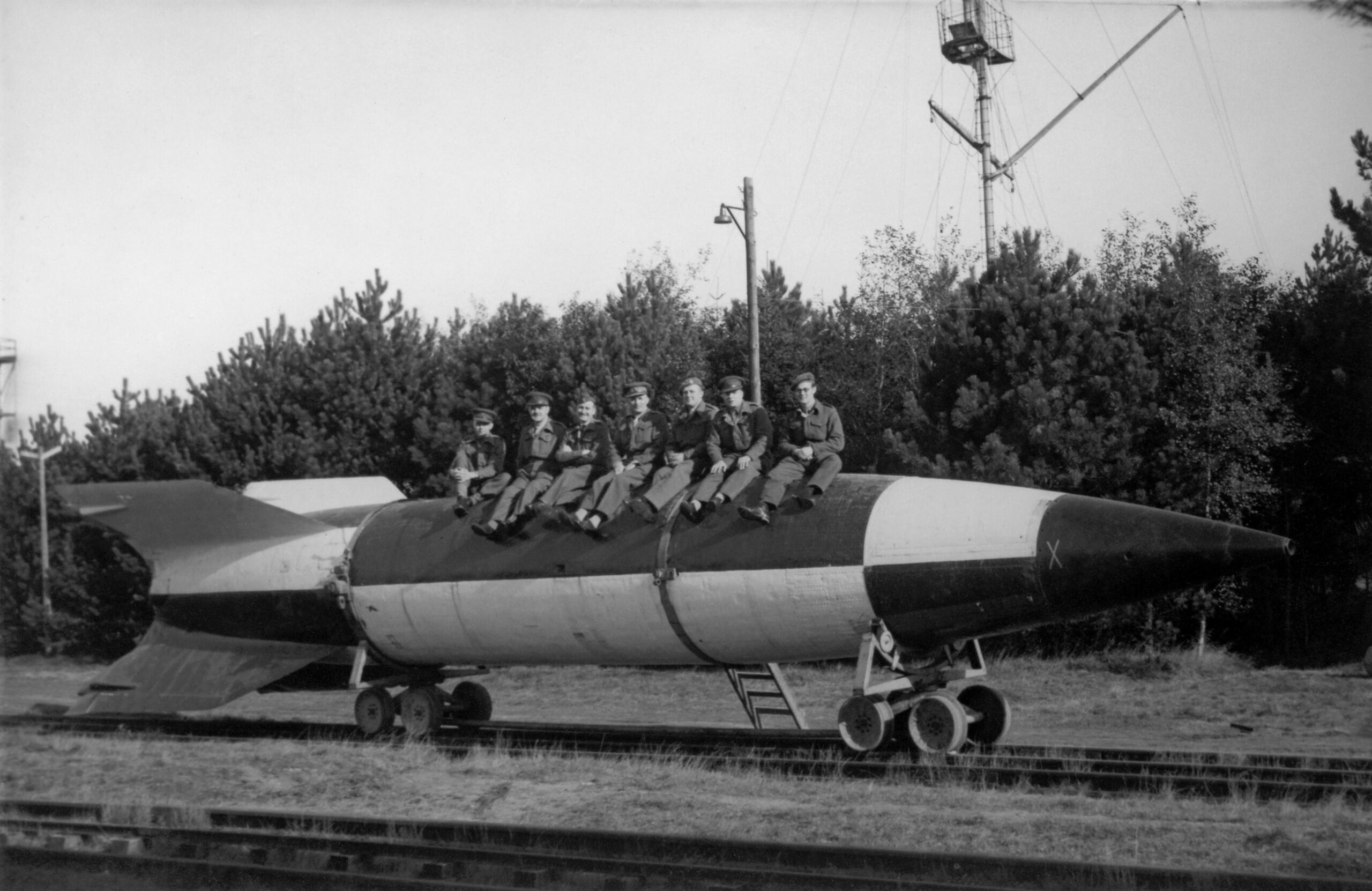
(October, 1945. British soldiers with captured V2 rocket)
Harris is well versed in the history of the V2 program and the historical events that impacted it. For example, in October 1944 the allied Arnhem parachute landings forced the Germans to pull the V2 launchers temporarily out of the area around the Hague which put London out of range for the rockets. Unfortunately, Operation Market Garden failed, allowing the Nazis to reoccupy the coastal strip leading to the worst month of V2 bombing of London as in the first week of November twelve rockets hit the greater area of the city, followed by thirty-five the second week, and twenty-seven the third week. Harris portrays Nazi desperation as accidents at launch sites begin to occur as they push too hard to launch twelve rockets in a day. The problem Harris correctly points out is that von Braum had over promised what the V2 program could deliver as he built massive factories, living quarters, and launched infrastructure that employed thousands, along with its own railroad. Harris also introduces the Nordhausen underground factory, a significant historical detail that cost approximately 20,000 slave laborers their lives building the rockets—nearly four times more than the 2,724 people killed by the rockets themselves in Britain.
Despite the technological brilliance, the V2 program was a strategic failure. Despite the success of the Nazi shell game moving rockets at night, shifting launchers from place to place the rockets themselves were inaccurate, expensive, and could not be fired in sufficient numbers to change the war’s outcome.
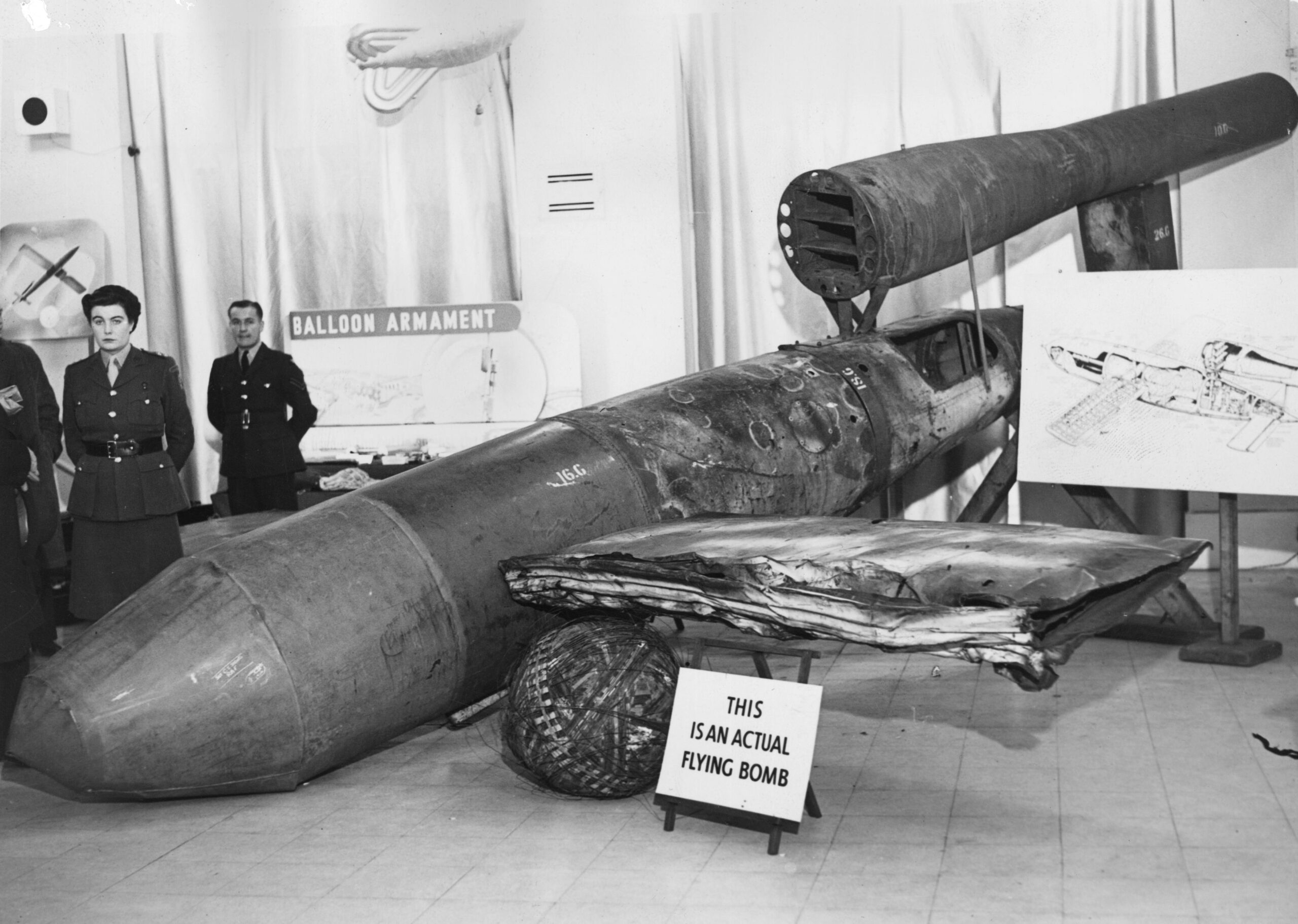
(V1 “Doodlebug” German rocket)
Harris does a credible job reflecting on the issue of collaboration, particularly the plight of French and Belgium women who had relationships with the Germans leading to their being ostracized from their communities and being labeled as their hair was shorn. The Vermeulen family which housed Walsh when she worked at Mechelen is another example as the parents had two sons one Arnaud who was vehemently anti-Nazi and a younger brother who fought for them. Once they realized what was occurring and the brother returned home from the Russian front the family hid him – did that make them collaborators?
By its conclusion, the novel goes full-circle as Graf and Walsh meet as British intelligence is trying to convince von Braun and other scientists to work for them, not the Americans. However, von Braun had worked out a plan to negotiate with the Americans, which he accomplished and was able to offer his services to the United States to build long range rockets which would culminate on the moon landing decades later. Harris does bring up the issue of the “deals” Washington made with Nazi scientists which the exigencies of the Cold War rationalized.* It is a topic that could have expanded the novel and might have been quite fascinating. However, after a slow beginning, Harris’ effort becomes increasingly interesting and is a strong addition to his works of historical fiction.
*After the war, von Braun and 1600 other German scientists and engineers were recruited by the United States as government employees in a secret program called Operation Paperclip (see Annie Jacobsen’s book of the same name). By 1960, von Braun’s team had been absorbed by NASA. In 1975 he received the National Medal of Science. History is rather interesting especially when people change their loyalties to fit their own agendas.
(V2s were powered by a liquid ethanol fuel which pushed them to the edge of space)
 Doc's Books