THE YANKEE WAY: THE UNTOLD INSIDE STORY OF THE BRIAN CASHMAN ERA by Andy Martino

Over the years there have been many books describing the turbulent years of New Yankee failure in the 1964-1976 and 1982-1995 periods culminating in their resurrection in the mid-90s leading to the dynasty of Jeter, Rivera, Posada, Petite, and Williams who I include as a “core five”, not “four.  These books tell a familiar story with vignettes, statistics, and personality studies of the major characters.  However, no book has taken the approach offered by baseball reporter and analyst Andy Martino presents in his latest book, THE YANKEE WAY: THE UNTOLD INSIDE STORY OF THE BRIAN CASHMAN ERA.  The title of the book is somewhat of a misnomer as it is not a biography of the current Yankee general manager, but a fairly objective deep dive into how baseball transformed itself over the last four decades within the broader tale of the success and failures of one specific franchise.  The Yankees went from a team steeped in tradition than any other team, and now they have evolved into a modern approach immersed in data and technology in addition to old-world scouting.  Martino’s basic theme is capturing “how a franchise is run on the executive level during a time of dizzying change in the industry.”

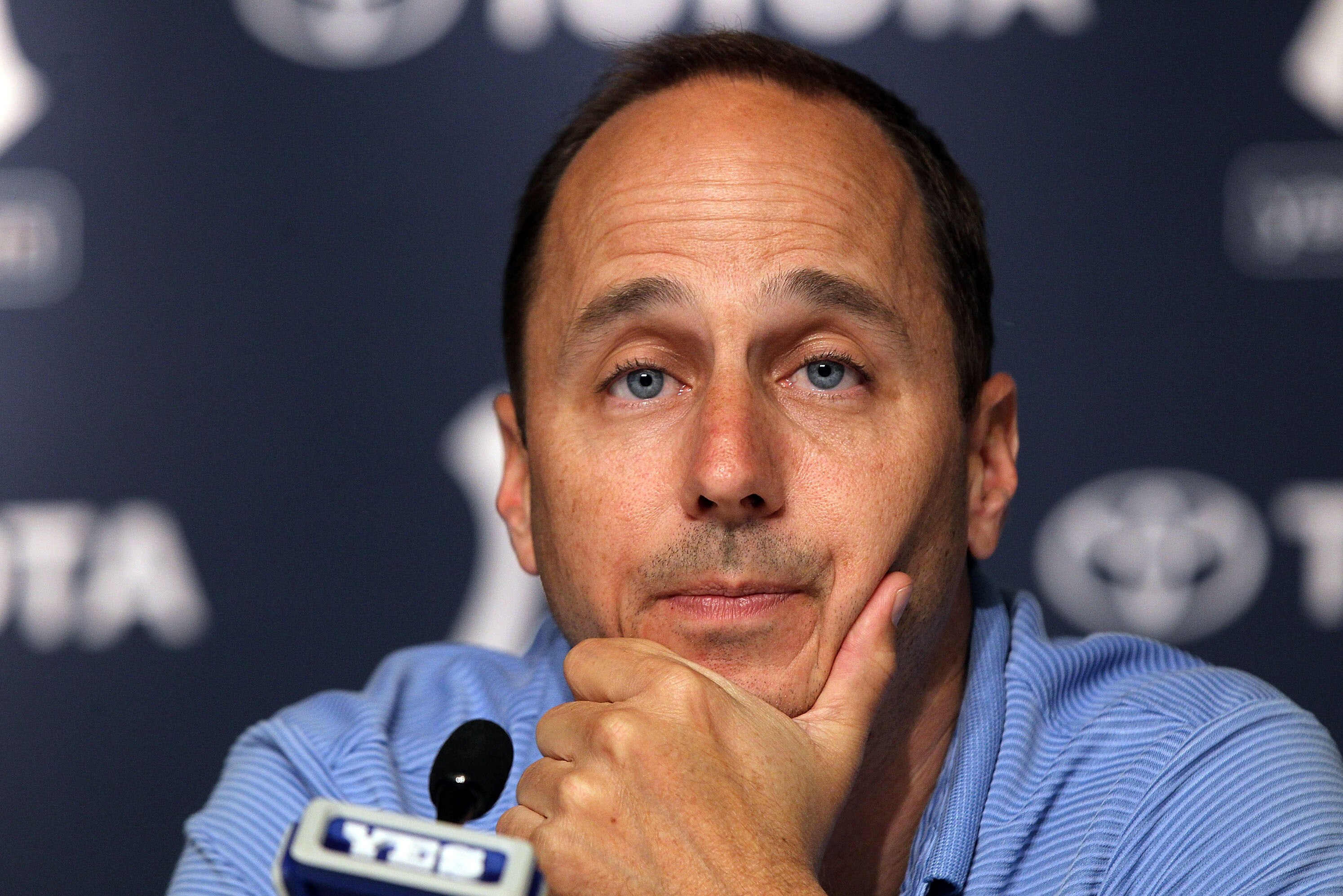
NEW YORK, NY - JULY 08:  General manager Brian Cashman of the New York Yankees speaks to the media after the game against the Tampa Bay Rays was postponed due to rain on July 8, 2011 at Yankee Stadium in the Bronx borough of New York City.  (Photo by Jim McIsaac/Getty Images)

(Brian Cashman, February 2012)

Martino points to a number of myths surrounding the organization that has been in charge of the New York Yankees for decades.  Most writers point to CBS’ sale of the team in 1973 to George Steinbrenner as the beginning of the resuscitation of the franchise.  Obviously, that is a watershed year for the franchise, but it was CBS under the direction of Mike Burke who laid the foundation for success as Thurman Munson, Ron Guidry, Craig Nettles, and Sparky Lyle among others were all on the roster.  Another interesting point of information is the role of Gene Michael as the architect of the 1990s dynasty and mentored Brian Cashman.  Everyone seems to credit the Oakland Athletics duo of Sandy Alderson and Billy Beane for implementing “Moneyball” or an analytical approach to player evaluation.  Michael was doing the same thing for the Yankees taking on many roles in the organization and received little credit as he was obsessed with on base percentage among many analytical emphasis.

Gene “Stick” Michael plays a prominent role in Martino’s monograph as he is credited with rebuilding the Yankees.  First, the former light hitting shortstop had the ability to stand up to Steinbrenner.  Second, he was a brilliant talent evaluator whether a player was ascending or declining.  Third, Michael brought Bill Livesey aboard the Yankee brain trust.  Livesey was the Yankees’ director of player development from 1980 to 1982. He then managed the Oneonta Yankees in 1983–1984. He served as the Yankees’ scouting director from 1991 to 1996, where he was instrumental in assembling the “Core Four” that led New York to multiple World Championships.  Livesey developed a Red Auerbach, the Boston Celtics hall of Fame coach approach to player evaluation.  Known as the “Livesey profile”, player evaluation was based on the tools that each individual exhibited at his position.  This was the “secret sauce” the Yankees relied on from the 1980s considering the skill level and expectation for each position.  According to Martino,  “The New York Yankees have stuck with the profile system, both in drafting amateurs and identifying Major League free agents and trade targets.”  Interestingly, later when Brian Cashman was General Manager he got away from the system in 2020-21 it brought in players like Gleber Torres and Luke Voit, one of which will not be re-signed at the end of the current season and the other is long gone.

Gene Michael

(Gene “Stick” Michael)

A fascinating aspect of the book is the context of Yankee history of certain managers.  Martino provides intricate details as he describes the managerial approaches since the 1920s.  Though a New York Giants manager, John McGraw educated Casey Stengel who managed the Yankees from 1949-1960.  Stengel’s favorite player was Billy Martin who he took under his wing as a father figure.  Martin’s revolving door managerial career with the Yankees spanned the 1975-1988 period.  A disciple of Martin was Buck Showalter who managed the team from 1992-1995 and brought the team to the precipice of a dynasty.  This created a managerial chain that represented 130 years of baseball experience and oral tradition.  Brian Cashman, who arrived as a college intern in Yankee land in 1986 and remains its General Manager today functions as a human through line across four decades.

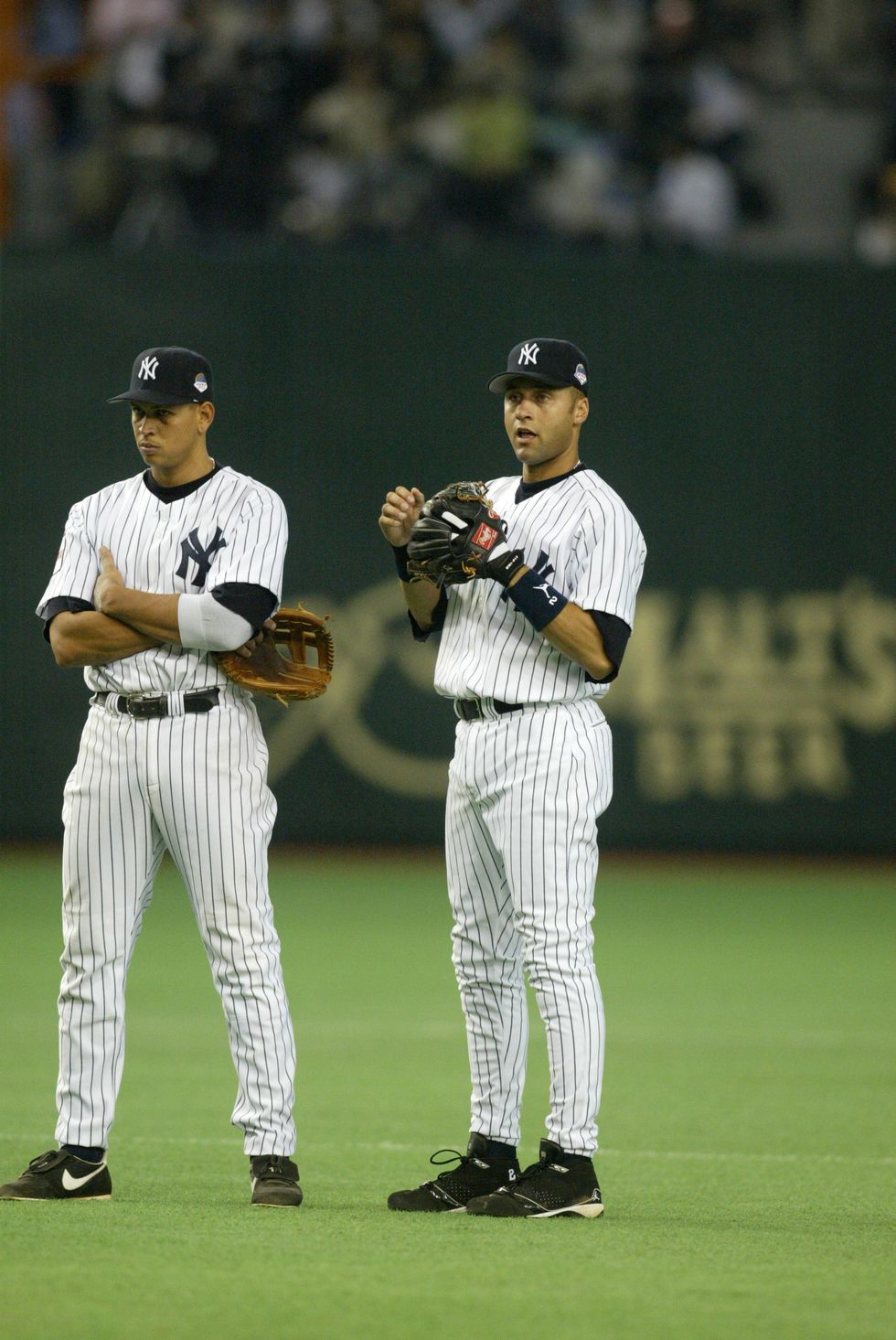
arod jeterTom Hauck//Getty Images

(A-Rod and Jeter, 2004)

Martino does not neglect aspects of the story that many have told before.  The role of George Steinbrenner is recounted in detail especially the Dave Winfield/Howard Spira controversy that led to Steinbrenner’s suspension from baseball in 1990 and during his absence Gene Michael was able to rebuild the Yankees relying on the Livesey profile and create a team that won five world championships.  The tense relationship between Alex Rodriguez and Derek Jeter is carefully analyzed integrating psychological principles.  A-Rod was an insecure person who had greater talents than Jeter, but Jeter had the championships.  A-Rod wanted to be loved, Jeter kept to himself, somewhat standoffish like Joe DiMaggio, and once you crossed him as A-Rod did with his magazine comments you were out of his orbit.  The brilliant and at times controversial trades that Michael arranged, for example Roberto Kelley for Paul O’Neill, are all part of the narrative.  Jeter’s intransigence about shifting positions, the role of Joe Torre reflects the enormous amount of research and interviewing that the book is based on and Martino’s ability not to pull any punches in describing personal relationships that dominated the period.

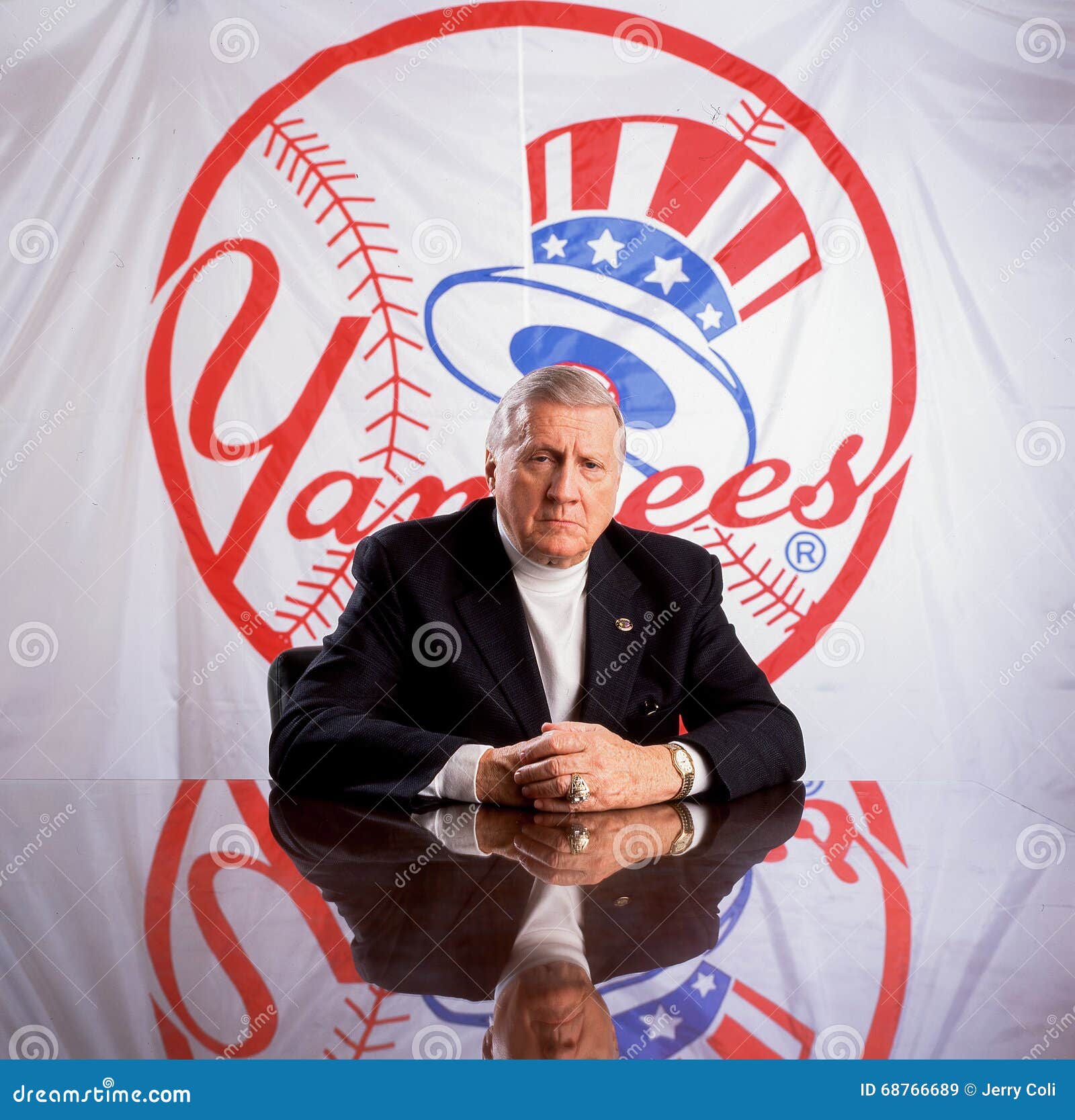
George Steinbrenner, New York Yankees Owner. George Steinbrenner, former owner of the New York Yankees. (Taken from color slide).

(George Steinbrenner)

The first two-thirds of the book focuses on the education of Brian Cashman as a future baseball executive, his personality, and decisions he witnessed.  The last third of the book zeroes in on Cashman’s role as General Manager and his successes and failures.  It’s clear from his account that Cashman paid attention to those who came before him as General Manager in how he evaluated players not just by numbers but also by intangibles like character, where numerous championship-level players come up short. Cashman’s player acquisitions, which brought confrontation with Steinbrenner and his Tampa “kitchen cabinet” are all present.  These decisions tended to be correct, though they’ve entailed battles along the way—for example, the decision not to re-sign Rodriguez, letting Joe Torre leave as manager, and the fight to keep superstar Aaron Judge on the roster, are all recounted in Martino’s memorable sketches.

One thing is clear from Martino’s excellent recounting of Yankee history is that Brian Cashman stands out as a future member of the Hall of Fame.  Even Billy Beane, who has been credited with implementing “Moneyball” argues that Cashman has been the best General Manager in baseball history.  You might not agree with that evaluation, but all baseball fans should enjoy this insider account, even if you live in Boston!

Yankee Stadium

NEW COLD WARS: CHINA’S RISE, RUSSIA’S INVASION, AND AMERICA’S STRUGGLE TO DEFEND THE WEST by David Sanger

Destroyed Russian tanks and military vehicles are seen dumped in Bucha amid Russia's invasion in Ukraine,

(Destroyed Russian tanks at Bucha, Ukraine, May, 2022)

Following the collapse of the Soviet Union in 1991President George Bush Sr. announced a “new world order” as a focal point of American power.  This vision was carried out in America’s moment, the defeat of Saddam Hussein forcing Iraq to withdraw from Kuwait and implementing certain policies to control the Iraqi dictator.  For Bush and American policy makers these events symbolized the unipolar power structure in the world that would be dominated by the United States.  A major premise fostered by the new unipolar world for American policy makers was that since the Cold War was over Russia would experience greater democracy if it could be drawn into the American orbit.  Secondly, China could also be democratized if it could be integrated into the liberal economic realm led by Washington.  Both suppositions have turned out to be a fantasy. 

Today, the reality is clear – the Russian government has evolved into a revanchist regime led by a man who believes the worst event in Russian history was the collapse of the Soviet Union.  Vladimir Putin’s main goal is to restore the glory of the Soviet Union and reassemble its empire.  In the case of China under the leadership of Xi Jinping any subservience to the United States and the west would not allow China to achieve its rightful place of economic and political leadership in the world.  According to the Chinese government any attempt to block Chinese growth would be a humiliation, not to be tolerated.


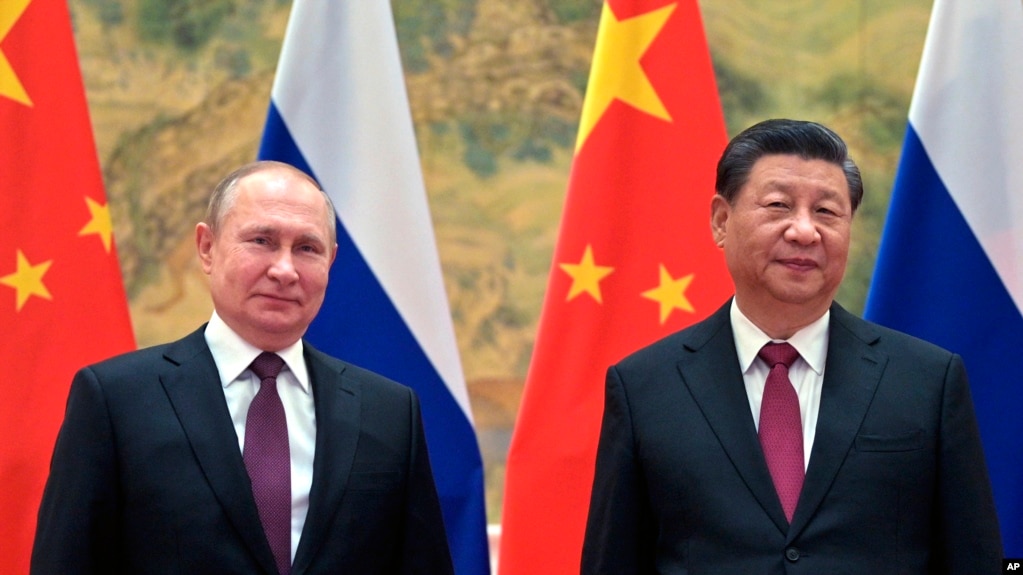
Chinese President Xi Jinping, right, and Russian President Vladimir Putin pose for a photo prior to their talks in Beijing, China, Feb. 4, 2022.

(Putin and Xi at the Beijing Olympics, February 2022)

How did the world balance of power evolve from a unipolar world under American leadership in the post 1991 era to a multipolar power structure today where two major powers, Russia and China have begun to cooperate to offset western economic power and political influence?  The answer to this question, if in fact there is one forms the basis of New York Times National Security correspondent, David E. Sanger’s latest book, NEW COLD WARS: CHINA’S RISE, RUSSIA’S INVASION, AND AMERICA’S STRUGGLE TO DEFEND THE WEST.

China’s continuing rise to economic and political influence on the world stage has been and will continue to be fueled by nationalism and a sense of past grievance.  The same can be said of Putin’s invasion of Ukraine, a decision based on personal ego and exacerbated by Russian nationalism.  For Putin, Ukraine is an illegitimate country that has always been part of Russia.  Similarly, Xi argues that Taiwan is not a country and has been and will be part of China in the future.  These positions by two of the world’s most powerful autocrats creates a dilemma for the United States as to how it should proceed when confronting these new perceived threats. 

Putin and Xi had a common interest; “to stand up to the United States, frustrate its ambitions, and speed along what they viewed as its inevitable decline.”  After the events of January 6, 2021, the bifurcation of the American political system, the ongoing drama that is Donald Trump, the right wing white supremacist movement in the United States, economic inequality, and immigration issues as the 2024 election approached, all reinforced their view that their rationale was likely to evolve in their favor.  The events between the fall of the Berlin Wall and the invasion of Ukraine reflect how western leaders who accepted historian Francis Fukuyama’s analysis of 1989 that we were experiencing the end of history: “that is the end of mankind’s ideological evolution and the universalization of western liberal democracy as the final form of human government” was totally misguided.  What Sanger proposes is a dose of reality.

New photos show China’s artificial islands are highly developed military bases

(In this Oct. 25, 2022 aerial photo, buildings and communication structures are seen on the China-built artificial island at Mischief Reef in the Spratly Islands, South China Sea)

Sanger has written a comprehensive and insightful work of contemporary history that everyone in Congress and the national security establishment should read.  He writes with a verve that seemingly offsets any subject that might appear somewhat dry.  In arguing his premises his facile mind seemingly encompasses all areas related to the “new Cold War” from a discussion of the history of the microchip and semi-conductors as it relates to China’s quest for world power to the historical “Finlandization” of the Russo-Finnish border after World War II and its contribution to Vladimir Putin’s paranoia when it comes to the west.  Sanger’s monograph is more than a compilation of autonomous topics concerning the quest on the part of China and Russia to overturn American world dominance.  It is a work of synthesis that seems to turn over every rock in his quest to explain the background for his book’s title and where the world balance of power stands today.

Writing at a time that the Russian invasion of Ukraine has entered its third year with Putin and Xi seemingly moving closer together Sanger has done a magnificent job.  Sanger’s lengthy career, impeccable knowledge of national security policy and issues, and his access to the major players on the world stage make him the perfect candidate to take on such an important topic.  Sanger’s dominant theme is an explanation of how we misjudged what would happen at the end of the Cold War and trying to discern what comes next at a time of maximum peril and increasing threats.

Sanger begins his study by providing intimate details of how and why Putin invaded Ukraine despite American warnings and the tepid European reaction to American intelligence as Russian forces began building up around Ukraine’s borders and what they were about to perpetrate.  The European reaction is couched in terms of the American invasion of Iraq and the faulty American intelligence that was disseminated pertaining to Saddam Hussein’s nuclear capabilities in 2003.  For Washington policymakers it should have become increasingly clear that steering Putin in an acceptable direction, especially after he made his feelings known at the Munich Security Conference in 2007 was a pipe dream.  Events in Georgia, Crimea, eastern Ukraine, the election interference of 2016 should have disabused anyone that Putin would not proceed with his personal agenda, seeing himself as another, “Peter the Great.”

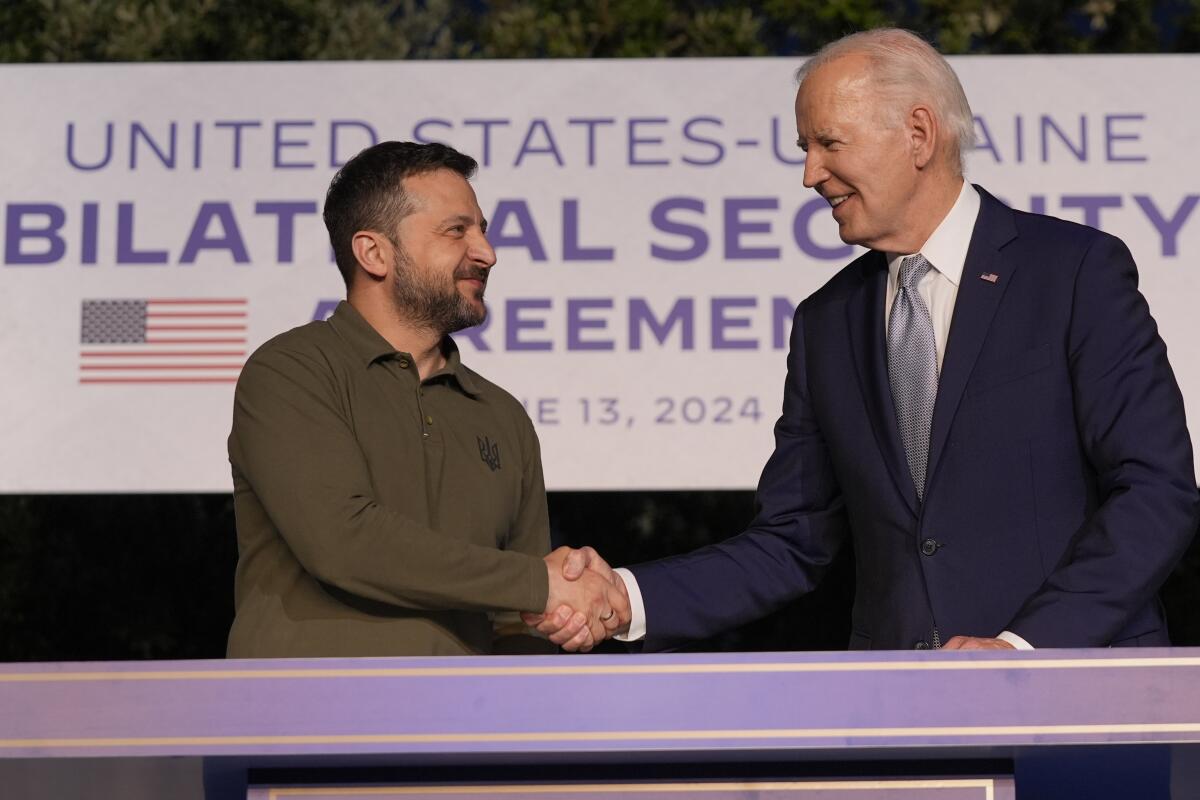
President Biden and Ukrainian President Volodymyr Zelensky shake hands.

(President Biden and Ukrainian President Volodymyr Zelensky shake hands after signing a security agreement on the sidelines of the G7 in Savelletri, Italy)

In terms of President Xi the post-Clinton presidencies assumed China’s economic interests would overwhelm its other national objectives – territorial ambitions in the South China Sea, use of cyber tools to steal industrial state secrets and western “intellectual property,” and its desire for greater worldwide influence.  The United States totally misread this.  The west would wake up as China employed repressive technology against Hong Kong, increased its threats against Taiwan, reinforced its claims to vast areas across the South China Sea and built military bases on prefabricated islands, and tried to make as much of the world dependent upon Chinese technology.  With Chinese policies at the outset of the Covid 19 outbreak, China’s reputation suffered a severe hit.

The book delves into many issues, but all are in some way related to Russia and China.  The messy withdrawal from Afghanistan is recounted in detail and its impact on Russia and China.  This was not the Biden administration’s finest hour, but after 20 years of US involvement in Afghanistan, Biden had experienced enough, and he was going to withdraw and ignore any advice to the contrary. Perhaps the best books on the topic are Carter Malkasian’s THE AMERICAN WAR IN AFGHANISTAN: A HISTORY;  Craig Whitlock’s THE AFGHANISTAN PAPERS: A SECRET HISTORY OF THE WAR and David Lyon’s THE LONG WAR: THE INSIDE STORY OF AMERICA AND AFGHANISTAN SINCE 9/11.  Sanger is correct as he points out that “superpowers have limits.  America was relearning the lesson that it had failed to learn so many times before: that invading a nation is easier than building one.”

Another fascinating section deals with how the United States went from the world’s leading producers of microchips and semi-conductors in the 1980s to total dependency on Taiwan.  It is clear from his portrayal that the supply line which affected all aspects of the US economy could be crippled by China if Beijing moved on Taiwan.  It would not require a full scale invasion, but a quarantine/blockade of the island, or cutting underwater cables that linked Taiwan to the United States to accomplish its goals.  The problem dates to US technology companies shifting their manufacturing processes overseas to Asia in the name of profits.  The situation was exacerbated and highlighted during supply chain issues due to the outbreak of COVID 19 and the reliance on China for technology components.  This would lead to the CHIPS ACT of 2022. Sanger warns the reader that it may appear the United States was moving to catch up pumping billions into the construction of modern technology facilities – but the US acted on a political timetable, the Chinese on a commercial one.  The Biden administration has tried to overcome the China policies of a number of previous administrations in areas of national security, but the problem took years to emerge, and it probably will never be totally solved.  What is very interesting is there is a surprising continuity between the Trump and Biden administrations when it comes to China.  Biden has largely kept in place Trump’s trade war tariffs on Chinese products, increased export restrictions to impede Chinese technological advances, and increased US rhetoric regarding Taiwan.

Taiwan-based company TSMC is bringing two major developments to north Phoenix, and it means...

(Taiwan-based company TSMC is bringing two major developments to north Phoenix, and it means good things for Arizona’s economy)

Sanger recounts all the major aspects of the war in Ukraine from drone warfare, to threats against the Ukrainian nuclear plant at Zaporizhzhia, Putin’s megalomania, Xi’s goal of a unipolar world led by China, the role of technology creating a new kind of warfare, the “nuclear paradox” and the issues surrounding nuclear deterrence, the “Prigozhin coup,” among numerous topics.  In all areas under discussion Sanger and his long time researcher Mary K. Brooks has “has crafted a cogent, revealing account of how a generation of American officials have grappled with dangerous developments in the post-Cold War era — the rise of an enduringly authoritarian China, the return of state-on-state conflict in Europe — that have produced a geopolitical mash-up of old and new…NEW COLD WARS vividly captures the view from Washington. But, as Sanger makes clear, with America no longer an unchallenged hegemon, the fate of the U.S.-led order rests more than ever on the ideas, beliefs and emotions of people far outside the Beltway. One finishes this book wishing for equally comprehensive portraits of the view from elsewhere, especially Moscow and Beijing.” *

*Justin Vogt. “Frost Warning.” New York Times, April 13, 2024.

Houses destroyed by Russian shelling are seen in Irpin

(Result of Russian shelling of Irpin, Ukraine, May, 2022)

THINK TWICE by Harlen Coben

Apartment house 'The Dakota'

(The Dakota, home of Win Lockwood)

It has been eight years since best selling author Harlen Coben released a new Myron Bolitar novel.  The series began in 1995 with DEAL BREAKER introducing a wonderful storyline that centered around a former basketball star forced into retirement due to injury who reinvented himself as a sports agent.  Over the years Coben has written eleven renditions of his Bolitar series that exhibited his humor, acerbic wit, and well thought out plots that have created millions of readers.  To my immense joy and excitement Coben has just released his newest version of the series, THINK TWICE, which possesses all the characteristics that have made his other books in the series such a success.

Coben is a remarkable storyteller who has won numerous awards for his Bolitar series.  In his current novel we are introduced to renowned basketball coach Greg Downing who has recently passed away. In fact, Bolitar had given the eulogy at his funeral. To Bolitar’s surprise two federal agents entered his office demanding to know Downing’s whereabouts, claiming he was alive since he was now a suspect in a double murder. Bolitar is stunned but soon realizes that his former adversary and client is alive.

Coben launches his plot by describing how a murder takes place and moves on to introduce a series of interesting characters which are the hallmark of Coben’s novels.  First, we revisit cast members of the previous books that dominate his latest. Obviously, Bolitar takes center stage as does his friend and business partner Win Lockwood.  Time has changed both men, Bolitar more so than Lockwood.  We learn that the former basketball star is now married for the third time and has a biological son who plays a significant role in the storyline.  Lockwood on the other hand, has aged but remains a wealthy snob who dominates any room he enters.  Esperanza Diaz no longer works for Bolitar and has joined the law firm of Fisher, Friedman, and Diaz.  Big Cyndi, Bolitar’s assistant in his sports/law agency, remains “Big Cydni.”

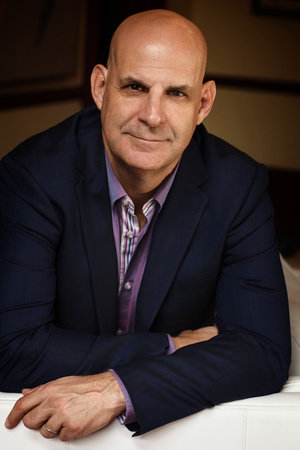
Photo of Harlan Coben

(Harlen Coben, author)

The story begins with a series of contradictions where murders keep occurring and most seem solved by the FBI.  However, those involving Downing morph into a plot line that leads to a brilliant serial killer who sets up a number of murderers by creating evidence against them to cover their own tracks.  A substantial portion of the novel revolves around how Bolitar, Lockwood, and others prove that Downing who went off the grid three years before for reasons Coben makes clear was not a killer, despite the FBI belief that he was.  Of course, the remainder of the story centers on finding the real serial killer.

In doing so Coben’s acerbic wit is paramount.  His character’s commentary is sarcastic, funny, are dead on.  Remark like; “Insecure enraged men are a growth industry,” Bolitar’s father’s remarks concerning the joys of edibles that have improved his sex life after decades of marriage, and his description of a basketball pickup game is priceless along with new characters he introduces.  We meet Joey the Toe, a mobster named Joseph Turant who has been convicted by the Feds for a crime he did not commit.  Turant is convicted because the Feds supposedly pressured a gay individual to testify against him.  Greg Downing plays one of the lead roles and is married to Bolitar’s ex-wife and raises Bolitar’s biological son named Jeremy who is introduced as a member of the US Army, but as the story evolves that is not his occupation.  Emily, Bolitar’s ex. and Downing’s spouse provides insights into her relationships with both her husbands.  Grace Konners, Greg Downing’s lover.  Ronald Prine, a dirty Philadelphia real estate mogul.  PT, a career FBI insider who helped Bolitar and Lockwood in the past, now guides them in their investigation.  Terese, a journalist and Bolitar’s latest spouse, and lastly, Sadie Fisher, a dynamic lawyer who represents Downing.  Then there are those who are accused of murder and are innocent, and of course the murder victims themselves.

The core of the novel are secrets, lies, and a murderous conspiracy that stretches back into the past.  In true Coben fashion the reader has no clue as to who the guilty party is.  The twists and turns can sometimes become confusing, but soon divergent scenes begin to make sense as Bolitar and Lockwood get closer and closer to solving the case, but as they do danger lurks in the background.

If you enjoyed Coben’s previous Bolitar yarns this one should measure up and meet your expectations, especially the ending.   A great summer read – enjoy.

The photograph can be dated to about 1910 by the automobiles at the curb, and by the presence of the Langham Apartments
at 135 Central Park
West between 73rd and 74th Streets, which was completed in 1906. The sentry box for the guard has been replaced by a sign that warns visitors that “Any Person Taking Flowers or Leaves or defacing shrubbery in any Portion of the Park will be detained or Arrested and Punished.” The central gable on 72nd Street has now gained another small dormer window, and the south side of the central gable on Central Park West has single one near the top as well.(The photograph can be dated to about 1910 by the automobiles at the curb, and by the presence of the Langham Apartments
at 135 Central Park
 West between 73rd and 74th Streets, which was completed in 1906)
THE DEMON OF UNREST: A SAGA OF HUBRIS, HEARTBREAK, AND HEROISM AT THE DAWN OF THE CIVIL WAR by Erik Larsen

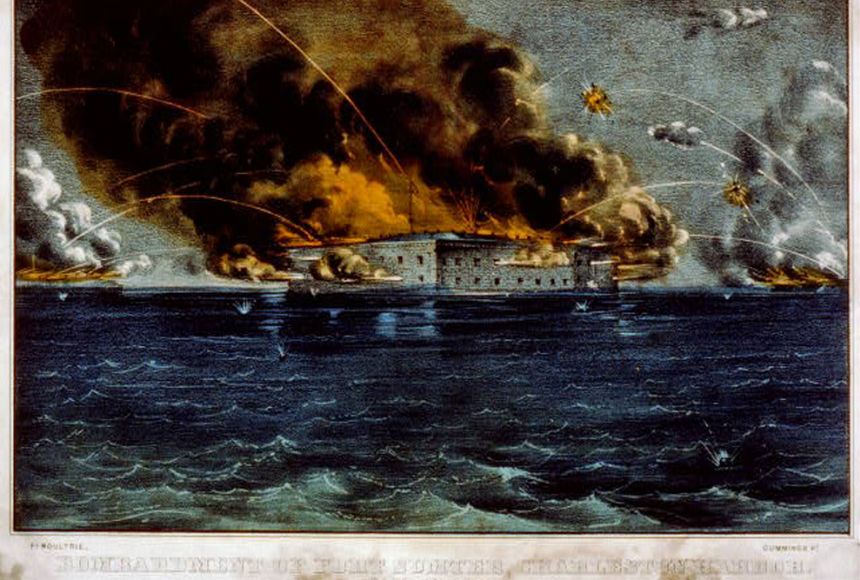
Battle of Fort Sumter

(Fort Sumter)

Today we are experiencing a country that seems to possess at times an inexplicable dichotomy as people on both sides of the political spectrum rage at each other.  Many times, their commentary is not supported by facts and the mention of a “cult” fires the imagination of many.  This is not the first time in our history that we have suffered from such a political, social, and economic impasse.  If one possesses a modicum of historical knowledge you are aware that in 1814 at the Hartford Convention a secessionist movement had tremendous support in New England.  If one moves further ahead in American history we learn about a series of compromises, one in 1820, another in 1850 designed to postpone rather than heal the divergence in American society and culture.  Those efforts obviously failed as the events of the 1861-1865 period reflect. 

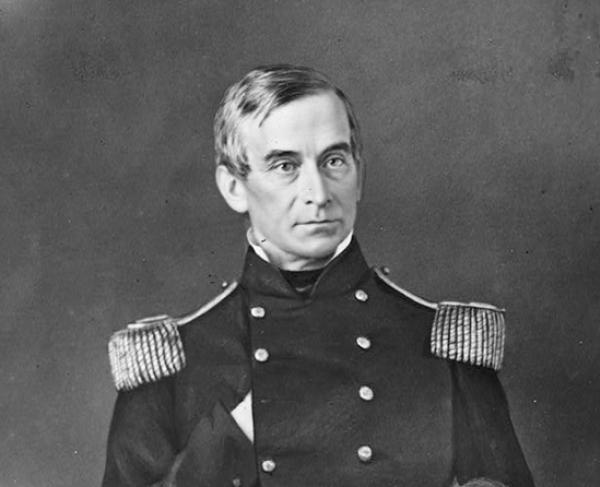
A key to the onset of the Civil War that culminated in 1861 were events taking place  following the election of Abraham Lincoln on November 6, 1860, that reached a crescendo when on April 11, 1861, southern militia commander P.G.T. Beauregard demanded that Major Robert Anderson, the commander of Fort Sumter surrender his fort, but Andersen refused.  In response Beauregard opened fire on Fort Sumter shortly after 4:30 a.m. on April 12, 1861.  Interestingly, Beauregard had been a student of Anderson.  What followed is known to everyone who has ever taken an American history class.  There have been countless books written about this period, the latest being Eril Larson’s THE DEMON OF UNREST: A SAGA OF HUBRIS, HEARTBREAK, AND HEROISM AT THE DAWN OF THE CIVIL WAR, a book that focuses on white elites on both sides of the political equation.  In so doing his deeply researched monograph focuses on the tragic errors, miscommunication , enlarged egos, remarkable ambitions, tragedies and betrayals that dominated the chief characters that Larsen presents. 

Portrait of Robert Anderson

(Major Robert Anderson)

The author is a master storyteller as previous bestsellers – THE SPLENDID AND THE VILE, DEAD WAKE, IN THE GARDEN OF THE BEASTS, THUNDERSTRUCK, THE DEVIL IN THE WHITE CITY, AND ISAAC’S STORMcan attest to.  In the past his books have ranged from murder during the Gilded Age, the Galveston hurricane of 1900, crime set in Edwardian London, the voyage of the Lusitania, an American family in Berlin in pre-World War II Germany, the Nazi blitz on London during World War II focusing on the Churchill Family, and now focusing on the events and personalities that led to the American Civil War.  As in all of his previous efforts Larsen’s research is impeccable, and his writing maintains the reader’s interest throughout.

Larsen’s main focus is on a few important individuals whose attitudes, wealth, and egos either drove the south toward war, or at the very least secession, and those who tried to no avail to prevent the coming fratricide.  Obviously, Abraham Lincoln plays an outsized role.  Lincoln was viewed with horror in many parts of the south, especially the home of secession, South Carolina.  Most historians, be they Allen C. Guelzo, Michael Burlingame, David Herbert Donald, Doris Kearns Goodwin, and most recently Jon Meachem and Ted Widmer believe that Lincoln’s views pertaining to race, slavery, and the south in general evolved over a period of crises.  By 1861 his position was clear – he would not interfere in the south to end slavery, but he would contain it and not allow it to spread outside of the south.  Further, he believed in negotiation, not violence to resolve the secession issue, but would not surrender any federal property.  Other important northern figures that Larsen explores are William Henry Seward who had a low opinion of Lincoln and believed that he should have been president and that only he had the knowledge and astuteness to end the secession crisis.  General Winfield Scott, the Commander of the Army, argued against military action to retain Fort Sumter due to the condition of the northern forces.  President James Buchanan who oversaw an administration of incompetence refused to take on the crisis and just let it ride until the next president took office.  However, the key player apart from government officials was Major Robert Anderson, the commander of Fort Sumter.  Larsen integrates his diaries and other writings into his narrative and provides insights into his loyalties and view of events.  For Larsen, Anderson is his most sympathetic character.

(Edmund Ruffin)

Larsen’s most effective theme revolves around southern “chivalry” and certain genteel behavior that was expected among gentlemen.  These gentlemen were southern because northerners did not conform to the south’s view of expected behaviors.  Chief among these figures was South Carolina Governor Frances W. Pickens; James Hammond, a South Carolina planter whose racial and economic views pertaining to slavery provided the cornerstone of the southern position.  His accomplice was Edmund Ruffin, another planter whose greatest fear was the amalgamation of whites and blacks and what he saw as the eventual emancipation of slavery.  For him it would mean the destruction of the southern way of life and utter ruin of everything he stood for.  There are other important players that include Confederate President Jefferson Davis and General Beauregard that Larsen places under the microscope and concludes that the haughtiness and sense of entitlement by southern planters/politicians make them most responsible for the fiasco that ensued.  Larsen describes the palatable arrogance of southern elites after South Carolina succeeded believing they now represented a sovereign nation and should be treated according to their new position with respect and deference.

(James H. Hammond)

Larsen never seems to miss an opportunity to provide details that the reader may never have been aware of.  For example, the role of Dorothea Dix whose reputation was elevated by her work with the mentally ill was a firm believer in the ethos put for by Hammond and Ruffin that “negroes are gay, obliging, and anything but miserable.”  Her role is enhanced when she reported on a plot to assassinate Lincoln on his way through Baltimore to reach Washington and his inauguration.  Larsen delves further into the role of Allan Pinkerton and his undercover spies to protect Lincoln one of which Kate Warne is a major force in Ted Widmer’s recent work, LINCOLN ON THE VERGE: THIRTEEN DAYS TO WASHINGTON.  Other important women Larsen incorporates include Mary Chestnut whose diary provides insights into aspects of southern society, beliefs, and politics.

The author’s coverage is extensive, and he focuses on many issues that are components to the larger decision making process.  For example, Lincolns relationship with Seward; Lincoln’s communications with his commanders, particularly Anderson and Scott.  Further, Larsen discusses attitudes in New York which was seen as an island of pro-confederate sympathy in the north.  This was due in large part because New York was home to “bankers, merchants, and shipping companies who maintained close commercial ties with southern planters and routinely issued credit secured by the planters’ holdings of enslaved blacks.”  Many New Yorkers argued that the federal government had no authority to block secession.  Another fascinating approach that Larsen takes is presenting William Howard Russell, the London Times newspaper correspondent.  Russell’s diaries offer careful analysis as he seemed to meet with many prominent figures on both sides and presents a non-American viewpoint.

The key decision that must be made is whether to resupply Fort Sumter after South Carolina demands it be turned over to the state after it seceded.  Larsen explains the evolution of Lincoln’s approach which by April 8, 1861,as  he decides to provision the fort, but with no weapons and ammunition.  The debates, personalities involved take up a quarter of the book and is well thought out and reads like a novel, which is one of Larsen’s strengths.

(Secretary of State William Seward)

According to historian Adam Goodheart;  “perhaps no other historian has ever rendered the struggle for Sumter in such authoritative detail as Larson does here. Having picked his way through a vast labyrinth of primary and secondary sources (some of them contradictory), he emerges with a narrative that strides confidently from one chapter to the next. Few historians, too, have done a better job of untangling the web of intrigues and counter-intrigues that helped provoke the eventual attack and surrender — how a few slightly different decisions by leaders on both sides could have led to dramatically different outcomes in the secession crisis, ones that might not have involved a war at all.”*

Portrait of Mary Chesnut

(Mary Chestnut)

Despite this there are a number of areas that Larsen should address.  Why do we need so much personal detail about James Hammond, the flirtations of southern women, especially Mary Chestnut?  Where is the face of slavery and blacks in particular?  The role of Frederick Douglass and abolitionists in general gets short shrift.  However, the strengths of the book greatly outweigh any deficiencies – it is an excellent read and a strong addition to the ever expanding bibliography of the outbreak of the Civil War.

*Adam Goodheart. “Erik Larson vividly captures the struggle for Fort Sumter,” Washington Post, April 26, 2024.

Battle of Fort Sumter

(Fort Sumter)

MY BELOVED MONSTER: MASHA, THE HALF-WILD RESCUE CAT WHO RESCUED ME by Caleb Carr

Caleb Carr, with glasses and a white beard, nestles his face on his cat's head.

(Caleb Carr considered his late cat Masha, the subject of his new book, the love of his life.)

Over the years I have enjoyed Caleb Carr’s historical fiction immensely.  THE ALIENIST, THE ANGEL OF DARKNESS, and SURRENDER  reflect his commitment to his craft integrating an accurate approach to history and exceptional character development.  His latest book is a total change from what he has written previously.  MY BELOVED MONSTER: MASHA, THE HALF-WILD RESCUE CAT WHO RESCUED ME maintains his superb writing and as far as character development it continues in his latest work, this time with a feline.  Being a cat lover myself, having had deep relations with the feline species over the years, including KC who was with me and my family for over nineteen years, and our current duo of Kota and Shelby who we rescued over ten years ago, I greatly enjoyed Carr’s dual biography of Masha and Caleb.  I have learned a great deal about Carr’s life and views on society, which makes his historical novels more interesting.  But, from a cat person’s viewpoint I learned a great deal about felines through Masha’s life story, both about Masha and my own cats.

Carr’s recounting of his relationship with Masha is presented on a number of levels.  First, it provides insights into how humans and felines bonded.  I can relate to a great deal of what Carr recounts, but he adds a dimension I have never thought off – how a cat’s neurological, heredity, and species development impacts their choice of whom to bond with and try to manipulate.  Second, if you are a cat person you realize early on that they control you, not the other way around.  As Carr explains they are able to get you to do what they want easily, but once you gain their trust you can impact their behavior as opposed to controlling it.  Third, Carr’s ability to decode much of Masha’s inner world.

In a sense Carr has written a love story that is like no other.  He describes how each participant in the relationship projects their needs and how they are met.  Carr and Masha had been together for seventeen years and most of the time they were inseparable.  Masha is a Siberian Forest cat which presents its own issues that domesticated cats do not present.  Carr adopted her after her previous owner locked her in an apartment.  When they met, a cat’s intuition was on full display as somehow she knew that Carr was a perfect match, especially when she was taken home to a three story home in rural upstate New York.  She would have the best of two worlds; outside where her instincts could be tested; and inside where she could control her environment and also her relationship with Carr.

My Beloved Monster

Masha had to be special as she replaced Suki, Carr’s previous cat who he also had a strong relationship with.  According to Carr cats are independent and are never responsive to punishment or negative reinforcement as forms of discipline and training.  They do not need us, but rather make use of us.  “Their loyalty depended on mutual respect and decent treatment.”   Carr carefully relates how his own life, in part, paralleled that of Masha.  At a very early age he drifted away from people and forged his closest bonds with cats.  As a boy he believed he had been a cat in a previous life and wanted to return to that life.  He grew up with an abusive father with two alcoholic parents who were somewhat violent.  Carr feared his father would kill him and he evolved into a very angry person.  He would turn to cats for compassion.  Cats taught him how “to give and receive not simply a talent for survival but compassion, affection, love, and joy.”  As the two of them bonded over the years Carr expressed surprise at their shared childhood traumas, shared physical ailments that included arthritis, neuropathy probably caused by the physical violence of their younger years.  For Carr illness added a new intensity to his connection with Masha as he wondered if he would outlive his companion.  When Carr was ill he returned to Masha who like many cats knew exactly how to care for her friend.

The number of astute observations Carr makes is astounding.  Among the many that I can relate to are  cats usually bond with just one human, not several, no matter how well socialized they might be – I have witnessed this firsthand as my wife Ronni and I share two cats, Kota and Shelby.  Interestingly, Kota gravitates to me and would spend her entire day, sleeping, playing, and just keeping me company.  Shelby is attached to Ronni and is content to stay on the right side of our bed where Ronni sleeps,  and Kota dominates the left side with me – in fact, we had to buy a king size bed to accommodate all four of us!  Many cat owners believe that cats stick around so long as food is available and that cats are aloof, at times, finicky.  In fact, what they want is attention, interaction, and play – and if they do not receive it they can become lethargic and obese as food becomes their only option. 

As Chris Bohjalian writes in his Washington Post review “what makes the book so moving is that it is not merely the saga of a great cat. Libraries are filled with books like that, some better than others. It’s the 17-year chronicle of Carr and Masha aging together, and the bond they forged in decline. (As Philip Roth observed, “Old age isn’t a battle; old age is a massacre.”) He chronicles their lives, beginning with the moment the animal shelter begs Carr to bring the young lioness home because the creature is so ferocious she unnerves the staff — “You have to take that cat!” one implores.”*  Through the struggles that life presents all of us from illness, happiness, and sadness.

Trust is the key in any relationship and cats are no exception, but the trust level between Carr and Masha reaches an incredible level.  Whether Carr is discussing his own health history or that of his feline companion their synergy amazes.  How they support each other is nothing less than extremely unusual, but if you are a cat owner and have had an injury or an illness you have experienced  the sensation of being cared for by your furry friend.  I can speak to this from knee to hernia surgeries or my wife’s knee replacements – there is always a cat present to cheer one up, indirectly lessening one’s pain.

For all of Carr’s insights into Masha’s behavior there is one area I would question – her language skills.  Carr goes a little overboard when discussing his verbal interactions with Masha, particularly the idea that she is sounding out words.  I do believe cats do understand a series of words, but to go as far as a conversation between a human and a feline I have my doubts.  In the end Carr has authored a marvelous book delving into his lifelong relationship with cats and focusing on Masha in particular.  Carr has written a love story which can only bring a smile and tears to the reader.

*Chris Bohjalian. “Libraries are full of books about great cats.  This one is special.” Washington Post , April 13, 2024.

To learn more about Caleb Carr and his latest book check out the following article from the Los Angeles Times:

‘Alienist’ author Caleb Carr — grieving his late cat — reflects on his life amid battle with cancer

Caleb Carr considered his late cat Masha, the subject of his new book, the love of his life.

By Chris Vognar

April 15, 2024 3 AM PT

My Beloved Monster: Masha, the Half-wild Rescue Cat Who Rescued Me

By Caleb Carr
Little, Brown: 352 pages, $32

Caleb Carr visits the grave of his beloved Masha, whom he considers the love of his life, every day. “We have a little chat,” said Carr, best known for his 1994 crime novel “The Alienist,” during a video call from his home in upstate New York. It’s late at night — Carr is a longtime night owl who does most of his work after it gets dark — and the author, who now has a long white beard, is thinking about grief and dying — subjects that linger over his new nonfiction book, “My Beloved Monster,” and loom over what might be the final months of his life.

Masha, the beloved monster, was a Siberian forest cat whom Carr rescued from a shelter and built a life with in his mountainside home in Cherry Plain, N.Y. Animals, particularly cats, had long been a source of companionship and comfort for Carr, an antidote of sorts to a chaotic, abusive childhood in New York’s Lower East Side. As Carr writes in the new book, his father, the Beat poet, journalist and convicted manslaughterer Lucien Carr, had a habit of knocking his son down flights of stairs. “I began to understand that he was trying to kill me,” Carr writes. “And while I didn’t yet know about his past” — Lucien Carr stabbed David Kammerer to death in 1944, later claiming that Kammerer came on to him sexually and offering a “gay panic” defense — “I certainly recognized, from the horrifying and even gleeful expressions that would enter his face when he came after me, that he was capable of killing.”

“I have been living with the idea of death since I was a small kid because my father taught me about it,” he said. But death has become much more than an idea of late. Carr, 68, has cancer, which started in his prostate and has spread throughout his body.

“If I could be around when the book is published, that would be really nice,” he said in late January. “I don’t know what’s going to happen when, but it’s not going to be good. I always knew cancer moved fast, but boy, when it starts to move, it starts to eat you. Madness. Just madness.” “My Beloved Monster” will be released on Tuesday.

It was Masha’s death on April 5, 2022, and Carr’s subsequent despondence, that led him to write “My Beloved Monster,” which reads as a love story, a tribute and a reminder that, in some instances, the uncomplicated love of animals helps humans keep going.

A blond, long-haired beauty with a wild side who had been rescued from a cat hoarder, Masha initially greeted Carr, as he writes, with “one of the most communicative gazes I’d ever seen in a cat, a look facilitated by the structure of her face: the eyes were oriented fully forward, like a big cat’s rather than a domestic’s, and seemed to comprehend everything she was studying — especially me — only too well.” Carr writes about cats with a tender vividness that might make you see your own pets through new eyes.

As a child Carr lived in an environment where people couldn’t be trusted, with wild parties and everyday life descending into violence. He lived in a neighborhood so rife with drugs and prostitution that it provided the shooting location for the climax of Martin Scorsese’s “Taxi Driver.” But he always had animals: dogs, gerbils, fish, rabbits and, most to the young Carr’s liking, cats. The family cats would join him in cowering from the domestic turmoil, and comfort him as he reeled from another beating. They seemed to understand him.

Carr would go on to a career as a military historian, journalist and novelist, reaching a wide audience with “The Alienist” (and its 1997 follow-up, “The Angel of Darkness”). The books put his darkness into words as he told the story of a late 19th century forensic psychiatrist on the trail of a serial killer. But he never really forgot his four-legged friends. When he met Masha, he quickly realized he had found a soulmate.

“Animals fulfill something that was damaged in all of us when we were very young and can’t be fixed by people,” Carr said. “We can go on to have relationships with people, but those wounds need a different kind of treatment than people can provide, and that causes trouble when you have to explain that very carefully to whatever girlfriend or whatever significant other you have. I never lasted as long with a woman as I did with Masha, God knows, and no woman ever did for me what she did, which sounds crazy even to me. But it’s really true.”

Carr was actually contracted to write another “Alienist” book, but the spirit did not move him. He was deep in grief and needed to get it onto the page. He began cranking out the story of his life with Masha and sent a draft to his editor, Bruce Nichols, who was also the publisher of Little, Brown before he stepped down in March. Nichols was on board with Carr’s change in direction from serial killing to cat love.

“It was clearly a passion project for him, not only because of his medical situation but because he spent his whole life with cats and this one was very special to him,” Nichols said. “If you’re a cat lover and owner, or a dog person, I think it will resonate with you. And I don’t think it matters whether you care about historical fiction or military history or any of Caleb’s past experiences. It’s sui generis. It is what it is, and it’s an amazing book.”

Carr certainly hopes to tap into the pet community (and perhaps see if any “Alienist” fans are Catster subscribers). He also hopes to win over skeptics who might doubt whether one can love and grieve a beloved animal with the intensity usually reserved for another human.

“I’m hoping that some people will learn from this, and maybe even catch themselves almost thinking of Masha as a person,” Carr said. “That’s really what we have to do as a society much more: Think of these animals as our equals. That’s what they are.”

Photo of Caleb Carr

(Author, Caleb Carr)

CITY IN RUINS by Don Winslow

The Bellagio Water Fountain Show on the Strip in Las Vegas.

(The Bellagio Water Fountain Show on the Strip in Las Vegas).

If one likes epic crime novels I imagine that you are a fan of Don Winslow.  The author of twenty-five books, seven of which were best sellers, Winslow has established himself as a master storyteller and a person with extensive knowledge of organized crime and drug cartels.  His latest, and I am sad to say his last novel is the final piece of his Danny Ryan trilogy entitled, CITY IN RUINS, a continuation of the story that has evolved through previous books; CITY ON FIRE and  CITY OF DREAMS.

In an April 1, 2024, interview with Benjamin J. Russell of the New York Times Winslow announced that he was retiring from writing crime fiction novels to devote more of his time to political activism.  Winslow who has excoriated Donald Trump in videos and social media posts believes that writing books would not allow him to reach a large enough audience to try and influence the American electorate.  However, his loyal readership will certainly miss him.

In the current work of fiction, Winslow states that the Danny Ryan trilogy which he worked on for over thirty years was like a homecoming.  Winslow left Rhode Island himself when he was a teenager and provides a searing crime novel, which travels through Providence, Rhode Island, Washington, D.C., Wall Street and Las Vegas.  In so doing Winslow details the seamier side of Las Vegas through characters who thought they had put their organized crime experiences in the past.

DonWinslowRollover.jpg

Danny Ryan seems to have achieved everything that life could offer, a respected businessman and a multi-millionaire.  However, his past has produced numerous enemies, a past that included being an Irish mob soldier, and a fugitive from the federal government.  Now, he craves normalcy, however his business plans rub Las Vegas power brokers the wrong way, and an FBI agent bent on revenge sees an opportunity to bring him down.

For Ryan, his prime concern is safety, and safety creates the need for power.  Ryan has power owning hotels and other business interests.  However, a number of threats emerge at the outset of the novel as Congress has created the Gambling Impact Study Commission designed to investigate the impact of gaming on the American people.  Ryan’s fear, along with other power brokers, is that the federal government would gain the power to impact the profitability of his holdings, investigate the seamier sign of his wealth, and possibly imprison him.  These other power brokers, Vern Winegard and Barry Levine were also a threat to Ryan’s position, wealth, and self-image.  Though they met monthly to discuss common issues, Winegard who was about to purchase a prime property on the Strip that Ryan coveted, and Levine who owned three mega hotels across from Ryan’s are major obstacles.  In reality, no matter how hard Winslow tries to normalize Ryan as a legitimate businessman, a loving father, and a generous person who treats those around him well, he can’t seem to break away from the fact that Ryan cannot escape his mobster past.

Winslow constructs his plot lines very carefully. First, we have the Ryan-Winegard competition for control of certain properties on the “Strip” which would allow one of them to dominate the hotel-casino business.  Second, is the role of organized crime as both Ryan and Winegard have a past that does not want to let them go.  Third, centers around Chris Columbo, a mobbed up individual who stole from his bosses, disappears, then reappears ten years later.  Fourth, a trial involving Peter Moretti, another mob figure who killed his mother and stepfather.  Fifth, the revenge sought by FBI Sub Director for Organized Crime, Regina Moneta who blames Ryan for the murder of her FBI boyfriend a decade ago.  Sixth, the ambition of Camilla Cooper, an evangelical Christian who sits on the Nevada Gaming Control Board who sees bringing down Danny Ryan as a step to gaining the governor’s mansion.  How Ryan navigates these threats and certain other situations provide the core of the novel.

Winslow is an expert at creating characters and their backgrounds which immediately spark interest in the reader.  In addition to those previously mentioned there are other important people.  Abe Stern, a 93 year old billionaire who wants no part of Vegas but decides to assist Ryan with his travails.  Stern’s son Josh also plays a vital role.  Dr. Eden Landau, a psychiatrist that Ryan falls in love with. Madeleine, Ryan’s mother who lived with Marty Ryan Dan’s father, likes to see herself as a wonderful grandmother but is heavily involved with the mob over the decades.  Marie Bouchard, the Nevada prosecutor after Peter Moretti and his lawyer Bruce Bascomb.  There are a number of organized crime “types,” throughout be it Ryan’s organization or that of Alfred “Allie Boy” Licata, an old mob boss banned from Las Vegas who years before killed Abe Stern’s brothers and his crew.

Winslow describes Las Vegas and the characters he develops accurately in terms of the historical reality of the “Strip.”  He writes; “Enough isn’t a concept in Las Vegas, an over-the-top town where too much isn’t enough, success is success, and more is always better.”  As one follows the story line each character subscribes to this credo.  Ryan tries to stay clean through most of the novel, but his old enemies keep circling. He does what he can to prevent the power struggle he has unleashed from turning violent, but through a series of miscalculations, bullets start flying, endangering not only his gambling empire but his life and the lives of those he loves.

Years ago, when Winslow first read Aeschylus, he recognized that the Greek father of literary tragedies had explored every major theme found in modern crime fiction, from murder, vengeance, and corruption to power, justice and redemption. He became obsessed, he said recently, with the idea of retelling the ancient stories in a modern-crime fiction trilogy.  In an ode to Greek tragedy Winslow refers to Virgil’s epic poem, “The Aeneid” throughout the novel and the quotes he uses to divide sections of the novel fit perfectly.

While CITY IN RUINS can be read as a standalone, readers would be best served by reading the trilogy from the outset. With his compelling characters, his vivid prose, and his exploration of universal themes, Winslow has produced a masterpiece of modern crime fiction which will not disappoint returning readers or any new audience.

City of Lights: In dramatic contrast, today's main strip in Las Vegas  is vibrantly illuminated by hotels and casinos as far as the eye can see

(Las Vegas Strip today)

THE WOMEN by Kristin Hannah

vietnam nurse reflections

The Vietnam War has sparked numerous arguments over the roles of diverse groups and vocations.  One that has been dominant is the role of nurses, particularly women.  How many served in what capacity, their experiences dealing with combat, and interactions with wounded soldiers all come to mind.  There have been a few works of non-fiction that stand out in the discussion of nurses during the war, they include; AMERICAN DAUGHTER GONE TO WAR by Winnie Smith; HEALING WOUNDS by Diane Carlson Evans; and HOME BEFORE MORNING by Lynda Van Devanter.  Recently, Kristin Hannah, the bestselling  New York Times author has published her latest novel that deals with the issues faced by American nurses during the war, entitled THE WOMEN.

Hannah’s work of fiction begins with Frances Grace McGrath, a twenty year old nursing student asking the question “why couldn’t women be heroes?” after examining the photos in her father’s study displayed on what he called his “wall of heroes.”  McGrath noticed there were no women on display, and with her brother off to fight in Vietnam she surmised that he too would soon be exhibited on the “wall.”  Tired of being primed by her parents to marry and have children, McGrath decides to enlist in the US Army Nursing Corps and join her brother in Vietnam.  Almost immediately after joining up she learns that her brother has been killed in a helicopter accident, with the Pentagon offering few if any details about how he died.

Hannah’s work returns the reader to a time in American history where faith in government was decreasing daily and people took to the streets because of war – sounds familiar.  The book chronicles the evolution of Francis McGrath from an inexperienced nurse who was raised with the values of the 1950s to an independent women who found her calling in the surgical ward in Vietnam.  Hannah’s description of operating rooms, triage, the friendships and love she found, the impact on the Vietnamese people and American GIs rings true.  McGrath would soon learn that the rules of “polite society” that she left in Cornado Island, California was unimportant in Southeast Asia.  The only way she felt she could survive was develop a “hard shell” to protect her heart.  She quickly learned to focus, tune out the noise and napalm to help the wounded in pre-Op, Post-Op, and try to recover each day from what she experienced by returning to her “hootch” and commiserate with her fellow nurses.

Photo of Lt. Cmdr. Dorothy Ryan, a Navy nurse, checks on a Marine aboard the Repose in 1966.

(Lt. Cmdr. Dorothy Ryan, a Navy nurse, checks on a Marine aboard the Repose in 1966).

The horrors of war are on full display in THE WOMEN.  The descriptions of injured soldiers and Vietnamese peasants are raw and for McGrath it reminded her of her brother’s death.  Hannah’s approach to the daily existence of Vietnamese peasants is accurate as she describes the effects of napalm, agent orange, the destruction of their fields, and the loss of their men.

As the novel evolves you can discern McGrath becoming more and more disillusioned with the conduct of the war and the slaughter of the Vietnamese by American bombing.  Despite these feelings McGrath will reup for a second tour as she believes that nursing in Vietnam was now her calling.

There are a number of important storylines to the novel.  First and foremost is McGrath’s growth as a person, then her world crashing down upon her return to the United States, the loss of loved ones, and the betrayal she felt fostered by others.  Her experiences in a field hospital in Pleiku made her an exceptional nurse and achieved a competency that she believed she could never attain.  But the war created demons, particularly as everyone she loved seemed to perish in the war or lied to her.  Soon she would develop an emptiness that called for alcohol, pills, and rage, especially when she returned home and was spat upon by anti-war demonstrators and the fact that even her father did not recognize her experiences in a war zone and society in general held the belief that women did not fight in Vietnam.

Hannah creates a support system for McGrath through the friendship of fellow surgical nurses; Ethel Flint from a Charlottesville, Va. farm and Barb Johnson, a black nurse from a one stoplight town in Georgia.  The bonds of friendship, emotional support, and general love for each other made the war and post-war situation almost palatable.  This relationship and other aspects of the book take the reader on an emotional rollercoaster which is common in Hannah’s other novels.  Here, at times it is a bit overblown as McGrath passes from one crisis to another suffering from PTSD, and an inability to face the truth about her feelings and relationships.

Second Lieutenant Kathleen M. Sullivan treats a Vietnamese child during Operation MED CAP, a U.S. Air Force civic action program in which a team of doctors, nurses, and aides travel to Vietnamese villages, treat the sick and teach villagers the basics of sanitation and cleanliness. Date  1967 Current location  National Archives and Records Administration, College Park Link back to Institution infobox template Still Picture Records Section, Special Media Archives Services Division (NWCS-S)

(Air Force 2nd. Lt. Kathleen Sullivan comforts a Vietnamese child as part of the military’s Medical Civic Action Program, MEDCAP, which assisted people in villages).

The book is a time capsule of the 1960s through 1970s in American history.  As a historian who has taught and studied the war for decades I found the book factual, emotional, with an accurate representation of the scars that afflicted American society at the time.  From McGrath’s experiences one sees the elements of the lies and horrors of war which I am certain still haunt thousands of Americans.  With the current situation in Gaza and the demonstrations across college campuses I found myself back in the 1966-1974 period with the Tet Offensive, anti-war demonstrations, POWS, Kent State, and it is not a comfortable feeling.

Hannah knows how to pull every emotional string a reader can feel, especially for those of the Vietnam generation.  At times, McGrath’s personal chronology seems a bit much as she experiences so much tragedy, misinformation about life, a rejection by her family, and an inability to deal with her demons. The many plot twists that Hannah creates for McGrath are analogous to what many veterans experienced when they returned home.  Hannah does not offer anything new about the war and its aftermath, but she places women at the center of her novel, playing a significant role saving the lives of American soldiers.  This is an important story which needed to be told to a wide readership, which Hannah has accomplished very well.

Army nurses, 93rd Evacuation Hospital, Long Binh, Vietnam, 1968. B.J. (Greenway) Rasmussen Collection, Women In Military Service For America Memorial Foundation, Inc.

(U.S. Army nurses at the 93rd Evacuation Hospital in Long Binh, near Saigon, in 1968, work to stabilize a patient. Nurses in Vietnam often faced not only intense demands for patient care but also the threat of attacks on close-by military facilities and even the hospitals themselves).

DEVIL MAKES THREE by Ben Fountain

(Jean-Bertrand Aristide, centre, a former Catholic priest, won Haiti’s first free election in 1990 – he was removed in a coup in 1991)

The images out of Haiti that appear on the nightly news each day are horrible.  Starving children, gang violence, lack of government control, and a society still reeling from recent earthquakes seem almost normal.  Haiti is afflicted by constant gang wars fighting for control of Haitian cities, villages, and neighborhoods.  It is important that a new novel that highlights these difficulties has been released.  Ben Fountain’s fourth work, DEVIL MAKES THREE takes place in the early 1990s with Haitian instability at its height as a violent coup de’ état led to the overthrow of President Jean-Betrand Aristide’s government.  The novel tells a fascinating story which is fictional, however, the background commentary lays out the terror of the daily existence of the Haitian people.

Fountain develops his novel focusing on American expat Matt Amaker who is forced to abandon his beachfront scuba business because of the chaos that dominates the Caribbean country.  Amaker will team up with his friend Alix Variel, a member of a prominent Haitian family, and a partner in the defunct scuba business to pursue priceless treasures rumored to be buried on historical shipwrecks off a remote section of Haiti’s southern coast.  Admirers of the work of Joseph Conrad, Graham Greene and John Le Carrie should see similarities in Fountain’s approach as he develops this deeply humane political thriller.

JeanDo Washington Post

The novel opens with the 1991 coup in full swing.  The coup resulted from the first democratic election in Haiti’s history as Aristide, a populist Catholic priest was elected president of Haiti.  Aristide, a member of the National Front for Change and Democracy party, was one of the only church figures to speak out against the repression that existed under the dictatorships of the Duvalier family.  Aristide’s populist Lavalas movement which advocated the use of legislation and popular mobilization as vehicles for economic reform , an end to corruption, and justice for victims of the Haitian military and the Tonton Macoutes, (a Haitian paramilitary and secret police force created in 1959 by dictator François “Papa Doc” Duvalier) earned 67.5% of the popular vote.  Since Aristide’s program threatened the power of some of the Haitian elite, many of which were supporters of the Duvalier’s and the Haitian military it is not surprising that his election was soon negated. The coup took place on September 28, 1991, and was led by General Raoul Ceras and the Haitian army. The military immediately targeted pro-Aristide officials, rural and peasant organizations, neighborhood and community associations, and trade unions.  The press and radio stations were soon silenced.  Because of human rights abuses over 14,000 Haitian refugees arrived at Guantanamo seeking asylum.

As Fountain’s novel evolves the reign of terror of the Haitian military and gangs seem to permeate each scene.  As he proceeds Fountain provides an insightful description of Haitian politics and society with poverty, corruption, and violence on full display. 

Fountain introduces a number of important and interesting characters as the novel progresses.  Alix who convinces Matt to move to Haiti from the United States to set up a scuba business on land owned by his family and led by its matriarch Lena Varie plays a significant role.  Audrey O’Donnell aka. Shelly Graves is a “clandestine service trainee” who arrived during the coup as an assistant political attaché as her CIA cover.  Graves will fall in love with Alix creating a rather unusual relationship.  There is Tommy Rittenhouse who runs the Kokiyaj Beach Resort; Dr. Jean-Hubert Laroque who operates his family’s hospital which has existed in Haiti for generations; Misha Variel, a Ph. D candidate in French literature at Brown University who Matt adores; General Romeo Concers, second in command during the coup; Sonia Delambre, the mistress of Colonel Rene Delvas and a CIA asset; Charles Durham “CD” Nelms who helped finance the treasure hunting scheme and then abandoned Matt and Alix; and a host of other characters that remind one of Conrad, Greene, and Le Carrie.

The role of the CIA is important as Chief of Station Lorenz and his people grew concerned that Matt and Alix would discover gold and silver which would be seized by the Haitian army and used to stabilize its dictatorial regime.  This scenario was complex because Shelly and Alix’s affair will end, and she is distraught.  An undercurrent throughout is the role of the US government as people wonder if newly elected President Bill Clinton will allow boat people into the United States, a departure from the policies of the Bush administration.  Fountain integrates American duplicity, support for corporate interests, and in effect the exploitation of the Haitian people on a daily basis.

Employing Matt’s expertise, Fountain leads the reader through the deep exploration of the Haitian coast in search of treasure located in Anse Serrat. Matt is convinced there are bronze cannons, gold, and silver inside a shipwrecked Spanish galleon.  Fountain describes the intricacies of mapping the site, the types of tools used and other equipment in minute detail.  If you are a scuba aficionado, this book is for you!  In addition, Fountain describes flora, coral, and aquatic life as Matt’s team uncovers evidence of the Philippvs crest on one of the canons.

There are many layers to Fountain’s story.  There is the everyday existence of the Haitian people.  Starvation, poor or no medical care, murders and political assassination along with the seizure of private property by coup leaders, and little or no income for families who live in uninhabitable homes pervade the novel. The importance of vodou also dominates the story through constant references and the role of Duvie, a Vodou priest who tries to educate Matt and others of the importance Vodou plays in the lives of ordinary Haitians.

 As the novel evolves it is clear that coup leaders like General Concers are obsessed with the 500th anniversary of Columbus’ voyage and want Matt to locate the shipwrecked Santa Maria which would enhance his regime’s reputation.  This places Matt, Alix, and others in a precarious position as Concers requests are more like demands with consequences if they are not met.  At the same time Shelly, who thinks she knows everything through her sources, works to install a government that favors American interests.

Francine Prose writes in her New York Times review and succinctly gets to the core of Fountain’s novel writing, “Not only a skillful author, but a brave one, Fountain is drawn to difficult subjects. An earlier novel, the award-winning BILLY LYNN’S LONG HALFTIME WALK featured a damaged veteran of the Iraq war who was promoted, by the news media, as a conquering hero. It takes courage to set an extremely complicated work of fiction in Haiti, to write across the lines of class, color, gender, ideology and nationality. And it’s nervy to blow the whistle on how the C.I.A. has engineered regime changes worldwide, often with disastrous results.

Joseph Raoul Cédras (@PresidentCedras) / X

(General Raoul Cedras, Haitian military dictator)

Over 500 pages long, the novel has its slow spots. Some readers may be more interested than I was in the specs of diving equipment. Others may question why so much of the book is devoted to Matt and Alix’s harebrained plan to solve their money woes by finding sunken treasure off the Haitian coast. When a fabulously awful character, Davis, seems to wander in from an Elmore Leonard novel — ‘Someone needed to slap a warning on his forehead: Contents Under Pressure’— you can’t help wondering why Matt and Alix (neither of them fools) believe they can do business with him or with the rich, sketchy owner of the ship from which they dive in search of gold. But it all makes perfect sense when we realize that, during a time of lawlessness, a historically significant and potentially lucrative treasure hunt is just another ScubaRave, on steroids.

Given the thrum of political anxiety that keeps many of us awake at night, some readers might think: The last thing I need right now is a novel about a crisis that has worsened over time in one of the world’s poorest nations. I understand the sentiment, but I was grateful for the old-fashioned pleasure of immersion in a long book with engaging characters, a sense of history and place, and a multifaceted vision of people trying to figure out what to do when the world around them is changing.”*

  • Francine Prose, “Treasure and Trouble,” New York Times Book Review, October 15, 2023, p. 18.
Housing stacked Port-Au-Prince, Haiti. Port-au-Prince Stock Photo

(Port Au Prince circa 1992)

THE INTERNATIONALISTS: THE FIGHT TO RESTORE AMERICAN FOREIGN POLICY AFTER TRUMP by Alexander Ward

biden reaction to powell presentation on iraq at united nati

Today Ukraine burns and Republicans in the House of Representatives dither.  The Speaker, Mike Johnson has emerged as a puppet of Donald J. Trump and refuses to bring to the House floor a bill passed by the Senate that would provide funding for the Kyiv government which would assist in preventing any further Russian gains on the battlefield.  This seems to be part of Trump’s election strategy of not allowing any “Biden Political Wins” in addition to his commentary that when he resumes his presidency after the November election he would either withdraw from NATO and/or refuse to honor Article 5 of the NATO charter.  He has further stated that if a NATO state were attacked his decision would be based on whether that country had “paid its bills.”  In addition, the former president has encouraged Russian President Putin to attack any country of his choosing.  This is where Mr. Trump stands today, but it is not much different from the attitude he espoused during his four years in the White House.

When Joseph Biden assumed the presidency in January 2021 he sought to undo the damage that the Trump administration had done to NATO and relations with our allies in general.  The process of returning US foreign policy to its traditional post-World War II strategy, as the Biden administration was confronted with the growing isolationist wing of the Republican party is the main topic of Alexander Ward’s new book, THE INTERNATIONALISTS: THE FIGHT TO RESTORE AMERICAN FOREIGN POLICY AFTER TRUMP.  The post-war strategy as developed by Jake Sullivan, Biden’s National Security advisor would evolve into a new approach that centered on a “return to fundamentals: a healthy middle class powered by a humming industrial base, a humility about what the US military alone can accomplish, a solid cadre of allies, attention to the most existential threats, and a refresh of the tenets that sustain American democracy…an old road map to a new future.”

(National Security Advisor Jake Sullivan)

Ward, a national security reporter for Politico relies on interviews with the most important decision makers in the Biden administration and its allies and his own incisive analysis to offer the definitive account of American foreign policy from the disastrous withdrawal from Afghanistan to the current war in Ukraine initiated by Moscow.  It reads as a first draft of history and its subject matter is of the utmost importance as Biden and his team were able to stabilize and reconstruct what Trump had damaged.  What is clear is that should Trump regain the presidency all the work of the Biden administration will have been for nought, and America’s national security will clearly be endangered.

Ward begins with the understanding between individuals like Ben Rhodes, an Obama national security advisor, and Jake Sullivan, a Hillary Clinton advisor that to defeat Donald Trump in 2020 they needed to come together and create a “Shadow Foreign Policy Cabinet” to flush out a coherent foreign policy strategy which would become the basis for an infrastructure for the next presidential election.  After delving into the career path of both men and Anthony Blinken, an advisor to Joe Biden since his Senate days Ward shifts his focus to the prevailing problems that Biden would face at the outset of his presidency – Afghanistan, Israeli-Hamas conflict, the war in Ukraine, the relationship with Russia, and a number of other critical issues.

Newly confirmed US Secretary of State Antony Blinken speaks during a welcome ceremony at the State Department in Washington, DC on January 27, 2021.

(Secretary of State Anthony Blinken)

Overall Biden receives high marks from Ward except for the handling of America’s withdrawal from Afghanistan.  Relying on interviews with key players who argued for leaving a military presence in  Afghanistan and those who favored a complete withdrawal.  Biden’s position was clear from the get-go – an immediate withdrawal.  Though he was hampered by Trump’s deal with the Taliban that stated that US forces would leave by May 1, 2021, Biden reopened negotiations with the Taliban in the hopes of obtaining their cooperation to facilitate the American departure.  The Biden administration operated on the assumption that they had 18-24 months leeway before the Kabul government would collapse and the Taliban taking over.  As events played out that intelligence was faulty and way off the mark as the Taliban would reach the outskirts of Kabul within weeks of the American drawdown. 

The Biden administration argued that we built and trained a 300,000 man army over a twenty year period and now many would not fight, allowing the Taliban to quickly march on Kabul.  This created another problem in that there were at least 2500 individuals who worked for US forces over the years who would be in grave danger once the Taliban took over. The issue became SIVs (strategic immigrant visas) that were needed for the US military to transport them out of their country.  Ward examines all aspects of the crisis that ensued which I can only crudely describe as a “cluster fuck” as American policy makers oversaw chaos and Biden’s greatest fear a visual similar to the April 1975 exit from South Vietnam as the North Vietnamese and Viet Cong captured Saigon.  Biden would blame the Afghan military and its corrupt government in Kabul for the images of Afghans trying to escape the Taliban as they entered Kabul.  There is no other description of Biden rationalizations and what transpired as humiliating.  Biden firmly believed that the US would no longer commit itself to wars in the Middle East and Southwest Asia and it should use its influence and power to concentrate on the Russian and Chinese threat, but in reality Biden’s Afghan policy was “a failure of process and foresight.”

Afghans running alongside US military plane

(The chaos of US withdrawal from Afghanistan, 2021)

Ward’s examination of the Ukrainian crisis reflects a president who wanted to support Ukraine in its conflict with Russia since Putin’s seizure of Crimea in 2014.  He recreates the Biden-Zelensky relationship which did not get off on a strong footing. The former Ukrainian television personality believed that Biden was not taking the Russian threat seriously enough to allow Ukraine access to the sophisticated equipment that the current war proved was needed.  Biden held back armaments and did not show the respect to Zelenskyy that the Ukrainian president believed he was entitled to.  Relations deteriorated in 2021 as the US supported the completion of Nord Stream 2, a pipeline that would circumvent Ukraine and cost Kyiv over $2 billion a year in revenue.  A Zelensky visit to Washington in September 2021 did little to improve Kyiv’s view of the Biden administration.  Insufficient military aid and Biden’s full agenda with other world problems did not move Ukraine higher on the US foreign policy agenda.  The Biden administration did so in order to rebuild relations with Germany which would benefit the most from the new pipeline because of Trump administration policies.  No matter whose feelings were hurt it was clear by October 2021 with thousands of Russians troops on its border along with a massive amount of equipment according to US intelligence Putin was about to invade.  The American response was to educate the world as to what Putin was planning and not be presented with a Russian fait accompli as they had been in 2014 over Crimea.  As General Milley told Biden “We’re looking at a significant land invasion sometime in the coming months…The plan is to take down the country of Ukraine.  It was the Russian version of shock and awe.”

In his discussion concerning Ukraine Ward focuses on President Zelensky.  Despite repeated evidence of the coming invasion from December 2021 to February 24, 2022, Zelensky, according to Biden aides, was in “la-la land” in refusing to accept how dire the situation had become.  Zelensky had convinced himself that no invasion was about to take place and the Biden administration’s public release of intelligence warning the world of Putin’s intentions was hurting the Ukrainian economy and scaring people to leave their country.  This aspect of the book is important based on the west’s public posture of support toward Zelensky after the invasion took place when reality finally sunk in.

An early theme in Biden’s presidency was that the US needed to show democracy delivered for its people and could do the same for people worldwide by “steeling the liberal world order and curbing China’s growing influence….and keeping an aggressive Russia at bay.”  The key was to rebuild relationships with European allies before it could confront Putin’s expansionism – Putin needed to know that the US and its allies were now working in concert.  Biden’s message to Putin was that “confrontation and competition where needed, cooperation where policy” was the American approach.  Once the two leaders met, Putin’s harangue about Ukraine and the fact that their people and the Russian population were one, NATO was a threat to Russian borders, and that American sanctions were not acceptable was clear.  The key as mentioned was Germany and the recalibration of NATO even if Kyiv thought it was a betrayal.

Ward’s approach to dealing with Israel and his analysis is dead on.  Biden had to overcome his past support for Israel that went back decades in the Senate and his personal relationship with Israeli Prime Minister Benjamin Netanyahu.  Biden did not want Secretary of State Anthony Blinken to be drawn into the cauldron of the Israeli-Palestinian conflict as had occurred under John Kerry in the second Obama administration.  Biden argued that it took too much air out of the room and left little for other prominent issues.  The confrontation between the two sides at the outset of the administration was a precursor to the current war in Gaza.  Biden wanted to stay out of clashes in East Jerusalem and he opposed the violence perpetrated by Israeli settlers in the West Bank.  Biden had difficulty accepting the evictions of Palestinians from the West Bank and correctly warned that Hamas could only benefit.  Under pressure from the left wing of the Democratic Party Biden finally came out and supported a two-state solution and the rights of Palestinians.

The events of October 7, 2023, proved that Netanyahu’s policies were faulty and designed to keep him in power and away from criminal prosecution.  Biden’s abhorrence of what Hamas perpetrated on that day and public support was unquestioned.  However, as Israeli disregard for Palestinian civilians in Gaza  and the actions of settlers in the West Bank brought domestic and international pressure, Biden has had to put his unequivocal support for the Jewish state behind him and come out publicly for humanitarian aid, a two state solution, and criticizing Israel that its policies were detrimental to its future security needs.

Smoke and flames rise over during the shelling near Kyiv

(Russian invasion of Ukraine, February 24, 2022)

As Ward tries to explain the underlying principles of Biden foreign policy he describes the personal and emotional platform of the president’s decision making.  The role of his son, Beau’s death from cancer at the age of 46 always played a significant role in his father’s mindset.  Biden firmly believed that the “burn pits” in Iraq contributed to his son’s death because of his service in Iraq.  Biden deeply felt his son’s demise and did not want other parents to experience what he had – this mantra is ever present in Biden’s comments in the White House, the campaign trail, and general conversation.

Ward focuses on the Biden foreign policy team’s attempt to foster a new world view and how circumstances making such course corrections make it difficult.  For the Biden team they were not blessed with the best of circumstances having to deal with Bibi Netanyahu. Vladimir Putin, and a corrupt and incompetent government in Kabul.  The book itself relies heavily on sources in the State Department and the White House, and less so the Pentagon.  The result is that the book is skewed toward staffer’s eye views and provides too much emphasis on Israel, Russia, Ukraine, and Afghanistan and  less so China, climate change , Iran, immigration and supply chain issues.

The book illustrates the strength and weaknesses of personal diplomacy which Biden relies on heavily.  His inability to influence Netanyahu, Putin, and former Afghan President Mohammad Ghani points to the need for greater reliance on a collective policy vision as personal ties are not always identical with national interests or political ones. This is clear as Biden could not influence Netanyahu’s right wing government or Putin’s plans to invade Ukraine.

Ward’s monograph is an important work of history in that it lays the groundwork for events he delves into that have continued today.  These events have proven detrimental to Palestinians, Afghanis, and Ukrainians as the war in Gaza rages on, Russian indiscriminate bombing of Ukraine continues to foster terror, and the Taliban represses those who disagree with its harsh rule, especially women.  As we move closer to the 2024 presidential election these issues will still be at the forefront of the news cycle and it will be interesting to see if Trump’s “America First “approach to international relations or Biden’s attempts to rekindle America’s place in the world will win out.  No matter the result, the issue of democracy at home and a liberal internationalist agenda abroad are at stake.

vice president joe biden

(President Biden and his son Beau)

MOSCOW X by David McCloskey

(Lefortovo Prison, Moscow, Russia)

A few months ago, I was introduced to David McCloskey’s first novel, DAMASCUS STATION.  The book was a “thriller,” and though it was a fictional account that focused in large part on the Syrian Civil War, its realistic portrayal of events had characteristics of non-fiction and created a portal for the reader to view events in the Middle East through the lens of an American intelligence operative.  Further, it offered an accurate portrayal of how CIA agents operated in the field, how they were trained, and why their work is so important to American national security.  In his newest novel McCloskey, a former CIA analyst and consultant at McKinsey and Company has authored MOSCOW X another entertaining work that a former CIA operative describes as a “brilliant novel that captures the nuances of field work in hostile environments and the terror that grips every intelligence officer when confronting enemies.”

In his latest effort McCloskey creates an intricate plot that must be followed carefully.  It opens as an FSB agent on a mission from the FSB head steals an enormous sum of money  from a billionaire oligarch who preceded the FSB head.  In response to this action, the oligarch’s daughter, an SVR operative plots to recover the money and respond to threats against her family’s wealth.  The daughter is married to another FSB agent, who also happens to be in charge of $700 million of Vladimir Putin’s personal treasure.

A drone photo of the palace, which sits some 18 kilometers down the coast from the popular Russian holiday town of Gelendzhik

(Drone photo of the palace, which sits some 18 kilometers down the coast from the popular Russian holiday town of Gelendzhik)

As the novel evolves, McCloskey introduces two scenarios.  First, we are introduced to Artemis Aphrodite Proctor, CIA Station Chief in Tajikistan, who succumbs to a honey trap set by the FSB and refuses recruitment resulting in her dispatch to Langley, Virginia.  The actions Proctor takes form a central part of the story.  Second, involves the wealth of Andrei Apagov, chairman of Rossiya Industrial, a Russian conglomerate swollen with the state’s most strategic assets.  Apagov’s bank is robbed of 200 gold bars by FSB Lieutenant Colonel Konstantine Konstanstinovich Chernov, a Russian nationalist whose boss, Vassily Platonovich Gusev, known as “Goose,” has ordered the seizure against an old foe.  Apagov wants his daughter Anna who is a SVR operative to investigate what has occurred before they confront President Putin who may lock them away in Siberia and steal the rest of their wealth.  It is Anna’s job to infiltrate Goose’s operation to recover the family’s assets and in doing so must use her estranged husband Vadim Kovalchuk, head of the Private Wealth Division at Bank Rossiya as bait.

These two scenarios come together and at times overlap as the espionage thriller evolves.  McCloskey creates the realistic atmosphere of spy tradecraft.  His discussion of what it was like to enter Russia as an outsider, the types of surveillance Russians employ, the tools needed to survive all seem spot on, i.e., various devices CIA and FSB “techies” can deliver; preparation for the op – plying people with vodka, creating antidotes for Russian food and drinking etc.  McClosky provides an in depth analysis as to how the FSB goes after someone it is trying to ruin as Stalin’s NKVD used to argue that “your lack of a criminal record is not to your merit.  It is our flaw.”

Apart from the characters previously mentioned, McCloskey introduces a series of personalities that are key to the story’s development.  Hortensia (Sia) Fox works at the Hynes, Dawson law firm which laundered money and protected oligarch wealth at the same time as  working for the CIA.  Maximiliano Castillo, a Mexican horse rancher whose family has worked with the CIA for decades.  Most importantly is Aphrodite Proctor who upon returning to CIA headquarters developed an operation to flip Anna or her estranged husband, Vadim as a means of gaining access to important personal information pertaining to Putin’s wealth.  McClosky carefully develops each character and their personal agendas as the plot unfolds – a plot that is emblematic of the CIA–FSB conflict that is ongoing today.

DavidMcCloskey_Author Photo.jpg

(David McCloskey, author)

There are other important characters, but the key is that as Proctor employs Sia and Max to recruit Anna for the CIA, Anna is trying to recruit Sia for the SVR.  Sia and Anna would soon realize they had a common enemy and should work together despite the fact they had different goals in mind.  They will form a key element as the CIA hopes to take advantage of internal Russian squabbles concerning money, property, and Putin’s overall wealth.

McCloskey introduces a different element in his current work that differs from DAMASCUS STATION and events pertaining to the Syrian Civil War.  The use of technology is at the forefront of the effort to gain secrets relevant to Putin’s wealth.  Different technologies are integrated into the story as CIA “techies” penetrate Vadim’s personal computer and other sites and sources which takes the plot to a new level.

The details of surveillance, arrests, threats, disinformation, and violence are all essential to the outcome of the plot.  McCloskey’s observations are relevant to today’s attitude by large swaths of the Russian population.  As Anna argues with Sia that she does not want to overthrow Putin.  She sees herself as a Russian patriot believing that Russia has always been ruled by an autocrat and that governmental system is the only way the Russian people can survive.  She argues that the Russian people seem comfortable with corruption and chaos which was the norm and she, as most Russians today have no problem with it.

McCloskey has authored another intense espionage caper mixing tradecraft and glitz to maintain the reader’s attention.  The plot is loaded with double and triple crosses and after about 100 pages you will not want to stop reading this mesmerizing tale of intrigue.

Lefortovo Prison

(Lefortovo Prison, Moscow, Russia)