EMPEROR OF LIBERTY: THOMAS JEFFERSON’S FOREIGN POLICY by Francis D. Cogliano

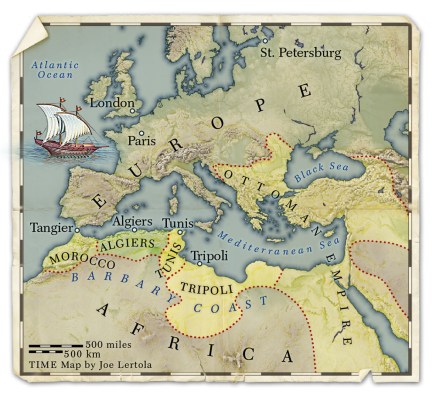
As a retired educator I enjoyed having students debate whether Thomas Jefferson was a realist or an idealist when discussing his foreign policy.  Many believed he was an ideologue who rarely strayed from his principles that usually pitted him against Alexander Hamilton.  In EMPEROR OF LIBERTY, Francis D. Cogliano revisits this debate and concludes that Jefferson consistently implemented a pragmatic approach to foreign affairs no matter the situation.  The book is a concise recapitulation of Jefferson’s diplomatic decision making tracing his raison d’être from his service as Governor of Virginia during the American Revolution, American Minister to France following the revolution, Secretary of State during George Washington’s first administration, and as President of the United States.  The issues he faced included a number of bouts with the Barbary pirates, Algiers, Tripoli, and Morocco; a series of issues with the British, including impressment and commercial interests among many; policy toward the French Revolution; the purchase of Louisiana; and finally his effort to remain neutral during the Napoleonic War.  In all cases Cogliano employs precise language and command of the relevant secondary and primary source material.  But as a historian I must ask, is there anything that has not been written before?

In each instance Cogliano presents the views of those historians who argue that Jefferson’s actions must be explained from the ideological perspective.  For the author Jefferson’s motivations are clear from the time he was Governor of Virginia that his vision for the United States was an empire of liberty that would be brought about primarily through peaceful expansion.  Jefferson favored an agrarian republic that rested on the ability of Americans to trade freely in the world.  For Jefferson, a threat to commerce was a threat to the republic.  He was not totally against the use of force as many maintain.  Once he perceived that American commercial interests were threatened he would employ the navy as he did against the Barbary pirates to achieve his goals.  He could also use the “veiled fist” as he did with Spain before the United States acquired the Louisiana territory.  That acquisition which married commerce to an avenue to the Atlantic Ocean was Jefferson’s greatest triumph.  Jefferson had always favored westward expansion as a vehicle of spreading republican principles going back to when he was Governor of Virginia when he dispatched George Rogers Clark to explore the territory.  Jefferson’s vision for the American empire was quite simple.  If the republic was to succeed it would have to expand to absorb its growing population.  For liberty to survive the republic would need to be a nation of small farmers.  In order for the United States to flourish they would have to export their produce requiring unfettered access to international markets.  “The United States would be an empire of liberty because liberty could not thrive without expansion.  If liberty were extinguished in the United States, the republican experiment would fail.  In Jefferson’s mind the growth of the ‘empire of liberty’ and the success of the American republic were one and the same thing.  As president, Jefferson sought to realize this vision of an expansionist American republic.” (5)

(map circa 1800, Barbary States)

Throughout his diplomatic career Jefferson made careful note of strategies that were effective and mirrored his beliefs.  As governor of Virginia he felt that the state’s decentralized constitutional arrangement hampered his ability to deal with the constant threat of British encroachment.  From this experience he realized a strong executive was needed to conduct an effective foreign policy even if it meant exceeding constitutional limits as long as he received legislative approval after the policy was implemented.  Employing the case study approach Cogliano does not present a comprehensive study of Jeffersonian foreign policy, but he chooses the most salient examples.  Jefferson had to deal with the issue of the seizure of American ships and imprisoning American sailors on a number of occasions during his career.  Whether it was as Secretary of State or President, Jefferson believed that the Barbary corsairs threatened American trade, therefore liberty.  Jefferson was fully aware that the United States projected weakness to foreign powers, which is why the Barbary States targeted American shipping.  Until a navy could be developed Jefferson employed diplomatic threats, support for overthrown leaders, and the creation of alliances to achieve his goals.  In 1791 the US would wind up paying tribute, but by 1802, the American navy taught Tripoli a lesson.  For Jefferson, diplomacy was the first resort, but force at times was proven necessary.  Jefferson’s greatest diplomatic accomplishment was the purchase of Louisiana from Napoleon.  Some argue this came about due to the defeat of the French in Saint Domingue and her inability to protect Louisiana as the Peace of Amiens in Europe broke down.  Whatever the case the purchase was made by exceeding his constitutional powers and Jefferson obtained the western territory, control of the Mississippi, and New Orleans at the same time.  Following precedent, Jefferson obtained Congressional approval after the fact.  I agree with Cogliano’s premise that Jefferson was a pragmatist when it came to foreign relations as all his examples seem to reflect.

In dealing with England Jefferson was at a disadvantage since commercial interests were his prime concern and his position was weak. Cogliano lays out the different scenarios that Jefferson could employ; war, embargo, or be patient and hope things would calm down.  A great deal of attention is focused on the issue of impressment and British Orders in Council that hindered American commercial interests.  After the Chesapeake-Leopard affair it appeared that the United States would declare war against England, but fearing the repercussions of war Jefferson chose an embargo. In Jefferson’s eyes the embargo was the best option that he had.   According to Cogliano the policy was not defective; it was its implementation as Jefferson did not rally the American people to support the embargo, resulting in smuggling and other strategies to undermine its effectiveness.  The policy was an economic disaster for the US and was the greatest failure of Jefferson’s presidency.

Overall, the book has a great deal of interesting sidelights, i.e., the fact that the British were so desperate in its war against Napoleonic France it bombed Copenhagen when the Danes refused to turn over its navy to them. Also, Cogliano begins the book with a discussion of autocracy and Jefferson’s positive views of the new Russian Tsar, Alexander, a discussion I found interesting and somewhat surprising.  If you are looking for a readable study of Jeffersonian foreign policy then Cogliano’s work fits the bill, however, if you are well versed in the subject the narrative will qualify as an excellent review of information and events.

SEYMOUR HERSH: SCOOP ARTIST by Robert Miraldi

When Robert Miraldi sat down to choose the title of his new book, SEYMOUR HERSH: SCOOP ARTIST, he might have thought about a different title to describe one of the most important investigative reporters of his generation.  Seymour Hersh was more than a scoop artist, to use Theodore Roosevelt’s term to describe the likes of Ida Tarbell, Upton Sinclair and others during the Progressive Era, he was more of a muckraker, a writer who thrives in the muck to locate and develop a story.  This was Seymour Hersh, a reporter whose tactics were unconventional to say the least, which developed his own stories no matter where they took him, and became a thorn in the side of any person with power who he set his sights on.  Hersh was a Pulitzer Prize winner and a recipient of the George S. Polk award for distinguished journalism, and the author of numerous books.  In exploring Hersh’s career, Robert Miraldi has not produced a traditional biography, but an examination of Hersh’s methodology in tracking down stories, and he provides numerous insights into his subject’s character and relationship to the people and topics he is drawn to.  What emerges is a flawed Seymour Hersh, who fights for justice and righteousness, but at times, allows his larger than life ego take hold of him, resulting in great praise from the public, but also denigration, and enemies from the protectors of his targets.

Having read most of Hersh’s books over the years I had little insight into the type of individual that he was on a personal level.  I always believed after reading a book or article written by Hersh that he was a person who let the public peer into the halls of power and was driven to seek justice whether it be the My Lai massacre, the downing of flight 007 by the Soviet Union, the torture of prisoners at Abu Ghraib, or any of the myriad of causes he took up.   Miraldi opens a window into Hersh’s work that is both personal and analytical.  Resting on numerous interviews, documents, and an encyclopedic knowledge of Hersh’s writings, Miraldi has produced a useful narrative that seems to track his subject’s life from book to book, and article to article that he has written.  By adopting this approach the reader is exposed to a history of the United States from 1960 through the present, through the eyes of Seymour Hersh.

If Hersh had you in your cross hairs it meant you were a very powerful individual or a government agency that had overstepped its constitutional limits as seen by Miraldi’s, “scoop artist.”  After an early career at the Chicago City News Bureau and UPI, Hersh latched on to the AP Chicago bureau by 1965 proclaiming that David Habersham, the award winning New York Times reporter as his role model and would soon pursue similar investigative subjects.  Early on Hersh was interested in civil rights and the military and after being transferred to Washington, D.C. Hersh began his first investigation of the military confronting the truth behind General William Westmoreland’s thirty hour bombing freeze in December, 1965.  Hersh’s first major crusade dealt with the inequalities of the draft.  We witness Hersh’s standard writing technique as he refused to name sources as his articles are sprinkled with “unnamed sources,” informants, anonymous citations which led many to question the veracity of his approach.  One of the most important parts of Miraldi’s book is his description of Hersh’s tactics which were very successful, but as he correctly points out, at times, are over bearing and based on falsehoods and bullying.  For Hersh, the investigation meant the ends justified the means.  The My Lai massacre investigation that Hersh turned into a book, MY LAI MASSACRE: A REPORT ON THE MASSACRE AND ITS AFTERMATH made him nationally known figure, and created a reputation as a tenacious investigator who knew how to uncover information better than any of his peers.  If he wanted to talk to you, he had a way to extract what he needed even if you did not want to provide the information.  From the outset the “Hersh treatment” was ever present.  First, Hersh is a voracious reader.  No matter the subject if it dealt with an ongoing investigation he would consume books, articles, and documents so that he was as well versed, or more in the subject matter than the person he wanted to interview.  To get to a source Hersh was extremely disingenuous and outright lied, bullied, or threatened a target until they succumbed to a conversation.  Most of this took place on the phone and at times in person.  Jay Peterzell, a researcher at the Center for National Security Studies, an advocacy group in Washington had a “bird’s eye view of the telephone terrorist” as Hersh conducted over a thousand interviews for his book on Kissinger.  He would “overwhelm you with his verbal barrage” and bait his target into finally granting his wishes, as “they got caught in the enthusiasm, the importance, his energy.” (237)  This approach was evident in all of his research but especially when dealing with Henry Kissinger, who Hersh despised, at one point stating that he would “love to get that son of a bitch.”  The question must be asked is Hersh’s approach too over the top, or did his mantra of “terrible things happen in war, [but] the responsibility of the press…to find, verify, and publish the truth” justifies everything. (32)  Hersh was able to alienate his targets as well as his colleagues who resented his success, but in many cases felt that he was very biased in his approach and he could not “fairly evaluate reality.” (95)

bodies of civilians killed in My Lai massacre

Bodies of Vietnamese villagers killed at My Lai, March 16, 1968

One of the most surprising things that I learned from Miraldi’s book is that Hersh worked for Senator Eugene McCarthy’s campaign in 1968 as its Public Relations director.  This brought two imposing personalities head to head, as McCarthy, who hated publicity that he did not control, and Hersh who was overbearing and controlling, it was obvious that after a short period of time they could not coexist.  After Hersh quit or was fired from the campaign he published CHEMICAL AND BIOLOGICAL WARFARE: THE HIDDEN ARSENAL making him the “Ralph Nader of the bio-chemical industry” and helped to push the Nixon administration to stop building biological weapons.  Nixon had his own reasons apart from what Hersh exposed, but Hersh must get some of the credit for Nixon’s actions.  Hersh followed this success by becoming involved with the POW issue in Vietnam.  He even visited Hanoi and after joining the New York Times he continued to get under Richard Nixon’s skin.  Another surprising aspect of the book is Miraldi’s discussion of Hersh’s view of Bob Woodward and the Watergate investigation.  Woodward and his partner at that time, Carl Bernstein were out front in the investigation from the outset.  Hersh was caught up in the New York Times, Washington Post competition and grew jealous of Woodward’s success and growing reputation.  Throughout the book this competition remains in the background as Hersh wanted to be considered the number one investigative reporter in the American press, and though he praised Woodward’s work, and became his friend, he never truly accepted him as his equal.  Hersh was able to enter the “Watergate competition” late and eventually the Nixon White House became “scared to death of this guy…We don’t know what he can prove or can’t prove,” (158) as stated by an unidentified White House source during the investigation into the illegal bombing of Cambodia.

What was shocking to me was Miraldi’s discussion of how many top governmental figures, be it political or military that spoke with Hersh and leaked important information to him.  For example subjects as diverse as Senate Armed Services Committee head, John Stennis, a conservative Democrat during hearings concerning U.S. bombing of Cambodia; Frank Sturgis, a Watergate co-conspirator, dealing with hush money paid by the Nixon White House; to CIA Director William Colby who became a Hersh “phone mate” during the investigation dealing with the coup against Salvatore Allende in Chile.  Hersh always sought out new sources, particularly in the Pentagon, and according to Miraldi when Hersh called declaring, “Hi I’m Sy Hersh and you probably want to talk with me,” retired generals, in particular liked to hear from him.” (171) The book is also useful for shedding light on the inner workings of the New York Times editorial board and how the “paper of record…did not seek to create or make that record.” (233) The reader also witnesses the competition between staff and board members and the volatile nature of the Hersh-Abe Rosenthal relationship.  The two sides tolerated each other for six years but after Hersh’s articles dealing with Gulf and Western Industries in 1979 they went their separate ways.  Perhaps the most interesting aspect of the book is Miraldi’s description of how Hersh went about writing his work on Kissinger, THE PRICE OF POWER.  Having read the book I agree with the author’s critique that the book is difficult to read and Hersh is probably guilty of overwriting, particularly certain topics, i.e., SALT negotiations with the Soviet Union.  On a more positive note, historian, Stanley Hoffman has written, “this is a book that through its factual density avoids the typically hectoring tone of the investigative reporter or the ideologue with an ax to grind.” (252)  This cannot also be said of THE DARK SIDE OF CAMELOT where Hersh ran up against the myth of JFK and the family that tried to protect the image of Camelot.  As Hersh uncovered some of the more salacious details of Kennedy’s private life he fell for some doctored documents and his reputation suffered and in the end he wound up mentally exhausted.

Hersh would recover and he latched on with the New Yorker, under the influence of its editor David Remnick who supported Hersh’s work and gave him the leeway and resources that reenergized him.  This resulted in Hersh becoming a “war correspondent” after 9/11.  Hersh was truly shaken by the attack and over the next three years “Hersh produced twenty stories and over 110,000 words.” (319)  Hersh concluded that the intelligence community was not prepared to stop the terrorists as government agencies and the military lacked the training and communication to be successful.  Once the United States invaded Iraq, Hersh concluded that President Bush had lost control of his foreign policy to the cabal of neocons inside and outside his administration.  Hersh argued that “the intelligence community had ignored the sacrosanct ‘stove piping’ rule-that only carefully vetted information should go up the chain of command.” (323)  Hersh was once again faced criticism of his sourcing as most of his sources were anonymous, but he felt the neocons were now out of the closet.  This would lead to his book, CHAIN OF COMMAND: THE ROAD FROM 9/11 TO ABU GHRAIB, which took advantage of over thirty years of sources who were at the Pentagon, the CIA, and other places to critique US policy on Afghanistan, Iraq, and terrorism.  Donald Rumsfeld became part of the center piece of Hersh’s narrative in the book and articles written based on his own research dealing with the torture at Abu Ghraib.  Hersh’s presentation has proven very accurate during the last ten years since the book was written. PHOTOGRAPH: ABU GHRAIB PRISONER ABUSE Abu Ghraib prison, site of US torture and demeaning of prisoners in Iraq

Whether Seymour Hersh uses unethical tactics to obtain information, whether he is a bully who extracts the necessary documents he needs, what is important for Miraldi is that Hersh presents the facts and lets others ponder the consequences.  If you are a fan of Hersh’s raison ‘detre, or believe he has gone too far, Miraldi’s book is comprehensive and provides the best portrait of one of the most important journalistic figure of his age.

TIP AND THE GIPPER: WHEN POLITICS WORKED by Chris Matthews


As an avid viewer of MSNBC’s Hardball program each evening with Chris Matthews I am very familiar with his views and style, and usually agree with him.  I have read his previous books and looked forward to reading his latest, TIP AND THE GIPPER: WHEN POLITICS WORKED.  After reading the book and digesting his final thoughts as he states that “We need leaders able to balance large purpose with equally large awareness of the electorate, what message the voters have sent.  In a worthy contest this goes for those who’ve won but especially for those who haven’t. The rules of fair play can’t be simply cast aside.” (371) Reading TIP AND THE GIPPER I got the feeling I was having an intimate conversation with the author and his subjects.  Matthews lets the reader in to his inner most thoughts and cannot but admire both men he writes about and the relationship they forged.  Obviously, Matthews wants their relationship to be a model for today’s politicians who have given us a new concept, “partisanship on steroids!”

Matthews is a superb writer and his narrative flows like a literary work.  He is able to subtly integrate his own political education, first as a speech writer for Jimmy Carter and then as Tip O’Neill’s administrative assistant, as he develops the relationship between his two larger than life subjects.  As the historical narrative unfolds the reader would have to be blind not to think about our current state of government by stalemate.  Today, Reagan would probably be labeled a liberal Republican by Tea Party elements and his legislative accomplishments, particularly the 1983 Social Security legislation and the 1986 Tax Reform Law, would have been forcefully opposed by the likes of Cruz, Lee, and Paul.

Matthews is very insightful in a number of areas.  Early on he points out the weakness of the Carter presidency, the aloofness of the man from Plains, Ga.  When Reagan assumes the presidency in 1981 “his plan was to charm rivals and potential allies alike,” and Tip O’ Neill was his first major target.  By pointing out the political problem that aloofness in the Presidency can create, it is obvious who Matthews is pointing to.  From the outset O’Neill rejected an obstructionist strategy in dealing with Reagan’s proposed economic plan as he realized that the American people had spoken at the polls.  He decided that he would assist Reagan in achieving his agenda as much as he could, as it was his duty as an American patriot.  O’Neill’s biggest problem in dealing with Reagan was his “star power,” as the President was the consummate actor in addition to being shrewd and cunning in dealing with the Speaker.  Matthews’ role in the Speaker’s office was to assist O’Neill in adapting to using the media as a tool in dealing with Reagan.  It is from this vantage point that Matthews presents his narrative.

If O’Neill had considered any thoughts of creating roadblocks for Reagan’s legislative agenda they would have been immediately cast aside after the assassination attempt on the President.  Reagan’s handling of the attempt on his life was out of a Hollywood script and after being closer to death than the American people were led to believe he emerged as a “true American hero.”  For O’Neill this meant doing his best to lessen the assault on his liberal self, and in 1981 and 1982 Reagan was able to work with O’Neill and gain congressional approval for his tax cut, increase in military spending, all of which was to lead to a balanced budget by 1984.  It was very clear that what Vice President George H. W. Bush termed “voodoo economics” during the 1980 presidential campaign was not going to work and because of that O’Neill was able to gain Reagan’s cooperation in reforming the Social Security system and putting it on a firm financial footing for the future.

The most interesting aspects of Matthews’ book center around his description of the how the O’Neill-Reagan relationship developed and how they were able to work with each other despite their divergent political philosophies.  Matthews quotes freely from Reagan’s diaries and O’Neill’s memoir, and statements and speeches he was privy to.  In so doing he seems to create a conversation between the two men which reflected anger at times, but always mutual respect for each other.  The mutual respect was the key and they both believed that after 6:00pm politics would be set aside as they met frequently and seemed to enjoy each other’s company.  What is amazing is that despite their ideological differences and their battles over the budget and spending and tax issues they never lost their affection for each other.

The first third of book is a comparative biography of both men where Matthews does not present any new material that has not been gone over by the likes of Lou Cannon in his book on Reagan entitled, PRESIDENT REAGAN: THE ROLE OF A LIFETIME and John A. Farrell’s excellent biography, TIP O’NEILL ANDTHE DEMOCRATIC CENTURY.  After completing this section of the book, Matthews begins his account of the legislative battles between the two men and their disagreements on foreign policy.

Matthew’s description of O’Neill’s mood swings as he dealt with Reagan is fascinating.  In particular the Speaker’s anger when Reagan characterizes his liberal principles as demagoguery.  As a result he finally realized he had to graduate to the media age against a president who had mastered it for years.  Despite his periodic anger at Reagan, O’Neill always realized that no matter how weak the economy became after the Reagan agenda became law, the president always remained popular.  In addition, O’Neill was always wary of being seen as an obstructionist.  For Matthews, his role was to make O’Neill relevant again despite legislative defeats and not appear as “over the hill” as Republican strategists tried to make him out to be.  His media “remake” of O’Neill was successful and it forced the public to begin to question Reagan’s economic program and resulted in Democratic gains in 1982.  By 1983 Reagan began gearing up for his reelection and did not want Social Security to be an issue for the Democrats.  Hence, Reagan and O’Neill realized there was a political center in American politics that would benefit the entire country.

On foreign policy O’Neill took the position that the President needed Democratic support in dealing with the Soviet Union and events in Lebanon.  But Reagan’s position on the Sandinistas in Nicaragua reminded the Speaker of the slippery slope that led to the Vietnam War.  O’Neill was a major force in limiting the administration’s action in Latin America through the Boland Amendment and greatly resenting being “told” about the invasion of Grenada which he saw as an attempt to turn the focus of the American people away from the terrorist bomb that led to the death of 241 Marines.  Matthews is correct in pointing out that Reagan could not escape the Cold War paradigm that he believed in and accept the idea that there were numerous confessional rivalries in Lebanon as well as ignoring the history of resentment against American imperialism in the Americas. (276)

O’Neill’s final year in office was highlighted by the 1986 Tax Reform Bill as once again he and the President moved to the center in compromising their goals in the name of the American people.  Obviously many of the examples that Matthews presents seemed designed as lessons for today’s politicians many of whom only know how to say no instead of doing what is in the best interests of the nation as a whole.  Every day pundits reinforce the idea that nothing will can accomplished due to the current political environment, but Matthews has provided an honest historical portrait of two men who showed despite their differences what could be accomplished.

THOSE ANGRY DAYS: ROOSEVELT, LINDBERGH AND THE FIGHT OVER WORLD WAR II by Lynne Olson

Recently I visited the World War II tunnels under the White Cliffs of Dover. As a retired historian this fostered further interest on my part in examining the events surrounding Dunkirk and the German aerial blitz over England in 1940. Coincidentally, Lynne Olson, the author of a number of books dealing with the United Kingdom and the war, published her most recent effort, THOSE ANGRY DAYS: ROOSEVELT, LINDBERGH AND THE FIGHT OVER WORLD WAR II, 1939-1941, a survey of American policy toward events in Europe in the 1930s culminating with its entrance into the war following the Japanese bombing of Pearl Harbor. Olson as she has done in all her previous books presents a cogent and well written narrative that explores the role of those who sought to prepare for what they perceived to be the coming war with Germany and provide the British with the necessary assistance once war broke out following the German invasion of Poland in September, 1939. Further, Olson examines the role of the isolationist movement during the period, a group that sought to keep the United States out of the war at seemingly all costs. In her narrative Olson incorporates all of the main characters in this, at times, nasty debate ranging from Franklin D. Roosevelt to Charles Lindbergh. Other than a few minute details there is not much that is new here, but the book is an excellent synthesis of available primary and secondary materials and the author has prepared a smooth narrative that captivates the reader.

A number of important subjects and themes are explored. The discussion of the evolution of American public opinion toward the war in Europe is interesting, particularly how the British under the leadership of William Stephenson and his network sought to influence decision making in Washington. The role of Charles Lindbergh as he evolves from a national hero to a political partisan involved with isolationists at home and manipulated by Hitler’s government abroad is fascinating. The election of 1940 is accurately described and the fear felt by FDR for the candidacy of Wendell Willkie takes the reader inside both presidential campaigns. Wilkie is treated as a principled man. Despite his feelings about the New Deal, he supported the interventionist movement and he was an essential component politically as the Roosevelt administration sought to gain the passage of important legislation, i.e., the Destroyer Base Deal, Lend-Lease, and conscription in Congress.

Olson correctly points to Roosevelt’s attempt to alter the make-up of the Supreme Court in 1937 as his worst domestic political error that heavily impacted his ability to prepare the United States for the approaching conflict and provide assistance to the British after 1939. This defeat lessened FDR’s confidence in his own decision-making, reduced his influence on Congress, and saw his own popularity with the American people decline. This hamstrung attempts to alter the Neutrality legislation of the mid to late 1930s and was a boon to the political opposition led by the likes of Senators Burton K. Wheeler and William Borah, Robert Woods, the head of Sears Roebuck, Henry Ford, and Charles Lindbergh.

The passage of HR 1776, better known as Lend Lease is vividly presented in exacting detail. Olson’s description of the vituperative politics of the period through the eyes of the main characters is enlightening. The actions taken by Wendell Willkie and Lord Lothian, the British Ambassador to the United States, who died shortly after the bill was passed is detailed and reflects an author in total control of their material. Olson observes correctly that the passage of the bill was FDR’s most important prewar political victory and her choice of quotes is wonderful, i.e., Eric Sevareid, the CBS correspondent’s description of opponents of Lend Lease as “tobacco-chewing, gravy stained, overstuffed gila monsters, who nestled in their bed of chins, would doze through other speeches, then haul up their torpid bodies and mouth the old, evil shibboleths about King George III, the war debts, Uncle Sap, and decadent France (were) very dangerous men,” is also illustrative of the negativity, nastiness, and partisanship of the period.

Over the years some have argued that FDR sought to involve the United States in a war against Germany well before December, 1941. Olson’s argument to the contrary is right on as she states that FDR plodded along and took baby steps toward preparing the United States for what he was convinced would be a war to defeat Nazi Germany. FDR read the polls assiduously and was always afraid no matter what the political polls may have reflected that he was too far out in front of what the American people would support. Olson’s examination of the politics behind expanding the undeclared naval war in the North Atlantic highlighted by decisions of how much area the United States would defend in convoying merchant shipping is illustrative of FDR’s fears, as was his approach to the conversion of the US economy from domestic to military production.

There are numerous other areas that Olson explores ranging from the role of Hollywood in the propaganda war against Germany, the influence of anti-Semitism on American politics, the infighting within the American military establishment, and intimate portraits of the most important historical characters. Olson’s examination of events and the attendant research contribute to a well thought out and deeply interesting portrait of the United States and England as both faced the coming war and its final outbreak in 1939 and 1941. As a side note if anyone is interested in reading a counter factual historical novel dealing with this topic they should read THE PLOT AGAINST AMERICA by Philip Roth who conjectures of what might have happened if Lindbergh had sought the presidency in 1940 and defeated Roosevelt, just food for thought.

THE SECRETARY: A JOURNAL WITH HILLARY CLINTON FROM BEIRUT TO THE HEART OF AMERICAN POWER by Kim Ghattas

At a time when the rumors surrounding the candidacy of Hillary Clinton for president in 2016 seems to permeate every news cycle Kim Ghattas presents the public with a marvelous book that describes not only her personal journey from the civil war in Lebanon in the 1980s to the present, but allows the reader to enter the decision making process of the State Department. THE SECRETARY: A JOURNAL WITH HILLARY CLINTON FROM BEIRUT TO THE HEART OF AMERICAN POWER provides a unique perspective as the author, the BBC State Department correspondent shares with the reader her world- wide travels over hundreds of thousands of miles with Secretary of State Clinton. What emerges is an understanding of the motivations and the limitations of American power. Entering office the Obama administration set as one of its major goals a corrective foreign policy designed to repair the damage caused to America’s reputation abroad that resulted from Bush administration policies. In the book Ghattas described Clinton’s strategy, which at times differed from President Obama, in trying to restore trust in the United States among allies, and improve relations with those countries that were skeptical about working with Washington. Interwoven in this journey are the author’s memories and emotions related to her upbringing in war torn BeIRUT and how she relates her personal observations and emotions to American actions be they in Libya, Syria, dealing with China, or a myriad of other topics. The conclusion that Ghattas has reached is that Clinton has been successful in laying the foundation for the reorientation of American policy where “working with the United States is once again desirable” (333) It is no longer “you are with us or against us,” the mantra of the previous administration. I recommend this book to anyone interested in the intricacies of the development of American “smart power,” and the implementation of Hillary Clinton’s style of personal diplomacy.

THE PRESIDENT AND THE ASSASSIN by Scott Miller

If you are a fan of narrative history that is well written and provides an engaging story with a tinge of analysis then Scott Miller’s THE PRESIDENT AND THE ASSASSIN should be of interest. Miller has written a dual socio-political biography of William McKinley through his assassination in 1901, and the development of anarchism in the United States zeroing in on Leon Czologosz, McKinley’s assassin, and other anarchists including Emma Goldman. As you read the book many comparisons to contemporary problems emerge. Miller’s dominant theme centers around the idea that the election of William McKinley in 1896 and the policies pursued by his administration set the tone for the 20th century and set the United States on course to being the dominant power in the world. While a strong case is made in support of this viewpoint there is very little that is new in terms of historical interpretation. What is valuable is how Miller synthesizes a great deal of material in a very cogent and readable fashion.

What is most interesting in the book is the development of the Open Door Policy that has been attributed to Secretary of State John Hay. In fact the British approached the United States as a means of protecting their trade in China as they were engulfed in the Boer War from 1899-1902. For the United States the policy was designed to guarantee trade access to China at a time of political disintegration and foreign threats from Japan and Russia. The discussion is well laid out as are other diplomatic issues. On the domestic front Miller does his best work as he explores the origins of anarchism in America through the eyes of Albert Parsons, Johann Most, Emma Goldman and the revolutionary want to be, Leon Czologosz. The author takes the reader through the labor unrest of the 1880s and 90s concentrating on the Haymarket Massacre in Chicago and the Homestead Strike in Pennsylvania. The main characters with their ideology and motives are delved into nicely and the plight of labor is reflected in a very sympathetic fashion.

McKinley is presented as a moral person who evolves into a proponent of imperialism. With the backdrop of the Depression of 1893 McKinley, who viewed himself as a god fearing man will justify the annexation of Hawaii, the Spanish American War, and the insurrection in the Philippines on moral grounds. McKinley reached the conclusion, (through the assistance of prayer!) that the American economy if it were to recover needed foreign markets. So “the man with no overseas ambitions….spoke of extending America’s footprint from the Caribbean to the farthest reaches of the Pacific.” (178) With the Spanish Empire available, McKinley prayed for guidance, then took the plunge resulting in war with Spain and the crushing of a bloody indigenous movement in the Philippines resulting in the death of 4,234 Americans as well as 2,818 wounded. On the Filipino side 16,000 native soldiers were killed and up to 200,000 civilians passed from famine and disease. For the United States this was the American version of Rudyard Kipling’s “White Man’s Burden.” Reflecting our racial superiority, Americans believed it was our duty to pacify and civilize native populations, as was seemingly preordained by the concept of America as a shinning “city on a hill” during the Puritan era.

In comparing the problems faced by the United States during McKinley’s administration and events of today it is interesting to compare what occurred in the Philippines to Iraq and Afghanistan. In particular it is important to contemplate these events and their outcomes as the debate rages in Congress as what Washington should do about the slaughter that is taking place in Syria. Other comparison might be made on the economic side as trusts dominate business at the turn of the century and how multinationals and other large corporate entities control our economy today. The Depression of 1893 and the 2008 meltdown may bring food for thought as do the “Robber Barons” of yesteryear and the “1%” today. Realizing that historical comparisons can overdrawn, but I give the author credit for suggesting that as George Santayana has stated “those who do not remember the past are condemned to repeat it,” again food for thought.

GIANT IN THE SHADOWS: THE LIFE OF ROBERT T. LINCOLN by Jason Emerson

I decided to read Giant in the Shadows: The Life of Robert T. Lincoln by Jason Emerson for the simple reason that I was curious what it would have been like to be the son of the “Great Emancipator.” Mr. Emerson did not let me down. The reader is presented with a portrait of Abraham Lincoln through the eyes of his only surviving son and a wonderful and detailed narrative history of the Lincoln family from the 1840s through the 1920s. Emerson has written what I would describe as a “comfortable” book where the reader is invited into the mindset of Robert Lincoln. We see the many crises that “young” Lincoln suffered, the politics of the period, the expansion of the American economy and his role in it, in addition to his personal issues relating to both of his parents. We learn that Abraham Lincoln was an overindulgent parent in spite of the fact that Robert was mostly raised by his mother Mary since his father spent a great deal of time traveling the judicial circuit before pursuing a political career. The material that is presented on Mary Todd and Abraham Lincoln, the death of their children, and the political background is written in an engaging style and is concisely presented though many of the details are not new.
What are new are the details of Robert’s relationship with his mother. Emerson drawing in part on his previous work on Mary Todd Lincoln provides an intricate description of his mother’s mental health following the assassination of his father. The emotional collapse, debts, and wrenching familial details eventually forced Robert to have his mother committed. From 1865-1875 his mother’s mental state dominated a significant amount of time and Robert grew mortified by his mother’s behavior. Robert was deeply concerned about his family’s historical legacy throughout his life so dealing with a mother who was probably bipolar was a challenge. Robert went so far as having his mother followed by Pinkerton detectives as she continued to spend inordinate amounts of money on clothing, furniture, and spiritualists. Eventually Robert consulted his father’s friends for advice and all agreed she should be institutionalized. The reader is witness to this entire episode which focuses in part on the state of mental health treatment in the United States at the time. After a short stay, under pressure from Mary and fearing publicity Robert approves of his mother’s release and he comes to terms in dealing with his her sickness as best he can.
Robert Lincoln emerges as a remarkable man. One can hardly imagine what it must have been like to bury two brothers, a father and mother, and witness three presidential assassinations. In addition, Robert Lincoln was not a well man who probably suffered from Bright’s Disease in addition to experiencing repeated bouts of depression. Despite these obstacles Robert Lincoln became an exceptional corporate lawyer, a wise business man who amassed a fortune, ambassador to England, was appointed Secretary of War, served as the CEO of The Pullman Palace Car Company, among his many achievements to the point that he was seriously thought of as a presidential candidate in the 1880s. Emerson takes the reader through all of these aspects of Robert’s life and pulls no punches in evaluating his subject. The key dichotomy is how the son differed from his father and Emerson concludes that despite the son’s anti-labor (Pullman Strike) and pro-business stances he was not that different in outlook from his father.
A key theme that is followed throughout the book is Robert Lincoln’s concern for his father’s place in history. Robert refused to allow historians, except for John G. Nicolay and John Hay, his father’s former secretaries during the Civil War access to presidential papers and other documents until twenty one years after his death. He reasoned that there was too much information that could impact people in a negative way that were still alive. There was nothing too small for Robert Lincoln to become involved with if it related to his father. Whether it was the creation of monuments, paintings, museums and documents Robert was the prime decision maker. Robert Lincoln lived a remarkable life that Jason Emerson captures very nicely. I am certain this book will become the standard treatment of its subject for years to come and though it may be an esoteric subject for some, it is lively and well worth the time to read.


THE BULLY PULPIT: THEODORE ROOSEVELT, WILLIAM HOWARD TAFT, AND THE GOLDEN AGE OF JOURNALISM by Doris Kearns Goodwin

One of the most important friendships in American History was the relationship between Theodore Roosevelt and William Howard Taft.  They had a strong bond that lasted for years and then over a short period of time their friendship began to sour resulting in a schism in the Republican Party that caused them to lose the presidential election of 1912 to the Democrat, Woodrow Wilson.  Many historians have reached numerous conclusions as to why Teddy and Will went from being the best of friends to political enemies.  In her new book, THE BULLY PULPIT: THEODORE ROOSEVELT, WILLIAM HOWARD TAFT, AND THE GOLDEN AGE OF JOURNALISM, Pulitzer Prize winning historian, Doris Kearns Goodwin goes beyond the issue of friendship between Roosevelt and Taft and has written three books in one that she masterfully integrates as she presents her narrative.  First, the reader is offered a detailed biography of Theodore Roosevelt, next we are exposed to detailed biography of William Howard Taft, and lastly, and most importantly Goodwin explores the world of investigative journalism, what Roosevelt eventually referred to as the “muckrakers,” primarily through a history of McClure’s Magazine and their well known stable of journalists.  Goodwin does a remarkable job synthesizing a vast amount of material as she merges the lives of S.S. McClure, Ida Tarbell, Ray Stannard Baker, William Allen White, Lincoln Steffens, and others throughout her narrative.  The main strength of the book is her argument that it was the influence of these investigative journalists that fostered the Progressive reform era at the turn of the twentieth century.  She argues further that Roosevelt’s colorful personality and drive allowed him to develop reciprocal relationships with these writers that fostered public pressure on a small group of conservative Senate Republicans that brought about the reforms of the Roosevelt era. Goodwin writes, “this generation of gifted reporters ushered in a new generation of investigative reporting that allowed Theodore Roosevelt to turn the presidency into the ‘bully pulpit’ to achieve reform.” (xiii)  On the other hand, Taft’s personality and laid back approach to politics did not allow him to achieve the same type of working relationships with the press and he lost the ability to codify and expand upon Roosevelt’s legacy, “underscoring the pivotal importance of the ‘bully pulpit’ in presidential leadership.” (xiv)  In the background, Goodwin tells the story of the friendship between these two men and why it did not survive the political theater of the day.

The narrative begins with the standard biographical information of both men.  In terms of Roosevelt there is nothing that is really new as this story has been well mined by the likes of Kathleen Dalton, Edmund Morris, Henry Pringle and others.  The information on Taft is more interesting in that fewer biographies of the twenty-seventh president have been written.  In terms of Goodwin’s thesis what is important at the outset is how she compares the personality traits of the two men as they mature as individuals and politicians.  We learn that as a child Roosevelt was a fragile and sickly and developed “a fierce determination to escape an invalid’s fate [that] led him to transform his body and timid demeanor through strenuous work.  Taft, on the other hand, blessed from birth with robust health, would allow his physical strength and energy to gradually dissipate over the years into a state of obesity.” (34)  At Harvard, Roosevelt was a “slender young man with side-whiskers, eyeglasses, and bright red cheeks.  While Taft’s sturdy physique, genial disposition, and emphatic manner won immediate popularity at Yale.” (42) On  the one hand was an individual who suffered from a  inferiority complex who would work his entire life striving for superiority to overcome this self-perception, while Taft developed into a secure person who he was self-aware and accepted his limitations.  According to Goodwin, these traits explain a great deal about the course of their careers and their successes and failures.

Goodwin’s frequent verbatim entries into her narrative allow the reader to feel as if they are experiencing life with Roosevelt and Taft.  Both men had the good fortune of growing up as favored children in close knit families.  Where Taft “developed an accommodating disposition to please a giving father who cajoled him to do better,” Roosevelt “forever idolized a dead father who cajoled him to do more and do better.” (48)  The correspondence that Goodwin includes between these sons and their fathers provide interesting insights into their formative years and development of their personalities.  Roosevelt learned early on in his career as a New York State Assemblyman the value of the press as he sought a journalistic alliance when he went after a corrupt judge who was a puppet of financier Jay Gould, and learned about poverty from touring tenements with Samuel Gompers.  The assembly and his stint as New York City Police Commissioner provided Roosevelt with an important education, as opposed to Taft who shunned the very spotlight that the future Rough Rider craved.  Taft favored to fight his battles from the inside, trusting logic, reason, and facts.  Taft always tried to avoid controversy, and would hardly ever compromise his principles as he tried to balance the rights of labor with the rights of capital as a superior court judge.

As both men evolved in their careers Goodwin relates the deeply personal details of their personal lives.  Goodwin does a nice job exploring Roosevelt’s emotional trauma whether dealing with the deaths of his father, mother, or his first wife Alice.  Goodwin provides intimate details reflecting a side of Roosevelt that was not open to the public.  His “recourtship” and marriage of his childhood friend, Edith Carow is especially enlightening as Roosevelt had pledged never to remarry, and reflect the author’s insights and handling of their rekindled relationship, a topic that seems missing from most biographies of Roosevelt.  For Taft, the love of his life was Nellie Herron who after their marriage would be the driving force behind her husband’s career.  At each level ranging from his role as Solicitor-General, a judgeship on the Federal 6th Circuit District Court, Governor-Generalship of the Philippines, as Secretary of War and then his presidential campaigns, Nellie was his most trusted advisor and confidante.  Later, when she suffers a stroke and is incapacitated, Taft will make a series of mistakes that greatly affect his career.

As Goodwin breezes along with the narrative through Roosevelt’s presidency, coverage is not equally distributed.  The emphasis of the first half of the book is on Roosevelt, followed by significant sections on investigative journalists, and the remainder on Taft.  From my perspective I would have liked more emphasis to have been placed on the journalistic component of the story because Goodwin brings a great detail of refreshing new material to the fore.  Her discussion of S.S. McClure, the founder of the magazine of that name is wonderful.  Throughout the book the reader is presented with an egomaniac, who suffers from manic-depression, and obsessive-compulsive disorder, but despite these “limitations,” the man is a literary genius.  McClure travels the world to find writers for his new publication with emphasis on the literary, but also investigative articles that will propel a new generation of writers to the American reading public that will foster careers allowing them entrance into the corridors of power, particularly that of Theodore Roosevelt, and engender a tremendous amount of influence as they prepare articles that support major legislative reforms.  The private lives of Tarbell, Baker, Steffens and White are chronicled as well as their personal relationship which created a family-like atmosphere at McClure’s.  Ida Tarbell’s research and writings dealing with trusts, especially John D. Rockefeller’s Standard Oil, and examination of the tariff structure in the United States are thoughtful and set the stage for Roosevelt’s reputation as a trust buster and a proponent of lower tariffs.  John Stannard Baker’s investigation into labor practices and political corruption are the basis for labor legislation and a movement to reform representative democracy.  Lincoln Steffens’ SHAME OF THE CITIES educates the American public about political bossism and corruption on the state and local level.  William Allen White served as Roosevelt’s eyes and ears in the Midwest from his perch as editor of the Emporia Gazette headquartered in the small town of Emporia, Kansas. Lastly, Upton Sinclair, who was not part of the McClure’s team, novel, THE JUNGLE sent a message to congress about conditions in the meat-packing industry that culminated in the creation of the Food and Drug Administration and regulation of the meat-packing industry, and Jacob Riis, also not part of the McClure’s family educated Roosevelt on the role of poverty in the United States.  In all cases Roosevelt established a relationship with these journalists, inviting them to the White House, sharing speeches with them in advance, and gaining their confidence that he proof read some of their articles.  This relationship, along with the publicity that McClure’s and other magazines engendered created a climate whereby the Republican conservatives in the Senate who were tied to different industrial trusts eventually had to compromise and give in. As a result Goodwin’s conclusion as to the historical importance of this group of writers cannot be underestimated.

Much of the book is focused on domestic issues but certain important foreign policy problems receive coverage.  The traditional story of the Spanish-American War and Roosevelt’s role are related and its affect on the Rough Rider’s growing political profile.  As a result of the war the United States acquired control of the Philippines and it is here that Taft reenters the picture as Governor-General of the archipelago.  It is at this juncture of his career that Taft is happiest.  He enjoys the everyday intricacies of governing and he treats the Filipino people as fairly as possible when compared to the imperialists in the United States.  It is interesting to compare Taft’s views on race with that of the social Darwinists views of Roosevelt.  Once he is recalled by Roosevelt, who succeeded to the presidency following the McKinley assassination, Taft delays his departure as long as he can until he takes over as Secretary of War.  The other major foreign policy issue that the Roosevelt administration is known for is the building of the Panama Canal, or as Roosevelt stated, “I stole it!”  Here Goodwin offers a perfunctory approach, but there is little to add to David McCullough’s THE PATHWAY BETWEEN THE SEAS.

The best way to compare how Roosevelt and Taft approached reform and used the levers of presidential power is to compare a few of the many problems that Goodwin explores in depth.  The best place to begin is to develop a definition of what progressive reform was in the eyes of Roosevelt which Goodwin does not do.  For Roosevelt all trusts were not bad, and conservation was not radical environmentalism.  In Robert Wiebe’s BUSINESS AND REFORM AND THE SEARCH FOR ORDER we learn that Roosevelt believed in the concept of “efficiency.”  If a trust was deemed to be efficient and benefited the American people and they abided by certain government strictures, Roosevelt saw no reason to go after them.  As far as conservation, Roosevelt wanted to conserve America’s land and resources for future generations, but he also allowed their development, if done in a practical manner, and benefited society as a whole.  It is interesting that most progressives were not wide eyed radicals, but mostly middle class individuals who wanted to grow the American economy for the benefit of all.  In examining Roosevelt’s anti-trust suit against the Northern Securities Company, the Beef Trust, and Standard Oil, we see an executive who uses the levers of power and the publicity generated by his investigative journalist compatriots.  In gaining passage of his reform program which turned the 59th Congress into one of the most productive in American history Roosevelt had to overcome the opposition of a small group of Republican conservative senators who could block any legislation, sound familiar!  Roosevelt fed information to Ray Stannard Baker who wrote a six part series for McClure’s, entitled, “The Railroads on Trial.”  Goodwin provides interesting excerpts of their correspondence and the information that passed between the two was essential in creating a bill to set maximum rates railroad companies could charge.  After wheeling and dealing, the Hepburn Act emerged that allowed the Interstate Commerce Commission to set maximum rates.  After reading THE JUNGLE by Upton Sinclair, Roosevelt sent investigators to Chicago, which in the end resulted in the Meat Inspection Act.  Finally, Roosevelt met with Mark Sullivan the author of a series of articles for Collier’s Magazine that described the contents of the food Americans consumed as well as industrial practices in their preparation, the result was the Pure Food and Drug Act.  As in most cases, Roosevelt would use the “bully pulpit” to gain public support for his reform legislation.  As Goodwin describes further, it was not uncommon for the president to travel across the country by railroad to educate the American public and gain their support.

In comparing Roosevelt’s approach with that of Taft after he assumed the presidency there are two glaring examples that reflect poorly on the Ohio native.   The tariff issue has dogged most presidents throughout American history.  Taft was seen as a conservative Republican who was tied to eastern corporate interests.  Taft himself wanted to lower the tariff on certain items and make it easier for the Philippines to export goods to the United States.  Taft’s approach was to gain support for legislation through personal relationships rather than “the big stick through the press.”  During the 1908 presidential campaign Taft promised tariff reform.  When Ida Tarbell wrote a series of articles explaining how high tariffs plagued the poor Taft was in a political corner.  Much like President Obama he had recalcitrant conservatives to deal with, particularly Speaker of the House Joseph Cannon.  Taft feeling he had no choice decided to support Cannon as he believed it would be very difficult to oust him from the Speaker’s chair.  The Payne-Aldrich Tariff that emerged did little to satisfy Republican insurgents who had enough with the conservative minority in Congress.  If that was not bad enough Taft’s public declaration after meeting with Cannon that the “conservative leadership’s promise to prepare an honest and thorough revision of the tariff” made him optimistic for the future reflected how weak he appeared. “Perhaps it was inevitable that Taft’s temperament-his aversion to dissension and preference for personal persuasion-would ultimately lead him to work within the system rather than mobilize external pressure from the “bully pulpit.” (588)

Another example of Taft’s political implosion in relation to his relationship with Roosevelt took place while the former president was traveling in Africa.  Gifford Pinchot, the Director of the Forest Service was a close friend of Roosevelt and shared his conservation views.  When Taft became president he replaced John Garfield as Secretary of the Interior with Richard Ballinger.  The first dust up occurred because when Roosevelt left the White House he had withdrawn 1.5 million acres of federal land along sixteen rivers in western states to prevent corporate takeovers of the land as the railroad and oil industry had done.  Upon taking office, Ballinger who was a former corporate lawyer restored the land to the public domain leading Pinchot to publicly condemn the action that he felt would result in the creation of a “waterpower trust.”  Next, Ballinger allowed a Seattle syndicate access to 5000 acres of Alaskan land for development.  It turned out that the spokesperson for the syndicate was tied to coal interests and before he was appointed as Interior Secretary Ballinger had been their legal counsel.  Goodwin explores this situation in her usual detail and points out that Ballinger may have done nothing wrong, but insurgents led by Pinchot never forgave Taft for firing John Garfield and a political scandal ensued culminating in a nasty congressional investigation.  Whether this was a true scandal is irrelevant because of the way Taft handled it.  When Louis Brandeis the attorney for the Pinchot forces learned that certain documents were predated by the Attorney General all was lost.  Taft should have fired Ballinger, but instead kept him on even after the investigation.  Goodwin is correct in stating, “The bitter struggle had consumed the attention of the country for more than a year.  Reformers’ faith in the president, already weakened by the tariff struggle, had plummeted.”  (627)  Once Roosevelt was brought up to date by Pinchot as to what had occurred the Roosevelt-Taft relationship was at the tipping point.  What would push it over the edge was the Taft administration’s filing of an anti-trust suit against U.S. Steel.   With Roosevelt’s return to the United States and his embankment on a sixteen week tour of the west, a progressive-conservative split in the Republican Party was at hand.

The U.S. Steel issue angered Roosevelt because during the Panic of 1907 it was the work of J.P. Morgan in agreement with the then president that if Morgan assisted the government his company would not be the target of an anti-trust suit.  This led to accusations and counter accusations headlined in newspapers across the United States between Roosevelt and Taft forces.  By 1912 the Republican Party rupture was complete.  Goodwin provides in depth analysis and details of the split that led Roosevelt to challenge Taft for the Republican nomination, and failing that, forming the Bull Moose Party that led to the election of Woodrow Wilson.  The campaign was extremely nasty and one could never imagine that the two former presidents would ever rekindle their relationship.  Goodwin does their relationship justice as she describes the emotional reunion before Roosevelt’s death.  In 1921, President Harding nominated Taft as Chief Justice of the Supreme Court, a position he longed for his entire career.

Goodwin’s final analysis of their Roosevelt-Taft relationship is accurate.  When she states in closing that the “two men had strikingly different temperaments [but] their opposing qualities actually proved complimentary, allowing them to forge a powerful camaraderie and rare collaboration” that during Roosevelt’s presidency brought progressive reform to the nation.  Under Taft, that legacy may seem to have been tarnished, but there were many progressive reforms that seem to have slipped past the public’s awareness.  After reading Goodwin’s encyclopedic narrative my opinion of Roosevelt remains the same, a man driven by a large ego who was responding to unconscious needs that revert back to his earlier life.  For Taft my view has changed; he was exceptionally competent in many areas, and though limited by his own personality and loyalty to what he perceived to be constitutionally correct emerges as the larger man (not physically!) than his lifelong friend.  Goodwin has mined an enormous amount of material as she has done in all her books.  If you are interested in exploring an age in American history that is rich in substance and contains many interesting characters then sit back and enjoy Goodwin’s latest work.
IMPEACHED: THE TRIAL OF ANDREW JOHNSON AND THE FIGHT FOR LINCOLN’S LEGACY by David O. Stewart

David O. Stewart has written a well researched book dealing with the attempt to remove Andrew Johnson from the presidency after the Civil War. The author goes through excruciating detail describing the conflict between Radical Republicans and Democrats following the war between the states. The author explores the great personalities involved, ie; Thaddeus Stevens, Andrew Johnson, Ben Wade, U.S. Grant etc. Currently, we are in an age of extreme political partisanship that does not compare to the Reconstruction period the author discusses. Further, the book rebuffs many of the myths associated with the impeachment process in targeting Johnson for being too lenient on the south as the United States attempted to reunite. The pervasiveness of bribery and corruption during the process is shocking and the author offers a number of important documents in an attached appendix. The book is well worth reading for those interested in the post-Civil War politics or those who are drawn to the sinister nature of men whose beliefs are so strong they will stoop to any convoluted argument to achieve their goals.

DIRTY WARS by Jeremy Scahill

The reemergence of the Benghazi attack as a partisan political issue, the popularity of the film “Zero Dark Thirty” and the recent bombing in Boston have refocused Americans on the issue of terror and its threat. Did the FBI and CIA miss intelligence in dealing with the Tsarnaev brothers and other questions regarding the devastation at the Boston marathon have been discussed repeatedly during our twenty four hour news cycle and the question must be asked are we doing enough in terms of protecting the Homeland. The appearance of Jeremy Scahill’s new book, Dirty Wars: The World is a Battlefield is very timely as it posits the argument that after 9/11 the Bush administration implemented numerous policies that aborted many civil rights that Americans cherish and created a new world view that assassinations would be a central part of our national security and the secret operations infrastructure to carry out that mission. According to the author this had tremendous consequences for the United States as our policy decisions created the opposite results in countries like Somalia, Yemen, Pakistan, Iraq and ostensibly world wide as our counter terrorism decisions allowed our enemies to recruit more followers and became an even greater danger than they were before. Offshoots from the original al-Qaeda in Afghanistan emerged in Yemen under the banner, al-Qaeda Arab Peninsula (AQAP), al-Shabab in Somalia and others. It fostered new spokespersons, even American citizens like Anwar Awlaki. In 2008 when President Obama was campaigning he argued against the tactics that were developed by Dick Cheney and Donald Rumsfeld, but as Scahill lays out his case, the President not only did not change any of the policies of the Bush administration that argued that “the world is a battlefield,” but the Obama administration has gone even further in implementing an enhanced version of counter terrorism that relies on targeted killing and drone strikes worldwide.
The key domestic political component in the implementation of enhanced interrogation techniques, renditions, black sites, assassinations etc. was to make sure that there would be no Congressional oversight for these policies. This was the goal of the Cheney-Rumsfeld partnership after 9/11 that was accomplished with the creation of a separate counter terror infrastructure in the Pentagon and away from the CIA. Scahill does an excellent job detailing how this was accomplished as Cheney and Rumsfeld were victorious in their “turf battles” within the Bush administration after 9/11. The result was that the Bush administration “asserted the right under US law to kill people it designated as terrorists in any country even if they were US citizens.” (78) Scahill reviews the lead up to the invasion of Iraq that has been detailed in books such as The Dark Side by Janet Mayer, The Assassins’ Gate: America in Iraq by George Packer, and Fiasco: The American Military Adventure in Iraq by Thomas Ricks and the author reaches the same conclusions concerning Bush administration deception, lies, and a lack of strategy in all areas. The development of “enhanced interrogation” techniques to obtain information is argued pro and con, but what is important is how the Bush Justice Department developed the legal rationale for such techniques. As the separate infrastructure for counter terrorism was developed with the attendant lack of oversight the United States ignored its own laws and the Geneva Convention resulting in what the author describes as a “prophetic backlash” that would cost us dearly.
Scahill provides intricate details of events in Yemen, Somalia, and Pakistan. The reader is brought into US decision-making and the missions that resulted. We see the development of the Joint Special Operations Command (JSOC) as a separate tool apart from the CIA and how it was led, funded, and carried out its killing operations. In fact the “JSOC was free to act as a spy agency and a kill/capture force rolled into one.” (171) Important figures involved in this process are presented from General Stanley McCrystal, Vice Admiral William McRaven and others who implemented counterterrorist policy, to the pseudo allies in foreign countries like General Ali Abdullah Saleh in Yemen, the Ethiopian military, warlords in Somalia, among many others. The victims of American policy are delineated in detail be it the massacre at Gardez in Afghanistan, al Majalah in Yemen, to targeting and killing the likes of Anwar Awlaki, and the persecution of journalist Abdulelah Haider Shaye. These policies and negative outcomes did not only take place on the Bush administration watch, but were continued at a new level under the Obama administration.
According to Scahill the Obama National Security team is as guilty as the previous administration no matter how much former Vice President Cheney has “chirped” over the years how weak Obama has been in the war on terror. While Obama was receiving his Nobel Peace Prize the US was targeting AQAP in Yemen and al Shabab in Somalia. The basic difference between the two administrations is that the Obama people wanted to make the war on terror more efficient. All one has do is to look at Obama’s national security team to see that it was not going to change policy. Obama did take more responsibility than President Bush by approving certain operations, but that did not alter the overarching policy goals.
Other topics of importance that Scahill discusses include the outsourcing of the war on terror including an in depth look at the role of Blackwater (which the author has presented in his previous book, Blackwater: the Rise of the World’s Most Powerful Mercenary Army), the strange case of Raymond Davis, the killing of Osama Bin Laden and many others. What is unique in this work has been Scahill’s access to many of the characters he presents, the impeccable research, and the ability to put forth material in a logical and cohesive manner. From my own readings what is presented in Dirty Wars is historically accurate and his conclusions are extremely scary as we continue the war on terror in the future. I recommend this amazing narrative of the history of “targeted killing” and other policies of our government to those who are concerned about America’s reputation in the world and what kind of nation we would like to be in the years to come.