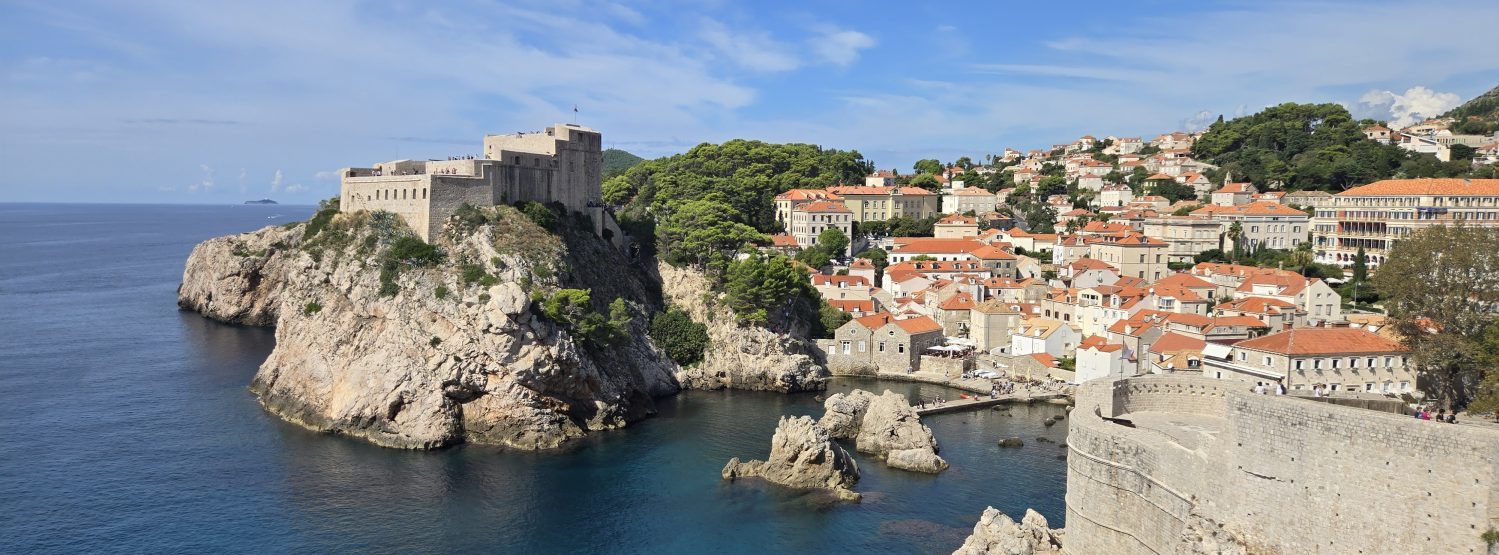

(The Balkans during World War II)
The conclusion of the Second World War brought about a rearrangement of wartime allies as the Cold War commenced. In addition, to this realignment there were a number of decisions made by America and its allies after the war to pursue certain war criminals including Nazi intelligence assets and scientists. This would lead to welcoming Wernher von Braun and 116 German scientists into the United States to continue work on V2 rockets and other projects culminating in July 1970s landing on the moon. Other questionable characters were allowed to escape to South America despite the efforts of “Nazi hunters” like Simon Wiesenthal and operatives of Israeli intelligence. The American role in this process has been scrutinized by many historians who have produced many critical monographs exploring the actions of the Truman administration. One glaring example is the treatment and attitude toward Croatia’s fascist leader Ante Palevic after the war, who along with other members of his Ustase party was responsible for the deaths of over 350,000 Serbs, Jews, and Roma.
A few months ago, my wife and I toured Croatia and Bosnia led by our Croatian friend and guide, Davor Miskic who exposed us to Croatia’s long and tortured history and arranged visits to many historical sites having to do with the Second World War and what Croatians call the War for the Homeland in the 1990s. One that stood out was our visit to the Jasenovac concentration camp which was situated near the village of Jasenovac in occupied Yugoslavia and operated by the Ustaše Supervisory Service. The camp was known for the mass murder of Serbs, Romani people, Jews, and political opponents, including Croat and Bosnian Muslim dissidents. It was notorious for its extreme brutality, often exceeding that of some Nazi-run camps, and was one of the ten largest in Europe. The camp was largely destroyed by the Ustaše in April 1945 to hide evidence of their crimes.
Ante Pavelic was a Croatian nationalist who believed that the Serbian people were an inferior race and at the end of the war was never made to answer for his crimes and was able to escape to exile in South America partly due to the role of the United States who had their own Cold War priorities. This era of Croatian history is very controversial and today has still not been resolved, and during moral and ethical discussions or whenever war politics emerges heated arguments can take place. After our visit to Croatia, I became very interested in the role of Pavelic and that of the United States after the war. There are few worthy historical monographs in English on the topic, but Robert B. McCormick’s CROATIA UNDER ANTE PAVELIC: AMERICA, THE USTASE AND CROATIAN GENOCIDE IN WORLD WAR II despite some flaws, is one of the most useful in English.

(Adolf Hitler greets Ante Pavelic on June 6, 1941)
McCormick’s monograph is broken into four sections. First, he provides a concise and useful background describing Yugoslav politics before World War I and the diverse factions leading up to the creation of Yugoslavia after the war I including Croatia’s role in the new country. He goes on to review the problems this structure created particularly with Croatian nationalists who wanted their independence. Secondly, McCormick examines the 1930s and the rise of Pavelic as a leader of the Croatian nationalist movement and the rise of the Ustase. Thirdly, he considers Pavelic and the Ustase actions during World War II, and lastly, how Pavelic and other Ustase figures escaped prosecution in Europe for their crimes and fled to South America. Throughout the author integrates the role of Washington as the narrative evolves focusing on the role of domestic politics in the United States and its impact on Croatia and Yugoslavia. He focuses on the State Department and the intelligence community in his analysis of how Pavelic reached power, committed atrocities, and finally escaped and reached a number of conclusions, however few are new.
McCormick’s analysis into Pavelic’s belief system is important as it provides the basis for his actions throughout the 1920s, 30s, and 40s. He would create the Ustase as a revolutionary and terroristic organization employing extreme violence in the pursuit of his agenda of Croatian independence. His ideology was proto-fascist, but he also held a deep belief in Catholicism – a mystical belief in the holiness and sanctity of the Croatian state. To achieve his goals Serbian and foreign influence within Croatia had to be destroyed as well as the Yugoslav state. For Pavelic Croatians were of pure peasant stock with a separate nationality from other Balkan people. Individual rights were secondary to the maintenance and establishment of Croatia. Peasants were placed on a pedestal – the solid, pure, incorruptible peasant was portrayed similarly to the way the Nazis portrayed the Aryan race. Finally, he believed that the Croatian people were chosen by God to protect and defend Catholicism against Eastern Orthodox Christianity and Communism. McCormick’s description of Pavelic’s belief system makes it easy for the reader to understand the extreme actions he was responsible for.
The importance of Washington’s role is stressed throughout. The role of Croats and Serbs in American politics is overly stressed in creating funding for the Ustase’s violent behavior in Croatia. McCormick repeatedly argues whenever he talks about the impact of Croats and Serbs in American politics that the Department of State and FDR’s advisors did not want to anger either community because most who had immigrated to the US had settled in midwestern industrial cities like Youngstown, Chicago, Cleveland, Akron, and Pittsburgh which contained factories that were a necessity to the American war effort. I am not saying his analysis is incorrect+, but he repeatedly makes the same argument blaming the State Department for its lack of interest in events in Croatia and the fundraising in the Croatian community, which does not make for easy reading.
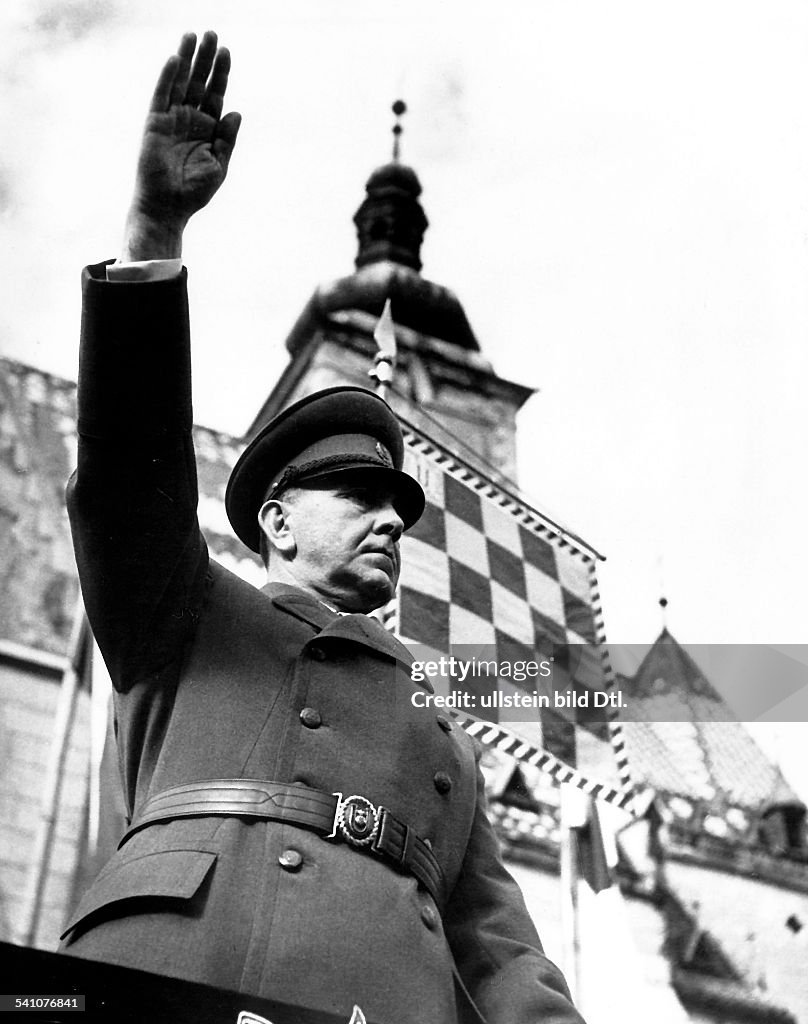
(Ante Pavelic)
McCormick concludes throughout the book that most Croatians were working class people and had little money to donate to the Croatian national movement overseen by Pavelic supporters like Ante Dosen, Frank Budek, Reverend Ivan Stipanovic, and Dr. Branimir Jelic. McCormick spends a great deal of time discussing the movement to enlist American Croats in the Pavelic and the Ustase cause, but overall, there were few Croatian-Americans who became Pavelic supporters during World War II. This is the most detailed aspect of the book and in the end it does not deserve the coverage the author provides, though his coverage of Franciscans and their support for Pavelic is interesting and goes along with the Pope’s refusal to condemn Ustase policies during the war.
An area of strength for McCormick is the chapter entitled “Carnage” where he lays out the course of World War II and its impact on non-Christian Croatian people. He provides a detailed description of Ustase concentration camps, particularly Jasenovac, one of twenty-two camps controlled by the wartime Croatian government which was a puppet state of Nazi Germany. The government was referred to as the Independent State of Croatia (NDH in Croatian) and was a one party dictatorship under the exigencies of the fascist Ustase organization under Ante Pavelic. The regime target Serbs, Jews, and Gypsies as part of its large scale campaign of genocide, in addition to anti-fascist or dissident Croatians and Bosnian Muslims. McCormick’s observation that the crimes committed by the NDH proportionally surpassed only by Nazi Germany is bone chilling.
Washington became aware of the Ustatse genocide in May 1941 but as was the case with the Holocaust did little. The State Department under Cordell Hull never paid much attention to the Balkans believing it was in the British sphere of influence, and any offers of American aid were almost perfunctory as by the time lend-lease, which was offered by FDR would reach Yugoslavia it would be too late. McCormick is correct that in large part that the problem in the State Department resides under the umbrella of Breckenridge Long, who had been US Ambassador to Italy in the 1930s where he was well-versed in Croat-Serb hatred, and was Assistant Secretary of State in charge of immigration during World War II. Long’s approach to the massacre of Serbs was similar to his approach in blocking Jewish immigration during the Holocaust. Long was an extreme nativist who deserves greater discussion than McCormick offers. The author should have developed Long’s racist and bigoted approach toward immigration further as he was against anyone from the Balkans or Eastern Europe from immigrating to the United States.

(Ante Pavelic and Benito Mussolini May 22, 1941)
As Pavelic’s atrocities became known even Hitler wanted him to tone it down as it was driving Serbs and some Croats to join Josip Broz Tito’s partisans who were fighting the Nazis throughout Yugoslavia. Further it created difficulties for the Nazis to gain control of Croatian natural resources – food and bauxite. In the end Hitler will allow him to continue the killing as it conformed to his racial views. As he grew increasingly unpopular Pavelic would blame the Communists. His unpopularity apart from his genocide were the death of thousands of Croatians who died at Stalingrad fighting with the Nazis. When Italy surrendered to the allies, the Nazis seized Dalmatia which provided even further evidence that Pavelic was Hitler’s puppet. One would think that despite the Office of Strategic Services under William Donavan’s optimism to take advantage of Pavelic’s unpopularity the US would have altered its policies, but as per usual the State Department blocked any opportunity to do so.
McCormick’s analysis of the war’s conclusion and Pavelic’s ability to escape arrest and prosecution lacks any new information. One of the issues that stands out is the author’s lack of interest in the Bleiberg Massacre at the end of the war where thousands tried to reach the Austrian border as the war concluded. They were not allowed entrance and were pushed back into Yugoslavia resulting in the death of between 30-100,000 people murdered by Tito’s partisans. McCormick covers the massacre in one short paragraph. Further, the author’s explanation of how Pavelic escaped justice is the standard argument that the former Ustase murderer benefited from the difficulties inherent in the United States-Yugoslav relationship as Washington saw Tito as conforming to the Soviet line refusing to deal with the extradition of war criminals that Belgrade was interested in. What is clear is that Stalin and Tito did not get along as Yugoslavia was not liberated from the Nazis by the Red Army, but more so by the actions of Tito’s partisan forces. Stalin could not accept Tito’s approach to creating a monolithic voice within the communist bloc which is obvious from their communications. The United States lost an opportunity with Yugoslavia as it saw a cohesive Communist world opposing them.
Serbs interned in the Jasenovac camp
![Serbs interned in the Jasenovac concentration camp in Croatia. [LCID: 85815]](https://encyclopedia.ushmm.org/images/large/1055b664-9fc4-4782-8ead-ae9def867ed9.jpeg "Serbs interned in the Jasenovac concentration camp in Croatia. [LCID: 85815]")
(Serbs interned in the Jasenovac concentration camp in Croatia. Jasenovac, Yugoslavia, 1941–45)
The author’s treatment of Yugoslav government attempts to extradite Pavelic is very useful,blaming British and American opposition to the Cold War climate that existed after the war. He lays out the role of elements within the Catholic church in hiding, financing, and facilitating travel for Pavelic and other Ustase escapees. Italy and the Vatican play a major role in this scenario as Washington feared a communist electoral victory in Italy and did not want to anger Catholic voters. According to McCormick there is evidence to suggest that Pavelic met with high Vatican officials including Monsignor Montini, Secretary of State for the Holy See, the future Pope Paul VI.
View of the Jasenovac camp
![View of the Jasenovac concentration camp in Croatia. [LCID: 67090]](https://encyclopedia.ushmm.org/images/large/28ac38b7-6a1d-42d9-86ee-6f030b49fc3e.jpg "View of the Jasenovac concentration camp in Croatia. [LCID: 67090]")
(View of the Jasenovac concentration camp in Croatia. Jasenovac, Yugoslavia, 1941-1942)
McCormick delves into State Department policies and roadblocks related to capturing Pavelic and turning him over to Tito’s government. Washington took a page out of Mussolini’s diplomatic playbook from the late 1930s through the war in keeping Pavelic under surveillance as an asset to be used against Tito’s government. Italy and England’s role are explored, and the United States repeatedly shifts the blame on to them for their inability to meet Tito’s demands for Pavelic. McCormick is correct in concluding that had the United States arrested Pavelic and prosecuted him for war crimes after the war his impact on post-war Croatian society may have been different. At the very least it would have improved Yugoslavian-American relations during the Cold War which would only have benefited US relations with Tito.
Part of McCormick’s issue is that he relied almost solely on English-language sources, the broadness of the book’s scope, and the title which is somewhat inaccurate. I expected the monograph to focus more on the internal workings of Pavelic’s regime and less on the émigré organizations and figures in the United States. A clearer introduction is called for, but in support of McCormick’s effort I would point out that despite its shortcomings the book is readable, well researched, and provides a useful introduction to the topic.

 Doc's Books