THE PERSIAN by David McCloskey

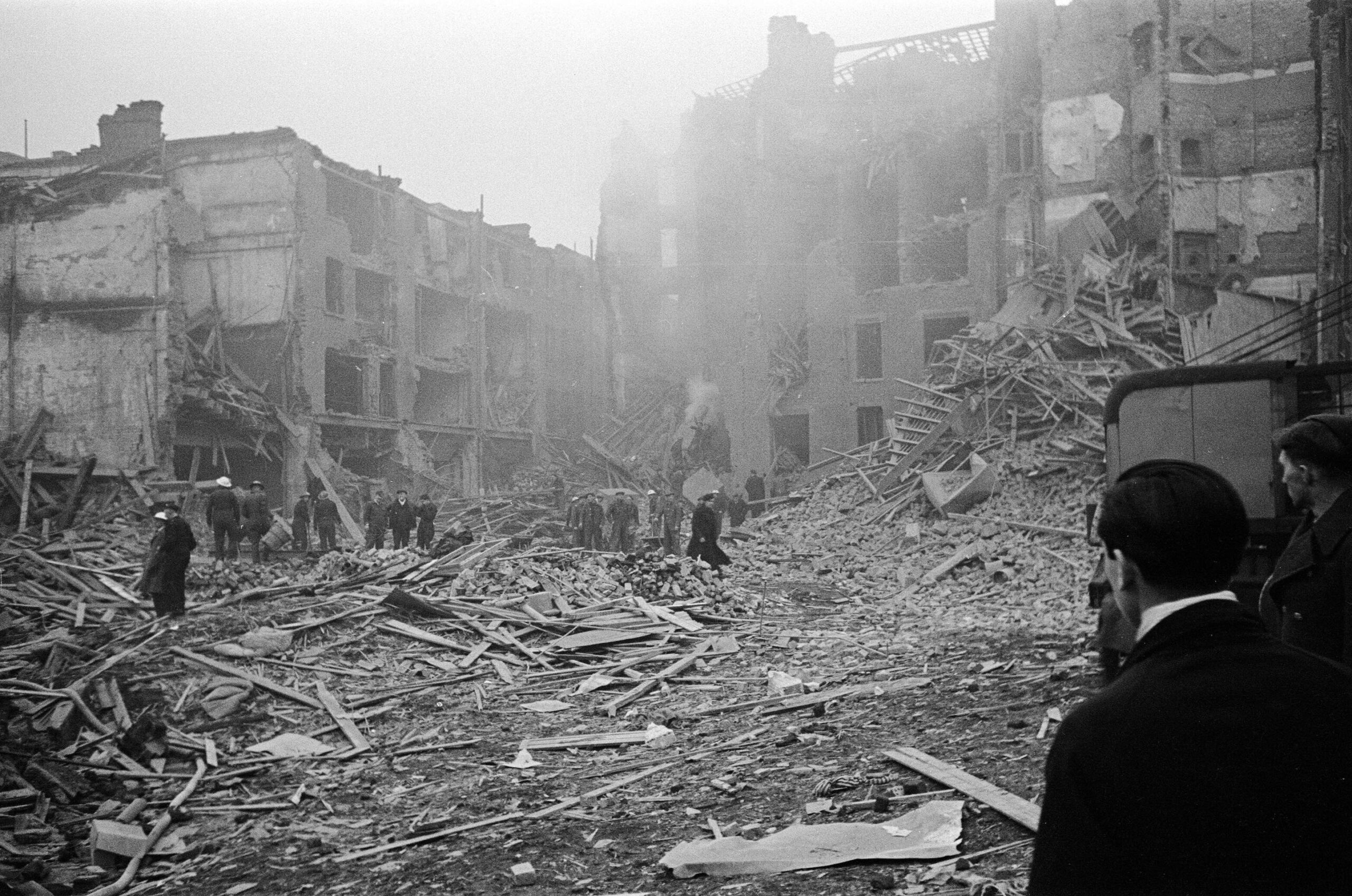
Aftermath of Israeli strikes, in Tehran

(A view of the cityscape in the aftermath of Israeli strikes, in Tehran, Iran, June 13, 2025).

Since the 1979 Islamic Revolution and the arrival of the mullahs at the head of Iran’s attempt at theocracy relations with the United States have been fraught with hatred.  Over the years wars, assassinations, terrorism, computer related attacks, spying, kidnappings, a nuclear deal and its revocation, and economic sanctions have been the norm.  Today Iran finds itself at a crossroad.  Its Supreme leader, Ayatollah Ali Khamenei is eighty-six years old and nearing the end of his reign, and as Karim Sadjadpour writes in his November/December 2025 issue of Foreign Affairs, “The Autumn of the Ayatollahs” the twelve day war last June laid bare the fragility of the system he built.  Israel bombed Iranian urban centers and military installations, allowing the United States to drop fourteen bunker busting bombs on their nuclear sites.  Tehran’s ideological bravado and its inability to protect its borders along with the defeat of its proxies, Hezbollah and Hamas has reduced its threat to the region. 

Apart from the succession problem Iran faces a choice of how to prioritize its nuclear program, but with no negotiations, oversight, or concrete knowledge of Tehran’s stock of nuclear material another war with Israel seems inevitable.  Despite Donald Trump’s insistence that the United States “obliterated” Iran’s nuclear enrichment program, officials and analysts are less sanguine.  Iran may have been weakened, but it has not become irrelevant.  As the rhetoric between Iran and the Trump administration ratchets up it is clear that the Tehran government suffered an ignominious defeat at the hands of Israel and the United States.  The Iranian economy continues in a freefall, and the regime remains in power through coercion and threats.   In this domestic and diplomatic climate, a novel that reflects the current forceful environment should attract a strong readership.  THE PERSIAN by former CIA analyst and best-selling author David McCloskey, fits that need as the author takes readers deep into the shadow war between Iran and Israel and plays out a scenario that is quite plausible.

Aerial view of Tehran, with the Alborz mountain range, Iran

(Aerial view of Tehran, with the Alborz mountain range in the background)

McCloskey begins the novel describing the assassination of Abbas Shabani, an Iranian scientist who was an expert on drone-cladding, making drones invisible.  The murder was carried out by a woman using a joystick at a Mossad site near Tel Aviv.  The operation continues Israeli policy of killing anyone it believes is a threat to the Jewish state engaging in any component of Iran’s nuclear preparation – a policy that is accurate in fiction as well as the real world.  McCloskey immediately shifts to an Iranian interrogation room where Kamran (Kam) Esfahani, a Persian Jewish dentist.   Kam, the main character and narrator of this taut political thriller, is counting down the days until he has enough money to leave Sweden for sunny California.   The interrogation allows Kam to rewrite and rework his confession over a three year period enabling the author to recount his novel through Kam’s acknowledgement of being part of a plot that killed Ismail Qaani, a member of the Qods Force, Unit 840.  The group is run by Colonel Jaffer Ghorbani whose  reason for being created is to kill Jews.  Kam had been recruited by Arik Glitzman, head of the Mossad’s Caesarea Division, who offered to pay him a fortune to sow chaos in Iran. Trading the monotony of dentistry for the perils of espionage, he runs a sham dental practice in Tehran as a cover for smuggling weapons and conducting surveillance.  McCloskey offers a wonderful description of Glitzman which is emblematic of his character development as the head of the elite team within the Caesarea Division of Mossad is described as “Napoleonic, short and paunchy with a thatch of black hair and a round face bright with a wide smile.  There was fun in his eyes and if they had not belonged to a secret servant of the state…they might have belonged to a magician, or a kindergarten teacher.”

In addition to using Kam’s voice to relate a major part of the story, McCloskey organizes the novel by repeatedly shifting back and forth in time and location as he organizes his chapters.  A key character who appears often is Roya Shabani who witnessed the assassination of her husband and seeks revenge against Israel.  She will be given that opportunity as part of Ghorbani’s unit, initially carrying out low level tasks.  Soon her immediate superior, Hossein Moghaddam, a Qods Operation Officer, who falls for her carries out an assassination of Meir Ben-Ami, Arik Glitzman’s deputy reflecting the real world that Israeli and Iranian intelligence regularly engage in.

An aerial shot of the Stockholm City Hall in Sweden

(Stockholm, Sweden)

McCloskey’s CIA background and research allow him to portray assassinations, the use of technology for spy craft, recruitment of assets, and organizing operations in such a realistic manner heighten the reader’s immersion into the novel.  In an NPR interview which took place on “All Things Considered” program on September 29, 2025, McCloskey admits that as a former CIA analyst who has been posted throughout the Middle East he is able to draw upon a great deal of inside knowledge in creating his characters and present them as authentically as possible.  The authenticity of his characters and storyline is enhanced as his novel must pass through CIA censors and at times he is amazed as to what the “Publication Review Board” allowed to remain in the book.  In a sense the book itself is prewritten as the actions of Iranian and Israeli intelligence officials and agents create the bones of an insane spy novel.

Aspects of McCloskey’s novel weigh heavily on the real world of espionage as the author delves into the fact that Israel was at a disadvantage in the world of espionage since it did not have diplomatic relations with the countries that surround her in the Arab world – it did not have embassies to hide intelligence officers who could carry out its operations.  As a result, operational teams are cobbled together, surged to where they are needed, and disbanded when the operation is completed.  Israel has to create different types of cover than the United States, United Kingdom and others because of this disadvantage and it amazes how successful they are when the playing field is not level.

Dagestan, where the Samur flows into the Caspian sea

(Caspien Sea)

McCloskey is very successful in creating multiple storylines as he goes back and forth between time periods and locations.   A major shift occurs when the kidnapping of a target fails as somehow he is murdered.  This causes Glitzman to change his plans on the fly resulting in Roya becoming a major focus of the novel.  Her evolution from the spouse of a scientist to an espionage asset is fascinating as is that of Kam.  The author does an exceptional job tracing Kam’s progression from an unsuccessful Iranian Jewish dentist raised in Sweden into a reluctant and fearful spy into someone who becomes devoted to his mission.  The explanation that is offered makes sense as Kam develops his own feelings of revenge toward Iran and its agents who kicked his family out of the country, for decades has laid siege to the country of Israel and wants to eradicate its entire population.  The problem is that his mission will result in his capture and the reader must wait until the last page to learn the entire truth bound up in his confession.

(Evin Prison’s main entrance)

The author’s goal in the book, which was already written before the war of last summer, was to go beneath that kind of overt conflict and get to the heart of the shadow war between Israel and Iran.  After reading THE PERSIAN it is clear that he accomplishes his goal completely as his characters must survive in a world of intrigue, paranoia, and what appears to be a world of endless violent retribution.

(Tehran, Iran)

CIRCLE OF DAYS by Ken Follett

Stonehenge

After being a fan of Ken Follett for decades and enamored with his Kingsbridge series which explored England’s development from the Middle Ages to the eighteenth century I couldn’t wait to read a historical novel that offered a story of the neolithic British Isles and the creation of the Stonehenge monument.  Follett’s latest effort, CIRCLE OF DAYS is per his usual rather long, about 700 pages, and it appears very inviting.  However, I must say I am a little disappointed in the novel.  It is well written, it reflects a tremendous amount of research, and has a number of defined plot lines, but at times it seems simplistic, formulaic, and created doubts whether I should have continued reading it.

Overall, I am glad I stuck with the book, but it should not have taken almost halfway through to really foster my interest.  Perhaps it is the names that Follett chooses as you must write them down to remember them from Pia, to Joia, to Han, to Stam, to Troon, to Bez, to Gida, to Dee etc. etc., you get my drift.  To make sense of these characters I had to create a chart in order to keep everything sensible.  Perhaps a list of characters with a brief bio of each in the front of the novel is called for.   Further, the dichotomy of herders vs. farmers is clear, with farmers being misogynistic believing they own their women who have few rights, and herders who treat their women with respect and allow them to freely make decisions.  Farmers are presented as controlling and manipulative, and herders are communal, exhibiting a great deal of empathy, I found this dichotomy difficult to digest.  To say the least the novel is a mixed bag with a storyline that appears artificial at times as we witness a plan to turn a wooden monument into one of stone, but to Follett’s credit around page 350 he begins to pull the story together with a more in depth plotline and stronger character development.

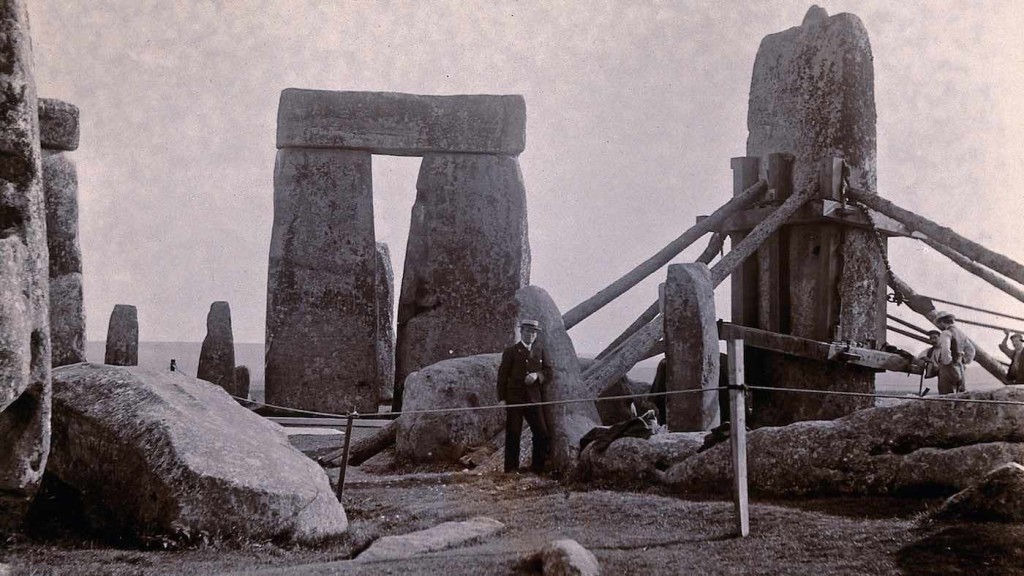
(Straightening a leaning stone at Stonehenge in 1901) –

The story has a number of storylines, but at first, Follett presents his version of what life was like in England during the Neolithic period by inviting the reader into a primitive society and culture and delving into the trials and tribulations that people of that period dealt with on a daily basis.  Follett explores how people survived either as farmers, herders, flint  miners, woodsmen, and priestesses.  We witness the hatred and eventual violence due to the inherent differences between approaches to life that people take.  A useful example is how Yana, who is a part of the farmer society faces the death of her husband Olin, leaving only her daughter and herself to work their farm during an intense drought.  According to custom she must take a new husband within a year, but because of the “Main Man” Troon she is ordered to find a new husband within seven days.  Troon demands she marry his son Stam who is half Yana’s age.  As the story develops Pia, who is in love with a herder named Han, and upon learning she is pregnant escapes the farmer compound and runs away with Han.  Eventually she is recaptured, and Han is murdered by Stam who in the end will be burned alive by the woodlanders led by a man named Bez.  You can see that this is difficult to follow, but it works in the end.

The key storylines revolve around the following.  First, an endless drought affects everyone with food rationing, famine, death, and conflict as its by present throughout most of the novel.  Second, the role of the priestesses focusing on a character named Joia who joined the priesthood at a young age and became a rival of the head priestess, Ello.  It is her goal to replace the wooden monument that is the center of  faith with a stone monument that would withstand whatever the elements would bring.  Her ally in this effort is a carpenter/builder named Seft who is the key to the engineering problem that confronts those who want a stone monument.  Third, there is the constant conflict between farmers and herders and their allies that emerges.   Lastly, the personality conflicts and belief issues among major characters that drive the novel.

(1906)

In terms of being specific the novel comes down to a conflict between Joia, the head priestess, and Troon who is head of the farmers and sees himself as the “Main Man.”  Joia pulls out all stops in trying to move humongous stones across the Great Valley in order to rebuild the wooden monument.  Troon and his “thugs” do all they can to prevent this.  Follett turns to a detailed approach in the last third of the book in describing this conflict.  For Joia it is a means of recovering from the drought and the losses as the Midsummer rites attendance and trade declines.  For Troon, his own Farmer’s Summer Rites attraction has declined as the popularity of a stone monument takes off.  Fearing the loss of revenue and his attempt to be the leader of all in the Great Valley he does his utmost to sabotage Joia’s plans.  In addition to Troon’s machinations, Joia faces internal opposition from certain elders led by Scagga, a jealous individual who resents the power of a woman.

Experts believe Stonehenge was originally a circle of bluestone pillars

(Experts believe Stonehenge was originally a circle of bluestone pillars)

The key to enjoying this somewhat simplified tale is to surrender to it as soon as possible because the story will mature and eventually keep your interest.  Action dominates each page as conflict is riff, and characters have their own agenda.  Their key is Joia, the priestess who is obsessed with replacing the wooden monument with one made of stone that eventually becomes Stonehenge.  She and the other priestesses believe that the monument is the key to date-keeping, the Midsummer fair, and religious rites.  The problem is how to transport the gigantic stones in a time before wagons and harnesses to the monument site.  This conundrum dominates the third of the novel.

Follett does a workmanlike job creating a society from the 2500 BC period.  He provides useful insights on a regular basis and as a fan of the author, though not his best work, I would recommend his work to others who have the same loyalty as I do.  Relax, and immerse yourself into another world, long forgotten and a story that has a fairytale ending.

A photo of Stonehenge with plains in the background

THE GHOSTS OF ROME by Joseph O’Conner

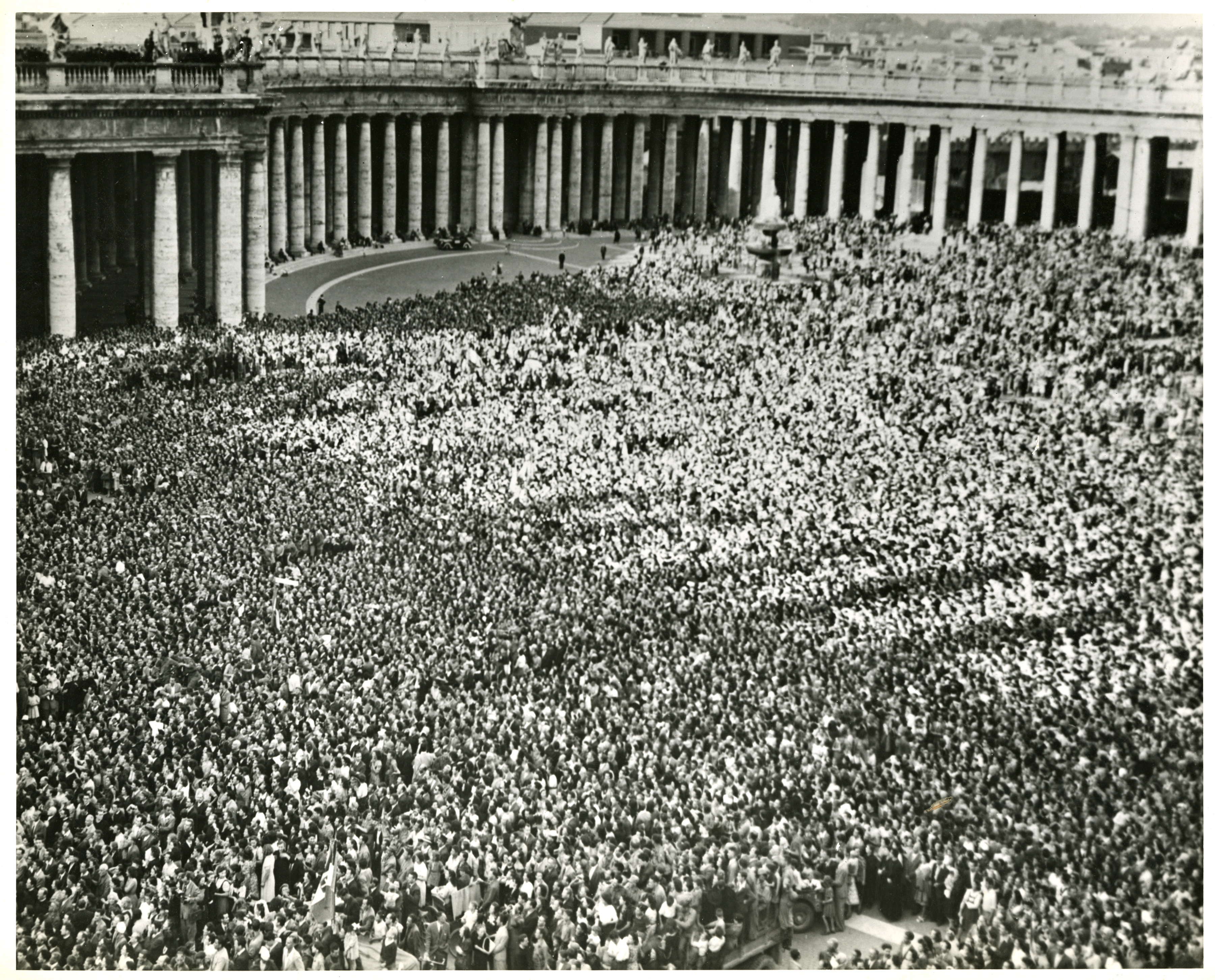
(Vatican City, 1945)

Two years ago, I read an impactful novel written by Joseph O’Conner entitled MY FATHER’S HOUSE that centered on the role of Monsignor Hugh O’Flaherty, an Irish Catholic priest and senior official of the Roman Curia who was responsible for saving 6500 allied soldiers and Jews during World War II.  He had the ability to evade traps set by the Gestapo and Nazi SD earning the nickname, “The Scarlet Pimpernel of the Vatican.”  O’Connor’s portrayal is one of suspense and intrigue creating a gripping World War II drama featuring the unlikeliest of heroes who did battle with SS Commander Paul Hauptmann who failed to corral the principled Vatican official.

O’Conner has returned with a strong sequel, THE GHOSTS OF ROME, which mirrors the same approach toward historical fiction dripping with action, and unforgettable characters.  In his latest work O’Conner reintroduces the “Choir,” a ragtag group dedicated to spiriting those threatened by the Nazis to safety.  As World War II winds down, this covert group successfully leads untold numbers of escapees out of Nazi controlled Rome along a secret route called the “Escape Line.”  Once again, Hauptmann is ordered to destroy O’ Flaherty’s underground railroad – this time his family is seized by the Gestapo and imprisoned in Berlin until he accomplishes his task.

O’Conner begins the novel on Ash Wednesday, February 1944 as he introduces an eclectic  group, all members of the “Choir” as they shelter from Nazi aerial bombardment. They are an interesting mix of people consisting of Giovanna Landini, a Countess, leftist who became a Red Cross motorcycle courier when the war broke out;  Sir Francis D’Arcy Osborne a British diplomat to the Holy See; Marianna de Vries, a Swiss reporter writing a book on the “Hidden Rome”; Delia Murphy-Kiernan, the de facto ambassador of Ireland to the Holy See and her daughter Blon, a university student; Sam Derry, a tough British soldier who escaped Nazi imprisonment; John May, a British jazz musician; Enzo Angelucci, a wise cracking newspaper vendor; and Monsignor Hugh O’Flaherty.  As O’Conner introduces these characters, another is descending by parachute into Rome trying to avoid German fire as he hits the ground.

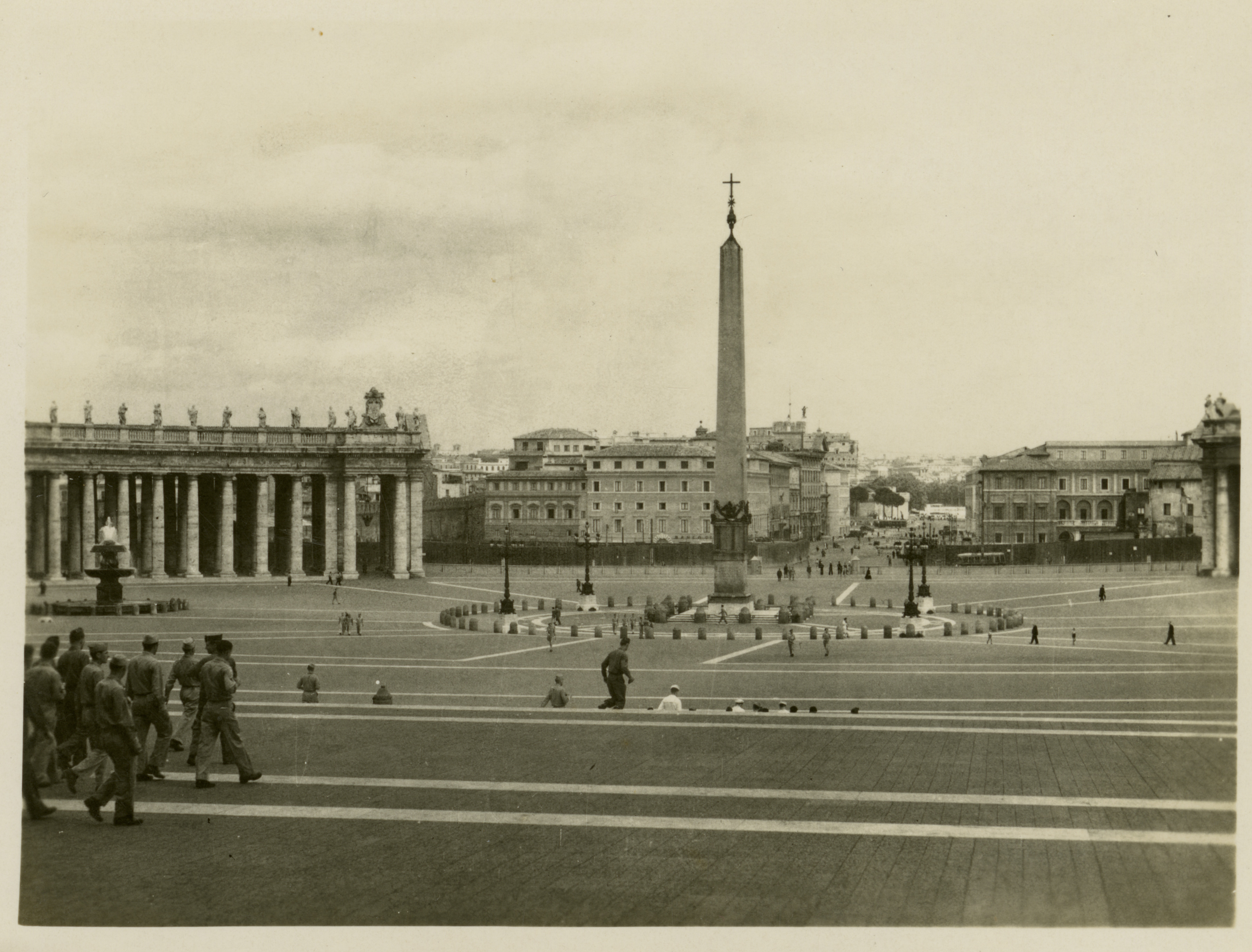
(St. Peter’s Square, 1945)

The author offers a series of storylines in the novel.  First, as part of a continuation from MY FATHER’S HOUSE, is SS Commander Hauptmann’s attempt to shut down the “Choir” and its “Escape Line.”  Second, is Countess Landini and Monsignor O’Flaherty’s prolonged attempts to hide escaped POWs, airmen, and others throughout Vatican City.  Third, the battle to try and save a downed Polish pilot named Bruno Wisniewski.  Lastly, the intertwining of the “Choir” and the diverse personalities and beliefs of its members as they tried to reach consensus as to what actions they should pursue.  O’Conner integrates a series of interviews of some of the main characters given a 15-20 years after the war to fill in historical gaps, personal observations, and tightening the story.  These made up texts from letters to memoir extracts to interview transcripts are important for the reader’s understanding.

O’Conner provides a tour of Roman historical sites as the diverse characters navigate Roman streets above and below ground in their cat and mouse game with the SS.  In addition, the author provides a glimpse into the Nazi occupation of Rome which by February 1944 is dominated by increasing black market prices, a lack of food and other essentials including sanitation, constant bombing raids, and the omnipresent fear of being arrested by the SS, interrogated, and executed.  As O’Conner takes the reader through the catacombs of Vatican City, particularly under St. Peter’s one is reminded of the novels of Steve Berry and Dan Brown for plot development and anticipation.

There are two watershed moments in the novel.  The first centers on Heinrich Himmler’s warning to Hauptmann that Hitler wanted the “Choir” to shut down or the SS commander’s family would be the price for failure.  Hauptmann’s wife and children were returned to Berlin where they would be guarded by Himmler’s henchman –  the warning was clear, “smash the Escape Line or face the inevitable.”  The second occurred on March 23, 1944, when the Roman resistance in the guise of pavement sweepers attacked a 156 German troop column with a 40 lb. bomb that killed 30 and wounded countless soldiers.  The bombers would escape, and Hitler ordered 100 Italian civilians  to be killed for every German soldier who died within 24 hours.  Hauptmann would prepare a death list of people who hid POWs, Communists, Socialists, members of trade unions, journalists to be killed in retribution.  Victims were sent to caves where they were shot 5 at a time known as the Ardeatine Massacre.

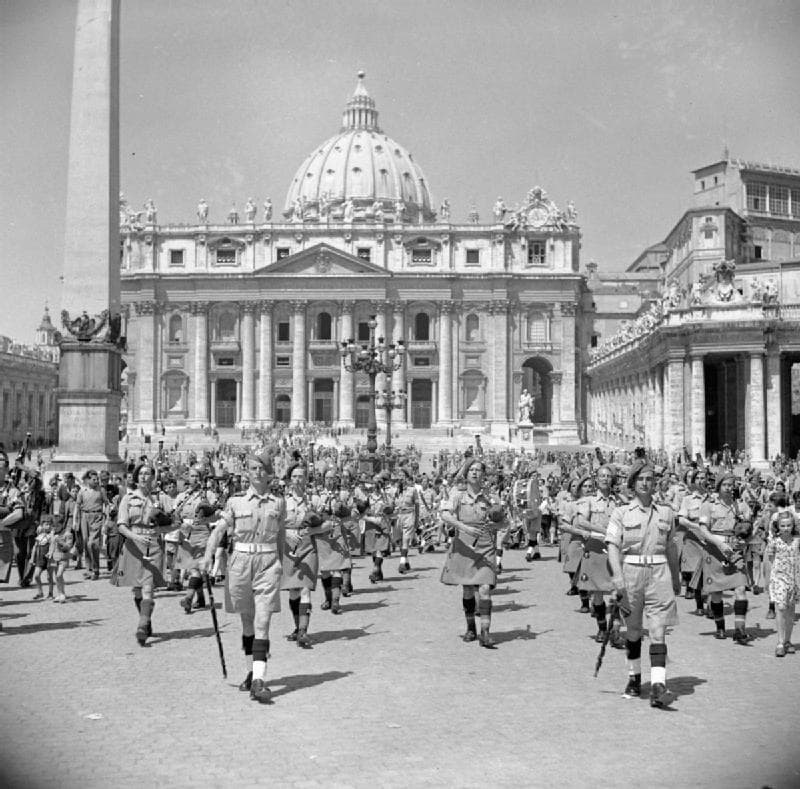
New details revealed on Vatican aid for escaped POWs in World War II

(The band of the Irish Brigade of the British Army plays in front of St Peter’s Basilica in Rome, June 12, 1944).

THE GHOSTS OF ROME do not measure up to MY FATHER’S HOUSE in terms of pure excitement and thrills.  It continues the story but with more dialogue and less action.  It is still a strong historical novel, but with a more laid back approach, though the underlying fears and emotions of the characters easily come to the fore.  As is the case in both novels, O’Conner has the knack for creating memorable characters and scenes.  Perhaps the best in the current story is the character of Manon Gastaud, a medical student under Professor Guido Pierpaolo Marco Moretti, a superb surgeon, who happens to be pro-Nazi.  The conundrum rests on how to save the Polish pilot who was wounded as he descended from his airplane.  Most of the “Choir” members are committed to saving his life, no matter the cost and its is the pugnacious Gastaud who volunteers to operate on Bruno despite the fact she has never performed the type of operation that is needed.  With a lack of medical supplies, an acceptable site to operate, and the fear of the SS, the “Choir” takes the risks necessary to save the pilot.

Important relationships abound in the novel.  There is the haunting connection between Hauptmann and Countess Landini centering on his obsession with her palace which he seized and how she leads him on in the hope of providing misinformation that would work to the “Choirs” benefit.  Another is O’Flaherty and Landini’s bonding and how in another life they could have been more than wartime compatriots.  The commentary of John Moody, an American soldier, and a wisecracking charmer is priceless as O’Conner injects sarcasm and humor whenever possible. 

In terms of historical accuracy, O’Conner does an exceptional job producing the ambiance of wartime Rome, but also the characters of O’Flaherty and Hauptmann.  The Monsignor character as mentioned earlier is based on a historical figure.  The Hauptmann character is fictionalized, but the character itself is based on Herbert Kappler, a key German SS functionary and war criminal during the Nazi era. He served as head of German police and security services in Rome during the Second World War and was responsible for the Ardeatine massacre.  With the completion of volume two, O’Conner’s conclusion is useful as it creates further interest for the reader to continue on to the third volume as it is not clear in which direction O’Conner will go.  Volume one focused on Monsignor O’Flaherty, the second, Countess Landini, one wonders what or whom the emphasis will be on in volume number three.

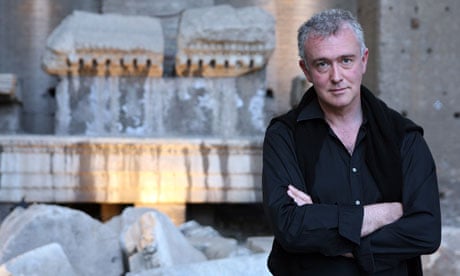
Joseph O'Connor

(Irish author Joseph O’Connor at the Festival of Literature in Rome)

According to Alex Preston in his February 4, 2025, New York Times Book Review, “Escaping the Nazis, With Help From a Priest and a Countess,” O’Connor has often been likened to the great Irish modernists for the lyricism of his voice-driven novels. But “The Ghosts of Rome” — which despite being the second in the trilogy can be read as a stand-alone novel —also situates him within a broader European tradition of memory and moral reckoning, one that returns again and again to World War II.

O’Connor embraces this legacy while transcending its clichés. His Rome is not merely a setting but a crucible, a city where the sacred and the profane collide, where resilience is forged in the shadow of ruins. By crafting a chorus of voices, he ensures that no single narrative dominates, reflecting the messy, multifaceted truths of history — both the way it is lived and how it is constructed in retrospect. What emerges is not just a wartime thriller, though it is that, but a meditation on how we remember, how we resist and how, even in the darkest times, humanity endures.

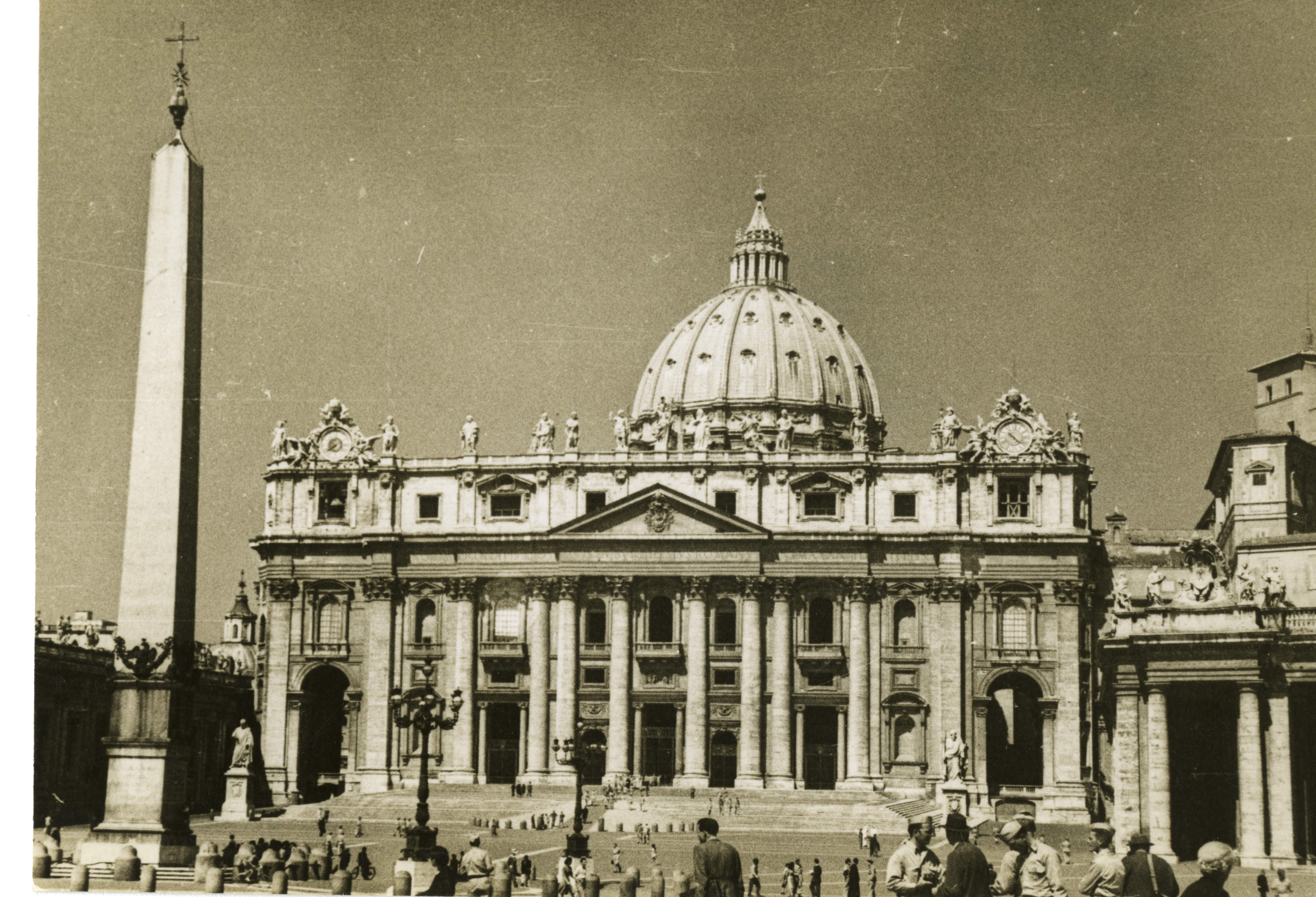
(St. Peter’s Basillica, 1945)

SONS AND DAUGHTERS by Chaim Grade

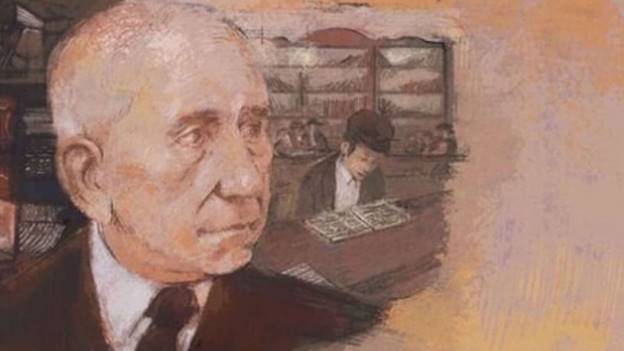
(A portrait of Chaim Grade Image by Yehuda Blum)

In the tradition of Nobel Prize winner Isaac Bashevis Singer and his younger brother, Israel Joshua Singer, both Yiddish novelists, Chaim Grade last novel, SONS AND DAUGHTERS captures a way of life that no longer exists – the rich Yiddish culture of Poland and Lithuania of the 1930s that the Holocaust destroyed. The novel, which is finally available in English was originally serialized in the 1960s and 70s in two New York based Yiddish newspapers, dissects the lives of two Jewish families in early 1930s Poland torn apart by religious, cultural, and generational differences.

Grade who passed away in 1982 was one of the leading Yiddish novelists of the 20th century.  His novel, RABBIS AND WIVES was a finalist for the Pulitzer Prize for fiction in 1983 and his last book was expertly translated by Rose Waldman from Yiddish to English.  SONS AND DAUGHTERS is a sprawling and eventful novel that takes place in the villages of Morehdalye and Zembin and depicts daily life as it unfolds among two families of rabbis that are splintering as they face the pressures of the modern world.  The rabbis, Sholem Shachne Katzenellenberg and Eli-Leizer Epstein possess wonderful reputations as Torah scholars and leaders of their communities.  Interestingly, Sholem Shachne is the son in law of Eli-Leizer, and both belong to different generations and beliefs of their children.  They differ in religious stridency, the grandfather is stricter, but in no means is the son in law lax, even though he is more lenient.  Both expect their sons to become rabbis, or at least Torah scholars, and their daughters to marry men of the same persuasion.  Grade is the perfect novelist to convey this type of story as he was raised Orthodox, studied in Yeshiva as a teenager, but developed a strong secular view of life.  Having lost his family in the Holocaust, he resettled in New York, remarried, and turned to fiction, writing in Yiddish.

The revolt by the younger generation against orthodox Judaism drives the novel’s plot, though Grade doesn’t forfeit his sympathy with old men who are trying to keep Judaism alive. The Sholem Shachne family is developed first as his children rebel against their religious upbringing.  In his discussion with his son in law, Yaakov Asher Kahane we learn how each child rebelled.  Bluma Rivtcha, perhaps the most attractive character in the novel, leaves home to attend nursing school in Vilna after her father fails to negotiate a successful arranged marriage.  Naftali Hertz, the eldest son ran away to study at a secular university in Switzerland, earning a doctorate in philosophy and married a Christian woman who gave birth to a son who was not circumcised.  Tilza, Sholem Shachne’s daughter is married to Kahane, but their marriage has issues as she does not want any more children with her husband as she rejects the life of a rebbetzin.  Bentzion leaves for Bialystok to study business, and the youngest son, Refael’ke wants to join the pioneer Zionists and run off to Palestine.  For their father there is a constant debate in his psyche as to the way his children have rejected the rabbinical life and what role he played in their decisions.  He possessed internal demons, and he had to admit to himself that he had not been successful in instilling in his children the sense and strength to rebuff the modern trends developing in Poland in the early 1930s.

Grade’s writing apart from dissecting the rabbinical community embodied in Jewish family life is also an ode to nature as he describes the weather, the leaves, the trees, the Nariv river, fruit, lush green foliage that surrounded his village.  Grade also describes inanimate objects with the same degree of detail and emotion, items like dishes, cups, glasses, figurines are all part of his approach.  Grade also discusses his characters with the same introspective scope he applies to nature and objects through the diverse personalities he presents which allows the reader to gain an understanding of the Orthodox Jewish world of the period.  In addition, we witness the arguments and disagreements between different rabbis and diverse individuals which at times reflects the similarities between the old world and the oncoming secular environment.

The Katzenellenbog family is at the center of the novel.  The travails brought on by some of the children are fully explored, but Grade integrates the lives of other families, particularly that of Eli-Leizer Epstein, the Zembin rabbi who refuses to allow Jews to travel on the sabbath or attend any form of entertainment.  The conversations between Sholem Shachne and Eli-Leizer are emblematic of the crisis in Judaism as it is confronted by an increasingly secular world.  Both feel betrayed by their children as they torture themselves in trying to rekindle old world beliefs among family members.

Grade does a marvelous job developing interesting characters who epitomize the crisis in Judaism but also the character traits of people who are not part of the rabbinical world.  Chavtche, one of Eli-Leizer’s four daughters despised her father’s third wife, Vigasia, who she believed was robbing her inheritance for her own sons.  Further, she lived off her sister, Sarah Raizel’s money, who had a fulltime job.  When Eli-Leizer wins a lottery much to Chavtche’s chagrin, he and Vigasia decide to devote the money to rebuild the Talmud Torah where orphans had been living in squalor.  Chavtche is a selfish and jealous person emitting the characteristics of many people. 

Refeal Leima is another sibling who left for the United States as he grew tired of the strict religious life fostered by his father and became a rabbi and Rosh Yeshiva of Chicago which practiced a less orthodox approach to Judaism.   Shabse Shepsel, Eli-Leizer’s eldest son suffered from what appears to be a manic-depressive personality with delusions of grandeur as he changed his avocation repeatedly.  He married Draizel Halberstadt because of her impressive dowry.  He would deplete her wealth with a number of faulty business decisions but would move back to Zembin and purchase a house near his father who he disrespected.  Grade uses his character as a vehicle to explain the religious dichotomy that exists throughout the novel.  In fact, Grade describes him as “half demon and half schlemiel.”   It seems that Shabse Shepsel is stalking his father and trying to humiliate him.  But in the contorted logic of the rabbinical student mind, he also defends his father in a dispute over the teachings of the Tarbus school, where one of the teachers described his father an “an old, senile dotard who expects Jews to sit with folded hands here in exile until the Messiah comes and redeems us.”  He further argued that the faithful hide behind their mezuzahs in the hopes it will protect them against the perpetrators of pogroms.  Shabse Shepsel’s dichotomy is on full display as he humiliates his father in private and defends him in front of his congregation leading Eli-Leizer to try and convince his son in Chicago to send for Shabse Shepsel if at all possible due to America’s stringent immigration quotas.

Grade creates a number of important characters apart from the two main rabbinical families.  We meet Rabbi Zalia Ziskind Luria, the head of the Silczer dynasty and father of the protagonist, Marcus Luria. He is described as an ascetic sage, burdened by the suffering of others and trying to keep Judaism alive in a world where the younger generation is rebelling against it. He is a complex character, portrayed with both sympathy and a sense of the harsh realities of the world he inhabits, seeming to absorb the pains of others as his own, reinforcing his depressive personality which fostered hatred on the part of his family.  Further, as a favor to his friend, Sholem Shachne he tutored Naftali Hertz at his yeshiva to try and reinforce Judaism, however, it failed, and he would soon flee for Switzerland where he failed to fully free himself from his intense Orthodox upbringing.   Marcus Luria, however, is a young man who also abandons his studies at rabbinical school after becoming wealthy in the stock market, signifying his rejection of his father’s traditional Jewish path. Marcus is seen as a pawn of trendy ideologies, who unlike his father embodies the younger generation’s revolt against traditional Judaism, and sees himself as a follower of Friedrich Nietzsche, and eventually turns to communism.  Lastly, Grade introduces Khlavneh Yeshurin, an aspiring Yiddish poet, seemingly modeled on himself.  Khlavneh is the fiancé of Sholem Shachne’s daughter Bluma Rivtcha and strongly believes that secular Yiddishists like himself hadn’t rejected Judaism, but rather, they understand religion and Jewish folklife differently than their predecessors.

It is clear from Grade’s portrayal of Judaic Polish society with its petty jealousies, fervent scholars, crooked businessmen, class consciousness, dysfunctional families, constant conflict between religious and secular issues, fears of political movements, in this case Zionism in actuality mirror the same types of conflicts that exist among people in the gentile world.  As a former Yeshiva student, Grade was well trained in the art of Talmudic debate.  Unlike the first half of the novel, which describes the horrible reality the Polish Jews will face on the eve of the Holocaust, the second half of the novel accentuates the philosophical which is highlighted by arguments between Naftali Hertz and Khlavneh.  It is in the protracted philosophical arguments that the author’s talents dominate.

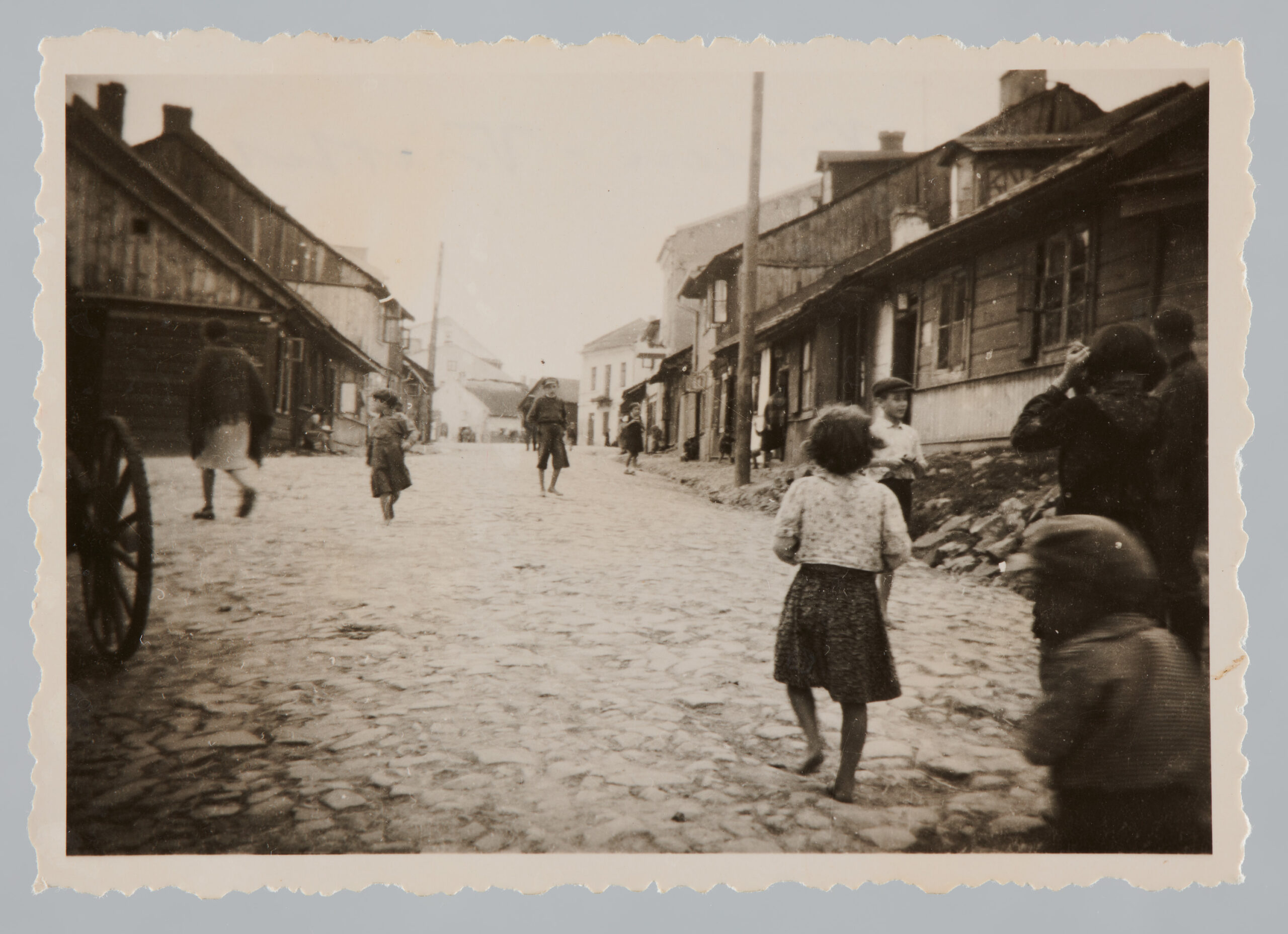
(Jewish Street in Opatów, 1930s. Photo credit: the collection of J. Brudkowski)

One of the characterizations of the rabbinical world that Grade describes concerns Dwight Garner’s label that SONS AND DAUGHTERS is a beard novel.  Writing in his New York Times book review of March 30, 2025, Garner states; It’s a great beard novel. The emphatic facial hair possessed by Grade’s rabbis and Torah scholars curls luxuriously around the margins of nearly every page. Here is a typical sentence: “Eli-Leizer’s mustache was still moist from the meal, and some dairy farfel noodles stuck to his beard.” And: “Avraham Alter Katzenellenbogen’s beard hung stiffly from his chin to his waist, as if it were made of porcelain like a seder plate.  Who can trust these new, clean-shaven, Americanized rabbis? The greats of the Torah had beards so bushy they could hold water.”

The issue of how to raise one’s children emerges in numerous discussions.  Sholem Shachne’s wife, Henna’le complains to her husband that had he been more flexible his children would not have run away.  He wonders: “where they disobeying him because he slapped them too frequently, or because he hadn’t slapped them enough?”  The doubts and inner thoughts of parents reflect this dichotomy which can be applied to modern children as well as rabbinical ones.  Other issues that Grade integrates into the novel include the role of Zionism in Palestine, the ideas of Marx and Nietzsche, the allure of America, arranged marriages, the selling of kosher and non-kosher clothing, the overcrowding in rabbinical homes, what do trees tell us, and the beauty of certain foods.  All are part of an intense examination of the orthodox world but also told with a great deal of humor.  What stands out is a remark by Naftali Hertz who ruminates on children who have been bequeathed an inheritance which is basically growing up in a shtetl, and its impact on their lives which in the end is why they desert their family and home.

As the book begins to wind down, parents and children begin to soften toward each other, but since Grade never finished volume two of the novel (it was to be written in two parts) we do not know how the familial tensions were resolved.  But at the same time modernity cannot be stopped as Jewish socialist youth groups parade through villages, and more concerning, anti-Semitic Polish nationalists mount a successful boycott against Jewish merchants across the region.

In her article describing SONS AND DAUGHTERS appearing in the April 2025 edition of The Atlantic Judith Shulevitz relates that “Toward the end of the book, Grade unites life and fiction in the character of a lapsed yeshiva bocher (student) named Khlavneh who has become a Yiddish poet. He is the fiancé of Sholem Shachne’s daughter, the one who went to Vilna to study nursing. Lest we fail to grasp that Khlavneh is a self-portrait, Grade drops hints. The daughter, for instance—an attractive, spirited woman, perhaps the most appealing figure in the novel—is named Bluma Rivtcha, a rhyming echo of Frumme-Liebe, the name of Grade’s murdered first wife, also a nurse and also the daughter of a rabbi.  Bluma Rivtcha brings Khlavneh home to meet the family. Over Shabbos dinner, the brother who moved to Switzerland and no longer observes Jewish laws ridicules him for writing poetry in “jargon”—that is, Yiddish, the bastard language of the uneducated Jew, “a common person, an ignoramus, a boor”—rather than in Hebrew, and for thinking that he and his fellow Yiddish writers could capture the spirit and poetry of Jewish life without following Jewish law themselves. Khlavneh refutes the brother in a brilliant show of erudition, then concludes: “You hate the jargon boys and girls because they have the courage to be different from their fathers and grandfathers, even to wage battles with their fathers and grandfathers, and yet, they don’t run away from home. The father, who everyone thinks will be offended by a guest’s outburst at the Sabbath table, laughs in delight. Grade, having fashioned a world in which the old fights mattered, now gets to win them.”

Rose Waldman, the translator provides interesting insides in her note at the end of the novel.  She describes Gade’s personal dilemma as he experiences “the tension between his desire to live and write like a secular human being in a modern world and the constant nostalgic pull of his Yeshiva past, the traditional Jewish Vilna of his youth.”  For Grade sees himself as “a thoroughly ancient Jew, while the man inside me wants to be thoroughly modern.  This is my calamity, plain and simple, a struggle I cannot win.”  This dichotomy is pervasive throughout the novel.  Waldman does the reader an important service by tracing the history of the novel’s preparation for publication and the difficulties that arose due to the fact that it was incomplete.  Grade was prepared to write a two volume novel but never completed the second volume.  However, the translator discovered some of Grade’s ideas for the second book and its ending, which she includes in her note which provides the reader with a semblance of a conclusion.

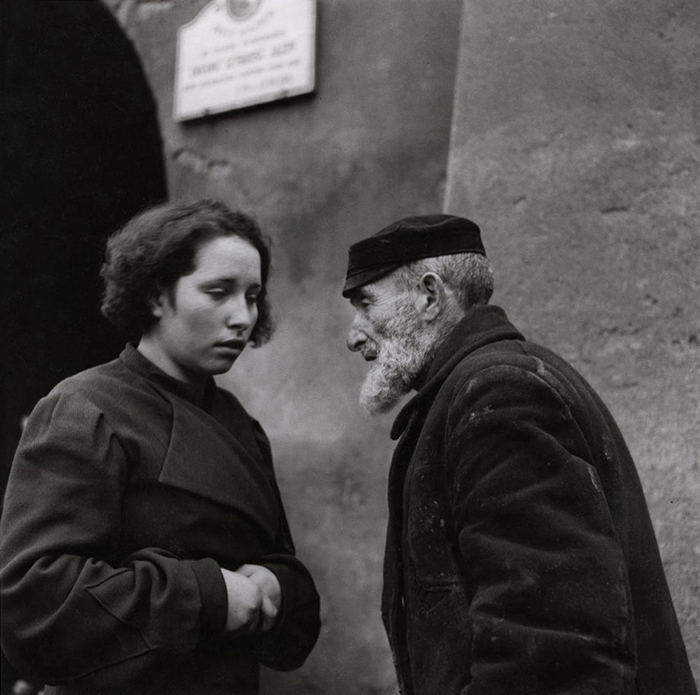
Roman Vishniac. 'Grandfather and granddaughter, Lublin' 1937

The tortuous rabbinical arguments are on full display throughout the novel as the characters dissect the Torah, Mishna, and Gemora, and other sacred texts of Judaism as they apply them to their modern situations.  These commentaries can appear to be provincial but in their day were the rule of law and every yeshiva bocha (which I was one in the 1950s and 60s!) must conform to.  In the end Grade’s novel overflows with humanity and heartbreaking emotions for a world, once full of life with all of its contradictions, that within a decade of the novel’s setting would be destroyed forever.

In closing, Grade never mentions the coming Holocaust in the book, however its future existence is felt on every page.  According to Yossi Newfield in his February 24, 2025 review in the Yiddish newspaper, Forward;  “In some sense, SONS AND DAUGHTERS can be considered a Holocaust memorial, as the events it describes foreshadow the upcoming annihilation of Polish Jewry. It is this tragic awareness that animates Grade’s questioning and demand for answers from the rabbinic establishment, from the Torah, and from God himself.”

A photograph of the writer Chaim Grade, who is wearing a trench coat and beret and standing in front of a house in a forest.

(Chaim Grade wrote “Sons and Daughters” during the 1960s and ’70s.Credit…YIVO Institute for Jewish Research)

AN ICE-CREAM WAR by William Boyd

(German East African Campaign. A halt on the march from Kisaki to Rufiji River, January 1917. Nigerian Brigade)

Any novel that begins with the following scene has to be an attention grabber and a prelude to a superb example of historical fiction.  “What do you think would happen, Colonel Theodore Roosevelt asked his son Kermit, if I shot an elephant in the balls?  Father, Kermit said, keeping a straight face, I think it would hurt a great deal.”  The former president was with his son on a train on June 6, 1914, in Dar-es-Salaam in German East Africa.  Maybe it is more my “demented” nature, but I thought this opening was quite comical and interesting.  The novel I am speaking about is William Boyd’s AN ICE-CREAM WAR which presents an anti-war message as he explores England and East Africa, the homes of interesting characters whose interactions make the novel enjoyable.

Those who have any knowledge of Theodore Roosevelt’s post-presidency will not be surprised by his presence with his son on a big game hunting expedition in Africa.  Walter Smith, an American, arrived in Africa in 1909 after responding to a Smithsonian Institution advertisement for a manager to run and organize a hunting and specimen collection trip to Africa and would be in charge of Roosevelt’s adventure.  Interestingly, during the expedition Smith dreamt that he found Kermit shot his father in the back.  This nightmare spurred Smith to return to his farm near Kilimanjaro in British East Africa, near the small town of Tavela, a former mission station.

A colonial Askari company ready to march in German East Africa (Deutsch-Ostafrika)

(A colonial Askari company ready to march in German East Africa (Deutsch-Ostafrika), 1914-1918)

In developing his novel Boyd easily captures the ambiance of colonial rule in Africa.  The poor housing, except for the rich Britons and Germans, lack of roads, the role of the military,  the inherent poverty, and the use of local labor in a quasi-slave situation, all endemic to colonialism.  Boyd does well with historical fiction as he nicely blends the major events of the period, the road to World War I, and what took place on the battlefield, concentrating on East Africa, a border area of present-day Kenya and Tanzania, but with repeated reference to battles in Europe.

Boyd’s writing is a blend of sardonic humor, sarcasm, and seriousness hidden amongst the dialogue and the offshoot of the war in Europe that bled over to the African continent.  Some of the scenes border on the absurd and black reigns at times, but there is an underlying gravity to the events depicted and the reaction of the characters.  An example of humor is clear as Gabriel Cobb, the son of a conservative military type who owns the Stackpole plantation marries Charis, his fiancé upon her return from India.  He has no idea why he married her, and Boyd’s description of their honeymoon is both poignant and hilarious.  One week after the wedding, Gabriel is assigned to be part of the Indian Expeditionary Force “B” set to invade German East Africa as World War I breaks out in the summer of 1914.  Another example is when Gabriel’s younger brother becomes infatuated with his Oxford roommates’ sister.  The problem is that Felix has a cold sore on his lip that won’t go away, and his amorous advances are rejected in a chapter that focuses on Felix’s “lip” situation and final rebuff.

The absurdity of war is carefully laid out by Boyd as the British invade the village of Tanga and its environs.  Orders were either not received or when they were finally issued were not very clear.  The racism endemic to the empire is on full display as British forces are made up of black Africans, Indian, South African, and British soldiers who suffer from a strong element of superiority.  As Gabriel’s comments about Rajput Sepoys never being in the places they were supposed to be, and many ran away with the first sounds of German guns and artillery reflected.  The British gave orders in English and many of their allies spoke only their native tongues making for interesting communication on the battlefield.

Boyd explores British society and focuses on the obligations men feel when it comes to war.  Gabriel immediately does his duty and is sent to Africa, but his younger brother, Felix is rejected because of weak eyesight which is humiliating for him.  He decides to attend Oxford as a means of getting away from Stackpole and embarrassment in that he is not able to fight.  His father, Colonel Cobb, is not happy with his son and tells him that at times he is worthless.  Felix’s roommate at Oxford, Philip Holland also is rejected by the military and suffers the same feelings of inadequacy – for him Oxford is also an escape from being with people who look down upon him.

Boyd creates three separate storylines which amazingly come full circle toward the end of the novel.  First, Walter Smith and his spouse Matilda’s farm is seized by the British army for the war effort, and we follow his attempts to protect it and his interactions with his German neighbor across the border in German East Africa.  Second, is Major Cobb and his two sons and the divergent paths each takes, particularly Gabriel who will be severely wounded early in his deployment.  Third, the von Bishops, Erich and Leisl.  Erich, a German officer, had always had his eyes on the Smith farm, and the war provided an opportunity to take it from the British and incorporate valuable machinery onto his own property.  Interestingly, Leisl who is bored by her marriage volunteers at a German hospital and there she meets a new patient, Gabriel Cobb.

A number of situations stand out.  Charis is not happy how her short honeymoon evolved and winds up having an affair with Felix and it will lead to interesting consequences.  Walter Smith became an advisor to the British military since he his geographical knowledge of the region was so valuable.  Finally in February 1916 the British made their move against the Germans at Salaita.  During the fighting Smith leaves the battlefield to check on his farm.  Upon arriving he experiences a horrible smell, and it seems that German troops have defecated all over his house and other buildings, dug up the grave of his daughter, in addition to stealing his expensive Decorticator machine which he could not run his farm without.  Erich von Bishop is responsible.

Charis like many women had married right before their husbands were shipped out to fight.  For many, they really did not know their partners very well which more than likely would lead to marriage difficulties upon their return – if they returned.  The loneliness of these women would lead many of these women to engage in affairs while not knowing if their husbands were alive or dead.  In Charis’ case it would lead to a fateful decision.

Boyd exposes the acute skepticism concerning the war in Africa as more men died of disease caused by unsanitary conditions, lack of food, and poisoning.  Others would succumb to their wounds because of the lack of proper medical care and supplies.  Many would contract PTSD which would lead to numerous complications for those conducting the war.

Map of the proposed Mittelafrika with German territory in yellow

(Map of the proposed Mittelafrika with German territory in yellow)

The author develops a series of important characters that dominate the story.  Major Cobb, the family patriarch at Stackpole is an ornery man who is a tight fisted individual who possesses little empathy, and each day reads bible verses to his family.  Walter Smith is a well meaning American who settled in East Africa who is obsessed with expanding his farm.  Erich von Bishop has a typical German mentality in that he wants to expand his farm, and his target is “Smithville” across the border.  Of course, there is the relationship between Gabriel and Felix which dominates the story.  These and other characters set the background for Boyd’s real purpose – examine warfare, how people cope with wartime and interact with each other to survive.  The most interesting relationships revolve around the Cobb brothers who love and respect each other, but the outbreak of war changes their dynamic.  Gabriel will spend three years in a German hospital as a patient and then assisting others as he gathers intelligence for when the British army will arrive.  Felix is the opposite of his brother, but by 1917 the British were desperate for bodies to fight so they accepted him as an officer.  He is sent to Africa, and his major goal is to find his brother before he receives a letter from his bride.

Boyd explores a range of human emotions throughout the novel.  Guilt, infatuation, greed, and desire dominate the actions of the major characters.  He will bring together some of these characters in an ingenious manner as they all seem to wind up in East Africa.  Michael Gorra in his February 27, 1983, New York Times book review sums up the importance of the novel and his evaluation of the author.   He writes; “In its treatment of its central theme, it fulfills the ambition of the historical novel at its best: to comprehend the past, not as the colorful backdrop to a costume drama, but as the controlling force in the lives of its characters. Such novels rarely have pleasant things to say about any individual’s position in the large scheme of the world, and ”An Ice-Cream War” is no exception. Its characters – the survivors in particular – are mercilessly knocked about by the force of historical circumstance: by the war, by the problems of commanding men whose culture they do not understand and whose language they do not even speak, by the influenza epidemic that followed immediately upon the Armistice. But Mr. Boyd sees even domestic life, as Gabriel’s and Felix’s mother sees her marriage, ”as a relentless challenge, an unending struggle against appalling adverse conditions to get her own way.” That bleak comic vision suggests the early Evelyn Waugh, and ”An Ice-Cream War” is a good enough novel, for all its flaws, to persuade me that Mr. Boyd, who was born in 1952, may someday write a great one.”

Advance on Kilimanjaro WWI

(Advance on Kilimanjaro)

ISTANBUL PASSAGE by Joseph Kanon

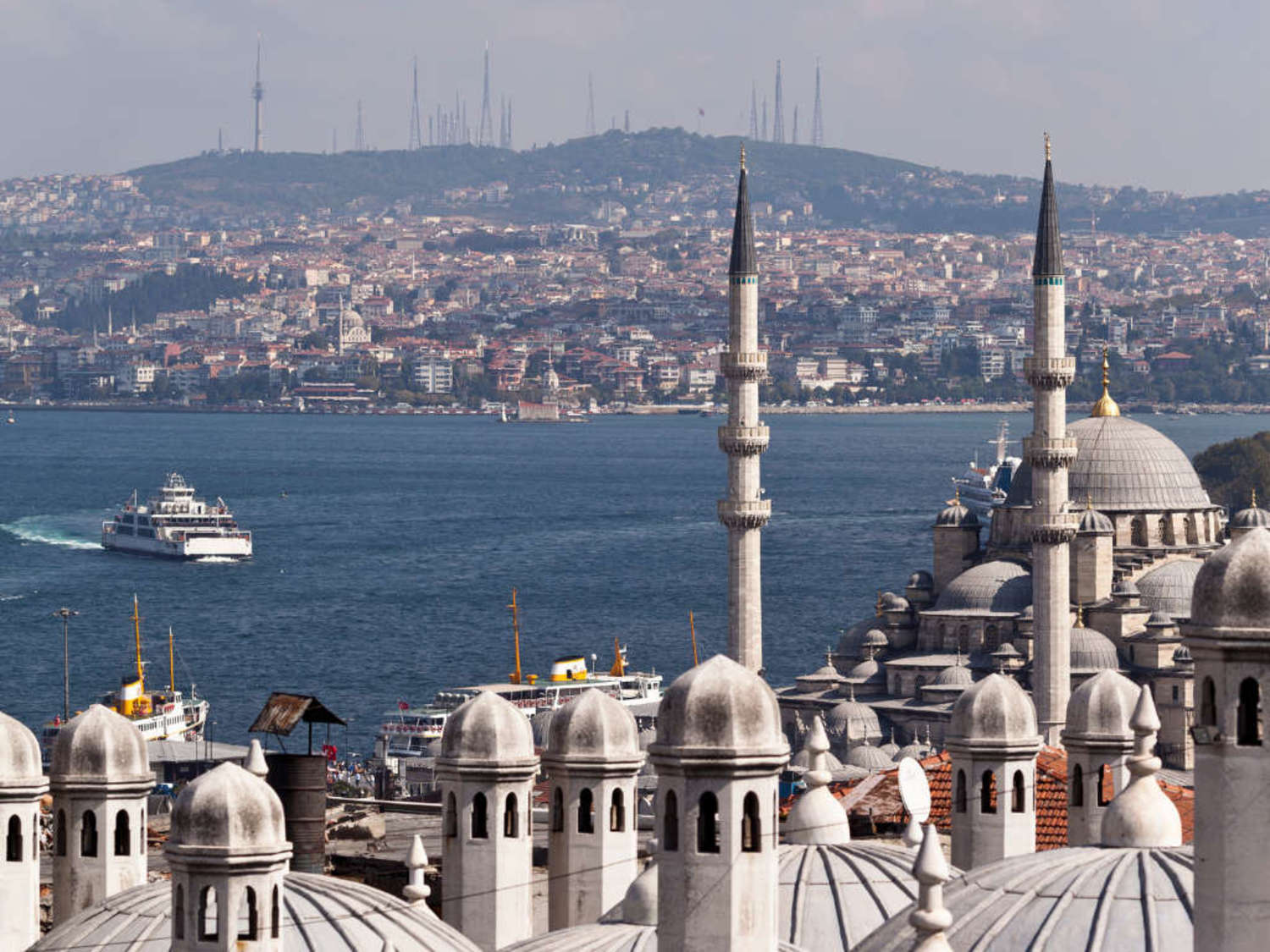
A magnificent shot of Istanbul, Turkey

Istanbul is a historic city that sits at the crossroads of east and west and has a long and complex history that lends itself to spy thrillers in the milieu of John le Carre,  Graham Greene, Eric Ambler, and Alan Furst.  The city itself sits at the entrance to the Bosphorus  that flows into the Black Sea and was the center of Russo-Turkish conflict from the 18th century to the conclusion of World War II.  During the war, the city like Stockholm, Lisbon, and Geneva were supposedly neutral, but in the clever and credible hands of novelist Joseph Kanon its reality is a world of espionage which snares the reader in the complex world of spies.

The plot for Kanon’s ISTANBUL PASSAGE evokes his past technique of using an urban site as the center of his story as he has done in previous and later books.  From Hollywood, to Moscow, Berlin, Shanghai, Venice and Buenos Aires they are all central to the stories that evolved in SHANGHAI; LEAVING BERLIN; STARDUST; THE GOOD GERMAN; DEFECTORS; LOS ALAMOS; and THE ACCOMPLICE.  All of these works are provocative, fully realized fiction that investigates the reality of history as it is experienced by individual men and women.

The novel begins with allied veteran Leon Bauer who is running spy missions under the cover of a U.S. tobacco-importing business waiting for a boat to arrive and deliver a package, a.k.a , a man for whom he would be responsible.  After the package did not arrive he decides to visit his wife Anna who is being treated at the Dr. Obstbaum’s clinic for a form of melancholia.  In the recent past Anna had worked for the Mossad that funneled Jewish refugees through Istanbul to Palestine operating around the British blockade who wanted to keep the Jews at bay and not aggravate their Arab allies.  Her work became a cover for Leon’s own, but dealing with so much secrecy, lies, and deaths she had a nervous collapse, retreating into a catatonic state.  Leon is loyal to his wife, visiting often, hoping that in the near future the sound of his voice will return her to reality – it is her condition that keeps him anchored to Istanbul.

The colorful city of Istanbul

Periodically Kanon integrates Turkish history into the novel.  Examples abound; Turks stealing from Armenians and Jews; Russia’s goal of controlling the Black Sea; the Truman Doctrine designed to assist Turkey and Greece against the communist threat; the smuggling of Jews who escaped the Holocaust across Turkey as a means to avoid the British blockade of Palestine.  There are many other examples, providing evidence of Kanon’s success as a purveyor of historical fiction.

The Blue Mosque

(The Blue Mosque, Istanbul, Turkey)

A key theme for Kanon which permeates the novel is a moral one.  Leon has spent time with his wife, Anna assisting the smuggling of Jews into Istanbul, loading them on to freighters designed to outrun the British blockade of Palestine.  At the same time, he is tasked by his boss, Tommy King, a spy stationed in the American consulate in Istanbul; to assist a Romanian defector named Alexi, whose real name is Jiani who has intelligence against the Russians to escape to the United States.  The problem is that four years earlier he was part of a massacre of Jews as during the war he was a member of the Fascist Romanian Iron Guard.  The Romanians set up concentration camps – only the ones the Germans didn’t run themselves.  They killed about 200,000 Jews.  As part of a later plot twist Leon will become implicated in two murders.  First, Tommy King who may have been a double agent working with Moscow,, and later Fran Bishop, an American diplomat stationed in Ankara.  The evidence points to Leon who is also having an affair with Bishop’s wife, Kay.  Eventually Leon’s fate is intertwined with Alexi as he must escape the Istanbul police, and the Turkish secret police – the Emniyet.

The Cold War atmosphere dominates the background of the novel as Leon and Alexi wonder if the Russians are responsible for the killings.  Apart from the Truman Doctrine, we learn of deals with former Nazi scientists and spies as the Russians and Americans vie for their services.

Leon was not a career operative and was not trained as an interrogator.  It is interesting how Alexi educates Leon about spy craft, especially when Leon questions him about the massacre at Straulesti.  With no choice and King dead Leon becomes Alexi’s partner as he must hide and protect him as he arranges his escape.

Hagia Sophia

(Inside Hagia Sophia)

Kanon creates a series of complex characters who dominate the novel.  The most important is Leon who is a flawed character who loves his wife, who has been hospitalized, possibly permanently visiting a prostitute each week and has an affair with Kay Bishop, apart from his role of smuggling Alexi.  Tommy King, who was to manage Alexi’s escape, is murdered, but the question is by whom since his loyalties are in question.  Mihai, a Romanian Jew who worked with Anna to transport Jews to Palestine.  He continues that work without Anna and is appalled by the deal he makes with Leon concerning Alexi.  Lily Nadir, a worldly widow who first arrived in Istanbul as a Circassian slave at age fourteen at the Sultan’s harem.  She now gives society parties at her waterfront villa as she brings together many noteworthy characters especially those involving the Emniyet.  Colonel Murat Altan who guides Leon at times, but as Turkish secret police he has a strong duplicitous side.  Throughout, the question remains who can be trusted, but the key relationship is between Leon and Alexi.  At first, Alexi is dependent upon Leon for his survival, as the plot unravels Leon becomes dependent upon Alexi.   

ISTANBUL PASSAGE contains many ebbs and flows as the story develops layer upon layer.  It is not the type of historical thriller Kanon usually delivers.  There are plenty of action and plot shifts, but many of the scenes are dominated by lengthy innocuous dialogue which does little to maintain one’s interest.  The story contains too many peaks and valleys and needs to stick to the pertinent aspects of the story and not wander off into areas that do not enrich the reader’s experience.  Despite this Kanon edifies the reader with intelligent plotting and its vivid presentation of Istanbul, a setting rich in centuries of intrigue encapsulating the Ottoman years, the Byzantine sights, the influx of Germans in the 1930s, and the Ottoman Empire’s long imperial past.

Hagia Sophia, Istanbul, Turkey

SHANGHAI by Joseph Kannon

shanghai 1930s why is it called paris of the east

In the opening scene of Joseph Kanon’s latest novel, SHANGHAI, people are crowding on the dock to board the Raffaello, a ship out of Nazi Germany.  Following the destruction, violence, and death against Jews during Kristallnacht in November 1938 it was becoming clear as to what Hitler’s ultimate goal was – the Jews had no choice but to try and get out.  The question was where to go – even if you were able to acquire the proper paperwork.  If you were lucky enough to obtain the necessary documents to leave Germany you would have to relinquish all of your property and possessions by a devalued sale or outright seizure.  You would only be allowed to take some clothing and ten Reichsmarks out of the country.

For Daniel Lohr, whose father Eli, a judge was murdered at Sachsenhausen concentration camp it was time to leave.  He was asked by Leah Auerbach; a person he met on the crowded dock why he was going to China?  His terse answer was “It is not here.”

paris of the east departmental stores nanking road 1927

(Aerial view of department stores on Nanking Road in Shanghai, 1930, via Jack Ephgrave Collection, Historical Photographs of China)

For thousands of desperate people in the 1930s, this Chinese metropolis was a last resort. Most countries and cities had restricted entry for Jews trying to flee violent persecution by Nazi Germany. Not Shanghai, however. This multicultural oasis – that included British, French, American, Russian and Iraqi residents – was among the very few places Jewish refugees were guaranteed to be accepted, with no visa required.

Despite Shanghai being more than 435 miles from their homes in Germany, Poland and Austria, more than 20,000 stateless Jews fled to China’s largest city to escape the Holocaust between 1933 and 1941. Shanghai was not just a safe haven. It was also a modern city with an established community of Russian Jews.

At first, life in Shanghai was peaceful for its newest residents. The Jewish refugees were welcomed by Shanghai residents, and they created a strong community with schools and a vibrant social scene.   What the refugees couldn’t foresee was they would travel across the globe only to fall into the clutches of the Nazis’ most powerful ally. In 1941, Japan seized Shanghai. Acting under instruction from the Nazis, Japanese troops rounded up all of the city’s Jews and confined them in Tilanqiao. Shanghai’s Jewish ghetto was established.

cafes-cabarets-banks-blood-alley-shanghai-1937

(Blood Alley in Shanghai, 1937 via Malcolm Rosholt Collection, Historical Photographs of China)

Kannon’s effort reads as if we are watching the film, “Casablanca” as everything seems to have an undercurrent as relationships keep shifting and with it events.  For the characters who arrive in Shanghai, they soon realize that Shanghai, the corrupt, violent city with an underclass of Chinese, and Europeans who are living out their dreams are now faced with the Japanese threat as at anytime they can take over the city.

Daniel is lucky because his Uncle Nathan is a character with an empathetic side and a gangster side which at times is difficult to determine which dominates his actions.  In this case he sends the necessary funds and first class passage on one of the great Lloyds of London ships, making the arrangements for Daniel to escape Berlin.  Aboard ship he will meet two of the dominant characters in the story, Leah Auerbach, a beautiful woman who he will fall in love with, and Colonel Yamada, a Japanese attached to the Kempeitai, the Japanese version of the Gestapo.

The book reflects the author’s historical knowledge as throughout the ongoing Sino-Japanese war continues, the fact that Chiang Kai-Shek and his Kuomintang refuse to fight the Japanese, holding back American aid and pressure focusing on the coming Civil War with Mao Zedong and the Communists, and the seamy side of what Shanghai is and will develop into further.  Kannon’s historical reflections are accurate and give the story a high degree of authenticity.

duyuesheng gangster shanghai paris of the east 1930s

(Du Yuesheng (right), the godfather of the underworld in 1930s Shanghai, via China.org)

Kannon’s description of Shanghai is fascinating as it is unlike any other area of China.  Its European waterfront, neoclassical banks and office towers, and art deco hotels reflected its commercial swagger much like Liverpool, Trieste, and other western cities with its sleek new cars, trams, and Department stores.  However, the underside of the city cannot be hidden with coolies, old men in silk robes, beggars, gangsters, the presence of Japanese warships, and the drive for profit in the guise of a commercial entertainment sector dominating –  this is not a typical European city.

Upon arriving it is clear Uncle Nathan wants to bring Daniel into his business operations – nightclubs, prostitution, laundering money, and other avocations.  Their relationship is a key component of the plot as Daniel slowly is absorbed into his uncles’ world but always keeping a moral compass when possible.  Obviously in this type of environment payoffs, protection money, murder are a daily occurrence.  The term that is used is the “squeeze,” as Nathan and other businessmen must share their profits with the various gangs and their leaders.  In Nathan’s case he is in business with gang leaders like Xi Ling who is in competition with another gangster, Wu Tsai.  Daniel will soon learn the ropes, be educated by his uncle and more importantly become a player in the corrupt night club world, even doing business with Colonel Yamada, who has his eyes on Leah.

The main characters are somewhat formulaic, but that does not distract from the novel.  Colonel Yamada is a Japanese militarist and a hood; Uncle Nathan is like a cat with nine lives; Daniel, starts out somewhat naïve, but soon becomes a major force in his own right; Leah is just trying to survive employing any assets at her disposal; Selden Loomis, the gossip columnist at the North China Tribune who seemed to know everything; and Irina, Nathan’s former lover and loyal bookkeeper are all impactful.

debris cathay hotel bombing war 1937 photograph

(Cathay Hotel bombing in Shanghai, 1937 via Archibald Lang Collection Historical Photographs of China)

Shanghai can best be described as an oasis protecting people from the ever expanding World War.  The problem is how long will this haven last with the coming Japanese aggression to implement its Greater Co-Prosperity Sphere to dominate Asia, and its alliance with Nazi Germany.  The question that dominates the constantly shifting story of relationships and human depravity is when will Japan shut the door on Shanghai as they have already begun assassinating Chinese Communists and some Europeans who would be a problem once they take control.

Kannon has written a thriller with many layers.  In part, a gangster story, in part a love story that slowly develops between Daniel and Leah, Chinese violence and corruption, and lastly, Japanese ruthlessness.  Daniel’s past is an interesting one in that he left from Trieste to travel to Shanghai due to the fact he had fled Berlin after his group of Jewish resistance fighters had been killed or were being tortured by the Nazis.  His background will reappear in Shanghai under the guise of Dr. Karl Markowski who was one of his compatriots in Berlin.  Kannon has chosen the perfect location for intrigue, danger, and treacherous political dynamics as the International Settlement which he presents contains Europeans, British, Americans, who are trying to do business amid warring gangs in the city.  As Daniel becomes stuck deeper and deeper in the abyss that is crooked and murderous Chinese, and Colonel Yamada, his options become limited and he realizes he must get Leah out of the city, and once Nathan passes after a heart attack he must leave also.

The strength of Kannon’s novel is adroit plot development. With a myriad of twists and turns appropriate for the time period in which the novel takes place.   Returning readers of Kannon’s past novels, and new readers will be entertained and should enjoy a gripping plot.

paris of the east shanghai ciros nightclub 1937
(Ciro’s nightclub in Shanghai, 1937 via Malcolm Rosholt Collection, Historical Photographs of China)

BLACK BUTTERFLIES by Priscilla Morris

A Bosnian soldier returns fire in downtown Sarajevo as he and civilians come under fire from Serbian snipers, April 1992.

(A Bosnian soldier returns fire in downtown Sarajevo as he and civilians come under fire from Serbian snipers, April 1992)

In the 1970s CIA analysts warned that if Josip Broz Tito, the authoritarian leader of Yugoslavia died eventually the country would break apart and the result would be a nasty civil war.  Tito would pass from the scene in 1980, and it took until January 1992 for the Socialist Federal Republic of Yugoslavia to cease its existence, dissolving into its constituent states.  Earlier an American National Intelligence Estimate (NIE) 15-90 presented a dire warning; “Yugoslavia will cease to function as a federal state within a year and will probably dissolve within two….A full-scale interrepublic war is unlikely, but serious intercommunal conflict will accompany the breakup and will continue afterward.  The violence will be intractable and bitter.”  

Slovenia was the first to declare its “sovereignty” in 1990.  Croatia followed in May, and in August, the Yugoslav republic of Bosnia-Herzegovina also declared itself sovereign.  Soon after, Slovenia and Croatia both declared formal independence on June 25, 1991.  Bosnia-Herzegovina declared its independence in May 1992, while the Serbs in Bosnia declared their own areas an independent republic.

Women run for their lives across ‘Sniper Alley’ under the sights of Serb gunmen during the siege of Sarajevo. 1992.

(Women run for their lives across ‘Sniper Alley’ under the sights of Serb gunmen during the siege of Sarajevo. 1992)

Serbia and Montenegro formed a new Federal Republic of Yugoslavia as a successor state to the old Yugoslavia, but the international community did not recognize its claim.  Over the next three years war would ensue in Bosnia and Herzegovina claiming hundreds of thousands of lives and displaced millions from their homes, as Europe experienced the most horrific fighting since World War II.  One major component of the fighting was the siege of Sarajevo which came about because the Bosnian Serbs wanted to create a new Serb state of Republika Srpska and would encircle the city, located in the southern part of Bosnia-Herzegovina.  Starting in April 1992, Serbia set out to “ethnically cleanse” Bosnian territory by systematically removing all Bosnian Muslims, known as Bosniaks. Serbia, together with ethnic Bosnian Serbs, attacked Bosniaks with former Yugoslavian military equipment and surrounded Sarajevo, the capital city.  The resulting blockade and the ensuing assault with artillery, tanks, and 500,000 bombs resulted in the death of 13,952 people, including 5,434 civilians.  The population of Sarajevo dropped by a third because of the siege which lasted from April 5, 1992, to February 29, 1996, three times longer than the siege of Stalingrad, and a year longer than the siege of Leningrad.

The reasons behind the country’s breakup ranged from cultural and religious divisions between the ethnic groups that made up the former Yugoslavia, including Serbs, Croats, and Muslims.  Sarajevo’s 1991 ethnic population consisted of a total of 527,049, including; 259,470 ethnic Muslims; 157,143 Serbs; and 34,873 Croats.   In addition, the memories of World War II and the atrocities committed by all sides greatly contributed to the breakup, as did the growing nationalist forces.  Another major contributing factor was following the death of Tito in 1980, the provisions of the 1974 constitution kicked in providing for the dissolution of all power away from the federal government to the republics and autonomous provinces within Serbia.  The result was that the federal government maintained little control over the country.

This situation forms the background for Priscilla Morris’ evocative novel, BLACK BUTTERFLIES.  The story begins as Zora, an artist and teacher, and her husband, Franjo arrive at Zora’s aged mother’s apartment to find three people squatting and refusing to leave arguing that the city government had decided that if a flat was unoccupied anyone could live there.  Their daughter Dubravka was married to an Englishman and resided near Salisbury, and they decided to send her mother to visit because of the stress of the situation and her declining health, accompanied by Franjo leaving Zora alone in Sarajevo.

A wounded woman is helped to get out of her apartment building after it was hit by a rocket fired from Bosnia Serb positions, June 1995.

(A wounded woman is helped to get out of her apartment building after it was hit by a rocket fired from Bosnia Serb positions, June 1995)

The novel focuses on the experiences of Zora Kocovic, an artist and teacher at the National Academy of Art and her attempts at survival as Sarajevo is being pounded by artillery and sniper fire by Bosnian Serbs who want to ethnically cleanse the city of Muslims and Bosnian Serbs who do not support them.  Zora’s family has left for England and Zora thought it would be safe to remain in the city, but that turned out to be a “pipe dream.”  Along with her neighbors they try to navigate a situation where electricity, water, phone lines, and the airport have been cut off and it is too dangerous to walk the street to find food and water because of sniper fire.  Bodies lay in the street for days and city services are non-existent.

One of Morris’ most important themes is the importance of art in wartime, particularly those who are suffering.  This can be seen in numerous ways.  Zora continues to instruct those students who are able to make their way to her flat, even creating an art exhibition out of any material they can employ for the neighborhood.  When she runs out of paper and canvas, she and her eight year old neighbor’s daughter Una draw on the walls and paint natural scenes.  To further her work, Zora takes her last few coins to purchase art supplies from the wife of an artist who has disappeared.

UN peacekeepers and Sarajevo citizens take cover from gunfire on the city’s infamous ‘Sniper Alley’, March 1993.

(UN peacekeepers and Sarajevo citizens take cover from gunfire on the city’s infamous ‘Sniper Alley’, March 1993)

Morris’ description of Sarajevo is vividly rendered from its cobblestone streets, grandfathers playing chess outside, the shade offered by the spires of Orthodox churches, and the minarets dating to the Ottoman era.  It was a beautiful city before the siege and served as a bridge between east and west based on its multi-ethnic culture and religions.  But as the siege begins to take its toll people are reluctant to leave despite the danger for fear squatters would take over their flats, stealing their possessions.  Morris uses the dialogue between her characters to shine a light on the ethnic hatred that exists in the city.  A comment by Zora’s neighbor Vensa, an orthodox Christian is emblematic of how people feel, she says to Zora; “But God, I’m terrified, aren’t you?  Day by day, Sarajevo is becoming more Muslim.”  Zora visits her Uncle Vuk who believes that the Muslims want an Islamic state, and Serbs would then be treated as if the Ottoman Empire were reconstituted.  This leads to constant anxiety among her characters as she goes on to describe “Bosnian Serb snipers lying behind sandbags on the tops of buildings and taking aim at people in the street below as if they are sparrows.”

Serb nationalists cannot accept that people like Zora want to go on living with Muslims and Croats as they have always done – historically, Sarajevo was always seen as a model of tolerance.  The situation is very trying for Zora.  Her studio was her sanctuary, but once Bosnian nationalists banned it, she hurried to recoup as much art supplies and her paintings as possible, but they would soon run out.  Zora becomes further depressed when she was promised a seat on a UN bus leaving the city and at the last minute it fell through.

Breakup of Yugoslavia animation

In one of the most poignant scenes in the book is also its title, Zora and her neighbors are outside when it seems to be raining black puffs of paper.  In reality it is paper from books that have been destroyed from the National Library by the shelling.  They refer to the paper flying around as “Black Butterflies.”  For Zora, her national heritage has been destroyed.  She states, “Zora Kocovic, the painter, is dead.” Her survival rests on her relationship with her neighbor Mirsad, who owns a bookstore and his son Shamir, who has joined the anti-nationalist forces.  Their camaraderie, along with other neighbors, becomes the core of each other’s existence.  The people become their own family, and their relationships carry them through the harshest aspects of the shelling.  They create a sumptuous meal for all in Zora’s flat, they work to find a phone that works so Zora can speak with her daughter in London, Zora cooks pigeons, spending money needed for art supplies to buy garlic so she can cook for all, among other examples.  Even when Zora falls in love with Mirsad, which occurs after many seasons of mutual suffering, it is a love doomed to fail as the conflict rages on, as it is born out of proximity and trauma and the constant fear of loss, rather than a betrayal of her husband in England.

Morris takes a narrow approach in developing her story and toward the expanding fighting.  Her focus on Zora and her compatriots allows her to keep the burgeoning war in the background as she focuses on the daily travails of her characters.  According to Malavika Praseed in her August 28, 2024, book review entitled, “Rebirth Amongst Despair in “Black Butterflies” in the Chicago Review of Books; “While it is easy for a book of this nature to end either in soul-crushing despair or unrealistic optimism, Morris is savvy in her story craft and chooses neither. This is true to Zora’s character arc compared to her life arc; while the former ends, the latter must continue in new circumstances and with new knowledge of the suffering that came before. It is also true to the Bosnian genocide as a whole, which only just begins in Sarajevo and escalates to a multi-year conflict with an Islamophobic focus. Nevertheless, Black Butterflies is both a historical portrait as well as a character one, with emphasis on the latter. Morris understands her intent, to tell a single story touched by many other characters, but still unmistakably Zora’s, instead of widening her scope and losing tender moments and pinpoint detail in the process.” 

Further, Bea Seaton wrote in the New York Times on September 3, 2024 ,a view I agree with wholeheartedly; “This is a dark novel that wrests beauty and hope out of suffering.  It is a work of literature that transforms horror and violence into a life force.”

A boy playing on a tank in the Sarajevo neighbourhood of Grbavica, April 1996.

(A boy playing on a tank in the Sarajevo neighbourhood of Grbavica, April 1996)

ALL THE GLIMMERING STARS by Mark Sullivan

Uganda Kenya Border Map Image courtesy of Britannica Inc

Mark Sullivan’s grasp of story creation for historical fiction is exceptional.  He has the ability to blend storytelling with historical facts that transport the reader to different eras seeking to understand the interplay of human relations.  This talent was on full display in his previous two novels; BENEATH THE SCARLET SKY which centers on the rescue of Jews  during the Holocaust guiding and transporting them across the Alps, and THE LAST VALLEY which focuses on people caught between the pincer of Nazi Germany and Stalinist Russia during World War II Ukraine.  Sullivan’s remarkable story telling gift is on full display in his latest effort; ALL THE GLIMMERING STARS as two young people, Anthony Opoka and Florence Okori are kidnapped and forced into the fanatical Lord’s Resistance Army (LRA) in the early 1990s, though the story encompasses the 1987-2009 period.  Sullivan describes how these two and other victims try to navigate their captivity and survive.  The book is historical fiction, but it is based on the actual journey of Anthony and Florence.

Image

(LRA leader Joseph Kony)

In developing his plot line, Sullivan describes the daily existence in parts of Uganda where a primitive lifestyle full of disease, poverty, and civil war is the norm.  At the outset, the main characters are children.  Anthony Opoka is a fifteen year old when seized by the LRA, after a wonderful life with his family, particularly his father George, who spends his time instructing his son from an early age to be a good human.  Florence Okori, who lived 60 kilometers southeast of Anthony’s village comes from a family that believes in education, and she is a lover of school and her goal in life is to be a nurse.  However, nomadic warriors called the Karimojong  arrive at her school, strip her teachers and burn all educational facilities.  Florence is devastated as she had spent two years surviving a measles epidemic and now she has lost the thing she loves.

Anthony and Florence will meet in captivity and fall in love realizing that they can never go home again.  Under the threat of messianic warlord Joseph Kony and his LRA who continue to kidnap children to do their fighting, Anthony and Florence devote their lives to helping their fellow child captives escape bondage and return to their families by relying on their early education by their parents by following the stars.

No photo description available.

(Anthony Opoka and Florence Okori)

As the story evolves Sullivan lays out the psychological imprint that the LRA strives for as it brain washes its child recruits.  Joseph Kony sees himself as a messiah in the light of Jesus and his own version of Catholicism.  Military and mind training are developed through Anthony’s experiences and his friend Patrick Lumumba who saves his former competitor’s life on more than one occasion.  The combat experiences are vivid and hundreds of unarmed child soldiers are killed.  Dealing with Anthony’s psyche on multiple levels, Sullivan brings out the hidden survival skills taught by his father as he approaches a life as “a good human.”  For Anthony, who “not long ago had been a head boy, a top student, a leader, a revered son and brother, a running champion, a young man with a bright future in front of him,” all seem lost as he is absorbed into the LRA.  At first, Anthony seems to try and rationalize the benefits of his situation, but after facing combat as an unarmed teenager and a fully equipped soldier his attitude become one of bitterness against Kony believing his youth and promise has been stolen by a man who ruled with merciless fear, killing children or turning children into killers for his own insane ideas.

The situation for child  recruits is deplorable as they are used as cannon fodder in the LRA’s war to overthrow the Ugandan government.  The back story is clearly laid out as the LRA is allied with the Sudanese government which is threatened by the Dinka tribe in southern Sudan.  In return for the LRA fighting the Dinka, the Arab government supplies the LRA with weapons, money, and training.  Kony’s rationale is to employ his forces to defeat the Dinka, and once that job is completed take all they have acquired and learned and overthrow the Kampala government.

The story markedly changes when Anthony and Florene are abducted.  Their lives were now subject to Kony’s whims and the LRA with so many contemptible rules about all aspects of their existence.  Sullivan takes the reader throughout northeast Uganda and southern Sudan as combat rages and the death count rises, particularly among the child warriors.  Sullivan delves into Kony’s thought process as the guerilla leader’s goal was to create fighters out of 12 to 16 year old teenagers because their brains were not fully developed, weak, and ready to be brainwashed and trained.  His rationality rested on the lack of  anything good in their lives.  Kony’s convoluted belief system alleged that once they made it through their training ordeal and facing the enemy without weapons they would realize their value to Kony personally and the LRA in general.  They would then feel part of a family and a vision of the future which would link them to Kony forever.

Anthony Opoka

(Anthony and Florence on the left, the rest are family and friends)

As time passed, Anthony was accepted into Kony’s good graces as he rose to become his communication officer.  Despite his survival, Anthony grew increasingly bitter and angry toward Kony as he witnessed the seizure of thousands of child recruits and their resulting deaths.  For Anthony, Kony was a cruel megalomaniac.

Sullivan’s gift is his ability to write about the horrors of events in Uganda and southern Sudan in a manner that allows the reader to tolerate their revulsion as to LRA actions.  This is accomplished as Sullivan does not hammer the reader with repulsive descriptions but lays out events as “softly” as possible.

Sullivan introduces and develops a number of important characters that influence Anthony and Florence’s lives.  Mr. Mabior, a shopkeeper, educated Anthony as he lay dying and imparts his wisdom concerning the “four voices of suffering;” Mr. Alonsius, Florence’s teacher whose praise created her goal of becoming a nurse; Miss Catherine, a nurse whose care saved Florence from dying from measles;  Patrick Lumumba, Anthony’s racing competitor who will become his friend and guide him through the labyrinth of rules fostered by the LRA;  Anthony’s father, George offered much needed advice that was the key to Anthony’s survival – “whenever you were confused about what to do, always ask – what would a good human do?” and Josca, Florence’s mother, would always say, “there is nothing stronger than the power of love – whatever the problem, it could be solved by turning to love as the answer.”

The dichotomy of Anthony and Florence’s lives are on full display before and after their abduction.  Their eventual love for each other and their children will help them overcome practically anything as they both came from strong loving families, and they maintained the values their parents taught them throughout their lives.  Sullivan’s recreation of their life story is at times harsh, warm, with the ability to face and overcome whatever challenges they must confront.

Ugandan Rebel Leader Joseph Kony Makes Rare Appearance

(Joseph Kony and his followers)

Ultimately the novel describes two people who are madly in love, resilient, and the ability to persevere, exhibit tremendous courage, with a high degree of compassion.  Their upbringing, family values, and moral code allowed them to survive.  It is a story of a spiritual journey taken by two people which resound throughout the novel. Sullivan has authored an impactful story and hopefully his subject matter dealing with child seizures, war, and death will end quickly in areas of Africa.

To conclude, every time I read a Mark Sullivan novel the time expended is rewarding on every level.  I hope he is working on his next book which I will read with pleasure.  Sullivan continues to tell stories that are inherently moving, inspiring, healing and without doubt extremely meaningful for me and his many readers.

———————————————————————————————————————————————-

After the Ugandan Civil War, Kony participated in the subsequent insurgency against president Yoweri Museveni under the Holy Spirit Movement or the Uganda People’s Democratic Army before founding the LRA in 1987. Aiming to create a Christian state based on dominion theology, Kony directed the multi-decade Lord’s Resistance Army insurgency. After Kony’s terror activities, he was banished from Uganda and shifted to South Sudan.

Kony has long been one of Africa’s most notorious and most wanted militant warlords. He has been accused by government entities of ordering the abduction of children to become child soldiers and sex slaves. Approximately 66,000 children became soldiers, and 2 million people were displaced internally from 1986 to 2009 by his forces. Kony was indicted in 2005 for war crimes and crimes against humanity by the International Criminal Court (ICC) in The Hague, but he has evaded capture. He has been subject to an Interpol Red Notice at the ICC’s request since 2006. Since the Juba peace talks in 2006, the Lord’s Resistance Army no longer operates in Uganda. Sources claim that they are in the Democratic Republic of the Congo (DRC), the Central African Republic (CAR), or South Sudan. In 2013, Kony was reported to be in poor health, and Michel Djotodia, president of the CAR, claimed he was negotiating with Kony to surrender.

By April 2017, Kony was still at large, but his force was reported to have shrunk to approximately 100 soldiers, down from an estimated high of 3,000. Both the United States and Uganda ended the hunt for Kony and the LRA, believing that the LRA was no longer a significant security risk to Uganda. As of 2022, he is reported to be hiding in Darfur.*

*https://en.wikipedia.org/wiki/Joseph_Kony

THE ASCENT by Stefan Hertmans

12la iglesia de San Nicolás (Sint-Niklaaskerk), el Campanario (Belfort) y en ultimo término la Catedral de San Bavón (Sint-Baafskathedraal) gante belgica church nicholas belfry cathedral ghent belgium

(The city of Ghent, Belgium during WWII)

Internationally acclaimed Dutch author Stefan Hertmans has written two powerful historical novels that have achieved extraordinary recognition.  The first, WAR AND TURPENTINE was long listed for the Man Booker International Prize in 2017 and the second, THE CONVERT was a 2020 National Jewish Book Award finalist.  His latest effort, THE ASCENT is a captivating story about family and evil that alludes to the problems that face society today.

It is a story that originated with Hertman’s own life experiences.  In 1979, the author purchased a town house in the Belgium city of Ghent.  It was in poor condition that dated back to the end of World War II.  Though a neglected structure, Hertman was enamored with it.  The house forms the basis of the novel which fits the mold of a technique known as auto fiction, a combination of autobiography and fiction that describes the author’s quest to learn about Willem Verhulst, a Flemish nationalist who during World War II was a member of the SS and sought to link Flanders and Nazi Germany.   Hertmans was unaware of the checkered history of the house when he purchased it and the interaction between the real estate agent and the author lends itself to the condition of the house and why it attracted him.  Years later when he sold the house he came across a memoir of the previous owner’s son, Adriaan Verhulst, a renowned professor of history and coincidentally, the author’s former teacher.  Hertmans would learn that Adriaan’s father, Willem had served in the SS during World War II and committed unspeakable crimes.

The Year of Silence: Belgium’s darkest moments during WWII

(Pro-Nazi rally with speech by VNV strongman Hendrik Elias (Vlaams Nationaal Verbondat) at Grote Markt, Antwerp, on 26 September 1943)

Hertman would become obsessed with the Verhulst family resulting in an exploratory mission to tell the story of Adriaan’s father, the story of the house in which he lived, and the people who he came in contact with.  Hertman’s relies on memoirs, diaries, official documents, and interviews with Willem’s three children to recreate the lives of one family as they navigated the tumultuous events of World war II under the aegis of Nazi collaboration in their midst.  The result is an amazing novel that reimagines the life of a family surviving a world war that destroyed a significant part of Europe.  It is a testament to the author who successfully blends history and fiction to reach its readers about the past, the role of human nature during conflict, and providing lessons for the future.

Hermans carefully lays out the national and ethnic conflict that existed in Belgium before and during the war.  It centers on Flemish nationalists who wanted schools to reflect Dutch culture and those who favored the French.  Willem loathes the Belgium state and hitches his wagon to Flemish nationalism.  Willem was blind in one eye from childhood, and it greatly affected his socialization process while growing up and provides clues for his later behavior.  Willem’s first wife, Lisa, will die of cervical cancer in 1925 in her late twenties.  Two years later he will remarry Harmina Margaretha Wijers who had been Lisa’s nurse during her illness when she lived with her pastor who never accepted the “one eyed” Belgium.

Harmina who went by the name Mientje and Willem had a son Adriaan, and two daughters, Aletta, and Suzanne.  Mientje was a very pious Protestant and grew suspicious of her husband’s activities and his interest in Nazism.  Willem was a womanizer who had a long running affair with a woman nine years his junior named Griert Latomme.  For Mientje her children were her life and she overlooked “pappi’s” faults for years.  Willem would force the family to move from a comfortable middle class home in Ghent to a house provided by the Nazis in Oudburg after he had ingratiates himself with the SS and often traveled to Germany.  Needless to say, Mientje despised the house.

(German soldiers parade past the Royal Palace in Brussels, 1940)

Hertmans does an excellent job describing the German occupation of Belgium and its impact on its citizens.  He follows the course of the war carefully and has a firm knowledge of historical events and battles.  The author intersperses chapters describing his purchase of the house and his interactions with the children and other decades after the war. 

'Confidential agent' Willem Verhulst and his wife Mientje in 1930

(‘Confidential agent’ Willem Verhulst and his wife Mientje in 1930) 

Under the German occupation Willem is made Director of the Ghent Rediffusion Service to be used as a vehicle for Nazi propaganda.  From this position Willem rose in the Nazi hierarchy to become a reliable collaborator and achieved SS rank as he cobbled together thorough lists of resistance fighters and anyone who opposed or even spoke words that the Nazis deemed treasonous.  Countless people were rounded up, beaten, tortured and many would die in the extermination camps.

The marriage of Willem and Mientje made little sense.  He possessed a dual personality; on the one hand he was very sweet toward his wife, but he was a womanizer and a Nazi collaborator.  He did his best to keep his wife and family in the dark when it came to his activities.  She was very religious and cannot fathom why their lives have taken such a drastic turn.  Once he started wearing his SS uniform at home, she forbade the children to enter certain rooms that were used for Nazi visitors and held Nazi memorabilia referring to them as “the death rooms.”  The issue of spousal loyalty reverberates throughout the novel.  No matter how abusive he acted at times or as she learned of his Nazi activities she always tried to smooth over their relationship and keep him calm, standing by him. However, by July 1944 when Willem contemplates fleeing with the family to Hanover, Germany, she refuses to allow herself and the children to accompany him.

(Stefan Hertmans)

Hertmans does a masterful job weaving the post war history of how collaborators fled Belgium and how they were treated by the Germans and Belgians upon their return.  Roughly 15,000 Flemish citizens fled with another 6,000 Walloons joining them. By integrating so much factual information into the novel it reflects the authenticity of the story as the author fictionalized certain aspects of his work.

The book is segmented into two parts.  The first half surrounds Willem’s rise in the Nazi hierarchy and the deeds that would result in his arrest and imprisonment.  The second half of the book focuses on the post war period as Willem languishes in prison unrepentant, writing untruths and fantasies in his diaries, while outside, Europe lies in ruins.  Hermans describes the boarders who Mientje housed and their futures, and what became of Mientje and her children and the final years of their father.   David McKay provides a lucid translation from the Dutch which is illustrated with photographs and other information.  Hertmans combination of history and fiction is a powerful reminder that the horrors of World War II are inexhaustibly fascinating and how events that seem beyond our control can result in disaster.


WW2 - WWII German luftwaffe soldiers training with a MG 34 machine gun  - probably near Ghent, Belgium Stock Photo

(WWII German Luftwaffe soldiers training with a MG 34 machine gun – probably near Ghent, Belgium)