THE SYMPATHIZER by Viet Thanh Nguyen

(American Embassy, Saigon, South Vietnam, April 30, 1975)

THE SYMPATHIZER is a unique first novel by Viet Thanh Nguyen.  The story is told from the perspective of a narrator who allows the reader to delve into the mind of a Vietnamese person experiencing the end of the Vietnam War in the spring of 1975, and the aftermath of the fighting focusing on a possible counter-revolution, and how Hanoi is integrating the south into its political agenda.  The narrator highlights the duality that is present throughout the novel.  The protagonist’s own lineage is a case study in ethnic diversity as he himself is considered a half-caste or bastard in Vietnamese society.  He is the illegitimate son of a teenage Vietnamese mother, and a French Catholic priest.  The narrator loves his mother and hates his father, and throughout the novel these feelings are portrayed through a number of poignant vignettes.  The book itself is very important because there are few novels about the war that provide a vehicle for the Vietnamese to speak about their experiences and feelings.  Nguyen’s effort fills that gap in an emotionally charged novel that alternates between the light and the dark aspects of war.

The narrator’s character fits the duality theme in the sense that it is divided by at least two component parts.  First, he is obsessed with guilt as he tries to navigate the demands of being a spy for the north and living in the United States.  He is educated in an American university and after the war he is assigned by his handlers to shadow, “the general,” a former commander in the South Vietnamese secret police who has escaped Saigon, and is set up by the CIA in Southern California to organize the retaking of his country.  The narrator, a Captain and interrogator in the secret police is living a much better lifestyle than his compatriots who did not escape the North Vietnamese and Viet Cong when Saigon fell.  He suffers from tremendous “guilt, dread, and anxiety” concerning his worthiness as compared to his countrymen.  Further guilt is evidenced as he repeatedly flashes back to his role in the assassination of the “crapulent major,” who was suspected of spying for the north, and the murder of Sonny, a Vietnamese who began his own newspaper in Southern California that was seen as a threat by the general.  In the second component part of the narrator’s personality, we witness his movement away from his “sympathizer mode” and carries on as a revolutionary consumed with his role as a police interrogator following instructions from Man and his Aunt in Paris, both who are his handlers, to provide information as to events and political patterns that are being shaped in the United States.  Throughout the novel, the narrator’s role confusion is evident as regrets many of his actions committed during and after the war in the name of revolution.  His anguish evolves to the point that he begins to doubt his beliefs and tries to make amends to those he hurt.
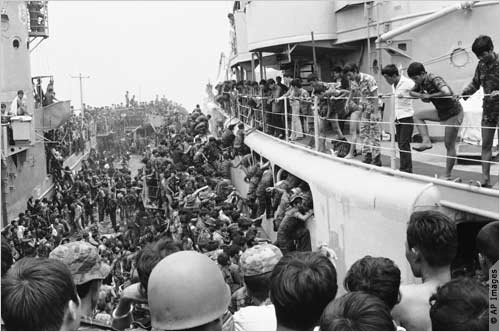
S.  Vietnamese in Da Nang struggle to climb aboard ships that will evacuate them to Cam Ranh Ba

(South Vietnamese struggle to board ship in Da Nang to escape North Vietnamese forces, April. 1975)

The texture of the book is evident from the outset as Nguyen describes the horrific scenes that took place in Saigon as the city was about to fall.  The description puts the reader outside the American embassy and Saigon airfields as frightened Vietnamese who worked for, and, cooperated with the United States sought to escape before North Vietnamese troops took the city.  The narrator returns to his childhood when he, Man, and Bon, three friends become blood brothers for life.  As the novel unfolds we follow the relationship between the three that is rather complex since Man becomes a Commissar for the north, Bon is a soldier in the South Vietnamese army, and the narrator suffers from the duality of being a spy for the north and a police interrogator for the south.

Many important themes are developed in the novel.  The conflict between east and west or occidental and the orient are deeply explored in the dialogue between the characters.  The moral dilemma of what is right and wrong in our daily actions hovers over each page, and how a person tries to cope with their own divided heart. The author’s sarcasm is at times humorous, but also very disturbing as the narrator tries to understand the history of his country and the demands it makes upon him.  The history of the war is explored in the context of certain important decisions by the United States, the Hanoi government, and the remnants of the Saigon regime.  Nguyen descriptions are intense and very pointed, i.e., as the narrator explores who invented the concept of the “Eurasian;” he states “that claim belongs to the English in India who found it impossible not to nibble on dark chocolate.  Like pith-helmeted Anglos, the American Expeditionary Forces in the Pacific could not resist the temptations of the locals.  They, too, fabricated a portmanteau word to describe my kind, the Amerasian.  Although a misnomer when applied to me, I could hardly blame Americans for mistaking me as one of their own, since a small nation could be founded from the tropical offspring of the American GI.  This stood for Government Issue, which is also what the Amerasians are.” (19-20)

The Sympathizer 

The author creates a number of interesting and complex characters that carry the storyline nicely.  The right wing Congressman from Orange County, California who wants to fund and train the South Vietnamese counter-revolution, the Hollywood producer who is making his own movie version combining the Green Berets and Apocalypse Now, the northern commandant who tries to purify the revolution through the reeducation of those who have gone astray, and many others.  The narrator’s plight is very important as he tries to integrate his memories of his country in a heartfelt manner throughout the novel.  Whether he discusses Vietnamese geography, culture, or his family and friends, he seems adrift when in America, and then adrift again, when he returns to Vietnam.

The book is a triumph as a first novel, but at times it can be very dark.  I suppose that is acceptable based on the historical background of the war and the story it tells.  It is a unique approach to trying to understand a war that ended over forty years ago, but that had been fought since the late 19th century when the French first imposed their colonial regime.  The history of the war and the scenes that are presented seem authentic and should satisfy those interested in the literature of the war and how people tried to cope and survive the trauma it caused.

THE LAST BOOKANEER by Matthew Pearl

The Last Bookaneer: A Novel

In Matthew Pearl’s latest historical thriller, THE LAST BOOKANEER he raises the question of what is a  “book’a-neer’ (bŏŏk’kå-nēr’), n. a literary pirate; an individual capable of doing all that must be done in the universe of books that publishers, authors, and readers must not have a part in.” Further he states that it is a person who was part of “the mostly invisible chain of actors that links authors to readers.” These definitions provide the basis for Pearl’s continued ability to design and develop plot lines that bibliophiles find endearing and all consuming.  After his successes with THE DANTE CLUB, THE POE SHADOW and THE LAST DICKENS his latest effort finds the reader engrossed in a tale centered in the Samoan Islands in the early 1890s involving a supposed last novel from the pen of Robert Louis Stevenson.  In fact, in 1890 Stevenson did purchase a 400 acre tract of land in Upolu in Samoa where he built his estate in the village of Vailima where he would live until his death in 1894. A major part of the novel is centered on the estate and the surrounding area encompassing its topography and the lives of the Samoan people.  What makes the novel a success is Pearl’s continued ability to place the reader in the 19th century and creating a wonderful literary yarn that reeks of a possible reality.

The story evolves as Edgar Fergins, an English bookseller imparts the history of bookaneers beginning in 1790 and the first American laws that governed copyrights that left out foreign authors, causing foreign countries to withdraw the protection of American authors.  What resulted was the plundering of literature on both sides of the Atlantic.  Publishers resorted to hiring covert agents to scour the world for manuscripts in the hope of publishing important items first.  Employing spying and intimidation these individuals were a focal point of the publishing industry.  Pearl provides a number of bookaneers for the reader to engage with.  Whiskey Bill and Kitten reappear from previous novels, but it is the American, Penrose Davenport, employing Edgar Fergins in his quest to seize Stevenson’s last manuscript, THE SHOVELS OF NEWTON FRENCH that dominate the story along with their arch enemy in the chase, Benjamin Lott, better known as Belial.  As countries moved toward an international agreement on copyright laws in the last quarter of the 19th century, the livelihood of bookaneers was threatened with extinction.  The background for the story is served by Davenport and Belial’s fear that the race for Stevenson’s manuscript would be the last such adventure that they would ever engage in.  This leads to a story that centered on lies and deception, with vengeance and guilt not far from the surface.

Pearl’s love of books emerges through his diverse characters as Fergins remarks, “For readers, books are a universal salve.  When we are hot, we read to feel cooler, when we are cold, we read to warm up; tired, books wake us; anxious, they calm us.” (142)  The keeper of a bookstall has insights that no one else has.  “From the type of cracks in the spine and the edges of pages, I can tell at a glance a book that is well read from a book that has been abused….books are not just words on the page, but the blots and the dog-earned corners, the buttery thumbprints and pipe ash we leave on them.  Books are written over with names, dates, romantic and business propositions, gift dedications, the pages could be pressed onto flowers, keys and notes.  A book can unfold moments or generations.…how odd it must be to go through life believing that a book [is only] a book.” (289)

Previous Upolu island – its jungle interior

Sopo’aga Waterfall, north of Lotofaga along the eastern cross-islands road.

Next
Sopo'aga Falls view

The story is narrated by Fergins in large part as he conveys his experience in Samoa and the literary industry in general to a dining car waiter he has met in New York named Clover.  Later in the novel Clover will take over as the second narrator as the plot takes a most unusual twist.  Through his characters Pearl provides the reader with an exquisite description of the Samoan Islands and its people.  We see the beauty of their customs and the loyalty they express.  At this time the natives are caught in a crossfire between German and English interests on the islands that creates an indigenous civil war that they must contend with.  There are parts of the novel that remind us of Joseph Conrad’s HEART OF DARKNESS which also examined civilized vs. primitive societies.  Through the portrayal of Stevenson’s bohemian lifestyle we witness a somewhat civilized society, while on the other hand we see the savageness of the bookaneer in the characters of Davenport and Belial, while the local Samoans seem to be the epitome of the purity of the human soul.

If you enjoyed Pearl’s previous historical mysteries, his current effort will not disappoint.  The plot continuously shifts and offers numerous surprises.  It calls forth emotions in the characters as well as the reader and Pearl’s style as he describes “Tusitala” (Stevenson’s Samoan name) reign as a chieftain in the Pacific as we witness a contented man who has escaped the industrialized world for the simplicity and freedom that he yearned for.   

The Lady from Zagreb (Bernie Gunther Series #10)

THE LADY FROM ZAGREB is the tenth book in Philip Kerr’s Bernie Gunther series.  Gunther a former homicide detective before the rise of Nazism, an ideology that he finds abhorrent, is a character in absorbing historical thrillers that are set in Germany in the 1930s, World War II, and the Cold War.  Gunther is a very self-effacing and likeable individual who is one-quarter Jewish and has a propensity to offer humorous wisecracks that cut to the core of a German history between 1933 and 1945, a time frame that has destroyed the lives of millions of people.  In Kerr’s current effort we find Gunther in the French Riviera circa, 1956 reminiscing about World War II, and his relationship with a beautiful German actress, Dalia Dresner.  The novel binds together a number of plot lines.  We find Dr. Joseph Goebbles, the head of the Nazi Ministry of Propaganda and National Enlightenment with his own policy and sexual agenda; a series of murders, one happening to have been a client of Gunther; the intrigue of wartime Switzerland with spies ranging from the head of the Office of Strategic Services, Allen W. Dulles to SS Brigadefuhrer Walter Schellenberg who would become the head of Nazi foreign intelligence; a Hitlerite plan to invade Switzerland, and a plot to prevent such an invasion in the name of bringing about negotiations to end the war; the barbarity and cruelty of the Balkans that fifty years later would explode in Yugoslavia; and of course the machinations of Detective Gunther with his constant cynicism and sarcasm.

Kerr is a talented writer who weaves important historical characters and events throughout his story.  The narrative involves numerous historical figures that include Dr. Goebbles; Nazi Foreign Minister Joachim von Ribbentrop; SS Reichsfuhrer Heinrich Himmler, in charge of the Nazi genocide of the Jews; SS Obergruppenfuhrer Ernst Kaltenbrunner, Chief of the Reich Main Security Office; SS Brigadefuhrer Schellenberg; SS Obergruppenfuhrer Reinhard Heydrich, one of the main architects of the Holocaust and Chief of the Reich Main Security Office before his assassination; SS Gruppenfuhrer Arthur Nebbe, Gunther’s boss and a mass murderer in Bialystok during the war; Allen W. Dulles; Anten Pavelic, Croatian leader of the murderous Ustase; Hajj Amin al-Husseini, the Grand Mufti of Jerusalem and Nazi ally; and many other important figures.  Historical events are also not neglected as the Russian genocide of Polish officers at the Katyn Forest; the destruction of the Czech village of Lidice as punishment for the assassination of Heydrich; the allied bombings of Dresden and Hamburg; the slaughter in the Balkans; and Nazi war plans are all integrated into the novel.

(Joseph Goebbles Nazi Propaganda Minister)

Gunther’s personality, wit, cynicism and charm remain the same in Kerr’s latest effort.  His pointed historical commentary are as irreverent as always.  Finding himself in Croatia and a witness to the slaughter between Croats, Serbs and Muslims as he searches for Dalia Dresner’s father, who supposedly is living in a monastery, brings about the question as to “how does a Franciscan monk get to be an Ustase Colonel?” The answer offered is “by being an efficient killer of Serbs.” In describing Goebbles, Gunther said that while he was wearing a white summer suit, he looked “exactly like a male nurse in an insane asylum, which was perhaps not so very far from the truth.”    In addition, upon meeting the Grand Mufti’s guards, Gunther wondered why Hitler hated Jews and not Arabs.  “After all, some Jews are just Muslims with better tailors.”  In thinking about his own experiences on the eastern front and now facing the realities of the Holocaust, Gunther explores the competition inside the Nazi bureaucracy between the SS and SD, the Gestapo and the SD, Goebbles and Goering, Kalternbrunner and Himmler, the SS and the Nazi Party, the Luftwaffe and the Wehrmacht, and the role of German businesses.  In particular, Gunther is confronted by the use of slave labor by Siemens and Daimler-Benz during the war and he hopes that in the future historians will research what they have done and inform the public.  Recently in the case of Siemens his request was answered by Sarah Helm’s new book RAVENSBRUK, and in the case of Daimler-Benz, Neil Gregor and Bernard Bellon have exposed their crimes, though neither corporation has ever admitted their guilt or paid the appropriate compensation to their victims.  Further, as he is confronted by death seemingly at every turn, Gunther ponders whether German crimes are the worst in history.  Referencing the Turkish genocide of the Armenians, the British in India, Belgians in the Congo, Spain in the New World, and Russia under Stalin in the 1930s, the detective surmises that Germany is in good company when it comes to historical atrocities.

(Swiss-German border)

Gunther is an excellent detective that seems to find trouble no matter the situation.  At the outset Gunther, who has been transferred to the Third Reich War Crimes Department (Kerr really has a sense of the absurd), is forced to make a speech at a police convention.  From that point on the story begins to evolve.  Gunther begins to investigate the murder of a former client at the same time as Goebbles assigns him to find Dalia’s father.  On this mission Gunther becomes entangled with the Swiss police and other spies.  In addition, Gunther learns that there is an effort to try and bring about negotiations to end the war and that certain SS officials are buying barracks from the Swiss to use in concentration camps.  All of these situations come together, while at the same time Gunther tries to follow his conscience and accomplish his goals while working within the Nazi system.  As Kerr has written he does not like heroes who behave heroically, and in Bernie Gunther he has created just such a protagonist. The dialogue between the characters is very entertaining and Kerr manages to repeatedly raise the issue of morality in the context of Gunther’s actions, a very difficult task.

Without going into any further detail of the story, Kerr has once again created a successful mystery that will keep the reader fascinated and entertained as they are taken to another time and place.  If you enjoyed the previous offerings in the Bernie Gunther novels, THE LADY FROM ZAGREB will not disappoint.  As far as Bernie Gunther’s future is concerned in a recent interview Kerr said he was already planning for the eleventh book in the series.

THE ALEXANDRIA LINK by Steve Berry

(The Sinai Desert, the possible location of the lost Library of Alexandria, Egypt)

What if the biblical basis for the Israeli state was incorrect?  What if the real evidence for the creation of the Jewish state was in western Saudi Arabia?  What if the ancient translations that led to the writing of the Old Testament from old Hebrew and Greek were open to an interpretation that could destabilize both Israel and Saudi Arabia and reorient the geopolitics of the Middle East?  Intertwine the writings of St. Augustine and St. Jerome; add some nefarious characters that would stand to enhance their power and monetary profit, and sprinkle in American politics and you have the basic premise of Steve Berry’s novel, THE ALEXANDRIA LINK.

The book is part of Berry’s series featuring Cotton Malone, a retired member of the U.S. Justice Department’s elite Magellan Billet who lives in Copenhagen and operates a bookstore.  The story begins with a scene from April, 1948, when the British gave up their mandate over Palestine realizing that they no longer have the power to broker a peace between the Arabs and Jews.  We meet George Haddad, a nineteen year old Palestinian who grows frustrated interrogating a man who had come to speak with his father.  The man came with ideas pertaining to a peace settlement, but two weeks before the man’s visit his father had been killed.   Haddad was in no mood to chat with another peace messenger in the midst of the nakba, “the catastrophe,” and executed his prisoner.

The novel quickly shifts to contemporary Copenhagen where Cotton Malone is confronted by his estranged wife, Pam informing him that their son Gary was kidnapped.  The ransom for Gary’s release is the “Alexandria Link,” something only Malone and a few others have knowledge of.  The result is a bombing of Malone’s bookstore and violent confrontation that leads to Gary’s release.  Despite this release the plot begins to further evolve as Malone realizes that he must uncover the “Alexandria Link,” which is the location of an ancient Egyptian library supposedly located in Alexandria.  According to George Haddad, now a grown man, a philosopher and theologian, within the library lays evidence that God’s covenant with Israel delineated in the Bible may be mistaken.  The Israeli and Saudi governments do not want this information to become public knowledge and their security services work to block any progress in discovering the library and its artifacts.  In the United States the Vice President is allied with a European syndicate, called the Order of the Golden Fleece, whose chair, Alfred Hermann is determined to destabilize the Mideast for the economic and political benefit of his cabal.

The plot brings Malone from Copenhagen, to London, Lisbon, the Sinai with his new companion his ex-wife Pam.  Characters from previous novels have major roles; Henrik Thorvaldsen, a Jewish Danish billionaire and close friend of Malone; Stephanie Nelle his former boss in the Justice Department; and Cassiopeia Vitt, an art historian and well trained in the military arts.  New additions include the previously mentioned Alfred Hermann; Dominick Sabre, an operative hired by Hermann who later in the book goes by the alias James McCollum who has his own agenda when it comes to the “Alexandria Link;” Larry Daley, a presidential advisor with his own plans; Attorney-General Brent Green who seems to support a number of positions; and President Robert Edward Daniels, Jr.

As with all of Berry’s novels in the Malone series the reader must pay careful attention as the author integrates legitimate, theoretical, and counter-factual history with contemporary events and politics.  Historical figures permeate the narrative as they are interwoven to support or discredit what the fictional characters deem important.  The plot line concerns power politics and wealth but Berry tries to base much of his action on uncovering “knowledge” as a weapon in the geopolitics of the Middle East.  In this case the knowledge rests on the concept that God’s promise to Abraham for a Jewish homeland in Canaan as written in the Torah is not accurate, thereby debunking the major argument in the Jewish religion for Israel’s existence.

As the story progresses we witness Mossad agents enter and leave.  Further an assassination plot to remove the President of the United States seems to be on the table.  A proposed deal between al-Qaeda and elements in Washington is in place.  Saudi assassins seem to appear everywhere.  There is even an interesting visit by David Ben-Gurion to the Alexandria library and a host of other interesting historical occurrences that may or may not have ever occurred.  Thankfully Berry provides an addendum at the end of the book to inform the reader as to what he has made up and what actually took place.  But what cannot be denied is that he has chosen a topic that has tremendous relevance to current geopolitics in the Middle East.  There is no doubt that the books opening scene displaying the hatred between Palestinians and Jews still remains in place today.  All we have to do is point to the events of last summer between Israel and Hamas.  Though a very good yarn, Berry does provide some important contemporary issues to contemplate.

Berry has written numerous historical novels and though I have only read three, I look forward to continuing to explore his Cotton Malone series as they are interesting, educational, and very entertaining.

A FAITHFUL SPY by Alex Berenson

(Osama Bin-Ladin’s al-Qaeda strong hold in Tora Bora, Afghanistan before US bombing is 2001)

Alex Berenson’s first novel, THE FAITHFUL SPY introduces us to a new type of operative in the war on terror.  John Wells is a CIA agent who goes underground trying to infiltrate al-Qaeda before 9/11.  He is successful in penetrating the terrorist organization and proves his metal in Chechnya, Afghanistan, and Iraq.  While embedded inside al-Qaeda he develops an attraction to Islam as a way of life and converts.  Wells, who originally hailed from Montana remains loyal to his country despite his conversion, but will disappear from CIA radar for over ten years creating doubts about his reliability.   He finds many practices in America difficult to accept which in part, is why he turned to Islam.  Despite his commitment to his new religion, he finds al-Qaeda to be abhorrent and he never entertains the idea that he will not protect his country.

The novel begins shortly after 9/11 on the Shamal plain north of Kabul.  Wells is leading a group of Taliban and al-Qaeda fighters into a trap, but at the same time he must avoid American F-15 bombers circling overhead.  At the same time Jennifer Exley, Wells’ CIA handler is aboard the USS Starker off the coast of Virginia waiting to interrogate another American who has ”flipped” to the Taliban.  Her goal is to learn more about Jalal, Wells’ Islamic name as she has not heard from him in two years.  From this point on the novel evolves into a suspenseful story that is stunning in detail.

Berenson creates fascinating characters which are true to life.  Omar Khadri, travels freely in the United States and has set up a number of hidden cells throughout the country.  Farouk Kahn, a physicist who has possessed enough nuclear material to create a dirty bomb.  Tourik Durant, a graduate student studying micro-biology at McGill University in Montreal is developing a strain of Y pestis to unleash pneumonic plague.  We are also presented with various CIA characters apart from Exley; Ellis Shafer and Vincent Duto who disagree over Wells’ loyalty.

The author exhibits excellent command of historical events.  Whether discussing operations in Afghanistan or the United States, the actions taken by his characters ring true.  Whether describing the rendition of suspected terrorists and their subsequent interrogation, Berenson strikes an accurate chord.  He integrates historical nuances of the war, particularly the internal factions within al-Qaeda, the role of the U.S. military, and the attitude of American politicians.  His discussion of Osama Bin-Ladin, the actions of the Pashtun tribes, the Northern Alliance, and the Taliban are accurate and provide the reader a history lesson while they become immersed in the plot surrounding Wells.  Legitimate historical figures permeate the storyline ranging from Ayman al-Zawaheri, al-Qaeda’s number two person to A.K. Kahn, the Pakistani nuclear scientist who exports his expertise.

Berenson’s opposition to American Iraqi policy is apparent.  Throughout the book we are privy to his feelings about torture and other techniques employed to gain information from prisoners.  As we read on American errors in Afghanistan become clear as the Bush administration drops the ball and invades Iraq under false pretenses.  Overall, Berenson has created a credible scenario with a new type of character.  John Wells believes he has failed his country by not warning his handlers about 9/11 and other events, and wants to make sure he does not fail again.

As a side bar to Berenson’s first effort, the New York Times reporter earned the Edgar Award for A FAITHFUL SPY and has written a number of sequels developing the character of John Wells in a number of interesting ways.

THE LAW OF DREAMS by Peter Behrens

(The Irish countryside during the 1846-1850 potato famine)

Over the years a myriad of books dealing with the Irish potato famine and the resulting immigration to the United States have appeared.  Some are non-fiction and others fall into the historical fiction category.  Peter Behrens’ novel, THE LAW OF DREAMS is a wonderful addition to the historical fiction genre encapsulating the plight of the Irish in mid-nineteenth century England as they made their way across the Atlantic.  What separates Behrens’ effort from the rest is the poignancy and sensitivity of his story and the development of his characters.

The novel begins as Own Carmichael, returns from the county seat at Enis where he is informed by his land agent, who manages the affairs for the landlord, the sixth Earl that he must “eject” as he terms it, the peasants who work his land.  The reason given is that it is more profitable to raise sheep for mutton than have the peasants work the land.  The agent warns Owen he must carry out the landlord’s orders or he would be responsible for the rent.  For the agent, “sheep, not people is what you want to fatten.  Mutton is worth money.  Mutton is wanted, mutton is short.   Of Irishmen, there’s an exceeding surplus.” (5) As he returns to the farm, Owen contemplates what choices are available to him.  As he walked home he passed women and their naked children who were scrounging in a turnip field for survival.  From this point on Behrens’ novel unfolds through the eyes of Fergus, a fifteen year old boy whose family is about to be “ejected.”

The core of the novel takes place in the late 1840s as Behrens describes Fergus’ life once alonenes is forced on him.  We follow him through the Irish countryside, aboard ship to Dublin and Liverpool, the strenuous Atlantic crossing, and his final arrival in Canada.  Throughout, the reader is exposed to the horrendous conditions which the Irish must cope; hunger and poverty permeate every page.  From the fields, the work house, railroad construction, or aboard ship, people make life altering decisions each day.  Along the reader’s journey, Behrens provides heart rendering descriptions of the Irish underclass as they have to deal with their daily travails.  From descriptions of Liverpool’s shanty areas, red light districts, to labor on the railroads, the reader is enveloped by the story.  Evidence of the Industrial Revolution’s grip on English towns and cities are everywhere.  Fergus chooses the life of a tramp on the road over the freedom of the railroad for a time, and then gives in to his loss of freedom as he realizes he must go to America.

What makes this novel a success is its ability to integrate the underclass that the Irish poor represent throughout the storyline.  We witness Fergus’ family’s struggle to survive under a tenant based land system that is skewed toward the land lord.  A system designed to keep Irish peasants in poverty from generation to generation.  We witness the death of Fergus’ family something that is easily predictable based on the situation.  Next is Fergus’ struggle to survive living on the road as a tramp, a path with its own self-contained rules that represents a very violent society.  Rural life is a day to day battle, but once Fergus meets Arthur we are provided a window into the racial divide that the Irish confront each day in Liverpool.  Be it street riots, life in a brothel, working laying railroad tracks, or trying to avoid becoming a victim of typhus, the hard ships endured by Fergus seem to constantly multiply.  Perhaps the most stirring aspect of the story is the voyage on the “Laramie” that brings Fergus and Molly together as they try to reach America and avail themselves of a life of freedom and opportunity.

Throughout, Behrens develops an interesting dynamic among his characters.  Arthur, who tries to educate Fergus in a world apart from serfdom, and Molly, a hardened women who employs her body as a tool to live another day.  Once Fergus falls in love with her we are privy to a caring but cruel relationship.  On board ship we meet Mr. Ormsby who will change Fergus’ life.   We are exposed to the individual stories of the passengers who we must admire for their courage as they try to escape poverty and make their way across the ocean.  Each person has their own fears and anxieties about their pasts and what awaits them in the future.

Behrens’ dialogue reflects the social class divide and ethnic nationalism that pervades Ireland that includes the rural and urban existence of the English poor.  The author’s command of language, the dialects he presents and the meaning of each phrase provides insight into a story that he tells that reflects the experience of his own family.  As he makes transitions from each scene to the next, be it Fergus’ experience in the work house, the bog boys tramping in the countryside, life in the Dragon House brothel, or coping with typhus aboard ship we experience the nasty side effects of the Industrial Revolution that drive men like Mr. Coole to abandon his religion to bring his children to America.  All of these characters create their own stories within the overall plot line that captures the reader’s attention and keeps them turning the pages.  Behrens is very adept at introducing new characters and then dispatching them, with only Fergus feeling their loss as they pass through the novel.  The end result is that the author leaves the reader wondering what will happen to Fergus, a question that can be easily resolved by reading his latest novel, THE O’BRIENS.

THE DAY OF ATONEMENT by David Liss

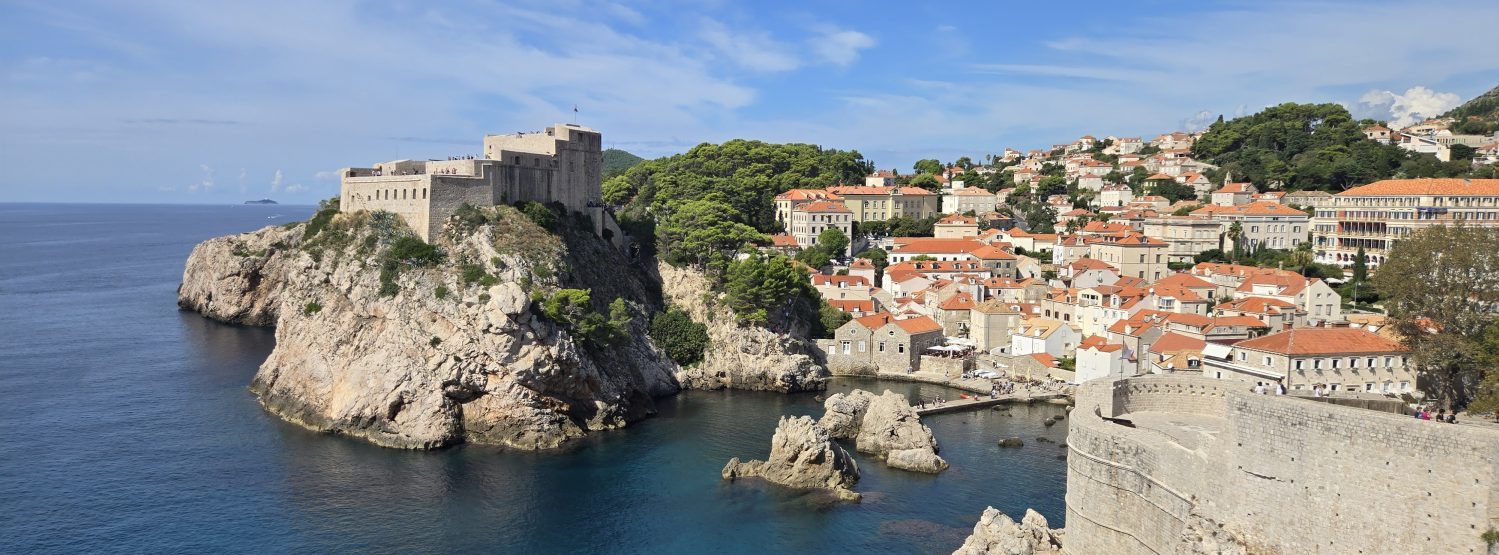
(18th century Lisbon, Portugal)

In David Liss’ new book, The Day of Atonement we meet Sebastiao Raposa, a thirteen year old boy who is forced by his mother to flee Lisbon because of the actions of the Inquisition.  In the mid 18th century Portugal is in the midst of a virulent Inquisition that targets any one and anything for what it perceives to be a violation of the Catholic churches precepts.  Sebastiao’s father has been seized by the Inquisition and his mother knows that she and her son will be next.  She convinces a former business associate of her husband, Charles Settwell to smuggle Sebastiao on a ship that was sailing for Falmouth, England.  The young man will make his way to London where he will remain for ten years before returning to Lisbon in 1755.  He assumes the identity of a business man named Sebastiao Foxx to seek revenge against Pedro Azinhiero, the Inquisitor who had destroyed his family and forced him to forsake a young girl, Gabriela,  who he believed would someday become his wife.  Unhappy as to what he had become in London he chose to return to Lisbon to gain the satisfaction of destroying the Inquisition and restoring his self worth.

While in London Sebastiao came under the tutelage of Benjamin Weaver, a character that Liss had developed in previous novels; A Conspiracy of Paper, A Spectacle of Corruption, and more recently, The Devil’s Company.  Weaver is a former Jewish boxer, now a “thief taker” (“a person paid to find people and other things” (42) who Liss employs to explore the corruption, economic panic and anti-Semitism among other ills of society.  In his new novel Liss has Weaver teach Sebastiao the art of deception and the skills needed to catch and punish thieves.  Sebastiao’s family was among many Jewish families that had been forced to convert to Christianity generations ago.  They were called “New Christians” but many maintained their religion in secret.  Though raised a Catholic, while in London Sebastiao was circumcised and renewed his commitment to Judaism.  Once in Lisbon he meets a number of characters who play an important role in his trying to achieve his goals, however the more people he meets the more difficult it becomes to maintain his new identity and carry out his wishes.

Sebastiao meets with Charles Settwell, who has fallen on hard times, when he learns that his father may have been betrayed to the Inquisition, as Settwell states, “I fear he was the victim of a plot to take his wealth and throw him to the dogs that he might expose the crime.” (65)  Further, the Inquisition is still angry that his father’s wealth was not recovered.  This and further information make Sebastiao aware that his task had become more complex.

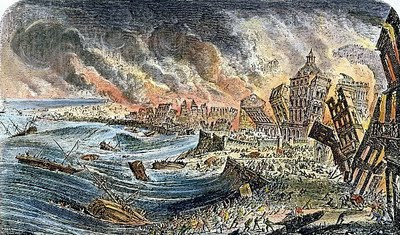
(tidal wave that resulted from the earthquake that hit Lisbon, November 1, 1755)

At first Liss seems to describe a plot of simple revenge by a child grown into manhood against a corrupt priest.  The goal of revenge quickly grows in proportion to include; ensuring the safety of a number of individuals, and paying a few past debts relating to his father and his childhood.  This is the dilemma that Liss’ protagonist must confront as he is faced with a contest of wills with Pedro Azenhiero, the man he set out to kill, but also is the man who threatens all those he loves from his past.  As the story unfolds Sebastiao falls deeper and deeper into the abyss of human deception.  One after another of his beliefs and relationships seem to fall by the wayside.  Liss weaves an engrossing tale full of foul characters, deceit, and a yearning for love and stability.  What emerges is that Sebastiao comes to the realization that his inability to judge others has allowed him to fall into a trap that he must figure a way out of.  Sebastiao’s actions become clouded in moral judgment as he must make decisions that will alter the lives of all around him.  He is confronted with his inability to murder the Inquisitor when Lisbon falls victim to a major earthquake.

Liss presents wonderful word pictures through his prose.  The scenes he paints of 18th century Lisbon are effective and accurate.  His description of Lisbon during the earthquake reflects the intense preparation that Liss engages in once he sits down to prepare a story.  He produces marvelous character sketches and allows the reader to enter the phenomenological world of each individual and watch their own emotions rise and fall depending on how a given scene evolves.  Liss confronts what is the dichotomy of life, the quandary of human emotion.  The issues of greed, revenge, temptation, love, kindness, sincerity are all explored.  Is atonement and redemption possible?  I guess what it comes down to is that people are nothing more than a mixture of flaws and virtues.  All of which are explored in Liss’ wonderful novel.

EDGE OF ETERNITY by Ken Follett

(The Berlin Wall, 1961-1989 as it snakes through the divided city)

In EDGE OF ETERNITY, the third volume of Ken Follett’s 20th century trilogy, the author continues to amaze his readers with his lengthy fictional history of the last hundred years through the prism of five interconnected families that he developed in “FALL OF THE GIANTS, AND “WINTER OF THE WORLD.”  The construct of the Russian, English, Welsh, German, and American families continues as the novel opens with Rebecca Hoffman, a Russian language teacher at the Friedrich Engels Polytechnic Secondary School being summoned to an East German police station to be questioned by the Stasi.  Upon entering the Stasi office in East Berlin she learns that her husband is a spy and that their marriage was a sham resulting in the end of her marriage, and a Stasi officer husband who would pursue a revengeful course against Rebecca and her family for years to come.  With the first strand of the novel laid out, Follett develops the character of George Jakes, a young black lawyer who has just graduated from Harvard Law School.  Jakes agrees to take part in the Freedom Bus Rides then embarking for Alabama.  The result is white backlash and violence against the Freedom Riders as southern law officials stand by.  Jakes’ journey following his experience in Alabama leads him to a position in the Justice Department in Washington, working with Attorney General Robert F. Kennedy.  By presenting these two historical threads Follett begins to unravel his narrative by juxtaposing the lack of freedom in the “communist world,” represented by East Berlin and the lack of freedom in the “democratic world” in the American south.  A third thread leads the reader into the political machinations of the Kremlin through the characters of Dimka Dvorkin, an aide to Soviet Premier Nikita Khrushchev, and his twin sister, Tanya, a reporter for the TASS news agency.

The evolution of these characters, in conjunction with numerous others will take the reader through the 1960s and culminates with the downing of the Berlin Wall with an epilogue featuring the inauguration of Barack Obama as president of the United States.  During the journey, the reader will become engrossed in the Cuban Missile Crisis, the Civil Rights Movement, the Berlin Crisis, the Vietnam War; the assassinations of John F. Kennedy, Martin Luther King, and Robert F. Kennedy, the Soviet invasion of Czechoslovakia, the Soviet dissident movement, the rise of Solidarity, the Iran-Contra affair, and the development of rock music during the period.  Throughout, Follett links characters from the first two volumes in his trilogy to create further continuity with the current volume.  Based on the length of the narrative and the complexity of the different plot lines Follett must have engaged in a great deal of historical research and I would love to see the sources he consulted.

Follett’s representation of historical events is mostly accurate though there are a few missteps.  He does a superb job discussing the 1961 Vienna Summit between John F. Kennedy and Nikita Khrushchev as he agrees with the standard account that the Soviet Premier walked out of the summit firmly believing that he could push the young American president around.  He follows this part of the narrative employing Dvorkin and other aides to powerful Kremlin figures in highlighting the debate concerning the exodus of people from East Berlin to the west and finally coming to the solution of building a wall to divide the city.  The reader is then lead through an account of the Cuban Missile Crisis.  Many of the well known details of the crisis are available to the reader but some of the debate within the Kremlin and Kennedy’s cabinet seem general and lacking credibility.  For example, placing a young aide to Khrushchev to be in charge of riding heard on the conservative forces in the Soviet Defense Ministry as a main component of the narrative is hard to fathom even if we accept the artistic license of historical fiction.  The evolution of Dimka Dvorkin to such a position of power is very difficult to accept. In addition, Follett’s chronology dealing with the crisis is somewhat confusing.  The author is not clear about the Soviet downing of a U-2 plane, first alluding to the 1960 incident of Francis Gary Powers, and then finally mentioning the downing of a U-2 plane during the crisis.  More importantly it takes Follett more than half the book to allude to the role that Communist China played in the geopolitical world.  He forgoes any mention of the competition between Mao Zedong and Khrushchev for the hearts and minds of the third world.  Further, Follett’s elevation of George Jakes to being a primary aide to Robert Kennedy so quickly is also hard to accept as is the author’s integration of JFK’s sexual peccadilloes into the narrative, but leaving out his role in the assassination of South Vietnamese President Ngo Dinh Diem.  Again, I accept that this is a work of fiction and there are certain needs that have to be met to draw the reader’s attention, but let’s at least stay the historical course.

Follett does a much better job detailing the Civil Rights Movement through his fictional characters.  We witness an accurate portrayal of Martin Luther King and the portrayal captures other civil rights leaders and the political roadblocks that needed to be overcome very nicely.  We see the waffling of the Kennedy administration over civil rights and the fear of how it will impact the 1964 presidential election.  Follett seems to favor Lyndon Johnson as a civil rights president after Kennedy is assassinated.  One of the most interesting aspects of the book is how Follett weaves a “mini” history of rock music in the 1960s into the narrative by developing characters that go through the process of discovery, writing music, performing in the midst of the Cold War.  Follett also does an exceptional job developing the dissident movement in the Soviet Union through the character of Vasili Yenkov, an Alexander Solzhenitsyn type character who is exiled to Siberia and has his writings smuggled out of the Soviet Union through East Germany.  Once Follett’s narrative dealing with the Kennedys is complete the book seems to be on firmer ground and becomes a much better read.  We have the Jane Fonda type character in Edie Williams, the Angela Davis type character in Verena Marquand, the G. Gordon Liddy type in Tim Tedder, and for baby boomers it is fun to try and pick out which characters are replicating actual historical figures.

As previously mentioned, perhaps the most interesting aspect of the novel deals with rock music.  Employing the characters of Walli Franck and David Williams, Follett provides the evolution of a rock band in the context of the Cold War.  The character of Walli is especially important because it is intertwined with the situation in East Germany and a family that is haunted and harassed by a Stasi agent, Hans Hoffman, who is also Rachel’s husband.  We witness Walli’s escape to West Berlin as did his sister Rachel and her boyfriend before him.  Walli’s story is especially poignant.  He will escape East Berlin but his pregnant girlfriend refuses to leave.  It takes over twenty five years for Walli to finally be reunited with his daughter Alice.  The juxtaposition of Walli’s drug addiction and music career to events in Germany and Eastern Europe is accomplished successfully, and enhances the storyline as the novel comes to a conclusion, with the uniting of the Franck family as the Berlin Wall comes down.

(June 26, 1963, John F. Kennedy’s “Ich bin ein Berliner” in West Berlin)

The conclusion of Follett’s “century trilogy,” accomplishes a great deal.  It takes the reader through the most important events of the Cold War in Europe and the United States culminating in the end of communism as we knew it in 1989.  For those who are historically curious about this period they will emerge very satisfied with the characters and the role they play in Follett’s historical novel.  Events are fairly accurate considering this is a work of fiction and if one pays attention; the author provides his own analysis as the reader moves through the story.  Follett’s own view is clear as Tim Tedder, the former CIA operative watches the opening of the Berlin Wall and provides a toast to the end of communism, “Everything we did was completely ineffective.  Despite all our efforts Vietnam, Cuba, and Nicaragua became Communist countries.  Look at other places where we tried to prevent Communism: Iran, Guatemala, Chile, Cambodia, Laos…None of them does us much credit.  And now Eastern Europe is abandoning Communism with no help from us.” (1093)

(The Berlin Wall comes down, November 9, 1989)

BACK CHANNEL by Stephen L. Carter

Whether reading Stephen L. Carter’s THE EMPEROR OF OCEAN PARK and the novels that follow that genre to his historical novel, THE IMPEACHMENT OF ABRAHAM LINCOLN I have always felt very satisfied and contented when completing one of his books.  After reading his latest effort at altering American history by recreating a fictional account of the Cuban Missile Crisis in BACK CHANNEL, I did not complete my reading with the same feeling.  To his credit Mr. Carter has complete command of the events that led up to the 1962 crisis, the diplomatic machinations between the Soviet Union and the United States, as well as the domestic pressure that was exerted within each government.  In a useful afterword, Carter explains the differences between his version of events and those that actually occurred allowing the reader to compare the two, and hopefully emerge with an accurate accounting for what took place.  The book is not even counter-factual history, it is more a fantasy that if you were not cognizant of actual events then you might fall into the trap and be engrossed with the plot.  It was difficult to accept the story line that Carter creates at the outset those American intelligence officials would employ a nineteen year old, black college student at Cornell University as a companion for chess champion Bobby Fischer at a competition in Varna, Bulgaria.  It seems at a previous match the Soviet champion had told Fischer that in Varna he would provide further information about Soviet intentions in Cuba.  From this point on the college student, Margo Jensen is involved in a whirlwind of espionage that will lead her to become the back channel conduit between Alexandr Fomin, a KGB Colonel, representing Soviet Premier Nikita Khrushchev, and President John F. Kennedy.  For those familiar with actual events you will remember there was a back channel during the crisis as Mr. Fomin met with ABC News reporter John Scali.  The substitution of Miss Jensen for Scali and the narrative that the author creates does not create a gripping tale for this reader.

Jensen meets a number of interesting characters in her journey ranging from State Department intelligence types, CIA agents, KGB Counter Intelligence officers, along with important historical figures like McGeorge Bundy, Kennedy’s National Security advisor and others.  We witness Jensen’s growth from an untrained college student in the art of espionage to one who will amaze those who have to deal with her.  The plot thickens as the missiles are discovered and the Soviet Union and the United States are brought to the brink of war.  On the Soviet side we meet Viktor Borisovich Vaganian, a KGB Captain in Counter Intelligence who is trying to discover who on the Soviet side leaked the information identifying what Moscow hoped to accomplish in Cuba.  His ally is a rogue American who is working for a domestic group that believes that Kennedy does not have the back bone to deal with the Russians.

As the book evolves the Cuban Missile Crisis is recounted with a number of historical details that are missing, rearranged, or created anew as it becomes clear that there is a war party in the United States who want to use the crisis as a vehicle to destroy the Soviet Union while the United States held the military advantage.  In the Soviet Union, Khrushchev must deal with his own war party who favors striking during the crisis because they believe that if the opportunity is allowed to pass they will have lost any hope of defeating the United States whose technological future was much brighter than Moscow.  Each war party tries to undo the back channel that involves Jensen, putting herself and those involved with her in repeated danger.

To Carter’s credit we are taken inside the Ex Comm national security meetings in Washington and the viewpoints of the participant run fairly close to what actually occurred.  The rendering of Generals Maxwell Taylor and Curtis Le May seems to hit the spot as are the views of Robert Kennedy, McGeorge Bundy, Robert McNamara and others.  Once the crisis is settled Carter presents two scenes that ring very true for the future.  In a conversation between Bundy and Kennedy, the president now satisfied the crisis is over turns his attention to what should be done about Vietnam as the administration begins to gear up for the 1964 election.  Secondly we witness a conversation between a CIA type, who Carter describes as a “traveling salesman of the clandestine world,” and Jensen, who is afraid what Kennedy’s domestic enemies might do in the future, the intelligence agent states that, “Still, if I were president, I suppose I’d watch my back.”  A strong reference to future conspiracy theories involving those who felt Kennedy was soft on Cuba leading to his assassination in 1963.

There are other moments in the narrative that move away from the crisis and involve Jensen’s family, particularly her father who was killed during World War II.  She learns that he was a hero and was blown up in order to avoid being captured by the Nazis as he ran agents during the war, and did not die, as she was previously led to believe in a motor vehicle accident.  The issue of course was that he was black, and the intelligence community did not employ such people during the war.  Because of this slight, Carter presents Jensen as the daughter who carries on her father’s work and her tenaciousness and character stem from his DNA.  We also meet other characters from Carter’s previous novels, i.e.; her grandmother, Claudia Jensen, Major Madison, Jack Ziegler, Vera Madison, and Agent Stilwell among others.  They are all integrated seamlessly and fit into the story line nicely.

(Soviet Premier Nikita Khrushchev and President John F. Kennedy chatting in Vienna, June 4, 1961)

The story began in a Conflict Theory class at Cornell taught by a former/current spy named Lorenz Nieymeyer and his prize student Margo Jensen.  Their relationship formed a secondary plot that is evident throughout the narrative as Margo is confronted with an adventure she never could have expected.  In an area of the book’s strength, Carter allows their personal and intellectual relationship to evolve and he closes his story by having the two meet, this time Miss Jensen holds the moral and intellectual high ground, and because of her ordeal she held her former professor in much lower esteem.  Had Carter written a novel centering more about their relationship with the Cuban Missile Crisis in the back ground it might have made for a stronger narrative and a more believable one?

THE LAST MAGAZINE: A NOVEL by Michael Hastings

(President Bush’s “Mission Accomplished Speech,” May 1, 2003)

Recently, I saw an interview with Michael Hastings’s widow in which she described her husband’s last book published soon after his death.   I looked forward to reading it as her comments about the subject of the novel were very appealing, and having read some of his previous articles in Rolling Stone and Newsweek, I immediately picked up a copy of the book.  However, having just completed it, I am a little disappointed.  THE LAST MAGAZINE: A NOVEL encompasses a number of story lines.  The most important seem to be the battle that the print media faces as it tries to deal with the digital world of websites and blogs.  In addition, Hastings skewers the liberal media for its support of the invasion of Iraq in 2003.  Finally, there is the character, A.E. Peoria, a journalist on the international desk for The Magazine, and his journey to achieve personal fulfillment.  Employing a cynical and sarcastic methodology the novel is at times reminiscent of the works of Kurt Vonnegut, but it does not have the depth or the symbolism that one would hope for.  I admit that there are a number of humorous asides, like describing the Clinton-Lewinsky episode as the “Pentagon of blow jobs.”  Or analyzing the problems of an American occupation of Iraq after the invasion, as Hastings concludes that “no one ever accuses America of being a nation of historians.”  Despite many astute comments, the novel is missing a degree of cohesiveness despite the fact that the narrator, who happens to be named Michael Hastings periodically, inserts his personal situation into the story as he as he writes a novel.

Hastings, the author, not the character integrates historical events throughout the dialogue.  In discussing the promise of the Bush administration that the invasion of Iraq would take three months and that American troops would be home by Christmas, Hastings brings up Lyndon Johnson’s similar promises during the Vietnam War, promises made by Pope Gregory VIII during the Third Crusade, and Napoleon’s promise as he invaded Russia in 1812.  Hastings historical observations are dead on as his characters discuss the American occupation of Iraq in relation to Japan and Germany after World War II.  The problem is that those successful occupations do not apply to Iraq as their situations were totally different.  The only similar occupations were in Vietnam and the Philippines, and we all know how that turned out.

The subject that Hastings is most concerned with is decisions that THE MAGAZINE’S editorial staff made in covering of events related to the Iraq War.  The main characters involved are Nishant Patel, an intellectual snob of Indian descent, who is the international editor; Sanders Berman, a southerner, who is THE MAGAZINE’S leading reporter; Michael Hastings, an intern; and A.E. Peoria, an investigative reporter whose personal identity crisis interferes with his work.  As with most of the American media in the run up to the invasion of Iraq in March, 2003, the editorial board of THE MAGAZINE goes all in for war.  The arguments that are presented ring of Cheney, Rumsfeld, and the neo-con crowd as Patel and Berman prepare articles researched by their intern to support the invasion.  The episode dealing with the torture and demeaning of Iraqi prisoners at Abu Ghraib highlight Hastings condemnation of the liberal media.  When the magazine places the story on its cover it is confronted with Bush administration denials and as anger across the country increases because of the articles lack of patriotism, in conjunction with the predictable worldwide Islamic backlash resulting in numerous Iraqi deaths, THE MAGAZINE and its editors go into full damage control.  To save its reputation Patel and Berman choose Peoria as its scapegoat send him to appear on CNN which results in a media disaster.   Peoria seems to apologize for the cover and article while being interviewed by a “Wolf Blitzer type” and the magazine follows up by instituting “new regulations to prevent this kind of mistake from happening again.” (211)  Peoria is suspended and he continues his emotional spiral that in the end will lead to what appears to be personal renewal. During the episode Hastings, the character, leaks the truth of the story, but it gets little press as the governor of Virginia is caught receiving a “blow job” on an Amtrak Acela train.

Hastings, the character, emerges once again in relation to Peoria’s resurrection at THE MAGAZINE.  It seems that the magazine’s darling, and acting editor in chief, Sanders Berman is a guest on the Don Imus radio program.  When Imus describes the Rutgers women’s basketball team as “nappy-headed hos,” Berman seems to snicker at the comment, and now is being branded with the broad brush of racism that encompasses Imus and his staff.  After three years on the syndicated program, Berman is incredulous that he didn’t know that Imus was capable of such remarks.  THE MAGAZINE cuts its relationship with the radio talking head, but it needs to refocus public attention away from Berman.  Enters Peoria with a story about an Iraqi war hero who was wounded during the invasion in 2003 and as a result lost the lower region of his anatomy and became a transvestite, or as Hastings, the  writer, calls a “sheman.”  Peoria who had saved this soldier, Justin and/or Justina’s life during the invasion, and becomes his or/her lover has this story that could save THE MAGAZINE.  At the same time, Hastings, the character, the mole inside THE MAGAZINE fills in on a blog entitled, wretched.com as a hedge against losing his position at the magazine, or as wretched.com’s head Timothy Grave calls “dead trees.”

(ICIS execution of Iraqi citizen, June 12, 2014)

In the current unstable political climate in Iraq and the threat of ICIS, Hastings reminds us of what a mistake the invasion of Iraq was and the tragedy that has resulted.  He also sends a message to the liberal media’s complicity in the 2003 invasion.  The book is encapsulated best by James Rosen in his review in the June 16th edition of the Washington Post, “Here is the duality that appears to have gripped Hastings most profoundly: America as Good vs. America as Not Living up to the Hype of Good.  He sees this in the Green Zone and in Columbus Circle.”