THE PERSIAN by David McCloskey

Aftermath of Israeli strikes, in Tehran

(A view of the cityscape in the aftermath of Israeli strikes, in Tehran, Iran, June 13, 2025).

Since the 1979 Islamic Revolution and the arrival of the mullahs at the head of Iran’s attempt at theocracy relations with the United States have been fraught with hatred.  Over the years wars, assassinations, terrorism, computer related attacks, spying, kidnappings, a nuclear deal and its revocation, and economic sanctions have been the norm.  Today Iran finds itself at a crossroad.  Its Supreme leader, Ayatollah Ali Khamenei is eighty-six years old and nearing the end of his reign, and as Karim Sadjadpour writes in his November/December 2025 issue of Foreign Affairs, “The Autumn of the Ayatollahs” the twelve day war last June laid bare the fragility of the system he built.  Israel bombed Iranian urban centers and military installations, allowing the United States to drop fourteen bunker busting bombs on their nuclear sites.  Tehran’s ideological bravado and its inability to protect its borders along with the defeat of its proxies, Hezbollah and Hamas has reduced its threat to the region. 

Apart from the succession problem Iran faces a choice of how to prioritize its nuclear program, but with no negotiations, oversight, or concrete knowledge of Tehran’s stock of nuclear material another war with Israel seems inevitable.  Despite Donald Trump’s insistence that the United States “obliterated” Iran’s nuclear enrichment program, officials and analysts are less sanguine.  Iran may have been weakened, but it has not become irrelevant.  As the rhetoric between Iran and the Trump administration ratchets up it is clear that the Tehran government suffered an ignominious defeat at the hands of Israel and the United States.  The Iranian economy continues in a freefall, and the regime remains in power through coercion and threats.   In this domestic and diplomatic climate, a novel that reflects the current forceful environment should attract a strong readership.  THE PERSIAN by former CIA analyst and best-selling author David McCloskey, fits that need as the author takes readers deep into the shadow war between Iran and Israel and plays out a scenario that is quite plausible.

Aerial view of Tehran, with the Alborz mountain range, Iran

(Aerial view of Tehran, with the Alborz mountain range in the background)

McCloskey begins the novel describing the assassination of Abbas Shabani, an Iranian scientist who was an expert on drone-cladding, making drones invisible.  The murder was carried out by a woman using a joystick at a Mossad site near Tel Aviv.  The operation continues Israeli policy of killing anyone it believes is a threat to the Jewish state engaging in any component of Iran’s nuclear preparation – a policy that is accurate in fiction as well as the real world.  McCloskey immediately shifts to an Iranian interrogation room where Kamran (Kam) Esfahani, a Persian Jewish dentist.   Kam, the main character and narrator of this taut political thriller, is counting down the days until he has enough money to leave Sweden for sunny California.   The interrogation allows Kam to rewrite and rework his confession over a three year period enabling the author to recount his novel through Kam’s acknowledgement of being part of a plot that killed Ismail Qaani, a member of the Qods Force, Unit 840.  The group is run by Colonel Jaffer Ghorbani whose  reason for being created is to kill Jews.  Kam had been recruited by Arik Glitzman, head of the Mossad’s Caesarea Division, who offered to pay him a fortune to sow chaos in Iran. Trading the monotony of dentistry for the perils of espionage, he runs a sham dental practice in Tehran as a cover for smuggling weapons and conducting surveillance.  McCloskey offers a wonderful description of Glitzman which is emblematic of his character development as the head of the elite team within the Caesarea Division of Mossad is described as “Napoleonic, short and paunchy with a thatch of black hair and a round face bright with a wide smile.  There was fun in his eyes and if they had not belonged to a secret servant of the state…they might have belonged to a magician, or a kindergarten teacher.”

In addition to using Kam’s voice to relate a major part of the story, McCloskey organizes the novel by repeatedly shifting back and forth in time and location as he organizes his chapters.  A key character who appears often is Roya Shabani who witnessed the assassination of her husband and seeks revenge against Israel.  She will be given that opportunity as part of Ghorbani’s unit, initially carrying out low level tasks.  Soon her immediate superior, Hossein Moghaddam, a Qods Operation Officer, who falls for her carries out an assassination of Meir Ben-Ami, Arik Glitzman’s deputy reflecting the real world that Israeli and Iranian intelligence regularly engage in.

An aerial shot of the Stockholm City Hall in Sweden

(Stockholm, Sweden)

McCloskey’s CIA background and research allow him to portray assassinations, the use of technology for spy craft, recruitment of assets, and organizing operations in such a realistic manner heighten the reader’s immersion into the novel.  In an NPR interview which took place on “All Things Considered” program on September 29, 2025, McCloskey admits that as a former CIA analyst who has been posted throughout the Middle East he is able to draw upon a great deal of inside knowledge in creating his characters and present them as authentically as possible.  The authenticity of his characters and storyline is enhanced as his novel must pass through CIA censors and at times he is amazed as to what the “Publication Review Board” allowed to remain in the book.  In a sense the book itself is prewritten as the actions of Iranian and Israeli intelligence officials and agents create the bones of an insane spy novel.

Aspects of McCloskey’s novel weigh heavily on the real world of espionage as the author delves into the fact that Israel was at a disadvantage in the world of espionage since it did not have diplomatic relations with the countries that surround her in the Arab world – it did not have embassies to hide intelligence officers who could carry out its operations.  As a result, operational teams are cobbled together, surged to where they are needed, and disbanded when the operation is completed.  Israel has to create different types of cover than the United States, United Kingdom and others because of this disadvantage and it amazes how successful they are when the playing field is not level.

Dagestan, where the Samur flows into the Caspian sea

(Caspien Sea)

McCloskey is very successful in creating multiple storylines as he goes back and forth between time periods and locations.   A major shift occurs when the kidnapping of a target fails as somehow he is murdered.  This causes Glitzman to change his plans on the fly resulting in Roya becoming a major focus of the novel.  Her evolution from the spouse of a scientist to an espionage asset is fascinating as is that of Kam.  The author does an exceptional job tracing Kam’s progression from an unsuccessful Iranian Jewish dentist raised in Sweden into a reluctant and fearful spy into someone who becomes devoted to his mission.  The explanation that is offered makes sense as Kam develops his own feelings of revenge toward Iran and its agents who kicked his family out of the country, for decades has laid siege to the country of Israel and wants to eradicate its entire population.  The problem is that his mission will result in his capture and the reader must wait until the last page to learn the entire truth bound up in his confession.

(Evin Prison’s main entrance)

The author’s goal in the book, which was already written before the war of last summer, was to go beneath that kind of overt conflict and get to the heart of the shadow war between Israel and Iran.  After reading THE PERSIAN it is clear that he accomplishes his goal completely as his characters must survive in a world of intrigue, paranoia, and what appears to be a world of endless violent retribution.

(Tehran, Iran)

THE OLIGARCH’S DAUGHTER by Joseph Finder

(View of the Kremlin from across the Moskva River, 2012)

In 1963, Jimmy Soul sang; “If you want to be happy for the rest of your life, never make a pretty woman your wife, for my personal point of view get an ugly girl to marry you…….”  This advice is very prescient for Paul Brightman, alias Grant Anderson in Joseph Finder’s latest spell binding novel, THE OLIGARCH’S DAUGHTER.  Brightman, an analyst and investor at Aquinnah Capital in Manhattan marries a photographer named Tatiyana Belkin.  It turns out she is the daughter of Russian oligarch, Arkady Galkin who runs AGF, a financial investment firm, also in New York City.  From the outset, Finder has hooked the reader as he has done in his sixteen previous suspense novels.

The author starts the novel rather placidly, but within a few pages a violent scene plays itself out as Grant Anderson, a boat builder is aboard his friend Lyle Bourdeaux’s boat substituting for him to lead a fishing excursion for a customer named Frederick Newman.  We soon learn that Newman was sent by a Russian oligarch to kill him.  Anderson turns the tide on Newman and after escaping Newman’s grip and gun, feeds him to the sharks.  It turns out that Anderson is not who he appears to be, having arrived in Derryfield, New Hampshire five years earlier and learned the boat building trade from “Old Man Casey,” and becomes involved with a teacher named Sarah Harrison.  But Anderson has a past, with a different name, and a few hours later two Russian thugs come to his house and kill his friend Alec Wood, a local policeman.  The FBI immediately becomes involved, and Anderson finds himself on the run from two divergent groups.

Super yacht Amadea

(The superyacht Amadea in Coronado, Calif., on June 27, 2022)

Finder organizes his novel by alternating between the past and the present over a six year period as he engages in sudden shifts in time.  “It’s Finder’s very effective method of ramping up threat and suspense. The revelations of modern espionage here—like ‘the only uncrackable safe is one that no one can find to crack’—come in quick bursts of surprise, seasoned by a gently sardonic viewpoint.”  He takes the reader back and introduces Paul Brightman who has a successful career and a rising star on Wall Street until he meets Tatiyana Belkin who he immediately falls in love with, unbeknownst to him she is the daughter of a Russian oligarch who appears to work  for the Kremlin.  Soon Aquinnah Capital goes under, and Arkady Galkin offers Brightman a job tripling his pay.   He will be approached by Mark Addison, an FBI agent who investigated Russian oligarchs and how they laundered their money and convinces Brightman to engage in aspects of spy craft for the government.  Brightman is in a quandary; he loves Tatiyana whom he marries but finds himself investigating his father in law.

It is easy to see where this is going.  Brightman takes on a new identity, that of Grant Anderson to escape Galkin’s revenge.  The novel moves quickly from scene to scene as first Anderson is on the run, and we are filled with further background pertaining to his real identity.  Finder keeps the reader on the edge of his seat as each scene unfolds.  However, at times the author makes assumptions without enough detailed explanation.  For example, when Brightman is first approached by Addison to engage in “dirty work” for the FBI he agrees almost without question, not weighing the possible risks enough and how it would impact his personal life.

(Author, Joseph Finder)

Finder’s description of the life of a Russian oligarch is fascinating and provides the reader a great deal of insight as to how they conduct their businesses and private life.  As Finder relates in a January 28, 2025, interview on NPR; “It is real. It is real. But, you know, what’s interesting about these oligarchs is that they are billionaires. They own sports teams. They are also patrons of the art in the U.S. They are sort of – I call them the new Medicis. And they are – and were, I should say – princes of the realm, princes of capitalism, in a sense, until the war in Ukraine began. And then they were persona non grata. They – overnight, they were forced out of the country. And this transformation – going from being somebody that you wanted on the board of your museum or your hospital or your university to someone who you wouldn’t acknowledge was, to me, humanly fascinating, and it made this an interesting story to tell.”

Another interesting aspect of the novel that Finder develops is how easily a person can disappear in the digital age.  The novel relates that the secret these days is to find a small town where they don’t have CCTV cameras and to live a life based on cash. Do not open a bank account. Or if you open a bank account, don’t earn any interest.  The key is not to pay taxes, because once the IRS learns who you are they are very good at tracking you down.  Further, Brightman/Anderson is able to employ many of the skills his “off the grid father” taught him.  It is clear that Finder has conducted a great deal of research to make his story authentic. 

Sometimes the novel becomes a bit complicated, but in the end all plot lines come neatly together in this ever surprising plot as Paul will have to unravel a decades-old conspiracy that involves the highest members of government.  This is not a novel about espionage as such; it has more to do with how espionage is being financed. It is, if you can believe the story, whose ending is not predictable, but in the end rather convincing in true Finder style.

The Moscow Kremlin in Russia today

(The Kremlin)

HOTEL UKRAINE by Martin Cruz Smith

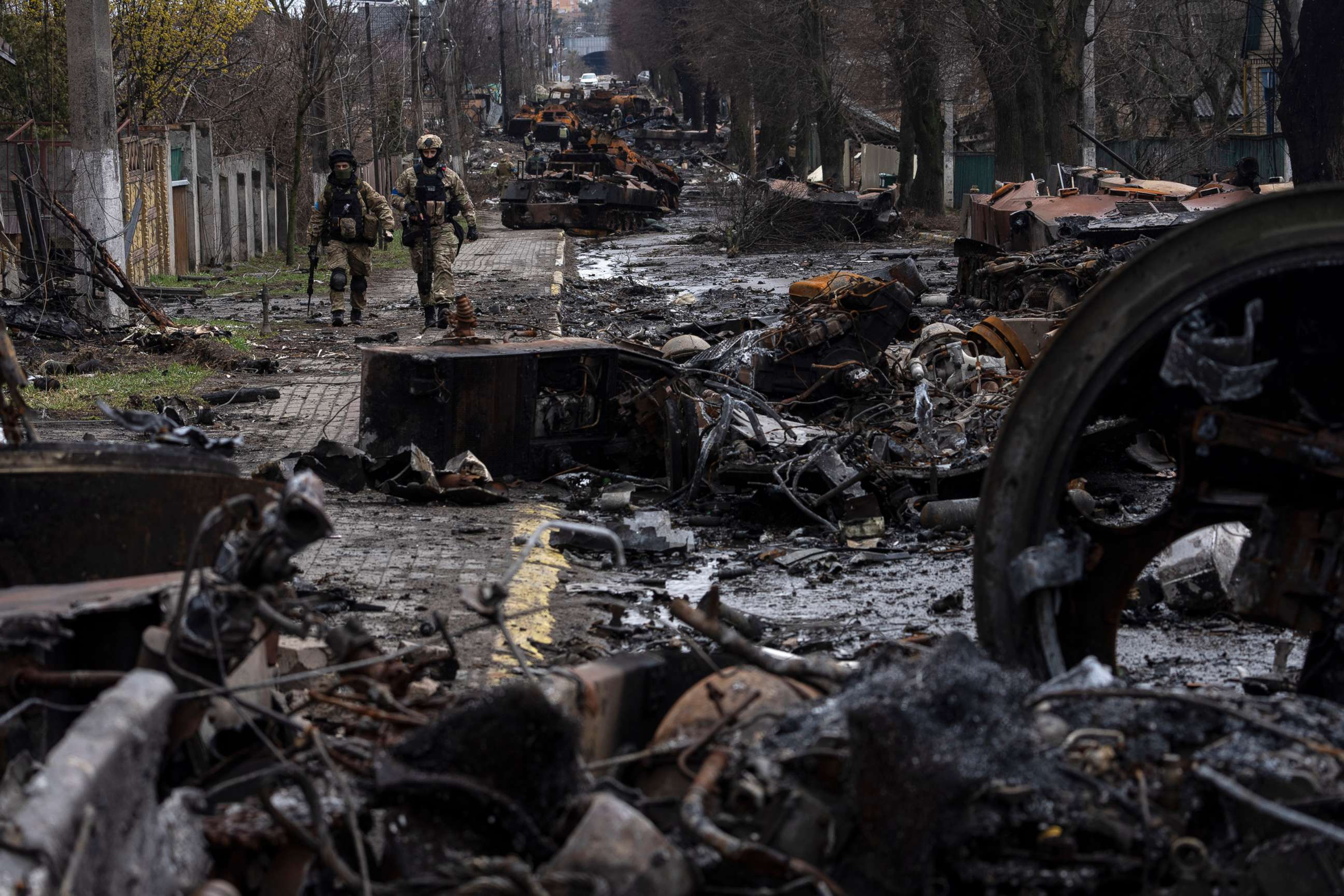
PHOTO: Soldiers walk amid destroyed Russian tanks in Bucha, in the outskirts of Kyiv, Ukraine, April 3, 2022.

(Soldiers walk amid destroyed Russian tanks in Bucha, in the outskirts of Kyiv, Ukraine, April 3, 2022. Ukrainian troops are finding brutalized bodies and widespread destruction in the suburbs of Kyiv, sparking new calls for a war crimes investigation and sanctions against Russia)

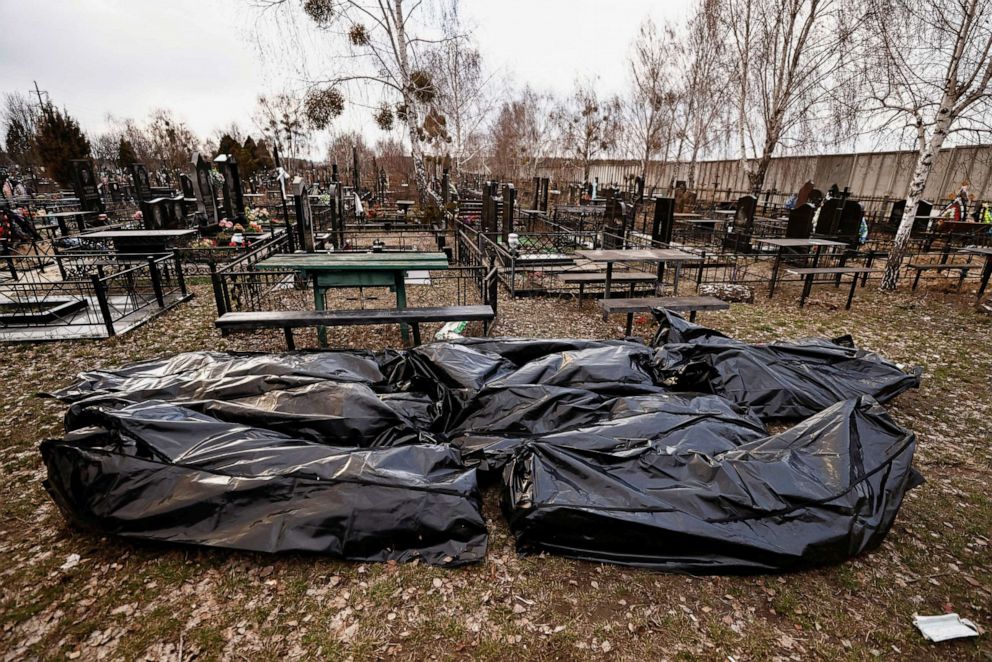
On February 24, 2022, the Russian military following the orders of Vladimir Putin launched an invasion of Ukraine.  The Russian autocrat believed his forces would take Kyiv in short order.  However, as in most wars things did not go as planned as the Ukrainian army stopped any advance on their capital and as Russian forces receded they committed numerous savage atrocities in the Ukrainian city of Bucha.  Fast forward three and a half years the war continues with no end in sight as it appears that Putin has no desire for peace as evidenced by his meeting with President Trump two weeks ago and the failed diplomacy that followed.  This summer Russian bombing of Ukrainian cities has increased and there does not seem to be an end in sight.  The ongoing war in Ukraine serves as a backdrop to Martin Cruz Smith’s eleventh and final installment of his Arkady Renko novels entitled HOTEL UKRAINE.

This map shows the locations of known Russian military strikes and ground attacks inside Ukraine after Russia announced a military invasion of Ukraine. The information is current as of March 1, 2022 at 11 a.m. eastern time.

In previous novels we learn that Renko, Smith’s Moscow based investigator suffers from Parkinson’s disease and his symptoms have grown worse.  At the outset of the novel, we find Renko in Pushkinskya Square among Russian citizens demonstrating against the invasion of Ukraine.  Renko meets his son Zhenya who is arrested for shouting anti-war slogans, and he is grabbed by the police and arrested.  This will be the first instance in the novel that Smith mirrors actual events as he is charged with using an illegal word, “war,” as Russian authorities refer to events in Ukraine as a Special Military Operation.

The next day Renko is assigned by Prosecutor General Zurin to investigate the murder of Alexei Kazasky, one of twelve Deputy Ministers of Defense who was killed at the Hotel Ukraine.  Almost immediately Renko is reintroduced to a former lover, Marina Makarova, an FSB agent who wants to pin the murder on Yuri Blokhin, a second class advisor at the Ukrainian embassy who turns out to be an SBU agent (equivalent to an FSB agent).  Renko’s investigation proves Blokhin is being set up and an angry Makarova is forced to release him.  She wants to control the investigation and eventually gets Renko removed from the case by outing him to his superiors that he suffers from Parkinsons.

There are a number of interesting characters that are introduced particularly Renko’s son Zhenya’s friends and compatriots in opposing the war, Misha and Margarita who are members of the Black Army – a group of hacker activists who do their best to educate the Russian public as to the truth of the war in Ukraine.  They research the truth and put it out on social media, attack Russian websites, for example, ministries, links, infrastructure and businesses like Gazprom, in addition to doing the same to Putin’s ally, Belarus.

(Martin Cruz Smith)

As the novel progresses more and more Smith integrates real events and people into his story.  A case in point is Lev Volkov, a former Spetsnaz soldier who fought in the first Chechen war.  Volkov founded a private army called the 1812 Group which fought in Crimea in 2014.  The group is funded and armed by Putin and Smith recounts their activities particularly in Central Africa and Mali as they take over mine complexes and control the extraction of valuable resources.  Volkov was an oligarch, warlord, and political operator who mirrors the real life Victor Prigozhin and his Wagner Group who engaged in the same activities in Africa and was used by Putin as a surrogate army in Ukraine until Putin’s “former cook” went too far and perished in a plane crash.  There are other examples of the real war portrayed including the role of sanctions and its economic impact on Russian society, the shortages that develop especially medicines to treat Parkinson’s etc.

The novel takes a major turn as Renko after viewing a thumb drive that hackers make available to suspects that the murder of Kazasky is linked to a suspect who was in Bucha and used a similar weapon to commit atrocities as was used to kill the former defense functionary.  Renko’s girlfriend Tatiana Petrovna, an investigative reporter for the New York Times convinces Renko to go to Bucha to explore the possibility that what he saw on the thumb drive is the key to solving the murder.  The problem is that Renko has been put on leave and was ordered to stand down.

Renko himself realizes that his Parkinsons have slowed him down, but he is intrigued by the case.  It is interesting that the author suffered from Parkinsons for over thirty years and on July 11, at the age of 82 he succumbed to the disease almost to the day that his last Renko novel was released.  Renko and Tatiana go to Bucha avoiding the problems caused by the war and arrive “going the long way around” from Athens to Warsaw to Ukraine. 

HOTEL UKRAINE  brings Arkady full circle as it is a prominent location from an earlier Renko novel, GORKY PARK.   A tense meeting occurs between Lev Volkov,  who is tired of Tatiana’s storylines, and it is possible he will have her killed.  Smith offers  powerful scenes, such as when Arkady’s consciousness makes the hallucinatory transition from thinking that he’s undergoing an extreme attack of Parkinson’s, to the realization he’s been poisoned.  The sequence is probably derived from Smith’s own experience, which lends a high degree of authenticity to the novel.  Smith’s reality transferred to Renko, the ongoing war in Ukraine which has caused the death of over million people and has destroyed Ukrainian villages and towns all appear in a story whose end is sad as we realize will no longer have this novelist and his characters to entertain us and make us think about the realistic stories and characters he has created.

(Bags containing bodies of civilians are seen at the cemetery after being picked up from the streets before they are taken to the morgue, amid Russia’s invasion of Ukraine, in Bucha, Ukraine April 4, 2022)

LOCKED IN by Jussi Adler-Olsen

(Vestre Prison, Copenhagen, Denmark)

A number of years ago I was browsing in a bookstore in Copenhagen, Denmark when the store manager suggested a Department Q novel written by Jussi Adler-Olsen.  When my wife and I travel I love to buy crime novels written about foreign destinations by local authors.   Adler-Olsen fit the bill and I have read all Department Q novels ever since.  I purchased his latest LOCKED IN when it was published and haphazardly misplaced it.  After watching Matthew Goode’s performance as DCI Carl Morck in Netflix’s new Department Q series I immediately conducted a search of my study and located the novel.  Once read I can honestly state Adler-Olsen has not lost his touch.

Adler-Olsen’s latest takes place during the Covid-19 epidemic as Morck is charged with drug trafficking and murder which threatens to ruin his life and career.  Imprisoned and surviving a number of attacks inside the incarceration facility, Morck’s colleagues at the Copenhagen Police Department, especially Marcus Jacobsen, the Chief of Homicide refuse to provide any assistance, and in fact they make his situation worse.  The only support he receives is from his compatriots in Department Q, Rose Knudsen, Hafez El- Assad, and Gordon Taylor who imperil their own careers to assist him.

Adler-Olsen develops his plot slowly as a drug laden suitcase is found in Morck’s attack.  Its contents were unknown to the Copenhagen detective, and it leads to a thirteen year old convoluted case whereby two of his team partners can offer no help.  One, Anker Hoyer, a corrupt cop who died in 2007 and another, Hardy Henningsen, had been paralyzed by a bullet from the same drug case.  Morck was unaware that Anker, a social climber, was working with a drug cartel which led to suspicions concerning Morck.  The author creates a unique way that the Dutch/Danish drug cartel permanently removes those who were not loyal – using a nail gun to their skulls, hence the name “nail gun cases” that Morck is implicated with.

Slagelse Kloster og Helligåndskirken.

(Slagelse Remand Center, Copenhagen, Denmark)

Once arrested and taken to Vestre prison, Morck and his wife Mona are shocked to learn as a police officer he was not placed in protective custody, particularly because over the years Morck was responsible for placing a number of Vestre inmates in cells.  Adler-Olsen has created a complex story involving police corruption and the attendant failure of human nature when it comes to earning a “little extra money.”  A key character is Eddie Jansen, a Rotterdam police detective who was on the take for years and now his “bosses” want him to arrange Morck’s murder inside the prison.  Once he fails to accomplish his task, Eddie is on the run with his family because the drug cartel “does not suffer fools gladly.”

Adler-Olsen excels at introducing his characters in detail, highlighting their motivations and actions.  One such character is Malthe Bogegard, a drug enforcer who is imprisoned with Morck.  He has a brother who is facing death from a rare disease.  No doctor in Holland can save him, however there is an experimental operation that can be performed in a German hospital which might save him.  The catch is money.  When a large fee is offered by the drug cartel to kill Morck, Malthe believes his problem is solved.  Another is Merete Lynggard who years earlier, Morck rescued her from imminent death after she was kidnapped.  To repay her savior, she turns up visiting Morck’s wife Mona and offers her assistance.  She is fully recovered from her ordeal and owns a security company with many inside contacts and resources.  Lastly, Detective Bente Hansen who created her own drug business as a side hustle within her department.

Matthew Goode in Dept. Q

(Matthew Goode as DCI Carl Morck in ‘Dept. Q’)

The author does an excellent job describing prison life – which prisoners ruled, the corrupt guards and administrators, and the outside criminals that can dictate events inside the prison.  Adler-Olsen delves into the debilitating effect imprisonment has on an individual.  In Morck’s case he begins to question his successful career, the impact on his wife and daughter since he was sure he was innocent.  After a while he began to feel like a prisoner and felt sorry for himself. The novel shows how a person can be falsely accused and sent adrift by former colleagues allowing for the accused to acquire a reputation for duplicity, evil, and God knows what else in the eyes of the public.  It also reflects on how people turn against a person of good reputations and an effective law enforcement officer.

Another interesting area of exploration is that of the “rag sheets” that present themselves as legitimate newspapers.  In this case it is The Gossip, whose lead reporter is a rather sleazy type named, Pelle Hyttested who has carried a grudge against Morck for years, and his editor, Torben Victor, who at first decided to cooperate and help uncover the truth that Morck was being framed and rehabilitate his reputation with the public.  However, Torben changes his mind under pressure from the Police Department and decides to hang Morck out to dry. 

The author is a master creating plot lines that are unusual.  The first to grab my attention was how Eddie Jansen decides to infect his own family with Covid 19 by taking infected tissues from a hospital waste area and have his family use it as a means of convincing his wife Femke to leave their home and go into seclusion as he could not tell her that a drug cartel was trying to kill him.  Another, is the arrival of Hardy Henningsen who has spent years in physical rehabilitation from his injuries in the “nail gun case” visiting Morck in prison housed in a plastic suite with electronics that allow him a degree of mobility while offering to uncover the truth and free Morck.

(Author, Jussi Adler-Olsen)

The cold case investigation uncovers a series of murders, including Morck’s first lawyer, Adam Bang; Import-Export Company front  DKNL Transport owner Hannes Theis, and Rasmus Bruhn, a major drug courier who was tortured and killed in Rotterdam in 2014, among others.  As Department Q digs deeper and deeper they try to uncover who the assassins paymaster is; why do they want Morck dead; and which higher ups in the Police Department are complicit in the old drug case.

It will take Adler-Olsen about half the story to present a clearer picture of what happened in 2007 when he introduces Wayne Peters who he describes as discovering the joys of lying at the age of four.  The reader is provided a brief discussion of Peters’ personality and how he developed a career that led to a drug empire and the murder of anyone who crossed him.  Peters, who remains in the background with little exposure is the lynch pin of the drug cartel and his penetration of certain police departments is telling.

As Department Q defies police higher-ups it is clear that the final volume of the series is well worth reading.  The one piece of advice I would offer is to catch up on prior novels in the series as a number of important figures from the department’s past make reappearances. LOCKED IN is a satisfying ending to Adler-Olsen’s Scandinavian noir series that has done a wonderful job of entertaining readers for over a decade, especially Caroline Waight’s translations.

Gange med celler i Vestre Fængsel i København, fredag den 19. november 2021.

(Vestre Prison, Copenhagen, Denmark)

MAGPIE MURDERS by Anthony Horowitz

This may contain: an old stone building with many windows on the front and side of it, surrounded by green grass

(1950s English Manor House)

Truth be told, I became familiar with Anthony Horowitz’s novel MAGPIE MURDERS by watching PBS Passport’s Masterpiece Mysteries.  I was familiar with Mr. Horowitz’s work through his screenplays of “Foyles’ War” and “Collision.”  After watching his impressive writing for television, I became a fan and began watching the “Magpie Murders” series on Masterpiece.  In the past I had purchased a number of Horowitz’s mysteries and decided it was about time I read MAGPIE MURDERS while I was binging the series with my wife on television, particularly when Horowitz stated the novel was about a “whodunnit writer who is murdered while he is writing his latest whodunnit.”

At the outset we are introduced to Susan Reyland, the editor for mystery writer Alan Conway.  She has just received his last novel in his Atticus Pund detective series and as she read on  she found herself reading a novel within a novel.  Horowitz’s approach in MAGPIE MURDERS is unique as Conway’s work is presented in detail centered around the death of Mary Blakiston, the maid/house cleaner for Sir Magnus Pye.  Soon, Pye will also be murdered, and the number of possible murderers is long – including Robert Blakiston, Mary’s son who stated in public that he wished she was dead; Johnny Whitehead, a career burglar who ran an antique shop with his wife, Gemma who felt Mary’s commentary was slandering him; Joy Sanderling, a nurse for Dr. Emelia Redwing whose marriage to Robert was blocked by Mary.  There are also a number of suspects for the Pye killing – Magnus’ wife, Francis despised her husband and was locked in a loveless marriage and was having an affair with Jack Dartford, her financial advisor in London; Clarissa Pye, Magnus’ sister who he treated horribly and robbed her of wealth; and Neville Brent, the Gardner at the Pye residence who was fired by Magnus.

Actor Tim McMullan as Atticus Pünd in Magpie Murders on PBS MASTERPIECE

( Atticus Pünd is the beguiling and clever 1950s detective featured in Alan Conway’s fictional novels. He’s a compassionate  gentleman; a German refugee of Greek-Jewish descent who survived the concentration camps)

Horowitz creates a number of subplots to go along with his main focus.  For example, Mary’s death; the development of Dingle Dell, a large tract of land part the Pye estate was being sold off to developers angering the locals who loved its beauty and did not want “citified” people from London into their village.  Further, the relationship between Magnus and his sister where Magnus lorded over his wealth to his sibling, when in fact they were twins and she emerged from the womb first, but Dr. Edgar Rennard, on his deathbed announced he had switched the twins at birth assuring the male child would be the heir to the Pye family holdings.

The other major story involves the death of Alan Conway.  A cantankerous and nasty man, who could be friendly when it was called for, was engaged in writing his last Atticus Pund detective novel when he learned he was dying of cancer.  He submitted his last manuscript and when Susan Reyland, his editor read it she learned the last chapter was missing.  This allows Susan to don the cap of a detective as she hunts for the missing chapter which holds the key to many aspects of the novel.  In addition, she is obsessed with investigating the death of Conway.  In effect, after years of editing Conway’s mysteries, Susan found herself in the middle of one.  The police ruled that Conway had committed suicide, but Susan was convinced he was murdered.

Actor Conleth Hill as Alan Conway in Magpie Murders on PBS MASTERPIECE

( AlanConway is the author of popular mystery novels featuring private eye Atticus Pünd. The writer is a prickly fellow who’s not above turning people from his real life into caricatures of themselves in his stories.)

As was the case with Mart Blakiston and Magnus Pye’s deaths, Conway’s possible suicide/murder offers many suspects.  For example, James Taylor, Conway’s young lover who was removed from Conway’s will; John White, Conway’s hedge fund neighbor who engaged in multiple disputes; Conway’s ex-wife Melissa; Donald Leigh, a waiter and mystery author who believed that Conway stole his ideas for a previous book; Jeffery Weaver, who did odd jobs for Conway, Claire Jenkins, Conway’s sister who was treated poorly by her brother; Vicar Robin Osborne and his spouse both naturalists, and any number of people who were angry over the sale of Dingle Dell to developers.  Apart from these suspects there are other important characters, chief among them is Charles Clover, the CEO of Clover books which published the Atticus Pund series, and  Andreas Patakis, Susan Ryeland’s boyfriend, a Greek classics teacher.

Horowitz structures the novel carefully.  The first ten pages introduce us to Conway and Reyland, then he shifts the focus to the plot in MAGPIE MYSTERIES focusing on the investigative work of Atticus Pund.  A little over halfway through the novel, Horowitz zeroes in on the death of Alan Conway and Susan Reland’s investigation with the appearance of Atticus Pund periodically.  As mentioned previously, this is a unique approach and to his credit Horowitz, who has created a complex whodunit with multiple characters offers the reader assistance as it is clear many will become confused.  Periodically, as the novel flows  Horowitz reviews aspects of the crimes and the role of important characters which refocuses the reader and makes the crime scenario easier to follow especially when characters from the Atticus Pund novel are similar to those in Susan Reyland’s investigation.

Actor Lesley Manville as Susan Ryeland in Magpie Murders on PBS MASTERPIECE

( Magpie Murders revolves around Manville’s character Susan Ryeland, a book editor who reluctantly takes on the role of amateur sleuth. Ryeland is unconventional, a free spirit who makes her own rules about living life.)

There are many shifts in each investigation as different suspects emerge and recede.  One gets the feeling that you are reading an Agatha Christie novel as Horowitz uses Conway’s talent to capture the “Golden Age” of British whodunits by including the country manor as a setting for a complicated murder, a cast of eccentric characters, and a detective who arrives as an outsider.  Horowitz writes with a deft hand and has created a tightly plotted murder mystery(s) with clever asides as it is clear the author is poking fun at the whodunit genre.  Despite some meandering on the author’s part, the reader will be entertained, and it will be worth the time invested in engaging the novel.  P.S.  The Masterpiece Mystery is as good as the novel!

Ston Easton Park, A Palladian English Manor House Near Bath

(Bath, England Manor House)

Photos of characters are from the Masterpiece Mysteries series)

ISTANBUL PASSAGE by Joseph Kanon

A magnificent shot of Istanbul, Turkey

Istanbul is a historic city that sits at the crossroads of east and west and has a long and complex history that lends itself to spy thrillers in the milieu of John le Carre,  Graham Greene, Eric Ambler, and Alan Furst.  The city itself sits at the entrance to the Bosphorus  that flows into the Black Sea and was the center of Russo-Turkish conflict from the 18th century to the conclusion of World War II.  During the war, the city like Stockholm, Lisbon, and Geneva were supposedly neutral, but in the clever and credible hands of novelist Joseph Kanon its reality is a world of espionage which snares the reader in the complex world of spies.

The plot for Kanon’s ISTANBUL PASSAGE evokes his past technique of using an urban site as the center of his story as he has done in previous and later books.  From Hollywood, to Moscow, Berlin, Shanghai, Venice and Buenos Aires they are all central to the stories that evolved in SHANGHAI; LEAVING BERLIN; STARDUST; THE GOOD GERMAN; DEFECTORS; LOS ALAMOS; and THE ACCOMPLICE.  All of these works are provocative, fully realized fiction that investigates the reality of history as it is experienced by individual men and women.

The novel begins with allied veteran Leon Bauer who is running spy missions under the cover of a U.S. tobacco-importing business waiting for a boat to arrive and deliver a package, a.k.a , a man for whom he would be responsible.  After the package did not arrive he decides to visit his wife Anna who is being treated at the Dr. Obstbaum’s clinic for a form of melancholia.  In the recent past Anna had worked for the Mossad that funneled Jewish refugees through Istanbul to Palestine operating around the British blockade who wanted to keep the Jews at bay and not aggravate their Arab allies.  Her work became a cover for Leon’s own, but dealing with so much secrecy, lies, and deaths she had a nervous collapse, retreating into a catatonic state.  Leon is loyal to his wife, visiting often, hoping that in the near future the sound of his voice will return her to reality – it is her condition that keeps him anchored to Istanbul.

The colorful city of Istanbul

Periodically Kanon integrates Turkish history into the novel.  Examples abound; Turks stealing from Armenians and Jews; Russia’s goal of controlling the Black Sea; the Truman Doctrine designed to assist Turkey and Greece against the communist threat; the smuggling of Jews who escaped the Holocaust across Turkey as a means to avoid the British blockade of Palestine.  There are many other examples, providing evidence of Kanon’s success as a purveyor of historical fiction.

The Blue Mosque

(The Blue Mosque, Istanbul, Turkey)

A key theme for Kanon which permeates the novel is a moral one.  Leon has spent time with his wife, Anna assisting the smuggling of Jews into Istanbul, loading them on to freighters designed to outrun the British blockade of Palestine.  At the same time, he is tasked by his boss, Tommy King, a spy stationed in the American consulate in Istanbul; to assist a Romanian defector named Alexi, whose real name is Jiani who has intelligence against the Russians to escape to the United States.  The problem is that four years earlier he was part of a massacre of Jews as during the war he was a member of the Fascist Romanian Iron Guard.  The Romanians set up concentration camps – only the ones the Germans didn’t run themselves.  They killed about 200,000 Jews.  As part of a later plot twist Leon will become implicated in two murders.  First, Tommy King who may have been a double agent working with Moscow,, and later Fran Bishop, an American diplomat stationed in Ankara.  The evidence points to Leon who is also having an affair with Bishop’s wife, Kay.  Eventually Leon’s fate is intertwined with Alexi as he must escape the Istanbul police, and the Turkish secret police – the Emniyet.

The Cold War atmosphere dominates the background of the novel as Leon and Alexi wonder if the Russians are responsible for the killings.  Apart from the Truman Doctrine, we learn of deals with former Nazi scientists and spies as the Russians and Americans vie for their services.

Leon was not a career operative and was not trained as an interrogator.  It is interesting how Alexi educates Leon about spy craft, especially when Leon questions him about the massacre at Straulesti.  With no choice and King dead Leon becomes Alexi’s partner as he must hide and protect him as he arranges his escape.

Hagia Sophia

(Inside Hagia Sophia)

Kanon creates a series of complex characters who dominate the novel.  The most important is Leon who is a flawed character who loves his wife, who has been hospitalized, possibly permanently visiting a prostitute each week and has an affair with Kay Bishop, apart from his role of smuggling Alexi.  Tommy King, who was to manage Alexi’s escape, is murdered, but the question is by whom since his loyalties are in question.  Mihai, a Romanian Jew who worked with Anna to transport Jews to Palestine.  He continues that work without Anna and is appalled by the deal he makes with Leon concerning Alexi.  Lily Nadir, a worldly widow who first arrived in Istanbul as a Circassian slave at age fourteen at the Sultan’s harem.  She now gives society parties at her waterfront villa as she brings together many noteworthy characters especially those involving the Emniyet.  Colonel Murat Altan who guides Leon at times, but as Turkish secret police he has a strong duplicitous side.  Throughout, the question remains who can be trusted, but the key relationship is between Leon and Alexi.  At first, Alexi is dependent upon Leon for his survival, as the plot unravels Leon becomes dependent upon Alexi.   

ISTANBUL PASSAGE contains many ebbs and flows as the story develops layer upon layer.  It is not the type of historical thriller Kanon usually delivers.  There are plenty of action and plot shifts, but many of the scenes are dominated by lengthy innocuous dialogue which does little to maintain one’s interest.  The story contains too many peaks and valleys and needs to stick to the pertinent aspects of the story and not wander off into areas that do not enrich the reader’s experience.  Despite this Kanon edifies the reader with intelligent plotting and its vivid presentation of Istanbul, a setting rich in centuries of intrigue encapsulating the Ottoman years, the Byzantine sights, the influx of Germans in the 1930s, and the Ottoman Empire’s long imperial past.

Hagia Sophia, Istanbul, Turkey

DEAD SIMPLE by Peter James

The recently refurbished Brighton Police Station in John Street Brighton UK one of the largest in the country Stock Photo

(Brighton, UK Police Station)

Recently, my wife and I came across the television crime series GRACE on BritBox.  The series is based on the crime novels written by Peter James who is a master of the crime genre.  James’ work is much loved by crime and thriller fans for his fast-paced page-turners full of unexpected plot twists, sinister characters, and accurate portrayal of modern day policing, he has won over forty awards for his work including the WHSmith Best Crime Author of All Time Award and Crime Writers’ Association Diamond Dagger.  Since we enjoyed the television series so much I decided it might be interesting to explore the novels that the series is based on.  James’ has written twenty-one novels in the series, the latest published about a month ago entitled, THEY THOUGHT I WAS DEAD which focuses on Roy Grace’s wife who years before disappeared without a trace.  Grace immediately launched an investigation into his missing spouse, but after years of wondering what occurred as is recounted in the television series, he made little progress.

The first book in the series, DEAD SIMPLE centers on a prank that has gone wrong.  At Michael Harrison’s bachelor party his friends lock him in a coffin with only a few hours of oxygen left. A few hours later, his friends who orchestrated the prank, are involved in a tragic accident, leaving Michael’s distraught fiancée, Ashley Harper desperate for answers. Detective Superintendent Roy Grace is brought in to unravel the mystery, but he soon realizes that the one man who ought to know Michael’s whereabouts is maintaining silence since Robbo, Pete, and Luke are killed in the accident with another Josh, hangs on for a few days before he will pass on.  Grace can empathize with Ashley, as he is a man who is haunted by his own missing wife.

John Simm and Richie Campbell in Grace (2021)

James creates an interesting, tangled web as what appears to be a prank gone wrong turns out to be something more sinister.  Mike Warren was also supposed to be part of the prank, but he was delayed and was not present.  However, Warren was Michael Harrison’s partner at Double-M Properties, a real estate developer.  The company was extremely successful due to Warren’s hard work with Michael living his normal lazy, womanizing life.  The reason he was a partner was because he put up more money when the company was founded than Warren.  The standard questions include; is it a coincidence that Warren was not present for the prank which could result in his partner’s death?  Or was it because all of the participants had been victims of Harrison’s pranking in the past and this was just an innocent prank gone horribly wrong because of an accident?  In following the plot line other pertinent questions emerge which the reader probably would not consider.

As James constructs his plot he leaves out no detail.  His portrayal of Harrison trapped inside the coffin is searing as he is unable to communicate with the outside world and water rises in the coffin and his breathing tube disappears.  In dealing with Detective Grace, James creates an interest in the paranormal which possibly could blow up in his face as the defense attorney makes fun of him in court and this carries over to Grace’s boss back at the police station.    In Grace’s defense the use of a “medium” was something he turned to in the search for his wife, so he felt as a last resort in the murder case why not try it once again.  Some would find integrating a “medium” into the story as overkill, but for me it is understandable.

James in 2011

(Peter James, author)

James’ develops his Roy Grace character carefully filling in gaps in his life and career for the reader to get to know him.  Grace is a good detective who wades through a great deal of information – the Cayman Islands account Harrison shared with Warren, the false notes Grace picks up at the canceled wedding, Ashley’s relationship with Michael’s friends, among others.  For Grace it is clear that the situation is more involved than a prank gone wrong.

As James develops his novel a number of characters and scenes stand out.  As to the scenes, the back and forth between Harrison locked in the coffin and Davey, the son of a retired police officer, a young man who is mentally challenged is riveting.  The scenes involving Ashley Harper and Vic Delany are very disturbing.  The scenes involving Grace’s “team” reflect on how good policing should be approached.  There are many others as James knows how to create actions and conversations which draw the reader in.  As to characters Ashley Harper or Alexandra Huron or possibly Anne Hampson is fascinating as we really do not know who they are.  Max Candille and John Stempe, both mediums who Grace relies upon.  The relationship between Mark Warren and Michael Harrison is a key to the plot.  Lastly, is Vic Delaney or Bradley Cunningham who supposedly is Ashley Harper’s uncle, lover, etc.  In all cases you must read on to determine what is real and what is not.

James’ novel is rather mundane for the first one third of the story.  The author then drops an explosive change to the plot which the reader would never expect, allowing the last two thirds of the book to be hard to put down.  After reading DEAD SIMPLE it is obvious that James’ reputation is well deserved, and I look forward to continuing with the Grace series.

Brighton and Hove, England

SOUTHERN MAN by Greg Iles

(1320 John A Quitman Blvd, Natchez, MS 39120, USA)

A 963 page novel that weighs quite a bit is a tall task for any reader.  Can it maintain your interest?  Is it worth the time and effort involved in digesting it?  Apart from the fact that the publisher, William Morrow, Inc. has employed the cheapest paper possible in the production process leading to torn pages and other issues the answer is a resounding yes.  The book I am alluding to is Greg Iles’ latest Cage Penn novel, SOUTHERN MAN.  The effort continues the story of Mr. Penn that cemented his character portrait in Iles’ NATCHEZ BURNING trilogy and CEMETERY ROAD.  Once again set in what Phil Ochs used to sing about in “Here’s to the state of Mississippi” in the 1960s, the cities of Natchez and Bienville emerge as the dominant localities for another Iles’ epic.

Iles’ casts a wide net in his story.  We renewed our acquaintance with Penn fifteen years following the conclusion of the previous novel.  The author does a marvelous job of bringing the reader up to speed and filling in the gaps of what occurred during the previous decade or two.  This allows the book to be read as a standard–alone; but it is more satisfying if you have read the previous stories.  We find Penn with a prosthetic leg as his mother is dying of cancer, and his daughter Annie, a civil rights attorney, wounded at a concert that was a demonstration against police violence after a 12 year old black boy is killed by police in Memphis.  Further, Penn is obsessed with learning how his father died in the infamous Parchman Prison and how he had hoped to rescue him from the gang violence  and corruption that existed all the way to Jackson, the state capital.

The storyline is very timely as issues of third party candidates, dissatisfaction with Donald Trump, racial hatred and violence fostered by white supremacists, and the fears for the loss of democracy are all present.  A civil war is a possibility as a “supposed” radical black group refuses to accept the murders, illegal police actions, and the “good old boy network” that seems to still dominate the south decides to fight back.  Another storyline centers on a former Army Special Operations Sergeant, Robert E. Lee White who gained notoriety as part of the team that captured and killed Abu Nasir, an al-Qaeda leader in a 2008 raid in Afghanistan.  Lee, dubbed the “TikTok candidate” has energized the youth of America and other age groups and hopes to be elected president over the Democratic and Republican candidates. 

(Mississippi lynching)

The story pits black vs. white, states rights vs. federal power, and the survival of democracy pitted against a fascist threat.  As Iles proceeds his historical knowledge from 1960s rock n’ roll, the civil rights movement, to political crusades is impeccable.  Ile’s inventive mind has placed America on the eve of a possible civil war and anarchy and contains many of the elements of our current political and racial state of affairs.

Iles offers an alternative scenario for the 2024 election relying on white anger and white panic.  The story begins with a rock concert serving as the basis for a demonstration against police violence.  The venue is Missionary Hill and after a noise complaint Tenisaw County Sheriff deputies mishandle the situation resulting in the killing of close to thirty people, women and children among them, all black.  Known as the Mission Hill Massacre, Iles set the stage for the violence, paranoia, and political opportunity that follows.

At this point we learn that at age 38 Penn was diagnosed with myeloma, an obscure blood disorder that his mother, Peggy Cage has just passed from which impacts his behavior throughout the novel.  Though Penn dominates the novel, other characters play important roles.  One of the key actors is Robert E. Lee White, a man who on the surface is a war hero, successful podcast radio host, and an aspiring politician who hopes to use the massacre at Mission Hill as the starting point of his political campaign.  Iles carefully teases the reader as to what White’s plans are to enhance his candidacy, however his true colors emerge as the story progresses.  High on his list of tactics include assassination, befriending Penn and his daughter Annie.  Further, he manipulates Charles Dufort, probably the richest man in Mississippi, Donny Kilmer, an extremely violent redneck, Sheriff Buck Tarleton, militia leader Shotwell Barlow, Martyn Black, a gamer and drone operator who happens to be White’s cousin, and most importantly the racial situation in southwest Mississippi. 

White has an important personal problem he must overcome.  First, he is gay and his former lover Charlot Dufort, the son of a wealthy father who refuses to help him out of drug and gambling induced debt.  Second, Tommy Russo, the leading organized crime figure in Bienville and Natchez is also a loan shark that has Charlot in his crosshairs.  Three, Corey Evers, his right hand man and lover who witnesses White’s sexual liaison with Sophie Dufort, the daughter of Charles Dufort.  If the public learns of White’s past sexual proclivities his campaign is finished.


(Author, Greg Iles)

A number of characters stand in White’s way apart from Penn.  His daughter, Annie Penn, a civil rights lawyer at first trusts White then she witnesses his true colors.  Marshall McEwan, the owner and editor of the Natchez Daily newspaper, the Watchmen.  Andrew McKinny, a black historian who wants to restore Penn’s home, Pencarrow, as a monument to slavery and how it affected blacks during the 19th century.  Dan Kelly, a former Delta Special Forces operative and close friend of Penn.  Kenrick Washington, a black veteran, town guide, and college student who emerges as a hero at Mission Hill..  Nadine Sullivan, bookstore owner, former attorney who might be in a relationship with Penn.  All play important roles in the novel.

Iles’ uses White’s strategy as one story line.  The second rests upon the violence that has been taking over Bienville since the massacre.  Third, the attempts of the Poker Club and white supremacists to take over county government and strip Bienville, run by blacks of their governmental powers.  Former southern plantation mansions are being burnt to the ground including Pencarrow, the home Penn purchased for his dying mother.  The question is who was responsible.  Was it black radicals bent on revenge calling themselves “the Bastard Sons of the Confederacy,” or was it a false flag operation by white supremacists supported by the Sheriff’s office or the members of the Poker Club, made up of the political elite in the area.  Third, Iles constructs a mini novel within the larger story.  He successfully integrates the background history of southwest Mississippi during the pre-Civil War era.  Applying the research conducted by Peggy Cage the last years of her life as she tries to determine the truth of her family’s lineage.  She is able to link Barlow’s and Pencarrow with her family through diary entries, interviews and other primary materials which will result in undercutting what Penn and his mother believed their entire lives.  Penn always wondered about the 1861 lynchings that killed 50 slaves and tortured many more only a few miles from his childhood home-was he in some way related to the men who committed these murders?  Iles creates numerous twists and turns and is able to expertly tie all of these threads together in creating an amazing tale.

Fear and rage dominate the novel similarly to today’s political and racial occurrences.  The murder of Mayor “Doc” Berry, seen as Bienville’s reincarnation of Martin Luther King by a redneck sheriff contributes to the emotional undercurrents of rage.  The popularity of another hero, Kendrick Washington provides White with a literal target to boost his popularity.  The actions of Ray Ransom, a Vietnam veteran who did time as a convict at Parchman but reformed his life by working with disadvantaged children, and friend of Penn are further characters enveloped in the racial storm throughout the novel.

The racial unrest and violence and political machinations that Iles portrays will keep the reader on the edge of their seats as he manipulates your emotions as you react to the story line with nothing getting lost in the shuffle.  The book is terrifying because of its plausibility as Iles captures the tinderbox that is America today.  It is an expertly crafted political and racial thriller which reverberates with our current world, and you should not let the book’s length deter you – it is quite a ride and worth getting aboard.

(Natchez, MS Plantation)

THINK TWICE by Harlen Coben

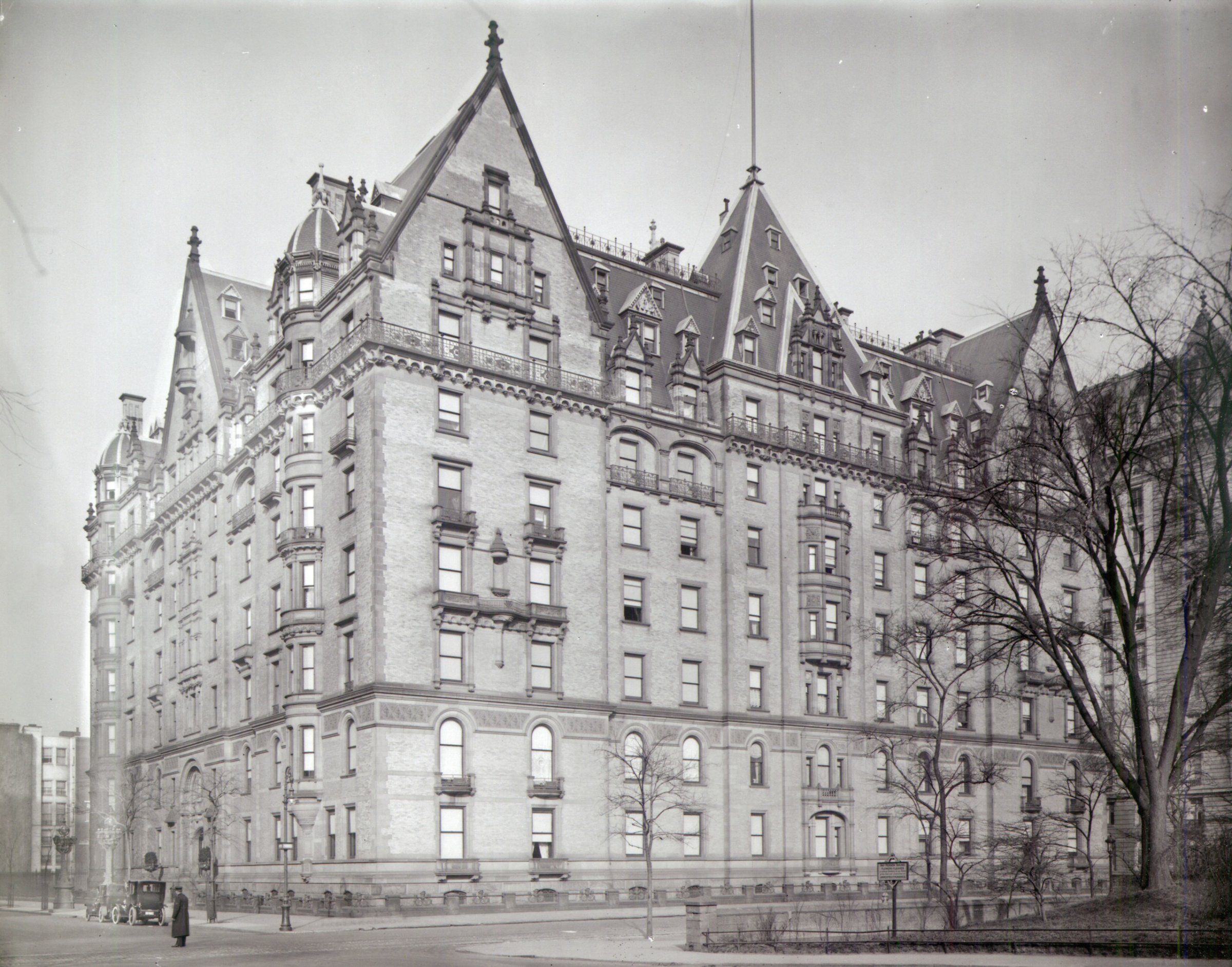
Apartment house 'The Dakota'

(The Dakota, home of Win Lockwood)

It has been eight years since best selling author Harlen Coben released a new Myron Bolitar novel.  The series began in 1995 with DEAL BREAKER introducing a wonderful storyline that centered around a former basketball star forced into retirement due to injury who reinvented himself as a sports agent.  Over the years Coben has written eleven renditions of his Bolitar series that exhibited his humor, acerbic wit, and well thought out plots that have created millions of readers.  To my immense joy and excitement Coben has just released his newest version of the series, THINK TWICE, which possesses all the characteristics that have made his other books in the series such a success.

Coben is a remarkable storyteller who has won numerous awards for his Bolitar series.  In his current novel we are introduced to renowned basketball coach Greg Downing who has recently passed away. In fact, Bolitar had given the eulogy at his funeral. To Bolitar’s surprise two federal agents entered his office demanding to know Downing’s whereabouts, claiming he was alive since he was now a suspect in a double murder. Bolitar is stunned but soon realizes that his former adversary and client is alive.

Coben launches his plot by describing how a murder takes place and moves on to introduce a series of interesting characters which are the hallmark of Coben’s novels.  First, we revisit cast members of the previous books that dominate his latest. Obviously, Bolitar takes center stage as does his friend and business partner Win Lockwood.  Time has changed both men, Bolitar more so than Lockwood.  We learn that the former basketball star is now married for the third time and has a biological son who plays a significant role in the storyline.  Lockwood on the other hand, has aged but remains a wealthy snob who dominates any room he enters.  Esperanza Diaz no longer works for Bolitar and has joined the law firm of Fisher, Friedman, and Diaz.  Big Cyndi, Bolitar’s assistant in his sports/law agency, remains “Big Cydni.”

Photo of Harlan Coben

(Harlen Coben, author)

The story begins with a series of contradictions where murders keep occurring and most seem solved by the FBI.  However, those involving Downing morph into a plot line that leads to a brilliant serial killer who sets up a number of murderers by creating evidence against them to cover their own tracks.  A substantial portion of the novel revolves around how Bolitar, Lockwood, and others prove that Downing who went off the grid three years before for reasons Coben makes clear was not a killer, despite the FBI belief that he was.  Of course, the remainder of the story centers on finding the real serial killer.

In doing so Coben’s acerbic wit is paramount.  His character’s commentary is sarcastic, funny, are dead on.  Remark like; “Insecure enraged men are a growth industry,” Bolitar’s father’s remarks concerning the joys of edibles that have improved his sex life after decades of marriage, and his description of a basketball pickup game is priceless along with new characters he introduces.  We meet Joey the Toe, a mobster named Joseph Turant who has been convicted by the Feds for a crime he did not commit.  Turant is convicted because the Feds supposedly pressured a gay individual to testify against him.  Greg Downing plays one of the lead roles and is married to Bolitar’s ex-wife and raises Bolitar’s biological son named Jeremy who is introduced as a member of the US Army, but as the story evolves that is not his occupation.  Emily, Bolitar’s ex. and Downing’s spouse provides insights into her relationships with both her husbands.  Grace Konners, Greg Downing’s lover.  Ronald Prine, a dirty Philadelphia real estate mogul.  PT, a career FBI insider who helped Bolitar and Lockwood in the past, now guides them in their investigation.  Terese, a journalist and Bolitar’s latest spouse, and lastly, Sadie Fisher, a dynamic lawyer who represents Downing.  Then there are those who are accused of murder and are innocent, and of course the murder victims themselves.

The core of the novel are secrets, lies, and a murderous conspiracy that stretches back into the past.  In true Coben fashion the reader has no clue as to who the guilty party is.  The twists and turns can sometimes become confusing, but soon divergent scenes begin to make sense as Bolitar and Lockwood get closer and closer to solving the case, but as they do danger lurks in the background.

If you enjoyed Coben’s previous Bolitar yarns this one should measure up and meet your expectations, especially the ending.   A great summer read – enjoy.

The photograph can be dated to about 1910 by the automobiles at the curb, and by the presence of the Langham Apartments
at 135 Central Park
West between 73rd and 74th Streets, which was completed in 1906. The sentry box for the guard has been replaced by a sign that warns visitors that “Any Person Taking Flowers or Leaves or defacing shrubbery in any Portion of the Park will be detained or Arrested and Punished.” The central gable on 72nd Street has now gained another small dormer window, and the south side of the central gable on Central Park West has single one near the top as well.(The photograph can be dated to about 1910 by the automobiles at the curb, and by the presence of the Langham Apartments
at 135 Central Park
 West between 73rd and 74th Streets, which was completed in 1906)

MOSCOW X by David McCloskey

(Lefortovo Prison, Moscow, Russia)

A few months ago, I was introduced to David McCloskey’s first novel, DAMASCUS STATION.  The book was a “thriller,” and though it was a fictional account that focused in large part on the Syrian Civil War, its realistic portrayal of events had characteristics of non-fiction and created a portal for the reader to view events in the Middle East through the lens of an American intelligence operative.  Further, it offered an accurate portrayal of how CIA agents operated in the field, how they were trained, and why their work is so important to American national security.  In his newest novel McCloskey, a former CIA analyst and consultant at McKinsey and Company has authored MOSCOW X another entertaining work that a former CIA operative describes as a “brilliant novel that captures the nuances of field work in hostile environments and the terror that grips every intelligence officer when confronting enemies.”

In his latest effort McCloskey creates an intricate plot that must be followed carefully.  It opens as an FSB agent on a mission from the FSB head steals an enormous sum of money  from a billionaire oligarch who preceded the FSB head.  In response to this action, the oligarch’s daughter, an SVR operative plots to recover the money and respond to threats against her family’s wealth.  The daughter is married to another FSB agent, who also happens to be in charge of $700 million of Vladimir Putin’s personal treasure.

A drone photo of the palace, which sits some 18 kilometers down the coast from the popular Russian holiday town of Gelendzhik

(Drone photo of the palace, which sits some 18 kilometers down the coast from the popular Russian holiday town of Gelendzhik)

As the novel evolves, McCloskey introduces two scenarios.  First, we are introduced to Artemis Aphrodite Proctor, CIA Station Chief in Tajikistan, who succumbs to a honey trap set by the FSB and refuses recruitment resulting in her dispatch to Langley, Virginia.  The actions Proctor takes form a central part of the story.  Second, involves the wealth of Andrei Apagov, chairman of Rossiya Industrial, a Russian conglomerate swollen with the state’s most strategic assets.  Apagov’s bank is robbed of 200 gold bars by FSB Lieutenant Colonel Konstantine Konstanstinovich Chernov, a Russian nationalist whose boss, Vassily Platonovich Gusev, known as “Goose,” has ordered the seizure against an old foe.  Apagov wants his daughter Anna who is a SVR operative to investigate what has occurred before they confront President Putin who may lock them away in Siberia and steal the rest of their wealth.  It is Anna’s job to infiltrate Goose’s operation to recover the family’s assets and in doing so must use her estranged husband Vadim Kovalchuk, head of the Private Wealth Division at Bank Rossiya as bait.

These two scenarios come together and at times overlap as the espionage thriller evolves.  McCloskey creates the realistic atmosphere of spy tradecraft.  His discussion of what it was like to enter Russia as an outsider, the types of surveillance Russians employ, the tools needed to survive all seem spot on, i.e., various devices CIA and FSB “techies” can deliver; preparation for the op – plying people with vodka, creating antidotes for Russian food and drinking etc.  McClosky provides an in depth analysis as to how the FSB goes after someone it is trying to ruin as Stalin’s NKVD used to argue that “your lack of a criminal record is not to your merit.  It is our flaw.”

Apart from the characters previously mentioned, McCloskey introduces a series of personalities that are key to the story’s development.  Hortensia (Sia) Fox works at the Hynes, Dawson law firm which laundered money and protected oligarch wealth at the same time as  working for the CIA.  Maximiliano Castillo, a Mexican horse rancher whose family has worked with the CIA for decades.  Most importantly is Aphrodite Proctor who upon returning to CIA headquarters developed an operation to flip Anna or her estranged husband, Vadim as a means of gaining access to important personal information pertaining to Putin’s wealth.  McClosky carefully develops each character and their personal agendas as the plot unfolds – a plot that is emblematic of the CIA–FSB conflict that is ongoing today.

DavidMcCloskey_Author Photo.jpg

(David McCloskey, author)

There are other important characters, but the key is that as Proctor employs Sia and Max to recruit Anna for the CIA, Anna is trying to recruit Sia for the SVR.  Sia and Anna would soon realize they had a common enemy and should work together despite the fact they had different goals in mind.  They will form a key element as the CIA hopes to take advantage of internal Russian squabbles concerning money, property, and Putin’s overall wealth.

McCloskey introduces a different element in his current work that differs from DAMASCUS STATION and events pertaining to the Syrian Civil War.  The use of technology is at the forefront of the effort to gain secrets relevant to Putin’s wealth.  Different technologies are integrated into the story as CIA “techies” penetrate Vadim’s personal computer and other sites and sources which takes the plot to a new level.

The details of surveillance, arrests, threats, disinformation, and violence are all essential to the outcome of the plot.  McCloskey’s observations are relevant to today’s attitude by large swaths of the Russian population.  As Anna argues with Sia that she does not want to overthrow Putin.  She sees herself as a Russian patriot believing that Russia has always been ruled by an autocrat and that governmental system is the only way the Russian people can survive.  She argues that the Russian people seem comfortable with corruption and chaos which was the norm and she, as most Russians today have no problem with it.

McCloskey has authored another intense espionage caper mixing tradecraft and glitz to maintain the reader’s attention.  The plot is loaded with double and triple crosses and after about 100 pages you will not want to stop reading this mesmerizing tale of intrigue.

Lefortovo Prison

(Lefortovo Prison, Moscow, Russia)