Recently my wife and I discovered the Rizzoli and Isles television series that was broadcast on TNT between 2010 and 2016. We were immediately taken by the Boston detective series and have been binging it for the last few weeks. We were impressed by the plots, the interaction between the characters, the acting, especially Angie Harmon and Sasha Alexander, and the use of science to determine outcomes. After a little research we learned that the series was based on author Tess Gerritsen’s thirteen crime novels on which the program was based. Immediately I purchased a copy of the first novel in the series, THE SURGEON, which had a different approach to some of the characters but was well worth reading.
The novel begins with the murder of two women. First, Diana Sterling, who was employed at the Kendall and Lord Travel Agency in Boston, second, a year later Elena Ortiz who was employed at Celebration Florists, also in Boston. When detectives arrived on the scene, they found Ortiz’s body immobilized by duct tape with incisions in the abdomen. They immediately realized that the two cases were similar though they took place a year apart.
The detectives involved were Jane Rizzoli, who recently had transferred from Vice and Narcotics to the Homicide Division, and Thomas Moore, the senior detective in the group. The personalities of the two form a key theme in the story. Rizzoli came across as a prickly woman who was very protective about her “turf” after years of dealing with the misogyny of the Boston Police Department and had grown tired of men getting the credit for all her hard work. Moore, on the other hand, was very tolerant and a warm individual who played by the rule book and had earned the nickname, “Sir Thomas Moore,” even Rizzoli admired him.
After Medical Examiner Ashford Tierney examined Ortiz’s body, he observed the preciseness of the cut wounds suggesting that the murderer was a medical professional. Tierney noticed that the uterus had been surgically removed which supported his thesis.
Similar to the television series Gerritsen’s novel creates a story line that immediately draws in the reader and what follows is a carefully constructed thriller centered around a series of murders focusing on Emergency Room Doctor, Catherine Cordell who had survived a similar attack while working in a Savannah, Georgia hospital two years earlier. Cordell was able to escape her assailant, a medical colleague, Dr. Andrew Capra and in the end, she was able to reach for her gun and kill him. Cordell would move to Boston to try and escape her demons. A third victim would emerge who was coincidentally brought to Cordell’s ER which would set off her own PTSD. She was an excellent general and vascular surgeon, but her private life was filled with memories and fears brought on by her attack two years earlier.
Rizzoli would make the connection between Cordell’s arrival in Boston and the series of murders. This would create a series of dialogues that Gerritsen excels at between detectives. One of which is Darren Crowe, a wise ass who demeaned women who Rizzoli could not tolerate; Moore who was willing to work with Rizzoli but made the mistake of becoming emotionally involved with Cordell; and Lt. Marquette who oversaw the investigation.
Gerritsen creates a number of characters that reflect the Boston Police Departments approach to the investigation. Dr. Lawrence Zucker, a criminal psychologist, provides insights into the criminal they are dealing with. Alex Polochelk, a forensic hypnotist who will work with Cordell as she tries to remember what happened to her two years earlier once detective realized that she was being stalked by someone similar to Andrew Capra, but he was dead, This forms the crux of the investigation – was Cordell the murderer or the victim? Gerritsen’s novel creates a superb plot – two killers, one dead and one alive, but what bonded them together? Was it Dr. Cordell?
A major theme that the author develops centers around rape and how women react in the short term and cope in the long term. They hide their feelings, particularly from men seeing themselves as “damaged goods,” blaming themselves for what has occurred. It is left to female medical professionals to help these victims and Gerritsen effectively uses her dialogue to explore this issue. A poignant example is Cordell’s conclusion that “a rapist never disappears from your life. For as long as you live, your always their property.”
Gerritsen is a master at developing her characters, providing important background. Rizzoli’s upbringing in a male dominated family with two brothers, one of which is a Marine and seen as the star of the family and a compliant mother. She believes she received no recognition from her family, and this helps explain her inability to deal with certain male detectives. Moore on the other hand had a wonderful twenty-year marriage when his wife died suddenly a few years earlier and he is still grieving, which explains in part how he treats Cordell. In terms of character development, Gerritsen excels at uncovering the egos involved in the investigation and how everyone navigated their relationships with colleagues. The Rizzoli-Moore connection is integral to the story and understanding how two people under immense pressure lean on each other, then are forced to face the reality of who they are. Their tenuous association offers an important context to events that occur throughout the novel.
The core of the novel focuses on establishing a number of important links between a series of murders and trying to determine who is responsible. It is fascinating how the author weaves together her plot and the characters within. None stand out as much as Rizzoli, who by the end of the novel learns a great deal about herself and her own insecurities as well as the perpetrator of these hideous crimes, who had a normal upbringing and appeared as ordinary as the next person. Gerritsen has constructed a real page turner involving forensic science, detailed descriptions of anatomy, and imagination to maintain the reader’s interest throughout.
In 1968 I was eighteen years old and had been driving for a few months. My mother asked me to take her to visit a friend and when we returned driving north on Ocean Parkway (Brooklyn, NY) in my father’s brand new Oldsmobile Cutlass a pink Grand Prix pulled next to us and ripped an American flag off the radio antenna which my father proudly displayed. We drove about 50 miles per hour, and a hand reached out from the Grand Prix and tried to pull my mother’s arm through the passenger window which was open. By this time, we were going 70 miles per hour, and I jerked the steering wheel into oncoming traffic to get away from our attackers. Four black men in the car laughed their asses off and pulled away. My immediate reaction was to chase after them, but my mother yelled not too as she wrote down their license plate. We drove to the nearest police precinct and were told by a detective to forget the incident ever happened as the police could do nothing even if they caught the men, a judge would not pursue any charges. I was incensed and drove to my girlfriend’s house and went into the courtyard of the school yard across the street and yelled epithets I am now ashamed of. I relate this story as I read Pulitzer Prize and Bancroft Prize winning author Heather Ann Thompson’s latest book. FEAR AND FURY: THE REAGAN EIGHTIES, THE BERNIE GOETZ SHOOTINGS, AND THE REBIRTH OF WHITE RAGE as it raises the question of what is the proper response when you consider yourself in danger.
In today’s world where there are more guns than people, hidden carry laws, laws that seem to justify shooting someone for the slightest offense, and government agents shooting American citizens, it appears that shooting someone who compromises your safety is accepted by large elements of society. We have witnessed a number of examples over the years when people have shot others and got away with it. For example, the 2012 case of Trayvon Martin. George Zimmerman, a neighborhood watch captain in Florida, shot and killed 17-year-old Trayvon Martin, an unarmed Black teenager. Zimmerman claimed self-defense and was initially not arrested by local police. After significant national outcry, he was arrested and tried for second-degree murder. He was ultimately acquitted by a jury in 2013, a verdict that brought intense scrutiny to Florida’s “Stand Your Ground” law. Another example occurred in 2004 when Rodney Cox was shot and killed bya Florida homeowner later identified as a FEMA worker, who entered his FEMA trailer after a hurricane. The homeowner fired a warning shot and then shot the man after being placed in a “bear hug”. Prosecutors decided the homeowner was acting in self-defense, and he was not prosecuted. This case was a catalyst for the passage of Florida’s first “Stand Your Ground” law in 2005, which provides immunity from prosecution if an individual reasonably believes the use of force is necessary. Recently, we had the 2023 shooting of Ralph Yarl as Andrew Lester, an 84-year-old white homeowner in Kansas City, shot Yarl, a16-year-old black teenager in the head and then a second time after Yarl mistakenly knocked on his door to pick up his brothers. Lester was initially released without charges, sparking public protests. He was later charged with two counts of first-degree assault and armed criminal action, but the initial lack of charges was widely criticized by organizations like the “Equal Justice Initiative.” Perhaps the most famous example is the 1984 shooting involving Bernard Goetz, a white man in New York City who shot four young Black men on a subway after they approached him and one asked for five dollars. Goetz argued he feared for his safety. He was later acquitted of the most serious charges, including attempted murder, though he was convicted of unlawful weapons possession. The case became a national flashpoint for discussions about race, crime, and self-defense. I could list many more incidents, and it remains an issue today.
(Bernie Goetz on the second day of his 1987 trial, at which he was charged with attempted murder in the shooting of four Black teenagers)
For Thompson, the Goetz case is emblematic of the white rage that was simmering in America for decades as media mogul Rupert Murdoch exacerbated the fear and anger of Americans as his newspaper the New York Post reported on the personalities involved as overnight Goetz’s young victims would be characterized as villains, the trial which eventually took place, and Goetz’s acquittal. The book follows the reverberations of the subway shooting and their decades long impact on American society while skillfully recovering the lives of the real victims who many decided that their lives really did not matter.
One of the monograph’s many strengths is the background information that Thompson provides. The author meticulously explains her views based on superb research that includes interviews with many of the participants. She immediately sets the stage for the events that took place on December 22, 1984, by visiting the plight of New York during the 1970s and early 80s. By 1980, Ronald Reagan campaigning for the presidency visited the south Bronx stating, “he hadn’t seen anything like this since London after the blitz.” Since the late 1970s New York had sunk to new lows as newspaper headlines blared that “President Ford Tells New York to Drop Dead” as Washington refused to offer assistance for its budget and debt crisis. Thompson points out that weakening of the American economy throughout the seventies led to less federal funding resulting in services being cut, free college tuition withdrawn, city employees across the bureaucracy fired, and an increase in landlords engaging in arson to collect insurance money for their buildings which they refused to maintain.
Once Ronald Reagan assumed the presidency he set out to undo as many New Deal socio-economic policies as possible. The Berhard Goetz saga must be seen in the context of the time period in which it took place. By the early 1980s Lyndon Johnson’s War on Poverty, the Civil Rights Movement, and the liberal-progressive legislation of the 1960s was beginning to stoke the anger of working class whites in America. This anger would push many whites to leave the Democratic Party and turn their support to Ronald Reagan whose genius was his ability “to appeal to white self-interest and to exploit racial rage to greater success, convincing some of the most diehard Democratic Party voters that this was in their best interest also.” The result was the “trickle-down theory” of economics resulting in devastating consequences for minorities living in the south Bronx and other poverty stricken areas of the city. This approach to the federal budget – cutting social spending programs disproportionally hit poor urban families of which the four boys that Goetz targeted were members. The spending cuts fueled Reagan’s tax policies allowing the rate for the wealthy at certain levels +to decline from 70% to 28%.
(Bernhard Goetz)
Thompson continues her excellent analysis by explaining that the lack of jobs, declining educational opportunities, and fewer public places to experience enrichment led to underprivileged teenagers hanging out on street corners, gaining easy money from selling drugs to the point that the south Bronx became known as “crack town.” Further exacerbating the situation was the HIV epidemic which was partly fostered by drug addicts exchanging infected needles. This was occurring at a time when health care resources were increasingly unavailable. Soon gang violence would result as the Reagan administration refused to confront the growing AIDS crisis.
Interestingly the 1980s became the center of what Michael Douglas stated in the film “Wall Street,” “that greed was good” enhancing the reputation and lifestyle of white New Yorkers like Donald Trump and his father. The watershed moment for New York also revolved around Rupert Murdoch’s 1976 purchase of the liberal New York Post and turning it into a tabloid that pandered to a disgruntled white audience employing the sensationalist tactics that were successful in Australia and England. With right wing columnists like Patrick Buchanan arguing that the election of Ronald Reagan was a necessity for white voters who feared the rising black crime rate, and that unlawful behavior was endemic to certain neighborhoods.
With this background Thompson creates the ingredients that led to Goetz’s behavior. The author explains the family backgrounds of Goetz and his victims, their belief systems, and the impact of society. For the four boys who were shot, the life and lack of opportunity led them on the path they chose as did Goetz’s anger at what he perceived to be the cause of crime, disease, street beggars, drug dealers, rotting garbage on the streets, and homelessness. After being a mugging victim on January 26, 1981, on Canal Street in lower Manhattan, Goetz decided to travel to Florida to purchase guns, since he could not obtain a license in New York. The more Goetz witnessed his Greenwich Village neighborhood declining his anger was compounded.
(Darrell Cabey with his lawyers William Kuntsler and Ron Kuby)
Once Thompson provides the reader with the socio-economic climate Goetz resents, she carefully takes the reader through the events on the New York City subway system of December 22, 1984. After providing the details of the shootings she emphatically states that Goetz had no right to shoot Darrell Cabey, James Ramsuel, Barry Allan, and Troy Canty as many of the witnesses in the subway car attested to.
Thompson excels at describing the legal strategies employed by the prosecution and Goetz’s defense as well as the actual trial. As he approached his day in court Goetz came to believe that he represented something very important and that the “public wasn’t going to take it anymore.” He hired Barry Slotnick as his lead attorney, and it would turn out to be an excellent choice. Slotkin had defended well known clients like Meir Kahane, John Gotti, and Manuel Noriega and his brash, uncompromising, and at times nasty approach to defending his clients were part of the reason for his success. As was evident in his defense of Goetz he would think outside of the box and badger witnesses and the judge until he was satisfied with how the case proceeded. The prosecution was led by Greg Waples, an excellent litigator, but more conventional than the opposition.
After a series of legal machinations and dubious claims by lawyers the trial would begin on December 12, 1986. Thompson presents the give and take between witnesses, lawyers, and prosecutors allowing the reader to witness a pseudo boxing match with verbal punches and counter-punches thrown on a daily basis. The author provides many insights pointing out how effective or ineffective the prosecutor and defense carried on. Slotkin in particular was very efficient in confronting one of the victims, James Ramseur, as he took him apart with a series of pointed questions, overwhelming him on a personal level, badgering him in such a manner that he became so angry he refused to cooperate with the court proceedings. Slotnick’s strategy of bullying witnesses was a gamble which in the end paid off. Perhaps Slotnick’s most brilliant move was to get the judge to allow a recreation of the crime scene in court with “large” black Guardian Angels to replicate the four victims, and gaining permission to bring the jury to a subway car at the site of the shootings which would become the key to the final outcome of the trial.
Thompson does a marvelous job dissecting the nuances of the prosecution and defense and correctly concludes that the jurors fundamentally related more to Goetz than they did to the four young men who were shot based on juror statements after the trial. Thompson’s use of juror statements explaining why they acquitted Goetz on the most serious charges is insightful. For the jury at times, it was difficult to ascertain who was on trial for Goetz or his shooting victims. The key to the views of a number of juror’s opinions was Slotnick’s ability to convince them that Darrell Cabey was not shot while seated, but standing in front of Goetz. A number of jurors believed that Goetz’s 1981 mugging was directly impactful as to how he acted on the day of the subway encounter and saw him as a “frightened man.” As to his admission of guilt to the Concord, NH police detectives they rationalized that Goetz was on the run for nine days and was “exhausted and distraught” so his statement could not be accepted as totally rational. Judge Crane’s instructions played a major role in the fact that the jury had to decide if Goetz saw himself as being in mortal danger and whether it was reasonable for him to believe he was. In addition, Slotnick did a better job than Waples. Lastly, Thompson correctly concludes that “in the 1980s climate in New York a gun-wielding loner like Goetz was more sympathetic to these jurors….than four unemployed Black teenage dropouts trying to survive and somehow thrive in the same city and country.”
The author follows up her effective coverage of the trial and appeals applying the same judicious process in presenting the civil litigation period that followed over the succeeding ten years as the Cabey family tried to gain restitution for what happened to Darrell, and Goetz’s strategy to defend himself. It is clear that the period highlighted the emergence of a new era of racialized rage and the role the Goetz trial played in its enhancement. The rape of a white woman in Central Park by five black teenagers would bring about their conviction (which was overturned years later) and labeled them as the Central Park Five, as well as the murder of Yusef Hawkins by a white mob in Bensonhurst, Brooklyn are all emblematic of the period. New York City would turn to Rudy Guliani as mayor in 1993 and along with federal legislation implemented by Bill Clinton, New York cracked down on petty crimes, expanded prison sentences, implemented harsher sentencing all of which can be related to the Goetz trial.
(Goetz’s defense attorney Barry Slotnick)
Thompson’s new historical study offers portraits of many characters from the period including Goetz and his victims, Barry Slotnick, William Kuntsler, Rudy Guliani, Curtis Sliwa, Rupert Murdoch, Donald Trump, and a host of others. She explores how the Reagan Revolution overturned New Deal and Great Society legislation leading to the “greed is good” motto of the 1980s, the conservative approach to crime of the 1990s, and the significant impact of Murdoch’s purchase of the New York Post in addition to the creation of the Fox New Network that today still reinforces the racial and economic views of a significant portion of white America and of course the Trump administration. If there is one aspect of Thompson’s presentation that is not quite supported by the past is that white rage was not endemic to the period of the Goetz trial. It exacerbated a condition that has always existed in American history whether the Reconstruction period after the Civil War, the racial movements dealing with immigration after W.W.I, the Civil Rights Movement of the 1960s and the violence it produced, to an administration that panders to white racial rage as witnessed by its “anti-brown and black” immigration and overall economic policies. Overall, Thompson’s meticulous work should be commended as she presents a painful historical theme that she dramatically demonstrates. A theme we are living through today as the news reports on racial crimes and economic inequality each and every day.
The Weimar Republic and the rise of Nazi Germany have been mentioned a great deal in American political circles of late because of the supposed similarities of repression and violence in late 1920s and throughout the 30s in Germany compared to what has been occurring in the United States recently. On a cultural level political figures in both time periods have tried to impact society whether it is on film, changing perceptions about history, literature, religion, immigration, and ethnic-racial relationships. These time periods lend themselves as wonderful opportunities to create historical fiction. Today’s obsession with autocracy and the loss of democracy are subjects which in the future will soon lead to many novels, but the Weimar and Nazi periods have already been mined deeply. A recent example is German author, Daniel Kehlmann’s latest work, THE DIRECTOR which follows other reconceived historical novels like, MEASURING THE WORLD and TYLL in which the writer bases important scenes on real life.
In his latest Kehlmann focuses the famous Austrian filmmaker, G.W. Pabst, who along with Fritz Lang and F.W. Murnau were the major filmmakers of the Weimar era. Pabst began his career as an actor and theater director, before becoming one of the most influential German-language filmmakers in Europe in the 1930s. With the arrival of sound movies, he made a trilogy of films that secured his reputation: “Westfront 1918 (1930), “The Three Penny Opera (1931), and “Kameradschaft (1931). Pabst was planning to develop his career in Hollywood which did not work out so he left for France when war was declared in 1939. Finding himself trapped he was forced to return to Nazi Germany. Under the auspices of propaganda minister, Joseph Goebbles Pabst made apolitical films for the Nazis, forever complicating his reputation.
In Kehlmann’s novel, Pabst receives word that his mother is ailing, and he travels to Austria to visit her along with his wife and son who now witness the brutal cruelty of the Nazi regime whose Minister of Propaganda wants to enlist him to make pro-government films. Pabst believes that he has free will and will not have to succumb to Goebbels’ persuasion, but that is a naïve belief. The novel explores the complicated relationships and differences between “art and power, beauty and barbarism, cog and conspirator.” Further, THE DIRECTOR is a parable about moral compromise and the seductions of art – and asks the question how far a person would go working with an evil taskmaster.
(Director G.W. Pabst, who briefly worked in Hollywood before returning to Austria and working with the Third Reich, inspired Daniel Kehlmann’s engrossing historical fiction)
The reader is indirectly introduced to Pabst as Kehlmann opens the novel with Franz Welzek and a friend who resided at the Abendruh Sanitorium traveling to Vienna for an interview with Hans Conrad on his “What’s New On Sunday” television program. Since Welzek had been Pabst’s assistant director at the outset of his career it was expected that his former mentor would be a topic of conversation, but it did not go well.
Soon Kehlmann leads us to a 1933 scene where Pabst is lounging poolside in Hollywood at a friend’s house ruminating about his idea for a film – “War Has Been Declared.” A pair of self-assured American studio executives arrive and try to convince Pabst to direct one of their films, but he refuses stating the script is weak. Instead, Pabst tries to persuade them to make his film, “War Has Been Declared.” The two ignore Pabst’s request and refuse to take no for an answer, but Pabst holds to his principles and begins to realize that he does fit into Hollywood’s artistical demands.
Fast forward once again and we find Pabst trying to convince Greta Garbo, (who owes the start of her career to Pabst) to star in his new film, but she has doubts and expresses her distaste for certain male actors. Garbo’s commentary are among the many keen observations that Kehlmann makes throughout the novel about human behavior and how unstable it is.
Pabst feelings about Hollywood are reinforced at a gathering of film directors and producers at Fred Zinneman, the producer’s house as the usual chit chat was ongoing. Two things emerge. First, Pabst is convinced he must leave Hollywood and return home. Second, a guest at the party, Kuno Kramer, a Nazi supporter tries to dissuade Pabst from returning to Vienna and settle in Germany where he would have the freedom to make the films he wants. A constant undercurrent in the novel is the treatment of Jews in Vienna as guests discuss their plight, and Pabst fears that the Nazis who will achieve Anschluss with Austria shortly will force him to make films for the government whether in Austria or Germany.
With this backdrop the author develops Pabst’s journey to agree to make films for the Nazi regime. After arriving in Vienna, then part of the Ostmark (Eastern March) as it was referred to after the Nazis seized Austria through the Anschluss of March 1938 Pabst and his family face a conundrum as they arrive at their Dreiturn Castle in the town of Tillmitsch to visit his mother Erika who seems to be suffering from dementia. Kehlmann introduces many unusual characters, the first of which is Karl Jenzabek and his wife Liesl and their two daughters who are the caretakers of the property. They are a strange family who carry on in a mysterious and abusive manner toward Erika and her family. Pabst decides they must leave especially after enduring a supposed accident on a ladder where he is injured. In the background Nazism permeates as Karl sees himself as an important local Nazi leader and the anti-Semitic overtones are clear as is his racist hatred of Jews (Pabst is considered half-Jewish). Pabst’s plan had been to visit his mother, get her settled and move on to Marseilles and travel by ship to New York to renew his film career in the United States. Hitler’s invasion of Poland on September 1, 1939, closes the Austrian border leaving the Pabst family trapped and under Nazi suzerainty.
(Author Daniel Kehlmann)
Kehlmann’s scene construction and dialogue are curious . When Pabst is on a ladder in his library and Jenzabek slowly moves it in a manner that creates fear resulting in the director losing his balance falling to the floor is puzzling. When Gertrude, his wife demands that they call the police he refuses as he realizes there are no police for people like them in the Ostmark. Other examples include Pabst’s interactions with Leni Riefenstahl who he helped begin her career in film and later would be his co-director, which she greatly resented. Kehlmann’s portrayal of the creator of the Nazi documentary “Triumph of the Will” and Hitler favorite is incisive and reflects her true nature – a woman who did not feel the need for a co-director and things got rather testy when they worked together, to the point she even threatened him with a concentration camp visit. Other examples reflect on the vapid nature of Nazi society as wives of government officials meet in a book group focusing on the mediocre novelist, Alfred Karrasch, which Pabst’s wife Gertrude attends and tries to gain cultural acceptance. Lastly, there are many scenes that reflect the technical nature of making films and the role of the actors. Interestingly, Pabst concludes that directors can be superfluous as the actors and technicians can carry on without them.
Kehlmann integrates incidents that highlight the cruelty of the Nazi regime. A case in point is Pabst’s son, Jakob’s encounter with friends, one of which is a bully. All are farm boys and avid Nazi believers, but Jakob comes to the realization that if you can defeat the bully, even by cheating you would be seen as a winner, and this would gain respect. Once the incident takes place and Jakob is able to beat up his counterpart the lesson is learned. You must always be seen as a winner, not worrying about how you won, but creating a positive perception by others no matter how you accomplish it. This is right out of the “autocrat’s playbook” – sounds familiar.
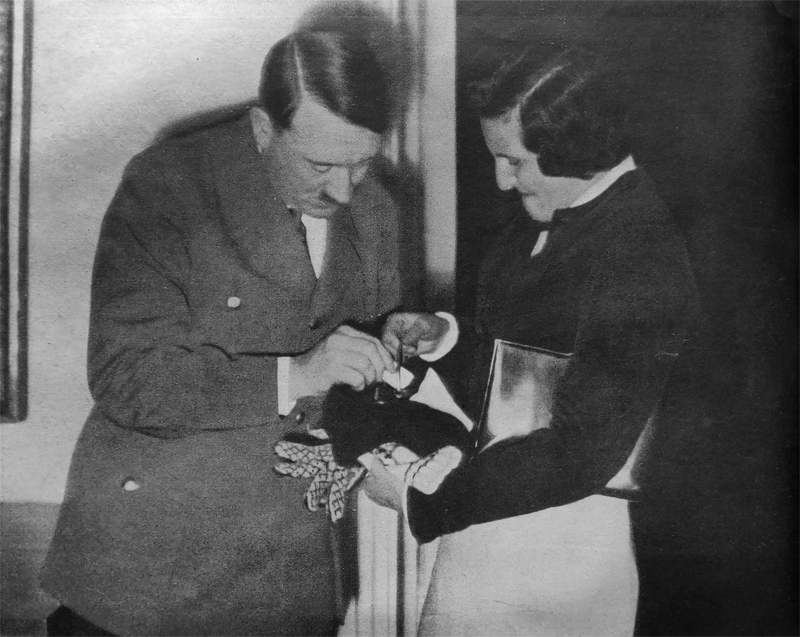
(Leni Riefenstahl and Adolf Hitler)
From this point on Kehlmann delves into the dilemma of collaboration with a murderous government that is on the verge of genocide. Pabst is asked to visit the Ministry of Propaganda in Berlin when he meets Joseph Goebbles who creates a moral dilemma, either making films for the government or perhaps he will be taken elsewhere. The dialogue is fascinating as Goebbels, who is never named by the author, first wants Pabst to admit the errors of his ways and do penance for making communist propaganda and being an enemy of the German people, but he doesn’t know how because he does not believe this characterization of himself. In their innocuous conversation Pabst finally rationalizes his decision to cooperate with Goebbels forceful requests. One of Pabst’s film colleagues puts it as best as he can rationalizing that “once you get used to it and know the rules, you almost feel free.” Pabst wonders if he is losing his mind and hopes to delay making a film until the war is over. Pabst rationalizes that “maybe it’s not so important what one wants. The important thing is to make art under the circumstances one finds oneself in.” He believes in Germany he will have good scripts and high budgets and the best actors, something that did not always occur in the United States and elsewhere.
In reality he had more creative freedom in the Third Reich than under the Hollywood studio system, but it came at a steep price casting concentration camp victims as extras in a pivotal scene. He also collaborated with Riefenstahl on her film “Lowlands,” which used prisoners from Maxglan in Salzburg, Austria where more than 230 Sinti and Roma were kept in prison as forced laborers. In Spring 1943, they were deported to an extermination camp. Wilzek justifies the film telling Pabst that “there’s nothing we can do; we didn’t make it happen. We can’t keep it from happening. It has nothing to do with us.”
Kehlmann’s recasting Pabst’s life through historical fiction is a Faustian tale that explores how far an artist will compromise with the devil to continue to make his art. In Pabst’s case we must wonder about his rationalizations as he is no better than Riefenstahl as he uses extras from a camp near Prague (probably Theresienstadt) in the last of the three films he made for the Nazis, “The Molander Case.” Pabst is desperate to complete the film before the Red Army arrives. He needs 750 extras taken from the camp to play as the audience in a concert hall. Pabst will murmur to himself that “not a single person. Will be harmed because of us. No one has been…the film must be finished.” For Pabst once again rationalizes that “his art will endure beyond any regime,” but isn’t this a final descent into complicity?
Kehlmann states “that art might warrant moral compromises, but how far do you go?” For the author he does not know what he might have done. In an intellectual exercise you hope you will do the correct thing.
The conclusion of the Second World War brought about a rearrangement of wartime allies as the Cold War commenced. In addition, to this realignment there were a number of decisions made by America and its allies after the war to pursue certain war criminals including Nazi intelligence assets and scientists. This would lead to welcoming Wernher von Braun and 116 German scientists into the United States to continue work on V2 rockets and other projects culminating in July 1970s landing on the moon. Other questionable characters were allowed to escape to South America despite the efforts of “Nazi hunters” like Simon Wiesenthal and operatives of Israeli intelligence. The American role in this process has been scrutinized by many historians who have produced many critical monographs exploring the actions of the Truman administration. One glaring example is the treatment and attitude toward Croatia’s fascist leader Ante Palevic after the war, who along with other members of his Ustase party was responsible for the deaths of over 350,000 Serbs, Jews, and Roma.
A few months ago, my wife and I toured Croatia and Bosnia led by our Croatian friend and guide, Davor Miskic who exposed us to Croatia’s long and tortured history and arranged visits to many historical sites having to do with the Second World War and what Croatians call the War for the Homeland in the 1990s. One that stood out was our visit to the Jasenovac concentration camp which was situated near the village of Jasenovac in occupied Yugoslavia and operated by the Ustaše Supervisory Service. The camp was known for the mass murder of Serbs, Romani people, Jews, and political opponents, including Croat and Bosnian Muslim dissidents. It was notorious for its extreme brutality, often exceeding that of some Nazi-run camps, and was one of the ten largest in Europe. The camp was largely destroyed by the Ustaše in April 1945 to hide evidence of their crimes.
Ante Pavelic was a Croatian nationalist who believed that the Serbian people were an inferior race and at the end of the war was never made to answer for his crimes and was able to escape to exile in South America partly due to the role of the United States who had their own Cold War priorities. This era of Croatian history is very controversial and today has still not been resolved, and during moral and ethical discussions or whenever war politics emerges heated arguments can take place. After our visit to Croatia, I became very interested in the role of Pavelic and that of the United States after the war. There are few worthy historical monographs in English on the topic, but Robert B. McCormick’s CROATIA UNDER ANTE PAVELIC: AMERICA, THE USTASE AND CROATIAN GENOCIDE IN WORLD WAR II despite some flaws, is one of the most useful in English.
(Adolf Hitler greets Ante Pavelic on June 6, 1941)
McCormick’s monograph is broken into four sections. First, he provides a concise and useful background describing Yugoslav politics before World War I and the diverse factions leading up to the creation of Yugoslavia after the war I including Croatia’s role in the new country. He goes on to review the problems this structure created particularly with Croatian nationalists who wanted their independence. Secondly, McCormick examines the 1930s and the rise of Pavelic as a leader of the Croatian nationalist movement and the rise of the Ustase. Thirdly, he considers Pavelic and the Ustase actions during World War II, and lastly, how Pavelic and other Ustase figures escaped prosecution in Europe for their crimes and fled to South America. Throughout the author integrates the role of Washington as the narrative evolves focusing on the role of domestic politics in the United States and its impact on Croatia and Yugoslavia. He focuses on the State Department and the intelligence community in his analysis of how Pavelic reached power, committed atrocities, and finally escaped and reached a number of conclusions, however few are new.
McCormick’s analysis into Pavelic’s belief system is important as it provides the basis for his actions throughout the 1920s, 30s, and 40s. He would create the Ustase as a revolutionary and terroristic organization employing extreme violence in the pursuit of his agenda of Croatian independence. His ideology was proto-fascist, but he also held a deep belief in Catholicism – a mystical belief in the holiness and sanctity of the Croatian state. To achieve his goals Serbian and foreign influence within Croatia had to be destroyed as well as the Yugoslav state. For Pavelic Croatians were of pure peasant stock with a separate nationality from other Balkan people. Individual rights were secondary to the maintenance and establishment of Croatia. Peasants were placed on a pedestal – the solid, pure, incorruptible peasant was portrayed similarly to the way the Nazis portrayed the Aryan race. Finally, he believed that the Croatian people were chosen by God to protect and defend Catholicism against Eastern Orthodox Christianity and Communism. McCormick’s description of Pavelic’s belief system makes it easy for the reader to understand the extreme actions he was responsible for.
The importance of Washington’s role is stressed throughout. The role of Croats and Serbs in American politics is overly stressed in creating funding for the Ustase’s violent behavior in Croatia. McCormick repeatedly argues whenever he talks about the impact of Croats and Serbs in American politics that the Department of State and FDR’s advisors did not want to anger either community because most who had immigrated to the US had settled in midwestern industrial cities like Youngstown, Chicago, Cleveland, Akron, and Pittsburgh which contained factories that were a necessity to the American war effort. I am not saying his analysis is incorrect+, but he repeatedly makes the same argument blaming the State Department for its lack of interest in events in Croatia and the fundraising in the Croatian community, which does not make for easy reading.
.
(Ante Pavelic)
McCormick concludes throughout the book that most Croatians were working class people and had little money to donate to the Croatian national movement overseen by Pavelic supporters like Ante Dosen, Frank Budek, Reverend Ivan Stipanovic, and Dr. Branimir Jelic. McCormick spends a great deal of time discussing the movement to enlist American Croats in the Pavelic and the Ustase cause, but overall, there were few Croatian-Americans who became Pavelic supporters during World War II. This is the most detailed aspect of the book and in the end it does not deserve the coverage the author provides, though his coverage of Franciscans and their support for Pavelic is interesting and goes along with the Pope’s refusal to condemn Ustase policies during the war.
An area of strength for McCormick is the chapter entitled “Carnage” where he lays out the course of World War II and its impact on non-Christian Croatian people. He provides a detailed description of Ustase concentration camps, particularly Jasenovac, one of twenty-two camps controlled by the wartime Croatian government which was a puppet state of Nazi Germany. The government was referred to as the Independent State of Croatia (NDH in Croatian) and was a one party dictatorship under the exigencies of the fascist Ustase organization under Ante Pavelic. The regime target Serbs, Jews, and Gypsies as part of its large scale campaign of genocide, in addition to anti-fascist or dissident Croatians and Bosnian Muslims. McCormick’s observation that the crimes committed by the NDH proportionally surpassed only by Nazi Germany is bone chilling.
Washington became aware of the Ustatse genocide in May 1941 but as was the case with the Holocaust did little. The State Department under Cordell Hull never paid much attention to the Balkans believing it was in the British sphere of influence, and any offers of American aid were almost perfunctory as by the time lend-lease, which was offered by FDR would reach Yugoslavia it would be too late. McCormick is correct that in large part that the problem in the State Department resides under the umbrella of Breckenridge Long, who had been US Ambassador to Italy in the 1930s where he was well-versed in Croat-Serb hatred, and was Assistant Secretary of State in charge of immigration during World War II. Long’s approach to the massacre of Serbs was similar to his approach in blocking Jewish immigration during the Holocaust. Long was an extreme nativist who deserves greater discussion than McCormick offers. The author should have developed Long’s racist and bigoted approach toward immigration further as he was against anyone from the Balkans or Eastern Europe from immigrating to the United States.
(Ante Pavelic and Benito Mussolini May 22, 1941)
As Pavelic’s atrocities became known even Hitler wanted him to tone it down as it was driving Serbs and some Croats to join Josip Broz Tito’s partisans who were fighting the Nazis throughout Yugoslavia. Further it created difficulties for the Nazis to gain control of Croatian natural resources – food and bauxite. In the end Hitler will allow him to continue the killing as it conformed to his racial views. As he grew increasingly unpopular Pavelic would blame the Communists. His unpopularity apart from his genocide were the death of thousands of Croatians who died at Stalingrad fighting with the Nazis. When Italy surrendered to the allies, the Nazis seized Dalmatia which provided even further evidence that Pavelic was Hitler’s puppet. One would think that despite the Office of Strategic Services under William Donavan’s optimism to take advantage of Pavelic’s unpopularity the US would have altered its policies, but as per usual the State Department blocked any opportunity to do so.
McCormick’s analysis of the war’s conclusion and Pavelic’s ability to escape arrest and prosecution lacks any new information. One of the issues that stands out is the author’s lack of interest in the Bleiberg Massacre at the end of the war where thousands tried to reach the Austrian border as the war concluded. They were not allowed entrance and were pushed back into Yugoslavia resulting in the death of between 30-100,000 people murdered by Tito’s partisans. McCormick covers the massacre in one short paragraph. Further, the author’s explanation of how Pavelic escaped justice is the standard argument that the former Ustase murderer benefited from the difficulties inherent in the United States-Yugoslav relationship as Washington saw Tito as conforming to the Soviet line refusing to deal with the extradition of war criminals that Belgrade was interested in. What is clear is that Stalin and Tito did not get along as Yugoslavia was not liberated from the Nazis by the Red Army, but more so by the actions of Tito’s partisan forces. Stalin could not accept Tito’s approach to creating a monolithic voice within the communist bloc which is obvious from their communications. The United States lost an opportunity with Yugoslavia as it saw a cohesive Communist world opposing them.
Serbs interned in the Jasenovac camp
(Serbs interned in the Jasenovac concentration camp in Croatia. Jasenovac, Yugoslavia, 1941–45)
The author’s treatment of Yugoslav government attempts to extradite Pavelic is very useful,blaming British and American opposition to the Cold War climate that existed after the war. He lays out the role of elements within the Catholic church in hiding, financing, and facilitating travel for Pavelic and other Ustase escapees. Italy and the Vatican play a major role in this scenario as Washington feared a communist electoral victory in Italy and did not want to anger Catholic voters. According to McCormick there is evidence to suggest that Pavelic met with high Vatican officials including Monsignor Montini, Secretary of State for the Holy See, the future Pope Paul VI.
View of the Jasenovac camp
(View of the Jasenovac concentration camp in Croatia. Jasenovac, Yugoslavia, 1941-1942)
McCormick delves into State Department policies and roadblocks related to capturing Pavelic and turning him over to Tito’s government. Washington took a page out of Mussolini’s diplomatic playbook from the late 1930s through the war in keeping Pavelic under surveillance as an asset to be used against Tito’s government. Italy and England’s role are explored, and the United States repeatedly shifts the blame on to them for their inability to meet Tito’s demands for Pavelic. McCormick is correct in concluding that had the United States arrested Pavelic and prosecuted him for war crimes after the war his impact on post-war Croatian society may have been different. At the very least it would have improved Yugoslavian-American relations during the Cold War which would only have benefited US relations with Tito.
Part of McCormick’s issue is that he relied almost solely on English-language sources, the broadness of the book’s scope, and the title which is somewhat inaccurate. I expected the monograph to focus more on the internal workings of Pavelic’s regime and less on the émigré organizations and figures in the United States. A clearer introduction is called for, but in support of McCormick’s effort I would point out that despite its shortcomings the book is readable, well researched, and provides a useful introduction to the topic.
As I wrote in my last review that evaluated Robert Harris’ most recent publication, PRECIPICE, there are few authors of historical fiction that I look forward to reading more. I have spent many hours engrossed and entertained by his novels and never completed one without feeling totally satisfied. PRECIPICE centers on the affair between English Prime Minister H.H. Asquith and Lady Venitia Stanley at the outset of World War I that turns into a spy novel. Among his other novels, are ACT OF OBLIVION brilliantly reimagines one of the great manhunts in English history, the search for two men involved in the killing of Charles I. CONCLAVE which presents the politics and machinations in electing a Pope; MUNICH examines the process that led to the infamous conference that provided Adolf Hitler with the Sudetenland; FATHERLAND, an alternate history with the Nazis victorious in World War II and its implications; ARCHANGEL a novel that is built around a lost diary of Joseph Stalin; ENIGMA, the reader is transported to 1943 as the allies try to break the German code as u boats wreak havoc in the Atlantic; AN OFFICER AND A SPY recreates the Dreyfus Affair as a Jewish officer is accused of selling war secrets to the Germans in the 1890s; THE SECOND SLEEP, a book whose power lies in its between-the-lines warning that our embrace of the internet represents some kind of sleepwalk into oblivion;THE GHOST WRITER, a thriller of power politics, corruption and murder involving the memoirs of a former British Prime Minister; finally there are Harris’ exquisite novels that are referred to as THE CICERO TRILOGY: IMPERIUM, LUSTRUM/CONSPIRATA, DICTATOR tracking the orator’s rise and fall, and the stand alone thriller POMPEII set during the Vesuvius eruption.
As the Second World War was reaching its conclusion in desperation Hitler and his Nazi regime resorted to unleashing its last secret weapon and the world’s first long-range guided ballistic missile called the V2 first striking London on September 8, 1944. This ushered in the missile age with supersonic, silent impacts, killing thousands, with over 500 hitting the city before the war’s end, leaving behind craters and memorials and causing devastating damage to areas of London. The V stood for “Vergeltungswaffe,” or weapon of vengeance, and was designed to retaliate for allied bombing of German cities. It was Hitler’s final “secret weapon,” designed to terrorize British cities. It traveled at three times the speed of sound, meaning it struck without any warning—unlike the slower V1 “doodlebugs”. Hitler believed he could finally bomb England into submission and is referred to in the propaganda of Joseph Goebbles and other Nazi officials as the key to victory when all seemed lost.
(1931, Werner von Braun in the driver’s seat and two colleagues)
V2 is a work of historical fiction set in November 1944 that explores the German rocket program and the British efforts to stop it. The story is inspired by the true history of the world’s first long-range ballistic missile and the extraordinary work of women in the British intelligence service. Harris was inspired to author the novel because of the work of Eileen Younghusband, a member of the Women’s Auxiliary Air Force (WAAF) during World War II. After reading Younghusband’s 2016 obituary in The Times, Harris was struck by her work during the war as she was sent to newly liberated Belgium to track mobile V2 launch sites.
(May 3, 1945. von Braun’s surrender to the Americans)
In V2 we are introduced to Rudi Graf, an engineer who always dreamed of building rockets and sending them to the moon. However, during the war he wound up working alongside Wernher von Braun, a friend he had known since he was sixteen years old launching rockets across the English Channel into London. Harris explores the moral conflict of scientists working under the Nazi regime through Graf who becomes a protégé of von Braun. The second important character is Kay Caton-Walsh who volunteered for the Mechelen Project in late 1944, a part of a team of eight WAAFs (Women’s Auxiliary Airforce) that was dispatched to the Belgian town of Mechelen. Their mission was to use advanced mathematics and slide rules to extrapolate the parabolic curves of incoming rockets back to their points of origin. Walsh’s goal was twofold, first she saw it as an opportunity to put some distance between herself and her affair with a superior officer, second and more importantly to work with colleagues to try and destroy the Nazi launch sites as attacks on London kept increasing.
(Mittelwerk underground V2 production facility)
The novel unwinds slowly as Harris lays the foundation of the story he is about to tell, introducing a number of important characters apart from Graf and Walsh. The majority of characters are fictitious, but others are true historical figures who are accompanied with brief biographies. Werner von Braun plays a major role as Harris explores the “Faustian pact” he made with his engineers, who dreamed of space flight but accepted military funding to build weapons of mass destruction. General Hans Kammler was an SS-Obergruppenführer responsible for Nazi civil engineering projects and its top secret V-weapons program and thought nothing of shooting 500 villagers in retaliation for any resistance actions. There are cameos by men like Heinrich Himmler and others but other impactful characters include Clarence Knowsley, part of the Defense Fighter Command who developed a plan to track the V2; Sturmscharfuhrer Biwack of the National Socialist Leadership Office, a fanatical Nazi who is sent to Peenemunde to instill the proper loyalty for Hitler and spy on rocket engineers; Air Commander Michael Templeton in charge at the Mechelen base to locate V2 launch sites; Colonel Walter Huber, commander of the Artillery Regiment located at the Dutch seaside resort of Scheveningen; Barbara Colville, Walsh’s friend and fellow WAAF mate trying to determine Nazi launch sites, and a host of others.
(November 10, 1944, Aldgate section of London. Damage from V2 rocket attack)
Harris alternates chapters centering on Graf and Walsh. Focusing on the German engineer Harris examines how the V2 was developed, transported to the launch sites, the actual launches, and his role in determining how effective the infrastructure of the rocket worked. As the launches continued Graf begins to question his loyalty as more and more the SS began to take control of the V2 launches and eventually takes certain steps that brought him to the attention of the Gestapo. Harris will then switch his attention to Walsh’s role in interpreting photographic intelligence from the Dutch coast where rockets were launched and her reassignment to Mechelen to try and apply her math skills along with seven other women to determine the launch sites of the V2.
(October, 1945. British soldiers with captured V2 rocket)
Harris is well versed in the history of the V2 program and the historical events that impacted it. For example, in October 1944 the allied Arnhem parachute landings forced the Germans to pull the V2 launchers temporarily out of the area around the Hague which put London out of range for the rockets. Unfortunately, Operation Market Garden failed, allowing the Nazis to reoccupy the coastal strip leading to the worst month of V2 bombing of London as in the first week of November twelve rockets hit the greater area of the city, followed by thirty-five the second week, and twenty-seven the third week. Harris portrays Nazi desperation as accidents at launch sites begin to occur as they push too hard to launch twelve rockets in a day. The problem Harris correctly points out is that von Braum had over promised what the V2 program could deliver as he built massive factories, living quarters, and launched infrastructure that employed thousands, along with its own railroad. Harris also introduces the Nordhausen underground factory, a significant historical detail that cost approximately 20,000 slave laborers their lives building the rockets—nearly four times more than the 2,724 people killed by the rockets themselves in Britain.
Despite the technological brilliance, the V2 program was a strategic failure. Despite the success of the Nazi shell game moving rockets at night, shifting launchers from place to place the rockets themselves were inaccurate, expensive, and could not be fired in sufficient numbers to change the war’s outcome.
(V1 “Doodlebug” German rocket)
Harris does a credible job reflecting on the issue of collaboration, particularly the plight of French and Belgium women who had relationships with the Germans leading to their being ostracized from their communities and being labeled as their hair was shorn. The Vermeulen family which housed Walsh when she worked at Mechelen is another example as the parents had two sons one Arnaud who was vehemently anti-Nazi and a younger brother who fought for them. Once they realized what was occurring and the brother returned home from the Russian front the family hid him – did that make them collaborators?
By its conclusion, the novel goes full-circle as Graf and Walsh meet as British intelligence is trying to convince von Braun and other scientists to work for them, not the Americans. However, von Braun had worked out a plan to negotiate with the Americans, which he accomplished and was able to offer his services to the United States to build long range rockets which would culminate on the moon landing decades later. Harris does bring up the issue of the “deals” Washington made with Nazi scientists which the exigencies of the Cold War rationalized.* It is a topic that could have expanded the novel and might have been quite fascinating. However, after a slow beginning, Harris’ effort becomes increasingly interesting and is a strong addition to his works of historical fiction.
*After the war, von Braun and 1600 other German scientists and engineers were recruited by the United States as government employees in a secret program called Operation Paperclip (see Annie Jacobsen’s book of the same name). By 1960, von Braun’s team had been absorbed by NASA. In 1975 he received the National Medal of Science. History is rather interesting especially when people change their loyalties to fit their own agendas.
(V2s were powered by a liquid ethanol fuel which pushed them to the edge of space)
(Henry Asquith and his long-suffering wife Margot. Much of the book relies on her accounts of the war and the pair’s relationship)
There are few purveyors of historical fiction that I await with bated breath until their next novel is published. One such author is Robert Harris. I have spent hours reading his novels and never completed one without feeling totally satisfied. His last novel, ACT OF OBLIVION brilliantly reimagines one of the great manhunts in English history, the search for two men involved in the killing of Charles I. Others include CONCLAVE which presents the politics and machinations in electing a Pope; MUNICH examines the process that led to the infamous conference that provided Adolf Hitler with the Sudetenland; FATHERLAND, an alternate history with the Nazis victorious in World War II and its implications; ARCHANGEL a novel that is built around a lost diary of Joseph Stalin; ENIGMA, the reader is transported to 1943 as the allies try to break the German code as u boats wreak havoc in the Atlantic; V2 focuses on the German missile campaign during World War II; AN OFFICER AND A SPY recreates the Dreyfus Affair as a Jewish officer is accused of selling war secrets to the Germans in the 1890s; THE SECOND SLEEP, a book whose power lies in its between-the-lines warning that our embrace of the internet represents some kind of sleepwalk into oblivion;THE GHOST WRITER, a thriller of power politics, corruption and murder involving the memoirs of a former British Prime Minister; finally there are Harris’ exquisite novels that are referred to as THE CICERO TRILOGY: IMPERIUM, LUSTRUM/CONSPIRATA, DICTATOR tracking the orator’s rise and fall, and the stand alone thriller POMPEII set during the Vesuvius eruption.
In his latest novel, PRECIPICE, like much of Harris’ work is based on historical fact, is set in the summer of 1914 as England and the rest of Europe are moving closer and closer to war. The novel takes place over less than a year – from July 1914 to May 1915 and involves a twenty-six year old woman, Venitia Stanley, a clever and reckless person who belongs to upper-class bohemians and socialites called “the Coterie.” In addition, she is having an affair with a man twice her age, English Prime Minister H. H. Asquith. After World War I finally commenced we learn that Scotland Yard suspects the leak of top-secret documents and assigns an intelligence officer to investigate. In constructing the novel Harris was given access to an archive of letters, telegrams and official documents in the possession of the Bonham-Carter family. Employing these documents Harris has created a brilliant storyline about a secret love affair.
(The Prime Minister, Henry Asquith, was secretly madly in love with a woman less than half his age, Venetia Stanley)
The book is a nice blend of historical events and characters revolving around a true story. The fictional component rests in Scotland Yard’s investigator, Paul Deemer, who is chosen to ferret out where the leaks are coming from and in so doing he is placed in the midst of Asquith and Stanley’s affair. The love story component traces the relationship of the “lovesick” Prime Minister of England’s and Miss Stanley. Harris integrates many letters that pass through the postal system that Deemer intercepts in addition to those that passed between the two before Scotland Yard became involved. The issue is that for some reason Asquith conveys a great deal of strategic and command intelligence to his paramour. What possessed him to pass along war secrets, possibly a desire to impress Stanley who he was smitten with, but as he did so he engaged in behavior that was not just reckless but downright illegal. Amazingly, after showing top secret materials to Stanley, Asquith frequently wads them up and throws them out of the window of a car or reading documents to Stanley while going for a walk and then disposing of them in the trash. It becomes so bad that Asquith’s attention to War Cabinet meetings and details are compromised as he reads and writes letters to Stanley while conducting the government’s war business. A case in point is the debate in the War Cabinet to implement First Lord of the Admiralty, Winston Churchill’s use of the navy to enter the Dardanelles and attack the Ottoman Empire, a plan that was approved and resulted in the disaster at Gallipoli, and the split in the War Cabinet as to whether England should support France and Belgium. Further Asquith discloses intelligence pertaining to the back and forth between Serbia and Austria, highlighted by the attitude of the Germans when it came to a possible war.
Harris is a master of highlighting social class inequality and the haughtiness of the Edwardian elite when dealing with wartime issues, and the document leaks. Harris’ uses Deemer as his mouthpiece as he describes certain individuals as people who “seemed to believe themselves above the rules that applied to ordinary citizens. Anything that might embarrass them was made to disappear.” It is seen in the Asquith-Stanley relationship, the attitude of a number of characters, court hearings surrounding the drowning of Sir Denis Anson and William Mitchell, and the types of men who enlist to fight in 1914. Further Harris juxtaposes the English “upper crust” with the soldiers who are off to war, and the English laboring class.
(Edwin Montagu)
As the novel evolves familiar historical figures make their appearance. Apart from Asquith and Churchill we meet Sir Edward Grey, the British Foreign Minister; Bonar Law, the leader of the Tory Party, Lord Herbert Kitchner, British Secretary of State for War, King George V, Lloyd George, Liberal Party politician and future Prime Minister, Captain Holt Wilson, Commander of Special Branch, Vernon Kell, head of intelligence services responsible for internal security, Edwin Samuel Montagu, a liberal politician who would go on to serve as Secretary of State for India between 1917 and 1922,Albert Harmsworth, Lord Northcliffe, newspaper magnate who despised Asquith, among others.
Harris’ work exhibits strong research as he is in full command of historical events particularly the diplomatic game that led to the Austrian ultimatum to Serbia that led to the domino effect of countries entering World War I. In reading Harris’ account, one might have imagined you were reading Barbara Tuchman’s seminal work, THE GUNS OF AUGUST. As we are exposed to Asquith it becomes increasingly clear that despite the inevitability of war with Germany, his obsession with Stanley was on the top of his agenda.
Asquith comes across as a “lovesick puppy” as he writes to Stanley three-four times a day and expects the same devotion from her. Eventually she will grow tired of Asquith’s controlling behavior and thinking of how to extricate herself from their relationship which leads her to join the nursing corps to help English soldiers wounded in the war. One must wonder that if Asquith was more attentive to his war responsibilities, and less concerned with his love life, the war may have been less deadly and drawn out. Stanley comes across as more level-headed than her lover and she realizes early on that he should not be sharing wartime documents with her, going so far as trying to encourage him to stop. Once she decides she doesn’t want to be a useless rich girl she moves to London to study nursing. She understands how emotionally unstable Asquith has become and she fears if she breaks up the relationship for good, it could be disastrous for England and its allies.
(Winston Churchill, 1914)
Deemer is the character who should be most admired as he continues his investigation of Asquith and Stanleys’ almost hourly exchange of letters as he worries about the mismanagement of the war and its impact on his brother Fred, fighting as an infantryman in France. Harris has Deemer and Stanley meet as the Special Branch investigator visits his brother in the London hospital in which she is training. Deemer is an excellent investigator and figures out how to intercept the mail between Asquith and Stanley, steam open the letters and reseal them so they would not realize that they had been compromised. Further, it is through Deemer that we learn the lengths Asquith has gone to win over Stanley and the type of information he was leaking.
The novel ends suddenly because Harris is inhibited by the historical record. The main area that I wish Harris had not shied away from were psychological insights into Asquith’s character and needs. The novel doesn’t focus as much on the chaotic push toward war as Barbara Tuchman as it focuses more on a man’s emotional collapse who is a prime example of human frailty. However, the real life story ended with less than a bang, but the novel kept my attention throughout, and I recommend it along with his other works.
(People walk in snowfall on Red Square in Moscow, Russia, on Nov. 15, 2022)
By 1991 Russian President Mikhail Gorbachev had resigned, a coup failed to bring conservatives back to power, and Boris Yeltsin would lead the new Russia through a period of corruption and kleptocracy that by the end of the 1990s saw the former Soviet Union at a precipice. Would it continue to try and improve relations with the west, or would it turn inward? However, a watershed moment took place as Russian President Yeltsin resigned on December 31, 1999, and appointed Vladimir Putin as acting head of the government. According to historians Philip Short, Steven Lee Myres, and Catherine Belton, that behind the scenes Putin, after serving as the Director of Federal Security Service (FSB) and as Secretary of the Security Council, had cut a deal to protect Yeltsin and his family from any criminal charges emanating from his presidency, and that Yeltsin resigned in order to give his protégé a leg up in the coming presidential election to insure that protection.
Once Putin was elected and took firm control Russia engaged in a series of wars, first a massive military invasion and occupation of Chechnya to restore federal control which lasted until 2009. By 2008, Putin had decided that moving closer to western economic interests was not going to be Russia’s future and invaded Georgia in support of separatist regions of South Ossetia and Abkhazia. The five day war resulted in Russian occupation of these territories which are internationally recognized as part of Georgia. According to Andrei Soldatov and Irina Borogan in their new book OUR DEAR FRIENDS IN MOSCOW: THE INSIDE STORY OF A BROKEN GENERATION by 2011Putin came to an understanding that globalization with its ideas and technologies was the major threat to Russia and him personally. Since 2011 Russia engaged in a series of actions and maneuvers to detach Moscow from the West. In 2014 in response to Euromaidan protests, Russian forces took control of the Crimean peninsula. In addition, Russia initiated a war in the Donbas region of eastern Ukraine, supporting separatist forces. On February 24, 2022, Putin unleashed a large-scale invasion of Ukraine with the goal of quickly toppling the Zelensky government in Kyiv and installing a regime that was pro-Russian and would not make any moves toward the European Union or NATO. In a few weeks, the war will enter its fourth year and no matter the pipe dreams of Donald Trump it appears Putin has no inclination toward making peace particularly as American support for Ukraine has eroded.
(the authors)
In their new book Soldatov and Borogan explore former friendships with people dating to the spring of 2000 following Putin’s election who met at the Russian daily newspaper, Izvestia. By 2022, some of those friends in Moscow were serving Putin in one way or another. At the same time, the authors were in exile in London separated from family and were wanted by Russian authorities. Why had those friendships which had been so close evolved in the way they had? How did former friends end up on such violently opposed sides? The answer to these questions form the core of a fascinating and heart rendering book as the authors reconnected with a few of their former friends and follow this group from the optimistic years of the early 2000s, a time of brief liberalism under Dmitry Medvedev, the annexation of Crimea and the repressions that followed between 2016-2021, and the current war in Ukraine. It is a journey that describes a soon to be global society with tremendous aspirations to “a dismal walled-in fortress.”
The authors spend the first segment of the book tracing their careers as they move from one newspaper or media outpost to the next. In their discussion they integrate a series of friendships and the belief systems of those who they see as their compatriots. Among the most important individuals that the authors discuss is Evgeny Krutikov who at one time was head of the Political Department at Izvestia and over the years developed extensive contacts in the Russian intelligence community. The authors would work with him at the newspaper. Petya Akopov emerges as another important relationship. Akopov is a scion of Moscow intelligentsia who was the chief correspondent in the Political Department at Izvestia. He and his wife Marina were always critical of the west and were against liberal values and believed Russia was a more spiritual civilization than the west. Zhenya Baranov was an intrepid war correspondent for a Russian television channel who was good friends with Akopov. Olga Lyubimova, a television host with connections to reactionary film maker Nikita Mikhalkov. Lastly, Sveta Babayeva who replaced Krutikov as head of the Political Department, an individual who had been a member of the Kremlin press pool attached to Putin.
Apart from their newspaper work Soldatov and Borogan launched a website, Agentura, “a ring of spies,” that was designed to be a community for journalists to write about security services for different newspapers. At the outset, the FSB did not interfere because it sought to improve its image and hoped to consolidate positive news reports on its actions. At the same time, they launched their website, Vladimir Putin’s presidency was experiencing difficulties. The brutal Chechen civil war which led to repeated terror attacks was ongoing; and the sinking of the nuclear submarine Kursk while Putin was on vacation in Sochi became a propaganda nightmare.
(Microphones on long booms extend out from a circle of journalists, some writing in notebooks with as a man at center ansers questions. A gridded glass roof is seen above.Journalists question Russian Prime Minister Vladimir Putin in Moscow, on Dec. 15, 2011).
At this point, the authors should have realized that they were not on the same page as their compatriots who found nothing wrong with Putin undergoing cosmetic surgery at a time when Russian sailors were drowning inside a submarine. Akopov and others blamed the west for interfering in the crisis causing the authors to realize they could no longer work at Izvestia. This would begin a journey of employment at a series of media outlets after resigning from Izvestia after a number of editorial conflicts over articles dealing with Russian security services. The authors would hook on with Versia, a weekly tabloid which had worked with the KGB in the past and they suspected was corrupt, but they needed a job. On October 23, 2002, Putin’s political problems reemerged as terrorists seized the Dubrovka Theater. Special Forces would rush the theater and three days later 130 people, 5 terrorists were killed out of 1000 hostages taken. Putin declared victory over terrorism as he did not want to appear weak despite the fact most were killed when government forces unleashed poison gas which backfired. When Soldatov and Borogan posted an article entitled, “Not True” on their website and Versia picked it up the result was an FSB raid , interrogation at the infamous Lefortovo prison and new employment. The authors would move on to the Moscow News which coincided with the Brelan school massacre in the North Caucusus which consisted of 334 dead hostages of which 186 were children. Their friend Baranov would praise Putin’s response and made a derogatory and false documentary describing the leader of Georgia. By this time, it was clear Baranov and Krutikov were propagandists working for security agencies. Shortly thereafter, the authors were let go by the Moscow News.
(Russian Minister of Culture Olga Lyubimova)
Soon the only place they could publish was on their website and a new platform, Ej.ru which was a home for anti-Putin liberals. By this time, the Russian economy was booming due to oil revenues. People began experiencing economic improvement and wealth seemed to touch a large segment of the urban population. Putin saw this as an opportunity to crack down on any opposition resulting in the assassinations of Anna Politkovskaya, an anti-Putin journalist at Novaya Gazeta, and Alexander Litvinenko, a former FSB officer. Anyone who opposed Putin was a target including Mikhail Khodorkovsky, the head of the largest energy company in Russia who was accused of tax evasion, embezzlement, and assassination and would be imprisoned for over ten years and find his wealth confiscated.
The authors do an excellent job integrating their journalistic journey with events in Russia. By 2008 Putin will invade Georgia expanding on his belief that the breakup of the Soviet Union was the worst thing that ever happened to Russia. It was the first step in a two decade long campaign to restore Moscow to its proper place in the world order. Putin would emerge from the Georgia imbroglio with an 88% popularity in Russian polls. 2008 was also a watershed year for the authors as they learned the murder of Anna Politkovskaya involved an FSB officer leading to their newspaper firing them.
Soldatov and Brogden’s thesis trying to understand how their compatriots had wound up on the other side of the political spectrum from them has a clear answer – the signs were evident from the outset of their friendships as they learned the views and backgrounds of these individuals. Akopov’s belief in the monastic traditions of the Russian Orthodox Church as an alternative to western philosophy should have been a warning sign. Even Baranov spoke of the orthodox faith as he reported on Channel One, the main Russian television station. As Putin decided to make Russian orthodoxy a national ideology, the authors should not have been surprised.
(Former Russian journalist Ivan Safronov before a court hearing on treason charges in Moscow on July 7, 1997)
Many believed the term of Dimitri Medvedev symbolized a more liberal Russia. But it was clear Putin was making the decisions in the background and would soon resume the Russian presidency. Once Putin returned and seized Crimea and attacked the Donbas region in Ukraine it was clear what his ideology was and would continue to be. Soldatov and Borogan’s disappointment in their friends would continue as they chose the path of going along with the government as their Izvestia friends showed their true colors. In 2014 Baranov was a presenter for Channel One, the Kremlin propaganda channel, pushing a narrative of Nazis in Ukraine and Nato aggression, while his wife crossed the almost non-existent line between state and press to become Deputy Minister of Culture the following year. Akopov authored a triumphalist essay, published in February 2022: ‘Putin has resolved the Ukrainian question’; it was swiftly removed from the internet when the Ukrainians stopped the Russian army outside Kyiv.
One would ask why these people made the choice of becoming government propagandists. They were well educated, intelligent people, but financial need, family, health issues carry great weight in decision making or perhaps it was nostalgia for the power of the Soviet Union – for each individual it is a personal choice once Putin’s direction was clear. Journalists had little choice if they hoped to make a decent living but to work for state media and get in line with the official ideology. Putin was suffocating the independent media and civil society that emerged in the early 2000s and by 2014 that suffocation was complete.
The depth of the author’s break with past friends is evident as Douglas Smith writes in the August 3, 2025, edition of the Wall Street Journal; “In the eyes of their friends, Mr. Soldatov and Ms. Borogan were either traitors or fools. In 2012 Mr. Akopov called them “scum” and implied they were foreign agents for their investigations into the security services. Ms. Lyubimova, who built a career making patriotic films and eventually climbed the government ranks to become the minister of culture, mocked the notion that Russia could ever be moved from its authoritarian historical foundations. Resistance was futile, submission was the only option. In what became known as the “Lyubimova Manifesto,” she stated that the way to survive was to give in, as she did, like a rape victim: “I lie on my back, spread my legs, breathe deeply, and even try to enjoy it.”
By February 24, 2022, the day Putin unleashed his attack on Ukraine the authors had already moved to London, however there was and is a target on their backs. They have been followed, warned by police that they were in danger, and in June 2022 the Russian Interior Ministry issued an arrest warrant for them. They have had to resort to what they learned about spy craft during their journalistic careers as part of their survival strategy.
(People walk in snowfall on Red Square in Moscow, Russia, 2022)
With the recent American incursion into Venezuela to capture the country’s dictator Nicolas Maduro and President Trump’s comments that the United States was now in charge of the South American country the situation has reintroduced the terms “nation-building,” and “forever wars” into the American lexicon. This has fostered memories of our twenty year war in Afghanistan along with thoughts of loss of life and treasure. Lyse Doucet, a Canadian journalist and the BBC’s chief correspondent’s new book, THE FINEST HOTEL IN KABUL: A PEOPLE’S HISTORY explores the war in Afghanistan from a novel perspective that being the staff and guests of the luxury Hotel Inter-Continental Kabul which opened its doors in 1969. Doucet presents the views of many individuals she met after first checking into the hotel in 1988. From inside the hotels’ battered walls she experienced events until 2021 when the hotel finally shuttered its doors for good. From her perch in the hotel, she weaves together the many stories of Afghans who kept the hotel in business despite the violence, political corruption, and death that seared their lives. Doucet’s approach is richly imaginative as she narrates the war through the eyes of those people who worked in and passed through the hotel for over two decades.
Doucet first traveled to Kabul in 1988 to report on the Soviet withdrawal from Afghanistan. From that time, she developed relationships with a myriad of characters who worked at the hotel or were its guests. She reports that most people have lost old photographs, videos, or written documentation of the period because of the brutal aspects of Soviet rule, civil war and living under the Taliban. However, one thing they maintained was their memories which allowed them to relate their experiences as the hotel tried to maintain its decorum and care for its guests under rocket fire, suicide bombings, or terrorist incursions into the hotel itself.
(A waiter at the Inter-Continental Hotel in Kabul)
Doucet does a remarkable job reporting on the lives of her subjects tracing the evolution of their attachment to the hotel at the same time events transpired in Kabul and its environs which they had no control over. Doucet lets the reader know what her subjects are responding to on a daily basis, but the war itself does not overwhelm the stories of the many people who remained loyal to the Inter-Continental hotel.
Each individual that Doucet presents seems to possess the Afghan sensibility to humanity expressed by empathy and doing the best for others in situations that most would give up on. She explores the daily lives of the hotel’s staff, their families, survival, and their hopes for peace in the future. She begins with the threat of the Taliban’s return in 2021 as the United States withdraws its remaining troops under the Biden administration and the fears it produces, then she turns back the clock and begins to introduce the hotel’s staff juxtaposed to political and military events in the Kabul region.
Among the most important individuals she introduces is Hazrat, who in his early twenties comes to work at the hotel during its glory years of the 1970s. He would begin his career as a busboy who would earn a certificate from the Department of Vocational Education at the Royal Ministry of Education. Hazrat’s would be the focus of many events that Doucet reports upon. He would moonlight as a bartender, which is interesting in a Moslem country. The author follows Hazrat’s promotions within the hotel hierarchy as a tool to describe the events in Kabul throughout his five decades at the hotel. He would join the housekeeping staff in 1978 and eventually would be placed in charge of maintaining the diverse floors of the hotel. He would develop an intimate knowledge of the hotel, its repeated refurbishing and rebuilding due to the war over the decades. It would come in handy decades later in 2018 when three Taliban gunmen smuggled weapons into the hotel and proceeded to kill and maim staff and guests indiscriminately. He and two younger staffers were able to escape because of Hazrat’s knowledge of a closet with wide steel piping where they could hide.
(Guests being served at the Intercontinental Hotel)
The author integrates her mini-biographies and the attendant stories seamlessly throughout the narrative interspersing events that affected the lives of staff and the general Kabul population over the decades. She reports on the December 1979 coup that would lead to the Soviet invasion and ten years of war against Moscow and the growth of the mujahedeen armed by the United States who eventually defeated the Soviets. The brutality of the war is presented clearly, but not in the usual political and military fashion. Once Soviet Premier Mikhail Gorbahev announces in 1991 that Russia would no longer provide food and fuel to the Afghan people it would engender a decade of civil war that would produce the Taliban, a group of former mujahedeen who grew tired of the factionalism, warlordism, corruption, and violence that permeated Afghanistan during the period. 9/11 would become the watershed for the next twenty years as the United States and its Afghan allies would invade, defeat the Taliban, and install the corrupt regime of Hamid Karzai, a former mujahedeen, but a pragmatic and personal individual. Doucet keeps these events in the background as she describes the plight of the hotel staff and the hotel itself.
Doucet exhibits a sense of humor despite the horrors she reports on. A prime example is how warlord factionalism leads to so many governmental changes particularly as the Soviet took control. Afghani leaders from the 1970s onward have overseen a period of intense volatility, shifting from monarchy to republic, communist rule, civil war, Taliban fundamentalism, and democratic transition. Key figures include Daoud Khan (1973–1978), who established the first republic; the PDPA communist leaders Nur Muhammad Taraki, Hafizullah Amin, Babrak Karmal, and Mohammad Najibullah (1978–1992); Mujahideen leaders such as Ahmad Shah Massoud and Burhanuddin Rabbani (1992–1996); Taliban leaders Mullah Omar (1996–2001) and Hibatullah Akhundzada (2021–present); and post-2001 presidents Hamid Karzai and Ashraf Ghani. Each time a governmental leadership change took place the hotel workers took out hammers and nails and replaced portraits with new leadership photos which would adorn the hotel on a seemingly regular basis.
The hotel served many functions throughout. During the early 1980s about 85,000 Soviet troops fought in Afghanistan and more and more Soviet generals wanted to use the hotel as a command post. Over the years the hotel served as a base for journalists, diplomats, and even the calling of the first Afghan Loya Jirga (Grand Assembly), a traditional, large-scale national gathering of elders and leaders to make critical decisions for Afghanistan which met for the first time in decades in 2002 which elected Hamid Karzai. The hotel was also a multi-purpose site as weddings and other family events took place if the political and military situation allowed.
The author does not shy away from the damage caused by war as entire villages are levelled by the Soviet Union’s carpet bombing. Villages were then looted by rampaging rebel troops, weed tangled fields were infested by land mines, the coercive beatings and torture of local villagers, all resulting in death, lost limbs, and the destruction of the fabric of Afghan society.
The role of the mujahedeen is carefully explored paying special attention to their view of modernity as it applies to the hotel itself. The staff was used to portraying photographs, music, video, women interacting with men, and many other aspects of life that Islamists found reprehensible. The staff, like many Afghans made the best of their situations and adapted as best they could to whoever was in charge. Doucet describes how hotel staff tried to maintain decorum and service it was known for even as they were confronted by mujahedeen. The factionalism of the 1990s saw fighters repeatedly stripping the hotel of its contents as Hazrat and his compatriots mourned the perceived death of their place of employment which was their second home. Eventually Hazrat and his family were hit by rocket fire at their home resulting in severe injuries to Hazrat, the death of his brother, but the survival of his daughters.
The hotel itself was seen as a safe place after many renovations from war damage and the implementation of extensive security measures. However, no matter what precautions were taken the hotel and its staff could not escape the horrors of war. For most of the 1990s the hotel suffered damage but nothing that would close it down as by 2008 Kabul’s street had become an armed fortress. However, on June 28, 2011, nine suicide bombers hit Kabul and the hotel. The hotel was full of wedding guests with a separate security conference taking place. Ten would die and many were wounded in the carnage. It took place a month after Osama Bin-Ladin was killed and President Obama announced a timeline for American withdrawal. This attack was seared into the memories of the Hotel’s staff, which was again victimized in 2018 when three gunmen went floor to floor killing people as described by Hazrat.
(Taliban at the Intercontinental Hotel Kabul)
Doucet’s portrayal of Mohammad Aqa is an excellent source and his life is a microcosm of the hotel’s plight over the decades and Afghanistan in general. Throughout his career he was able to maintain his waiter’s graceful bearing and air of authority which no one could deprive him of, even after serving in the Afghan army between 1991 and 1994. The easy optimistic air under the leadership of Karzai beginning in 2002 would shortly give way to greed, and in 2016 further the tension which was endemic to the rule of Ashraf Ghani.
The situation in the hotel called for constant repairs. The man who would later be known as “Mr. Fix-it,” Amanullah provides a different perspective as the hotel tries to survive and outlive the fighting. For Amanullah and others, the hotel is more than mortar and steel, it is a living structure that belongs to its workers who have given their lives for its survival. Amanullah was a laborer at the hotel until serving in the Afghan army and when he returned in the early 1990s he held numerous roles including “income auditor” as there was no one else. Amanullah would graduate from the Polytechnic Institute and would marry his sweetheart, Shala in the hotel’s ballroom which ended early as there was firing from the heights above the hotel. As the war kept damaging the hotel, Amanullah was put in charge of repairs and after an Abu Dhabi businessmen financed renovations, Amanullah traveled the region securing parts and overseeing reconstruction.
(American soldiers board a U.S. Air Force aircraft at Kabul’s international airport on Aug 30)
Doucet relates many horror stories as Afghans tried to survive. Perhaps the most poignant involved families trying to leave Kabul as the last flights out of the city took place as the Americans withdrew and the Taliban took over once again. Stories like Abida Nazuri whose life story reflects the lack of rights for women and her battle to support her family after a life with a husband who was thirty years older from an arranged marriage, the burden of supporting seven children after he died, and her quest to become a chef at the hotel are all impactful. Through Abida’s experiences we witness the chaos and inhumanity of the American withdrawal and the Taliban takeover that saw continued fighting, suicide bombers, and rocket attacks as people tried to escape the war zone for freedom. In the end Abida and her family did not escape.
The arrival of the Taliban was described by hotel staff in 1996 and again in 2021. Talibs ransacked the hotel repeatedly and the staff did their best to accommodate them. Portraits of the different Taliban leaders are presented, the most important of which is Mullah Mohammad Omar, the “commander of the faithful.” But the most important personalities in the book are the staff and Doucet does justice to the memory of those who did not survive and those who did. As Doucet writes about the 2018 attack; “in just one night, more of the hotel had been destroyed than all the war-torn decades gone by….the ruin didn’t stop at marble, wood and steel. The hotel’s people were broken.”
As Amy Waldman writes in her November 30, 2025, New York Times Book Review; “It’s those people who haunted me after I closed the book. They are at the mercy of the power hungry. They may believe their fate is in God’s hands. Yet their sheer determination to survive, to feed and house their families and keep them safe, and to improve their children’s chances, never flags. If their absence of flaws doesn’t ring completely true, Doucet’s choice to highlight their ordinary heroism in this deeply felt account is understandable.”
Major league baseball used to be considered America’s pastime. Sometime in the early 1990s after a number of decades the National Football League overtook baseball as the dominant spectator sport in America. Professional football always seemed to be in the news, even out of season with collegiate combines, the draft, off season practices, training camps and of course the season that lasted from July through February. The coaching carousel, which today is in full swing, trade speculation, sports betting, player safety, new stadiums seem like normal dinner time conversation, in homes, bars, and elsewhere. How did football achieve this exalted position in American culture and maintain it? According to New York Times business writer, Kris Belson in his new book EVERYDAY IS SUNDAY: HOW JERRY JONES, ROBERT KRAFT, AND ROGER GOODELL TURNED THE NFL INTO A CULTURAL AND ECONOMIC JUGGERNAUT the credit falls to a group of NFL owners who remade the league by taking a low scoring game dominated by defenses into a high scoring game dominated by unheard of athletic skill and controlled violence perfectly matched with a media revolution that is constantly seeking new content. Benson’s narrative is an entertaining examination of what he has labeled “an immensely profitable American religion.”
(Paul Tagliabue and Gene Upshaw)
The book itself is more than mini-biographies of the three figures mentioned in the title. It explores the growth of the league going back to the 1960s and brings its focus to the 1980s onward emphasizing certain watershed dates and deals. Other figures aside from Jerry Jones, Robert Kraft, and Roger Goodell emerge as important to the leagues growth and success and Benson is able with his many contacts and deep research to formulate a number of important themes that dominate the book. They include a fascinating description of the evolution of NFL owner cliques that made the decisive decisions that led to the league’s unparalleled success – even describing how they fought for certain chairs at league meetings like a high school cafeteria. Certain personalities dominate but Benson’s thematic approach includes the growth of billion dollar stadiums and their financing, labor negotiations that allowed the league to take off financially, rules changes that altered the game into high scoring entertainment, and how the owners policed themselves to avoid renegades like Al Davis and Dan Snyder to impact league decision making.
(Robert Murdoch)
Almost immediately Benson describes the NFL as more than a “sports league, it was an immensely profitable religion, complete with acolytes, pomp, and tax breaks.” Benson is correct in arguing that 1989 is a watershed date for the league as then commissioner Paul Tabliabue worked with players union head, former Oakland Raider offensive lineman, Gene Upshaw and owners like Dan Rooney of the Pittsburgh Steelers to craft a new revenue sharing agreement with a salary cap and free agency which still provides the economic foundation for the league today. It was also at this time that Jerry Jones and Robert Kraft entered the NFL as owners and over the next thirty years built their teams into two of the world’s most valuable franchises and had a hand in every financial decision the league made. Their partner in this endeavor was Roger Goodell, who craved being commissioner his entire adult life who always took a maximalist approach to growing the NFL.
Goodell and the owners have turned the league into a 365 day a year enterprise through record setting deals with networks and sponsors, and other businesses that have taken black Friday, Christmas day, and other sacrosanct holidays and turned them into NFL showcases. Further, the Draft has morphed from a sleepy event for football addicts that now draws hundreds of thousands of fans, the NFL even unveils its schedule on prime-time television – there is no off season. As a result, Benson is dead on when he states, it is highlighted by “measures of greed, corporate welfare, violence, misogyny, self-promotion, and bland officiousness.” The violence of the game and its resulting injuries that linger throughout the player’s lives is not the focus of fans as games are too much of a narcotic. Even the offseason provides drugs to feed the fan’s fix as owners created NFL films, NFL network and radio, with talking heads drawing fans in.
Benson describes in detail the labor deal of December 1992 that altered the trajectory of the league as it provided free agency for the players after five years in return for a salary cap and the credit goes to Tagliabue and Upshaw who got their constituents to agree to an almost 50/50 revenue sharing document. Of all the personalities not mentioned in the title perhaps the most impactful is Robert Murdoch the head of FOX television. It was Murdoch who watched his Sports subscription service in Britain through Sky sports showing Premier League matches and its success in attracting viewers and revenue who applied the model to the NFL, creating the FOX sports network. Benson explains how Murdoch outbid CBS, hired their football group, hired announcers like John Madden and Pat Summerall, created the glitzy pre and post-game programming in eight short months that created the foundation for the NFL to cash in on media revenue. Despite the fact, Murdoch overpaid in every area, Benso refers to him as a genius if one looks at the results of his actions.
(At & T Stadium)
Benson seems to have a handle on all the major issues that impacted the NFL over the last three decades. From spy gate and deflate gate involving Kraft’s Patriots to the problem the NFL had with women due to players like Ray Rice who was caught beating his girlfriend. Benson takes a deep dive into the misogyny that afflicted the NFL and how reluctantly they remediate the situation through suspensions and fines as it needed to tap the female market to enhance its profitability – a term that dominates everything Goodell and the league are obsessed with.
The game of musical chairs conducted by teams is a highlight of the book as owners like Art Modell sneaked his Browns out of Cleveland in the middle of the night to become the Baltimore Ravens. The movements of Al Davis’s Oakland Raiders from Oakland to Los Angeles and back, then Las Vegas is a fascinating story as are the Los Angeles Rams move to St. Louis leaving the second largest market in the United States without a football team. In the end there would be two teams in Los Angeles, expansion to Charlotte, Jacksonville, Nashville, and Cleveland which would bring the owners billions of dollars into a system that is socialist in nature. Roger Goodell, who replaced Tagliabue as commissioner in 2006 navigated the franchise game and in the end justifies a salary which approaches $60 million per year.
Perhaps the most important aspect of the monograph rests on the health of the players after they retire. The policy as with all things for the NFL was profitability. When Mike Webster died at age fifty of Chronic Brain Encephalopathy (CTE) and Junior Seau committed suicide at age forty-three the league would have to take notice. Benson argues that CTE was one of the rare existential threats to the league. His deep research into settlements and attitudes is eye opening as the NFL showed its true colors offering only $765 million to compensate players for ALS, Alzheimer’s and other illnesses without a trial or an admission of guilt. Eventually more money became available as post career disabilities other than head trauma were added. The depth of Benson’s discussion is highlighted by a 2020 discovery by lawyers that black players who filed dementia claims were denied more often than white players. The root cause was algorithms designed to estimate a players cognitive abilities years before they joined the NFL. The algorithms assumed Black players were less intelligent in theory and looked less demented later in life, so they did not qualify for restitution!
(Gillete Stadium)
Another important issue that Benson explores, second to CTE in terms of the impact on the league’s bottom line, centered on San Francisco quarterback Colin Kapernick’s protest over social injustice resulting in players kneeling when the national anthem was played. Benson’s chapter analyzing the motivations and machinations of the owners who grew very uncomfortable with the situation when President Trump injected himself into the controversy does not reflect well on league executives. Trump’s interference exacerbated the situation, and the owners were mostly concerned with the impact on their bottom line. Benson relates the important roles played by Kraft and Goodell in defusing the conflict and reaching an accommodation that resolved Kaepernick being “blacklisted” by owners who were tone deaf when it came to issues of race. As usual the resolution of the issue centered around the owner’s, as per usual, throwing money at the problem in the hope the league and the players would move on.
The league is forever seeking new streams of revenue and after years of warning players about gambling on games (the Paul Hornung and Alex Karas cases of 1963 come to mind) they are now in bed with Caesars, Draftkings, and Fanduel – which operate in a number of league stadiums. Since the league is based on an addiction to the game, another addiction to gambling as a threat does not seem to bother them. Goodell’s rationalization is that “we didn’t support making it legal…but we just have to adjust to whatever the law is.”
Benson has written a marvelous expose of the NFL and the men who drive profitability. It does more than point out the negative aspects of decisions and Benson does devote pages to charities that men like Kraft, Jones, and other owners donate to. Despite this it seems when the league donates money for spousal abuse, CTE research, civil rights issues etc. it is doing so more as a marketing strategy rather than actually alleviating a basic problem fostered by the league.
(The plaque outside explaining the site’s history)
In his latest book, 38 LONDRES STREET: ON IMPUNITY, PINOCHET IN ENGLAND AND A NAZI IN PATAGONIA, British-French human rights lawyer, Philippe Sands completes what he considers a type of trilogy which follows his previous works, EAST WEST STREET and THE RATLINE. The three books are personally motivated studies of how the Nazi genocide of Jews during World War Two has shaped the world’s moral and legal understanding of justice and impunity. As Lily Meyer asks in her review in the October 8, 2025, edition of the Washington Post; “All three books ask to what extent one country is another’s keeper.” But this query becomes obvious in 38 LONDRES STREET which intertwines the story of Walther Rauff, the inventor of the gas extermination vans in which Hitler’s henchmen employed to kill hundreds of thousands of Jews before the extermination camp facilities were constructed, with the extradition trial of former Chilean dictator Augusto Pinochet in London in 1998, who after seizing power in 1973 oversaw the deaths and disappearance of over 3,000 people, the torture and imprisonment of over 40,000 victims, and the exiling of hundreds of thousands of Chileans carried out by the secret police he created, the Direccion de Intelligence Nacional (DINA).
Sands organizes his monograph using alternating chapters delving into different aspects of his story that eventually fit together. He focuses on a number of topics and situations. Two of the most impactful are the crimes of Augusto Pinochet and the issue of immunity – does a former head of state have immunity for crimes he committed while in power in a sovereign nation. This leads to a series of chapters highlighting the intimate details as indictments in Chile, Spain, and England favor the extradition of the former Chilean dictator to Spain to stand trial for the crimes he committed while leading Chile between 1973 and 1990. As the narrative unravels a new element is introduced, the role of former Nazi Walther Rauff and his possible complicity in the crimes committed by the Pinochet regime. Sands follows many leads and is very selective as to what he accepts for evidence and concludes that Rauff, in fact participated in some egregious disappearance of political prisoners and their torture.
(Chilean dictator Augusto Pinochet in 1980)
Sands is a prisoner of his own detail as he was actually employed as a lawyer involved in aspects of the extradition hearings, developing relationships with a number of important characters and during his research and interviews learning many troubling aspects concerning his main subjects. This formulates the backbone of his story as sources like; Leon Gomez, Samuel Fuenzalida; and Jorges Vergara are able to link Rauff to Pinochet’s crimes against humanity.
Pinochet was arrested on October 17, 1998, while visiting London to be extradited to Spain for crimes of genocide, torture, and disappearances during his reign in Chile. On September 11, 1973, he played a leading role as Commander and Chief in the military coup against the Socialist government of Salvador Allende. Pinochet was a staunch anti-communist and was supported by Richard Nixon and Henry Kissinger. The title of the book 38 Londres Street was that the Socialist Party headquarters was turned into a secret interrogation and torture center. Sands immediately describes Pinochet’s crimes focusing on the murder of Orlando Letelier and other assassinations within Chile and abroad, in addition to an abusive prison system that encompasses the entire country highlighted by torture and beatings as more and more people kept disappearing.
Pinochet ruled Chile until he stepped down in March 1998 and became a Senator for life which gave him complete immunity as a parliamentarian, from legal proceedings in Chile. As we will see, the immunity issue dominates the narrative but was only applied for crimes proven after 1998 not before. By October 1998, Juan Guzman, a prosecutor in Santiago was investigating Pinochet’s personal role in allegedly authorizing the “Caravan of Death” operation where 97 people were assassinated across Chile organized by Pinochet. The dictator was protected by the Amnesty Law he signed in 1978 for this and other crimes.
The role of Henry Kissinger and the Nixon administration is important, and I wish Sands could have devoted more time to this aspect of the story as the then NSC head told Pinochet, “I am very sympathetic to your efforts in Chile, we wish your government well…..You did a great service to the west in overthrowing Allende.” It appears Kissinger gave Pinochet card balance to murder Orlando Letelier. On 21 September 1976, the former Chilean diplomat and outspoken opponent of Pinochet, was assassinated in Washington, D.C by a car bomb planted by agents of the Chilean secret police (DINA) as part of “Operation Condor.” Declassified U.S. intelligence documents indicate that Pinochet personally ordered the assassination,] which was intended to eliminate a leading voice of Chilean resistance and disrupt international opposition to his regime. Sands explores those responsible as a deal was made preventing any extraditions to the US.
(Salvatore Allende’s last speech during 1973 coup)
Once Pinochet arrived in London in 1998 he made himself a legal target. Sands’ access to the many major players who sought Pinochet’s extradition is a key component of the book and what separates others who have mined this topic. Sands knew Juan Garces, a Spanish lawyer who prepared the legal work for lawsuits brought by the families of Pinochet’s victims, and Carlos Castresona, the Madrid prosecutor who brought charges against Pinochet applying universal jurisdiction as the basis for his cases for international crimes committed in Argentina – terrorism, torture, and genocide. Castresona sought to establish a legal precedent by going after Pinochet.
Interestingly, the case was personal for Sands as learned he was a cousin of Carmelo Soria, a Spanish-Chilean diplomat assassinated on July 16, 1976. He was a member of the United Nations Economic Commission for Latin America and the Caribbean in the 1970s and was murdered by Chile’s DINA agents as a part of “Operation Condor,” as he and his wife were friends with Salvatore Allende. Sands provides the details of the later prosecution of agents for Soria’s murder through the Madrid legal system, and it came down to England’s extradition of Pinochet to Spain which dominates the narrative throughout. Sands had access to the participants and came in possession of a treasure trove of documents. The case would go back and forth as English courts took over since he was in London for medical treatment. At times, the courts ruled that he should be extradited as he was well enough to stand trial. The case involved parliamentary courts led by the House of Lords, Home Secretary Jack Straw and even former Prime Minister Margaret Thatcher. The ultimate result was Pinochet would walk free claiming he was too ill and enfeebled to travel to Spain. Upon his eventual arrival in Santiago, he seemed in the “pink of health.” The question was why he was released. Sands’ research points to a complex deal between England, Spain, Chile, and Belgium that allowed him to return to Chile.
(Walther Rauff in 1945)
The other major component of the narrative is the role of Walther Rauff, a former Nazi who was mentored by Reinhard Heydrich who tasked him to develop vans to be used for gassing people on the eastern front. At the end of the war Rauff would wind his way through the labyrinth set up for Nazi’s to escape Europe and would eventually arrive in Ecuador where Sands provides evidence of his acquaintance with Pinochet, and then Chile. Rauff would be arrested in December 1962, and Sands cites evidence of his nefariousness from documentation of the Eichmann Trial going on in Israel. He soon became a target of the Mossad and Nazi hunter Simon Wiesenthal, but Rauff who was working for West German intelligence (BND) assumed he would be protected. Because of Chile’s 15 year statute of limitations Rauff could not be extradited, and the BND cut him loose.
Rauff would be put charge of a fishing cannery in Punta Arenas called Pesquera Camelo after the 1973 coup which thrilled the former Nazi who would develop a working relationship with DINA and provided advice on naval matters. Sands spends a great deal of time trying to link Rauff to Pinochet and concludes he was more than a “desk murderer” who pointed out communist targets for death, though other evidence and interviews Sands conducted point to a larger role. For Sands there is a personal link to Rauff in addition to Pinochet. Sands would learn that his mother’s cousin Herta, was most likely one of the thousands murdered in Rauff’s vans, Herta was twelve years old.
Sands takes the reader inside Pinochet’s reign of horror for thousands including DINA’s organizational structure and tactics interviewing perpetrators and victims at Colonia Dignidad an isolated colony established in post-World War II Chile by emigrant Germans which became notorious for the internment, torture, and murder of dissidents during the reign of Pinochet in the 1970s while under the leadership of German emigrant preacher Paul Schafer. Schafer participated in torture of political prisoners, employed slave labor, and procured weapons for Pinochet. Another example of Pinochet’s house of horrors was Dawson Island. After the 1973 Chilean coup, the military dictatorship of Pinochet used the island to house political prisoners suspected of being communist activists, including government ministers and close friends of the deposed President Salvatore Allende, most notably Orlando Letelier and others. Roughly 400 prisoners were kept there at one time or another and were used for forced labor.
(A hall is pictured at Estadio Nacional memorial, a former detention and torture center of the Augusto Pinochet dictatorship, in Santiago, Chile),
According to Samuel Fuenzalida, a DINA operative, Rauff was in charge of Pesquera Arauco, a fishery that had refrigerated vans that transported political prisoners. Fuenzalida saw Rauff at DINA headquarters at least three times in 1974 and was convinced the former Nazi worked for and consulted for the DINA. Sands uncovers further evidence of Rauff’s role in a meeting in November 2022 with Jorgelino Vergara, another former DINA agent who claims Rauff was at the first “Operation Condor” meeting in 1974. He places Rauff at a number of meetings that resulted in torture of prisoners, beatings, and death. Rauff’s fishery plays an important role as they were used by DINA to carry out its torture, disappearances, even turning detainees into fish meal.
What is clear from Sands’ unparalleled research and intimate knowledge of his subject is that there is a link between Pinochet and Rauff who likely worked together through DINA. Further, after spending an enormous amount of time explaining the legalities of Pinochet’s “immunity” fight and extradition, the former Chilean dictator was able to walk away from prosecution of his crimes. By the time of his death on 10 December 2006, about 300 criminal charges were still pending against him in Chile for numerous human rights violations during his 17-year rule, as well as tax evasion and embezzlement during and after his rule. He was also accused of having corruptly amassed at least US$28 million.
Sands describes the proceedings against Pinochet as the most significant criminal case since the Nuremberg Trials as never before had a former head of state been arrested in another country for international crimes. Jennifer Szalai’s October 3, 2025, New York Times review “Getting Away With it,” captures the essence of Sand’s work; “Sands is also a consummate storyteller, gently teasing out his heavy themes and the accompanying legal intricacies through the unforgettable details he unearths and the many people — Rauff’s family, former military conscripts, British legal insiders — who open up to him.
(British Home Secretary Jack Straw)
Beyond the fact that Rauff and Pinochet were socially connected, the links between them are ghostly. “I wondered about proof,” Sands writes at one point. “I wanted evidence, not speculation, rumor or myth.” What he does find is that the two men embraced the deployment of state power to torture and murder human beings, even as each made every effort to deflect responsibility. Pinochet — who issued an amnesty law in 1978 to immunize himself and his government from prosecution — blamed the people below, insisting he could not control their “excesses”; Rauff blamed the people above, insisting that he was only following orders.
There is a measure of hope in this book, but Sands shows that even in the face of overwhelming evidence, justice is never a foregone conclusion, especially when it comes to holding the powerful to account. In the epilogue, a Pinochet confidant tells Sands that the Pinochet Foundation received a check for nearly 980,000 pounds from the British government, made out to Pinochet personally, to reimburse his expenses while he was in London. Pinochet’s critics were aghast, but his lawyer was unapologetic. “That’s the system,” he said.
Lily Meyer sums up well stating that Sands “relays the court battles with precision and restraint, interviewing representatives of both sides and providing an account intellectual enough to nearly seem neutral, though his detailed, careful descriptions of Pinochet’s crimes serve as reminders of both the trial’s stakes and Sands’s own values. The government of Chile, which was democratic and socialist, opposed Pinochet’s extradition on the grounds that “it was for Chile, not Spanish judges or British courts, to deal with Pinochet’s crimes.” Central to Sands’s work, and to “38 Londres Street,” is the conviction that this claim isn’t true. The book convincingly argues that “torture, disappearance and other international crimes [can] never be treated as official acts,” and that international immunity for them dishonors their victims and undermines the very idea of human rights.”
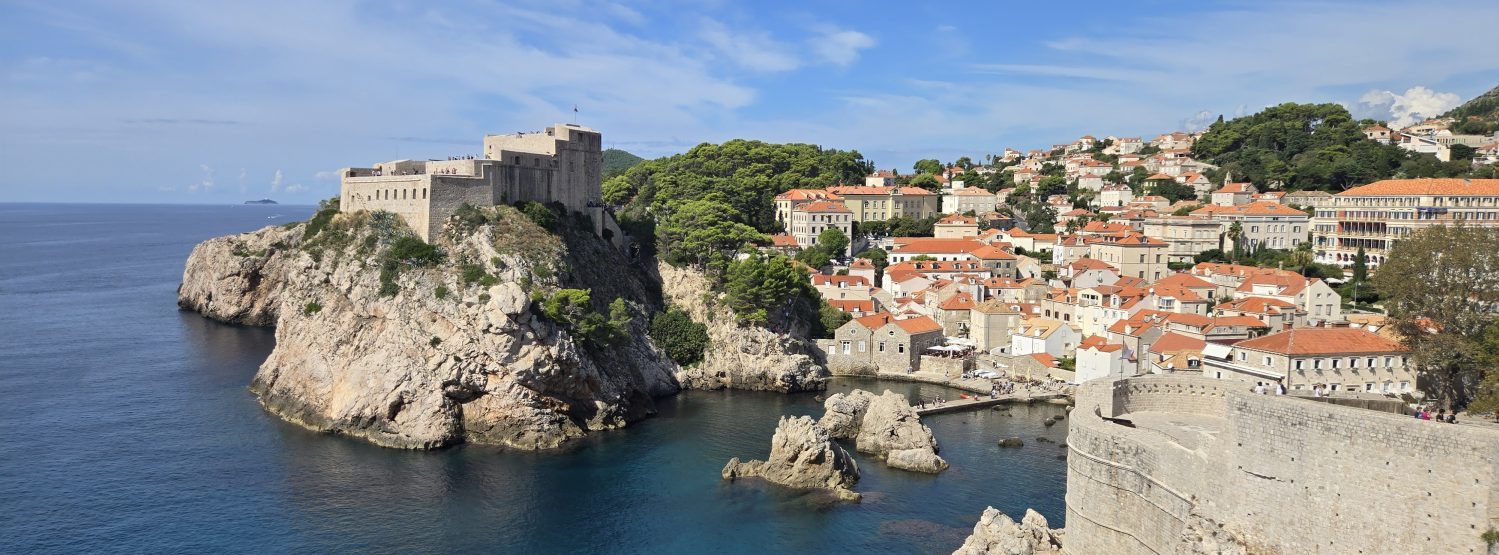


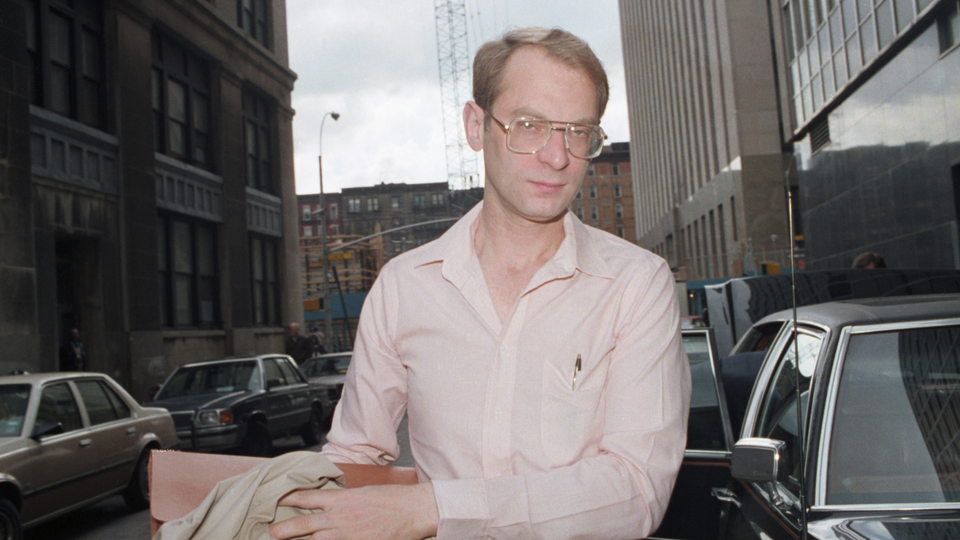
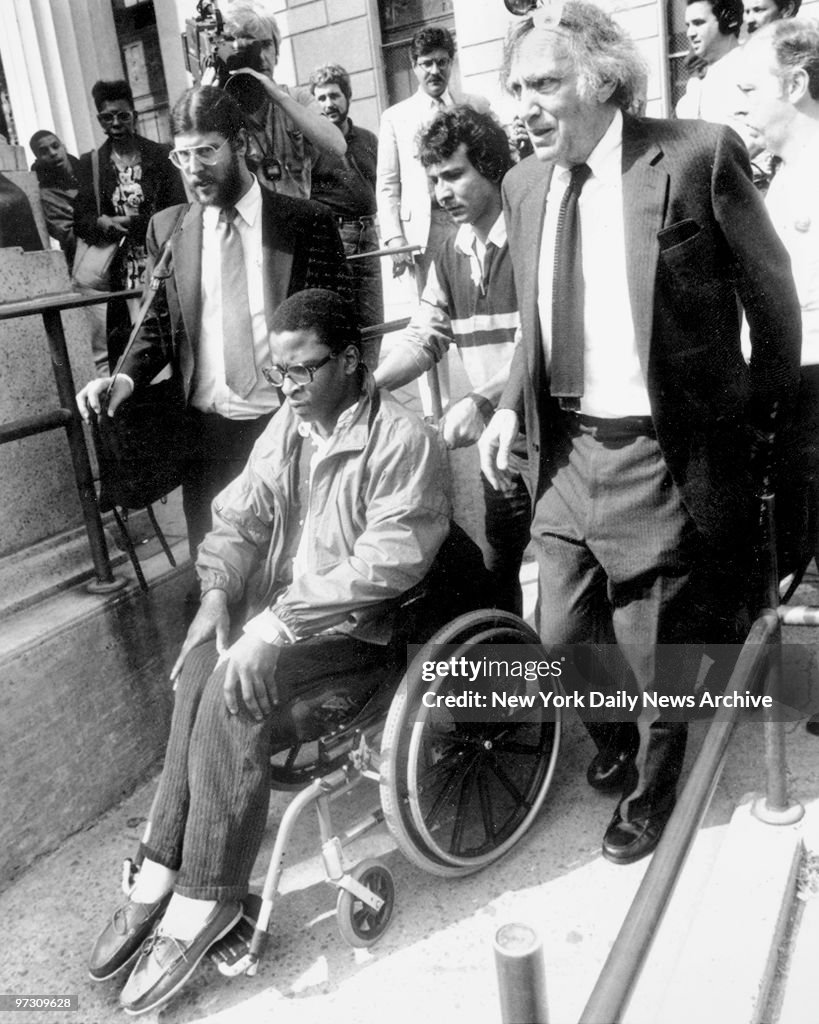
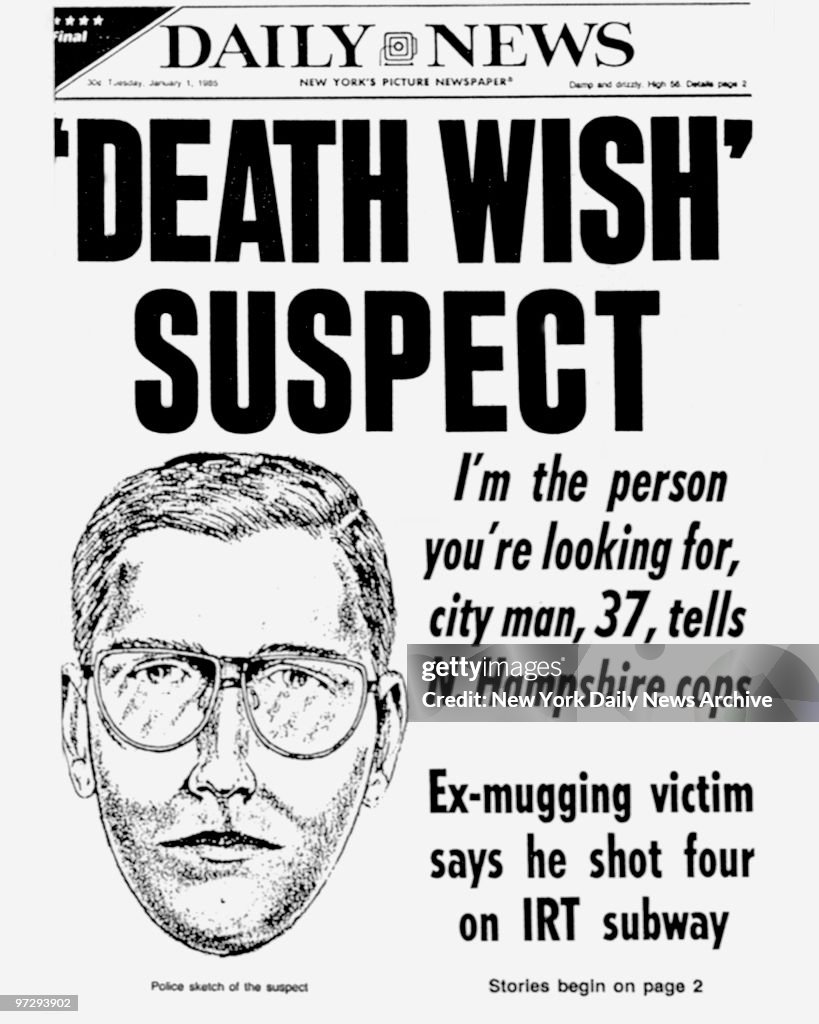



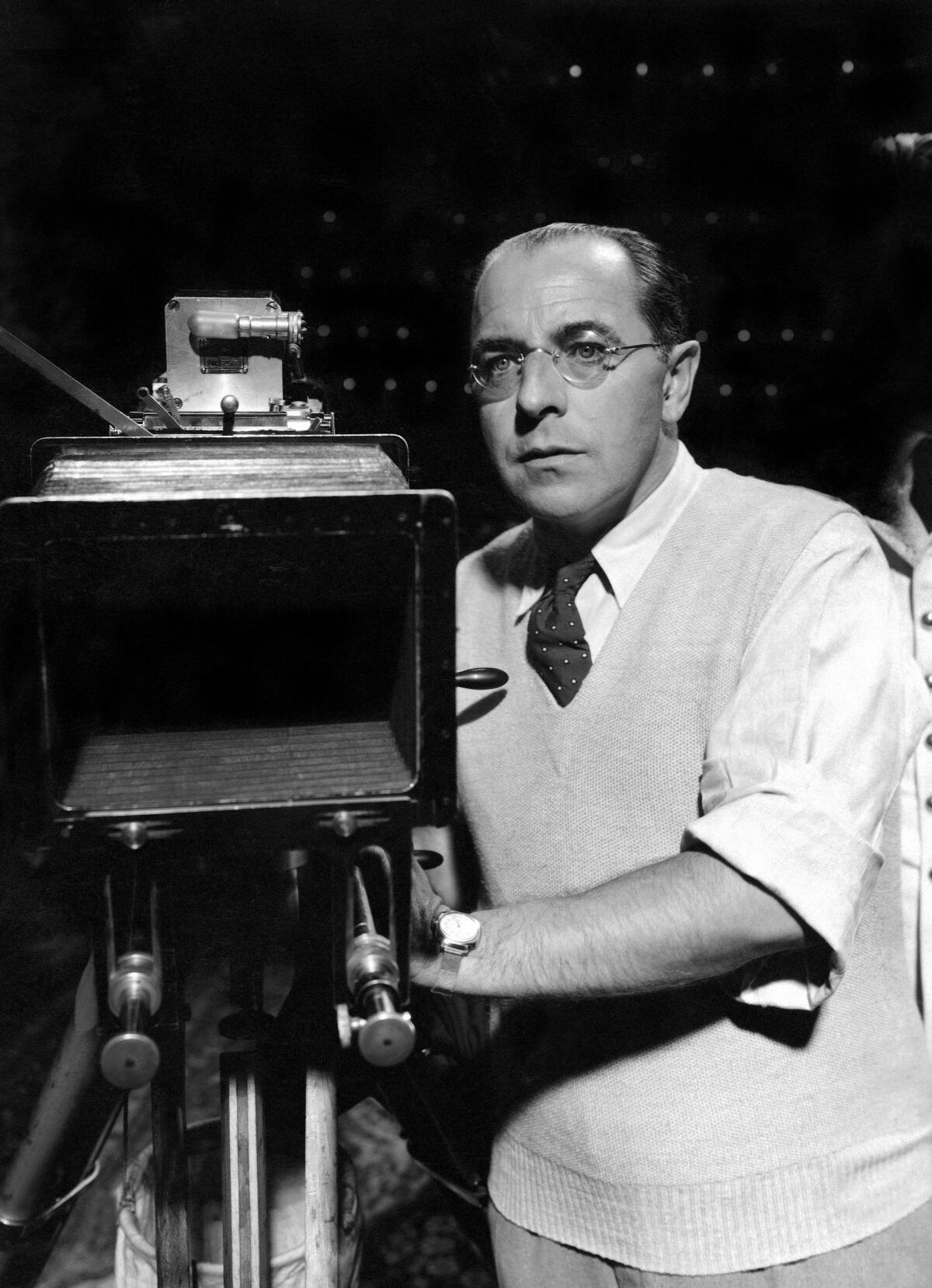


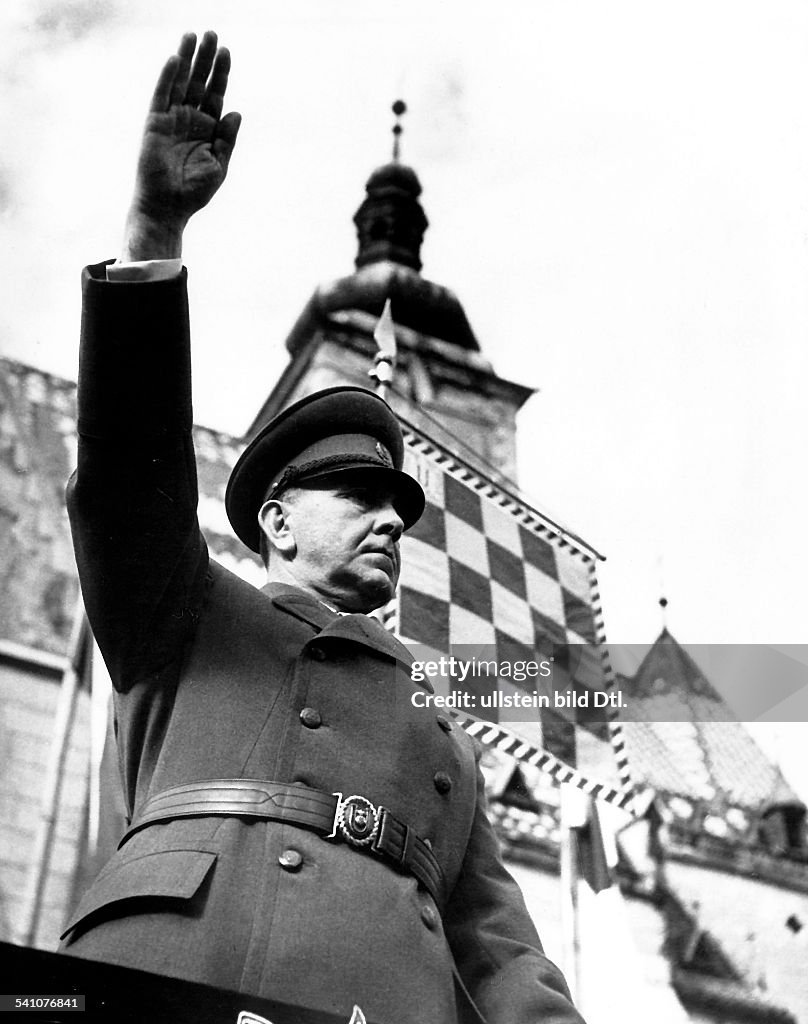

![Serbs interned in the Jasenovac concentration camp in Croatia. [LCID: 85815]](https://encyclopedia.ushmm.org/images/large/1055b664-9fc4-4782-8ead-ae9def867ed9.jpeg "Serbs interned in the Jasenovac concentration camp in Croatia. [LCID: 85815]")
![View of the Jasenovac concentration camp in Croatia. [LCID: 67090]](https://encyclopedia.ushmm.org/images/large/28ac38b7-6a1d-42d9-86ee-6f030b49fc3e.jpg "View of the Jasenovac concentration camp in Croatia. [LCID: 67090]")


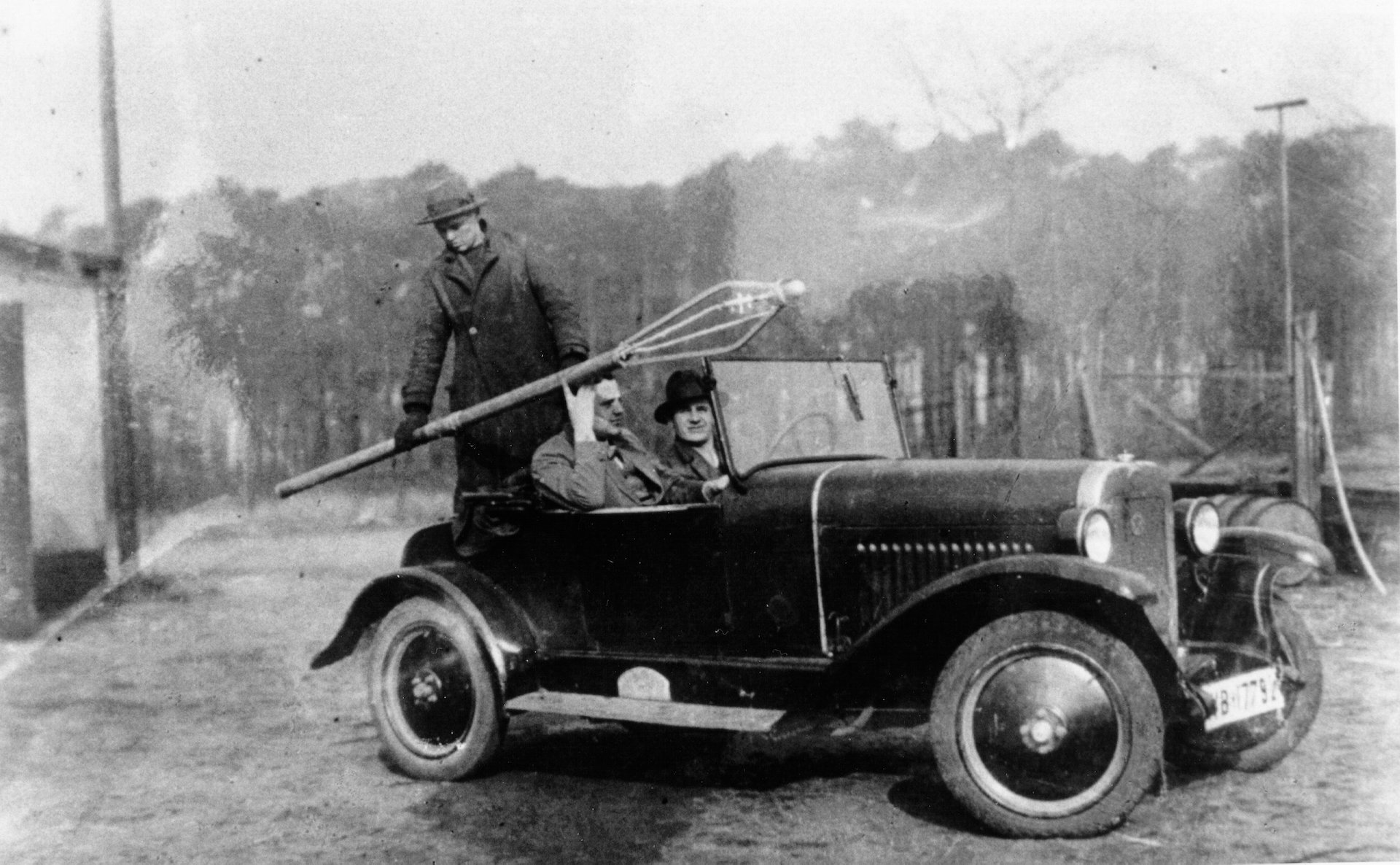

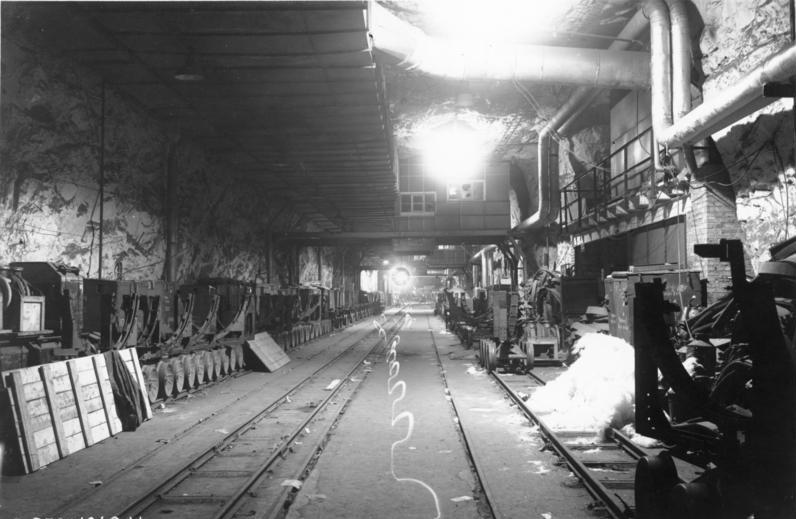
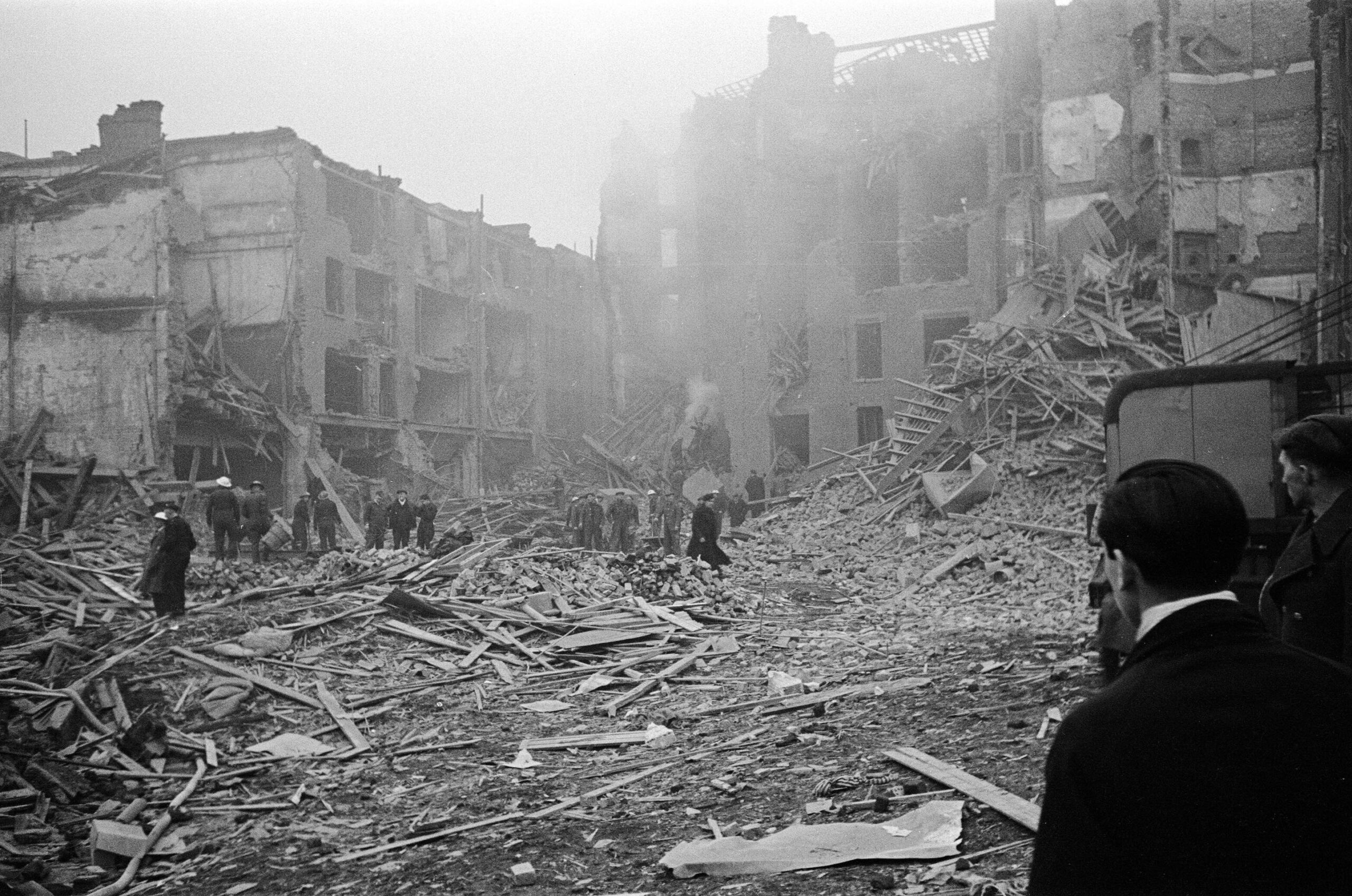
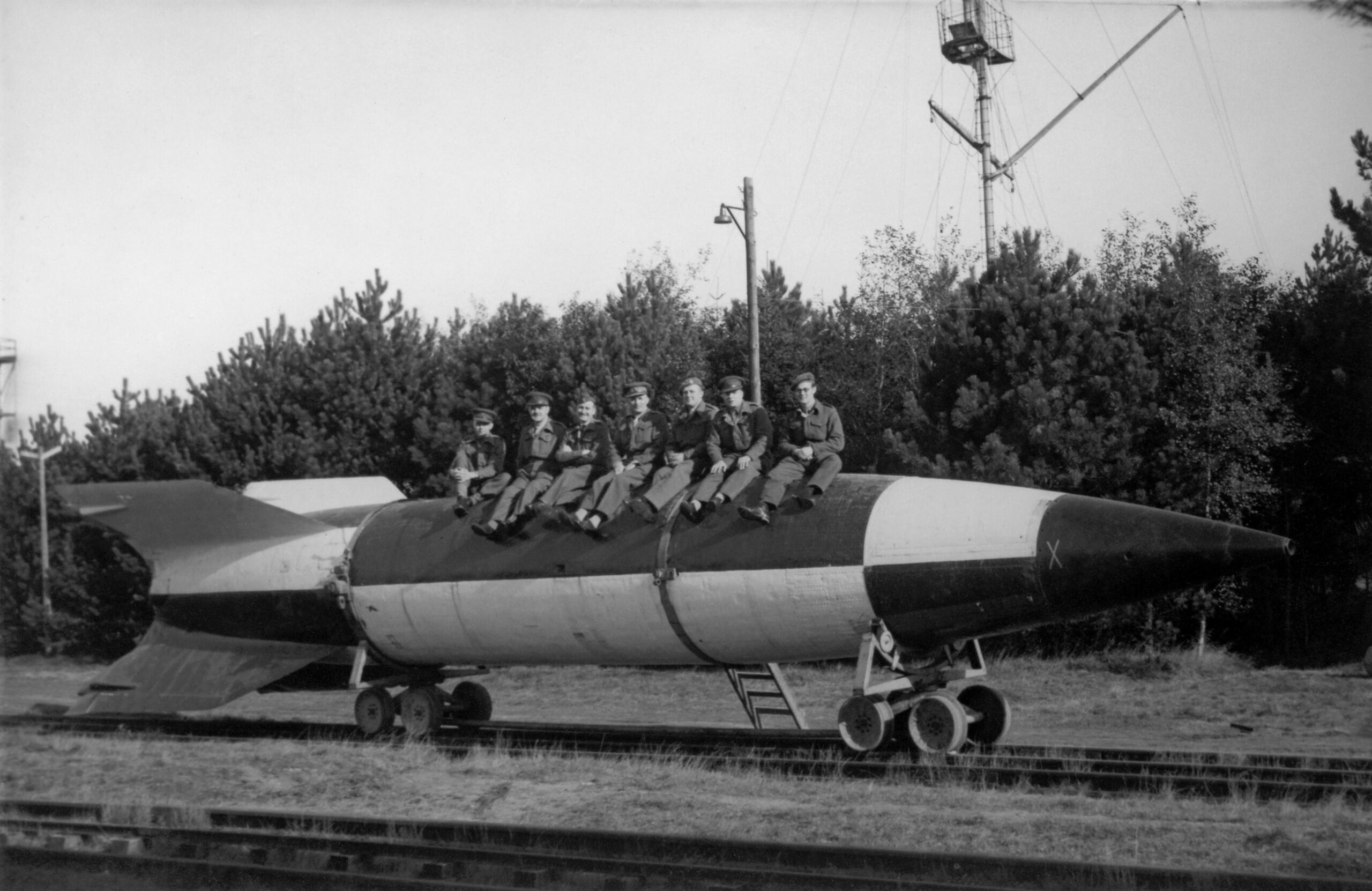
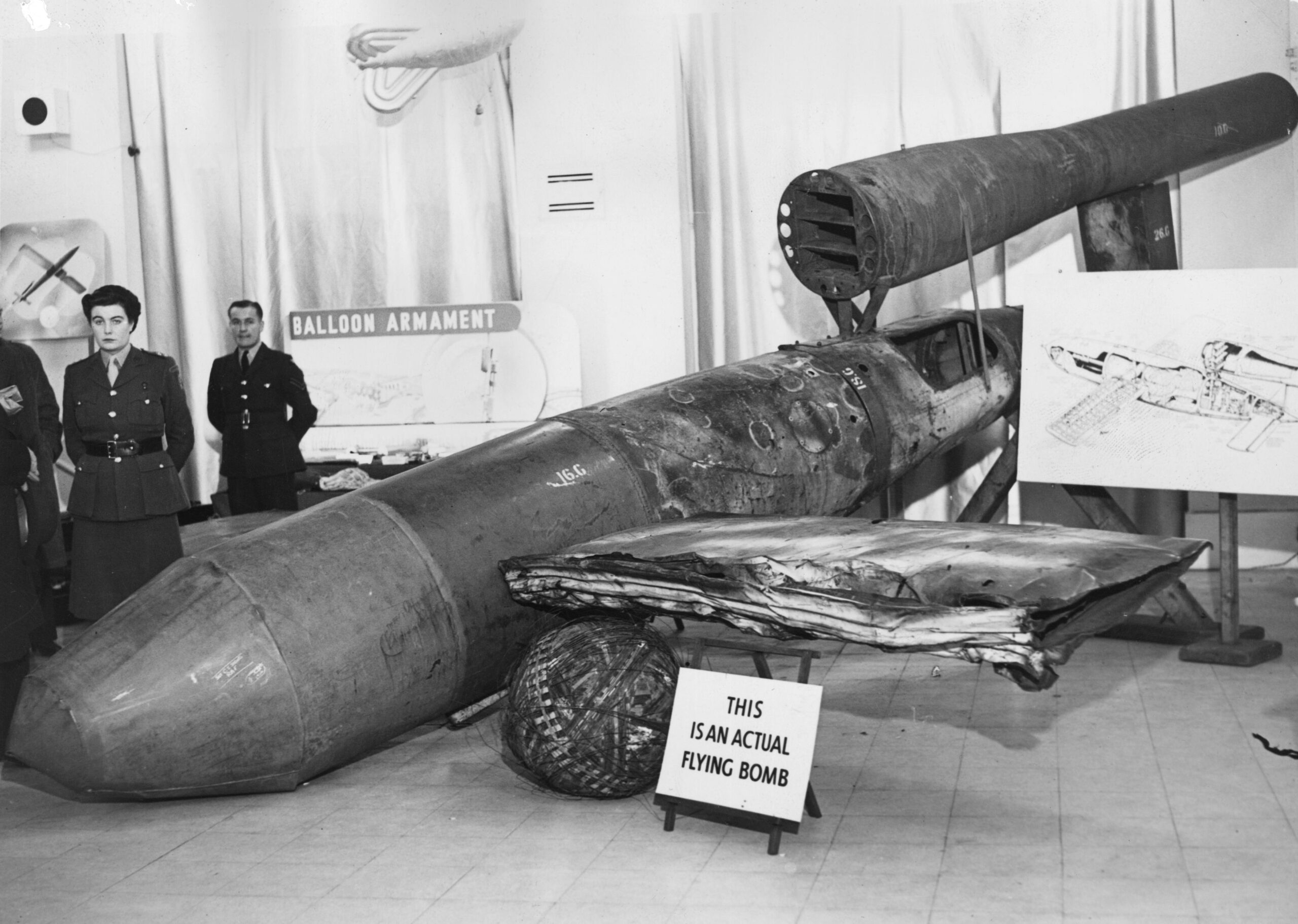



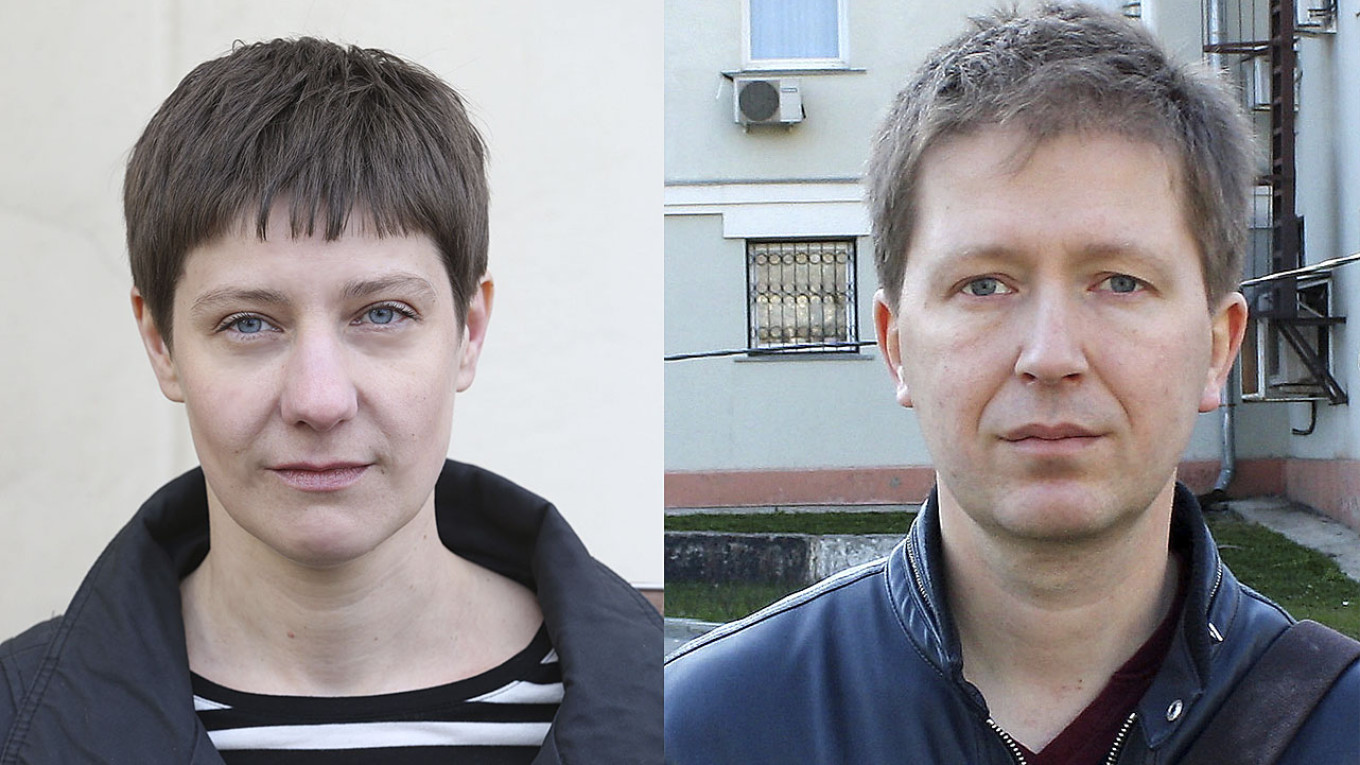





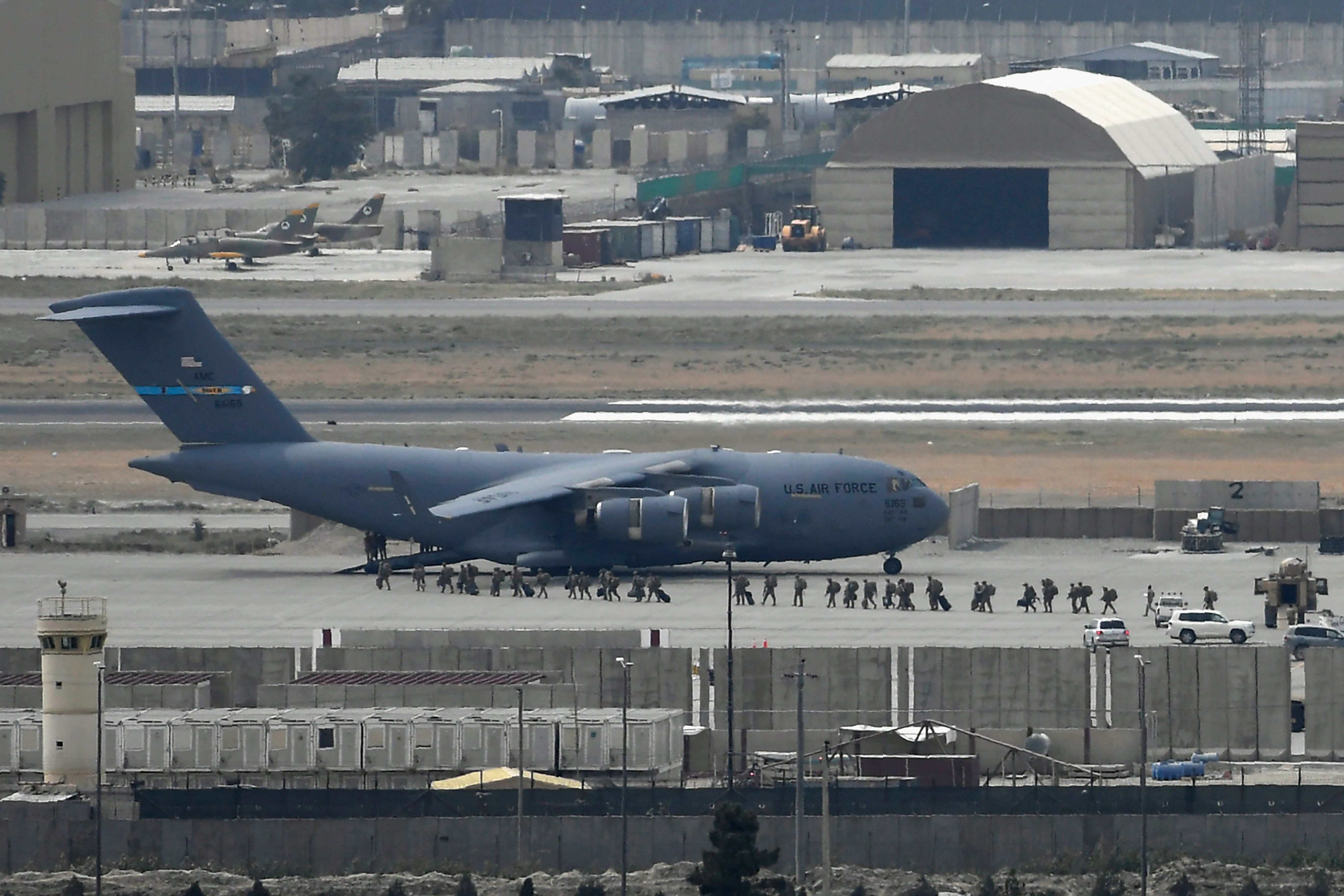




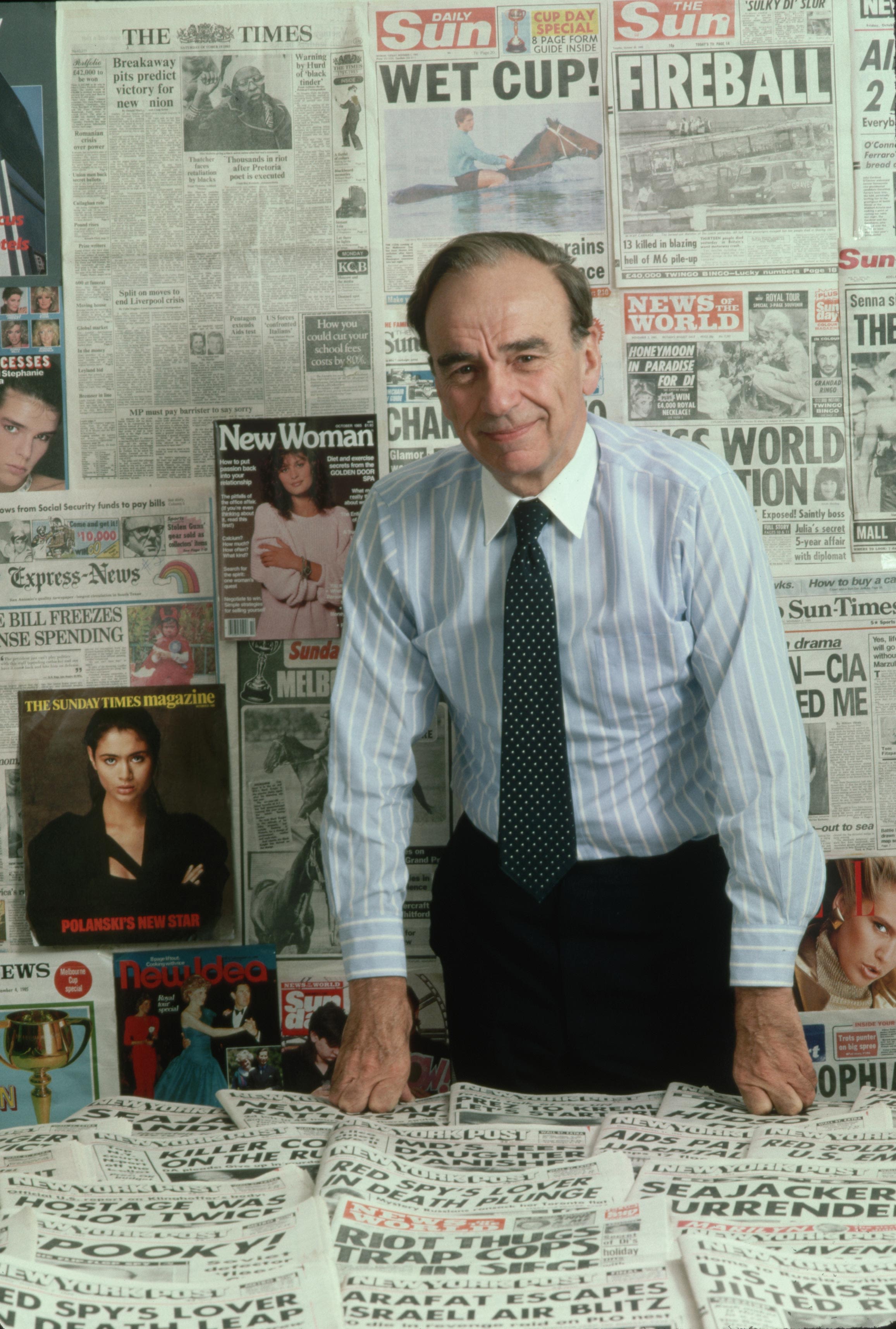


_(cropped).jpg)

 Doc's Books