“I have difficulty looking at the news lately, among other areas of political and social conversation……”

Image result for photo of the Capitol Steps

Last night I had the pleasure of going to the Music Hall in Portsmouth, New Hampshire and being entertained by the “Capitol Steps,” a satirical group of entertainers and political commentators.  They were funny, talented and iconoclastic.  I went with friends who do not always agree politically, but it was an enjoyable evening.  All spectrums of of the political world were lampooned, left, right, and middle.  Imitations of Hillary, Bernie, Obama, Schumer, McConnell, “W,” and the Donald were all presented.  After almost two hours of laughing, it dawned on me that this is not just comedy, but serious, especially when they did their skit on “The Supremes,” reflecting the upcoming debate in the Senate.  What is scary is that this is where we are as a nation, where the “truth does not set us free.”  We need to grow up as a people, especially those who supposedly represent us in government.  If all we want is to pass our agendas and make points against our opposition then we are in trouble.  Damn it America, grow up, from the President, Congress, down to the general public.  Because unless we do we will become the laughing stock of the world, if we haven’t done so already.  If we continue on our path the “art of the deal” will become “the art of the steal” as America’s reputation is demeaned and stolen, and rides off into insignificance, with everything that possible contemplation will bring.

Image result for photo of the Capitol Steps

THE PLOTS AGAINST HITLER by Danny Orbach

Image result for july 20, 1944 photo of damage from plot to kill hitler

(July 20, 1944, bomb damage from a plot to kill Adolf Hitler)

One of the most consistent questions asked by historians about watershed historical events is “what if?”  Counterfactual history may be an interesting intellectual exercise, but speculating when an “Adolf Hitler” could have been stopped, thus avoiding the carnage of World War II does not alter events.  However, reviewing and analyzing actual attempts to kill or overthrow the German Fuhrer is not counter factual but a valid attempt to see how close conspirators actually came to removing Hitler.

There are many other questions that are associated with attempts to remove individuals who are deemed to be dangerous to society.  At what point do people turn against their government?  What motivates people to resist?  Is it ideological, moral, or some other reason that drives individuals to say enough is enough and resort to violence to unseat an existing regime?  These questions are very important when applied to the opponents of Adolf Hitler.  Why did certain people oppose Nazism?  Why did they wait so long to try and depose Hitler?  Did some plotters of the resistance to Hitler actually participate and support genocide against the Jews and other inhumane actions?  Did they try and rid the world of Hitler when they realized that the war was lost?  Finally, did they find Nazism morally repugnant so they decided to strike?  These questions and a discussion of those who tried to remove Hitler are examined fully in Danny Orbach’s new book THE PLOTS AGAINST HITLER.  Orbach examines the full breath of available documents in a number of languages and argues that the answers to these questions are complex and conclusions cannot be considered black or white.

By late 1934 Hitler and his henchmen having taken advantage of the Reichstag fire were the sole masters of Germany.  After crushing the Communist Party, the Social Democratic Party, and centrist parties, the most important source of legal opposition to the Nazis ceased to exist.  The Nazi Gleichschaltung (bringing into line) would swallow local governments, trade unions, and any possible opposition as they cemented their hold over Germany.  Even military leaders who looked down on the former corporal supported a regime whose rhetoric promised to fulfill their goals of rearmament and a more aggressive foreign policy.  A number of military leaders did question the idea of Hitler in power, but they, like the politicians felt they could control him.  Any dissenters were silenced or forced to retire, and Hitler sealed the deal with the military by destroying the SA, his private army during the “Night of the Long Knives” (also known as the Roehm putsch) when the SA leadership was massacred.  With the accession of the SS and the Gestapo, all opposition ceased.

Image result for photo of lt col hans oster

(Lt. Col. Hans Oster)

Orbach traces the origins of the most famous attempt to remove Hitler on July 20, 1944 to the purge of the military leadership in late 1937 and early 1938.  It began with the removal of Field Marshall Werner von Blumberg, the Nazi Minister of War, and General Werner von Fritsch, the commander of the army.  Both were brought down through the machinations of Heinrich Himmler and Hermann Goering as one was married to a former prostitute, the other was framed as a homosexual.  The vacuum was filled by lackeys like General Wilhelm Keitel who were deemed loyal to Hitler,  but an outgrowth of these events was the development of a network that opposed Nazism and wanted to change the government led by Lt. Colonel Hans Oster, an anti-Nazi and a rising star in the Abwehr; Hans Bernd Gisevius, a Gestapo agent who became Oster’s eyes and ears inside the Nazi Security Service; and Dr. Carl Friedrich Goerdeler, the former land mayor of Leipzig who resigned his office when a statue of Felix Mendelssohn was removed from the town square.  These men and others eventually found the violence against the Jews repugnant, were distraught over the persecution of the church, and felt that Hitler’s dangerous foreign policy would lead to war and the destruction of Germany.

Orbach outlines clearly the characteristics of a strong network or clique to foment a coup.  He points to the recruitment of members based on previous friendship and acquaintances.  Further, they must be relatively autonomous and protected from suspicion by the security services, i.e., the officer corps was autonomous from civilian authorities.  Lastly, they are dependent upon networks of kinship, marriage, social ties, joint schooling and military service.  This would lead to the evolution from being a social network to a conspiratorial one.

Image result for photo of colonel ludwig beck

(Colonel Ludwig Beck)

The network would expand to include Ulrich von Hassel, the former ambassador to Italy, Ewald von Kliest, an aristocrat and major land owner, Colonel Ludwig Beck, the Chief of the General Staff, General Erwin von Witzleben, the commander of greater Berlin, and on the periphery Colonel Wilhelm Carnaris, the head of German intelligence.  This network is described in one of Orbach’s most interesting chapters as he describes how they organized and planned a coup de tat for September 28, 1938.  For Orbach this was one of the best chances for success because following the Anschluss with Austria, Hitler ordered Operation Green, the invasion of Czechoslovakia to obtain the mineral rich Sudetenland, an area of over three million Germans.  If this could be achieved then the Czech state would effectively be destroyed.  A number of leading military and civilian figures opposed the operation believing that Germany was not ready for war and would be defeated.  The coup was set, but the conspirators did not count on the fecklessness of British Prime Minister Neville Chamberlain and the intercession of Benito Mussolini that brought about the Munich Conference and the ceding of the Sudetenland to Germany peacefully.  Once the fear of war with Britain and France was off the table, the conspirators were finished.  However, Hitler would continue his aggressive actions that eventually resulted in the events of early September, 1939 with the invasion of Poland and the official beginning of World War II.

The Oster, Goerdeler, and Beck network was too small to stage a successful coup especially with higher echelons of the Nazi regime intoxicated with events up to the invasion of the Soviet Union in June, 1941.  The expansion of the German resistance movement was a direct reaction to Operation Barbarossa, and with it the only option seemed to be the assassination of Hitler.  The movement expanded and its tentacles reached further into the army, foreign office with improved connections between cells.  Many like Hermann Kaiser, a former history teacher, and reserve officer; and Lt. Col. Henning von Tresckow, a senior operations officer in the Army Group Center on the eastern front reacted to the carnage and slaughter in the east perpetrated by SS Einsatzgruppen.  In 1941 and 1942 there was little that could be done to stop it, but with the fall of Stalingrad the resistance was emboldened and a number of assassination attempts against Hitler were planned but failed due to a change in the Fuhrer’s schedule, bad luck or other unforeseen problems.

Image result for photo of wilhelm canaris

(Admiral Wilhelm Carnaris)

One of the most surprising aspects of the book was Orbach’s discussion of the role of Admiral Wilhelm Carnaris, a conservative nationalist who could not accept the brutality of the Nazi regime.  Carnaris disgusted by what he saw in Warsaw worked to save over 400 people including Rabbi Joseph Schneersohn, the Lubacitche Rabbi.  Carnaris worked further to smuggle Jews out of Germany using the excuse he was planting spies abroad.

Image result for photos of july 20, 1944 attempt to kill hitler

(Count Claus von Stauffenberg, attempted to kill Hitler with a bomb on July 20, 1944)

By 1943 leadership of the resistance fell, almost, by default to Count Claus von Stauffenberg, a romanticist and elitist whose career would bring him to Hitler’s General Staff.  Orbach presents an in depth chapter dealing with von Stauffenberg’s evolution in finally becoming the leader of the movement and deciding that only he had the courage and position to kill Hitler.  Orbach carefully explains the organization of the conspirators, how they planned, communicated, recruited, and compartmentalized their networks from each other.  Orbach’s analysis included the personality clashes within the movement and the shadow government that was created designed to govern Germany after the Nazis were removed.  All their plans failed as Hitler survived the July 20, 1944 bomb blast and Orbach explains that none of the conspirators had any training in the art of the coup de tat which in part explains why it was not successful.  Orbach drills down in reviewing mistakes that were made and the fate of the perpetrators once the plot was uncovered.

Orbach’s conclusions are well supported by his ambitious scholarship and research.  I believe the most important question explored in the narrative is what led people to oppose Hitler.  Was is a combination of their hostility toward murder, genocide, fear that Germany could not win a world war, opportunism, or the dechristianization of Germany?  Orbach further argues that it “perhaps comes down to the elements composing motive, the aggregate of psychological processes and factors pushing one across the Rubicon into the shadowy world of revolutionary conspiracy.  It may well be difficult to define the elusive mix that constitutes such an imperative.  The best I can do is to suggest three necessary components: its foundation, substance, and impetus.”  The foundation seems to be empathy, the substance is a system of values, and the impetus was exceptional courage.

Orbach’s narrative, at times, reads like a murder mystery, as well as a historical monograph. Orbach should also be given credit for presenting then debunking numerous myths associated with events which makes the book a useful contribution to the increasing number of studies dealing with the German resistance.  Because of Orbach’s approach and smooth writing those who are interested in the topic should not be disappointed.

Orbach compares the recent attempted coup against President Recep Tayyip Erdogan of Turkey with those against Hitler in the Israeli newspaper Haaretz, November 28, 2016.  http://www.haaretz.com/middle-east news/turkey/.premium-1.755427

Related image

(July 20, 1944, bomb damage from a plot to kill Adolf Hitler)

VICTORIA: THE QUEEN by Julia Baird

Image result for photo of queen victoria

(Queen Victoria)

The current airing of PBS’ Masterpiece Theater of VICTORIA and its popularity has created great interest in the British monarch who ruled her kingdom and the world’s largest empire between her accession to the throne in 1837 and her death in 1901.  The program is written by Daisy Goodwin who has recently published her novel VICTORIA a fictional account of the early years of Victoria’s reign.  For a full and intimate biography Julia Baird has filled that void with VICTORIA: THE QUEEN which is an in depth study of the queen focusing on what it was like to be a female monarch in a world dominated by men.  Baird takes a somewhat feminist approach to her subject and based on years of research and mastery of primary and secondary material, the reader will learn what it was like for the teenage girl to suddenly assume the throne in 1837, her views on Parliament, Prime Ministers, attitudes toward the poor, foreign policy ranging from the Crimean War to the Boer War, but also the effect of her reign on society and women in particular.  The approach Baird takes is informative, well thought out, provides impeccable analysis, but at times she takes her intimate approach a bit too far.  I understand the importance of Victoria’s multiple pregnancies that produced nine children, but I do not need to know the details of her menstrual cycle and her reproductive anatomy.  Details about her life with Prince Alfred are fascinating, but at times, here too, she goes overboard.  However, despite some flaws the book is beautifully written and an important contribution to the historiography of the Queen.

During her reign Victoria steered her people through the social and economic changes wrought by the Industrial Revolution, and oversaw her kingdom as the European balance of power was radically altered through nationalism and imperialism.  The Queen’s reign was the longest in British history until it was recently surpassed in 2015 by Queen Elizabeth II.  Baird points to the many myths associated with Victoria relating to her marriage to Prince Albert, her use of power as queen, her treatment of her subjects, and her personality traits.  Baird accurately concludes that “Victoria is the women under whose auspices the modern world was made.”   Further, Baird does an exceptional job analyzing her subject in the context of mid to late 19th century socio-economic change and her impact on European society and the larger world especially for the role of women.  In a sense Baird has created an ode to the development of the women’s movement with Victoria’s situation seen as a primary motivator behind it.  Baird correctly argues that Victoria fought for her independence, prestige, and respect for her reign from the time she was a teenager, and did so mostly on her own.  For the author, she “worked until her eyes wore out, that she advised, and argued with, ten prime ministers, populated the royal courts of Europe, and kept the British monarchy stable during the political upheavals that shook Europe in the nineteenth century.”

Image result for photo of Lord Melbourne

(William Lamb, Lord Melbourne)

Baird gives Victoria a great deal of credit but then she backtracks as she discusses the queen’s relationship with Lord Melbourne, who she leaned on for support in dealing with her mother, John Conroy, certain members of her family, Parliament, and policy decisions. Baird describes a young woman infatuated with an older man, who thankfully does not seem to take advantage of his positon.  According to Baird, Victoria will eventually concede powers to Prince Albert in most major social, political, and foreign policy areas.  Granted, Victoria was pregnant a great deal of the time during her marriage to Albert, and suffered from postpartum depression and other ills that made her involvement in decision making less of an issue, but Baird herself points out the differences in approach between Victoria and Albert.  The Prince was more of an intellectual than his spouse and was greatly interested in the problems of the poor and working classes.  Albert was a cultured and well educated person who did not want to crush public dissent like Victoria and it appeared he wanted to bring about reform in order to lessen that dissent.  According to Baird, “the role of the monarchy under Albert’s leadership, then, was a forceful influence, which urged the government to exercise restraint in foreign policy and democratization, to erode the authority of the aristocracy and exert influence through a web of royal connections that spanned Europe in a network of carefully planned and delicate backdoor diplomacy.”  Victoria on the other hand was not as empathetic toward her subjects.  A case in point is her approach to the Irish famine where she started out criticizing tyrannical landlords, but once a few landlords that she knew were murdered, her sympathy for Irish tenant farmers waned.  Baird argues that it was a stretch to blame Victoria for the famine, but there was a great deal she could have done to mitigate their effects.  It is clear that from the time of her marriage to Prince Albert in 1839 until his death in 1861 England may have gone through an Albertine Age as Baird suggests, and it took until the Prince died for Victoria to seize the reigns and create the Victorian Age.

Image result for photo of queen victoria

(Queen Victoria and Prince Albert)

For Victoria until Albert’s passing life was a balancing act; how to be a good mother, wife, and reign over her kingdom.  Baird does her best to show the Queen as a loving and doting mother, but then in the next sentence she will point out that she was rarely involved in certain aspects of her children’s care. Victoria possessed a quiet stubbornness that forced many who opposed her wishes to underestimate her, particularly when she ruled by herself.  Lord Melbourne did school her well on how to be an effective Queen, and she learned from Albert certain sensibilities that a monarch needed to possess.

Baird does an effective job dealing with Victoria’s views and impact on events.  Her role in the Crimean War debate is discussed in full, her fears of revolution in 1848 and why the social upheaval throughout Europe did not cross the English Channel, her distaste for the Russians in the Eastern crisis that led to war and the Treaty of Berlin in 1878, and her opposition to Home Rule for the Irish.  Further, Baird’s discussion and analysis of Victoria relationship with her Prime Ministers is top drawer particularly her negative relationship with Lord Palmerston when he was Foreign and Prime Minister, and her up and down relationships with certain Prime Ministers, particularly William Gladstone, Lord Derby and Lord Russell.  Her relationship with Lord Salisbury was excellent but nothing compared to her relationship with Benjamin Disraeli as he was the only Prime Minister to realize that the lonely queen wanted to be “fettered, flattered, and adored.”  As Victoria aged she moved on from her Whiggish liberalism under the influence of Melbourne to outright conservativism due to her close relationship with the Tory, Disraeli.  The last twenty years of her reign Victoria, who never acted as an impartial monarch, became greatly involved in politics, especially when the man she loathed, William Gladstone had defeated Disraeli in parliamentary elections in 1881.

Image result for images of william gladstone

(Prime Minister William Gladstone)

It can be argued that 1861 was a watershed year for Europe and the world because of its impact on the United States and across Europe.  It witnessed the outbreak of the Civil War in the United States, the supposed emancipation of serfs in Russia, and the death of Prince Albert.  Her husband’s death became the greatest test for Victoria’s reign.  She seemed to succumb to an extreme depression and many wondered if mental illness would overtake her as it did George III.  Her depression would last for a number of years where she had doubts about how to proceed with policies and felt extremely alone.  During that time a number of major events in Europe would draw the attention of the British Foreign Office.  The Polish Revolt against Russia and the controversy over Schleswig-Holstein would lead to the Danish War between Denmark and Prussia.  English influence in this 1863 crisis was marked and if Albert had been alive he might have influenced events more than his mourning widow.  By the late 1860s it appeared that Victoria was emerging from her depressive state, and as she overcame her loss she would go on to be a strong monarch in her own right making a deep impact on her kingdom as well as Europe.

The key individual in Victoria’s emergence from her widowed state was John Brown, a Scottish Highlander who had been Albert’s outdoor attendant at Balmoral who became her most intimate friend.  Her children despised him and nicknamed him the “Queen’s Stallion.”  There are many rumors and myths about their relationship that Baird addresses, whether they were lovers and what impact he may have had on policies, as one writer referred to him as “Rasputin with a kilt.”  No matter what the truth may be, one thing is certain is that the Queen came to rely on him and he helped fill the void created by Albert’s death.  In fact, Victoria would spend eighteen years in his company, almost as long as she spent with her beloved Albert.

Image result for picture of kaiser wilhelm ii

(Wilhelm II of Germany, Victoria’s grandson)

Baird spends a great deal of time discussing royal genealogy and its impact on Victoria’s life and policy decisions.  Using the marriage of her children for diplomatic need had been a tradition of European and English monarchies for centuries, but in her case the result can be considered quite disastrous as her lineage connects her to Wilhelm II of Germany, and Nicholas II of Russia who both bear a great deal of the blame for the outbreak of World War I and the carnage that followed.  Her children were placed throughout Europe as a means of extending English influence, but in reality that goal was rarely met.

There is no doubt that no one person dominated her kingdom the way Victoria had, particularly from the 1870s onward as she applied the political lessons learned over the decades, especially working in the shadows to achieve her goals while her subjects thought she was romping in Scotland as any monarch would do.  Baird creates an absorbing picture of a fascinating life.  Despite a few flaws Baird should be commended for producing the most comprehensive analysis of Victoria and her importance in history, and it should remain the most important secondary source on Victoria’s life for years to come.

Image result for photo of queen victoria

(Queen Victoria)

THE PALE HOUSE by Luke McCallin

Related image

(Communist partisans march into Sarajevo at the end of W.W.II)

Luke McCallin’s second installment of his Gregor Reinhardt series is as compelling and nuanced as his first, THE MAN FROM BERLIN.  Two years later, THE PALE HOUSE, finds Reinhardt reassigned from the Abwher, German intelligence to the Feldjaegerkorps, a new branch of the military police with far reaching powers.  The assignment came about following a failed attempt on Hitler’s life that brought a severe crackdown and purge against anyone suspected of having questionable loyalty to the Fuhrer.  Reinhardt had surreptitious links to the German resistance and was worried about his friends and allies.  McCallin creates an unimaginable plot that will place Reinhardt in situations that will call on him to dig deep within himself to survive.

Image result for photo of partisans liberating sarajevo after wwii

(Yugoslavia during World War II)

In late March, 1945, near Sarajevo, among rumors of deserters Reinhardt comes across a massacre of civilians.  Along with a colleague, Lt. Max Benfeld, Reinhardt investigates the site as a crime scene employing what remained of his past police skills.  After examining the bodies and other evidence he concludes that what occurred was perpetrated by the Ustase, a Croatian fascist ultranationalist party.  Reinhardt locates three survivors and crosses an Ustase checkpoint and brings them to Sarajevo to try and save their lives.  Reinhardt becomes obsessed with the massacre and he begins to wonder if murder was the norm and acceptable behavior in the city as it was surrounded more and more by communist partisans.  As the Germans slowly withdrew north the Ustase wanted to control what remained of Croatia, but they were riddled by different factions with their own agendas.  It was a world dominated by the likes of Vjekoslav Lubaric, the head of the Sarajevo Ustase and Ante Putkovic, who used dice to determine the innocence or guilt of his prisoners.  The Ustase were not an effective fighting force, but were excellent at mass killing.

Reinhardt’s investigation has many threads.  As he tries to bring some semblance of reason to his work he encounters a number of interesting characters.  War Crimes Division jurist, Major Marcus Dreyer, an old friend from the First World War and post war Berlin asks for his help in his own investigation.  It seems that Dreyer suspects German Major Edwin Jansky of a number of illegalities as he is in charge of a Penal Battalion made up of condemned men from all over the Balkans.  It is accepted that Jansky and his men are corrupt and taking advantage of the chaos in the region to rob it blind.  However, Dreyer believes that Jansky and his men may have something to do with the earlier massacre and a number of other murders.

It seems that death becomes Reinhardt’s specialty.  Summoned to an ambush site of dead German soldiers, he finds another five mutilated bodies that were not meant to be found.  As in THE MAN FROM BERLIN Reinhardt has to deal with jurisdictional issues, but in the present situation they lead to greater personal danger for himself and those around him.  Throughout the dialogue McCallin provides a number of asides that fills the reader in with information about Reinhardt’s past.  By doing so we see the further evolution of Reinhardt’s character and moral code as well as how his personal tragedies have affected him.

The mutilated bodies become the axle on which the novel spins as Reinhardt once again has to rely on allies that previously might be considered enemies.  As the story unfolds these allies are somewhat surprising, Suzana Vukic, whose daughter, a Croatian nationalist journalist had been killed, the communist partisan leader, known as Valter, Vladimir Peric, and Alexious, a Greek soldier of fortune trying to save his family.  As McCallin has Reinhardt deal with these relationships he is able to convey the horrors perpetuated by the Ustase as the war begins to wind down.  All the Germans seemed to care about was the withdrawal of as many troops as possible and were not concerned with the actions of their former allies, except for Reinhardt and a few others.  But, is Reinhardt reading the situation correctly, is it the Ustase or perhaps rogue Germans with links high up the chain of command?

As the plot broadens Reinhardt is trying to link the massacres of civilians, the murder of German soldiers, and the corruption that seems to exist everywhere.  McCallin creates a web of deceit that is hard to fathom and the conclusions that Reinhardt reaches are difficult to predict as is the final act in the drama that unfolds.  Once again, McCallin leaves an opening with his final paragraph that will be continued in his recently released third installment, THE DIVIDED CITY.

Image result for photo of partisans liberating sarajevo after wwii

(Communist partisans liberate Sarajevo at the end of World War II)

THE MAN FROM BERLIN by Luke McCallin

Image result for photo of Sarajevo during WWII

(Nazi occupied Sarajevo, 1943)

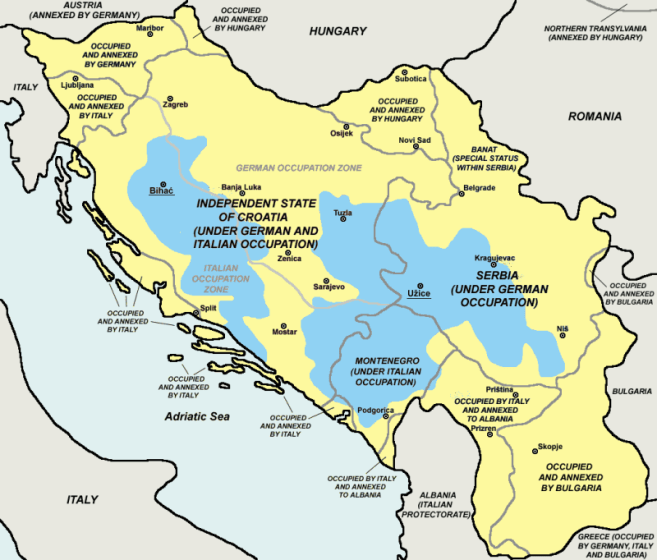
If one could turn the clock back to the 1990s when men like Slobodan Milosovic and places like Srebrenica were in the news they would recall the horror that they felt. People could not fathom what the Serbs, Croats, and Muslims hoped to gain from all the violence, particularly since the origins of the conflict go back at least to the 4th century AD with the creation of the Byzantine Empire.  The events of World War II are also part of the Balkan puzzle that we still grapple with today that are displayed in a very thoughtful and chilling manner in Luke McCallin’s novel THE MAN FROM BERLIN.  The war forms the backdrop for the fight between the Ustase, Serb nationalists, and partisan forces as they struggle for the soul of postwar Yugoslavia.

Image result for photo of Sarajevo during WWII

On his third tour of Yugoslavia during World War II, Abwher Captain Gregor Reinhardt finds himself recovering from a drinking binge the night before when he summoned to report to Major Ulrich Freilinger to investigate the murder of an intelligence colleague, and a woman he was with.  A number of problems immediately emerge, one, Reinhardt has not worked a murder case in over four years, and second, the Sarajevo Police Inspector Putkovic claimed his department had jurisdiction in the case, in addition it appeared that the policeman put in charge, Inspector Andro Padelin a member of the Ustase, was a racist and anti-Semite and cared only in solving the crime against Maija Vukic.  Vukic was a well-known film maker and journalist who was a fervent supporter of a Croatian state and freedom from the Serbs.  The fact she had once danced with Reinhardt at a Nazi Party function did not detract from his main goal of locating the killer of Stefan Hendel, the Abwher agent.

There are numerous candidates for the murderer.  Was the individual a Chetnik, a Slavic Nationalistic guerilla force; an Ustase, Croatian fascist; a Yugoslav Royalist; or a member of the partisans under Jozip Broz Tito; or perhaps someone else?  Reinhardt not only has to navigate these groups but there are also SS fanatics and some who want to get rid of Hitler on the German side.  With so many contending groups fighting for control in the Balkans McCallin does a nice job conveying the contentious atmosphere that existed in Yugoslavia that permeates the novel.  What is clear is that the politics of the Balkans throughout the war was byzantine and extreme.

The characters that McCallin creates are unique and at times very difficult to comprehend.  They are people with principles or are they confused or in fact traitors.  Whatever the truth may be the reader will develop respect for certain individuals and scorn for others.  McCallin’s characters are indeed fascinating, among them are Dr. Muamor Begovic, a medical examiner for the Sarajevo police, but also a communist partisan.  Major Becker, a nasty and sadistic individual who is second in command of the Feldgendarmerie or military police and a former Berlin Kripo detective with Reinhardt. Captain Hans Thallberg, an officer in the Geheime Feldpolizi (Secret Police) who admires Reinhardt and tries to assist him.  Inspector Andro Padelin of the Sarajevo police or Ustase, ordered to work with Reinhardt.  General Paul Verhein, the German commander 121st Jager, whose life journey and loyalties are hard to imagine.  Among these individuals McCallin introduces many people from Reinhardt’s past.  His wife Caroline, son Friedrich, Rudolph Brauer, his best friend, and Colonel Thomas Meissner, his mentor that provide insight into these person Reinhardt will become.

Reinhardt was a man who loved his country, but hated what it had become.  He treasured the friends he made in the army, but grew to hate the uniform they wore.  After the 1936 Olympics, Kripo, the Berlin police were integrated into the Gestapo and Reinhardt had refused to join.  He was posted to Interpol because the Nazis needed his aura of professionalism and his solid reputation.  Once it became clear he was working to perpetuate Nazism he became conflicted because he needed the money to pay for his wife’s medical treatments before she died.  Colonel Meissner would step in and gets him transferred to the Abwher, German intelligence, which reflects what a flawed and conflicted man he was.
It is as an Abwher agent that McCallin develops Reinhardt’s character and the story that forms the core of the novel.  As McCallin spins his tale it is a searing ride with a conclusion that is nuanced and compelling.  It is a plot that should rivet the reader to each page, and fortunately the author brings his story to an ending in such a manner that he leaves enough room to create a sequel entitled, THE PALE HOUSE.

Image result for photo of Sarajevo during WWII

(Nazi occupied Sarajevo, 1943)

THE GIRL FROM VENICE by Martin Cruz Smith

Image result for photos of wartime venice

(World War II Venice)

For those that are familiar with the work of Martin Cruz Smith the author of GORKY PARK, STALIN’S GHOST, TATIANA, among others, his latest effort, THE GIRL FROM VENICE should prove very satisfying.  The novel is centered in Venice in the small fishing village of Pellestrina.  One evening during the spring, 1945, Innocenzo Vianello, a poor fisherman is watching allied planes pass overhead on their way to rain havoc on Turin, Milan, or Verona, as he tries to secure his catch, when he notices a body floating in the water.  The body turns out to be a survivor of a Nazi SS raid on San Clemente, a mental institution.  The survivor is Giulia Silber, from a wealthy Jewish family, whose parents, aunts and uncles, in addition to many others have been seized by the Nazis and are presumed dead.  Cenzo, against his better judgement rescues the girl and immediately is confronted by an SS boat in a lagoon.  It seems the SS is looking for the escaped Jewess.  Cenzo hides the girl and an incident will occur that makes him as much of a target as Giulia.

Image result for photo of hitler and mussolini

(Benito Mussolini and Adolf Hitler)

Smith’s writing is very clear and he does a remarkable job developing the relationship between Cenzo and Giulia, from teaching her to be a fisherman, how to enunciate as not to appear upper class, friendship, and finally falling in love.  For Cenzo thinking about his own miseries pale in comparison to what Giulia has been through and he becomes very protective of her.  They are both in a quandary as to how to proceed when Cenzo’s friend, Eusebio Russo, who was a smuggler, arranged to take Giulia north and turn her over to Communist partisan to allow her to escape.  However, at this point Cenzo and Giulia realize they might mean more to each other than they thought.

As the novel progresses the reader will come across a number of interesting characters.  There is Cenzo’s brother Giorgio a famous actor and follower of Mussolini who he is estranged from.  Nido, the owner of a bar in Pellestrina, who along with his good friend Cenzo oppose the war after their experiences fighting against Haile Selassie’s forces in Abyssinia.  Colonel Steiner, a Nazi officer that may have turned against Hitler.  Steiner claims he needs to locate Giulia as she is the only witness to what happened at San Clemente when Steiner’s conduit to the Americans disappeared, Vittorio Silber, Giulia’s father.  The catch is Steiner wants Cenzo to work with his brother to find her.  Maria Paz Rodriguez, the wife of the former Argentine Counsel in in Salo, the capitol of the remainder of the Italian Socialist State.  Paz is an interesting character as she is an excellent forger for both Jews and Germans who are fleeing.  Otto Klein, supposedly a neutral Swiss filmmaker, but he has ties to the black market, Joseph Goebbles, and seems to want to bring down the Germans.  Farina, an Italian Fascist who cannot understand that the war is lost.  Lastly, Dante, the partisan leader whose loyalty is to communism.

There is a Kafkaesque quality to the story.  As the war winds down everyone thinks it is almost over and they begin to contemplate their lives once hostilities will come to a close.  They wonder who will be in charge and most conclude the Germans will just leave, but Italian fascists and partisans will battle for Italy’s soul.  Smith provides unique insights into society in the “capitol,” Salo.  The nerves of the people are being shredded as they worry about who they will be able to trust.  Cenzo will undergo a remarkable transformation as he tries to find Giulia and has to deal with his brother Georgio, but also has nightmares over the death of his younger brother Hugo, who had been killed by an American pilot the year before.  The novel has an undercurrent that pervades each page as Cenzo, also a talented artist had painted a picture of the scene where his brother Hugo had been killed.  The problem is that Cenzo is transfixed by what he has created, and it takes him almost to the end of the story to finally understand what his unconscious was telling him.

The novel itself is an indictment of Mussolini’s regime and the marionettes that followed him.  Smith’s dialogue reeks of sarcasm as he points to the weaknesses and incompetence of Italian fascism.  Il Duce is a comic figure, however the story that he is a part of is not.  Martin Cruz Smith’s new book is worth engaging and I recommend you take a few hours, get comfortable with a glass of wine, and enjoy-it will be bellissimo!

Image result for photos of wartime venice

(June 25, 1941, the Venice Conference)

FIELDS OF BATTLE: PEARL HARBOR, THE ROSE BOWL, AND THE BOYS THAT WENT TO WAR by Brian Curtis

Image result for photo of the 1942 Rose Bowl game

(1942 Rose Bowl Game in Durham, NC)

Last Monday the University of Southern California and Penn State University met in one of the most thrilling Rose Bowl games in history with the Trojans winning on a last second field goal 52-49.  Before the game, in keeping with the remembrance of the 75th anniversary of the Pearl Harbor attack, one remaining player from the 1942 Rose Bowl, and survivors of December 7, 1941 were honored.  In the wake of the attack the game was moved from Pasadena to Durham, NC.  Oregon State University, the underdog, played Duke University and the Blue Devil campus opened its arms to their opponents who had to travel across America by train in the wake of the Japanese action.  As players practiced for the game British Prime Minister Winston Churchill and President Franklin D. Roosevelt met to discuss preparations for war, and allied strategy that would greatly impact these Rose Bowl participants.  Brian Curtis’ new Book, FIELDS OF BATTLE: PEARL HARBOR, THE ROSE BOWL, AND THE BOYS THAT WENT TO WAR catalogues a little known slice of American history describing what took place on the grid iron, the battlefields of World War II, and how many of these football players readapted to civilian life after the war.  Curtis’ style reminds one of John Feinstein’s approach in A CIVIL WAR: ARMY VS NAVY: A YEAR INSIDE COLLEGE FOOTBALL’S PUREST RIVALRY  as he delves into the personalities and military careers of the coaches, players, and many of the faculty at Oregon State and Duke.

Image result for photo of the 1942 Rose Bowl game

Wallace Wade who hailed from Gibson County, TN played football at Brown, enlisted in World War I, and after missing out on combat in 1918 returned to civilian life and became a football coach at the University of Alabama.  He was successful and had the reputation of getting the most out of his players, and after winning a national championship moved to coach Duke in 1930.  By September, 1941 the Duke’s football team was down to 49 players as with war in the air, 6 players had already enlisted.  Alonzo “Lon” Stiles, Jr. the Oregon State University coach grew up in Nebraska and was able to turn a small agricultural school into a major football power. However, by March, 1941 OSU was still seen as one of the weaker teams in the Pacific Coast Conference.  Curtis provides a history of the football programs at both schools and introduces the reader to the important players ranging from Don Durdan, the son of a banana farmer in Eureka, CA; Bob Dethman from Hood River, OR, a person who had it all, good looks athletic talents, and strong academically for OSU to Frank Parker, a rambunctious and driven person; to Jack Yoshihara, the only Japanese –American on the Duke squad.

Image result for photo of Wallace Wade Sr

(Wallace Wade, Sr.,  Coach of the Duke Football Team)

After reviewing the 1930s and the eventual war in Europe, the American role in the world before Pearl Harbor, the author focuses on how the United States evolved into “the arsenal of democracy.”  Curtis integrates OSU and Duke into his discussion of military preparedness with new courses oriented to technological innovation and military needs, bringing in soldiers to take specialized courses to enhance their military training, along with the standard ROTC programs.

Curtis describes the football season for both teams in detail and is able to use certain players and place them in their historical context, i.e., Jack Yoshihara, a Duke player that was interned along with his entire family after Pearl Harbor was attacked.  By the first week in December both schools were invited to participate in the Rose Bowl and began practicing and making plans when the Japanese attacked.  Lt. Gen. John L. DeWitt was Commander of the 4th Army and responsible for protecting the west coast.  DeWitt was an intolerant individual and a racist and the author should have delved into DeWitt’s actions and policies in greater detail, particularly when he opposed moving the Rose Bowl east, and had the FBI arrest Jack Yoshihara in front of his teammates, banned him from playing in the bowl game, eventually moving his entire family from “internment camp,” to “internment camp.”  Curtis does present the standard history of how the internment camp policy was implemented, describing conditions in the camps and how Japanese-Americans adjusted.  Curtis does detail the plight of the Yoshihara family, as US citizens they still lived in demeaning conditions, having lost their possessions and being separated from Jack.

Related image

(Minidoka internment camp, Oregon)

Curtis integrates wartime events into his narrative and how they affected the game and the players once it was moved to the Duke campus.  Curtis describes team preparation, the game itself, and what happened to the players following its conclusion.  Once the game was completed the author does a nice job dealing with how the war affected each campus.  College administrators sped up graduation requirements to allow men who were enlisting or being drafted to complete their education.  Further, scientific research became a staple as Nobel Prize winning scientists like Enrico Fermi and Arthur Compton worked on a “uranium weapons program,” the early stages of the Manhattan Project” which had ties to Duke facilities and faculty.

As he watched his players join the services, Wade, age 49 decided to reenlist as he wanted to do what he had always asked his players to do, ending his coaching career.  Eventually receiving command of the 272nd Artillery Battalion, Wade saw action in France after Normandy.   Stiner was too old to enlist, but he followed his players avidly putting a map up in his home and using stick pins to follow their progress in Europe, North Africa, and the Pacific.   However, the 1942 football season continued as Washington viewed it as a useful distraction from the war.  OSU and Duke would lose a significant number of players to graduation and the military.  They would present weaker rosters and their poor performance did not match fan expectations.  One of Duke’s former players, Walter Griffith who served in the 8th Marines, Second Division was the first Rose Bowl participant killed in the war at Guadalcanal, a battle that provided evidence to the allies how fierce the fighting would be to defeat Japan.  The former players would soon find out that “war was hell,” from the outset.  One of those was Wallace Wade, Jr. who had enlisted before his father and as an officer with the 9th Division Artillery made his way across Algeria and Tunisia, later crossed the channel into France through Belgium and Germany where he was close to breaking down.  With all his combat experience, Wade, Jr. concluded that “Sherman’s description of war was a great understatement.”

Image result for photo of Lt.  Gen. John L. DeWitt

(Lt. Gen. John L. DeWitt)

Through the eyes of former players Curtis effectively describes the course of the war and the major battles these men participated in.  As he does this, Curtis places their experiences in the full context of the war, i.e., when Charles Haynes, leader of the Second Platoon, Easy Company, 349th Regiment, 88th Division deployed to Italy, an allied strategy designed to weaken Nazi defense of Germany by having them pick up the pieces after Mussolini was captured.  In fact, Charles Haynes of Duke would run into Frank Parker of OSU on the battlefield, then later Parker would carry the severely wounded Haynes to a medical station.   Later in the war Lt. Colonel Wallace Wade, Sr. would come across OSU’s Stanley Czech, a field artillery observer, and of course Czech offered the “old man” a cup of coffee.

By constructing his narrative in this manner for the final third of the book, Curtis offers a bird’s eye view of what these football players experienced during the war; fighting in the Ardennes Forest, the Battle of the Bulge, Iwo Jima, Normandy, Guadalcanal, Sicily, and numerous other historical battles, and why the 70 players and coaches that played or coached in the 1942 Rose Bowl who served in the armed forces, less 4 of which had been killed, were treated as heroes upon their return.  What truly enhances Curtis’ work are the personal stories he tells concerning how these men readapted to civilian life after the war.  Some dealt with the effects of the war well, others not so, but all in all these men made a tremendous contribution to their country.

Image result for photo of the 1942 Rose Bowl game

(1942 Rose Bowl Game, Durham, NC)

ONCE IN A GREAT CITY: A DETROIT STORY by David Maraniss

Image result for photos of Ford rotunda

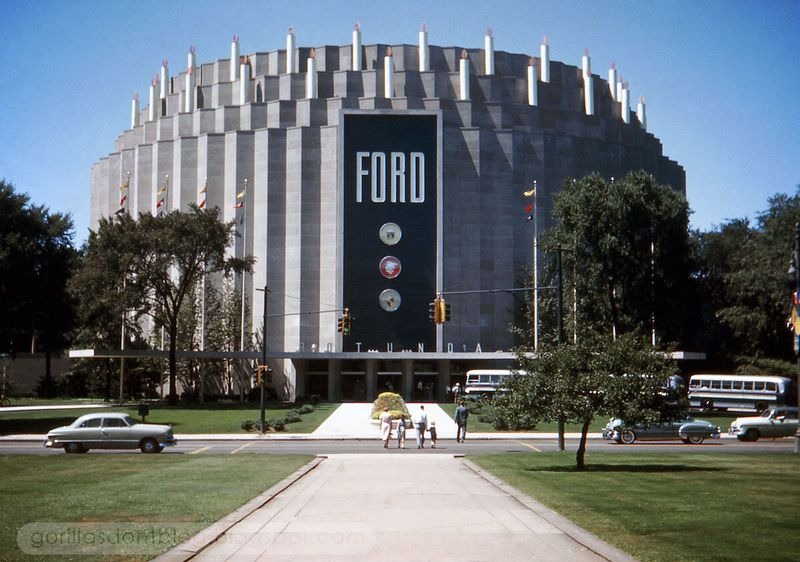
(Ford Rotunda, Dearborn, MI)

David Maraniss’ ONCE IN A GREAT CITY: A DETROIT STORY is almost a love story or at the very least an ode to a city that has slowly fallen from the heights it had reached in the 1950s.  Maraniss focuses on the 1962-1964 period when the city was about to confront white flight to suburbia, the loss of manufacturing jobs, and the ever present issue of racism.  Maraniss who is an excellent writer whose works include sports biographies of Vince Lombardi and Roberto Clemente, the foremost study of Bill Clinton’s pre-presidential years, a wonderful book on Vietnam and the anti-war movement among a number of others.  Maraniss takes on the city of his birth, an urban colossus held together by the automobile industry and manufacturing after World War II that is in the midst of a severe decline.  The decaying city is like a boxer who has been knocked down and is trying desperately to get off the canvas.  In 1962 a reform mayor, Jerome Cavanaugh comes to office and launches a courageous campaign to root out racism in the city’s police force.  Others including Walter Reuther, the powerful head of the United Automobile Workers Union, who saw segregation through the lens of the Cold War and a threat to increasing progressive unionism worldwide is examined.  Reuther was a man of action who tried to create programs and investment to rekindle Detroit’s glory.  It was an uphill fight, and a timely story as today, Detroit, now much smaller and with a more varied economic approach is still trying to rise from the ashes.

Image result for photo of berry gordy, jr.

(the founder of Motown Records, Berry Gordy, Jr.)

Maraniss begins in a symbolic fashion as he describes two events that took place on November 9, 1962.  First, the fire that destroyed most of the Ford Rotunda one of the city’s most important symbols – America’s love affair with the automobile, never to be rebuilt.   Secondly, the police and federal agents raid of the Gotham Hotel, the center of black culture for many years, to break up a significant gambling racquet, and as a result the hotel was demolished in the name of urban renewal, or as others remarked “negro removal!”

Image result for pictures of walter reuther

The book conveys a number of interesting biographical sketches of important individuals of the period.  Maraniss ranges from the automobile industry concentrating on Ford, and the music industry zeroing in on Motown and the empire Berry Gordy, Jr. built providing the reader the feel of the mid-1960s.  The reader is also exposed to the grimy side of Detroit as Police Commissioner George Edwards goes after the mob and its gambling ties to the city.  His investigation, along with the FBI establishes links to National Football League players and the Giacalone mob family that involves Detroit Lions defensive tackle Alex Karras who will be suspended from playing, and eventually through a sting he arrests Tony Giacalone.   Mayor Jerome Cavanagh, a JFK liberal and his quest to bring the summer Olympic Games to Detroit in 1968 is discussed in detail as he tries to implement his progressive agenda.

Image result for photo of Henry Ford II

(Henry Ford II)

Maraniss used the rise of Martha Reeves and the Vandellas as a template to explain why Detroit was at the perfect storm to develop the Motown sound.  From the availability of pianos to middle class black families, the migration from the south of gospel and blues as people came in search of jobs during World War II, the reach of Grinnell’s, the music store that made affordable instruments available, the luck and proximity of random talents like Aretha Franklin, Diana Ross and Smokey Robinson living so close to each other during childhood, and the music education provided by Detroit public school teachers.  The role of the Reverend Clarence La Vaugh Franklin is analyzed as he moved from being a theatrical circuit preacher around the country to that of a civil rights leader in Detroit as he organizes a civil rights march, “the Walk to Freedom” in Detroit supported by Reuther and the UAW among others. The march was highlighted by an address by Martin Luther King, and it was at this Detroit rally that he laid the basis for his “I had a Dream Speech” given later that summer in Washington.  Overall, the black community throughout the time frame of the book is beset by a power struggle and division as Franklin is not able to maintain the unity of the rally and Reverend Albert Cleague moves toward a black liberation theology bent on dealing with the problems faced in Detroit.  Cleague will go so far as inviting Malcom X to speak to his supporters providing evidence of the total rift that existed as King was derided, and that there was no way to close the factionalism that emerged.

Image result for photo of lee iacocca

(Lee Iacocca)

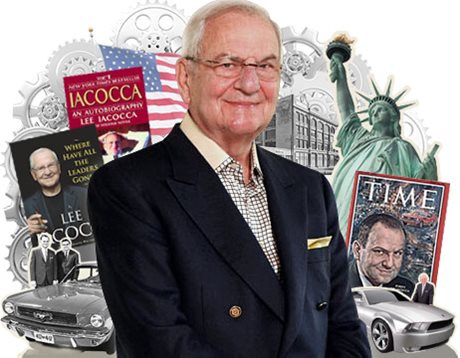
Maraniss also explores the relationship between Lee Iacocca, the head of Ford and J.Walter Thompson, the advertising firm that was to modernize Ford’s image as 1963 approached.  The campaign would be headed by William D. Laurie, the head of the agency in Detroit and the epitome of the “Mad Men” mystique.  The project was T-5, and after the bust called the Edsel, Iacocca needed a success.  The success would become the Ford “Mustang,” whose development Maraniss details concentrating on the relationship between Henry Ford II and Iacocca.  Maraniss also conveys the importance of Ford and Walter Reuther focusing on their ability to negotiate and reach agreements that allowed workers to think of themselves as middle class as they received pensions, health insurance, and wages connected to an inflation index.  The work of these two men was important to the labor peace of the mid-sixties and their impact was throughout the industrial universe.

Picture of 1965 Ford Mustang Standard Coupe, exterior`

(1965 Ford Mustang)

Perhaps the most evocative topic is that of the development of Motown and the music industry and how it was spawned.  Concentrating on the Gordy family and its contributions, Maraniss focuses on Berry Gordy, Jr. and the Motown review, a stage show of some of the future stars of music including Smokey Robinson and the Miracles, Diana Ross and the Supremes, Marvin Gaye, and Martha Reeves and the Vandellas.  The review left Detroit on a 56 day tour on the day the United States instituted its embargo of Cuba during the missile crisis of October, 1962.  Maraniss effectively transforms the trip into a discussion of race in America as the group experiences segregation throughout its journey.  Traveling all over the Midwest, south, and winding up in New York City Maraniss integrates the black migration north for jobs beginning in the 1930s, the reaction of whites who felt they were taking their jobs, race based actions by white police forces, and the violence of black youth.  Racial fearmongering was a dominant theme and the issues that were prevalent during and after World War II were ever present as the tour wound on while the Civil Rights Movement was in full gear.   What emerges from the tour is that music is another Detroit export that impacted America second only to the auto industry.

Maraniss is careful to point out at a time when Detroit was booming a Wayne State University study in February, 1963 predicted the collapse of the city as it declared bankruptcy in 2013.  The study pointed to the reduction of the city’s population from 1,670,414 in 1960 to a projected 1,259,515 in 1970.  It also highlighted the white flight to the suburbs as blacks made up 28.9% of the city’s population in 1960 and a projected 44.4% in 1970.  The result of which would be a population whose tax base could not pay for its needs as by 2013 the population would be 688,000.  But what is fascinating at the time of the report automobiles were selling at record levels and the city was selling itself as the home for the 1968 Summer Olympic Games.

“By the close of Mr. Maraniss’ book, dreams of hosting the Olympics have been scuttled; urban renewal has uprooted many traditional, predominantly black neighborhoods; police reforms that might lead to greater racial harmony have stalled; and efforts to transform the city through Model Cities and War on Poverty programs have run aground, fueling tensions that would explode in the 1967 riot.” (NYT, September 14, 2015)   A riot that would kill 43 people, injure another 1189, result in 7200 arrests, with the destruction of over 2000 buildings.

Image result for pics of detroit today

(the symbol of Detroit today, an abandoned building)

If you want to relive the essence of the mid-1960s, Maraniss’ new book, with its emphasis on Motown, the Ford Motor Company, race relations and the civil rights movement, politics and much more is an excellent synthesis of the period.  It reflects Maraniss’ approach to narrative history, impeccable research and mastery of topic that will not disappoint.  Read it and enjoy.

Image result for photo of the supremes

THE ASSOCIATION OF SMALL BOMBS by Karan Mahajan

Image result for photo of a Delhi neighborhood

(A New Delhi market that is central to the novel)

It is safe to say that most of us accept the fact that we live in a world where terrorists can plant bombs or blow themselves up at any time and probably any place.  When these events occur we are horrified whether it is in Boston, Paris, Istanbul, or elsewhere.   We tend to devote our attention to the victims of terror, and less so to the thoughts and appeal that is exerted on the terrorists themselves.  In Karan Mahajan’s powerful second novel, THE ASSOCIATION OF SMALL BOMBS the reader experiences the usual grief and psychological impact of the victims of an attack in a market in Delhi, but also insights into the inner lives of the terrorists themselves.  The novel begins rather casually when Vikas Khurana, a documentary filmmaker sends his two boys, Tushar and Nakul, ages 11 and 13 to pick up a television at a repair shop in the Lajpat Najar neighborhood along with their friend Mansoor Ahmed.  While walking in the neighborhood a bomb explodes killing the Khurana boys with Mansoor surviving with injuries to his wrist and arm.  The core of the novel focuses on the Khuranas and Mansoor’s feelings of grief as a result of the attack, the psychological effects of the violence on Mansoor and how he copes, the lack of trust and hatred between Hindus and Muslims, and the battle between the corrupt values of the west represented by India and the purity of Islam.

Title: The Association of Small Bombs, Author: Karan Mahajan

The range of emotions by the main characters is profound.  Mansoor suffered from post-traumatic stress disorder almost immediately as he expressed his survivor’s guilt.  Vikas was filled with self-loathing, doubt, and bitterness because of the decisions he had made previously, particularly remaining in the family house in Delhi and not moving to Bombay where this documentary filmmaker could have been more successful, or perhaps continuing his career as an accountant and giving up film.  Deepa, the dead boy’s mother was filled with grief and did not know how to channel her revenge and wanted to meet the terrorists face to face.   Mahajan even explores the emotional world of the terrorists in examining the relationship of the bomb maker, Shaukat “Shockie” Guru and that of Malik Aziz said to be the ideologue of the JKIF (Jammu Kashmir Islamic Force) responsible for the attack, who in reality was his intellectual friend who was against the use of terror.  Once Malik is arrested by the police and is tortured, Shockie wonders what has become of him.

Each of Mahajam’s characters goes on a separate journey in order to try and recover from the blast.  For the Khuranas it is personal and difficult as they try to maintain their own relationship and gain insights into themselves and their new situation.  Vikas is more introspective as he relives his life before the attack through dreams at night and during the day.  The result is despair as he tries to keep his wife Deepa from going over the edge.  In their attempt to emerge whole they produce a daughter, Anusha as Mahajam has a poigniont scene where they think back to how they all slept together in one bed, and with the boys gone, they refuse to sleep in the large bed and place a mattress on the floor instead where their daughter is conceived.  For Mansoor’s parents there are accusations against Vikas who they blame for the plight of their son, who survived the bombing, but inscurs nerve and psychological damage as a result.  They become overprotective and the end result causes more damage to Mansoor, rather than providing him the freedom and support that he needed.

Mansoor’s journey is ironic and complex as Mahajam develops his novel.  The journey is one of self-discovery as Mansoor who survived the 1996 blast perpetuated by Islamic terrorists that causes excrutiating nerve pain in his wrists that will eventually preclude him from pursuing his main interest in computer science.  The nerve pain develops immediately after the blast, but subsides as he travels to the United States for college.  However, at Santa Ckara University his condition deteriorates as he has the freedom to surf the internet resulting in increased physical pain to his wrists and arm and an addiction to porn.  When he returns to Delhi he becomes involved with a Non-Governmental Organization (NGO) called “Peace For All” that is involved in assisting the men who have been charged with carrying out the 1996 attack.

The problem is that the authorities have arrested and tortured the wrong men and “Peace For All” leaders try and get Mansoor to join them in fighting the authorities.  One of the NGO members, Ayub convinces Mansoor to read a book, Religion of Pain and inside he learns of the concepts of introspection and visualization that help him overcome the psychological component that contributes to his pain threshold.  In so doing he allows himself to pursue Islam, a religion that he had not practiced in years.  Through the theology of Islam and attending the Mosque with Ayub he finds a cure for his addiction to porn and reduces his pain level substantially.  Mansoor comes to the realization that his body had imploded since 1996, and that he himself had become the bomb.

Mahajan’s evocative and deeply personal approach to his characters allows the reader to develop an understanding of the emotional depths they explore, allowing them to look at their own lives, decisions they have made in the past, and consider a somewhat different approach to the future.  However, despite progress, Mansoor suddenly takes a step back and the self-loathing returns.

The story meanders and grows fascinating as the lives of the characters become intertwined and by the end of the novel it seems everyone comes full circle.  What amazed me while reading the book is how Mahajan pulls together all aspects of the story on many levels and creates an ending that one could not have imagined.  The novel’s conclusion is tragic for all involved, victims and their perpetrators, leaving the reader wondering if this is a true reality.  The title, THE ASSOCIATION OF SMALL BOMBS may refer to a self-help organization for victims of terrorism, but in reality it is all of us as we try to navigate what our world has become.  The book is a meditation on how we cope with everyday life as the Delhi neighborhood where most of the novel takes place can be anywhere.

Image result for photo of a Delhi neighborhood

(A New Delhi neighborhood that could be central to the novel)

THE RESISTIBLE RISE OF BENJAMIN NETANYAHU by Neill Lochery

Image result for photo of benjamin netanyahu

(Israeli Prime Minister Benjamin Netanyahu)

A few days ago the United States withheld its veto of a resolution in the United Nations Security Council demanding that Israel end its settlement expansion in occupied Palestinian territory.  Reflecting the Obama administration’s frustration with Israeli settlement policy it broke with the long tradition of Washington shielding Israel from UN condemnation.  It further points to President Obama’s final “shot” at Israeli Prime Minister Benjamin Netanyahu, a man that the administration has been at “diplomatic war” the last few years be it over the Iranian Treaty or settlement policy.  Prime Minister Netanyahu has let it be known that he is looking forward to the inauguration of Donald Trump and smoother relations with the United States.  The situation in the Middle East has put Netanyahu in the news a great of late and it is propitious that Neill Lochery, a Professor of Middle Eastern and Mediterranean Studies at University College London has published his new book, THE RESISTIBLE RISE OF BENJAMIN NETANYAHU at this time.  The work is not a traditional biography, though the most salient aspects of his family background and the course of his life is presented.  Instead of a chronological approach Lochery presents his subject by a series of nine of the most decisive moments in Netanyahu’s career to tell his life’s story.

The key theme that Lochery develops is that Netanyahu has been “more American” and “less Israeli” throughout his life.  Lochery points out that Netanyahu did not fit “into the notorious closed and business elites in Israel,” a country that remains wary of outsiders, and many see the current Prime Minister as a stranger, even after all of these years.  It is difficult in assessing Netanyahu’s career because I wonder what the man stands for other than his own political survival.  Lochery understands this dilemma and does his best to deal with it as Netanyahu places numerous roadblocks in the path of diplomacy, doing his best to retain the status quo.  However, if Netanyahu survives the next two years in office he will become Israel’s longest serving Prime Minister, even surpassing, David Ben-Gurion, with his negative attitude toward the rest of the Middle East, the Palestinians, and at times, the United States.

The arrival of Netanyahu on the Israeli political scene in 1990 was part of a wider cultural revolution in Israel that ushered in the “Americanization” of Israeli politics, media, and business.  The key to Netanyahu’s rapid rise was his telegenic face and oratory style.  As the Persian Gulf War of 1990-1 was ushered into our living rooms on CNN with its 24 hour news cycle, Netanyahu began to appear regularly as Israel’s chief spokesperson during the war.  As his popularity rose outside of Israel, the elites in the Jewish state did not take him seriously which contributed to his rapid rise.  Lochery points out that the Bush administration was growing tired of the hawkish Shamir government in Israel, so Netanyahu’s arrival came at a critical time as the war made him a political star, particularly after the 1991 Madrid Conference.
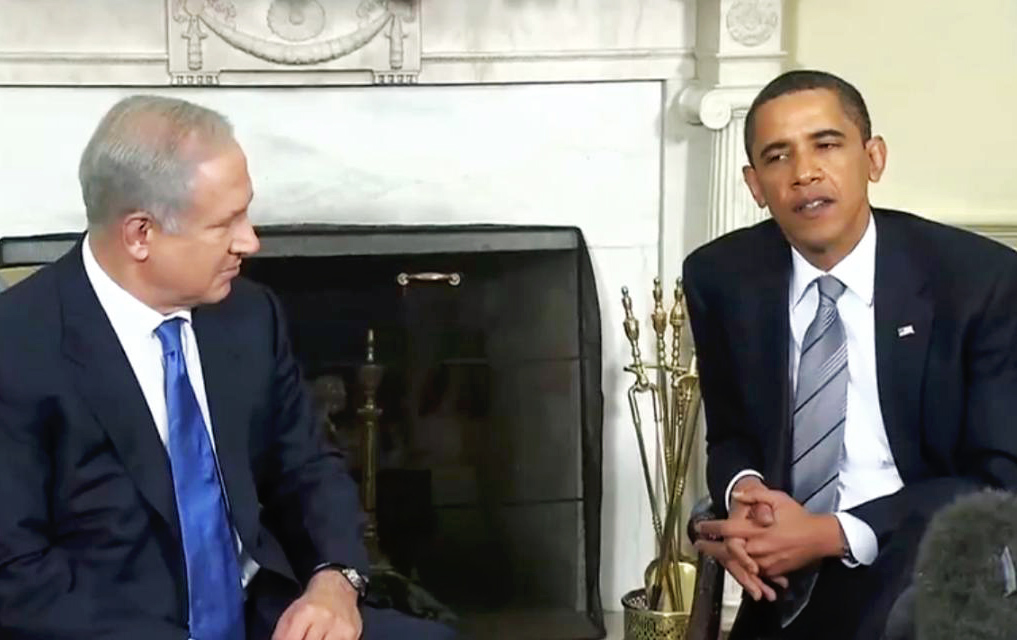
Image result for photo of benjamin netanyahu

(Israeli Prime Minister Benjamin Netanyahu and President Barak Obama in May, 2009)

Netanyahu’s rise was assisted by changes in the Israeli political process which began to mimick that of the United States.  The institution of primary elections allowed the “Likud Princes,” (young Likud politicians like Netanyahu who had links to Revisionist Zionism) to leap ahead of others on Likud political lists and move toward party leadership quickly.  Another change was the move toward the direct election of the Prime Minister which would greatly assist in Netanyahu’s victory and assumption of the Prime Ministership in 1996.  In part Netanyahu modeled himself after President Clinton in 1992 when he publicly admitted an affair and placed his wife Sara out front in his political campaign.  Further, in what was known as “Bibigate,” (Netanyahu’s nickname was Bibi) which he viewed it as a conspiracy against him.

The assassination of Yitzhak Rabin was a political disaster for Netanyahu.  Lochery correctly points out that Netanyahu’s virulent public opposition and bombastic accusations against Rabin’s Oslo Accords Agreement with Yasir Arafat had in part been responsible for the assassination.  Netanyahu’s rhetoric had energized right wing extremists who opposed Oslo and one of them, an Israeli student, Yigal Amir shot Rabin.  Netanyahu had compared Rabin’s actions to Neville Chamberlain’s Munich Agreement with Hitler and opponents to Oslo carried signs accusing Rabin of being a “Nazi devil.”

Lochery does an excellent job explaining the factionalism that existed and still exists in Israeli politics that was based on forming coalition governments as ruling parties never seem to be able to gain a direct ruling majority.  This leads to deal making with lesser parties, particularly religious and immigrant factions that the ruling party is then beholden to.  The internal schisms within the party are also developed with an excellent example being the rivalry between Netanyahu who at times appears as an ideologue, and Ariel Sharon’s development into a pragmatic politician.

Image result for photo of Yitzhak Rabin

(Former Israeli Prime Minister Yitzhak Rabin)

With the increase in terror attacks in Israel after Rabin’s assassination, Netanyahu was able to base his campaigns on fear to increase support.  With the first suicide bombing on October 19, 1994 at a bus station that killed 22 and injured well over 100, Netanyahu’s support was energized beyond his right wing base.  Netanyahu was first elected Prime Minister very narrowly (50.4% to 49.5%) over Shimon Peres on May 29, 1996.  Netanyahu’s election campaign was run by Arthur J. Finkelstein, an American political consultant and was funded by a number of rich American contributors, a pattern that would dominate future elections.  Netanyahu outspent Peres on television ads, campaign paraphernalia, and pursued the JFK v. Nixon strategy in their own television debate.  Apart from his media strategy Netanyahu zeroed in on the religious and Russian immigrant vote to win.

Image result for photo of Yonatan Netanyahu

(Yonatan Netanyahu, Benjamin’s older brother killed at Entebbe)

Lochery does a good job developing Netanyahu’s family background and his relationship with his brother.  If there is a criticism to be made, the author does not provide a detailed history of Netanyahu’s family background, particularly his father’s bitterness against Israel and the United States, the impact of his views on Benjamin, and the role he played in early Israeli politics until half way through the narrative.   Benzion was a scholar of Jewish history and the Zionist political movement, and he and Yonatan, his older brother one of Israel’s most decorated soldiers had a profound influence on Benjamin, especially their hawkish views concerning the Arabs. In growing up in the United States Benjamin was greatly influenced by the American political culture.  Unlike his father who was an ideologue, Benjamin saw how pragmatism worked in the American political process and pursued that strategy throughout his political career.  Central to Benzion’s scholarly work was the traditional Zionist ideology of Ze’ev Jabotinsky which rested on the belief that Jews faced racial discrimination and any attempts to reach a compromise with the Arabs was futile.  Yonatan Netanyahu was being groomed as the star of the family.  First, a career in the Israel Defense Force, reach the rank of general, retire to assume a career in politics and eventually become Prime Minister.  Yonatan a hero in the 1973 Yom Kippur War stationed in the Golan Heights was well on his way to fulfilling his father’s dreams when he was the only Israeli soldier killed in the successful Entebbe Raid in Uganda.  Yonatan death was a life changing event for Netanyahu.  His brother had believed that it was better to continuously live by the sword, then lose the state of Israel.  Netanyahu vowed he would achieve everything his brother had hoped to, protect his brother’s legacy, in addition to ingratiating himself with his hard to please father, a man who never showed any emotion.

Image result for photo of Yonatan Netanyahu

(Benjamin and Yonatan Netanyahu)

Another area that Lochery should develop more was Netanyahu’s life in the United States.  He continuously points to America’s influence, but other than a few lines about his business education, connections in America, serving as the Diplomatic Head of Mission to the United States, and Israeli Ambassador to the United Nations between 1982 and 1988, he offers little.

Lochery does a much better job narrating and analyzing Netanyahu’s performance as Prime Minister in dealing with Yasir Arafat and negotiations on the Interim Agreements fostered by Oslo under Rabin.  Netanyahu is a cagy politician who brings in Ariel Sharon as Foreign Minister in order to deal with Likud members who oppose any further negotiations.  Netanyahu realized that President Clinton facing impeachment and the Lewinsky scandal needed a deal at the Wye River Conference resulting in a diplomatic framework that only cost Israel an eight month hold on settlements and the release of 750 Palestinian prisoners.  Lochery’s coverage of the 1999 election is perceptive and he points out that his loss to Ehud Barak and his subsequent resignation of his Likud held seat in the Knesset was a grave error because it allowed Sharon to reorient the party in a direction away from Netanyahu’s approach to governing.  It would take him six years to recover and almost made himself politically irrelevant.

Most of Netanyahu’s problems center on his ego and his belief that only he could effectively rule Israel and that the public trusted him more than any other Israeli politician.  Lochery is correct in arguing that Netanyahu would later unseat Sharon as leader of the Likud coalition by moving further to the right on the Israeli political spectrum as the former war hero had moved to the center.  The campaign began with Netanyahu’s withdrawal from Sharon’s cabinet in 2005 in opposition to complete Israeli withdrawal from Gaza.  Sharon’s response was to withdraw from Likud and create a new political party, Kadima.  Once Sharon had a stroke, Ehud Olmert replaced him and was elected Prime Minister in 2006, leaving Netanyahu the task of rebuilding a Likud Party that won only 12 seats in the Knesset. Netanyahu’s machinations behind the scene in opposition in the Knesset, the scandals that engulfed Olmert, and other events resulted in new elections in 2009.

Lochery’s analysis of the Israeli electorate throughout the narrative allows the reader to experience the ebb and flow of Israeli politics with great understanding, particularly in 2009, the election that returned Netanyahu to power.  The election coincided with the assumption of Barak Obama as president of the United States, thus beginning their eight year testy and sometimes controversial relationship.  Once in power Netanyahu focused on remaking the Middle East which brought him into conflict with Obama, especially in relation to Iran and its nuclear program.  One of Netanyahu’s defining moments came when he accepted a Republican Party invitation to address Congress on March 3, 2015, a speech that angered many supporters of Israel.  Lochery examines the speech in detail and correctly points out that it was vintage Netanyahu as he presents a problem, emphasizes the historical nature of the problem, and then does not offer any viable alternatives in solving the problem.  This was Netanyahu’s modus operandi throughout his career whether dealing with Israeli domestic issues or its foreign policy.  Whether it was Iran or the Palestinian peace process, Lochery is dead on, the Israeli Prime Minister would obfuscate, stall, and in the end the status quo would remain essentially the same, a strategy defined by conflict management, not conflict resolution.  The arrival of the Arab Spring in 2010 further solidified Netanyahu’s power in Israel and heightened tension with Obama.  The Israeli public saw the Arab Spring as a threat, so it leaned further toward the right thereby increasing Netanyahu’s political support.  Obama saw it as an opportunity, but the two sides could never bridge that gap.  Lochery is accurate in his conclusions concerning the distaste that each had for the other, to the point that he wonders if Netanyahu would have made a better candidate for Republicans in 2012 than Mitt Romney in opposing Obama.

When reading Lochery’s narrative one can get the feeling that he concentrates mostly on foreign policy and internal political issues.  To his credit he does explore Netanyahu’s role in turning Israel away from what he calls the “inefficient Zionist model” to a market driven economy.  He presents Netanyahu as a “Thatcherite” and credits Netanyahu’s reforms as Finance Minister as laying the foundation of bringing the Israeli economy into line with other Western capitalist ones.  Netanyahu moved in this direction according to Lochery because he saw no alternative in securing Israel’s future, but it created tremendous political problems as the poor and lower classes suffered the most from these reforms, but at the same time, he needed their political support to be reelected.

No matter what area of Netayahu’s life or policy Lochery delves into the reader will gain an interesting perspective of what drives the man.  This is important as we pick up the newspaper each day and we learn the latest machinations of the Israeli government, i.e., this morning we learn that Israel is about to defy the United Nations and build more settlements.  A direct strike against President Obama, and a belief in Tel Aviv that Donald Trump will view this action more favorably.

Image result for photo of benjamin netanyahu