EVA’S EYE by Karin Fossum

3228197

Karin Fossum’s first novel in Her Inspector Sejer series, entitled EVA’S EYE is more than a murder mystery.  In a sense it is a morality play as a young divorced woman who suffers from extreme poverty must make a number of choices that she hopes will better her life, her aged father, and her seven year old daughter.

The story opens in a Norwegian town as Eva Marie Magnus and her daughter Emma are sitting by a river contemplating the depths of the water and a possible visit to McDonalds.  While chatting they notice a face floating in the water, then the entire body of a man comes to the surface.  To Eva, it appears that the body has been in the water for a prolonged period of time.  Instead of immediately calling the police, Eva dials her father.  Shortly thereafter, a woman does phone the police and an officer is dispatched to the scene.  The officer pulls the partially decomposed body from the water and Inspector Konrad Sejer takes over the crime scene as a man, Emil Einarsson, missing for over six months, seems to have turned up.

The investigation starts off simply with the widowed Inspector Sejer trying to unravel the case.  Coincidentally,   another murder had taken place a few days before Mr. Einarsson had disappeared.  The core of the novel surrounds the exploration of Sejer’s lonely existence and how he tries to link the two murders, Einarsson, and a prostitute named Maja Durban.  As he approaches the investigation, Sejer befriends the eight year old son of the murdered man, Jan Henry.  As a character, Sejer appears as a very warm and sensitive person, not the somewhat typical wise cracking cop that often is presented in crime mysteries.  Sejer cares for the boy and his own mother who is institutionalized with dementia.

Fossum does a wonderful job developing her characters, particularly the females.  The reader is exposed to the world of prostitution, poverty, and the inability of people to overcome situations that they themselves have created.  In addition, though a crime novel, Fossum lends insights into the lonely lives of the elderly and how they try to get by on a daily basis.  Perhaps the most interesting aspect of the book is how the protagonist tries to rationalize her decisions, which most would categorize as immoral, as a means of overcoming poverty and improving the lives of her family members.  The story is told from the protagonist’s female perspective and is intriguing as the story evolves.

Fossum’s first Inspector Sejer novel is fast moving, even though whatever violence is present is subsumed to the moral dilemmas that constantly emerge.  This is a very quick and captivating read, and I look forward to reading the second volume in Fossum’s Inspector Sejer series.

ANOTHER TIME ANOTHER LIFE by Leif G.W. Persson

(April 24, 1975 Baader-Meinhof Gang seizure and explosion of the West German Embassy in Sweden)

When I first read Leif G.W. Persson’s BETWEEN SUMMER LONGING AND WINTER’S END I was thoroughly impressed with his plot and character development.  Now, having completed his second novel, ANOTHER TIME, ANOTHER LIFE my respect for his ability to develop a complex story line that builds from the first few pages has been raised to another level.  Persson brings back Lars Martin Johannson, now head of a special new operations division within the Swedish Security Police (SePo).  He also develops other characters that are both witty and knowledgeable on the one hand, and other characters that can be described as plain “fucking idiots,” by Johannson’s friend and impeccable inspector, Bo Jarnebring.

The opening of the novel revisits April 24, 1975 as six terrorists, who appear to be members of the Baader-Meinhof Group, sneak into the West German Embassy in Stockholm.  During the occupation two German bureaucrats, one thrown out of a window, the other shot in a stairwell are murdered.  The Swedish forces who confront the situation are ill equipped and poorly trained to deal with the situation.  The end result is an explosion, with everyone surviving, but one individual.  What follows is a “keystone kop” operation among different government officials as to how to handle the investigation.  At the top levels of government a decision is reached to return the surviving terrorists to Berlin before they can be thoroughly interrogated, thereby sabotaging any investigation.  The head of homicide is completely frustrated and the final report on the incident is totally sanitized.

Fifteen years later, Bo Jarnebring and his new partner, Anna Holt are called in to investigate the murder of Kjell Goron Eriksson, a bureaucrat at the Central Bureau of Statistics.  From this point on the novel gains momentum as the new murder investigation does not proceed smoothly and is led by the previously mentioned, “fucking idiot,” Chief Investigator Evert Backstrom and his equally incompetent partner, Inspector Wiijnbladh.  Predictably, the murder is not solved and is filed away.

In the interim the Berlin Wall comes down and the Soviet bloc is freed from the remnants of Stalinist oppression.  Persson provides an accurate summation of the historical events that led up to, and the final collapse of Erich Honaker’s East German regime.  Enter, the STASI, the CIA, and Swedish national security interests adding another layer to an already complex story.  Always in the background is the 1986 unsolved assassination of Swedish Prime Minister Olaf Palme and possible links to certain characters.  As a SePo task force is created under Chief Inspector Wiklander and STASI and other registered files are examined a new element to the plot is added.  What emerges is what role could Swedish citizens have played in the 1975 terrorist seizure and explosion of the West German Embassy.

What separates Persson from other political novelists is his ability to tie together a number of story lines together forming a complex plot developed layer upon layer.  In the present example; how does the terrorist attack on the West German Embassy, the murder of a Swedish bureaucrat, the 1989 collapse of the Berlin Wall*, and the vetting of an undersecretary in the Swedish defense ministry for a possible cabinet position relate to each other.

Persson weaves a trail of intrigue over a twenty-five year period.  It involves numerous characters and important historical events.  Along the way we witness the death of a number of individuals central to the plot line.  Persson creates a number of enigmatic characters from the incompetent Backstrom; Anna Holt and two other talented female colleagues; Mike Liska, a CIA agent posted to Sweden in November, 1989 who predicted the exact moment when the Berlin Wall would fall; and of course the well respected Lars Martin Johannson.  The author does a commendable job providing insights into the Swedish National Security establishment and develops a number of interesting scenarios.

As attempts to tie events into one conceivable case that can be prosecuted the protagonists are up against a twenty-five year statute of limitations that is about to expire.  The question arises that higher ups in the Swedish government may be placing road blocks in their path.  In addition, what is the role of the STASI, CIA, and SePo?  Did the Swedish security and defense industry interests and perhaps the American intelligence community leak information to prevent a leftist leaning candidate for a cabinet position relating to defense from assuming office?  Do certain disappearances of former officials play into the story?  All of these questions add to the depth of the narrative.

Paul Norlern’s translation from the Swedish does not detract from Persson’s tightly written novel.  In fact, my only criticism is Persson’s somewhat sexist approach to female investigators that are woven into the story.  Overall, Persson has written another successful novel, and I look forward to reading his latest, FREE FALLING AS IF IN A DREAM.

*see The Collapse: The Accidental Opening of the Berlin Wall,Oct 7, 2014, by Mary Elise Sarotte

reviewed in http://www.docs-books.com

A FAITHFUL SPY by Alex Berenson

(Osama Bin-Ladin’s al-Qaeda strong hold in Tora Bora, Afghanistan before US bombing is 2001)

Alex Berenson’s first novel, THE FAITHFUL SPY introduces us to a new type of operative in the war on terror.  John Wells is a CIA agent who goes underground trying to infiltrate al-Qaeda before 9/11.  He is successful in penetrating the terrorist organization and proves his metal in Chechnya, Afghanistan, and Iraq.  While embedded inside al-Qaeda he develops an attraction to Islam as a way of life and converts.  Wells, who originally hailed from Montana remains loyal to his country despite his conversion, but will disappear from CIA radar for over ten years creating doubts about his reliability.   He finds many practices in America difficult to accept which in part, is why he turned to Islam.  Despite his commitment to his new religion, he finds al-Qaeda to be abhorrent and he never entertains the idea that he will not protect his country.

The novel begins shortly after 9/11 on the Shamal plain north of Kabul.  Wells is leading a group of Taliban and al-Qaeda fighters into a trap, but at the same time he must avoid American F-15 bombers circling overhead.  At the same time Jennifer Exley, Wells’ CIA handler is aboard the USS Starker off the coast of Virginia waiting to interrogate another American who has ”flipped” to the Taliban.  Her goal is to learn more about Jalal, Wells’ Islamic name as she has not heard from him in two years.  From this point on the novel evolves into a suspenseful story that is stunning in detail.

Berenson creates fascinating characters which are true to life.  Omar Khadri, travels freely in the United States and has set up a number of hidden cells throughout the country.  Farouk Kahn, a physicist who has possessed enough nuclear material to create a dirty bomb.  Tourik Durant, a graduate student studying micro-biology at McGill University in Montreal is developing a strain of Y pestis to unleash pneumonic plague.  We are also presented with various CIA characters apart from Exley; Ellis Shafer and Vincent Duto who disagree over Wells’ loyalty.

The author exhibits excellent command of historical events.  Whether discussing operations in Afghanistan or the United States, the actions taken by his characters ring true.  Whether describing the rendition of suspected terrorists and their subsequent interrogation, Berenson strikes an accurate chord.  He integrates historical nuances of the war, particularly the internal factions within al-Qaeda, the role of the U.S. military, and the attitude of American politicians.  His discussion of Osama Bin-Ladin, the actions of the Pashtun tribes, the Northern Alliance, and the Taliban are accurate and provide the reader a history lesson while they become immersed in the plot surrounding Wells.  Legitimate historical figures permeate the storyline ranging from Ayman al-Zawaheri, al-Qaeda’s number two person to A.K. Kahn, the Pakistani nuclear scientist who exports his expertise.

Berenson’s opposition to American Iraqi policy is apparent.  Throughout the book we are privy to his feelings about torture and other techniques employed to gain information from prisoners.  As we read on American errors in Afghanistan become clear as the Bush administration drops the ball and invades Iraq under false pretenses.  Overall, Berenson has created a credible scenario with a new type of character.  John Wells believes he has failed his country by not warning his handlers about 9/11 and other events, and wants to make sure he does not fail again.

As a side bar to Berenson’s first effort, the New York Times reporter earned the Edgar Award for A FAITHFUL SPY and has written a number of sequels developing the character of John Wells in a number of interesting ways.

THE LAW OF DREAMS by Peter Behrens

(The Irish countryside during the 1846-1850 potato famine)

Over the years a myriad of books dealing with the Irish potato famine and the resulting immigration to the United States have appeared.  Some are non-fiction and others fall into the historical fiction category.  Peter Behrens’ novel, THE LAW OF DREAMS is a wonderful addition to the historical fiction genre encapsulating the plight of the Irish in mid-nineteenth century England as they made their way across the Atlantic.  What separates Behrens’ effort from the rest is the poignancy and sensitivity of his story and the development of his characters.

The novel begins as Own Carmichael, returns from the county seat at Enis where he is informed by his land agent, who manages the affairs for the landlord, the sixth Earl that he must “eject” as he terms it, the peasants who work his land.  The reason given is that it is more profitable to raise sheep for mutton than have the peasants work the land.  The agent warns Owen he must carry out the landlord’s orders or he would be responsible for the rent.  For the agent, “sheep, not people is what you want to fatten.  Mutton is worth money.  Mutton is wanted, mutton is short.   Of Irishmen, there’s an exceeding surplus.” (5) As he returns to the farm, Owen contemplates what choices are available to him.  As he walked home he passed women and their naked children who were scrounging in a turnip field for survival.  From this point on Behrens’ novel unfolds through the eyes of Fergus, a fifteen year old boy whose family is about to be “ejected.”

The core of the novel takes place in the late 1840s as Behrens describes Fergus’ life once alonenes is forced on him.  We follow him through the Irish countryside, aboard ship to Dublin and Liverpool, the strenuous Atlantic crossing, and his final arrival in Canada.  Throughout, the reader is exposed to the horrendous conditions which the Irish must cope; hunger and poverty permeate every page.  From the fields, the work house, railroad construction, or aboard ship, people make life altering decisions each day.  Along the reader’s journey, Behrens provides heart rendering descriptions of the Irish underclass as they have to deal with their daily travails.  From descriptions of Liverpool’s shanty areas, red light districts, to labor on the railroads, the reader is enveloped by the story.  Evidence of the Industrial Revolution’s grip on English towns and cities are everywhere.  Fergus chooses the life of a tramp on the road over the freedom of the railroad for a time, and then gives in to his loss of freedom as he realizes he must go to America.

What makes this novel a success is its ability to integrate the underclass that the Irish poor represent throughout the storyline.  We witness Fergus’ family’s struggle to survive under a tenant based land system that is skewed toward the land lord.  A system designed to keep Irish peasants in poverty from generation to generation.  We witness the death of Fergus’ family something that is easily predictable based on the situation.  Next is Fergus’ struggle to survive living on the road as a tramp, a path with its own self-contained rules that represents a very violent society.  Rural life is a day to day battle, but once Fergus meets Arthur we are provided a window into the racial divide that the Irish confront each day in Liverpool.  Be it street riots, life in a brothel, working laying railroad tracks, or trying to avoid becoming a victim of typhus, the hard ships endured by Fergus seem to constantly multiply.  Perhaps the most stirring aspect of the story is the voyage on the “Laramie” that brings Fergus and Molly together as they try to reach America and avail themselves of a life of freedom and opportunity.

Throughout, Behrens develops an interesting dynamic among his characters.  Arthur, who tries to educate Fergus in a world apart from serfdom, and Molly, a hardened women who employs her body as a tool to live another day.  Once Fergus falls in love with her we are privy to a caring but cruel relationship.  On board ship we meet Mr. Ormsby who will change Fergus’ life.   We are exposed to the individual stories of the passengers who we must admire for their courage as they try to escape poverty and make their way across the ocean.  Each person has their own fears and anxieties about their pasts and what awaits them in the future.

Behrens’ dialogue reflects the social class divide and ethnic nationalism that pervades Ireland that includes the rural and urban existence of the English poor.  The author’s command of language, the dialects he presents and the meaning of each phrase provides insight into a story that he tells that reflects the experience of his own family.  As he makes transitions from each scene to the next, be it Fergus’ experience in the work house, the bog boys tramping in the countryside, life in the Dragon House brothel, or coping with typhus aboard ship we experience the nasty side effects of the Industrial Revolution that drive men like Mr. Coole to abandon his religion to bring his children to America.  All of these characters create their own stories within the overall plot line that captures the reader’s attention and keeps them turning the pages.  Behrens is very adept at introducing new characters and then dispatching them, with only Fergus feeling their loss as they pass through the novel.  The end result is that the author leaves the reader wondering what will happen to Fergus, a question that can be easily resolved by reading his latest novel, THE O’BRIENS.

PARCELLS: A FOOTBALL LIFE by Bill Parcells & Nunyo Demasio

(Bill Parcells being carried off the field by Lawrence Taylor and Carl Banks after the New York Giants defeated the Denver Broncos, 39-20 in the 1987 Super Bowl)

Years ago when my son was rather young I would take him to Farleigh Dickinson University’s Madison, New Jersey campus to watch the New York Giants pre-season training camp.  I told him that any words that he would hear that his mother might not approve of were to be forgotten and never repeated, at least not in her presence.  As an avid Giants fan going back to the glory days of Charley Conerly, Frank Gifford, Sam Huff, and Andy Robustelli I took great pleasure in sharing my passion for “Big Blue.”  During one of our visits the Giants coach, Bill Parcells was especially sarcastic in his own inimitable fashion as he joked with the likes of Lawrence Taylor, Phil Simms, and Mark Bavaro.  The expletives flowed, but what we witnessed was the work of a master motivator who, despite some unorthodox methods, knew how to get the best out of his players.  I am avid follower of sports, but I like to look at it from a historical perspective.  Many sports books, particularly, biographies come down to hagiography and statistics, which I find unacceptable.  The new biography, PARCELLS: A FOOTBALL LIFE by Bill Parcells and Nunyo Demasio is an interesting blend of football statistics, but also an in depth study of one of football’s greatest coaches.  We see a man with all of his foibles apart from his successes, in addition to his large ego, but also a strong sense of contrition as his life evolved.

Charles Parcells, Bill’s father was a northern New Jersey sports legend who was a loving father, but a strict task master.  His mother, Ida was a traditional Italian woman who maintained a warm home, and usually contained her forceful personality.  Bill was more of a baseball player than a football player during his youth, but he would grow interested in the sport as it was seen as a ticket into college.  He was a lineman/linebacker at Wichita State University and was even drafted by the Detroit Lions.  While in college he met his wife Judy and by the time he obtained his first job, at Hastings College in Nebraska, they had a daughter and another child on the way.

(Bill Parcells, then the coach of the New England Patriots shaking hands with one of his disciples, a young Bill Belichick, then the coach of the Cleveland Browns in 1991)

Parcells coaching career would keep him out of the state he loved, New Jersey, for almost twenty years.  His career path as an assistant coach would take him back to Wichita State, to West Point, Florida State, Vanderbilt, Texas Tech, Air Force, the New York Giants, and the New England Patriots.  Along the way he met and grew close with a number of mentors that included; Bobby Knight, the irascible basketball coach, and Al Davis, a Brooklynite to the core and long time owner and coach of the Oakland Raiders.  Throughout his journey before he became a head coach Parcells, who possessed his own rather large ego, was willing to learn from others and adapt if it would contribute to making him a better coach and improve his players.  Finally, he would achieve his goal of being a head coach, being hired by the New York Giants in 1983.  When Parcells arrived he found the likes of Lawrence Taylor, Harry Carson, and a quarterback named Phil Simms who as yet had not found himself on hand.

For me the Parcells era with the Giants was wonderful.  With visits to training camp I felt I had a special relationship with the team.  Parcells banter at press conferences reflected a moody, sarcastic, but sincere individual.  He drove his coaches and players to distraction to the point that Simms came into his office at one point and demanded that he be traded.  The book does a superb job describing Parcells coaching methods and philosophy, particularly how he interacted with the players on a number of levels.  For example, he was quite aware that a number of players had drug issues especially Lawrence Taylor.  Parcells worked with these players to overcome their problems, set up a team drug policy at a time the NFL did not have one, and a vast majority of players who worked under Parcells state that the most important thing he did for them was make them into men and accomplish things they thought they would never be able to achieve.  In January, 1987 the Giants won their first Super Bowl under Parcells, a game that has special meaning for me as I was in Brussels that weekend accompanying twenty high school students on a Model United Nations competition at the Hague.  When I arrived the first thing I asked the attendant at the hotel desk was where I could watch the game.  I was told 150 miles from the city (I think he thought I was referring to soccer!).  Distraught, I called the American Embassy and explained my predicament.  The desk sergeant was from Long Island and he agreed to send transportation for myself and my students to NATO Support Headquarters to watch the game with American troops if I promised to send him a VCR copy of the game when I returned home.  A deal was struck; we convoyed to Headquarters and watched the game with American troops until 4:00 am.  I was never prouder to be an American and a Giants fan when they beat Denver 39-20.

Parcells would win another Super Bowl in 1991 against Buffalo and the odyssey that is Bill Parcells would continue.  To the authors credit they mince no words in describing Parcell’s vagabond approach to his career.  Parcell’s ego needs total control in any job and it led to his departure from the Giants and his eventual arrival in New England.  Throughout this process we witness the growing “bromance” between Parcells and Bill Belichick who was taken under “the Tuna’s” wing as he helped develop him into one of the greatest coaches in football history.  Parcells stay in New England ran into the same control issues with its owner Robert Kraft, whose own sense of self was equal to that of Parcells.  An interesting part of the narrative is the description of the Parcells-Kraft relationship, and neither man comes out very positively. The question for the two of them was whose ego was larger; the shrewd owner who wanted total control of his organization to maximize his monetary gain, or a coach who wanted almost total control of the football component of the team.  Despite Parcells football divorce from the Patriots, he did make them relevant and laid the foundation for the most successful football franchise in the 21st century.  Parcell’s approach to coaching is very simple as he put it, “if you’re going to cook the meal, they ought to let you shop for the groceries.” (269)

The list of coaches that Parcells trained is remarkable and many became successful head coaches in their own right.  After leaving New England Parcells wound up back in New Jersey with the New York Jets where he was successful once again in turning around another franchise.  After the death of its owner Leon Hess, who Parcells worked with well, he moved on to the Dallas Cowboys after a stint as an analyst on ESPN.  With the bombastic Jerry Jones, the owner of the Cowboys we see a mellower Parcells in dealing with ownership, but the same overbearing approach on the field.  Following his stay in Dallas, Parcells concluded his career in the front office of the Miami Dolphins.  The book delves a great deal into Parcells private life.  His meandering career played havoc with his 40 year marriage which collapsed due to his infidelity.  In addition, he was an absentee father to his three children as he became more of a parent to his players.   We witness a man who faces his mortality with intricate heart surgery.  Lastly, we are exposed to Parcells inner thoughts as he reviews his life decisions and takes the blame for many of mistakes he has made.

(Bill Parcells addressing the NFL Hall of Fame in 2013 after his induction)

To Parcells’ credit he did try and right many of the wrongs he felt guilty about as he made peace with certain colleagues and apologies to family members.  However, no matter what we think of Bill Parcells as a person, no one can minimize the impact he had and how integral he was to the history of the NFL during his long tenure.  To his credit he fathered an amazing coaching tree that includes the like of Bill Belichick, Sean Peyton, and Tom Coughlin, between them there are six super bowl rings.  Some would argue that Parcells receives too much credit for his success and that his legacy should be that of a “franchise hopping, Hamlet like resignations” dominating.  Having watched Parcells since 1980, I believe that this biography is mostly objective and if you want to enjoy a stroll down memory lane and relive many of the NFL highlights of the last forty years you should pick up a copy of PARCELLS: A FOOTBALL LIFE.

LINCOLN AND THE POWER OF THE PRESS by Harold Holzer

Abraham Lincoln has probably been the subject of more monographs than any other figure in American history.  In all the books written about our sixteenth president, be it biographies or monographs dealing with different aspects of the Lincoln presidency, the issue of his relationship with the press has not been mined thoroughly.  This gap in Lincoln historiography has been admirably filled by Harold Holzer’s new book, LINCOLN AND THE POWER OF THE PRESS.  Holzer, a leading authority on Lincoln and the Civil War serves as Chairman of the Lincoln Bicentennial Foundation and has authored, co-authored or edited 42 books.  In his latest effort he has done an excellent job in researching and writing about Lincoln’s relationship to the press, how it affected his political career, and how he approached the dissemination of information during the Civil War.  Holzer argues that during the mid nineteenth century through the end of the Civil War, newspapers worked hand in glove with politicians.  A number of newspaper editors held political office at the same time they wrote for, or owned newspapers.  It was very difficult to separate political parties from the opinions of certain newspapers.  In a sense one’s political affiliation was made public by the newspaper they wrote for.  In Lincoln’s case, he became the owner of a local paper in a small town in Illinois whose express purpose was to be a mouthpiece for the then future president, and a means of reaching a particular ethnic group in order to further Republican Party chances in the expanding west.

According to the author it was difficult, at times, to separate Lincoln’s role as a journalist and his role as a politician.  Lincoln’s views on press freedoms and censorship would undergo great changes once he entered the White House, and Holzer does a commendable job following Lincoln’s evolution on constitutional issues relating to freedom of the press and other important subjects.  Holzer’s book is more than a discussion of Lincoln and the press.  What the author has prepared is a wonderful study that devotes a great deal of attention to the major newspapers of the time period and the individuals who made them famous.  The author does not neglect smaller papers and persons of interest who impacted the time period.  The book concentrates on three journalists and their newspapers; Horace Greeley and the New York Journal, Henry Raymond and the New York Times, and James Gordon Bennett and the New York Herald.  In presenting his material, Holzer integrates the lives and events of the period and places them in the context of Lincoln’s views, the prevailing political situation, and the personal relationships that most impacted American history.  Aside from biographies of these journalists and their relationship with Lincoln, Holzer presents a comparative biography of Lincoln and his most important political foe, Stephen A. Douglas.  In this discussion we see the evolution of Lincoln’s constitutional arguments as they relate to slavery, and how the foil of “the little giant,” allowed Lincoln’s analysis of politics and society to crystallize.

(Horace Greeley, founder and editor of the New York Journal)

According to Holzer, newspapers were the most powerful weapons political campaigns employed in the 1850s.  “The mutual interdependence that grew up between the press and politics made for a toxic brew.  No politician was above it, no editor beyond it, and no reader immune to it.” (xiv)  Springfield, Illinois was a perfect example of this toxicity, especially with Senator Stephen A. Douglas and former congressman, Abraham Lincoln in residence in 1859.  If one examines Lincoln’s background one would see a politician constantly courting editors in nearby cities and villages.  In May, 1859 he even purchased a German newspaper as a means of courting an ethnic group whose population was rapidly expanding westward, and would greatly influence the 1860 presidential election.  Holzer accurately characterizes the relationship between Lincoln, other politicians, and journalists as a “sometimes incestuous relationship” as party machines and individual pols sought patronage and other perks from those officeholders with power.  These perks would consist of high paying appointive jobs in the federal bureaucracy, post masterships which allowed further sources of patronage, government printing contracts, a major source of wealth and revenue for newspapers, ambassadorships, etc.  Holzer puts it nicely in his introduction by stating that the book “focuses not just on how newspapers reported on and influenced [Lincoln’s] ascent, but how his own struggle for power, and most of his political contemporaries, unfolded within a concurrent competition for preeminence among newspapermen to influence politics and politicians.” (xvi)

(Henry Jarvis Raymond, founder, editor of  New York Times, Congressman from New York)

Along the way the reader meets a number of remarkable historical figures.  Horace Greeley, the editor, author, and politician is foremost among them.  Holzer parallels the lives of Greeley and Lincoln who experience many similarities in their lives, but never were able to develop trust in each other, thus negating a close relationship.  Greeley’s newspaper was against slavery and its expansion.  Greeley became a thorn in the side of the south and a confederacy that saw him as an abolitionist.  Greely’s paper became one of the most influential in New York and with weekly editions it had influence nationwide.  Greeley had his own political ambitions, and he did not always support Lincoln’s candidacies.  At times the somewhat irritating Greeley caused political problems for Lincoln that he always seemed to manipulate to his advantage.  By 1864, Greeley would oppose Lincoln’s reelection and try to bring about peace with the south.  In James Gordon Bennett we come across one of the most colorful and egoistic characters in 19th century American history.  Bennett, whose loyalty was not to a political party or ideology, but to making money and expanding his own influence.  Throughout the period Bennett’s paper would flip flop on issues as well as support for certain politicians and parties as long as it met Bennett’s personal goals.  He despised Greeley and their “newspaper wars” are fascinating.  At first Bennett supported secession, but morphed into a supporter of the union and abolition after making certain “unofficial” arrangements with Lincoln.  The most respected journalist of the period was Henry Raymond, who despite disagreements over policy with the Lincoln administration remained loyal to the Republican Party, a party he would assume the chairmanship of before the election of 1864.  Raymond is the perfect example of the politician-journalist as he also served in Congress following the Civil War, representing a district from New York City while editing his newspaper.

(James Gordon Bennett, founder and editor of the New York Herald)

The book is more than a history of Greeley, Bennett, and Raymond, but more of a general narrative of journalism before the Civil War dating back to George Washington’s difficulties with the press, and it becomes extremely detailed once the reader approaches the Civil War.  As newspapers were confronted by the major crisis of the period; Bloody Kansas, John Brown’s Raid, the firing on Fort Sumter, Holzer explores each and how individual newspaper and their political affiliates reacted and tried to make the most out of news coverage.  The same approach is implemented in discussing the major battles, political controversies, and personalities that dominate the Civil War.  We meet a president who learns how to manipulate the press and reach the public by writing his own editorials, and issuing public letters to avoid answering to a given editor.  Whether Lincoln is confronted with military failures, difficult personalities like Greeley, Salmon P. Chase, John C. Fremont, or George McClellan; the president is able to control situations and defuse them, or increase tension in order to implement his vision.

A number of issues and incidents stand out, especially censorship, and the 1863 New York draft riots.  After the Union failure at Bull Run in June, 1861 the Lincoln administration was vilified by the Democratic Party press.  In efforts to embarrass Lincoln articles were published that many in the military felt were almost treasonous.  Once Edwin Stanton became Secretary of War there was a crackdown on certain newspapers and their editors and it raised the question of news suppression being a vehicle for censorship.  It is apparent that it was but Lincoln and his allies argued that it was needed in order to safely and effectively prosecute the war.  A number of papers met with government action and Holzer delineates them clearly in detail.  After what Holzer terms, “the Panic of 1861,” ran its course, the Lincoln administration backed off in most cases and freedom of the press was fairly secure for two years.  Censorship reemerges as an issue as the election of 1864 approached and Lincoln was viciously vilified by the Democratic Party press.  When the message of what would be tolerated was provided, once again the Lincoln administration limited action against offending papers.  On the whole Holzer concludes that Lincoln should be praised for the amount of free press allowed during the war as the Confederacy was using the northern papers as a vehicle in ascertaining what strategies to pursue.  In the case of the 1863 New York draft riots, Bennett’s New York Herald stoked racial hatred by publishing rumors to heighten tension.  It directed its editorials at the Irish minority in New York that feared that freed slaves would take their jobs.  The ensuing bloodshed can, in part, easily be placed at the door of the Herald’s editorial offices.

Though the book concentrates on the northern press, Holzer does find time to discuss the state of confederate journalism.  Southern newspapers were at a disadvantage throughout the Civil War, and their newspaper industry was ostensibly destroyed by 1863.  The south suffered from a lack of paper since most paper mills were up north.  Further, with universal white conscription there were few educated males to write for, and administer the news.  In addition, once union forces occupied a given area, pro-confederate editors were seized and their papers shut down and presses confiscated.  Lastly, Union forces controlled most telegraph lines and cut those that southern cities and towns depended upon.

Without a doubt, Lincoln loved newspapers, greatly enjoyed the give and take with reporters, and realized the strategic political importance that the press played in everyday life.  For the young Lincoln they were a source of education, for the mature Lincoln they were a source of political intelligence and a means of influencing public opinion.  The importance of the press during the period under study cannot be under rated as it impacted most major decisions before, during, and after the war.  Taken as a whole, LINCOLN AND THE POWER OF THE PRESS will become the standard work on its subject for historians for years to come.  Its analysis is incisive, and Holzer’s command of the material, primary and secondary, is incomparable.  For those who enjoyed Doris Kearns Goodwin’s TEAM OF RIVALS, Holzer’s new book makes a wonderful compliment as it opens new avenues of thought and discovery.  To Holzer’s credit the book is not just designed for historians of the period, but it should also satisfy the general reader who might be interested in the topic.
THE RECKONING: DEATH AND INTRIGUE IN THE PROMISED LAND by Patrick Biship

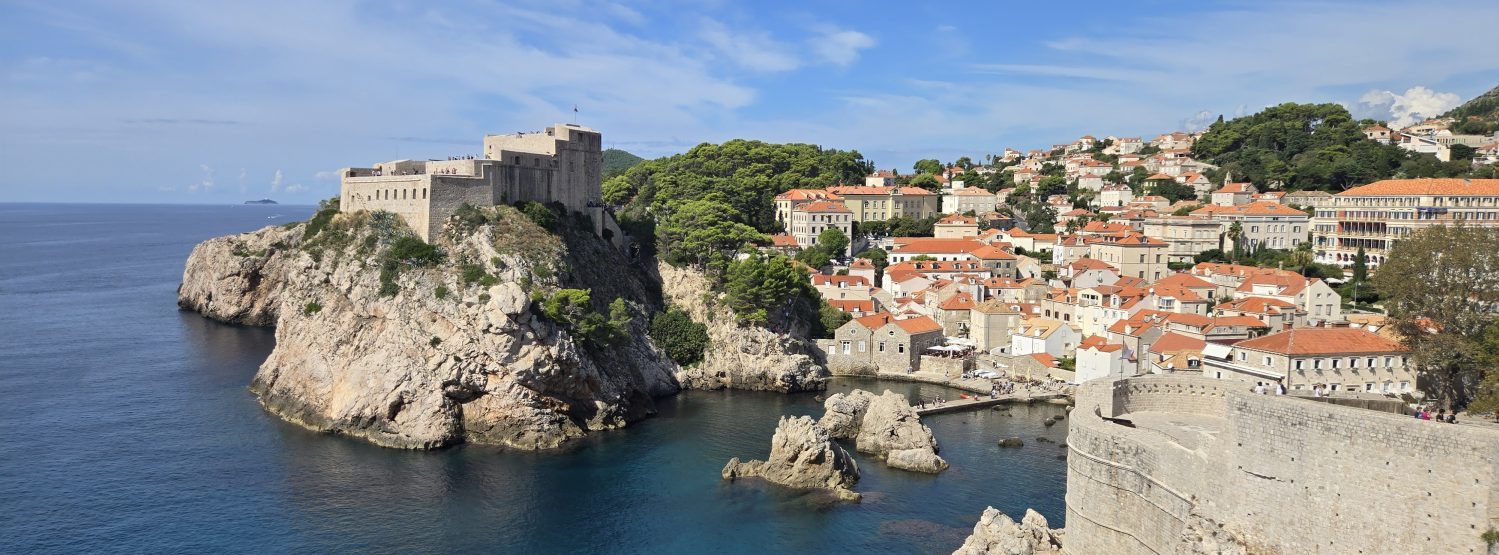
(the old city of Jerusalem in winter, 1942…notice the snow!)

As Israel approaches new elections in March, the Palestinian Authority calls for further recognition in the United Nations, and Hamas still struts their weapons in Gaza, we find ourselves asking what is next for the Palestinian-Israeli conflict.  According to Amos Oz, the Israeli novelist, “there is a growing sense that Israel is becoming an isolated ghetto, which is exactly what the founding fathers and mothers hoped to leave behind them forever when they created the state of Israel…Unless there are two states—Israel next door to Palestine—and soon, there will be one state.  If there will be one state, it will be an Arab state.  The other option is an Israeli dictatorship, probably a religious nationalist dictatorship, suppressing the Palestinians and suppressing its Jewish opponents.”* Is this the vision that Israel’s founders saw in 1948?  If we examine the ideological splits in Zionism at the time there were groups that favored the concept of some sort of Israeli government excluding Palestinians in Palestine.  This ideology was part of the belief system of Abraham Stern, a Jewish freedom fighter and/or terrorist depending if you were Jewish refugee escaping the Nazis, or a member of the British mandate government in Palestine.  In his new book, THE RECKONING: DEATH AND INTRIGUE IN THE PROMISED LAND, Patrick Bishop examines the death of Stern by British police in 1942 and its impact on those individuals and groups who were bent on the creation of an Israeli state following the Holocaust.

(Israeli commemorative stamp of Abraham Stern)

The core of Bishop’s narrative centers on the personal conflict between Abraham Stern and Geoffrey Morton, the British Assistant Superintendent of the Palestine Police Force.   For Morton, Stern was a terrorist who was responsible for political assassinations of British officials, the murder of innocent Arabs, as well as Jews who became collateral damage.  The issue for Morton became personal, when Stern’s group killed his close friend and second in command, Wally Medler.  From Stern’s perspective, Morton represented a government that blocked the immigration of Jewish refugees in Europe who were trying to flee Nazi persecution, and stood in the way of the establishment of a Jewish homeland in Palestine.   Stern had evolved from a career as a promising poet in Poland, to an aspiring Zionist theorist, to an underground fighter.  By 1942 he saw himself as a warrior prophet who believed that England was the main enemy of the Jews and the chief obstacle to a Jewish state in Palestine.  For Morton, Stern and his followers were causing major difficulties for his government at a time when things in Europe were not going well, the Battle of Britain was in full swing, and Rommel’s Afrika Corps were approaching Palestine.  When Stern reached out to Italy as a source of weapons, it became clear to Morton that Stern could be a conduit for a “fifth column” for Nazis in the region.

(British wanted poster, 1942 for Stern Gang members)

Bishop provides biographical information for all of his characters and takes the reader through the politics on both sides.  The rupture between the Yishuv (the Jewish Agency that governed Palestine for the Jews, who at the outset felt working with the British would be beneficial in the long run), its military wing the Haganah, the Irgun (the revisionist group under the leadership of Ze’ev Jabotinsky, who rejected gradualism in dealing with the British), and the Stern group (that eventually broke with the Irgun and pursued a policy of violence) is examined in detail.  Bishop also explores the different factions within the British government, some who favored greater leniency toward the Jews because of their plight, and those like Morton who wanted to enforce the law as it was written and did not want to compromise.  The reader is taken behind the scenes reflecting solid research for each group and witnesses how decisions were reached and operations were planned.  Bishop keeps the reader aware of events in Europe and how they impacted the region to promote further understanding of all sides.  We meet all the major characters, those who hunted Stern and his cohorts, and those who carried out Stern’s plans and hid him from British authorities.

Bishop discusses the major actions taken by the Stern Group as it became known and its results.  He details the British response to the violence and how it finally was able to kill Stern in February, 1942.  It is the killing of Stern that forms a major focus of the book and the controversy that ensued.  Was Stern killed while escaping a friend’s apartment, or was he murdered as he was unarmed and trying to flee through a window in an area that was sealed off by British police.  Both points of view are given and to this day the controversy remains as to how Stern died.  The problem for British authorities was that the controversy over Stern’s death made him a martyr to the Zionist cause and was used to rally Jews against the British.  Following his death, Stern’s remaining followers worked out a Modus Vivendi with the Irgun, and the Haganah to continue the fight against the British mandate government in Palestine.

Bishop tries to present his narrative as a detective story designed to capture the reader’s interest and keep them on the edge of their seats.  A sub title of the book states, “a true detective story.”  Here I think the book fails.  In trying to take a historical monograph that describes so many different characters, ideologies, and government edicts it is very difficult to try and fit it into the parameters of detective non-fiction.  From the outset of the book, Bishop drops numerous hints as to his plot line and the coming death of Stern.  His repeated clues about Stern’s demise are better left out, and what Bishop should have done is let the story, an interesting an important one in light of current events, play out.  There are a number of important findings that Bishop emphasizes, particularly Stern’s attempts to come to agreement with Fascist Italy and Nazi Germany for weapons and support as an ally against the British.  This component of the book reflects Stern’s obsession for the ultimate goal of a Jewish homeland in Palestine, and his tunnel vision in that he would work with anyone to achieve it.  This did cause opposition in his “gang,” but ultimately they remained together.  Further findings dealing with Morton’s motivations in dealing with Stern and the Jewish problem and his rationalizations are important as well as his removal by British authorities who felt he had gone too far.

The book is very timely and it points out the influence Stern had on two future Prime Ministers of Israel, Menachem Begin and Yitzhak Shamir.  Some might also argue that elements of Stern’s beliefs still exist in Israeli politics, particularly among right-wingers as we approach the Israeli elections in two months.  The book is a useful addition to the vast bibliography that deals with the creation of Israel, but it does itself a disservice by trying to create a historical mystery.

*”What Will Israel Become?” by Roger Cohen, New York Times, December 20, 2014.

NO GOOD MEN AMONG THE LIVING by Anand Gopal

(Kandahar Air Base, Kandahar Province, Afghanistan-American Air Base)

As we approach the “supposed” end of the American presence in Afghanistan it is useful to examine what might have been had the United States followed a somewhat different path.  How did the war in Afghanistan go so terribly wrong?  After a promising beginning with progress on Afghani infrastructure and some democratic improvements it has become a “Potemkin country” whereby health and educational improvements touted by the government are a sham.  President Obama has promised that American troops would exit the Afghani Theater completely; however based on events in Iraq and the performance of Iraqi forces against ISIS (the Islamic State) the Pentagon is now going to leave a residual force of about 13,000 troops in Afghanistan.  Based on the current situation on the ground Anand Gopal’s book, No Good Men among the Living is a timely reevaluation of the American mission to Afghanistan, and what is important about the book is that it tries to examine what seems to have gone wrong through Afghani eyes.

It is generally accepted that the first major error the United States made in Afghanistan was taking our eyes off our mission and redeploying American forces for the invasion of Iraq in 2003.  An invasion that resulted in the removal of Saddam Hussein, but little else, based on the current plight of that country.  Had the United States not turned away from Afghanistan and devoted its resources and talents to that country it is possible the situation we face today, the fear that once we withdraw the Taliban will continue its war on the Kabul government and eventually replace it might be different.  As 2014 comes to a close the Taliban has resurrected itself in the south and it seems that only Kabul is under government control.  Did events have to evolve as they have, perhaps not, as Gopal suggests.

(Former Afghanistan President Hamid Karzai)

Anand Gopal, a journalist who has covered Afghanistan, Egypt and Syria for a number of important newspapers, and other news outlets attempts to explain what has gone wrong by following three people; a Taliban commander, an American supported warlord, and a village housewife who tries to remain neutral.  By pursuing this approach Gopal provides the reader unique perspectives from which they can discern what the truth is concerning America’s attempt at nation building in Afghanistan.  Gopal provides a brief history of Afghanistan dating back to 1972.  He jumps to the Soviet invasion and summarizes the war conducted by the mujahedeen against Soviet troops.  Gopal continues with greater depth in confronting events as the United States ignored the emerging civil war that took place between 1992 and 1996 and turned away from Afghanistan to pursue other interests.  Gopal’s discussion of the Taliban’s refusal to turn over Osama Bin-Laden after 9/11 receives detailed treatment as does the American invasion and the evolution of the war in Afghanistan through 2013.  Gopal’s historical treatment is insightful on its own, but what separates his approach from others is his concentration on the indigenous perspective.

The first individual we meet is Mullah Cable, whose real name is Akbar Gul, a Taliban disciplinarian before 9/11 who fought against the Northern Alliance.  Gopal asks how such a person declared war against the United States.  He goes on to say that “in his tale I found a history of America’s war on terror itself…a glimpse of how he and thousands like him came to…become our enemy.” (9-10) Gul witnessed the excesses of the Taliban and turned away from its leader Mullah Omar.  He also witnessed the power of American air strikes and the devastation they caused.  Unsure of what to do he would escape to Karachi, Pakistan.  The second character Gopal concentrates on is Jan Muhammad who was imprisoned and beaten by the Taliban for over a year.  A former mujahedeen commander against the Soviet Union, he emerged as the governor of Uruzgam province after the American invasion.  He befriended Hamid Karzai and eventually grew to be a powerful war lord and ally of the United States.  The third character, Heela, is perhaps the most important of Gopal’s choices.  A woman who faced Taliban extremism, the murder of her husband, maintained her dignity throughout a tumultuous period and emerges as a member of the Afghani Senate in 2011.  All three provide a different perspective that is integrated throughout the narrative as Gopal discusses events in a non-chronological fashion, and how they might have been different had the United States pursued a more enlightened policy.

(The author)

Gopal’s central argument is very simple.  American officials believed that jihadi terrorism could be defeated through the military occupation.  In the wake of 9/11 that seemed feasible.  But when one traveled through the southern Afghani countryside a different interpretation emerges.  The contradiction is embodied in the sprawling jumble of what was Kandahar Airfield, the home of Burger King, barbed wire, and internment cages.  It was the nerve center of American operations in southern Afghanistan.  Gopal points out that “a military base in a country like Afghanistan is also a web of relationships, a hub for the local economy, and a key player in the political ecosystem.” (107)  The US developed relationships with warlords throughout the region and began relying on them for intelligence.  These were mostly the same warlords who were responsible for the atrocities during the 1990s.  The problem emerged that these warlords cared more about their own power as it related to other warlords so they provided intelligence designed to get rid of their own enemies, not intelligence that would effective against the Taliban.  What repeatedly occurred was that individuals and villages that were anti-Taliban and pro-American were arrested and bombed by the Americans.  The internment cages and resulting torture that ensued resulted in little intelligence and at times the release of those individuals by the Americans with a slight apology.  Instead of building relationship that could foster confidence, in the end the US and its allies drove people into the arms of the Taliban.  A good example is Jan Muhammad, who used the United States to settle scores with tribal enemies and enrich himself and secure his own power by feeding the US false intelligence.  The US would kill, arrest, torture Muhammad’s enemies, in a sense doing his dirty work, and as long as he was loyal he could carry on under the auspices of the United States. The US conducted raids against anyone it understood to have been remotely connected to the previous Taliban regime, even after they had put down their weapons and gone home.

(Afghani refugees outside Kabul)

Gopal describes in detail the American justice and prison system developed at the Kandahar and Bagram air bases, and how they were linked to Guantanamo.  Interrogators made little attempt to reconcile existing intelligence with any fresh information that was obtained.  If you entered this system your jailers became further and further removed from the battlefield as you would be taken from place to place.  Some of the charges bordered on the absurd, i.e., being accused of supporting the Northern Alliance, an American ally.  Poor intelligence, poor coordination between different commands, and basic bureaucratic incompetence plagued American administration of the region.  This was exacerbated by being manipulated by certain “warlord types” resulting in the arrest, torture, and imprisonment of many who were actually pro-American and working for the Karzai government.  It was no wonder that by 2005 the Taliban experienced resurgence as the American presence was seen as an occupation and the Karzai government, a venal and vicious puppet of Washington.

By 2007 the United Nations “estimated that the Taliban had reclaimed control of more than half of rural Pashtun territory countrywide.  By year’s end, officials had logged more than five thousand security incidents-roadside bombings, kidnappings, assassinations, ambushes.” (207)  As we approached 2009, following his election, President Obama launched a mini-surge that was somewhat effective, but as we approach the end of the American commitment we must ask was it worth it.   For years we have known that the Karzai government was extremely corrupt and a road block for our mission, even though as we have seen, American patronage was ultimately responsible for the mess.  Gopal finds that we are repeating our errors as we try and circumvent the central government “and deal with local power brokers, unwittingly cultivating a new generation of strongmen,” who have their own agendas. (274)  By 2013 there were roughly 60-80,000 armed private security employees in the country, “almost all of them working for Afghan strongmen.  Add to this 135,000 Afghan army soldiers, 110,000 police, and tens of thousands of private militiamen working for the Afghan government, the US Special Forces, or the CIA, and you have more than 300,000 armed Afghan men all depending on US patronage.  You can’t help but wonder:  What happens when the troops leave, the bases close, and the money dries up?” (276)  You should also ask:  What would have happened had the US understood the provincial culture of the Afghan countryside better and made different decisions?

The major criticisms of Gopal’s book do not take away from its overall importance.  He spends little time on the role of Pakistan and ISI, its intelligence service that fostered Taliban terror as it pursued its own agenda in Afghanistan, while at the same time publicly supporting its ally, the United States.  The recent Taliban massacre of the school house in Peshawar shows that their double game can often bite them.  Next, the Taliban, at times comes across as a virtuous movement of oppressed ethnic Pashtuns, who are fighting a just cause against a corrupt government and an invading force.  As Kim Barker points out in her New York Times review of the book on April 25, 2014, “the sole serious Taliban massacre comes nearly three-quarters of the way through, in an account of how Talibs slaughtered a busload of Afghans on their way to find work in Iran.”

You may not agree with all of Gopal’s findings and analysis, however he presents a unique approach to his research and is well worth a read for those still trying to figure out what went wrong, and what the future of Afghanistan might be.

THE FARM by Tom Rob Smith

(The southern Swedish rural countryside in winter)

When I began reading THE FARM, Tom Rob Smith’s new book I had certain expectations having read his trilogy of thrillers dealing with the Soviet Union; CHILD 44, THE SECRET SPEECH, and AGENT 6.  From the first paragraph I grew curious, but very surprised.  The story line was nothing like his previous books.  This effort begins with a phone call from Chris, living in rural Sweden calling his son, Daniel who resides in London.  Daniel’s parents had lived in London, but because their finances had succumbed to the 2008 recession they had taken what funds remained and purchased a small farm in Sweden, hoping to live out their retirement in that idyllic setting.  Chris informs Daniel that his mother, Tilde was on her way to London, having been released from a psychiatric hospital.  Chris had taken her there because of her strange behavior and he wanted to warn his son that doctors felt she was suffering from a psychosis and she was not to be believed once she arrived at Heathrow Airport.  Each character seems to have a number of secrets that emerge during the course of the story.  For Daniel, it was the fact that he was gay and living with his partner Mark.  Daniel had been unable to tell his parents, which was why he had not visited them since their departure for Sweden.  Once Tilde arrives, Daniel is faced with the core of the novel, was his mother mentally ill, or where her suspicions against his father true.  Who was he to believe?

Most of the story is told by Tilde as she reads to Daniel from her Journal. She maintained the journal while she suspected that Chris and another farmer, Hakan Greggson, and others were involved in a criminal cover-up that she had investigated.  Tilde argues that there was a conspiracy against her which is why she left Sweden, feeling the only one she could turn to was her son.  As the narrative evolves Daniel questions whether he really knows either parent based on his mother’s strange presentation.  He blames himself for neglecting his parents as he sees that the situation he is confronted with holds a great deal of information he was unaware of.  Daniel wonders that if he had paid greater attention to what was occurring while he was growing up he would be able to make sense of what was now happening.  Once his father follows his mother to London the novel becomes even more seductive as it draws the reader further into its plot.

The question throughout is whether Tilde is mentally incapacitated.  But one must ask, is her behavior abnormal, or is the situation she has been placed in abnormal.  As the existential phenomenologist, Thomas Szaz argued, it is not the person who is ill, but the environment that they must survive in that is responsible.  Perhaps, Tilde is just behaving as she is as a coping mechanism to survive an emotionally debilitating situation.  The reader doesn’t really know as they continue the journey that the author has prepared for them.  It has been suggested by another review that some of what Smith has created is based on his own experiences.  Be that as it may, the narrative is in part suspenseful, and in part deeply distressing.  I will stop here as to not delve any deeper because the story will continue with many twists and turns as Daniel tries to come to some sort of closure as to how he feels about his parents, and what is the truth.  In a sense the book is all about truth and the journey to find peace.  It is a superb story and Tom Rob Smith has provided further evidence as to what a talented writer he has become.  I read the book in two sittings; if you open its cover, and turn the pages you should experience the same desire to read on.

When Books Went to War by Molly Guptill Manning

(The most popular book read by American GIs during WWII)

As a professed bibliophile I was intrigued when I learned of the publication of When Books Went to War by Molly Guptill Manning.  The concept of the book was fascinating and it seemed to me that the topic, the impact of reading on American military personnel during World War II has never been given much attention.  Now, with Manning’s monograph we have a short history of the role of books during the Second World War ranging from Nazi book burnings, the ideological war between Nazism and Democracy, the diversion provided to American soldiers that allowed them to endure, and the impact on the publishing industry that led to the production of the mass market paperback.   Manning has written a wonderful book as she integrates her theme in relation to the important events that took place during the war.

(Nazi book burning, May 10, 1933)

According to Manning there was no escape from the fear of dying during World War II.  Whether on land, sea, or in the air American GIs faced the likelihood that they or someone very close to them would not survive.  Any diversion from the anxiety that soldiers faced on an everyday basis was welcomed.  As Manning describes it, “the days were grinding, the stress was suffocating, and the dreams of home were often fleeting.  Any distraction from the horrors of war was cherished.  The men treasured mementos from home.  Letters from loved ones were rare prizes.  Card games, puzzles, music, and the occasional sports game helped pass the hours waiting for action or sleep to come.  Yet mail could be frustratingly irregular—sometimes taking as long as four or five months to arrive—and games and the energy to play them could not always be mustered after a long day of training or fighting.  To keep morale from sinking, there needed to be readily available entertainment to provide some relief from war.” (xiii-xiv)  The answer that evolved was the creation of book editions designed for soldiers; portable and accessible for those in combat, rehabilitation, or other wartime situations.

Manning begins her narrative with a Nazi book burning rally on May 10, 1933.  The purpose of the rally organized by Adolf Hitler’s Minister of Public Enlightenment, Joseph Goebbles was “to ensure the purity of German literature” and rid Germany of ideas “antagonistic to German progress.” (2)  The works of Sigmund Freud, Emile Ludwig, Thomas Mann, Erich Maria Remarque, among many others were tossed into the fire, no longer available to German students.  Thousands of book burnings took place nationwide including major universities.  It is estimated that the Nazis burned over 100 million books during their reign of terror.  This set the stage for an aspect of the war that was apart from the battlefield as Hitler fought to eliminate democracy and free thought.  The American Library Association (ALA) described Nazi actions against intellectual freedom as a “bibliocaust,” their weapon of choice was to encourage Americans to read, and once the United States became an active belligerent supply books to American soldiers.

(An American GI relaxing with a book in Guadalcanal)

Manning reviews the history of how America organized the distribution of books to American soldiers.  Beginning with conscription and the military training that followed the ALA and other organizations were created to gather and distribute books to American GIs.  At first, the effort was based on collecting donations from the public at large, but when that was deemed inadequate; because of the increasing number of men in the military, the fact that hardcover books which had been the staple of the American publishing industry before the war were much too heavy to be taken into combat, also, the supply of books was being exhausted, and finally many books that were donated did not meet the needs of the troops.  The Victory Book Campaign (VBC) which had been in charge of book donations turned to the American publishing industry to solve the problem as one company, Pocket Books had already begun publishing paperbacks.  The magazine industry had developed miniature editions for servicemen and they were very successful, so why not the book industry.

The key for infantry soldiers and those near the front was to travel as light as possible, and at the same time meet the needs of soldiers who craved reading to make the non-combat time go quickly.  Manning provides details how the paperback volume evolved and how it caused a revolution in American publishing.  Publishers joined together to create the “Armed Services Edition” (ASEs) of hundreds of titles under the auspices of the Council of Books in Wartime.  Problems did develop in the production and distribution of these volumes but once these problems were solved millions of books came off the presses and were distributed overseas and to military facilities at home.  One of the more interesting insights that Manning provides centers on unpopular books before the war that would emerge as best sellers later on.  F. Scott Fitzgerald’s The Great Gatsby and Betty Smith’s A Tree Grows in Brooklyn are cases in point.  The impact of these books on soldiers was profound.  Manning includes numerous letters written by GIs during the war extolling the virtues of the books they read, and the need they filled.  GIs were interviewed after the war and expressed similar feelings.

As men waited on Landing Craft in the English Channel for the D Day landing, many turned to books.  A.J. Liebling, a war correspondent for New Yorker magazine wrote that one infantry man told him “these little books are a great thing.  They take you away.” (99) Many soldiers developed a relationship with the authors they read.  Katherine Anne Porter’s Short Stories touched the hearts of many soldiers and she received over 600 letters.  Betty Smith, the author of A Tree grows in Brooklyn received 1500 letters a year and answered each one.  As one private wrote, “Books are often the sole means of escape for GIs….I haven’t seen many a man who never before had the patience or inclination to read a book, pick up one of the Council’s and become absorbed and ask for more.” (111)  In fact many soldiers would become lifelong readers because of their experiences during the war.  Manning deftly captures the emotions that soldiers felt as they identified with the literature they read.  It brought them home and gave them hope for the future, and helped them deal with the present.  Manning must have scoured many sources to come up with the letters she integrates into the narrative and it provides tremendous insight for the reader into the minds of the soldiers who fought. The program to supply books did provoke some controversy, particularly as the 1944 Presidential election approached.  Senator Robert Taft amended the Soldier Voting Act which created a partisan battle over the ballots that soldiers would use.  Taft’s amendment, titled Article V stated no book could be sent to soldiers funded by government funds that “…contained[ed] political argument or political propaganda of any kind designed or calculated to affect the result of any election.” (136-7) The Council responsible for choosing titles and the War Department afraid to run afoul of the legislation trimmed the approved list and books such as Charles Beard’s The Republic, Catherine Drinker Bowen’s Yankee from Olympus, and E.B. White’s One Man’s Meat, along textbooks for military education courses were no longer available.  The Council led the opposition arguing that books available in the United States now were not available overseas for American soldiers.  Manning characterizes the conflict as nothing more than a Republican attempt to hold down Roosevelt’s vote since 69% of GIs polled said they would vote for a fourth term.  Whether accurate or not Manning presents both sides of the argument, as Republicans were forced to amend the legislation, ostensibly overturning Article V.

Once the war ended there was an obvious correlation between the success of the Council on Books in Wartime and postwar developments.  Under the GI Bill of Rights veterans were allowed a free college education.  Eventually 7.8 million veterans took advantage of this opportunity and many did so because of the reading habits they developed during the war.  For those who were not avid readers before the war, the Victory Book Campaign was responsible for showing men they could thrive at book learning and studying after the war.  “After all, if they could read and learn burrowed in a foxhole between shell bursts, surely they could handle a course of study in the classroom.”  Further the American publishing industry continued publishing paperbacks revolutionizing the industry.  Numerous publishers began producing paperbacks and sales went from 40 million in 1942 to 270 million in 1952, and by 1959 hardback sales were overtaken by those of paperbacks, changes directly related to the ASE’s of the war. (191)

Molly Manning has examined a different aspect of World War II and its influence on post war America.  Her thoughtful approach and reasoned analysis has produced a wonderful story that needed to be told.  It is a reflection of American values and deserves to be read by a wide audience.