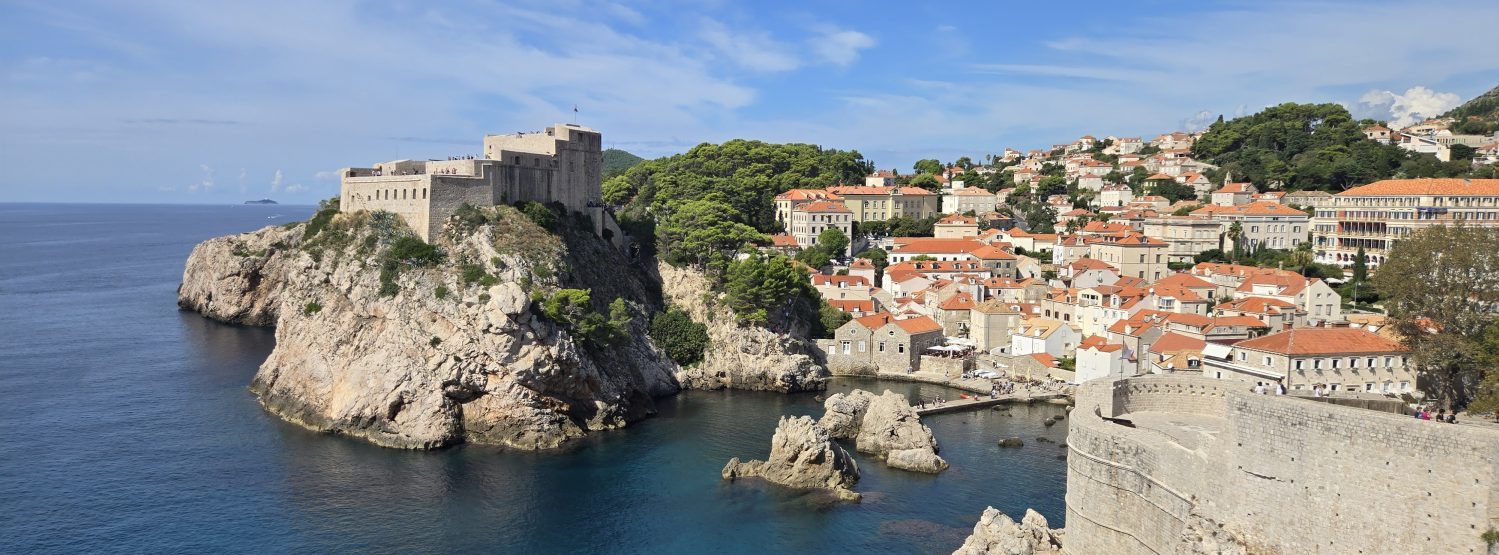
BASEBALL MAVERICK: HOW SANDY ALDERSON REVOLUTIONIZED BASEBALL AND REVIVED THE METS by Steve Kettmann

(Citi Field, the home of the New York Mets…brings back memories of Ebbetts Field)

When Sandy Alderson agreed to become general manager of the New York Mets in 2010 he was somewhat aware of their financial situation.  He was cognizant of their ownership involvement with the Bernie Madoff Ponzi scheme scandal, but not the depth of their financial losses.  Believing that accepting the job was a career challenge, plus it would bring joy to his father who lived in Florida, Alderson accepted the position.  What Alderson did not know was that the Wilpon family, who owned the Mets invested over $500 million dollars with Madoff and counted on a constant 10% return to run the team.  Once the scandal broke that money was gone, and they no longer had the funds to pay off the debt from their 2002 purchase of the team from Nelson Doubleday, Jr.  The team was in such bad shape that baseball commissioner, Bud Selig agreed to an immediate short term loan of $25 million so the team could meet payroll expenses, and convinced Alderson to take over as general manager.  On top of that one of the trustees involved with the Madoff investigation sued the Wilpons for being “willfully blind” in dealing with the “Ponzi master” for $300 million.  The suit was finally settled on March 20, 2012, for $162 million, in addition the Mets had lost $70 million in the 2011 season.  When Alderson came aboard the Mets had reduced their payroll from $140 to $85 million in one year, the highest percentage salary reduction in baseball history.  This is what Alderson had to deal with during his first few years at the helm.  The debacle that had encompassed the Mets and Alderson’s plan to restore confidence in the team as well as rebuilding their baseball operation is told in Steve Kettmann’s new book, BASEBALL MAVERICK: HOW SANDY ALDERSON REVOLUTIONIZED BASEBALL AND REVIVED THE METS.  The book is not your typical sports narrative.  It is more of an intellectual biography of Alderson where the author weaves the Mets’ general manager’s life story that saw him as a Dartmouth and Harvard Law graduate, a Marine officer in Vietnam, in addition to his baseball successes as he applied his analytical, “moneyball” approach to rescue the franchise.

The reader gains insights into Alderson’s personality and approach to organization during his tour in Vietnam, when he goes over the head of his commanding officer who passed him over for a position because he had once disagreed with a decision that involved the constant rotation of company commanders in his unit.  As a Marine, normally this was not acceptable behavior.  However, in this case, Alderson used a seldom employed Marine tradition for officers and “requested mast,” the right to go over the head of a commanding officer to the regimental commander, who in this case was Colonel P.X. Kelley, Commander of the First Marines, a formidable figure who would later become the Commandant of the Marine Corps.  Kelly agreed with Alderson and gave him a plum position in intelligence.  Following a description of Alderson’s eight month tour in Vietnam, Kettman traces his journey from a law office in San Francisco, his education as a baseball administrative novice, to his present position.

(Sandy Alderson, General Manager of the NY Mets after a loss)

Alderson’s first step toward a career in baseball occurred when Roy Eisenhardt, an attorney in the firm that Alderson worked for asked him to oversee a major deal.  Eisenhardt’s father-in-law was Walter A. Haas, Jr. Chairman of Levi Strauss who wanted to purchase the Oakland A’s from Charley Finley and save the team for the Oakland area.  Along with Haas’s son, Wally, Alderson oversaw the purchase from the inimitable “Charlie O.” and the result was that he could not avoid being “bitten by the baseball bug.”   Kettman provides an ideological history of sabermetrics going back to Branch Rickey, who hired Allan Roth who developed the “on base percentage.”  Kettman next introduces, Eric Walker a young sabermatrician who prepared “The Oakland Athletics: A Quantitative Analysis by Mathematical Methods.”  Alderson hired Walker and their friendship would continue for years.  Oakland became Alderson’s baptism under fire as he employed his analytical or sabermetric approach to evaluating personnel and aspects of being a successful general manager.  Alderson’s baseball philosophy can be summed up as, “once you established a correlation between on-base percentage and slugging percentage with run production, then you also established a correlation between gross run production and win-loss percentage, and it became apparent that the best approach was on-high base percentage and hit the ball out of the ballpark, as opposed to batting average, as opposed to the hit-and-run and bunting.” (78)  Many baseball lifers had difficulty accepting “computerball,” but since Alderson was trained as a Marine military officer and a lawyer he had no difficulty adjusting.  If things made sense from an analytical and organizational perspective Alderson was on board.  Alderson applied this approach in Oakland and took Charlie Finley’s run down operation and turned the A’s into a World Series team between 1988 and 1990 under Tony La Russo, and winning it all by sweeping the San Francisco Giants in the “earthquake series” in 1989.

(Sandy Alderson, NY Mets general manager after a win)

Kettman explores a number of important issues in baseball apart from Alderson’s organizational successes.  The author provides insights into the life of a sportswriter.  The task of attending mostly boring baseball meetings, having your newspaper columns evaluated by how many “tweets” it generates, the lack of time to think and reflect on subjects they are investigating, and the rhythms of spring training are all described.  Kettman goes on to explain the controversy concerning steroids in baseball.  The issue created a great deal of controversy, particularly for the A’s since two of their best players, Mark McGuire and Jose Canseco, the “bash brothers” were users.  The question that Kettman asks was should someone as smart as Alderson have known about it, but with no testing, no punishment, and no official baseball PED policy, how could he be accountable.  Another interesting aspect of the book is the relationship between Alderson and Billy Beane, a former New York Mets prospect who finished an uneventful career in Oakland.  Beane became Alderson’s protégé and eventually he became assistant general manager in 1993.  Beane is described as a younger version of his mentor and when Alderson left the A’s, Beane took over complete control and if you have seen the film or read the book Moneyball, the relationship proved very successful.

Before taking over the Mets in 2010, Alderson did a stint with the San Diego Padres and worked with Major League baseball in the Dominican Republic to internationalize the game.  The book is essentially a case study in leadership and Alderson’s approach to restoring the Mets to prominence bears that out.  First, Kettman describes how Alderson constructed his organizational team.    Hiring two former general managers, Paul DePodesta and J.P. Ricciardi, and keeping John Ricco, the Mets assistant general manager reflects Alderson’s own personal security and his vision in employing individuals who have their own expertise in creating a superb front office.  Each had their own special talents that blended together nicely.  Their approach toward grooming younger players, signing free agents, dealing with player representatives, i.e.; Scott Boras and Jay Z, and creating a winning culture in the locker room should provide encouragement for despondent Mets’ fans for the future.

(Alderson during his tour of Vietnam)

Alderson’s approach in dealing with young players with great potential is fascinating.  Kettman uses Zach Wheeler, a young phenom that Alderson acquired in a trade for Carlos Beltran, Jacob deGrom, a former short stop who was National League rookie of the year in 2014, and Lucas Duda, who the Mets could not decide whether to trade or not, as case studies in how to develop players.  He explores when to promote a player to the major leagues, the burden placed on a young player who seemingly is seen as a major part of the future success of the franchise, how a young player deals with their own development, balancing fan expectations, handling a prospects first big league appearance, and how a young player adjusts to playing on the major league level, particularly with the distractions that playing in New York can bring.  In Wheeler’s case it worked well, until a few weeks ago when he succumbed to “Tommy John” surgery, for deGrom and Duda the 2015 season has begun very nicely.

Kettman analyzes how Alderson puts together a roster in conjunction with his staff as well as how they went about trades with other teams.  Currently, the Mets on the precipice of actually having a winning season.  If in the end the Mets finally become financially sound on the field and off, Alderson will be declared a “genius,” if not despite his past resume he will be roasted as a failure in the New York tabloids.  Overall, Kettman has delivered a strong “baseball book,” that has applications for leadership in other venues.  If you enjoy baseball and how a thoughtful and intelligent person goes about creating a winning culture for success, this book is a wonderful read.
MENACHEM BEGIN: A LIFE by Avi Shilon

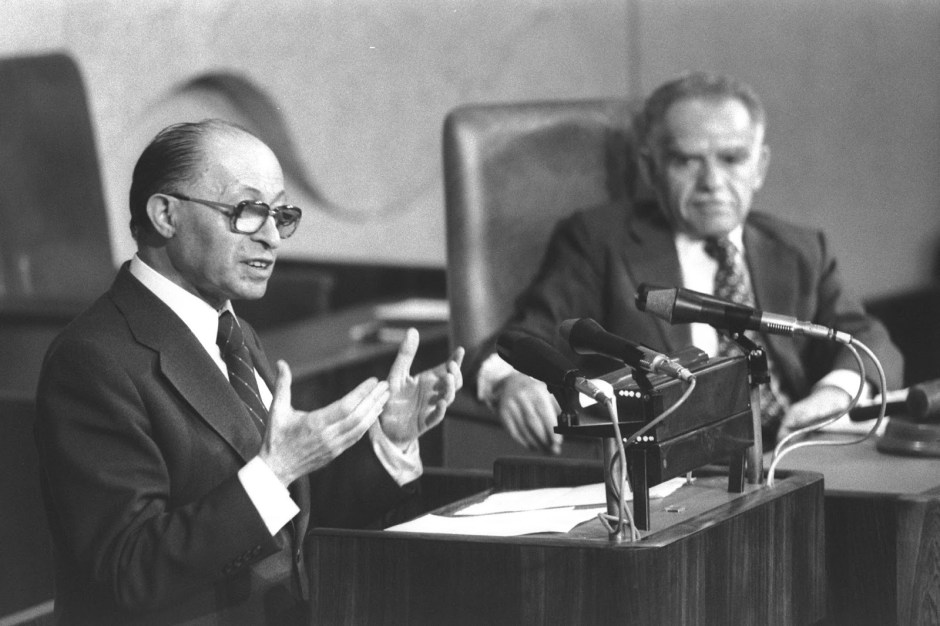
(Israeli Prime Minister Menachem Begin speaking to the Israeli parliament, the Knesset advocating acceptance of the Camp David accords, March 20, 1979.  Future Israeli Prime Minister, Yitzchak Shamir is seated to his right.)

In exploring the creation of the state of Israel over the last 67 years the dominant figure that emerges is David Ben-Gurion.  The head of the Jewish Agency before and after World War II, Ben-Gurion guided the nascent Israeli state and dominated its politics for decades.  However, another transformative figure emerged during the same time period that many outside Israel seem to avoid giving him his due, Menachem Begin.  Whether speaking about Begin’s leadership of the Irgun and the pressure he placed on the British to relinquish its Palestinian mandate; his political leadership that brought about his election to the Prime Minister’s office in 1977 which fundamentally realigned Israeli politics to this day; or his evolution as a terrorist or freedom fighter to a respected politician, depending on your viewpoint, in negotiating the Camp David Accords, the first peace treaty with an Arab state that recognized the state of Israel and altered the balance of power in the Middle East, Begin’s life has left an indelible mark on the Israeli people.  The latest example of Begin’s profound ideological influence on Israel are the recent elections that returned Benjamin Netanyahu to the Prime Minister’s office, leading the Likud bloc that Begin helped create in the 1970s.  The most complete biography of Begin’s life and career is written by Israeli historian, Avi Shilon, MENACHEM BEGIN: A LIFE that mines the Israeli archives and reflects numerous interviews in producing a complete picture of Begin in all aspects of his long career, in addition to providing an interesting analysis that delves into his personality and the motivations for the actions he took.  Daniel Gordis has written the most recent biography of Begin, entitled, MENACHEM BEGIN: THE BATTLE FOR ISRAEL’S SOUL, in which the author admits he is not concerned with all aspects of Begin’s life but “the story he evoked in Jews, of what he said to the world about Jewish history and the Jewish people and the legacy he bequeathed to the state he was instrumental in creating,” as well as looking at his life “through the lens of the passion he still evokes.” (Xiv-xv)  However, Gordis does not come close to Shilon’s book published in English in 2012 in scope and depth of analysis.

The common theme in Shilon’s life of Begin was his pride in being Jewish, a pride that would shape his entire life.  He idealized his father who was a committed Zionist who raised his children with a blend of Jewish tradition and the ideas of Ze’ev Jabotinsky, a leading figure in the movement to establish a Jewish homeland in Palestine.  Begin’s father was his life’s role model as a man living in a Polish village named Brisk, who would use an axe to open a synagogue to allow Theodore Herzl to speak when the head rabbi refused to allow the founder of Zionism to address his congregation.  Further, he would confront anti-Semitic Polish soldiers who almost shot him in front of his son.  Ze’ev-Dov, Begin’s father encouraged his children to go to Palestine and was a model of persistence or stubbornness who would perish along with Begin’s mother and sister in the Holocaust.  Begin’s father stressed the solidarity of the Jewish people and vigorously opposed those who disagreed with him.   Along with his exposure to Judaism as a child, the actions of his father that he witnessed, and the events of the Shoah are all mirrored throughout Begin’s career and the development of his worldview.

(The arrival of Egyptian president, Anwar Sadat in Israel alongside Prime Minister Begin, November 19, 1977)

When discussing Menachem Begin, opinions range from the beloved leader that impacted Israel greatly as a statesman and a man of the people, or a stubborn individual who has authoritarian tendencies with an acerbic tongue and supported violence to achieve his aims.  Shilon comes down between the two extremes as he develops a fascinating portrait of Begin.  From the outset Shilon traces Begin’s ideological roots back to his enrollment in the Beitar Movement that stressed the ideas of Ze’ev Jabotinsky at the age of sixteen.  The movement called on Jews to hold their heads up high, stressed nationalistic issues, and the power of the Jewish people to achieve a future in Israel.  The young Begin was greatly influenced by Jabotinsky, but also Marshall Jozef Pilsudki who led the Polish nationalist movement after World War I, and Guiseppi  Garibaldi, the Italian nationalist who worked to achieve the unification of Italy in the 1860s.  By the time Begin entered his twenties his worldview was formulated as Shilon accurately points out, he “applied Polish nationalistic concepts to his perception of Jewish nationalism – especially regarding the importance of using military means to expand territory – and to this notion he added the spiritual nationalistic anchor – Jewish tradition.” (12)  These themes would be evident in all aspects of Begin’s life’s work.

Shilon’s chronological narrative focuses a great deal on the ideological rifts that developed as Begin worked his way up in the Beitar movement to positions of leadership, the implementation of the Irgun’s war against the British, his time in opposition after the creation of the state of Israel, and his period as Prime Minister.  As Begin rose to prominence in the Beitar movement he would disagree with Jabotinsky in a number of areas, most importantly over the use of terror and cooperation with the British.  During the Irgun years the issue was the application of violence and whether to go along with the Jewish Agency, led by David Ben-Gurion and his strategy.  After independence Begin was adamant about not negotiating with the West German government over reparations as the Holocaust impacted him so severely, and once in power the issue of returning territories won in the 1967 war forced him to change his position of never returning territory that was part of “Eretz Yisroel.”  However, no matter the situation, Shilon credits Begin with his courage and his ability to discern the mood of the public in any decision he made.

(The Beitar Movement that Begin joined at the age of 16, he is seated in the center)

The most controversial part of Begin’s career was his leadership of the Irgun, which the British labeled as a terrorist group before, during, and after World War II.  Begin’s raison detre was to rebel against the British.  At the outset, Begin had no knowledge about leading an underground organization and planning and carrying out operations.  He rose to leadership in the Irgun based on his European background, particularly his training in the Polish army, and his fluency in a number of languages.  As in most cases during his career, Begin let his ideas that many felt were beyond reality, and his oratorical ability to carry the day, and left military planning to experts, a concept that appears over and over during his career.  Begin saw the British refusal to allow Holocaust refugees into Palestine as enough of a reason to declare war on them.  He strongly believed that the British were solely responsible for blocking the creation of the state of Israel.  Begin believed the employment of terror against the British mandate during and after World War II would force them out of the region, buttress the confidence of the Yishuv, damage British prestige, and arouse international public opinion, especially in the United States.  One must ask was terror a successful strategy to accomplish ones goals?  In Bruce Hoffman’s new book ANONYMOUS SOLDIERS: THE STRUGGHLE FOR ISRAEL 1917-1947, the author asks, does terror work?  Based on historical events and the creation of Israel in 1948, his conclusion is that it does.  Shilon does not skirt over the controversial actions taken by the Irgun, the bombing of the King David Hotel, the hanging of the British sergeants, the Deir Yassin massacre, the Altalena Affair, and other events are explored in detail and the author does not hold back any criticism in discussing Begin’s actions.

The contentious relationship and almost hatred between David Ben-Gurion and Begin is a common theme throughout the narrative.  Ben-Gurion always feared Begin’s popularity among the young and wanted to prevent him from gaining any political power.  Shilon points to the fact that Ben-Gurion and Begin shared many characteristics, including a propensity to act in an authoritative manner.  Begin never could accept an Israeli democracy under Ben-Gurion’s control.   For Begin, Ben-Gurion was too secular, and Begin believed in a Hebrew republic that distinguished between the state and religion – a dichotomy that still exists today when one listens to Netanyahu’s repeated call for a “Jewish state.” The integration of the arguments into the narrative between the two in the Knesset and the Israeli media enhances an understanding of the two men as well as providing insights into why they disagreed over policy and their personality differences.  For Begin, religion was the unifying principle of the Jewish people.  For him, the Israeli national concept was based on the Jewish people in its biblical version, and pursuing the military path was a legitimate means to a desired end.

(Israeli Prime Minister, David Ben-Gurion, Begin’s political rival/enemy)

Shilon’s use of primary materials to reflect on Begin’s relationships is important in gaining an accurate view of how he dealt with people.  Begin always respected military men, particularly those he felt were “warriors.”  His relationship with Moshe Dayan, who was a member of the Labour coalition reflects Begin’s ability to compromise when necessary.  His relationship with Ariel Sharon, another military hero is important in addition to his up and down relationship with Ezer Weizmann, an Air Force hero who represented the younger generation that at times would revere Begin because of his background.  In overseeing the dismantling of the Irgun after independence we witness a distraught Begin as he must pursue realpolitik to further his Herut party politically.  The discussions and overt hostility that arises between Begin and his Irgun fighters is important as it reflects the evolution of Begin as a politician and what he sees as the best interests of the Israeli people.

Shilon does an excellent job in analyzing three events that form turning points in Begin’s rise to power in 1977.  The first, in 1952 is his opposition to accepting reparations payment from the West German government, highlighting the impact of the Holocaust in every decision Begin made.  Occurring at a time when his Herut party was in decline it provided a platform for Begin to touch the soul of Israel.  Later in his career when German Chencellor Helmut Schmidt stated on a state visit to Saudi Arabia in 1981 that Germany had a moral obligation toward the Palestinians because it was Germany that was responsible for their plight due to the Holocaust.  An incensed Begin responded at a political rally that, “He is greedy….he seeks two things.  To buy oil cheaply and sell weapons dearly.  He talks about moral obligation to the Arabs?  The obligation to the Jews will never end.” (337)  the second event, the 1967 Six Day War brought Begin into a unity government as a minister without portfolio.  Here the Labour government was following Begin’s approach in dealing with Israeli security and resulted in the capture of the West Bank, or as Begin referred to as Judea and Samaria, Jerusalem, Gaza, the Sinai, and the Golan Heights.  This period of Israeli euphoria is well chronicled and leads to the third event that brings Begin to power, the 1973 Yom Kippur War.  The soul searching that followed the war would lead to the coalition of Herut and two other parties to form the Likud bloc that would produce the election of Begin as Prime Minister in May, 1977.  Shilon’s analysis and questions pertaining to Begin’s rise are valid and thought provoking.

(Begin in disguise as a rabbi during his years underground.  His wife Aliza and daughter Chasia are also pictured)

The final section of the book culminates with a shift in Begin’s approach to foreign policy.  His view was that the Sinai and Golan Heights were not part of the promise land that God gave to the Jewish people, therefore he was willing to negotiate their return.  This would allow him to reduce international pressure over Jerusalem, Judea and Samaria, Gaza, and the settlement program.  This shift in his thinking allowed Begin to go to Camp David and reach an accord with Egyptian president, Anwar Sadat, but being very careful not to give into demands concerning the Palestinians.  For Begin the autonomy agreement that was reached was nothing more than papering over a problem and pushing it into the future when Begin accurately predicted there would be a massive influx of Soviet Jews to Israel alleviating the demographic challenges that Israel faced with the Arabs. Begin’s biggest mistake as Prime Minister was his invasion of southern Lebanon as a means of destroying the Palestine Liberation Organization.  As Robin Wright, the Middle East historian has noted, this became Israel’s Vietnam, and it would take a number of years after Begin retired to extricate itself from.  For Begin the decision to invade Lebanon has been fraught with controversy.  The role of then Defense Minister, Ariel Sharon is at the center of the debate whether he exceeded instructions approved by the Israeli cabinet and pursued his own agenda while keeping Begin in the dark.  According to Shilon, the Prime Minister was “detached from what was happening on the ground,” and though he supported Sharon’s actions, he was culpable for the disasters that followed, including the Shatila and Sabra refugee camp massacre, the increasing Israeli casualty rate, and the eventual emergence of Iranian backed Hezbollah.

Foreign policy was Begin’s bailiwick, and social and economic issues did not create the same interest.  However, he would take advantage of the poverty that recent immigrants from the Arab countries and Ethiopia endured as they tried to assimilate into Israeli society.  He would pit these Sephardic Jews against the ruling Ashkenazis to gain their political support and enhance Likud’s popularity.  Further, he would employ a populist message to gain the support of workers and the middle class to reflect an image of fighting for those who did not benefit from the Labour government’s policies.  Begin would make economic policy pronouncements to assist the poor, but losing interest, he would as he always said, would turn implementation of those policies to the experts.

Shilon’s effort and the excellent translation from Hebrew by Danielle Zilberberg and Yoram Sharett should stand as the preeminent biography of Begin for a great while.  Though at times somewhat wordy, the author has captured the essence of who Begin was, and what his place in history has become.  Today he remains as one of the most popular figures in Israeli history and if Bruce Hoffman is to be believed Begin showed that the use of terror in certain situations can be successful, and that even a rigid ideologue can evolve and have a positive impact on his people.

CHICKENHAWK by Robert Mason

(Bell AH-1 Cobra)

One of the most iconic sounds that people relate to the Vietnam War is the “womp, woosh” of American Huey helicopters.  Whether watching a film like Apocalypse Now or reading a book on the war those sounds will reverberate in the reader’s mind.  During the war about 12,000 helicopters were deployed by the United States military.  Of that number 7,013 were Hueys, almost all of which were US Army.  The total number of helicopter pilots killed in Vietnam was 2202, and total non-pilot crew members who died were 2704.  The most accurate estimate of the number of helicopter pilots who served in the war was roughly 40,000. (www.vhpa.org/heliloss.pdf)  As we think about these statistics we can only admire the bravery and fortitude of the men called upon to undertake the many diverse missions these pilots engaged in.  One of the pilots, Robert Mason has written one of the most important accounts of the war available in his memoir, CHICKENHAWK.  Mason’s account is probably one of the most accurate and realistic accounts we have about the American serviceman’s experience in Vietnam.  From the vantage point of a helicopter pilot, Mason explores his daily life during his tour of duty.  Mason’s approach to his memoir is simple, clear, and honest.  As he completes basic training, advanced individual training, and two attempts at passing preflight training, he comments that he never “suspected that the army taught people how to fly helicopters the same way they taught them to march and shoot.  But they did.” (23)  He realized early on that if you washed out of the flight program you would wind up as a PFC in the infantry.  Mason’s journey begins in 1964 and carries him through 1968, a time when the United States, under President Lyndon B. Johnson was ramping up the American commitment to save South Vietnam from communism.  Mason’s insights echo those of historians that were written years later.  Mason’s memoir was first published in 1983, and was reissued in 2005 with a new afterword describing how the war affected his life for decades following his service.

06 Returning Fire

(American “slick” with a machine gun mount)

Mason’s experience in Vietnam was much diversified. Even as a warrant officer he engaged in the activities of a typical grunt rooting out tree stumps, digging fox holes, filling sand bags, and building a perimeter for his assault division.  Mason’s primary activity was flying a Huey helicopter that involved him in support of troops in the Bon Song Valley and Ia Drang Valley where in November, 1965 the United States won its first large scale encounter with the North Vietnamese.  Though it appeared to be a victory, Mason questions what American strategy was as we killed the enemy at an increasing rate, but we would withdraw and not hold the land taken.  Mason points out repeatedly, that later American troops would fight to retake the same territory as it had won earlier, but at an increasing cost for the United States.  Mason’s buddy, Connors summed it up well, “Why the fuck don’t they keep some troops out there.  This is like trying to plug fifty leaks with one finger.” (351)  This is not the only thing that Mason questions.  He did some reading before he went to Vietnam, Bernard Fall’s Street without Victory having had the most impact on him as it describes the political situation in South Vietnam, the corruption of the Saigon regime, and the lack of commitment on the part of the South Vietnamese peasants who just wanted to till their own soil.  The poor training and refusal to fight on the part of the ARVN (South Vietnamese army), the fear in the eyes of South Vietnamese he came in contact with bothered Mason a great deal.  The resentment between ARVN and American officers was readily apparent.   At times when ferrying ARVN troops to a landing zone Mason had to be careful that once on the ground they would not turn and fire on his Huey.  For Mason, there were many times that he questioned why he was in Vietnam.

14 My Chair

(the author in Dak To during his tour)

In exploring the Vietnam War from the lens of a Huey pilot the reader will experience with Mason a myriad of situations. Mason provides an excellent description of how he learned how to fly helicopters.  He also provides a useful amount of technical information about the problems that pilots faced and how they could maneuver their Hueys out of many tough situations.   He engaged in spraying defoliants to eliminate ground cover for the VC (Viet Cong, South Vietnamese communists), not knowing what havoc these chemicals would reap in the future.  Mason’s primary activities centered on transporting troops, wounded, and bodies to and from the battlefield, but he was also involved with relocating refuges, to training missions, as a mail courier, to picking up and delivering supplies to combat areas and rear compounds.  But there were other missions of importance, the pickup and delivery of tons of ice so the officer’s club would be stocked and if any was not needed it would be traded for appliances from other units.  Further, the transport of small groups of officers on their own “secret” missions, as well as using the Hueys to visit friends a hundred miles away.  Some of these tasks were obviously would not be considered “militarily relevant,” but to maintain the sanity of people who have flown over 1000 missions they were none the less very important.

18 Preacher Camp

(the author walking along a trench by his, as he calls it, “spiffy digs”)

Throughout the narrative Mason supplies the reader the historical context of what was occurring on the ground in Vietnam.  The intensity of Mason’s descriptions of his flights and what he observed provides the reader the feel and the smell of war.  Supply shortages were constant in his unit, particularly chest armor that was a necessity for Huey pilots.  Mason highlights it further after he transfers to another unit that is overflowing in chest armor.  A recurrent them is the weakness of American intelligence, provoking Connors to comment after a fire fight that “the intelligence branch must have read their maps upside down, [and was] getting its information from smuggled Chinese fortune cookies.” (146)  Early on Mason was led to believe the reason the French had been forced out of Vietnam was because they weren’t “air mobile.”  Once the American Air Cavalry arrived it was supposed to change the course of the war.  For Mason at times he believed the United States was winning, then doubts would creep in based on his experiences in combat.  It led to a discussion with  his co-pilot, Gary Resler as they tried to determine their attitude toward the war; where they afraid or “chicken,” or after seeing the constant pile of dead American bodies they wanted revenge, making them “hawks.” Their conclusion was a combination of the two, hence, they were “chickenhawks.”

17 Washing Out the Blood

(Cleaning the chopper from the blood and other aspects of war)

Mason provides the reader insights to his thinking about his personal feelings.  He left his wife, Patience, and young son, Jack in the United States, and he integrates his personal letters to his family throughout the narrative.  His feelings of guilt are present as he is honest about his activities during R & R in Saigon, Taipei, and Hong Kong.  It should be obvious that Mason suffered from PTSD before he left Vietnam.  Constant nightmares, anxiety, and fear centered on the murder of VC prisoners, the use of napalm and the damage it caused, and the casualties he witnessed drove him to use medication after his missions in order to complete his tour of duty.  In addition, he pours his heart out about what he witnesses and cannot cope with.  Chickenhawk, though written over twenty years ago provides lessons for future soldiers, and it is an exceptional Vietnam memoir that has stood the test of time.

GAZA: A HISTORY by Jean-Pierre Filiu

(Explosions from Israeli air strikes over Gaza City this past summer during the Hamas-Israel War of 2014)

Last week newly reelected Israeli Prime Minister Benjamin Netanyahu backtracked from his election eve statement that he opposed a two-state solution for the Israeli-Palestinian conflict.  Though he seems to have walked back that statement because of American pressure the issue still remains, will there be any movement toward a dialogue for peace between the Israelis and Palestinians in the near future?  At this juncture the answer appears to be a resounding no.  In the absence of a clear diplomatic path it is useful to explore a major component to any future deal.  In 2005, then Israeli Prime Minister, Ariel Sharon disappointed his right wing Likud Party partners and set forth a unilateral Israeli withdrawal from the Gaza Strip.  Tired of the cycle of violence with terrorist attacks and counter-terrorist reprisals, Sharon decided it was not worth the cost of maintaining an area that is 139 square miles (the same as Detroit) with a population of about 1.8 million Palestinians.

As Palestinian politics have evolved over the last ten years Hamas, seen as a Moslem extremist party and terrorists by both the United States and Israel, assumed power over Gaza, and the “more moderate” Palestinian Authority is in charge of administering the West Bank.  This situation came about through a bloody civil war between the two parties and the electoral process.   On January 25, 2006 the Hamas Party won the Palestinian legislative election resulting in the nomination of Hamas leader, Ismail Haniyeh as Prime Minister within a Palestinian National unity government with Fatah, the largest Palestinian political party.  This unity dissipated quickly when Hamas and Fatah effectively engaged in a civil war, the results of which have left two separate ruling bodies in the Palestinian territories.  In recent years, of the two territories, the Palestinians in Gaza have suffered the most.  Last summer, in what seems to be a bi-annual war between Israel and Hamas resulted in the death of over 2100 Palestinians and 73 Israelis.  The causes of the war center on Hamas’ frustration at its lack of progress in achieving a Palestinian state, and the belief that they had nothing to lose by launching missiles into Israel to provoke an invasion.  The background for these events are explored in Jean-Pierre Filiu’s new book GAZA: A HISTORY, a comprehensive study of Gaza from roughly 18th century BC to the end of 2011.  The book is important because it fills a gap on the literature pertaining to Gaza since most Middle East scholarship tends to focus on the endless attempts to solve the Israeli-Palestinian conflict.  In addition, the book provides a useful guide to events that led to the carnage of last summer.

The author summarizes the early history of Gaza and what becomes clear from at least the12th century BC is that the region is repeatedly conquered by external forces.  Be it the Assyrians, Babylonians, Persians, Romans, Byzantines, Crusaders, Mongols, Mamelukes, Ottomans, French, British, and eventually Israelis, Gazans were rarely in charge of their own destiny.  They would be forced to believe in paganism, Christianity and finally Islam.  Important historical figures are presented from Alexander the Great, Salah ad-Din, Gamal Nasser, to present day politicians all of which possess their own agendas that did not necessarily bode well for Gaza.  According to Filiu Theodore Herzl and his early 20th century Zionist movement did not consider Gaza as part of the land of Israel as Gaza’s land owners refused to provide the Jews land purchases the way the Arabs had in central Palestine, thereby limiting any Jewish incursion into Gaza.  From that point on Filiu reviews the history of the region exploring the diplomacy of World War I, the 1929 Arab riots, the Arab rebellion of 1936, and the effect of World War II on the area.  In addition he does a good job discussing the dynastic rivalries that existed among Palestinians throughout the period and their impact on Gaza.  In doing so Filiu forgets to explore the 1939 British White Paper, I believe in part because it doesn’t necessarily support his Palestinian bias that is present in many of the areas that he explores. Once the narrative approaches the creation of the state of Israel in 1948 Filiu zeros in on the Israeli-Palestinian conflict which makes up over three-quarters of the narrative.

(The Israeli Iron Dome Missile Shield developed by Israel.  It was employed last summer to protect Israel from the thousands of Hamas rocket launches.)

Filiu spends an inordinate amount of time describing what seems to be each and every act of terror and counter-terror committed by both sides in the conflict.  I understand the importance of many of these actions and counter-actions but at times it becomes tedious and can overwhelm the reader with detail.  Of course, many of these attacks lead to changes in policy or military action, particularly by the Israelis but it would benefit the reader if this could be condensed and the author could concentrate more on analysis of events rather than direct reporting of who died, how many died, and who survived.  The horror of the plight of the Palestinian refugees cannot be denied, and Filiu does a superb job providing the reader with an understanding of their plight.  Discussions of the life and politics in the Kan Younes, Jabaliya, Rafah, Nuseirat, Bureji, and Deir al-Balah camps are important because from these camps the varying leadership and shock troops of the militant Palestinian groups emerge.

Perhaps the most interesting aspect of the book is Filiu’s description of the rise of Yassir Arafat to leadership of the Palestine Liberation Organization and Fatah, its political wing in 1964.  The author follows the evolution of Arafat as a “freedom fighter/terrorist” who is faced with increasing opposition from other Palestinian elements as the history of the region evolves from Israeli “punishment” of Gaza for attacks on its settlements to outright war.  We witness an Arafat who must balance himself between the many Palestinian factions that emerge over the years and by 1990 he begins to engage in the diplomatic process with Israel and the United States leading to the Oslo Accords in 1993 and the failure of the Camp David talks in 2000.  Next to Arafat, the man who receives the most attention from the author is Sheik Ahmed Yassin who became the leader of the Moslem Brotherhood in Gaza in 1966.  Later, in 1973 he would set up an organization called the Mujamma designed to meet the social service and educational needs of the Palestinians in Gaza.  In response to the 1987 Intifada of the younger generation of Palestinians against Israel he founded Hamas (the Movement of Islamic Resistance).  It is here that Filiu does his best work as he describes the ideological differences between the various groups that vie to represent the Palestinians.  He explores the ideologies and strategies that Fatah, the Muslim Brotherhood (that eventually evolves into Hamas), Islamic Jihad, and the Popular Front for the Liberation of Palestine in detail, and how they hope to achieve Israeli withdrawal from Gaza, and explains the reasons Hamas emerged as the dominant force in Gaza today.

(Destruction in Gaza caused by the Israeli invasion)

The importance of Filiu’s work lies in his discussion of the escalation of violence that took place in 2001 as Hamas and its allies expanded their attacks from targeting Israeli settlements inside Gaza to the territory of Israel itself.  This would lead to Israel’s application of an “iron fist” in response and a cycle of violence that would continue until Israel’s withdrawal from Gaza in 2006.  Hamas would launch its first home made Qassam rockets, employ its first female suicide bombers, and reject all calls to demilitarize the second Intifada.  Throughout the period not a day went by when there wasn’t an assassination, air strikes, suicide bombings, or destruction of Gaza’s homes and infrastructure.  By 2006, Hamas’ strategy concerning elections would change by first running in municipal elections, then parliamentary contests which in the end brought them to political power. However, instead of using their victory as a positive force they engaged in a fratricidal war with Fatah.  But as Donald Macintyre suggests in the The Independent it would have been interesting if Filiu provided greater analysis of these events and the actions of the Bush administration, as well as the lack of action by the European Union as they sabotaged any chance of an international agreement with Hamas by the policies they pursued. (The Independent, September 11, 2014)  What is even more troubling than missing an opportunity after the election of 2006 to pursue some sort of diplomatic demarche, is the author’s description of the fighting between Hamas and Fatah between 2006 and 2011 that can only be characterized as savage.  Further this brutality was taking place at the same time as Israel pursued “Operation Cast Lead,” its punishment of Gaza for the militant’s seizure of Gilad Shalit, a nineteen year old Israeli soldier on June 25, 2006.

Earlier I mentioned that Filiu at times is not totally objective in his presentation.  A few cases in point; in discussing casualties in various attacks and counter attacks, the author provides minute details of Palestinians and then glosses over Israeli casualties.  The reader is presented with the Grand Mufti, Hajj Amin al-Husani as a leader of the Palestinian people, but Filiu skirts over his alliance with Nazi Germany during the war, and his work to help Nazis accused in the Holocaust to escape to the Middle East.*  In discussing the outbreak of the Suez War, Filiu makes it appear that Nasser nationalized the Suez Canal in response to the Israeli assassination of his intelligence chief.  In point of fact, Nasser’s anger was due to the withdrawal of the Aswan loan guarantee by the United States, their refusal to sell him weapons to counter Israeli attacks, and their policy of trying to create a Middle East Defense Organization geared against the Soviet Union.  In 1967, the author suggests that Nasser ordered the UN forces out of Sharm el-Sheik to take Arab pressure off of him for restraining Fedayeen attacks against Israel.  In fact the Russians kept feeding Egypt information about the coming Israeli attack and that he should take action.  Perhaps as Isabella Ginor and Gideon Remez suggest in FOXBATS OVER DIMONA, the Soviets wanted to provoke a war in order for them to interfere in support of the Arabs and destroy the Israeli nuclear reactor in the Negev Desert.  In discussing the Yom Kippur War he emphasizes the “air bridge that brought in supplies provided by the United States” to Israel, but makes no mention of the “air bridge” that the Soviets provided the Arabs.  Perhaps Professor Filiu should have explored Nasser’s true feelings about the Palestinians, who behind closed doors was repeatedly heard to make derogatory remarks describing them.  In his discussion of the outbreak of the 1987 Intifada, the author should explain the demographic and financial inequalities in the Arab world that in part led to the outbreak of violence, and perhaps mention that though Arafat took credit for the revolt, it caught him by surprise just as it had the Israelis.  I find the documentation that Filiu uses rather selective at times, concentrating on United Nations Documents and mostly pro-Arab secondary sources.  I am not suggesting these sources are wrong, however one should employ a myriad of sources to assure objectivity.

(Hamas tunnel complex used to smuggle materials into Gaza and fight against Israel)

(Israeli soldier discovers Hamas tunnel opening during the fighting last summer)

Despite these flaws Filiu has prepared a remarkable book that fills the historiographical gap that is apparent with the paucity of historical monographs that examine Gaza.  I would hope that the author would prepare an updated edition of the book that carries his story through the events that led to the Hamas-Israel war of last summer, and the horrifying result for the people of Gaza, as opposed to Hamas’ leadership, that appears to have emerged unscathed.

  • See Rubin, Barry; Schwanitz, Wolfgang G. Nazis, Islamists, and the Making of the Modern Middle East. New Haven: Yale University Press, 2014.

THE STRUGGLE FOR ISRAEL, 1917-1947 by Bruce Hoffman

(Future Israeli Prime Minister Menachem as leader of the Irgun.  According to the British during and after World War II, Begin led this terrorist organization)

This past week’s news cycle has been dominated by the Iran nuclear talks and the reelection of Benjamin Netanyahu as Israeli Prime Minister, two stories that are interrelated due to the politics of the Middle East.  Both situations have been parlayed by politicians to reinforce their own ideological agendas.  The results have been extremely negative with Republicans in Congress grand standing about a deal that has not been concluded, and PM Netanyahu’s somewhat racist comments about Arab voting, and his diplomatic dance surrounding his support or non-support of a two state solution in negotiations with the Palestinians.  The relationship between President Obama and Netanyahu have never been strong, and now have become even more dysfunctional.  The consequences of these events for the region are extremely important since the Arab-Israeli Conflict has produced four major wars, and a series of lesser wars since 1948.  It would be useful to revisit the history of the pre-1948 War and try to understand the background of the conflict that may never be settled.  All one has to do is think about the situation in Gaza last summer as Israel and Hamas exchanged missile strikes resulting in the destruction of a major part of the infrastructure of the Gaza Strip.  In addition, the Palestinian community is split between the Palestinian Authority on the West Bank and Hamas that governs the Gaza Strip.  Currently, the diplomatic game is at a standstill so Bruce Hoffman’s THE STRUGGLE FOR ISRAEL, 1917-1947 is both timely and important.

Mr. Hoffman, the Director of Security Studies at Georgetown University and a senior fellow at the United States Military Academy’s Combating Center raises the important question, “does terrorism work?  According to Hoffman “campaigns of terrorism depend on rational choice.”  It results from a group’s decision to oppose a government and is seen “as a logical means to advance desired ends.”(x)  Today in the Middle East there are a number of groups whose choice of terror fits this description; Hamas, Hezbollah, Palestinian Islamic Jihad, ISIS, and al-Qaeda’s many derivations.  Hoffman has chosen to concentrate on three groups that have been credited with convincing the British government to relinquish its League of Nations mandate over Palestine in 1947 that led to the creation of the state of Israel.  The book explores these three groups; the Haganah, Irgun, and Lehi and determines that it was the Irgun that should be given most of the credit for forcing the British withdrawal.  If this is an accurate assumption, then according to Hoffman, terror, in this particular instance worked.

The title of the book is derived from a poem written by Abraham Stern, a messianic Zionist who implored Jews to fight for the creation of their own state; “We are the anonymous soldiers without uniform, Surrounded by fear and the shadow of death.  We have all been conscripted for life; from these ranks, only death will free us.” (96) The strategy embodied in the concept of anonymous soldiers was extended by the Irgun leader following World War II, and future Israeli Prime Minister Menachem Begin.  Begin believed that Israeli freedom fighters (as opposed to terrorists) could blend into the general population and hide in its battle against the British.  He believed that all Jews who lived in the Yishuv were fighters for the creation of the Jewish state, a concept that the British accepted and as explained by the author based their counter-terrorism policy arguing that since the Jewish terrorists hid among and were assisted by the general population, they were just as culpable for terrorist attacks as the actual perpetrators.

Hoffman’s premise, whether terrorism works, is an important one, but at times it becomes lost in the minutiae of each terrorist attack that he presents.  The book is a comprehensive recounting of the role of terror played in Palestine from World War I through the declaration of Israeli statehood on May 15, 1948. It encompasses major decision making by the British as they tried to carry out their mandate over Palestine, the reactions of the Arab community, particularly before World War II, and the Jewish responses throughout the period.  All the major and lesser personalities involved are examined, including Winston Churchill, Ernest Bevin, Clement Atlee, General Bernard Montgomery and High Commissioner Alan Cunningham on the British side to, David Ben-Gurion, Menachem Begin, and Abraham Stern representing the Jews, and Hajj Amin-al Husseini, and Izz al-Din Abd al-Qadir al Qassam, who embodied the Arab cause.  Along with the personalities involved the author described in detail what seems to be every important terror attack that took place within the scope of his topic.  The book appears to be broken down into three parts.  The first major delineation occurs in 1929 as Arab riots against Jewish immigration and land purchases led to British quotas regulating Jewish immigration to Palestine.  As the riots led to a pogrom in Hebron, the Yishuv leadership realized it could not rely on the British for protection.  The reorganization and centralization of the underground Jewish army, the Haganah resulted, and Jewish revisionists like Vladimir Jabotinsky set up their own autonomous group that would fight Arab terror with Jewish terror.  The next turning point would be the Arab rebellion that lasted from 1936 to 1939 that eventually would produce the 1939 British White Paper that limited Jewish immigration to Palestine to 1500 per month for five years and declined to partition Palestine into a Jewish and Arab state.  Issued as Jews were trying to escape Nazi Germany it would have a profound impact on the plight of the Jews and British policy that did not want to aggravate its relations with the Arabs as the war approached.   Obviously the end of the war is another watershed as Jewish terror increased against the British evolving into a situation of all-out war that only ended with British withdrawal from Palestine.

(The King David Hotel, Jerusalm that was bombed by the Irgun on July 22, 1946)

The most important part of the book is Hoffman’s description and analysis of what appears to be each terrorist attack that took place particularly after World War II.  It seems that the author did not find an attack that he didn’t feel the need to describe in minute detail.  For the student of the period it is valuable, but the general reader will become bogged down in what seems at times to be a daily description of the terrorist and counter-terrorist activity that takes place.  The author reports on all major attacks, describing their explosive power, and casualties from what seems to be every angle.  The reader learns the details of the bombing of the King David Hotel that housed Britain’s governmental agencies for Palestine by the Irgun, assassinations of major figures, i.e.; Lord Moyne, kidnappings, hangings, as well as the overall terrorist dance that the Irgun and its allies engaged in with the British military and the Palestine Police Force (PPF).  What is most interesting is Hoffman’s analysis of Britain’s counter-terrorism strategy.  His observation that the British applied tactics that worked between 1936 and 1939 dealing with a rural insurrection, to an urban terrorist strategy employed by the Irgun between 1945 and 1948 reinforced the objectives sought by Begin and his cohorts in Lehi.  Further, once the British decided to employ 100,000 troops in Palestine after the PPF was not able to bring the terrorist threat under control, Palestine became a garrison state.  The actions of the police and military became confused and this segmented the police away from any source of actionable intelligence, the people themselves.  The British intelligence structure in Palestine was severely criticized as the political leadership in London could not make up its mind, and to make matters worse the intelligence agency (CID) in Palestine was poorly trained, under manned, and underfunded.  The result was that American intelligence (OSS) was much more reliable than that of the British and in many cases the British played right into the hands of Ben-Gurion and Begin.  The Irgun leader’s strategy was designed to counter British tactics.  His goal was to undermine the British government’s prestige and control of Palestine by striking at symbols of British rule.  The Irgun and its junior partner, Lehi targeted immigration, land registry, tax and finance offices, and made the price the British would have to pay to remain in Palestine much too high in light of England’s overall economic condition during the winter of 1947.

(The Arab Revolt in Palestine designed to stop Jewish immigration)

Apart from events Hoffman does a superb job explaining the ideological development of the major characters and the strategies they hoped to employ.  Though long winded at times the reader will emerge with a firm understanding of the beliefs of Begin, Ben-Gurion, al-Husseini, Qassam and many others.  The political machinations and battles that contributed to Britain’s inability to accomplish their goals is always present.  A discussion of the hatred between English Generals Bernard Montgomery and Evelyn Barker, and Montgomery and High Commissioner Alan Cunningham disrupted British decision-making repeatedly as did disagreement within the English cabinet in London.  The growing rift between the Atlee government and the Truman administration over a solution to the Palestine problem is present for all to see.  The divisive conflict within the Jewish leadership is detailed and is extremely important as Ben-Gurion and Begin did not enjoy the best relationship as they agreed and disagreed over the use of terror throughout their war against the British.  What was shocking to me was the degree of overt anti-Semitism that was evident on the part of many of the major British players.  As more and more British soldiers and civilians were victims of the violence perpetrated by the Irgun and Lehi, British frustration and anger manifested itself with a virulent type of anti-Jewish behavior.  One must ask, did British anti-Semitism inhibit their ability to solve the Palestinian problem?

Hoffman is a very skillful writer, and though he is somewhat repetitious, his integration of so much detail at times is very engrossing, but at other times it can be overwhelming.  He raises the issue that one person’s terrorist is another person’s freedom fighter and the partisan debate over such issues will find supportive evidence for each position throughout the book.  In addition, some might argue that there is no difference between the Irgun approach to statehood and that of Hamas and others today.  Hoffman argues that the Irgun and Lehi focused on British military and governmental targets.  Civilians were killed, but not targeted.  For Hoffman, Palestinian terrorists have often been indiscriminate and at times targeted civilians directly.  No matter the reader’s point of view, there is a great deal of history presented that could be debated, in addition to contemporary strategies that can be argued.  Overall, Hoffman has written a very important book that provides many insights as to why the problem remains so intractable.

ISIS: INSIDE THE ARMY OF TERROR by Michael Weiss and Hassan Hassan

ISIS: Inside the Army of Terror

Each evening the nightly news seems to zero in on another story that relates to the Islamic State in Iraq and Syria (ISIS).  We are bombarded with border crossings into Syria from Turkey, the state of the effort by Iraqi forces to retake Tikrit, fears concerning Iran’s role in Iraq should ISIS finally be defeated, the capture of a former American Air Force veteran seized at the Turkish border and extradited to the United States, and yesterday’s brutal attack in Tunisia.  This nightly visual obsession has produced a number of new books on the rise of ISIS and suggestions on how we should deal with them.  One of the better or perhaps the best of this new genre, explaining ISIS, is Michael Weiss and Hassan Hassan’s ISIS: INSIDE THE ARMY OF TERROR.  The book is written in a very straight forward historical narrative that tries to explain how we have arrived where we are today in trying to understand current events and how they relate to the last decade of American foreign policy in the Middle East.

The narrative traces the evolution of al-Qaeda in Iraq (AQI) into the Islamic State in Iraq (ISI) under the leadership of Abu Musa al-Zarqawi until his death in 2006 by an American air strike.  It continues its discussion by zeroing in on the schism that develops between al-Qaeda and the emergence of ISI over strategy in the sectarian civil war in Iraq, and integrates events in Syria that will culminate in the movement to overthrow Bashir al-Assad.  What stands out in Weiss and Hassan’s effort is their analysis of how the current situations in Iraq and Syria came to be, and what role the United States and Iran played.  The rise of ISI is directly linked to the American invasion of Iraq in 2003, and American support for the Shi’a politician, Nouri al-Maliki as Prime Minister.  The authors repeatedly point out that Iraqi Sunnis hoped to be treated fairly by the government in Baghdad.  After the United States invaded Iraq, American decision makers fired Sunni bureaucrats, dismissed the Sunni dominated Ba’athist Party, and disbanded the Iraqi military, leaving Sunnis unemployed, and when Shi’a politicians, like Maliki did not deliver on their promises, very bitter.  As Iran’s influence in Baghdad increased many Sunnis, particularly former policeman and military officers under Saddam Hussein turned to ISI.  The authors provide details how Maliki became Prime Minister and his negative impact on creating a unified Iraq.  The authors also delve into the rise of Abu Bakr al-Baghdadi as the supreme leader of ISIS and his split with al-Qaeda, a major schism for the jihadi universe.

The authors provide an depth analysis of the civil war that broke out in Syria in February, 2011.  Weiss and Hassan make a number of important points that allows the reader to understand the complex political situation that exists and how it came about.  Once the revolution gained a foothold it seems Assad’s strategy was to terrorize Syrian Sunnis so they would become radicalized and join the forces that sought to overthrow him.  He wanted to create a situation where Alawites (Shi’a sect that Assad belongs to that made up 8-15% of the country’s population) and Christians felt endangered.   By so doing he hoped to show the world that he was a victim of terrorists who wanted to overthrow his government.  The groups that opposed Assad believed that his blatant use of chemical weapons, rape, and bombing of civilians would be enough to gain substantial support from the west, but this was not to be.  The result was that the only means of support came from Iran.  In fact, the authors argue that “Syria is occupied by the Iranian regime.”  Assad doesn’t run the country, Qassem Soleimani, head of Iran’s Quds force is in charge. (140)  It is Iran that is opposing ISIS (ISI became the Islamic State of Iraq and Syria in 2011 once the Syrian civil war began) in Iraq and Syria and policy makers in Washington must wonder what will happen once ISIS is defeated with the Quds Force in Syria, and Iranian Shi’a militias in Iraq.  It seems that the Iran-Iraq of the 1980s is now being refought.

What separates Weiss and Hassan’s work from ISIS: THE STATE OF TERROR by Jessica Stern and J.M. Berger another useful monograph that has also been recently published is that within its narrative it analyzes the role of the tribal networks in Iraq and Syria.  They compare how Saddam and Assad dealt with Iraqi and Syrian tribal structure and organization, and how ISIS manipulated tribal influence in order to gain support.  Stern and Berger take a different approach as they provide a narrative history of ISIS’ terrorist methods, and the organization of civil society.  Further, they devote a great deal of space to ISIS’ use of technology in order to gain support and attract foreign fighters, but spend much less time on the rise of key personalities, jihadi organizations, and the interests of nation states.  Weiss and Hassan touch on the role of psychology and technology, but not in as much detail as they concentrate on the political paradigm that has brought together the common interests of Iran and the United States in opposing ISIS, and at the same time an alliance between Assad and Teheran also exists.  Weiss and Hassan offer useful explanations for how this obtuse situation was created.  One of which seems somewhat convoluted but accurate.  According to Weiss and Hassan the closer ISIS gets to conquer an area, the less religion plays a part in gaining public confidence.  For most people joining ISIS is a political decision as Sunni Muslims feel they have nowhere else to turn.  They see the world as one between a Sunni and Iranian coalition.  They believe that extreme violence is needed to counter the coming Shi’a hegemony.  They feel under assault from Assad, Khamenei (Supreme leader of Iran), and Maliki (who was finally ousted six months ago) and are left with few options other than supporting al-Baghdadi’s new Caliphate.  In their epilogue Weiss and Hassan paint a sobering picture of what the future holds.   They examine the massive US bombing campaign that seems to have offered mixed results, and Sunni anger over what appears to be an American administration that is indirectly supporting Assad’s reign of terror from Damascus.  They conclude that more than eleven years after the United States invaded Iraq, a deadly insurgency adept at multiple forms of warfare has proved resilient, adaptable, and resolved to carry on fighting.” (242)  ISIS appears to have tremendous staying power and the sources of revenue to maintain their quest, not a very optimistic picture.

(Tikrit University, the site of fighting between Iraqi forces and ISIS)

If you enjoy well written narrative history based on numerous interviews including Iraqi, Syrian, American, and Iranian politicians; as well as military observers, foreign fighters and other jihadis then you cannot go wrong with Weiss and Hassan’s new book.  If you want less of a historical narrative and are interested in more of a socio-psychological study you might find Stern and Berger’s work be more satisfying.  The bottom line is that you cannot go wrong with either work.

ISIS: THE STATE OF TERROR by Jessica Stern and J.M. Berger

ISIS: The State of Terror

At a time when we see images of Iraqi forces backed by Iranian supported Shi’a militias trying to retake Saddam Hussein’s home of Tikrit from the Islamic States of Iraq and Syria (ISIS), and we witness young girls leaving their homes in London and make their way through Turkey to join the jihad in Syria, it raises enumerable questions for politicians and the public worldwide.  Foremost, is how did we arrive at this point with ISIS, ISIL, IS or whatever their name is at the moment.  In addition, how culpable is the United States for the situation that it finds itself in today; returning troops to Iraq, engaging in a major bombing campaign in Iraq and Syria, spending millions, if not billions of dollars on an Iraqi army that when confronted with ISIS soldiers months ago fled in fear and left behind enough weaponry and equipment to enhance ISIS’ already burgeoning military machine.  The answers to these questions can be found in Jessica Stern and J.M. Berger’s new book, ISIS: THE STATE OF TERROR, one of the first books that seriously attempts to analyze the rise of ISIS; concentrating on the fallout from the American invasion of Iraq in 2003, its evolution under al-Qaeda and its eviction from that organization, to its announcement  of the new Islamic caliphate, and its employment of technology and advanced propaganda strategies to attract foreigners to fight and organize their new state.

Beginning with the horrific beheading of journalist James Foley on August 19, 2014 the authors begin to unravel the rise of ISIS and why the United States did not see the latest jihadi organization coming.  The origin of ISIS emerged from the mind of Abu Musab al Zarqawi, a Jordanian who joined the insurgency against the Soviet Union in Afghanistan as it was drawing to a close in 1989.  Partially radicalized by Sheik Abu Muhammad al Maqdisi, the architect of jihadi Salafism, Zarqawi would spend the greater part of the 1990s in a Jordanian prison where he was further drawn to Islamic extremism.  Zarqawi brought a sectarian approach to his understanding of jihad, and the United States gave his beliefs a purpose when they invaded Iraq in 2003.  Zarqawi was able to develop al-Qaeda in Iraq (AQI) because of American policy errors.  When Paul Bremer, head of the Coalition Provisional Authority disbanded the Iraqi military and fired all of Saddam Hussein’s Ba’ath Party members from civil service positions there were few trained people left to maintain government services, and it produced thousands of angry Sunnis who had military and civil training.  The result has been the development of an insurgency that the US was unprepared for.  The authors correctly argue that the US created the environment for Zarqawi’s brutal tactics and rabid sectarianism.  The second major error the US committed was throwing its support behind Nuri al-Maliki, a supposedly moderate Shi’a Muslim to be Prime Minister in 2006.  Maliki would prove to be a very divisive figure with strong ties to Iran.  His policies turned Sunni Iraqis against his government as promises of political power and integration into the military never came to fruition.  By 2006 a full scale sectarian war had broken out resulting in the death of Zarqawi by an American air strike, and months later a coalition of jihadi insurgents announcing the creation of the Islamic State of Iraq (ISI) under the leadership of Abu Omar al Baghdadi.  As Maliki cracked down on Sunni leadership and purged them from positions of power.  Sunnis, fearful of their government and Shia militias had no place to turn to, hence they looked to ISI.

Once the authors explained the origins of ISIS they move on to provide a detailed description of how ISI expanded and eventually moved into Syria, changing their name to the Islamic State if Iraq and Syria.  The authors review ISIS’ relationship with al-Qaeda and Osama Bib-Laden, exploring their differences in strategy, organization, and interpretation of the Qur’an.  ISIS took advantage of events in Syria and expanded their violent millenarian view of Islam and by February, 2014 Ayman al Zawahiri, who had taken over leadership of al-Qaeda after Bin-laden was killed, disassociated his organization from ISIS over their extreme tactics and their presence in Syria.  With Maliki’s partisan Shia approach to governance more and more Sunnis joined ISIS, many of which were Saddam’s generals.  The result was that by June 2014, ISIS had captured Fallujah, Mosul, and Tikrit.  On June 29, 2014, ISIS declared the Islamic Caliphate, an action designed to subsume all jihadi organizations, including al-Qaeda under their leadership.  ISIS abhorrent approach to human life continued, but their sophisticated messaging now included a vision of the type of society it wanted to create.

About half way through the book the authors switch their approach from a historical narrative supported by many keen insights to a sociological-psychological dimension.  Chapters dealing with the importance of how ISIS employs technology and social messaging, including how twitter, Facebook, YouTube, and other social media are used to  recruit foreigners to join the new Caliphate, and spread their influence throughout the Middle East and beyond.  The authors explore how ISIS presents a strange dichotomy of ultra-violence and civil disorder as it streamed its propaganda and vision of society that went beyond the violence of jihadism, i.e, governing and social services.  The sophistication of ISIS’ approach to the media and the digital film world are detailed.  ISIS professionalization of film making and messaging are designed to attract fighters, but also “middle management.”  In effect what ISIS is engaged in is “cyber jihad” with electronic brigades that allow them to create new opportunities to expand their “brand.”  The authors examine the new psychology of terrorism and how it is used to influence their enemies and maintain control of other jihadi organizations world-wide.  The main problem they export is “disproportionate dread,” and the manipulation of perception that the west has yet to counter.

According to Stern and Berger ISIS’ message differed from the approach that was offered by al-Qaeda whom they saw as defeatist because they never believed that the Caliphate would be achieved in their lifetime.  Their message is one of extremism itself, but purified.  They offer no rationalizations of self-defense against the west, just revenge.  No longer will there be subtle assumptions of weakness, just aggression and shocking violence and strength.  No more talking about a generational conflict, the Caliphate had been proclaimed.  Their “combination of successful strategy, aggressive messaging, and an appeal to strength over weakness has proven unequally powerful and energized at least tens of thousands of ardent supporters.” (197)

The latter part of the book explores the current state of ISIS as of early January, 2015 and the authors are fully cognizant that things may have changed since the book went to press.  Stein and Becker offer advice as to how to deal with ISIS and suggest that a different approach than has been used in the past should be implemented.  Military action to decapitate the leadership of a country does not always prove successful.  Once the leadership is gone we are then faced with situations that have existed in Iraq since 2004, and more recently in Libya after the overthrow of Moammar Gadhafi.  President Obama may call for the defeat and destruction of ISIS, but what we must accept is that this has become a generational problem as the authors point to the indoctrination of children by ISIS, so that once the current leadership has passed a new generation will take over.  The book also includes a detailed appendix dealing with Islamic thought and history that nicely supplements the main text.  Explaining the differences between Shi’a and Sunni Islam, Salafism and Wahhabism, and the different interpretations of jihad are important to understanding what has occurred and where we go from here.  The book is based on interviews and secondary sources and at this point, is one of the two best monographs on the topic.  The other, ISIS: INSIDE THE ARMY OF TERROR by Michael Weiss and Hassan Hassan will be presented in my next review.

NAZIS, ISLAMISTS AND THE MAKING OF THE MODERN MIDDLE EAST by Barry Rubin and Wolfgang Schwanitz

(Hajj Amin al-Husaini and Adolf Hitler)

As we witness the increasing level of anti-Semitism in Europe exemplified by recent attacks against Jews in Paris the role of Islamist ideology appears ever present.  The perpetrators of the attacks were of Mideast origin and claimed to be associated with the Islamic State or ISIS.  With renewed interest in the role of anti-Semitism and Islamist radicalism in Europe it is important to seek out the origins of these movements.  Some political commentators point to the actions of Israel against the Palestinians, particularly its war against Hamas last summer resulting in the carnage caused by repeated missile launches to and from the Gaza Strip.  Others, like historians, the late Barry Rubin and Wolfgang Schwanitz, acknowledge the role of Israel, but point out in their new book, NAZIS, ISLAMISTS AND THE MAKING OF THE MODERN MIDDLE EAST that the historical and ideological roots of the latest conflict between Israelis and Arabs goes much deeper.  Citing the recent release of Nazi and Arab documents dealing with World War II from American and Russian archives, a more complete account of the interactions between Arabs, Muslims and Germans can now be presented.

To support their views the authors bring together a number of key elements.  First, they explore the German role in the Middle East dating back to the late 19th century.  Beginning with the beliefs of Kaiser Wilhelm II, the ideological, political, and strategic goals of Germany are presented by analyzing the intellectual and practical development of employing Islam and jihad as a vehicle for German expansion in the region which would continue through the reign of Adolf Hitler.  Secondly, after the collapse of Nazi Germany in 1945 the alliance forged with these Middle East groups during the war would have long term ramifications.  These groups would experience political victories over their European masters and over more moderate Arab and Muslim rivals.  “Their success was so thorough that liberal democratic forces-not uncommon in the Arab speaking world before the 1930s-do not emerge again as contenders for power” until the Arab spring in 2011.  Today, we are in the midst of another round in the conflict between revolutionary Islamism, one of the movements that cooperated with Imperial Germany through the end of World War I.  Its cooperation would continue with Nazi Germany up until 1945, then reemerge to challenge its former partner Arab nationalism, that had crushed it in the 1950s.  I agree with the authors that an “Islamist spring” has emerged today that spews its anti-Semitism and hatred of the west and it can only be understood by examining the role of the Nazi-Islamist alliance that culminated during World War II.

The narrative begins in June, 1942 as SS Chief Heinrich Himmler prepares for visitors at the Sachsenhausen concentration camp.  Earlier in 1941 the facility had tested new camouflaged gas chambers with four new crematoria which proved very successful.  At that time, the Arab visitors witnessed the results and they planned to build their own facilities near Tunis, Baghdad, and Jericho.  The authors then present a letter from Amin al-Husaini, the Palestinian political and religious leader, to Adolf Hitler in January 1941 that asked the Nazi leader to “assist the Arabs in solving their Jewish problem the way it was carried out in Germany.”  The introduction of al-Husaini, who was also the Grand Mufti of Jerusalem is critical to the author’s arguments.  During the First World War, the Kaiser tried to foment a jihad to encourage Muslim support during the war.  His plan was doomed to failure as relying the Sultan of the Ottoman Empire as his spokesperson was not sound, as most Muslims did recognize him as the religious leader of the Middle East (or caliph).  By 1933, with Hitler’s ascension to power al-Husaini offered his services to the German Chancellor to carry out his plan against the Jews laid out in MEIN KAMPF.  Thus, the relationship and alliance between the Fuhrer and the Grand Mufti began.  Throughout the 1930s the Nazis supplied weapons and money to be employed in the 1936 Intifada against the Jews in Palestine, a people that al-Husaini referred to as “scum and germs.”  al-Husaini saw himself as the leader of the Arab world and in return for Germany’s assistance in eradicating the Middle East of its Jewish population, and supporting his goal for the creation of a unified Arab state in the Middle East under his leadership, he would work to bring Muslims and Arabs into an alliance with Germany, spread Nazi ideology and wage terror against England and France.  As a result of al-Husaini’s cooperation Germany was able to establish a special relationship with the Muslim Brotherhood, the Ba’ath Party and other radical groups in Syria, Iraq, and Palestine, which still exist today.  The author’s provide a detailed history of al-Husaini’s activities throughout his career as the self-styled political and religious leader of the Arab world.  The evidence presented affirms the similarities between al-Husaini’s beliefs and those of the Nazis.  To further their critique the authors offer a list created by al-Husaini that offers “parallels between the Islamic world view and National Socialism.”  The list highlights eight parallels, with al-Husaini “backing each assertion with quotes from al-Qur’an and Muhammad’s sayings.”  Views presented deal with the hatred of Jews, belief in a single powerful leader, the role of woman, and holy war. (182-183)

(Hajj Amin al-Husaini and Heinrich Himmler in Berlin, 1942)

The documentation that the authors present is extensive in dealing with al-Husaini’s paramount role in Hitler’s vision for the Middle East.  One aspect that they discuss even places some level of the blame for the Holocaust on the Grand Mufti.  Up until 1941 the Nazis had not decided on the Final Solution and the Hitlerite regime concentrated on expelling Jews from Germany.  The problem for al-Husaini was that most of those Jews would wind up in Palestine.  Since part of the agreement with the Nazis was to close Palestine’s doors to Jewish immigration, that process was stopped.  With one of the last places Jews could be sent now closed the Nazi regime moved on to plan the Final Solution.  The timing of the Wannsee Conference in January 1942 and al-Husaini’s activities including a conversation with Adolf Eichmann, “who had prepared the background briefing for the genocide discussion at Wannsee, was ordered to be give[n] to al Husaini….before any high-ranking Germans.” (163)  As the war progressed and the German hierarchy realized the conflict was lost, they began to try to soften their role in the Holocaust and began trying to arrange the exchange of Jews for prisoners of war and low level war material.  When al-Husaini learned of these activities in Bulgaria, Rumania, Hungary and Turkey he immediately interfered to put an end to them.  As a result, even more Jews perished in the ovens, all because of his hatred of Jews.

The critique of al-Husaini continues after the war and the evidence offered reflects al-Husaini’s role in the 1947-8 war that saw the creation of the state of Israel.  After W.W.II, al-Husaini and his cohorts, many of which were Nazi collaborators worked to prepare for the next war, i.e.; uncovering Nazi weapons hidden since 1942, using Nazi funds to purchase new weapons, and employing escaped Nazis to train and lead Arabs.  “Without al-Husaini’s presence as the Palestinian Arabs’ and transnationalist Islamist leader there might have been other options.” (200) The author’s conjecture that had moderate Arab leaders not bowed down to al-Husaini’s radical Arabism, and perhaps had the allies treated him as a war criminal as they should have the course of Middle Eastern history might have been different.  Whether things would have progressed in another fashion is fine to speculate about but American, British and French fears of losing Arab support, the need for oil, and the emergence of the Cold War was more important and al-Husaini was allowed to proceed with his machinations for the rest of his life.

Another fascinating aspect that the authors address is the relationship between former Nazis and the Arab world following W.W.II.  A detailed chapter is put forth that explores the role of ex-Nazis in Arab governments, particularly that of Nasser’s Egypt.  Cairo became a haven for escaped Nazis and many were employed in Egyptian industries, intelligence operations, and military training to enhance Nasser’s national security apparatus.  Another home for these men was Syria, under the Ba’athist regime, an Arab version of National Socialism, that mimicked Egypt to a lesser scale, but did hid the likes of Alois Brunner, who Nazi hunter, Simon Wiesenthal labeled as “Eichmann’s right-hand man with brains.”  In addition, he accompanied al-Husaini on his tour of Auschwitz around June, 1943. (225)  Another important individual was Francois Genoud, al-Husaini’s personal banker since 1933, who worked with German military intelligence during the war.  Later, he would finance the ODESSA network and bankroll the Ayatollah Komeini when he was in Paris until he came to power in 1979, and later helped fund al-Qaida and Hamas, until his operations were shut down after 9/11.

What is especially relevant about the author’s narrative is how they link the actions of al-Husaini and his radical Islamist allies to today’s political situation in the Middle East.  As the authors explain, Nazi ideology may have died in defeat in 1945, but its basic concepts changed surprisingly little as practiced by radical Islamists today.  Just substitute the word “Israel” for “Jew” and the similarities are clear.  It is the belief in many Nazi principles by Islamists and Pan Arabs today that contribute to the inability to solve the Arab-Israeli conflict.  A case in point are the comments made by Iranian Foreign Minister Mohammad Javad Zarif on March 8, 2015 that “Israel should be annihilated.”  These sentiments were offered earlier in November,, 2014 by the Supreme Leader of Iran, Ayatollah Ali Khameini that the fate of Jewish state should be “elimination and annihilation.”  If one examines the beliefs of Osama bin-Laden, Saddam Hussein, the Assad rulers, spokespersons for Hamas and Hezbollah, and of course ISIS, their comments have a certain familiar tone.  But if we return to the earlier period, the speeches of Gamal Abdul Nasser and Yasir Arafat, who was a distant relative of al-Husaini and a disciple, we hear the same ring of Nazi ideology.  It is fascinating to me that al-Husaini would only accept the leadership of an Arab state because of violence, in 2000, Arafat refused what many consider a reasonable deal with Israel because he too could not accept a Palestinian state unless it germinated from violent revolution.  They are many more examples offered, the most important of which is the Muslim Brotherhood, that supposedly moderate organization that came to power in Egypt in 2011 during the “Arab spring.”  I agree with the author’s assessment that “any effort to persuade the West that it should tolerate the Muslim Brotherhood requires erasing its legacy of cooperation with the Nazis, and of equal importance, the ideological parallels between the Nazis and the Brotherhood, as well as Islamists generally.” (250)  However, what   cannot be denied is that currently Europe and the Middle East are witnessing an increase in violent anti-Semitism, and Islamist anti-western hatred, that had its origins in the calls for jihad dating back to World War I.

There is much more to Rubin’s and Schwanitz’s effort including the intellectual development of many individuals and groups throughout the period under discussion.  The range from Wilhelm I to Adolf Hitler to radical Islamist proponents today, for many will be startling.  However, if one examines this scholarly and well researched monograph any doubts of their linkage will disappear.  I would recommend this book to all who have an interest in the Middle East, and in general, the peace that seems so elusive.

Other books you might wish to consult:

Achar, Gilbert. THE ARABS AND THE HOLOCAUST (New York: Picador, 2010).

Dalin, David G.; Rothmann, John F. ICON OF EVIL (New York: Random House, 2008).

Motadel, David. ISLAM AND NAZI GERMANY’S WAR (Cambridge: Harvard University Press, 2014).

THE GHOST WAR by Alex Berenson

Alex Berenson’s sequel to THE FAITHFUL SPY continues to develop the character of John Wells, the CIA operative who penetrated al-Qaeda where he remained for almost ten years.  During that time he rejected western religion and converted to Islam.  In THE GHOST WAR we find Wells in a much different situation that does not quite measure up to his character development in the previous novel.  The story begins at a rotting pier in Inchon, South Korea, an industrial port fifty miles west of Seoul.  Ted Beck, another CIA operative is scanning the horizon looking for a “cigarette boat” called the Phantom that is to be used to extract Dr. Sung Kwan, a North Korean scientist essential to their nuclear program who had been flipped by the CIA.  The rescue attempt does not go smoothly and the CIA counter intelligence group is brought in to investigate as the narrative unfolds.

The story line has a number of threads that are drawn together in an interesting web of intelligence that needs thorough development.  To Berenson’s credit he pulls it off flawlessly.  The reader is presented with the improved offensive capacity of the Taliban in Afghanistan.  Further, a CIA mole in the office of counter-intelligence dealing with East Asia is ever present.  Former Russian Spetsnaz (Special Forces) are discovered after Wells is brought into the story.  A Chinese general on the Politburo’s Standing Committee develops a scenario involving confrontation with the United States to seize power.  China and Iran enter into an alliance as part of the plot, and the United States and China are brought to the brink of war.  All of these threads fit nicely as the plot evolves and Wells is inserted at strategic points to solve a number of problems.

Members of THE FAITHFUL SPY cast of characters reappear.  Wells’ girlfriend and handler, Jennifer Exley plays a prominent role as does Ellis Shafer, Exley’s CIA boss, plus Vinny Duto, now Director of the CIA, who despite Wells’ success in stopping a major terrorist attack at Times Square still has little respect for his talents.  New characters are added including George Tyson, a rather large and brusque Deputy Director of Counter Intelligence, Henry Williams, the Commander of the USS Decateur, General Li Ping, and Chief of the People’s Liberation Army and a host of spies and other types, including former Iranian President Mahmoud Ahmadinejad.

Within the many story lines there are a number of secondary situations that emerge that are interesting.  In tracking the enhanced training of the Taliban and their new inventory of weapons, a Russian prisoner taken in a cave in Afghanistan is linked to a rich arms dealer who among his many residences are one in East Hampton, Long Island where Wells recruits the Chief of Police to assist him in breaking into the arms dealer’s compound.   The Chinese-Iranian rapprochement is also interesting and the analysis that Berenson presents as to why it was beneficial to both sides is very worrisome when thinking about the current nuclear negotiations with Iran and the slowing of Chinese economic growth.  Berenson also offers accurate insights into Chinese politics, as well as the plight of the poor and the overall internal domestic situation in China.  As he did in his previous novel, Berenson is not shy about sharing his opinion of American foreign policy under the Bush administration as he weaves historical issues that we confront today back to the invasion of Iraq in 2003.

Overall, THE GHOST WAR is a very entertaining novel, but I expected more of the John Wells character.  Perhaps building upon his conversion to Islam which he now appears to have moved away from, and more of the internal division that exists in the US foreign policy and intelligence community might improve the narrative.  Despite this disappointment I look forward to reading the third installment of the John Wells series, THE SILENT MAN and I do recommend THE GHOST WAR to those who enjoy this genre.

COLONEL HOUSE: A BIOGRAPHY OF WOODROW WILSON’S SILENT PARTNER by Charles E. Neu

(President Woodrow Wilson and Colonel Edward House, campaigning in 1912)

One of the most tragic endings to any presidency in American history is that of Woodrow Wilson.  Elected twice the former president of Princeton University and Governor of New Jersey continued progressive reform that had marked the earlier administrations of Theodore Roosevelt and Howard Taft.  In addition, Wilson guided the United States through the Great War and developed a plan to make it “the war to end all wars.”  However, Wilson suffered a stroke while trying to sell his postwar plan to the American people as he battled to overcome partisan congressional opposition to the League of Nations and never regained the emotional balance to compromise with his detractors.  In the end Wilson became a bitter man and the fight over the League of Nations overshadowed the positive impact his presidency had on American history.  During Wilson’s administration a “counselor” emerged who had no official title or rank but has often been labeled as Wilson’s “silent partner.”  This individual helped shepherd through Wilson’s domestic agenda through congress, but he remained in the background throughout that process.  It was in the arena of foreign affairs that he became known to the general public.  The man, Edward House was a wealthy Texas politician and businessman who was fascinated by the organizational side of politics, rather than the achievement political power in of itself.  Nicknamed the “Colonel” based on an honorary National Guard rank the governor of Texas bestowed upon him, Colonel House became one of the most powerful and controversial presidential advisers in history.  Until now the literature on House lacked a comprehensive and masterful biography, with the publication of Charles E. Neu’s COLONEL HOUSE: A BIOGRAPHY OF WOODROW WILSON’S SILENT PARTNER that void has been filled.

Neu has written a biography that should remain the definitive source on Colonel House for years to come.  The book is based on assiduous research that includes the leading secondary works on all aspects of American history that House was a part of.  It took Neu years to research and write and it is reflected in the primary materials he examined, particularly the over 3000 page diary that House prepared on a daily basis until 1921 when the Versailles Conference ended.  Neu points out that throughout his life that House was most interested in the “process rather than the substance of politics, fascinated with tactics and personalities.” (11)  As he worked his way through Texas politics he created what he referred to as “our crowd,” a group of advisors and sycophants who would remain with him throughout his career.  In his relationship with Wilson he took on many tasks that the President found distasteful.  Wilson, whom was not a warm individual saw in House an individual that possessed the capacity for human relations that he lacked and relied upon his “counselor” to smooth the way for legislation as well as diplomatic relationships.  One would think that Wilson and House would have spent a great deal of time together during the course of their friendship, but Neu reveals that most of their communication was by letter and telephone.  Fortunately House’s diaries have provided historians a record of their warm feelings for each other that today might be categorized as a “bromance!”

(President Wilson and his cabinet)

Neu correctly develops the theme that House’s greatest contribution to his relationship with the president was his assessment of European events as he repeatedly traveled to Europe between 1913 and 1917 as the United States tried to navigate a policy of neutrality during World War I.  House became the key to American mediation efforts, though his judgment was often clouded by his enamourment with England and its Foreign Secretary Sir Edward Grey and the policies of Lloyd George.  Wilson relied on House as his “personal emissary” but at times House missed the larger historical forces that shaped the policies of the European powers as the war continued.  House’s relationship began with Wilson in 1911 as he grew tired of the policies offered by the Republican Party.  For a number of years through the prism of Texas and national politics he searched for a progressive Democrat who was electable.  The search brought him in contact with Governor Wilson of New Jersey and their relationship blossomed.  With the disarray in the Republican Party in 1912 whoever secured the Democratic nomination was likely to be elected president.  Neu provides a detailed summary of the 1912 election and correctly concludes that it was “one of the most intense campaigns on both a personal and intellectual level that has ever occurred in American political history.” (66)  After the election House had to reinvent himself from the Texas politician who focused on the acquisition of power, relying on personal loyalty, patronage and the manipulation of the system to an advisor dealing with a progressive agenda.  House made the conversion easily and his relationship with Wilson would continue to blossom until the president’s first wife passed away.

 (President Woodrow Wilson, his second wife, Edith Bolling Galt, and Colonel Edward House)

Wilson’s relationship and remarriage to Edith Bolling Galt in 1915 altered Wilson’s relationship with House.  What amazed me was the intimate relationship the two men shared until Wilson remarried.  Neu includes numerous excerpts from letters the two sent to each other in the narrative and the sincerity and emotional nature of their correspondence reflects how dependent they were on each other, i.e., on Christmas day, 1914 Wilson and House exchanged telegrams.  “I wish, I could see brought into your life some happiness and blessing equal to those you have brought into mine by your wonderful friendship.  You have kept faith and strength in me.”  House replied, “Your message has made the day a happy one for me.  May God’s blessings fall upon you and yours abundantly during the coming years.” (164)   Once Edith Galt, a controlling woman entered the picture the relationship between the two men would suffer.  Neu conjectures that despite Wilson’s efforts, Galt was not inclined to share her love for him with another person and her attitude from the start toward House was negative, as she told the president that “I know I am wrong but I can’t help feeling he is not a very strong character….he does look like a weak vessel and I think that he writes like one very often.” (201)   Galt’s relationship with House would be glossed over by her husband but it would never be the same.  Neu does a remarkable job cataloguing the relationship throughout the war and the peace process and concludes that once Wilson suffered a stroke in 1919 her influence on the president was detrimental to the country as she reinforced his negativity that was in part caused by his illness.

Neu does an exceptional job describing the diplomatic and military events dealing with World War I.  He deftly examines the major political and military characters involved and makes numerous insightful comments.  He integrates House’s role in mediation efforts and policy decisions nicely and correctly concludes that in most situations House had an overblown sense of his own importance and influence that at times led to inaccurate reports back to Washington.  This inflated estimate of himself, in part was the fault of Wilson who had a habit of dispatching House on his European missions with only vague instructions and carelessly monitored his negotiations.   Neu has an excellent command over the details of House’s ventures overseas be it to mediate the war before US entrance or managing the allied coalition once the US became a combatant.  A case in point was House’s mediation effort after Wilson was reelected in 1916.  Neu’s analysis of London and Berlin seem very credible and he seems to have mastered the military and political nuances in each capital.  In Berlin, Generals Ludendorff and von Hindenburg views on strategy and implementation of U-boat warfare and the declining influence of Chancellor Bethmann Hollweg are accurately presented by the author.  Neu goes on to state that House’s evaluation of Lloyd George and Arthur Balfour led him to believe that he understood the war better than the president.  House also believed that Wilson was not preparing the country for war, which he believed was inevitable, also setting him apart from the president.  Despite these differences it appears that House had Wilson’s full support as he had him prepare for a post war peace conference which would take place after Germany’s defeat

(Colonel Edward House, Secretary of State Robert Lansing, President Woodrow Wilson)

Neu’s knowledge of war events is especially useful as he places the Wilson-House relationship in the context of events overseas.  Whether discussing the diplomacy dealing with Germany’s U-boat policy, events in Russia as the Czarist regime collapses, the disintegration of the Austro-Hungarian Empire, or the policy of unconditional surrender the author’s narrative is impeccable.  Once the war ends Neu spends a great deal of time on the evolution of the negotiations in Paris and points out the errors that were made.  First, having the conference in Versailles instead of a neutral site like Geneva; having Wilson as the head of the American delegation, and not bringing a prominent Republican as a member of the American commission.  All these errors that House relayed to Wilson are discussed and their negative effect on the final outcome embodied in the Treaty of Versailles are examined.  Wilson’s stubbornness and inflexibility are ever present, but so is House’s inability to convey an accurate portrayal of what was to be expected before negotiations began.  The relationship between the two men would not survive the conference as House was not given a prominent role in the day to day diplomacy as Wilson put him in charge of writing a constitution for the future League of Nations.  However, when Wilson returned to the United States to deal with Republican opposition to the League, House’s role in territorial negotiations is enhanced.  However once Wilson returned to Paris he felt that while he was away that House overly accommodated the French and Italians violating the principle of self-determination.  This heightened their disagreements over policy and House’s illusions about his own effectiveness resulted in his failure to carry out some of Wilson’s wishes embodied in the Fourteen Points, “succumbing to Clemenceau’s flattery and his own conviction that he was the master of the negotiating process.” (422)

Apart from the sections on diplomacy and war, Neu examines many important relationships and personal views of the major historical figures that House dealt with.  House’s relationship to other key administration figures is explored especially Secretary of State William Jennings Bryan, who both Wilson and House lacked respect for and his replacement, Robert Lansing who was seen as weak and whose opinions were repeatedly bypassed.  Both the President and House had little use for US ambassador to England, Walter Hines Page and the feelings were mutual.  House’s use of the term “love” in describing his opinion of French President Georges Clemenceau and English Foreign Secretary Edward Grey reflects a lack of objectivity that is very bothersome.  In addition, House’s views of Jews comes across as very anti-Semitic as he speaks about Supreme Court Justice Louis Brandeis and Bernard Baruch, who skills Wilson employed in organizing the United States domestically for war.  Military figures such as General John J. Pershing, Sir Alexander Haig, and General Joseph Joffre are all explored.  American politicians like Henry Cabot Lodge, Warren G. Harding, John W. Davis and many others are also painted by Neu’s historical brush as the politics of peace and presidential campaigns are rendered in detail.

(President Woodrow Wilson visiting London in February, 1918)

Once the issues of the war are settled, Neu describes House’s career and retirement in the last section of the book.  What is most interesting is House’s obsession with his place in history and he how he established a warm working relationship with Yale University historian Charles Seymour who would edit his private papers into four volumes.  As House grew older he repeatedly reexamined the break with Wilson, accepting no responsibility he blamed it on Edith Galt and her coterie of advisors that surrounded the stricken president.  The book may come across as encyclopedic to some readers, but Neu’s ability to turn a phrase and write clear and concise sentences will allow the novice historian to enjoy the results of years of the author’s work in creating a superb biography of one of the most important figures in 20th century American political history.  The key to Neu’s success is that he lets House’s record as a private advisor and diplomat tell its own story and the reader can judge for themselves how important House may have been to the era in which he lived.