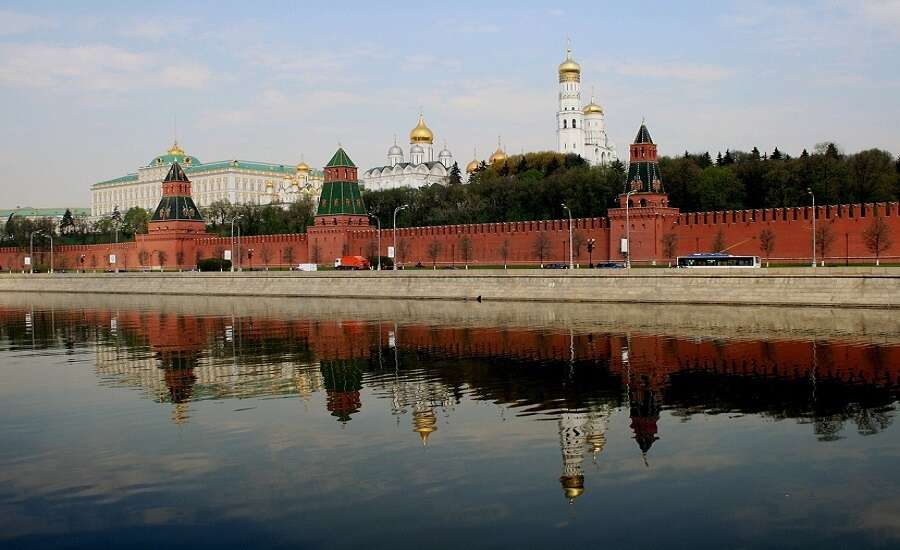
(View of the Kremlin from across the Moskva River, 2012)
In 1963, Jimmy Soul sang; “If you want to be happy for the rest of your life, never make a pretty woman your wife, for my personal point of view get an ugly girl to marry you…….” This advice is very prescient for Paul Brightman, alias Grant Anderson in Joseph Finder’s latest spell binding novel, THE OLIGARCH’S DAUGHTER. Brightman, an analyst and investor at Aquinnah Capital in Manhattan marries a photographer named Tatiyana Belkin. It turns out she is the daughter of Russian oligarch, Arkady Galkin who runs AGF, a financial investment firm, also in New York City. From the outset, Finder has hooked the reader as he has done in his sixteen previous suspense novels.
The author starts the novel rather placidly, but within a few pages a violent scene plays itself out as Grant Anderson, a boat builder is aboard his friend Lyle Bourdeaux’s boat substituting for him to lead a fishing excursion for a customer named Frederick Newman. We soon learn that Newman was sent by a Russian oligarch to kill him. Anderson turns the tide on Newman and after escaping Newman’s grip and gun, feeds him to the sharks. It turns out that Anderson is not who he appears to be, having arrived in Derryfield, New Hampshire five years earlier and learned the boat building trade from “Old Man Casey,” and becomes involved with a teacher named Sarah Harrison. But Anderson has a past, with a different name, and a few hours later two Russian thugs come to his house and kill his friend Alec Wood, a local policeman. The FBI immediately becomes involved, and Anderson finds himself on the run from two divergent groups.
(The superyacht Amadea in Coronado, Calif., on June 27, 2022)
Finder organizes his novel by alternating between the past and the present over a six year period as he engages in sudden shifts in time. “It’s Finder’s very effective method of ramping up threat and suspense. The revelations of modern espionage here—like ‘the only uncrackable safe is one that no one can find to crack’—come in quick bursts of surprise, seasoned by a gently sardonic viewpoint.” He takes the reader back and introduces Paul Brightman who has a successful career and a rising star on Wall Street until he meets Tatiyana Belkin who he immediately falls in love with, unbeknownst to him she is the daughter of a Russian oligarch who appears to work for the Kremlin. Soon Aquinnah Capital goes under, and Arkady Galkin offers Brightman a job tripling his pay. He will be approached by Mark Addison, an FBI agent who investigated Russian oligarchs and how they laundered their money and convinces Brightman to engage in aspects of spy craft for the government. Brightman is in a quandary; he loves Tatiyana whom he marries but finds himself investigating his father in law.
It is easy to see where this is going. Brightman takes on a new identity, that of Grant Anderson to escape Galkin’s revenge. The novel moves quickly from scene to scene as first Anderson is on the run, and we are filled with further background pertaining to his real identity. Finder keeps the reader on the edge of his seat as each scene unfolds. However, at times the author makes assumptions without enough detailed explanation. For example, when Brightman is first approached by Addison to engage in “dirty work” for the FBI he agrees almost without question, not weighing the possible risks enough and how it would impact his personal life.
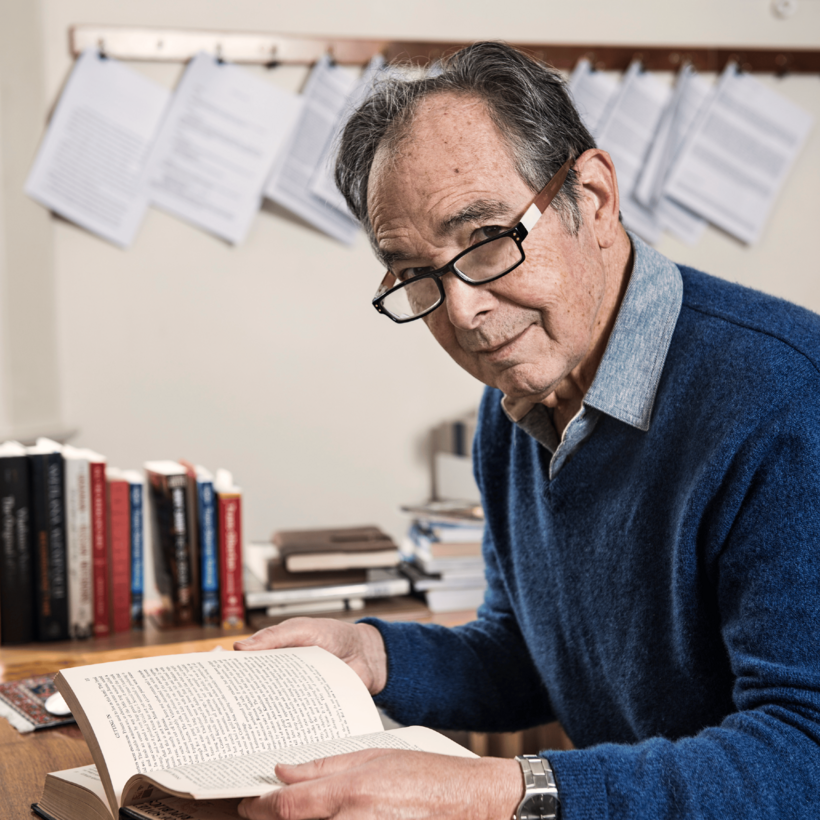
(Author, Joseph Finder)
Finder’s description of the life of a Russian oligarch is fascinating and provides the reader a great deal of insight as to how they conduct their businesses and private life. As Finder relates in a January 28, 2025, interview on NPR; “It is real. It is real. But, you know, what’s interesting about these oligarchs is that they are billionaires. They own sports teams. They are also patrons of the art in the U.S. They are sort of – I call them the new Medicis. And they are – and were, I should say – princes of the realm, princes of capitalism, in a sense, until the war in Ukraine began. And then they were persona non grata. They – overnight, they were forced out of the country. And this transformation – going from being somebody that you wanted on the board of your museum or your hospital or your university to someone who you wouldn’t acknowledge was, to me, humanly fascinating, and it made this an interesting story to tell.”
Another interesting aspect of the novel that Finder develops is how easily a person can disappear in the digital age. The novel relates that the secret these days is to find a small town where they don’t have CCTV cameras and to live a life based on cash. Do not open a bank account. Or if you open a bank account, don’t earn any interest. The key is not to pay taxes, because once the IRS learns who you are they are very good at tracking you down. Further, Brightman/Anderson is able to employ many of the skills his “off the grid father” taught him. It is clear that Finder has conducted a great deal of research to make his story authentic.
Sometimes the novel becomes a bit complicated, but in the end all plot lines come neatly together in this ever surprising plot as Paul will have to unravel a decades-old conspiracy that involves the highest members of government. This is not a novel about espionage as such; it has more to do with how espionage is being financed. It is, if you can believe the story, whose ending is not predictable, but in the end rather convincing in true Finder style.
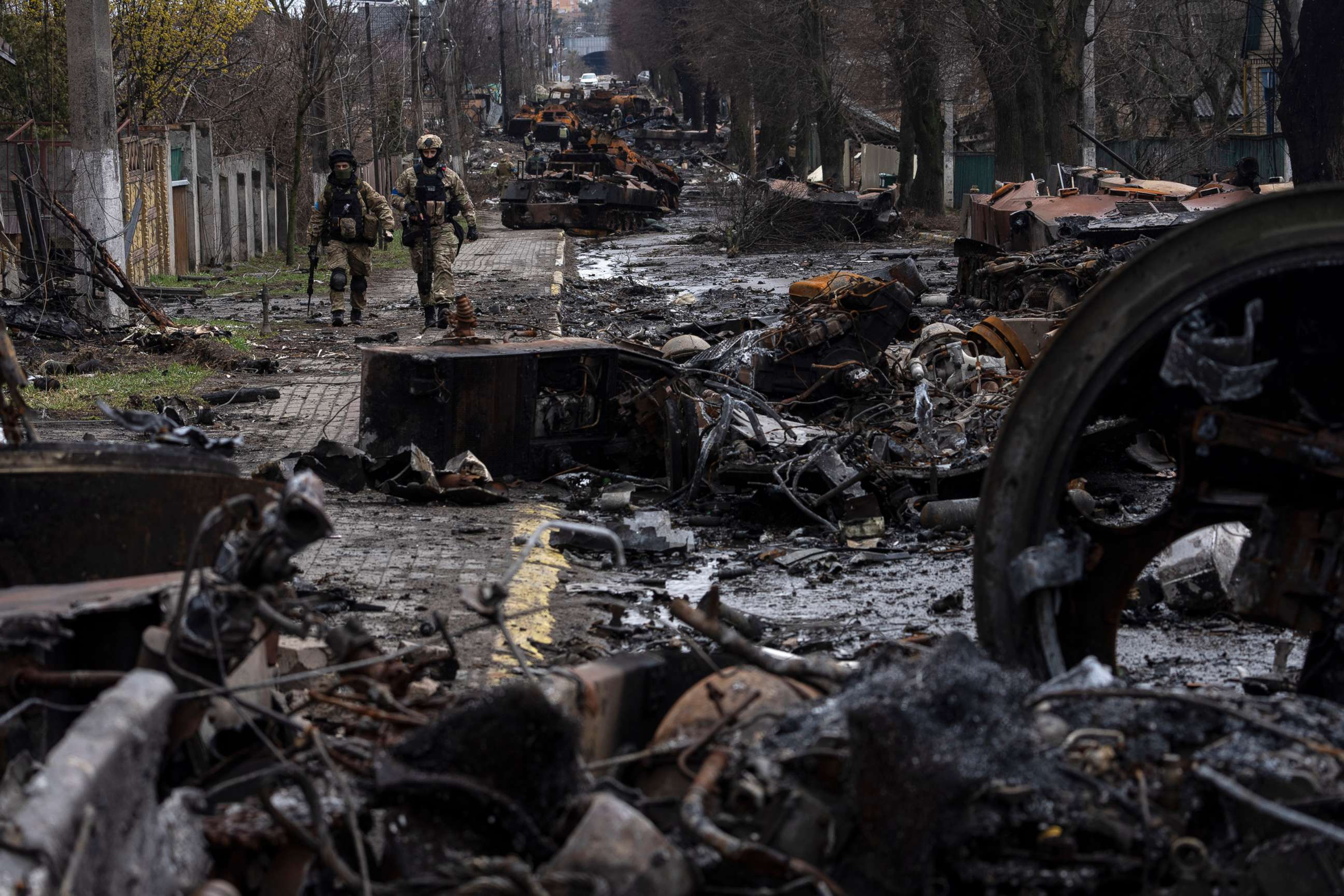
(Soldiers walk amid destroyed Russian tanks in Bucha, in the outskirts of Kyiv, Ukraine, April 3, 2022. Ukrainian troops are finding brutalized bodies and widespread destruction in the suburbs of Kyiv, sparking new calls for a war crimes investigation and sanctions against Russia)
On February 24, 2022, the Russian military following the orders of Vladimir Putin launched an invasion of Ukraine. The Russian autocrat believed his forces would take Kyiv in short order. However, as in most wars things did not go as planned as the Ukrainian army stopped any advance on their capital and as Russian forces receded they committed numerous savage atrocities in the Ukrainian city of Bucha. Fast forward three and a half years the war continues with no end in sight as it appears that Putin has no desire for peace as evidenced by his meeting with President Trump two weeks ago and the failed diplomacy that followed. This summer Russian bombing of Ukrainian cities has increased and there does not seem to be an end in sight. The ongoing war in Ukraine serves as a backdrop to Martin Cruz Smith’s eleventh and final installment of his Arkady Renko novels entitled HOTEL UKRAINE.
In previous novels we learn that Renko, Smith’s Moscow based investigator suffers from Parkinson’s disease and his symptoms have grown worse. At the outset of the novel, we find Renko in Pushkinskya Square among Russian citizens demonstrating against the invasion of Ukraine. Renko meets his son Zhenya who is arrested for shouting anti-war slogans, and he is grabbed by the police and arrested. This will be the first instance in the novel that Smith mirrors actual events as he is charged with using an illegal word, “war,” as Russian authorities refer to events in Ukraine as a Special Military Operation.
The next day Renko is assigned by Prosecutor General Zurin to investigate the murder of Alexei Kazasky, one of twelve Deputy Ministers of Defense who was killed at the Hotel Ukraine. Almost immediately Renko is reintroduced to a former lover, Marina Makarova, an FSB agent who wants to pin the murder on Yuri Blokhin, a second class advisor at the Ukrainian embassy who turns out to be an SBU agent (equivalent to an FSB agent). Renko’s investigation proves Blokhin is being set up and an angry Makarova is forced to release him. She wants to control the investigation and eventually gets Renko removed from the case by outing him to his superiors that he suffers from Parkinsons.
There are a number of interesting characters that are introduced particularly Renko’s son Zhenya’s friends and compatriots in opposing the war, Misha and Margarita who are members of the Black Army – a group of hacker activists who do their best to educate the Russian public as to the truth of the war in Ukraine. They research the truth and put it out on social media, attack Russian websites, for example, ministries, links, infrastructure and businesses like Gazprom, in addition to doing the same to Putin’s ally, Belarus.
(Martin Cruz Smith)
As the novel progresses more and more Smith integrates real events and people into his story. A case in point is Lev Volkov, a former Spetsnaz soldier who fought in the first Chechen war. Volkov founded a private army called the 1812 Group which fought in Crimea in 2014. The group is funded and armed by Putin and Smith recounts their activities particularly in Central Africa and Mali as they take over mine complexes and control the extraction of valuable resources. Volkov was an oligarch, warlord, and political operator who mirrors the real life Victor Prigozhin and his Wagner Group who engaged in the same activities in Africa and was used by Putin as a surrogate army in Ukraine until Putin’s “former cook” went too far and perished in a plane crash. There are other examples of the real war portrayed including the role of sanctions and its economic impact on Russian society, the shortages that develop especially medicines to treat Parkinson’s etc.
The novel takes a major turn as Renko after viewing a thumb drive that hackers make available to suspects that the murder of Kazasky is linked to a suspect who was in Bucha and used a similar weapon to commit atrocities as was used to kill the former defense functionary. Renko’s girlfriend Tatiana Petrovna, an investigative reporter for the New York Times convinces Renko to go to Bucha to explore the possibility that what he saw on the thumb drive is the key to solving the murder. The problem is that Renko has been put on leave and was ordered to stand down.
Renko himself realizes that his Parkinsons have slowed him down, but he is intrigued by the case. It is interesting that the author suffered from Parkinsons for over thirty years and on July 11, at the age of 82 he succumbed to the disease almost to the day that his last Renko novel was released. Renko and Tatiana go to Bucha avoiding the problems caused by the war and arrive “going the long way around” from Athens to Warsaw to Ukraine.
HOTEL UKRAINE brings Arkady full circle as it is a prominent location from an earlier Renko novel, GORKY PARK. A tense meeting occurs between Lev Volkov, who is tired of Tatiana’s storylines, and it is possible he will have her killed. Smith offers powerful scenes, such as when Arkady’s consciousness makes the hallucinatory transition from thinking that he’s undergoing an extreme attack of Parkinson’s, to the realization he’s been poisoned. The sequence is probably derived from Smith’s own experience, which lends a high degree of authenticity to the novel. Smith’s reality transferred to Renko, the ongoing war in Ukraine which has caused the death of over million people and has destroyed Ukrainian villages and towns all appear in a story whose end is sad as we realize will no longer have this novelist and his characters to entertain us and make us think about the realistic stories and characters he has created.
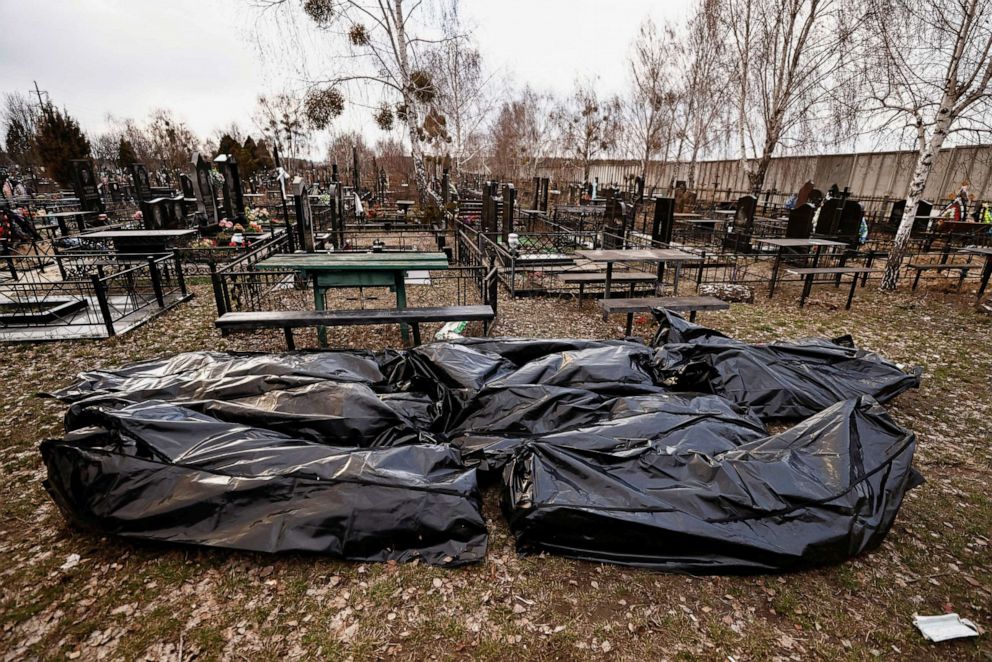
(Bags containing bodies of civilians are seen at the cemetery after being picked up from the streets before they are taken to the morgue, amid Russia’s invasion of Ukraine, in Bucha, Ukraine April 4, 2022)
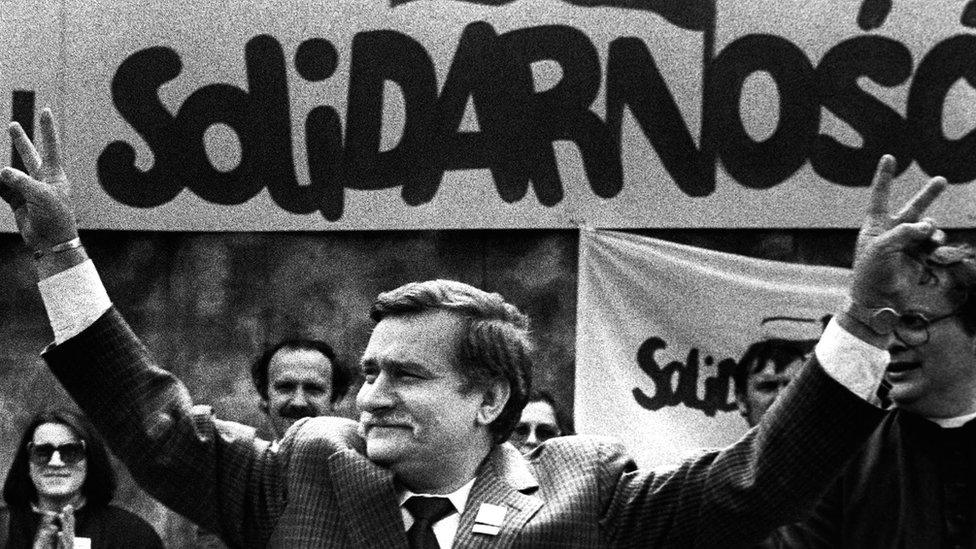
(Lech Walesa remains a hero to many Poles for having led the Solidarity movement)
At a time when book bans and censorship has gained popularity in the United States among certain elements in society it is interesting to explore a book that does the opposite. Charlie English’s new work, THE CIA BOOK CLUB: THE SECRET MISSION TO WIN THE COLD WAR WITH FORBIDDEN LITERATURE examines how the CIA used the distribution of books as an overt and covert weapon against the Soviet Union and the Eastern Bloc during the Cold War. The monograph focuses primarily on activists who sought to liberalize Polish government and lessen Soviet influence in the 1980s and the role the CIA played primarily in the background.
The purpose of a book ban is to deprive people of the opportunity to choose or read particular reading material because it does not conform to the beliefs or political agenda of certain groups. Schools, libraries, school boards mare among those that have been targeted by such groups during the last decade or so complaining about certain books as being offensive that have no place in educating children. Books like MAUS by Art Spiegelman and THE HANDMAID’S TALE by Margaret Atwood have been challenged as have been classics like TO KILL A MOCKINGBIRD, CATCHER IN THE RYE, and THE COLOR PURPLE have been recently placed under the microscope. It is interesting to note that book bans are a tool of authoritarian regimes to block the spread of ideas they disagree with for the general public, so it is fascinating to examine a historical example from the Cold War as the CIA employed manuscripts as a means of winning the battle for the hearts, minds, and intellect of people residing under communist rule in Eastern Europe.
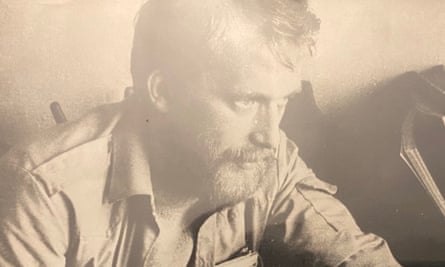
(George Minden)
English’s narrative focuses on the “CIA Book Program,” a covert intelligence operation led by George Minden whose goal was to offset Soviet censorship and misinformation to provoke revolts in Eastern Europe by exposing people of that region to different visions of thought and culture. A classic example is the dissemination of George Orwell’s 1984 of which thousands of copies were made available behind the Iron Curtain during the Cold War. This was one of the millions of titles that arrived illegally in Poland, which was just one country in the Soviet Bloc that received great quantities of banned publications. Books arrived by every possible means: smuggled in trucks, yachts, sent by balloon, mail, even a traveler’s luggage. Increasingly, the underground would public homegrown titles, as well as those from foreign publishers. Polish activists argue that the contribution of literature to the revolt against the Soviet Union was a key element in the eventual victory. A major contributor was the role of the CIA which sought to build up circulating libraries of illicit books, and support primarily with funds the burgeoning underground publishing industry in Poland.
There are a number of key figures that English describes throughout his narrative. Perhaps the one that stands out the most is Miroslaw Chojecki, a Polish publisher who was arrested 43 times and treated as you would expect by the Polish version of the KGB, the SB. The description of his internment is right out of Alexsanr Solzhenitsyn’s GULAG ARCHIPELAGO with beatings, isolation, forced feedings, interrogations, and hunger strikes. In September 1977 Chojecki created the Independent Publishing House “NOWa” which constituted the largest publishing house operating outside official communist censorship, becoming its leader. Initially, Chojecki wanted “NOWa” to publish historical books on topics officially forbidden or ignored by the communist authorities, but other oppositionists convinced him to also issue works of literature, including the Czeslaw Milosz and Gunter Grass. In August 1980 he organized the printing of publications of the “second circuit” (as underground press was known in Poland at the time). He was re-arrested but was released and joined Solidarity to free the Polish people from the Soviet grip. In October 1981 he went to France when the imposition of martial law by the government of General Wojciech Jaruzelski occurred. He remained in exile in Paris and published a monthly “Kontakt”, produced films on modern Polish history, and organized support for the underground in Poland, and oversaw the smuggling of books and other written items into Poland. His chief ally and mentor were Jerzy Giedroyc, a Polish writer, lawyer, and political activist who for many years worked as editor of the highly influential Paris-based periodical, “Kultura,” disseminated throughout Poland. Another important figure English delves into is Jozef Czapski who would be sent to Washington to raise funds and support from the United States and would be codename QRBERETTA by the CIA.
(Miroslaw Chojecki in 1981)
Other characters and the roles they played in smuggling books, printing presses, printing materials, etc. into Poland include Helena Luczywo, the editor of the “Mazovia Weekly,” her husband Mitek, Marian Kalenta and Jozef Lebenbaum, Swedish publishers who were very effective smuggling all items needed by the underground from Malmo and Stockholm until they would go a step too far. Each character is explored by English, relating their backgrounds, especially those who had escaped the Nazis, went into exile and returned to Poland. These individuals and the younger Polish generation were all part of the Polish underground movement whether living inside or outside Poland working to overthrow and undermine communism.
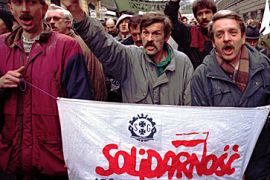
English nicely intersperses the history of the anti-communist movement in Poland throughout the narrative. The events of 1980 as the Warsaw regime raised food prices leading to a strike at the Gdansk Shipyard which would provide for the emergence of Solidarity and Lech Walesa as its leader. After what was seen as a victory by the workers, the Jaruzelski regime resorted to an internal coup on the night of December 12, 1981, rounding up thousands of political prisoners in what is referred to as the “Winter War” by Zomo units or Motorized Reserves of the Citizens’ Militia who were empowered by the government and were synonymous with police brutality. Martial law was declared, and the underground had to resort to increased smuggling which English describes in intimate detail as the achievements of 1980 were lost.
One might ask what was the response of the Reagan administration to these events. It moved very slowly, pushed ahead by Daniel Pipes, acting NSC head, Zbigniew Brzezinski, Jimmy Carter’s former NSC head, and CIA Chief William Casey, who was sort of a “cowboy” who always favored overthrowing governments when he could. It took until September 1982 for Reagan to authorize new CIA covert action in Poland, but the remit was small involving funds, and non-lethal aid to Solidarity and other moderate opposition groups to put pressure on the Warsaw regime – it was referred to as “QRHELPFUL.” They built upon the work of George Minden who had developed a long standing book smuggling operation in Eastern Europe, and Solidarity emerged as the nerve center of the opposition. CIA Deputy Director Robert Gates used the money for printing material, communications equipment, and other supplies to fight an underground political war.
(Jerzy Giedroyc, Maison-Laffitte, 1987)
English has written dual history which converges into one. At first, he describes the role of Solidarity figures and the Polish literary underground who were intimately involved with standing up to the Soviet Union and its puppets in Warsaw. Once the Jaruzelski government succumbed to Russian pressure instituting a crackdown in December 1981 the author’s focus shifted to the Kremlin’s goal of destroying Solidarity and its leadership. As far as the CIA’s role throughout the narrative, it was designed to pay for all the clandestine activity institutes by the likes of Miroslaw Chojecki and find ways to carry prohibited equipment across the border.
English highlights many examples of where funds came from to support the Poles. His description of the Ford Foundation is fascinating as they provided funds and probably continued their 1950s role as a CIA proxy.
The author also provides an in depth discussion of the development of underground newspapers and the varied opinions it produced. It was clear that no uniform arguments as to how to proceed would be agreed to, but they all believed in the goal of ridding Poland of Soviet influence. English details how the underground was able to work around martial law, and the risks activists were subject to. Disagreement and risk are highlighted in the chapter entitled “The Regina Affair” as Marian Kaleka favored an enormous smuggling operation that would provide over $250 million worth of equipment, supplies and books. Chojecki opposed this as being too risky, and in the end he turned out to be correct as the first mission was a success, but Kaleka got “cocky” and sent an even larger mission which was broken up by the Polish SB.
English points to other aspects of the underground and key figures like Father Jerzy Popieluszko, a Catholic priest who preached against totalitarianism in his sermons. He would be killed by the Polish army and become a martyr, a grave error that reenergized the opposition to the government. The underground publication of Popieluszko’s sermons in November 1984 assisted by CIA assets was a defeat for the Polish government. The underground’s work was soon to be enhanced by technological changes emerging in the mid-1980s with the advent of computers, video, and video-related equipment, cassettes, and access to satellite communications funded by the CIA.
(Helena Luczywo)
As one reads English’s monograph one begins to question the role of the CIA for the greater part of the book. Finally, by the last third it’s role begins to emerge in a clearer fashion as the author recounts the events of 1989 which would bring Solidarity to power. The book’s title leads one to believe that the CIA was in charge of smuggling books and related material into the region, but the most important component was the resisting activists themselves. Joseph Finder is dead on in his July 13, 2025, New York Times Book Review as he writes; “Today, when “subversive” is the standard accolade for a campus poet, English’s book is a bracing reminder that, not so long ago, forbidden literature really could help tip the balance of history. He persuasively argues that the ferment in Poland, fueled in part by Minden’s cultural contraband, was a catalyst for the chain reaction that led to the fall of the Berlin Wall and the crumbling of other Eastern Bloc governments. “Soft power” wasn’t so soft.
That’s why the publication of “The CIA Book Club” feels perfectly, painfully timely. As President Trump takes a sledgehammer to U.S.A.I.D., Voice of America and Radio Free Europe — institutions of cultural diplomacy once backed by both parties — this chronicle reads like arequiem. George Minden types were convinced of the geopolitical force of ideals such as free expression and the rule of law because they actually believed in them. ‘Truth is contagious,’ Minden said. Our new stewards of statecraft, by contrast, seem to see the world in purely transactional terms, and to assume everyone else does too. English’s book is a reminder of what’s lost when a government no longer believes in the power of its own ideals.”
Ten years ago, I was fortunate to come across Terry Hayes’ first novel I AM PILGRIM. The novel was riddled with suspense with constant shifting plot lines, well developed characters, exceptional background information and exquisite detail developed with tremendous depth. It was a spy thriller that was almost addictive as Hayes led you from one scene to another keeping you on the edge of your seat. Once I completed the novel I soon learned there would be a follow up effort in a year or two. Much to my chagrin it took almost a decade for Hayes to complete his next novel, THE YEAR OF THE LOCUST. Hayes is a movie producer with a flair for constructing prose for thrilling spy novels. He is an expert in developing cliff hangers that seem to repeat after each of his short chapters. His latest effort replicates the strengths of his first novel, and I must say it was worth the wait, though I would request if there were a third novel on the horizon we did not have to wait another ten years for it to appear.
The star and narrator of THE YEAR OF THE LOCUST is a CIA operative with nom de guerre of Kane, though his real name is Ridley Walker. Hayes immediately draws the reader into his web of suspense as he describes the public execution of ten people, a few of which were CIA operatives embedded in Iran who were victims of a public hanging. It appears a US agent turned out to be a Russian spy who outed these individuals to the Tehran regime.
After searching for the double agent identified as Magus and failing to locate him, CIA Director, Richard Rourke, code named Falcon turned the mission to locate Magus to Kane. Kane had a special skill set, the most important being a specialist in entering what are called “Denied Access Areas” places under hostile control such as Russia, Syria, North Korea, Iran, and the tribal zones of Pakistan. Magus was an expert in disappearing and hiding, but so was Kane, and his target was kind enough to teach him a new technique which would eventually save his life.
Hayes’ approach is to keep the action moving as it seems as if Kane goes from one treacherous situation to the next, not allowing the reader to catch his breath. Kane’s next secret mission is to rendezvous with an informer within one of the world’s most dangerous groups, the Army of the Pure a fundamentalist, anti-western, and violent organization – another reincarnation of ISIS. The meeting was to take place in the Denied Access Area – where the borders of Iran, Afghanistan, and Pakistan meet with the informer who had information concerning a major event that would emulate its darkest predecessors. The informer was a courier, who was also an air conditioning repair man and technician.
The courier provided a photo of Abu Muslim al-Tundra, a military commander of the Army of the Pure who was supposedly killed by an American bomb. He had been head of al-Qaeda in Iraq, a founder of ISIS, and on his back was a tattoo of a locust. Hayes’ excels at developing the background for each character and their role in the plot, with al-Tundra is being no exception as the author explains his road to being a master terrorist. In addition, Hayes is very attuned to integrating historical events into his story. Historical references are accurate and important. For example, American distrust for the Pakistani intelligence service and overall direction of the government in Islamabad. Other references include; how Pol Pot might have never become a genocidal killer, Union Carbide’s Bhopal disaster, oil discoveries in Baku, Azerbaijan, and many others.
Hayes is a master at describing the technology behind Kane’s spy craft. Weapons and equipment are laid out for the reader including their development and use. The CIA’s attempt to kill al-Tundra with hell fire missiles fired from across the Iranian border into Iran and deceive its Russian air-defense system is a case in point. Further, his knowledge of submarines, stealth warfare, and weaponry is impressive, and reflects a tremendous amount of research that went into authoring the novel.
As in his first book, Hayes develops a series of interesting characters. First, and most important is Ridley Kane, but others play an important role including Dr. Rebecca McMaster, an ER doctor who lives with Kane. Laleh, an Afghan woman who Kane saved from execution, who later would reciprocate by doing the same for him. Richard Roarke, CIA head, an old school operator. Lucas Corrigan, CIA Head of Human Resources who was “the man with eyes as green and cold as river rocks,” a Ph. D and Psy.D whose father was CIA Station Chief in Saigon during the 1975 evacuation. Madeline O’Neill, a CIA analyst who tracks terrorists and is an expert at creating back stories for Kane’s missions. Clayton Powell, the CIA Archivist. Bill “Buster” Glover, a CIA Assistant Director. Baxter Woodward, a physicist who met Kane on “a submarine that didn’t exist, a craft that had been designed to disappear, was ready to set sail for waters unknown.” Yosef Faheez, the third richest man in Pakistan and bankroller of terrorist operations. Clifford Montgomery, President of the United States. Ghorbani and Bahman, two Blackwater operatives embedded in Iran. Aslan Kadyrov, known as “the Rifle,” is in charge of Russia’s large earth mining complex in Siberia called the Baikonur Cosmodrome. Lastly, Roman Kazinsky, the real name of al-Tundra who turned out to be Russian and former Spetsnaz in addition to being a devout Muslim.
(Terry Hayes, author)
As the reader you must pay careful attention to Hayes’ construction of the novel. He switches from scene to scene and mission to mission very artfully, but quickly. He creates a number of scenarios for Kane to confront and resolve. From searching for a traitor who divulged the agents embedded in Iran resulting in their execution, the search for the world’s most dangerous terrorist, being aboard the USS Leviathan, a stealth submarine which experiences disaster below the Indian Ocean. Lastly about two-thirds into the novel Hayes surprisingly pivots morphing his story into a Covid like apocalyptic salvation story which results from Kazinsky’s plan to use Russia’s mining operation in Kazakhstan at the Baikonur plant to spread siber spores that would transform the world as an instrument for his vengeance.
Aspects of the novel may seem a bit far-fetched, but Haye’s credibility as an amazing storyteller allows the reader to carry on. A number of Hayes’ characters are sarcastic, and this allows the author to inject a good amount of humor into dark situations that keep the reader entertained. The book has all of Hayes’ amusing elements: astuteness, clear-cut and intelligent writing; believable characters even if their missions are hard to digest; a complicated plot; lessons in history, geography, cultures and politics; and an incisive look, professionally and personally, into the mind of a spy. Further, in THE YEAR OF THE LOCUST things occur that pull the storyline together. It’s one thing to buy into the great research and detail behind creating a spy’s so-called “legend,” his claimed background supported by documents and memorized details. It’s another to come upon individuals in the most unlikely places as a convenient way to integrate disparate elements of the story. In closing I would request that the author does not wait another ten years to publish his next spy thriller.
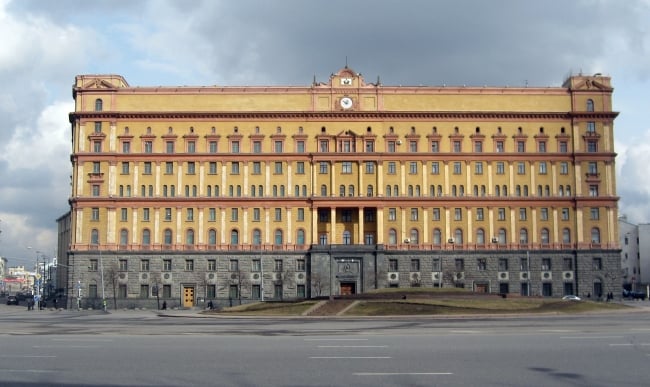
(The Lubyanka Building in Moscow, Russia, is most famously known as the former headquarters of the KGB (Soviet secret police) and now houses the FSB (Federal Security Service)
For six seasons between 2013 and 2018, “The Americans,” an American spy drama television series aired on the FX channel. It depicted the Jennings family as a typical suburban American family. There were two teenagers and parents who happened to be KGB spies at the outset of the Reagan administration who try to come across as your average American family grouping. Their job was to spy on the United States during a period when the Cold War was escalating. This Kremlin strategy of embedding spies in the role of everyday citizens was not an aberration as since the Russian Revolution brought the Bolsheviks to power, Moscow began deploying Soviet citizens abroad as deep-cover spies, training them to fit into American society and posing as different characters. In our current heightened environment with Russian aggression in Ukraine, interference in American elections, and Vladimir Putin’s obsession with recreating the Soviet Empire it is not beyond the realm of possibilities that Russia has continued this strategy today.
In his latest book, THE ILLEGALS: RUSSIA’S MOST AUDACIOUS SPIES AND THEIR CENTURY LONG MISSION TO INFILTRATE THE WEST, Shaum Walker, an international correspondent for The Guardian brings the Russian strategy to life as he explores the KGB’s most secretive program. His excellent monograph conveys a thrilling spy drama culminating with Putin’s espionage achievements as the Kremlin continues to infiltrate pro-western countries worldwide. In the current international climate Walker’s study is an important one as we try to combat Putin’s autocracy, particularly in light of Donald Trump’s seeming infatuation with the Russian autocrat.
Ishkak Akhmerov (undated)
Walker begins his study by introducing the reader to Ann Foley and her husband Don Heathfield, and their two sons Tim and Alex, However, in reality they were Russian spies; Elena Vavilova and Andrei Berzukov who had lived as a couple in Cambridge, MA for years. They would be arrested by the FBI and deported back to Russia in 2010. Their vocation was part of “the Illegal” program.
Illegals were recruited by the KGB. They were ordinary Soviet citizens who were given years of training to mold them into westerners. During the Cold War, the illegals living in the west were told to lie low and wait. Once the Soviet Union collapsed, the KGB was disbanded. However, once Putin assumed power he began to restore Russian spy capabilities, including “the Illegals” and a fresh batch of operatives was trained. Walker correctly argues that flying illegals based in Moscow on short term missions to assassinate enemies of the Kremlin abroad was standard policy. “A new army of ‘virtual illegals’ impersonated westerners on social media and were a key part of Russia’s attempts to meddle in foreign elections. Even if the era of long term illegals seemed over, the concepts underpinning their work remained at the heart of Russian intelligence operations.” It is clear that at various points during the last century the era of illegals seemed to be over. However, each time Russia’s spymasters resurrected the program. Today, a network of SVR safe houses scattered around Moscow has produced a new generation of operatives undergoing preparation for deployment overseas. They spend their time honing the pronunciation of target languages, studying archives of foreign newspapers and magazines to absorb culture and social context, and memorizing details of their cover stories. Soon, this new generation of illegals will be deployed to live what appears to be mundane lives in various locations around the world, while secretly implementing Moscow’s agenda.
Walker lays out the early history of using illegals by discussing their use before the Russian Revolution to overthrow the Tsar, and once in power as a vehicle to be used against the west and for their own survival. The strategy is based on Konspiratsiya, defined as “subterfuge,” or “conspiracy,” – “a set of complex rules, a rigid behavioral tool, and a way of life, the overarching arm….was to keep party operatives undercover and undetected, and was used by many groups of anti-Tsarist revolutionaries.”
Walker does a credible job explaining the Bolshevik approach toward espionage especially when they did not have diplomatic recognition in the west which meant they had no embassies to hide spies. The result was to develop the illegal program further. The author describes the role of many incredible operatives and their impact on the course of history. Men like Meer Trislisser, a Bolshevik operative, and Dmitry Bystrolyotov, another Russian spy perhaps the most talented illegal in the history of the program, make for fascinating reading as they navigate their training, implement what they have learned as they integrate into other societies, how they recruited local nationals to spy for them, and how successful they were in acquiring intelligence.
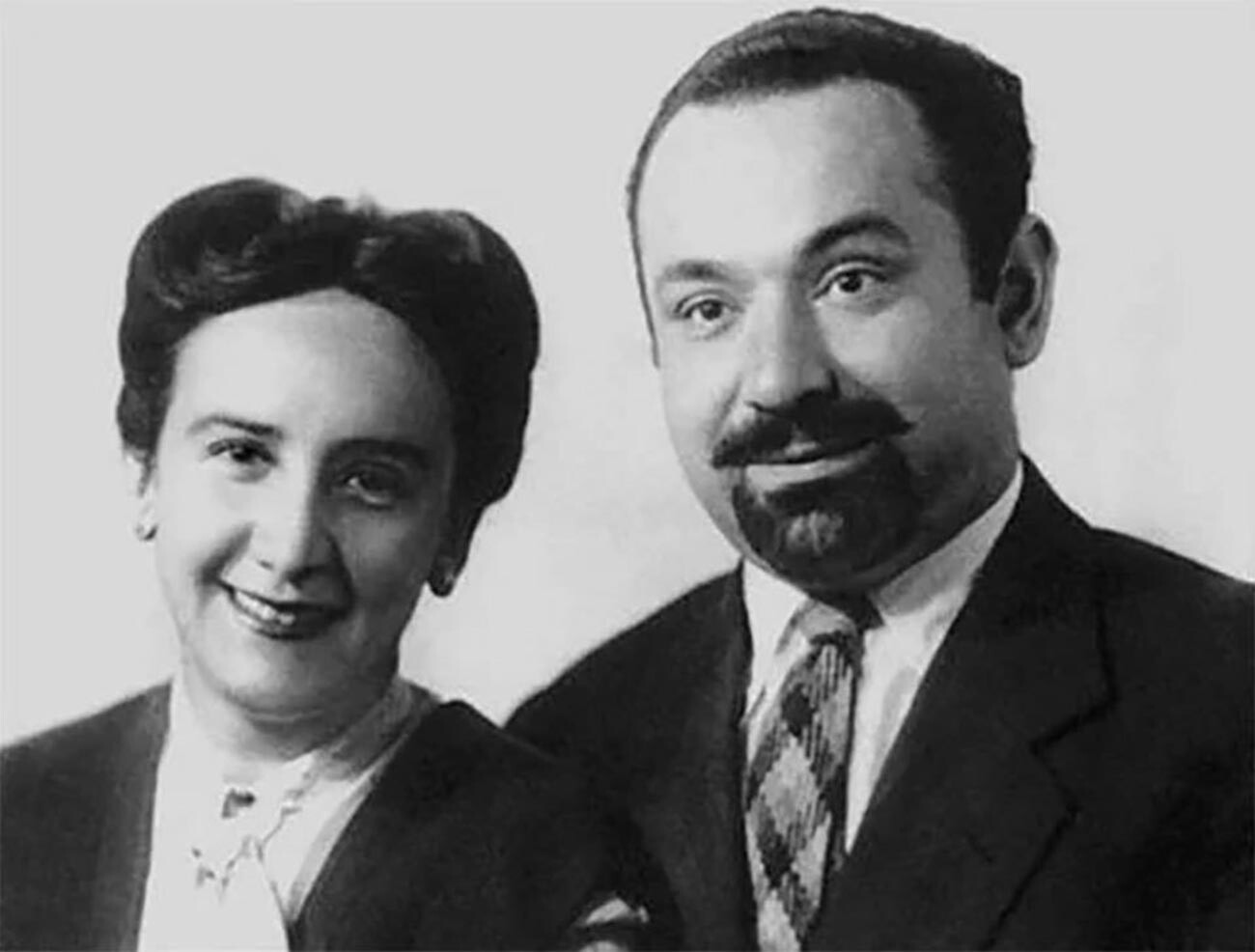
(Grigulevich (Castro) and his wife during their stay in Brazil in 1946).
The program was run through the Cheka’s ION office which was in charge of the illegal program. A case in point is how they flipped an English communications officer, Ernest Oldham, into providing documents which covered much of the secret European diplomacy, i.e., impact of the depression, Adolf Hitler’s rise to power, etc. It is clear that the Soviets were far ahead of the British and Americans when it came to espionage, especially when Franklin Roosevelt granted the Soviet Union formal recognition which provided them with an embassy in Washington to run their agents. Since the American economic influence was worldwide spies were needed to ferret out US positions. In addition, the Kremlin needed to industrialize quickly, and American technological and scientific secrets were a major target led by the fascinating figure of Ishak Akmerov who would train Americans like Michael Straight and Laurence Duggan, both with strong ties to the US State Department.
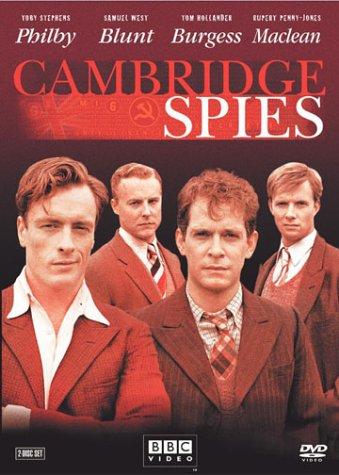
Walker’s insights into the assassination of Leon Trotsky, Stalin’s purges and “show trials” of the 1930s, and the awkwardness created by the Nazi-Soviet Pact of August 1939 reflect the role played by a series of illegals who were trained assassins and acquired the ability to hunt down anyone whom Stalin deemed a threat. Stalin’s purges would decimate the military leadership and foreign intelligence sources, but information still flowed from England from the “Cambridge 5,” who were a ring of spies in the United Kingdom that passed information to the Soviet Union during World War II and the Cold war and was active from the 1930s until at least the early 1950s. The five were convinced that the Marxism-Leninism of Soviet communism was the best available political system and the best defense against fascism. All pursued successful careers in branches of the British government. They passed large amounts of intelligence to the Soviets, so much so that the KGB became suspicious that at least some of it was false. Perhaps as important as the specific state secrets was the demoralizing effect to the British establishment of their slow unmasking and the mistrust in British security this caused in the United States. In addition, Soviet agents like Richard Sorge became friends with Eugen Ott, the Nazi ambassador to Japan who along with others provided Stalin with evidence of the impending German invasion of Russia in 1941. Stalin and NKVD head, Lavrenti Beria rejected this intelligence as scaremongering as it went against Russian official policy. In June 1941, the Kremlin would pay for their stubborn adherence to the strict laws of Marxism-Leninism and Stalin’s perceptions of Hitler who he believed would have to defeat England before he could invade Russia.
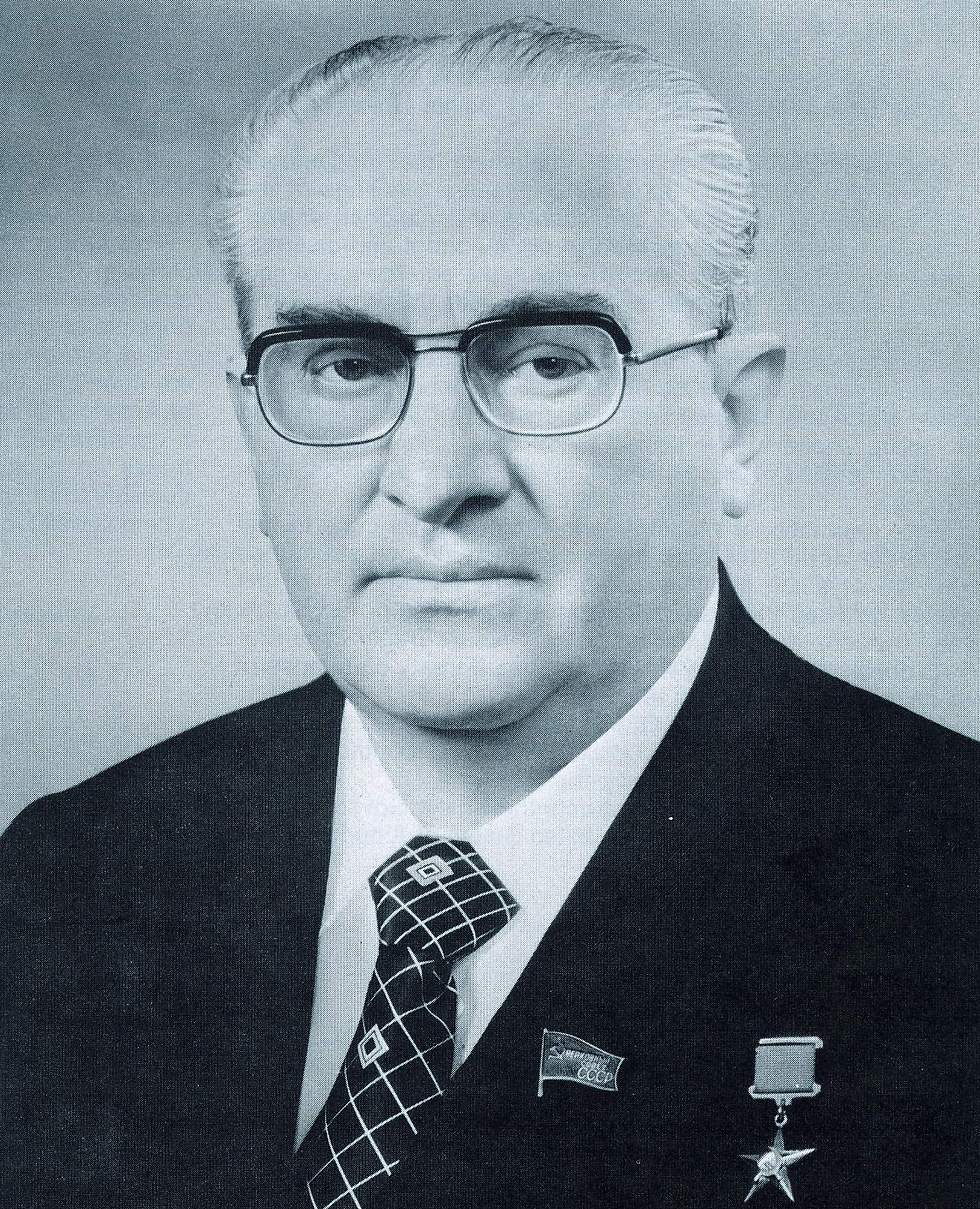
(Former KGB head Yuri Andropov)
About a quarter the way into the book, Walker turns to the Cold War and successfully argues that Stalin’s ability to negotiate a favorable postwar settlement was assisted by the work of the Cambridge 5 in England as they produced innumerable numbers of documents and intelligence. Anthony Blunt, Donald MacLean, and Kim Philby, all members of the Cambridge 5 were essential figures and Philby himself was put in charge of British counterespionage! In fact, Walker argues that Stalin knew about the atomic bomb much earlier than Harry Truman which is why at the Potsdam Conference he did not act surprised when the president warned him about the new weapons.
(Elena Vavilova and Andréi Bezrúkov, in Moscow, while training for the KGB)
Walker goes into detail concerning Stalin’s fears of Josef Broz Tito, the leader of Yugoslavia who believed in a neutral approach to the Cold War and its path toward implementing socialism. Tito was able to act in this manner because his forces liberated his country from the Nazis, which was not the case throughout eastern Europe. Stalin tasked Iosif Grigulevich, a Soviet illegal to assassinate Tito. Interestingly, earlier Grigulevich was also involved in a failed attempt to kill Leon Trotsky. Stalin would fail to kill Tito, who would remain a thorn in his side and Russia in general. The dispute with Tito would last until Stalin died in March 1953 which also saved thousands of others he implicated in the Doctor’s Plot, a conspiracy that Jews were out to kill the Russian dictator.
Many of Walker’s chapters are like a movie script for an espionage thriller. Perhaps one of the most interesting chapters deals with a Soviet agent’s ability to gain connections in the Vatican and manage to become the Costa Rican ambassador to the Vatican at a time when there was a fear in the west of a communist victory in Italy. Other fascinating chapters include the life and work of Yuri Linov, a young man who was very facile with foreign languages and began his KGB career informing on fellow students while studying at the university. By 1961 he would be trained as an illegal and deployed to the United States. Linov was very patriotic, seeing Soviet success in space with the mission of Yuri Gagarin as proof of Russian exceptionalism. Walker describes his recruitment, training, and missions in detail providing the reader with further insight into the illegal program. First, Linov would find himself in Prague during the summer of 1968 ordered to infiltrate the liberal reform movement under the government of Alexander Dubcek, and by 1970 his training and focus shifted to the Middle East as his handlers steered him to becoming the KGB’s expert on Zionism. Apart from Linov’s espionage work, Walker delves into personal aspects of an “illegal” life. He examines how his wife Tamara was chosen for him, and the difficulties their careers presented for them on a personal level. At a time when it was becoming more and more difficult to choose, train, and deploy illegals, Linov’s work seemed to be a success.
(Illegals operate without diplomatic cover and blend in like ordinary citizens)
Walker also presents the American attempt to implement its own illegal program, and concluded it was almost impossible to train operatives in the intricacies of Soviet life and equip them with a story and documents that would stand up to Soviet security. The KGB on the other hand remained doggedly committed to a system that no longer seemed worth the enormous time and effort. The question is why? According to the author a number of reasons emerge. First, the institutional memory of success from the early Soviet period and its roots in Bolshevik idealism kept the KGB wedded to illegal work as a key part of their own internal mythology. Second, under the leadership of Soviet Premier Leonid Brezhnev who was in such poor health as being functionally useless as a leader that massive change could not take place. Third, by the late 1970s few of Russia’s 290 million people were permitted to leave the Soviet Union. Those who were allowed to leave experienced a lack of free movement because of surveillance. As result, the only people who had some freedom in other countries were the illegals and they became the only reliable source of intelligence for Soviet leadership.
Once Yuri Andropov headed the KGB (1967-1982) he would employ illegals as he saw fit. Having witnessed the Hungarian Revolution in 1956 as ambassador to Hungary he would use all tools at hand to block any threat to Soviet control. Prague has already been mentioned, and Andropov had no qualms about employing illegals in Afghanistan in 1978 and assisting in a coup against the regime in Kabul that would lead to the Soviet version of “Vietnam” as it would be stuck in the Afghan quagmire that ultimately led to the rise of Mikhail Gorbachev and the collapse of the Soviet Union.
Toward the end of the narrative Walker reintegrates the lives of Tracey Lee Ann Foley and Donald Heathfield into the monograph. He uses them as background to the emergence of Vladimir Putin as Soviet Premier and President. Interestingly, the two were dispatched to the United States during Gorbachev’s “glasnost” period as the KGB remained paranoid of the United States. Walker explains the meteoric rise of Putin and the restoration of the “KGB” mindset in Russia under a new organization, the SVR. Putin would rekindle the illegal program as part of a process to restore Russia to great power status which continues to this day. For a complete examination of Putin’s rise and career the two best biographies are Steven Lee Myers’ THE NEW TSAR: THE RISE AND REIGN OF VLADIMIR PUTIN and Philip Short’s recent work, PUTIN.
(SVR Yuri Drozdov had a legendary reputation in Soviet and Russian intelligence circles)
Under Putin, Foley and Putin would continue their espionage work and lives replicating an American couple until the FBI got wind of their work and arrested them. It is fair to conclude as does Joseph Finder in his New York Times, April 17, 2025, book review that “despite periods of diplomatic warming, Putin has never abandoned his illegals. He ordered the program revitalized in 2004, three years before his Munich speech signaled the return of Cold War tensions. While America was busy declaring the “end of history,” Russia was quietly training a new generation of agents to live among us.
Walker’s book serves as a reminder that somewhere in Russia right now, ordinary citizens are being molded into simulacrum Americans, learning to enjoy Starbucks and complain about property taxes, prepared to live among us regardless of who occupies the White House or how many summit handshakes take place. In international relations, as in life, it’s the quiet ones you need to watch.”
Russia has shaped twentieth century Finnish history due to the small nation’s proximity to the Slavic giant. Before World War II, the Helsinki government found itself dealing with a Russian invasion, during the war it suffered Nazi occupation leading to a reinvasion from Moscow that at the end of the war saw it loose roughly 11% of its territory to its Stalinist neighbor. Today Finland has reemerged as a pawn in Russia’s drive to recapture its empire. After Finland obtained NATO membership, Russian President Vladimir Putin has threatened Finland and with its long border the Finnish government must be prepared for any eventuality as the war in Ukraine grinds on, and as Republicans in the House of Representatives continue to block any aid for the Kyiv government. This landscape lends itself to a wonderful opportunity to create historical fiction involving the Russo-Finnish relationship. Karl Marlantes, the author of MATTERHORN, one of the most profound and disturbing novels about Vietnam, and DEEP RIVER, a wonderful and engrossing work of historical fiction centered on the experience of Finnish immigrants in the logging area of Washington state at the turn of the century, has filled that gap with his latest book, COLD VICTORY.
Those familiar with Marlantes’ previous efforts will not be disappointed with his current effort. Set in the heart of the emerging Cold War the Finns are caught between East and West trying to recover from the damage caused by World War II. The most important characters in the novel include Arnie and Louise Koski, a married couple who have been posted to Helsinki. Arnie is a Lieutenant Colonel in the US Army and has been appointed military attaché to the US Legation. Louise is a rather clueless “diplomatic” spouse who creates a number of issues for her husband and will learn many difficult lessons. Mikhail and Natalya Bobrov are in a comparable situation. Mikhail is the Russian military attaché in Helsinki and Natalya works at the Russian Legation. She develops a strong friendship with Louise as do their husbands, as both spies engage in intense competition with each other. Kaarina Varila, a Finnish relative of Arnie, and the Head of a Helsinki orphanage is emblematic of Finnish hatred of the Russians. Other individuals include Colonel Oleg Sokolov who is in charge of Soviet security in Finland as part of the MGB – the Ministry of State Security which is considered worse than the Gestapo. Sokolov is a sinister individual who is like a spider spinning his web of intrigue. Max Hamilton is the US Charge d’ Affaires at the US legation and Aleksandr Abramov is the Soviet Envoy.
(This is a Finnish light artillery squad on patrol duty in the Karelian Isthmus on January 3, 1940. Using white tunics over their heavy winter clothing to camouflage themselves, the soldiers took on the appearance of ghosts as they travel over the snow covered terrain)
Marlantes integrates a number of important historical characters in his story. Those who stand out are Soviet dictator Joseph Stalin whose motivations and realpolitik are on full display. Another is Lavrentiy Beria, Head of the MGB, and a man who strikes fear in all who come in contact with him. These and other characters highlight the author’s strong command of the history of the period. Further, he integrates a number of notable events and observations into his plot. Useful examples include a discussion of the Katyn Forest Massacre in 1943 as Beria ordered the murder of 22,000 Polish officers, and the history surrounding the 1944 Moscow Armistice whereby Finland was forced to pay a massive reparation to Russia and turn over a substantial amount of territory.
The story centers around Russian paranoia concerning Finland who they view as a threat to their security as a western invasion route against Moscow. The US on the other hand is worried about communist influence in the Finnish Parliament as they hold over one-third of the seats in addition to the presence of Soviet troops. Marlantes has created a espionage plot centered on raising funds for a Finnish orphanage which Louisa and Natalya work to support as they are heartbroken by the number of orphans that were created because of World War II. Second, the story is played out by the competition between Arnie and Mikhail who have challenged each other with a grueling ten day 300K ski race from the Artic Circle to Kuopio. The race became a metaphor for the competition between capitalism and communism and a pawn in the developing Cold War between the Soviets and Americans and should Mikhail lose the race the Stalinist regime would probably kill or exile him and his family to Siberia as he would be viewed as a spy and an embarrassment to Moscow.
(Karl Marlantes, author)
In developing the relationships among his characters, Marlantes juxtaposes the differences between the Soviet Union and United States, how both powers viewed the recent war, and their current distrust of each other as relations continued to deteriorate. The question in the background rests on trust, as each character seems to question the loyalty of those they deal with, not knowing who might be spying on whom. Marlantes uses Sokolov’s past life and current role as a vehicle to highlight the suffering of the Russian people during the war because of the Nazi invasion and a justification for its own invasion of Finland. Now that the Nazis are defeated his role is to root out internal enemies of the motherland and employ all the weapons of the Stalinist system – a system that fills the world with disinformation and deceit.
For Marlantes whether writing about Vietnam or post-war Finland, war is a confusing and rich world where death and bureaucratic stupidity abound. If one where to think about events in Ukraine today there is a similarity to what happened to Finland after the war. The significant difference is Ukraine has received enormous amount of western aid, and Finland did not. Marlantes has written a tight Cold War novel that draws the reader in and does not let them go until the book is read from cover to cover.
(War between Finland and Soviet Russia started 22.45 o’clock (M.E.T.) on November 30, 1939. Trenches which were dug at the beginning of the Finnish-Russian tension in Helsinki, December 1, 1939)
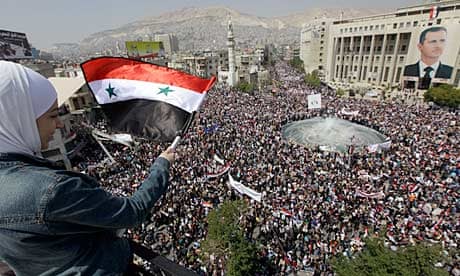
(Syrian pro-government demonstrators gather in a central square in Damascus to show their support for Bashar al-Assad’s rule)
At the time of this writing the Middle East is on the precipice of a wider war resulting from the blood stained conflict that exists in the Gaza Strip where retribution and vengeance dominates. Last week, the Palestinian terrorist group Hamas unleashed a horror laden attack on Israel and the Netanyahu government responded in kind. The result has been the utter destruction of the Gazan infrastructure, another example of how Hamas uses the Palestinian people as pawns in their war against Israel causing the deaths of thousands of their co-religionists and the maiming of others. Hamas claims to be the defender of the Palestinian people, but their modus operandi does not match their rhetoric.
The current fighting mirrors the bloody civil war that occurred in Syria as opposition forces spurred on by the Arab Spring in 2011 tried to overthrow the repressive regime of Bashir Assad who used every weapon including chemical weapons and Russian barrel bombs to cling to power. The conflict spawned a number of different radical Islamic groups that sought his overthrow including the Islamic State (ISIS). The civil war that resulted brought in Russian and American troops and produced the deaths of thousands of Syrian casualties and millions of refugees dispersed to Turkey, Jordan, and other countries. Events from the early years of the Syrian Civil War form the backdrop of David McCloskey, a former Middle East CIA operative’s first novel, DAMASCUS STATION.
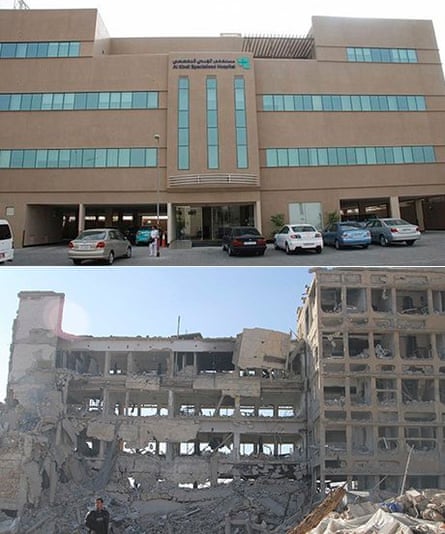
(al-Kindi hospital, Aleppo. Above in 2012 and below in 2013)
According to the author, the novel is a work of fiction that takes its inspiration from actual events that took place between 2011 and 2013 that evolved into a long drawn out civil war as insurgents buoyed by the Arab Spring sought to remove the Assad Dynasty that had ruled Syria for over five decades.
We immediately meet Sam Joseph, a CIA officer who is in Damascus to assist in the exfiltration of an asset from Syria. KOMODO, a mid-level scientist at the complex responsible for Assad’s chemical weapons program, and her handler Val Owens are trying to navigate Damascus and its environs between Assad and rebel forces. Unfortunately, Owens will be murdered by Syrian security forces changing the flow of the novel as the CIA, in particular, Sam Joseph, wants revenge. The novel coalesces around Joseph as he has three main goals. First, exact revenge against Ali Hassan who killed Owens. Second, recruit an asset in the Syrian national security structure named Mariam Haddad. Lastly, locate the sarin gas that the Assad government has moved in order to go beyond President Obama’s red line.
McCloskey has authored a remarkable novel as he navigates the intelligence community. His approach is one of realism as he integrates aspects of the spy culture throughout. The reader will become fascinated as McCloskey’s characters model actual CIA training, techniques, op preparation, and mission implementation. We are instructed about dead drops, surveillance, technology, and plain human intelligence. We are also introduced to a series of important characters such as Rustum Hassan, the leader of the Syrian Revolutionary Guard who has no compunction about killing, including thousands of victims in the Syrian Civil War. Ali Hassan, Rustum’s younger brother who he hates is in conflict over their place in Bashar al-Assad governmental hierarchy. Bouthaina Najjar, an advisor to Assad, and Rustum’s lover. Basil Mahkluf, in charge of the Revolutionary Guard’s missile and rocket program. Jamil Atiyah, an Assad henchman, a pedophile with profound influence. Sam Joseph, the CIA operative who makes the cardinal error by falling in love with an asset. The BANDITOS, Rami, Yusuf and Elias, the Kassab triplets who run surveillance for Joseph. Artemis Aphrodite Proctor, the saucy Damascus station chief. Ed Bradley, who oversaw Syrian operations from the Directorate of Operations. Mariam Haddad, a midlevel analyst who is recruited by Joseph and flips. Abu Qasim, rebel leader and bomb maker and his wife Sarya, a sniper with 142 kills. Lastly, General Volkov sent by Moscow to assist the Syrians in rooting out CIA spies in Damascus.
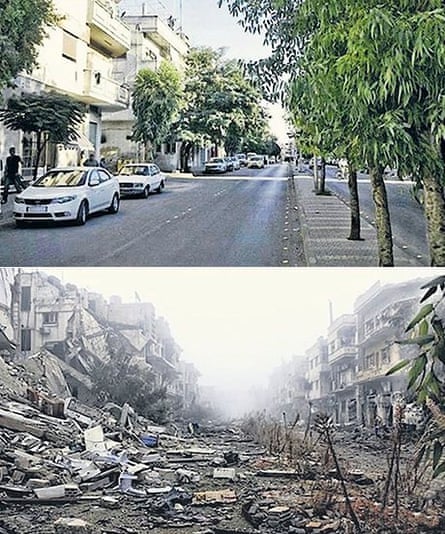
(A street in Homs, in 2011 (above) and 2014)
McCloskey develops his characters very carefully. He describes what led Abu Qasim to turn against the Assad regime and the issues and players involved in the bloody carnage of the Syrian Civil War. The author takes a deep dive into the Syrian regime, how it operated and how an individual went about surviving the internal paranoia of serving in Assad’s government. McCloskey takes the reader inside the Syrian Mukhabarat, the secret police whose who employ torture, beatings, coercing family members etc. to achieve their aims.
Sarin gas plays a key role in the story. Once its location is discovered and moved Joseph must locate the new site at the same time the Mukhabarat is after him. McCloskey describes how the gas is developed, produced, and weaponized for a trial attack against a Syrian rebel village and getting it ready for a larger statement against rebel forces. McCloskey also explores the American process in fighting the Syrian forces highlighting President Obama’s approach to the Civil War.
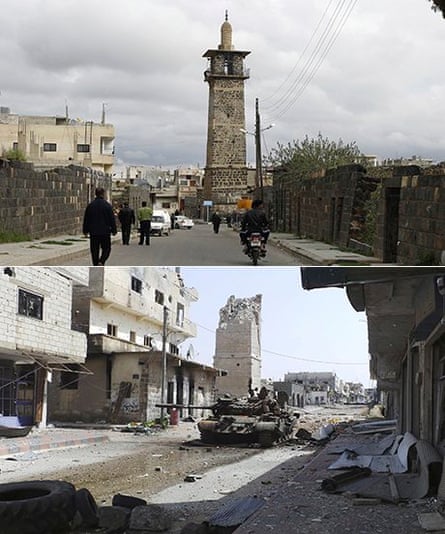
(Omari mosque in Deraa. Above in 2011 and below in 2013)
The author’s expertise is on full display as he describes Joseph’s thought process while being surveilled. Joseph analyzes his own undertaking relative to the Russian/Syrian team that watched his every movement as he prolonged the chase for hours as he was trained. For Joseph, “he could sense the hunters out there,” during this cat and mouse game – except it was no game.
Joseph’s relationship with Mariam is complex as she felt guilty about what happened to her anti-Assad cousin Razan, her betrayal of Joseph, and killing three Mukhabarat. McCloskey tries to make his characters feel like any one of us, but in reality they are tasked to serve and protect the United States and help US policymakers understand the region and the implications of certain events.
Overall, it is an authentic spy thriller set in the tumultuous Middle East that should keep the reader on the edge of their seats. Former CIA Directors Leon Panetta and David Petraeus praise the “realistic portrayal of CIA operations overseas” and that is good enough for me.
(Supporters of President Bashar al-Assad carried his portrait during a demonstration in Damascus on Monday, the day after the Arab League imposed sanctions)
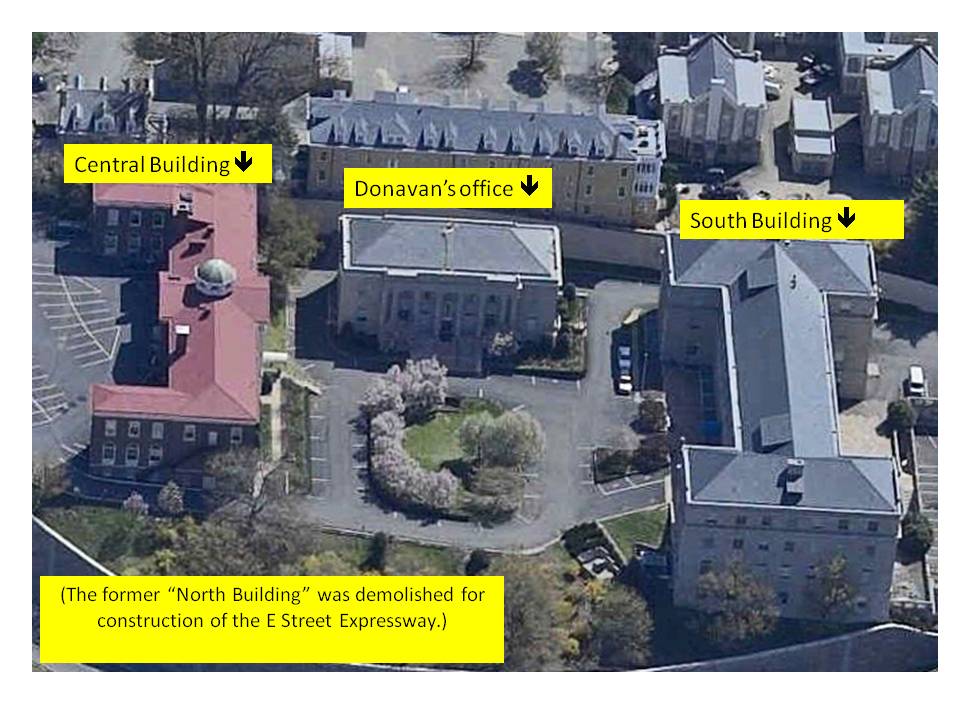
(OSS headquarters during World War II, Congressional Country Club)
World War Two produced many larger than life figures. Perhaps no one fits this category more than Colonel William “Wild Bill” Donovan who built the Office of Strategic Services (OSS) the precursor to the CIA. Donovan, a Republican was a law school classmate of Franklin D. Roosevelt and after traveling in Europe and speaking with a Nazi general he urged the president to create a centralized intelligence organization to oversee the collection of intelligence abroad. Further, he wanted this organization to engage in espionage, sabotage, propaganda, and disinformation against America’s enemies. This would lead to his appointment as Coordinator of Information in July 1941, which by June 1942 had over 600 employees at the time when Roosevelt signed an order establishing the OSS with Donovan as its head.
Once Donovan got the OSS off the ground he approached a well-known industrial chemist, Stanley Lovell to oversee the development of dirty tricks by a group of scientists which forms the core of John Lisle’s first book, THE DIRTY TRICKS DEPARTMENT: STANLEY LOWELL, THE OSS, AND THE MASTERMINDS OF WORLD WAR II SECRET WARFARE.
Lisle, a historian of science and the American intelligence community tells a fascinating story of how Lovell and his colleagues invented many items including Bat Bombs, suicide pills, fighting knives, silent pistols, camouflaged explosives, in addition to many other interesting items. They would also forge documents for undercover agents, plotted assassinations of foreign leaders, and conducted truth drug experiments on unsuspecting subjects. Lisle’s account is based on impeccable research including newly released materials, archives, and interviews. The subject itself is important as Lisle delves into the dark legacy of one of the CIA’s most infamous programs; MKULTRA. However, despite the fascinating subject matter, at times Lisle’s account comes across as a mundane listing of one invention after another. Though there are a number of interesting vignettes, overall, the topic was not developed to its potential.
(General Willam “Wild Bill” Donovan, OSS head during WWII)
Lovell and many scientists faced a moral dilemma in the conduct of their work. It became a conflict between a Hippocratic obligation and patriotism to defend one’s country. What made Lovell an important contributor to Donovan’s programs was his unique combination of business and scientific acumen. Soon Lovell would become Vannevar Bush’s aid. Bush, headed the U.S. Office of Scientific Research and Development during World War II would convince FDR to create the National Defense Research Committee (NDRC) which would coordinate scientific research and devise new weapons under the auspices of Harvard president James Conant. Further, Bush convinced FDR to develop the atomic bomb.
Soon, Donovan convinced Lovell to join the OSS as Director of the embryonic OSS Research and Development Branch with a mandate “for the invention, development, and testing of all secret and other devices, material and equipment.” Lovell would travel to England to glean “dirty tricks” from the British Special Operations Executive (SOE). Upon his return Lovell, with the help of Bush’s scientists created a secret division to develop all of the weapons that a spy or saboteur could possibly need in their line of work called Division 19, known as the “Sandeman Club.” Lovell would appoint Harris Chadwell, a chemistry professor at Tufts University to head Division 19. Little has been written about the R & D Branch or Division 19, a void that Lisle attempts to fill.
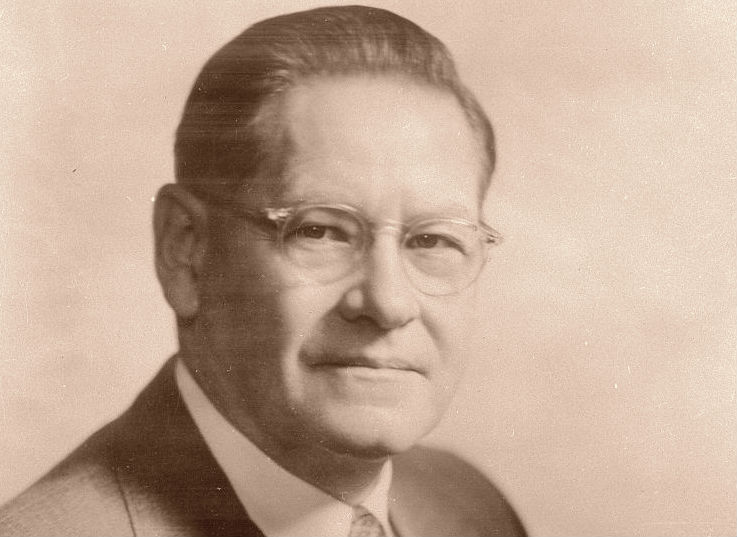
(Stanley Lovell)
Lisle’s narrative is loaded with interesting characters and at times bizarre suggestions for “Dirty Tricks.” Quirky and bright inventors abound. William Fairbairn, a spritely individual who weighed about 160 lbs. but was an expert at “gutter fighting” developed in Asia worked with the SOE and American agents who he taught to defeat opponents applying any means necessary. Ernest Crocker, the so-called “million dollar nose” developed all types of “smells” from perfume to fecal matter in order to embarrass and defeat the Japanese. Ed Salinger applied psychological warfare to scare Japanese villagers and developed items included in “Operation Fantasia” taking advantage of Shinto religious superstitions to foster fear among Japanese soldiers by painting foxes white and drop them in areas soldiers frequented. “Jim, the Penman,” a federal prisoner convicted of forgery was released to assist in developing documents for secret agents, flooding markets with forged currencies etc. Another large than life figure was Carl Eifler, the head of Detachment 101, a group of men who would be used behind enemy lines. At one time General “Vinegar Joe” Stillwell, Commander of US forces in China asked him if he could assassinate Chiang Kai-Shek, the Kuomintang leader. Later he was asked if he could kidnap German scientist Werner Heisenberg. Of course, Eifler answered in the affirmative for both requests. Not all suggestions were implemented, but the people behind them were committed to their implementation. Lovell did support many eccentric ideas, but some went even too far for him. One interesting example finds Lovell entering the Oval Office and firing a suppressed .22 pistol into a sandbox while an unsuspecting FDR was at his desk to demonstrate the weapon suppressor’s effectiveness.
There are other interesting pieces of information. For example, Donovan would use the Congressional Country Club in Maryland, outside Washington as his headquarters and research facility. The golf course complex was retrofitted to bring in the necessary equipment to foster research and experiments. Laboratories and other facilities were developed to assist scientists, inventors, and various gadflies in their research from weapons, accoutrements needed by secret agents, misinformation, etc. The Research and Development Department was responsible for dreaming up covert ways to baffle, terrify, destabilize and destroy the enemy: poison pills, silent guns, gizmos to derail trains, invisible inks, truth serums, forgeries, exploding dough, disguises and camouflage were all developed for the use of O.S.S. agents operating behind the lines. Further, they would develop psychological ploys to get inside the heads of Axis decision makers.
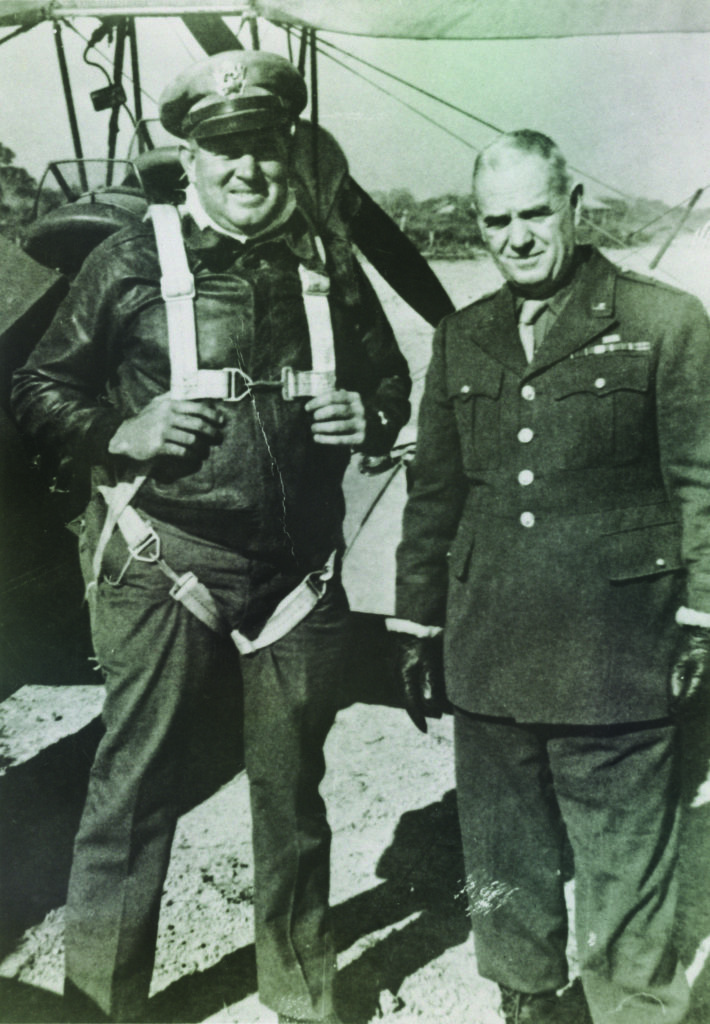
(Colonel Carl Eifler and General William “Wild Bill” Donovan)
At the outset Lovell had moral qualms concerning the types of weapons and strategies that were suggested or being developed. However, as the war continued his doubts gradually diminished. For him everything was dependent on whether a new device would end the war sooner and prevent allied casualties. The development of diverse types of pills to induce suicide, assassination, sickness, and other results interested Lovell and he strongly supported their use to protect secret agents. Lovell ran into opposition when it came to the development of biological and chemical weapons. FDR and Donovan, at first opposed their advancement arguing they did not want to be the first to deploy such weapons. Lovell argued against them, and they would finally come around as it appeared the Germans and the Japanese had no qualms developing them. Admiral William D. Leahy, the most senior American military officer, who had tremendous influence on policy remained adamant against their use until the end of the war, even rejecting the dropping of poisonous gas on Iwo Jima to save the military from storming the island and saving the over 24,000 casualties and 8,000 American deaths when the island was finally stormed by US troops. The US would develop and stockpile the weapons but did not use them.
Ben Macintyre, the author of many books on World War II espionage and other topics is correct in his April 9, 2023 New York Times book review, writing; “A grim legacy of the wartime research into truth serums was the C.I.A.’s 1950s mind-control program, MK-Ultra, in which dangerous and sometimes deadly experiments were conducted on prisoners, mental patients and non-consenting citizens.”
This somewhat enjoyable book is alarming as it offers good reasons for maintaining careful oversight in dealing with intelligence services: “Spy-scientists tend to go rogue when left to invent their own devices.”
(OSS headquarters during World War II, Congressional Country Club)
We have all heard the expression, “like father like son.” In the case of Connor Sullivan his approach is markedly different from his father Mark. In his excellent debut thriller, SLEEPING BEAR: A THRILLER, Connor Sullivan has written a taut suspenseful story that describes the plight of the Gale family who live in Montana but find themselves in the midst of the remnants of the Cold War with Russia that dates to the former Soviet Union. Mark Sullivan’s approach is different in that he develops true historical figures and events and morphs them into novel format as he did with Pino Lella, an Italian teenager who guides Jews escaping the Nazis across the Alps in his award winning BENEATH THE SCARLETT SKY, and Emil and Adeline Martel who must decide what do as the Nazis push their way into the Ukraine in his most recent novel, THE LAST GREEN VALLEY. Both authors are wonderful story tellers who know how to lure the reader into their fictional web, but their techniques diverge as Mark relies on historical characters, and Conner recreates a tableau from the past, but his presentation is fictional.
Conner Sullivan’s debut focuses on the plight of Cassie Gale, a former Army Ranger, who has reached the depths of despair after she finds her husband Derrick after he hanged himself in the family barn. Other issues have also influenced Cassie’s psychological downfall and she decides to travel to the Alaskan wilderness to try and get her “head on straight.” While camping she is kidnapped and winds up in a Russian prison, a plight she cannot understand. Cassie is not the only American who has been kidnapped in the same manner from the Alaskan terrain. Paul Brady, a former chief Petty Officer on Seal Team Two suffers from PTSD from tours in Iraq and his attempt to solve his personal issues in Alaska also bring him to a Russian prison. A third person, Billy French, a young environmentalist who had met Cassie north of Dawson City in the Yukon has also been taken by the Russians.
Cassie happens to be the daughter of Jim Gale, a former CIA operative whose family is unaware of his past and it is interesting how Sullivan creates a scenario that links his past and present through Russian General Viktor Aleksandrovich Sokolov, Chief of SVR Lines, the Illegal Directorate in the Russian Foreign Intelligence Service. Sokolov is an eighty-one-year-old who has strong ties to Russian president Vladimir Putin and is a throwback to the old Soviet Union in charge of torture for the KGB.
As the novel unfolds each character’s role emerges and the plot becomes increasingly complex. Sullivan does an excellent job presenting the bureaucratic in fighting in the Russian intelligence agencies, the lack of law enforcement in Alaska to help locate and rescue those that have gone missing, the inner workings of the Gale family, and the links between Russian spies in America that include Ned and Darlene Voight who have helped the Russians extract Americans from Alaska for over thirty years to be used for experiments by Captain Akulina Yermakova, a pseudo psychologist for the Russian GRU, int heir Science Directorate.
The question that eventually dominates the novel is what is the relationship between Sokolov and Gale, and what does Cassie and her sister Emily have to do with it. A series of interesting characters are brought to the fore that include Sergeant Meredith Plant, six months pregnant, who oversees finding Cassie for the Alaska Bureau of Investigation. Others include Max Tobeluk, a drunken Alaskan Public Service Officer in Eagle, Alaska, Ralph Condon of the Canadian Mounted Police, Peter Trask, Emily Gale’s husband, Maverick, Cassie’s ex-Marine guide dog who plays a major role, Eve Attla, a Han village elder who knows the people and region of the search better than anyone, Susan Carter, Director of the CIA, Prescott McGavran, Gale’s handler when he was known as Robert Gaines, Earl Monks, the FBI’s expert on locating missing persons in Alaska, among several others.
Sullivan writes with an intensity and determination that makes SLEEPING BEAR: A THRILLER the type of mystery that is difficult to put down. Sullivan uses the captured Americans as victims of a sick Russian entertainment practice of pitting them against the dregs of the Russian Gulag in combat against each other as well as conducting medical experiments on those extracted from Alaska. Higher ups wager on this “sport” and it contributes to the tenseness of the Navy Seals rescue mission. Sullivan’s debut is the type of book you read from cover to cover during cold winter nights when you want to curl up with a book and not pay attention to the time!
(A bull moose with antlers in velvet stands knee deep in the colorful tundra of Denali National Park)
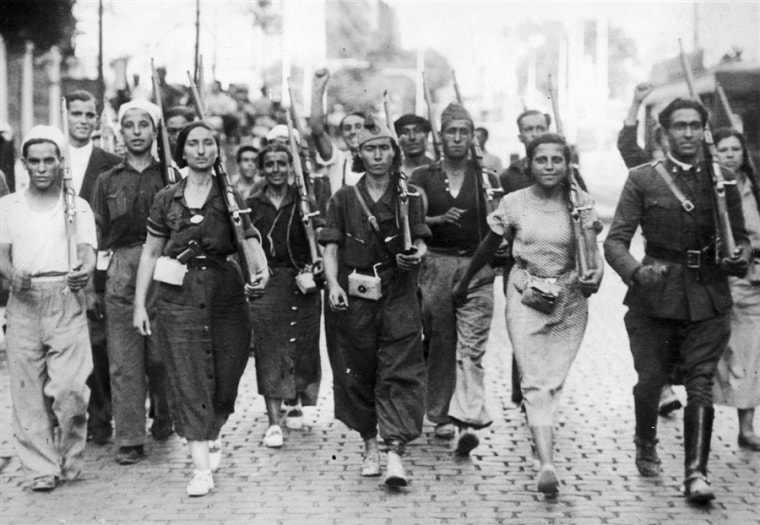
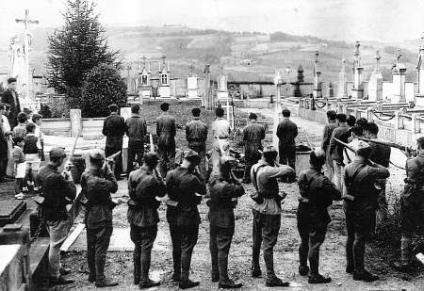
(Militia fighters at the outset of the Spanish Civil War)
After reading Michael Russell’s first two renditions of his Stefan Gillespie series I must say I was hooked. The third installment is entitled THE CITY IN DARKNESS and has reaffirmed my view that Russell has the unique ability to combine components of a thriller and spy novel in the context of historical fiction. Russell easily captures the reader’s attention and thus far all of his books have been extremely satisfying. The novel begins in 1932 as Stefan, his wife Maeve, and their three year old son, Tom are camping. Maeve decides to take a swim and that is the last Stefan will ever see of her. A childhood friend of Maeve sees her swimming in the lake and drowns her. This scene fills in the gap from the first two novels as Stefan thought Maeve’s death was an accident, but Russell develops a plot line where Stefan comes across evidence that his wife’s death may have been murder.
The action immediately shifts to the Spanish Civil War circa 1937 as Francisco Franco and his forces are approaching Madrid in a final effort to destroy the Republican government. Brigadier Frank Ryan, commander of the 15th International Brigade made up of 400 Englishmen and Irishmen are set to blunt Franco’s advance. As his wont, Russell creates a multi-layered disparate set of sub plots that can never seem to have any commonality. An IRA raid on the Magazine Fort in the Phoenix Park in 1939; the death of Stefan’s wife; events in the Spanish Civil War; the possibility that Stefan’s boss, Detective Superintendent Terry Gregory of the Special Branch might be in bed with the IRA; the actions of German Intelligence in trying to use Ireland against England; and the pending release of Frank Ryan from one of Franco’s prisons all are developed fully, but one wonders how they can all come together. A hint, as usual they all do.
(Adolf Hitler and General Francisco Franco)
Russell is extremely interested in atmospherics and everywhere that Stefan travels is fully explored. The beauty of the Portuguese and Spanish countryside is on full display as are the streets of Lisbon, Madrid, Burgos, and Salamanca. The comparison of the brightness of Christmas lights in Ireland in 1939 is juxtaposed to the darkness befalling Europe. The damage caused by the civil war is evident when Stefan arrives in Madrid. These and other descriptions provide a unique background for the novel.
THE CITY IN DARKNESS comes across as more of a spy novel than the first two installments in the series. Ireland’s G2, the German Abwehr, and British MI5 all play an important role as Stefan’s assignments keep shifting as at first he was in charge of investigating the number of Irish men who left to fight for England against Germany, but after the murder of a post man he finds himself in a complex investigation which accidentally provides information for what really happened to his wife seven years earlier.
Apart from Frank Ryan who had ties to the IRA and fought against Franco’s army, a number of new characters are created that carry the novel. . Marie Duarte, Ryan’s partner. Billy Byrnes, the post man who disappears. Mikey Hagan, at fifteen fought in the Spanish Civil War whose life is saved by Ryan. Jimmy Collins, the man who knows the truth concerning the murder of three women. Simon Chillingham, a British diplomat turned spy. Leo Kerney the Irish ambassador to Spain. Florence Surtees, an artist who turns out to be someone completely different. A number of German intelligence agents and a host of others. Characters from the previous novels who reappear include Stefan’s parents and son, Katie O’Donnell, Stefan possible partner, Colonel Archer de Paor, head of Irish G2, Terry Gregory of Special Branch, and Stefan’s Garda partner, Dessie MacMahon.
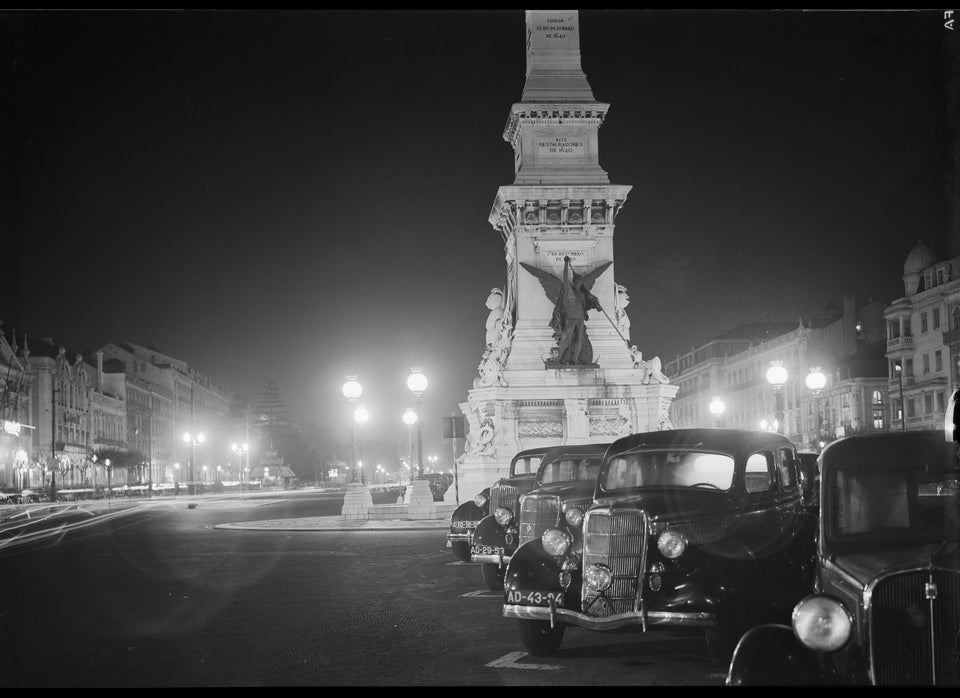
(Lisbon was a spy center during WWII)
At times Stefan feels like a pawn in a game of chess between de Paor and Gregory. As the novel evolves Stefan breaks away from his assigned tasks and strikes out on his own to accompany Ryan out of Spain once he is released, but more importantly to learn who was responsible for killing three women that include his wife Maeve. The cruelty and death fostered by the Spanish Civil War is an important background to events as is the possible role of Ireland as a German ally against England as World War II has just begun. Russell’s grasp of history is clear as he discusses the civil war and the role of Franco, as is his knowledge of the IRA and the politics that surround it.
Stefan is at a crossroads in his life as until he knew what happened to Maeve he could not move on. He blames himself for accepting her death as an accident and he realized if he were to achieve closure, he would have to do it himself before he could develop a meaningful relationship with Kate. The number of characters and the complexity of the story at times is hard to follow, but once you figure out where Russell is going with the plot it is engrossing and you wonder how it concludes. Interestingly, the missing post man aspect of the story is drawn from the still unsolved true-life disappearance of postman Larry Griffin in the village of Stradbally on Christmas Day, 1929.
This is an ambitious novel that blends police procedures, a spy novel, and a historical mystery that is comparable to the writing of Alan Furst and John Lawton. Obviously, I think a great deal of Russell’s approach to historical fiction as a thriller and I look forward to reading the next book in the series, A CITY OF LIES where Stefan finds himself on a dangerous mission in Berlin.
.jpg)








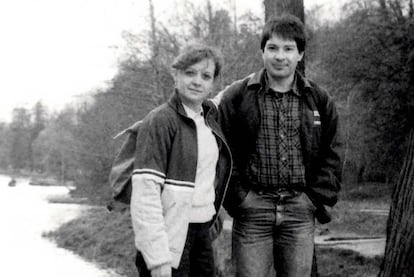
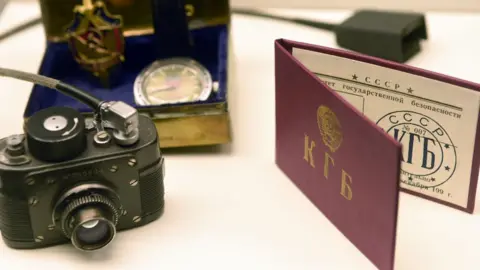 (Illegals operate without diplomatic cover and blend in like ordinary citizens)
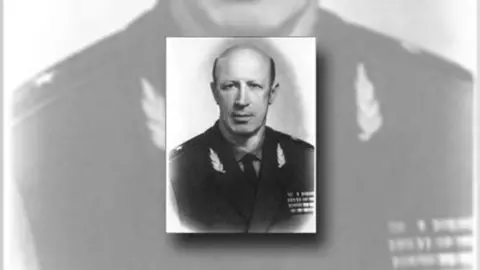 (SVR Yuri Drozdov had a legendary reputation in Soviet and Russian intelligence circles)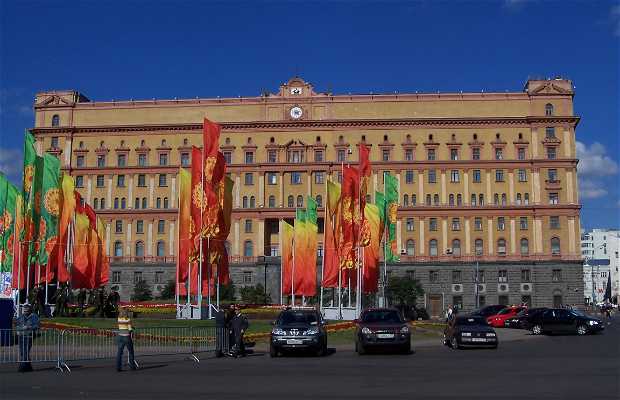






 Doc's Books
