

(Children’s toys and personal items lie on the bloodstained floor of a child’s bedroom, following a deadly infiltration by Hamas gunmen, in Kibbutz Beeri in southern Israel, October 17)
By now I can’t imagine that anyone living in our media dominated world has not heard of Hamas’ brutal attack against Israel on October 7, 2023. The Israeli reaction to the attack has resulted in the destruction of large parts of the Gaza Strip and the death of tens of thousands of Palestinians according to the Gazan Health Ministry and accusations of genocide. This barbaric attack carried out by Hamas and other affiliated terrorist groups, took the lives of at least 1,219 people and led to the taking of 251 hostages, most of them Israeli civilians.
As of today, the remaining hostages who are alive and the bodies of those who perished have finally been returned. Even though the Trump administration has brokered a ten step peace plan and America’s Arab allies have promised to help fund the rebuilding of Gaza, based on past history, Hamas’ continued slaughter of anyone who opposes them, and the intransigence of right wing politicians in Israel the odds of a major settlement are from my perspective almost nil.
The current skepticism surrounding a meaningful settlement rests on a number of factors which center around Israeli Prime Minister Benjamin Netanyahu whose political career is on the line. Many have argued that Netanyahu continued the war even as Israeli generals argued that there were no more meaningful targets. Netanyahu who remains under indictment in Israel may have kept the war going to postpone further legal action against himself even as he tried to alter the Israeli judicial system to offset any further prosecution.

(Wall dividing Israel and the Gaza Strip)
The other aspect of Netanyahu’s culpability rests on his government’s prewar policies, particularly his actions toward Hamas. Critics, including former Israeli Prime Minister Ehud Olmert, argue that Netanyahu’s long-standing policy of allowing the transfer of Qatari funds to Gaza in order to prop up Hamas’s rule and “buy” quiet ultimately backfired, allowing the group to strengthen and eventually launch the October 7th attack. Further, multiple Israeli security officials, including the heads of the IDF and Shin Bet have admitted their failure to prevent the attack, with Netanyahu being criticized for initially deflecting personal responsibility onto the intelligence services. Warnings from within the military and intelligence apparatus were reportedly disregarded or not acted upon by Netanyahu’s government. However, the larger question is how did we get here, as opposed to where we are today.

(Israeli soldiers carry the body of a victim of an attack by militants from Gaza at Kibbutz Kfar Aza, in southern Israel, October 10)
A number of partial answers to this puzzle have been tackled by Yaakov Katz, a former editor and chief of the Jerusalem Post and Amir Bohbot, a journalist and lecturer at Ben-Gurion University in their provocative new book, WHILE ISRAEL SLEPT: HOW HAMAS SURPRISED THE MOST POWERFUL MILITARY IN THE MIDDLE EAST.
The word “partial” is used because there is no definitive answer provided in the book as to why Israel was caught so unaware on October 7, 2023. The best the authors can offer is that there was a failure at all levels of command and leadership as they responded to situations filled with chaos. In trying to ascertain why the attack occurred when it did and why Israeli leadership responded the way it did the authors looked at the mindset of decision makers as 2023 they evolved. The basic problem is that Israel believed it was invincible and that Hamas was incapable of launching such a massive assault. Israeli policy was one of containing Hamas, but by October 2023 that was no longer possible.
The policy of containment dates to Israeli withdrawal from Gaza in 2006 under the government of Ariel Sharon. From that time Israel, according to the authors responded to the attacks, be they rocket or terror attacks in Israel proper with incursions into Gaza, refusing to commit to an all-out invasion for fear of too many Israeli military and Palestinian casualties. This would send a message to Hamas that Israel was afraid to launch a major operation against Gaza. Another factor that developed was the appearance and growth of Hezbollah as a major fighting force in possession of thousands of rockets on the Lebanese border which was a proxy of Iran. Israel’s attention was also diverted to the Iranian nuclear program. Despite intelligence to the contrary the Israeli Defense Force (IDF) was caught in a dangerous complacency, believing that Hamas was more interested in a long-term truce and economic stability rather than war. These arguments are well developed based on Israeli documents, interviews with Israeli national security and military officials, and their own reporting over the years.
It is clear that there was enough intelligence that Israeli officials should have been more proactive before the attack took place. The authors begin their account describing the story of seven female soldiers who were part of an IDF unit called “tatzpitaniyot,” Hebrew for observers. These young women, ages nineteen and twenty, were stationed at the Nachal Oz base, a few hundred yards from the Gaza Strip border. These soldiers were tasked to monitor every inch of the Israel-Gaza border. They employed the available technology and their own intuition that something was wrong. They reported their findings to their superiors and were not listened to – they would be killed in the Hamas attack. The authors conclude there was no operational plan for a full-scale offensive in Gaza, and no detailed strategy in the event of war.

(Israeli police stand near the bodies of two men who were killed following a deadly mass-infiltration by gunmen from the Palestinian Islamist group Hamas, in Sderot, southern Israel October 7, 2023)
The authors ask many pertinent questions, one of which is why did the attack occur when it did. With the Abraham Accords brokered by the first Trump administration normalizing Israeli relations with the United Arab Emirates, Bahrain, and Morocco in 2020, Hamas did not want Saudi Arabia to join in the normalization process as it seemed they were about to do so by the end of 2023. Since Egypt and Jordan had already abandoned Hamas this may have contributed to the decision to act. Further, Israeli domestic politics may have played a key role. Hamas always wanted to make the Israeli people less resilient which Netanyahu’s plan to overhaul the Israeli judicial system to protect himself as he was under indictment was sure to do. Netanyahu’s action provoked the Israeli left seeing the Prime Minister’s actions as a threat to democracy resulting in massive protests throughout Israel and threats by Israeli reserve Air force pilots not to fly missions and by military personnel to do the same. The split in Israeli society certainly contributed to Hamas’ calculations. Hamas’ decision was developed over a long period of time, but its mindset was clear that eventually they would launch a massive attack, an attack they had been preparing for at least a decade.
According to the authors the crisis began on October 6 when the IDF’s premier signal collection unit that monitored activity in Gaza had crashed. Possibly a cyber-attack to blind Israeli surveillance. Shin Bet, Israel’s internal security agency received troubling alerts on their system but did little in response even as Shin Bet Chief Ronen Bar was told, “there is an unclear preparation by Hamas for something” as its leadership was moving toward its bunkers in tunnels. Analysts concluded it was just a “military exercise” not a full scale attack.

(Wall dividing Israel and Gaza)
The authors effectively lays out an almost hour by hour description of the information garnered by AMAN, the Israeli Military Intelligence Directorate and how they reacted. The problem for any Israeli response was it needed to be done without Hamas being aware of it – they didn’t want to burn intelligence assets or push Hamas to attack if it was only a training exercise as they had done in the past. In addition, Israel did not have one human asset among thousands of Hamas operatives waiting to attack.
Despite intense communication among Israel’s national security apparatus on October 6, the government was caught between the idea Hamas was engaged in a military exercise or was about to launch a low level attack against Israel. This inability to discern what Hamas was up to would have dire consequences as under the cover of 1300 rockets, over 3000 terrorists crossed into Israel at 60 locations.
The authors devote a considerable amount of time laying out and analyzing what Hamas’ leadership was planning and how sophisticated there approach was in developing their plans. Over a decade Hamas operatives, including Gazans who were allowed to work in Israel developed exacting intelligence including maps of kibbutzim, IDF bases, offices of senior commanders, weapons depots etc. Further, carrying out the ideas of Yahya Sinwar they had evaluated the state of the Israeli psyche and developed a plan in a sense to enter into the minds of the Israeli public and make them fear Hamas and force get them to turn against their government as terror attacks increased over the years, and culminating it with a massive assault which came to be October 7.

(Israeli soldiers walk through what Israel’s military says is an iron-girded tunnel designed by Hamas to disgorge carloads of Palestinian fighters for a surprise storming of the border, amid the Israeli army’s ongoing ground operation against Palestinian Islamist group Hamas, close to Erez crossing in the northern Gaza Strip, December 15, 2023)
The chapter that explores the biography, thought process, and hatred toward Israel of Yahya Sinwar, the leader of Hamas in Gaza is perceptive and provides the reader with insights into a terrorist’s mind and how he would carry out his beliefs. The authors trace his ideological development, particularly as it relates to Israel and its people. His imprisonment for decades allowed him to study Israel, learning Hebrew and developing the ability to think like an Israeli. His release from prison with 1026 other terrorists in return for Galid Shalit, a captured Israeli soldier allowed him to eventually make his way to Gaza, work his way up the Hamas chain of command, and become their ideological leader and convince his compatriots to go along with his goals of revenge and destruction of Israel.
Once Sinwar was released other events allowed Hamas to expand its military preparedness. The arrival of the Arab spring in January 2011 brought to power Mohammed Morsi, a member of the Moslem Brotherhood in Egypt which opened up the Egyptian-Gazan tunnel complex allowing Hamas to import massive amounts of material, weapons, and building equipment allowing them to expand their tunnel network, military industrial production, and in effect enhance a tunnel complex which was 40-70 meters under Gaza and 300 miles in length. In 2014 Israel responded to an increase in terror attacks and rockets with Operation Protective Edge. By focusing close to the Israel-Gaza border and not launching an invasion, the Israeli government sent the wrong message. Sinwar and his cohorts were convinced that Israel would not hit Hamas hard for fear of casualties. In addition, Sinwar was able to convince Israel that he was committed to improving Palestinian economic conditions, needed to continue to collect subsidies for Qatar, to the point Israel believed Hamas was “deterred,” a term that appears repeatedly among Israeli officials. According to Charles Lane in his Wall Street Journal book review of September 16, 2025; “The Israeli government persuaded itself instead that improving economic conditions, or “facilitating proper civilian life in the Gaza strip,” as one intelligence official put it, would give Gazans a material stake in peace and, by extension, induce pragmatism in Hamas. Israel allowed the transfer of hundreds of millions of dollars from Qatar to Gaza—much of which the terror group diverted into tunnel building and salaries for its militants.”

(An Israeli soldier secures a tunnel underneath Al Shifa Hospital in Gaza City, November 22, 2023)
There are other important chapters that provide interesting and surprising aspects of Hamas’ development. The chapter that describes the tunnel network that Hamas created is eye opening. They built an entire world underground with tunnels at different levels depending on their purpose. The thoroughness, sophistication, ingenuity, and efficiency of the various types of tunnels amazes, i.e., administrative, attack, logistical tunnels, something that was unimaginable. They integrated their tunnel network as a key component of their military strategy. This was all accomplished under Israel’s nose. Soldiers and civilians heard or felt something was happening below, but officials did little to oppose it.
The Israelis had to develop a new concept of warfare to offset the approach that Hamas employed. Fighting underground was something Israel had never encountered, especially as the tunnels were under homes, apartment buildings, hospitals, mosques, and schools which allowed Hamas fighters to hide and then jump out and attack IDF soldiers. In fact, Hamas’s leadership tunnel bunker was under the al-Shifa hospital. Israel was able to develop Artificial Intelligence (AI) to create a digital map that included all the tunnels which became invaluable. The author’s description is fascinating.
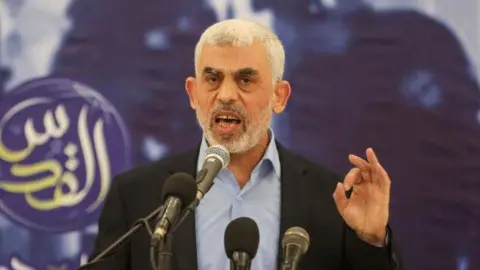 (Israel had hunted Gaza for more than a year to find Yahya Sinwar)
The Netanyahu government and the Prime Minister in particular believed Hamas was happy with their monthly transfer of financial assistance from Qatar which was provided with the government’s blessing and were not interested in escalation. The Netanyahu government and intelligence services may have thought it knew its enemy’s intentions. But it was effectively deceived and found out the opposite of its beliefs was true. There were deep flaws in the way Aman thought it understood Hamas. Aman failed to grasp Hamas’ intentions and mistakenly believed that the organization’s leadership wanted a truce rather than war. On the operational level, Israeli intelligence grossly underestimated the scale of Hamas’ plan, even though they had in their possession the “Jericho Plan” that provided clues as to what Hamas might implement. Lastly, on a tactical level, the IDF’s belief that its border defenses would prevent an attack was inadequate. The so-called “iron wall” erected along the border at the cost of over $1 billion was believed to be impenetrable. The authors conclude everything and everyone were wrong – the idea that a fanatical Islamist terror group could be contained and Hamas had been deterred and wanted quiet is tough to accept with hindsight.
I agree with Charles Lane’s conclusions in September 16, 2025, review that “Pondering his dream of an Islamist state erected on the ruins of the Jewish one, Hamas chief Yahya Sinwar observed all of this from Gaza. He sensed that Israel was distracted and divided, its strategists in the grip of an errant conceptzia. He brilliantly fed those illusions through disinformation and deception, while pursuing his phenomenally detailed long-term plan. As Messrs. Katz and Bohbot imply the bloody assault on Israel was an intelligence failure by Israel as well as an intelligence triumph for Hamas.

(Israeli Prime Minister Benjamin Netanyahu)
It was an ironic outcome for a nation helmed by Mr. Netanyahu. He had correctly told the United Nations General Assembly in 2009 to beware “the unfortunate habit of civilized societies to sleep until danger nearly overtakes them.” He quoted Winston Churchill on the “want of foresight, unwillingness to act when action would be simple and effective, lack of clear thinking, confusion of counsel until the emergency comes, until self-preservation strikes its jarring gong.”
Messrs. Katz and Bohbot conclude their book with well-taken recommendations to help Israel’s political, military and intelligence institutions prevent another such debacle. But there’s no organizational cure for human nature, with its tendencies toward groupthink and confirmation bias. “The unfortunate habit” is a stubborn one. Even the most vigilant nations struggle to break it.”

(An aerial view shows damage caused following a mass infiltration by Hamas gunmen from the Gaza Strip, in Kibbutz Beeri in southern Israel, October 11)


























.jpg)





 Doc's Books