HIGH DIVE by Jonathan Lee

The Grand Hotel in Brighton, after a bomb attack by the IRA, 12th October 1984. British Prime Minister Margaret Thatcher and many other politicians were staying at the hotel during the Conservative Party conference, but most were unharmed.

(The Grand Hotel, Brighton, England IRA bombing , October 12, 1984 designed to assassinate British Prime Minister Margaret Thatcher)

HIGH DIVE by Jonathan Lee is an interesting historical novel that develops a number of fascinating characters as it unfolds.  The novel seems to travel on two tracks, the first are the Eriksonian identity crisis’ that evolve as each character is forced to ponder their roles in society, their life’s work, and what the future holds.  The second are the ever present problems that infect the Irish-British relationship that have gone on for centuries.  What makes the novel impactful is that behind the interaction of each character with their environment is the proposed visit of British Prime Minister, Margaret Thatcher to the Grand Hotel, a resort in Brighton, England in 1984, and a possible assassination attempt on her life.  The politics of the era are integrated in an accurate fashion as Thatcher’s Conservative Party record is dissected in terms of its onerous effect on Catholics in Northern Ireland and the poor of England in general.  The setting is historically accurate as Thatcher did visit Brighton in 1984 and there was an IRA assassination attempt on her life.  What Lee tries to do is explore IRA planning involving the real assassin, Patrick J. Magee and the fictitious character, Dan, who is created to be his assistant in planting the bomb with its timing device a few weeks before the visit.

The novel opens with Dan, a handyman-electrician type meeting Dawson McCartland, an IRA operative who tests him whether he is worthy enough for “the cause.”  Once he passes his initiation, Dan’s new life has begun as a freedom fighter for the Republican army against the British and their Protestant allies in Ulster.  The evolution of Dan’s character is extremely important first using the alias of Roy Walsh, and later in the novel as Lee explains Dan’s relationship with his mother and provides insight into what it was like to grow up dealing with the RUC (Royal Ulster Constabulary) raids and beatings at home and on the street.  As the “Thatcher” mission is planned and implemented we witness a person who experiences doubts about his actions and who he is, and has become.  Dan interacts a great deal with Freya Finch, a nineteen year old girl, who has a crush on him, and is trying to break away from her father, but is confused about what path to take.  She is very bright and her father wants her to enroll in the university, but she is uncertain.  Her parents divorced when she was very young and has been raised by her father with whom she has a strong bond.  She spends her summers working at the hotel, but that is not enough for her.    Her father, Peter Finch, whose nickname is “Moose” runs the Grand Hotel after giving up a career in teaching and must deal with his own identity issues.  He grew up as a champion athlete and still practices his high dives in the hotel pool.  His entire life is wrapped up in the everyday details of the resort as he tries to fight off his personal demons that date back to Vivienne, the wife who left him.  A few weeks before Thatcher’s visit he has a heart attack and must reassess his life.  There are many other characters that provide the glue that holds the novel together from surfer John, IRA operatives, and the hotel staff, but it is the three mentioned that form the core of the plot.

Lee has a very distinctive approach in his writing.  He can be humorous, sarcastic, and serious all within the same few sentences of dialogue as he describes the plight of Catholics in Northern Ireland.  For example, “The whole of your life in Belfast was organized around light and dark, visibility and invisibility, silence and sound, information and secrecy, the private rubbing up against the public and making you feel tired.”  Lee repeatedly comments about the politics that infect the “the Irish problem,” as Ireland “at night was a repeated dream,” as well the everyday existence of even famous people, by his reference the birth of Prince Henry, and stating “the baby prince looked tricksy, sardonic, chubby, blotchy, and would hopefully cheer up his sad eyed mum.”  Lee also provides an interesting description and insights into how a large resort is managed and what they prepare for such an important VIP visit.  Further, Lee offers an account of the Conservative party gathering when many self-important people went about trying to impress their peers. In addition, Lee goes inside the planning of the terrorist attack, from its inception and actual implementation.  Once the bomb is placed in the hotel, it seems that the story begins to creep along at a much slower pace as Lee returns to the crisis’ that affect each major character, and at times you feel that the story should speed up and see if the attack will be successful.

British Conservative prime minister Margaret Hilda Thatcher, addressing the Tory Party Conference in Brighton, following the bombing of The Grand Hotel, where many delegates were staying.

(British Prime Minister Margaret Thatcher)

The book is more than a recreation of an IRA terrorist planting a bomb at the Grand Hotel.  It plies the depth of class disappointment that is the core of Irish Catholic hatred of the British government, and particular the policies of the Conservative party and its Irish Protestant allies.  It is more a reflection of the daily humiliation an oppressed people must cope with and its psychological impact.  Dan is a key character who at age 24 learns he will be involved with the assassination plot.  Dan describes his past as the paras killed his father and on a number of occasions barged into his house and beat his mother, or forced him to dance a “jig” as they attacked a local pub.  These events are more than enough to put Dan over the edge and turn him into a terrorist.  Having lived in southeast London while conducting research at the Public Records Office in 1987 I witnessed the hatred of the poor against the Thatcher government as each night in this working class neighborhood, men would pour out their hearts at their local pubs.  It is easy to understand their frustration and why many turn to violence.

HIGH DIVE is a remarkable read as Lee captures the tension that existed in early 1980s Ulster.  He creates sincere characters, and a part from some pacing issues it should be a positive experience for those who put aside the time to engage the story.

The Grand Hotel Brighton, soon after the IRA bombing during the Tory conference.

(The Grand Hotel, October 12, 1984 following the IRA bombing)

THE OTHER SIDE OF SILENCE by Philip Kerr

Map of Côte d'Azur

(The site of Philip Kerr’s new novel, the French Reviera)

The Other Side of Silence (Bernie Gunther Series #11)

In the eleventh installment of Philip Kerr’s thoughtful and entertaining Bernie Gunther series, we find our protagonist ensconced on the French Riviera contemplating suicide.  For those familiar with Gunther’s odyssey through World War I, World War II and the post war world you will not be surprised by his behavior.  Gunther is bored with his life and misses Berlin since he exiled himself to France, and became employed as a concierge at the Grand Hotel du Saint-Sean-Cap.  Gunther’s problem is that he misses his life as a detective, but his exile is about to change when a guest named Harold Heinz Hebel checks into the hotel.  The problem is that Hebel is an alias for Harold Hennig, a former Captain in the Nazi SD Security service, and an accomplished murderer.  It is that recognition by Gunther that Kerr’s new novel THE OTHER SIDE OF SILENCE pivots.  From that point on as Kerr develops his plot the reader is exposed to Gunther’s sarcastic humor and comments about a range of historical figures from Leopold II, to Gauguin, to numerous Nazi henchmen and British intelligence figures.

Kerr has created a number of scenarios that he develops with his usual skill as a writer and a practitioner of conspiracies.  They begin when Gunther meets the nephew of the British writer, W. Somerset Maugham who is being blackmailed by none other than Harold Hennig.  Maugham, a known homosexual finds out that Hennig has obtained a picture of him with three British spies who were turned by Soviet intelligence, Anthony Blunt, Guy Burgess, and David MacLean.  The picture is extremely compromising sexually and Maugham, even at eighty two years of age is worried about his reputation in England where homosexuality is illegal, and in the United States which is in the throes of the McCarthy hearings.  He asks Gunther to be his agent with Hennig to make sure the transaction is carried out so he has nothing further to worry about.  To show Maugham what he is dealing with, Gunther describes a situation that occurred in Berlin in 1938 when Gunther, no longer a German police detective, is approached by Captain Achim von Frisch, a man who saved his live in Turkey during the Great War.  Frisch is also being blackmailed, by you guessed it, the same Harold Hennig.  It seems that there is a political and military shakeup going on within the Nazi command structure, and another officer, General Freiheir von Fritsch is being accused of being a homosexual.  Frisch, who previously was blackmailed by Hennig to the point of poverty is privy to important information that would clarify the situation.  However, he is afraid, and wants Gunther to investigate and determine how high up in Hitler’s regime this plot reaches before he comes forward.  In the end Hitler achieved his goals and took over as the head of the Reich’s military by stepping over any body that got in his way.

Kerr goes back and forth between Berlin in 1938, Konigsberg in 1944, and the south of France in 1956.  For Gunther they are all related in some manner and they seem to all involve Harold Hennig.  The events that took place for Gunther go a long way in explaining his sarcastic and cynical view of people and life in general.  Apart from the plot, Kerr’s command of German history is excellent, though he does make a minor error by stating that Frederick III built a hunting lodge in Konigsberg in 1690, when in fact he did not assume the throne until 1888.  However, his description of historical figures like Erich Koch, Erich Mielke, Guy Burgess, and the sinking of the MV Wilhelm Gustloff in early 1945, and the use by the CIA and KGB of former Nazis is right on, as is his integration of the 1956 Suez crisis as historical background.

Throughout the book Kerr is at his deceptive best as the novel reeks of disinformation, misdirection, spies, and counterspies, and of course conspiracies enveloped within other conspiracies.  The intricacies of the plot are based upon Maugham’s actual experiences as a British spy during the late 1930s and World War II as the myriad of scenarios keeps the reader engrossed.  Who is really behind the blackmail?  Is it the Russian KGB, is it remnants of the Third Reich, is Hebel acting alone, or is it something else?  Is the British intelligence community the real target? MI5 or MI6?  Does the United States have a role to play?  How does W. Somerset Maugham fit in?  How about the Cambridge Five that was penetrated by Russian intelligence during and after World War II?  How does Bernie Gunther fit into these complex questions?  Why was Gunther’s bridge partner murdered?  Does that fit into the paradigm?  The answers will keep the reader riveted to THE OTHER SIDE OF SILENCE, and it makes one look forward to Kerr’s next Bernie Gunther novel, PRUSSIAN BLUE.

(The French Rviera, the site of Philip Kerr’s new novel)

THE GATES OF THE ALAMO by Stephen Harrigan

(The Alamo)

The story of the Alamo is clouded in myths and counter myths.  Your personal belief is probably dependent upon your high school social studies education.  It is a story that most Americans know because of the countless books and films on the subject.  What is clear is that, it forms a major component of Texas history.  In Stephen Harrigan’s THE GATES OF THE ALAMO we are presented with a new approach to the story through the eyes of fictional characters; Edmund McGowan, a loner dedicated to botanical research; Mary Mott, a widowed innkeeper trying to keep what remains of her family together; her son Terrell, who grows and matures into manhood as the novel evolves.  This epic story has been told before, but not in this manner, a blend of astute historical research and fictional imagination that should satisfy all who are interested in the topic.

Harrigan begins by introducing Terrell Mott as a ninety-one year old survivor of the Alamo and former mayor of San Antonio attending the 75th commemoration of the battle.  From here, Harrigan takes the reader on a journey that integrates many historical and fictional characters as he constructs a fairly objective account of the events leading up to the battle, the battle itself, and what transpired after the bloodshed.  The reader is exposed to the Mexican viewpoint through historical characters such as; Colonel Juan Almonte, a member of general Santa Anna’s staff, the dictator himself, Primer Sargento Blas Angel Montoya, a member of the Mexican northern army; to fictional characters, Telesfero Villasena, a Lieutenant in an engineer battalion and Santa Anna’s map maker, and Isabella, a Mayan girl seized by Mexican officers.  Among the American settlers aside from McGowan and the Motts the story is conveyed through historical figures like; Jim Bowie, a drunkard and fortune seeker, Sam Houston, a rather two faced politician and Andrew Jackson wan bee, Stephen F. Austin, the most reasonable of the independence movement leadership, Davey Crockett, a Tennessee politician and Indian fighter, and William Barrett Travis, a young man thrust into leadership beyond his capabilities.

(Sam Houston)

One of the things that most Americans do not realize is that three-fifths of the continental United States was taken from Mexico during the Mexican War between 1846 and 1848.  The issues that led up to the war stem from American colonists who were invited by the Mexican government to settle in Texas in the 1820s.  The invitation was contingent upon settler acceptance of abiding by the catholic faith, obeying Mexican law, and not transporting slaves to the new territory.  By the 1830s the settlers began to chafe under Mexican restrictions setting the backdrop for Harrigan’s novel.

The first half of the book seems as if a storm is brewing.  The storm is Santa Anna’s goal of blunting the Texas independence movement.  As Harrigan proceeds with his story he does a commendable job; developing his characters, particularly the emergence of a strong bond between Mary Mott and Edward McGowan.  In a time period when death is predominant, two lonely people, who have suffered deep personal trauma come together to try and make sense of their surroundings. For Mary, it is the loss of her husband and daughter, and fears about losing her son.  For Edmund, it is the creation of a shell around himself because of childhood events and trying to find solace in a world of plants, a world that fills the emotional void in his life.

(Davey Crockett)

THE GATES OF THE ALAMO is historical fiction at its best.  The historical characters integrated among those created provide a realistic account of events as Harrigan leads the reader to the fall of San Antonio de Bexar and rebel control of the former Spanish mission, the Alamo.  Both the characters and the reader are aware that in a few months’ time Santa Anna will bring a large army to retake it, which dominates the second half of the novel.  The rebels do their best to make the mission an impregnable fort, but as history has shown, they failed.

Harrigan places the reader inside the Alamo as the Mexican bombardment pounds the fort.  His descriptions are extremely realistic and the plight of the Alamo’s residents is clear.  He leaves out few details, even integrating Mexican music that was designed to unsettle those imprisoned inside the Alamo, just waiting for the next cannonball.

One of the most interesting aspects of the novel is Harrigan’s recreation of character dialogue that occurs when decisions are made.  We are inside Santa Anna’s headquarters as he consults with his generals.  The reader is a witness to Travis and Crockett trying to figure a way out of their predicament, but whatever they try, is doomed to failure.

(General Santa Anna)

Harrigan’s novel is a work of fiction, but he must be applauded for the voluminous research undertaken to recreate his subject.  Obviously, there is a great deal that he has imagined, but embedded in the dialogue and narrative is a fairly accurate portrayal of events.  Further, he does a remarkable job discussing the Mexican and rebel viewpoints, and as things unfold he tries to remain as objective as possible.  Most people know how the story concludes in terms of the Alamo, but what they do not know is the fate of the key characters.  For this reason alone, Harrigan has produced an air of suspense that should hold the reader, a bonus, because the historical presentation alone makes Harrigan’s effort extremely worthwhile.

(The Alamo)

YOUNGBLOOD by Matt Gallagher

(Author, Matt Gallagher)

Like all wars before it, the war in Iraq has spawned its own literature.  In Vietnam the war produced the likes of Philip Caputo and Tim O’Brien. Today as our current conflict has morphed into the war against ISIS, writers like Matt Gallagher have come on the scene with novels like YOUNGBLOOD, which takes the reader inside a platoon in the town of Ashuriyah, outside of Baghdad, when the optimism spawned by the “surge” gave way to skepticism about the war, and as we know the rise of ISIS and the American withdrawal in 2011.  When stationed in Iraq, Gallagher began writing in his own blog from inside the war that attracted a large following.  Military authorities eventually shut down Gallagher’s blog, but his new novel has allowed him to express many of the feelings and emotions of his characters, many of which, I am certain, are composites of the men he served with.

The narrator of YOUNGBLOOD is Lieutenant Jack Porter, and through his voice Gallagher expresses the view that “so little of Iraq had anything to do with guns, bombs, or jihads.”  The novel portrays a war that encompasses the locals and their lives, as they try and cope with a form of hell that has destroyed their way of life.  It comes across as a confusing and angry conflict which continues to this day with little understanding on the part of the people who are responsible for the mess that Iraq has become, as many of them are now calling for the United States to dispatch even more troops to the region.  The American mission after years in Iraq had evolved into, “clear, hold, and build, a motto that was extremely difficult to implement successfully.

(Author, Matt Gallagher inside a Stryker vehicle in Iraq)

Porter faces a number of obstacles as a platoon commander.  First, he had to deal with bribery and the overall corruption that existed.  American military payments were made to numerous groups including sheiks, both Sunni and Sh’ia, and militia leaders in order to combat al-Qaeda, and other groups to obtain their loyalty.  Further payments went to Iraqi families that were victims of collateral damage, even more money flowed to projects to rebuild Iraq’s infrastructure, but it seemed that little was being built.  Porter’s second problem was Sergeant Daniel Chambers, a military lifer who had already served tours earlier in the war.  Chambers had been foisted on Porter by his superiors and his demeanor and discipline became a threat to Porter’s command which undermined his relationship with his men.

Once Gallagher introduces his main characters we learn that Chambers may have been involved in the killing of two unarmed Iraqi citizens who were mistaken for jihadis the military was looking for.  Porter wants to prove that Chambers had violated the rules of engagement and begins to investigate the shooting in the hopes of getting rid of the ornery sergeant.  A second major plot line is Porter’s relationship with Rana, a local sheik’s daughter.  Rana, who was involved with an American soldier who converted to Islam, and wants to marry her, is killed.  It is left for Porter to pick up the pieces.  As the novel evolves, Gallagher integrates past events as a means of trying to understand the present.  His relationship with his brother Will, a West Point graduate who served in Iraq, and his girlfriend Marissa, who seemed to have drawn away from him, play on Porter’s mind throughout.

The reader acquires a strong sense of what it is like to be a soldier in Iraq.  The fear of death, having the Stryker vehicle you are riding on set off an IED.  The friendships that result in sick jokes, games and other amusements that fill the void of limited down time.  The exhaustion of carrying 60 pounds of body armor and weapons during patrols or having to maintain a sharp focus for long periods as they try and survive.  Gallagher writes with verve and humor as he tries to convey Porter’s experiences, who is fully aware that no one will understand him, not his brother Will or his girlfriend Marissa back in the United States.  Porter must live with his memories as he faces the reality of war each day, a war where he exhibits empathy for the Iraqi people he comes in contact with, and the men he commands.  The end result is that Gallagher portrays the horror and inequities of war, and how it has eroded the fabric and foundation of Iraqi society.  After one puts the book down one wonders what will be the final chapter for Iraq as a nation, as it continues to struggle with sectarianism, a corrupt political system, the constant threat of violence, and the legacy of the American invasion.

(Author, Matt Gallagher serving in Iraq)

THE BONE TREE by Greg Iles

The Bone Tree (Penn Cage Series #5)

Greg Iles begins his latest novel in his Penn Cage trilogy by reintroducing the term “The Bone Tree,” which forms a very important component of his story of the same name.  According to Iles, the Bone Trees’ location was the dumping site of a radical KKK offshoot from the 1960s called the “Double Eagles,” where they deposited the bodies of their victims.  Historically, it may have formed a killing ground that dated to the pre-Columbian years of the Natchez Indians.

The novel itself begins where, NATCHEZ BURNING, Iles’ previous effort ended with Penn Cage, the mayor of Natchez, MS and a former Houston prosecutor lamenting his decisions that led to the death of Henry Sexton, a journalist who spent decades investigating the deaths of 12 civil rights murders from the 1960s, and Sleepy Johnson, who had witnessed two of those murders and the fire that destroyed all of Sexton’s evidence.  Cage suffers from extreme guilt that he allowed his father, Dr. Tom Cage’s disappearance cloud his judgement, as his father had been accused of murdering his former nurse as well as a Louisiana State trooper, in addition to jumping bail.  With an all-points bulletin with a shoot to kill order facing his father, Penn Cage must figure out how to save his father from himself in an environment of political and legal corruption that dominates the state of Louisiana at all levels.  When an author prepares to write a trilogy they expect that each volume can stand alone.  In this case, despite the fact that Iles’ provides a great deal of background to link the novel with its predecessor, it might prove difficult for the reader to understand certain components of the story without reading the previous book.

Dr. Tom Cage is resigned to his own death.  With a severe heart condition, accused of two murders, on the run for jumping bail, with assassins after him, he has given up until he receives a text from his future daughter-in-law Caitlin Masters.  Masters, the editor of the Natchez Examiner informs Cage that she is pregnant and he realizes that he now has something to live for, another grandchild and possibly a name sake.  At the age of 73 he see himself anew as the patriarch of a larger family.  Having escaped the assassination by two thugs, Tom’s dilemma is what should be his next course of action.  Iles’ novel has many subplots and one of them is how Tom will navigate his situation.  Another is how his son Cage, and Masters will handle events particularly the remnants of violence and corruption existing in Louisiana in the immediate aftermath of Hurricane Katrina despite the death of Brody Royal, the perceived puppet mastering murderer from NATCHEZ BURNING.

We learn that the true source of lawlessness in the state aside from the greedy real estate developers, bankers, and politicians whose vision is to rebuild New Orleans in their own image by forcing out blacks from neighborhoods and ethnically cleansing the city in order to make millions of dollars, are elements in the Louisiana State Police (LSP). To achieve their goal they need to control the New Orleans Police Department, employing Forrest Knox, second in command of the LSP, as an ally.  Forrest Knox is the head of the Knox family crime organization who are at the center of the Double Eagle faction, and is involved in a statewide meth operation along with an army of avaricious politicians and hungry police officers that have allowed him to build a criminal network with unrivaled reach and power in the southern part of Louisiana.  As a Lt. Colonel in the Louisiana State Police Knox has tremendous influence on events, but as Head of the Louisiana State Police he would become totally insulated from any legal problems from the FBI or other agencies.  As he tries to achieve his goal by destroying his superior officer the novel becomes a fast ride for the reader as the different threads that Iles has created come together.

One of the threads involves the jurisdictional differences that exist between the FBI, state and county law enforcement.  Each has its own agenda and conflicting interests, for example, John Kaiser, the FBI Special Agent’s investigation of possible links between Tom Cage, the Double Eagles, Carlos Marcello, and the Kennedy assassination permeate the novel.  For Penn Cage and Concordia Parish Sheriff Walker Dennis solving the civil rights murders by bringing down Forrest Knox and the Double Eagles, and exonerating Tom Cage is paramount. The reader is also privy to the inner working of the Knox family operation that includes County Sheriff Billy Knox, and a murdering psychopath, Snake Knox, in addition to the Lt. Colonel in the Louisiana State Police. Each agenda is intertwined with each other, and Iles does a masterful job in creating a constantly evolving scenario that keeps the reader mesmerized.

The book exposes the reader to a great deal of violence, betrayal, menace and at times is very intense.  Despite the fact its genre is crime fiction it does an exceptional job highlighting many aspects of human behavior, especially the tragedy of race relations that dominates our history.  THE BONE TREE also exemplifies the role that the past plays in our lives and how difficult it is to escape its tentacles.  The book is illustrative of a line by William Faulkner: “The past is never dead.  It’s not even past.”  (Washington Post, May 11, 2015)  Iles’ work is illustrative of this theme and to his credit he has created an evocative story that will cause the reader to look forward to the concluding volume of his massive trilogy which is due out later this year or early 2017.

What follows is a great interview conducted by the Christian Science Monitor and Greg Iles in April, 2015.

‘Natchez Burning’ author Greg Iles discusses ‘The Bone Tree,’ the twist-filled sequel

Iles’s new book, ‘The Bone Tree,’ includes an investigation into the JFK assassination. ‘If Oswald did not act alone, then I would say there’s a 95% chance that a conspiracy of the size and type that I laid out in this book is the most likely thing to have happened,’ Iles says.

By Erik Spanberg APRIL 21, 2015


Greg Iles calls himself a 20-year overnight success story. This despite the fact that his first book, published in 1993, hit The New York Times best-seller list.

Iles mentions the possibility of overnight success while discussing a soon-to-be-announced cable TV adaptation of his 2014 epic novel, “Natchez Burning.” He promises a series or miniseries with the production quality of “True Detective” or “Game of Thrones.” Until all the contracts are signed, though, he is forbidden from disclosing which network is buying the rights.

“Natchez Burning,” published last spring, spanned 800 pages and blended the pulse-pounding machinations of a thriller with Southern Gothic elements while dazzling the likes of Ken Follett and Stephen King. AARP Magazine described the atmospherics and narrative as a mash-up of William Faulkner and Stieg Larsson. Most of all, “Natchez Burning” left readers desperate to know what happens next in the lengthy tale of violence, corruption, and racial strife.

Recommended: Whosolvedit? Take our famous literary detectives quiz!

Now comes “The Bone Tree,” the second book in Iles’s trilogy. The novel picks up where the last one left off but veers off in the direction of constant action and twists and turns without answering one of the central questions posed in the earlier book.

TEST YOUR KNOWLEDGE Whosolvedit? Take our famous literary detectives quiz!

PHOTOS OF THE DAY Photos of the weekend

Instead, Penn Cage, the mayor of Natchez, Mississippi, and Iles’s main character (Penn happens to be both an author and former prosecutor), spends much of his time trying to find his father, a small-town doctor accused of murder, and sorting out whether his family played a role in the death of President Kennedy at Dealey Plaza.

At the same time, conspiracies involving New Orleans mobsters, rogue CIA operatives, and other nasty characters thwart Penn as he teams with crusading reporters and a hell-bent FBI agent in an attempt to solve a string of cold cases from the Civil Rights era.

Late next year or in early 2017, Iles will publish the last book in the trilogy. Whether Penn can save his hometown and his shattered family is one of several prominent questions left to be resolved in the final book.

Penn Cage starred in several stand-alone novels before Iles was in a near-fatal car wreck four years ago in his hometown of Natchez. Doctors kept Iles in a medical coma for eight days after the crash and his injuries included a torn aorta and the loss of his right leg below the knee.

He still struggles with rehab, but his writing career is on a roll. And he remains a member of The Rock Bottom Remainders, a literary garage band featuring Amy Tan, Dave Barry, Stephen King, and Scott Turow, among others.

Iles was the singer and guitarist in his own rock band, Franky Scarlet, after graduating from Ole Miss in 1983. Later, he ditched rock and roll for a career in thrillers, a path similar to the one taken by Norwegian thriller writer Jo Nesbo.

Before setting off on a book tour, Iles spoke to the Monitor about chasing the ghosts of JFK and Civil Rights victims as well as what’s ahead for the self-proclaimed overnight sensation. Excerpts from our conversation are below.

On his interest in President Kennedy’s assassination:

I really wasn’t [intending to go there] and I’ll tell you what’s funny. There’s a guy who interviewed me for Publishers Weekly [Lenny Picker in 2013]. They did a thing on the 50th anniversary [of the assassination and the fiction and nonfiction books around JFK’s death]. And this guy’s going to kill me. Because he called me and he quoted me a couple of times in the article, but I kept telling him, ‘Look, these books really are not about the Kennedy assassination. I’m really not going there.’

And, then, while re-writing the next book, I found myself doing that [laughs]. I felt so guilty. I thought, this guy is going to think I was lying to him. It’s just that the more I sort of slid southward towards New Orleans and found out more about the [Louisiana crime boss Carlos] Marcello stuff, the more I just couldn’t resist it.

On how much he blends fact and fiction in his depiction of November 1963:

In a general way, I would say that the basic thesis of what I’m putting forth is, if Oswald did not act alone, then I would say there’s a 95% chance that a conspiracy of the size and type that I laid out in this book is the most likely thing to have happened. The fact is that none of these grand conspiracy theories are really even possible.

If you really boil away all the sensationalism and you say what really could have happened and who truly had a motive to kill him, you’re left with a pretty small group of people.

I don’t want to get too much into saying things about the Marcellos or people like that, but I think the points in the book are very well taken, which is we tend to look at the killing of a president as this massive thing of epic proportion. Whereas the guys who had that kind of power and especially at that time, when the kind of scrutiny that exists now did not exist, I think guys like that would not at all have been intimidated taking that kind of action.

Especially since they were embedded in the process to try to assassinate [Cuban dictator Fidel] Castro [before Kennedy was killed]. I think all those things facilitated toward making the killing of a president a mundane thing. I guess what I’m saying is I think [a conspiracy like the one detailed in “The Bone Tree”] could’ve happened. I’m not saying it did happen, but it surely could have, and it’s far more plausible than most of the things [people have suggested].

On why he decided to write a trilogy:

The real sort of Paul-on-the-road-to-Damascus moment with this trilogy came four years ago when I was almost killed on Highway 61 and was in a coma and everything. It happened at a point where I had realized the book had grown beyond the bounds of a single book and that the first book, there was no way it could stand alone, nor could the second stand alone and I was about to have to break all the rules of mainstream fiction.

My publisher was trying to adapt that, they weren’t real happy with it. And that was the process I was in when I got hit by a truck and nearly died. So when I came out of that, I just really no longer gave a damn what the rules were, what the publisher thought or whether it sold. At that point, I said, you know, I’m writing about Mississippi and Louisiana, I’m writing about my family, I’m writing about race and the South and America. When you’re going to do that for real, you can’t worry who gets mad or who doesn’t think it fits in a box. So I just threw away the rule book.

On writers he admires:

I’m one of the main speakers at [a festival] in New York in July. I’ve never met a guy who I always idolized [when I was] a young writer in my career and that’s Nelson DeMille. DeMille’s early work especially. [Now] I’m actually going to get to meet him.

[A few weeks ago] I got to meet Pat Conroy and that was just one of those bucket-list moments. We just talked and we just bonded instantly and we talked on the phone subsequently. Those are some of the little joys you find.

On his main character:

A lot of people have always asked, is Penn Cage me? And I say no. There’s an early character in an earlier novel, “Mortal Fear,” that’s closer to me. Penn sort of began as a Grisham-esque character. He’s an attorney and kind of a noble guy and almost too good to be true. I never set out to write a series at all, but about every seven years, he would come back to me. Before I knew it, there were three [Penn Cage] books and “Natchez Burning’ turned into [a trilogy]. Penn tends to be an observer more than an action hero, but I think in “Natchez Burning,” even though he starts that way, because of the destruction of the image of his father makes him question everything, I think now we’re dealing with a Penn who no longer has his feet on the ground. That’s an exciting thing for the reader.

On “The Bone Tree”:

As the middle book, it had always been sort of a more conventional thriller and made more concessions to genre. I went back and thought, I really don’t want to do that. Because the third book, the conclusion, is better than “Natchez Burning,” that’s how good it is. And the second book I felt like, OK, it’s a good book, but it’s a more conventional thriller and “Natchez Burning” deserves more than that. So that’s why it took a while: I went back and really re-wrote that book.

A lot of the stuff in these books are very close to reality. This isn’t just made-up stuff. [A former New Orleans and Natchez police officer Iles knew] had either a copy or office notes of the entire Jim Garrison Kennedy investigation in his possession over in Ferriday, Louisiana. There are a lot of weird things that went on.
The Bone Tree (Penn Cage Series #5)

NATCHEZ BURNING by Greg Iles

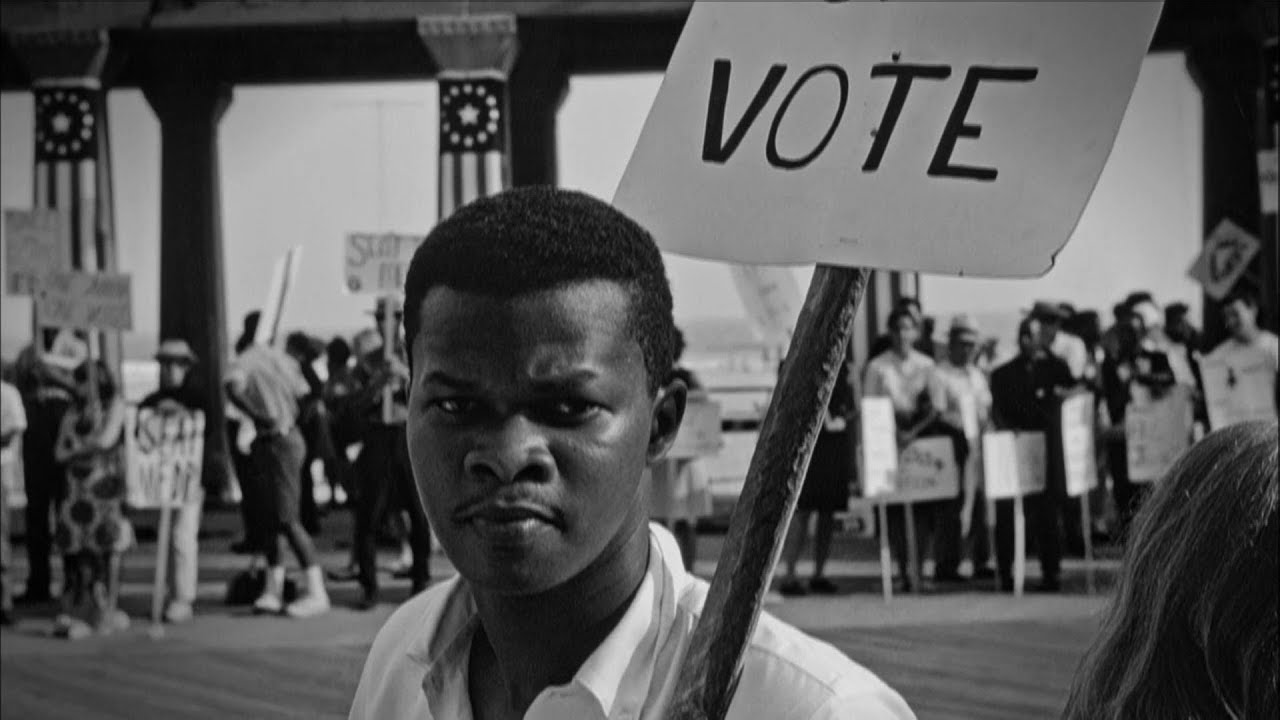
(1964 voter registration demonstration in MIssissippi)

Greg Iles’ fourth novel in his Penn Cage series, NATCHEZ BURNING takes the reader back to a time period in American history when the civil rights movement was gaining its footing expressing the needs of black Americans as they had to deal with the daily injustices and violence that existed in large segments of American society.  Denied their rights as citizens, black Americans turned to organizing themselves for political action which did not sit well, particularly in the Deep South.  Iles begins his story in 1964 in a Louisiana parish where Klansman burned down the music store of a black citizen, and murder its owner, and a young man suspected of dating the richest man in the parish’s daughter.  At this point the leader of the KKK faction decides that the Klan was not going far enough to maintain “white society” and form their own more radical and violent faction labeling it “the wrecking crew,” made up of World War II and Korean War veterans who were facile with explosives and weapons.  As usual Iles’ mastery of American history stands out as he weaves in historical events as Klan members discuss the killing of three northern civil rights workers in Philadelphia, MS, the training of Cuban refugees for the Bay of Pigs, and commentary about the assassination of John F. Kennedy, and plans to kill Martin Luther King, and possibly Robert F. Kennedy.  Iles flashes forward to 1968 and we learn that the “wrecking crew,” named, “Double Eagle” carried out the murder of a former navy and civil rights worker who is working to register black voters in Mississippi, among eleven others.  In addition, the Klansman have gang raped his sister, who happens to be Violet Turner, Penn Cage’s father, Dr. Tom Cages’ nurse.

As the reader becomes more engrossed in the plot, Iles’ pushes forward to 2005 and a phone call from Natchez, MS District Attorney, Shadrack Johnson who despises, Penn Cage, now mayor of Natchez, and informs him that his father is being accused of carrying out the physician assisted suicide of Violet Turner.  Cage, aware of his history with Johnson is wary, but once convinced the threat is real as Turner’s son, a Chicago attorney, wants to prosecute Dr. Cage, Penn confronts his father whether the charges are accurate.  Dr. Cage refuses to answer questions and cooperate and the reader wonders what do events dating back to the 1960s have to do with the charge against Dr. Cage.  Iles, as he has done in all his previous novels has lured the reader into his story through the characters he develops, a number of which have appeared in previous novels.  Iles has the knack to fill in events from previous books so the reader is brought up to speed so references to earlier situations make sense.  Now that the reader is hooked, Iles takes the reader on an interesting journey as the plot unfolds.

The plot itself is very complex involving a corrupt and savage billionaire named Brody Royal who had strong links to mafia types like Carlo Marcello and Santo Traficante; Royal’s son-in-law, Randall Regan, a violent and sadistic killer; the Knox family, that includes Forrest Knox, the Director of Louisiana State Police Investigation Bureau; Claude Devereux, the lawyer for the “Double Eagles; Henry Sexton, a local newspaperman who has been tracking the civil rights murders for decades, and numerous savory and unsavory characters.  Iles provides a wonderful history of Natchez, MI as well as an overview of the corruption of Louisiana politics.  A number of racist and crooked characters from the past are mentioned including former governor, Edwin Edwards and white supremacist, David Duke.  Iles’ integration of the history of the region is highlighted by Hurricane Katrina as we witness the devastation of the storm and the attempt by Brody Royal and his henchmen to rebuild the city in their own image by forcing blacks citizens out of areas destroyed by the storm, and implementing the reconstruction of valuable real estate to remake the city of New Orleans.

The core of the novel centers on Penn Cage’s crisis of conscience in dealing with his father, a man who he respects greatly.  Penn has difficulty accepting the accusations against his father and what it is doing to his family, but Tom Cage has grown very recalcitrant as he refuses to cooperate with his son’s inquiries.  The question at the forefront is what is Tom Cage hiding, and how can his son save him from himself.  Along the way witnesses to the civil rights murders of the 1960s die off, and others disappear as Penn gathers his forces and assets to try and vindicate a father.  For Penn, the most ethical man he had ever known may have withheld critical evidence for over forty years, and he begins to wonder whether his father’s life story may have been a lie.

The book never disappoints, and despite its length (it is almost 800 pages) it keeps the reader riveted to their seats and wanting to push further and further to see how all the corruption and murder that are discussed come together and work themselves out.  What is important about Iles’ effort is that it exposes the racial hatreds that dominated the south for what seems like an eternity.  It provides the book’s audience with an audacious history from a period that many would like to forget; in addition to the motives, weaknesses, and strengths of the characters portrayed.  NATCHEZ BURNING is a powerful story that will continue in the second installment of Iles’ trilogy, THE BONE TREE.

(Freedom Summer, 1964 Mississippi)

THE ENDS OF THE EARTH by Robert Goddard

The Ends of the Earth

The journey of James Maxted (Max) begun in the first volume of Robert Goddard’s World Wide Trilogy continues in the third volume, THE ENDS OF THE EARTH. The focus shifts to Japan as Max is determined to bring his investigation of his father’s death, Sir Henry Maxted, a British diplomat to a conclusion.  In the first two installments we learn that Max does not accept the verdict of the Parisian police that his father had committed suicide and he is bent on restoring his father’s reputation and finally learn the truth.  Max is certain his father was murdered and everything seems to center on a failed Japanese nationalist attempt to assassinate the Russian Tsarevitch upon his visit to Tokyo in 1891.  The “Dark Ocean” is a Japanese nationalist organization that hoped to prevent any improvement in Russo-Japanese relations, as they were focused on Japanese expansion in the Far East.

Many of the characters from the previous novels reappear in THE ENDS OF THE EARTH; Sam Twentyman, Max’s engineer from World War I; Malory Hollander, an assistant to Schools Morahan; Horace Appleby, a British secret agent, and they with their allies confront the xenophobic Count Iwazu Tomura, a nationalist leader with his own murderous agenda as they try to block the sale of Frederick Lemmer’s spy network to the Japanese government.  As in the two earlier novels, the book possesses numerous twists and turns one would expect from a Goddard story.  Goddard’s description of the historical period is very accurate.  The infighting in the Japanese government over expansion and honor is a major theme.  The difficulties between Russia and Japan over the Far East would culminate in the Russo-Japanese War in 1905 and continue thereafter is accurate.  Goddard also creates a number of documents and letters that keep the reader abreast of what took place in the previous novels that allows the current volume to make sense.

The plot is very suspenseful as Max’s quest continues, but as the story evolves Max is presented with a number of situations that blindside him.  At times in the novel it appears that things are about to settle down, but Goddard will then introduce a new character or bring back an old one from the previous volumes to twist the plot even further.  Goddard seems to have a low opinion of human nature as most of his characters seem to be seeking some sort of revenge. Max’s goal is to find the letter that Jack Farngold, an old friend whose sister is married to Tomura had sent his father in 1917. The purpose of the letter was to warn him about Tomura and Lemmer, which would explain Sir Henry’s death.  As he proceeds Max will learn things about his past that are shocking and will force him to confront Tomura as he tries to uncover the mystery of his own birth.

Throughout the novel Goddard constantly provides hints from the perspective of 1919 of what to expect from Japan in the future.  Goddard’s knowledge of Japanese history and geography is an asset as he sets his scenes and allows the reader insights into Japanese culture and politics between 1891 and 1919.  The novel is very fast paced and at times I found myself jotting down who some of the characters were because they came and then disappeared at a rapid rate.  Despite the numerous characters and shifting plot lines, the novel is surprisingly easy to follow if one pays attention.  Despite a storyline seems to bring closure at the book’s end, in true Goddard fashion there are hints that some of these characters may reappear once again in the future. If you enjoyed THE WAYS OF THE WORLD and THE CORNERS OF THE WORLD, Goddard’s final installment will not disappoint.

The Ends of the Earth

THE CORNERS OF THE GLOBE by Robert Goddard

The second installment of Robert Goddard’s worldwide trilogy, THE CORNERS OF THE GLOBE is a first rate sequel to THE WAYS OF THE WORLD.  The main character James Maxted, better known as “Max” continues his quest to discredit the idea that his father, Sir Henry, a British diplomat attached to the English delegation at the Paris Peace Conference in 1919 had committed suicide.  To avoid rehashing the details of the events surrounding the death of Sir Henry, the machinations that ensued involving a number of foreign secret services, and the impact of events on the peace talks, Goddard provides a handy memo written by Henry Appleby, a member of the British Secret Service that summarizes events in his missive to “C,” the individual in charge of English intelligence, dated 27 April 1919 (see pp. 31-36).  The memo allows those readers who have not read THE WAYS OF THE WORLD to gain somewhat of an understanding of why the story line proceeds as it does, though it is a bit confusing at the outset.

The narrative continues as Max arrives crossing over from Scotland and landing at Kirkwall Bay which at the time is overrun by American mine sweepers trying to clear the vast body of water from mines laid during the Great War.  Max, who is now in the service of British intelligence, also posing as an agent of the German spy master, Fritz Lemmer, who he suspects was responsible for the death of his father, is to inspect a German warship that has been interned at Scapa Flow.  Max’s mission is to recover a document, the Grey File, a coded list that details Lemmer’s foreign operatives that are working for German interests in Paris that is held aboard a German ship.  Once the document is located Max is forced to give up his cover story as death seems to follow his path as he races south to London with the documentation that would finally destroy Lemmer.

Goddard weaves a number of sub plots into his narrative that seems to coalesce at various times in the book and points to Goddard’s skill as a master story teller. Max’s mother, Lady Maxted enlists her brother George Clissold to deal with a law suit that was about to be brought against her by a French socialite who had purchased a series of antiquities from her deceased husband. The intricacies associated with the Maxted and Tomura families repeatedly make their appearance.   Next, we find Sam Twentyman, a colleague of Max’s from the war, in charge of the British motor pool in Paris trying to avoid being killed by Lemmer’s men who believe he knows where Max can be found.  The roles of Travis Ierton and Schools Morahan, whose main business was the exchange of illegally obtained information about the peace negotiations and selling it to the highest bidder is ever present.  Horace Appleby and Max’s quest to disclose to “C” the identity of spies within British intelligence, when they themselves have been accused of being spies by members of the secret committee headed by “C” that controls intelligence operations from London is extremely important.  Finally, the reader is exposed to the machinations of the Japanese at the peace conference as they try to acquire the former German colony of Shantung from the Chinese.

The role of the Japanese introduces a number of new characters in the story.  Marquis Saionji, the head of the Japanese delegation faces political problems at home as he is perceived as not being tough enough in presenting Japan’s position in Paris.  His deputy Count Masatake Kuroda is recalled to Tokyo and is replaced by Count Tomura Iwazu, a gangster with interests in Korea and Manchuria, who represents the right wing nationalist faction of the Japanese government.  Count Tomuro, employing his son Nuboro, searches for the mysterious Arab le Singe who he believes is privy to secret Japanese documents and information that could destroy Tomuro’s illegal business empire and political influence.  The result is havoc and death for anyone who gets in their way.  It seems for most of the book that every strand in the story leads to le Singe.  What does he know?  Lemmer and his men, Nuboro and his thugs, British intelligence led by Appleby and Max are all desperate to find him first so they can figure out the proper course to take to protect their personal and governmental interests.  However, as the story continues to unfold, of the utmost importance is that a deadly secret exists that is deeply buried in Japan’s domestic political power struggle.  This secret has already cost the lives of Max’s father, Sir Henry, and a growing list of others who have some knowledge of what it is.

Goddard’s historical nuances are as strong in his second installment as they were in the first volume of the trilogy.  He points to the problems between the Greeks and Turks as they covet certain territory.  The American government’s subterfuge in fomenting a revolution in Columbia in order to obtain a strip of land to push the Panama Canal through.  President Wilson’s battle with the Japanese over self-determination for the Chinese.  The political infighting within the Japanese peace delegation and government in Tokyo, as well as the arrival of the German delegation to receive the final peace treaty are all significant and presented with historical insight and accuracy.

The glue that seems to bind all the characters, whether from THE WAYS OF THE WORLD or newly introduced in THE CORNERS OF THE GLOBE is the Grey File and what it entails, the knowledge that le Singe may possess, and economic and political influence in Japan.  The disingenuous behavior and violence that dominates the story is well suited to the characters that Goddard has developed.  The book continues a mysterious historical yarn, but as in the first book, it ends rather abruptly leaving the reader hanging looking forward to reading the final volume in Goddard’s trilogy, THE ENDS OF THE EARTH.

THE WAYS OF THE WORLD by Robert Goddard

(The “Big Four” at the Paris Peace Conference, 1919)

If you were about to sit down and write a historical espionage thriller what better setting could you imagine than Paris following the Great War.  Paris, 1919 with historical characters ranging from Ho Chi Minh to Woodrow Wilson all together in the city of lights, trying to redraw the boundaries of defeated empires and bring about self-determination is an amazing setting.  It is on this stage that Robert Goddard has created an engrossing tale entitled, THE WAYS OF THE WORLD.  Goddard has written over twenty historical novels, and this is my first exposure to his writing and it will not be my last.  We first meet the protagonist, James Maxted, a former flying ace for the Royal Flying Corps (RFC) during World War One, who spent the last eighteen months of the war in a German POW camp after being shot down, trying to set up an aerodrome business with his wartime compatriot Sam Twentyman.  During negotiations he receives a message from his mother that his father has been killed in Paris.  Sir Henry Maxted, a career British diplomat who served in Russia during the revolution, Brazil, and Japan among many postings was part of the British delegation to the Versailles Conference.  The French police under pressure from the British government rule Sir Henry’s death was accidental and from this point on the story line begins to evolve.

After going to Paris with his brother Ashley, James, known as “Max” does not accept the French police’s conclusion that his father suffered an accidental death when he supposedly finds his mistress having a liaison with a French artist, and falls off a roof peering into the Frenchman’s apartment.  For Max, his father’s honor is of the utmost importance and he is on a quest to learn the truth.  His older brother, now, Sir Ashley, does not want to make waves, and under the influence of his scheming wife, Lydia wants to accept the findings of the French police and move on and collect his inheritance.  Sir Ashley informs his brother that the land he was promised by his father for his aerodrome venture would not be forthcoming if he pursued his own investigation of his father’s demise.  From the outset the family setting and some of the characters seem to have been borrowed from a Downton Abby script, but about a quarter of the way into the book matters become very serious and British officials are very clear they do not want Sir Henry’s death to create a scandal at Versailles that could ruin the tenuous negotiations that are taking place.

Goddard creates a number of interesting characters apart from the Maxted family members.  There is Travis Ireton, a supposed American friend of Sir Henry, who traffics in obtaining information concerning peace negotiations and selling what he learns to interested parties.  Madame Corinne Dombreux, a French woman who had been married to a spy during the Russian Revolution.  Now a widow she had been Sir Henry’s mistress, and she too questions Sir Henry’s supposed accident.  Senor Baltazar Ribeiro, a Brazilian diplomat who knew Sir Henry well and worked with him to settle Brazilian and allied disagreement as to how many German merchant ships should remain in the Rio government’s control.  Fritz Lemmers, the fugitive head of the German Secret Service who is working behind the scenes to foster German interests by recruiting spies all over Europe and had been an attaché in Tokyo in the 1890s when he Sir Henry was posted there.  Masataka Kuroda, a Japanese official who knew Henry in 1891 at the time of the plot to assassinate the Tsarevitch during a visit to Tokyo.  Nadia Bukayeva and her uncle, leaders of the trust, a group bent on restoring the Russian monarchy to the throne after the revolution.  In addition, there are numerous others ranging from American, French, and British secret police to Maxed family members who will provoke the reader’s interest.  All developed well by Goddard, and each makes an important contribution to the ever complex plot.  When it seems that the closer Max gets to the truth, the more people with important information die.

It is important to keep in mind that the novel is taking place during the Versailles Conference.  The atmosphere is intense because so much is at stake for so many nationalist movements and countries.  Things became even more problematic as the major powers, the US, Italy, France and the UK decide that they will make the “major” decisions to the exclusion of Japan.  Goddard blends this atmosphere well with his plot concerning Sir Henry’s death, the chicanery that is the Maxted family as Sir Ashley tries to protect his selfish interests, Max’s pursuit of the truth and where it leads him, and the ultimate result of his investigation.  My only disappointment came when the book came to an end rather abruptly.  However, once you turn the final page you learn that the second installment of Goddard’s’ worldwide trilogy, THE CORNERS OF THE GLOBE continues the story.  For me, I cannot fathom where Goddard will take the story next.

THE FIFTH HEART by DAN SIMMONS

The Fifth Heart

What does wonderful historical fiction, Sherlock Holmes, Henry James, members of the Adams dynasty, anarchism, and numerous late 19th century historical figures and events add up to?  The answer is a marvelous new novel by Dan Simmons, entitled, THE FIFTH HEART. Having just taken in the film, MR. HOLMES I have become fascinated by the character of the “great detective.”  In his own mind he seemed to wonder whether he himself was real, or a fictional construct of Arthur Conan Doyle.  It really does not matter whether these ruminations that appear throughout the book are true as Simmons has taken the friendship embodied in the American “salon” that included Abraham Lincoln’s personal secretary and William McKinley and Theodore Roosevelt’s Secretary of State, John Hay and his wife Clara; Henry Adams and his spouse, Clover; and the noted geologist and explorer Clarence King called the “Five of Hearts” and turned it into a remarkable mystery that centers around a plot to assassinate President Grover Cleveland, and numerous other politicians and government officials designed to create the conditions for a massive revolt on the part of the lower classes to overthrow the then existing power structure.

(Clover Adams, wife of historian Henry Adams)

Simmons’ methodology is based on assiduous research, strong character development, and a plot that may not have been that farfetched in 1893 because of the earlier Haymarket Massacre in Chicago.  The novel opens with a supposed chance meeting between Sherlock Holmes and the American writer, Henry James along the banks of the Seine River in Paris. It seems that James is contemplating suicide over the poor sales of his novels and short stories along with his inability to become a successful playwright.  Holmes, who is bent on keeping a promise to the brother of Clover Adams concerning her suicide convinces James to accompany him to America and serve as his foil in the way that Dr. John Watson had done in the many cases that made Holmes famous.  From this point on the novel takes off and along the way the reader meets Samuel Clemens, Henry Cabot Lodge and his wife Nellie, Theodore Roosevelt, William Dean Howells, Oliver Wendell Holmes, and numerous other historical figures.

Simmons’ historical references integrated into character dialogue are impeccable.  Simmons has an excellent eye for historical detail as he describes how New York evolved from a semi-rural grouping in the 1840s to an immigrant infused city of Jews, Irish and Italians, each with their own niche in society.  His description of the Washington, DC of the 1890s is very accurate.  From the foliage, architecture, boulevards, and slums of Foggy Bottom.  His description of Chicago and the Columbian Exposition are also accurate in detail and in part replicate Erik Larson’s THE DEVIL IN THE WHITE CITY.  What is astonishing is Simmons’ imagination and ability to connect the dots in his plot that though the story is fiction, it is in part quite plausible.  The idea that Clover Adams’, a woman who suffered from melancholy and depression did not commit suicide and was murdered is in some way connected to an anarchist plot seems way off base until the author develops his story and with how events and characters come together, it may be possible.

It is fascinating how Simmons develops the Holmes/James relationship and their views about society in general.  What is most curious is how James goes from complete distrust of the English detective to reliance on his logic, and how at times each seems to be investigating the other as they try to make sense of their relationship.  The scenes involving the two are “precious” as are the interactions and word play between the characters and their views on race, Jews, and the origins of American anarchism.  What emerges is that the coterie of individuals that Holmes and James must deal with runs the gamut from criminals and murderers to the intellectual circle that is the center of the Hay/Adams salon, a quite diverse grouping! The interplay of Holmes’ constant speculations intertwined with his investigation of Clover Adams’ death and the plot to assassinate President Cleveland accentuates the richness of the story line and makes THE FIFTH HEART a wonderful read.  The only caveat that I would bring to the table is that the novel is quite long, and at times Simmons can meander away from what appears to be the core of the novel, but he always seems to pull things together to engross the reader even further.

Postscript:  If you have ever read Phyllis O’Toole’s THE FIVE OF HEARTS you will appreciate Simmons’ ending.