THE ENGLISH SPY by Daniel Silva

The ENGLISH SPY, the latest in the long line of Gabriel Allon mysteries by Daniel Silva centers on a plot to kill the venerated Israeli intelligence operative and art restorer.  Allon has numerous enemies, but one in particular is very upset that a plan to get the English Prime Minister to sign over lucrative North Sea drilling rights to a Kremlin owned Energy Corporation has gone array – so revenge is at the forefront.  A further inducement to be rid of Allon revolves around the future accession of Israel’s most effective assassin as head of the “Office,” the Jewish state’s intelligence agency.  Silva reintroduces a number of important characters from previous books, most important of which is Christopher Keller, a former British SAS agent, now a professional assassin.  Keller, who has his own agenda, becomes Allon’s partner in hunting down a number of individuals who are linked to the plot.  Because of Keller’s background, Silva will weave the “Irish Problem” into his story as a number of his characters were deeply involved in IRA violence in Northern Ireland.

The English Spy (Gabriel Allon Series #15)
(FSB-the successor to the Soviet KGB headquarters in Moscow)

The story begins as the former princess and recently divorced wife of the future king of England is killed while vacationing on a British yacht.  Allon is called in by the Head of MI6, Graham Seymour to uncover the truth concerning the princess’ death.  Allon is convinced it is no accident.  Israeli intelligence assures him that the chef on the boat, a Colin Hernandez is responsible for the explosion, and it turns out that Hernandez is none other than Eamon Quinn, a former IRA bomber.  After peace in Northern Ireland was achieved, Quinn became a free-lancer whose record of employment included; Hezbollah, Hamas, al-Qaeda, and Iranian intelligence.  Years earlier the Israelis had offered to kill Quinn, and now Seymour finally takes them up on their offer.

Allon and Keller track Quinn and his accomplice, Anna Huber, a Russian agent trained from her time in an orphanage, until they are led to a bombing at Brompton Road in London.  Keller and Allon escape death, but Allon is convinced that the princess’ demise and the bombing are linked in a plot to kill him.  From this point on Silva introduces a number of important new characters as he constructs a scenario that has great relevance to the international scene at the time of the book’s release.  The Iranian nuclear negotiations are front and center of the story and the policy goals of the United States, Russia, Iran, and Israel are played out in an accurate fashion.  Silva maintains the clipped dialogue and sarcastic humor that were on display in his previous work and those new to Silva’s approach will find that they soon will become engrossed in the story.  The problem for readers who are familiar with the Allon series is that it seems a bit formulaic as Silva constructs the novel in a somewhat predictable fashion, though the story has a number of surprising twists and turns it does not grab the reader like earlier works.

Allon will stage his own death as a means of catching Quinn and the people who are behind him, resulting in a number of interesting situations.  The character development remains strong as we are introduced to Reza Nazari, an Iranian turned Israeli spy who is part of the Iranian negotiating team; Madeline Hart, a former Russian sleeper agent that has come over to the British side; and Alexei Rozanov, an SVR agent who has been dispatched by the Russian “Tsar” to eliminate Allon.  Other Allon associates appear including the irascible Ari Shamron, the twice former director-general of Israeli intelligence and Allon’s mentor.

Throughout the novel Silva presents background history of individuals and places, be it a snow covered Vienna neighborhood that the Nazis emptied during the war or description of the lives of his characters, like Madeline Hart who was orphaned almost at birth and trained in spy craft and sexual matters in a Russian orphanage to be used as a weapon against powerful men.  Speaking of background history, as the book progresses more and more Allon is convinced that Rozanov and Quinn played a major role in, or actually were responsible for the explosion that killed his son Dani, and resulted in institutionalization of his wife Leah, a number of years before.

Overall, the book is a typical Allon yarn, with some commentary pertaining to the real world of terror and espionage.  New readers will be satisfied and will want to move on to the next book in the series, THE BLACK WIDOW, while returning readers might have to think twice.

THE WARLORD’S SON by Don Fesperman

The Warlord's Son

THE WARLORD’S SON by Don Fesperman is an amalgam of tribal machinations, hidden agendas, and conflicting personalities played out in the border region between Pakistan and Afghanistan, Peshawar, Pakistan, and tribal areas of Afghanistan.  The story is about complex relations among tribal families, a budding relationship between a man and a woman that goes against tradition, the interests of a number of warlords, and two shadowy Americans who seem to manipulate many of the main characters.

The three main characters are Najeeb Azam, a Pakistani educated in the United States who has been banned from his tribe by his father.  Najeeb’s life has been limited following 9/11 by US Consular officials and his father’s decree.  To survive he hires himself out as a guide and interpreter to western reporters who crave information about Pakistan, the Taliban, and the course of events inside Afghanistan.  The second major protagonist is Stanford Kelly, better known as Skelly, a burned out journalist from the American Midwest who seeks to rekindle his career in southwest Asia.  He links up with Najeeb as a means of getting back in the “game,” and the course of their relationship and what they experience form the core of the novel.  The third character, Daliya Qadeer goes against her family’s wishes by becoming involved with Najeeb and she will take any risk to be with him.

Fesperman conveys the brutal dichotomy that is Musharraf’s Pakistan following 9/11.  The Pakistani ISI (Interservices Intelligence) that helped create the Taliban is deeply involved in Najeeb’s life, as are two Americans who seem to be working with the ISI, but it is not really clear what they are up to until the novel’s conclusion.  Skelly was part of a wave of American journalists who descended on Pakistan and Afghanistan after 9/11 as the war between the United States and the Taliban exploded.  At first Najeeb and Skelly are wary of each other, but soon develop a comfort level as they both seemed to be looking for somewhere to take root as their lives seemed to converge.

The author does a superb job providing the sights and smells of the region from Peshawar to the many villages of Afghanistan.  In addition, the archine and duplicitous ISI is introduced and integrated accurately into the story as the “midwife” of the Taliban and the ally of the United States.  The author is dead on when he points out that the ISI’s main security concern is India, and that the Taliban is a tool in that strategy no matter how close or how much aid it receives from the United States.

The most interesting aspect of the novel is how Najeeb’s life seems to come full circle.  Fesperman revisits his childhood and his relationship with his warlord father and an uncle who seems to take care of him.  His father sent him to America for his education for his own reasons and when he returned their relationship collapsed.  To control his son, the ISI would keep him in line.  Because of his relationship with Skelly, and the reporter’s obsession to uncover a major newspaper story, Najeeb will revisit his childhood haunts as he deals with the machinations of the ISI, his father, his uncle, and other warlords as he tries to survive.

Fesperman’s writing is sensitive to the “underworld” that exists in Pakistani and Afghan society, particularly in the tribal areas that abuts Afghanistan where many refugees seek shelter from the Taliban.  Najeeb joins Skelly on a caravan into Afghanistan as the American reporter tries to land one last scoop to satisfy the journalistic blood that pulses in his veins.  The result is a series of mishaps, surprises, and shifting alliances that threaten their lives.

Numerous questions arise as the book unfolds.  What role do Sam Hartley, an American businessman and Arlen Pierce, a cultural attaché from the State Department play?  Is there a strategy that is being developed to capture Osama Bin-Laden?  Can Najeeb’s father be trusted?  What is the ISI really after? Among numerous questions.  The end result will surprise the reader and the books conclusion is somewhat disconcerting.

This is my second go at one of Don Fesperman’s novels, and I look forward to reading others in the future.

THE PRISONER OF GUANTANAMO by Dan Fesperman

The Prisoner of Guantanamo

One night along the Cuban coast that adjoins the United States naval base at Guantanamo a body washes ashore.  The body that of an American serviceman is found by a Cuban police officer on patrol.  The officer rushes down the hill to chase away an iguana, recognizes that the body he has located is American and realizes how important his find is.  So begins Dan Fesperman’s THE PRISONER OF GUANTANAMO, a book that will capture the reader’s attention immediately and maintain interest as the plot continues to unfold.

Fesperman’s main character is a former Marine and FBI agent named Revere Falk who was fluent in Arabic and was employed by the Pentagon as an interrogator at Guantanamo.  After introducing the reader to the interrogator’s craft, Fesperman discusses a Yemeni detainee named Adran al-Hamdi, who Falk has worked very hard to establish a working relationship with in order to obtain what he believes to be important intelligence.  Al-Hamdi was captured in Afghanistan by the Northern Alliance and was considered a major “head case.”

Once the American corpse is identified as SGT Earle Ludwig, the Pentagon asks Falk for assistance with the investigation into his death.  Falks’s running commentary throughout the novel provides interesting insights into the American approach at GITMO to obtain intelligence and the relationship between the various US intelligence agencies.  As the story progresses Falk is forced to revisit his past, particularly an error he made as a young Marine dealing with Cuban intelligence in Havana.  As Falk’s investigation into Ludwig’s death develops it appears that he may have been murdered.  At this point a number of new characters are introduced.  Pam Cable, Falk’s girlfriend and fellow interrogator, Tim Bokamper, an old friend and FBI agent, and Gonzales Rubiero, an American who lived in Miami Beach, but spied for the Cubans.  Each of these characters plays an important role in addition to the two representatives that the Department of Homeland Security dispatches to GITMO forcing the story in a different direction.

Fesperman provides a number of important insights as the novel builds.  The reader is taken inside al-Hamdi’s head to experience how detainees reacted to their imprisonment.  In addition, Fesperman examines Cuban-American relations particularly in the post 9/11 world.  “Little Havana,” in Miami Beach is explored in the context of the post-Cold War period and is very accurate.

The key aspect of the novel is how its component parts fit together.  How does Falk’s career as a young Marine fit into the investigation of Ludwig’s death and the reaction of other federal agencies?  How does Ludwig’s death relate to Falk’s interrogation of al-Hamdi?  What role does Cuban intelligence play in the events surrounding Ludwig’s death and what is their interest in al-Hamdi?   Finally, why do people close to Falk’s investigation begin to disappear?  Fesperman weaves his answers very carefully as the reader tries to make sense of certain aspects of the novel that seem to unfold in a world of jihadists, Cubans, and other misshapen secrets.  For example, were there “higher ups” in Washington looking for links between Fidel Castro and al-Qaeda as a pretext for who knows what?  The problem for Falk is that every time he feels he has figured out what was going on the tables are turned and he grows even more confused.

This was my first experience reading one of Fesperman’s novels and as a result he has created a new fan!  I am looking forward to reading THE WARLORD’S SON another of his books as soon as I can.

(GITMO, the home of many individuals, both terrorists and non-terrorists)

THE OTHER SIDE OF SILENCE by Philip Kerr

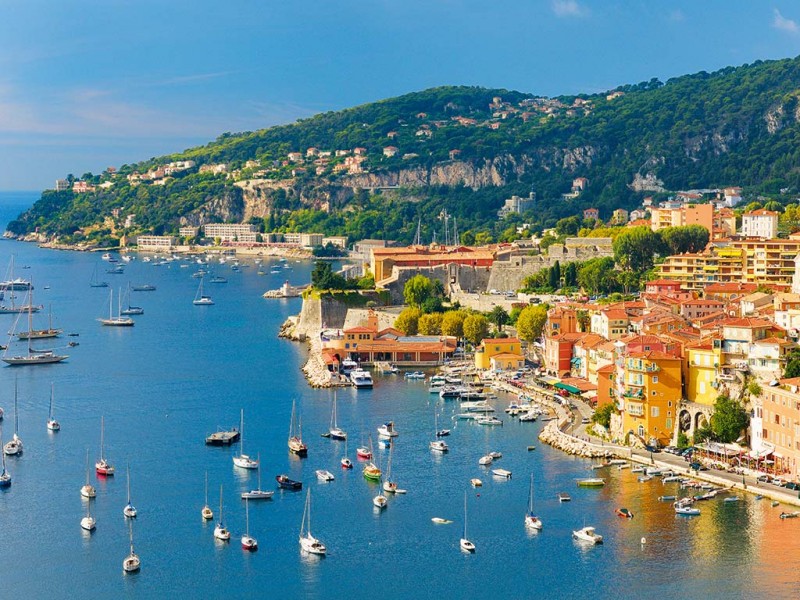
Map of Côte d'Azur

(The site of Philip Kerr’s new novel, the French Reviera)

The Other Side of Silence (Bernie Gunther Series #11)

In the eleventh installment of Philip Kerr’s thoughtful and entertaining Bernie Gunther series, we find our protagonist ensconced on the French Riviera contemplating suicide.  For those familiar with Gunther’s odyssey through World War I, World War II and the post war world you will not be surprised by his behavior.  Gunther is bored with his life and misses Berlin since he exiled himself to France, and became employed as a concierge at the Grand Hotel du Saint-Sean-Cap.  Gunther’s problem is that he misses his life as a detective, but his exile is about to change when a guest named Harold Heinz Hebel checks into the hotel.  The problem is that Hebel is an alias for Harold Hennig, a former Captain in the Nazi SD Security service, and an accomplished murderer.  It is that recognition by Gunther that Kerr’s new novel THE OTHER SIDE OF SILENCE pivots.  From that point on as Kerr develops his plot the reader is exposed to Gunther’s sarcastic humor and comments about a range of historical figures from Leopold II, to Gauguin, to numerous Nazi henchmen and British intelligence figures.

Kerr has created a number of scenarios that he develops with his usual skill as a writer and a practitioner of conspiracies.  They begin when Gunther meets the nephew of the British writer, W. Somerset Maugham who is being blackmailed by none other than Harold Hennig.  Maugham, a known homosexual finds out that Hennig has obtained a picture of him with three British spies who were turned by Soviet intelligence, Anthony Blunt, Guy Burgess, and David MacLean.  The picture is extremely compromising sexually and Maugham, even at eighty two years of age is worried about his reputation in England where homosexuality is illegal, and in the United States which is in the throes of the McCarthy hearings.  He asks Gunther to be his agent with Hennig to make sure the transaction is carried out so he has nothing further to worry about.  To show Maugham what he is dealing with, Gunther describes a situation that occurred in Berlin in 1938 when Gunther, no longer a German police detective, is approached by Captain Achim von Frisch, a man who saved his live in Turkey during the Great War.  Frisch is also being blackmailed, by you guessed it, the same Harold Hennig.  It seems that there is a political and military shakeup going on within the Nazi command structure, and another officer, General Freiheir von Fritsch is being accused of being a homosexual.  Frisch, who previously was blackmailed by Hennig to the point of poverty is privy to important information that would clarify the situation.  However, he is afraid, and wants Gunther to investigate and determine how high up in Hitler’s regime this plot reaches before he comes forward.  In the end Hitler achieved his goals and took over as the head of the Reich’s military by stepping over any body that got in his way.

Kerr goes back and forth between Berlin in 1938, Konigsberg in 1944, and the south of France in 1956.  For Gunther they are all related in some manner and they seem to all involve Harold Hennig.  The events that took place for Gunther go a long way in explaining his sarcastic and cynical view of people and life in general.  Apart from the plot, Kerr’s command of German history is excellent, though he does make a minor error by stating that Frederick III built a hunting lodge in Konigsberg in 1690, when in fact he did not assume the throne until 1888.  However, his description of historical figures like Erich Koch, Erich Mielke, Guy Burgess, and the sinking of the MV Wilhelm Gustloff in early 1945, and the use by the CIA and KGB of former Nazis is right on, as is his integration of the 1956 Suez crisis as historical background.

Throughout the book Kerr is at his deceptive best as the novel reeks of disinformation, misdirection, spies, and counterspies, and of course conspiracies enveloped within other conspiracies.  The intricacies of the plot are based upon Maugham’s actual experiences as a British spy during the late 1930s and World War II as the myriad of scenarios keeps the reader engrossed.  Who is really behind the blackmail?  Is it the Russian KGB, is it remnants of the Third Reich, is Hebel acting alone, or is it something else?  Is the British intelligence community the real target? MI5 or MI6?  Does the United States have a role to play?  How does W. Somerset Maugham fit in?  How about the Cambridge Five that was penetrated by Russian intelligence during and after World War II?  How does Bernie Gunther fit into these complex questions?  Why was Gunther’s bridge partner murdered?  Does that fit into the paradigm?  The answers will keep the reader riveted to THE OTHER SIDE OF SILENCE, and it makes one look forward to Kerr’s next Bernie Gunther novel, PRUSSIAN BLUE.

(The French Rviera, the site of Philip Kerr’s new novel)

THE SAMARITAN’S SECRET by Matt Benyon Rees

(The city of Nablus on the West Bank)

Matt Benyon Rees’ third installment in his Omar Yussef mysteries, THE SAMARITAN’S SECRET, attains the same level of character development, stimulating plot line, and insight into the political and social conditions that form the basis of the Palestinian-Israeli conflict as his first two novels in the series.  The story begins in the city of Nablus, located on the West Bank, which was captured by Israel in the 1967 Six Day War.  Nablus remained under Israeli occupation until it was returned to the Palestinian Authority, which has governed it since 1995.  Nablus has been a hotbed of radical Palestinian nationalism, with a strong Hamas presence which continued even after it split with the Palestinian Authority in 2006.  For the Palestinians, even after it was granted autonomy it still felt like they were being occupied by the Israeli army with its numerous checkpoints that had to be navigated on a daily basis.

The Samaritan's Secret (Omar Yussef Series #3)

Omar Yussef, a fifty-seven year old, physically unfit history teacher in the Dehaisha refugee camp travels to Nablus to attend the wedding of his friend Lieutenant Sami Jaffari, a Nablus policeman when a robbery is reported at the Samaratin synagogue, a repository for the religious sect’s historical documents.  The Samaritans claimed to be descendants from the biblical Israelites and remained in Nablus after many of their brethren were exiled to Babylon.  While investigating the break-in, which they learn had already been solved, a murder is reported on Mount Terzim, near the Samaritan temple.  It turns out that the murder victim, Ishaq was the son of Jibril Ben-Tabia, the head priest of the Samaritan people.  The victim also worked for the Palestinian Authority as the unofficial advisor for the deceased “old man,” a.k.a Yasir Arafat.  When in power, Arafat’s financial policy was remarkably medieval, based on the head of the Palestinian Authority doling out funds as he saw fit.  It was a corrupt system that members of the younger Palestinian generation and radical elements within the community vehemently opposed, as they hoped to install modern financial institutions once Israel granted them total independence.  After Arafat’s death, Ishaq went to work for Amin Kannan, one of the richest men in Arab Palestine.

Hamas politics permeate the novel.  For example, a wedding was planned for fifteen couples which would allow a radical sheik to address the guests.  In reality this was nothing more than a political rally to spread Hamas’ propaganda. Further, the corrupt political establishment of Nablus had far reaching tentacles and Lt. Jaffari feared if he continued his investigation into Ishaq’s murder he might be returned to Gaza, where he was once exiled.  Jaffari also feared that his fiancé, Meisour would be denied the necessary papers to travel from Gaza for their wedding.  With Jaffari’s reticence to follow leads it fell to Omar Yussef to figure out why Ishaq was murdered, and who was behind it.

Rees does a commendable job exploring the political and economic realities that pervade the city of Nablus and other towns under the auspices of the Palestinian Authority.  The role of radical clerics, Hamas, and the Israeli army are all major factors in the everyday life of the Palestinian people, and the author integrates them throughout the novel.  But for the Palestinians, the corruption endemic to the Arafat regime comes home to roost as the World Bank threatens to cut off aid unless millions of dollars that Arafat dispersed was not recovered- as the money was geared toward building hospitals, schools, and infrastructure projects.  To protect the future Palestinian state, the money had to be found.

The Palestinian Authority-Hamas civil war keeps resurfacing as the story unfolds and what seems obvious at certain point’s turns out to be totally untrue.  Rees is a master story teller and has an excellent feel for the plight of the Palestinian people.  He has written a crime mystery, but in reality it is a window into what is truly the historical tragedy of the Palestinian people.

(Nablus, the commercial center of the West Bank)

SNOW WHITE MUST DIE by Nele Neuhaus

Snow White Must Die (Pia Kirchhoff and Oliver von Bodenstein Series)

In the fall of 1997 two young girls are murdered in the small German village of Altenhain.  Eleven years later the convicted murderer, Tobias Sartorius, is released from prison and returns home.  During his absence many things have changed, but not the hatred for Sartorius, and villagers are up in arms that he has resurfaced, and many seek revenge.  We also learn that bones and a human skull have been located inside a fuel tank found at a construction site where workers were demolishing a former military airfield near Frankfurt.  Further, the mother of Sartorius, divorced, named Rita Cramer has been viciously attacked at a North S Bahn train station and has been pushed over a railing onto an expressway, creating a seven car pileup, resulting in Cramer’s induced coma in an ICU unit at a local hospital.  These incidents form the backdrop for Nele Neuhaus’ novel SNOW WHITE MUST DIE which was originally published in Germany in 2010.  Neuhaus is a German mystery author who has created a series of detective novels that feature the work of Pia Kirchoff and Oliver von Bodenstein of which the current book is the first.

The plot that Neuhaus creates is very complex as the two detectives believe that the three incidents that have been mentioned are all related.  The old tensions from September 6, 1997, the date of the original murders are reignited as new evidence emerges, in addition to what appears to be another murder in November, 2008.  Villagers are convinced that Sartorius has struck again, and this time they will make him pay.

Neuhaus creates an interesting cast of characters apart from the villagers.  Police and government officials are intertwined within the plot which produces numerous surprises.  The detectives themselves are a study in contrast ranging from their socioeconomic backgrounds, love lives, and approach to police work.  The detectives have to cope with a number of subplots as they uncover the truth of what occurred earlier, and what was occurring in 2008.  Originally Sartorius was found guilty based on circumstantial evidence and sent to prison.  The problem for Sartorius was that he was drunk during the original murders after attending a village fair.  He suffered from a two hour gap in his memory which he claimed was blocked, and could not remember what had occurred.  Once he returns to Altenhain, the only person who will pay attention to him is a young Goth looking girl, Amelie, who looks eerily like one of the murdered girls. The role of Claudius Terlinden, who seems to own the village, his autistic son Thiers, Gregar Lauterbach, the German Cultural Minister in Wiesbaden, the actress Nadia von Bredow, Oliver von Bodenstein’s wife, Cosima, and the psychiatrist, Daniela Lauterbach, all fit into the separate subplots that percolate throughout the story.

The reader will be challenged to try and discern where the plot is going on numerous occasions and each time you think you have solved the mystery it takes an unexpected turn.  Neuhaus is a master at keeping the reader guessing and she has written a thriller, with wonderful characters, that produces a totally unexpected ending.  I recommend this book highly and can’t wait to begin, BAD WOLF, the second installment in what promises to be another page turner.

Snow White Must Die (Pia Kirchhoff and Oliver von Bodenstein Series)

RADIANT ANGEL by Nelson DeMille

No one can ever argue that Nelson DeMille’s novels do not reflect contemporary trends in the world.  At a time when Russian President Vladimir Putin is trying to restore Russian prestige and its place on the world stage through his actions over the last ten years in Georgia, the Crimea, Ukraine, and now Syria, DeMille offers a plot line that seems to fit the Kremlin’s current agenda.  DeMille’s latest book in the John Corey series, RADIANT ANGEL begins with a sense of mystery as Colonel Vasily Petrov, formerly of the KGB, now a significant actor in the Russian intelligence service, SVR, attached to the Russian mission to the United Nations, receives a message from his superiors along with a package requested weaponry.  Petrov’s title is Diplomatic Representative of the United Nations for Human Rights Issues, but for former NYPD homicide detective, John Corey, now on disability after being severely wounded, Petrov is the equivalent to a CIA station chief.  Corey’s concern about Petrov’s background is warranted as he was the son of Vladimir Petrov who once head of SMERSH, the assassination arm of the old KGB, and had been implicated in rubbing out a number of Putin’s political opponents.  For example, the British government recently concluded that Putin ordered the assassination of Alexsander Litvinenko, a former FSB secret service agent in 2006.  Litvinenko had accused Putin of staging apartment bombings in Russia to raise the terror scare to facilitate his rise to power.  He further charged that Putin had ordered the assassination of journalist Anna Politkovskaya who was a thorn in Putin’s side.

Corey’s new job is with the Diplomatic Surveillance Group (DSG) as a contract agent is to follow Petrov’s movements around New York.  He is accompanied by Tess Faraday, a lawyer who supposedly hoped to become an FBI agent or was she a CIA or State Department Intelligence agent?   Whatever the case, she was able to keep up with Corey’s sarcasm and sardonic wit!  As they follow Petrov out to the Hamptons, the Russian vehicle turns into the estate of Georgi Tamorov, a billionaire oligarch thus exceeding the twenty five mile radius that Petrov is allowed from the UN.  As Petrov emerges from his car and enters Tamorov’s mansion, Corey grew concerned as to what Petrov was up to, and in addition he wondered who Tess Faraday really was, and what was she hiding.   No matter what was about to occur it is clear that DeMille has taken advantage of the renewal of the Cold War between the United States and Russia to formulate an interesting great power scenario that Corey will find himself in the middle of.

As DeMille develops the story he returns to a theme exhibited in a previous novel, WILDFIRE, the issue of “loose nukes” from the old Soviet Union.  The reemergence in the plot of “suitcase nukes” as a threat to the United States is very real, and this time it involves Putin’s Russia, not the fear of Islamic extremism.  In his current volume, DeMille does not seem to develop his characters as fully as he has done in previous books which detracts a bit from the overall experience.  To DeMille’s credit, the scenario that he develops is not that farfetched in the current world climate and I hope that American intelligence officials have gamed this type of operation against the United States.  What is important in the real world is that DeMille is pointing out how weak security is in American harbors and what tempting targets they are, and how poorly intelligence agencies communicate with each other to the detriment of the American people.

Overall, DeMille has written another successful John Corey adventure and I assume others will follow in the near future.


For a note from Nelson DeMille visit my website at http://www.docs-books.com

January 2016
A Note from Nelson DeMille
Radiant Angel
I was just reading a capsule review of 2015. I didn’t realize 2015 was that bad, but when you read about it, the year really sucked. I mean, if 2015 was a movie, it would get, like, half a star. If it was a book, nobody would buy it.

Anyway, Happy New Year. I hope your Holidays were wonderful, including the eight days of Hanukkah. Yes, I said nine days in my last Newsletter, but that was because my nine-year-old said they told him in school that it had changed to nine days. I see a career in politics for him.

Some of my readers were upset about what happened between John Corey and his wife Kate Mayfield in Radiant Angel. Well, things happen. But I can now report that John and Kate are in marriage counseling, and they are working out their problems. John has admitted to being a male chauvinistic pig and a wise ass. Kate has admitted to being a humorless FBI tight-ass. They’re getting in touch with their feelings and making progress, so most likely they will appear together in the next John Corey novel.

My next novel, however, will not feature John Corey. I’m introducing a new male lead character whom I have not yet named. Any suggestions?

The book, too, is unnamed, but it’s set in Key West and Cuba, as I’ve said, and I’m excited about the subject and the setting. When I was in Cuba in November, I made a good contact, code name Lola, who is providing me with inside information about the underground opposition and also advice on investing my money in Cuba. “Lola” says I can buy a cigar factory for ten thousand American dollars which he asked me to send to him via his cousin “Pablo” in Miami. Pablo emailed me a picture of the cigar factory which looks more like a sugar refinery. I have to think about this.

On another subject, my last novel, Radiant Angel, will be issued in trade paperback on January 19. If you haven’t read the hardcover or the eBook, or haven’t listened to the audiobook, maybe it’s time to buy the paperback. No pressure here, but you’d be doing yourself a favor. Trust me.

Thanks for all your suggestions about who should play John Corey and Kate Mayfield in the Corey TV series. They were all good picks, especially from those who said I should play John Corey. I’m available.

January, as we know, is named after the two-faced Roman god Janus who looks forward and backward, which is easy to do if you have two faces. And this brings me to my book The Quest, in which there is a reference to Janus, which leads one of my characters, Vivian, to quote King George VI’s New Year message to the English people in the darkest year of the war.

“I said to the man who stood at the gate of the year, Give me a light that I may tread safely into the unknown. And he replied, Go out into the darkness and put your hand into the hand of God. That shall be to you better than light and safer than a known way.”

My best wishes to you and yours for a happy, healthy, and peaceful New Year.

Sincerely
Nelson DeMille

P.S. Please consider sharing this Newsletter with a friend


WILDFIRE by Nelson DeMille

Wild Fire (John Corey Series #4)

Nelson DeMille’s WILDFIRE continues the raucous adventures and career of former New York Police Department homicide detective John Corey.  DeMille’s latest scenario takes place a year after 9/11 with newspaper and cable news blaring headlines that President Bush is about to launch an invasion of Iraq.  Corey, who retired on disability after being wounded three times is a special contract agent who is attached to the Federal Anti-Terrorist Task Force (ATTF).  The ATTF is an amalgam of FBI agents, NYPD detectives, special agents, Immigration and Custom Enforcement agents, Port Authority detectives, and of course CIA types.  The story begins when special agent and former NYPD detective, Harry Muller is sent on a surveillance mission in upstate New York designed to gather information concerning the Custer Hill Club, or as Muller describes as the “right wing loony lodge.”  While taking photos and observing the membership, Muller is captured and taken inside the club.

Once inside the reader meets Bain Madox, president and owner of the Custer Hill Club and Global Oil Corporation.  Other members of this right wing cabal include Scott Landsdale, a CIA official; General James Hawkins, USAF and a member of the Joint Chiefs; Paul Dunn, a member of the President’s National Security staff; and Edward Wolffer, Deputy Secretary of Defense.  After his seizure, Muller observes an executive board meeting of the Custer Hill Club where he learns of the memberships concern about a possible nuclear attack from a dirty bomb on American soil.  Since the collapse of the Soviet Union a number of these small nuclear devices, referred to as “suitcase nukes,” have been disseminated worldwide.  At the meeting Muller learns of a secret government protocol developed during the Reagan administration called “Wildfire,” a hardwired, meaning the American response to any nuclear attack will happen automatically with no presidential influence.  The response is focused on an Islamic terrorist nuclear attack against the United States that is designed to destroy the Islamic world.  Muller sits in the meeting and wonders if this is a fantasy of the “wacko birds on the right,” or were these men serious.

Since Arab governments were informed of “Wildfire” it was designed to operate like the Cold War concept of mutually assured destruction or MAD, and it provided governments a strong incentive to control any terror plots in their countries.  An added bonus for Madox and company was that any US response would also allow the seizure of Arab oil fields.  Since the likelihood of any nuclear terror attack by Islamic extremists was low, Madox argued that the US should attack two of its own cities which would trigger “Wildfire.”  For Madox this made sense because the US was about to launch an invasion of Iraq and as a Vietnam veteran he argued once war begins one does not know where it will take you.  The Custer Hill Club members developed Project Green, an immediate attack on two US cities that would launch a nuclear response and destroy the Islamic world, negating a need to invade Iraq.  Landsdale believed that Muller was sent to scare the Custer Hill Club into action, ordered by higher ups in the government that were not club members.  The man behind the plot is Ted Nash, a former CIA operative who was supposedly killed in 9/11.  Nash was also an old enemy of John Corey, who with his wife Kate Mayfield, an FBI agent, were committed to solving a murder that would lead them to “Wildfire.”

DeMille scenario is extremely scary.  However, if one thinks about the last fifteen years of American policy in the Middle East is it beyond the pale that someone might have thought of it and possibly kept it on the back burner for the appropriate time.  I am certain that the reader will engender some of these thoughts as they read DeMille’s novel as John Corey and Kate Mayfield are dispatched to locate Harry Muller and they soon confront the possibility of a nuclear holocaust.

DeMille provides his usual sharp and crisp dialogue, enhanced by Corey’s sarcasm and witty comments.  The characters that are created are purely fictional, but DeMille tries to leave some doubt in the reader’s mind that they are 100% fictional.  As usual the conflict and poor communication that existed before 9/11, and probably still exists today between the NYPD, State Police, CIA, and many other agencies is well represented in the plot.  Overall, the conclusion of the story is predictable, but because of DeMille’s talents, WILDFIRE is a good read.

(the site of WILDFIRE)

PLUM ISLAND by Nelson DeMille

Plum Island (John Corey Series #1)

For years Nelson DeMille was one of my favorite fiction writers, and for some reason I did not pick up another of his books for a number of years.  After reading an interview with Greg Iles, who mentioned that DeMille was one of his favorite writers, I decided to revisit his work.  While perusing my bookshelves I noticed that there were three John Corey novels that I had never read so I immediately took the plunge and opened PLUM ISLAND.

After the recent Ebola crisis in Africa that resulted in a few cases of the disease in the United States my choice of PLUM ISLAND was rather timely.  The title of the book was the location and name of an animal disease center research facility on the tip of Long Island.  The center becomes a focal point for a murder investigation involving New York police detective, John Corey.  Corey, recovering from three bullet wounds suffered six months earlier is sitting on his uncle’s porch convalescing peering out into the Long Island Sound.  Corey, a rather sarcastic and humorous individual is approached by Sylvester Maxwell the Chief of Police in Southold Township in Suffolk County, who asks for his assistance with the murder of two Ph.D. biologists who conducted biological research on Plum Island, Drs. Tom and Judy Gordon.  Plum Island is part of the Department of Agriculture and theoretically conducts research to prevent disease and pandemics.  For Corey, their job description lies under the heading of “biological germ warfare.”  Corey is paired with a local homicide detective, Elizabeth Penrose and must navigate the bureaucratic jealousies of the CIA, FBI and possible other government agencies represented by FBI agent, George Foster, and the supposed Department of Agriculture operative, Ted Nash.

The question from the outset is why these two young research scientists were killed?  Was it a burglary gone wrong?  Was it a drug deal of some sort or possibly something else?  After a visit and tour of the Plum Island facilities, a visit sanitized by the federal government, another possibility emerges.  Dr. Karl Zollner, the head of the research facility tries to convince everyone that it was impossible for any dangerous pathogens to have left the island and he introduces the idea that if any substance had left the island it was probably a preventative drug that was designed to stop the spread of a pandemic.  The Gordons were working on genetically altering a simian Ebola virus so that it could not cause disease, but would produce an immune response in animals.  The scenario that Zollner put forth is that the murdered couple may have tried to sell their research to a pharmaceutical company for money.   Corey is not convinced by this explanation and believes that it is a government “line” designed to alter the truth.

As Corey proceeds in trying to solve the murder, avoid government interference and other obstacles his patter is caustic, pointed, and always humorous.  The more Corey thought about the murders he grew convinced it was some sort of conspiracy and was being covered up.  The question was what was hidden and how he could solve the murders.  From this point DeMille has gained the reader’s attention and the novel becomes intriguing.  DeMille’s character descriptions and pithy dialogue is very entertaining.  Corey’s relationships allow the reader a glimpse into his personality and perhaps the persona that he shows the public hides numerous insecurities.  As far as the plot is concerned, the reader is led down a number of paths and then all of a sudden Corey’s intuition changes and the storyline shifts dramatically.  DeMille does a nice job introducing the different personalities in the book and his comments on “eastern Long island society” seem dead on.  The story evolves at a measured pace, and the reader will be surprised by the number of twists and turns it takes.

Overall, PLUM ISLAND measures up to DeMille’s previous efforts be it a John Corey novel, writing about Vietnam or the myriad of topics he has produced.  It is a good read and I look forward to tackling another John Corey novel next.

THE BONE TREE by Greg Iles

The Bone Tree (Penn Cage Series #5)

Greg Iles begins his latest novel in his Penn Cage trilogy by reintroducing the term “The Bone Tree,” which forms a very important component of his story of the same name.  According to Iles, the Bone Trees’ location was the dumping site of a radical KKK offshoot from the 1960s called the “Double Eagles,” where they deposited the bodies of their victims.  Historically, it may have formed a killing ground that dated to the pre-Columbian years of the Natchez Indians.

The novel itself begins where, NATCHEZ BURNING, Iles’ previous effort ended with Penn Cage, the mayor of Natchez, MS and a former Houston prosecutor lamenting his decisions that led to the death of Henry Sexton, a journalist who spent decades investigating the deaths of 12 civil rights murders from the 1960s, and Sleepy Johnson, who had witnessed two of those murders and the fire that destroyed all of Sexton’s evidence.  Cage suffers from extreme guilt that he allowed his father, Dr. Tom Cage’s disappearance cloud his judgement, as his father had been accused of murdering his former nurse as well as a Louisiana State trooper, in addition to jumping bail.  With an all-points bulletin with a shoot to kill order facing his father, Penn Cage must figure out how to save his father from himself in an environment of political and legal corruption that dominates the state of Louisiana at all levels.  When an author prepares to write a trilogy they expect that each volume can stand alone.  In this case, despite the fact that Iles’ provides a great deal of background to link the novel with its predecessor, it might prove difficult for the reader to understand certain components of the story without reading the previous book.

Dr. Tom Cage is resigned to his own death.  With a severe heart condition, accused of two murders, on the run for jumping bail, with assassins after him, he has given up until he receives a text from his future daughter-in-law Caitlin Masters.  Masters, the editor of the Natchez Examiner informs Cage that she is pregnant and he realizes that he now has something to live for, another grandchild and possibly a name sake.  At the age of 73 he see himself anew as the patriarch of a larger family.  Having escaped the assassination by two thugs, Tom’s dilemma is what should be his next course of action.  Iles’ novel has many subplots and one of them is how Tom will navigate his situation.  Another is how his son Cage, and Masters will handle events particularly the remnants of violence and corruption existing in Louisiana in the immediate aftermath of Hurricane Katrina despite the death of Brody Royal, the perceived puppet mastering murderer from NATCHEZ BURNING.

We learn that the true source of lawlessness in the state aside from the greedy real estate developers, bankers, and politicians whose vision is to rebuild New Orleans in their own image by forcing out blacks from neighborhoods and ethnically cleansing the city in order to make millions of dollars, are elements in the Louisiana State Police (LSP). To achieve their goal they need to control the New Orleans Police Department, employing Forrest Knox, second in command of the LSP, as an ally.  Forrest Knox is the head of the Knox family crime organization who are at the center of the Double Eagle faction, and is involved in a statewide meth operation along with an army of avaricious politicians and hungry police officers that have allowed him to build a criminal network with unrivaled reach and power in the southern part of Louisiana.  As a Lt. Colonel in the Louisiana State Police Knox has tremendous influence on events, but as Head of the Louisiana State Police he would become totally insulated from any legal problems from the FBI or other agencies.  As he tries to achieve his goal by destroying his superior officer the novel becomes a fast ride for the reader as the different threads that Iles has created come together.

One of the threads involves the jurisdictional differences that exist between the FBI, state and county law enforcement.  Each has its own agenda and conflicting interests, for example, John Kaiser, the FBI Special Agent’s investigation of possible links between Tom Cage, the Double Eagles, Carlos Marcello, and the Kennedy assassination permeate the novel.  For Penn Cage and Concordia Parish Sheriff Walker Dennis solving the civil rights murders by bringing down Forrest Knox and the Double Eagles, and exonerating Tom Cage is paramount. The reader is also privy to the inner working of the Knox family operation that includes County Sheriff Billy Knox, and a murdering psychopath, Snake Knox, in addition to the Lt. Colonel in the Louisiana State Police. Each agenda is intertwined with each other, and Iles does a masterful job in creating a constantly evolving scenario that keeps the reader mesmerized.

The book exposes the reader to a great deal of violence, betrayal, menace and at times is very intense.  Despite the fact its genre is crime fiction it does an exceptional job highlighting many aspects of human behavior, especially the tragedy of race relations that dominates our history.  THE BONE TREE also exemplifies the role that the past plays in our lives and how difficult it is to escape its tentacles.  The book is illustrative of a line by William Faulkner: “The past is never dead.  It’s not even past.”  (Washington Post, May 11, 2015)  Iles’ work is illustrative of this theme and to his credit he has created an evocative story that will cause the reader to look forward to the concluding volume of his massive trilogy which is due out later this year or early 2017.

What follows is a great interview conducted by the Christian Science Monitor and Greg Iles in April, 2015.

‘Natchez Burning’ author Greg Iles discusses ‘The Bone Tree,’ the twist-filled sequel

Iles’s new book, ‘The Bone Tree,’ includes an investigation into the JFK assassination. ‘If Oswald did not act alone, then I would say there’s a 95% chance that a conspiracy of the size and type that I laid out in this book is the most likely thing to have happened,’ Iles says.

By Erik Spanberg APRIL 21, 2015


Greg Iles calls himself a 20-year overnight success story. This despite the fact that his first book, published in 1993, hit The New York Times best-seller list.

Iles mentions the possibility of overnight success while discussing a soon-to-be-announced cable TV adaptation of his 2014 epic novel, “Natchez Burning.” He promises a series or miniseries with the production quality of “True Detective” or “Game of Thrones.” Until all the contracts are signed, though, he is forbidden from disclosing which network is buying the rights.

“Natchez Burning,” published last spring, spanned 800 pages and blended the pulse-pounding machinations of a thriller with Southern Gothic elements while dazzling the likes of Ken Follett and Stephen King. AARP Magazine described the atmospherics and narrative as a mash-up of William Faulkner and Stieg Larsson. Most of all, “Natchez Burning” left readers desperate to know what happens next in the lengthy tale of violence, corruption, and racial strife.

Recommended: Whosolvedit? Take our famous literary detectives quiz!

Now comes “The Bone Tree,” the second book in Iles’s trilogy. The novel picks up where the last one left off but veers off in the direction of constant action and twists and turns without answering one of the central questions posed in the earlier book.

TEST YOUR KNOWLEDGE Whosolvedit? Take our famous literary detectives quiz!

PHOTOS OF THE DAY Photos of the weekend

Instead, Penn Cage, the mayor of Natchez, Mississippi, and Iles’s main character (Penn happens to be both an author and former prosecutor), spends much of his time trying to find his father, a small-town doctor accused of murder, and sorting out whether his family played a role in the death of President Kennedy at Dealey Plaza.

At the same time, conspiracies involving New Orleans mobsters, rogue CIA operatives, and other nasty characters thwart Penn as he teams with crusading reporters and a hell-bent FBI agent in an attempt to solve a string of cold cases from the Civil Rights era.

Late next year or in early 2017, Iles will publish the last book in the trilogy. Whether Penn can save his hometown and his shattered family is one of several prominent questions left to be resolved in the final book.

Penn Cage starred in several stand-alone novels before Iles was in a near-fatal car wreck four years ago in his hometown of Natchez. Doctors kept Iles in a medical coma for eight days after the crash and his injuries included a torn aorta and the loss of his right leg below the knee.

He still struggles with rehab, but his writing career is on a roll. And he remains a member of The Rock Bottom Remainders, a literary garage band featuring Amy Tan, Dave Barry, Stephen King, and Scott Turow, among others.

Iles was the singer and guitarist in his own rock band, Franky Scarlet, after graduating from Ole Miss in 1983. Later, he ditched rock and roll for a career in thrillers, a path similar to the one taken by Norwegian thriller writer Jo Nesbo.

Before setting off on a book tour, Iles spoke to the Monitor about chasing the ghosts of JFK and Civil Rights victims as well as what’s ahead for the self-proclaimed overnight sensation. Excerpts from our conversation are below.

On his interest in President Kennedy’s assassination:

I really wasn’t [intending to go there] and I’ll tell you what’s funny. There’s a guy who interviewed me for Publishers Weekly [Lenny Picker in 2013]. They did a thing on the 50th anniversary [of the assassination and the fiction and nonfiction books around JFK’s death]. And this guy’s going to kill me. Because he called me and he quoted me a couple of times in the article, but I kept telling him, ‘Look, these books really are not about the Kennedy assassination. I’m really not going there.’

And, then, while re-writing the next book, I found myself doing that [laughs]. I felt so guilty. I thought, this guy is going to think I was lying to him. It’s just that the more I sort of slid southward towards New Orleans and found out more about the [Louisiana crime boss Carlos] Marcello stuff, the more I just couldn’t resist it.

On how much he blends fact and fiction in his depiction of November 1963:

In a general way, I would say that the basic thesis of what I’m putting forth is, if Oswald did not act alone, then I would say there’s a 95% chance that a conspiracy of the size and type that I laid out in this book is the most likely thing to have happened. The fact is that none of these grand conspiracy theories are really even possible.

If you really boil away all the sensationalism and you say what really could have happened and who truly had a motive to kill him, you’re left with a pretty small group of people.

I don’t want to get too much into saying things about the Marcellos or people like that, but I think the points in the book are very well taken, which is we tend to look at the killing of a president as this massive thing of epic proportion. Whereas the guys who had that kind of power and especially at that time, when the kind of scrutiny that exists now did not exist, I think guys like that would not at all have been intimidated taking that kind of action.

Especially since they were embedded in the process to try to assassinate [Cuban dictator Fidel] Castro [before Kennedy was killed]. I think all those things facilitated toward making the killing of a president a mundane thing. I guess what I’m saying is I think [a conspiracy like the one detailed in “The Bone Tree”] could’ve happened. I’m not saying it did happen, but it surely could have, and it’s far more plausible than most of the things [people have suggested].

On why he decided to write a trilogy:

The real sort of Paul-on-the-road-to-Damascus moment with this trilogy came four years ago when I was almost killed on Highway 61 and was in a coma and everything. It happened at a point where I had realized the book had grown beyond the bounds of a single book and that the first book, there was no way it could stand alone, nor could the second stand alone and I was about to have to break all the rules of mainstream fiction.

My publisher was trying to adapt that, they weren’t real happy with it. And that was the process I was in when I got hit by a truck and nearly died. So when I came out of that, I just really no longer gave a damn what the rules were, what the publisher thought or whether it sold. At that point, I said, you know, I’m writing about Mississippi and Louisiana, I’m writing about my family, I’m writing about race and the South and America. When you’re going to do that for real, you can’t worry who gets mad or who doesn’t think it fits in a box. So I just threw away the rule book.

On writers he admires:

I’m one of the main speakers at [a festival] in New York in July. I’ve never met a guy who I always idolized [when I was] a young writer in my career and that’s Nelson DeMille. DeMille’s early work especially. [Now] I’m actually going to get to meet him.

[A few weeks ago] I got to meet Pat Conroy and that was just one of those bucket-list moments. We just talked and we just bonded instantly and we talked on the phone subsequently. Those are some of the little joys you find.

On his main character:

A lot of people have always asked, is Penn Cage me? And I say no. There’s an early character in an earlier novel, “Mortal Fear,” that’s closer to me. Penn sort of began as a Grisham-esque character. He’s an attorney and kind of a noble guy and almost too good to be true. I never set out to write a series at all, but about every seven years, he would come back to me. Before I knew it, there were three [Penn Cage] books and “Natchez Burning’ turned into [a trilogy]. Penn tends to be an observer more than an action hero, but I think in “Natchez Burning,” even though he starts that way, because of the destruction of the image of his father makes him question everything, I think now we’re dealing with a Penn who no longer has his feet on the ground. That’s an exciting thing for the reader.

On “The Bone Tree”:

As the middle book, it had always been sort of a more conventional thriller and made more concessions to genre. I went back and thought, I really don’t want to do that. Because the third book, the conclusion, is better than “Natchez Burning,” that’s how good it is. And the second book I felt like, OK, it’s a good book, but it’s a more conventional thriller and “Natchez Burning” deserves more than that. So that’s why it took a while: I went back and really re-wrote that book.

A lot of the stuff in these books are very close to reality. This isn’t just made-up stuff. [A former New Orleans and Natchez police officer Iles knew] had either a copy or office notes of the entire Jim Garrison Kennedy investigation in his possession over in Ferriday, Louisiana. There are a lot of weird things that went on.
The Bone Tree (Penn Cage Series #5)