
THE WILD INSIDE by Christine Carbo

Image result for photo of glacier national park

(Glacier National Park, Montana)

During the Fall, 1987 fourteen year old Ted Systead is camping with his father at Oldman Lake on the lower eastern corner of Glacier National Park when the unthinkable occurs. So begins Christine Carbo’s first suspense novel, THE WILD SIDE as Ted’s father is dragged away and killed by a grizzly bear as Ted escapes with his life. We soon learn that it was a difficult recovery for Ted physically and emotionally, leaving scars in adulthood as he became a special agent for services Eighteen Eleven for the Department of the Interior. He is one of the agents in charge of homicide investigations in the western national parks from their Denver office. Solving murders is his job, but at the same time, despite his teenage experience he develops an emotional and passionate attachment to Ursula arctos horribilis  – Grizzly bears.

Ted is an emotionally damaged person whose character is the product of a stunted childhood caused by the death of his father. Carbo develops Ted’s character slowly as the mystery unfolds. We witness the failure of his marriage after his wife, Shelly who did all she could to save their relationship, sees it collapse once she suffers a miscarriage. Carbo effectively integrates Ted’s story and personality flaws into the murder plot she constructs and brings in a number of interesting characters, particularly Monty Harris, his new partner, Joe Smith, Chief of the park police, and Smith’s family to make her story work.

Image result for photo of grizzly bear

The case involves the death of Victor Lance, a meth user, blackmailer, gambler, among his many shortcomings. At first it appears that Lance was mauled by a bear, but once Ted begins his investigation he realizes that Lance was shot and tied to a tree before the bear finished him off. Ted’s state of mind and investigation are heavily influenced by his childhood memories concerning his father’s death. Since Ted grew up in the West Glacier area many people from his past became part of his investigation. Especially hard for him is working with the Park Superintendent, Eugene Ford who had investigated his father’s death who now had his own agenda for solving the Lance murder. Since Ted’s life is integrated into the plot and we get to know as much about him as we do about the crime.

The infrastructure of the meth trade is on full display including the corruption within law enforcement that allowed it to proliferate. Ted finds himself in a bind as higher ups want the bear that mauled Lance set free which fits the Park’s agenda, but does not facilitate his investigation. Ted believes the bear has swallowed the bullet that killed Lance and hopes it will “expunge” the evidence. Lou Shelton appears to be the perfect suspect, but Ted believes that despite the evidence that points to him, the case is much more complex. Carbo creates a number of surprising twists and turns as Ted finally gets to the bottom of the crime as well as his own emotional issues. Carbo’s ending will both surprise and create a moral dilemma in terms of when is murder justifiable.

Image result for photo of grizzly bear

Ted Systead is a wonderful character and the way Carbo brings her first novel to a conclusion it is obvious that this will be the beginning of a new suspense series that centers in Glacier National Park. Another important aspect of the novel is the beauty of Glacier that is on full display. Having visited the park two years ago the images presented by Carbo brought back the amazing views my wife and I experienced. I enjoyed her first effort and I look forward to MORTAL FALL her next book.

Image result for photo of glacier national park

(Glacier National Park, Montana)

PRUSSIAN BLUE by Philip Kerr

Image result for photo of Hitler's Berghof Retreat
(Hitler’s Berghof retreat)

The title of Philip Kerr’s latest Bernie Gunther novel, the 12th in the series is PRUSSIAN BLUE, a title that is either the antidote for a nasty odorless and colorless poison or the color of Prussian Army coats worn during the Great War.  The novel that includes the usual array of Nazi historical figures takes places rotating between Nazi Germany in October, 1939 and France during April, 1956.  Kerr deftly moves back and forth between the two time periods as Gunther must weave his way among Hitler’s Nazi henchmen and East German Stasi secret police.  The mysteries in two separate time periods seem disconnected for part of the novel and then hints emerge and finally the two time periods come together.

Gunther learns about “Prussian Blue” at a dinner on the French Riviera from General Erich Mielke, a Nazi era acquaintance who happens to be the Deputy Head of the East German secret police – the Stasi.  It is October, 1956, and Mielke has a simple proposition for Gunther, kill another old acquaintance, Anne French who is living south of London.  If Gunther chose not to cooperate the Stasi head would arrange his death, by hanging, which is used to convince him take on the task, or by other means.  Supposedly, once the mission is accomplished Gunther would be assigned to West Germany setting up a neo-Nazi organization that would desecrate and vandalize Jewish sites in order to discredit the Bonn government.  Gunther, always a resourceful individual finds himself caught between a rock and a hard place.  However, Bernie being Bernie, decides to escape from his Stasi chaperoned train ride to Berlin and make his way into the French countryside.

Image result for photo of Hitler's Berghof Retreat

As in all the Bernie Gunther novels, Kerr’s command of history is impeccable and he does a wonderful job integrating accurate events and figures into the flow of the story.  This is evident when Kerr introduces Reinhard Heydrich, the Chief of the Reich Main Security Office, also known as “the butcher of Czechoslovakia” who summons Gunther to a meeting in April, 1939.  Gunther is told that he is being dispatched to solve a murder that has taken place in Berchtesgaden, the site of Hitler’s Berghof retreat.  It seems that the Fuhrer’s birthday is only a week away, and the murder of Dr. Karl Flex, a civil engineer has put a damper on the coming festivities.  In true Kerr fashion, Gunther must work with Martin Bormann who sees himself as Hitler’s right hand man.  Upon meeting Bormann, Gunther is told he must solve the murder within seven days or else.  If the Fuhrer will not visit until the murder is solved, and if Gunther fails, Bormann could lose his esteemed position in the Nazi hierarchy (which would make his rival Heinrich Himmler very happy!).  Despite Bormann’s seeming power, Heydrich wants Gunther to spy on Bormann while he is conducting his investigation, in addition to gathering dirt on Ernst Kaltenbrunner, the SS Head in Austria who is in the midst of a number of extra-marital affairs, something Hitler frowns upon.    As in the first story line, Gunther is once again caught in the middle and though he has always been a resourceful detective, a Social Democrat and not a Nazi Party member, he may not have the skill to navigate these situations.

Related image

Kerr creates a number of characters to augment his Nazi/Stasi types.  Friedrich Korsch is a good example, a clinical assistant to Gunther in 1939, by 1956 he is a Stasi agent in charge of making sure that Gunther carries out his mission to London.  Through this character Kerr describes how Nazi training before the war was put to good use by the Stasi in East Germany in the post war world as the skill set to be successful in the two organizations are quite similar.  Kerr employs Gunther’s sarcasm as a tool to show the continuity between the Nazis and the Stasi, in addition to cutting remarks about the lack of French bravery and the immorality of Nazi society.  Kerr also explores the byzantine world of Nazism and the political rivalries within the Nazi hierarchy as he unveils the egoism, corruption and cruelty of the likes men like Heydrich, Himmler, Bormann, Kaltenbrunner and others.

Image result for photo of Hitler's Berghof Retreat

(Hitler in his Berghof study)

It appears that Kerr has read the new book that describes drug use among Nazi security services and the military, BLITZED by Norman Ohler that describes the use of meta-amphetamines before and during World War II.  As Bormann gives Gunther the drug pervitin he becomes more alert, productive, and while on the drug he seems to lack fear.  As the plot evolves Gunther discovers that meta-amphetamines are being diverted from civilian to military use as part of the run up to the war which seems to have a great deal to do with his murder investigation.

As in all the Gunther novels, Bernie is the ultimate survivor who has committed acts in the past that weigh on his conscience, and in his own intrepid way manages to move on.  As is evident in previous installments Kerr has a strong handle on historical research, character development, and the ability to surprise and capture his readers.  PRUSSIAN BLUE should be added to the list of successful Bernie Gunther novels, and hopefully number 13 will follow.

Image result for photo of Hitler's Berghof Retreat

(Hitler’s Berghof retreat)

LIAR MOON by Ben Pastor

Image result for photo of verona, italy during ww2

(Verona, Italy, April, 1945)

Ben Pastor’s LIAR MOON is the second installment of her Martin Bora series that follows her first effort, LUMEN.  In her latest book we find Wehrmacht Major Bora lying on a gurney in an emergency room in German occupied Verona, Italy in September, 1943.  By this time the Italian government had switched sides and declared war on Germany.  Italy was divided with the north under the control of the Fascists, and the south was being liberated by allied troops as they worked their way up the Italian boot.  Bora lay in unbearable pain, having lost his left hand suffered in a grenade attack by partisan forces in which three of his men were killed.  Bora had experienced a great many deaths during the war as he had spent time in Spain, Russia, and Poland witnessing the slaughter of civil war and the eastern front.

After a few months in which he recovered somewhat he was approached by a Fascist Centurion named Gaetano DeRosa to assist in the investigation of the murder of a Fascist official named Vitoria Lisa.  The evidence in the case seemed to point to Visi’s ex-wife who was thirty years younger than him who had been divorced for months when he had been killed.  Visi’s death was deemed important because he was a friend of Benito Mussolini.

The story has a number of important threads.  First, is the death of Lisa, the local Fascist official.  Second, there appears to be an escaped convict on the loose, who may be a serial killer and the case has been assigned to Police Inspector Sandro Guidi.  Third, is the search for partisans who attacked Bora and his men who remain very allusive with mounting attacks against German troops.  At certain points all three cases overlap and Bora and Guidi are forced to work with each other leading to a rather tenuous relationship.

Pastor’s grasp of history is admirable and she presents her story through the perspective of Bora and Guidi.  Bora is the central character and he continues to be the same flawed man that appeared in LUMEN.  He is deeply troubled professionally and on a personal level.  He is a Wehrmacht officer who is morally against the war, but as a good soldier he carries on.  He deplores the tactics employed by his government, particularly the SS who seem to be hunters who have no respect for human life.  The Final Solution of the Jewish problem is ongoing and he resents being co-opted into assisting in the transportation of Jews, priests, and partisans to death camps.  On a private level he worries about his marriage to his wife, Dikta, an equestrian who still does not know about the attack on her husband that left him with a prosthesis for a left hand and shrapnel in his body.  Bora worries that they do not have an intellectual relationship and find that physical attraction is what keeps them together.  Bora would like to have a child as he fears he will not survive the war and would like to leave some type of legacy.  The problem is that his wife’s activities do not lend themselves to a successful pregnancy.  Pastor introduces Sandro Guidi to work with Bora.  Guidi seems to have his own issues as he still lives with his mother and suffers from an extreme lack of confidence.  He is a foil for Bora, as each point out the deficiencies that each seem to suffer from.  Guidi is an integral part of the plot, and tends to soften Bora’s personality.

Pastor’s approach to creating a good mystery is to begin her story with what seems to be a rather routine murder investigation and then tries to spin into a detailed plot with tentacles that reach out to numerous characters amidst the military situation in Italy in the Fall and Winter of 1943-44.  Her approach was very successful in LUMEN, but it does not work as well in LIAR MOON as the story evolves almost in slow motion, and lacks the excitement of her previous effort.  However, the plot results in a surprising ending and an interesting twist to Bora’s relationship with Guidi.  Though the book was somewhat disappointing there is enough here to make me move on to read her next Bora installment, A DARK SONG OF BLOOD.

Image result for photo of verona, italy during ww2

(Verona, Italy, April 26, 1945)

THE CRYPT THIEF by Mark Pryor

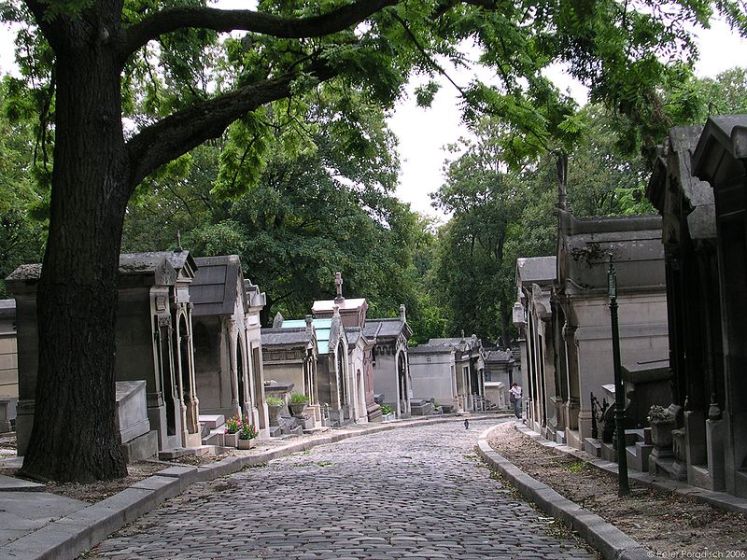
Image result for photo of a parisian cemetery

(Paris’s Pere Lachaise Cemetery)

Paris, a late summer evening when two unsuspecting tourists in search of Jim Morrison’s grave site in the Pere Lachaise cemetery are murdered.  So begins Mark Pryor’s second installment of his Hugo Marston series, THE CRYPT THIEF.  Marston, a former FBI profiler and chief of security at the American embassy in Paris is called into the ambassador’s office and told that one of the murder victims is Maxwell Holmes, the son of a US senator who was about to begin an internship at the embassy; the other is an Egyptian woman named Hanna Elserdi.  Later the action shifts to another cemetery, nine hours from Paris in the small town of Castet where the night watchman, named Duguay is murdered.  It seems that all three murders were committed by the same man.

It turns out that the Egyptian girl is Pakistani, from Karachi and her real name is Abida Kiam.  She had traveled to Paris with Mohammad Al-Zakiri, the son of a prominent mullah in Pakistan whose views were pro-al-Qaeda and Taliban.  His alias was Pierre Labor, an Egyptian-Frenchman.  Marston argues that the murders might all be a coincidence and not acts of terrorism, something that Senator Norris Holmes cannot accept.

The author does a nice job reintegrating characters from his first novel, THE BOOKSELLER.  We become reacquainted with Tom Green, Marston’ wisecracking and unpredictable former CIA operative who still consults for the American intelligence agency.  Capitale Raul Garcia of the Paris Police Department returns to renew his relationship with Marston when they worked on solving the murder of Max, a poor bookseller who sold books from his kiosk along the Siene River.  Marston’s former lover/girlfriend, Claudia, a newspaper reporter reenters his life as she covers the cemetery murders.  Soon, Marston will learn that in addition to the murders, a crypt has been robbed of the skeletal remains of the famous dancer, Jane Avril who had been buried over seventy years ago.

Early in the novel a number of questions confront Marston.  First, what is the relationship between the murdered American and the woman who accompanied him and the crypt robber?  Second, what role does international terrorism play in his investigation, if any.  Further, when a number of crypts are broken into to steal the bones of dead can-can girls, is it related to the overall investigation or is it something even more bizarre occurring, particularly when the killer is leaving an Egyptian scarab beetle at each murder scene.  It becomes a race to the next cemetery to prevent what seems to be a serial killer from taking more lives, and “bones.”

As one reads on one gets the sense of Pryor’s views of terrorist threats and how they germinate.  The treatment of Al-Zakiri by CIA operatives, who act first, then investigate thoroughly is important as it provides evidence as to why the United States is seen so negatively in the Islamic world.  Marston’s measured approach is one that the author believes the US should take when dealing with a possible terrorist threat.  Pryor also raises the issue of a free press during an investigation that could lead to a terrorist attack.  What role should journalists play, particularly when their actions could endanger people?  It is a tough call, but common sense should prevail, but at times that is not the case.

Pryor provides a well-crafted story, though his character development is weaker than his first Marston novel.  But the intrigue created by the grave robber/murderer will keep the reader’s attention.  The story is complex and eerie at times and should not be read right before you go to sleep, however despite what seems to be a predictable ending, the book is worth the read.

Image result for photo of a parisian cemetery

(Paris’ Pere Lachaise Cemetery)

LUMEN by Ben Pastor

Image result for photo of Krakow during WWII

(Cracow, Poland, 1939)

The key figure in Ben Pastor’s excellent historical mystery LUMEN seems to be a murdered nun.  Mother Matka Kazimierza was not just any nun.  Known as the “Holy Abbess,” Kazimierza was considered a visionary who could supposedly predict the future.  In early October, 1939 her body is found in a convent in Cracow, Poland by a German officer who was surreptitiously meeting with her as he tried to cope with the approaching death of his four year old son.  The Germans were slowly wrapping up control of Cracow following their invasion of Poland on September 1, 1939.  In addition they were implementing joint occupation of the country, as per the Nazi-Soviet Pact of August 26, 1939, as the Soviet Union had invaded Poland in mid-September to seize their half of the country.  The German Commander, Lt. Colonel Emile Schenck appoints Captain Martin Bora to head up the investigation into the nun’s death.

LUMEN is the first in Pastor’s well received series of historical mysteries that take place during World War II that Capt. Bora, a well-educated Ph.D from the University of Leipzig, and veteran of the Spanish Civil War is the main character.  For the investigation of the “Holy Abbess” Bora, a Jesuit himself must collaborate with Father John Malecki, an American priest from Chicago who had been sent by the Archbishop to study the phenomenon of Matka Kazimierza.  Once she was murdered he was instructed to remain in Cracow and assist in the investigation with the German authorities.

Image result for photo of Krakow during WWII

(Nazis marching through Cracow, Poland during World War II – a city that made it through the war unscathed)

Bora faced a number of difficulties in dealing with the case.  First, his roommate Major Richard Retz had a very productive love life that made Bora very uncomfortable as he was expected to stay away from their apartment for Retz’s liaisons.  Second, were his personal values.  Though only in Cracow for a short period of time he witnessed a number of things that more than troubled him.  The use of Jewish slave labor; executions; beatings; revenge killings; rape; massacres; seizure of private property; enforcement of racial laws; and the destruction of books and documents from university libraries all went against his moral code.  Third, he resented the constant lectures from his commander concerning what was expected of the pure blooded Aryan male – propagate the Reich for the next generation.  Lastly, trying to work with Father Malecki whose loyalties and values seemed to conflict with his own.  As the story evolves Bora’s moral confusion no longer controls him as he witnesses what Nazism has brought to Poland.  Bora’s consciousness raising awareness stems from seeing Ukrainians hanged, and “Polack farmers” shot, and while some remained alive locked in a barn to be burned to death.

Pastor has an excellent grasp of historical events that are woven into her story.  German-Russian distrust is on full display over boundaries and accusations that each side is engaging in atrocities.  The action of the German SD, or secret police reflect everything Bora finds reprehensible about Nazi rule.  The competition between the Wehrmacht and the SS for control of certain investigations, jurisdiction, and territorial oversight is analyzed carefully.

Image result for photo of Krakow during WWII

(Main Square, Cracow, Poland, 1948)

The core of the story involves why the “Holy Abbess” was murdered?  Was it a result of her predictions for the future?  Did she help the Polish underground?  These questions factor into the investigation as does the Abbess’ predictions as to whether they were apocalyptic or political.

Pastor does a remarkable job developing her characters, particularly the relationship that grows between Bora and Father Malecki.  The author also develops the characters of a number of Polish actresses, especially Ewa Kowalska and her daughter Helena Sokora who were both involved with Bora’s roommate.  There are numerous other characters from the Polish Archbishop, SS Captain Salle-Weber, Lt. Colonel Nowotny, the German coroner, among others who greatly impact the plot.

Pastor’s novel is a combination of the Catholic faith, politics, ethics, as some are conflicted by events, while others seem to enjoy what ultimately will lead to the Holocaust and murder of countless Poles.  Lumen (light) and darkness are in conflict with each other throughout the story and through Bora’s quest for truth the reader should have a satisfactory read.  If you are a fan of Philip Kerr’s Bernie Guenther series you will especially enjoy Pastor’s work.   I look forward to enjoying, LIAR MOON the next installment of the Martin Bora series.

Image result for photo of Krakow during WWII

(Cracow, Poland, during World War II)

THE GIRL FROM VENICE by Martin Cruz Smith

Image result for photos of wartime venice

(World War II Venice)

For those that are familiar with the work of Martin Cruz Smith the author of GORKY PARK, STALIN’S GHOST, TATIANA, among others, his latest effort, THE GIRL FROM VENICE should prove very satisfying.  The novel is centered in Venice in the small fishing village of Pellestrina.  One evening during the spring, 1945, Innocenzo Vianello, a poor fisherman is watching allied planes pass overhead on their way to rain havoc on Turin, Milan, or Verona, as he tries to secure his catch, when he notices a body floating in the water.  The body turns out to be a survivor of a Nazi SS raid on San Clemente, a mental institution.  The survivor is Giulia Silber, from a wealthy Jewish family, whose parents, aunts and uncles, in addition to many others have been seized by the Nazis and are presumed dead.  Cenzo, against his better judgement rescues the girl and immediately is confronted by an SS boat in a lagoon.  It seems the SS is looking for the escaped Jewess.  Cenzo hides the girl and an incident will occur that makes him as much of a target as Giulia.

Image result for photo of hitler and mussolini

(Benito Mussolini and Adolf Hitler)

Smith’s writing is very clear and he does a remarkable job developing the relationship between Cenzo and Giulia, from teaching her to be a fisherman, how to enunciate as not to appear upper class, friendship, and finally falling in love.  For Cenzo thinking about his own miseries pale in comparison to what Giulia has been through and he becomes very protective of her.  They are both in a quandary as to how to proceed when Cenzo’s friend, Eusebio Russo, who was a smuggler, arranged to take Giulia north and turn her over to Communist partisan to allow her to escape.  However, at this point Cenzo and Giulia realize they might mean more to each other than they thought.

As the novel progresses the reader will come across a number of interesting characters.  There is Cenzo’s brother Giorgio a famous actor and follower of Mussolini who he is estranged from.  Nido, the owner of a bar in Pellestrina, who along with his good friend Cenzo oppose the war after their experiences fighting against Haile Selassie’s forces in Abyssinia.  Colonel Steiner, a Nazi officer that may have turned against Hitler.  Steiner claims he needs to locate Giulia as she is the only witness to what happened at San Clemente when Steiner’s conduit to the Americans disappeared, Vittorio Silber, Giulia’s father.  The catch is Steiner wants Cenzo to work with his brother to find her.  Maria Paz Rodriguez, the wife of the former Argentine Counsel in in Salo, the capitol of the remainder of the Italian Socialist State.  Paz is an interesting character as she is an excellent forger for both Jews and Germans who are fleeing.  Otto Klein, supposedly a neutral Swiss filmmaker, but he has ties to the black market, Joseph Goebbles, and seems to want to bring down the Germans.  Farina, an Italian Fascist who cannot understand that the war is lost.  Lastly, Dante, the partisan leader whose loyalty is to communism.

There is a Kafkaesque quality to the story.  As the war winds down everyone thinks it is almost over and they begin to contemplate their lives once hostilities will come to a close.  They wonder who will be in charge and most conclude the Germans will just leave, but Italian fascists and partisans will battle for Italy’s soul.  Smith provides unique insights into society in the “capitol,” Salo.  The nerves of the people are being shredded as they worry about who they will be able to trust.  Cenzo will undergo a remarkable transformation as he tries to find Giulia and has to deal with his brother Georgio, but also has nightmares over the death of his younger brother Hugo, who had been killed by an American pilot the year before.  The novel has an undercurrent that pervades each page as Cenzo, also a talented artist had painted a picture of the scene where his brother Hugo had been killed.  The problem is that Cenzo is transfixed by what he has created, and it takes him almost to the end of the story to finally understand what his unconscious was telling him.

The novel itself is an indictment of Mussolini’s regime and the marionettes that followed him.  Smith’s dialogue reeks of sarcasm as he points to the weaknesses and incompetence of Italian fascism.  Il Duce is a comic figure, however the story that he is a part of is not.  Martin Cruz Smith’s new book is worth engaging and I recommend you take a few hours, get comfortable with a glass of wine, and enjoy-it will be bellissimo!

Image result for photos of wartime venice

(June 25, 1941, the Venice Conference)

CONCLAVE by Robert Harris

 photo Cardinals_zpsdlpqwv84.jpg

Robert Harris’ new novel, CONCLAVE takes the reader inside the world of the Vatican and its byzantine politics.  Set in Rome, the Pope has died and there is a question of what he said to certain Cardinals upon his passing and what impact it might have on the impending election of a new Pope.  Harris’ moderator is the seventy-five year old Jacobo Lomeli, the Dean of the College of Cardinals, but a person who would like to return to a religious order to live out his life in prayer.  With the death of his holiness, Lomeli finds himself as the overseer of the Conclave to choose the next leader of the Catholic Church.  As is true with any large organization that must choose a new leader, there is a great deal of intrigue and power brokering.  As I read the novel all I could think of was the American Congress and its inability to come to fruition on something substantive.

Image result for images of the sistine chapel ceiling

The factions within the College of Cardinals is somewhat traditional.  On one side we have the liberal wing that is coalescing around its intellectual Secretary of State Aldo Bellini; the Confessor-in-Chief Joshua Adeymi, who hopes to be the first black Pope; the Chamberlain of the Holy See, Joseph Tremblay, a Canadian with strong links to the Third World, and the Patriarch of Venice, Goffredo Tedesco, the hope of conservatives who are against the ordination of women and wants to move away from Italian to the use of Latin in all areas.  Lomeli immediately faces two challenges aside from assuaging the egos of these cardinals.  It seems that before the Pope passed away he created a new Cardinal, Vincent Benitez, the Archbishop of Baghdad and he did it “in pectore” (only the Pope knows) and did not inform anyone.  Benitez appears unannounced at the Conclave and is recognized for his work in Africa dealing with victims of terrorists like Boko Haram and the dangers of leading the Catholic Church in Iraq.  The second challenge occurs when he chooses to forgo part of his prepared oration to the Conclave and speaks extemporaneously.  As a result of what he calls for in the church, many Cardinals now see him as a candidate.

The tradition, ritual, and pageantry of the Catholic Church is on full display as Harris develops his novel.  The ceremonies are intricate as Lomeli leads the 118 member College of Cardinals in choosing the next Pope.  But what dominates the plot is the contending factions and the behind the scenes actions taking place.  Harris takes the reader through each ballot with intrigue and deal making paramount.  The first four ballots are dominated by scandals and stress for Lomeli, but then events take place that the Conclave cannot control.  Those who are fans of Robert Harris, be it because of his books FATHERLAND, ARCHANGEL, or his trilogy dealing with the struggle for power in ancient Rome will not be disappointed, particularly with the ending!

Image result for photo of the College of Cardinals

SURRENDER, NEW YORK by Caleb Carr

Image result for photo of taconic region of NY

(Taconic region of New York State)

For those who enjoyed Caleb Carr’s THE ALIENIST and THE ANGEL OF DARKNESS his latest effort is something to look forward to.  It takes place up in the Taconic area of New York state called Surrender, hence the title SURRENDER, NEW YORK.   The novel’s narrator is Dr. Trajan Jones, a former criminal psychologist and profiler for the NYPD, who suffers from the effects of childhood osteosarcoma that forces him to be bent over while working on his online forensic course that he teaches for SUNY Albany with his partner Dr. Michael Li, a trace evidence expert.  Their classroom is an old fuselage of a pre-World War Two Junker that Jones’ father purchased and flew to his sister’s farm in Burgoyne County, NY.  Dr. Li is about to begin Skyping with his class when Deputy Sheriff Pete Stienbrecher pulls up in his patrol car and asks them for their assistance in a murder case.  Jones and Li had been run out of New York because of their unorthodox methods and opposition to “forensic corruption” that has dominated some news cycles.  Both men have a low opinion of CSI types who are so popular on television.  When they arrive at the crime scene, there is a lot that is unspoken by Sheriff Steve Spinetti, particularly what is meant by “a series of murders” involving teenage girls.  When Dr. Ernest Weaver, the Medical Examiner pronounces that the death of the fifteen year old girl “is cut and dried, murder of a teenage runaway, with possible sexual implications,” Jones and Li are very skeptical, as Weaver’s conclusions make little sense.

As Carr develops his plot his own views of the criminal investigative system emerge.  Through Jones and Li, Carr complains that bullying, incompetent collection and observation of evidence made the chain of forensic investigation fatal to the field’s ascension to a true science.  He argues that investigators have “careerist ambition” that leads to “tunnel vision” whereby supposed experts see and hear only those facts and theories that reinforce their initial impressions and suspicions in order to satisfy their law enforcement superiors to solve the case quickly.  Carr calls this “cognitive shortcuts, that make ones initial; instincts, prejudices, and simple hunches appear the result of legitimate intellectual processes.”  It is obvious that the author has a distaste for CSI television programs as they create expectations in investigating real crimes that are not achievable.  For Jones and Li their work is hampered by serious political and turf battles as people above the Sheriff and his Deputy have political ambitions and are willing to “select, blend and pervert evidence in these murder cases to suit their own agendas.”  Throughout the book there is a great deal of social commentary that is both caustic and thoughtful that enhances the flow of the novel.  Another important area of concern deals with children that are abandoned by their parents so they have to make way all by themselves with little or no resources.  Jones analyzes and has great sympathy for these “throwaway children,” especially when all the murder victims seem to fit that description.

The novel revolves around Dr. Jones and Dr. Li becoming drawn deeper and deeper into the investigation until it becomes extremely dangerous.  It appears that there is a force that does not like where their investigation is leading them.  The political powers that the doctors are up against want to blame the murders on a serial killer, but Jones and Li believe it has more to do with the actions of the “throwaway children” which is seen as an embarrassment to state officials, and evidence that leads back to New York City.    When people who work with Jones and Li are attacked, the doctors realize how precarious their position is, and from this point on the novel becomes addicting.

The relationship between Jones and Li is very similar to Sherlock Holmes and Dr. John Watson.  Their banter throughout the novel is fascinating as they conjecture about the victims they investigate as well as the state of forensic pathology as they apply it to their current and past cases.  They seem to mirror each other’s thought patterns and apply deductive logic in reaching similar conclusions.  Their interactions are unique and entertaining as they are masters of wit and sarcasm as their dialogue contains many important conclusions for the murders they are trying to solve.  Their approach is very flexible and resilient as they try and incorporate new methods and ideas to assist them, for example Li’s use of a portable X ray unit developed for veterinarians and the military for their cases.  Their flexibility is also reflected with their relationship to a fifteen year old boy named Lucas Kurtz.  Kurtz is another example of the “throwaway children,” but in his case he runs into Jones on his property and the doctor is impressed with the young man’s precocious nature and intelligence and as a result makes him a junior partner in their investigation as a junior investigative trainee.  Jones’ reasoning is clear, he and Li are investigating the murder of fifteen year olds, why not use an expert of that age group.  In addition to Lucas, Carr introduces a number of interesting characters.  Derek Franco, Lucas’ autistic friend, also a “throwaway child” who has been adopted by Lucas’ sister Ambyr, a twenty year old blind women who is exceptionally bright, caring, and ultimately cunning.  Adding to this group is Jones’ aunt Clarissa, who took him in when he was recovering from cancer, along with Li to live on her farm, and Jones’ large pet, an “African hunting dog” named Marcianna.

According to Michael Connelly, Carr’s work “is charming and eloquent between the horrors it captures,” further by linking his story and “making Jones the world’s leading authority on Laszlo Kreizler – the Alienist,” Carr is celebrating “the dawning era in the application of science to crime detection, from fingerprinting to other means of physically and psychologically identifying suspects [as] Carr now uses Jones to sound the warning that things may be going awry.  Forensics should not be treated as faith.” (NYT, August 15, 2016)  Dr. Trajan Jones is a wonderful character to build the novel around.  He is an empathetic figure with a sense of what is wrong with society and how it might be improved.  His engaging manner will capture the reader’s attention, and the result will be a very satisfying few days immersed in a painful, but real story.

Image result for photo of taconic region of NYTitle: Surrender, New York, Author: Caleb Carr

(Taconic region of New York State)


MURDER AT THE 42ND STREET LIBRARY by Con Lehane

Image result for Manhattan's 42nd street research library

A murder that takes place at the 42nd Street Public Library in Manhattan is an unusual venue for a mystery concept.  However, this is exactly what Con Lehane has created in his new and very effective novel, MURDER AT THE 42ND STREET LIBRARY.  One afternoon, Dr. James Donnelly enters the office of Harry Larkin, the Director of Special Collections at the library and is shot dead.  Larkin, a medieval historian and former Jesuit priest becomes very defensive about the murder he has witnessed when questioned by his friend Raymond Ambler, the curator in the collection of crime fiction, and a Tai Chi aficionado.  Ambler, who dabbles in solving real crimes is friends with Mike Cosgrove, the NYPD detective who is in charge of the new investigation.  It seems that the elderly author, Nelson Yates, who suffers from dementia, has donated his papers to the library and a number of characters cross paths over the new collection.  There is Donnelley’s ex-wife, Kay; biographer, Maximilian Wagner; Wagner’s wife, Laura Lee McGlynn; Adele Morgan, a colleague of Amblers at the library; Benny Barone, a library researcher; Yates’ young wife Mary, the elderly Yates, and Dominic Salerno, a mob type.  All of these people are key to the web Lehane creates as he spins his tale, particularly when feelings are ruffled when Yates decided to give his collection to the library as opposed to other bidders.

Image result for Manhattan's 42nd street research library

Yates is very concerned about his collection because there are letters he has written to his estranged daughter Emily who left home at fifteen.  Yates fears that if Wagner, who is writing a new biography of him gets hold of the letters it will destroy any hope of a reconciliation with his daughter, as well as his literary reputation.  The library staff has not followed library protocol and has allowed Wagner access to Yates’ papers before they were catalogued.  The papers, the intermingling of a number of characters, and their personal secrets form the basis of an extremely well-conceived and entertaining plot, particularly when Yates is murdered outside the library.

It is extremely interesting as Lehane lays out the different characters and how their pasts intersect.  It seems that at one time Yates was a visiting professor at Hudson Highlands University in Rockledge, at the same time Max Wagner was an assistant professor of English, as was James Donnelley.  Further, Kay Donnelly was an English graduate student along with Laura Lee McGlynn who was married to an English professor whose death is linked to Yates’ daughter Emily.  Just this brief snapshot in time raises some interesting questions about the two murders that have taken place and what these past relationships expose.  By this juncture Lehane’s plot should captivate the reader and lead to a very satisfying murder mystery experience.

Image result for Manhattan's 42nd street research library

Lehane writes in a very smooth prose and has not created the overly sarcastic main characters that other mystery writers rely on.  Ray Ambler is a sensitive and somewhat intellectual type, and Mike Cosgrove is career NYPD who is trying to get his private life in order.  As the novel progresses Lehane has the ability to drop a number of bombshells in a very subtle manner that the reader would never expect, and this approach adds to the story.  My only criticism of the novel is that the final ending is somewhat farfetched but it does lend itself to another installment of Ambler and Cosgrove’s approach to crime, which I look forward to.

Image result for Manhattan's 42nd street research library

HOME by Harlan Coben

Title: Home (Signed Book) (Myron Bolitar Series #11), Author: Harlan Coben

I have always found the characters in Harlan Coben’s Myron Bolitar series entertaining with doses of humor, sarcasm, and a tinge of seriousness.  After reading the first ten books in the series I anxiously awaited number eleven.  It took over three years as the author concentrated on other projects, but thankfully number eleven was just been released.  The new novel, HOME brings with it the usual cast of characters from previous efforts, Myron, Win, Esperanta, “Big Cyndi” are all present with a host of new creations.  Fans of the series will not be disappointed as the plot line begins with the sighting of two boys, Patrick Moore and Rhys Baldwin in London, missing for ten years since their kidnapping from a suburban New Jersey town.  The discovery takes place under a highway overpass where a separate somewhat perverse mini-society has evolved.  Once the sighting takes place Win contacts his sidekick Myron who he has not seen for over a year.

As usual Coben has created a fast moving plot with the usual snappy dialogue on the part of the “ultimate preppy,” the self-indulgent Windsor Horne Lockwood III, the former all-American college basketball player, Myron Bolitar, and Myron’s nephew, Mickey who is a “chip off his uncle’s block! “ Coben continues his habit of 1940s and 50s movie tropes, particularly detective stories, among his humorous asides.  The story itself begins in what appears to be a straight out kidnapping/hostage case that was never solved, but it takes a number of interesting and nasty turns that will leave the reader guessing for a good part of the story.  For Win, the case is personal since Rhys Baldwin is a cousin and he is very close to his mother, Brooke.  The plot is highlighted by dysfunctional marriages, computer gaming, trafficking in young boys, and a high degree of selfishness by a number of characters.

For the current novel Coben creates a number of interesting characters.  Apart from the parents of the missing boys we meet Chris Alan Weeks, a.k.a. Fat Gandhi who traffics in young boys, Shlomo Avraham, a.k.a. Zorra, a cross dressing former Mossad agent, Spoon, a nerdy computer geek, in addition to others.    The scenario behind the story begins in one place and its completion will be very difficult to predict.  Coben maintains the credibility of the series with another fine effort whose last paragraph will be somewhat shocking.  All in all, a fun read.

HarlanCoben.jpg

(The author)