WALTER O’MALLEY AND THE DODGERS AND BASEBALL’S WESTERN EXPANSION by Andy McCue

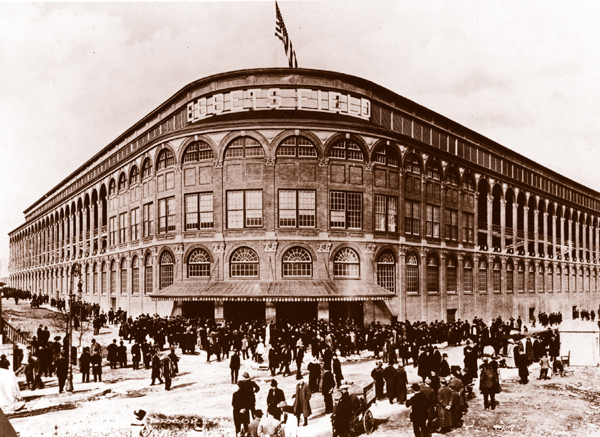
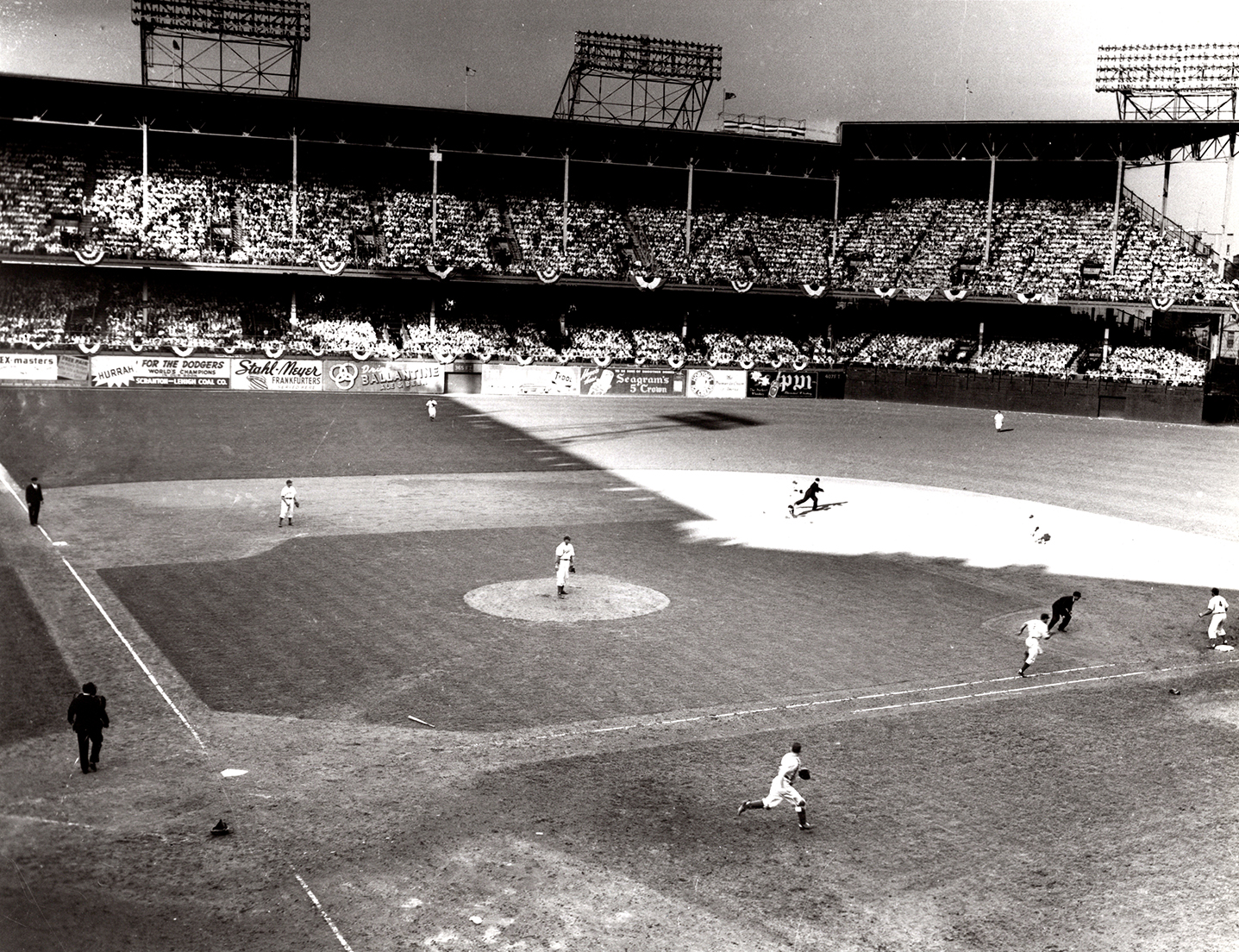
The iconic main entry of Ebbets Field was located at the intersection of Sullivan Place and Cedar Street (later renamed McKeever Place). (Photo: SABR-Rucker Archive)

(Ebbets Field, Brooklyn, NY)

As a little boy in 1956 my father took me to Ebbets Field to see the Brooklyn Dodgers play the Cincinnati Reds.  We sat behind the Reds dugout, and I carefully watched men like Vada Pinson and Frank  Robinson.  I looked out at the green expanse, and I saw my heroes; Duke Snider, Gil Hodges, Pee Wee Reese and was overwhelmed.  I do not remember the final score of the game, but what I do remember 70 years later was how wonderful the experience was.  I would never return again to Ebbets Field, not because my parents refused to take me, but because Walter O’Malley, a man who would be vilified and hated by the Flatbush faithful, would move the “beloved Dodgers” to the west coast.  I have read a number of books on the move, the best being Neil Sullivan’s THE DODGERS MOVE WEST, but none zero in more on the man responsible for changing baseball from a conservative midsize business that resided on the east coast to a national, and then international game earning billions of dollars.  The publication of Andy McCue’s exceptional biography of O’Malley and the history of the move, WALTER O’MALLEY AND THE DODGERS AND BASEBALL’S WESTERN EXPANSION fills that void.

McCue goes right to the heart of why O’Malley wanted to move the Dodgers to Los Angeles.  After spending about a third of the book providing background material relating to the development of baseball and the Dodgers in particular.  He integrates  O’Malley’s upbringing, his early career, which was primarily focused on the law and business, even though he was involved with baseball, but with a special emphasis on real estate transactions.  Further he does well integrating the machinations within the Dodger organization from the 1920s on as different factions vied for control of the ball club.  What emerges are wonderful portraits of Branch Rickey, Buzzy Bavasi, and Leo Durocher, among others.  But more importantly he drills down as to how O’Malley was able to acquire his controlling interest in the team.  Once McCue reviews this material he goes right to the heart of why O’Malley wanted to move the Dodgers to Los Angeles. 

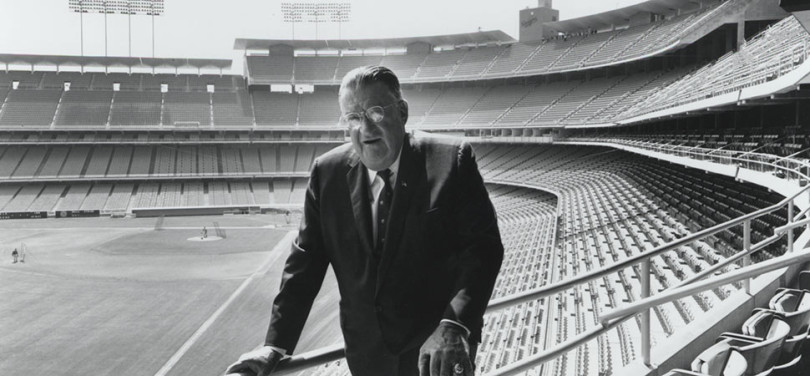
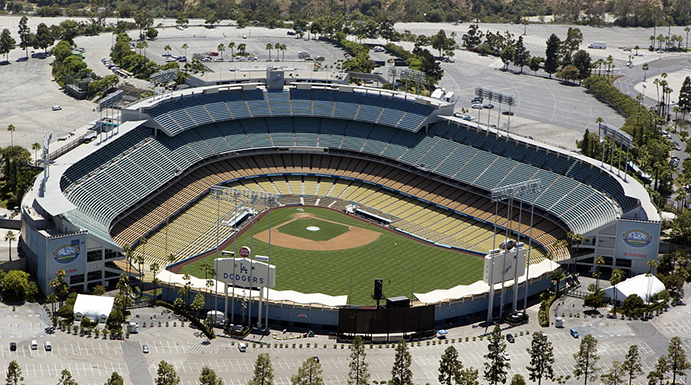
Walter O’Malley’s grand baseball ballpark — Dodger Stadium — opened on April 10, 1962.

(Walter O’Malley outside of his office on the Club Level at Dodger Stadium)

In a chapter entitled “A New Stadium-Economics,” McCue outlines the state of the Dodgers in the early 1950s getting to the core of O’Malley’s concerns.  One of the primary themes of the narrative is that O’Malley was a businessman foremost, and to a lesser extent, a baseball fan.  By the early 1950s Brooklyn underwent a demographic and racial change especially where Ebbets Field was located.  The area, known as Flatbush, was becoming less white and more diverse.  Brooklyn in general experienced the same thing as between 1950 and 1957 the borough “lost 235,000 Caucasians and added 100,000 non-whites.”  Brooklyn was losing population as people fled to Nassau country, Long Island, and Queens.  In addition, the borough was also losing manufacturing jobs, and as a result people’s discretionary spending for baseball was drastically reduced. 

At the same time Dodger attendance was on a steady decline going from 1.8 million in the late 1940s to roughly 1.1 million right before the team left for Los Angeles in 1958.  This ate into the team’s profitability and O’Malley’s answer was a new ballpark.  By the mid-1950s Ebbets Field was located in a neighborhood rife with vandalism, in fact New York Daily News  sports reporter Dick Young stated that O’Malley had told him “the area is getting full of blacks and spics.”  The ballpark itself was in bad need of refurbishing as toilets didn’t work, too many seats were behind support beams, and seating was only 32,000 compared to 70,000 at Yankee Stadium and 54,000 at the Polo Grounds.  O’Malley’s solution was to build a new ballpark.

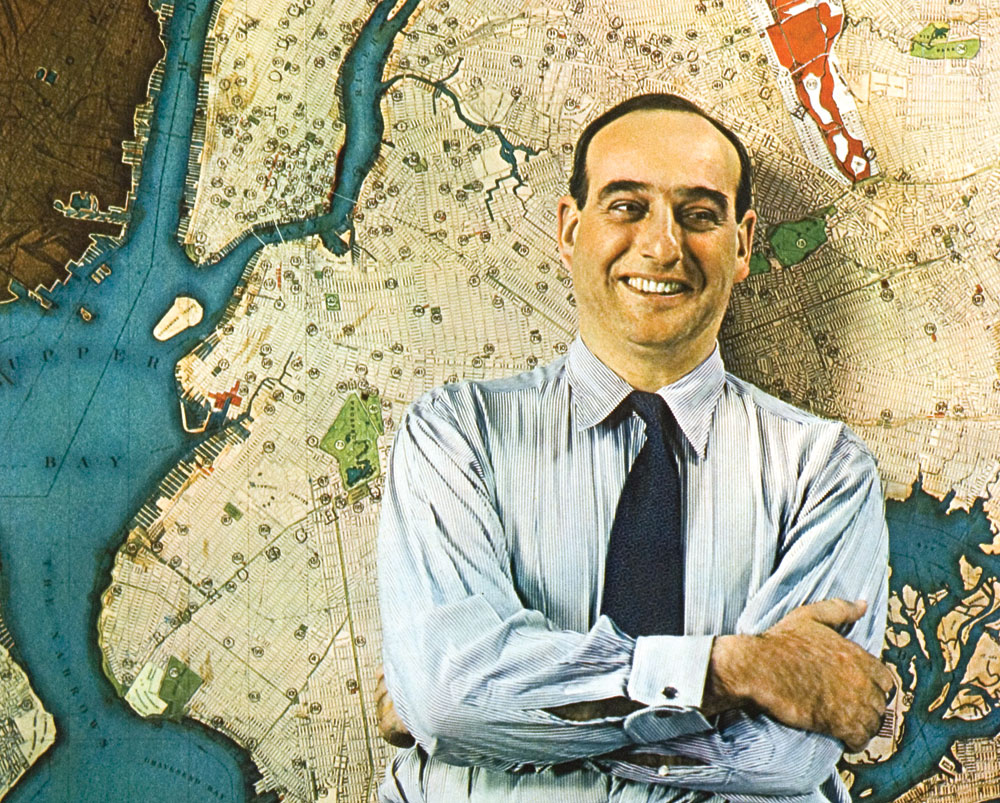
Young Robert Moses standing in front of a map of New York City

(Robert Moses)

McCue delves into the role of Robert Moses, who was Long Island State Commissioner and the head of the Triborough Bridge Authority and one of the most powerful men in New York.  As O’Malley pushed for a new stadium in Brooklyn, Moses became the main roadblock to his vision as he was clear that a baseball team could not use public funds set aside for slum clearance, even if it were part of a larger project that was involved in improving the neighborhood and creating public housing – throughout negotiations over the next few years, Moses would not change his mind.  It is clear from McCue’s discussion; Moses did not like O’Malley, which played a major role in their talks.  O’Malley tried a number of scenarios to break the impasse but got nowhere.  Moses would offer the future site of Shea Stadium in Queens, but O’Malley would not leave Brooklyn.  Further impacting talks were Mayor Robert Wagner who never believed that baseball was a priority.

McCue delves into the weeds as he first recounts negotiations with New York officials and then moves on to discuss talks with Los Angeles businessmen and politicians.  In both cases the main issues centered on a site for a new stadium, cost of construction, taxation, infrastructure costs, leases, and ancillary aspects including mineral rights, and recreation areas and who would be responsible for paying for these items.  What emerges is personality conflict as many involved had their own agendas, but if one is looking for who to blame for the move apart from O’Malley a great deal falls on the people of Brooklyn whose attendance at Dodger games declined precipitously over the previous decade.

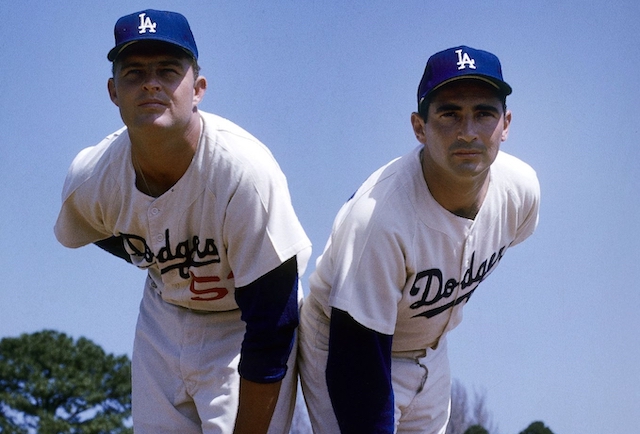
Los Angeles Dodgers starting pitchers Don Drysdale and Sandy Koufax

(Don Drysdale and Sandy Koufax)

One of the most important questions McCue raises is when O’Malley made up his mind to move the Dodgers to Los Angeles.  There is no conclusive answer be it after the 1956 World Series, Spring Training 1957, or at some point in negotiations with New York officials.  The answer to the question probably depends on your opinion of O’Malley and the process that resulted.

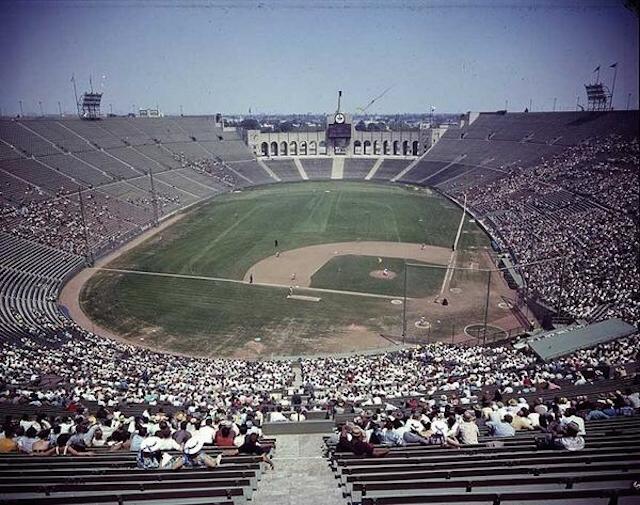
Once the decision was reached to move the team O’Malley’s biggest problem was where the Dodgers were going to play.  Wrigley Field, which he purchased was too small with little parking, the Los Angeles Coliseum was too large, and its configuration was not conducive for baseball to the point the Rose Bowl in Pasadena was considered.  The key to negotiations was the Los Angeles Coliseum Commission and Los Angeles City Council member, John Holland, who opposed the move and did his best to postpone any construction after a deal was struck with numerous lawsuits and slow walking approvals for construction. 

(Los Angeles Coliseum)

One of the most interesting aspects of the process was how the Coliseum would be retrofitted for baseball – not an easy task as a new field needed to be created, more comfortable seats added, reduction in capacity by 10,000, and the cost of renovations.  A key person in all aspects of the move was Harold Parraott who joined the Dodgers in 1943.  Officially, he was traveling secretary, but his duties included much more as he was in charge of attendance receipts while on the road, needed to know baseball, the newspaper business, and had a knack for figures – Parrott met all of these qualifications.

McCue’s work is more than a biography.  It is an intricate portrait of the Dodger owner, but it is also a unique description of the inner workings of the Dodger organization focusing on decision making relating to finally deciding to leave Brooklyn and the myriad problems that developed in Los Angeles including the economics and politics involved.  The role of Buzzy Bavasi and Branch Rickey stand out as McCue takes the reader through the history of the Dodgers.  But importantly, the author provides a history of Chavez Ravine, the final site for the new stadium, and all the roadblocks that were created to prevent its completion.  Once the site was chosen O’Malley had to deal with a referendum on the contract with Los Angeles authorities which would produce a “holy alliance”  between groups of various parochial interests who wanted to stop construction.  C. Arnholt Smith, the owner of the Pacific Coast Leagues, San Diego Padres financed the opposition, and a fascinating political battle emerged led by John Holland on the conservative side, and Roz Wiener, a liberal on the Los Angeles City Council.  The result that a stadium that was to cost around $10 million would rise to $16 million.

Dodger Stadium

(Dodger Stadium, Los Angeles, CA)

In the end O’Malley becomes a towering baseball figure bringing baseball to the west coast, moving  his own team but convincing New York Giants owner, Horace Stoneham to move his team to San Francisco.  O’Malley’s actions fostered a new sense of unity and identity for Los Angeles which had the reputation of being “72 suburbs in search of a city.”   McCue presents a nuanced account  showing O’Malley as a shrewd and daring businessman who saw the future of baseball differently than other owners.  The narrative fosters a well-researched and even handed account of a man who could be compassionate and generous but also mean-spirited and insensitive.

Paul Dickson’s review in the April 4, 2014, Wall Street Journal captures the essence of the man and what he accomplished: “The real insight of Mr. McCue’s book is that O’Malley was a man who embraced risk and adapted well to new situations. In the late 1960s, as the players union gained in strength under the leadership of Marvin Miller, the adversaries became friends. ‘He is the one baseball owner I respect,’ said Miller. ‘O’Malley is a hard, realistic businessman who is part of this century and who does not pretend that baseball is something it isn’t.’  While other owners saw their battles with Miller and his union as a test of their manliness, O’Malley approached the fight over player salaries more practically. His negotiations with Miller were conducted with civility and what Miller termed ‘the cut-and-thrust between two New York boys—even if many of the fans in their home city still hated at least one of them.”

The Ebbets Field grandstand is packed with fans during Game 3 of the 1941 World Series between the Brooklyn Dodgers and New York Yankees. (SABR-Rucker Archive)

(Ebbets Field, Brooklyn, NY)

THE FRANCHISE: NEW YORK RANGERS, A CURATED HISTORY OF THE BLUESHIRTS by Rick Carpiniello

NCAA HOCKEY: JAN 11 Rivalry on Ice - Yale v Harvard

In the spring of 1994 Howie Rose’s call of Stephane Matteau’s game winning goal against the New Jersey Devils sent the New York Rangers to the finals for the Stanley Cup.   This would end the Blueshirts 54 year drought and was music to every tortured Ranger fan’s ears.  The season and playoff run were magical, but it would lead to another drought now reaching three decades.  For Ranger fans who lost the finals to the Los Angeles Kings in 2014, it has been a rough go, but the history of the organization has improved over the last few seasons, and many believe or hope that this could be the year that the Rangers hoist the Cup once again.  

Rick Carpiniello, a sports reporter for THE JOURNAL and THE ATHLETIC  from 1978 to 2021 new book THE FRANCHISE: NEW YORK RANGERS. A CURATED HISTORY OF THE BLUESHIRTS brings hockey to the forefront through a series of wonderfully reported essays about the organization’s championship close calls throughout the 1970s, finally winning the Cup in 1994, and its decline until the emergence of Henrik Lundqvist as the team’s goalie in  2012,  Carpiniello’s monograph is based on intimate knowledge of the franchise forged through extensive relations with the players, coaches, and other members of the organization.

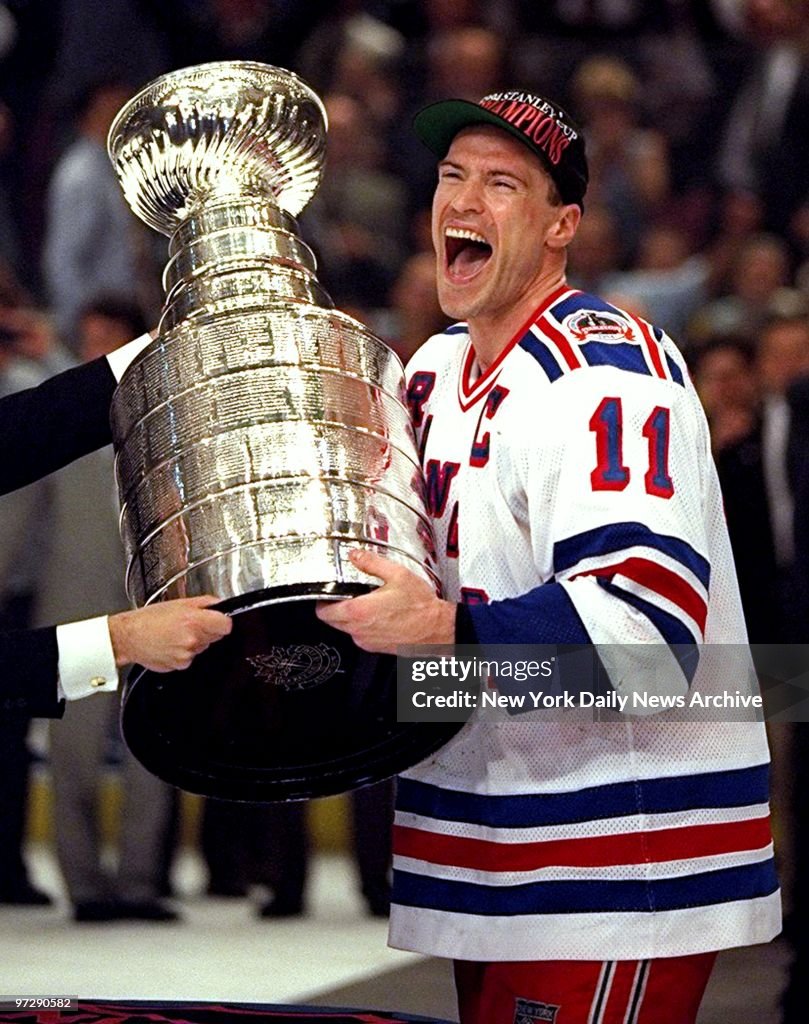
Captain Mark Messier receives the Stanley Cup after the Rang

(1993-94 season the New York Rangers win the Stanley Cup)

Perhaps the most interesting aspects of Carpiniello’s book are his character studies ranging from Rangers General Manager and Coach Fred Shero, flamboyant winger, Ron Duguay to current players like Norris Trophy Winger Adam Fox and Chris Kreider.  In each instance Carpiniello reaches for entertaining quotes, player opinions of different teams and players, team bonding, and the outrageous actions of different personalities.

Carpiniello begins with the famous 1978-9 season tease when it appeared the Rangers might finally break the curse that dated to 1940.  They had defeated the dreaded New York Islanders in a series that created the chant Ranger fans employ to this day of “Potvin sucks.”  However, despite defeating the Montreal Canadiens in the first game of the Stanley Cup finals, they went on to lose four straight providing Les Canadiens their fourth consecutive finals victory.

The author is right on as he describes the “disorganization of the organization” in the 1980s.  Ownership had opportunities to trade for Wayne Gretzky and Mark Messier much earlier than they finally did and refused.  They hired a series of general managers and coaches who either did not fit the profile of their jobs and made decisions which in many cases are hard to fathom.  Herb Brooks, the 1980 Olympic coach was a failure, Ted Sator was in over his head, Michel Bergeron was a bust, and Hall of Famer Phil Esposito, also known as “trader Phil,” made a series of poor trades and his record as a coach was not much better.  The key person was Craig Patrick who was a GM and coach but was gone by the late 1980s but drafted the likes of Brian Leetch and Mike Richter.  The savior of the 1980s was John Vanbiesbrouck, an excellent goalie who was in large part responsible for the few Ranger successes during the decade.    

New York Rangers vs New Jersey Devils

(Ranger defenseman Brian Leetch)

Carpiniello has a knack in developing stories about some interesting/flamboyant characters  in his narrative.  Names like Tie Domi, Joey Kocur, Ulf Samuelsson, perhaps the dirtiest player in hockey at the time, and Jeff Beukeboom come to mind. All were fighters, who had talented upside.  Other key personalities that the author weaves in and out of this monograph are Neil Smith, the GM who traded for Mark Messier and signed free agent Sadam Graves.  Smith would put together the team that finally won the cup under Mike Kennan’s leadership.  Kennan became head coach, when then coach Roger Neilson, another interesting personality could not get along with Messier and was fired.

Adam Graves New York Rangers Autographed Game Action 8x10 Photo

(Ranger wing Adam Graves)

Carpiniello brings back many forgotten memories.  A few that stand out include the switch in approach under Craig Patrick in the early 1980s from a mean fighting mentality to a skilled group of young players who were not large in stature nicknamed “the Smurfs.”   Another important individual was Mike Kennan, a hard ass, controversial coach who upon arriving at MSG felt the Rangers were a soft team.  Kennan immediately pushed to trade certain “soft” players who would go on to have tremendous careers with other teams.  Names like Mike Gartner, Tony Almonte, Darren Turcotte, and James Patrick come to mind.  No matter how much talent Kennan forced Smith to get rid of for second line players, in the end he molded the team by blending their talent and finally ending the “1940 chorus.”  Despite his success, Kennan was seen as a “bastard” held beyond contempt by many in the Ranger organization.  But, one must keep in mind it was Kennan who pushed Smith to acquire grinders like Matteau, Brian Noonan, and a bunch of Edmonton Oiler Stanley Cup champions.  

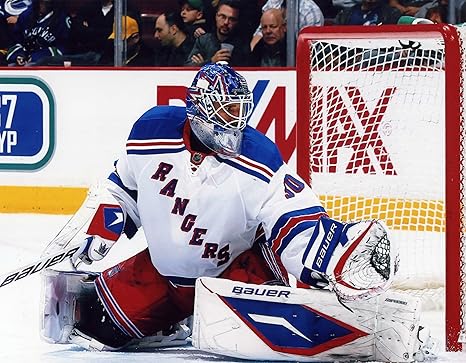
  • HENRIK LUNDQVIST NEW YORK RANGERS 8X10 SPORTS ACTION PHOTO (Y)
  • (Ranger goalie”King” Henrik Lundquist)

The book recounts the magical playoff run that culminated in winning the cup with wonderful anecdotes and player stories.  I remember exactly where I was the night they won and as many others have said “I can now die in peace!”  However, it was a short dynasty as a new curse and/or drought began the next season which carries on to this day.  To Carpiniello’s credit is description of the players, their talent and foibles for the next three decades is remarkable, and all I can say is god bless his memory! 

The post-Cup period saw the arrival of Wayne Gretzky, but at the same time they let Messier go.  Carpiniello is correct in describing the Ranger’s biggest problem as management as MSG president Dave Checketts who was in charge of the Knicks and Rangers knew nothing about hockey and it showed in his decision making.

Carpiniello digs deep into the second drought and the role of Glen Sather as GM and coach.  Sather who built the Edmonton Oilers would eventually be successful with the Rangers, but not until he finally made the correct draft and trade decisions, particularly a 7th round pick named Henrik Lundqvist who would backstop the team in goal for well over a decade beginning in the 2004-05 season.  During this period fascinating new characters came on the scene, particularly emblematic is Carpiniello’s description of John Tortorella, which is priceless.  The turnaround for the Rangers came in 2010-11 and from then on they were a sound playoff team which flirted with a cup run in 2013-14.

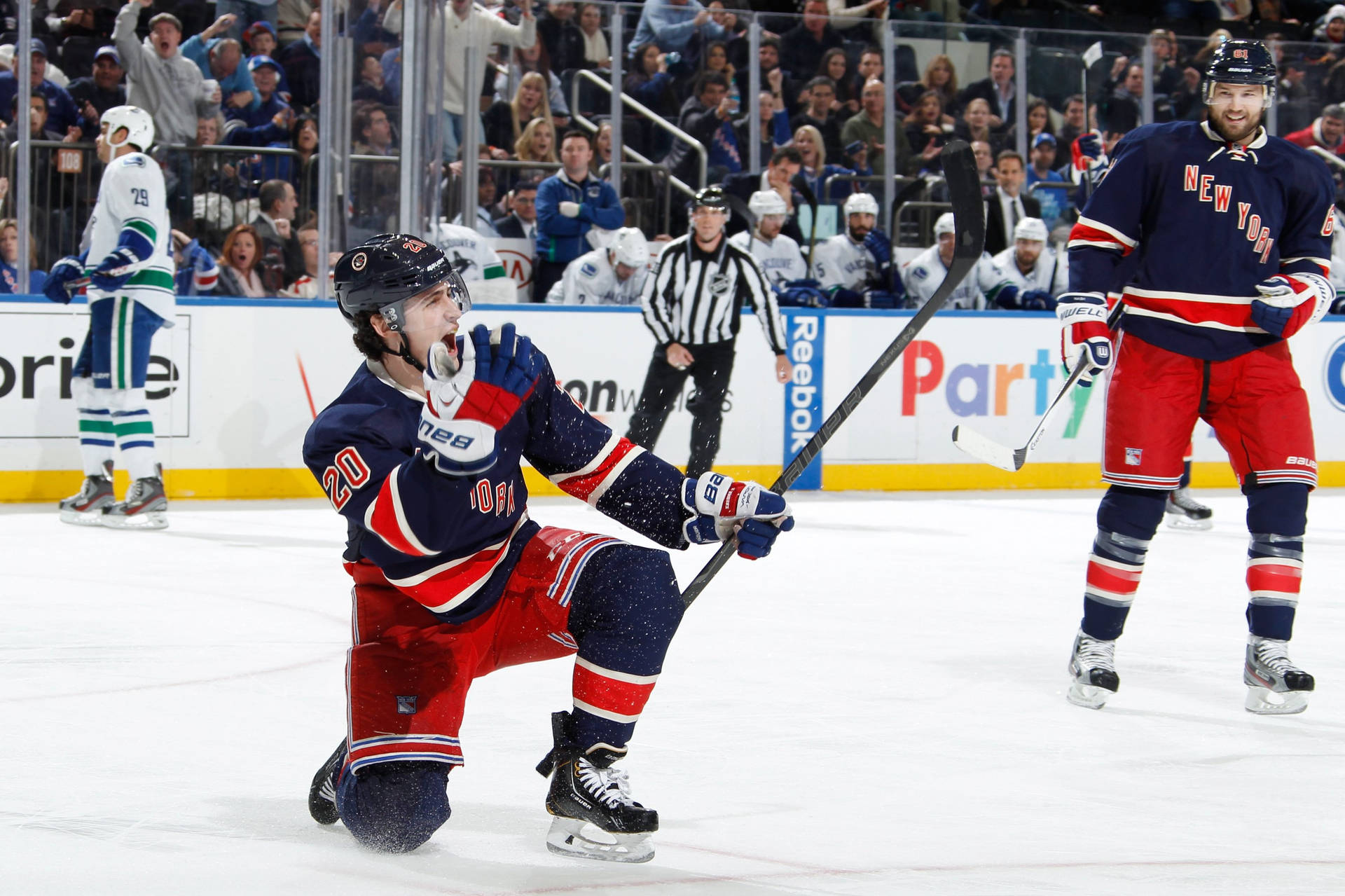
Chris Kreider Cam Talbot NY Rangers Wallpaper

(Ranger wing Chris Kreider)

At times, the author becomes emotional about certain players and events.  Perhaps the most poignant coverage deals with 9/11 and the reaction of the players and how they interacted with first responders and New Yorkers in general.   This aspect of the book reflects the wonderful working relationship that the author had with Ranger players.

In the latter part of the book Carpiniello zeroes in on two of the most important and creative approaches taken by the Ranger front office that coincided with a decline in the career of Henrik Lundquist.  After a successful run from the 2008-09 season to the 2013-14 Cup final season the team went through its famous rebuild  underscored by “the letter” to fans explaining the course the organization was about to take.  New leadership came aboard that included John Davidson as President, Jeff Gorton as GM, and David Quinn as coach.  Through a series of trades, i.e., acquiring Jacob Trouba, Ryan Lindgren, Mika Zibanejad, and  Adam Fox; signing free agents, i.e., Artemi Panarin; resigning Chris Kreider, and significant draft choices like K’Andre Miller and Igor Shesterkin the foundation was set for the current Ranger Roster.  When the rebuild did not progress as fast as he wanted, the impulsive Ranger owner, Dolan fired the three men who was responsible for the rebuild in large part to the machinations and violence perpetrated by Washington Capitals Tom Wilson, and brought in an entire new leadership team.

(Ranger wing Artemi Panarin, “the breadman!”

Overall, the book is a wonderful stroll down memory lane for Ranger fans with Carpiniello integrating wonderful vignettes, personal insights and observations which reflect a sense of humor, vast hockey knowledge, and a writing style that is easy to read.  If there is one negative in Carpiniello’s approach, at times his narrative comes across as somewhat disjointed as many of his stories and observations lack cohesiveness.  However, despite this minor criticism, the book is a wonderful gift for all Ranger fans.            

New York City Economy


THE MOSQUITO BOWL: A GAME OF LIFE AND DEATH IN WORLD WAR II by Buzz Bissinger

File:Pacific Area - The Imperial Powers 1939 - Map.svg

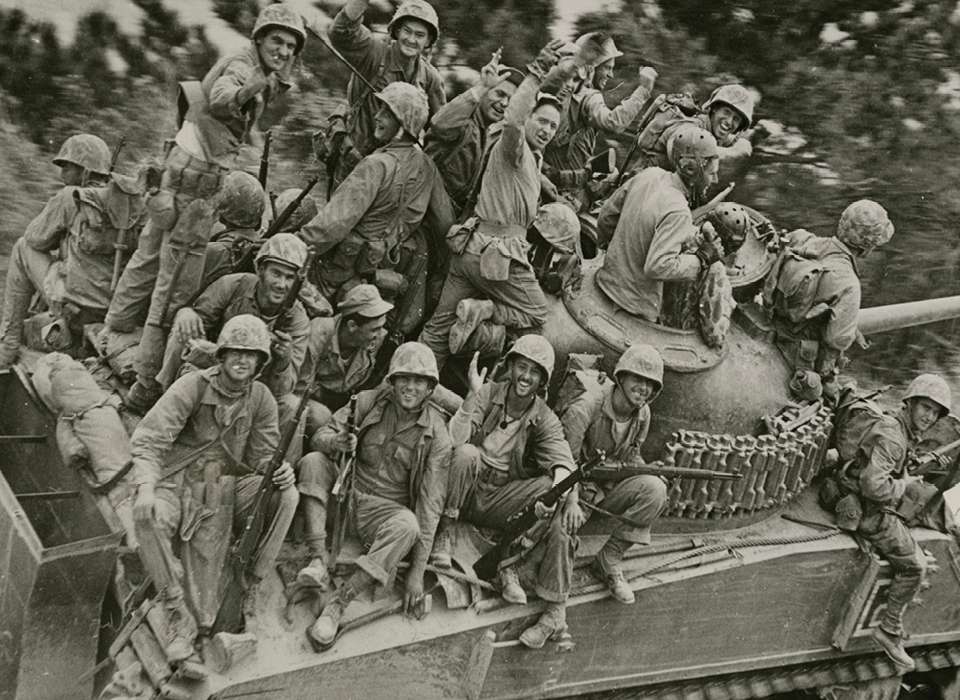
The contributions of American athletes to the war effort during World War II has been well documented.  The experiences of Ted Williams, Bob Feller, Hank Greenberg, Tom Landry, Ed Lummus and hundreds of others have been recognized for their impact in defeating Germany and Japan.  Pulitzer Prize-winning journalist, Buzz Bissinger’s latest book, THE MOSQUITO BOWL: A GAME OF LIFE AND DEATH IN WORLD WAR II chronicles events leading up to a game between the 4th and 29th Marine Regiments on Guadalcanal in late 1944 and the fate of many who fought at Tarawa, Saipan, and Okinawa.  The soldiers were made up of former All-Americans from Brown, Notre Dame and Wisconsin universities twenty of which were drafted by the National Football League.  Of the sixty-five men who played in the game, fifteen would die a few months later at Okinawa.
Bissinger, the author of FRIDAY NIGHT LIGHTS, a story of high school football in Texas brings to life the men and their military training as they prepared for the Marine assault on Okinawa.  During their preparations trash talking between the two Marine Regiments reached a fever pitch which led to what has been referred to as “the Mosquito Bowl.”  Bissinger’s narrative explores the lives of these men with insight, empathy, and a clear picture of what they were experiencing and would soon be up against.  It is a well told story of college athletes and their loss of innocence.  It begins on the playing fields of America’s colleges through their final time f to remain boys to the darkest days that would follow on Okinawa.

The book is a dichotomy in the story it tells.  First and foremost, Bissinger zeroes in on the lives of a number of individuals who developed as exceptional athletes and morphed into American Marines.  Bissinger focuses on the lives of John Marshall McLaughey, Captain of the Brown football team, played one year with the New York Giants and enlisted immediately after Pearl Harbor.  Another major football star, this time as an All-American at the University of Wisconsin, David Schreiner enlisted as an officer candidate with the Marines.  Tony Butkovich, from a family of eleven, one of which was a fighter pilot, was an All-American at the University of Illinois, later at Purdue University and was drafted number one by the Cleveland Rams.  Butkovich would not make the grade as a Marine officer and became a corporal in the infantry. Bob Bauman was Butkovich’s teammate at Wisconsin and his brother Frank played at Illinois, both brothers joined the Marines.  Bob McGowan, from western Pennsylvania was a Sergeant and Squad leader who was severely wounded on Okinawa and whose story provides the reader with the feel of the terror and bloodshed of battle.  Lastly, George Murphy, Captain of the Notre Dame football team would join the others as Marines, in his case as an officer candidate. 

David Schreiner played for the Wisconsin Badgers before joining the Marines.

(David Schreiner)

The book jacket describing Bissinger’s narrative is a bit misleading.  It appears the book will concentrate on football, but its treatment goes much deeper in its exploration of a number of important topics in American history during the first half of the 20th century.  Bissinger follows the military training that the athletes experienced, but its focus is diverse.  The depression plays a prominent role in the upbringing of the Bauman brothers in a small town just south of Chicago.  The issue of immigration stands out because of its impact on the diversity of American society, but also the backlash that was created after World War I when families like the Butkovichs came to the United States from Croatia at the turn of the century.  By 1924, Congress passed the Johnson Act designed to block immigration from southern and eastern Europe.  The legislation reflected politics combined with the pseudo-science of eugenics which became very popular in the post-World War I period that argued certain groups were inferior to “white Americans.”  Daniel Okrent’s THE GUARDED GATE: BIGOTRY, EUGENICS AND THE LAW THAT KEPT TWO GENERATIONS OF JEWS, ITALIANS, AND OTHER EUROPEAN IMMIGRANTS OUT OF AMERICA is an exceptional study of American racism during that period.


Racism is a dominant theme apart from war and athletics as Bissinger explores how blacks were treated in the military.  Lynchings and murders were common in the American south and the experiences of blacks in the military revolved around demeaning jobs mostly in supply, laundries, bakeries, sanitation, ammo dumps leading to the conclusion that the United States fought for freedom in occupied Europe and the Pacific, but there would be no freedom for the 13 million Blacks living in the United States of America.  At the outset of the war there were no blacks in the Marines.


(DeOrmond “Tuss” McLaughry, football coach 1926-1940. With his son John McLaughry, coach 1959, shown with Colgate)

The military leadership used college football stars as a recruiting tool and stressed the similar values and talents that college football and the military held in common.  Exemptions for college athletes from the draft led to anger by the families of those fighting in Europe and the Pacific while many the same age enjoyed the life of a star athlete. Bissinger does an exceptional job delving into the West Point football program as they experienced their best seasons in 1944 and 1945 due to the accomplishments of exempted players “Doc” Blanchard and Glenn Davis, who were better known as “Mr. inside, and Mr. Outside.”  Their exploits would lead the Army to national championships.

Bissinger has total command of the history of the war and college athletics.  The author lists more than 100 pages of endnotes, assembled from military records, correspondence, interviews of survivors and other reportorial feats — shows up everywhere, in the numbers, in battle accounts, in the homey mundanity of letters, and a clear incisive writing style, sprinkled with humor and sarcasm which are keys to the book’s success.  As to the conduct of the war, Bissinger pulls no punches as he recounts the errors in judgement by military higher ups as it planned and carried out the amphibious landing at Tarawa which turned into a bloody disaster with 2000 casualties in the first 76 hours of the invasion.  The key to victory over Japan would be “island hopping” therefore amphibious warfare was of the utmost importance, but military strategists did not make use of all of its assets, i.e.; LVT boats as opposed to Higgins boats that could not navigate through the coral that surrounded many Pacific islands.  Bissinger’s discussions of Tarawa and the outright stupidity of General Simon Bolivar Buckner, Jr. who commanded US forces at Okinawa can only anger the reader as it resulted in the useless deaths of so many young men.

Another important weapon Bissinger explores is that of the “flame thrower.”  On Okinawa and other islands, the Japanese benefited from their use of caves with interlocking tunnels,  a difficult problem to overcome.  The caves were challenging to penetrate by bombing so the use of napalm from flame throwers became imperative.  Despite the application of this weapon which saved many American lives, the Japanese inflicted innumerable casualties on the Americans as they fought from hill to hill.  Japanese troop strength on Okinawa was much higher than US intelligence pointed out, roughly 100,000, not the 66,000 that was estimated.  Bissinger lays out the fears and hopes of the men as they prepared and carried out their mission with horrendous results.  In the end over 250,000 people died in 82 days at Okinawa.  Of that number 50,000 were American, 20,000 Marines, 8222 from the 6th Division.  In the last quarter of the book Bissinger does justice to their memory as he lays out the battle for Okinawa, the Japanese who fought to the death, and the obstacles that the Marines had to overcome.  He lays out the story of all the men who fought at Okinawa and played in the Mosquito Bowl along with countless others.

The core of the book revolves around The Mosquito Bowl, which was a spirited, semi-organized football game on Guadalcanal.   The game, played on Christmas Eve 1944 with at least 1,500 Marines watching, is both a pretext and an organizing principle for the book, but its significance fades as Bissinger explores the fates of several participants.  Combat and other dirty aspects of warfare are ever present.  The fighting on Tarawa, Saipan, Okinawa and stories of those who never returned home point to the insanity of war, which regrettably still dominates our news cycle today as we witness Russian terrorism and atrocities in Ukraine.  The title of the book is a misnomer as there is little discussion of the game itself – more to the point the book is not about a football game but the tragedy of young men fighting and dying in wars far from home.

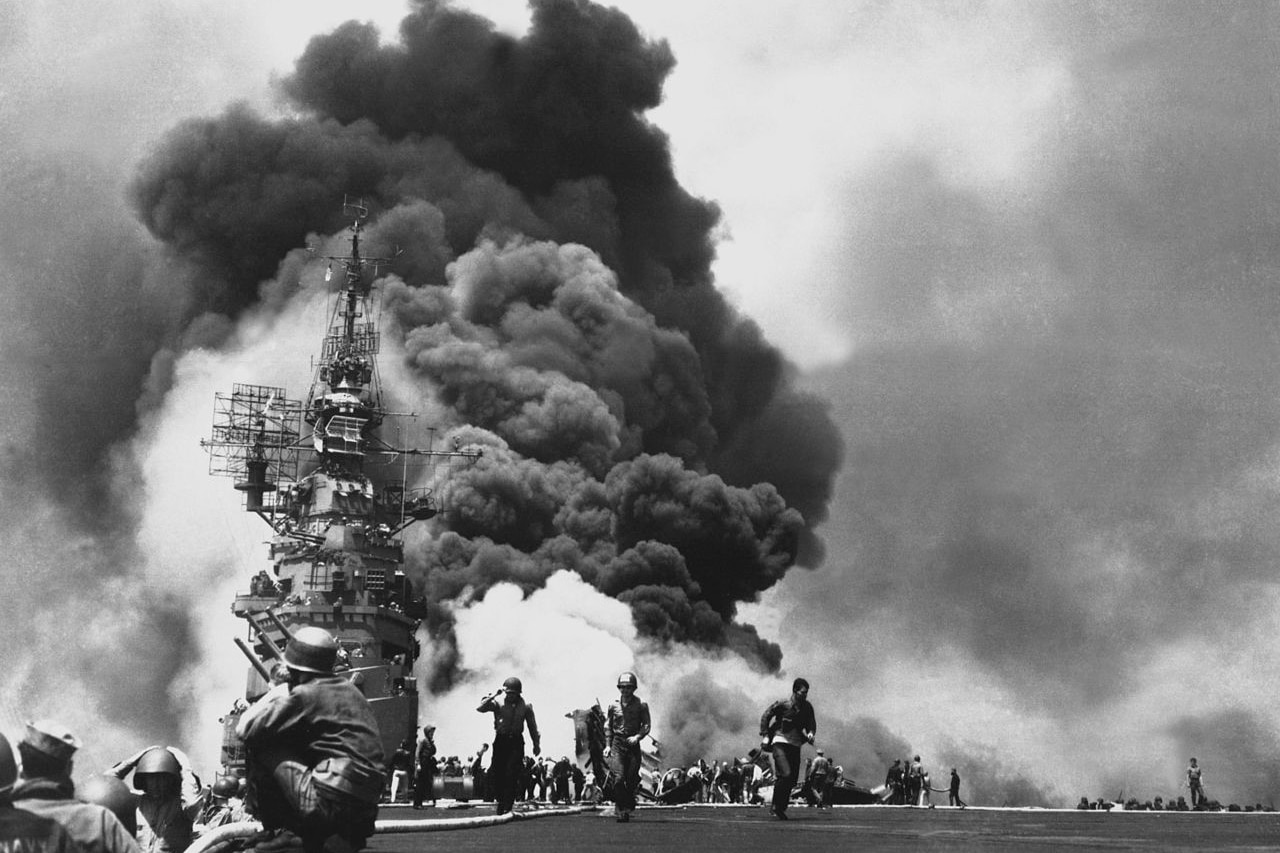
Smoke billows from a burning ship.

BLOOD IN THE GARDEN: THE FLAGRANT HISTORY OF THE 1990S NEW YORK KNICKS by Chris Herring

Madison Square Garden in New York
(Madison Square Garden)

Let me begin by stating that I have been a Knicks fan going back to the 1960s.  The great teams led by Willis Reed, Walt Clyde Frazier, Bill Bradley and company will always be the benchmark for success, a model that has been impossible to replicate.  After a few down years, the drafting of Patrick Ewing created hope that was almost realized in the 1990s.  Since that time there is only one way to describe this franchise; dysfunction, incompetence, and an inability to draft properly despite the presence of the supposed genius of Phil Jackson.  Today it seems the team may have ended the thirty year point guard drought by signing Jalen Brunson to go along with its young core, but who can tell whether this is the first step back aside from the Julius Randle mirage and false hope of two years ago.  When one thinks of the plight of the Knicks fan there is nostalgia for the past and prayers for the future.  Since this is the case if one wants to feel better one can return to the last time the New York Knicks were relevant and Madison Square Garden was rocking.  To meet that need I must thank Chris Herring, a senior writer for Sports Illustrated whose new book,  BLOOD IN THE GARDEN: THE FLAGRANT HISTORY OF THE 1990S NEW YORK KNICKS fills that void.

Image 1 -  PAT RILEY NEW YORK KNICKS LAKERS HEAT HALL OF FAME ORIGINAL 8 X 10 PHOTO 1
(Pat Riley)

Herring’s deeply researched account highlights a number of combative personalities.  Coach Pat Riley and his Armani suits instilled a fighting spirit in players like Charles Oakley, John Starks, Anthony Mason and others which after two years of “intimidating” basketball led the National Basketball Association to alter certain rules.  The 1990s team had an amazing work ethic highlighted by its “wars” with its perennial enemy Michael Jordan and his Chicago Bulls, and later with the Riley led Miami Heat.  Their playoff games were classics, though in the end the Bulls were more talented, and they presented a roadblock that the Knicks could never overcome, and the Heat would succumb to the Knicks more often than not.  Herring dives deep into the player relationships, player attitudes and talents, and a number of fascinating personalities as he describes the highs and lows of the decade, but also the staunch support from New York basketball fans who grew to love the team.

Herring begins his narrative at the New York Knicks’ first practice under Pat Riley in 1991 with a fight between Xavier McDaniel and Anthony Mason during a rebounding drill.  This would set the tone as to the type of team the Knicks were on the way to becoming.  Under Riley they would emulate the physicality of the then recent two time world champion Detroit Pistons, a strategy that would dominate the team for a decade.

Herring reviews Riley’s physicality drills, one called “suicide ally” in detail and how players reacted and adapted.  In Riley’s world there was no such thing as working too hard and Herring takes a deep dive into Riley’s methods and psychological approach to coaching.  He was a master at manipulating his players, presenting speeches that captivated his team and provided a motivation that few coaches could replicate as he turned the team into a winner.  In their first playoff series in 1991 they even out bullied the Detroit Pistons, replacing them as the leagues’ “bad boys.”

The epitome of the type of player Riley favored was Charles Oakley whose 1992 playoff hit on Indiana Pacers Reggie Miller shocked officials into not calling a foul, but later he would draw a $10,000 fine and would lead the league in flagrant fouls.  The question for the media was whether the Knicks were dirty or overly aggressive as they pushed the envelope with their type of play.  Herring provides numerous examples of hard fouls, fights, and other types of melees involving players and coaches.

The aberration to the Knicks type of play was Charles Smith obtained in a trade in 1992 from the Los Angeles Clippers.  Smith’s personality and on the court makeup was the opposite from most of his teammates.  Herring’s discussion of Smith is just one example of how he analyzed players for their temperament, approach to the game, relationships with coaches and teammates.  He explores the likes of rambunctious and at times dangerous players like Anthony Mason and John Starks, players with short fuses who played with a sharp edge.  Patrick Ewing, the key to the team, is ever present in Herring’s analysis as he describes Ewing’s triumphs and disappointments.  Ewing was the rock that the Knicks leaned on throughout the decade and it is a shame that he never earned that championship ring no matter how much heart he left on the court.  Herring also focuses on players outside the core including Latrell Sprewell whose controversial arrival to the team turned out well as did the drafting of Larry Johnson.

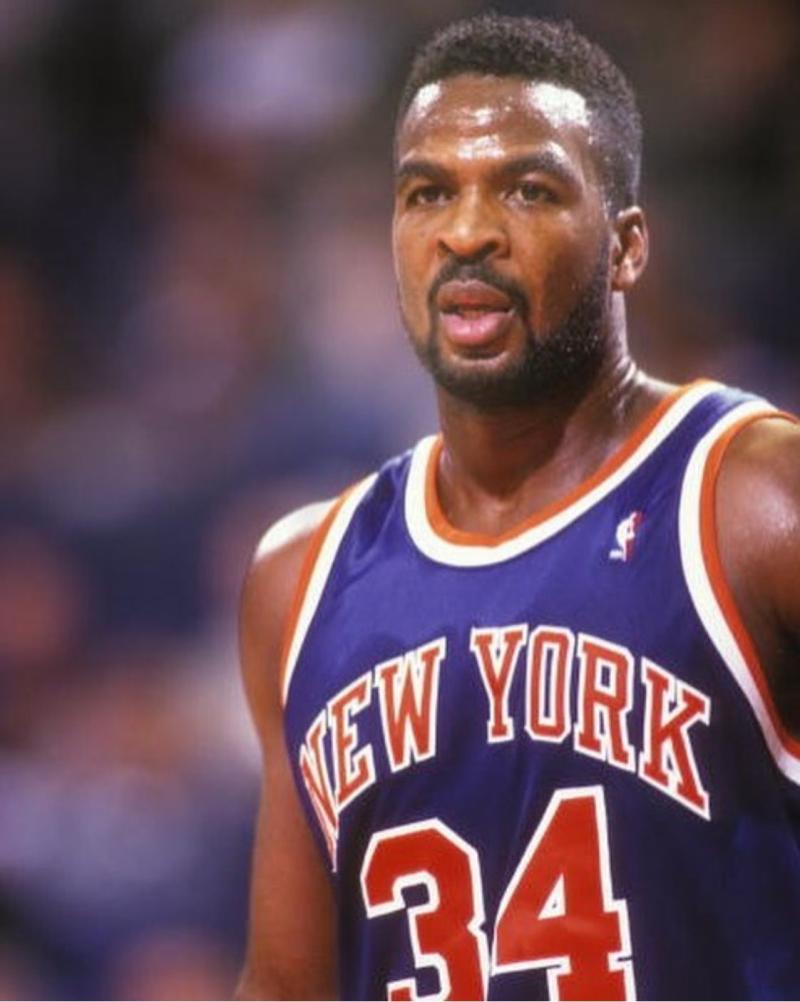
Charles Oakley
(Charles Oakley)

Herring introduces coaches aside from Pat Riley in an interesting fashion.  Riley’s replacement Don Nelson was the anti-Riley.  Riley was a bit paranoid and a control freak who rarely exhibited empathy.  Nelson came across as a mad scientist who created an “inverted, semi-position less system” that has evolved into a dominant coaching strategy two decades later.  The most important coach apart from Riley during the decade was Jeff Van Gundy, a workaholic in the Riley mode but exhibited greater sensitivity toward his players.  Always looking behind his shoulder because of the arrival of the new owner James Dolan he drove the Knicks to the 1999 NBA finals and was an exceptional teacher of basketball.

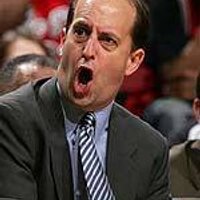
Opens profile photo
(jeff Van Gundy)

After reliving the 1990s with Mr. Herring I am still trying to determine which loss was the most heartbreaking – 1994 to Houston, 1996 to Miami, Reggie Miller’s 9 points in 12 seconds, a brawl that knocked out their five best players from a playoff game, and 1993 to the Bulls which still hurts as I still have memories of Charles Smith’s inability to put back a rebound.

The sports media cauldron of New York is always front and center.  The arrival of James Dolan and the decline of the Knicks over the last two decades does not receive the coverage it should and perhaps a longer epilogue would have enhanced this component of the story.  However, overall, Herring has delivered an exceptional sports book dissecting a team that was adored in New York and as he states that the reason he accepted the challenge of authoring the book was  to fill the void for Knick fans – I will point out he has accomplished his mission.

Madison Square Garden in New York - All Access Tour Knicks

RAISE A FIST, TAKE A KNEE: RACE AND THE ILLUSION OF PROGRESS IN MODERN SPORTS by John Feinstein

John Feinstein’s reputation is based on his excellent reporting and the 45 books he has written.  His approach is multi-faceted whether books or articles that cover baseball, golf, tennis, college and pro football, basketball, college and professional.  Feinstein’s writing is clear and insightful, and these characteristics are evident in his latest book, and perhaps his most important, RAISE A FIST, TAKE A KNEE: RACE AND THE ILLUSION OF PROGRESS IN MODERN SPORTS.  At a time highlighted by a former racist president, the Black Lives Matter movement, the death of George Floyd and too many others Feinstein effectively explores the issue of racial inequality in sports, a microcosm of our larger society which should open the eyes of its readers.

After reading the introduction by former NFL quarterback Doug Williams and Feinstein’s opening chapter it brought me back to my own experiences with racism.  In my early twenties I joined a group of friends in a softball tournament in Staten Island, NY.  When the games where completed, a teammate came up to me and said, “for a Jew, you are a pretty good guy,” I was dumb founded.  Earlier, I had undergone basic training in the army at Fort Lost in the Woods Misery, better known as Ft. Leonard Wood and the first thing I heard at reception station was “Freiberger, Jew boy we gonna whoop your fucking ass.” This was 1969 and being in a company where the majority of recruits were from Mississippi, Georgia, and Alabama I should not have been surprised.  Needless to say, things went downhill from then on. 

After reading Feinstein’s work and revisiting my own experiences which go beyond the two experiences I describe one would think that almost fifty years later as a society we would have made greater progress, including sports.  However, as Feinstein clearly shows in football where the vast majority of players are black, there are only three head coaches and two general managers.  In baseball, as of May 2021 according to USA Today, “just under 8% of the league’s players are Black. Dave Roberts of the Dodgers and Dusty Baker of the Astros remain the only Black managers. There are currently no Black general managers in Major League baseball.  If this is not an indicator of the current trends in sports then nothing is.”

John Thompson
(Georgetown coach, the late John Thompson)

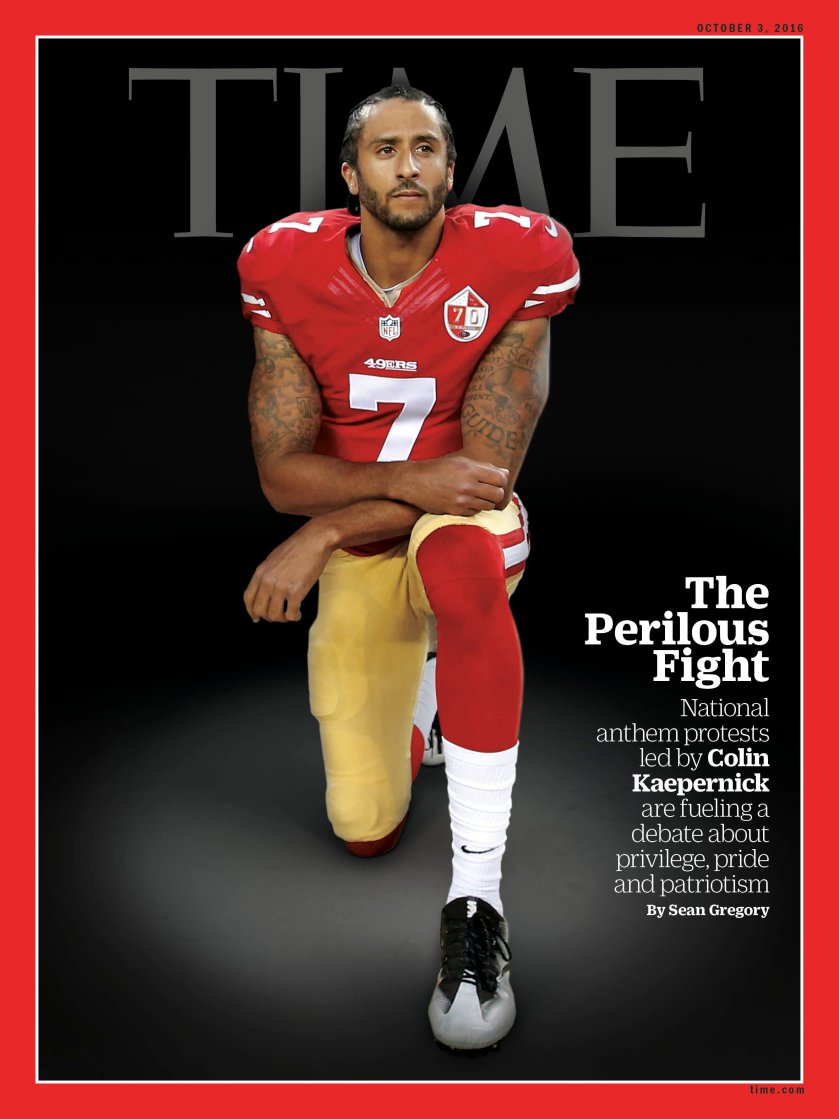
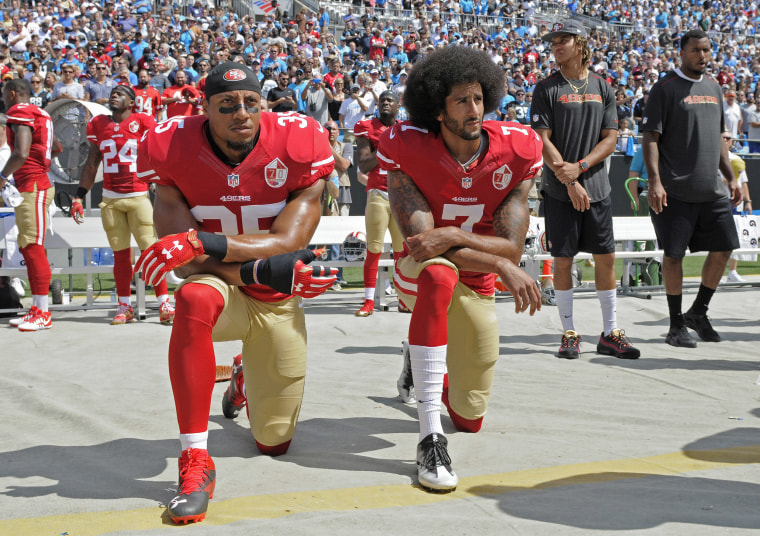
Feinstein has conducted a prolific amount of research which is reflected in his discussion of numerous topics germane to his thesis.  A case in point is the number of black quarterbacks in the NFL and what it takes to become a quarterback if you are black.  Interestingly today there are a number of exceptional young quarterbacks in the NFL, but if the past is prologue many black players who aspire to stand behind a center have been steered in the direction of wide receiver, cornerback or safety because of course they were fast, and if we include racial tropes hinted by coaches like Mike Shanahan they are not able to grasp the intricacies of running the offense of a professional football team.  This is out and out racism and Feinstein provides examples to support his argument including the likes of Donavan McNabb, Colin Kaepernick and Marlin Briscoe. In Kaepernick’s high profile case he took a knee during the national anthem to protest the lack of racial justice in America, resulting in being blackballed by all 32 NFL teams.

As one reads Feinstein’s work a number of extremely important points emerge. First, the NFL is 75% black but if you are a white coach who has been dismissed one or two times the odds are you will get another opportunity to be a head coach.  If you are a black under the same circumstances you will most likely spend your career as an offensive or defensive coordinator, never given the opportunity to become a head coach.  Again, Feinstein points to a number of individuals to support his conclusions, Marvin Lewis, Jim Caldwell, and Lovie Smith.  Further, he asks the question many others have; why hasn’t Kansas City Chiefs offensive coordinator Eric Bieniemy been hired as a head coach based on his career resume and success?  Football is not the only sport that exhibits these discrepancies.  In college basketball there are 332 coaching jobs, 82 of which are held by blacks – a sport where 50% of the players are black. (161)

Doc Rivers Clippers
(Philadelphia Seventy-Sixers coach Doc Rivers)

Second, why are black quarterbacks in college expected to change positions in order to play in the NFL?  Feinstein takes us inside the Baltimore Ravens 2018 draft room where it took a black General Manager, Ozzie Newsome to choose a black quarterback.  To understand this process and the choice of Lamar Jackson in addition to the cadre of young black quarterbacks in the league who are a success, we must ask, is the process changing?  Interestingly, in 2017 the Chicago Bears drafted Mitch Trubisky with their second round draft pick while Patrick Mahomes went in the 10th round and Deshaun Watson was chosen in the 12th.  Today Trubisky is a backup QB and not even with the Bears, but he is white and the others black.  The situation for blacks who aspire to become general managers face the same obstacles. The numbers do not lie. 

Third, when blacks peacefully protest they are usually stigmatized for life – exemplified by John Carlos and Tommie Smith of 1968 Mexico City fame and Colin Kaepernick.

Lastly, something Pittsburgh Steeler coach Mike Tomlin refers to as “the talk,” how you engage white police officers when you are pulled over if you have black sons whose only transgression is “driving while black.”  This has nothing to do with sports, but it provides a lens into how black parents try and protect their children in the larger society.  “The talk” is a result of the experiences of black fathers who for generations have been treated poorly by police.

A closeup of Pittsburgh Steelers coach Mike Tomlin.

(PITTSBURGH, PA – DECEMBER 17: Head coach Mike Tomlin of the Pittsburgh Steelers looks on from the sidelines in the third quarter during the game against the New England Patriots at Heinz Field on December 17, 2017 in Pittsburgh, Pennsylvania)

Feinstein does an excellent job providing the personal background for each of the sports figures he discusses.  Whether it is John Carlos, Tony Dungy or a host of other we get to see the world through their eyes and are exposed to an important perspective when it comes to race based on what they have been through leading to their professional careers. 

Perhaps Feinstein’s most entertaining and insightful chapter, “Pathfinders” focuses on the life and career of Georgetown coach John Thompson.  Thompson was a man with a tough exterior and took an exceptionally weak program and turned it into a national powerhouse.  But beyond the façade, Thompson was a wonderful person who took care of his players and was “thoughtful and eloquent and never ducked a question, once you got the chance to ask one.”  What is clear in college basketball most head coaching offers to Blacks are given by programs that are in poor shape.  According to Thompson, “there have been plenty of Black coaches capable of winning a national championship.  Only a handful have been given a realistic chance to do so.”

Feinstein’s discussion of the NBA, a league that is the most progressive and places itself at the center of society’s ills with protests by players and its commissioner are eye opening.  Focusing on Doc Rivers whose commentary encapsulates the plight of blacks in the larger society as opposed to zeroing in on the NBA is important because it shows how racial attitudes are intertwined between sports and the “real” world.  For Rivers, the deaths of George Floyd, Jacob Blake, Ahmaud Arbery, Breanna Taylor and so many others are too much as is the constant experience of Black While Driving.  The NBA may be more progressive, but it too has some key issues that must be addressed.

Feinstein finds the same issues that plague football and basketball in baseball.  Though he does not dig down as deep as he did with other sports the problems that exist sound familiar.  For example, why has Willie Randolph who had a successful career as a player, coach, and even as a manager of the New York Mets been out of baseball since 2011 and has not had the opportunity to manage another team since the Mets fired him.  Jeff Torborg has been a manager five times and his record is not as strong as Randolph.  If we are to examine this example and others it is clear, Randolph is black, Torborg is white.  Why did A.J. Hinch, the manager of the Houston Astros who was fired and suspended by Major League baseball for the illegalities in winning the 2017 World Series, get rehired by the Detroit Tigers immediately after he served his suspension?  He was white! 

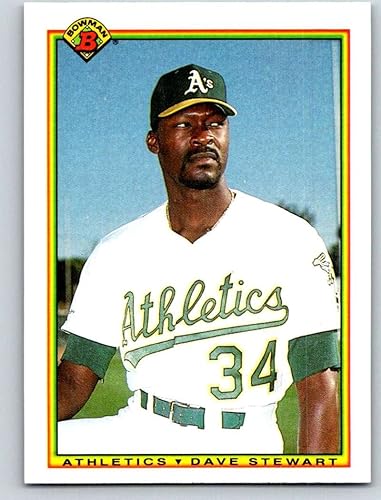
  • Baseball MLB 1990 Bowman #449 Dave Stewart #449 NM Athletics

If we follow the path of Dave Stewart, an all-star pitcher and World Series champion to become a general manager the pattern is the same, and of course he is black therefore he missed out on the executive position with the Toronto Blue Jays who hired a “white” person whose resume did not hold a candle to Stewart’s.  If one follows Black men with executive positions in baseball we see Derek Jeter, part owner of the Florida Marlins and Kenny Williams as executive vice-president after being a GM of the Chicago White Sox, but it took twenty-one years – obviously, the pattern remains clear.

Feinstein has authored an important book, made even better with his sense of humor and sarcasm.  With the death of George Floyd and the events of last year hovering over each sentence Feinstein must be commended for his impeccable research, easy writing style, and the importance of his topic which makes the book difficult to put the book down.  If there is one area that Feinstein could have improved upon is that he can get repetitive at times, but this is probably nit-picking.

Image: Colin Kaepernick, Eric Reid

(San Francisco 49ers’ Colin Kaepernick, right, and Eric Reid protest during the national anthem before an NFL game against the Carolina) 

YOGI: A LIFE BEHIND THE MASK by Jon Pessah

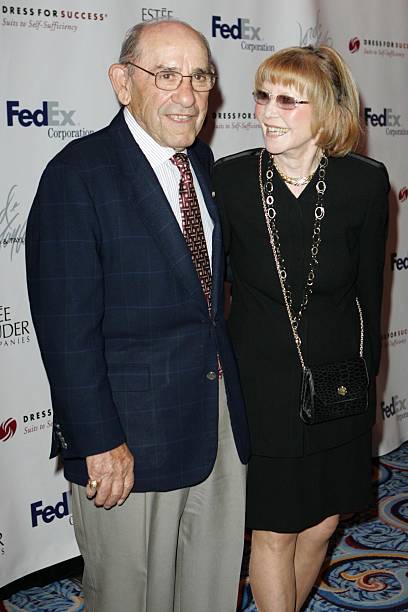
Yogi Berra during the 1960 World Series - photo Marvin E. Newman

(Lawrence Peter Berra ….”Yogi”)

Growing up in Brooklyn, NY I had had ample opportunity to sit in the bleachers in the old Yankee Stadium or watch the “Bronx Bombers” on WPIX.  If I could not watch the team in person or watch them on television, I could listen to my Sony transistor radio and learn of the exploits of my heroes.   The names of the players are embedded in my memory; Mantle, Ford, Skowron, Richardson, Kubek and of course Berra.  The Yankee catcher, sometimes outfielder was a sight to behold.  His awkward swing that paid no attention to the strike zone or his bowl legged stride did not detract from his baseball grace.  Be it jumping into Don Larsen’s arms following the 1956 World Series perfect game or turning his back on Bill Mazeroski’s game winning homerun to win the 1960 World Series, Berra always stood out as a leader among his teammates.  All of the wonderful stories  and career memories surrounding Berra are again brought to life in Jon Pessah’s new biography, YOGI: A LIFE BEHIND THE MASK which allows me to relive many important memories from my childhood.

Pessah’s prodigious research including interviews, culling newspapers, and other materials have produced a masterful biography as he places Berra’s story in the context of race relations, socio-economic issues, ethnic conflict, and other important aspects of American history during his lifetime.  A good example of the scope of Pessah’s effort is his discussion of the impact of World War II on American society, prejudice against Italian immigrants, and the obstinacy of baseball owners in integrating their sport.

Yogi Berra (left) won 10 World Series championships with the Yankees. (Courtesy Dale Berra)

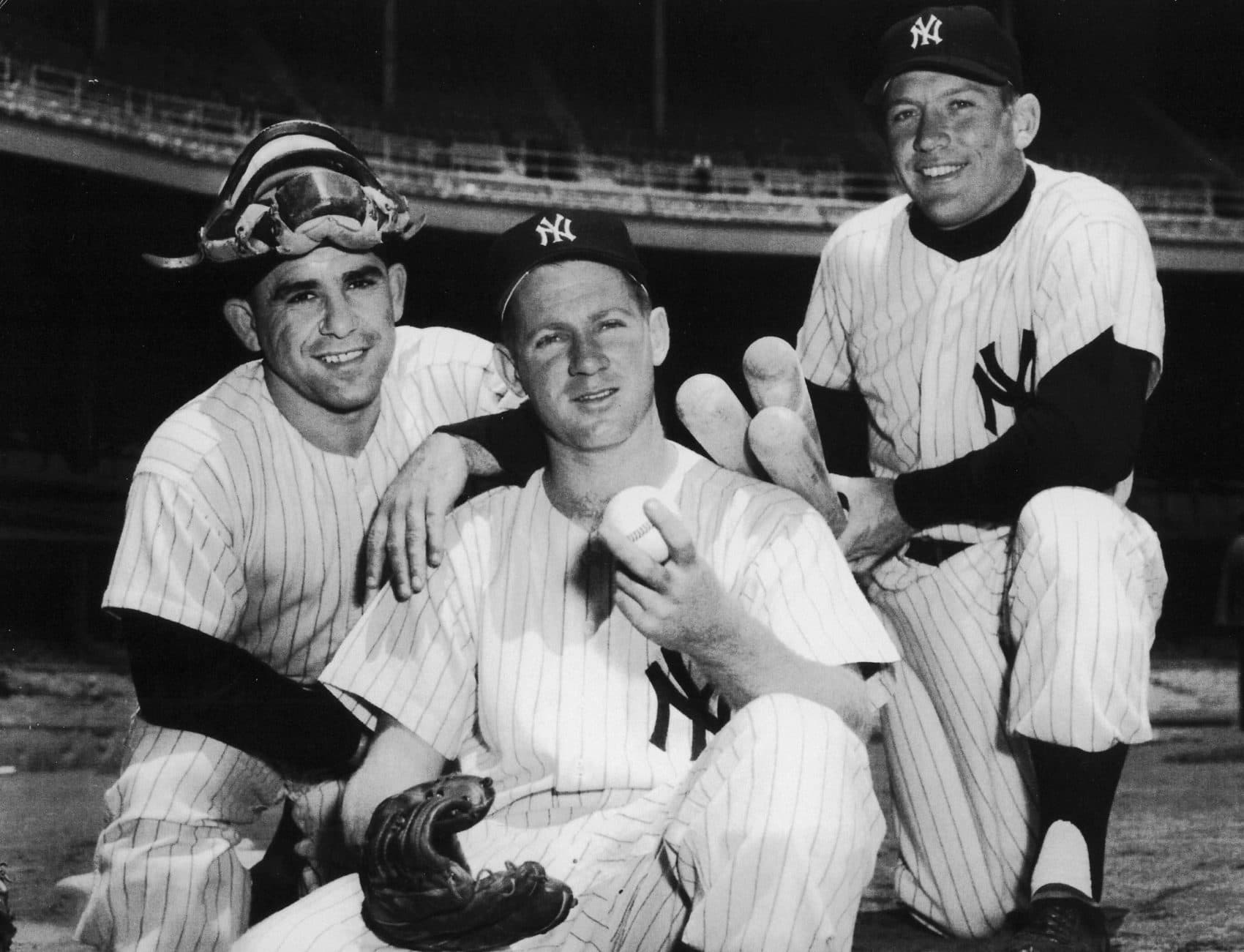
        (Yogi Berra, Whitey Ford, Mickey Mantle)

Pessah’s points out a number of interesting aspects of Berra’s life.  I was completely unaware that as a member of the US Navy during World War II, Berra volunteered for service on “Rocket Boats” which were designed to cross the English Channel on D Day and soften German targets for allied bombers.  Berra witnessed a great deal of carnage and death during the war which he never really went public with.  Another important aspect of Berra’s life and career was the abuse he suffered because of his facial features and stature.  Constantly the victim of crude and ugly remarks growing up he also had to deal with them when he stepped on to the baseball diamond.  Berra would become philosophical about the abuse and he was able to cope and put it behind him through a series of rationalizations.

Placing Berra’s career in the context of post war events is a key for Pessah.  Whether discussing the role of baseball during World War II, the GI bill of 1947, postwar American growth as Americans experienced discretionary spending to visit ball parks, the arrival of Jackie Robinson and Larry Doby to integrate both major leagues, racial unrest in the 1950s and 60s, all reflect the author’s strong command of history and provides insights into Berra’s views and career.

Yogi Berra relaxed on the field during Yogi Berra Day at Yankee Stadium in 1959.

(Yogi Berra Day at Yankee Stadium in 1959)

I would imagine that most people are aware of the many “Yogisms” that exist that are still referred to on a daily basis.  Yogis’ commentary endeared him to the American people as it seemed he “can do everything so wrong but have them all turn out so right.”  Comments like “the future ain’t what it used to be,” “when you come to a fork in the road take it,” “ninety percent of baseball is mental; the other half is physical, “or when a reporter asked him if the comments he had to endure about his looks he responded, “I haven’t seen anyone who hits with their face,” are still amusing today.  Many have painted Berra as inarticulate and not highly intelligent.  Nothing could be further from the truth as Berra was a shrewd businessman who built Yoo Hoo soft drinks into a national brand, partnered with Phil Rizzuto buying a bowling alley and selling it for a $1 million profit, acting in a few movies, and earning the highest salary for a catcher in baseball history.

Pessah does a marvelous job presenting the watersheds in Berra’s life and career.  The role of Dr. Bobby Brown, an infielder with the Yankees before he turned to medicine played an important role in taking care of Berra his first few years introducing him to life in the city, smoothed his rough edges, and preached patience.  Berra’s marriage to Carmen Short provided him a family life and a partner who helped make important decisions.  Lastly, the work Hall of Fame catcher Bill Dickey who worked with Berra and turned his raw skills into the best defensive catcher in baseball.

The first two thirds of the book covers Berra’s career with the Yankees which includes the standard statistics that most baseball books offer, Berra’s relationship with his teammates especially Joe DiMaggio, and his sidekicks Mickey Mantle, and Whitey Ford, along with the difficulties of transitioning to managing the Yankees and his firing.  What sets Pessah’s biography apart is that he delves into Berra’s post playing career and later life after baseball in great detail offering numerous insights into his personality and what made him so successful.

What is clear from Pessah’s biography is the importance of family and the role of his wife Carmen.  If you want insight into the type of person Berra was off the baseball field all you need to explore is how he dealt with his son Dale’s cocaine habit which began when he played for the Pittsburgh Pirates..  His addiction became public knowledge during a federal investigation.  The relationship between father and son is strong further highlighted by Dale’s reaction when his father was fired by George Steinbrenner in 1985 leading to Yogis boycott of Yankee Stadium until July 18, 1999 when Berra returned to the stadium to witness David Cone’s perfect game against the Montreal Expos (a game I attended!!!)  Berra’s boycott was fostered by Carmen’s anger and reflects her role as a dominating and protective force in their marriage.

All of the traditional aspects of a baseball biography are present in YOGI: A LIFE BEHIND THE MASK, and it is to Pessah ‘s credit that he has written a study of an important American icon that allows the reader to really get to know the man. Pessah writes with a passion about Berra in part because he was his father’s favorite player and would inherit his dad’s love of the Yankees. For me, the book was a stroll down memory lane, but it raised my level of understanding what Berra endured at times during his career and how he overcame his shy and quiet nature to become a strong, capable, person and a wonderful family man.  If you have missed baseball because of Covid-19 this book can really help fill the void.

Yogi Berra

CHUMPS TO CHAMPS: HOW THE WORST TEAM IN YANKEE HISTORY LED TO THE ’90S DYNASTY by Bill Pennington

Related image

(Jorge Posada, Mariano Rivera, Derek Jeter, and Andy Pettitte, the “Core Four”)

Bill Pennington describes his new book as a story of “resurrection and rebirth.”  It is the story of a once proud dynasty, the envy of sports franchises worldwide, so why use the terms just mentioned.  Pennington’s book, CHUMPS TO CHAMPS: HOW THE WORST TEAM IN YANKEE HISTORY LED TO THE 90S DYNASTY begins with a bad omen.  Yankee pitcher, Andy Hawkins, a career journeyman who was about to be released pitches a no-hitter against the Chicago White Sox.  However, an asterisk is called for because he lost the game 4-0, an occurrence that had never occurred in baseball history.  Such was the plight of the Yankees; attendance was down 35%, the farm system was bare, from 1989-1992 they had the worst record in team history, and the owner, the bombastic George Steinbrenner was banned from baseball.  At a time when the gloried franchise has returned as a major force it is interesting to turn the clock back and see how it emerged from its doldrums to become the last dynasty of the 20th century.

Image result for photo of Gene Michael

(Gene Michael)

Pennington is on the top of his “game” throughout the narrative.  A former beat writer who covered the Yankees, and sportswriter for the New York Times he had unparalleled access to the organizations executives as well as the players.  He engaged in hundreds of interviews including the major characters including George Steinbrenner, Gene Michael, Buck Showalter, Don Mattingly, Mariano Rivera, Derek Jeter, Bernie Williams, Paul O’Neill, and Andy Pettitte.  Pennington takes the reader on a year by year journey in Yankee history culminating in their resurgence winning the World Series in 1996 against the Atlanta Braves.  During that journey the major issues that confronted the franchise are presented in detail concentrating on how the team fell into the abyss of the 1980s and early 90s.

Related image

(Buck Showalter on Seinfeld)

Pennington does a great job setting the scene of how far the resurgence traveled by exploring the depths of the 1980s.  It seemed the Yankees did well in the 1980s, but in reality they were on a slow decline as its petulant owner, George Steinbrenner constantly interfered in “baseball” decisions; signing over the hill expensive free agents, trading away numerous prospects, and firing managers at the rate of one per year, in addition to rehiring and firing the same people multiple times.  Pennington provides biographical sketches of the important individuals involved including Major League baseball officials, executives of the Yankee organization, and numerous players.  In so doing the reader acquires insights from all points of view and gains an understanding as to what went wrong, and later what went right.

Image result for picture of george steinbrenner

(George Stiernbrenner)

The key factor in the Yankee resurgence involves the arrogance and stupidity of George Steinbrenner.  The Yankee owner who had previously been suspended from baseball because of illegal campaign contributions to Richard Nixon found himself in hot water once again in the early 90s.  Steinbrenner had been at war with one of his high-priced free agents, David Winfield who he felt had lied about his contract and did not measure up to the standards that the Yankee owner expected.  The disagreement involved donations to the Winfield Foundation, the paying of hush money to a convicted felon that Steinbrenner hired, and in the end Baseball Commissioner, Faye Vincent banned the Yankee owner for life, though it would be reduced to a two-year suspension after a year.  During that time Steinbrenner was prohibited from being involved with major decisions involving the team.  This allowed General Manager Gene Michael, Manager Buck Showalter, and the rest of the organization to set the Yankees on a new path.

Related image

(Paul O’Neill)

The change in strategy including the early use of analytics, keeping their own prospects as the farm system began to blossom, creating a new culture in the clubhouse by acquiring certain types of players, and developing a consistent organizational philosophy that would be implemented  throughout their minor league system up through the major league level.  As Brian Cashman, then Assistant General Manager has pointed out, the success the Yankees would achieve in 1993 and 1994 while Steinbrenner was away from the team allowed for the implementation of the new approach.  Once Steinbrenner’s suspension ended, he came back and allowed his baseball people to make decisions rather than himself.  The key point is that if Steinbrenner had not been exiled the success of the late 1990s would not have occurred.

Image result for images of bernie williams

(Bernie Williams)

It is one thing to change philosophies it is another to have the management and players to implement it.  Pennington is correct in arguing that Michael knew how to deflect Steinbrenner’s urges, as Cashman would also do once he took over as General Manager.  Further, Pennington describes how effective the scouting department was uncovering players like Bernie Williams, and the core four of Mariano Rivera, Derek Jeter, Jorge Posada, and Andy Pettitte.  These players were supplemented by many others, but a climate of winning and accountability was created, that proved successful.

Image result for images of david cone

(David Cone)

Perhaps the best chapters in the book deal with the relationship between Michael and Showalter and how they built the Yankees and dealt with Steinbrenner.  As in all relationships there is a watershed moment that alters the course of history.  Pennington does a superb job describing the events of 1994 and how the Yankees felt robbed by the baseball strike when they were on the cusp of winning a championship, and the loss to Seattle in the 1995 playoffs.  At the conclusion of that series Michael and Showalter did not return as General Manager and Manager for 1996 and Don Mattingly retired never to appear in a World Series.  Later, Steinbrenner admitted that not bringing Showalter back was his greatest mistake, and on a positive note it taught him to leave the team to his baseball people for the remainder of his life as he morphed into the realm of a benevolent patriarch.  It is ironic that in 2001, Showalter would be attending game seven of the World Series as an ESPN analyst where the two teams he helped build, the New York Yankees and Arizona Diamondbacks would play for the championship.

Old Yankee Stadium From the Upper Deck Behind Home Plate

As a Yankee fan since the 1950s I have witnessed a great deal of Pennington’s narrative from my own observations and reading newspapers on a daily basis.  The author hits all the major points, develops the most important personalities, and reaches the correct conclusions in explaining the remaking of the New York Yankees from a declining power to a constant force in major league baseball over the last three decades.  If you are a baseball fan you will love this book.  If you are a general reader it presents a story of redemption and change that has benefited millions of people and shows if you take a thoughtful approach to an endeavor and leave out impatience and bombast you can be very successful.

Related image

TIGER WOODS by Jeff Benedict and Armen Keteyian

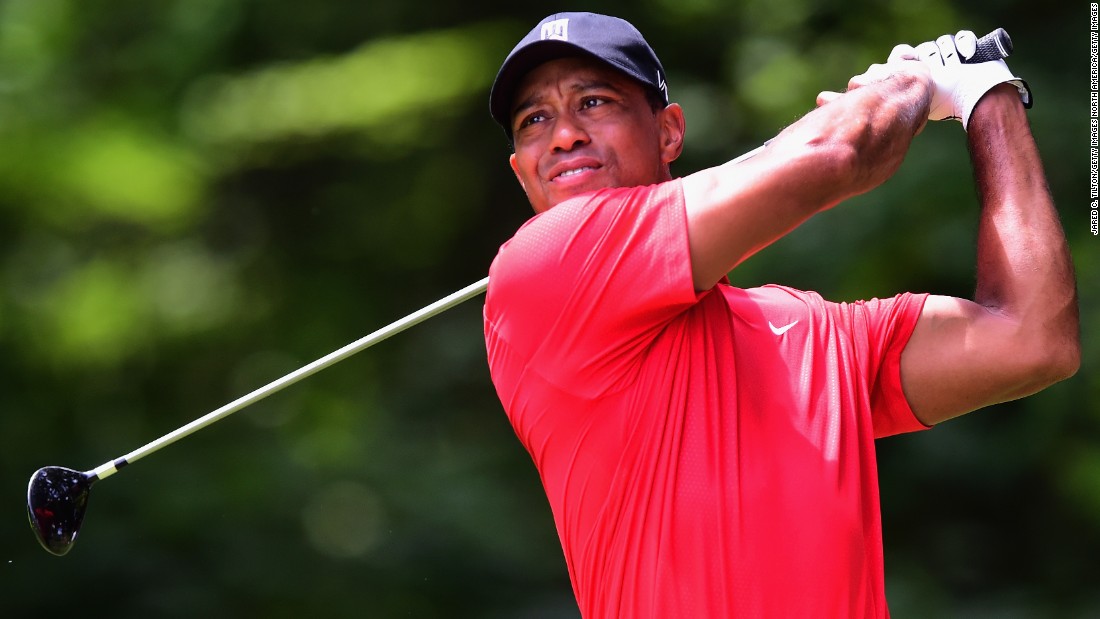
Image result for photo of Tiger Woods

(Tiger Woods)

Undertaking a biography of Tiger Woods is a daunting task.  First, there is the coterie of secrecy surrounding one of the greatest, if not greatest golfer in history.  Second, Woods himself.  Having been burned by interviews early in his career for years refused to interact with the fourth estate and maintained an aura of separateness from everyone but his inner circle.  However, there is enough information about Woods that includes books by Earle Woods, Tiger’s father, former coaches, documents, professional medical opinions, in addition to numerous articles by respectable journalists to produce a superb in depth study of Woods.  This being the case Jeff Benedict and Armen Keteyian’s effort in their new book, TIGER WOODS is to be praised as they have relied on information plied by others, but have introduced new material by culling newspapers, interviews, and other sources to create a book of surprising quality.

Tiger Woods was on top of the world having dominated the sport after becoming the youngest player to win the Masters in 1996.  For the next two decades golf revolved around his success and he became his own mega corporation as wealth and victories were seen as everyday occurrences.  This would all come to an abrupt end on November 27, 2009 when Woods crashed his car into a neighbor’s tree.  How did this come to pass and why did Woods’ life spiral out of control because of the accident?  In addition, how did Woods, after divorce, injury, scandal etc. seemingly turn his life around?  These questions and Tiger’s life story leading up to that fateful day form the core of Benedict and Keteyian’s new monograph.

Image result for photo of Tiger Woods

(Tiger Woods’ parents)

In trying to understand how Woods evolved as a person and an athlete all you have to do is examine his early childhood from birth onward as he was surrounded by an attention grabbing father and an authentic “tiger mom.”  The authors describe a childhood that was different from other children as instead of toys his prized possession from a very young age was a sawed down golf club.  Woods would not interact with other children, and his father, Earl made it clear that golf was paramount, not making friends.  The key to Woods’ career is his father.  He became his confidante and role model and Woods’ behavior up until later in adult life can be explained by how Earl trained Tiger in a rigorous military fashion, instilled in him how unique he was, and created expectations that were outrageous to say the least.  Woods’ mother, Kultida, known as Tida reinforced her husband’s approach to child rearing and even after her divorce from Earl would dominate her son and instill in him that he was always right and he did not have to give in to anyone.  What separates the authors approach is that they integrate the opinions of medical professionals throughout the book applying psychological principles to help explain Woods’ behaviors and outlook on life.  For Woods, as a gifted child he would be more attuned to his parents’ expectations and would do whatever it took to meet them, even if it meant ignoring his own feelings and needs.

Image result for photo of Tiger Woods

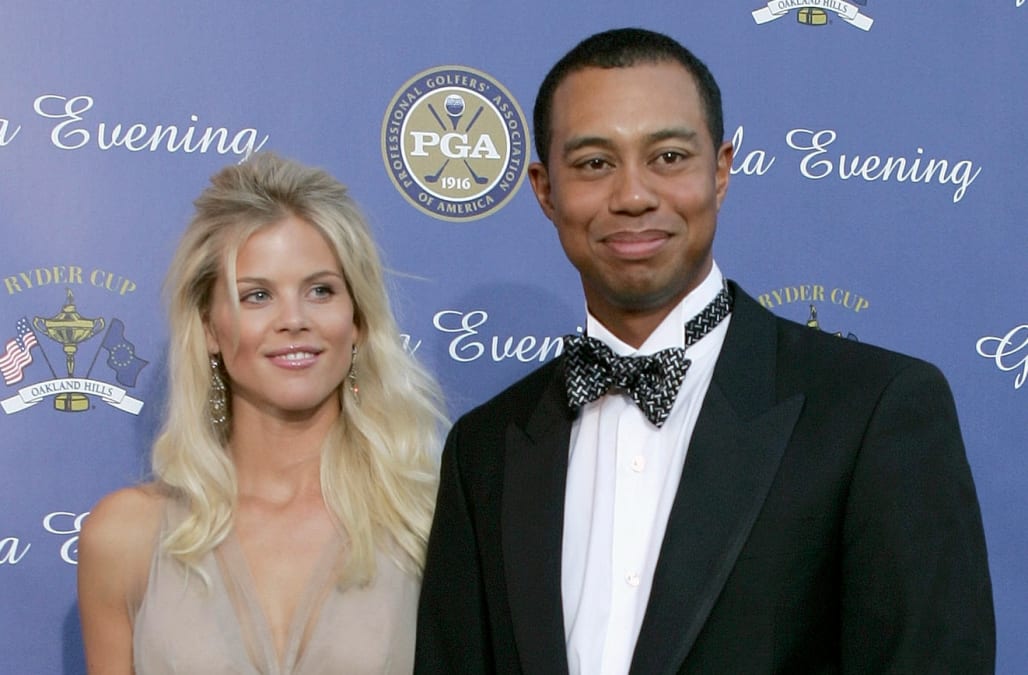
(Tiger Woods and his ex-wife Elin Nordegren)

The authors take the reader through Woods’ career in minute detail ranging from how his amateur career was funded, how he put out the fires of his father’s incendiary remarks and heavy handedness when it came to his career, and finally becoming a professional golfer.  Throughout we witness a Tiger who lacks any sentimentality and personal connections with others which can be traced directly from his mother who stated, “I am a loner, and so is Tiger.”  Tida reinforced the concept of “killing” the opposition on the golf course, and taking the opponents “heart.”  Woods’ evolution as a golfer and a person should be seen in this parental context as the authors describe throughout the book his extraordinary focus, commitment to winning, his inability to trust others, resulting in a very insular person who has repressed his true emotions and feelings.  Woods’ became a person who did not take responsibility for his actions and let his “inner circle” fix any errors.  “From the time he was old enough to walk, Tiger was told by his parents he was different, special, chosen, a genius—and he had been treated accordingly.”  His lack of praise for others, ignoring handshakes on the golf course, blowing off special events that meant a great deal to others were all part of his persona.

There are a number of surprising aspects to the narrative that provide further insight into Woods.  The authors detail his many victories, training regimen, the fear he struck in opponents because of his demeanor, and his sense of entitlement.  Perhaps more insightful is his interest and participation in the military, from video games to actual training with Navy Seals.  Woods could relate to these elite soldiers because he viewed himself as elite.  Woods’ own training agenda was so strict that later in his career he paid for them with numerous injuries and surgeries, but he felt comfortable with the Seals and how they went about their business because in his own mind he did it the same way.

Image result for photo of Tiger Woods

The standard stories of Woods’ private life are recounted from the many mistresses, his insularity, and how he was treated as a celebrity.  Further, the authors examine how Woods became his own “corporation,” how he was managed by IMG, and how the different personalities or handlers dealt with him on many levels.  But more importantly the authors analyze the results of this private Tiger and his life style supported by his corporate handlers, as opposed to the rectitude he presented to the public, and the image that his corporate sponsors like Nike portrayed.

The authors take the reader through Woods’ entire golf career.  From major, celebrity, and PGA tour tournaments pointing out the importance of each, his achievements, and the implications for his overall career.  Along with the career highlights the reader is exposed to the seamier aspects of his behavior; his sense of entitlement, and utter lack of taking the feelings of others into consideration when he acted.  The authors and others constantly blame his boorish behavior on his childhood which is true, but that does not take away from the fact that he was a despicable character.

Woods’ career was phenomenal and the few friends he made are recounted as are the lives of the many golfers on tour with him.  His lack of insight into others is discussed reflecting his lack of interest in anyone, but himself.  This would all come crashing down the day before Thanksgiving, 2009 when he crashed his car into a tree in his neighbor’s yard.  This would result in divorce from his wife Elin, an unmitigated scandal that fed the National Enquirer type press, the loss of his inner circle, and a public apology for his sexual addiction and other errors that he had made.  In the end he would overcome dependencies on pain killers, participation in treatment centers, and would emerge with a clearer understanding of what he had become, and what he wanted to become.

Image result for photo of Tiger Woods

(Woods after being arrested for DUI May 29, 2017)

The key to the success of the book is that the authors do an excellent job transitioning from one period of Woods’ life to the next, highlighting each with the events, relationships, and hazards that exist in each.  Overall, we witness the consummate narcissist exceling at his given profession, and finding it difficult to have empathy for anyone.  After the scandals, injuries, personal loss he seems to have evolved into a much more caring person, in touch with his feelings, and a dedication to his two children-a caring component of his personality that had been buried.

Benedict and Keteyian should be commended for producing an excellent study of an important life that greatly influenced American culture.  It is more than an examination of a professional golfer but an in depth study of a conflicted individual who was placed inside a psychological prison resulting in personal loss and humiliation that allowed him to break free.

Image result for photo of Tiger Woods

It’s Aaron F****** Boone as the new NYY manager

Image result for photo of aaron boone home run

NYY GM Brian Cashman has placed his own career on the line by investing in Aaron Boone, a great communicator and baseball lifer as his new manager.  Boone has the DNA and/or pedigree to accomplish the task, but will be be successful?  Things he might consider:

(1) Maintain Tony Pena as the experienced bench coach that is needed who can also continue the development of the “Sanchize.”  Or perhaps return him to a first coaching position and bring in an experienced pro like Eric Wedge.

(2) Allow Larry Rothstein full control of the pitching staff.  He has done a wonderful job since 2011 and I am certain with the relationships he has established he will continue to be successful.

(3) Carlos Beltran would make a strong hitting coach and it would bring him under the NYY fold for the future, particularly if Boone falters down the road.

(4) Hopefully the fact he does not speak Japanese will not hinder him with the quest to sign Ohtani.  I wonder does Boone hable espanol?  It would certainly help.

(5) I would try and sign Chris Woodward as the third base coach.  I realize that would create a staff of most of the people who interviewed for the managerial position, but they all bring different strengths to their perspective positions and could facilitate Boone’s growth.

All of this may become academic if the NYY do not start off fast next March, but they have too much talent not to.  If they add a returning C C Sabathia or an Alex Cobb, along with Shohei Ohtani things will take care of themselves.  Boone is not that far removed from the game since his switch to an analyst position with ESPN – his combnation of a strong baseball IQ and communication skills exhibited will stand him in good stead.  All the best of luck – but remember the division over the Boston Red Sox, at least a wild card, and possibly a World Series appearance will be the measure of success.  Bring on Gleyber Torres, Chance Adams, Justin Sheffield and the next wave of talent and see what it brings.  The bottom line is that the 2018 NYY baseball season will be one to watch carefully.

Boone celebrates game winning home run : News Photo

THE PRIDE OF THE YANKEES: LOU GEHRIG , GARY COOPER AND THE MAKING OF A CLASSIC by Richard Sandomir

Image result for photos of lou gehrig

(Lou Gehrig)

After reading Richard Sandomir’s THE PRIDE OF THE YANKEES: LOU GEHRIG, GARY COOPER AND THE MAKING OF A CLASSIC I cannot decide whether I have read a sports book, or a critique of how the film “Pride of the Yankees” was created and finalized.  I guess Sandomir has elements of both, but I wish he would have chosen one path rather than moving back and forth between the two approaches.  The book itself is informative and presents a number of surprising and interesting details of how Samuel Goldwyn, Eleanor Gehrig and others went about the conception of the script, how it was be transferred to the screen, and the diverse group of people who were involved.

Image result for photos of lou gehrig

(Gary Cooper in the film, “Pride of the Yankees” making Gehrig’s farewell speech)

Image result for photos of lou gehrig

(Lou Gehrig making his Farewell Speech at Yankee Stadium on July 4, 1939)

Sandomir provides background on all the major characters.  We witness the courtship
and marriage of Lou and Eleanor Gehrig and the stresses in their marriage.  The main problem was that Lou was a “mama’s boy” and he had difficulty separating from his mother.  Eleanor describes her marriage as a triangle between her, her husband, and her mother-in-law.  This difficulty would continue after Lou’s death as his mother sued to contest Lou’s will.  A great deal of biographical information is presented dealing with Gary Cooper and Theresa Wright the stars of the movie which are interesting and a number of career insights are brought forward.  Samuel Goldwyn whose studio produced the film is presented as a man who cared mostly about profits from his film.  He did have a soft spot for Gehrig, particularly after Gehrig’s July 4, 1939, “I am the luckiest man in the world” speech given at Yankee Stadium shortly before he died of Amyotrophic Lateral Sclerosis (ALS).

For Goldwyn the story revolved around patriotism and capturing a shy, decent, selfless, and sincere individual who possessed the character traits of what the American male stood for.  The year 1942 when the film was released is very important.  World War II was not going well, and Goldwyn saw the film as a means of entertainment, profit, but also providing American society an uplifting experience.  The story about a man who was struck down in the prime of his life by an insidious disease is heartwarming.  Gehrig’s own response reflects a brave individual who could be held up as a role model for the World War II generation.  What makes Sandomir’s new book, and Goldwyn’s film so effective is that they are able to translate Gehrig’s life through the prism of film and how that film has preserved his legendary career and his personal integrity for seventy-five years.

Image result for photos of lou gehrig

(Lou and Eleanor Gehrig)

The chapter on teaching Gary Cooper to become a “passable” baseball player was one of the most interesting in the book.  Sandomir does a fine job introducing former major leaguers like Lefty O’Doul and Babe Herman, baseball stars in their own right, and how they went about teaching Cooper how to appear realistic as a player on film.  The author provides surprising detail on how this was accomplished.  Especially interesting in the discussion on how the right handed Cooper could play the left handed Gehrig.  The analysis of how film techniques i.e., camera reversals-Cooper would run to third, but on film he ran to first, or uniform names and numbers were reversed were especially interesting.

Sandomir is correct in arguing that the film itself has created a conundrum in that it is difficult to ascertain what is real in terms of Gehrig’s life story and what is a Hollywood creation.  It is fascinating that Goldwyn, Cooper, and others knew very little, if anything about baseball and yet they created a classic film on the sport.  For Goldwyn baseball was tangential to how he wanted the film presented.  The film was to be about Gehrig and Goldwyn “craved commercial success, not fidelity to a sport he had no affinity for.”  Goldwyn’s main problem was one of authenticity-how would the film convince its audience that what they were viewing was historical accurate.  Goldwyn’s staff employs artistic license repeatedly raising questions as to how effective the film was in replicating the truth.

Related image

(Gehrig and Babe Ruth following his Farewell Speech)

A major issue is whether Sandomir delves into issues he uncovers as an investigative reporter or are they dealt with in a superficial manner, for example, Eleanor’s relationship with Lou’s mother; the Gehrig-Ruth relationship; the Gehrig marriage; and the background for each character in the film.  The feeling emerges that this is more of a sports book about Gehrig’s life and how a film was made to glorify it, rather than a study of filmmaking that lacked the cultural and social components of the period.  Sandomir is correct in arguing that in the end “the film left people to accept the truths that were created, which did not stick too many of the facts.”

The book is a comprehensive study of Gehrig’s life on film and the problems that arose from that undertaking.  However, at times the book lacks flow as it becomes somewhat tedious as the author seems to over analyze each aspect of the film, i.e.; chapters dealing with Gehrig’s Farewell Speech, and training Gary Cooper to replicate Gehrig.  If you are interested in this topic I would suggest viewing the film before reading Sandomir’s narrative.  It would create context for the reader and might produce a more positive result once the book is digested.

Image result for photos of lou gehrig

(Lou Gehrig)