HOME by Harlan Coben

Title: Home (Signed Book) (Myron Bolitar Series #11), Author: Harlan Coben

I have always found the characters in Harlan Coben’s Myron Bolitar series entertaining with doses of humor, sarcasm, and a tinge of seriousness.  After reading the first ten books in the series I anxiously awaited number eleven.  It took over three years as the author concentrated on other projects, but thankfully number eleven was just been released.  The new novel, HOME brings with it the usual cast of characters from previous efforts, Myron, Win, Esperanta, “Big Cyndi” are all present with a host of new creations.  Fans of the series will not be disappointed as the plot line begins with the sighting of two boys, Patrick Moore and Rhys Baldwin in London, missing for ten years since their kidnapping from a suburban New Jersey town.  The discovery takes place under a highway overpass where a separate somewhat perverse mini-society has evolved.  Once the sighting takes place Win contacts his sidekick Myron who he has not seen for over a year.

As usual Coben has created a fast moving plot with the usual snappy dialogue on the part of the “ultimate preppy,” the self-indulgent Windsor Horne Lockwood III, the former all-American college basketball player, Myron Bolitar, and Myron’s nephew, Mickey who is a “chip off his uncle’s block! “ Coben continues his habit of 1940s and 50s movie tropes, particularly detective stories, among his humorous asides.  The story itself begins in what appears to be a straight out kidnapping/hostage case that was never solved, but it takes a number of interesting and nasty turns that will leave the reader guessing for a good part of the story.  For Win, the case is personal since Rhys Baldwin is a cousin and he is very close to his mother, Brooke.  The plot is highlighted by dysfunctional marriages, computer gaming, trafficking in young boys, and a high degree of selfishness by a number of characters.

For the current novel Coben creates a number of interesting characters.  Apart from the parents of the missing boys we meet Chris Alan Weeks, a.k.a. Fat Gandhi who traffics in young boys, Shlomo Avraham, a.k.a. Zorra, a cross dressing former Mossad agent, Spoon, a nerdy computer geek, in addition to others.    The scenario behind the story begins in one place and its completion will be very difficult to predict.  Coben maintains the credibility of the series with another fine effort whose last paragraph will be somewhat shocking.  All in all, a fun read.

HarlanCoben.jpg

(The author)

HIS FINAL BATTLE: THE LAST MONTHS OF FRANKLIN ROOSEVELT by Joseph Lelyveld

Image result for photos of FDR's last days

(President Franklin Roosevelt circa late 1944)

A number of years ago historian, Warren Kimball wrote a book entitled THE JUGGLER which seemed an apt description of Franklin D. Roosevelt’s approach to presidential decision making.  As the bibliography of Roosevelt’s presidency has grown exponentially over the years Kimball’s argument has stood the test of time as FDR dealt with domestic and war related issues simultaneously.  In his new book HIS FINAL BATTLE:  THE LAST MONTHS OF FRANKLIN ROOSEVELT, Joseph Lelyveld concentrates on the period leading up to Roosevelt’s death in April, 1945.  The key question for many was whether Roosevelt would seek a fourth term in office at a time when the planning for D-Day was in full swing, questions about the post war world and our relationship with the Soviet Union seemed paramount, and strategy decisions in the Pacific needed to be addressed.  Lelyveld’s work is highly readable and well researched and reviews much of the domestic and diplomatic aspects of the period that have been mined by others.  At a time when the medical history of candidates for the presidency is front page news, Lelyveld’s work stands out in terms of Roosevelt’s medical history and how his health impacted the political process, war time decision making, and his vision for the post war world.  The secrecy and manipulation of information surrounding his health comes across as a conspiracy to keep the American public ignorant of his true condition thereby allowing him, after months of political calculations to seek reelection and defeat New York Governor Thomas Dewey in 1944.  Roosevelt’s medical records mysteriously have disappeared, but according to Dr. Marvin Moser of Columbia Medical School he was “a textbook case of untreated hypertension progressing to [likely] organ failure and death from stroke.” The question historians have argued since his death was his decision to seek a fourth term in the best interest of the American people and America’s place in the world.

Image result for photo of Daisy Suckley

(Roosevelt confidante, Daisy Suckley)

Lelyveld does an exceptional job exploring Roosevelt’s personal motivations for the decisions he made, postponed, and the people and events he manipulated.  Always known as a pragmatic political animal Roosevelt had the ability to pit advisors and others against each other in his chaotic approach to decision making.  Lelyveld does not see Roosevelt as a committed ideologue as was his political mentor Woodrow Wilson, a man who would rather accept defeat based on his perceived principles, than compromise to achieve most of his goals.  Lelyveld reviews the Wilson-Roosevelt relationship dating back to World War I and discusses their many similarities, but concentrates on their different approaches in drawing conclusions.  For Roosevelt the key for the post war world was an international organization that would maintain the peace through the influence of the “big four,” Russia, England, China, and the United States.  This could only be achieved by gaining the trust of Soviet dictator Joseph Stalin and making a series of compromises to win that trust.  The author will take the reader through the planning, and decisions made at the Teheran Conference in November, 1943, and Yalta in February, 1945 and the implications of the compromises reached.  Lelyveld’s Roosevelt is “the juggler” who would put off decisions, pit people against each other, always keep his options open, and apply his innate political antenna in developing his own viewpoints.  This approach is best exemplified with his treatment of Poland’s future.  In his heart Roosevelt knew there was little he could do to persuade Stalin to support the Polish government in exile, but that did not stop him from sending hopeful signals to the exiled Poles.  Roosevelt would ignore the Katyn Forest massacre of 15,000 Polish officers by the Russian NKVD in his quest to gain Stalin’s support, and in so doing he fostered a pragmatic approach to the Polish issue as Roosevelt and Churchill were not willing to go to war with the Soviet Union over Poland.

Image result for picture of fdr churchill and stalin

(Yalta Conference, February, 1945)

While all of these decisions had to be made Roosevelt was being pressured to decide if he would run for reelection.  Lelyveld’s analysis stands out in arguing that the president did not have the time and space to make correct decisions.  With his health failing, which he was fully aware of, and so much going on around him, he could not contemplate his own mortality in deciding whether to run or not.  The problem in 1944 was that Roosevelt would not tell anyone what he was planning.  As he approached 1944 “his pattern of thought had grown no less elusive….and the number of subjects he could entertain at one time and his political appetite for fresh political intelligence had both undergone discernible shrinkage.”  By 1944, despite not being not being totally informed of his truth health condition by physician Admiral Ross McIntire, Roosevelt believed he was not well.  Lelyveld relies a great deal on the diaries of Daisy Suckley, a distant cousin who he felt comfortable with and spent more time with than almost anyone, to discern Roosevelt’s mindset.   Lelyveld raises the curtain on the Roosevelt-Suckley relationship and makes greater use of her diaries than previous historians.  She describes his moods as well as his health and had unprecedented access to Roosevelt.  In so doing we see a man who was both high minded and devious well into 1944 which is highlighted by his approach to the Holocaust, Palestine, and Poland.

Lelyveld spends a great deal of time exploring Roosevelt’s medical condition and the secretiveness that surrounds the president’s health was imposed by Roosevelt himself which are consistent with “his character and methods, his customary slyness, his chronic desire to keep his political options open to the last minute.”  He was enabled by Admiral McIntire in this process, but once he is forced to have a cardiologist, Dr. Howard G. Bruenn examine him the diagnosis is clear that he suffered from “acute congestive heart failure.”  Bruenn’s medical records disappeared after Roosevelt died and they would not reappear until 1970.  Roosevelt work load was reduced by half, he would spend two months in the spring of 1944 convalescing, in addition to other changes to his daily routine as Lelyveld states he would now have the hours of a “bank teller.”  Despite all of this Roosevelt, believing that only he could create a safe post war world decided to run for reelection. But, what is abundantly clear from Lelyveld’s research is that by the summer of 1944 his doctors agreed that should he win reelection there was no way he would have remained alive to fulfill his term in office.

Image result for photo of eleanor roosevelt

(First Lady, Eleanor Roosevelt)

Since awareness of Roosevelt’s health condition could not be kept totally secret Democratic Party officials were horrified by the prospect that Roosevelt would win reelection and either die or resign his office after the war, making Henry Wallace President.  Party officials had never been comfortable with the Iowa progressive and former Republican who was seen as too left leaning and was no match for Stalin.  Roosevelt entertained similar doubts, but using his double bind messages convinced Wallace to travel to Siberia and Mongolia over fifty-one days that included the Democratic Convention.  Lelyveld explores the dynamic between Roosevelt and Wallace and how the president was able to remove his vice president from the ticket; on the one hand hinting strongly he would remain as his running mate, and at the same time exiling him to the Russian tundra!   For Roosevelt, Wallace did not measure up as someone who could guide a postwar organization through the treaty process in the Senate, further, it was uncovered in the 1940 campaign that Wallace had certain occult beliefs, he was also hampered by a number of messy interdepartmental feuds over funding and authority, and lastly, Roosevelt never reached out to him for advice during his four years as Vice-President.  The choice of Harry Truman, and the implications of that decision also receive a great deal of attention as the Missouri democrat had no idea of Roosevelt’s medical condition.  Lelyveld provides intricate details of the 1944 presidential campaign which reflects Roosevelt’s ability to rally himself when the need arose to defeat the arrogant and at times pompous Dewey.  Evidence of Roosevelt’s ability to revive his energy level and focus is also seen in his reaction to the disaster that took place at the outset of the Battle of the Bulge, and finally confronting Stalin over Poland.   In addition, the author does not shy away from difficulties with Churchill over the future of the British Empire, the Balkans and other areas of disagreement.  In Lelyveld portrayal, Roosevelt seems to be involved through the Yalta Conference until his death in April, 1945.

Lelyveld is correct in pointing out that Roosevelt’s refusal to accept his own mortality had a number of negative consequences, but he does not explain in sufficient detail how important these consequences were.  For example, keeping Vice President Truman in the dark about the atomic bomb, Roosevelt’s performance at Yalta, and a number of others that made the transition for Truman more difficult, especially in confronting the Soviet Union.  Overall, Lelyveld’s emphasis on Roosevelt’s medical history adds important information that students of Roosevelt can employ and may impact how we evaluate FDR’s role in history.

Image result for photos of FDR's last days

(President Franklin Roosevelt towards the end of his life)

THE MIRROR TEST: AMERICA AT WAR IN IRAQ AND AFGHANISTAN by J. Kael Weston

Image result for photos of anbar province

The mood that is presented in J. Kael Weston’s powerful new book, THE MIRROR TEST: AMERICA AT WAR IN IRAQ AND AFGHANISTAN is one of horror, empathy, skepticism, anger, and little hope that the American government has learned its lessons in dealing with cultures that are in many ways the antithesis of our own.  Weston immediately explains how he arrived at the title, THE MIRROR TEST by describing the reaction of an American Marine who is unwrapping his bandages following a horrific burn injury, and is looking at himself in a mirror for the first time.  For Weston, the American people should look at themselves in the mirror as they have supported in one way or another fifteen years of war since 9/11.  Weston was a State Department official who served over seven years in some of the most dangerous spots for a “diplomat” in Iraq and Afghanistan.  The majority of his time was spent in Fallujah in Anbar province in Iraq, the remainder in Khost and Helmand provinces in Afghanistan.  Because of the calamitous injuries suffered by US Marines the author has witnessed, he finally comes to the realization that he has seen too much.  Our country has demanded so much from so few, and it seems that we as a people have forgotten about the sacrifices these men and women have made.  In the latter part of the narrative Weston describes his journey throughout the United States as he tries to visit the families, memorials, and grave sites of the thirty one soldiers who perished in a helicopter crash on January 26, 2005 in the Anbar Desert, an operation that the author ordered.

Image result for photo of J. Kael Weston

(The author)

Weston, who worked at the United Nations as part of the American delegation volunteered to serve in Iraq, even though he opposed the war.  He became a member of the Coalition Provisional Authority whose job was to oversee the occupation of Iraq.  From the beginning Weston believed the United States was in over its head, and thirteen years later that belief has not changed.  He describes the invasion of Iraq as “mission impossible” due to our ignorance and unrealistic expectations.  Weston believed it was important to go beyond the “Green Zone” and learn the truth about Iraq and its people.  Working with Iraqi truckers who had their unique version of “teamsters;” visiting schools, Madrassas, Iraqi religious leaders, and the homes of Iraqi citizens where he gained insights and knowledge that made him one of the most respected and knowledgeable Americans in the country.  Weston observed an “imperialistic disconnect” between the local populations and Americans that has not changed since the war’s outset.

Weston integrates the history of the war that has been repeated elsewhere by numerous journalists and historians, but what separates his account is how he intersperses his personal experiences, relationships, and evaluation of events as the narrative progresses.  He has done a great deal of research in formulating his opinions and provides numerous vignettes throughout the book.  One of the most interesting was the discussion of the Jewish Academy that existed in Fallujah, the Sunni stronghold, where the Talmud was supposedly written during the Babylonian era. As the book evolves the reader acquires the “feel of war” that existed in Anbar and all the areas that Weston was posted.  For Weston, American policymakers should have followed the advice of the Chinese general, military strategist, and philosopher, Sun Tzu who wrote in ART OF WAR; “In the art of war, the best thing of all is to take the enemy’s country whole and intact; to shatter and destroy is not good.”  It has been proven that Donald Rumsfeld, Dick Cheney, and the rest of Bush’s cadre of neocons never took into account the opinions of others who had greater experience in war and the Middle East region in general.

Image result for photo of helmand province

Weston describes the malfeasance that highlights US policies in Iraq and Afghanistan, a malfeasance that US Marines had to work around and for many pay with their lives.  Weston touches on things that most writers do not, i.e., his interactions and the role of Mortuary Affairs crews; visits to the “potato factory” or mortuary building; coping methods of people who worked there; accompanying Marines on body recovery missions and dealing with booby-trapped bodies; and dealing with the burial process that would assuage Iraqi religious beliefs.  Weston includes the names and hometowns of each Marine that have been killed in Iraq that he was aware of.  What is abundantly clear in presenting these lists is that the majority of American casualties were in there early twenties and where from small town across America, the towns that bore the unequal burden of these wars.  Weston is extremely perceptive in his views and they explain why we will never be successful in Iraq and Afghanistan.  First, by keeping ourselves separate from the Iraqi people, we make more enemies.  Second, the perception we give off is that our lives are deemed more valuable than theirs.  Our way of dealing with a crisis, be it collateral damage, errors, or just plain stupidity on the part of military planners is to pay the aggrieved families money – we even had a scale of what a life was worth – at times $2,000 per life or $6,000 referred to as “martyr payments.”

Image result for fighting in Fallujah photos

(The battle for Fallujah, circa 2007)

Weston’s approach in Iraq and Afghanistan was very hands on and taking risks that he felt would enhance America’s relationship with local people.  Whether dealing with poor villagers, Imans or Mullahs, Islamic students, Taliban leaders, regional officials, warlords, and any group or person deemed important, Weston’s approach was “out of the box” and designed to further trust and reduce tensions surrounding the US presence.  He worked hard to alter the views of the locals that the United States was out to take over the Muslim world.  For example he recommended increased funding for Madrassas students which he hoped would stem the flow of students into northwest Pakistan were they would be further radicalized.    In many cases these were dangerous missions that military officials opposed.  What drove Weston to distraction was the disconnect between regular Marines and US Special Forces who could conduct operations that detracted from what the Marines were trying to achieve, with no accountability.  Two good examples were the kidnapping of Sara al-Jumaili that led to the murder of one of Weston’s allies, Sheik Hamza, with no explanation or accountability on the part of the Special Forces; and the torturing to death of Dilqwar of Yakubi in Bagram prison.  Unlike visiting politicians who dropped in for a photo op, i.e., former Senators Jon Kyle, Arizona and Sam Brownback, Kansas, or Senator Mitch McConnell, Kentucky, who the author singles out, Weston believed in laying the groundwork of trust to establish working relationships that would be so important for any success, but the actions of others created to many road blocks..  Weston presents a number of individuals who cooperated with his work, many of whom would be killed by al-Qaeda extremists in Fallujah, and the Taliban in Helmand province.

When Weston leaves Fallujah after three years and moves on to Khost and Helmand in Afghanistan he is suffering from a crisis of confidence.  When people approach him and ask “did you kill anyone?”  He knows he did not do so physically, but he is fully cognizant that a number of his policy decisions led to the deaths of many Iraqis and Americans.  Weston learned that “the wrong words could be more dangerous to human life than rounds fired from rifles.”  Perhaps the war would have gone differently had Washington policymakers asked the same question, did you kill anyone?”  Weston worked to get ex-Taliban leaders to support the Kabul government, and reintegrate former Taliban fighters back into Afghan society.  This was almost impossible with the attitude and corruption that existed in Kabul.  From Weston’s perspective, President Obama’s “surge” policy in 2010 was another example of wasting America’s resources as it was bound to fail.  For Weston the name of Thomas Ricks’ book FIASCO is the best way to sum up what occurred and is still reoccurring in Iraq and Afghanistan.

Image result for photos of bagram air base

(Bagram Air Base, Afghanistan)

Weston tells many heart rendering stories.  His chapter dealing with “dignified transfers” describing how American bodies were gathered, prepared, and shipped back to the United States is eye opening.   His recounting of stories concerning the reuniting of wounded veterans with their service dogs is touching.  Presenting amputee veterans skiing in the Sierras provides hope.  Operation Mend, a private program to assist disfigured Marines needs further support.   His meetings with families as he travels across the United States is a form of personal therapy once he returns from the region for good.  Weston writes with a degree of sincerity that is missing in many other accounts of the war.  His approach allows the reader to get to know his subjects, at times intimately, as he shares their life stories in a warm and positive manner, particularly during his travels visiting the families of those who have fallen overseas, and those families whose offspring have had difficulty readapting to civilian life after returning home.

Despite the gravity of Weston’s topic, he maintains a sense of humorous sarcasm throughout the book.  My favorite is his summary of his visit to the George W. Bush Presidential Library where his narration of the exhibits that discuss the war in Iraq are seen through the lens of his five and half years in Baghdad and Fallujah (the other year and a half were spent in Khost and Helmand).   These are just a few of the many topics that Weston explores that should make this book required reading for anyone who has studied US foreign policy during the last fifteen years and who will make policy in the future.

Image result for photos of anbar province

A SHORT LIST OF READING MATERIAL FOR WESTERN NATIONAL PARKS AND ALASKA

Image result for photos of yellowstone national park

(Yellowstone National Park)

General Titles:

Ambrose, Stephen. UNDAUNTED COURAGE: MERRIWETHER LEWIS, THOMAS JEFFERSON, AND THE OPENING OF THE AMERICAN WEST. New York: Simon and Schuster, 1996.

Buck, Rinker. THE OREGON TRAIL: A NEW AMERICAN JOURNEY. New York: Simon and Schuster, 2016.

Davis, Tim. NATIONAL PARK ROADS: A LEGACY IN THE AMERICAN LANDSCAPE. Charlottesville: University of Virginia Press, 2016.

Harris, Burton. JOHN COLTER: HIS YEARS IN THE ROCKIES. Lincoln: University of Nebraska Press, 1993.

Spence, Mark David. DISPOSSESSING THE WILDERNESS: INDIAN REMOVAL AND THE MAKING OF NATIONAL PARKS. New York: Oxford University Press, 1999.

Williams, Terry Tempest. THE HOUR OF LAND: A PERSONAL TOPOGRAPHY OF AMERICA’S NATIONAL PARKS. New York: Farrar Strauss and Giroux, 2016.

Alaska and Denali National Park

Bernard, C. B. CHASING ALASKA: A PORTRAIT OF THE LAST FRONTIER THEN AND NOW. Guilford, CT: Lyons Press, 2013.

Blum, Howard. THE FLOOR OF HEAVEN: A TRUE TALE OF THE LAST FRONTIER AND THE YUKON GOLD RUSH. New York: Broadway Paperbacks, 2011.

Berton, Pierre. THE KLONDIKE FEVER: THE LIFE AND DEATH OF THE LAST GREAT GOLD RUSH. New York: Carroll and Graf, 1958.

Borneman, Walter. ALASKA: SAGA OF A BOLD LAND. New York: Harper Collins, 2003.

Brown, William E. DENALI: SYMBOL OF THE ALASKAN WILD. Virginia Beach, VA: The Donning Co., 1993.

DENALI: A WILDERNESS COMPANION. Alaska Geographic.org.

DELAI NATIONAL PARK AND PRESERVE. Alaska Geographic.org.

Heacox, Kim. RHYTHM OF THE WILD: A LIFE INSPIRED BY ALASKA’S DENALI NATIONAL PARK. Guilford, CT: Rowman and Littlefield, 2013.

McGinniss, Joe. GOING TO EXTREMES. New York: Alfred A. Knopf, 1980.

Walker, Tom. MCKINLEY STATION: THE PEOPLE OF THE PIONEER PARK THAT BECAME DENALI. Missoula, MT: Pictoral History Publishing Co., 2009.

Crazy Horse Memorial

Dewall, Robb. CARVING A DREAM: A PHOTO HISTORY OF THE CRAZY HORSE MEMORIAL. Helena, MT: Korczak Heritage, Inc. 1992.

McGaa, Ed. CRAZY HORSE AND CHIEF RED CLOUD. Rapid City, SD: Four Directions Publishing, 2004.

Powers, Thomas. THE KILLING OF CRAZY HORSE. New York: Alfred A. Knopf, 2010.

Glacier National Park

Gildart, R.C. GLACIER COUNTY: MONTANA’S GLACIER NATIONAL PARK. Helena, MT: Far Country Press, 2002.

Guthrie, C.W. GLACIER NATIONAL PARK: THE FIRST 100 YEARS. Helena, MT: Far Country, 2008.

Grand Tetons National Park

Holdsworth: Pflughoft. THE GRAND TETONS: IMPRESSIONS. Helena, MT: Far Country Press, 2002.

Smithsonian: Buffalo Bill Museum, Cody, WY

Hassrick, Peter; Besaw, Mindy N. PAINTED JOURNEYS: THE ART OF JOHN MIX STANLEY. Norman: OK: University of Oklahoma Press, 2015.

Russell, Don. THE LIVES AND LEGENDS OF BUFFALO BILL. Norman: University of Oklahoma Press, 1960.

Warren, Louis S. BUFFALO BILL’S AMERICA: WILLIAM CODY AND THE WILD WEST SHOW. New York: Alfred A. Knopf, 2005.

Mount Rushmore

Smith, Rex Alan. THE CARVING OF MT. RUSHMORE. New York: Abbeville Press, 1985.

Taliaferro, John. GREAT WHITE FATHERS: THE STORY OF THE OBSESSIVE QUEST TO CREATE MT. RUSHMORE. New York, Public Affairs, 2002.

Yellowstone National Park

Black, George. EMPIRE OF SHADOWS: THE EPIC STORY PF YELLOWSTONE. New York: St. Martin’s Press, 2012.

Pflughoft, Fred. YELLOWSTONE: IMPRESSIONS. HELENA, MT. Far Country Press, 2002.

Image result for photos of Denali national park

(Denali National Park)

(There are numerous other publications, this is just a partial list that we are familiar with)

Maybe Trump and Clinton, and whoever else may affect our lives should read this

The Art of War (Barnes & Noble Classics Series)

“In the art of war, the best thing of all is to take the enemy’s country whole and in tact; to shatter and destroy is not good.”  Sun Tzu, THE ART OF WAR

I guess Donald Rumsfeld and the rest of the neo-conservatives didn’t read much during their corporate careers.  Therefore it is not surprising that Iraq remains a quagmire.  Even Robert McNamara apologized for his mistakes in Vietnam.  Rumsfeld and former Vice President Cheney continue to maintain they were correct….UGH!

In this political season when a candidate praises Vladimir Putin, a man who probably is well aware of Sun Tzu’s teaching, it might be important for certain people to become a bit more educated when it comes to our national security.

P.S.  “When one receives a confidential national security briefing, the operative word is confidential.” Could be attributed to Thomas Paine, COMMON SENSE!!!!!

Image result for pictures of sun tzu

Image result for pictures of sun tzu


GHOST STORIES: THE FORGOTTEN EPIC STORY OF WORLD WAR II’S MOST DRAMATIC MISSION by Hampton Sides

Image result for photos of US POWS at Cabanatuan pow camp

After reading Hampton Sides’ GHOST STORIES: THE FORGOTTEN EPIC STORY OF WORLD WAR II’S MOST DRAMATIC MISSION that deals with the treatment of American POWs by the Japanese during World War II it fosters the bizarre wonderment about people’s inhumanity toward people.  Hampton Sides, the author of numerous books that include IN THE KINGDOM OF ICE and HELLHOUND ON HIS TRAIL, concentrates on the January, 1945 rescue of 513 American and British POWs from the hellish Japanese POW camp at Cabanatuan in the Philippines.  Sides has done a significant amount of research interviewing survivors, those that rescued them, and mined the memoirs and secondary material dealing with this amazing operation.  Sides immediately sets the tone of his narrative by describing through Private First Class Eugene Nielson’s eyes the mass burning of POWs on Palawan Island by the Japanese.  The goal was to burn alive 150 POWs, of which, after a number escaped, eleven survived.

After General Douglas MacArthur had landed on the island of Leyte he dispatched General Walter Krueger, the Commander of the US Sixth Army toward Manila.  As his forces neared the city of Cabanatuan he came across Major Robert Lapham who led a band of Filipino insurgents against the Japanese.  Krueger learned there were roughly 500 POWs, many survivors of the Bataan Death March and Corregidor, remaining in the Cabanatuan camp.  Lapham also learned there were 8-9,000 Japanese soldiers around the city.  Army intelligence understood Japanese contempt for POWs in general and feared that the remainder of these men who would suffer a horrible death at the hands of the Japanese if nothing was done.  With 27% of all POWs killed by the Japanese, Krueger needed little convincing to attempt a rescue mission, an action that forms the basis of Sides intimate and at times horrific narrative.

Image result for photos of US POWS at Cabanatuan pow camp

(After the successful US Army Ranger liberation of POWs from the Cabanatuan camp)

Sides introduces all the major characters involved in the mission from Lt. Colonel Henry Mucci, the Commander of the Ranger Battalion that would carry out the rescue, Captain Robert Prince, the assault commander and the man who implemented the strategy needed, to Dr. Ralph Emerson Hibbs who did his best to keep the POWs alive.  American soldiers had no concept of the Japanese cultural view of surrender.  They had never been trained in the concept or how to behave as a POW.  Since the Japanese culture saw surrender as cowardice and dishonorable their treatment of those who did surrender was appalling.

Sides structures the narrative by alternating chapters between the plight of the POWs from their capture, the Bataan Death March, their treatment at Camp O’Donnell, to their incarceration at Cabanatuan; with the training and implementation of the Army Ranger assault on the camp, and the resulting freeing of the POWs.  The Japanese Commander, Lt-General Masaharu Homma actually believed that 25,000 POWs could be taken to Cabanatuan.  He believed that they could march to the camp, however he had little knowledge of their health and strength, and that the prisoner figure was closer to 100,000 resulting in a murderous calamity.

Image result for photos of US POWS at Cabanatuan pow camp

(US Army Ranger, Capt. Robert Prince)

Sides does a superb job describing the recruitment and training of the Army Rangers.  He provides a number of character profiles of the men and allows the reader to feel as if they know them.  They would move out on January 28, 1945 along with their Filipino allies, without whom the mission would have been doomed.  These Filipinos led by Captains Eduardo Joson and Juan Pajota knew the topography of the region as well as having important insights into Japanese strategy.  Side’s offers intimate details of the inhuman conditions that existed at Cabanatuan.  The POWs lacked food leading to malnutrition and starvation, suffered beheadings, bayoneting, and torture and human cruelty that was unimaginable.  Sides takes us back to 1942 and describes the three years of captivity.  Food became an obsession to the point where POWs actually traded recipes, and perhaps their happiest moment occurred on Christmas day, 1942 when Red Cross packages arrived.  For the POWs, who had learned to rely on themselves during the Great Depression “self-reliance” became their mantra as “stealing, hoarding and scheming” dominated their behavior.  The key for the Rangers was to complete the rescue before the Japanese killed all of their prisoners.  The Rangers were “flying blind” because no amount of training could have prepared them for what they were about to attempt.

Image result for photos of US POWS at Cabanatuan pow camp

(Lt. Colonel Henry Mucci)

As the narrative progresses Sides introduces many important individuals.  One of the most interesting was Clara Fuentes, a.k.a. “High Pockets,” a.k.a. Madame Isubaki, a.k.a. Claire Phillips, an American spy who ran a night club that was a clearing house for information and used the proceeds of her business to supply medicine, clothing and whatever supplies could be smuggled into the camps.  Her story was one of the many amazing ones that Sides offers.

Sides places the reader next to the Army Rangers as they crawl a good part of the thirty miles to reach their target.  We witness the thought processes of Captain Prince and his Filipino allies as they approach the camp and begin the assault. The stories that Sides conveys as he takes us through the assault are heartwarming as they reflect the suffering that these men endured.  At first when the Rangers entered the camp, prisoners were confused, fearful, suspicious, and in shock to the point where the Rangers had to forcefully remove a number of them.  The rescuers were appalled at what they saw, in particular the condition of the POWs as many were emaciated and sickly.  What is interesting is that once the escape takes place and the men have to march miles and miles to freedom they take on a different persona as their pride is somewhat restored and they dig deep down and find strength and emotions that they thought that the Japanese had beaten out of them.

Image result for photos of US POWS at Cabanatuan pow camp

(Many of the American soldiers rescued from the Cabanatuan POW Camp in 2/1945)

Sides follows the narrative with an epilogue that touches the heart as he describes the voyage on the USS Anderson through enemy waters to return to the United States and a hero’s welcome.  Sides then summarizes how a number of the US Army Rangers and the men they freed lived the remainder of their lives.   GHOST WARS is a triumph of the human spirit that I recommend to all.

Image result for photos of US POWS at Cabanatuan pow camp

(American POWS liberated from the Cabanatuan camp in the Philippines in 2/1945)

THE BOOKSELLER by Mark Pryor

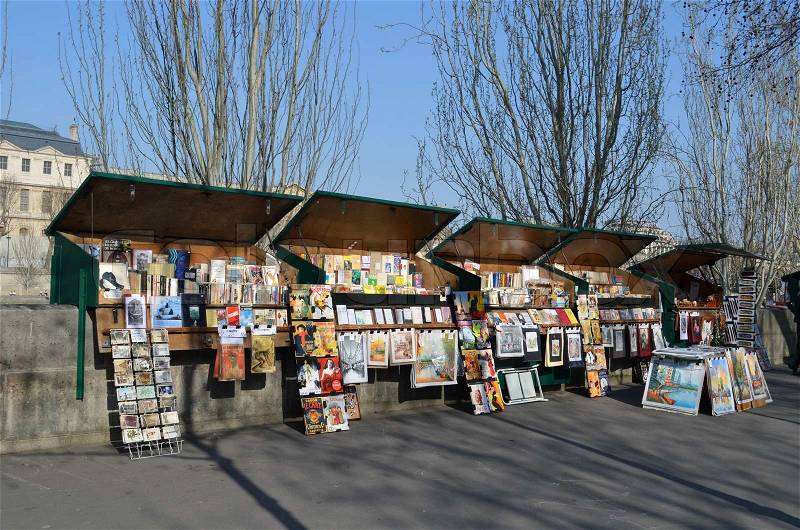
Image result for photo of book stalls along the seine river

(Bookstalls along the Seine River in Paris)

I have always been attracted to any mystery that has “books” in their title, or involved a plot centered on some aspect of dealing with books.  When I learned of Mark Pryor’s novel, THE BOOKSELLER I was extremely curious.  With a former FBI profiler named Hugo Marston working as the head of security at the American embassy in Paris, Pryor has created a strong character and a wonderful story line in his first novel.  From the outset, when a Parisian bookseller, named Max Koche is abducted from his kiosk on the Seine River after selling two rare books to Marston, I was hooked.  The plot is very suspenseful and mystery addicts will be extremely satisfied with Pryor’s effort as a French detective is summoned to investigate the bookseller’s disappearance and seems quite uninterested in pursuing the case.

What drives Marston to distraction was the police’s refusal to investigate Max’s kidnapping which occurred right in front of him, claiming that Max went with his captors willingly.  Marston researches the French criminal data base and learns that Jean Chabot, who claims that Max’s kiosk belonged to him, had a long criminal record.  Marston will turn to a former FBI colleague and now a part time CIA operative, Tom Green for assistance.  The banter between the two is humorous and entertaining as the two try to figure out what really happened.  They learn that Max was really Maximillian Ivan Koche who spent part of World War II in a French internment camp in the southern part of the country controlled by the Vichy government.  His family had been sent to Dachau in July, 1944 and were liberated in 1945.  After the war Max would work with Nazi hunter, Serge Klarsfeld and assisted in the seizure of former Gestapo Chief Kurt Lischka in 1971.  Further, he was involved in the capture of Klaus Barbie, the “butcher of Lyon,” and Jean Leguay, a high Vichy government official.  For the remainder of his career Max focused on “outing” former Vichy collaborators.  Once Marston learns Max’s background his approach to his investigation changes and the novel gathers momentum.

Pryor introduces a number of interesting characters.  Claudia Roux, a French journalist and police reporter for Le Monde.  Count Gerard de Roussillon, Claudia’s father, a member of the French aristocracy with many secrets.  Bruno Gravois, who was in charge of the kiosks along the Seine River for the Chambre and Office of Tourisme, a shady character who secretly tries to gain control of all the Kiosks along the Seine.  The police provide a number of important characters, particularly Capitaine Garcia, who finally agrees that something untoward has happened as a number of kiosk sellers turn up dead floating in the Seine.  Pryor builds his plot around the idea that during World War II, the French Resistance passed messages by code hidden in certain books.  For Max locating those books, which contained the names of French collaborators was an obsession as he focused on making those names public to bring shame and justice for their treason during the war.  Pryor then introduces the possibility that events center on a Romanian organized drug ring, but how is that related to booksellers?

curiosity builds as Marston and Green grow more frustrated.  If you are looking for a quick and engrossing mystery with a tour of Paris and a surprising ending then THE BOOKSELLER is for you.  Pryor has written five other novels, the most recent of which is THE PARIS LIBRARIAN, all of which have sparked my interest.

Image result for photo of book stalls along the seine river


JOHN QUINCY ADAMS: MILITANT SPIRIT by James Traub

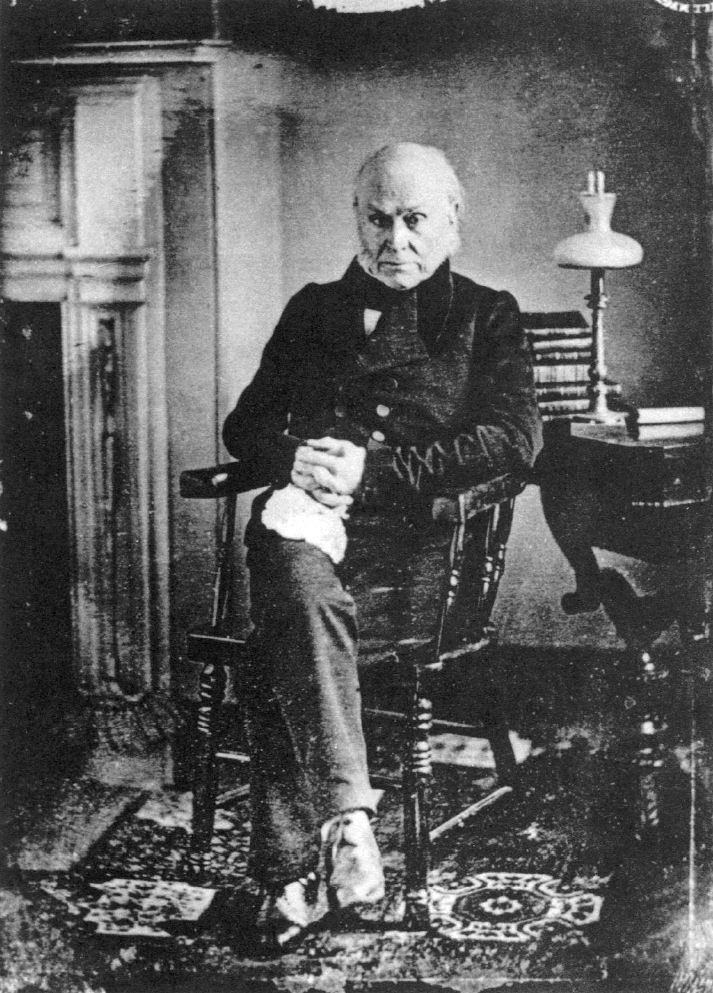
Image result for photos of john quincy adams

(John Quincy Adams, the 6th President of the United States)

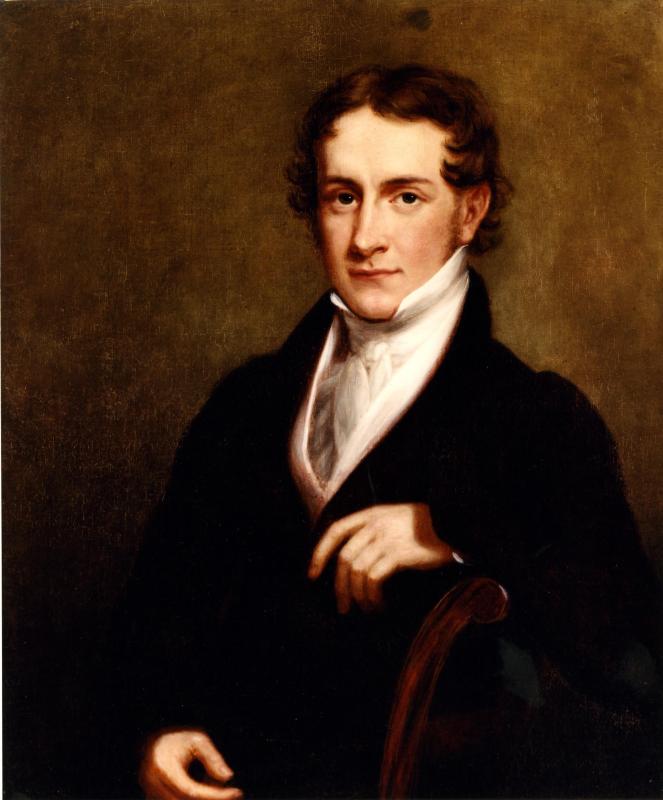
At a time when most Americans believe they are witnessing the most divisive political campaign they have ever experienced, they need only to turn the clock back to the 1828 presidential campaign when Andrew Jackson, angry because he believed the previous election had been stolen because of a “corrupt bargain” between John Quincy Adams and Henry Clay, launched a nasty and personal attack against Adams as early as his inauguration resulting in Jackson’s eventual victory.  This political clash is just one component of James Traub’s excellent new biography, JOHN QUINCY ADAMS: MILITANT SPIRIT.  Adam’s the son of our second president was a rather enigmatic and recalcitrant figure who seemed to always answer to principle, not political expediency.  His diplomatic career consisted of ministerial posts in the Netherlands, Prussia, Russia, England, as well as serving as Secretary of State.  His political offices included the Massachusetts State Senate, the U.S. House of Representatives, and the Presidency.  Adams’ life is a compendium of late 18th and 19th century events where he usually was a focal point in any important situation.  This amazing career is skillfully portrayed by Traub as he dissects his subjects’ life and concludes that despite numerous achievements and failures, he never wavered from the moral convictions instilled in him by his parents, John and Abigail Adams.

Image result for John and Abigail Adams photo

(Abigail and John Adams, John Quincy’s parents)

The success of Traub’s effort lies in mining the 15,000 pages of Adams’ journal that he kept over his entire life.  The fact that the journal has been digitized allows the author easy access and assisted in creating a window into his subject’s mind that is fascinating.  Traub explores every aspect of Adams’ life, especially his close relationship with both of his parents.  The reader can eavesdrop on conversations between the father and son where we see why Adams’ became the man he did.  Not quite a reincarnation of his father, but strikingly similar.  Many of the letters and conversations between mother and son are also available and we are exposed to the rigid moral principles and advice that Abigail offered. The type of father Adams’ became later in life is directly related to his own upbringing as he pursued the same method of childrearing as his parents.  As far as his relationship with his wife Louisa it does not measure up to the closeness between John and Abigail Adams.  He was a distant husband and Louisa and John Quincy spent many years apart.

At a very young age he “followed a set of standards, moral, and intellectual, to which people should be held, and he found much of the world wanting,” particularly women.  The pressure on Adams because of his parents was immense and this led to feelings of guilt and depressive episodes.  Many times he felt conflicted as he passed back and forth between aspiration and resignation.  Traub has the knack of interweaving Adams’ private life with his career in an interesting fashion.  We get a glimpse of all aspects of Adams be it in the family, years of diplomacy overseas, and his political career.  Traub’s careful devotion to detail creates an accurate portrayal of life on the family farm in Quincy, MA, Washington, DC, or the many countries that he served as a diplomat.

Image result for photo of louisa adams

(Louisa Adams, wife of John Quincy Adams who would outlive him by four years)

Adams was a much more pragmatic politician for his time and tried to stay away from rigid ideologues.  For example, he refused to join the Federalists in their attacks on Thomas Jefferson, a man he admired, and supported the purchase of Louisiana because for Adams, unlike today, country came first, not political partisanship.  Adams even supported Jefferson’s Embargo Acts (1807) when the New England region that he represented opposed it.  As Traub states “he would become an honorable outcast like his father.”

Traub does a masterful job explaining how Louisa endured her domineering husband.  The author’s narrative reflects a great deal of empathy toward Louisa as she tries to live apart from her sons for long periods of time while her husband was posted overseas.  This in conjunction to the many disappointments the couple endured, from separation, countless miscarriages, and the death of their daughter Louisa, and their two sons John and George, but as their marriage endured John Quincy and Louisa would grow somewhat closer.

Image result for photo of Charles Francis Adams

(Charles Francis Adams, the son of John Quincy that was most similar to his father)

Traub delves into all aspects of Adams’ diplomatic career.  His most important postings dealt with negotiations to end the War of 1812, as minister to England, and his work in St. Petersburg as he established a close and friendly relationship with Alexander I which proved very important during the period of Napoleon’s defeat and the establishment of the Holy Alliance.  Adams’ stint as Secretary of State is covered completely and the chapter devoted to negotiations with the British and concerns over the rise of Republics in the former Spanish colonies that led to the Monroe Doctrine in 1823 is one of Traub’s best.

Adams’ journal contains copious details of negotiations, social observations, and acute analysis.  Adams’ mindset, particularly as it related to the intellectual underpinnings of his foreign policy is incisive.  What emerges is a man whose belief system is somewhere between a realist and an idealist who spent his entire career trying to enhance American prestige and territory while avoiding what he considered reckless adventures, i.e.; recognition of Spanish Republics, whether to invade Cuba, the seizure of West Florida among others.  The intellectual core of Adams’ belief system rested on “the crucial distinction he made between freedom as a donation or grant from a sovereign and freedom as an act of mutual acknowledgement among equals.  This was America’s gift to mankind—a gift [that Adams] hoped to spread across the globe.”

Image result for photo of andrew jackson

(Andrew Jackson, the seventh president of the United States and a political foil to John Quincy)

Traub correctly points out that Adams’ was not a politician and would not seek office and do the necessary lobbying and cajoling to gain support for his own candidacy, and after assuming the presidency, to gain support for his legislative goals, particularly that of internal improvement and creating an infrastructure linking the expanding country.  The machinations involving the 1824 and 1828 presidential elections, his relationship with men like Henry Clay, John C. Calhoun, and Andrew Jackson, and especially his term as president can best summed up by the British historian George Dangerfield, here was “a rather conspicuous example of a great man in the wrong place, at the wrong time with the right motives and a tragic inability to make himself understood.”

Adams’ later career is presented in a clear and concise manner as he enters the House of Representatives, the only president to do so.  For Adams the issue of slavery was paramount and he saw the problem of states’ rights over tariffs as nothing more than a cover for the “peculiar institution.”  In the 1840s Adams found himself in the midst of many heated debates dealing with slavery.  At times he refused to label himself as an abolitionist, and would argue before the Supreme Court representing the men who had seized the slave ship, Amistad.  Further, he would become a thorn in the side of states’ rights supporters of slavery in the House of Representatives by repeatedly arguing against the “gag rule,” introducing petitions against slavery, and defending himself as attempts to censure him for his opposition to the “slavocracy” were introduced.  Adams would become a man without a party as he would support no faction in the House and found a unique role for himself, “the solitary vote of conscience.”

John Quincy Adams was the last link to the founding generation which in part makes his life so important.  In addition, he is also the last link between the creation of the United States and its near destruction by Civil War.  In a sense Traub argues that Adams’ time in the oval office was an unsuccessful interlude in a remarkable career that saw principle over expediency as the guiding light of one of the most remarkable figures in American history.  For Adams, no matter what the situation, Washington’s message in his Farewell Address to remain neutral abroad, achieve unity at home, and create the consolidation of the continent were his guiding principles and Traub does an excellent job explaining how his subject went about trying to achieve them.

Image result for photos of john quincy adams

(John Quincy Adams, the sixth president of the United States)

VICTORY SEASON: THE END OF WORLD WAR II AND THE BIRTH OF BASEBALL’S GOLDEN AGE by Robert Weintraub

(Stan Musial and Ted Williams)

The year 1946 was a watershed in Post-World War II America.  It is the year that Robert Weintraub points out in his book, VICTORY SEASON: THE END OF WORLD WAR II AND THE BIRTH OF BASEBALL’S GOLDEN AGE that the United States had to reinvent itself from a collectivist society that was geared toward winning the war to one that could reabsorb millions of servicemen and women at a time when the country was unprepared to receive them.  1946 witnessed severe labor disruption, spiraling prices, wages that did not keep up with prices, and shortages of many goods and services.  As domestic trauma seemed to increase each day people began to grow concerned about our former ally, the Soviet Union.  Many feared a return to prewar depression and a new president who seemed unprepared for the office.  As baseball returned to the national consciousness at spring training sites, Winston Churchill gave his “Iron Curtain” speech in Fulton, Missouri, and at the State Department, George Kennan called for the “containment” of the Soviet Union in his “Long Telegram.”

When the government removed price controls prices rose on average about 18%, but wages lagged far behind resulting in a flurry of strikes nationwide.  Steel workers, miners, railroad workers all took to the picket lines almost bringing the nation to a halt.  The result was higher wages something that baseball players returning from the war had difficulty achieving.  Baseball was exempt from anti-trust legislation and through the “reserve clause” in contracts players were the property of the owners, in a sense a form of “indentured servitude.”  1946 represented the first time that teams were not missing players serving in the military and it was hoped by the players and their owners that their skills had not eroded during the war.

(Jackie Robinson and Branch Rickey)

When I first picked up VICTORY SEASON I hoped that it would explain in detail how baseball served as a catalyst for returning a sense of normalcy to American life.  Weintraub does make the attempt, but does not really develop this theme enough.  The author does a magnificent job discussing some of baseballs endearing and not so endearing characters.  Focusing on the alcoholic owner of the Brooklyn Dodgers and later the New York Yankees, Lee MacPhail, we learn how he laid the foundation for Dodgers success in the 1940s and 50s, and then helped build the Yankees into the powerhouse that dominated baseball from 1949-1963.  Branch Rickey is portrayed as a genius who knew how to evaluate talent and took over the Dodgers from MacPhail.  He is also remembered as the person responsible for breaking the color barrier by recruiting Jackie Robinson, a strategy that Weintraub writes was motivated more for money that achieving racial equality.  We meet Leo Durocher the ornery manager of the Dodgers whose life was intertwined with numerous show business types.  Bill Veeck, the owner of the Cleveland Indians who brought many innovations to the game.  Red Barber, a southerner who brought his gentlemanly ways to the broadcast of Dodger games.  Jorge Pasquel a Mexican millionaire created a scare among major league owners when he tried to lure major league ballplayers for his “La Liga”  teams in different Mexican cities.  Lastly, Robert Murphy a Boston lawyer and member of the National Labor Relations Board who tried to organize players to stand up to the owners. Though he would fail, he laid the ground work for Marvin Miller to organize the players and get the “reserve clause” struck down creating free agency.

Weintraub also integrates the experiences of many players who fought in World War II and how it affected their later careers.  Among them are Hall of Fame pitcher Warren Spahn, who would survive the Battle of the Bulge and earn a Purple Heart and a Bronze Star; and Hall of Fame pitcher, Bob Feller who would see a significant amount of combat in the Pacific that greatly altered his view of life.  Of all the players who fought in the war only two were killed; Elmer Gedeon who played briefly for the Washington Senators was shot down over France as his plane tried to destroy one of Hitler’s V1 rocket sites; and Harry Mink O’Neill, a Marine who played for Connie Mack’s Philadelphia A’s and was killed on Iwo Jima.

(Iwo Jima Memorial, Arlington, VA)

Weintraub concentrates a great deal on the 1946 pennant races and World Series by focusing on Ted (the “splendid splinter”) Williams and the Boston Red Sox, and Stan (“the man”) Musial and the St. Louis Cardinals along with their amazing fan bases.  During his narrative all the major characters involved in the pennant race are explored with wonderful anecdotes and details that will make any fan of baseball history ecstatic.  The DiMaggio brothers, Bobby Doerr, Harry the Hat Walker, Pete Reiser, Jackie Robinson, Enos Slaughter are among the many stars of the game that Weintraub introduces and the reader gets to know.  Much of what Weintraub explores is based on his vast research and interviews with the few survivors of the 1946 season, their families, and newspaper reporters who knew them.

(Fenway Park, circa, 1946)

It appears Weintraub is straddling the line of writing historical narrative at the same time as presenting an interesting sports book.  He does an effective job integrating important aspects of the 1946 baseball season with the socioeconomic and political history of the period.  Weintraub explores the transportation industry, particularly the early use of airplanes by teams, railroad strikes that hindered teams from reaching their destinations, the segregation of society depriving black ballplayers the same amenities that white players enjoyed, the postwar housing shortage limited where all players could live, and many other examples.  When Weintraub focuses on this component of the story, it is fascinating, however, when he switches to the statistical component of baseball he seems to lose some of his effectiveness.

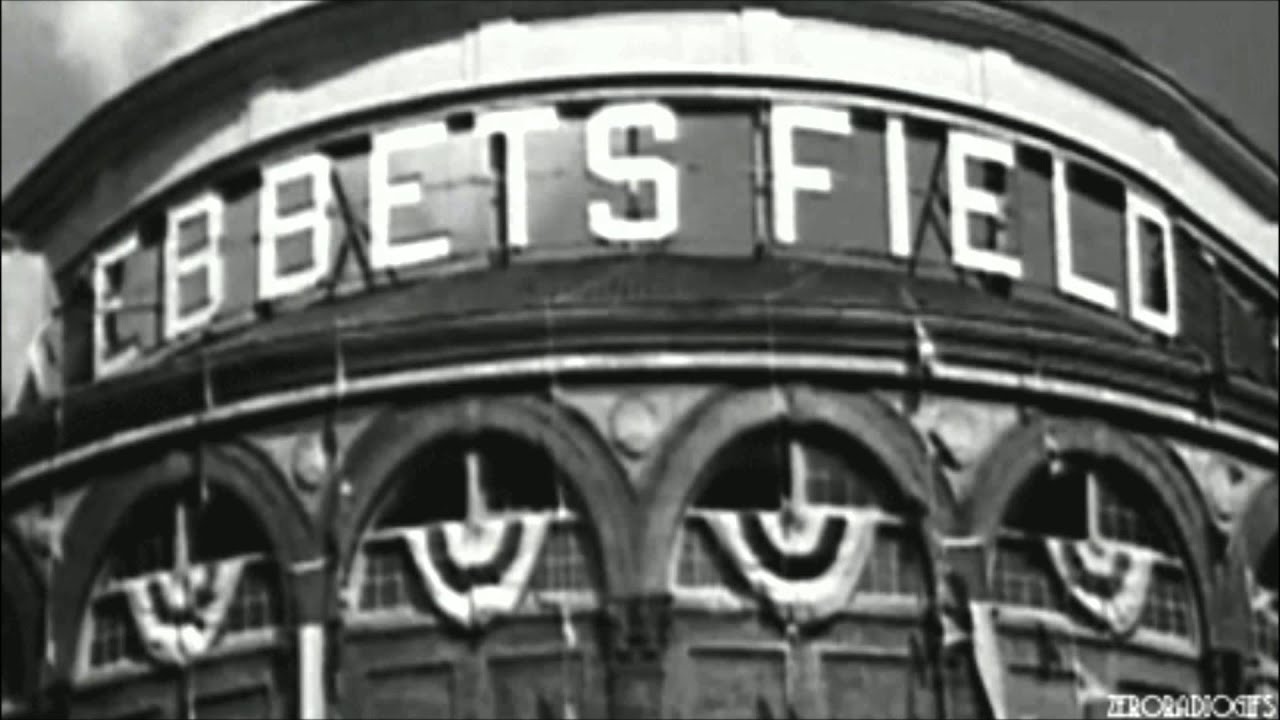
(Sportsman’s Park, St. Louis, MO)

An area that is both interesting and effective is when Weintraub introduces certain historical details and relates them to what is occurring on the diamond.  A number stand out, i.e.; aspects of the Nuremberg trials taking place in Germany-how a young guard smuggled a poisonous pill to Hermann Goering to facilitate his suicide, as well as describing how a truck strike in Boston during the World Series made it almost impossible to acquire day-to-day goods, especially baby food, among many other items.

For fans and players alike the return of baseball from the war years was an important vehicle in returning America to a more normal environment, but he goes a bit overboard comparing America’s victory in World War II with Enos “Country” Slaughter’s made dash home to win the 1946 World Series for the St. Louis Cardinals.  For fans and students of the game 1946 is like a “coming attraction” for baseball and the “Golden Era” that would follow.  Weintraub has written an interesting book that should satisfy those interested in the minutia of baseball history and how it was integrated into American society following World War II.

(Stan Musial and Ted Williams)