SPAIN IN OUR HEARTS: AMERICANS IN THE SPANISH CIVIL WAR, 1936-1939 by Adam Hochschild

(Anarchist workers in the Spanish revolution)

Years ago I saw the film, The Prime of Miss Jean Brodie about a teacher in a Scottish girl’s school who strayed from the school curriculum by praising Adolf Hitler and Benito Mussolini while romanticizing the Spanish Civil War.  The arguments she used in her classroom reappear in Adam Hochschild’s new book SPAIN IN OUR HEARTS: AMERICANS IN THE SPANISH CIVIL WAR, 1936-1939 as the author presents the positions of multiple sides engaged in the fight for Republican Spain.  The title leads one to believe that the books main focus is on the American experience, but in reality Hochschild paints a much wider canvas that includes Spaniards, French, Italian, German, Russian, in addition to American actors.  Hochschild is a prolific author whose work includes KING LEOPOLD’S GHOST, BURY THE CHAINS, and the award winning TO END ALL WARS.  He begins his latest effort in striking style as two naked American volunteers fighting for the Spanish Republic against the fascists emerge from the Ebro River as they flee Francisco Franco’s forces.  Fortunately for them, they run into Herbert Matthews, a New York Times reporter and Ernest Hemingway, who at the time is a free-lance writer for a newspaper syndicate covering the civil war.  The reader is immediately hooked as Hochschild begins to narrate a conflict that many historians describe as the precursor of World War II as Nazi Germany and Fascist Italy allied with Franco’s forces as a testing ground for new weapons and allowing their soldiers to gain significant combat experience.  It became very difficult for the Republican government to gain support outside of Spain.  England and France were in the midst of appeasement after allowing Hitler’s troops to seize the Rhineland.  In the United States, Franklin D. Roosevelt facing reelection refused to provide aid as not to anger isolationist forces who preached neutrality.  This left only Stalin’s Soviet Union as a source of weapons and soldiers which for the Republican government became a “devil’s bargain” with the Russian dictator.

(Fascist dictator Francisco Franco)

Hochschild does a superb job describing all the major aspects of the war.  He details the ideological conflicts that exited in Republican ranks; those who supported the Comintern, better described as the Communist Party of the Soviet Union; anarchists who were to the left of the communists; and the Partido Obrero de Unificacion Marxista, or Spanish communists.  The conflicts between these groups greatly hindered creating a united front against Franco’s forces. Aside from the ideological battle on the left, another existed among the journalists who covered the war.  Among New York Times reporters was William P. Carney who admired Franco and his reports from the front mirrored fascist propaganda.  Herbert Matthews a Times colleague sparred with Carney repeatedly as he refused to give up on the Republican cause.  Another important journalist was Louis Fischer, married to a Russian woman, was in the Stalinist camp, even after witnessing the purges in the Soviet Union.  Literary figures abound in the narrative as we encounter George Orwell, who would be wounded fighting for the British Battalion, in addition to Virginia Cowles, Ernest Hemingway and others.  The actual fighting is covered in detail as Hochschild describes the enormity of the conflict.  The amount of aid and troops poured in by Hitler and Mussolini is staggering and as a portent for the future the author describes the new weaponry that is tested that will be staples for the Nazi Germany and Fascist Italy during World War II.  Franco never could have been victorious without the aid of Germany and Italy.

(Male and female militia fighters who fought against Franco)

The title of the book intimates the role of Americans in the war and here Hochschild does not disappoint.   We meet a number of Americans, married couples and single individuals who played a prominent role in the war and provided new sources of material for the author.  The story that Hochschild narrates from the battle front and operations in the rear and the efforts to end American neutrality come from Charles and Lois Orr, economics instructors in California who as socialists believed that democracy could be attained peacefully, not like in the Soviet Union.  They will arrive in Barcelona in September, 1939 and help describe the disaster that will eventually evolve in that Catalonian city.  Bob and Marion Merriman, had lived in the Soviet Union, and witnessed the disaster of collectivization and would have a major impact on the International Brigade, particularly the Lincoln-Washington Brigade of American soldiers.  The intensity of the fighting is often told through the eyes of Bob Merriman who became one of the commanders of the International Brigade.  One of the most important documents that turned up at least fifty years after the fighting was a diary kept by James Neugass, an American ambulance driver for Dr. Edward Barsky, an American surgeon who seemed to operate twenty-four hours a day.  Neugass’ diary depicts the paucity of medical supplies and physicians that attended to American volunteers.  The diary also describes the International Brigades’ retreat as Franco’s forces split the Republicans in two as they reached the Mediterranean Sea.  Another important aspect of the war that Hochschild presents his description of the fighting in and around Madrid that will end up as a siege of the Spanish capitol.  Hochschild places the reader inside the city and is witness to the horrors that ensued.

(International volunteers for the Republic)

Perhaps the most disturbing part of the book aside from the horrors of war was the role played by Texaco and the blinders that the Roosevelt administration employed in order to not make political waves that could endanger elections.  Texaco was headed by the Norwegian born Torkid Rieber who rose from very little to become the top executive of the oil company.  Rieber was an admirer of Hitler and early on in the fighting switched supplying oil from the Republican government to Franco’s armies.  Further, Rieber allowed Franco to purchase the oil on credit.  This violated American law and if Roosevelt had wanted to he could have almost stopped the fighting by enforcing US statutes. Roosevelt, fearing a catholic backlash in the 1936 election refused to do so.  Not only did Texaco supply the oil for Franco’s victory, they also supplied over 12,000 trucks and Firestone tires that were extremely scarce as well as providing important shipping intelligence to Franco pertaining to oil deliveries to Republican forces.  All told Texaco provided over $200 million worth of oil in over 300 deliveries. (343)  the role of the papacy in the war gains Hochschild’s attention as Spanish priests with the approval of the Pope supported Franco’s war to the hilt.  Many Spanish priests supported the execution of their brethren who did not support Franco in addition to the execution of Republican soldiers.  Further, they were apoplectic when the Republican government implemented land reform and church properties were given to peasants, a major reason for their support of the Spanish dictator.

The civil war itself exhibited the Spanish class struggle and Hochschild delves into the economic and moral implications of Spanish land policies.  One of the most important points the author puts forth is that “while much [the civil war] of that feels distant now, other aspects of the 1930s Spain still seem all too similar to many countries today; the great gap between rich and poor, and the struggle between an authoritarian dictatorship and millions of powerless people long denied their fair share of land, education, and so much more.  These things make Spain of the 1930s, a crucial battleground of its time, a resonant for ours as well.” (xix-xx)  Hochschild has written an important book that revisits the Spanish Civil War integrating a number of new sources that previous authors had not uncovered.  For those interested in the topic, you will not find a better read.

(Workers who supported the Republic)

THE OTHER SIDE OF SILENCE by Philip Kerr

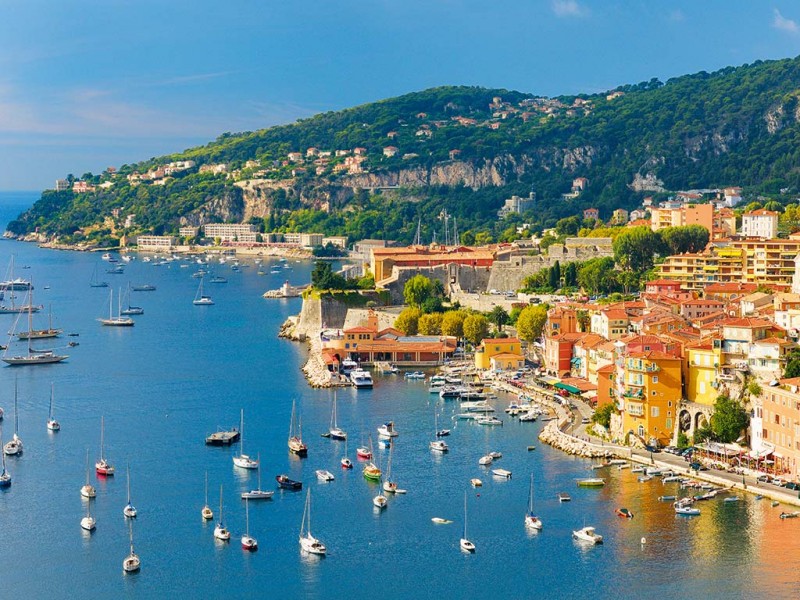
Map of Côte d'Azur

(The site of Philip Kerr’s new novel, the French Reviera)

The Other Side of Silence (Bernie Gunther Series #11)

In the eleventh installment of Philip Kerr’s thoughtful and entertaining Bernie Gunther series, we find our protagonist ensconced on the French Riviera contemplating suicide.  For those familiar with Gunther’s odyssey through World War I, World War II and the post war world you will not be surprised by his behavior.  Gunther is bored with his life and misses Berlin since he exiled himself to France, and became employed as a concierge at the Grand Hotel du Saint-Sean-Cap.  Gunther’s problem is that he misses his life as a detective, but his exile is about to change when a guest named Harold Heinz Hebel checks into the hotel.  The problem is that Hebel is an alias for Harold Hennig, a former Captain in the Nazi SD Security service, and an accomplished murderer.  It is that recognition by Gunther that Kerr’s new novel THE OTHER SIDE OF SILENCE pivots.  From that point on as Kerr develops his plot the reader is exposed to Gunther’s sarcastic humor and comments about a range of historical figures from Leopold II, to Gauguin, to numerous Nazi henchmen and British intelligence figures.

Kerr has created a number of scenarios that he develops with his usual skill as a writer and a practitioner of conspiracies.  They begin when Gunther meets the nephew of the British writer, W. Somerset Maugham who is being blackmailed by none other than Harold Hennig.  Maugham, a known homosexual finds out that Hennig has obtained a picture of him with three British spies who were turned by Soviet intelligence, Anthony Blunt, Guy Burgess, and David MacLean.  The picture is extremely compromising sexually and Maugham, even at eighty two years of age is worried about his reputation in England where homosexuality is illegal, and in the United States which is in the throes of the McCarthy hearings.  He asks Gunther to be his agent with Hennig to make sure the transaction is carried out so he has nothing further to worry about.  To show Maugham what he is dealing with, Gunther describes a situation that occurred in Berlin in 1938 when Gunther, no longer a German police detective, is approached by Captain Achim von Frisch, a man who saved his live in Turkey during the Great War.  Frisch is also being blackmailed, by you guessed it, the same Harold Hennig.  It seems that there is a political and military shakeup going on within the Nazi command structure, and another officer, General Freiheir von Fritsch is being accused of being a homosexual.  Frisch, who previously was blackmailed by Hennig to the point of poverty is privy to important information that would clarify the situation.  However, he is afraid, and wants Gunther to investigate and determine how high up in Hitler’s regime this plot reaches before he comes forward.  In the end Hitler achieved his goals and took over as the head of the Reich’s military by stepping over any body that got in his way.

Kerr goes back and forth between Berlin in 1938, Konigsberg in 1944, and the south of France in 1956.  For Gunther they are all related in some manner and they seem to all involve Harold Hennig.  The events that took place for Gunther go a long way in explaining his sarcastic and cynical view of people and life in general.  Apart from the plot, Kerr’s command of German history is excellent, though he does make a minor error by stating that Frederick III built a hunting lodge in Konigsberg in 1690, when in fact he did not assume the throne until 1888.  However, his description of historical figures like Erich Koch, Erich Mielke, Guy Burgess, and the sinking of the MV Wilhelm Gustloff in early 1945, and the use by the CIA and KGB of former Nazis is right on, as is his integration of the 1956 Suez crisis as historical background.

Throughout the book Kerr is at his deceptive best as the novel reeks of disinformation, misdirection, spies, and counterspies, and of course conspiracies enveloped within other conspiracies.  The intricacies of the plot are based upon Maugham’s actual experiences as a British spy during the late 1930s and World War II as the myriad of scenarios keeps the reader engrossed.  Who is really behind the blackmail?  Is it the Russian KGB, is it remnants of the Third Reich, is Hebel acting alone, or is it something else?  Is the British intelligence community the real target? MI5 or MI6?  Does the United States have a role to play?  How does W. Somerset Maugham fit in?  How about the Cambridge Five that was penetrated by Russian intelligence during and after World War II?  How does Bernie Gunther fit into these complex questions?  Why was Gunther’s bridge partner murdered?  Does that fit into the paradigm?  The answers will keep the reader riveted to THE OTHER SIDE OF SILENCE, and it makes one look forward to Kerr’s next Bernie Gunther novel, PRUSSIAN BLUE.

(The French Rviera, the site of Philip Kerr’s new novel)

THE RIGHT WRONG MAN: JOHN DEMJANJUK AND THE LAST GREAT NAZI WAR CRIMES TRIAL

(Sobibor Death Camp)

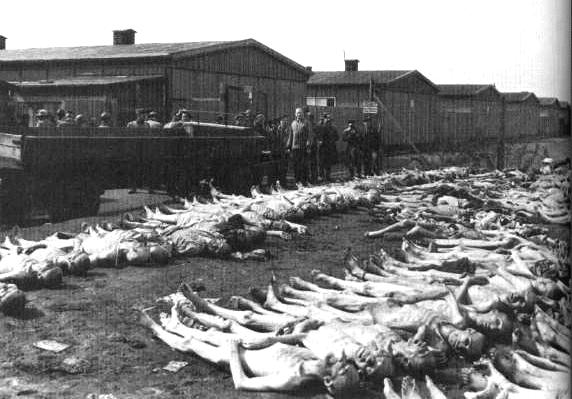
As Lawrence Douglas, an Amherst College law professor describes in his new book, THE RIGHT WRONG MAN: JOHN DEMJANJUK AND THE LAST GREAT NAZI WAR CRIMES TRIAL, the former Ford Motor employee was “little more than a peon at the bottom of the Nazis exterminatory hierarchy.”  However, what makes him important is the legal odyssey he navigated from 1975 to his death in 2012.  Demjanjuk survived a number of major trials; denaturalization hearings in the United States, prosecution in Israel, and his final legal confrontation in Germany.  Throughout the process Demjanjuk lied, acted, obfuscated, as he tried to avoid conviction.  The end result was finally being found guilty of “crimes against humanity” in 2011, after having previous convictions overturned because of prosecution errors and the failure of memory on the part of Holocaust survivors.

Demjanjuk’s biography is quite amazing.  During the outset of the war Demjanjuk was a soldier in the Red Army.  After being captured by the Germans he volunteered to be a guard at the Sobibor death camp.  Once the war ended, he was able to immigrate to the United States by lying on his application associated with the Truman administrations 1948 Displaced Persons Act.  He settled in Cleveland and became a machinist at a Ford Motor plant, and was able to hide his Holocaust related activities for years, until 1975 when American officials first learned of his possible wartime activities.

(Demjanjuk’s wartime pass placing him in Nazi occupied Poland; discovered in 2002 by the United States)

Douglas provides intricate detail and analysis of Demjanjuk’s legal journey.  He dissects the strategies pursued by defense attorneys, prosecutors, and judges as they try to convict Demjanjuk of being Ivan Grozny, “Ivan the Terrible” for his sadistic acts at Treblinka.  Further, Douglas explores the gaps in the legal systems that tried to bring him to justice and how previous trials, Nuremberg, and Eichmann in particular impacted legal strategies.  The problem that emerges is that Demjanjuk was misidentified and was not Ivan Grozny, but a man who served at Sobibor and contributed to the death of thousands of Jews for which he was finally convicted.  Demjanjuk’s legal battles began in 1975 and continued until later in the decade when he would be identified as the former Treblinka guard, “Ivan the Terrible.”  Demjanjuk was stripped of his citizenship and extradited to Israel.  In 1988 he was convicted and sentenced to death by an Israeli court.  After numerous appeals and the emergence of new evidence, the Israeli Supreme Court ruled that the government had the wrong Ivan.  He was returned to the United States and his citizenship was restored.

Demjanjuk may not have been at Treblinka, but earlier testimony seemed to place him at Sobibor, another Nazi death camp.  In 2001 he lost his US citizenship for a second time and in 2009 he was dispatched to Germany for trial.  On May 12, 2011 he was found guilty by a German court for assisting in the murder of 28,060 Jews.  Before his death sentence could be carried out he died, ending one of the last prosecutions of perpetrators of the Holocaust.  Douglas’ book is an important contribution to the legal issues that have surrounded the prosecution of Nazi war criminals.  Douglas raises many important subjects including; the justice of trying old men for superannuated crimes, the nature of individual responsibility in the orchestration of state-sponsored crimes, the nature and causes, and possible justifications of collaboration in the perpetuation of atrocities, and how three different legal systems went about creating legal alloys to master the challenges posed by the Nazi genocide.

(Demjanjuk stated he was too ill to sit up at his trial in Munich)

Douglas points out that Nazi crimes were so great that retributive justice based on didactic exercises organized around survivor testimony was not enough.  What was needed was to use trials as a means of historical education, present history through the eyes of survivor memory as what done at the Eichmann trial.  However, even this noble ideal was fraught with holes as was seen in the prosecution of Demjanjuk.  What was needed according to Douglas was to develop the role of historians to assist in the preparation and prosecution of Nazi crimes.  One of the major drawbacks in the prosecutorial process was the lack of historical context that only historians could provide.  This gap was overcome in Demjanjuk’s Munich case as historians came into play in every aspect of the case from drafting of the indictment to the core of the court’s judgement.  For the first time a new type of Holocaust trial emerged: the Holocaust as History.

These developments overcame many of the obstacles that were evident in earlier prosecutions. In the United States turf battles between the Justice Department and other agencies, difficulties handling atrocity cases with routine prosecutory tools, the lack of linguistic skills on the part of lawyers, and little or no training in historical research all hindered the development of sound cases against war criminals.  Douglas traces the evolution of new techniques and approaches to these types of cases beginning with the Nuremberg Trials, the Eichmann Trial, and the prosecution of the real Ivan Grozny, Fedor Fedorenko that culminated in the final conviction of Demjanjuk.

(At his trial in Munich, Demjanjuk claimed that file #1627 in the Russian archives would prove his innocence)

Douglas asks the important question as to the benefits to mankind that emerged from the Demjanjuk case.  “First, it yielded a modified theory of culpability, directly ‘connected to the exterminatory process.’  This disposed once and for all of the defense ‘I was no more than a cog in the machine…I was obeying orders.’  A machine cannot run without its small constituent parts.”  As a result it was now enough to prove that a defendant worked in a death factory to obtain a conviction because without the numbers of these types of defendants the Holocaust could not have reached the magnitude that it did.  Further, this allowed for the further prosecution of lower-level war criminals and permitted three separate judicial systems to learn from past errors and instill confidence in this type of judicial process.  (New York Times, February 26, 2016)

Douglas astute dissection of the Demjanjuk case and the application of his analysis to the overall problem of culpability for war crimes is a major contribution to this type of literature.  Though at times it is written in legalese, overall it should be easily understood by the layman resulting a satisfying reading experience.

(October 14, 1943, Sobibor Death Camp following a failed revolt)

THE IMMORTAL IRISHMAN: THE IRISH REVOLUTIONARY WHO BECAME AN AMERICAN HERO by Timothy Egan

(Thomas Francis Meagher during the Civil War)

Biography is an exceptional art form especially when a unique life story is represented.  In the case of Thomas Francis Meagher, author Timothy Egan, a Pulitzer Prize winning reporter for the New York Times has unearthed a somewhat obscure, but remarkable historical figure, who impacted the course of Irish history in a remarkable way.  Meagher, a man who like a cat seemed to have had nine lives left Ireland in 1848 after being arrested and tried for treason by the British government.  He was imprisoned in a remote area of Australia where he escaped in 1852 and landed in New York City where he stood against the anti-immigrant and anti-Catholic Know Nothing Party and later led an Irish brigade against the south during the Civil War.  If that was not enough for one lifetime, he concluded his astonishing career as the territorial governor of Montana.

Egan’s THE IMMORTAL IRISHMAN: THE IRISH REVOLUTIONARY WHO BECAME AN AMERICAN HERO presents a wonderful narrative about a man who seems to be everywhere.  Though Meagher had reached hero status among the Irish people, he seemed to encounter enemies everywhere he turned.  The British saw him as a fugitive, politicians in the United States viewed him as an abolitionist, vigilantes in Montana felt he was a traitor.  Meagher was a man who escaped death repeatedly.  He escaped the English gallows, Tasmanian sharks missed their opportunity as he swam away from Australia, and survived the Battle of Bull Run.  But in 1867 when he was trying to organize a democratic government in the Montana territory, was his fall from a Mississippi steam boat an accident, or did his luck finally run out when he may have been pushed.


“Digging for potatoes” from the London Illustrated News, 1849:

“‘Searching for Potatoes’ is one of the those occupations of those who cannot obtain outdoor relief. It is gleaning in a potato field, and how few are left after the potatoes are dug, must be known to everyone whohas ever seen the field cleared. What the people were digging and hunting for, like dogs after truffles, I could not imagine, till I went into the field, and then I found them patiently turning over the whole ground, in the hopes of finding the few potatoes the owner might not have overlooked. Gleaning ina potato field seems something like shearing hogs, but it is theonly means by which the gleaners could hope to geta meal.”

Egan has created a somewhat literary approach to his subject as he constantly weaves his and other Irish poets and their work throughout his story.  The author tells a tale encompassing the plight of the Irish throughout their enslavement by the British culminating in the Great Famine of the 1840s.  At a time when the potato blight led to the starvation and immigration of millions of Irish poor, the British government exported the Irish crops that could have fed their people overseas for profit.  The lassaiz-faire trade policy was a death knell for the Irish people that even brought certain British officials to admit they were engaged in genocide.  The overt ethnic cleansing of the Irish people led men like Thomas Francis Meagher to stand up against this holocaust and organize a revolt against the London government.  The slow limiting of civil rights through penal laws and the presence of the British navy and soldiers made it impossible for the “Young Ireland” movement for Irish independence to have any chance for success.

Meagher himself did not come from a poor family.  His father was a Member of Parliament, he himself attended Stonyhurst where the “tried to squeeze the Irish out of him,” and grew up in a mansion in Waterford.  Meagher quickly gained a reputation as a debater and his reputation as an orator preceded him everywhere.  Egan reviews the other 19th century historical figures who worked for Irish independence as the potato famine spread.  The author does a wonderful job providing the reader a feel for the disastrous blight that ravaged Ireland and the English government’s complicity in its catastrophic results.  For London, the blight presented an opportunity to populate Canada and Australia which were in dire need of cheap labor, and at the same time solve their Irish problem.  As Egan discusses Meagher’s situation he weaves in the story of the founding and development of Australia, and with the presence of the Irish down under Australia’s independence was eventually achieved!

(Meagher and his wife Libby dubbed this cabin as the governor’s mansion when the Irish hero was became acting governor of the Montana territory after the Civil War)

Once he arrived in New York City, Meagher was greeted as a hero and his popularity presented Egan with the opportunity to develop the history of that city, where one in four people were Irish.  To make a living Meagher went on a series of speaking tours and argued that he did not oppose slavery because it was the law of the land, what he opposed was breaking up the union.  After Fort Sumter and secession, Meagher changed his mind, as he realized that the plight of southern slaves and Irish peasants were one and the same.  Meagher’s irresistible story continues as he went against the majority opinion of his own people to fight against slavery as he helped lead an Irish brigade against the Confederate at Bull Run, that later in the war brought the union general, William Tecumseh Sherman, who hated Meagher, to heap praise on the Irish for their bravery in battle.

In times of peace, Meagher could not maintain his level of popularity and his life went into decline.  During his life Meagher witnessed much too much of the underside of history.  Eventually the price to be paid was a later life where he was plagued by alcoholism, financial issues, and loneliness.  He ended his career as the Secretary of the Montana Territory and tried to bring law and order to a very unruly area.  It was because of this governmental service that Meagher died, not by falling off a riverboat while drunk, but as Egan argues, was captured by Montana vigilantes and thrown off the ship’s deck to his death.  As Egan tells his story we see an imperfect protagonist, but one who never backed away from a fight and never turned away from his core principles.  THE IMMORTAL IRISHMAN is an exceptional work of history, even though at times Egan’s prose can be become somewhat flowery, a need for more specific citations, and a few minor historical errors.  But overall, the work of Timothy Egan is exceptional, as he turns a sound historical work into something that reads like a well thought out novel.

PSYCHOHISTORY READING LIST

PSYCHOHISTORY READING LIST:

Abrahamsen, David.  NIXON VS. NIXON

Beisel, David R. THE SUICIDAL EMBRACE: HITLER, THE ALLIES, AND THE ORIGINS OF THE SECOND WORLD WAR.

Binion, Rudolph.  HITLER AMONG THE GERMANS

Brodie, Fawn M.  THOMAS JEFFERSON

Brodie, Fawn M.  THADDEUS STEVENS

Burlingame, Michael.  THE INNER WORLD OF ABRAHAM LINCOLN

Clinch, Nancy G.  THE KENNEDY NEUROSIS

De Mause, Lloyd.  FOUNDATIONS OF PSYCHOHISTORY

De Mause, Lloyd.  REAGAN’S AMERICA

De Mause, Lloyd; Ebel, Henry.  JIMMY CARTER AND THE AMERICAN FANTASY

Erikson, Erik.  CHILDHOOD

Erikson, Erik.  DIMESNSIONS OF A NEW IDENTITY

Erikson, Erik. LIFE HISTORY AND THE HISTORICAL MOMENT

Erikson, Erik.  GANDHI’S TRUTH

Erikson, Erik.  YOUNG MAN LUTHER

Fromm, Erich.  THE ANATOMY OF HUMAN DESTRUCTIVENESS

Freud, Sigmund; Bullitt, William.  WOODROW THOMAS WILSON

Gonen, Jay.  A PSYCHOHISTORY OF ZIONISM

Hershman, D. Jablow.  POWER BEYOND REASON: THE MENTAL COLLAPSE OF LYNDON JOHNSON

Kovel, Joel.  WHITE RACISM: A PSYCHOHISTORY

Langer, Walter.  THE MIND OF ADOLF HITLER

Levin, Jerome D.  THE CLINTON SYNDROME: THE PRESIDENT AND THE SELF-DESTRUCTIVE NATURE OF SEXUAL ADDICTION

Lifton, Robert J.  REVOLUTIONARY IMMORTALITY

Lifton, Robert J.  HOME FROM THE WAR

Lifton, Robert J. DEATH AS IN LIFE

Lifton, Robert J. THOUGHT REFORM AMD THE PSYCHOLOGY OF TOTALISM

Lowenberg, Peter.  DECODING THE PAST

Marwick, Elizabeth.  CARDINAL RICHELIEU

Mazlish, Bruce.  HENRY KISSINGER

Mazlish, Bruce.  IN SEARCH OF NIXON

Mazlish, Bruce.  THE REVOLUTIONARY ASCETIC

McAdams, Dan P.  GEORGE W. BUSH: AND THE INTERPRETIVE DREAM-A PSYCHOLOGICAL PORTRAIT

Neumayer, Anton.  DICTATORS: IN THE MIRROR OF MEDICINE

Post, Jerrold M.  THJE PSYCHOHISTORICAL ASSESSMENT OF POLITICAL LEADERS (SADDAM HUSSEIN AND BILL CLINTON)

Pye, Lucien.  MAO TSE-TUNG

Rancour-Lafferiere, Saniel.  THE MIND OF STALIN

Renshon, Stanley A.  IN HIS FATHER’S SHADOW: THE TRANSFORMATION OF GEORGE W. BUSH

Rogan, Michael.  FATHERS AND SONS

Steinberg, Blema S. SHAME AND HUMILIATION: PRESIDENTIAL DECISION MAKING AND VIETNAM

Volkan, Vamik D.; Itzkowitz, Norman.  THE IMMORTAL ATATURK: A PSYCHOBIOGRAPHY

Waite, Robert.  HITLER: THE PSYCHOPATHIC GOD

Waite, Robert. KAISER AND FUHRERE: A COMPARATIVE STUDY OF PERSONALITY AND POLITICS

Weinstein, Edwin.  WOODROW WILSON: A MEDICAL AND PSYCHOLOGICAL BIOGRAPHY

Weisberg, Jacob.  THE BUSH TRAGEDY

Wolfenstein, E.  THE REVOLUTIONARY PERSONALITY

Zalampas, Sherre Owens, ADOLF HITLER: A PSYCHOLOGICAL INTERPRETATION OF HIS VIEWS ON ARCHITECTURE ART AND MUSIC

THE GATES OF THE ALAMO by Stephen Harrigan

(The Alamo)

The story of the Alamo is clouded in myths and counter myths.  Your personal belief is probably dependent upon your high school social studies education.  It is a story that most Americans know because of the countless books and films on the subject.  What is clear is that, it forms a major component of Texas history.  In Stephen Harrigan’s THE GATES OF THE ALAMO we are presented with a new approach to the story through the eyes of fictional characters; Edmund McGowan, a loner dedicated to botanical research; Mary Mott, a widowed innkeeper trying to keep what remains of her family together; her son Terrell, who grows and matures into manhood as the novel evolves.  This epic story has been told before, but not in this manner, a blend of astute historical research and fictional imagination that should satisfy all who are interested in the topic.

Harrigan begins by introducing Terrell Mott as a ninety-one year old survivor of the Alamo and former mayor of San Antonio attending the 75th commemoration of the battle.  From here, Harrigan takes the reader on a journey that integrates many historical and fictional characters as he constructs a fairly objective account of the events leading up to the battle, the battle itself, and what transpired after the bloodshed.  The reader is exposed to the Mexican viewpoint through historical characters such as; Colonel Juan Almonte, a member of general Santa Anna’s staff, the dictator himself, Primer Sargento Blas Angel Montoya, a member of the Mexican northern army; to fictional characters, Telesfero Villasena, a Lieutenant in an engineer battalion and Santa Anna’s map maker, and Isabella, a Mayan girl seized by Mexican officers.  Among the American settlers aside from McGowan and the Motts the story is conveyed through historical figures like; Jim Bowie, a drunkard and fortune seeker, Sam Houston, a rather two faced politician and Andrew Jackson wan bee, Stephen F. Austin, the most reasonable of the independence movement leadership, Davey Crockett, a Tennessee politician and Indian fighter, and William Barrett Travis, a young man thrust into leadership beyond his capabilities.

(Sam Houston)

One of the things that most Americans do not realize is that three-fifths of the continental United States was taken from Mexico during the Mexican War between 1846 and 1848.  The issues that led up to the war stem from American colonists who were invited by the Mexican government to settle in Texas in the 1820s.  The invitation was contingent upon settler acceptance of abiding by the catholic faith, obeying Mexican law, and not transporting slaves to the new territory.  By the 1830s the settlers began to chafe under Mexican restrictions setting the backdrop for Harrigan’s novel.

The first half of the book seems as if a storm is brewing.  The storm is Santa Anna’s goal of blunting the Texas independence movement.  As Harrigan proceeds with his story he does a commendable job; developing his characters, particularly the emergence of a strong bond between Mary Mott and Edward McGowan.  In a time period when death is predominant, two lonely people, who have suffered deep personal trauma come together to try and make sense of their surroundings. For Mary, it is the loss of her husband and daughter, and fears about losing her son.  For Edmund, it is the creation of a shell around himself because of childhood events and trying to find solace in a world of plants, a world that fills the emotional void in his life.

(Davey Crockett)

THE GATES OF THE ALAMO is historical fiction at its best.  The historical characters integrated among those created provide a realistic account of events as Harrigan leads the reader to the fall of San Antonio de Bexar and rebel control of the former Spanish mission, the Alamo.  Both the characters and the reader are aware that in a few months’ time Santa Anna will bring a large army to retake it, which dominates the second half of the novel.  The rebels do their best to make the mission an impregnable fort, but as history has shown, they failed.

Harrigan places the reader inside the Alamo as the Mexican bombardment pounds the fort.  His descriptions are extremely realistic and the plight of the Alamo’s residents is clear.  He leaves out few details, even integrating Mexican music that was designed to unsettle those imprisoned inside the Alamo, just waiting for the next cannonball.

One of the most interesting aspects of the novel is Harrigan’s recreation of character dialogue that occurs when decisions are made.  We are inside Santa Anna’s headquarters as he consults with his generals.  The reader is a witness to Travis and Crockett trying to figure a way out of their predicament, but whatever they try, is doomed to failure.

(General Santa Anna)

Harrigan’s novel is a work of fiction, but he must be applauded for the voluminous research undertaken to recreate his subject.  Obviously, there is a great deal that he has imagined, but embedded in the dialogue and narrative is a fairly accurate portrayal of events.  Further, he does a remarkable job discussing the Mexican and rebel viewpoints, and as things unfold he tries to remain as objective as possible.  Most people know how the story concludes in terms of the Alamo, but what they do not know is the fate of the key characters.  For this reason alone, Harrigan has produced an air of suspense that should hold the reader, a bonus, because the historical presentation alone makes Harrigan’s effort extremely worthwhile.

(The Alamo)

THE SAMARITAN’S SECRET by Matt Benyon Rees

(The city of Nablus on the West Bank)

Matt Benyon Rees’ third installment in his Omar Yussef mysteries, THE SAMARITAN’S SECRET, attains the same level of character development, stimulating plot line, and insight into the political and social conditions that form the basis of the Palestinian-Israeli conflict as his first two novels in the series.  The story begins in the city of Nablus, located on the West Bank, which was captured by Israel in the 1967 Six Day War.  Nablus remained under Israeli occupation until it was returned to the Palestinian Authority, which has governed it since 1995.  Nablus has been a hotbed of radical Palestinian nationalism, with a strong Hamas presence which continued even after it split with the Palestinian Authority in 2006.  For the Palestinians, even after it was granted autonomy it still felt like they were being occupied by the Israeli army with its numerous checkpoints that had to be navigated on a daily basis.

The Samaritan's Secret (Omar Yussef Series #3)

Omar Yussef, a fifty-seven year old, physically unfit history teacher in the Dehaisha refugee camp travels to Nablus to attend the wedding of his friend Lieutenant Sami Jaffari, a Nablus policeman when a robbery is reported at the Samaratin synagogue, a repository for the religious sect’s historical documents.  The Samaritans claimed to be descendants from the biblical Israelites and remained in Nablus after many of their brethren were exiled to Babylon.  While investigating the break-in, which they learn had already been solved, a murder is reported on Mount Terzim, near the Samaritan temple.  It turns out that the murder victim, Ishaq was the son of Jibril Ben-Tabia, the head priest of the Samaritan people.  The victim also worked for the Palestinian Authority as the unofficial advisor for the deceased “old man,” a.k.a Yasir Arafat.  When in power, Arafat’s financial policy was remarkably medieval, based on the head of the Palestinian Authority doling out funds as he saw fit.  It was a corrupt system that members of the younger Palestinian generation and radical elements within the community vehemently opposed, as they hoped to install modern financial institutions once Israel granted them total independence.  After Arafat’s death, Ishaq went to work for Amin Kannan, one of the richest men in Arab Palestine.

Hamas politics permeate the novel.  For example, a wedding was planned for fifteen couples which would allow a radical sheik to address the guests.  In reality this was nothing more than a political rally to spread Hamas’ propaganda. Further, the corrupt political establishment of Nablus had far reaching tentacles and Lt. Jaffari feared if he continued his investigation into Ishaq’s murder he might be returned to Gaza, where he was once exiled.  Jaffari also feared that his fiancé, Meisour would be denied the necessary papers to travel from Gaza for their wedding.  With Jaffari’s reticence to follow leads it fell to Omar Yussef to figure out why Ishaq was murdered, and who was behind it.

Rees does a commendable job exploring the political and economic realities that pervade the city of Nablus and other towns under the auspices of the Palestinian Authority.  The role of radical clerics, Hamas, and the Israeli army are all major factors in the everyday life of the Palestinian people, and the author integrates them throughout the novel.  But for the Palestinians, the corruption endemic to the Arafat regime comes home to roost as the World Bank threatens to cut off aid unless millions of dollars that Arafat dispersed was not recovered- as the money was geared toward building hospitals, schools, and infrastructure projects.  To protect the future Palestinian state, the money had to be found.

The Palestinian Authority-Hamas civil war keeps resurfacing as the story unfolds and what seems obvious at certain point’s turns out to be totally untrue.  Rees is a master story teller and has an excellent feel for the plight of the Palestinian people.  He has written a crime mystery, but in reality it is a window into what is truly the historical tragedy of the Palestinian people.

(Nablus, the commercial center of the West Bank)

SNOW WHITE MUST DIE by Nele Neuhaus

Snow White Must Die (Pia Kirchhoff and Oliver von Bodenstein Series)

In the fall of 1997 two young girls are murdered in the small German village of Altenhain.  Eleven years later the convicted murderer, Tobias Sartorius, is released from prison and returns home.  During his absence many things have changed, but not the hatred for Sartorius, and villagers are up in arms that he has resurfaced, and many seek revenge.  We also learn that bones and a human skull have been located inside a fuel tank found at a construction site where workers were demolishing a former military airfield near Frankfurt.  Further, the mother of Sartorius, divorced, named Rita Cramer has been viciously attacked at a North S Bahn train station and has been pushed over a railing onto an expressway, creating a seven car pileup, resulting in Cramer’s induced coma in an ICU unit at a local hospital.  These incidents form the backdrop for Nele Neuhaus’ novel SNOW WHITE MUST DIE which was originally published in Germany in 2010.  Neuhaus is a German mystery author who has created a series of detective novels that feature the work of Pia Kirchoff and Oliver von Bodenstein of which the current book is the first.

The plot that Neuhaus creates is very complex as the two detectives believe that the three incidents that have been mentioned are all related.  The old tensions from September 6, 1997, the date of the original murders are reignited as new evidence emerges, in addition to what appears to be another murder in November, 2008.  Villagers are convinced that Sartorius has struck again, and this time they will make him pay.

Neuhaus creates an interesting cast of characters apart from the villagers.  Police and government officials are intertwined within the plot which produces numerous surprises.  The detectives themselves are a study in contrast ranging from their socioeconomic backgrounds, love lives, and approach to police work.  The detectives have to cope with a number of subplots as they uncover the truth of what occurred earlier, and what was occurring in 2008.  Originally Sartorius was found guilty based on circumstantial evidence and sent to prison.  The problem for Sartorius was that he was drunk during the original murders after attending a village fair.  He suffered from a two hour gap in his memory which he claimed was blocked, and could not remember what had occurred.  Once he returns to Altenhain, the only person who will pay attention to him is a young Goth looking girl, Amelie, who looks eerily like one of the murdered girls. The role of Claudius Terlinden, who seems to own the village, his autistic son Thiers, Gregar Lauterbach, the German Cultural Minister in Wiesbaden, the actress Nadia von Bredow, Oliver von Bodenstein’s wife, Cosima, and the psychiatrist, Daniela Lauterbach, all fit into the separate subplots that percolate throughout the story.

The reader will be challenged to try and discern where the plot is going on numerous occasions and each time you think you have solved the mystery it takes an unexpected turn.  Neuhaus is a master at keeping the reader guessing and she has written a thriller, with wonderful characters, that produces a totally unexpected ending.  I recommend this book highly and can’t wait to begin, BAD WOLF, the second installment in what promises to be another page turner.

Snow White Must Die (Pia Kirchhoff and Oliver von Bodenstein Series)

YOUNGBLOOD by Matt Gallagher

(Author, Matt Gallagher)

Like all wars before it, the war in Iraq has spawned its own literature.  In Vietnam the war produced the likes of Philip Caputo and Tim O’Brien. Today as our current conflict has morphed into the war against ISIS, writers like Matt Gallagher have come on the scene with novels like YOUNGBLOOD, which takes the reader inside a platoon in the town of Ashuriyah, outside of Baghdad, when the optimism spawned by the “surge” gave way to skepticism about the war, and as we know the rise of ISIS and the American withdrawal in 2011.  When stationed in Iraq, Gallagher began writing in his own blog from inside the war that attracted a large following.  Military authorities eventually shut down Gallagher’s blog, but his new novel has allowed him to express many of the feelings and emotions of his characters, many of which, I am certain, are composites of the men he served with.

The narrator of YOUNGBLOOD is Lieutenant Jack Porter, and through his voice Gallagher expresses the view that “so little of Iraq had anything to do with guns, bombs, or jihads.”  The novel portrays a war that encompasses the locals and their lives, as they try and cope with a form of hell that has destroyed their way of life.  It comes across as a confusing and angry conflict which continues to this day with little understanding on the part of the people who are responsible for the mess that Iraq has become, as many of them are now calling for the United States to dispatch even more troops to the region.  The American mission after years in Iraq had evolved into, “clear, hold, and build, a motto that was extremely difficult to implement successfully.

(Author, Matt Gallagher inside a Stryker vehicle in Iraq)

Porter faces a number of obstacles as a platoon commander.  First, he had to deal with bribery and the overall corruption that existed.  American military payments were made to numerous groups including sheiks, both Sunni and Sh’ia, and militia leaders in order to combat al-Qaeda, and other groups to obtain their loyalty.  Further payments went to Iraqi families that were victims of collateral damage, even more money flowed to projects to rebuild Iraq’s infrastructure, but it seemed that little was being built.  Porter’s second problem was Sergeant Daniel Chambers, a military lifer who had already served tours earlier in the war.  Chambers had been foisted on Porter by his superiors and his demeanor and discipline became a threat to Porter’s command which undermined his relationship with his men.

Once Gallagher introduces his main characters we learn that Chambers may have been involved in the killing of two unarmed Iraqi citizens who were mistaken for jihadis the military was looking for.  Porter wants to prove that Chambers had violated the rules of engagement and begins to investigate the shooting in the hopes of getting rid of the ornery sergeant.  A second major plot line is Porter’s relationship with Rana, a local sheik’s daughter.  Rana, who was involved with an American soldier who converted to Islam, and wants to marry her, is killed.  It is left for Porter to pick up the pieces.  As the novel evolves, Gallagher integrates past events as a means of trying to understand the present.  His relationship with his brother Will, a West Point graduate who served in Iraq, and his girlfriend Marissa, who seemed to have drawn away from him, play on Porter’s mind throughout.

The reader acquires a strong sense of what it is like to be a soldier in Iraq.  The fear of death, having the Stryker vehicle you are riding on set off an IED.  The friendships that result in sick jokes, games and other amusements that fill the void of limited down time.  The exhaustion of carrying 60 pounds of body armor and weapons during patrols or having to maintain a sharp focus for long periods as they try and survive.  Gallagher writes with verve and humor as he tries to convey Porter’s experiences, who is fully aware that no one will understand him, not his brother Will or his girlfriend Marissa back in the United States.  Porter must live with his memories as he faces the reality of war each day, a war where he exhibits empathy for the Iraqi people he comes in contact with, and the men he commands.  The end result is that Gallagher portrays the horror and inequities of war, and how it has eroded the fabric and foundation of Iraqi society.  After one puts the book down one wonders what will be the final chapter for Iraq as a nation, as it continues to struggle with sectarianism, a corrupt political system, the constant threat of violence, and the legacy of the American invasion.

(Author, Matt Gallagher serving in Iraq)