THE SAMARITAN’S SECRET by Matt Benyon Rees

(The city of Nablus on the West Bank)

Matt Benyon Rees’ third installment in his Omar Yussef mysteries, THE SAMARITAN’S SECRET, attains the same level of character development, stimulating plot line, and insight into the political and social conditions that form the basis of the Palestinian-Israeli conflict as his first two novels in the series.  The story begins in the city of Nablus, located on the West Bank, which was captured by Israel in the 1967 Six Day War.  Nablus remained under Israeli occupation until it was returned to the Palestinian Authority, which has governed it since 1995.  Nablus has been a hotbed of radical Palestinian nationalism, with a strong Hamas presence which continued even after it split with the Palestinian Authority in 2006.  For the Palestinians, even after it was granted autonomy it still felt like they were being occupied by the Israeli army with its numerous checkpoints that had to be navigated on a daily basis.

The Samaritan's Secret (Omar Yussef Series #3)

Omar Yussef, a fifty-seven year old, physically unfit history teacher in the Dehaisha refugee camp travels to Nablus to attend the wedding of his friend Lieutenant Sami Jaffari, a Nablus policeman when a robbery is reported at the Samaratin synagogue, a repository for the religious sect’s historical documents.  The Samaritans claimed to be descendants from the biblical Israelites and remained in Nablus after many of their brethren were exiled to Babylon.  While investigating the break-in, which they learn had already been solved, a murder is reported on Mount Terzim, near the Samaritan temple.  It turns out that the murder victim, Ishaq was the son of Jibril Ben-Tabia, the head priest of the Samaritan people.  The victim also worked for the Palestinian Authority as the unofficial advisor for the deceased “old man,” a.k.a Yasir Arafat.  When in power, Arafat’s financial policy was remarkably medieval, based on the head of the Palestinian Authority doling out funds as he saw fit.  It was a corrupt system that members of the younger Palestinian generation and radical elements within the community vehemently opposed, as they hoped to install modern financial institutions once Israel granted them total independence.  After Arafat’s death, Ishaq went to work for Amin Kannan, one of the richest men in Arab Palestine.

Hamas politics permeate the novel.  For example, a wedding was planned for fifteen couples which would allow a radical sheik to address the guests.  In reality this was nothing more than a political rally to spread Hamas’ propaganda. Further, the corrupt political establishment of Nablus had far reaching tentacles and Lt. Jaffari feared if he continued his investigation into Ishaq’s murder he might be returned to Gaza, where he was once exiled.  Jaffari also feared that his fiancé, Meisour would be denied the necessary papers to travel from Gaza for their wedding.  With Jaffari’s reticence to follow leads it fell to Omar Yussef to figure out why Ishaq was murdered, and who was behind it.

Rees does a commendable job exploring the political and economic realities that pervade the city of Nablus and other towns under the auspices of the Palestinian Authority.  The role of radical clerics, Hamas, and the Israeli army are all major factors in the everyday life of the Palestinian people, and the author integrates them throughout the novel.  But for the Palestinians, the corruption endemic to the Arafat regime comes home to roost as the World Bank threatens to cut off aid unless millions of dollars that Arafat dispersed was not recovered- as the money was geared toward building hospitals, schools, and infrastructure projects.  To protect the future Palestinian state, the money had to be found.

The Palestinian Authority-Hamas civil war keeps resurfacing as the story unfolds and what seems obvious at certain point’s turns out to be totally untrue.  Rees is a master story teller and has an excellent feel for the plight of the Palestinian people.  He has written a crime mystery, but in reality it is a window into what is truly the historical tragedy of the Palestinian people.

(Nablus, the commercial center of the West Bank)

SNOW WHITE MUST DIE by Nele Neuhaus

Snow White Must Die (Pia Kirchhoff and Oliver von Bodenstein Series)

In the fall of 1997 two young girls are murdered in the small German village of Altenhain.  Eleven years later the convicted murderer, Tobias Sartorius, is released from prison and returns home.  During his absence many things have changed, but not the hatred for Sartorius, and villagers are up in arms that he has resurfaced, and many seek revenge.  We also learn that bones and a human skull have been located inside a fuel tank found at a construction site where workers were demolishing a former military airfield near Frankfurt.  Further, the mother of Sartorius, divorced, named Rita Cramer has been viciously attacked at a North S Bahn train station and has been pushed over a railing onto an expressway, creating a seven car pileup, resulting in Cramer’s induced coma in an ICU unit at a local hospital.  These incidents form the backdrop for Nele Neuhaus’ novel SNOW WHITE MUST DIE which was originally published in Germany in 2010.  Neuhaus is a German mystery author who has created a series of detective novels that feature the work of Pia Kirchoff and Oliver von Bodenstein of which the current book is the first.

The plot that Neuhaus creates is very complex as the two detectives believe that the three incidents that have been mentioned are all related.  The old tensions from September 6, 1997, the date of the original murders are reignited as new evidence emerges, in addition to what appears to be another murder in November, 2008.  Villagers are convinced that Sartorius has struck again, and this time they will make him pay.

Neuhaus creates an interesting cast of characters apart from the villagers.  Police and government officials are intertwined within the plot which produces numerous surprises.  The detectives themselves are a study in contrast ranging from their socioeconomic backgrounds, love lives, and approach to police work.  The detectives have to cope with a number of subplots as they uncover the truth of what occurred earlier, and what was occurring in 2008.  Originally Sartorius was found guilty based on circumstantial evidence and sent to prison.  The problem for Sartorius was that he was drunk during the original murders after attending a village fair.  He suffered from a two hour gap in his memory which he claimed was blocked, and could not remember what had occurred.  Once he returns to Altenhain, the only person who will pay attention to him is a young Goth looking girl, Amelie, who looks eerily like one of the murdered girls. The role of Claudius Terlinden, who seems to own the village, his autistic son Thiers, Gregar Lauterbach, the German Cultural Minister in Wiesbaden, the actress Nadia von Bredow, Oliver von Bodenstein’s wife, Cosima, and the psychiatrist, Daniela Lauterbach, all fit into the separate subplots that percolate throughout the story.

The reader will be challenged to try and discern where the plot is going on numerous occasions and each time you think you have solved the mystery it takes an unexpected turn.  Neuhaus is a master at keeping the reader guessing and she has written a thriller, with wonderful characters, that produces a totally unexpected ending.  I recommend this book highly and can’t wait to begin, BAD WOLF, the second installment in what promises to be another page turner.

Snow White Must Die (Pia Kirchhoff and Oliver von Bodenstein Series)

YOUNGBLOOD by Matt Gallagher

(Author, Matt Gallagher)

Like all wars before it, the war in Iraq has spawned its own literature.  In Vietnam the war produced the likes of Philip Caputo and Tim O’Brien. Today as our current conflict has morphed into the war against ISIS, writers like Matt Gallagher have come on the scene with novels like YOUNGBLOOD, which takes the reader inside a platoon in the town of Ashuriyah, outside of Baghdad, when the optimism spawned by the “surge” gave way to skepticism about the war, and as we know the rise of ISIS and the American withdrawal in 2011.  When stationed in Iraq, Gallagher began writing in his own blog from inside the war that attracted a large following.  Military authorities eventually shut down Gallagher’s blog, but his new novel has allowed him to express many of the feelings and emotions of his characters, many of which, I am certain, are composites of the men he served with.

The narrator of YOUNGBLOOD is Lieutenant Jack Porter, and through his voice Gallagher expresses the view that “so little of Iraq had anything to do with guns, bombs, or jihads.”  The novel portrays a war that encompasses the locals and their lives, as they try and cope with a form of hell that has destroyed their way of life.  It comes across as a confusing and angry conflict which continues to this day with little understanding on the part of the people who are responsible for the mess that Iraq has become, as many of them are now calling for the United States to dispatch even more troops to the region.  The American mission after years in Iraq had evolved into, “clear, hold, and build, a motto that was extremely difficult to implement successfully.

(Author, Matt Gallagher inside a Stryker vehicle in Iraq)

Porter faces a number of obstacles as a platoon commander.  First, he had to deal with bribery and the overall corruption that existed.  American military payments were made to numerous groups including sheiks, both Sunni and Sh’ia, and militia leaders in order to combat al-Qaeda, and other groups to obtain their loyalty.  Further payments went to Iraqi families that were victims of collateral damage, even more money flowed to projects to rebuild Iraq’s infrastructure, but it seemed that little was being built.  Porter’s second problem was Sergeant Daniel Chambers, a military lifer who had already served tours earlier in the war.  Chambers had been foisted on Porter by his superiors and his demeanor and discipline became a threat to Porter’s command which undermined his relationship with his men.

Once Gallagher introduces his main characters we learn that Chambers may have been involved in the killing of two unarmed Iraqi citizens who were mistaken for jihadis the military was looking for.  Porter wants to prove that Chambers had violated the rules of engagement and begins to investigate the shooting in the hopes of getting rid of the ornery sergeant.  A second major plot line is Porter’s relationship with Rana, a local sheik’s daughter.  Rana, who was involved with an American soldier who converted to Islam, and wants to marry her, is killed.  It is left for Porter to pick up the pieces.  As the novel evolves, Gallagher integrates past events as a means of trying to understand the present.  His relationship with his brother Will, a West Point graduate who served in Iraq, and his girlfriend Marissa, who seemed to have drawn away from him, play on Porter’s mind throughout.

The reader acquires a strong sense of what it is like to be a soldier in Iraq.  The fear of death, having the Stryker vehicle you are riding on set off an IED.  The friendships that result in sick jokes, games and other amusements that fill the void of limited down time.  The exhaustion of carrying 60 pounds of body armor and weapons during patrols or having to maintain a sharp focus for long periods as they try and survive.  Gallagher writes with verve and humor as he tries to convey Porter’s experiences, who is fully aware that no one will understand him, not his brother Will or his girlfriend Marissa back in the United States.  Porter must live with his memories as he faces the reality of war each day, a war where he exhibits empathy for the Iraqi people he comes in contact with, and the men he commands.  The end result is that Gallagher portrays the horror and inequities of war, and how it has eroded the fabric and foundation of Iraqi society.  After one puts the book down one wonders what will be the final chapter for Iraq as a nation, as it continues to struggle with sectarianism, a corrupt political system, the constant threat of violence, and the legacy of the American invasion.

(Author, Matt Gallagher serving in Iraq)

INDENTURED: THE INSIDE STORY OF THE REBELLION AGAINST THE NCAA by Joe Nocera and Ben Strauss

In 2011 the Pulitzer Prize Winning historian Taylor Branch wrote an article for THE ATLANTIC entitled “The Shame of College Sports” that finally blew the lid off of the NCAA reign of terror of “student-athletes.”  In it, Branch noted that the majority of athletes that played football and men’s basketball were African American.  Further, he noted that the NCAA lets off “the unmistakable whiff of the plantation.”  Coming at the same time as a PBS Frontline episode “Money and March Madness” the NCAA’s reputation suffered greatly and they were forced to answer to the public for a great number of their policies that the article and television program exposed.  The NCAA practices and their rationalization for their numerous rules are exposed further in Joe Nocera and Ben Strauss’ new book INDENTURED: THE INSIDE STORY OF THE REBELLION AGAINST THE NCAA.  The authors’ approach is damning to the decades long reign of the NCAA as they describe the enforcement of rules and regulations with seeming blindness to the effects they have on the athletes and their families that they are expected to regulate.  Nocera and Strauss discuss the different heads of the NCAA and what emerges is a consistent refusal to reform and change policies that were drawn up in the 1950s that have destroyed numerous lives.  The authors trace the development of the NCAA from its beginnings to the era of mega revenues that have economists, politicians, educators, sportswriters, legal scholars, and numerous others referring to it as a cartel that has spent most of its time ruling college sports, but at the same time being exempt from anti-trust legislation.

The book itself could serve as a legal brief against the NCAA as it delineates numerous practices that are detrimental to the athletes they supposedly supervise.  The book is organized into a series of chapters that examine a specific problem with the NCAA.  Each chapter is preceded by a short rendering of a particular case that the NCAA pushed against a particular athlete, their families, or a coach and how they ruled unjustly, and at times unethically.  At issue throughout the narrative is the concept of the “student-athlete” that the NCAA created to justify its actions.  The core of the argument against the NCAA rests on a number of areas.  The lack of health insurance for athletes, particularly when they are expected to train during the off-season and suffer injuries which can cause them to lose their scholarships.  Another area is the practice of having to renew their scholarships each year and how coaches manipulate this practice to gain more scholarships for recruits.  The lack of stipends to assist students who have little or no money for laundry, food outside the cafeteria, and assist them with supplies needed for class is a major issue when university programs are reaping millions of dollars because of the athletes, but the athlete themselves receiving nothing from their labor.   The labor of which is roughly 40 hours a week or more for individuals who play Division I sports of which I am personally knowledgeable since my son played Lacrosse at that level and he did most of his class work after midnight.  The lack of academic support for college players is a travesty, for example, some coaches would hold back the distribution of textbooks until they were satisfied with on field performance.   Lastly, probably the most egregious actions by the NCAA is that their investigative process is dominated by fear.  Since they do not have subpoena power they will use any method to gain information, a process that allows them to bribe people for testimony, accept the statements of witnesses who are stretching the truth to achieve their goal of prosecuting a particular athlete, among other strategies to make athletes ineligible.  Athletes seemed to always make the mistake of assuming that their schools would support them when the NCAA investigated, a major error, as all the schools cared about was their own welfare.

(University of Michigan Stadium on a Fall Saturday afternoon, capacity 102,000)

The authors provide all the relevant statistics to support their conclusions.  College sports generates about $13 billion a year, more than the National Football League.  Though there are 460,000 NCAA athletes engaged in 24 sports, the book focuses in on about 15,000 who play the most revenue driven sports, football and men’s basketball.  While the NCAA uses their self-serving definition of amateurism to reinforce and justify their policies, the amount of money they bring in because of these supposed “amateurs” makes one accept the idea that these athletes are indentured servants.  The historical definition of an indentured servant is “a person under contract to another person for a definite period of time, usually without pay.”  As used historically that person is working for passage to another country or maintenance.  In the case of the NCAA, athletes seem to be indentured servants, but they are not being maintained properly if they are not provided full health care and food.

Based on the article by Taylor Branch there is a racial component to this process.  A large majority of athletes come from poor black families who live close or under the poverty line.  Many of these athletes need remedial education which most universities do not provide, but what they do provide as is evidenced by the University of North Carolina African American history program are “caned” courses where students did not have to attend classes but received passing grades.  This went on under the rule of Coach Dean Smith, regarded as a deity in Chapel Hill and of course was white.  If we turn to the UCLA basketball program under John Wooden, considered a “basketball god” as he earned 11 national basketball titles between 1965 and 1975 overseeing numerous infractions, (i.e.; builder Sam Gilbert was paying his players), that the NCAA let slide because he brought in money, and yes he too was white.  The stories Nocera and Strauss bring to the fore are mostly black athletes who seem to be persecuted by the NCAA.

The growth of revenue at such an exponential level is amazing to this reader.  It all relates to the commercialization and corporatization of college sports.  The creation of ESPN in 1975 and its later offshoot channels, ESPN2, ESPNU, and ESPN Classic created the need for more and more programming, roughly 8000-10,000 hours a year.   Billion dollar contracts have followed over the years and universities rebelled against the NCAA as they believed they could make more money.  Their individual conferences, beginning with the Big 10 decided to create their own networks and negotiate with ESPN, the major networks, and the new sports channels themselves to get a bigger share of the pie.  Once the Big 10 was successful then other conferences like the PAC 10, ACC, SEC and others, did the same.  The result has been musical chairs for universities as the conferences lured schools with the promise of increased revenues to the detriment of schools with weaker athletic programs who could no longer compete for the funds needed to keep up with the new arenas, stadiums, and other facilities of the larger newly realigned programs.   It is obvious that college sports has become a multi-billion dollar enterprise with March Madness, the BCS playoff system for college football, as well as all the other bowls that have corporate sponsors.   My favorites include the Buffalo Wild Wings Citrus Bowl and the Go Daddy Bowl, and I wonder in the future if the NCAA will offer a Kohler Toilet Bowl.

(Theodis Colter, Northwestern University Quarterback and college player’s union advocate)

Aside from the commercialization off college sports, the next motivator for athletes to try and be heard was the proliferation of concussions that have led to CTE in former players.  College football’s “concussion protocol” was non-existent and finally Northwestern Quarterback Theodis Colter began a movement to unionize Northwestern football players with the creation of the college Athletics Players Association.  The organizing of college basketball and football players had been burgeoning for a number of years due to the inequities already discussed, but it seemed that the concussion issue pushed some over the edge.  After the National Labor Relations Board recognized the players right to unionize a vote took place in April, 2014 to approve the unionization of Northwestern players.  After tremendous pressure from alumni and a calculated effort by the Northwestern administration to convince players what they could lose if they voted yes, the players voted down the union concept.

(Ed O’Bannon, former UCLA basketball player who led the fight to renumerate college players for their own “images.”)

One of the most interesting cases involves whether the “image” of an athlete can be used as a commercial product after the athlete graduates (and is enrolled) since that image generates millions of dollars from the likes of EA Sports and other corporations.  Ed O’Bannon, a former UCLA basketball player has sued the NCAA and the authors delve into the legal fight and the nuances and strategies pursued by both sides of this case as they do with a number of other cases throughout the book.  The O’Bannon case is extremely important because it finally showed that their business model of “amateurism” was no longer tenable. It must be asked why college book stores that sell the jerseys of players, and make enormous sums of money, do not share their profits with the athletes who wears the jerseys that make sales possible.  As the O’Bannon case court hearings evolved, Nocera and Strauss reintroduce a number of characters that have been discussed throughout the book.  Men like James Delaney, head of the Big 10, Sandy Vaccaro, a major figure at Nike at one time, Jerry Tarkanian, former head basketball coach at the University of Nevada at Las Vegas, Andy Schwarz, an economist, Ramogi Huma, a former player and activist for player rights, Mark Emmert, head of the NCAA, and the work of Walter Byers who developed many NCAA rules and regulations among numerous others.  The Final decision in the case struck down the NCAA concept of “amateurism” and promoted reforms for the benefit of the players, many of which the NCAA supported, but this did not stop the NCAA from appealing the decision even though they could remain a cartel whose prerogatives were only tweaked.  But the NCAA and its member schools began tripping over themselves as they tried to institute reforms to benefit the players and as the author’s argue in their closing chapter, “the sky did not fall,” even as the cost to universities for health care, guaranteeing scholarships, and a cost of attendance stipend increased. In reality, revenues for college sports “kept rolling in” to cover these new benefits, in addition to producing further revenues above these new expenses.

(Ed Delaney, former head of the Big 10 Conference)

If an athlete sought to try and get legal redress it was very difficult as the NCAA would rarely settle a lawsuit and its strategy rested on legal obstacles dragging cases out for years.  Since they had the greater resources, few would challenge them.  The key to any reform is for university presidents to grab control of college sports from their athletic directors.  However in a system where some athletic programs, i.e.; Louisiana State University brings in 25% of the schools revenue, school presidents are not likely to push too hard.  The bottom line that emerges from Nocera and Strauss’ excellent research is that “student-athletes” do not control their own lives while they are indentured as college athletes.  If the reader wants to delve further into the debate they include an appendix that present documents that are germane to the material presented in this very readable book.

WHEN LIONS ROAR: THE CHURCHILLS AND THE KENNEDYS by Thomas Maier

(US Ambassador to England, Joseph P. Kennedy, and English Prime Minister, Winston Churchill)

The 20th century was greatly affected by a number of prominent families, but aside from the Roosevelts, few stand out more than the Churchills and the Kennedys, and their relationship with each other.  The interactions between these two families forms the core of Thomas Maier’s recent book, WHEN LIONS ROAR: THE CHURCHILLS AND THE KENNEDYS.  The book explores the different dynamics that existed between the two families and the world around them, be it political, financial, personal, and too often, sexual.  The result is a historical work that at times seems peppered with a bit too much gossip.

As I examined the book I wondered if the author had unearthed anything of substance.  Tackling a topic that has been mined by many excellent historians, it seemed to be a difficult task.  Concentrating on the relationship between fathers and sons; Winston Churchill and his son Randolph, and Joseph P. Kennedy and his sons Joe Jr. and John, the author provides a glimpse into both families and the intensity of their relationships.  The most interesting facet of the book involves how both fathers had such grandiose hopes for their sons, but in both cases, the fathers were to be disappointed.  Randolph spent much of his life trying to emerge from the shadow of his famous father, while remaining loyal to him.  At times father and son would grow to resent each other, Winston disappointed by his somewhat alcoholic and womanizing son who would never reach the heights that were expected of him.  Joseph Kennedy’s disappointment revolved around the agony of losing his eldest son Joe Jr., whose naval bomber was shot down over England.  Unlike Winston, the senior Kennedy, would be rewarded when his second youngest son, John Fitzgerald would become a war hero, and successful politician who would be elected president in 1960.

(The Kennedy Patriarch and his family)

Maier provides the background story of each family that has been told many times before.  His biographical sketches of Winston and Joseph Sr. present nothing substantially new, but it should prove helpful for the general reader.  The most important component is how the two families become dependent on each other.  Maier begins in 1933 with the first meeting of Winston and Joseph Sr., as both men were allies when it came to prohibition.  The senior Kennedy hoped to procure a deal to acquire the distribution rights for English gin and other liquors in the United States as prohibition was coming to an end.  Kennedy would use his close relationship with Franklin D. Roosevelt’s son, James as a conduit to his father and a budding relationship with Churchill to achieve his goals.  Kennedy achieved an economic coup as he set up a company called Somerset importers and landed the contract to distribute Dewar’s scotch, Gordon’s gin and other important liquors.   Maier reviews the instability of Churchill’s income in comparison to Kennedy, particularly when he was out of power.  Churchill had to rely on his writing and the “gifts” of rich friends to survive a lifestyle he could not afford.  One wonders if the future Prime Minister benefited in any way from the future Ambassador to the United Kingdom.  For a wonderful discussion of Churchill’s finances see the new book NO MORE CHAMPAGNE: CHURCHILL AND HIS MONEY by David Lough.

(John F. Kennedy, Joseph P. Kennedy, and Joseph Kennedy, Jr.)

Maier examines the different responses taken by both families to the rise of Adolph Hitler to power in Germany.  Both Churchill and Kennedy offspring follow the leads of their fathers.  Randolph would mimic his father’s preparedness views and the fear that war with the Nazis was inevitable.  Joseph Jr., then a student at the London School of Economics conformed to his father’s views about the Nazis, even expressing a certain amount of anti-Semitism.  John F. didn’t toe the line as much as his elder brother and more and more he came around to Churchill’s viewpoint.  A tendentious problem developed between the fathers as how to approach the militarization and expansion of Nazi Germany.  Once the war broke out and both men were in positions of power, the diplomatic rift between the two was exposed as Kennedy seemed to rely on Charles Lindbergh’s opinion of the Nazis, and his own fears of war and how it could affect his son’s futures.   Kennedy’s overt support for appeasement throughout his stay in London created a great deal of tension between the two men.  Churchill was careful of not pushing Kennedy too far because he realized how dependent he was on the creation of a “special relationship” with the United States, especially after the Nazi seizure of Holland, Belgium, and France in 1940.  Behind the scenes we are told the story of how FDR manipulated both men and how the president could no longer tolerate an ambassador who was undermining his foreign policy, a story that Michael Bechloss has told very effectively in his book, KENNEDY AND ROOSEVELT.

(Randolph Churchill, Winston Churchill, and his grandson Winston)

The one major criticism of the book I would raise is the amount of racy information Maier either states or suggests.  The reader is presented with a series of love triangles, affairs, and the sexual needs of the different characters that appear in the narrative.  Randolph Churchill’s wife Pamela is involved with FDR’s personal liaison to Churchill and later Ambassador to the Soviet Union Averell Harriman, Edward R. Morrow of CBS news, among a number of prominent historical figures.  The affairs of Clare Booth, writer, politician and future husband of Time magazine magnate, Henry Luce, with Joseph P. Kennedy, Randolph Churchill, the American financier Bernard Baruch and numerous others is over the top.  In addition, Sarah Churchill’s relationship with Joseph Kennedy’s replacement as ambassador to the United Kingdom, John G. Winant, and of course Maier cannot leave out the dalliances of John F. Kennedy and after a while, I wondered what purpose this information plays, if not just to spice up a historical narrative that should stand on its own merits.

To his credit Maier distills a number of situations that have remained obscure over the years.  Perhaps the most interesting is that of Tyler Kent, a code clerk in the American Embassy in London under Kennedy’s ambassadorship.  Kent was stealing documents and funneling them to a right wing group in England, conservative pro-Nazi politicians, and the Nazi government.  Documents included sensitive communications between Churchill and Roosevelt among others.  Scotland Yard and MI5 surveilled Kent and Kennedy for over seven months.  Once Kent was arrested, Maier, quite accurately describes Kennedy as an inept administrator who worried more about how things affected the “Kennedy Brand” as opposed to the damage the fiasco caused the war effort.  Kennedy would emerge totally discredited, which reinforced FDR’s negative view of him.  Another tidbit that Maier explores is that of Churchill’s health that resulted in two heart attacks and the belief that his son Randolph who surprisingly exhibited tremendous courage despite his reputation needed to be kept in a safe area as not to overly stress his father, since the Prime Minister was a key to holding out against the Nazis until victory.

(Winston Churchill and his daughter Mary, Lady Soames)

Maier does a competent job tracing the rise of Jack Kennedy from his election to Congress in 1946 to the presidency fueled by the wealth of his father.  Kennedy Sr. lived vicariously through his second son as he wanted him to gain the respect and success he could never attain.  Though there is nothing new in his discussion of Jack Kennedy’s rise to power, Maier does bring to the fore Churchill’s adamant position visa vie the Soviet Union following the war.  After giving his “Iron Curtain Speech” in Fulton, MO delineating the Soviet threat he would follow up by advocating the use of the atomic bomb against the Russians, taking advantage of the nuclear option before the Soviets developed their own which he was convinced they would employ.  Using little known FBI records, Churchill urged Senator Styles Bridges of New Hampshire, “that if and atomic bomb could be dropped on the Kremlin wiping it out, it would be an easy problem to handle the balance of Russia, which would be without direction.” (433)

(Randolph and Pamela Churchill)

Maier provides the reader with interesting portraits of a number of important historical figures.  Chief among them was Max Aiken, or Lord Beaverbrook, a close friend and companion of Churchill, and the senior Kennedy, who at times professed his own agenda.  Other portraits include; Clementine Churchill, the spouse of the Prime Minister, as well as Rose Kennedy.  The English writer Evelyn Waugh, the financier and FDR confidant, Bernard Baruch, Clare Booth Luce, Kay Halle, a beautiful Cleveland journalist who worked with William Donovan at the OSS and at one time was the paramour of Randolph Churchill, George Gershwin, Averell Harriman, the columnist, Walter Lipmann, and Robert F. Kennedy, among others.  FDR and his advisors, particularly Harry Hopkins are portrayed fairly, as are certain important members of the British parliament.  Overall, Maier’s portrayals captures numerous individuals, and the author is even handed in his approach as he presents his breezy narrative.

Maier’s writing is easy to follow and each component of his story seems to flow into the next in a pattern that maintains the reader’s interest.  His story is carried into the 21st century following the death of Senator Edward M. Kennedy, as Maier repeatedly seems to conjecture as to what might have been.  Whatever the case, Maier’s work is quite appealing and should interest those who have questions about two remarkable political dynasties.

(Joseph P. Kennedy and Winston Churchill outside 10 Downing Street)

Last night my wife and I had the pleasure of seeing the documentary film, FOOD FIGHT at the Music Hall Theater in Portsmouth, NH.  It was wonderful as it captured the relationship between the management team and its CEO, Arthur T. Demoulas, their associates, and customers in a deep and personal manner.  Serious at times, humerous, it is an exceptional film for anyone interested in the events of July 2014 and onward.  My family has been lucky to have known the Demoulas and their generosity and we recommend this film to all.  The film corresponds to the wonderful book WE ARE MARKET BASKET by Daniel Korschun and Grant Weller that I reviewed on this website in September, 2015.

slides3


THE NEW TSAR: THE RISE AND REIGN OF VLADIMIR PUTIN by Steven Lee Myers

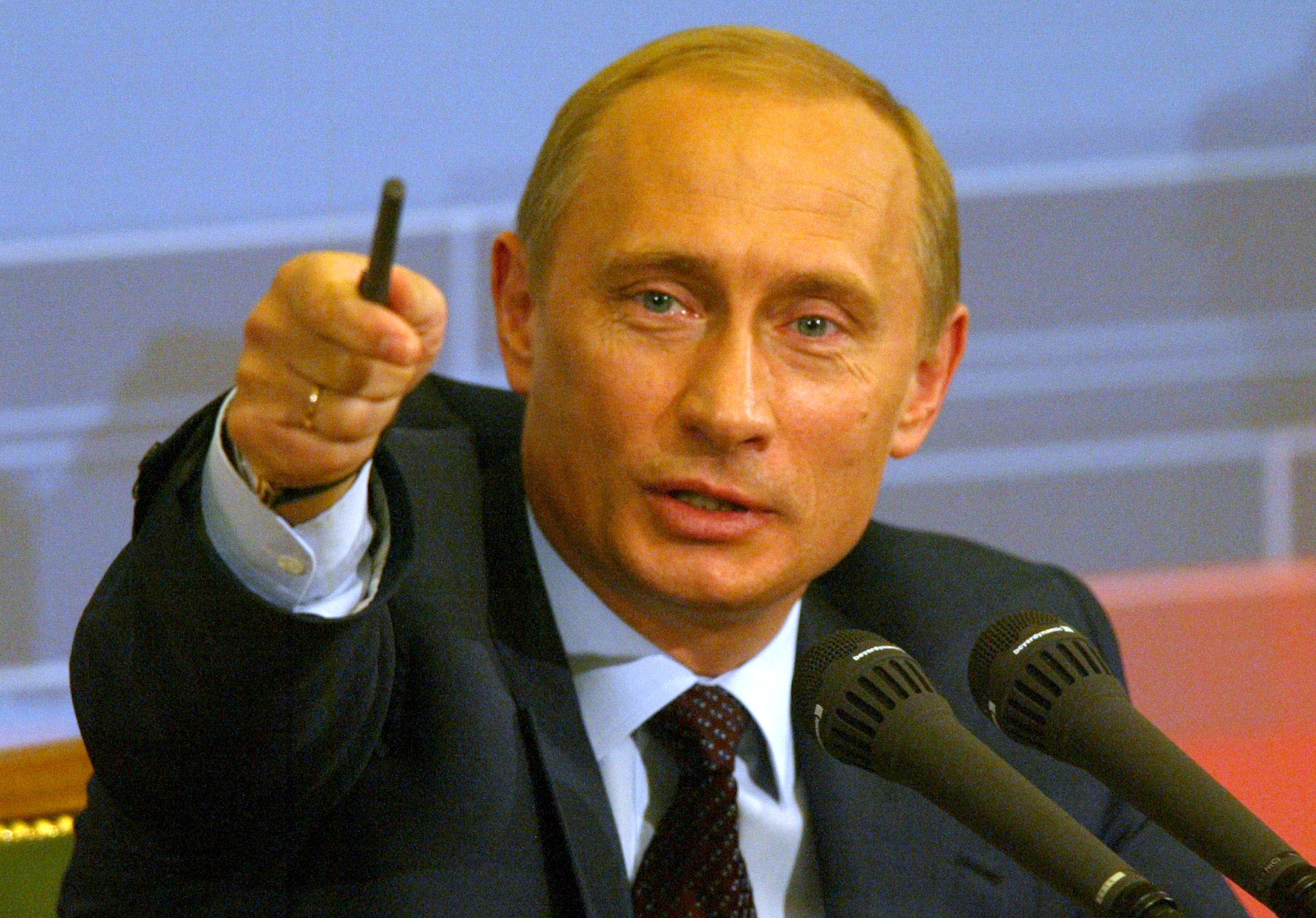
If you are seeking an explanation for Russian President Vladimir Putin policies, domestically and externally, you should consult Steven Lee Myers recent book THE NEW TSAR: THE RISE AND REIGN OF VLADIMIR PUTIN.  According to Myers it was the Ukrainian Presidential election of 2004, coming on the heels of the Beslan school massacre of September 3, 2004 that pushed Putin to recalibrate his plans.  When Chechen terrorists seized close to 1000 people on the first day of the school year, resulting in the death of 334 hostages, 186 of which were children, Putin was beside himself.  With repeated Chechen terror attacks inside Russia, and a war that was not going well, Putin resorted to his predictable stonewalling excuses.  Outside Russia events did not go Putin’s way either. Already resentful of what he perceived to be western encroachment in the traditionally Russian sphere of influence in the Baltic, along with the election of Viktor Yushchenko as the Ukrainian president, a man who favored NATO membership and closer ties to the west, the Russian leader was forced to face another uncomfortable situation fostering a drastic shift in Russian policy.  Myers, a New York Times reporter spent seven years in Moscow during the period of Putin’s consolidation of power, has written a remarkably comprehensive biography of the Russian president that should be considered the standard work on this subject.

The books title, “The New Tsar” is a correct description of Putin’s reign that even included a Tsarevitch, Dimitri Medvedev, as Putin’s handpicked successor as President of Russia in 2008.  For Putin the greatest catastrophe of the 20th century was the collapse of the Soviet Union, a belief that provides tremendous insight into his policies.  Emerging from the corruption and incompetence of the presidency of Boris Yeltsin, Russia by 1998 was in deep trouble economically and politically.  Yeltsin also hand-picked his successor, a former KGB operative, who was stationed in Dresden, East Germany in 1989, Vladimir Putin.  Meyers presents an objective approach to Putin’s life before the Berlin Wall came down.  Putin would grow up listening to stories of his father, Vladimir, fighting on the western front during World War II and being wounded by the Germans.  His mother, Maria survived the siege of Leningrad and escaped into the countryside.  The harrowing experiences of his parents left an indelible impression on the young Putin.  His father suffered with a limp after the war, and his mother was overly protective of her son.  Putin had a slight build as a child and turned to the martial arts to deal with bullies.  His success at Judo provided Putin with a certain toughness and a means of asserting himself.  Putin craved orthodoxy and rules, neither of which he found in religion and politics.
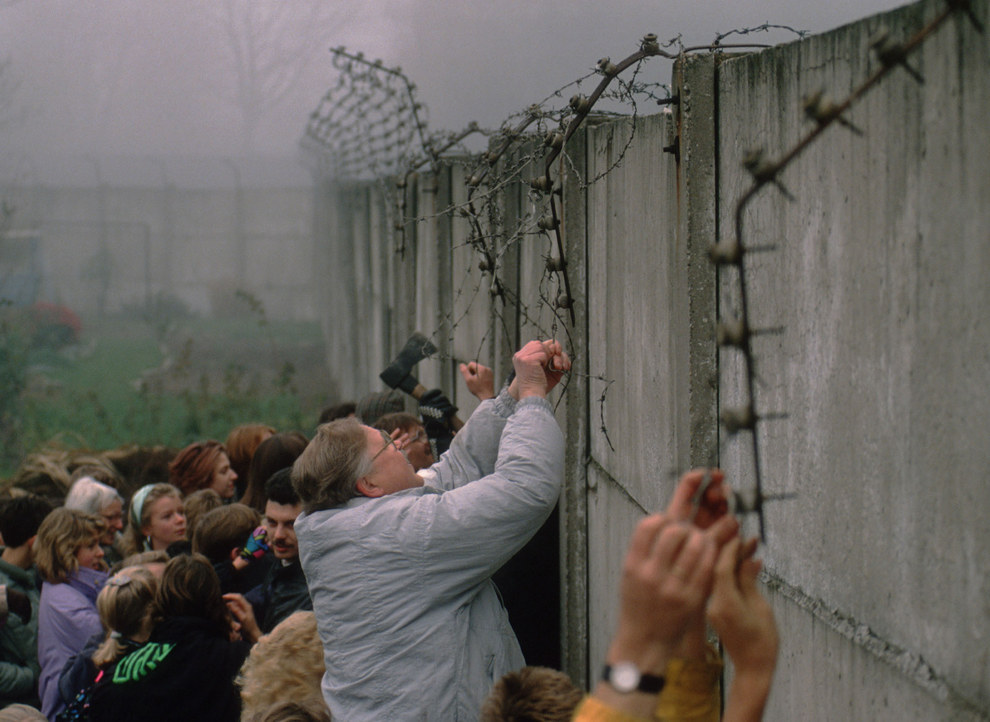
(People tearing down the Berlin Wall, November, 1989)

Myers stresses Putin’s education in economics and law school, but more importantly he points to Putin’s time in the KGB when he was stationed in Dresden.  While being posted to East Germany Putin was exposed to the Stasi and their practices.  Putin was involved in intelligence operations, counter intelligence analysis, and scientific and technical espionage.  The KGB’s goal in East Germany was to gather intelligence and recruit agents who had access to the west, especially individuals who had relatives near American and NATO military bases.  Putin was heavily involved in recruiting and running agents to determine East German support for the Soviet Union.  In 1987, Putin who was very popular with his superiors was promoted to Lieutenant Colonel and the Dresden Station Chief’s senior assistant, or enforcer.  Myers traces Putin’s actions as Mikhail Gorbachev instituted Glasnost and Perestroika and his reaction to events in November, 1989 as the Berlin Wall came down.  Two years later, the Soviet Union finally gave way after a failed coup against Gorbachev, and Yeltsin emerged as the dominant political figure in Russia.  Putin’s reaction to events led him to resign from the KGB.   The future “Tsar” was now cast adrift.

In contemplating Putin’s career one must ask, how he progressed from being a former intelligence operative to President of Russia in seven years.  Myers does an excellent job framing Putin’s behavior and beliefs following the collapse of the Soviet Union.  Rising to the position of Deputy Mayor of Leningrad he attached himself to the coattails of a former law professor at his alma mater, Anatoly Sobchak.  It was during Sobchak’s administration that Putin, because of his economics background negotiated no bid contracts with newly created corporations that involved numerous kickbacks and extensive fraud.  Leningrad’s treasury was almost empty and casino gambling was seen as a source of revenue.  This would lead to organized crime and the emergence of the new corporate oligarchs controlling the local economy.  Myers points to rumors of Putin’s involvement, but can’t make a definitive case.   It was at this time that a number of these new oligarchs that emerged under Yeltsin, businessmen like Yuri Kovalchuk and Vladimir Yakunin whose metal company received licenses to export aluminum and non-ferrous metals grew very close to Putin, and years later would become titans of Russian industry.  Putin’s role in Leningrad’s economy increased under Sobchak and more and more cronies from his KGB past were given prominent positions in the city’s government.  Myers refers to these men as the “St. Petersburg boys,” who would emerge as important players when Putin assumed power.  Sobchak’s goal was to make his city the friendliest to foreign investment in the entire country.  Putin’s goal was to help create a new “window to the west,” the first major transformation of its kind since Peter the Great.  Putin would operate in the background with no fanfare and little emotion.  He knew how to slice through the bureaucracy and Russia’s opaque laws and used his Leningrad experience as a primer on how to get things done.

(Russian President Boris Yeltsin)

Putin would remain in Leningrad until 1996 when Sobchak was not reelected mayor.  Putin was without a job, but Yeltsin would be his savior.  Yeltsin’s own support in the presidential election of 1996 were the bankers, media moguls, and industrialists who had acquired controlling interests in major industries in return for keeping Yeltsin’s government afloat.  Putin was appointed to the Presidential Property Management Directorate to oversee the legal issues as he was in charge of reasserting the government’s control over certain properties and dispensing with others.  Seven months later Putin was put in charge of investigating abuses of Russian property and restoring order, and ending the corrupt schemes that were destroying the Russian economy.  Putin’s work brought him into contact with the FSB (really a new KGB with another name!) and earned a graduate degree with a thesis focusing on Russia’s natural resources.  More and more Putin believed that the state had to reassert its control over its own natural resources that were being pilfered by “oligarchs.”  This belief would form the basis of Putin’s economic policy once in power as he would use Russia’s vast energy resources as a tool against the west and former Soviet republics that did not conform to his vision of Russia’s spheres of influence.

Putin had gained a reputation as a competent, hard-working individual who did not press a particular agenda on Yeltsin.  With the corruption in the FSB, the economy imploding, Yeltsin appointed Putin as the head of the intelligence agency, Putin had come full circle.  Myers description of Yeltsin’s reign as president is one of economic disaster, corruption on a scale not imagined by many in his inner circle, and navigating from one crisis to another.  Throughout it all Putin was loyal and conducted himself in a ruthless and efficient manner that made him essential to Yeltsin’s political survival and he rewarded Putin with the leadership of the Security Council in addition to his duties as Director of the FSB.

Myers successfully integrates the second Chechen war into the narrative on top of Yeltsin’s domestic troubles.  This occurred at the same time NATO was bombing Serbia because of its actions in Kosovo, and the Russian leadership was powerless to support its Slavic brothers and  greatly feared that the west could do the same in Chechnya.  Yeltsin could not run for reelection in 2000, so he needed an heir that he trusted.  He offered Putin the office of Prime Minister and then he would resign before the election, to provide the little publicly known Putin a leg up on the presidency.  Myers does a superb job describing these machinations that resulted in Putin’s elevation.  One of his first moves upon assuming office in September, 1999, was to send Russian forces back into Chechnya, after four attacks in and around Moscow that killed over 300 people, a move he would stand by for years despite negative results.

(Russian troops bring out the dead and wounded after their assault on the Moscow theater to free hostages from Chechen terrorists, October 23, 2002)

Myers discussion of Putin’s reign is sharp and focused and explains many of the problems that the United States faces today with the Russian leader.  Putin’s approach to government is his version of the “dictatorship of law” or “managed democracy,” which may reflect some of the trappings of democracy, but are fixed or manipulated to accomplish certain ends.  Putin was aided by the strong recovery in energy markets after his election in 2000.  With increasing funds in the Kremlin coffers, Putin prosecuted his war in Chechnya in a vicious fashion.  This would produce a series of terrorist attacks that would cost Moscow dearly.  When Putin’s leadership and tactics were questioned during terrorist attacks at a movie theater on October 23, 2002 in southeast Moscow that resulted in the death of 130 hostages, and the terrorist siege of a school in Breslan in North Ossetia, the Russian President stonewalled any explanations for his military responses.  This was Putin’s pattern in a crisis, as was evidenced earlier when the nuclear submarine Kursk sank in 2000 with the loss of 118 men.  Despite these disasters and the Chechen war that was turning into a quagmire, Putin’s popularity could not be questioned, in large part because reporters, commentators, or politicians who raised issues or made negative comments about Putin, tended to disappear.  Putin had a carefully crafted image supported by his media friends who would not pursue the truth concerning the assassinations of Anna Politkoyskaya, a journalist critical of Putin, Alexsandr Litvinenko, a former FSB operative who exposed corruption and bribery in the agency, among numerous others.

Myers does a commendable job explaining the second “rape” of the Russian economy, the first under Yeltsin that produced the first wave of oligarchs, the second under Putin.  Names like Yukos, Gazprom, Rosneft, and their CEO’s are explored in detail and the reader acquires an inside look at how Putin dealt with economic threats to his regime as he sought to recover the state’s assets.  However, at the same time he allowed many of the “St. Petersburg boys” access to new wealth, creating a second wave of “new” oligarchs.  The trial of Mikhail Khodorkovsky, the head of Yukos, the largest oil company in Russia is emblematic as to how Putin operated.  The end result is that Putin gained control of all aspects of the Russian economy, and of course with the attendant corruption, his own wealth accumulated tremendously, estimated at about $40 billion by Russian journalists and the CIA.  As an editorial in Kommersant opined, “the state has become, essentially a corporate enterprise that the nominal owners, Russian citizens no longer control.”
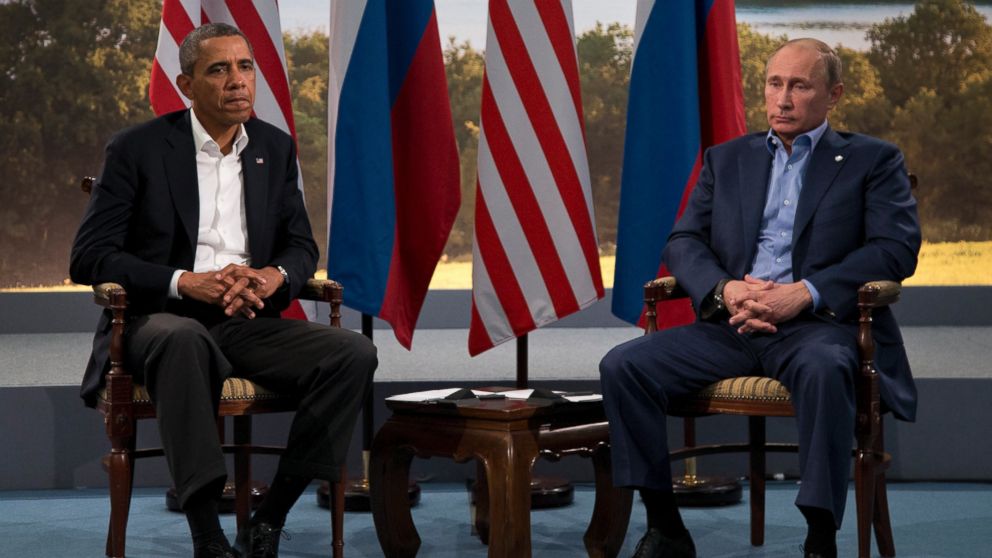
(the nature of American-Russian relations is obvious from the faces of Presidents Obama and Putin)

When Putin first rose to power many hoped a strong relationship between the United States and Russia would result. Putin was very supportive following 9/11 and approved of American military bases in former Soviet republics to conduct the war against al-Qaeda and the Taliban.  After meeting Putin for the first time, President George W. Bush had a positive reaction as he said, “I looked the man in the eye, I found him to be very straight forward and trustworthy…..I was able to get a sense of his soul; a man deeply committed to his country and the best interests of his country.”  Bush was either naïve or uninformed about Putin and the course he pursued.  Putin grew angry at the United States when the Bush administration refused to alter provisions of the 1972 Anti-Ballistic Missile Treaty (ABM), and the eventual American withdrawal from the treaty.  Further, Putin was against the American invasion of Iraq and the overthrow of Saddam Hussein, and this was capped off with the Ukrainian election of 2004 where reformers and government protestors wanted to move closer to the west and become members of NATO.  Putin’s frustration and anger at the United States further increased when President Bush decided to negotiate with Poland and the Czech Republic for bases for a Missile Defense System.  This led to the February, 2007 Putin speech at the Munich Security Conference where the Russian president excoriated the Bush administration in what Myers describes as similar to Winston Churchill’s Iron Curtain speech.  With the economic collapse of 2008 and its effect on the Russian economy, Putin would only blame the United States.  Further, the election of Barrack Obama, the Russian invasion of Georgia, trade disagreements, events in the Ukraine and Crimea, and the current Syrian crisis, it is not surprising that it seems we are now witnessing a second Cold War.

Putin could not run for reelection in 2008, but as Myers points out, like Yeltsin he also had an heir, Dimitri Medvedev, a former head of Gazprom, and an individual who appeared to be easier to deal with.  However, with Putin as Prime Minister pulling the strings, Kremlin policy remained the same, accept with a softer face.  During his presidency Medvedev was consistently forced into the background be it the 2009 economic crisis, the Russian invasion of Georgia, and other issues-Putin just could not stay in the background.  Medvedev’s speeches were vetted by Putin and it was demeaning for the Russian president as he was now overshadowed by his Prime Minister.

After reading Myers’ book, the reader should have a handle of who Putin is and what he believes in.  I agree with Gal Beckerman’s description of Putin as a man who represents his country, represents stability, and “stands against the chaos of the street; one man who still believes in the unique power of the state personifies its sovereignty and its prerogative to defend its interests; one man who embodies calm, measured authority resists the emotional swell of undisciplined, angry people, and understands that the appearance of forcefulness and obstinacy can be as powerful as an actual show of force.”  After digesting Myers’ narrative of Putin moving from crisis to crisis, some self-created and some external to Russia, it becomes clear that he simply believes that “he’s the last one standing between order and chaos,” whether he is dealing with protesters challenging his return to the presidency during and after the 2012 elections, “Chechen separatists, E.U.-loving Ukrainian politicians or the West as a whole, working through nefarious pro-gay N.G.O.’s or NATO.” (New York Times, November 2, 2015)

(Demonstration against Ukrainian government in Independence Square, Kiev, February 2, 2014)

Putin’s greatest gamble according to Myers was his illegal seizure of the Crimea in reaction to the violence in Kiev on February 2, 2014.  Protestors had taken to the streets forcing Ukrainian President Viktor Yanukovych to flee the capitol.  Putin was presiding over the closing ceremonies of the Sochi Winter Olympics and saw events in the Ukraine as a western plot to deny Russia the accolades that it deserved because of the success of the games.  Incensed, Putin met privately with a few trusted advisors and planned to foster the breakup of the Ukraine by seizing the Crimea.  The Russian invasion began on February 27, 2014 negating the argument he employed against President Obama about unilaterally invading countries as the US had done in Afghanistan, Iraq, and Libya.  Putin correctly calculated that since that the west would not react as it had in 1990 removing Saddam Hussein’s forces from Kuwait, as it had not acted against the Russian invasion of Georgia in 2008.  Putin’s fait accompli would not be reversed and his rationale of protecting “ethnic Russians” was domestically popular and would later be used to justify Russian military moves in Eastern Ukraine.  Even after the dubious referendums in Crimea, Donetsk, and Luhansk; in addition to the Russian shoot down of a Malaysian airliner, Putin was convinced the west would do nothing, and he would rally his country against the foreign conspiracy to isolate Russia politically, and hurt her economically with sanctions.  Not only did Putin not worry about western actions, it seemed he no longer cared as is evidenced by the current situation in Syria as Russian planes continue bombing to prop up the regime of Hafez el-Assad, as opposed to his public position of fighting ISIS.

Myers conclusion that Putin no longer cared to rule pragmatically as he had done during his first two terms in office, and would focus on reasserting Russia’s power with or without the recognition of the west, is correct.  Myers should be commended for his work and anyone interested in understanding, the “new tsar” should consult it.

UNITED STATES OF JIHAD: INVESTIGATING AMERICA’S HOMEGROWN TERRORISTS by Peter Bergen


United States of Jihad: Investigating America's Homegrown Terrorists

(Among the topics discussed by Mr. Bergen is the Boston Marathon, April, 2013)

Peter Bergen, prolific author, and CNN national security analyst has written a number of important books dealing with terrorism.  They include monographs on Osama Bin-Laden and three others which were New York Times best sellers.  His latest work UNITED STATES OF JIHAD: INVESTIGATING AMERICA’S HOMEGROWN TERRORISTS is an important addition to two other recent books, Scott Shane’s OPERATION TROY and Charlie Savage’s POWER WARS: INSIDE OBAMA’S POST 9/11 PRESIDENCY.  Bergen builds on the work of these authors in trying to explain why American citizens have engaged in treason against their country by engaging in, or planning acts of terrorism.  Bergen further explores how American institutions and the Moslem community have responded to the terror threat and how this threat on American soil has changed us.  One could argue that Bergen’s book is a who’s who of American jihadism, beginning with the Muslim cleric Anwar al-Awlaki, Omar Hamami who grew up in Alabama and fought for al-Shabaab in Somalia, David Coleman Headley who helped plan and carry out the Mumbai massacre, and numerous others.

Bergen concentrates on the 330 militants who have been arrested and charged with terrorism crimes in the United States, 80% of which are American citizens or legal permanent residents.  He argues that they appear to be as average, well educated, and emotionally stable as typical Americans.  According to Bergen their average age is 29, more than a third are married – many with children, and one out of six are women.  There is nothing particularly special about them as they are just ordinary people.  If this is so, then why have so many engaged in terrorism, and why is the “home grown” threat a major source of concern in the intelligence community?  Bergen argues forcefully that it is due to a number of criteria.  First, Moslem outrage at United States foreign policy in the Middle East is a dominant theme.  Anger about American wars in Iraq, Afghanistan, American drone strikes in Yemen causing tremendous collateral damage, the bombing of Syria, and U.S. support for Israel all contribute to this feeling.  Secondly, jihadism offers people an opportunity to be somebody, and at the same time belong to something bigger than themselves. What is interesting about this threat to the American homeland is that since 9/11, 45 Americans have been killed by Islamic terrorists, but at the same time 48 Americans have been killed by right wing extremists.

(Anwar al-Awlaki, American born Islamic cleric, October 4, 2001)

Bergen examines a wide range of terrorists who originated on American soil drawing on his vast network of sources in the intelligence world.  He argues that most are second generation immigrants who did not start out as observant Muslims.  However, once they became devout they often left their mosques because what was being preached was not radical enough.  In addition, they would congregate with like-minded individuals and bond by watching jihadi videos, and simulate combat by playing “paint-ball.”  Bonding activities are extremely important in creating a jihadist community with an ultra-fundamentalist outlook. Bergen also dispels a number of myths in dealing with his subject by arguing that most of these jihadist had no formal links to outside terror organizations, further most terrorists began their education in a secular environment, not madrassas.  In reviewing their studies it is clear that there is a strong link between their technical education and their terrorist activities, as 50% of them attended college.  Overall, social bonds between jihadists were more important than ideology.

In presenting his thesis Bergen explores the activities of numerous terrorists, many of which are known to those who follow the news.  The individual who takes up more time than any other is the American born cleric Anwar al-Awlaki who was the mentor to Umar Farouk Abdulmutallab, the “underwear bomber” who tried to take down a Northwest Airliner over Detroit Christmas day, 2009.  Awlaki is also linked to Nidal Hassan, the Fort Hood killer and numerous others.  Awlaki stands out as a sophisticated individual who used his American upbringing and cultural knowledge with his social media savvy to recruit jihadist in the United States and eventually was killed by an American drone in Yemen authorized by President Obama which had sparked an intense debate as to whether it was legal for the United States government to assassinate one of its citizens.  Scott Shane’s book explores this controversy in greater detail than Bergen, but the author does a good job summarizing the most salient points in the debate and points out that “t follow the trail of Awlaki’s influence is to trace the post 9-11 evolution in evolving Americans.”  Of the 330 jihadists charged or convicted in the United States, more than 80 had Awlakis writing and sermons in their possession, and another 7 more corresponded with him or traveled to Yemen to meet him.

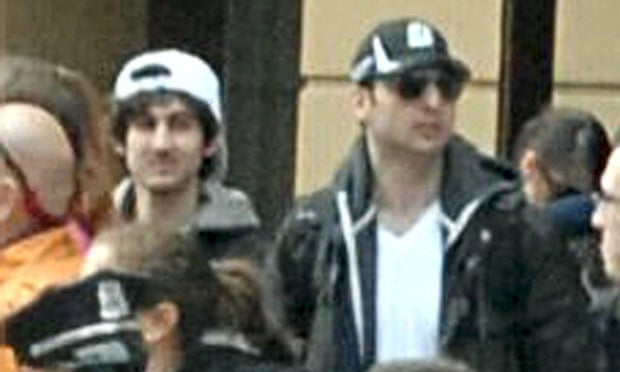
(Tsarnaev brothers at the Boston Marathon, April, 2013)

Bergen labels these American terrorists as “lone wolves.”  One of these individuals described is Carl Bledsoe, a native of Memphis, TN who was self-radicalized and wound up killing one marine and wounding another at a marine recruiting center in Little Rock, AK on June 1, 2009.  He follows this with an in depth exploration of the motivations and actions of Major Nidal Hassan, a military psychiatrist whose conversion to fundamentalism differed from Bledsoe in that he was already a Muslim.  But their radical journey had many similarities including their gradual isolation from their families, preoccupation with piety, and what was considered to be a true Muslim.  They both embraced Salafist ideas and practices as do most jihadists, and as they looked at US foreign policy they became obsessed with the idea of Jihad to defend Islam.

26/11: How terror struck Mumbai
The gruesome terror attacks began on 26th November and continued till 29th November, where Indian security services killed 9 out of 10 terrorists and captured Ajmal Amir Kasab, alive to regain control of South Mumbai terror sites i.e. the Leopold Café, the Chhatrapati Shivaji Terminus, the Taj Mahal, the Oberoi & Trident, Cama Hospital and Nariman House.(AP photo)
26/11: How terror struck Mumbai
Mumbai was witnessing one of the worst terrorist attacks in the history of India. Leopold Cafe in Colaba was attacked first when five terrorists opened fire at the cafe.(AFP photo)
26/11: How terror struck Mumbai
The attack left behind indelible scars… bullet marks on the walls and counter; the mirrors broken; doors with holes and a mini-crater on the marbled floor, caused by the grenade attack.(AFP photo)
26/11: How terror struck Mumbai
This was perhaps one of the most heartbreaking scenes for any Mumbaikar. Images tell the story of the barbaric assault by terrorists who held the Taj Mahal hotel to ransom for 58 hours.(AFP photo)
26/11: How terror struck Mumbai


Bergen reviews the close calls that have occurred since 9-11 discussing the case of Najibullah Zazi, who along with two others tried to replicate the London underground bombing of 2005 on the New York City subway system.  He was thwarted by the FBI after receiving a tip from the British intelligence.  Another case is that of Faisal Shazad, who drove a bomb laden van into Times Square in Manhattan on May 1, 2010.  Trained by the Pakistani Taliban, the bomb did not explode due to poor components.  The focal point was not any intelligence, but US drones over Pakistan that did not allow for sufficient training.  The key for Bergen is that these individuals fit the profile he discusses which was also accepted by American intelligence analysts.  But in fairness to law enforcement, Bergen points out the difficulties in tracking lone wolves.

(arrest of Najibullah Zazi who attempted to set of a bomb in Times Square, Manhattan on May 1, 2010)

One of the most interesting aspects of the book is how the Obama administration has approached the domestic terror threat.  Soon after the failure of the “underwear bomber” over Detroit, President Obama ordered a vast increase in the use of drones and NSA surveillance programs, the most controversial of which was the bulk collection of American telephone Meta data.  After the Edward Snowden fiasco this program was rolled back and Bergen argues it had little effect on preventing terrorism and traditional approaches to intelligence were more reliable.  Today, Republican presidential candidates describe Obama’s approach to the war on terror as rather feckless, however if one examines his role as commander and chief one sees a continued involvement in Afghanistan and Iraq, and a marked increase in the use of drones as compared to the Bush administration.  According to conservative estimates, by the end of 2015 the Obama administration had presided over the killing between 3-4,000 people in drone strikes in Pakistan and Yemen. Bergen aptly summarizes his view as Obama dryly remarked, “Turns out I’m really good at killing people.”  Didn’t know that was going to be a strong suit of mine.”  If you are interested in an in depth analysis of Obama administration practices and their legalities consult Charlie Savage’s POWER WARS.

Another important aspect of Bergen’s narrative is the approach taken by American intelligence agencies.  We witness the development of the NYPD’s separate intelligence department that is almost up to par with the CIA and FBI.  We also witness the continued issue of sharing intelligence and acting in concert for the greater good of the American people.  The major change in the FBI’s approach to terrorism after 9/11 would be its transformation from a crime solving organization into entities whose primary mission was to prevent terrorist attacks.  The NYPD’s creation of a separate intelligence component allowed it to pursue a similar approach.  Over the last decade and a half over 15,000 informants have been employed, and numerous sting operations of suspected terrorists designed to root out terror plots, but this has resulted in an increasing number of complaints of entrapment.  In addition, in 2004 the National Counterterrorism Center was created to connect “the dots” between all intelligence agencies.  Bergen provides an astute analysis of American intelligence policies including their concrete successes, ”near misses,” and failures, including a useful chapter on the Tsarnaev brothers who were responsible for the Boston Marathon bombing in April, 2013.

Bergen correctly arguing that the older of the brothers, Tamerlan fit the NYPD terror profile and radicalized his younger brother, Jahar who was extremely secular and Americanized.  The bombing could have been prevented if not for another case of missed signals, and of a lack of communication between U.S. law enforcement agencies.  If FBI allegations are correct, Tamerlan was involved in a triple murder in Waltham, MA in 2011 and was a dangerous killer long before April, 2013; one must ask how did he not appear on the “no-fly list,” particularly after warnings from Russian intelligence in 2011? Tamerlan would fly to Dagestan in the Caucasus and try and join the Union of the Just, an anti-American Islamist group to fight the Russians, as well as attending Salafist mosque.  By his return to the United States in July, 2012 Tamerlan was fully radicalized.  Both Tamerlan and Jahar came to believe that 9/11 was engineered by the US government to create mass hatred of Muslims.   With these beliefs, it is not surprising they carried out their attack.

The rise of ISIS is not explored until the final chapter of the book.  Here Bergen reviews and synthesizes much of the material that has been presented by Joby Warrick, Michael McCants, Jessica Stern, J.M. Berger, Michael Weiss, and Hassan Hassan.  The use of social media and the virtual world has allowed ISIS to be the next generation of al-Qaeda and attract over 30,000 foreign fighters and claim to have established a caliphate, successes that Osama Bin-Laden could never fathom because of his world view.  Bergen dissects American fears of an ISIS attack in the United States, and despite what occurred in San Bernardino he correctly argues that “lone wolf” attacks are a threat, but they are a minimal threat because of the safeguards that have been put in place.  We must realize that we can never be 100% secure and that there always will be a low level threat in the United States for years to come.   But as Bergen shows in his closing argument, presenting the wife of a murdered victim of the Fort Hood massacre, and her support of an organization created by Nidal Hassan’s cousin to foment better understanding and relationships between Muslim and non-Muslim Americans, there are many ways to fight terrorism.  Bergen has written another excellent book that should be read by all who want to try and understand the problems that contribute to the enlistment of jihadists in America and how that has changed our country.

(Boston Marathon Bombing, April, 2013)

FORTUNE’S FOOL: THE LIFE OF JOHN WILKES BOOTH by Terry Alford

(Lincoln’s assassin, John Wilkes Booth)

Terry Alford’s FORTUNE’S FOOL: THE LIFE OF JOHN WILKES BOOTH is an important contribution to the literature dealing with Lincoln’s assassin, the life he lived, and the reasons behind his actions.  Alford has filled a void by preparing the first full length biography of John Wilkes Booth through the exploration of a vast amount of primary and secondary sources used to correct many of the myths surrounding his subject, and the assassination itself.  Alford provides numerous insights into Booth’s personality, career as an actor, and the evolution of his political views that led to the death of the president.  Alford accomplishes his task by a thoughtful approach to his research material that he successfully integrates into his narrative.  Primary source quotations from family members, friends, stage acquaintances, conspirators, and others abound as Alford takes the reader inside Booth’s mental state at various stages of life and what emerges is a complete picture of his protagonist.

From birth Booth had an albatross around his neck in the name of Junius Brutus Booth, his father.  The senior Booth was one of the most creative actors of his era, and his son had to deal with his father’s successful career to the point that he would not use his own last name for a good part of his own career.  In addition, Junius Brutus was an alcoholic prone to wide mood swings who beat his children, and left child rearing to his wife, Mary Ann. Throughout his life Booth and his friends worried about the effect of alcoholism on his own behavior.  Alford includes numerous quotes relating to this fear, and when Booth abused alcohol, he was prone to violence.  This created a very strong bond between Booth and his mother to the point when the Civil War broke out, despite his strong pro-southern views he refused to join the Confederacy in order to care for his mother.  Alford speculates a great deal about the effect of Booth’s childhood on his later actions particularly being raised in Baltimore and the Maryland countryside.  Though Maryland would be a border state and stayed out of the Confederacy during the Civil War the southern part of the state was a hotbed of pro-southern sentiment, and it was here that Booth attended boarding schools that reflected his “deep southern seasoning.”

The first half of the book is devoted to Booths early years and apprenticeship as a stage actor.  Booth began his acting career in 1857 in Philadelphia and Richmond where he remained until 1860 under the name of J. B. Wilkes.  The early years were difficult as he feared disgrace and failure as he abhorred comparisons to his father.  By 1862 he became a star in his own right and returned to Baltimore.  Alford does an excellent job tracing the evolution of Booth as an actor referencing critic’s reviews and peer reactions to his performances.  During the first three years of his career Booth took on many different roles, mostly small parts in numerous plays in order to refine his craft.  Booth had to overcome the obstacles of a poor memory and general nervousness to achieve success.  Many who knew him felt he was extremely vain and lazy in learning his craft, which created a great deal of difficulty.  As an addendum to Booth’s life story, Alford provides the reader with a useful history of American theater during the 1850s and 60s.  In doing so Alford conveys the difficulties young actors faced and this allows the reader to understand what obstacles Booth had to overcome.  As Booth’s acting career developed a number of things become very clear.  First, his sensitivity to the mixed legacy of his father.  Second, his own battle with alcohol and a fierce temper.  Lastly, his intense southern nationalism.

We first learn of Booth’s political views and attitude toward slavery in November, 1860 when he attends a debate between Alabama Congressman William Yancey and Illinois Senator Stephen A. Douglas.  At that point in his intellectual development Booth appreciated the defense of states’ rights, but recoiled from the consequences of disunion.  Alford does a credible job tracing Booth’s ideological evolution as he “held views more common to the Upper South than in deepest Dixie.”  He deplored the election of Lincoln because he felt it would tear his beloved union apart.  His unionist views were roundly attacked while he performed during this period in Birmingham, Alabama and this led to an emotional crisis and forced him to leave for New York.  His motto at the time was “concession before secession.”  For Booth the main culprit for all of the nation’s problems were the abolitionists who he felt were as radical as secessionists.  This view would hold for Booth’s entire life as Alford includes his scathing commentary in dealing with the opponents of slavery.  Booth’s viewpoint rested on the belief that the south only wished to tend to its own business and maintain its traditional rights as it held an unassailable moral high ground in the debate.  Booth wrote after Lincoln’s election, “I will not fight for secession.  This union is my mother.  A Mother that I love with unutterable affection.  No, I will not fight for disunion.  But I will fight with all my heart and soul, even if there’s not a man to back me for equal rights and justice to the south.”  Many questioned why Booth did not join the Confederate army.  Alford’s answer is simple in that he viewed his promise to care for his mother as sacred.  This did not stop Booth from fiercely advocating for the southern cause as he traveled widely for his acting career.

(Booth as a member of the 1st Regiment, Virginia Volunteers)

Alford spends a great deal of time analyzing Booth’s character.  He seemed to be a person of extremes.  On the one hand he was mild and somewhat engaging so most people seemed to enjoy and wanted to be in his company, especially women!  But his persona could easily shift to one of nastiness and temper tantrums depending on the situation he found himself.  For Booth fist fights were very common.  The behavioral extremes can be traced to his childhood in dealing with a very dysfunctional family situation.  Most people who knew Booth felt that once he made up his mind it was impossible to change it.  According to Alford, “Booth never had a new thought after his core opinions were formed in his teenage years.”  He was a very close minded individual who was confounded by his inability to let go of his troubles.  He could be the nicest person, but too often his nasty disposition took over.  Booth “did not want to hear what he did not want to,” and developed the ability to rationalize things that did not go as he expected, particularly news that was detrimental to the south during the Civil War.

According to contemporaries, Booth developed into an exceptional actor considering he only spent seven years on stage.  The first three as an apprentice, a year as a fledgling lead, and three years as a star.  Alford dissects his career and concludes that his acting reflected genius and greatness as he performed as Shakespeare’s RICHARD III, Raphael in THE MARBLE HEART, and as Pescaria in THE APOSTATE.   As the New York Times noted, “His Richard is acknowledged to be without a rival on the American stage.”  The turning point for Booth came with the announcement of the Emancipation Proclamation in January, 1863 which confirmed Booth’s worst fears regarding Lincoln and the war.  From this point to May, 1864 when he quit the stage, Booth was in a quandary as what path his life should take.  He believed that his career was hard and lonely work and his success came at a high cost to his mind and body.  He never liked touring and felt he was a slave to the north because more and more he could not express his opinions.  As Lincoln’s reelection grew nearer he decided to break his pledge to his mother as he could tolerate a war that was a stalemate, but with the north on the verge of victory, he had to take action.

Alford spends a great deal of time discussing Booth’s plan to kidnap Lincoln and trade him for southern prisoners of war.  The south suffered from a manpower shortage with 66,000 Confederate troops in northern prison camps.  He believed that if he could capture Lincoln and exchange him for southern prisoners he could change the course of the war.  Alford follows Booth and his conspirators as they plan Lincoln’s capture, delves into the disagreements among Booth’s accomplices, and the final failure of all of his planning.

Any biography of Booth must treat the Lincoln’s assassination in great detail and Alford measures up strongly to others in his coverage.  Booth acted on his own as he developed plans to assassinate Lincoln and never considered acting in concert with the Confederate government as a letter Booth wrote located soon after the assassination attested to.  Booth believed that Lincoln was a tyrant and a dictator and something had to be done.  Alford develops the argument that Booth’s acting roles in Shakespearean plays contributed to his thought pattern in developing his assassination plot.  This is not a far-fetched approach as Booth when on stage had the ability to become the person that he played, including their mindsets.  For Booth in discussing Brutus, “the humanity and high motives of Caesar’s assailant were compelling.  His patriotism and decency were beyond question,” and this may have weighed heavily on Booth’s thought process as did his “terribly earnest and emotional temperament.”  Alford is correct in arguing that Booth was fueled by his ambition to be great and was “fired by guilt over his failure to become a soldier,” and he told friends in Baltimore that “he was going to do something that would bring his name forward in history.”

After the fall of Richmond in early April, 1865 Booth grew more and more depressed.  According to friends he began to drink heavily and grew increasingly irritable, restless, and suffered from wide mood swings.  When Lincoln entered Richmond on April 4th and sat in Jefferson Davis’ chair, Booth was provoked beyond measure.  The news from Appomattox a few days later that Lee had surrendered was the last straw.  Once Lincoln announced that he favored voting rights for Negroes Booth told a friend “that is the last speech he will ever make.”  Alford then follows Booth’s actions until he enters Ford’s Theater and assassinates Lincoln on the 14th.  Alford’s description brings the reader inside Booth’s mental state and it continues as Booth escapes and makes his way into the Virginia countryside.  Alford’s detail is exceptional as Booth is finally seized and shot on April 26th.

Alford brings his narrative to a conclusion with an excellent Epilogue that concentrates on the many myths associated with Booth’s death, and the deification of Abraham Lincoln.  Alford also includes a brief annotated bibliography for those interested.  Overall, Alford has written the definitive biography of Booth and one that historians and Civil War buffs will be consulting for a long time to come.

RADIANT ANGEL by Nelson DeMille

No one can ever argue that Nelson DeMille’s novels do not reflect contemporary trends in the world.  At a time when Russian President Vladimir Putin is trying to restore Russian prestige and its place on the world stage through his actions over the last ten years in Georgia, the Crimea, Ukraine, and now Syria, DeMille offers a plot line that seems to fit the Kremlin’s current agenda.  DeMille’s latest book in the John Corey series, RADIANT ANGEL begins with a sense of mystery as Colonel Vasily Petrov, formerly of the KGB, now a significant actor in the Russian intelligence service, SVR, attached to the Russian mission to the United Nations, receives a message from his superiors along with a package requested weaponry.  Petrov’s title is Diplomatic Representative of the United Nations for Human Rights Issues, but for former NYPD homicide detective, John Corey, now on disability after being severely wounded, Petrov is the equivalent to a CIA station chief.  Corey’s concern about Petrov’s background is warranted as he was the son of Vladimir Petrov who once head of SMERSH, the assassination arm of the old KGB, and had been implicated in rubbing out a number of Putin’s political opponents.  For example, the British government recently concluded that Putin ordered the assassination of Alexsander Litvinenko, a former FSB secret service agent in 2006.  Litvinenko had accused Putin of staging apartment bombings in Russia to raise the terror scare to facilitate his rise to power.  He further charged that Putin had ordered the assassination of journalist Anna Politkovskaya who was a thorn in Putin’s side.

Corey’s new job is with the Diplomatic Surveillance Group (DSG) as a contract agent is to follow Petrov’s movements around New York.  He is accompanied by Tess Faraday, a lawyer who supposedly hoped to become an FBI agent or was she a CIA or State Department Intelligence agent?   Whatever the case, she was able to keep up with Corey’s sarcasm and sardonic wit!  As they follow Petrov out to the Hamptons, the Russian vehicle turns into the estate of Georgi Tamorov, a billionaire oligarch thus exceeding the twenty five mile radius that Petrov is allowed from the UN.  As Petrov emerges from his car and enters Tamorov’s mansion, Corey grew concerned as to what Petrov was up to, and in addition he wondered who Tess Faraday really was, and what was she hiding.   No matter what was about to occur it is clear that DeMille has taken advantage of the renewal of the Cold War between the United States and Russia to formulate an interesting great power scenario that Corey will find himself in the middle of.

As DeMille develops the story he returns to a theme exhibited in a previous novel, WILDFIRE, the issue of “loose nukes” from the old Soviet Union.  The reemergence in the plot of “suitcase nukes” as a threat to the United States is very real, and this time it involves Putin’s Russia, not the fear of Islamic extremism.  In his current volume, DeMille does not seem to develop his characters as fully as he has done in previous books which detracts a bit from the overall experience.  To DeMille’s credit, the scenario that he develops is not that farfetched in the current world climate and I hope that American intelligence officials have gamed this type of operation against the United States.  What is important in the real world is that DeMille is pointing out how weak security is in American harbors and what tempting targets they are, and how poorly intelligence agencies communicate with each other to the detriment of the American people.

Overall, DeMille has written another successful John Corey adventure and I assume others will follow in the near future.


For a note from Nelson DeMille visit my website at http://www.docs-books.com

January 2016
A Note from Nelson DeMille
Radiant Angel
I was just reading a capsule review of 2015. I didn’t realize 2015 was that bad, but when you read about it, the year really sucked. I mean, if 2015 was a movie, it would get, like, half a star. If it was a book, nobody would buy it.

Anyway, Happy New Year. I hope your Holidays were wonderful, including the eight days of Hanukkah. Yes, I said nine days in my last Newsletter, but that was because my nine-year-old said they told him in school that it had changed to nine days. I see a career in politics for him.
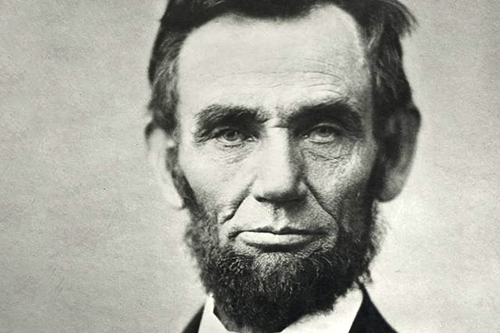
Some of my readers were upset about what happened between John Corey and his wife Kate Mayfield in Radiant Angel. Well, things happen. But I can now report that John and Kate are in marriage counseling, and they are working out their problems. John has admitted to being a male chauvinistic pig and a wise ass. Kate has admitted to being a humorless FBI tight-ass. They’re getting in touch with their feelings and making progress, so most likely they will appear together in the next John Corey novel.

My next novel, however, will not feature John Corey. I’m introducing a new male lead character whom I have not yet named. Any suggestions?

The book, too, is unnamed, but it’s set in Key West and Cuba, as I’ve said, and I’m excited about the subject and the setting. When I was in Cuba in November, I made a good contact, code name Lola, who is providing me with inside information about the underground opposition and also advice on investing my money in Cuba. “Lola” says I can buy a cigar factory for ten thousand American dollars which he asked me to send to him via his cousin “Pablo” in Miami. Pablo emailed me a picture of the cigar factory which looks more like a sugar refinery. I have to think about this.

On another subject, my last novel, Radiant Angel, will be issued in trade paperback on January 19. If you haven’t read the hardcover or the eBook, or haven’t listened to the audiobook, maybe it’s time to buy the paperback. No pressure here, but you’d be doing yourself a favor. Trust me.

Thanks for all your suggestions about who should play John Corey and Kate Mayfield in the Corey TV series. They were all good picks, especially from those who said I should play John Corey. I’m available.

January, as we know, is named after the two-faced Roman god Janus who looks forward and backward, which is easy to do if you have two faces. And this brings me to my book The Quest, in which there is a reference to Janus, which leads one of my characters, Vivian, to quote King George VI’s New Year message to the English people in the darkest year of the war.

“I said to the man who stood at the gate of the year, Give me a light that I may tread safely into the unknown. And he replied, Go out into the darkness and put your hand into the hand of God. That shall be to you better than light and safer than a known way.”

My best wishes to you and yours for a happy, healthy, and peaceful New Year.

Sincerely
Nelson DeMille

P.S. Please consider sharing this Newsletter with a friend