WILDFIRE by Nelson DeMille

Wild Fire (John Corey Series #4)

Nelson DeMille’s WILDFIRE continues the raucous adventures and career of former New York Police Department homicide detective John Corey.  DeMille’s latest scenario takes place a year after 9/11 with newspaper and cable news blaring headlines that President Bush is about to launch an invasion of Iraq.  Corey, who retired on disability after being wounded three times is a special contract agent who is attached to the Federal Anti-Terrorist Task Force (ATTF).  The ATTF is an amalgam of FBI agents, NYPD detectives, special agents, Immigration and Custom Enforcement agents, Port Authority detectives, and of course CIA types.  The story begins when special agent and former NYPD detective, Harry Muller is sent on a surveillance mission in upstate New York designed to gather information concerning the Custer Hill Club, or as Muller describes as the “right wing loony lodge.”  While taking photos and observing the membership, Muller is captured and taken inside the club.

Once inside the reader meets Bain Madox, president and owner of the Custer Hill Club and Global Oil Corporation.  Other members of this right wing cabal include Scott Landsdale, a CIA official; General James Hawkins, USAF and a member of the Joint Chiefs; Paul Dunn, a member of the President’s National Security staff; and Edward Wolffer, Deputy Secretary of Defense.  After his seizure, Muller observes an executive board meeting of the Custer Hill Club where he learns of the memberships concern about a possible nuclear attack from a dirty bomb on American soil.  Since the collapse of the Soviet Union a number of these small nuclear devices, referred to as “suitcase nukes,” have been disseminated worldwide.  At the meeting Muller learns of a secret government protocol developed during the Reagan administration called “Wildfire,” a hardwired, meaning the American response to any nuclear attack will happen automatically with no presidential influence.  The response is focused on an Islamic terrorist nuclear attack against the United States that is designed to destroy the Islamic world.  Muller sits in the meeting and wonders if this is a fantasy of the “wacko birds on the right,” or were these men serious.

Since Arab governments were informed of “Wildfire” it was designed to operate like the Cold War concept of mutually assured destruction or MAD, and it provided governments a strong incentive to control any terror plots in their countries.  An added bonus for Madox and company was that any US response would also allow the seizure of Arab oil fields.  Since the likelihood of any nuclear terror attack by Islamic extremists was low, Madox argued that the US should attack two of its own cities which would trigger “Wildfire.”  For Madox this made sense because the US was about to launch an invasion of Iraq and as a Vietnam veteran he argued once war begins one does not know where it will take you.  The Custer Hill Club members developed Project Green, an immediate attack on two US cities that would launch a nuclear response and destroy the Islamic world, negating a need to invade Iraq.  Landsdale believed that Muller was sent to scare the Custer Hill Club into action, ordered by higher ups in the government that were not club members.  The man behind the plot is Ted Nash, a former CIA operative who was supposedly killed in 9/11.  Nash was also an old enemy of John Corey, who with his wife Kate Mayfield, an FBI agent, were committed to solving a murder that would lead them to “Wildfire.”

DeMille scenario is extremely scary.  However, if one thinks about the last fifteen years of American policy in the Middle East is it beyond the pale that someone might have thought of it and possibly kept it on the back burner for the appropriate time.  I am certain that the reader will engender some of these thoughts as they read DeMille’s novel as John Corey and Kate Mayfield are dispatched to locate Harry Muller and they soon confront the possibility of a nuclear holocaust.

DeMille provides his usual sharp and crisp dialogue, enhanced by Corey’s sarcasm and witty comments.  The characters that are created are purely fictional, but DeMille tries to leave some doubt in the reader’s mind that they are 100% fictional.  As usual the conflict and poor communication that existed before 9/11, and probably still exists today between the NYPD, State Police, CIA, and many other agencies is well represented in the plot.  Overall, the conclusion of the story is predictable, but because of DeMille’s talents, WILDFIRE is a good read.

(the site of WILDFIRE)

PLUM ISLAND by Nelson DeMille

Plum Island (John Corey Series #1)

For years Nelson DeMille was one of my favorite fiction writers, and for some reason I did not pick up another of his books for a number of years.  After reading an interview with Greg Iles, who mentioned that DeMille was one of his favorite writers, I decided to revisit his work.  While perusing my bookshelves I noticed that there were three John Corey novels that I had never read so I immediately took the plunge and opened PLUM ISLAND.

After the recent Ebola crisis in Africa that resulted in a few cases of the disease in the United States my choice of PLUM ISLAND was rather timely.  The title of the book was the location and name of an animal disease center research facility on the tip of Long Island.  The center becomes a focal point for a murder investigation involving New York police detective, John Corey.  Corey, recovering from three bullet wounds suffered six months earlier is sitting on his uncle’s porch convalescing peering out into the Long Island Sound.  Corey, a rather sarcastic and humorous individual is approached by Sylvester Maxwell the Chief of Police in Southold Township in Suffolk County, who asks for his assistance with the murder of two Ph.D. biologists who conducted biological research on Plum Island, Drs. Tom and Judy Gordon.  Plum Island is part of the Department of Agriculture and theoretically conducts research to prevent disease and pandemics.  For Corey, their job description lies under the heading of “biological germ warfare.”  Corey is paired with a local homicide detective, Elizabeth Penrose and must navigate the bureaucratic jealousies of the CIA, FBI and possible other government agencies represented by FBI agent, George Foster, and the supposed Department of Agriculture operative, Ted Nash.

The question from the outset is why these two young research scientists were killed?  Was it a burglary gone wrong?  Was it a drug deal of some sort or possibly something else?  After a visit and tour of the Plum Island facilities, a visit sanitized by the federal government, another possibility emerges.  Dr. Karl Zollner, the head of the research facility tries to convince everyone that it was impossible for any dangerous pathogens to have left the island and he introduces the idea that if any substance had left the island it was probably a preventative drug that was designed to stop the spread of a pandemic.  The Gordons were working on genetically altering a simian Ebola virus so that it could not cause disease, but would produce an immune response in animals.  The scenario that Zollner put forth is that the murdered couple may have tried to sell their research to a pharmaceutical company for money.   Corey is not convinced by this explanation and believes that it is a government “line” designed to alter the truth.

As Corey proceeds in trying to solve the murder, avoid government interference and other obstacles his patter is caustic, pointed, and always humorous.  The more Corey thought about the murders he grew convinced it was some sort of conspiracy and was being covered up.  The question was what was hidden and how he could solve the murders.  From this point DeMille has gained the reader’s attention and the novel becomes intriguing.  DeMille’s character descriptions and pithy dialogue is very entertaining.  Corey’s relationships allow the reader a glimpse into his personality and perhaps the persona that he shows the public hides numerous insecurities.  As far as the plot is concerned, the reader is led down a number of paths and then all of a sudden Corey’s intuition changes and the storyline shifts dramatically.  DeMille does a nice job introducing the different personalities in the book and his comments on “eastern Long island society” seem dead on.  The story evolves at a measured pace, and the reader will be surprised by the number of twists and turns it takes.

Overall, PLUM ISLAND measures up to DeMille’s previous efforts be it a John Corey novel, writing about Vietnam or the myriad of topics he has produced.  It is a good read and I look forward to tackling another John Corey novel next.

THE BONE TREE by Greg Iles

The Bone Tree (Penn Cage Series #5)

Greg Iles begins his latest novel in his Penn Cage trilogy by reintroducing the term “The Bone Tree,” which forms a very important component of his story of the same name.  According to Iles, the Bone Trees’ location was the dumping site of a radical KKK offshoot from the 1960s called the “Double Eagles,” where they deposited the bodies of their victims.  Historically, it may have formed a killing ground that dated to the pre-Columbian years of the Natchez Indians.

The novel itself begins where, NATCHEZ BURNING, Iles’ previous effort ended with Penn Cage, the mayor of Natchez, MS and a former Houston prosecutor lamenting his decisions that led to the death of Henry Sexton, a journalist who spent decades investigating the deaths of 12 civil rights murders from the 1960s, and Sleepy Johnson, who had witnessed two of those murders and the fire that destroyed all of Sexton’s evidence.  Cage suffers from extreme guilt that he allowed his father, Dr. Tom Cage’s disappearance cloud his judgement, as his father had been accused of murdering his former nurse as well as a Louisiana State trooper, in addition to jumping bail.  With an all-points bulletin with a shoot to kill order facing his father, Penn Cage must figure out how to save his father from himself in an environment of political and legal corruption that dominates the state of Louisiana at all levels.  When an author prepares to write a trilogy they expect that each volume can stand alone.  In this case, despite the fact that Iles’ provides a great deal of background to link the novel with its predecessor, it might prove difficult for the reader to understand certain components of the story without reading the previous book.

Dr. Tom Cage is resigned to his own death.  With a severe heart condition, accused of two murders, on the run for jumping bail, with assassins after him, he has given up until he receives a text from his future daughter-in-law Caitlin Masters.  Masters, the editor of the Natchez Examiner informs Cage that she is pregnant and he realizes that he now has something to live for, another grandchild and possibly a name sake.  At the age of 73 he see himself anew as the patriarch of a larger family.  Having escaped the assassination by two thugs, Tom’s dilemma is what should be his next course of action.  Iles’ novel has many subplots and one of them is how Tom will navigate his situation.  Another is how his son Cage, and Masters will handle events particularly the remnants of violence and corruption existing in Louisiana in the immediate aftermath of Hurricane Katrina despite the death of Brody Royal, the perceived puppet mastering murderer from NATCHEZ BURNING.

We learn that the true source of lawlessness in the state aside from the greedy real estate developers, bankers, and politicians whose vision is to rebuild New Orleans in their own image by forcing out blacks from neighborhoods and ethnically cleansing the city in order to make millions of dollars, are elements in the Louisiana State Police (LSP). To achieve their goal they need to control the New Orleans Police Department, employing Forrest Knox, second in command of the LSP, as an ally.  Forrest Knox is the head of the Knox family crime organization who are at the center of the Double Eagle faction, and is involved in a statewide meth operation along with an army of avaricious politicians and hungry police officers that have allowed him to build a criminal network with unrivaled reach and power in the southern part of Louisiana.  As a Lt. Colonel in the Louisiana State Police Knox has tremendous influence on events, but as Head of the Louisiana State Police he would become totally insulated from any legal problems from the FBI or other agencies.  As he tries to achieve his goal by destroying his superior officer the novel becomes a fast ride for the reader as the different threads that Iles has created come together.

One of the threads involves the jurisdictional differences that exist between the FBI, state and county law enforcement.  Each has its own agenda and conflicting interests, for example, John Kaiser, the FBI Special Agent’s investigation of possible links between Tom Cage, the Double Eagles, Carlos Marcello, and the Kennedy assassination permeate the novel.  For Penn Cage and Concordia Parish Sheriff Walker Dennis solving the civil rights murders by bringing down Forrest Knox and the Double Eagles, and exonerating Tom Cage is paramount. The reader is also privy to the inner working of the Knox family operation that includes County Sheriff Billy Knox, and a murdering psychopath, Snake Knox, in addition to the Lt. Colonel in the Louisiana State Police. Each agenda is intertwined with each other, and Iles does a masterful job in creating a constantly evolving scenario that keeps the reader mesmerized.

The book exposes the reader to a great deal of violence, betrayal, menace and at times is very intense.  Despite the fact its genre is crime fiction it does an exceptional job highlighting many aspects of human behavior, especially the tragedy of race relations that dominates our history.  THE BONE TREE also exemplifies the role that the past plays in our lives and how difficult it is to escape its tentacles.  The book is illustrative of a line by William Faulkner: “The past is never dead.  It’s not even past.”  (Washington Post, May 11, 2015)  Iles’ work is illustrative of this theme and to his credit he has created an evocative story that will cause the reader to look forward to the concluding volume of his massive trilogy which is due out later this year or early 2017.

What follows is a great interview conducted by the Christian Science Monitor and Greg Iles in April, 2015.

‘Natchez Burning’ author Greg Iles discusses ‘The Bone Tree,’ the twist-filled sequel

Iles’s new book, ‘The Bone Tree,’ includes an investigation into the JFK assassination. ‘If Oswald did not act alone, then I would say there’s a 95% chance that a conspiracy of the size and type that I laid out in this book is the most likely thing to have happened,’ Iles says.

By Erik Spanberg APRIL 21, 2015


Greg Iles calls himself a 20-year overnight success story. This despite the fact that his first book, published in 1993, hit The New York Times best-seller list.

Iles mentions the possibility of overnight success while discussing a soon-to-be-announced cable TV adaptation of his 2014 epic novel, “Natchez Burning.” He promises a series or miniseries with the production quality of “True Detective” or “Game of Thrones.” Until all the contracts are signed, though, he is forbidden from disclosing which network is buying the rights.

“Natchez Burning,” published last spring, spanned 800 pages and blended the pulse-pounding machinations of a thriller with Southern Gothic elements while dazzling the likes of Ken Follett and Stephen King. AARP Magazine described the atmospherics and narrative as a mash-up of William Faulkner and Stieg Larsson. Most of all, “Natchez Burning” left readers desperate to know what happens next in the lengthy tale of violence, corruption, and racial strife.

Recommended: Whosolvedit? Take our famous literary detectives quiz!

Now comes “The Bone Tree,” the second book in Iles’s trilogy. The novel picks up where the last one left off but veers off in the direction of constant action and twists and turns without answering one of the central questions posed in the earlier book.

TEST YOUR KNOWLEDGE Whosolvedit? Take our famous literary detectives quiz!

PHOTOS OF THE DAY Photos of the weekend

Instead, Penn Cage, the mayor of Natchez, Mississippi, and Iles’s main character (Penn happens to be both an author and former prosecutor), spends much of his time trying to find his father, a small-town doctor accused of murder, and sorting out whether his family played a role in the death of President Kennedy at Dealey Plaza.

At the same time, conspiracies involving New Orleans mobsters, rogue CIA operatives, and other nasty characters thwart Penn as he teams with crusading reporters and a hell-bent FBI agent in an attempt to solve a string of cold cases from the Civil Rights era.

Late next year or in early 2017, Iles will publish the last book in the trilogy. Whether Penn can save his hometown and his shattered family is one of several prominent questions left to be resolved in the final book.

Penn Cage starred in several stand-alone novels before Iles was in a near-fatal car wreck four years ago in his hometown of Natchez. Doctors kept Iles in a medical coma for eight days after the crash and his injuries included a torn aorta and the loss of his right leg below the knee.

He still struggles with rehab, but his writing career is on a roll. And he remains a member of The Rock Bottom Remainders, a literary garage band featuring Amy Tan, Dave Barry, Stephen King, and Scott Turow, among others.

Iles was the singer and guitarist in his own rock band, Franky Scarlet, after graduating from Ole Miss in 1983. Later, he ditched rock and roll for a career in thrillers, a path similar to the one taken by Norwegian thriller writer Jo Nesbo.

Before setting off on a book tour, Iles spoke to the Monitor about chasing the ghosts of JFK and Civil Rights victims as well as what’s ahead for the self-proclaimed overnight sensation. Excerpts from our conversation are below.

On his interest in President Kennedy’s assassination:

I really wasn’t [intending to go there] and I’ll tell you what’s funny. There’s a guy who interviewed me for Publishers Weekly [Lenny Picker in 2013]. They did a thing on the 50th anniversary [of the assassination and the fiction and nonfiction books around JFK’s death]. And this guy’s going to kill me. Because he called me and he quoted me a couple of times in the article, but I kept telling him, ‘Look, these books really are not about the Kennedy assassination. I’m really not going there.’

And, then, while re-writing the next book, I found myself doing that [laughs]. I felt so guilty. I thought, this guy is going to think I was lying to him. It’s just that the more I sort of slid southward towards New Orleans and found out more about the [Louisiana crime boss Carlos] Marcello stuff, the more I just couldn’t resist it.

On how much he blends fact and fiction in his depiction of November 1963:

In a general way, I would say that the basic thesis of what I’m putting forth is, if Oswald did not act alone, then I would say there’s a 95% chance that a conspiracy of the size and type that I laid out in this book is the most likely thing to have happened. The fact is that none of these grand conspiracy theories are really even possible.

If you really boil away all the sensationalism and you say what really could have happened and who truly had a motive to kill him, you’re left with a pretty small group of people.

I don’t want to get too much into saying things about the Marcellos or people like that, but I think the points in the book are very well taken, which is we tend to look at the killing of a president as this massive thing of epic proportion. Whereas the guys who had that kind of power and especially at that time, when the kind of scrutiny that exists now did not exist, I think guys like that would not at all have been intimidated taking that kind of action.

Especially since they were embedded in the process to try to assassinate [Cuban dictator Fidel] Castro [before Kennedy was killed]. I think all those things facilitated toward making the killing of a president a mundane thing. I guess what I’m saying is I think [a conspiracy like the one detailed in “The Bone Tree”] could’ve happened. I’m not saying it did happen, but it surely could have, and it’s far more plausible than most of the things [people have suggested].

On why he decided to write a trilogy:

The real sort of Paul-on-the-road-to-Damascus moment with this trilogy came four years ago when I was almost killed on Highway 61 and was in a coma and everything. It happened at a point where I had realized the book had grown beyond the bounds of a single book and that the first book, there was no way it could stand alone, nor could the second stand alone and I was about to have to break all the rules of mainstream fiction.

My publisher was trying to adapt that, they weren’t real happy with it. And that was the process I was in when I got hit by a truck and nearly died. So when I came out of that, I just really no longer gave a damn what the rules were, what the publisher thought or whether it sold. At that point, I said, you know, I’m writing about Mississippi and Louisiana, I’m writing about my family, I’m writing about race and the South and America. When you’re going to do that for real, you can’t worry who gets mad or who doesn’t think it fits in a box. So I just threw away the rule book.

On writers he admires:

I’m one of the main speakers at [a festival] in New York in July. I’ve never met a guy who I always idolized [when I was] a young writer in my career and that’s Nelson DeMille. DeMille’s early work especially. [Now] I’m actually going to get to meet him.

[A few weeks ago] I got to meet Pat Conroy and that was just one of those bucket-list moments. We just talked and we just bonded instantly and we talked on the phone subsequently. Those are some of the little joys you find.

On his main character:

A lot of people have always asked, is Penn Cage me? And I say no. There’s an early character in an earlier novel, “Mortal Fear,” that’s closer to me. Penn sort of began as a Grisham-esque character. He’s an attorney and kind of a noble guy and almost too good to be true. I never set out to write a series at all, but about every seven years, he would come back to me. Before I knew it, there were three [Penn Cage] books and “Natchez Burning’ turned into [a trilogy]. Penn tends to be an observer more than an action hero, but I think in “Natchez Burning,” even though he starts that way, because of the destruction of the image of his father makes him question everything, I think now we’re dealing with a Penn who no longer has his feet on the ground. That’s an exciting thing for the reader.

On “The Bone Tree”:

As the middle book, it had always been sort of a more conventional thriller and made more concessions to genre. I went back and thought, I really don’t want to do that. Because the third book, the conclusion, is better than “Natchez Burning,” that’s how good it is. And the second book I felt like, OK, it’s a good book, but it’s a more conventional thriller and “Natchez Burning” deserves more than that. So that’s why it took a while: I went back and really re-wrote that book.

A lot of the stuff in these books are very close to reality. This isn’t just made-up stuff. [A former New Orleans and Natchez police officer Iles knew] had either a copy or office notes of the entire Jim Garrison Kennedy investigation in his possession over in Ferriday, Louisiana. There are a lot of weird things that went on.
The Bone Tree (Penn Cage Series #5)

NATCHEZ BURNING by Greg Iles

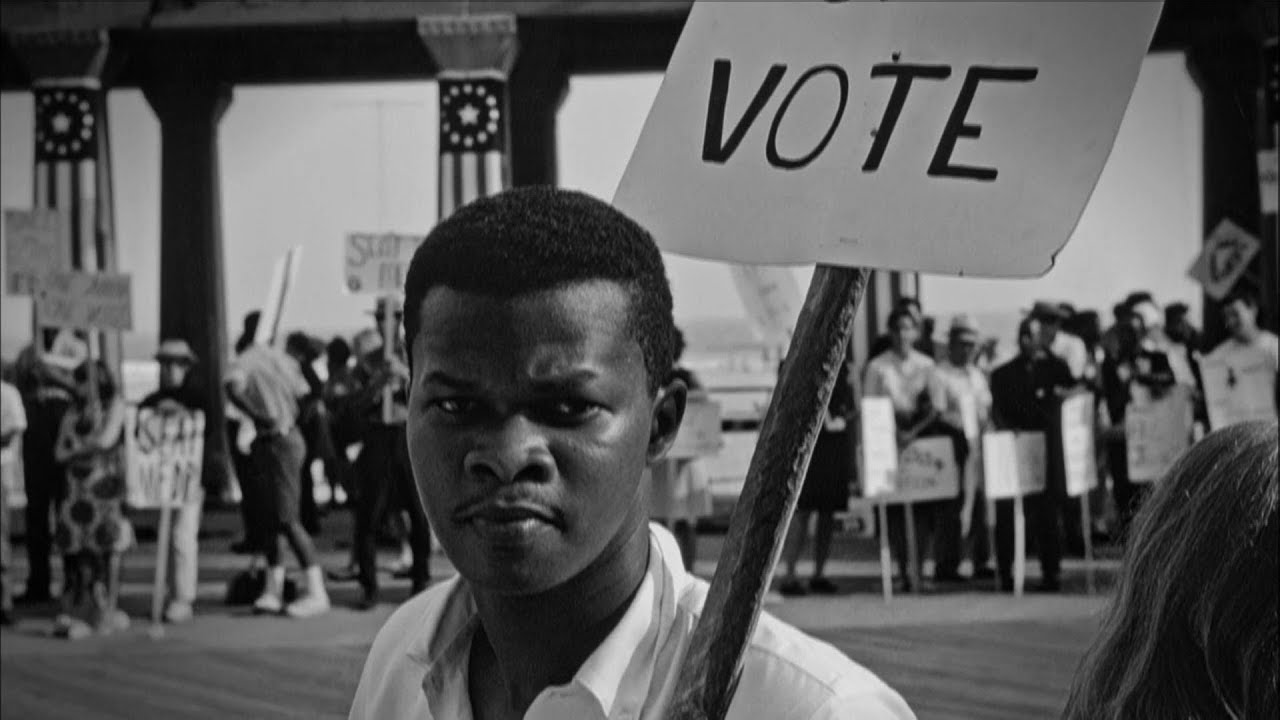
(1964 voter registration demonstration in MIssissippi)

Greg Iles’ fourth novel in his Penn Cage series, NATCHEZ BURNING takes the reader back to a time period in American history when the civil rights movement was gaining its footing expressing the needs of black Americans as they had to deal with the daily injustices and violence that existed in large segments of American society.  Denied their rights as citizens, black Americans turned to organizing themselves for political action which did not sit well, particularly in the Deep South.  Iles begins his story in 1964 in a Louisiana parish where Klansman burned down the music store of a black citizen, and murder its owner, and a young man suspected of dating the richest man in the parish’s daughter.  At this point the leader of the KKK faction decides that the Klan was not going far enough to maintain “white society” and form their own more radical and violent faction labeling it “the wrecking crew,” made up of World War II and Korean War veterans who were facile with explosives and weapons.  As usual Iles’ mastery of American history stands out as he weaves in historical events as Klan members discuss the killing of three northern civil rights workers in Philadelphia, MS, the training of Cuban refugees for the Bay of Pigs, and commentary about the assassination of John F. Kennedy, and plans to kill Martin Luther King, and possibly Robert F. Kennedy.  Iles flashes forward to 1968 and we learn that the “wrecking crew,” named, “Double Eagle” carried out the murder of a former navy and civil rights worker who is working to register black voters in Mississippi, among eleven others.  In addition, the Klansman have gang raped his sister, who happens to be Violet Turner, Penn Cage’s father, Dr. Tom Cages’ nurse.

As the reader becomes more engrossed in the plot, Iles’ pushes forward to 2005 and a phone call from Natchez, MS District Attorney, Shadrack Johnson who despises, Penn Cage, now mayor of Natchez, and informs him that his father is being accused of carrying out the physician assisted suicide of Violet Turner.  Cage, aware of his history with Johnson is wary, but once convinced the threat is real as Turner’s son, a Chicago attorney, wants to prosecute Dr. Cage, Penn confronts his father whether the charges are accurate.  Dr. Cage refuses to answer questions and cooperate and the reader wonders what do events dating back to the 1960s have to do with the charge against Dr. Cage.  Iles, as he has done in all his previous novels has lured the reader into his story through the characters he develops, a number of which have appeared in previous novels.  Iles has the knack to fill in events from previous books so the reader is brought up to speed so references to earlier situations make sense.  Now that the reader is hooked, Iles takes the reader on an interesting journey as the plot unfolds.

The plot itself is very complex involving a corrupt and savage billionaire named Brody Royal who had strong links to mafia types like Carlo Marcello and Santo Traficante; Royal’s son-in-law, Randall Regan, a violent and sadistic killer; the Knox family, that includes Forrest Knox, the Director of Louisiana State Police Investigation Bureau; Claude Devereux, the lawyer for the “Double Eagles; Henry Sexton, a local newspaperman who has been tracking the civil rights murders for decades, and numerous savory and unsavory characters.  Iles provides a wonderful history of Natchez, MI as well as an overview of the corruption of Louisiana politics.  A number of racist and crooked characters from the past are mentioned including former governor, Edwin Edwards and white supremacist, David Duke.  Iles’ integration of the history of the region is highlighted by Hurricane Katrina as we witness the devastation of the storm and the attempt by Brody Royal and his henchmen to rebuild the city in their own image by forcing blacks citizens out of areas destroyed by the storm, and implementing the reconstruction of valuable real estate to remake the city of New Orleans.

The core of the novel centers on Penn Cage’s crisis of conscience in dealing with his father, a man who he respects greatly.  Penn has difficulty accepting the accusations against his father and what it is doing to his family, but Tom Cage has grown very recalcitrant as he refuses to cooperate with his son’s inquiries.  The question at the forefront is what is Tom Cage hiding, and how can his son save him from himself.  Along the way witnesses to the civil rights murders of the 1960s die off, and others disappear as Penn gathers his forces and assets to try and vindicate a father.  For Penn, the most ethical man he had ever known may have withheld critical evidence for over forty years, and he begins to wonder whether his father’s life story may have been a lie.

The book never disappoints, and despite its length (it is almost 800 pages) it keeps the reader riveted to their seats and wanting to push further and further to see how all the corruption and murder that are discussed come together and work themselves out.  What is important about Iles’ effort is that it exposes the racial hatreds that dominated the south for what seems like an eternity.  It provides the book’s audience with an audacious history from a period that many would like to forget; in addition to the motives, weaknesses, and strengths of the characters portrayed.  NATCHEZ BURNING is a powerful story that will continue in the second installment of Iles’ trilogy, THE BONE TREE.

(Freedom Summer, 1964 Mississippi)

THE GEORGETOWN SET: FRIENDS AND RIVALS IN COLD WAR WASHINGTON by Greg Herken

(Joseph and Stewart Alsop,  journalists who greatly impacted American foreign policy during the Cold War)

When one discusses the value of real estate one usually encounters the phrase “location, location, location.”  This could be the theme of Greg Herken’s THE GEORGETOWN SET: FRIENDS AND RIVALS IN COLD WAR WASHINGTON, a book centered on a Georgetown, Washington, D.C. neighborhood after World War II, whose residents included the Alsop brothers, Jack and Jaqueline Kennedy, Ben and Tony Bradlee, Allen and Clover Dulles, Dean and Alice Acheson, Philp and Katherine Graham, Averill and Marie Harriman, Frank and Polly Wisner among others.  Within the group you had a future president and Secretary of State, the head of the CIA and other operatives, two ambassadors to the Soviet Union, influential journalists, and the owner and editor of the Washington Post. The neighbors who were known as the “Georgetown Set,” were at the forefront of American policy as the Cold War began and evolved, as Dean Acheson entitled his memoirs, they were PRESENT AT CREATION, and a few of them lived to see the curtain fall on the conflict with the communist world.  These individuals were not only neighbors, for the most part, they were close friends.  They had attended the same boarding schools and universities and “believed that the United States had the power—and the moral obligation—to oppose tyranny and stand up of the world’s underdogs.”  They held a sense of duty and the belief in the “rightness of the country and its causes—which were, more often than not, their own.”

Unlike today, it was a time of consensus in foreign policy in dealing with the Soviet Union, partisanship was an afterthought.  The outset of the Cold War produced the Marshall Plan, the Truman Doctrine, Point Four, and NATO, but the mindset of these individuals would also lead to mistakes embodied in the disastrous coups of the Eisenhower era, the Bay of Pigs, and the Vietnam War.  Greg Herken tells the story of these influential people, how their ideas dominated American policy, and what the ramifications of that influence were.  The reader is exposed to intimate details and tremendous insights as these power brokers are examined, and it makes for a fascinating read.

(Katharine Graham, owner and editor of the Washington Post)

The narrative focuses on the most important foreign policy debates of the 20th century, where the residents of Georgetown aligned themselves, and how their views affected the success or failure of presidential decision making.  Once the Nazis and the Japanese were defeated in 1945, the foreign policy debate focused on the communist threat and the motives of the Soviet Union.  The debate was symbolized by George Kennan, who at one point was head of the Policy Planning Staff in the State Department as well as stints as ambassador to the Soviet Union and Yugoslavia; and Paul Nitze, former Secretary of the Navy, and author of NSC-68 which along with Kennan’s “X Article” formed the basis of American policy toward Russia for well into the 1980s.  The debate centered on “whether it was America’s moral example or material power that kept the Russians at bay” during the Cold War.   Many other individuals draw Herken’s discerning eye during the period, the most important of which were Joseph and Stewart Alsop, the journalism brothers who advised presidents, and helped articulate positions on Vietnam and Cuba that some would argue pushed our nation’s chief executives into making unwise policy choices.

At times the book reads like a biography of the Alsop brothers as Herken develops their careers as the centerpiece of the monograph.  Of the two, Joseph Alsop dominated their relationship and developed numerous sources within the national security apparatus in presidential administrations from Truman through Nixon.  Joseph Alsop had his own agenda and his columns created enough pressure on Lyndon Johnson that many believe forced him to consider Alsop’s readership when making decisions about Vietnam, a subject that Alsop seemed obsessed with and had difficulty accepting any information that contradicted what he believed.  The Alsops hosted numerous dinner parties that were used as conduits to different presidential administrations as conversations yielded information that turned up in their newspaper columns.  Herken almost makes the reader as if they are invited guests to the Sunday night gatherings among the “Georgetown Set” and at times the reader might feel like a “fly on the wall” as you witness history being made.  In addition to the Alsops, the inner sanctum of the Washington Post is laid bare as great events are reported.  We see the newspaper under the stewardship of Philip Graham at the outset of the Cold War until his suicide, when his wife Katharine takes the reigns of the paper and turns it into a strong competitor to the New York Times. Reporting on Watergate, My Lai and other issues reflected Katharine Graham’s growth as the head of a major newspaper and her dominant role in Washington politics.

(Frank Wisner II, the son of an OSS and CIA operative who developed and implemented numerous covert operations during the Cold War.  Wisner II developed his own diplomatic career and did not follow the career path of his father)

The book also centers on the evolution of the American intelligence community from the Office of Strategic Services (OSS) during World War II to the creation of the Central Intelligence Agency (CIA).  Herken focuses most of his attention on Allen W. Dulles, who worked under Wild Bill Donavan who headed the OSS, and would later head the CIA under President Eisenhower and for a short time under John F. Kennedy; and Frank Wisner, an OSS and CIA operative who was known for his outlandish covert plans, i.e.; trying to overthrow the government of Albania, dropping propaganda leaflets and intelligence operatives behind the “iron curtain” among many of his projects.  CIA involvement in Vietnam, Iran, Cuba, and Guatemala are dissected in detail and Herken correctly points to current issues that date back to Dulles, Wisner, and numerous other individuals in the intelligence community, and how they negatively affected American foreign policy for decades.

(President John F. Kenndy and First Lady Jacqueline Kennedy were frequent visitors in the “salons” of Georgetown)

The books serves as an important window into the lives of people who dominated the American foreign policy establishment throughout the Cold War.  Herken seems to assess all of the major decisions that were made during the period, as well as evaluating each of the characters presented and how their lives affected the course of American history.  Many of the individuals that Herken discusses are well known, but others are brought out of the shadows.  One of the most interesting aspects of the book is when Herken muses about the lives of the children of the “Georgetown Set,” and how the generation gap that developed in response to the civil rights and anti-war movements of the 1960s affected the next “Georgetown” generation.

Herken writes with flair and has exceptional command of his material and sources and has offered a unique approach to the causes and results of the Cold War that should satisfy academics as well as the general reader.

THE CHURCHILL FACTOR: HOW ONE MAN MADE HISTORY by Boris Johnson

(English Prime Minister Winston Churchill, August 27, 1941)

If you are looking for a personal, breezy hagiography of Winston Churchill then Boris Johnson’s THE CHURCHILL FACTOR: HOW ONE MAN MADE HISTORY will be of interest.  Johnson’s effort is not a traditional biography of the former occupant of 10 Downing Street, but a manifesto imploring the reader to consider the genius and greatness of Churchill.  Johnson is concerned that as time has passed fewer and fewer of the non-World War II generation have forgotten or are not aware of Churchill’s accomplishments as he states at the outset “we are losing those who can remember the sound of his voice, and I worry that we are in danger….of forgetting the scale of what he did.”  For the author, World War II would have been lost, if not for Churchill, and he further argues that the resident of Chartwell House and Blenheim Palace saved civilization and proved that one man can change history.

Johnson’s writing is very entertaining.  His phrasing is both humorous and poignant, i.e., “the French were possessed of an origami army! They just keep folding with almost magical speed.”  In his description of Churchill, he looked “like some burley and hung over butler from the set of Downton Abbey.  However, aside from the humor presented, Johnson has a serious purpose as he seems to want to align himself with Churchill as a means of furthering his own political career.  The question is what do we make of Johnson’s THE CHURCHILL FACTOR?  Many who are familiar with Johnson’s career can foresee this Member of Parliament, mayor of London, former editor of The Spectator, and columnist for the Daily Telegraph pursuing the leadership of the Conservative Party, and at some point attaining the position of Prime Minister.  By manipulating Churchill’s legacy as a comparison to certain aspects of his own life, Johnson may have hit upon a vehicle for his own political ascendency.  Johnson suggests certain similarities with his hero, but then upon reflection he negates them, but for those who are familiar with the British political system, Johnson’s ambitions are clear.

Johnson’s thesis rests on rehabilitating the less savory aspects of Churchill’s personality and politics, at the same time presenting him as the genius who saved the world from Nazism.  Johnson strongly suggests when reviewing the political choices that existed in England as the Dunkirk rescue was ongoing in May, 1940 there was no alternative to Churchill.  Neville Chamberlain and Lord Halifax were both appeasers and wanted to make a separate peace with Germany.  Johnson reviews Churchill’s career as a journalist, soldier, and social reformer to reflect on his preparation for taking on Hitler, and does not find him wanting in any area.  The author tackles the opposition to Churchill within the Conservative party and why he was a lightning rod for his opponents.  Johnson explains why he was so despised by many head on.  He argues that Churchill, like his father Randolph, suffered from a lack of party loyalty and we see that both followed their own path when it came to shifting parties and then returning to the conservative fold.  In addition, Churchill helped bring on ill will by always being a self-promoter and political opportunist.  Churchill made a number of errors during World War I and later, in his career.   The following come to mind: the fiasco at Antwerp in October, 1914, and Gallipoli in September, 1915 that forced many to question his ability as a military strategist when he was First Lord of their Admiralty. Further, Churchill’s ill-fated plan to block the Bolshevik victory in Russia after World War I, as well as fighting to prevent Indian self-government where not well thought out.  Lastly, Churchill’s support for Edward VIII’s desire for a divorce and forfeiture of his throne angered many conservative back benchers.

(Churchill’s March 5, 1946 “Iron Curtain Speech” at Westminster College, Fulton, MO)

Johnson presents Churchill’s bonifedes as a military leader by spending a good amount of time reflecting on Churchill’s bravery.  He discusses Churchill’s love of planes and desire to develop an air force.  He reviews his combat experience in the Sudan, the Boer War, India and the trenches of World War I.  He concludes that Churchill’s own personal bravery allowed him to ask whether other candidates in 1940 had the experience and demeanor to lead England against the Nazis.  Johnson also tackles some of the negative charges against Churchill.  For Johnson, Churchill is a social reformer in the context of being a capitalist and a free trader.  He argues that next to his mentor, Lloyd George, Churchill had great concern for workers and the lower classes.  For Churchill, workers were the bedrock of the British Empire and without them the empire would collapse.  Johnson points to Churchill’s championing of Labour exchanges, a Trade Board Bill to enforce minimum wages for certain jobs, unemployment insurance with worker, government and employer contributions, a 20% tax on land sales in order to fund progressive programs and redistribute wealth.  Churchill was concerned that if the needs of the workers were not met, unrest could “scuttle” British power overseas.  One might argue that Churchill was somewhat of a hypocrite based on some of his racist and imperialist goals, Johnson would say that he was nothing more than being politically pragmatic.  Perhaps Churchill’s “compassionate conservatism” was years ahead of George W. Bush.

The author rests much of his argument on Churchill’s amazing work ethic and the motor of his exceptional brain.  Johnson offers a great deal of evidence to support his claim, i.e., Churchill’s prodigious writing that earned him a Nobel Peace Prize for Literature at the age of seventy-five.  Churchill’s work developing tank technology during World War I, his role in creating the boundaries for the Middle East, the partition of Ireland, and diplomacy during World War II to save England from the Nazis and rallying his own people.   Lastly, the use of his personal charm to “drag” the United States into World War II.  Once out of power Churchill sought to warn the west about Stalinist expansionism.  His “Iron Curtain” speech in 1946 made public his concerns, but Churchill had internally warned his cabinet and FDR at least a year earlier.  As in the 1930s when he warned about Nazism, as World War II came to a close he was seen as a war mongerer by many.  Despite the fact that he was correct in both cases, this did not help him politically at home or in his relationship with President Truman, as he was soon out of office.  Once he returned to power in 1951, and with the death of Stalin in 1953, Churchill worked for a summit of the great powers as he was deathly afraid of a thermonuclear war.  Though he did not achieve his goal, after he left office for good in 1955, a four power summit did take place.  For Johnson, in the end, Churchill’s ideas prevailed, from his speech in Fulton, MO in 1946 to the final collapse of the Berlin Wall in 1989.  Churchill had called for rapprochement between France and Germany, and a united Europe all of which was eventually achieved.

(Cairo Conference, 1921, Churchill is on the left, Gertrude Bell in the center, and T.E. Lawrence on the right)

One of the major blemishes that exists in dealing with Churchill’s career lies in the sands of the Middle East.  As Colonial Secretary he had to undue the negative results of the Hussein-McMahon Correspondence, the Sykes-Picot Agreement, and the Balfour Declaration all issued during World War I making very contradictory promises that Johnson describes as “Britain sold the same camel three times.”  The story of the Cairo Conference and Churchill’s influence on the creation of Iraq, Transjordan, Syria, and Palestine has been told many times, but even Johnson must acknowledge that what Churchill had created, though it lasted for decades was bound to come a cropper.  Further Churchill’s optimism concerning Jewish-Palestinian relations was ill-conceived.  Johnson, as his want, does not blame Churchill, but the selfishness of both sides, particularly the lack of Arab leadership, a rationalization to deflect away from Churchill anything the author finds unacceptable.     Despite his errors the author proposes that Churchill, even in old age, was a man ahead of his times, and based on his amazing career who is to say that Johnson was wrong.

(Potsdam Conference, July, 1945, Churchill, Truman, and Stalin)

Perhaps the major criticism one can offer is how the author presents his material.  I for one enjoy objective biography, not subjective hero worship, particularly when there are so many instances of a lack of source material to support the author’s conclusions.  However, if one is interested in a fast read encompassing Churchill’s entire career, Johnson’s effort could prove to be intellectually challenging, and entertaining.

OPERATION THUNDERBOLT: FLIGHT 139 AND THE RAID ON ENTEBBE AIRPORT, THE MOST AUDACIOUS HOSTAGE RESCUE MISSION IN HISTORY by Saul David

(Well wishers at Ben-Gurion Airport to welcome the return of hostages from Entebbe)

After recent events in Paris and San Bernardino the world’s heightened awareness of possible terrorist attacks has been raised ever further.  We have all heard about failed attempts to blow up airplanes by the “shoe bomber,” and the “underwear bomber,” and of course 9/11.  We live in a world where fears of flying have increased, but it is not a unique feeling as is evidenced by Saul David’s new book OPERATION THUNDERBOLT: FLIGHT 139 AND THE RAID ON ENTEBBE AIRPORT, THE MOST AUDACIOUS HOSTAGE RESCUE MISSION IN HISTORY that recounts the hijacking of Air France’s Flight 139 on June 27, 1976 originating in Tel Aviv, with a stopover in Athens and a final destination in Paris.  The flight spawned the Israeli rescue of 102 people out of an original total of 253 passengers and flight crew after the plane was diverted from Athens, where the hijackers boarded and forced the pilots to fly to Benghazi, Libya before proceeding to Entebbe Airport outside Kampala, Uganda.  The reader should remember that the hijacking of Flight 139 was not an isolated event as the 1970s witnessed terror attacks across Britain and Ireland, as well as those related to the Middle East and Africa.   At the time Uganda was led by the dictator Dr. Idi Amin Dada, a former paratrooper in the British army, who had come to power by a coup in 1971, and was in cahoots with the hijackers.    Like today, the passengers of Flight 139 were quite aware of a possible terrorist attack if the plane stopped in Athens, but like most, they threw caution to the wind resulting in the Israeli raid and the death of four of the hostages, one Israeli commando, Yoni Netanyahu, the brother of current Israeli Prime Minister Benjamin Netanyahu, 45 Ugandan soldiers and the hijackers.

(Defense Minister Shimon Peres congratulating Israeli Defense Force members for their successful raid)

The plane was seized by an offshoot of the Popular Front for the Liberation of Palestine (PFLP), a group that had pioneered the hijacking of airplanes as a means of striking Israel, which did not bode well for a passenger list dominated by Jews and Israelis. David present a day by day, and at times, hour by hour description of the hijacking allowing the reader to enter the mindset of the passengers as the plane was seized, flown to Entebbe, and their incarceration in the old terminal at the airport.  We witness the feelings and emotions of the hostages as they were separated by Jews/Israelis and others, and as they dealt with the release of 40 hostages, then another 100 or so, leaving just Jews and Israelis to face their fate.  The hostages go through many highs and lows during their detention and David provides many insights into how they tried to cope with their situation.  David takes the reader inside the Israeli government as they debated their response to terrorist demands for the release of 53 prisoners, 40 of which were held in Israel and other countries.  What emerges is a major disagreement between Israeli Prime Minister Yitzhak Rabin, who favored negotiations with the terrorists if a military response was not available, and Defense Minister Shimon Peres, who advocated for a rescue mission and no negotiations.  Rabin was placed in a quandary because he wanted to limit concessions but there was a precedent for a prisoner swap dating back to the Yom Kippur War when Israel traded imprisoned terrorists for Israeli war corpses.  Feeling the pressure of the hostage’s families, how could Israel not trade prisoners for people that were alive?

(Lt. Colonel Yoni Netanyahu, the brother of current Israeli Prime Minister, Benjamin Netanyahu, who was killed leading the raid on Entebbe)

David presents a detailed description of how the Israeli intelligence community and military ferreted out information and went about planning the rescue mission.  We meet a number of important characters led by Major Muki Bester, the head of Sayeret Matkal (the Unit), Israel’s most efficient reconnaissance unit that had previously trained Ugandan soldiers, Yoni Netanyahu, the Unit commander, Brigadier-General Dan Shomron, one of the major architects of the rescue, Lieutenant-Colonel Ehud Barak, another Unit commander and future Prime Minister of Israel among numerous others.  The major problem that military planners faced was refueling.  The Hercules C-130 airplanes needed to refuel because of the distance between Israel and Kampala, in addition, the weight of equipment and soldiers made it impossible for the planes to fly roundtrip.  After a few tense days, the Kenyan government agreed to allow the Israeli planes to refuel in Nairobi because the Mossad, Israel’s intelligence arm had foiled an attempted shoot down of an El Al airliner over Nairobi Airport, and their desire to get even with Amin who was smuggling weapons across the Kenyan-Ugandan border.  The key to the crisis came on July 2 when Amin, who enjoyed the attention, announced that the deadline for a decision regarding the prisoner swap would be extended three days while he chaired a meeting of the Organization of African Unity in Mauritius.  This gave the Israeli military a window to plan, train, and implement a rescue attempt.
(Ugandan dictator, Dr. Idi Amin Dada, who cooperated with the Palestinian and German hijackers)

David provides an almost minute by minute account of the raid from takeoff in Sharm el-Sheik at Israel’s southern tip all the way to Entebbe.  As the first Hercules landed things did not go as planned as Netanyahu insisted on taking out two Ugandan sentries, thus forgoing the element of surprise. However, the IDF was able to improvise, and in the end the raid was an overall success.  All the terrorists were killed, as were numerous Ugandan soldiers, but with five casualties, including a number of wounded.  Once the hostages were secure as part of their agreement with the Kenyan government the Israelis destroyed 11 Soviet Migs of the Ugandan air force parked in front of the old terminal as a concession to the Kenyan government for its cooperation.  Once the planes landed in Nairobi, they were refueled and the wounded were taken care of.  David provides an aftermath explaining to the reader some of the interesting ramifications of the rescue operation.  As one could have been expected the United Nations condemned Zionist aggression.  Idi Amin had Dora Bloch, an elderly hostage who had been hospitalized and was not freed, was murdered by Amin in an act of revenge.  The French worried about their position in Africa and the Arab world remained very subdued in its public statements following the operation.  Idi Amin was overthrown in 1979 and was provided with a “golden parachute” by the Saudi Arabian government.  Lastly, and most importantly it showed the world what could be done to stop terrorism, and a number of western countries developed their own version of the Unit.

Although the Entebbe raid has been explored by many books, three full length movies, and a number of documentaries, military historian, Saul David has written an engrossing narrative that encapsulates all aspects of the seizure and raid.  David interviewed numerous hostages and has full command of government sources and other materials.  The result is a carefully constructed book that reads like fiction.  The problem is that it is a true story that hopefully will not be repeated in our current climate of fear and terrorist operatives.

(Wounded Israeli hostage carried by stretcher upon arriving in Tel Aviv following the raid on Entebbe)

DISCIPLES: THE WORLD WAR II MISSIONS OF THE CIA DIRECTORS WHO FOUGHT FOR WILD BILL DONOVAN by Douglas Waller

(William Donovan, the man who headed the Office of Strategic Services  during World War II)

At a time when people are concerned with government spying on its citizens, it is useful to examine how two world wars and the Cold War led to the creation of the Central Intelligence Agency.  Douglas Waller, a former correspondent for Time and Newsweek, and the author of WILD BILL DONOVAN: THE SPYMASTER WHO CREATED THE OSS AND MODERN AMERICAN ESPIONAGE has revisited the origins of the CIA by examining the men that William Donovan trained as intelligence operatives who went on to head America’s foremost spy agency.  In his new book, DISCIPLES: THE WORLD WAR II MISSIONS OF THE CIA DIRECTORS WHO FOUGHT FOR BILL DONOVAN, Waller follows the careers of Allen W. Dulles, William Casey, Richard Helms, and William Colby, and their interactions with Donovan as their careers  culminated in Langley, Va.  When I first picked up the book I was concerned that Waller would rehash a great deal of the same material he covered in his biography of Donovan.  To my satisfaction this is not the case.  There is some repetition, but the book can stand on its own merits as Waller has written a wonderful adventure story that weaves together the experiences of the “disciples.”  Based on archival material, the most prominent secondary sources, and pertinent memoirs the book is an excellent read for spy buffs and the general public.

Waller begins the book with short biographical sketches of each individual and the similarities in their backgrounds.  Waller points out that there was a common thread that ran through Dulles, Casey, Helms, and Colby.  Each was smart, intellectual, and “voracious readers, thoughtful, and creatures of reason….these were strong, decisive, supremely confident men of action, doers who believed they could shape history rather than let it control them.”  When one follows their careers Waller’s description appears extremely accurate.  Though their personalities differed; Dulles comes across with a much larger ego who rubbed many in power the wrong way; Casey, more of an introvert who worked behind the scenes and new how to navigate the bureaucratic morass of government; Helms and Colby, more adventurous and hands on, the result of which was they all would ascend the intelligence ladder at different rates to finally emerge as leaders in their own right.  All had important relationships with Donovan; some more testy, particularly Dulles who wanted Donovan’s job as head of the Organization of Strategic Services (OSS) during World War II, but in the end they worked together and laid the foundation for America’s post war intelligence operations.

(Allen W. Dulles, headed American intelligence operations against Germany during WWII and as CIA Director under Eisenhower launched numerous covert operations)

Waller traces the career of each of the disciples and what stands out is their roles during World War II.  Donovan was charged by President Franklin D. Roosevelt to create an espionage operation during the war by choosing him as the Coordinator of Information, a position that would morph into the head of the OSS.  Waller examines the rise of Allen Dulles first, tracing his career from World War I, his experiences as a diplomat at Versailles, and his relationship with his brother, John Foster, and their law firm Sullivan and Cromwell.  Dulles emerges as a self-confident individual who sought total control of all operations. Posted to Berne, Switzerland during the war, Dulles developed important sources though he was at times over the top with his predictions.  On a number of occasions he resented Donovan, but in the end went along with his boss.  William Casey’s education as a spy began as a lawyer in the 1930s where he became an expert on the tax code dealing with War Department contracts.  This attracted Donovan interest and he would recruit Casey for the OSS in 1943.  Casey, an organizational expert was sent to London where he worked under David Bruce, and implemented a management style that would lead him to oversee intelligence assets and commando operations in France and Germany.  Richard Helms joined the navy after Pearl Harbor and worked on strategies to deal with German submarine warfare.  By 1943 he was forced into OSS Psyops and by the end of the war he was sent to London to organize operations in Germany for the post war period.  William Colby, the most liberal of the four and a supporter of FDR, studied in France in the late 1930s, witnessed the Spanish Civil War, and developed a hatred for communism.  He would become a commando during the war and showed tremendous physical courage behind enemy lines in France and Norway.

(Richard Helms after a career in intelligence dating back to WWII became CIA Director in the 1960s and was eventually fired by President Nixon)

One of the most interesting aspects of the book is how Waller introduces individuals who interacted with the OSS, and in particular the “disciples” during the war.  FBI Head, J. Edgar Hoover despised Donovan seeing him as a threat and unleashed his own agents to spy on the OSS.  We meet Julia Child, later known as “the cooking guru” for woman in the 1950s.  Along the way Arthur Goldberg emerges as a link to European labor movements, who would later serve on the Supreme Court.  British spymasters come and go throughout the book, particularly William Stephenson who at one time had an office next to Dulles in Rockefeller Center.  Fritz Kolbe, the OSS’ most important agent who allowed Dulles to penetrate the German Foreign Office in Berlin and whose work saved the lives of many allied soldiers takes a prominent role.  These and many other individuals and their own stories lend a great deal to Waller’s narrative.

(William Colby was a trained commando during World War II and parachuted into France and Norway who later became CIA Director under Richard Nixon and Gerald Ford)

Waller does a nice job showing how the careers of the “disciples” intersected with Donovan during the war.  For example, Donovan’s visitations to commando training, witnessing Colby’s preparation for parachuting into France.  Dulles and Casey intersected as both were smuggling agents into France to link up with and supply the French resistance.  Casey was in charge of monitoring commando drops like Colby’s into France.  Casey also funneled Dulles’ intelligence reports to Washington, and in a number of cases felt that they were highly exaggerated. Helms finally left for London in early 1945 and was supposed to organize Dulles’ mission for Germany, but because of Hitler’s last ditch effort in France in the Ardennes, he never carried out the assignment and wound up with Casey overseeing agents in Germany.  In fact Casey and Helms shared an apartment in London at the time!   Colby and Casey would meet at General George S. Patton’s headquarters in September, 1944 as Casey became Donovan’s eyes in Europe and eventually would replace David Bruce as head of London operations, an appointment that Dulles greatly resented.  Donovan felt that Dulles was a poor administrator and lacked the leadership skills that Casey possessed.

Waller spends a great deal of time on the actions of American commandos behind German lines.  He describes Colby’s training in detail and takes the reader along with these men as they parachute into France and Germany, exhibiting courage and discipline as they try to reinforce the French resistance, and later gather intelligence in Germany to try and bring the conflict to a faster conclusion.  Waller also spends a great deal of time discussing the infighting among the “disciples” and their private lives.  By doing so the reader gains insights into each of these men and it helps explains how their post-World War II careers would evolve into directorships of the CIA.

The final section of Waller’s narrative focuses on American intelligence policies and actions during the Cold War as the OSS evolves into the CIA and focuses its attention on the communist threat.  Once President Truman forces Donovan into retirement Dulles takes over the newly created CIA and his reputation for mismanagement will result in what Blanch Wiesen Cook, in her book DECCLASSIFIED EISENHOWER, refers to as the “coup presidency.”  Dulles would launch covert operations in Iran, Guatemala, Cuba, and the disastrous U-2 Incident, all resulting in his eventual downfall.  Dulles was succeeded by Helms, who unlike his predecessor believed in tight organizational control.  His mantra was “that there should be no surprises on his watch” and he was very popular within the agency.  Helms would be fired by Richard Nixon in part because he refused to cooperate with break-ins and cover ups associated with Watergate.  Colby’s tenure as director is most remembered for his testimony before the Church Committee in 1974 as leaked CIA documents called for congressional action.  Colby was the most politically liberal of all the “disciples” and this played a role in his cooperation with Congress which he was vilified for by Helms and Casey.  But, as Waller correctly points out his testimony probably saved the CIA from a wholesale reorganization that would have ruined its effectiveness.  The last of the “disciples,” William Casey took over the agency under Ronald Reagan and he tried to create the atmosphere that existed under his hero, William Donovan, who like his mentor “kept the door open to all ideas for operations, even the wacky ones.”  Casey wanted to recreate the can do culture of the OSS from WWII for the 1980s, focusing on the communist menace instead of the Nazis.  This would result in repeated machinations in dealing with Afghanistan, Central America, and the Iran-Contra scandal in particular.

(William Casey was a successful “spy master” during World War II who became CIA Director under Ronald Reagan)

Waller has written a fascinating account of the men who followed Donovan as leaders in American intelligence, and current implications for some of the policies they pursued.   Today we are faced with the ramifications of Edward Snowden’s leaks and issues over NSA and other surveillance.  It would be interesting to speculate how these gentlemen would respond to these issues.

(Major General William J. Donovan who led America’s intelligence operations during World War II)


INFAMY: THE SHOCKING STORY of the JAPANESE INTERNMENT IN WORLD WAR II by Richard Reeves

(The message American Japanese were confronted with after Pearl Harbor)

At a time when Donald Trump harangues the American electorate with his views on prohibiting Muslims from entering the United States in reaction to the horrific attack in San Bernardino, CA we find the Republican candidate as well as political pundits pointing to Franklin D. Roosevelt’s Executive Order 9066 which created “internment camps” for American Japanese during World War II.  If we are to accept what Trump says, then FDR’s actions set a precedent for going against the freedom of religion amendment to the United States Constitution.  With the repeated reference to the plight of American Japanese during the war on cable and network news it is propitious that veteran journalist and biographer, Richard Reeves’ latest book, Infamy: The Shocking Story of the Japanese Internment in World War II has recently been published.  The story that Reeves unveils was not a shining moment for the United States, a moment that saw the US government wait decades to apologize for, and make somewhat of a restitution (in 1988 President Reagan signed a bill paying each living survivor of the camps $20,000).  Having visited the Heart Mountain Japanese Internment camp, located outside Cody, WY this past summer I find Reeves’ approach to his topic, providing a window into what life was like for the victims of America’s racist and xenophobic policy towards its own citizens extremely important.   The author bases the core of the book on the stories of the evacuated families who “were caught between those heroes and villians” who either used the situation for their own political or economic agendas or those whose values were repulsed, who spoke out against what was occurring.

(Japanese arriving at Heart Mountain, WY  internment camp in 1942)

From Reeves’ account the reader is introduced to a number of American Japanese families as they react to the bombing of Pearl Harbor and the government’s actions against them.  First, they must deal with “white” anger that is visited upon them through violent acts and destruction of their property.  Second, after FDR issues the executive order, they are rounded up by the military and police and are sent to assembly camps for a few months until the government could build the camps that eventually would house 120, 313 inmates.  Reeves’ is correct as he develops the political process that led to the executive order, in that, as he did with America’s response to the Holocaust, FDR wanted to separate himself as much as possible from the final decision delegating responsibility to American military officials rather than taking a public role himself.  Once the ten camps were built between March and October, 1942, the inmates were moved and families had to live in barracks with no plumbing.  Reeves’ describes in detail the effect on American Japanese families; loss of dignity, loss of property, loss of self-identity, and of course loss of civil rights.  Reeves has mined memoirs, documents, and conducted numerous interviews in creating an accurate narrative of what actually happened in the camps, events leading up to internment, and what the inmates experienced following their release.

Reeves does a commendable job introducing the major political and military figures who were at the core of the story.  Lt. General John DeWitt, an army bureaucrat and former Civilian Conservation Corps organizer, a man untrained militarily for his position, but was the head of the western command of the US Army in December, 1941. DeWitt believed that “A Jap is a Jap…You can’t tell one Jap from another.”  According to Reeves, DeWitt was not an especially bright individual who usually parroted the last opinion he heard as his own.  His second in command was Captain Karl Bendetson, who changed the spelling of his last name to hide his Jewish roots, and developed the plan that would result in the internment program.  Other important individuals include California Attorney General and later Governor, Earl Warren whose racist ideas led him to support internment.  However, later in his career as Chief Justice of the United States Supreme Court he oversaw Brown v. the Board of Education of Topeka, KA decision, and headed the most liberal court in American history.  Walter Lippmann, the well-known columnist whose column of February 13, 1942 pressured FDR to act as he argued if nothing was done a surprise domestic attack would occur as the enemy within was waiting for the critical moment to act.  Eleanor Roosevelt warned that Americans should not overreact and succumb to public hysteria.  Attorney General Francis Biddle who refused to implement the plan, Secretary of the Interior, Harold Ickes fought behind the scenes against the internment program, referring to them as “fancy-named concentration camps.”  Secretary of War, Henry L. Stimson who agreed the action was unconstitutional but rationalized, as many other officials did, the camps were designed to protect American Japanese from the violence of vigilantes.  As Assistant Secretary of War John J. McCloy summed up, “If it is a question of safety of the country and the Constitution…why, the Constitution is just a scrap of paper to me.”

(The reality of internment for Japanese children)

What drove the policy was fear and greed.  Fear of a possible Japanese invasion of the West Coast, a fear that should have disappeared after the Battle of Midway in June, 1942 when the damage to the Japanese fleet was such that they could no longer threaten the West Coast.  A part from fear, was greed; as California businessmen, fisherman, and farmers resented their American Japanese, and as Reeves describes saw an opportunity to seize property and profits once internment began.  Greed also motivated regular citizens as American Japanese were forced to sell their property and possessions at ridiculously low prices when they were given only 48 hours to get ready, and were told they could only bring what they could carry.

The conditions at the outset were abhorrent as the government was not prepared to receive so many inmates.  At the outset they were sent to race tracks, fairgrounds, and livestock auction sites until camps could be built.  The description of the constant odor of horse manure and urine reflects how American Japanese citizens were treated.  The program was instituted to prevent a “fifth column” of Japanese from hurting the war effort, but as historians have found, none ever existed.  To the credit of the inmates they did their best to show what patriotic Americans they were by dutifully responding to government orders, and peacefully cooperating as they were being rounded up and dispatched to camps.  One of the most interesting facets of the book is Reeves’ description of how the inmates did their best to make a bad situation better as part of their contribution to the war effort.  They created a “small town” atmosphere in the camps by developing hospitals, schools, movie theaters, to improve their situation.  No matter how ill-treated the inmates were, they tried to respond positively and make as little trouble as possible.  There were dissenters, and Reeves describes the law suits and legal battles that led to Supreme Court to uphold the constitutionality of FDR’s order.  Even a civil libertarian justice like William O. Douglas supported internment.

Importantly, Reeves explores the role of the American Japanese who were either born in the US, the Nisei, and the Kibei, those born in the US, educated in Japan and had returned.  The US military had a tremendous need for Japanese linguists and the role American Japanese played in the war in the Pacific was extremely important.  The linguists were used as interrogators, “cave flushers,” (men who went into the caves that Japanese soldiers had hidden in during island warfare and tried to convince them to surrender), combat, and other areas.  Perhaps their most important contribution to the war effort was in military intelligence.  The Japanese government felt that their language was so difficult that it was impenetrable.  As a result their codes were halfheartedly developed allowing the US to break them resulting in the victory at Midway, the death of Pacific Commander Admiral Isoroku Yamamoto, the man who developed the plan and carried out the bombing of Pearl Harbor, and a number of other important victories.  Historians agree with Reeves that the intelligence contributions of these American Japanese saved American lives and perhaps shortened the war.  Another major contribution by American Japanese was as soldiers as the war progressed.  By 1943 they were seen as a solution to some manpower issues and the government began to encourage enlistment and later a draft.   Inmates were hesitant because of how they and their families were treated, in addition to the loyalty oaths they were expected to sign.  In all, 25,778 Nisei served in the military during World War II, roughly 13,500 from the mainland and the remainder from Hawaii.  Of that figure 18, 143 received combat decorations.  Between the 442nd  Regimental Combat Team that excelled in northern Italy and France, success as pilots, and their intelligence work, they made an important contribution to the war effort despite how they were despised by so many.

Another area that stands out is Reeves’ discussion as to how the inmates reacted once they were finally released.  Many felt they had nowhere to go as they realized returning to their homes and businesses on the West Coast was very problematical.  Others, mostly elderly, did not want to leave because they had settled into camp life, and the fact that housing, food, and comradeship were provided, as over time they began to feel more secure.  As Reeves accurately perceives it became “assisted living” for many.  Reeves does a remarkable job describing the experiences of the inmates who tried to return to the West Coast after the war, finding their property was destroyed or stolen, and being brought face to face with the remnants of the racism that had led to their incarceration.  It is interesting to note that 88% of American Japanese lived on the West Coast before the war, and after the war it declined to 70%, in a sense following FDR’s goal that the former inmates would be scattered throughout the United States after the war to avoid trouble.

(US Supreme Court Chief Justice Earl Warren)

It is important to note that six weeks after FDR’s reelection on December 18, 1944 the Supreme Court ruled that the government and the army acted constitutionally when it came to mass detention in the Korematsu case.   The day before the decision came down the government released everyone from the camps.  Interestingly, that decision had been reached a year before, but as usual for FDR, politics came first, and he would not allow the release until after his reelection.  The decision itself was predicated on a 6-3 vote supporting the mass incarceration.  Writing in dissent, Justice Frank Murphey wrote that the decision is a “legalization of racism, all residents of this nation are kin and in some way by blood and culture to a foreign land.  Yet they are primarily and necessarily a part of a new civilization of the United States.  They must be treated at all times as the heirs of the American experiment and as entitled to all of the rights and freedoms granted by the Constitution…Such exclusion goes over the very brink of constitutional power and falls into the ugly abyss of racism.” Perhaps Donald Trump should read this dissenting opinion, and Reeves splendid book before spewing his seemingly constant racist remarks.

THE HANGING GIRL by Jussi Adler-Olsen

The Hanging Girl (Department Q Series #6)

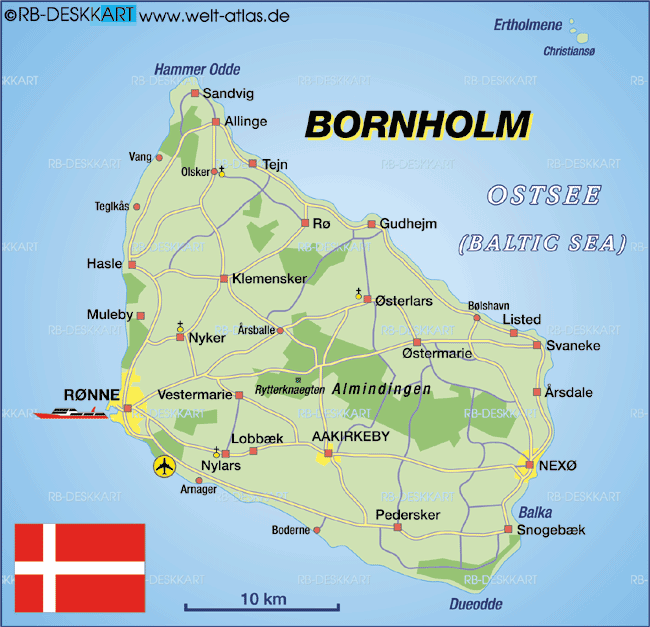
(the site where most of the novel takes place)

In his sixth installment of the adventures of Department Q, Jussi Adler-Olsen presents his main protagonist in the series, the incorrigible detective, Carl Morck with a very unusual case.  The Hanging Girl centers around the obsession of Sergeant Christian Haberstaat, a detective on the island of Borholm in Denmark.  It seems that almost two decades ago, Haberstaat found the body of a young lady, hanging from a tree branch, in what appeared to be a hit and run accident.  Haberstaat could not accept that outcome and spent years investigating what he knew was murder, sacrificing his own family and ending his marriage.  Right before his retirement party Haberstaat reached out to Morck, a former colleague, for help leaving the message, “Department Q was his last hope,” which Morck ignored.  At the retirement party, Haberstaat, again obsessed about the long forgotten murder, took out a revolver and committed suicide.  Morck, Rose, and Assad, his trusted colleagues in Department Q head to the island of Bornholm to investigate the original accident and determine whether in fact Haberstaat’s conclusion was accurate.  Upon arriving in Bornholm a number of important things occur.  First, the police really do not want to revisit the case, second, Haberstaat’s son, now thirty-five years old commits suicide, and thirdly, his ex-wife is still bitter and blames her ex-husband for her ruined life.  Once Adler-Olsen has set the stage for the novel, the plot line moves smoothly and immediately catches the interest of the reader as all the previous Department Q novels have done.

Adler-Olsen also develops a parallel plot that involves a cult figure named Atu Abanshamash Dumuzi who heads a guru type of spiritual school called the Nature Absorption Academy that recruit’s both woman, and to a lesser extent men.  One in particular emerges as very important, Wanda Phinn, a divorced former Jamaican long distance runner who was living in London and is recruited by Atu to come live on the island of Oland in Sweden.  It turns out that another woman, Pirjo, who has been working with Atu for twenty years and is very protective of him, creates an environment where any woman who she deems a threat to her position will encounter grave difficulties.

As the story evolves, Adler-Olsen integrates the latest member of Department Q, Gordon into the mix of those trying to figure out what happened to the victim that Haberstaat had tried to uncover for so many years.  Gordon, according to Morck was thrust on the group by the new Chief of Homicide, Lars Bjorn, a former colleague that Morck had clashed with many times in the past and who exiled Department Q’s offices into the basement of Police Headquarters.  It is interesting to speculate about the murder victim, Alberta Goldschmid, who grew up as an orthodox Jew, limited by a kosher diet and strict parents.  Alberta was a beautiful young lady who drew the attention of all the boys at the Folk High School, creating extreme jealousy and hatred on the part of numerous girls toward her.  It is interesting how Adler-Olsen is able to take the two major strands of the novel and bring them together.  We witness good police work, an exploration of the word of the occult, and Morck’s personal demons all interacting.

The Hanging Girl, though a strong novel in of itself, it does not measure up to Adler-Olsen’s previous work.  For example, the storyline is too drawn out.  The novel starts out strong by drawing the reader in and about a third of the way, the author seems to get bogged down in certain details that become monotonous.  However, Adler-Olsen recovers to provide a fascinating ending that will keep the reader glued to the narrative for the last fifty pages of the book.  The inclusion of the new member of the team, Gordon is not very consequential and does not bring anything to the table.  Lastly, Adler-Olsen repeatedly returns to aspects of previous novels in the series without providing enough background for the reader to understand.  It would have helped if Adler-Olsen would have provided a little more information, particularly when he tries to integrate Morck’s relations with his ex-wife and girlfriends, the shooting that took place seven years earlier that resulted in paralyzing his colleague and his own injury, and why his relationship with Lars Bjorn is so poor.

On a more positive note, Adler-Olsen continues to develop the character of Assad in a very meaningful way.  We learn further about his past life as a member of the secret police in Syria, and his character is still used as a vehicle to quash stereotypes concerning the Muslim world, including his past family life.  The growth of his relationship with Morck is also poignant, and their constant banter back and forth is a highlight of the book.  Adler-Olsen leaves us a nugget concerning Assad in that his real name might be “Said,” and this could be a building block for future novels.  Though the novel is somewhat strong in its own case, it has certain limitations, and does not measure up to the previous entries in the series.  One caveat, if you are a fan of Adler-Olsen, as I am, you will give him a pass, and hopefully when book number seven appears in the series it will return to its usual quality.