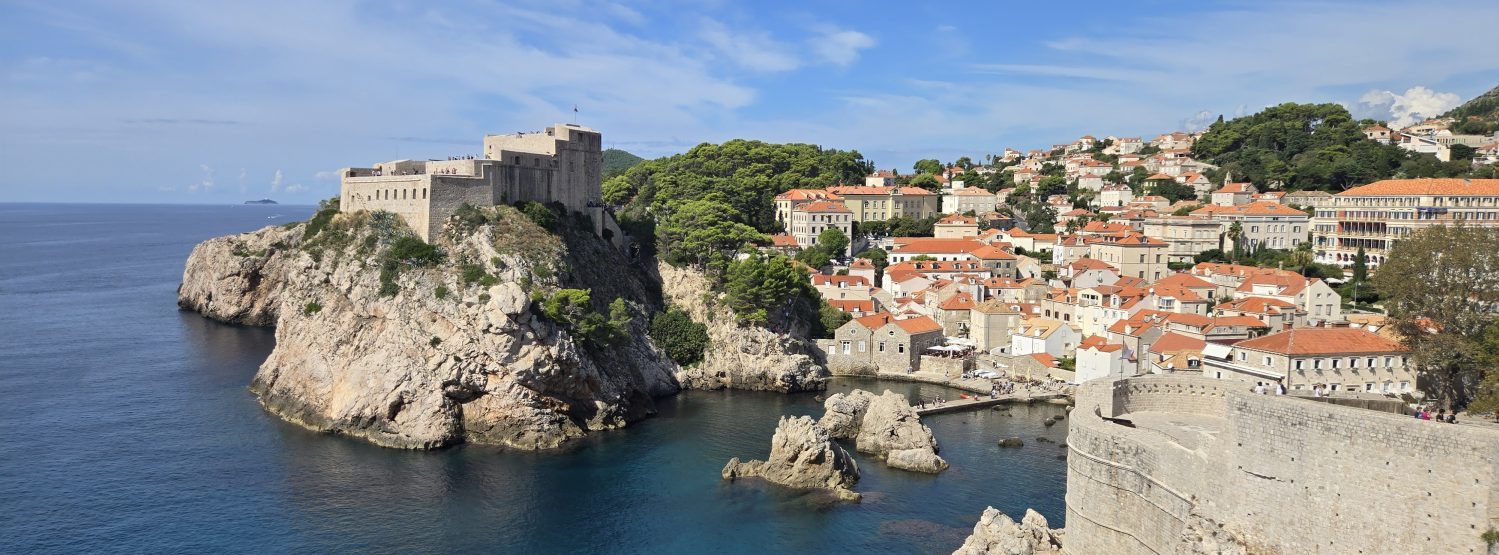
THE BOYS IN THE BOAT by Daniel James Brown

(1936 University of Washington rowers who won gold at the Berlin Olympics)

THE BOYS IN THE BOAT by Daniel James Brown is nothing short of a labor of love.  In describing the journey of the University of Washington rowing team from their blue collar origins, facing numerous financial obstacles, and confronting well funded opponents as they sought to represent the United States in the 1936 Olympic games in Berlin, the author has presented a riveting narrative that will touch the reader on many levels.  In addition to the personal stories that are described, Brown writes of the poetry that is a necessity for a rowing team to be successful.  The story is told through the eyes of many of the participants in their quest for rowing perfection, but a number of characters stand out.  The coaches;  Al Ulbrickson, a quiet taskmaster who keeps his emotions inside, his freshman coach, Tom Bolles, who develops many of the rowers; to Joe Rantz, who must overcome poverty and abandonment by his family, to George Pocock, the British craftsman who lovingly constructed the shells that the rowers would use on their way to Berlin and after.   The story begins in the Seattle area in the midst of the Great Depression and its impact on the region in general and the young men whose futures depend on making the University of Washington’s rowing team.

The story focuses on the life of Joe Rantz whose mother died of throat cancer when he was a nine and was sent to Pennsylvania to live with an aunt.  Later, his father remarries and when Joe returns to his family he does not get along with his knew step mother.  Eventually Joe’s father must make a choice between his son and his second wife and the family they were building.  After the family home burns down Joe is exiled to live in a school house away from the family for a period of time, when finally Joe’s father informs him that the family was moving away and that he had to remain and fend for himself at the age of fifteen.  For the next few years Joe employs the survival skills his father has taught him, and skills he developed on his own like poaching salmon and stealing alcohol for resale to overcome the obstacles he faces.  Finally, he is taken in by his married older brother and is able to graduate from high school and gain admittance to the University of Washington.  After being recruited by the freshman rowing coach, Joe realizes the ticket to his future was to make the rowing team.  Joe had little money and few clothes and lived in a room at the YMCA.  He took a number of menial jobs and fit them in around his studies and the torturous grind that was college rowing.  Brown follows the trials that Joe must overcome as he draws the reader into the narrative to the point that you do not want to put the book down.

I have read a number of books of the 1936 Berlin Olympics.  David Clay Large’s, THE NAZI GAMES: THE OLYMPICS OF 1936, and BERLIN GAMES: HOW THE NAZIS STOLE THE OLYMPIC DREAM by Guy Walters stand out, but Brown’s effort surpasses anything I have read for its detail, understanding the human emotion of sport, and how world events, particularly the rise of Nazi Germany impinged on the athletic stage.  Brown does a wonderful job of integrating the history of the time period into his narrative.  The reader is exposed to the devastation caused by the depression in the mid 1930s.  The unemployment and resulting poverty and their effect on families as fathers are forced to leave their children in order to seek a job elsewhere.  The Dust Bowl that blankets the Midwest at first and then destroys top soil throughout the United States resulting in the destruction of a major part of American agricultural production is reviewed in detail.  Overseas, the rise of Adolf Hitler to power is explained and the resulting violence against Gypsies, Jews, and Catholics is presented.  On a more personal level, Brown discusses the hatred between Joseph Goebbels, the Nazi Minister of Propaganda, and Leni Riefenstahl, Hitler’s chosen film maker as they fight over how the message of the Nazi ideal should be presented to the world.  The reader witnesses the laying of the foundation of what will grow into the Holocaust after the Olympic Games are completed.  The reader is made aware of the political infighting in the United States as President Roosevelt tries to deal with the problem of Nazi expansion.  In exploring these avenues, Brown places the Olympic Games in their proper historical context, and the importance of a Jesse Owens and the many athletes who sought to show Nazi racial theory for what it really was.

Apart from the personal stories of the nine men who will emerge from the rowing competitions from 1933 to 1936 in regattas such those on the Pacific coast, Poughkeepsie, New York, and the Olympic trials in Princeton, New Jersey what truly surprised me was the training that the rowers were exposed to.  I confess my knowledge of rowing is nil, but after reading Brown’s narrative I at least have some understanding of what the athletes went through.  The author’s description of “pain” cuts to the core of what these men accomplished.  For Brown the common denominator for the rower is that pain is “part and parcel” of the learning experience.  “It’s not a question of whether you will hurt, or how much you will hurt; it’s a question of what you will do, and how well you will do it, while pain has her wanton way with you.” (40) Brown’s discussion of the mechanics of rowing is important for the novice reader to understand what it means to have a successful “boat.”  In the case of the University of Washington’s first boat, “every one of them had come from humble origins or had been humbled by the ravages of the hard times in which they had grown up.  Each in his own way had learned that nothing could be taken for granted in life…..The challenges they had faced together had taught them humility—the need to subsume their individual egos for the sake of the boat as a whole—humility was the common gateway through which they were able to come together and begin to do what they had not been able to do before.” (241)
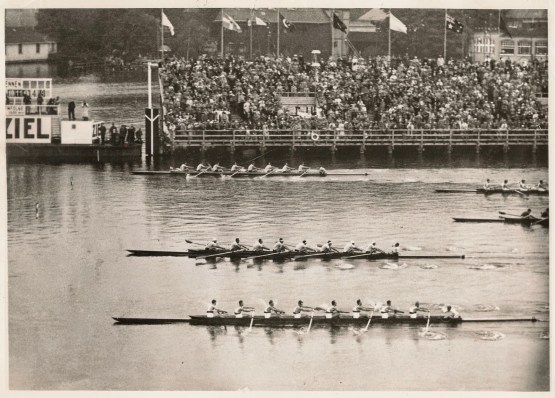
(US rowers win gold at the 1936 Berlin Olympic games)

The unbelievable demands of training, the fear of not having enough money for tuition each semester, feeling of anxiety, were among the many things that each rower had to overcome.  They knew the odds were stacked against them as their chief western competitor; the University of California had better facilities and financial support as did the eastern Ivy League schools.  Brown raises the important issue of social class in explaining the opponents the rowers had to contend with.  The ivy rowers mostly came from prep schools, had parents who were bankers and lawyers, and did not have to worry about their futures.  On the other hand, as Brown eloquently describes Joe Rantz and his team mates were blue collar in origin, and poverty was their life’s norm.  Brown’s rendition of the important characters in his narrative is sensitive and honest and as the story progresses the reader is rooting for “U Wash,” and as the author explains strategy, motivation, and the details of each race you feel as if you are sitting in the shell with the rowers, or you are inside the head of Bobby Moch, the coxswain, planning his next move as the rowing process has a very important cerebral component.

The author presents the pageantry and ostentation that was the 1936 Nazi Olympics in great detail.  He describes the hiding of any evidence of what Nazism was in reality; from removing the Gypsies, to taking down all evidence of anti-Semitism, and the vicious articles in the Nazi newspaper Der Sturmer, magically disappearing.  Brown describes the first six rowing competitions in which the Germans won five gold medals.  He reserves his best for the final race involving the nine on nine competition that all looked forward to.  It is interesting how the US boat was placed in the worst lane, when having won the preliminary race they should have had the best one.  Needless to say, the US rowers were at a disadvantage from the outset.  Brown’s overall description of the race is amazing as the reader can hear his voice as if he were rendering the race’s description vocally as a play by play on the radio that millions across America were listening to.  The US would win the race by six-tenths of a second over Italy and one second over Germany as Hitler stood up and immediately walked out.  After reading Brown’s rendition of the race I immediately found a You Tube film on my lap top and watched the emotion of the rowers at the race’s conclusion over and over.  THE BOYS IN THE BOAT is a wonderful story, and what makes it better is that it is shows the triumph of the human spirit and though it is a “sports” book, it is one that can be enjoyed by all.

THE HEIST by Daniel Silva

CaravaggioContarelli.jpg

(Caravaggio’s, “The Calling of St. Matthew,” 1599-1600)

It seems that each time a Daniel Silva novel involving Gabriel Allon, the master art restorer/Israeli special operations practitioner is published conflict in the Middle East region flares to a new level.  This summer is no exception as Israel trades rockets with Hamas in Gaza; ICIS has taken over large swaths of territory in Syria and Iraq, and the mass killings by the Assad regime in Syria continues.  Silva’s current volume, THE HEIST is a typical Allon yarn with periodic references to world events interspersed.  The book opens with the murder of a former British spy turned art middleman named Jack Bradshaw whose body is found in Lake Como, Italy by one of Allon’s circle of friends, the London art impresario, Julian Isherwood.  From that point on the plot is a bit different from the normal Allon escapade.  It centers on an art scam concocted by Allon to recover the Italian Renaissance painting, Nativity with St. Francis and St. Lawrence, by Michelangelo Merisi da Caravaggio.  As the initial plot unfolds characters from previous novels make their appearance, some with major roles.  Those familiar with previous works by Silva will recognize the assassin, Christopher Keller; Don Aton Orsati, the Corsican mobster; and the Swiss NDB counterterrorism expert, Christoph Bittel.  After reading about two-fifths of the novel the first plot comes to a conclusion and we are exposed to the second that is more in line with the previous formula used by Silva in his Allon series.

(the carnage that is the current civil war in Syria)

During the first part of the novel the reader is exposed to the underworld of the high end art trade that exists, particularly in Europe.  Allon emerges from this section of the story uncovering an ingenious way to preserve wealth that leads to the Assad family in Syria.  Silva’s thesis, based on significant contemporary research seems quite accurate, that the Assad family and their allies have hidden billions of dollars in wealth in banks in many parts of the world.  Realizing that some of this wealth has been frozen by certain governments and more might be in the future, the Assad dynasty uses stolen art as a hedge against any future loss of wealth that might detract from any exile should the dictator of Damascus be overthrown.  At the conclusion of the first plot, Allon realizes that art is a conduit to Assad’s wealth and he has squirreled away billions of Euros across the globe.  Allon designs an intricate sting to try and make Assad’s wealth vanish.  The usual suspects make up Allon’s team; again many have appeared in previous novels.  We welcome Eli Lavon, now an archeologist; Uzi Navot, soon to be replaced as the head of Israeli intelligence; Allon’s now pregnant wife, Chiara; Viktor Orlov, the London based former Russian oligarch; and Nigel Whitcomb and Graham Seymour, both of MI6 among others.  There are a number of new characters as Silva weaves his way through the underside of the European banking system and the intricacies of Syrian intelligence.

It took me a little longer than usual to get hooked on Silva’s plot line, but once I did it kept me in its grip.  To Silva’s credit, he avails himself of any chance to integrate the true background history of the story whenever he can.  In introducing the character of Jihan Nawaz whose family was killed by the regime of Hafez al-Assad in the massacre of Hama in 1982, Silva provides a mimi-biography of the dictator who ruled Syria from 1970 to his death in 2000 and his attempt to wipe out the Moslem Brotherhood who opposed his regime.  When speaking about Russian support for the current leader of Syria, Bashir al-Assad, Silva explains the Russian-Syrian connection and the role of Putin, and the recent Russian seizure of the Crimea.  In fact, had Silva waited a few months and postponed publication he could have worked in further developments in the ongoing Syrian civil war and Putin’s attempts to seize eastern Ukraine and his role in the downing of the Malaysian passenger air plane a few weeks ago.  If you have followed the previous thirteen Allon mysteries, the current episode should be satisfying, but I wonder after fourteen books if Silva’s formula is becoming a little stale.

WARBURG IN ROME by James Carroll

(Vatican City, Italy)

As a person who has enjoyed James Carroll’s work over the years whether he was presenting his history of the Church and Jews in CONSTANTINE’S SWORD; the difficulties of a father and son relationship during the Vietnam War in AN AMERICAN REQUIEM; or an exploration of the Pentagon and the expansion of American power in HOUSE OF WAR, I have grown to expect an absorbing read each time I pick up one of his books.  Carroll, who is an ordained Catholic priest who left the priesthood to become a writer, is also a novelist and his newest book, WARBURG IN ROME did not disappoint.  Carroll’s historical research and clerical background allowed him to explore numerous plots in his latest effort as he struggled with the role of the Catholic Church and its bureaucracy during and after World War II.   The story centers on David Warburg, a Yale University trained lawyer who worked in the Treasury Department and is assigned to head the War Refugee Board (WRB) in Rome in 1943.  We learn that the reason Secretary of the Treasury, Robert Morgenthau, Jr. appointed him was that he believed he was part of the Jewish Warburg banking family which would solve a number of political problems for the Roosevelt administration.  The fact is Warburg is from Burlington, VT which came as a surprise to many politicians and bureaucrats.  Since the appointment could not be withdrawn, the New England as opposed to the New York Warburg headed off to Rome to facilitate the removal of Jews from Nazi extermination camps.

The title WARBURG IN ROME is a misnomer as there are a number of characters who are as important to Carroll’s story as the new head of the WRB.  The story traces Warburg’s own personal voyage of faith and rediscovering his Jewish roots.  Driven by the world’s insensitivity to the plight of thousands of Jews who remained in European deportation camps following the war; with Palestine closed by the British, the United States closed by the State Department, Warburg’s journey progresses from casting his father’s tallit to opening his heart to a new found Judaism.  Warburg resigns from the WRB and begins working illicitly with the Jewish Defense Committee to break the “ratline” that Himmler had set up to assist Nazi higher ups attempted to flee Europe and reach Argentina.  Marguerite d’Erasmo in 1943 was the head of the Women’s and Children’s Committee for Italy.  After the Nazis seized Rome after Mussolini fell she worked in Red Cross refugee camps and hid records of Jews the remainder of the war to save them from extermination.  D’Erasmo personal voyage is as important as Warburg’s.  Her journey begins as a devout Catholic in Rome, morphing into a partisan fighter in Yugoslavia.  After witnessing the horrors of Croatian anti-Semitism and murder, she goes on to try and save women and children in a Nazi detention camp.  Failing to free these people from the grip of the Nazis she moves to Palestine and converts to Judaism.  Upon her return to Rome she gather’s intelligence to block Himmler’s escape route from Vienna, through Rome, on to Argentina using the Vatican as its conduit.  Other characters emerge that are part of the novel’s core; Father Kevin Deane, sent by Archbishop Spellman of New York to Rome to oversee aid to refugees.  Giacomo Lionni, a partisan fighter in the Balkans nicknamed, “Jocko” devotes his life to saving Jews. General Peter Masters, at the outset a friend of Warburg, works at cross purposes with the WRB as he represents American intelligence agencies that are cooperating with the Vatican, Nazis, and Croats against the Soviet Union as relations with Stalin continued to deteriorate.  There are a number of characters who are part of the Vatican bureaucracy, Monsignor Tardini, the Director of the Pontifical Relief Committee, Cardinal Maglione, the pro-Nazi Secretary of State for the Vatican, and of course, Pope Pius XII who hated communism and did not want a victory against Hitler to be turned into a defeat by Stalin.


Carroll’s novel spends a great deal of time exploring the role of the Vatican after World War II.  The church did hide and assist many Jews, but it also hid many Nazis and facilitated their escape from allied hands.  The church was vehemently anti-communist and was involved in trying to over turn the allied policy of “unconditional surrender,” and make a separate peace with Germany in order to restore a Catholic Danubian Federation under the Hapsburgs as a bulwark against communism.  After the federation failed, the church worked to restore members of the Ustashe, the Croat Nazis to power in a new Catholic Croatian state that would be anti-Tito.  What stands out in Carroll’s narrative and dialogue between characters is that the reader is witnessing history and in a sense what the author has created is a history of the refugee crisis, the flight of the Nazis, and Vatican machinations to create an anti-communist coalition during and after World War II wrapped up in a novel.  Carroll’s book is sound historically and reflects tremendous research and through his characters presents the dilemmas facing allied policymakers after World War II in coping with the remnants of the Holocaust and how to deal with an emerging world power in the Soviet Union.

(Heinrich Himmler, the mentor for Father Ricardo Lehmann)

Carroll does a splendid job exploring the contradictions and diverse viewpoints following the war.  For example, Warburg and Mates clash over the probable Irgun bombing of the British embassy in Rome following Prime Minister Atlee’s expansion of refugee camps for Jews on Cyprus, as Jews were denied entrance into Palestine.  Warburg is incensed that the WRB is shut down because of Mates’ OSS (precursor of the CIA) accused him of only working for Jews.  Mates offers the usual anti-Semitic rationale that Jews were most likely to be communist and a security risk as refugees, so they should not be allowed into the United States or Palestine.  Understanding Carroll’s storyline is like peeling an onion as layer after layer of the plot and the background of each character is laid bare.  We see Father Ricardo Lehmann, a German priest assigned to the Vatican whose mentor was Heinrich Himmler.  Following Himmler’s suicide Lehmann works to maintain the “road out” using Vatican documents that allowed Nazi war criminals to travel from Vienna to Buenos Aires, with an assist from the Croatian Catholic network of Franciscan monks.

(Father Maglione, Vatican Secretary of State who assisted Nazis fleeing Europe after World War II)

The story itself presents numerous moral decisions that characters must make, decisions that in real life have been explored by historians for decades to try and ascertain the true motivation of historical figures during and after the Holocaust.  Carroll makes a valiant attempt at doing so through his own characters as he has done in previous works of non-fiction.  As the story draws to a close, Father Deane realizes that because of Vatican machinations many church officials were “in bed with Nazis.”  Deane tries to deal with what he has witnessed and cries out, “ Pavelic, Lehmann, Strangl the Treblinka commandant, for the love of God!  Living in our religious houses.  Nazis in monasteries and convents.  Vichy collaborators protected.  The protectors promoted.  Gestapo killers with Vatican passports.  The church welcoming them in Argentina.” (353)  He prepares a report of Vatican culpability, and he knows it will go nowhere as he must submit it to Vatican authorities, raising moral questions he cannot deal with and comes to the conclusion that the church itself is not guilty, but church officials are.  The book provokes a great deal of thought on many levels and I wondered what Vatican policy might have been during this time period, if the current head of the Papacy, Pope Francis had been in office.  WARBURG IN ROME is an exceptional read.

THE GOOD SPY: THE LIFE AND DEATH OF ROBERT AMES, by Kai Bird


(The US Embassy, Beirut, Lebanon after the bombing, April, 1983)

As I write, rockets continue to be launched from the Gaza Strip by the militant group, Hamas, and Israel continues to retaliate with massive bombing and ground forces.  As this tragedy continues to unfold, Kai Bird’s latest work that deals with the Arab-Israeli conflict, THE GOOD SPY: THE LIFE AND DEATH OF ROBERT AMES is extremely timely.  When one thinks of the CIA operatives who have impacted the Middle East, the names of Miles Copeland, Kermit Roosevelt, and William Eveland come to mind, but usually not Robert Ames.  However, when one calculates the impact of these operatives on events in the region, Ames’ name should emerge near the top of the list.    Bird, who during his teenage years was a neighbor of Ames, recounts his private and shadow life as a CIA operative in great detail, but what he has written is more than a general biography.  He places Ames’ career that encompassed the years 1962 through 1983 in the context of events throughout the Middle East concentrating on the Palestinian-Israeli Conflict and the Lebanese Civil War that raged between 1975 and 1983.  What separates Ames’ work from others who have attempted to facilitate peace in the region is that he was the individual who “brought the Palestinians in from the cold” through his relationship with Yasir Arafat’s intelligence chief, Ali Hassan Salameh. (15)  The book opens at the White House with a smiling President Clinton cajoling Yitzchak Rabin and Arafat into signing the 1993 accord granting the Palestinians a degree of self-government in Gaza and the West Bank.  Bird argues throughout that this agreement would not have been possible without Ames, and that his death during the American embassy bombing in Beirut in 1983 was a blow to the peace process because of Ames’ ability to empathize with Palestinians, gain their trust, and behind the scenes work to establish a relationship between the Palestine Liberation Organization and the US government in order to foster negotiations with Israel for a permanent peace.

During his first posting in 1962 in Dhahran, Saudi Arabia Ames became the protégé of Richard Helms who later would become the Director of the CIA.  Like Helms, Ames came to believe in human intelligence, not splashy technical operations or the application of force which tends to bring too much attention to CIA operations.  Ames wanted to remain in the “shadows” gathering intelligence from his contacts in making recommendations for policy.  For Ames “violence was usually impractical, ineffective, and costly.” (37)  In the early 1960s the CIA came to place a high value on officers who could develop human resources.  To do so they recruited agents who could remain anonymous, apply discretion and ironclad secrecy in cultivating sources.  These qualities were difficult to find, but along with “commonsensical powers of observation,” Robert Ames was the perfect operative.  Employing these skills for over two decades from postings in Saudi Arabia, Iran, Kuwait, Yemen, Lebanon, and Langley, Va., Ames developed numerous sources that allowed him to alter American Middle East policy and work to find a solution to the many conflicts in the region.

Bird does an excellent job explaining the background history of the Palestinian-Israeli Conflict as well as the Lebanese Civil War through the lives of the most important historical characters.  He focuses on many individuals but zeroes in on those who interacted with Ames the most.  The two most important people are Ali Hassan Salameh, who followed in his father’s footsteps by fighting for Palestinian statehood and eventually he was recognized as one of the top two Palestinian military commanders and the eventual successor to Yasir Arafat.  The second was Mustafa Zein, educated in the US and was a very successful business consultant in Beirut.  Zein had many contacts in the Arab world and believed he could help bridge the political and cultural divide between America and the Arabs.  Ames would develop genuine friendships with these individuals and would work behind the scenes using Zein’s contacts to foster a strong relationship with Salameh.  Bird details how Ames was able to ingratiate himself with a man so close to Arafat and once he is able to do so, what the implications of that relationship were.  Though Salameh was seen as a terrorist by the US and Israeli governments, Ames were able to convince CIA and other national security officials in Washington of the benefits of establishing some sort of tie to the PLO.   At the time the PLO was labeled a terrorist group by the US and officials were banned from having any contact with them. In the early 1970s Ames relationship with Salameh established a back channel for PLO-US communication that President Nixon and Henry Kissinger were aware of, and Arafat approved.  With the Jordanian Civil War and the formation of Black September resulting in the Munich Olympic massacre in 1972 Ames worked through Zein to establish further links with Salameh who grew distant at times when elements other than Ames within the CIA tried to officially recruit him.  Ames realized that would make Salemeh a candidate for elimination by radical elements and just wanted to maintain his “friendship” with him.  The book at times is a dual biography of Ames and Salameh and stresses how their lives interacted as each tried to use each other for the benefit of the causes they believed in.

(Robert Ames)

Bird does a superb job explaining the intricacies of the political rivalries within the Arab world and how the US could take advantage of it.  He explores the relationship between the CIA and the Israeli Mossad and the conflict that usually remained dormant between these two intelligence groups.    The Mossad resented Ames’ work with Salameh who they blamed for the Munich massacre.  On a number of occasions Ames warned his source about assassination attempts against him, in part because of his friendship, and in part because he was so integral to what Ames was trying to achieve.  As their relationship progresses it becomes clear that Ames is not objective when it came to the Palestinians.  He developed an emotional attachment to them and in a number of ways reminded me of an American version of T.E. Lawrence.  As Bird writes, “to say that Bob Ames was sympathetic to the Palestinian cause would be an understatement.  He empathized with them deeply and admired Ali Hassan to a degree that is hard to explain.  He knew that Salameh had done some terrible things” and he wrote his wife Yvonne, “It is hard to believe our friend was what he was.”  But, being that Ames was the CIA’s only conduit to the PLO he was given great latitude and to his credit usually his subjectivity was not an impediment to his work.

The most important parts of the book aside from development of the Ames-Salameh partnership was Bird’s description of the Lebanese Civil War from 1975-1983.  Bird explains the different Lebanese factions and how they came to be and how they impacted events.  Bird also explores in detail the connection between events in Lebanon and the development of a plan in the early Reagan years to use Arafat as a vehicle for peace.  Ames was directly involved in negotiating an Arafat-US rapprochement, especially after he and his fighters were forced out of southern Lebanon and were given safe haven in Tunisia.  Bird’s description of the harrowing bombing of the US embassy in Beirut in 1983 that killed Ames and the bombing of the US Marine barracks shortly thereafter are very accurate.  As he does throughout the narrative Bird relies on his firm grasp of history and numerous sources within each government and movement.

The last section of the book focuses on who might have been responsible for the various acts of terror that occurred in Lebanon and an exploration of the role of Iran and its allies in the bombings.  Bird’s conclusion is that the perpetrator of these acts is currently living comfortably in the US under CIA protection is very disturbing.  Bird also reiterates his thesis that Ames laid the ground work for the 1993 accords and conjunctures as to what might have been accomplished had Ames not perished in the 1983 embassy bombing.  Bird’s writing is crisp and his conclusions reflect a great deal of thought and are usually very accurate.  The book is an important addition to the literature of its subject, and if one would like another perspective in trying to understand what is currently presented on the news each hour, then Bird’s book is for you.

JAPAN, 1941 by Eri Hotta

(December 7, 1941, Japanese attack Pearl Harbor)

The last half of 19th century was a period when European nationalism flourished and began to spread its influence eastward.  The lessons of nationalism were absorbed in Asia, and Japan became an excellent pupil of western industrialization and expansion.  Following the Meiji Restoration of 1868, Japan slowly remade itself by emulating the west.  Unlike China, Japan had no difficulty in assimilating western institutions in order to develop into what they perceived to be a great power.  By the 1890s Japan was able to defeat China in the Sino-Japanese War, and in the following decade she surprised Russia in the Russo-Japanese War, the first time a non-white power defeated a Caucasian power.  Japan continued its program of making Asia safe for Asians and projecting themselves as a power on par with the west.  During World War I it asserted its rights to expansion with its Twenty-One Demands to gain suzerainty over parts of China, and in 1931 it invaded Manchuria and set up the “puppet state” of Manchukuo. Japan continued its attempts to dominate China in 1937 by precipitating an attack that justified an invasion.  From 1937-1941 Japan fought to defeat the nationalist forces of Chiang Kai-Shek, but despite repeated military victories it was unable to gain total control as Chiang’s army retreated into the interior.  The war in China used tremendous resources and brought Japan into conflict with the United States.  At a time when the long drawn out war in China was reaching a stalemate, why would Japan contemplate a war against the United States?  In her new book, JAPAN, 1941, Eri Hotta seeks to answer that question.

Hotta’s work is a marvelous work of historical synthesis that seeks to explain how the Japanese government reached the decision to attack the United States at Pearl Harbor on December 7, 1941.  Many are familiar with the works of Gordon Prange, Robert Stinnet, Walter Lord, Herbert Feis, and Roberta Wohlstetter.  The story has been told by many; whether from the American diplomatic viewpoint, the intelligence breakthroughs, the military story, and conspiracy theories concerning Franklin D. Roosevelt.  However, no one has attempted to mine the Japanese sources extensively and try and understand how the Japanese bureaucracy and government officials reached decisions that would ultimately result in the destruction of their country by 1945.  This is the task that Hotta takes on and with excellent command of the primary materials and the internal working of the Japanese government from 1931 onward reaches the conclusion that Japanese “leaders, after numerous official conferences, made a conscious and collaborative decision to go to war with the West.  Having talked themselves into believing that they were victims of circumstances rather than aggressors, they discarded less heroic but more rational options and hesitantly yet defiantly propelled the country on a war course.” (15)  Hotta’s conclusion is presented in a thoughtful narrative, and supported by a well reasoned thesis.

Hotta’s approach is an interesting one.  Though she devotes most of her time to discussing the bureaucratic machinations of Japanese diplomatic and military politics by integrating the major figures involved, ranging from Prime Minister Konoe Fumimaro; Tojo Hideki, who served as army minister in Konoe’s cabinet and later Prime Minister; Matsuoka Yosuke, Konoe’s Foreign Minister; Kido Koichi, Emperor Hirohito’s closest advisor; Shimada Shigetaro, navy minister; Yamamoto Isoroku, who planned the attack on Pearl Harbor; and Emperor Hirohito among many government and military officials.  The author also discusses the role of Japanese citizens outside of government service.  For example, the integration of the thoughts of the novelist Nagai Kofu, who represented, in part the anti-militarist sentiment in segments of Japanese society, providing insights into the private thoughts of Japanese citizens who were afraid to make their feelings known publicly.  The work of Richard Sorge, a German journalist based in Tokyo, who was also a Russian spy and was good friends with the German ambassador to Japan is also fascinating.  In addition, the mini-biography of Soldier U, who in 1941 in his late thirties was recalled to military service and sent to China, and later to Indo China has a story that could be a separate book in of itself.  These individuals and others present a well rounded picture of all aspects of Japanese society, as their government was privately was planning on expanding their war for control of Asia.

What separates Hotta’s work from others is that aside from presenting the Japanese viewpoint, she also includes intimate details of the rifts that existed on personal and diplomatic levels between the major players in the Japanese government, i.e.; Prime Minister Konoe and Foreign Minister Matsuoka.  The reader is given a snapshot into the decision making process as Hotta relies heavily on liaison meetings of the Japanese government throughout the book.  These meetings included the most important senior officials, both civilian and military.  She singles out the most influential figures and allows the reader to understand the reasoning behind the decision-making process of each person as debate evolved throughout 1941 as to whether war was the only option, or should diplomatic avenues have been explored further. The positions of men like Konoe, Tojo, Nagano and the bakuryo  officers, (mid-level bureaucrats who prepared most of the positions taken) are analyzed and one can witness how difficult it was to achieve any consensus on policy in this environment.  However, once a consensus was reached, no matter how convoluted the decision making process and delusionary some of the ideas of policy makers were it was almost impossible to alter or change the course toward war.  Hotta proves without a shadow of a doubt that the Japanese leadership suffered from self-delusion as they constantly came up with arguments to buttress themselves against the sound reasoning that a war against the United States was futile.  In large part, Japanese pride and belief in their own superiority led them to take such a huge national gamble.

Hotta makes many astute observations as she points out the Japanese goal of creating a Greater East Asian Co-Prosperity sphere under Tokyo’s leadership was very similar to how the United States approached the Monroe Doctrine in the Western Hemisphere.  For Japanese policy makers what was the difference between theirs and the American approach to expansion.  Further, Hotta spends a great deal of time discussing Japanese perceptions of their own inferiority visa vie the west.  They saw it through the lens of racial discrimination that clouded their judgment when making decisions.  As Alfred Adler pointed out in his studies of the inferiority complex; that people (and nations?) who perceive themselves to be inferior; to overcome that self-perception must strive to be superior.  A case in point is the reaction to a note from American Secretary of State Cordell Hull on November 27, 1941.  It was seen by Japanese leaders as a provocation and a disgrace as they felt they were being bullied and humiliated.  The note itself was taken as an ultimatum, which it was not.

(Japanese Emperor Hirohito)

Hotta is able to review the history of Japanese modernization and expansion that led to World War II very nicely, but she does it  in such a way that she able to dissect the all too human characteristics of Japanese leaders that were torn by doubt in the months preceding Pearl Harbor, but could not overcome their own need to save face, and finally pushed Japan into a war because of their own incompetence and lack of political will.  The reader should gain a great deal from reading Hotta’s narrative which is enhanced by her integration of the words of the characters she employs.  JAPAN, 1941, as of now is the best work dealing with the Japanese viewpoint and decision making process leading to war with the United States, and should remain so for a long time to come.

SUN ON FIRE by Viktor Arnar Ingolfsson


(Reykjavik, Iceland)

At first, SUN ON FIRE by Viktor Aranar Ingolfsson seems to be the type of mystery that is used as a gimmick at a theater party as everyone becomes one of the characters in the storyline.  Guests are left to determine which of the characters is guilty of murder, and slowly as the narrative unfolds characters are eliminated as suspects.  However, in the case of Ingolfsson’s book the mundane approach just described explodes into a real life “who dun it” as certain characters reveal further information that reflect the complexity of past events in their lives.  The two detectives who are the center of the investigation; Bikir Li Hinriksson, a refugee who survived the Vietnam War; and Gunnar Mariuson, who still lives with his mother and spends most of the novel on crutches, are interesting characters in their own right as they try and piece together the evidence and solve the murder of Anton Eriksson, an import export business type who deals in Asian slave labor and also happens to be a pedophile.

What attracted me to the author was my interest in foreign mysteries, particularly those taking place in Scandinavia.  Since the author is Icelandic and the book’s plot centered on investigators and protagonists in the Reykjavik area it fit right into my area of interest.  The story begins in the Icelandic embassy in Berlin on a Sunday afternoon when the Icelandic ambassador to Germany, Konrad Bjornsson hosts a gathering of eight people and at the end of the day one of them is murdered in the ambassador’s study.  Two Icelandic detectives are sent to Berlin to investigate the murder and the “game” is on.

The action soon shifts to the Reykjavik area of Iceland where the plot grows increasingly complex.  Ingolfsson’s writing is clear and precise reflecting a strong translation by Bjorg Arnadottir and Andrew Cauthery, who capture the sarcasm and cynicism that often appears nicely.  I enjoy the author’s approach as he only uses the first names of his characters once their identification has been established and provides their personal history enhancing the depth of the story.  At the outset, the suspects for the murder include a ceramicist and his helper,  a gay couple involved in the fashion industry, an artist dying of cancer who as a nine year old was sexually abused by the murder victim, and a nationally known poet and his companion.  What emerges is a past that has a tremendous influence on the crime, a hippie commune where many of the suspects had lived in the 1970s, and a number of other characters, including a diplomat and a police chief who were also involved with the commune.  It all makes for a story that has unique twists and turns, and the final resolution of the case leads to two other crimes that will keep the reader totally involved.  Overall I would characterize the author’s approach as an Icelandic version of the Swedish writer Henning Mankell, reflecting how successful the novel is.

THE TRIGGER: HUNTING THE ASSASSIN WHO BROUGHT THE WORLD TO WAR by Tim Butcher

(Images from the Bosnian Serb siege of Sarajevo in 1995)

For the past few years numerous books have been published dealing with aspects of the First World War. The plethora of books is due to the 100th anniversary of the assassination of Archduke Franz Ferdinand, the heir to the throne of the Austro-Hungarian Empire that touched off events that resulted in the “war to end all wars.”  Tim Butcher’s THE TRIGGER is part of slew of new publications, but it is not a traditional discussion of the causes of the war and who was most responsible for the debacle that followed.  Butcher’s book is hard to categorize.  It is part travelogue through the battlefields of the Yugoslavian Civil War that dominated the 1990s in the Balkans.  It is also a book that tries to explain how the assassination of Archduke Franz Ferdinand by a Serbian nationalist named Gavrilo Princip resulted in the death of millions of people between 1914 and 1918 might be related to the slaughter that took place in Bosnia between 1992-1996.  The subtitle of the book, “Hunting the Assassin Who Brought the World to War,” hints at what the author was trying to achieve.  By presenting a pseudo biography of Princip and following his route from his village in Serbia to Sarajevo the author uncovers new information that previous biographers and historians of World War I failed to uncover.  The reader is placed in a position to understand the events that led to the assassination, and by walking Princip’s route we get an insight as to how the events of 1914 still affected the Balkan region through the 1990s when Butcher was a journalist in the region.  As the author follows in Princip’s footsteps he relives the tragic events of the 1990s he witnessed, and in writing THE TRIGGER, Butcher provides a rare glimpse into mind set of Princip as well as Serbian nationalists who conducted the genocide that was Srebrenica in 1995.  The first of two strands in the narrative are Butcher’s journey that culminates with the Bosnian Serb massacre at Srebrenica that finally brought in NATO forces leading to peace talks resulting in the Dayton Accords.  The second strand sees Butcher describe Princip’s assassination of Franz Ferdinand on June 28, 1914, the hunt for co-conspirators, the trial that followed, and the death of Princip in 1918.

What make Butcher’s work so fascinating are the important insights he brings to the table.  The author was a foreign correspondent who covered the war from 1994 onward and sees his role in part to remind people how the events of World War I are still responsible for much of today’s world conflict.  Butcher points out that most histories of the war cover the same ground, and he decided by returning to Bosnia he could follow Princip’s path, “trekking where he trekked, from village to village…..explore the Balkan towns and cities where he studied, worked and travelled, and….piece together as far as possible the setting and detail of the assassination, his influences and motivations.” (20)  To a large degree Butcher is able to meet his own criteria in creating an interesting narrative that should keep the reader fully absorbed from first page to last.

Butcher’s journey led him through the forbidden mountainous areas that were home to bears, wolves, and a significant number of unexploded mines from the Yugoslav Civil War.  Butcher was familiar with the areas he traveled because of his journalistic work in the 1990s and he marched onward with the assistance of his guide Arne Hecimovic, a man who spent his teenage years translating for reporters during the civil war.  The journey began in the small Serbian village of Obljaj where Princip was born and preceded across Serbia into Bosnia, a return to Belgrade and a later march to Sarajevo.  As Butcher describes the journey he integrates the relevant history that affected the region.  The author goes back into Ottoman history and describes their rule in the Balkans, as the Ottoman Empire becomes “the sick man of Europe” in the 19th century, Butcher continues by addressing the significance of the 1878 Treaty of Berlin that created Serbia and which many historians argue put Europe on the road to war.  Butcher describes the decade that preceded World War I highlighting the dynastic issues relating to the Austro-Hungarian monarchy, the annexation of Bosnia and Herzegovina in 1908 by the Habsburgs, the Balkan Wars of 1912 and 1913 all in the context of the development of Princip’s sense of growing nationalism.  We see how nationalism became a disease in the 20th century and the damage it caused.  Once Yugoslavia is created after the Treaty of Versailles it is obvious the only way to keep the new nation together is with an iron fist.  We witness the fracturing of Yugoslavia as it is ripped apart by the Nazis who play divide and conquer splitting the catholic Croat population from the eastern orthodox Serbs, and Muslims who are remnants of Ottoman rule.  Following the war Jozip Broz Tito and his communist partisans who had liberated his country from the Nazis assumes power and applies a high degree of force to keep his nation together until his death in 1980.  From that point on it seems inevitable that the ethnic rivalries and hatreds that were subsumed for years overwhelms any sense of Yugoslav unity and in 1991 the road to civil war and the violence that tore apart the Balkans is under way.

What I found most interesting about the book was Butcher’s discussion of Princip’s belief system.  Historians have painted him as a Serbian nationalist who operated under the nationalist group, the Black Hand.  After significant research Butcher comes to the conclusion that Princip was a “not predominately committed to Serb nationalism.  His greater goal was freeing all Slavs, not just ethnic Slavs like himself,” his belief system centered around the greater Yugoslav ideal of defeating Austro-Hungarian colonialism, not just from Bosnia, but also “from areas to the north where other south Slavs – Croats and the Slovenes – were under the same occupation.” (247-8) Princip belonged to Mlada Bosna, a group that was not typical of nationalist movements in the Balkans in that they were “more romantic, inclusive” and believed in a political model that was far different from the “individual nationalist models of Serbs or the Croats.” (250)  Princip saw the poverty and that the basic feudal system remained under the Habsburg Empire and he wanted to free the southern Slavs from their control.

As Butcher’s travels take him through the route employed by Princip he revisits the civil war he covered.  He constantly comes across unmarked graves, underground bunkers, earthworks, and the destruction that was endemic to the fighting.  Butcher explains the shifting alliances that existed in the 1990s; Bosnian Serbs against Bosnian Croats allied with Bosnian Muslims.  Then the Croats and Moslems allow their historical hatred to reemerge and the Serbs watch the former allies tear each other apart.  Some of the earliest examples of ethnic cleansing take place between the Croats and Muslims in 1993.  Interestingly, by the spring of 1994, after pressure from the international community they renew their alliance and concentrate their venom against the Serbs.

Throughout his journey Butcher interviewed people and their families from all sides of the conflict, in Obljaj, the Milne’s family provided the Serb viewpoint; in Glamoc, the Zdravko family story recounts the experiences of the Croats; and two Imans, Kemal Tokmic and Muzafer Latic present the Muslim view as they fish with Butcher in the mountains near Bugojono.  In all the reader is exposed to the grievances and history of each side. One of Butcher’s goals is to relate how the events of 1914 affected the 1990s civil war and beyond.  The description of Bosnian Serb ethnic cleansing in Banja Luka is informative and maddening as western politicians stood by one of the worst atrocities of the Bosnian War.  The ethnic cleansing, death camps, genocide that were perpetuated against the Bosnian Muslims throughout the fighting “inadvertently provided Islamic militants with a rallying cry used to justify later acts of terrorism.” (143) The nationalism that was responsible for June 28, 1914 reemerged with a vengeance during World War II, and exploded in the 1990s when the “hard fist” of Tito’s reign was gone.  As an aside I wonder how many remnants of Islamic fighters remain who may still be involved in Iraq and Syria as of this writing. The last quarter of the book is devoted to a detailed description of Princip and his co-conspirators planning and carrying out the assassination of the Archduke.  What is interesting is Butcher’s reconstruction of some of Princip’s pre-trial interrogation, trial transcripts, and psychiatric evaluation to determine his modus Vivendi.  It comes down to his hatred of the Habsburg monarchy, his detestation of the poverty he and his fellow Slavs were forced to live in, and his own self-perception of weakness.

(Archduke Franz Ferdinand with his wife Sophie moments before they are killed, June 28, 1914)

Another fascinating aspect of the book is Butcher’s recreation of the commemorative march, called the “Mars Mira or Peace March.”  After the Bosnian Serb siege of Sarajevo was near an end in 1995, thousands of Bosnian Muslims were forced to make an escape from the city to avoid extermination by the Serbs.  In addition to the genocide at Srebrenica, Serbs also overran Sarajevo and targeted Muslim males for extinction.  The only means of escape was a 50 mile march from the city through a path protected by forest.  Butcher interviewed Dzile Omerovic, a Bosnian Muslim survivor of the march who said, “It was like being trapped in hell, I know no other word for it.”  Omerovic suffers from PTSD, as he continued to repeat how he should have done more to save others.  While Butcher took part in the “Mars Mira” in 2012, he came across numerous mass graves and workers who continue to try to match the unearthed corpses, body parts, and bones to make to identify victims in order for families to finally come to closure.  For Butcher in 2012 he realized he was “dancing on graves.” (223)  Thinking back to 1996 Butcher presents a passage that reminded me of the Cambodian “killing fields” of the 1970s as he found himself stepping out of his jeep  a year after the fall of Srebrenica to find himself in a field where “all around lay skulls, vertebrae, femurs, rotting scrapes of clothes, footwear and a few personal possessions.  So thick lay the bones on the ground that when I returned to the jeep, I remember the back wheels lurching over a ribcage, but from nowhere a man appeared carrying a shotgun and told me to leave.  I still feel guilty for panicking that day, for fleeing the crime scene, relying on the presumption that it would one day be found by war-crimes investigators and the human remains properly identified.” (230)

(Bosnian Muslims victims of Bosnian Serb ethnic cleansing during the Yugoslav Civil War)

The book is an informative read and a testament to the author’s commitment to seek out historical truths.  It is loaded with personal vignettes that are striking in their authenticity and emotion.  If you are interested in placing World War I in proper perspective as it relates to the last 100 years, THE TRIGGER should be of much interest.

For a list of recent books on World War I consult the list below that should be reviewed at www.docs-books.com in the future.

THE LOST HISTORY OF 1914: RECONSIDERING THE YEAR THE GREAT WAR BEGAN by Jack Beatty

GEORGE, NICHOLAS, AND WILHELM: THREE ROYAL COUSINS AND THE ROAD TO WORLD WAR I by Miranda Carter

THE SLEEPWALKERS: HOW EUROPE WENT TO WAR IN 1914 by Christopher Clark

THE BEAUTY AND THE SORROW: AN INTIMATE HISTORY OF THE FIRST WORLD WAR by Peter England

CATASTROPE 1914: EUROPE GOES TO WAR by Max Hastings

THE WAR THAT ENDED PEACE: THE ROAD TO 1914 by Margaret MacMillan

JULY 1914: COUNTDOWN TO WAR by Sean McMeekin

DANCE OF THE FURIES: EUROPE AND THE OUTBREAK OF WORLD WAR I by Michael S. Nieberg

A MAD CATASTROPHE: THE OUTBREAK OF WORLD WAR ONE AND THE COLLAPSE OF THE HABSBURG EMPIRE by Geoffrey Wawro

One of the best books on Princip and the outbreak of war is the classic,  ROAD TO SARAJEVO by Vladimir Dedijer published in 1966.

THE LAST MAGAZINE: A NOVEL by Michael Hastings

(President Bush’s “Mission Accomplished Speech,” May 1, 2003)

Recently, I saw an interview with Michael Hastings’s widow in which she described her husband’s last book published soon after his death.   I looked forward to reading it as her comments about the subject of the novel were very appealing, and having read some of his previous articles in Rolling Stone and Newsweek, I immediately picked up a copy of the book.  However, having just completed it, I am a little disappointed.  THE LAST MAGAZINE: A NOVEL encompasses a number of story lines.  The most important seem to be the battle that the print media faces as it tries to deal with the digital world of websites and blogs.  In addition, Hastings skewers the liberal media for its support of the invasion of Iraq in 2003.  Finally, there is the character, A.E. Peoria, a journalist on the international desk for The Magazine, and his journey to achieve personal fulfillment.  Employing a cynical and sarcastic methodology the novel is at times reminiscent of the works of Kurt Vonnegut, but it does not have the depth or the symbolism that one would hope for.  I admit that there are a number of humorous asides, like describing the Clinton-Lewinsky episode as the “Pentagon of blow jobs.”  Or analyzing the problems of an American occupation of Iraq after the invasion, as Hastings concludes that “no one ever accuses America of being a nation of historians.”  Despite many astute comments, the novel is missing a degree of cohesiveness despite the fact that the narrator, who happens to be named Michael Hastings periodically, inserts his personal situation into the story as he as he writes a novel.

Hastings, the author, not the character integrates historical events throughout the dialogue.  In discussing the promise of the Bush administration that the invasion of Iraq would take three months and that American troops would be home by Christmas, Hastings brings up Lyndon Johnson’s similar promises during the Vietnam War, promises made by Pope Gregory VIII during the Third Crusade, and Napoleon’s promise as he invaded Russia in 1812.  Hastings historical observations are dead on as his characters discuss the American occupation of Iraq in relation to Japan and Germany after World War II.  The problem is that those successful occupations do not apply to Iraq as their situations were totally different.  The only similar occupations were in Vietnam and the Philippines, and we all know how that turned out.

The subject that Hastings is most concerned with is decisions that THE MAGAZINE’S editorial staff made in covering of events related to the Iraq War.  The main characters involved are Nishant Patel, an intellectual snob of Indian descent, who is the international editor; Sanders Berman, a southerner, who is THE MAGAZINE’S leading reporter; Michael Hastings, an intern; and A.E. Peoria, an investigative reporter whose personal identity crisis interferes with his work.  As with most of the American media in the run up to the invasion of Iraq in March, 2003, the editorial board of THE MAGAZINE goes all in for war.  The arguments that are presented ring of Cheney, Rumsfeld, and the neo-con crowd as Patel and Berman prepare articles researched by their intern to support the invasion.  The episode dealing with the torture and demeaning of Iraqi prisoners at Abu Ghraib highlight Hastings condemnation of the liberal media.  When the magazine places the story on its cover it is confronted with Bush administration denials and as anger across the country increases because of the articles lack of patriotism, in conjunction with the predictable worldwide Islamic backlash resulting in numerous Iraqi deaths, THE MAGAZINE and its editors go into full damage control.  To save its reputation Patel and Berman choose Peoria as its scapegoat send him to appear on CNN which results in a media disaster.   Peoria seems to apologize for the cover and article while being interviewed by a “Wolf Blitzer type” and the magazine follows up by instituting “new regulations to prevent this kind of mistake from happening again.” (211)  Peoria is suspended and he continues his emotional spiral that in the end will lead to what appears to be personal renewal. During the episode Hastings, the character, leaks the truth of the story, but it gets little press as the governor of Virginia is caught receiving a “blow job” on an Amtrak Acela train.

Hastings, the character, emerges once again in relation to Peoria’s resurrection at THE MAGAZINE.  It seems that the magazine’s darling, and acting editor in chief, Sanders Berman is a guest on the Don Imus radio program.  When Imus describes the Rutgers women’s basketball team as “nappy-headed hos,” Berman seems to snicker at the comment, and now is being branded with the broad brush of racism that encompasses Imus and his staff.  After three years on the syndicated program, Berman is incredulous that he didn’t know that Imus was capable of such remarks.  THE MAGAZINE cuts its relationship with the radio talking head, but it needs to refocus public attention away from Berman.  Enters Peoria with a story about an Iraqi war hero who was wounded during the invasion in 2003 and as a result lost the lower region of his anatomy and became a transvestite, or as Hastings, the  writer, calls a “sheman.”  Peoria who had saved this soldier, Justin and/or Justina’s life during the invasion, and becomes his or/her lover has this story that could save THE MAGAZINE.  At the same time, Hastings, the character, the mole inside THE MAGAZINE fills in on a blog entitled, wretched.com as a hedge against losing his position at the magazine, or as wretched.com’s head Timothy Grave calls “dead trees.”

(ICIS execution of Iraqi citizen, June 12, 2014)

In the current unstable political climate in Iraq and the threat of ICIS, Hastings reminds us of what a mistake the invasion of Iraq was and the tragedy that has resulted.  He also sends a message to the liberal media’s complicity in the 2003 invasion.  The book is encapsulated best by James Rosen in his review in the June 16th edition of the Washington Post, “Here is the duality that appears to have gripped Hastings most profoundly: America as Good vs. America as Not Living up to the Hype of Good.  He sees this in the Green Zone and in Columbus Circle.”

THE MAN WHO BROKE INTO AUSCHWITZ by Denis Avey with Rob Broomby

Picture of the sign at the entrance of Auschwitz that reads Arbeit Macht Frei.

(The entrance to Auschwitz)

THE MAN WHO BROKE INTO AUSCHWITZ by Denis Avey with Rob Broomby is not an easy book to review.  It is a memoir of a former British soldier who decided after his capture and incarceration in a German POW camp, located next to the outskirts of Auschwitz, to switch clothing and identity with a Jewish inmate, so he could witness what went on inside the death camps.  These actions take place about halfway through the memoir and from that point on the reader is riveted to Denis Avey’s story.  The first third of the book recounts his early years in England and his boredom that led him to join the British army in 1939.  We are taken through his training and finally his experiences fighting first against the Italians in North Africa and then once the Italians lost Tobruk the Germans led by Erwin Rommel’s Afrika Corp.  It is during the battle against the Germans at Sidi  Rezegh that he is captured and the essence of what he would experience is recounted.

Evaluating this type of memoir places the reviewer in a quandary.  You can comment on style and language and the demeanor of the author, but based on what he has survived and overcome, is that fair?  For me, Avey’s story is an emotional journey that takes him through the savagery of warfare in the Libyan dessert as a driver of a carrier vehicle with a mounted Bren gun on top.  He sees his friends blown to bits by Italian and German artillery and bombers.  He himself is wounded and contracts malaria and in the end winds up in a German field hospital where he miraculously recovers.  The first question that must be asked is why Avey, who did not have to enlist, join the army.  Avey states that “I hadn’t joined up for King and country but youthful adventure,” but what began as somewhat of a lark morphed into “a moral conflict for me at the very time I could do little about it.” (128)  Avey matured as a person because of his experiences and for him morality dominated his mindset.

Avey’s survival can be explained through luck, but also a state of mind.  Throughout the memoir he describes the abhorrent conditions he experienced but as he states, “my body was in a shocking state, but in my head, I wasn’t a prisoner at all.  The enemy had done many things to me but they hadn’t captured my mind.” (98)  After being captured in North Africa he attempted to escape a number of times and he was labeled as a “habitual troublemaker” which led to his transfer to a POW labor camp in the Polish town of Oswiecim where he noticed people who looked starved with shaved heads wearing “ill fitting striped shirts and trousers that were more like pyjamas.” (105)  Avey worked on a massive factory that was being built by I.G. Farben to manufacture “buna,” or synthetic rubber.  Avey realized earlier that “everywhere, in the nooks and crannies of this industrial nightmare, were poor creatures in their filthy zebra uniforms, many too weak to stand, led alone shift and carry.  I knew by now this was no ordinary labour camp.  They were deliberately worked to death.” (107)  For Avey, the knowledge that as a British POW he was not going to be worked to death allowed him to contemplate how he could assist these Jewish inmates.  He was able to get a letter out to the sister of a Jew named Ernst that allowed a package to be returned to him that assisted Ernst’s survival of what is referred to as Auschwitz III, the Nazi death camp.

Avey who became obsessed with the immorality of the Holocaust decided to change places with Ernst.  This was accomplished on two separate occasions where Avey experienced the barracks, the smell from the crematoria, the beatings, and the total inhumanity that was the “Final Solution.”  For Avey he wanted to bear witness to the plight of the Jews.  He wanted to tell the world of their suffering and the savagery of Auschwitz I, II, and III.  Throughout his experiences Avey was careful not to establish close relations with anyone, except for Hans a Dutch Jew he assisted, and Ernst, because you never knew how quickly you would be chosen for a detail to bury them.  As the Russians moved in from the east, Avey and thousands of others were forced to March westward in the middle of a frozen winter.  Avey broke away and miraculously made his way through Silesia, Czechoslovakia, and Germany.  Finally after passing through Nuremburg he came across the American army where he was taken to an officer whose description sounded like George S. Patton.

(Head to Head with Prime Minister Gordon Brown at 10 Downing Street on January 22, 2010.  In March 2010 Avey was presented with a medal as one of 27 British heroes of the Holocaust.  All but two received the award posthumously)

From this point Avey describes his post war struggle with Post Traumatic Stress Disorder (PTSD) at a time when no one knew what it was and people were interested in talking about victory not the calamity facing soldiers who fought in the war and who were victims that people did not recognize.  Avey describes his battles with nightmares, jumpiness, his inability to speak about his experiences, his violent temper, stomach pains, and loss of memory.  These symptoms as well as the loss of vision in one I that grew cancerous from a beating during his incarceration plagued him for years after the war.  Eventually he would overcome them and lead a very successful life, as Avery says during the day, but at night it was a different story.  The most heartwarming and emotionally wrenching part of the book is the last third as he describes how a reporter Rob Broomby traced Avey’s experiences for a news story and he located Ernst’s sister, leading to a reunion with Avey.  Further they uncovered a DVD of Ernst’s life in the United States after the war.  Avey never knew what happened to him and this emotional catharsis allowed him to open up and went a long way in his own recovery.  The book is sad in parts, uplifting at the same time, but it serves as another voice, a witness to man’s inhumanity to man, and as Avey points out by recounting his experiences hopefully people will gain an understanding of genocide and will not allow it to take place again.

HARD CHOICES by Hillary Rodham Clinton

(Hillary Clinton testifying before the Senate Foreign Relations Committee on Benghazi)

When Hillary Clinton launched her recent book tour promoting her memoir of her State Department tenure the political pundits concluded that this was the launch of her 2016 presidential campaign.  While that may be accurate the book, HARD CHOICES should be evaluated as to whether it provides greater understanding of American foreign policy during the first Obama administration.  The answer lies somewhere in the middle.  The book has many components.  It is Clinton’s attempt to justify the course of action taken during her years as Secretary of State, provide explanations to counter the myriad Republican criticisms that seem to emerge no matter what the issue or situation at that time, project a softer image for the American public, offer advice as to what tools American diplomacy should employ during the “digital age,” and discuss non-traditional topics that normally do not take up a great deal of space in political memoirs, i.e.; environmental and economic policy.  For Clinton the conduct of foreign policy seeks a balance of “smart” and the hard power of projecting military might.  For the former Secretary “smart power” needs to be “integrated with the traditional tools of foreign policy—diplomacy, developmental assistance, and military force—while tapping the energy and ideas of the private sector and empowering citizens, especially the activists, organizers, and problem solvers we call civil society, to meet their own challenges and shape their own futures.”  (pp. x-xi)  In doing so America’s strengths can be employed to develop more partners and fewer adversaries by sharing responsibility and becoming involved in fewer conflicts.  This includes reaching out to the people of whatever country policy is being developed, promoting jobs and less poverty, and expanding the middle class to lift people up with less damage to the environment.

At a time when President Obama’s foreign policy decision making is under attack, especially over events in Iraq, Afghanistan, and the Ukraine, Clinton’s memoir is a useful tool to see how decisions were reached, particularly the background considerations.  The “pivot” toward Asia was pronounced as soon as Clinton entered the State Department and currently it is seen by opponents as a failure because of the unrest in the Middle East.  The other major pronouncement was a “reset” with Russia that has fallen under scrutiny as Vladimir Putin has used events in the Ukraine to seize the Crimea and threaten the eastern part of the former Soviet republic.  Clinton spends a great deal of time providing the rational for these policy changes and makes the case that the results have not been perfect but were worth the effort.  In the case of the “pivot” toward Asia, Clinton called for broadening our relationship with China.  To accomplish this a sophisticated strategy was needed to encourage China to be “a responsible member of the international community, while [we] stood firm in defense of our values and interests.” (42)  At the same time the United States needed to strengthen our treaty alliances in the region to provide a counterbalance to China’s growing power.  A third goal was to “elevate and harmonize the alphabet soup of regional multilateral organizations” and use these venues “for all nations of the region to work together on shared challenges, resolve disagreements, establish rules and standards of behavior, reward responsible countries with legitimacy and respect, and help hold accountable those who violated the rules.” (44)  Clinton admits that the jury is still out as to whether this emphasis on Asia was a success, but with the growing influence the region has on the world economy, demand for energy, and the many disagreements on trade, human rights, boundaries, and the environment, the effort was well worth it and in the long run should yield positive results.  In the case of the reset with Russia the jury remains out.  When Putin left office and was replaced by Dmitry Medvedev as Russian Prime Minister in 2009 the world witnessed greater cooperation between Moscow and Washington.  The “reset” produced a strategic arms agreement, use of Russian soil to supply American forces in Afghanistan, Russian support for a no-fly zone in Libya, bringing Russia into the World Trade Organization, the expansion of counterterrorism cooperation, and Russian support for economic sanctions against Iran and North Korea.  This was in contrast to the intransigence of US-Russian relations under Putin that returned when the former KGB officer returned to his role as Prime Minster after Medvedev served his term.  Putin believes in restoring Russia to its preeminent role in world politics that it experienced before the collapse of the Soviet Union.  He is a Slavic nationalist who does not believe in the concept of “smart power,” for him it is a reflection of weakness.  Further, he blames the United States for the economic crisis begun in 2008 and believes the United States hood winked Moscow in gaining support for a UN resolution in dealing with Libya and then turned into strong military action that resulted in the overthrow of Muammar Qaddafi.  Many of President Obama’s critics blame him for events in the Ukraine and the Russian seizure of the Crimea, but based on Putin’s belief system and ambitions there was little that could have been done to deter him.  The question remains what should the United States do in response and Clinton is clear that economic sanctions can work as they did with Iran, but for those who want immediate gratification the time it takes to have an impact will not be satisfied.


(Vladimir Putin contemplates the next step for the Ukraine)

Clinton organizes her memoir around specific issues and problems rather than a chronological approach to her term as Secretary of State.  She does an effective job of providing the background history of the subjects she chooses to address and to her credit she continues to explain her viewpoint pertaining to those issues during the period after she resigned. The most interesting chapters deal with events in Afghanistan, the ongoing crisis in Syria, the difficulties dealing with Pakistan, the inability to achieve any progress in the Israeli-Palestinian conflict, the effects of the Arab spring, relations with Iran, and of course Benghazi. It was fascinating to read about the internal discussions in the Obama administration in deciding whether to launch a “surge” in Afghanistan the way President Bush had done in Iraq.  Vice President Biden was against the “surge,” and Richard Holbrooke who was in charge of the Afghanistan-Pakistan portfolio in the State Department was very skeptical that a surge could prove effective.  Clinton supported President Obama’s decision to send another 30,000 troops to Afghanistan believing that if nothing was done the Taliban would continue to seize more of the country, making it harder for the United States to conduct counterterrorism operations.

The Obama administration has been very careful in dealing with Syrian rebels who oppose the Assad regime and has drawn a great deal of criticism.  The fear has always been if weapons were supplied how we could guarantee that they would reach the moderate elements in the fractious grouping of rebels who were fighting Damascus and eventually would be used against the United States as occurred in Afghanistan.  I disagree with the pronouncement of “red lines” that once crossed would produce American military action, if none was intended. However, the United States has provided a tremendous amount of non-military aide, and it is obvious from polling that the American people do not want to intervene with “boots on the ground.”

Pakistan also presents a difficult problem and an obstacle to peace.  Clinton supports the conclusions of Carlotta Gall in her recent book, THE WRONG ENEMY that the Pakistani intelligence service (ISI) which has had a long running relationship with the Taliban is one of the major obstacles for peace.  They have provided safe haven for insurgents inside Pakistan and worked behind the scenes to prevent President Karzai from making a separate peace with the Taliban.  Clinton is right on the mark when she argues that the Pakistanis need to become invested in the future of Afghanistan and that they have more to gain from peace than a continuation of the current military conflict.  Pakistan has its own national security fears in dealing with India and events and its attitude toward Afghanistan must be seen from that perspective.  As in all cases Clinton provides comments about the individuals she is dealing with especially Afghani President Hamid Karzai who she describes as a proud man who believed that the Taliban was not his primary opponent, it was Pakistan and he was reluctant to use his own forces against the Taliban.  He believed the United States and coalition forces should conduct the “lion’s share of the fighting against Pakistan, while he negotiated with his fellow Pashtuns in the Taliban. (145)

(Clinton and Netanyahu in Israel)

In dealing with the Middle East Clinton provides a detailed history of the Israeli-Palestinian conflict and her relationships with the main players, particularly Benjamin Netanyahu and Ehud Barack in Israel and Mahmoud Abbas the leader of the Palestinian Authority.  Since the memoir appears to be the launching of a presidential campaign the reader will witness the obligatory support for Israel that is a necessity for any Democratic candidate.  Clinton chooses her words very carefully in supporting a two-state solution for the conflict and her opposition to Hamas and the role of Hezbollah in Lebanon in dealing with Israeli security needs.  I commend Clinton’s attempt to mediate a solution to the conflict but from the outset it was apparent that the odds of success were remote.  With Netanyahu’s support for the continued construction of settlements on the West Bank, being hamstrung by the religious right of his own governing coalition, success was doubtful.  Clinton’s advice to Netanyahu concerning the burgeoning Palestinian birth rate as being the greatest threat to Israeli security in the future was also very timely.

As soon as excerpts of the book were released in advance of publication the pundit world jumped on the Benghazi episode.  There is really nothing new presented here that has not come out in the numerous congressional hearings dealing with the crisis.  Clinton correctly points out that “the total elimination of risk is a non-starter for U.S. diplomacy, given the need for the U.S. government to be present in places where stability and security are often most profoundly lacking and host government support is sometimes minimal to non-existent.” (385)  The criticism dealing whether the attack was incited by a disrespectful video dealing with Mohammad should not be the center piece of what might have gone wrong.  State Department and Congressional investigations have shown that the mob was provoked by the video and terrorists took advantage of the situation to launch its attack.  Another criticism of Clinton centers around her leaving her office the night of the crisis and going home, a home that was outfitted with the same intelligence and communication equipment as her State Department office.  Clinton took responsibility for events before a Senate committee; perhaps others who have created many of the issues in the region today might do the same.

Clinton is at her best when she is describing the reality of the diplomatic process.  The machinations behind the scene are ever present and some of her details are fascinating.  A good example was the attempt to create a coalition of NATO and Arab League members to thwart Qaddafi’s troops as they marched on Benghazi.  Maintaining relations with the United Arab Emirates after Bahrain was criticized for using Saudi troops to help crush domestic descent, Franco-Turkish relations were sour because French President Sarkozy had opposed Turkey’s membership in NATO, Italian-French competition to lead the coalition against Libya, gaining Russian and Chinese support for a UN resolution, and President Obama’s goal of having the US take a more limited role in any action all had to be balanced.  Opponents called this “leading from behind,” Clinton answers her critics by stating, “That’s a silly phrase.  It took a great deal of leading from the front, side, and every other direction, to authorize and accomplish the mission and to prevent what might have been the loss of tens of thousands of lives.” (375)

Clinton concentrates a great deal on her experiences in Africa and Latin America.  She details crises in Kenya and Somalia in Africa, and crises in Honduras and El Salvador in Latin America.  Her discussion of the future role of Brazil is important as is her poignant chapter dealing with the earthquake in Haiti that took place on January 12, 2010.  Her coverage of poverty sets her memoir apart from others.  She devotes a significant part of her book to the role of American foreign aid as a vehicle to assist those countries in need.  She debunks the view that foreign aid is a significant part of the federal budget, some believing it is as high as 25%, when in reality it is less than 1%.  Clinton’s emphasis on assisting countries through economic aid, education, human rights, and medical assistance is part of her goal of using what she terms as “soft power” to improve the lives of those in need and uplifting America’s image in the world.

Apart from the traditional discussion of policy and planning, Clinton lets the reader see her softer side.  Whether it is to improve her image as a presidential candidate or not her she is able to integrate personal moments into her narrative.  Her emotions related to her daughter Chelsea’s marriage and her moniker “M.O.T.B,” short for mother of the bride while negotiating with the Chinese is revealing.  Her feelings dealing with Chelsea’s pregnancy and her new role as a grandmother are very heartening.  She talks about her own honeymoon a number of times and refers to her husband as her best friend. Her emphasis on the role of woman in diplomacy is important as she argues that women pursue a different approach than men and are less likely to employ the military in solving crises.  Clinton has an excellent chapter on the role of the environment and its relation to current economic issues and the health of future generations is well put.  Pundits search for differences with President Obama, but in large part they agreed on policy and when disagreements took place her views were aired and any issues going back to the 2008 presidential campaign were easily overcome.  If she strongly disagreed with policy she had no difficulty in saying so, i.e.; when asked to attack Sarah Palin during the 2008 campaign she refused arguing she would not criticize a woman for trying to attract women voters.  Clinton, unlike other politicians admitted her vote to support the war in Iraq was wrong and she realizes how that war has hurt the United States, particularly with events in Iraq as of this writing.

(Chelsea Clinton’s wedding Photo!)

If one reads HARD CHOICES you should come to the conclusion that Clinton has wide-ranging experience on national security and foreign policy issues, however, if one followed the news carefully during her time at the State Department there is very little that is new in the book.  If you are interested in a female perspective on world events during her tenure as Secretary of State, the book will come across as fascinating and informative and will provide you with the background for events, explain why certain policies were pursued, and suggest what might occur in the future.