ARCHITECTS OF DEATH: THE FAMILY WHO ENGINEERED THE DEATH CAMPS by Karen Bartlett

Image result for photos of the J A Topf family

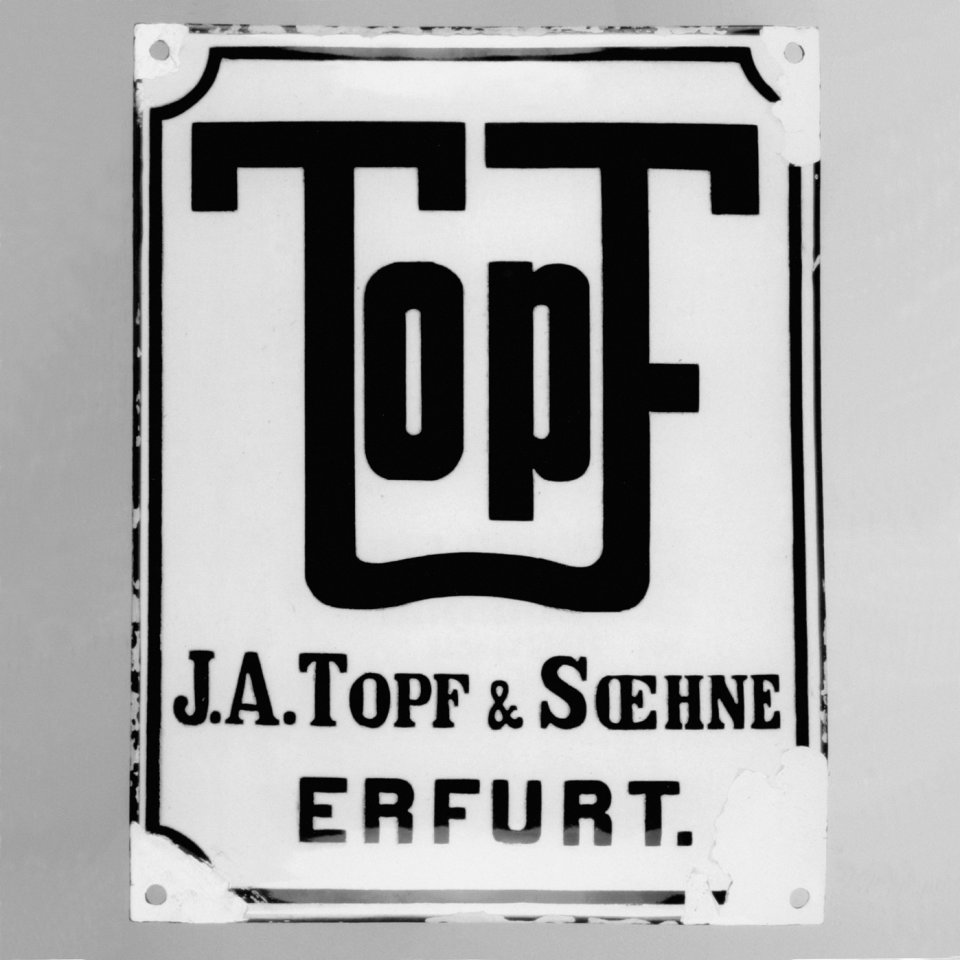
Karen Bartlett’s new Holocaust work, ARCHITECTS OF DEATH: THE FAMILY WHO ENGINEERED THE DEATH CAMPS possesses a powerful narrative as it examines the German manufacturing firm J. A. Topf and Sons and its role during World War II.  The problem for the firm is that a few of its manufacturing products centered on ovens, crematoria, and the parts necessary to build them.  These products made up only 1.85% of Topf and Sons actual products, but these items were linked to Buchenwald, Auschwitz, Dachau, and Mauthausen concentration/extermination camps.

The monograph begins with Hartmut Topf, the great grandson of the firm’s founder trying to come to grips with his family’s past.  After the war, Hartmut wanted nothing to do with the family business as his true loves were theater, puppetry, and journalism.  When he was a boy during the war his best friend Hans Laessing, was Jewish and he would disappear into the Nazi abyss.  With questions about his family and his friend, Hartmut set out to learn the truth leading him to learn things he could not believe.  Bartlett’s approach rests on interviews with former workers, American and Russian investigators, and Topf family members.  She also relies on the works of historian Annegret Schule, the author of two books that encompass her topic.  The first, BETWEEN PERSECUTION AND PARTICIPATION: BIOGRAPHY OF A BOOKEEPER AT J.A. TOPF AND SOHNE; the second, INDUSTRIE UND HOLOCAUST.
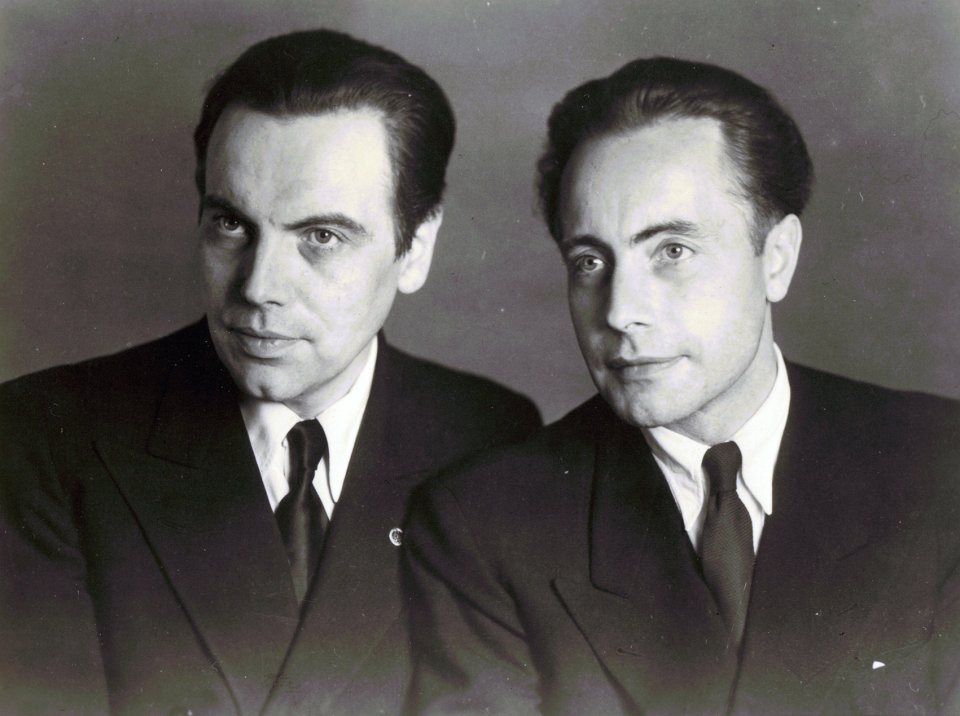
Image result for photos of the J A Topf family

(Ernst Wolfgang and Ludwig Topf)

What is clear is that “company directors Ernst Wolfgang and Ludwig Topf, along with their managers, engineers, oven fitters, and ventilation experts, were not ignorant paper pushers or frightened collaborators – instead they willingly engaged with the Nazis, reaping the benefits, taking advantage they could, and pushing their designs for mass murder and body disposal further and further until they could truly be described as the engineers of the Holocaust.”   By the end of the war men like Kurt Prufer, an engineer who pushed his designs and came up with plans that were so outlandish that even the SS had to turn them down.

Image result for photos of the J A Topf family

Bartlett provides a history of the firm, but the core of the book rests on the growth of Topf and Sons as a manufacturer of numerous products that would enhance the Nazi war effort.  There are numerous character portraits reflected the internecine conflict within the Topf family over control and which products should be made available to the Nazis.  Ludwig and Ernst Wolfgang would take over the company in July, 1933, coinciding with Hitler’s rise to power and they immediately went down the road that would result in a loss of any moral decency or humanity they might have possessed.

In addition to building the ovens the firm employed thousands of slave laborers during the war.  Roughly 40% of their labor force was made up of POWs which contributed to their deal with the devil.  Perhaps the most important person in this process was Kurt Prufer who would distinguish himself as “the true pioneer of annihilation.”  His own experiences during W.W.I. allowed him to develop a low level of concern for human life.  He would take his engineering talents to become an expert on cremation sales and fixtures.  Beginning with manufacturing crematoria for civil use in Erfurt and other towns it was feasible to change nomenclature and develop new incinerators and ventilation to fit the needs of the Final Solution.  They would go so far as changing the name from crematoria in their catalogue to “incineration chamber.” The key innovation was the development in October, 1939 was the three single muffin ovens that would be used to build permanent crematoria at Buchenwald under the sadistic SS Gruppenfuhrer Oswald Pohl as opposed to temporary ovens that were mobile.  As the war progressed after 1942 and the Russians moved west, these ovens could not accommodate the number of bodies the Nazis wanted to cremate leading to mechanical breakdowns and rancid smells surrounding the countryside where the camps were located.

Image result for photos of the J A Topf family

(Museum and Memorial for those who perished because of the work of J.A. Hopf and Sons)

The author provides a brief history of Buchenwald and Auschwitz, but her most important contribution is going through the documentation that the Russians and Americans uncovered as they liberated the camps and seized the Topf and Sons facilities.  Bartlett takes the reader through interrogations of workers and others, most importantly Prufer and three other important engineers.  There excuse was that they delivered the same products to the Nazis as they had to municipalities in the form of civil crematoria, and if they hadn’t sold the products, the SS had other firms that would provide them.  Ludwig Topf would commit suicide at the end of the war, but his brother Ernst Wolfgang continued to make his case and eventually was able to avoid any punishment for his actions.

Image result for photos of the J A Topf family

(Kurt Prufer)

The only suggestions I have for the author is that there seems to be too much replication of war crimes documentation in the text.  Perhaps they could have been placed as an appendix at the end of the book.  Secondly, there seems to be an overreliance on certain sources.  Otherwise, Bartlett has done Harmut justice in that she has produced the entire story of his family, a family that he admittedly feels ashamed of.  To his credit, Harmut has spent a great deal of his time and resources on restitution and remembrance that have culminated in the Topf and Sons Memorial in Erfurt for those who have perished.   Hopefully by educating visitors and publicizing its work the Memorial Museum will make another genocidal tragedy less likely to occur in the future.
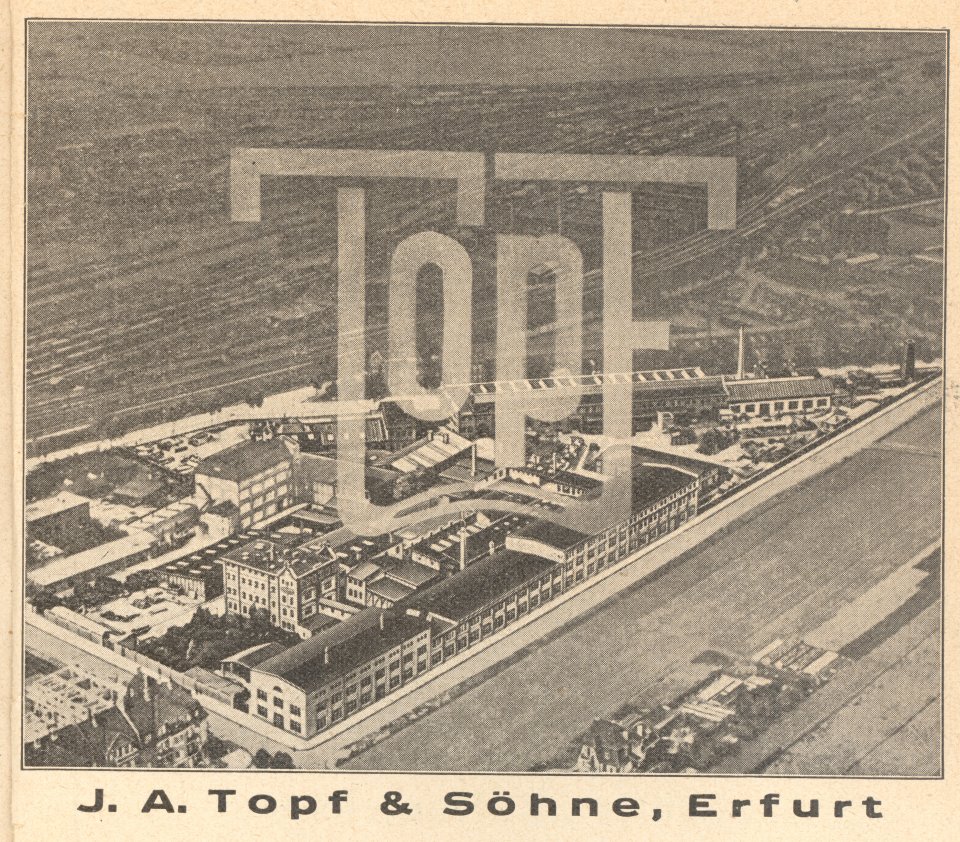
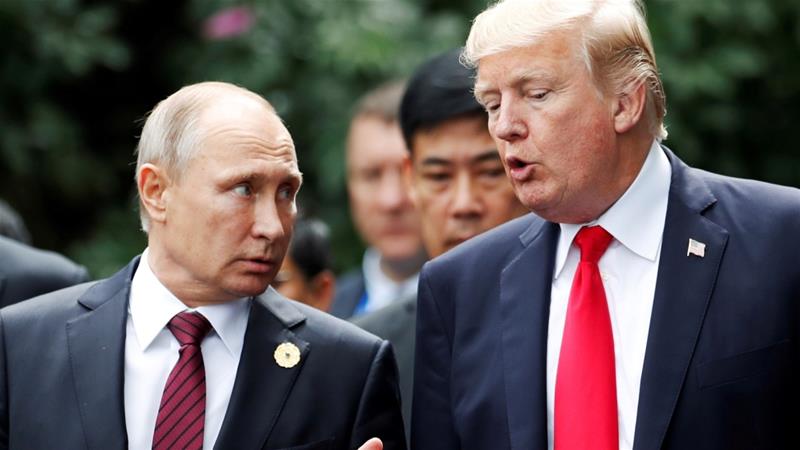
Image result for photos of the J A Topf family


HOUSE OF TRUMP HOUSE OF PUTIN: THE UNTOLD STORY OF DONALD TRUMP AND THE RUSSIAN MAFIA by Craig Unger

Image result for photos of trump and putin

(Russian President Vladimir Putin and President Donald Trump)

When I began reading Craig Unger’s new book HOUSE OF TRUMP HOUSE OF PUTIN: THE UNTOLD STORY OF DONALD TRUMP AND THE RUSSIAN MAFIA, I did so with great anticipation.  Unger’s previous monographs, HOUSE OF SAUD HOUSE OF BUSH and THE FALL OF THE HOUSE OF BUSH immediately captured my interest and developed themes that were strongly supported by documentary evidence and interviews.  In his newest effort, Unger has not totally measured up to preceding works.  First, if one has followed the news the last twelve months the material should be very familiar especially if one thinks about news accounts on cable television, newspaper articles, and exposes in magazines like The Atlantic.  Second, a good part of the book reads like excerpts from a Russian version of “Goodfellahs,” as Unger describes the development of Russian mob influence and wealth accumulation following the fall of the Berlin Wall, and tries to link Donald Trump to every Russian oligarch he has come across.  Third, the book promises to deliver the untold story of the Trump-Putin relationship, but it seems to rehash what is already in plain sight in the media.  Lastly, the book‘s focus is predominantly about the spread of the Russian mob, the rise of Putin and the Russian autocrat’s strategy to undermine the west, and though it presents a strong case for the Trump-Russian nexus Unger could have developed this component in greater depth.

Related image

(Trump with Agas and Emin Agalarov)

Unger’s goal as outlined in his introduction is very bold and I thought that I was about to read a book that would replace Michael Isikoff’s and David Corn’s RUSSIAN ROULETTE as the preeminent work on Trump and his Russian connection.  Unger states he will tie Trump to 59 individuals with alleged ties to the Russian Mafia; the use of Trump’s brand to launder billions of Russian mob money; Trump’s providing an operational home to Russian oligarchs in Trump Tower; the significant role the Russian Mafia plays in the Russian government; Russian intelligence targeting of Trump as a possible source for over forty years; how the Russian mob used American groups such as K Street lobbyists to gain influence and intelligence; how Russia took advantage of Trump’s $4 billion debt to coopt him, whether willingly or unwillingly; a description of Trumps relationship with Russian mobsters like Felix Sater; and how Trump became an intelligence “asset” for the Russians.  This is quite an undertaking, a puzzle whose pieces do not always seem to fit, resulting in a narrative that too often does not make a concrete case. Everything Unger states may be accurate, but he does not present his arguments without raising a certain amount of doubt.   In Unger’s defense, at this point it would difficult for any author to write the definitive account of the Trump-Putin/Russian relationship.

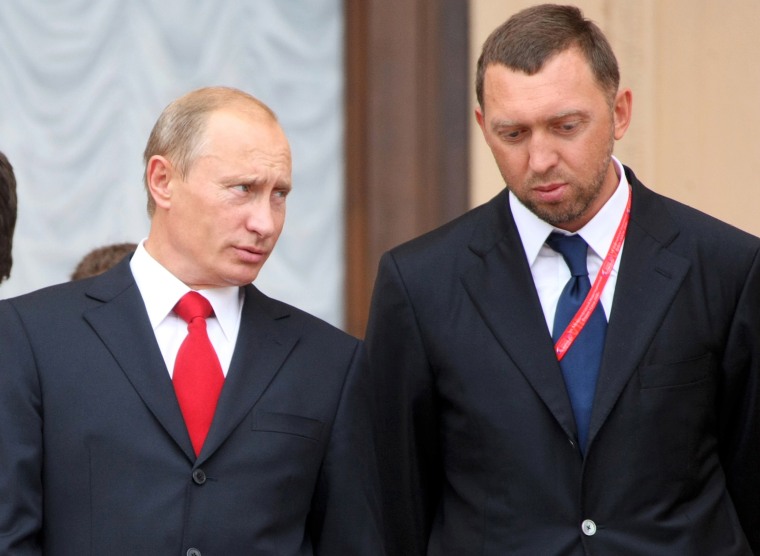
Image result for photos of russian oligarchs

(Putin and Oleg Deripaska)

Unger develops his narrative on two parallel tracks.  First, he describes the development of the Russia Mafia (or Mob) and how they have made inroads in the United States and countries abroad.  He correctly points to the Jackson-Vanik Amendment in a 1974 Congressional Trade bill that called for allowing hundreds of thousands of Jews to leave Russia.  In doing so, the Kremlin let out many Jews, but also many criminals, rapists, and other unsavory characters.  Many of these Jews and their lesser types migrated to the Brighton Beach section of Brooklyn and set up the “new Odessa” as they turned the neighborhood into a Russian enclave.  This provided an area for the Russian Mafia to dominate, set up businesses to launder money, and carry out extortion and other nefarious activities.  Unger goes on describe how the Russian Mafia plundered and came to control much of their country’s resources and corporations after the collapse of the Soviet Union, and followed the trajectory of Vladimir Putin’s career.  Unger will detail the actions taken by numerous individuals like Semion Mogilevich, the “brainy don” of the Russian mob, worth billions derived from illicit trade in weapons, women etc. and Serge Mikhalov, the head of the biggest crime gang in Russia, and how their relationships with Putin, who employed his own cunning, and manipulation of earlier politicians allowed him to develop his own personal kleptocracy.

Image result for photos of russian oligarchs

(Roman Abramovitch)

The second track follows Donald Trump’s career dating back into the early 1980s when he was a target of interest for Soviet intelligence.  The story is a familiar one as Unger takes us through Trump’s trips to Moscow in the mid-eighties and nineties as he tries to put together a deal for a Trump Tower in Moscow.  Unger describes how Trump went from debt of $4 billion due to the collapse of his casino empire in Atlantic City to solvency as he learned to trade on his name, and brilliantly made his own name a trademark that Russian oligarchs seem to crave in business deals and high rise condos (a problem in that it provided the Russian mob a place to launder about $1.5 billion as they used shell companies to pay for condo apartments throughout Trump’s real estate empire).  Trumps relationships with men like Felix Sater and others comes to the fore as more and more Trump develops relationships with Russian oligarchs for investment capital, and business projects.  The author tries to unscramble the web of relations surrounding Russian oligarchs and mobsters with ties to Putin and Trump throughout the book, and in many cases the links are solid, and in other cases less so, but the arcane world he is describing is really difficult to totally nail down.  Unger will then take these two tracks which encompasses about two thirds the book and turns to their nexus – how the Russians used their investment in Trump to interfere in the 2016 election, and reap the rewards of a Trump presidency.

Image result for photos of russian oligarchs

(Putin with his oligarch colleagues)

Perhaps in Unger’s strongest presentation he develops the concept of non-linear warfare as a Russian strategy to overturn western gains that included moving the Ukraine closer to the European Union.  For Putin, this was a red line that could not be allowed.  The key to this new approach as put forth by Vladislav Surkov and Valery Gerasimov, the chief of the General Staff of the Armed Forces of Russia was to create a false reality consisting of fake news and alternative facts for both within and without Russia.  Putin and his cohorts set out to destroy the truth and create a never ending conflict about perception that helped the Russian autocrat to control and manage his country.  Hybrid warfare and active measures were employed to weaken the U.S., Britain, NATO, and the European Union and roll back the gains they had made since the Cold War.  Money would be poured into pro-Russian parties in former Soviet states, as well supporting right wing candidates in the U.S. and Western Europe who wanted to dismantle the Western Alliance.  There were spies, hackers, and informational soldiers who carried out sophisticated attacks on social media.  The Russian Mafia was just one weapon in Russia’s arsenal.

Once the strategy was developed Russian intelligence zeroed in on Donald Trump who had years before established a relationship with the Russian mob.  The story of how Trump’s candidacy announced in June, 2015 gave Putin his candidate and allowed him to wreak the benefits of his penetration of K Street, white collar law firms, the Republican political establishment, and former justice and senatorial figures has been told elsewhere and Unger may strengthen details, but the overall storyline remains the same.  The Russian cyber warfare campaign against the U.S. and Hillary Clinton is now well known, but at the time the government did not seem to have a full grasp of what was actually occurring.

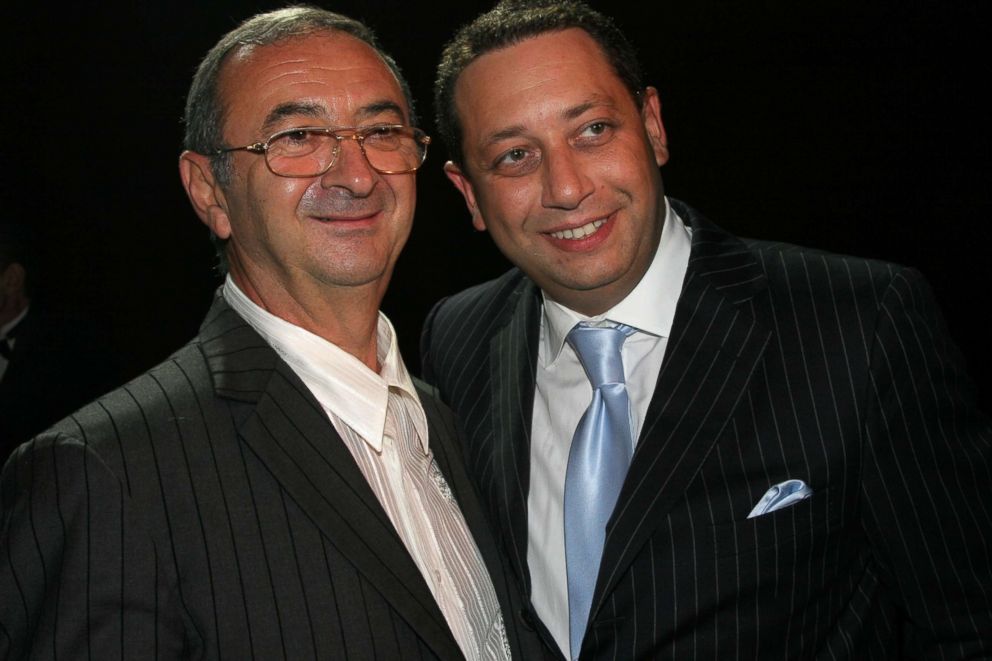
Image result for images of felix sater

(Tamir Sapir and Felix Sater)

Unger digs deep into the June 9, 2016 meeting at Trump Tower, analyzing who participated, and what agendas they represented.  It is clear that the Trump campaign was now in bed with the Russians, even if the Trump people did not realize how deep, or maybe they did.  Meetings between Trump officials and Russian diplomats and intelligence operatives abound in Unger’s account, as do the role of leaked emails receiving undo attention as opposed to warnings of Russian hacking and penetration of the American electoral process.  As disconcerting as Unger’s account is, we will have to wait until the Mueller investigations concludes to learn the truth.

In summation, Unger has done prodigious research into what is available, but much of what he uncovers is not new.  However, he has done a service by unraveling the role of Russian organized crime, the Putin regime, and its links to Donald Trump and his circle.

Image result for photos of trump and putin

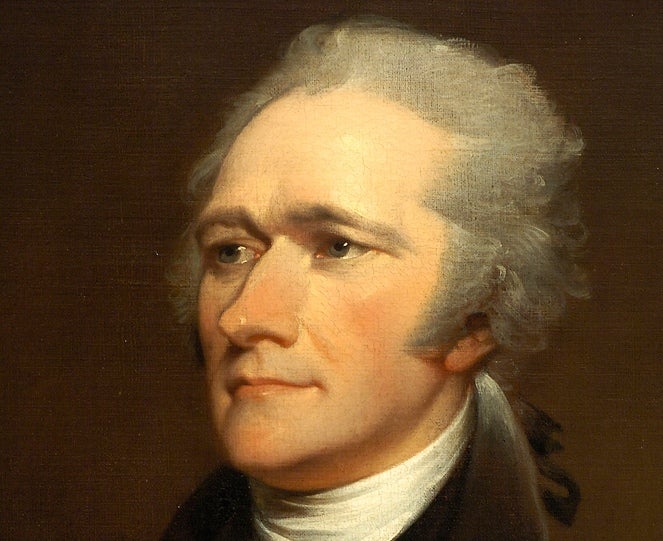
ALEXANDER HAMILTON: A LIFE by Willard Sterne Randall

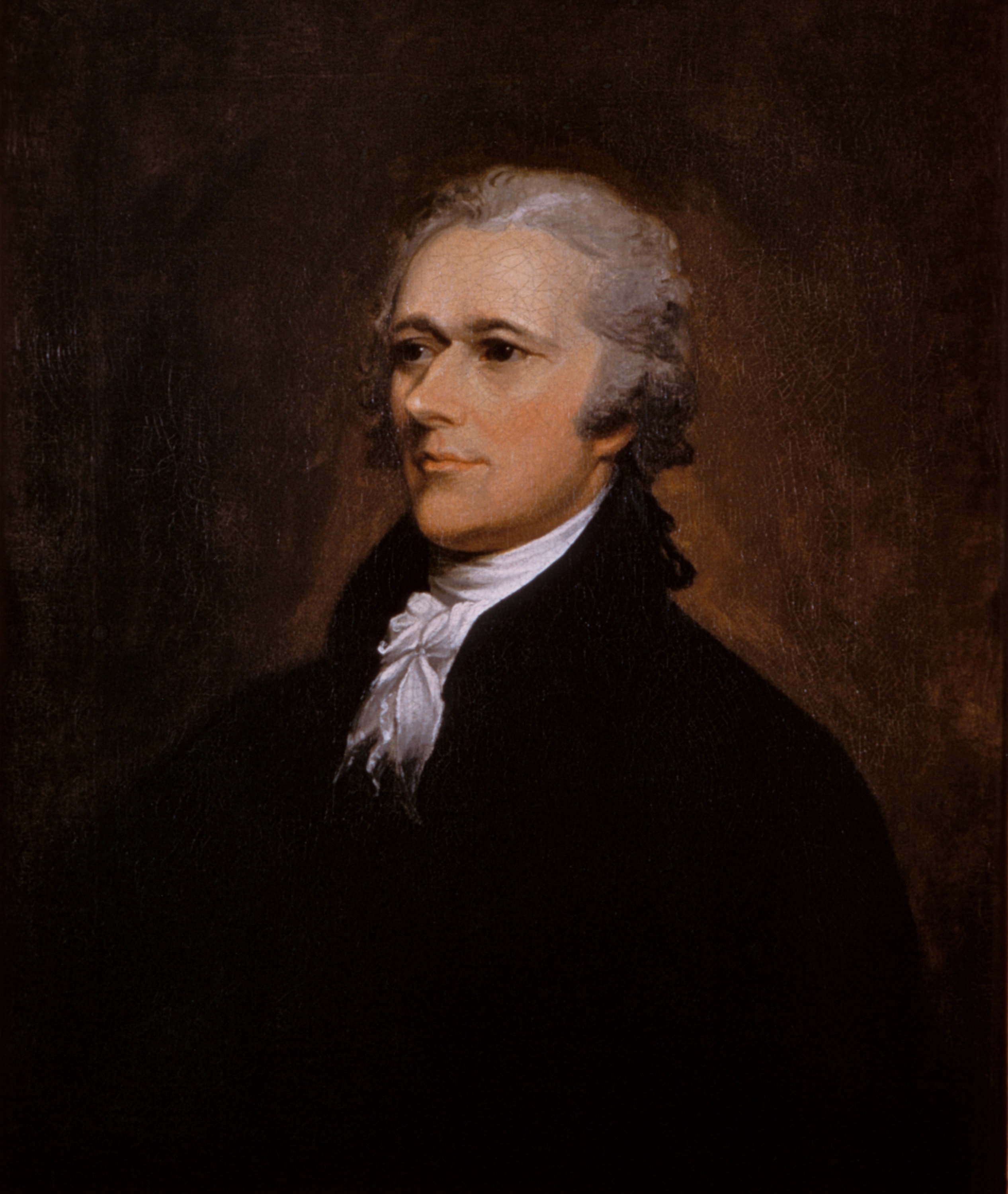
Image result for photo of alexander hamilton

(Alexander Hamilton)

If one wonders why a biography of Alexander Hamilton did not stir Lin-Manuel Miranda to write his Broadway musical before Ron Chernow’s bestselling work all you have to do is look at Willard Sterne Randall’s ALEXANDER HAMILTON: A LIFE written a year before Chernow’s monograph.  Randall’s effort is a clear narrative written by a traditional historian that lacks many of the details, insights on a personal level, and coverage of the most important aspects of Hamilton’s extraordinary life that Chernow presents.  Randall, who has written biographies of George Washington and Thomas Jefferson before tackling his present subject seems most concerned with who was right about America, Jefferson, or Hamilton.  He concludes that Jefferson was correct for the 18th century, Hamilton, for more modern times.  Randall’s study is reliable and readable and mostly rests on primary materials.

Other than the depth of coverage that Randall provides my major criticism is how he attributes his material to sources.  His chapter endnotes are not complete and he makes it very difficult to ascertain where he gets his material.  There are too many examples of; “One family historian recently observed,” or, “As one historian put it,” or, “One historian’s description,” is annoying and not the way most historians present their sources.

Image result for images of hercules mulligan

(Hercules Mulligan)

In terms of Hamilton’s private life, Randall seems certain that Hamilton and his sister-in-law, Angelica Schuyler Church were lovers.  His writing is crisp, but in terms of Hamilton family relations it is very speculative, particularly the description of Elizabeth Hamilton and her relationship with her husband.  In other areas Randall is on firmer ground.  His discussion of Hamilton’s early years where he was fueled by the writings of John Locke and accepted the ideas of “free will” as opposed to Calvinist dogma is excellent.  Randall concentrates on a number of individuals that have not been detailed by most historians.  The individual that most comes to mind is Hercules Mulligan, a merchant who initially served as Hamilton’s guardian when he arrived from the Caribbean.  Later, Mulligan would become a valuable spy against the British in New York during the American Revolution as well is becoming a peer of Hamilton, and one of his most important confidants.  Randall will also spend a great deal of time with the back and forth between Samuel Seabury’s “True Thoughts on the Proceedings of the Continental Congress” v. that of Hamilton’s “A Full Vindication,” which is important because it juxtaposes the loyalist and anti-loyalist positions visa vie the British, and the formulation of Hamilton’s basic political and economic philosophy.

Image result for photo of george washington

(George Washington)

Important areas that Randall reviews include the Washington-Hamilton relationship, where one can see how mutually dependent each would become on the other through the revolution and leading up to Washington’s presidency.  The machinations surrounding General Horatio Gates’ attempts to replace Washington during the revolution and actions taken by the general and his supporters after the revolution also receive important coverage.  Randall will dissect the needs of the Continental Army and spares no criticism in his comments on the incompetence of a number of members of the Continental Congress.  Randall stresses the importance of Hamilton’s relationship with John Laurence and the Marquis de Lafayette, particularly as it affected his actions during the revolution, and importantly, develops the ideological abyss that consumes Hamilton’s relationship with James Madison, especially after the Constitutional Convention.

Image result for photos of angelica and elizabeth schuyler

(Angelica Schuyler Church)

As opposed to other authors Randall does not provide a great deal of detail of Hamilton private life and career after Washington becomes president.  The majority of the book deals with Hamilton’s early life, the revolution, and the period leading up to and including the writing of the constitution.  Randall analyzes issues like the assumption of debt, the National Bank, the need for public credit in detail.  Further, he explores foreign policy implications of Hamilton’s domestic economic agenda, but does not develop the ideological and personal contradictions with Thomas Jefferson fully.  The relationship with Aaron Burr also does not receive the attention that it warrants because that relationship spanned Hamilton’s entire career.

To enhance the monograph Randall should have balanced Hamilton’s career and influence on historical events more evenly and not given short shrift to the Washington presidency where he served as Secretary of the Treasury and the events that occurred following his retirement from office.  Randall has written a useful biography of Hamilton, but in no way does it approach the level of Ron Chernow’s later effort.

Image result for photo of alexander hamilton
(Alexander Hamilton)

BOUND FOR GOLD by William Martin

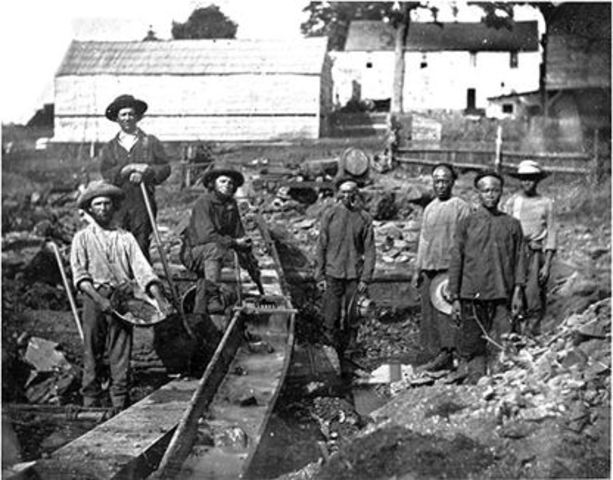
Image result for photos of the 1849 gold rush

(1849 California Gold Rush)

William Martin remains one of the most accomplished purveyors of historical fiction today.  In his new novel, BOUND FOR GOLD, the sixth in his Peter Fallon series, the Boston book dealer and his girlfriend Evangeline Carrington become caught up in the search for a lost journal that will transport them to the mid-nineteenth century California gold rush.  Employing his traditional approach of alternating historical information from a specific period with the present Martin has written an engrossing novel that is based on sound historical research and a novelist’s eye for fine detail.

Martin begins his tale with James Spencer, an eighty-three year old scion of wealth confronted by the 1906 San Francisco earthquake and resulting fire.  Scared, Spencer races to his office as the fire approaches to save his journal and other personal papers that recount his and his wife’s role in building California. As Spencer travels to his office he witnesses the devastation that the earthquake and approaching fire have caused.  Martin effectively describes the damage to historical buildings and sites through Spencer’s eyes.  What separates Martin from other writers is that each page of his novels wreak of history, no matter the plot line, character, or any given situation.

Image result for photos of the 1849 gold rush

The corruption, greed, and lawlessness of 1849 San Francisco is on full display.  As Martin takes the reader into the river beds and mines that men explore for gold as the most negative aspects of human nature come to the fore.  Martin’s creation of James Spencer’s journals provides a vehicle to disseminate his story and introduce numerous characters, many of which are unsavory, naive, and somewhat honest as they set out from Boston for the gold fields of California.

The Sagamore Mining Group headed by Samuel Hodges hires the “William Winter” captained by Nathan Trask to transport his men west.  Others are included, especially Jason Willis who would like to set up a mercantile trade using California as his base of operations instead of panning for gold.  James Spencer, hired by the Boston Transcript to provide coverage for articles about the discovery of gold bears witness to all events and machinations as they sail around the Cape of Good Hope and arrive in San Francisco.  Upon their arrival Martin shifts his focus back to the 21st century to Peter Fallon’s son LJ, who is a lawyer for a major San Francisco law firm travels east to inform his father that he was overseeing the liquidation of the Spencer estate for his law firm.  He asks his father to appraise the Spencer rare book collection and a number of manuscripts.  The problem is that among the papers is Spencer’s journal describing his observations of the 19th century gold rush which have gone missing.  Spencer’s great-grandaughter placed a codicil in her will that stated that before the estate could be liquidated, all seven original sections of the journal, scattered among his heirs had to be gathered and digitalized.  Each of the heirs had their own agenda and Maryanne Rogers, the great-granddaughter had been killed in a hit and run accident in a crosswalk as she was crossing the street to meet LJ’s boss, Johnson Barber.

Image result for photos of the 1849 gold rush

Martin introduces numerous characters from the 19th and 21st centuries to carry out his plot.  Janiva Toler, Spencer’s wife; Samuel Hodges the head of the Sagamore Mining Company; Michael Flynn, an Irish waiter, who resents Bostonian wealth will become Spencer’s partner; Cletis Smith, late of the US Army, another Spencer partner; Manion Sturgis who owns a winery in the gold region; Wei Chin, a member of the anti-Manchu Sam Hi Hui who escaped China for America are among the 19th century contingent.  Mary Ching Cutler, LJ’s fiancé; her father Jack Cutler; Chinese gang interests in San Francisco; Johnson “Jack” Barber” LJ’s boss; and William Donnelly, a retired Kern County detective are among the 21st century notables.  The dominant figure of course is Peter Fallon who as in all Martin’s previous historical renditions is a solid figure who employs a sarcastic and somewhat humorous approach to life as he works to solve the mystery of the stolen journal that documents Spencer’s quest for fortune and alludes to a mythical river of gold.  The diary supposedly reveals the location of an actual river which could set off a modern gold rush, and Fallon is up against present day elements ranging from the Hong Kong Triad, winery owners, Chinatown thugs, and even people with an environmental agenda who want to control any new discoveries.

Image result for photos of the 1849 gold rush

Martin effectively intertwines his historical saga with a contemporary story.  His work follows on two tracks one reaches back from 1849 toward the present, and the other works toward the past from the present.  The key is when the two tracks meet.  Martin introduces numerous powerful men in the novel as well as explores San Francisco and its multiethnic citizens.  BOUND FOR GOLD is a story of racism, rough justice and occasional kindness, and if you enjoyed any of Martin’s previous Fallon adventures, his latest will not disappoint-as Martin remains a superior story teller.

Image result for photos of the 1849 gold rush(1849 California Gold Rush)

A TERRIBLE COUNTRY by Keith Gessen

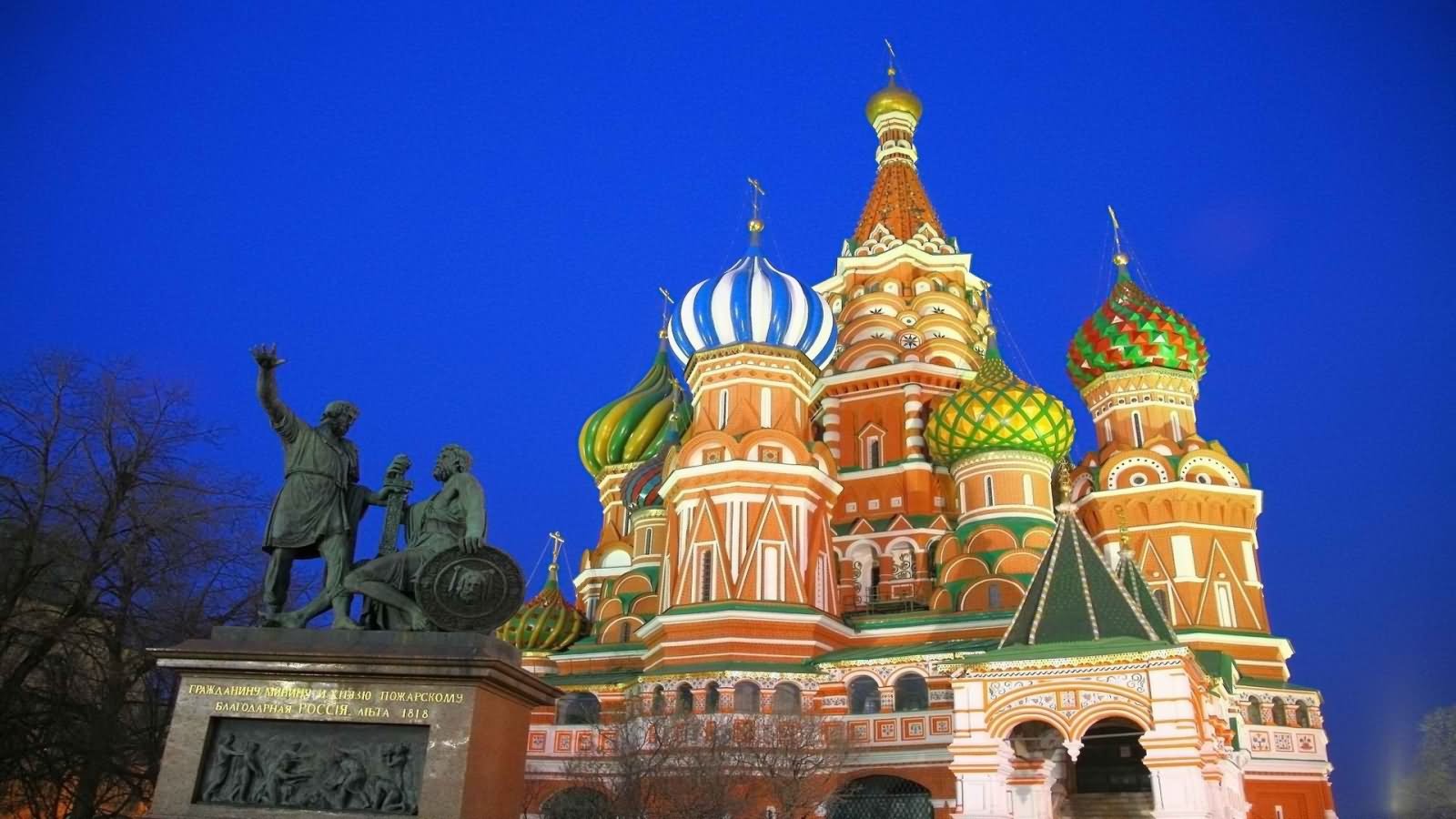
Image result for photo of kremlin moscow

(The Kremlin, Moscow)

At a time when Russia, Putin, conspiracy, and collusion dominate the news cycle it is wonderful to escape into a work of fiction that is absorbing, appealing to human emotion on many levels, and sadly, a comment on the reality of Russia today.  As useful and engrossing as Keith Gessen’s new book A TERRIBLE COUNTRY is, it creates the anxiety and frustration that one associates with Putin’s Russia.  Gessen is a Russian translator of poetry and short stories, but also of Nobel Prize winner Svertlana Alexievich’s VOICES FROM CHERNOBYL. Gessen like his sister Masha Gessen the author of A MAN WITHOUT A FACE: THE UNLIKELY RISE OF VLADIMIR PUTIN was born in Russia and raised in the United States, has an affinity for the Russian people who he believes are suffering from the Putin bargain, “you give up your freedoms, I make you rich.  Not everyone was rich, but enough people were making do that the system held.  And who was I to tell them they were wrong?  If they liked Putin, they could have him.”

Gessen, like his main character Andrei Kaplan seems to be in a permanent state of semi-exile, somewhat naive, and in search of something-an academic position, a sense of who he really was perhaps.  He writes in a somewhat John Updike style as he describes Andrei as a person who cannot seem to achieve the academic success that his peers have attained.  He has a PhD in Russian literature, but cannot earn a faculty position at the university level.  As a result he earns a living by teaches online courses, communicating through his blog.  Since the money is not sufficient to live in New York, and his girlfriend Sarah has just broken up with him he accepts his brother Dima’s request to return to Moscow to take care of their aging grandmother.  At the same time, Dima left Russia under strange circumstances for London, the reason of which becomes clearer later in the novel.

Image result for photo of putin

(Vladimir Putin)

Upon his arrival in Moscow, Andrei learns that certain promises his brother had made were not true, but he resolves to try and learn as much from his grandmother, Baba Seva Efraimove Gekhtman about the Stalinist era as a basis for a journal article.  The scent of Stalinist Russia is put forth through his grandmother who suffers from dementia, much more so than Dima had let on, but despite this affliction the reader is exposed to aspects of Stalinist Russia and how it evolves into Putin’s Russia.  The same housing crisis that existed during Stalin’s regime remains.  We witness the uneven distribution of wealth and the Putin kleptocracy.  The FSB, much like the KGB in Soviet times seems everywhere among many examples.  It is interesting how Gessen uses the location of Baba Seva’s apartment, the center of Moscow, close to the Kremlin, Parliament, and FSB headquarters to explain the daily plight of Russians.

The novel takes place in 2008 as Andrei arrives at the time Russian troops are supposedly withdrawing from Georgia.  The 2008 financial crash is introduced and one can see how the Russians believe that the effect on Russia’s economy is the fault of the United States.  Andrei is miserable in this setting and his life seems meaningless.  He has no wife or children, he feels helpless in caring for his grandmother, he suffers from a lack of sleep and exercise, constantly searching to play in hockey games, and is forced to deal with the inane comments from students on his online blog.

Image result for photo of soviet style apartment complex in moscow russia

(Soviet style apartment complex, Moscow)

For Andrei Moscow seems quite boorish as he is rejected by women, fears FSB types, and a bureaucracy that results in long lines for himself and his ailing grandmother.  The transition from Stalinst tactics to that of Putin are clearly portrayed as his uncle has lost his life’s work as a geophysicist to Russ Oil, a conglomerate run by Putin’s cronies.  Russ Oil will also reappear as an enemy of Andrei’s brother Dima as they create a monopoly for gas station expansion on a new highway.  Putin’s mastery of the media emerges clearly.  “The world may see him as a cold bloodied killer, a ruthless dictator, a grave digger of Russian democracy.  But from the Russian perspective, well, he was our cold blooded killer, our ruthless dictator, our gravedigger.”

The book begins rather pedantically, and as the story develops the style grows from one of simplicity with little to challenge the reader mentally to a substantive view of Putin’s Russia, and the personal crisis that Andrei is experiencing.  This is accomplished as the author introduces a number of new characters; hockey goalies, oilmen, academics, and oppositionist writers.  However, the most important character remains Baba Seva who embodies the complex nature of Russian politics and society.  She lost her country home to capitalism, but received her apartment thanks to her work on a Stalinist propaganda film of course due to the removal of another family from their home.  Bab Seva had been a historian at Moscow State University, but as a Jew it appears she lost her position because of Stalin’s Doctor’s Plot in 1953.  Perhaps the best line in the novel is when Andrei refers to living in an apartment so close to the KGB/FSB, it “was like living down the street from Auschwitz.”

The question that Gessen asks through a female who rejects Andrei’s advances, is his main character really cut out to live in Russia?  The remark haunts Andrei as he tries to fit in somewhere in Russian society.  It seems he does so finally when he catches on to a losing hockey teams and plays games six nights a week.  More importantly he will make friends on the team.  Those friendships and the return of his brother Dima shift the focus of the story.

Andrei will finally acquire a subject to write a paper and publish, one of his motivating goals upon returning to Moscow.  The subject is in the form of Sergei an intellectual who has a theory concerning the development of capitalism in Russia and its links to Putin’s kleptocracy.  Andrei hopes an article might lead to an academic position.  He develops a strong friendship with Sergei, in addition to beginning a relationship with Yulia, another member of “October,” a small opposition group to Putin that Andrei has become part of.

Russia is a complicated topic. But Gessen combines sharp analysis with Updike type writing style.  This approach belies a deep knowledge of Russian history and literature.  The book is an important contribution as it allows its reader insights and a glimpse into a country that is very impactful for America and the world.  Election hacking has been occurring in the United States and Europe for at least a decade, as have killings of people who oppose Putin outside Russia, murderous actions in Syria, and the list goes on and on.  What is clear is that the United States must play close attention to Putin’s Russia, because their machinations are not going to end (particularly with the current administration in power) and we as a society must come to grips with that fact and pressure our government to take action to mitigate what has and will continue to occur.  Gessen’s contribution to this task is a wonderful novel that describes Russia as a country that constantly wore down its people as they went along with their daily pursuits.

Image result for photo of kremlin moscow

(The Kremlin, Moscow)

INDIANAPOLIS: THE TRUE STORY OF THE WORST SEA DISASTER IN U.S. NAVAL HISTORY AND THE FIFTY-YEAR FIGHT TO EXONERATE AN INNOCENT MAN by Lynn Vincent and Sara Vladic

Image result for pictures of the uss indianapolis

(The USS Indianapolis)

In 1932 the USS Indianapolis was christened by President Franklin D. Roosevelt as the flagship of the US Pacific Fleet.  In the summer of 1945 it was chosen to complete the most highly classified naval mission of the war by delivering two large cannisters of material that was needed to assemble the Atomic bomb that was to be dropped in Hiroshima to the Tinian Islands.  Four days after completing its mission it was torpedoed by a Japanese submarine and sunk resulting in over 1193 men either going down with the ship or being thrown overboard with only 316 surviving.  The result was a national scandal as the government pursued its investigation and reached a conclusion that was both unfair and completely wrong.

Image result for photo of capt mcvay of the uss indianapolis

(Captain William McVay III of the USS Indianapolis)

Vincent and Vladic’s incremental approach in developing the story is very important as it allows the reader to understand the scope of the tragedy, the individuals involved, and the conclusions reached.  The authors delve into the background history of the ship’s actions during the war, mini-biographies of the personnel aboard the ship, and the military bureaucracy that was responsible of the ship’s manifest and orders that consume the first third of the book.

After getting to know the important characters in the drama Vincent and Vladic transition to the actual delivery of the weapon components and follows the Indianapolis as she transverses through the Philippine Sea.  Capt. McVay asked for a destroyer escort which was standard for this type of operation but was denied, in part because of availability, and in part because he was informed by Admiral Nimitz’s assistant chief of staff and operations officer James Carter that “things were very quiet…. [and] the Japs are on their last legs and there’s nothing to worry about.”  What Carter did not mention was that ULTRA intelligence came across the deployment of four Japanese submarines on offensive missions to the Philippine Sea.”  Later, Acting Commander of the Philippine Sea Front, Commodore Norman Gillette would characterize the same intelligence as a “recognized threat.”  In addition to presenting the American side of events, the authors follow Japanese preparations for the defense of the home islands, and zeroes in on Mochitsura Hashimoto, the Commander of the Japanese submarine I-58 which would sink the Indianapolis.

Image result for photo of Mochitsura Hashimoto

(Commander Mochitsura Hashimoto of the Japanese submarine I58 that sank the Indianapolis)

The authors follow the movements of the Indianapolis and Hashimoto’s submarine the days and hours leading up to the attack.  Five minutes before midnight on July 30, six torpedoes were fired at the Indianapolis and three hit the ship. Parts of the book read as an adventure story as the authors review calculations dealing with location and speed as the possible target begins to become clearer and clearer.  After taking the reader through the attack and resulting sinking of the ship, the reader is presented with at times a quite graphic description of the plight of the sailors who died during the attack, those who jumped off the ship, and the others who abandoned ship under Capt. McVay’s orders.  This section of the monograph can be heart wrenching as the men fight for their survival.  The carnage and psychological impact of the attack is very disconcerting.  After enduring shark attacks, living with no water and little food they resorted to cannibalism, theft, murder, and suicide.  The conditions were appalling but others formed groups employing whatever could be salvaged from the ship to create islands of men linked together by netting, rafts, life jackets, or anything else that would float.  Apart from men who became delirious and suffered from hallucinations, others found their main enemies to be hunger, dehydration, and sharks who seemed to circle everywhere, and sadly, when it seemed that an individual might be saved a shark attack would take another life.

Image result for photos of the sinking of the uss indianapolis

The most chilling part of the narrative is the description of rescue operations that began on August 2nd.  At 11:18 am Lt. Wilbur Gwinn flying a routine patrol in a PBM Mariner noticed a huge oil slick below, and after careful observation noticed a 25-mile oil slick.  The spotting of the men below sends chills down the spine of readers as the authors details of the rescue as word spread that there were hundreds of men over an 80-mile area.  Sadly, many men would die even as rescue operations commenced as they had little reserve after four days in the water.  The question must be asked, when the Indianapolis went missing from July 30 onward no one was tracking the ship carefully to report that she had not arrived at her destination?  The navy would investigate and reach a conclusion that the authors would totally discredit.

Related image

The last third of the book is devoted to the legal battle that surrounded who was responsible for the sinking of the Indianapolis and once the decision was reached the authors spend their time describing how a wrongful conviction was finally overturned.  The authors follow the investigation and different hearings and the final court martial and analyze the testimony, conclusions, and final reports that were issued.  They point out the inconsistencies and outright lies offered by certain naval officers as they tried to rest all the blame on Capt. McVay to cover their own “asses.”  In describing the conclusions reached by the navy Vincent and Vladic point out “what was not discussed was the string of intelligence and communication failures that led to something being amiss in the first place—failures of Carter, Gillette, and Naquin, as well as Vice Admiral Murray, a member of the court, were well aware.” (317)

Image result for photos of the sinking of the uss indianapolis

The authors dissect the report that called for McVay to be court martialed, especially the information that was left out.  For the navy brass that had two ships sunk in the waning moments of the war resulting in over 1000 casualties, someone had to be found responsible.  The materials presented reflect where the real blame should have fallen.  At Guam, failure to provide an escort for the Indianapolis.  Further, Guam took no action when Fleet Radio Unit Pacific intelligence indicated a Japanese submarine had sunk a vessel in the area that the Indianapolis was known to be present.  At Leyte, the Philippine Sea Frontier Organization failed to keep track of the Indianapolis and take action when the vessel failed to appear at its scheduled time when a Japanese submarine was located near its line of course.

Image result for photos of the reunion of the uss indianapolis
(70th reunion of USS Indianapolis survivors)

One of the most interesting aspects of the book is the weak defense put up by Navy Captain John Parmelee Cady who by this time had little interest in being a lawyer and was given little time to prepare a defense.  Cady’s approach is highlighted by the testimony submarine combat expert Captain Glynn Robert Donaho whose statement should have helped exonerate McVay, but did not.  The entire transcript of witness testimony is interesting particularly that of the man whose ship sank the Indianapolis, Mochitsura Hashimoto.  Other fascinating components of the book are some of the heroes involved in publicizing and working behind the scenes to bring about justice for the McVay family and those of the survivors and men lost at sea.  Chief among them was Commander William Toti who stood at the helm of the namesake submarine the Indianapolis.  Another is Hunter Scott, an eleven year old boy who worked assiduously on the history of the disaster and in the end testified before a Senate Committee.  Without their efforts and numerous others, one wonders if the degree of closure that was finally achieved would have come about.

Image result for photo of Capt. William Toti

(Captain William Toti)

As one reads the narrative, you grow angrier and angrier at the US Navy for its malfeasance and outright culpability in ruining a man’s life and providing false information for the families of the victims of the disaster.  As the authors press on with their account the redemption that is finally earned it does not reduce the uncalled for actions of so many in the Navy and the US government. The authors do a nice job ferreting out those responsible, but that does not detract from the fact that the lies were seen as truth for decades.

Image result for pictures of the uss indianapolis

(The USS Indianapolis)

THE MYSTERIOUS FLAME OF QUEEN LOANA: AN ILLUSTRATED NOVEL by Umberto Eco

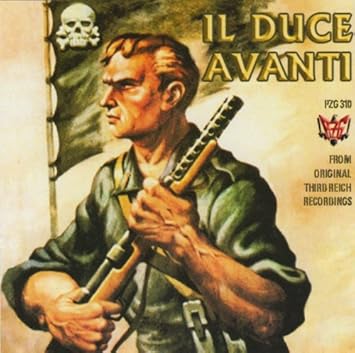
Image result for photo of il duce

(Fascist propaganda)

For the longest time I have wanted to tackle one of Umberto Eco’s novels.  I knew they were unique so I have digested his fifth work, THE MYSTERIOUS FLAME OF QUEEN LOANA.  To say the least the book was different from anything I have ever read before.  Eco introduces the main character a Giambattista Bodoni, with Yambo as a nickname suffering from memory loss due to a heart attack.  He lives in Milan and is fifty-nine years of age and he is crushed by the fact that he can remember things from the distant past, but nothing more recent.  He does not even know his name and it takes his wife Paola, who is a psychologist, and his physician, Dr. Gratarolo to introduce him to his identity and certain pathways of his life.  For Yambo familiarizing himself or relearning almost everything was similar to being Adam or Eve.

Image result for photo of josephine baker

(Josephine Baker, singer and actress)

Eco offers numerous ruminations on memory; its depth, how difficult it is at times to retrieve its contents, and how hard it is to move forward without the knowledge that is buried within.  For Yambo his memory is nothing but frustration.  The brain is an amazing instrument as he can remember four stanzas of Dante’s poetry, but can’t remember if he ever had an affair with Sibilla who is his assistant at his antiquarian bookstore.  Yambo’s heart attack has erased all memory of his own life while leaving every scrap of every book, comic strip, song, movie that he has ever experienced intact.  The most interesting part of the novel is the first part as he confronts his medical issue and tries to recapture his memory.  Eco incorporates sarcasm, and humor to relieve some Yambo’s tension, but his stress is evident.  The solution that is reached is that Yambo should visit his grandfather’s retreat at Solaro where he spent much of his childhood.  Since his grandfather was also a bookseller it is hoped that what is stored in the main house will stimulate Yambo and restore his memory.

Image result for photos of flash gordon

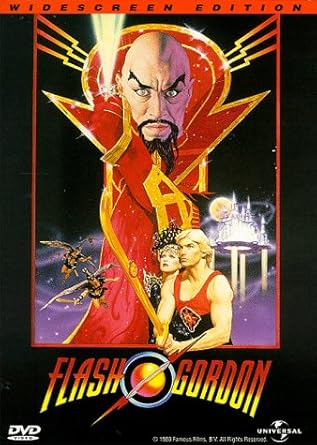
In examining the attic of his childhood Yambo feels like he is an intruder in a forbidden kingdom.  He travels from one section of the attic to another, and one crate or bookshelf to another trying to locate clues of his previous life.  In doing so we witness a man rummaging through the attic and study in a Piedmontese country house in search of his past.  Yambo reads for the first time, or rereads countless books from his past, many of which he recognizes along with listening to numerous records.  He comes across Sherlock Holmes, Flash Gordon, Jules Verne, among many titles by Italian authors.  Eco provides numerous illustrations to highlight Yambo’s findings.  Included are tins, cigarette cases, toys, calendars, dolls, soldiers, record cases, stamps, and of course numerous book jackets from his grandfather’s library.  For Yambo the mystery of Solara was that at every turn he would approach a revelation, and it would come to stop on the edge of a cliff, the invisible chasm that kept him in a fog.

Image result for photo of sherlock holmes

The book itself is not really a novel, but more of a revisiting of Eco’s past reading life.  The book’s illustrations are interesting, but not really necessary, perhaps they were thrown in to embellish the story.  The strong suit are a series of what appear to be essays on such diverse topics as Mussolini’s influence on children’s literature, his schoolboy notebooks depicting the exploits of Il Duce, Black Shirts, and colonial triumphs, then listening to a radio as the war turns to songs of bravery and coming defeat at Anzio, the landing at Sicily, bombing of Milan, all of life’s reality as the family had left the city to wait out the war in Solara.  Yambo would learn a great deal about his grandfather’s past in Solara as he searched for his own.  Particularly important were the reasons his grandfather turned from journalism to buying an old book shop.

Image result for pictures of ginger rogers and fred astaire

(Ginger Rogers and Fred Astaire)

The most important episode of Yambo’s adolescence turned out to be a teenage crush on a girl named Lila Saba.  She would become an obsession for Yambo even after her family moved to Brazil.  He would grill his friend Gianni who knew her also as he continued his quest to remember her face well into adulthood, to the point when he learned her real name was not Lila, but Sibillia.

Image result for stamps from fascist italy

(Fascist Italy stamp honoring Hitler and Mussolini)

In summation, Eco has presented a popular history of the 1930s and 1940s through his meandering approach to recapturing his childhood.  In doing so Yambo provides a narrative of World War II and its effect on Italy through the eyes of a boy.  For Yambo he becomes caught between listening to the messages of national glory and daydreaming about the fog in thinking about London and Sherlock Holmes.  In the end he would realize that he had rediscovered things that he and countless others had read, and aside from stories about his grandfather he had not relived his childhood, but he had relived the life of a generation.

Image result for photo of rita hayworth

(Rita Hayworth)

Eco’s effort does not flow evenly.  One page is a narrative about family and life.  Another deals with the war.  The next might deal with the temptations that religion does not permit.  Moving on you are following Yambo’s reading history, then his opinion of film, stamps, and what not.  Then on to developing his sexuality and his obsession with Lila.  At times fascinating, at time engrossing, but also at times fantasy that can lose the reader’s attention.  Eco’s humor, sarcasm, and didactic knowledge reflect a fascinating author, but be prepared to concentrate fully because if you do not, you will get lost.

Related image

POGROM: KISHINEV AND THE TILT OF HISTORY by Steven Zipperstein

(Victims of the Kishinev pogrom, 1903)

At a time when American society is confronted with pictures of immigrants incarcerated at the US border with Mexico it is a good time to step back and try and understand why people choose to flee their homelands and come to America.  In the case of people arriving on our southern borders their motivations are diverse from economic hardship to fear of death.  These reasons are in a sense universal when examined from a historical perspective.  Earlier in American history we witnessed a flood of Jewish immigrants, roughly two million from Eastern Europe and Russia between 1890 and 1914.  This has had a tremendous impact on our history and growth as a nation.  This mass migration was due in large part because of the anti-Semitic policies of the Tsarist government that resulted in years of persecution, and violent acts against Jews.  Throughout the late 19th and early 20th century these acts, labeled “pogroms” seemed to occur on a regular basis fostering the need for Jewish families to begin a chain of migration to America and other areas of the world.  Perhaps the most famous pogrom occurred in 1903 in the provincial city of Kishinev located at the edge of the Russian Empire which is the subject of Steven J. Zipperstein’s fascinating and informative new book POGROM: KISHINEV AND THE TILT OF HISTORY.

The term “pogrom” enters the western lexicon toward the end of the 19th century in Russia as violence and scapegoating of Jews proliferates.  It would be invoked in numerous towns and villages reaching a crescendo between 1918 and 1920 as 100,000 Jews may have been victimized as they were thought to be Bolsheviks.  Jews were supposed to be wealthy, but the vast majority lived in poverty.  They were thought to be well educated and involved in commerce, but what the Russians resented the most was their secrecy and refusal to be absorbed into the larger society.

Image result for map of Kishinev pogrom

The accusation against Jews that seems to have been the foundation of many pogroms was that of the “ritual killing of Christian children” during the Passover holiday under government sanction.  For an interesting novel that highlights this topic see Bernard Malamud’s THE FIXER which presents the major issues that Zipperstein discusses in a fictional format.

The Kishinev pogrom was seen as shorthand for barbarism, “for the behavior akin to the worst medieval atrocities.”  It would become the only “significant event embraced by all sectors of the severely fractured Russian Jewish scene.”  However, as the author argues throughout the narrative, though agreement was reached concerning the horrors that took place, it became an agreement wrought with myths, half-truths, and outright distortions.  The strength of Zipperstein’s presentation is the dissection of the myths and other components by explaining what occurred in the spring of 1903 in the Kishinev district.  The author carefully examines all aspects of the tragedy from its causes, the persons responsible, the victims and survivors, and the implication for Jewish history in the future.  Kishinev would become the epitome of evil in the west, a jarring glimpse of what the 20th century would hold in store.

Related image

The theme of book rests on how “history is made and remade, what is retained and elided, and why.”  The author examines how “one particular moment managed to chisel onto contemporary Jewish history and beyond that it held meaning even for those who never heard of the town, know nothing of its details, and nonetheless draw lessons from it.”

Forgeries and myths surround the history of the pogrom that greatly impacted how people who participated and survived viewed what they experienced, what had actually transpired, as well as how it was perceived years later.  For example; there was supposedly a letter from the Russian Minister of the Interior, V.K. Plehve instructing the local authorities not to intercede once the massacre began.  This is untrue, no letter existed, though a forgery may have appeared.  Another example revolves around who wrote and was responsible for the dissemination of the PROTOCOLS OF THE ELDERS OF ZION which accused Jews of a worldwide conspiracy to dominate all people and their lives.  It was said to have been a creation of the Russian secret police, the Okhrana in 1897, when in fact it was most likely the work of Pavel Krushevan, a publisher, novelist and owner of the newspaper Bessarabets which made the scurrilous lies of the PROTOCOLS available to the public.

Image result for photo of Hayyim Nahman Bialik

Zipperstein’s sources have been mined thoroughly ranging from the literary works of Alexander Pushkin to Serge S. Urussov, the Governor-General of Bessarabia’s diaries.  The two most important sources are Hayyam Nahman Bialik, the Jewish national poet who wrote, “In the City of Killing,” describing the massacre; and Michael Davitt, an Irish revolutionary and a reporter for Randolph Hearst’s New York American, who would go on to write WITHIN THE PALE: THE TRUE STORY OF THE ANTI-SEMETIC PERSECUTIONS IN RUSSIA, published in 1903.  Zipperstein examines the lives of these two important figures, how they went about their research and who they interviewed.  Excerpts of their work dot the narrative as Zipperstein dissects what occurred hour by hour and both men reach a controversial conclusion that Jewish men were weak and cowards.

Image result for images of michael davitt

Bialik’s poem, “In the City of Killing” has impacted Jewish history up until today and even Israeli Prime Minister Benjamin Netanyahu has referred to it in his speeches.  Zipperstein argues that Bialik conflated his entire life experience, particularly his childhood with the plight of Jews – one of helplessness.  His “rage leads him to construct the Jews of Kishinev as abject, and in the process to reshape and reconstruct his own identity.”  The poem recreates the violence, rape, and plunder perpetrated against the Jews, but the core of the poem is a devastating conclusion concerning Jewish male cowardice.  The appearance of the poem would overshadow what had transpired as it focused on the moral failings of Kishinev’s men and soon it became “shorthand for the utter vulnerability of the Jewish people, their devastation of soul and body alike.” Zipperstein examines the poem line by line and concludes that Bialik’s approach is literary poetry, while Davitt ‘s account is accurate as a whole and is first rate journalism, in addition to being reliable history.

Zipperstein asks why did the pogrom occur in Kishinev, a town that was on the outskirts of the Russian empire.  He concludes that a number of events, thought processes, and socio-economic relationships are responsible.  First, though day to day relations among the population seemed amiable, the peasants felt exploited by Jews engaging in a significant amount of commerce.  Second, in the spring of 1903 agricultural prices were on the decline reducing the supply of money.  Third, right wing elements were obsessed with Jewish visibility in the town.  Four, the supposed “ritual killings” in Dubossary, a town near Kishinev a few months before the pogrom.  Five, the fanning of anti-Semitic flames by Pavel Krusheran and his newspaper.  Lastly, Pogroms were seen as a reasonable response to a pariah people as rumors of ritual killing swirled.  Keeping in mind that in 1897 the population of the Kishinev district was 280,000 of which 54.910 were Jewish; and of the city’s 39 factories, 29 were owned by Jews could help explain people’s exacerbated feelings reactions once the violence spread.

Image result for photos of kishinev

Zipperstein also dissects the political implications of the pogrom.  He explores how it was used by different political factions for their own ends be they Zionists, socialists, Labor, Bundists etc. Many saw the pogrom as an opportunity to foster immigration to Palestine, others were resigned to trying to survive in Russia as they hoped the violence was spent.  The pogrom also touched off a nasty debate in American politics as the pogrom was compared to the lynchings of blacks in the south.  The American left used Kishinev as vehicle to make Americans aware of the treatment of blacks.  This also created a schism within the black communities because of its response to Kishinev and dealing with their own issues.  Interestingly, as Zipperstein describes at the end of the book, the uproar in the United States and its link to lynching’s helped push for the creation of the NAACP in 1909.

Overall the book is quite comprehensive and incorporates a great deal of information that is knew, i.e., Zipperstein’s acquisition of Krusheran’s teenage diaries among other sources.  If you would like to try and understand what occurred in Kishinev, with its historical implications, POGROM: KISHINEV AND THE TILT OF HISTORY is an excellent resource.

Chișinău  ~  Кишинев  ~  Kishinev

  Kehilalink Search

List of Victims of Kishinev Pogrom of 1903

The list below is the result of merging information contained in 2 published documents:

Within the Pale: The True Story of Anti-Semitic Persecutions in Russia, Michael Davitt, London, 1903

Davitt was an Irish journalist who visited Kishinev after the pogrom, and reported on it for two New York newspapers. The list there is an early one and is incomplete, but does have the genealogical benefit of often including the patronymic names.

Ha-Pogrom Be-Kishineff – Pesach 1903-Pesach 1963, Tel Aviv, 1963

This book, published on the 60th anniversary of the pogrom includes a copy of an original incomplete list (in Hebrew, awkwardly translated by a colleague and I).

Some of the other details here are either from Easter in Kishinev: Anatomy of a Pogrom, and excellent book written by Edward H. Judge (New York University Press, 1992; recently published in paperback as well) or from personal correspondence with Judge.


There were apparently 49 Jewish victim who died during or as a result of the pogrom (38 male, 11 females, including several children). According to the chief surgeon of the Kishinev Jewish Hospital, 37 were dead when they were brought to the hospital during the pogrom, 4 died at home following the pogrom, and 8 died in the hospital as a result of injuries received during the pogrom.

My list has only 46 people (including 6 females and one child of unknown gender). It is possible that I have listed someone as dead who was only injured, or that I have listed a single person twice due to a confusion of names. Clearly, not all those who lost their lives due to the pogrom are mentioned in the two lists I have located. Nevertheless it is a start.

I hope to get additional information from Prof. Judge and a colleague of his in Kishinev (now Chisinau, Moldova) who has done extensive pogrom research. If I ultimately have additional information, I will integrate it.

In some cases, the sources have additional information about how the person died (often a very ugly story).

Where the different sources yielded several names for the same person, I have included both (as in “Mordechai/Mottel”).

Alan Greenberg: alan.greenberg@mcgill.ca


I have added the 47th victim based on the article provided by Rosemarie Cohen (see article Morris Cohen Keeps a Promise)Ariel Parkansky


Kishinev 1903 Pogrom Victims

First Name(s) Surname Gender
1 Benja/Benjamin Shimenov Baranovitz M
2 Isaac/Yitschok Belitzkah/Byeletsky M
3 Itlia/Itel Berger F
4 Hosea/Joshua Abramovitz Berladsky M
5 Hirsch/Tsvi Chaimov Bolgar M
6 Aaron Isaacov Brachman M
7 David Abrahamov Charidon M
8 (sister – age 12) Chatzkalovitz/Chaskelevitz F
9 David Nissleov Chatzkalovitz/Chaskelevitz M
10 Abraham Router Cohen/Kogan M
11 David Drachman M
12 Chaia Sarah Abramovna Fanarzei/Fanarnei M
13 Eiss/Zusya Davidovitz Fanarzei/Fanarnei M
14 Simeon/Shimon Fishman M
15 Ben-Zion Leibov Galantor/Salapter M
16 (child) Golder ?
17 Chaim Leib/Leibov Goldiss M
18 Joseph Hirsch/Tsvi Danilov Greenberg M
19 Mordecai/Mottel Greenspoon M
20 Kopel Davidovitz Kainarsky M
21 Joseph Abramovitz Kantor M
22 Rose/Raiza Falikovna Katzap M
23 Kaela Kaza/Konza M
24 (husband) Keigelman M
25 Chaia Leah Keigelman F
26 Moshe Samuel/Tsvi Kiegel M
27 Beila Leiserovna Kodja? F
28 Idel/Jehudah Krupnik M
29 Isaac/Yitschok Krupnik M
30 Shmuel/Michel Shaev Lashkoff M
31 Hirsch/Tsvi Yankelev Liss M
32 Moses/Moshe Chaskelov Makhlin M
33 Mottel/Mordechai Davidovitz Menduk M
34 (man) Newman M
35 Chaim Nissinov Nissenson M
36 Isaac/Yitzshok Yankelov Rosenfeld M
37 Israel Leiserovitz Selstein/Shalistal M
38 Michel/Yachael Josiphov Seltzer M
39 Pinya Isaacov Spivak F
40 Jacob Elchunov Tounik M
41 Israel Yacoblewitz Ulmer M
42 Samuel/Shmuel Baruch Urrman M
43 Feiga Voulyar/Wouller F
44 Leinha/Simcha Voulyar/Wouller M
45 Abraham Yitschok/Router Weinstein M
46 Kalman Wolowitz/Volovitz M
47 (Rabbi) Mordecai Alpert M
Share this page by email https://platform.twitter.com/widgets/tweet_button.7a5ca036ea5299f1d2ebb2234731e35e.en.html#dnt=false&id=twitter-widget-0&lang=en&original_referer=https%3A%2F%2Fkehilalinks.jewishgen.org%2Fchisinau%2FLIF_POGROM1903_Victims.asp&size=m&text=Kishinev%3A%20List%20of%20Victims%20of%20Kishinev%20Pogrom%20of%201903&time=1531589509047&type=share&url=http%3A%2F%2Fkehilalinks.jewishgen.org%2FKishinev
Get Started Contact A.Parkansky Site Map Bessarabia SIG website | JewishGen Home
This page is hosted at no cost to the public by JewishGen, Inc., a non-profit corporation. If you feel there is a benefit to you in accessing this site, your [JewishGen-erosity] is appreciated. © A.Parkansky 2015-2018 – All Rights Reserved.

(Damaged Torahs used at funerals for Kishinev pogrom)

Image result for photos of kishinev

ZBIGNIEW BRZEZINSKI: AMERICA’S GRAND STRATEGIST by Justin Vaisse

Image result for photos of zbigniew brzezinski

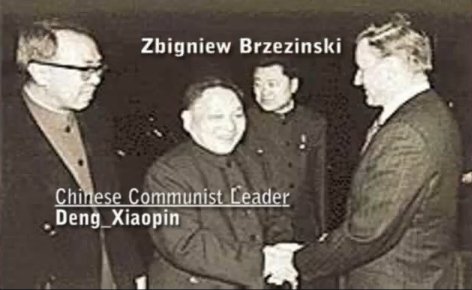
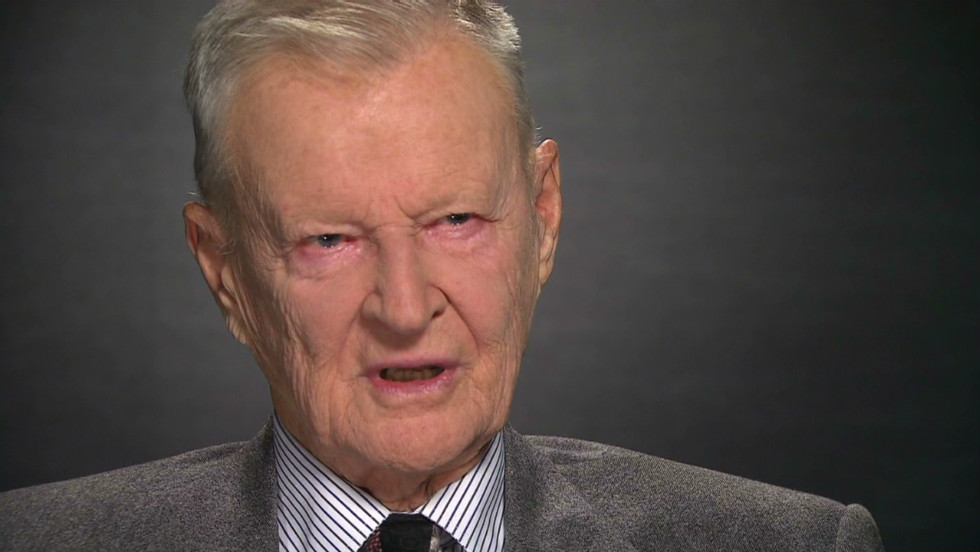
(Zbigniew Brzezinski, President Carter’s National Security Advisor)

When one thinks about the most influential people in the conduct of American foreign policy since World War II, the term the “Wise Men” comes to mind.  Historical figures like Dean Acheson, John J. McCloy, Charles Bohlen, Robert Lovett, George Kennan, and Averill Harriman helped direct US policy during the Cold War but by the 1960s a new foreign policy elite began to replace the establishment.  The opinions of the wise men were still consulted but a new generation of individuals emerged.  Contemplating the new elite, the name Henry Kissinger seems to be front and center as the dominating force under Presidents Nixon and Ford, but a person with a similar background story hovered in the wings, Zbigniew Brzezinski.  There are numerous biographies written about Kissinger, but up until today none of Brzezinski.  Justin Vaisse, who directs the policy planning staff in France’s Ministry of Foreign Affairs, with a workmanlike translation by Catherine Porter has filled the void with the new biography, ZBIEGNIEW BRZEZINSKI: AMERICA’S GRAND STRATEGIST.

Vaisse’s book is more than a biography of his subject. It does review and assess Brzezinski’s private life as a traditional life story might do, but places its greatest emphasis an intellectual survey of President Carter’s National Security head’s ideas and how they affected his policies and America’s interests around the world.  The book is sure to be considered an important contribution to the literature that tries to explain and assess America’s strategy and impact in the foreign policy sphere during the Cold War, and is certain to be the most important book that encapsulates Brzezinski life’s work to date.

Image result for photos of zbigniew brzezinski

(Brzezinski playing chess with Israeli Prime Minister Menachem Begin at Camp David)

The author follows the trajectory of Brzezinski’s career from a rising academic at Harvard University to a distinguished professorship at Columbia, a career move that was in the end a disappointment at not gaining tenure in Cambridge, but more importantly it brought him into the New York foreign policy community nexus that led to his association with the Council of Foreign Relations and its publication arm, Foreign Affairs.  The late 1950s saw Brzezinski evaluating US policy through numerous articles and trying to gain access to Presidents Kennedy and Johnson offering ideas and policy recommendations which included some domestic insights.  By this time he realized that he did not want to rely on an academic career for his life’s work, but sought to have a major impact on actual policy and events. During the Johnson administration he became a member of the Policy Planning Staff and his views coincided with Johnson and McNamara’s on Vietnam.  He offered views on the Third World, East-West relations, and the importance of China which he grew interested in to broaden his reputation and not being pigeon holed as only a Sovietologist.  By 1968 the foreign policy establishment underwent change and Brzezinski was at the forefront as the new elite began to emerge.

Kissinger and Brzezinski were the masterminds of the new elite.  They knew how to build on the capital they had accumulated in academia, the media, society and politics, resulting in public visibility, networking, and political status as advisors to both Republicans and Democrats.  As Vaisse traces Kissinger’s career one can see early on, i.e., the 1968 presidential campaign, what a duplicitous egoist Kissinger had become.  As David Habersham described him. He was “a rootless operator in the modern superstate.”


Brzezinski’s ego was quite developed, but nowhere near his former colleague.  Brzezinski’s greatest asset was his intellectual brilliance.  By 1968 he had joined the Humphrey for president campaign as the main foreign policy strategist and advisor.  This association allowed him to be perceived as a universal expert as he helped form, along with David Rockefeller, the Trilateral Commission, taking residency in Japan for a year to enhance his portfolio, and warning Democratic Party leaders to be careful of the leftwing movement of the party that would result in the McGovern debacle.  By this time Brzezinski was an excellent tactician and part of his strength was his ability to build on his academic research to implement policy recommendations.

Related image

(President Carter, Brzezinski, and Secretary of State Cyrus Vance)

The author dissects Brzezinski’s intellectual impact through his writing.  I remember reading the SOVIET BLOC:  UNITY AND CONFLICT years ago in graduate school, which he had revised to add a section on the developing Sino-Soviet conflict and its impact on US strategy.  In addition, his BETWEEN TWO AGES: AMERICA’S ROLE IN THE TECHNOCRATIC ERA argued that the Soviet Union was in gradual decline as it was missing the train of the technetronic change, where the US was coming aboard fully, which would allow Washington to meet the needs of the Third World.  Many have argued that Brzezinski’s views on the Soviet Union stemmed from his Polish heritage and Catholic faith.  But when one examines his views, it cannot be denied that his family history influenced his intellectual development, but his ideas and recommendations were too nuanced to be hemmed in by any obsession with Moscow.  His goal was to be objective and allow any perceived prejudices as an advisor to cloud and diminish his credibility.  Vaisee argues for the most part he was able to accomplish this despite being labeled by many as an anti-Soviet hawk.  A case in point is his view of Détente, negotiated by the Nixon administration in 1972, but by the time Brzezinski became President Carter’s National Security Advisor it was clear that Moscow was pushing the envelope in the Horn of Africa, Angola, and Cuba and he advised Carter to take a more adversarial position.  This brought him in conflict with Secretary of State Cyrus Vance who rejected this hard line approach, particularly when Brzezinski wanted to manipulate the “China Card” in dealing with the Soviet Union.

There are many aspects of the book that are fascinating.  These areas include a comparison of Kissinger and Brzezinski’s rise to prominence; Brzezinski’s excellent relationship with President Carter; whether Brzezinski can be considered a neo-conservative; and an analysis of Brzezinski’s predictions of a period of twenty years-discussing those that turned out to be accurate and those that did not.  What is clear is that Brzezinski’s view of the Cold War remained fairly consistent for decades.  He always favored the preservation of a strong military.  Second, the role of nationalisms and divisions within the communist bloc which led him to endorse policies that would exacerbate those issues, and finally, the role of ideology, which led him to support the actions of American radio broadcasts aimed across the Iron Curtain.

Image result for photos of zbigniew brzezinski

Vaisse argues forcefully that Brzezinski worked hard to restore America’s leadership in the Third World, especially trying to reach an accommodation in the Middle East, normalize relations with Latin America, and push for a rearrangement in Southern Africa.  The Camp David Accords, the Panama Canal Treaty, the opening with China, and emphasis on human rights went a long way to achieve these goals.  Many point to the uneven policy with Iran that resulted in the overthrow of the Shah and the rise of Ayatollah Khomeini, the Soviet Brigade in Cuba, and the Russian invasion of Afghanistan as Carter’s legacy.  But one must remember that American policy toward Iran was dysfunctional and based on a false premise dating back to the overthrow of Mohammad Mossedegh in 1953 which the Carter administration continued.  Further, many accused Brzezinski of creating a trap that lured the Russians into the quagmire of Afghanistan which in the end helped bring down the Soviet Union. Whatever the historical record, the collective memory that deals with the Carter administration’s foreign policy is the humiliation at the hands of Iran during the hostage crisis, and one of projected weakness overseas.

For those who argue that Brzezinski was responsible for starting the new Cold War after Détente failed, Vaisse points out that the Russian archives dealing with the period reflect that the Soviet leadership had “become sclerotic, and a prisoner almost of the institutional dynamics of their own system.”  In fact the disastrous decision to invade Afghanistan was made by a small group in the Politburo which ignored the opposition of the military, Ambassador Anatoly Dobrynin, and those in the embassy in Kabul.  As far as disagreements and controversy surrounding the Vance-Brzezinski relationship, the author provides details and analysis of their policy differences and its effect on overall American strategy.  The key for Vaisse is how President Carter managed their conflict and at times he could not make overall strategic judgements which led to confusion inside the administration and how our allies and adversaries perceived us.

Image result for photo of henry kissinger and zbigniew brzezinski

(Henry Kissinger)

The strength of Vaisse’s effort lies in his assiduous research and careful analysis of Brzezinski’s books and journal articles, be they purely academic or writings that targeted a more general audience.  The author examines all of his major books and opinions in journals and his conclusions and insights are based on this approach.  Vaisse does not get bogged down in family issues, but concentrates on career developments and why certain life decisions were made.  No matter what you think about the life and work of Brzezinski, one must agree that his impact on US foreign policy was just as, or almost as important as that of Kissinger, the difference being that Brzezinski stayed in the background more, though he was not shy about seeking the bright light of publicity at times.  For Vaisse the key to understanding Bzrezinski’s staying power was an enduring legacy of strategic vision and political independence which is evident throughout the book.  Apart from a somewhat trenchant style the book should be considered the preeminent work on Brzezinski and will be sought out by those interested in his life for years to come.

Image result for photos of zbigniew brzezinski

TIGER WOODS by Jeff Benedict and Armen Keteyian

Image result for photo of Tiger Woods

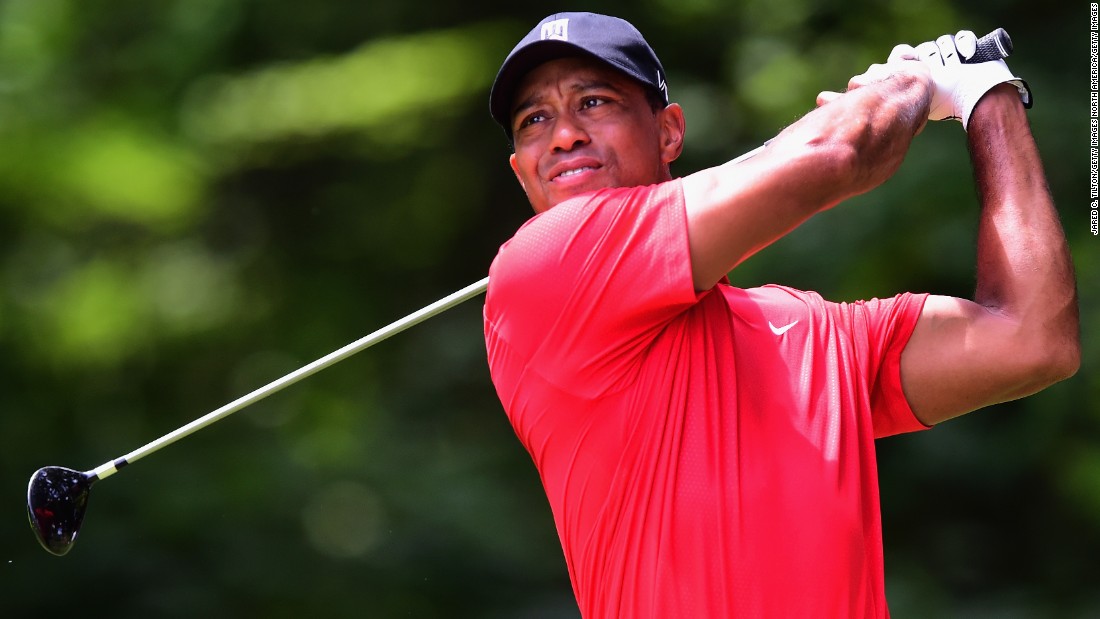
(Tiger Woods)

Undertaking a biography of Tiger Woods is a daunting task.  First, there is the coterie of secrecy surrounding one of the greatest, if not greatest golfer in history.  Second, Woods himself.  Having been burned by interviews early in his career for years refused to interact with the fourth estate and maintained an aura of separateness from everyone but his inner circle.  However, there is enough information about Woods that includes books by Earle Woods, Tiger’s father, former coaches, documents, professional medical opinions, in addition to numerous articles by respectable journalists to produce a superb in depth study of Woods.  This being the case Jeff Benedict and Armen Keteyian’s effort in their new book, TIGER WOODS is to be praised as they have relied on information plied by others, but have introduced new material by culling newspapers, interviews, and other sources to create a book of surprising quality.

Tiger Woods was on top of the world having dominated the sport after becoming the youngest player to win the Masters in 1996.  For the next two decades golf revolved around his success and he became his own mega corporation as wealth and victories were seen as everyday occurrences.  This would all come to an abrupt end on November 27, 2009 when Woods crashed his car into a neighbor’s tree.  How did this come to pass and why did Woods’ life spiral out of control because of the accident?  In addition, how did Woods, after divorce, injury, scandal etc. seemingly turn his life around?  These questions and Tiger’s life story leading up to that fateful day form the core of Benedict and Keteyian’s new monograph.

Image result for photo of Tiger Woods

(Tiger Woods’ parents)

In trying to understand how Woods evolved as a person and an athlete all you have to do is examine his early childhood from birth onward as he was surrounded by an attention grabbing father and an authentic “tiger mom.”  The authors describe a childhood that was different from other children as instead of toys his prized possession from a very young age was a sawed down golf club.  Woods would not interact with other children, and his father, Earl made it clear that golf was paramount, not making friends.  The key to Woods’ career is his father.  He became his confidante and role model and Woods’ behavior up until later in adult life can be explained by how Earl trained Tiger in a rigorous military fashion, instilled in him how unique he was, and created expectations that were outrageous to say the least.  Woods’ mother, Kultida, known as Tida reinforced her husband’s approach to child rearing and even after her divorce from Earl would dominate her son and instill in him that he was always right and he did not have to give in to anyone.  What separates the authors approach is that they integrate the opinions of medical professionals throughout the book applying psychological principles to help explain Woods’ behaviors and outlook on life.  For Woods, as a gifted child he would be more attuned to his parents’ expectations and would do whatever it took to meet them, even if it meant ignoring his own feelings and needs.

Image result for photo of Tiger Woods

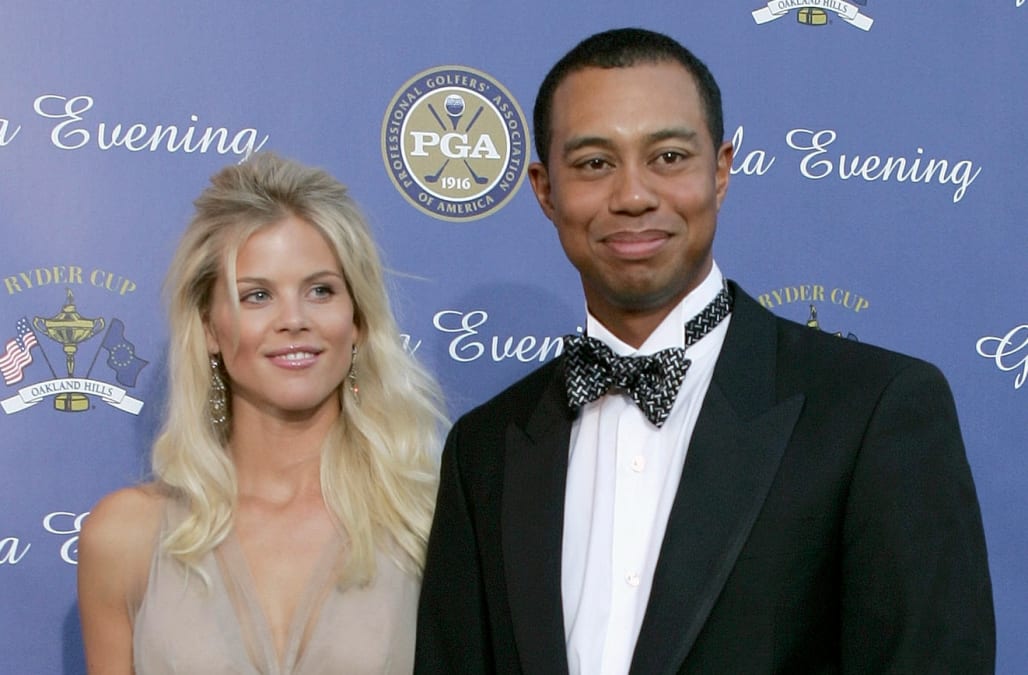
(Tiger Woods and his ex-wife Elin Nordegren)

The authors take the reader through Woods’ career in minute detail ranging from how his amateur career was funded, how he put out the fires of his father’s incendiary remarks and heavy handedness when it came to his career, and finally becoming a professional golfer.  Throughout we witness a Tiger who lacks any sentimentality and personal connections with others which can be traced directly from his mother who stated, “I am a loner, and so is Tiger.”  Tida reinforced the concept of “killing” the opposition on the golf course, and taking the opponents “heart.”  Woods’ evolution as a golfer and a person should be seen in this parental context as the authors describe throughout the book his extraordinary focus, commitment to winning, his inability to trust others, resulting in a very insular person who has repressed his true emotions and feelings.  Woods’ became a person who did not take responsibility for his actions and let his “inner circle” fix any errors.  “From the time he was old enough to walk, Tiger was told by his parents he was different, special, chosen, a genius—and he had been treated accordingly.”  His lack of praise for others, ignoring handshakes on the golf course, blowing off special events that meant a great deal to others were all part of his persona.

There are a number of surprising aspects to the narrative that provide further insight into Woods.  The authors detail his many victories, training regimen, the fear he struck in opponents because of his demeanor, and his sense of entitlement.  Perhaps more insightful is his interest and participation in the military, from video games to actual training with Navy Seals.  Woods could relate to these elite soldiers because he viewed himself as elite.  Woods’ own training agenda was so strict that later in his career he paid for them with numerous injuries and surgeries, but he felt comfortable with the Seals and how they went about their business because in his own mind he did it the same way.

Image result for photo of Tiger Woods

The standard stories of Woods’ private life are recounted from the many mistresses, his insularity, and how he was treated as a celebrity.  Further, the authors examine how Woods became his own “corporation,” how he was managed by IMG, and how the different personalities or handlers dealt with him on many levels.  But more importantly the authors analyze the results of this private Tiger and his life style supported by his corporate handlers, as opposed to the rectitude he presented to the public, and the image that his corporate sponsors like Nike portrayed.

The authors take the reader through Woods’ entire golf career.  From major, celebrity, and PGA tour tournaments pointing out the importance of each, his achievements, and the implications for his overall career.  Along with the career highlights the reader is exposed to the seamier aspects of his behavior; his sense of entitlement, and utter lack of taking the feelings of others into consideration when he acted.  The authors and others constantly blame his boorish behavior on his childhood which is true, but that does not take away from the fact that he was a despicable character.

Woods’ career was phenomenal and the few friends he made are recounted as are the lives of the many golfers on tour with him.  His lack of insight into others is discussed reflecting his lack of interest in anyone, but himself.  This would all come crashing down the day before Thanksgiving, 2009 when he crashed his car into a tree in his neighbor’s yard.  This would result in divorce from his wife Elin, an unmitigated scandal that fed the National Enquirer type press, the loss of his inner circle, and a public apology for his sexual addiction and other errors that he had made.  In the end he would overcome dependencies on pain killers, participation in treatment centers, and would emerge with a clearer understanding of what he had become, and what he wanted to become.

Image result for photo of Tiger Woods

(Woods after being arrested for DUI May 29, 2017)

The key to the success of the book is that the authors do an excellent job transitioning from one period of Woods’ life to the next, highlighting each with the events, relationships, and hazards that exist in each.  Overall, we witness the consummate narcissist exceling at his given profession, and finding it difficult to have empathy for anyone.  After the scandals, injuries, personal loss he seems to have evolved into a much more caring person, in touch with his feelings, and a dedication to his two children-a caring component of his personality that had been buried.

Benedict and Keteyian should be commended for producing an excellent study of an important life that greatly influenced American culture.  It is more than an examination of a professional golfer but an in depth study of a conflicted individual who was placed inside a psychological prison resulting in personal loss and humiliation that allowed him to break free.

Image result for photo of Tiger Woods