I AM PILGRIM by Terry Hayes

(Bodrum, Turkey where much of the novel takes place)

If you are a devotee of suspense and thrills I AM PILGRIM is for you.  If you enjoy fast action and an ever changing plot, Terry Hayes’ first novel is for you.  If you want to become engrossed in a story that has well developed characters, with interesting backgrounds, with an author who has written award winning screenplays, then this book is for you.  If you react well to a story line that constantly is shifting and has tremendous depth, then you cannot go wrong with I AM PILGRIM.  It has been a long time since I have read a spy thriller that has grabbed my attention the way Terry Hayes has done.  A screen play writer with many credits, Hayes’ has done an exceptional job with his first effort at fiction.  The book centers on a number major plot lines.  One, as the book opens the reader is presented with a murder in a fleabag hotel in Manhattan.  The main character has many aliases and I will refer to him as the narrator, has a theory dealing with the homicide that is outside the traditional investigative box.  Second, is the relationship that develops between the narrator and Ben Bradley, a New York detective, who was badly injured in the attacks on the World Trade Center.  Third, is the development of a strain of smallpox that bypasses the available vaccine that is created by an Islamic fundamentalist physician, referred to as the Saracen, who fought against the Soviet Union in Afghanistan, and has grown to hate Saudi Arabia and the United States. 

There are other stories within the major story; the narrator’s relationship with his parents is important as he witnessed the death of his mother at a very young age and was adopted by a rich Greenwich, CT couple.  Bill and Grace Murdoch were not especially warm parents, particularly Grace who did not want the child, and made him quite aware of her feelings.  Bill was able to create an emotional bond with the boy and the narrator developed great respect for him.  The narrator explains that growing up in this environment and attending a New England prep school was great experience for developing “other identities” needed for his survival upon graduating Harvard and being recruited by intelligence services.   The Saracen’s life history explains why he evolves into a terrorist.   He was born in Saudi Arabia to a father who hated the United States.  A zoologist who was considered moderate by Saudi  standards was arrested and executed by Saudi officials for criticizing the royal family.  The Saracen witnessed the hanging and left his family as a teenager and was radicalized in a mosque and became a hero fighting against the Soviet Union.  He attended medical school and using his role as a physician developed his “small pox strain” to seek revenge by unleashing a pandemic in the United States that would force the US to withdraw support for the Saudis.  Lastly, the investigative techniques employed by the narrator as he tries to link the murder in New York with the actions of the Saracen.

One of the major keys to the story is a book that the narrator had written on modern investigative techniques.  It seems that the murderer in New York read the book and planned her homicide using the narrator’s ideas on how to avoid detection and commit the perfect crime.  For the narrator, 9/11 is the turning point in his life as he realized that because of the intelligence mistakes made the “entire intelligence structure would be torn apart.  It had to be rebuilt.  Nothing in the secret world would ever be the same again…people in government would only have interest in secretly policing the covert world; they would only be interested in secretly policing the Islamic world.” (53)  The narrator felt he did not fit in the new world and decided to retire.  Hayes’ views on contemporary issues come through clearly as the novel progresses and the current debate over the Senate report on torture and the CIA would certainly have been woven into the story had it been available when the book was written.  The author’s attack on the 9/11 intelligence failures and the role of our politicians is very accurate and is food for thought.  Hayes’ thriller may be the basis of a future screen play as its constant movement from one geographic region and time frame to another would play well on a movie screen.  Eventually the narrator is called upon to try and head off a biological catastrophe and forgoes retirement.

Hayes’ has an excellent command of the geo-politics of the Middle East and the historic subtleties that he describes concerning Islamic culture and the radicalization presented through the eyes of the Saracen.  As the story progresses it is easy to understand his hatred toward the west and the Saudi regime and why he chose the life path he pursued.  Hayes does a superb job developing the overall storyline, but also the subplots that accompany the larger ones, i.e.; Scott Murdoch and Jude Garrett were the same person.  Hayes jumps back and forth between the activities of the narrator and the Saracen, but his approach makes sense and it is easy to follow.  The author deftly develops the narrator’s characters whether it is Scott, Murdoch, Peter Campbell or other that were used during his career in “the shadows.”  Hayes’ insights into the “dark world” of intelligence are interesting as the narrator states “how the secret world never leaves you—it’s always waiting in the darkness, ready to gather its children back again.”  The narrator tried to live a normal life but as a former participant in “the shadows” he comes to realize that it might never be possible.  Based on our current relationship with Turkey and its indirect support for ISIS, the author’s characterization of the Turkish government and its police and intelligence services is on the mark.  By using a Turkish detective and staging a second homicide in a Turkish city, Hayes has the opportunity to provide the reader many insights into the Turkish government’s mindset in dealing with threats to their security.

 Surprises abound throughout the book and the ending is surreal as torture, psychological warfare,  plot lines and major characters all come together.   For a first effort Hayes has done a remarkable job and I look forward to his next book, THE YEAR OF THE LOCUST, due to be released in June, 2015.  I assume a year later the film version of I AM PILGRIM will be released!

I AM PILGRIM by Terry Hayes

(Bodrum, Turkey where much of the novel takes place)

If you are a devotee of suspense and thrills I AM PILGRIM is for you.  If you enjoy fast action and an ever changing plot, Terry Hayes’ first novel is for you.  If you want to become engrossed in a story that has well developed characters, with interesting backgrounds, with an author who has written award winning screenplays, then this book is for you.  If you react well to a story line that constantly is shifting and has tremendous depth, then you cannot go wrong with I AM PILGRIM.  It has been a long time since I have read a spy thriller that has grabbed my attention the way Terry Hayes has done.  A screen play writer with many credits, Hayes’ has done an exceptional job with his first effort at fiction.  The book centers on a number major plot lines.  One, as the book opens the reader is presented with a murder in a fleabag hotel in Manhattan.  The main character has many aliases and I will refer to him as the narrator, has a theory dealing with the homicide that is outside the traditional investigative box.  Second, is the relationship that develops between the narrator and Ben Bradley, a New York detective, who was badly injured in the attacks on the World Trade Center.  Third, is the development of a strain of smallpox that bypasses the available vaccine that is created by an Islamic fundamentalist physician, referred to as the Saracen, who fought against the Soviet Union in Afghanistan, and has grown to hate Saudi Arabia and the United States.

There are other stories within the major story; the narrator’s relationship with his parents is important as he witnessed the death of his mother at a very young age and was adopted by a rich Greenwich, CT couple.  Bill and Grace Murdoch were not especially warm parents, particularly Grace who did not want the child, and made him quite aware of her feelings.  Bill was able to create an emotional bond with the boy and the narrator developed great respect for him.  The narrator explains that growing up in this environment and attending a New England prep school was great experience for developing “other identities” needed for his survival upon graduating Harvard and being recruited by intelligence services.   The Saracen’s life history explains why he evolves into a terrorist.   He was born in Saudi Arabia to a father who hated the United States.  A zoologist who was considered moderate by Saudi  standards was arrested and executed by Saudi officials for criticizing the royal family.  The Saracen witnessed the hanging and left his family as a teenager and was radicalized in a mosque and became a hero fighting against the Soviet Union.  He attended medical school and using his role as a physician developed his “small pox strain” to seek revenge by unleashing a pandemic in the United States that would force the US to withdraw support for the Saudis.  Lastly, the investigative techniques employed by the narrator as he tries to link the murder in New York with the actions of the Saracen.

One of the major keys to the story is a book that the narrator had written on modern investigative techniques.  It seems that the murderer in New York read the book and planned her homicide using the narrator’s ideas on how to avoid detection and commit the perfect crime.  For the narrator, 9/11 is the turning point in his life as he realized that because of the intelligence mistakes made the “entire intelligence structure would be torn apart.  It had to be rebuilt.  Nothing in the secret world would ever be the same again…people in government would only have interest in secretly policing the covert world; they would only be interested in secretly policing the Islamic world.” (53)  The narrator felt he did not fit in the new world and decided to retire.  Hayes’ views on contemporary issues come through clearly as the novel progresses and the current debate over the Senate report on torture and the CIA would certainly have been woven into the story had it been available when the book was written.  The author’s attack on the 9/11 intelligence failures and the role of our politicians is very accurate and is food for thought.  Hayes’ thriller may be the basis of a future screen play as its constant movement from one geographic region and time frame to another would play well on a movie screen.  Eventually the narrator is called upon to try and head off a biological catastrophe and forgoes retirement.

Hayes’ has an excellent command of the geo-politics of the Middle East and the historic subtleties that he describes concerning Islamic culture and the radicalization presented through the eyes of the Saracen.  As the story progresses it is easy to understand his hatred toward the west and the Saudi regime and why he chose the life path he pursued.  Hayes does a superb job developing the overall storyline, but also the subplots that accompany the larger ones, i.e.; Scott Murdoch and Jude Garrett were the same person.  Hayes jumps back and forth between the activities of the narrator and the Saracen, but his approach makes sense and it is easy to follow.  The author deftly develops the narrator’s characters whether it is Scott, Murdoch, Peter Campbell or other that were used during his career in “the shadows.”  Hayes’ insights into the “dark world” of intelligence are interesting as the narrator states “how the secret world never leaves you—it’s always waiting in the darkness, ready to gather its children back again.”  The narrator tried to live a normal life but as a former participant in “the shadows” he comes to realize that it might never be possible.  Based on our current relationship with Turkey and its indirect support for ISIS, the author’s characterization of the Turkish government and its police and intelligence services is on the mark.  By using a Turkish detective and staging a second homicide in a Turkish city, Hayes has the opportunity to provide the reader many insights into the Turkish government’s mindset in dealing with threats to their security.

Surprises abound throughout the book and the ending is surreal as torture, psychological warfare,  plot lines and major characters all come together.   For a first effort Hayes has done a remarkable job and I look forward to his next book, THE YEAR OF THE LOCUST, due to be released in June, 2015.  I assume a year later the film version of I AM PILGRIM will be released!

THE DAY OF ATONEMENT by David Liss

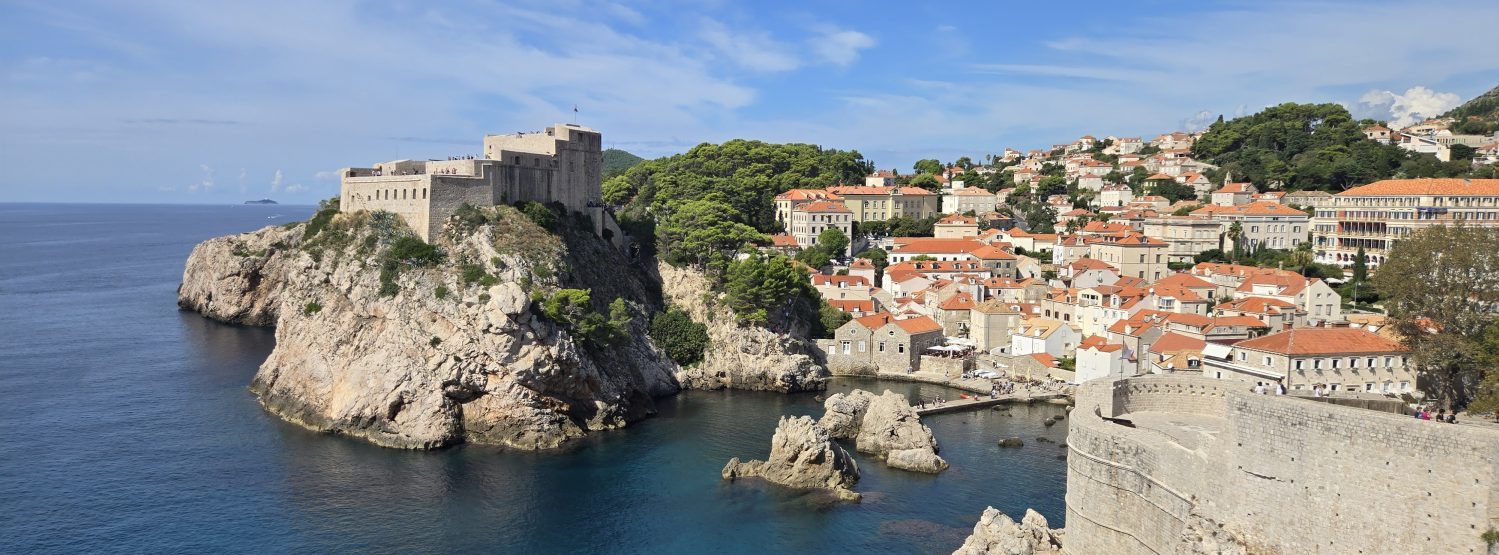
(18th century Lisbon, Portugal)

In David Liss’ new book, The Day of Atonement we meet Sebastiao Raposa, a thirteen year old boy who is forced by his mother to flee Lisbon because of the actions of the Inquisition.  In the mid 18th century Portugal is in the midst of a virulent Inquisition that targets any one and anything for what it perceives to be a violation of the Catholic churches precepts.  Sebastiao’s father has been seized by the Inquisition and his mother knows that she and her son will be next.  She convinces a former business associate of her husband, Charles Settwell to smuggle Sebastiao on a ship that was sailing for Falmouth, England.  The young man will make his way to London where he will remain for ten years before returning to Lisbon in 1755.  He assumes the identity of a business man named Sebastiao Foxx to seek revenge against Pedro Azinhiero, the Inquisitor who had destroyed his family and forced him to forsake a young girl, Gabriela,  who he believed would someday become his wife.  Unhappy as to what he had become in London he chose to return to Lisbon to gain the satisfaction of destroying the Inquisition and restoring his self worth.

While in London Sebastiao came under the tutelage of Benjamin Weaver, a character that Liss had developed in previous novels; A Conspiracy of Paper, A Spectacle of Corruption, and more recently, The Devil’s Company.  Weaver is a former Jewish boxer, now a “thief taker” (“a person paid to find people and other things” (42) who Liss employs to explore the corruption, economic panic and anti-Semitism among other ills of society.  In his new novel Liss has Weaver teach Sebastiao the art of deception and the skills needed to catch and punish thieves.  Sebastiao’s family was among many Jewish families that had been forced to convert to Christianity generations ago.  They were called “New Christians” but many maintained their religion in secret.  Though raised a Catholic, while in London Sebastiao was circumcised and renewed his commitment to Judaism.  Once in Lisbon he meets a number of characters who play an important role in his trying to achieve his goals, however the more people he meets the more difficult it becomes to maintain his new identity and carry out his wishes.

Sebastiao meets with Charles Settwell, who has fallen on hard times, when he learns that his father may have been betrayed to the Inquisition, as Settwell states, “I fear he was the victim of a plot to take his wealth and throw him to the dogs that he might expose the crime.” (65)  Further, the Inquisition is still angry that his father’s wealth was not recovered.  This and further information make Sebastiao aware that his task had become more complex.

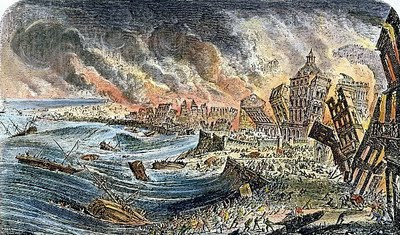
(tidal wave that resulted from the earthquake that hit Lisbon, November 1, 1755)

At first Liss seems to describe a plot of simple revenge by a child grown into manhood against a corrupt priest.  The goal of revenge quickly grows in proportion to include; ensuring the safety of a number of individuals, and paying a few past debts relating to his father and his childhood.  This is the dilemma that Liss’ protagonist must confront as he is faced with a contest of wills with Pedro Azenhiero, the man he set out to kill, but also is the man who threatens all those he loves from his past.  As the story unfolds Sebastiao falls deeper and deeper into the abyss of human deception.  One after another of his beliefs and relationships seem to fall by the wayside.  Liss weaves an engrossing tale full of foul characters, deceit, and a yearning for love and stability.  What emerges is that Sebastiao comes to the realization that his inability to judge others has allowed him to fall into a trap that he must figure a way out of.  Sebastiao’s actions become clouded in moral judgment as he must make decisions that will alter the lives of all around him.  He is confronted with his inability to murder the Inquisitor when Lisbon falls victim to a major earthquake.

Liss presents wonderful word pictures through his prose.  The scenes he paints of 18th century Lisbon are effective and accurate.  His description of Lisbon during the earthquake reflects the intense preparation that Liss engages in once he sits down to prepare a story.  He produces marvelous character sketches and allows the reader to enter the phenomenological world of each individual and watch their own emotions rise and fall depending on how a given scene evolves.  Liss confronts what is the dichotomy of life, the quandary of human emotion.  The issues of greed, revenge, temptation, love, kindness, sincerity are all explored.  Is atonement and redemption possible?  I guess what it comes down to is that people are nothing more than a mixture of flaws and virtues.  All of which are explored in Liss’ wonderful novel.

MYSTERY ON THE ISLES OF SHOALS by J. Dennis Robinson

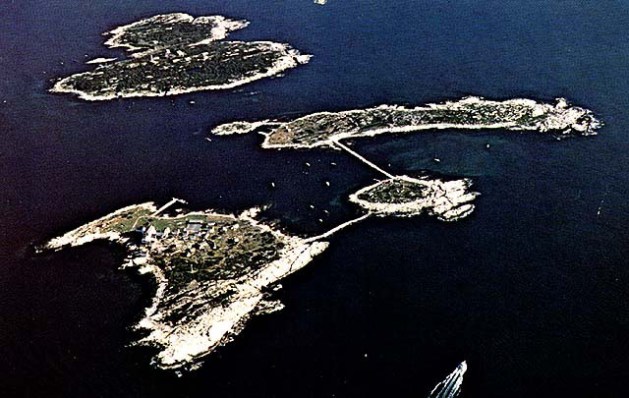
(Aerial picture of the Isles of Shoals about eight miles off the Portsmouth, NH coastline)

A few nights ago I had the pleasure of listening to J. Dennis Robinson speak at a local bookstore near my home in Portsmouth, NH.  I am a recent resident of the area and have been following Mr. Robinson’s “history” column in the Portsmouth Herald since my arrival.  These articles and the book STRAWBERY BANKE: A SEAPORT MUSEUM 400 YEARS IN THE MAKING also written by Mr. Robinson have educated me and sparked my interest in the rich history of the seacoast region.   His new monograph MYSTERY ON THE ISLES OF SHOALS has further broadened my knowledge of the area, as he has produced a first class “whodunit” about a story that everyone with knowledge of this 1873 murder knows the outcome.  Robinson in his recent talk claimed not to be a historian, but a history writer.  As a retired historian myself I believe I have the background to recognize and praise a true historian, which is certainly the case with Robinson.  His literary training has certainly assisted his prose and writing style, but the research techniques and historical knowledge are a wonderful combination that has produced an exceptional monograph that should interest a wide ranging audience apart from the seacoast region.

Robinson begins by reviewing the history of the various theories and myths that have emerged years after the murder of two Norwegian immigrant women, Karen and Anne Christiansen by a Prussian immigrant, Louis Wagner.  The author points to the novel and Hollywood film that distort the facts of the case, but a significant part of the public seems to accept as truth.  For Robinson the alternative history of events is incorrect and he takes on the task of setting the historical record straight.  In his examination of events and evidence, Robinson leaves no stone unturned in uncovering the truth.  Since a key part of the story involves the ability of someone to row from the mainland to Smuttynose Island, a considerable distance in 1873, Robinson provides numerous historical examples to prove that the distance traveled by Wagner the evening of the murder was easily accomplished.  In fact, during his talk last week, he introduced a seventy five year old fisherman who had accomplished the task last June.

(Louis Wagner and the murder weapon)

Robinson’s monograph is more than a history of the murder of the two Norwegian women.  It explores the pre-crime activities of the characters involved, the arrest, trial, and execution of the murderer.  It is a history of the seacoast region as far north as Thomaston, Maine and south to the Portsmouth region.  The author takes the reader back 6000 years when Native Americans thrived in the waters that make up the Gulf of Maine.  He describes how glaciers created the nine islands that make up the Isles of Shoals among the 3000 or more islands that are located along the jagged coast of Maine. (13)  Robinson describes the arrival of John Smith in 1614 and the settlement of New Hampshire in 1623.  Robinson’s history obviously concentrates on the history of the then “crime of the century” and the characters involved, but he also takes on the lives of the participants in the story after Wagner’s execution following them until they pass on.

Robinson focuses on immigration, the development of the islands, and the state of fishing in the region as he sets the stage for the reader.  The most important characters are Louis Wagner the perpetrator of the crime and his victims.  But Robinson also spends a great deal of time developing the other main characters that include John and Maren Hontvets, whom Wagner was trying to rob before his victims got in the way, with Maren escaping and emerging as the most important witness at the trial.  The reader is also introduced to the local politicians involved, the prosecution and defense attorneys, key witnesses, prison officials, and many more.  In doing so the reader gets to know all involved and because of Robinson’s captivating prose they almost feel they have become part of the story.  Throughout, Robinson has a fine eye for detail, be it discussing the history of the murder weapon, an ax that in part resides in the Portsmouth Atheneum, an old membership library on Market Square in Portsmouth.  Robinson goes on to provide a history of the ax as tool in American history, as well as showing that the use of one as a murder weapon was not unique.  This is the type of detail that the author repeatedly interjects into the narrative enhancing the reader’s experience.

For the layman who is interested in the plight of the New England fishing industry during the second half of the nineteenth century, Robinson lays out the problems that the industry faced in detail.  He explores how the sources of fish were being depleted and the need to locate new fishing grounds which drove fisherman up and down the coast to locate new sources.  The problem was that those regions grew scarcer and scarcer necessitating the use of larger and larger boats that local fisherman could ill afford.  One of the few who could was John Hontvets, who purchased long trawl lines and built a sturdy schooner in order to survive.  It was the jealousy that Wagner felt towards John Hontvets that probably drove him on the night of March 5, 1873 to steal a dory and row out to the Hontvets’ home on Smuttynose Island expecting to find only three women present to steal what he thought was between $600 and $1000 hidden somewhere on the premises.  Robinson describes in minute detail the murder and succeeding events leading up to Wagner’s capture in Boston.  Robinson zeroes in on the conversations that Wagner had before and after the crime throughout the book.  It reflects an inordinate amount of research and command of the material.  What is interesting is that Wagner repeatedly provided oral snippets of what Robinson describes as “confessional outbursts,” that puts the reader inside Wagner’s thought processes and leads us to believe he subconsciously wanted to be caught and convicted.

Robinson plays special attention to the personalities of the attorneys involved and the strategies they pursued.  The trial is reviewed very carefully and the material that is available from the trial transcript is mined very carefully by Robinson as he integrates a degree of sarcasm and humor as he dissects the myths and alternate histories that emerged after Wagner’s conviction.  Robinson takes the reader into Wagner’s jail cell, his escape and recapture, and after all the legal wrangling dealing with the death penalty and which state, Maine or New Hampshire had jurisdiction over the case, to the execution of Louis Wagner on June 25, 1875.

For those interested in the economic development of the Isles of Shoals at this time great detail is provided.  The building of tourist hotels, the attraction of Boston literary types and the wealthy are delineated carefully, particularly Cecilia Thaxter who grew up and lived on Smutty nose, who gained fame as a poet and writer.  Her article in the Atlantic Magazine, “A Memorable Murder,” “was something risky and powerful when it appeared in 1875,” but she has been “credited as a founder of true crime literature.”  (301)  “Like a great poet, the crime writer must also replicate the tempest that rages inside the mind of the killer tapping into his jealousy, vengeance, ambition, and hatred,” as nineteenth century essayist, Thomas De Quincy has written, something that Thaxter easily accomplished.  According to Robinson, her article could have served as a model for Truman Capote’s In Cold Blood, and Norman Mailer’s The Executioner’s Song.

Robinson concludes the last section of the monograph by following the history of the main characters after Wagner’s execution.  The reader learns of the fate of Celia Thaxter, the legacy of the Hontvets family and Ivan Christiansen whose wife was murdered, as well as the deathbed confession hoax that tried to shift the blame for the crime onto Maren Hontvets.  Not to be excluded are a number of key witnesses as well as the prosecution team of George Yeaton and Attorney General Harris M. Plaisted and Wagner’s intrepid lawyer Judge Rufus Tapley.

As the books comes to a close, Robinson dissects the pseudo-historical novel based on the murders, Anita Shreve’s Weight on the Water and the Hollywood film of the same name based on the book.  Despite the presence of Sean Penn and a $16 million budget, the film was essentially a flop, though it seems to be downloaded more and more today by those interested.  However, for Shreve the novel made her a literary talent as she has a film based on her book added to her many publications.  Lastly, Robinson includes extensive author’s notes that are a treasure trove of information that for those interested, can lead to wonderful new discoveries. Overall, considering that many people who are drawn to this subject matter are already privy to the story and its outcome, Robinson has done a remarkable job of synthesis creating an interesting compilation of information some old, but much that is new.  I recommend it highly for those who are interested in a scintillating murder story, but more so an overall history of the seacoast region in the latter part of the nineteenth century.

THE SECRET HISTORY OF WONDER WOMAN by Jill Lepore

When I was teaching I used to show excerpts of The Wizard of Oz to my students.  My goal was to provoke discussion to ascertain whether its author, L. Frank Baum purposely created the story as a parable for monetary reform in the 1890s expressing some of the ideas of three time presidential candidate, William Jennings Bryan.  The question often arose as to whether the film actually represented a historical analysis or observation of the then contemporary events. After thinking about this concept for many years I am still not certain.  In reading Jill Lepore’s newest book, The Secret History of Wonder Woman I have some of the same uncertainties, but as Baum had done, Lepore proposes many ideas that should provoke animated discussion.  Lepore’s thesis revolves around the life of William Moulton Marston, the creator of Wonder Woman, the character he developed, and the ideas that he put forth.  According to Lepore this comic strip character is central to the development of feminism.  “She is the missing link in a chain of events that begins with woman suffrage campaigns in the 1910s and ends with the troubled place of feminism fully a century later.  Feminism made Wonder Woman.   And then Wonder Woman remade feminism, which hasn’t been altogether good for feminism.”  Wonder Woman was not an ordinary comic book character, “she was at the center of the histories of science, law, and politics…..Wonder Woman’s debt is to the fictional feminist utopia and to the struggle for woman’s rights.” (xiii)  For Lepore, “Wonder Woman has been fighting for woman’s rights for a very long time, battles fought but never won. [It] is the story of her origins-the stuff of wonders and of lies.” (xiv)  For me it is difficult to accept the argument that a comic strip character was central to the development of feminism and that Wonder Woman is the missing link in understanding the struggle for woman’s rights.   Lepore presents the reader with a unique approach, and having read a number of her previous works I was interested in pursuing her latest effort in which she posits a thesis that is both unique and intellectually challenging, making it seriously worth considering.

The Secret History of Wonder Woman is a well researched monograph that is part biography of William Moulton Marston and a socio-political history of his life time that produces Wonder Woman.  To the author’s credit she weaves Wonder Woman cartoons from the 1940s throughout the monograph relating how a given comic strip fits into the pattern of events in Marston’s life and his unique family structure.  The book also contains a colorful insert of numerous Wonder Woman comic strips side by side with a narrative that explains each, and places them within a historical context.  Characters in the comic strips are paired with actual historical figures and events that they supposedly represent that further Lepore’s argument, but I leave it to the reader to determine if the author achieves her goal.

Throughout the book Wonder Woman is interfaced with the history of feminism, whether it is the work of Margaret Sanger fighting for birth control or Emmeline Pankhurst’s struggle to achieve woman’s suffrage.  The man she credits for creating Wonder Woman, William Moulton Marston is an interesting and eccentric character in his own right who earned a Ph.D in Psychology from Harvard, but during his career he failed to maintain academic posts at American, Tufts, and Columbia universities.  His own research centered on the systolic blood pressure test that became one of the components of the modern polygraph test, though he claims to have invented the lie detector.  He was convinced about the connection between emotion and blood pressure and how men and woman react differently to the same situation.  Marston was also committed to woman’s rights and he lived a somewhat bohemian lifestyle as he was married to Elizabeth Holloway, who shared his research and writings and was certainly his intellectual equal, but he also lived with his former graduate student and researcher, Olive Byrne.  He fathered two children with each, but Bryne’s children were told that their father had died and they all lived together in the same household, so in a sense Marston had two wives.

( Left to right: Marjorie Wilkes Huntley, O.A. Byrne, Pete Marston,  William Moulton Marston, Olive Byne, Donn Marston ,Sadie Elizabeth Holloway)

Lepore also produces a history of the comic book industry dating back to 1933 including the role that Marston and his wife/wives played.  It was at this time that Charles Gaines, the publisher of Superman magazine hired Marston as a consulting psychologist who convinced Gaines that what he needed to counter attacks on comics was a female super hero.  The period of 1920 through the 1960s is often seen as a dormant period in feminist history by some.  For Lepore in the 1940s “there was plenty of feminist agitation in the pages of Wonder Woman.” In a 1944 issue of Wonder Woman a biography of Susan B. Anthony was contained calling her the “liberator of Womankind.”  The issue also contained the story “Battle for Womanhood,” The story and drawings mirrored the suffragist’s use of war as they had in the 1910s.  “In the First World War, suffragists suggested that war was keeping women in a state of slavery.  In the Second World War, Marston suggested that women’s contributions to the war effort were helping emancipate them….there are eight million American women in war activities-by 1944 there will be eighteen million!” reports one of the characters, dragging a ball and chain. (225)  Marston strongly intimates should woman achieve equality or even power over men, war will end.

Marston saw himself as a scholar and that his Harvard background and life’s work lent itself to consider that Wonder Woman and the research behind her creation was a scholarly enterprise.  This belief ran into strong opposition from the academic community, but one should strongly consider that there is a strong element of scholarship in Marston’s work that Lepore describes in detail.  Further, if one can see past Marston’s unusual approach and high powered ego you can see the work of a genius that has not achieved much recognition.   However, his rationale for creating Wonder Woman as he wrote is American Scholar magazine in 1943 is very convincing; “not even girls want to be girls so long as our feminine archetype lacks force, strength, and power.  Not wanting to be girls, they don’t want to be tender, submissive, peace loving as good woman are.  Women’s strong qualities have become despised because of their weakness.  The obvious remedy is to create a feminine character with all the strength of Superman plus all the allure of good and beautiful women.”

Lepore’s narration of the important figures in twentieth century feminist history is important as it places Marston’s story in the proper historical context.  Lepore’s succinct and snappy prose tells the story well as she goes from Marston’s life to his use of Greek mythology to justify the creation of his super hero.  Marston may come across as a “bit different” than most people of his profession, but that difference was probably his genius and that’s what it took to foster the creation a comic book character, whose origin in Greek mythology could explain and work towards fulfilling the goal of achieving women’s equality.  Following Marston’s death from cancer in 1947 Holloway tried to take over the preparation and writing of the comic strip.  She was rejected by the publisher and with subsequent writers Wonder Woman’s popularity declined only to reemerge again in the 1970s.  Lepore follows the feminist movement throughout the 1970s and 1980s as it splintered and seemed to pass into the background.  What makes her monograph important is that she was able to unlock the secret of Wonder Woman’s origins, as she points out that it was a history that was waiting to be written, and whether you accept her findings or not, it is a story that is well told.

If Wonder Woman could return to her 1940s persona she could comment on why certain politicians opposed the Lily Ledbetter Fair Pay Act of 2009, guaranteeing equal pay for women, as it was an issue in the recent midterm elections.  If Marston was alive today, I am certain what words he would have put in her mouth.  Lepore has written an important historical work through the life of William Moulton Marston, his family, and those who worked with and against him.  The question remains should he be considered a major player in the woman’s movement, the question is an open one, but Lepore should be praised for presenting an interesting and challenging monograph that delves deeply into the question.  As Gloria Steinem has written in the initial issue of Ms. Magazine in 1972, “looking back now at these Wonder Woman stories from the 40s, I am amazed by the strength of their feminist message.”

A WORLD ON FIRE: BRITAIN’S CRUCIAL ROLE IN THE AMERICAN CIVIL WAR by Amanda Foreman

A WORLD ON FIRE: BRITAIN’S CRUCIAL ROLE IN THE AMERICAN CIVIL WAR by Amanda Foreman is an amazing book.  The breadth of knowledge and research in a narrative that encompasses over 800 pages of text and 100 pages of footnotes is to be praised and warmly received.  There are numerous books written about the Civil War, but few that focus solely on the role the British played in the conflict.  The story treats the diplomacy of the war in depth ranging from the interplay between Secretary of State William Henry Seward to British Foreign Secretary Lord John Russell and British Prime Minister Henry John Temple Palmerston.  Included, are lesser figures in each country’s foreign policy establishment, the most important being Charles Francis Adams, the American Minister in London, and Richard Bickerton Pemell, Lord Lyons, the head of the British legation in Washington.  Apart from the diplomacy of the war the role of propaganda in the United Kingdom is dealt with in detail and the major characters involved who worked assiduously to try and gain British recognition of the new Confederate government on the one hand, and opponents who tried to lower the temperature between the Lincoln administration and Palmerston government.  Other important components of the book are the role of British volunteers in both Union and Confederate militaries, and the forced conscription of British citizens.  Foreman’s sources are enhanced by her use of letters and diaries from Britons who were involved in key battles and discussions during the war and it offers a different flavor that many books on the conflict seem to miss.  Forman’s work is impeccable, however at times it can be a bit drawn out and one gets the feeling that every piece of minutiae involving the British has to be included in the text.

(Union forces shelling the port city of Charleston, SC, in 1863.  Frank Vizetelly illustrator)

The author integrates all major components of the war into her narrative, but what separates her approach is her reliance on the personal stories of men like Francis Dawson, a British volunteer who joined the Confederate navy, and later army who was also present Gettysburg, and the Wilderness campaigns and was wounded during the last month of the war; Frank Vizetelly, an artist and reporter for the Illustrated London News, whose drawings permeate the entire book and was present at almost every important occurrence during the conflict.  Others whose letters and diaries proved to be wonderful source material include; Francis Charles Lawley, the pro-Confederate reporter for the London Times, Dr. Charles Mayo, a British surgeon who traveled to the United States to gain further surgical experience and wound up at Vicksburg and other major battles and whose reports reflect the death and mutilation that resulted from the intensity of the fighting.  Two other soldiers stand out in Foreman’s narrative, Sir Percy Wyndham, an English soldier of fortune who had served with Garibaldi in Italy, joined McClellan’s staff during the Peninsula campaign and later was involved in other major actions; second was Major John Fitzroy De Courcy, a former British magistrate and Crimean War veteran who Seward promoted to Colonel and fought with the 16th Ohio Volunteers.

The driving force behind the books preparation was Foreman’s goal to ascertain why progressive classes in the United Kingdom, journalists, university students, actors, social reformers and clergy felt that the Confederacy had the moral advantage over the Union during the Civil War.  Lord Palmerston summed up British opinion of the United States nicely in an 1857 comment to Lord Clarendon, “The Yankees are most disagreeable Fellows to have to do anything about any American Question….They are on the Spot, strong….totally unscrupulous and dishonest and determined somehow or other to carry their point.” (19)  Foreman’s greatest strength is her descriptive prose that captivates the reader.  She is able to ply historical details and integrate her stories into the narrative at a marvelous rate as each page has portrayed on it another wonderful vignette.  She is able to tell a story that has been told in parts by previous books, but she is able to synthesize her information in creating an immensely readable account that is very fluid and keeps the reader engaged despite the book’s length.

The first few chapters form a review of Anglo-American relations from the conclusion of the War of 1812 through the election of Abraham Lincoln.  Figures as diverse as Charles Dickens, Fanny Trollope, Harriet Beecher Stowe; and numerous politicians such as Charles Sumner and John Bright make their appearance.  Each provides their opinion of Britain or the United States and the tension that existed between the two countries.  What clearly emerges is that most Americans despised the British who they saw as an empire in decline.  From the British perspective, they looked down upon their former countrymen and what seemed to drive British opinion before the war and during its conduct was its hatred of slavery.  British hypocrisy is fully evident since their importation of cotton fueled the profitability of the south’s “peculiar institution.”
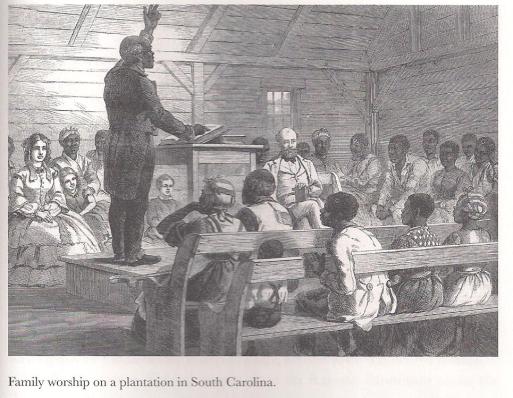
(by Frank Vizetelly)

It is clear throughout the book despite certain episodes that Palmerston’s cabinet was united and felt it was imperative for Britain to stay out of the conflict in America once Lincoln was elected.  The Palmerston government had to fight off intense pressure from southern lobbyists and certain British business men and members of Parliament to retain neutrality during the war.  British shipping interests built a number of ships for the south, including the CSS Alabama that in two years “captured or destroyed a total of sixty five U.S. ships, causing more than $5 million worth of losses to the Northern merchant marine trade.” (624)  Throughout the war the British government had to try and prevent blockade runners and ramming ships that were sold to the south from leaving British ports to be turned over to the Confederate navy.  British shipping and Union blockading of the south formed two issues that frustrated all sides and on occasion almost brought England into the conflict or at the very least recognition of the Confederacy.  The Union seizure of two southern diplomats from a British vessel in the Trent Affair was another episode that breeded great distrust between Washington and London.  Once both sides, as in most cases, realized that a working relationship between the Union and the British was much more conducive to the success of their economies accommodations were reached.

Plots abound in Foreman’s presentation.  Smuggling of ships, weapons, food, and supplies from English ports involved numerous characters ranging from the work of James Bulloch, the Chief Confederate secret service agent in England and the architect of Confederate plans to fulfill the needs of the Confederacy to Jacob Thompson, a Colonel in the Confederate army, and the head of clandestine operations in Canada.  Thompson largest operation came in November, 1864 when he wanted to purchase a steamer and convert it into a warship in Guelph, Ontario.  John Yates Beall who conducted terror raids against the north earlier in the war, would captain the ship, renamed the CSS Georgia and would try and sink the USS Michigan and create havoc along Lake Erie against undefended cities from Buffalo to Detroit. The plot failed when Lord Monck, the British Governor-General of Canada had the ship seized and a number of conspirators arrested.  Not to be considered defeated, Thompson when on with another operation this time to set fire to New York City in retaliation for Union army’s torching of buildings in the south.  The operation did set fire to a few hotels and created some panic, but overall it must be categorized as a failure.  Propaganda played a major role in the conflict and the Confederacy supplied millions of dollars to Henry Hotze, sent to London in 1862 and became the editor of the pro-Southern Index to convince the British people and government to recognize and supply the Confederacy.  He was able to befriend William Gladstone, a member of Palmerston’s cabinet and leader of the British opposition to the Tory government as well as the future Prime Minister, who became the Confederate voice for recognition within the British cabinet.  Foreman has a number of detailed descriptions of the spy operations that existed, particularly from the southern point of view.  This material is interesting and entertaining and reflects a different aspect of the war that most do not think about.

(Southern refugees encamped outside Vicksburg, July 1863, by Frank Vizetelly)

Foreman describes all the major battles and their political implications between the states, as well as how they affected British policy toward the war.  Much of this has been told in other monographs, but Foreman’s use of British citizens and their involvement in these battles presents a new and interesting perspective.  Examples include the battlefield and naval illustrations of Frank Vizetelly of Charleston’s harbor channel as Confederates deployed torpedoes, or his illustration of the fall of Fort Fisher as Wilmington fell to union forces, in addition to the many Punch cartoons that are interspersed in the narrative; as well as the opinions offered by William Howard Russell of The Times as he described the southern mindset as one of delusion and naiveté as they dealt with their prospects of victory.  Dr. Charles Mayo’s descriptions of the injuries sustained at Antietam and Gettysburg provide further insights into the concept of total and technological warfare that did not exist before 1861.  On April 2, 1863, Francis Lawley unburdened himself to in a letter to a British MP concerning the bread riots in Richmond.  “The Confederate capital was a microcosm of the many hardships being endured in the south; hunger, and disease were spreading.  Smallpox had invaded the poorer neighborhoods as more refugees arrived…” (424) Lawley further stated after a brief visit to Charleston after the battle of Wilmington, “that the empty streets reminded him of Boccaccio’s description of Florence after the Black Death.” (726)

Federal troops retreating at the first battle of Bull Run, 1861, by Frank Vizetelly)

Foreman delves into the thought processes and analysis of the major characters in the conflict.  She spends a great deal of time trying to explain the actions of Secretary of State Seward as he seemed to alternate between bellicosity and conciliation on a daily basis in dealing with the British.  Less time is spent on Lincoln than in most studies and there is little that is new here, but her portrayal of Jefferson Davis is intriguing as she delves into his personal life and fears as realized by the Spring of 1864 that his policies that were based on achieving British recognition, the pressure from British labor who were suffering because of lost jobs due to a lack of cotton, and the expectation that Robert E. Lee would deliver military victories that would result in independence had all fallen by the wayside.  Foreman has an excellent chapter dealing with Davis’ support for changing northern opinion by raids from Canada that would also provoke a war between the Union and England.  This did not pan out as Palmerston withstood pressure from Parliament to at least mediate the war that would have allowed the south to maintain slavery.  But, it was the slavery issue that the south could never overcome, though Davis, desperate after Sherman had ravaged Savannah and Wilmington was about to collapse on December 27, 1864 sent an emissary to London to offer to abolish slavery in return for recognition of the South.  In reality, the offer was moot once the U.S. House of representatives ratified the 13th Amendment abolishing slavery on all American soil on January 21, 1865.

Foreman brings her narrative to a successful conclusion by providing an update on the lives her main characters following the Civil War.  Further, she goes on to discuss the outstanding issues that remained between the United States and Great Britain.  The negotiations between the two nations were at times contentious but because of the work of Charles Francis Adams and his cohorts settlements were reached.  First, the Treaty of Washington, signed on February 24, 1871  “established two tribunals, one to arbitrate the claims of private individuals against the United States for actions committed during the Civil War, the other to rule on the Alabama claims.” (802)  On September 14, 1872 the tribunal ruled that Britain owed $15.5 million plus interest for the damage caused by Confederate cruisers built and facilitated by the British.   According to Foreman, A WORLD ON FIRE was an attempt “to balance the vast body of work on Anglo-American history in the 1860s with the equally vast material left behind by witnesses and participants in the war—to depict the world as it was seen by Britons in America, Americans in Britain, during a defining moment not just in U.S. history but in the relations between the two countries,” (806)  it is quite obvious that the author has achieved her goal.
LINCOLN IN THE WORLD: THE MAKING OF A STATESMAN AND THE DAWN OF AMERICAN POWER by Kevin Peraino

The opening narrative of Kevin Peraino’s new book, LINCOLN IN THE WORLD: THE MAKING OF A STATESMAN AND THE DAWN OF AMERICAN POWER finds the Lincolns at Ford’s theater with Mary Todd Lincoln resting her hand on her husband’s knee.  The author points out that this type of “tender” behavior was not the norm as Mrs. Lincoln was prone to spells of anger where she exhibited rather obnoxious and nasty behavior toward her husband which at times belittled him verbally for not having the wealth to take her to Europe.  She would, at times, further taunt him that her next husband would have the means to allow her to travel abroad.  In reality, Lincoln wanted to spend time “moving and traveling” overseas once his term in office was complete.  Lincoln had always wanted to visit Britain and fervently believed that the Civil War had tremendous global implications as the “Union effort was to prove to the world that popular government is not an absurdity.”  Lincoln further believed that the United States was a great empire and stood “at once the wonder and admiration of the whole world.”(1-2)

When one contemplates Lincoln’s presidency we usually point to his role in leading the North to victory on the battlefield, not any expertise or having a major impact on foreign affairs.  Peraino challenges that perception by arguing that despite the fact that his diplomatic team was frowned upon at best in European circles, Lincoln himself gave credence to that view by saying to a European diplomat at a state dinner that, “I don’t know anything about diplomacy….I will be very apt to make blunders.”  Lincoln’s State Department was able to avoid “European intervention on behalf of the Confederacy, which well have led to a Southern victory.”(5)  For all that has been written about Lincoln little has been put to paper about his conduct of diplomatic affairs.  Perhaps the best study appeared in 2010 with Howard Jones’ BLUE AND GRAY DIPLOMACY: A HISTORY OF UNION AND CONFEDERATE DIPLOMACY which is n in depth monograph encompassing most aspects of Civil War diplomacy.  Peraino’s study focuses almost exclusively on Lincoln’s role in world affairs and despite some organizational issues and awkward attempts to connect him to a number of world events and people the book is a useful addition to any Lincoln library.

Peraino conveys a great deal of interesting and informative details concerning Lincoln’s diplomatic escapades and sprinkles his narrative with some pointed analysis.  The book is thoroughly researched and posses an impressive bibliography.  Further the endnotes that are provided are exceptional resources for materials and information that are not present in the main narrative.  However, the author’s approach contain a number of drawbacks principally the way the chapters are sectioned.  The chapters are divided by pitting Lincoln against a different subject, be it English Prime Minister Lord Palmerston, Secretary of State William Seward, Karl Marx, Louis Napoleon III, and Lincoln himself.  The book makes no attempt at presenting itself as a comprehensive history of Civil War diplomacy as it focuses totally on Lincoln, but the detailed mini-biographies of each of the president’s “opponents” shifts attention away from the president and the author also has an annoying technique of trying to link each “oppositional” relationship by providing a ‘tease’ in the last paragraph of each chapter.

I agree with Peraino that the Mexican War was a turning point in Lincoln’s maturity as a diplomatic thinker and in a larger sense America’s place in the world.  Nothing in Lincoln’s background prepared him for the “donnybrook” that developed over his war views.  The election of 1844 was a referendum on American expansionism and a foreign policy awakening for Lincoln who would later favor the war effort when he later ran for Congress.  The major changes in technology preceding this period proved to be the” facilitator of American nationalism and continental ambition” that seemed to dominate the political discourse throughout the 1840s.(35)  Lincoln found himself in a quandary as he did not want to upset the sectional balance that existed between the free and slave states, but he could not ignore the war’s popularity.  Upon his election Lincoln joined the congressional opposition to the war.  He believed that the Mexicans had not done anything to provoke war and that President James Polk’s actions were unconstitutional as the power to declare war rested with the legislative branch.  Lincoln introduced his controversial “Spot Resolution” to determine exactly where the incident that launched the war was located, strongly suggesting that the war was caused by an American provocation.  For Lincoln the war resulted in a major problem, the addition of new territory that the south could claim for slavery thus undoing the balance of free and slave states, and the continued heated debate that over slavery that preceded the Civil War.  By the time Lincoln left Congress after one term he had learned a series of lessons.  He realized he needed a more nuanced approach to foreign affairs because territorial expansion would continue thus fostering the need to constantly rebalance the ratio of free and slave states.  Further, Lincoln believed that Polk had overstepped the bounds of executive authority in going to war.  It would take the Civil War for Lincoln to realize that in extraordinary circumstances the president must employ a strong hand.

When Lincoln assumed office European foreign ministers held a very low opinion of the new American president.  In fact the Russian envoy to the United States, Eduard de Stoeckl’s view of Lincoln was quite representative of his colleagues when he said, “Mr. Lincoln does not seem to posses the talent and energy that his party attributed to him when it named him its candidate for the presidency….Even his supporters admit that he is a man of unimpeachable integrity but of a poor capacity.”(103)  Opinions of Lincoln did not change his approach to foreign affairs as he was immediately faced with the issue of foreign intervention or recognition once the Confederacy was launched. The southern cotton trade was a delicate issue since Britain was so dependent on southern cotton for its mills.  Lincoln chose to blockade the southern coast and do nothing to aggravate any European power as a means of promoting their neutrality.

(Lincoln’s Secretary of State, William Henry Seward)

Lincoln’s Secretary of State William Seward agreed with this policy though Lincoln tended to have to reign in his remarks at times.  Peraino’s depiction of the Lincoln-Seward relationship does not really add anything new to the history of the period.  When Lincoln assumed office he needed Seward for the State Department as he viewed the office as critical for his cabinet to have legitimacy.  At the outset Seward believed that he should have been elected president and he was superior to Lincoln in experience and that he would make policy through the president.  With so many issues to confront almost immediately, i.e., instituting a blockade of the south, pursuing neutrality with Spain over Santo Domingo, reigning in abolitionists in order not to cause the border states to secede, the president and Secretary of State’s views began to converge and in a relatively short period of time Seward grew to respect Lincoln, and Lincoln’s trust in Seward increased markedly.

Perhaps the most interesting chapter in the book involves Lincoln’s relationship with Lord Palmerston.  Lincoln believed that swift military success would block any British attempt at interference in American affairs.  However, this was not to be and Lincoln’s fallback position was to develop a strong navy and institute a firm blockade to send a message to the British Prime Minister.  Peraino provides a brief biography of Palmerston and elaborates on his low opinion of Americans and Lincoln in particular.  The situation was exacerbated when an American ship stopped the HMS Trent in Caribbean waters and seized two Confederate diplomats, John Slidell and James Mason.  Lincoln’s approach was to calm the situation by drawing it out and letting the British let off steam.  This episode is presented in detail and both sides came to the realization that a war between the two would prove disasterous to both nations.  Lincoln had decided to release the two men, but took his time to prepare those in the United States who wanted to stand up to the British no matter the consequences.  Peraino’s analysis is dead on in quoting Oxford scholar, Jay Sexton in that “the creditor-debtor relationship of Britain and the United States bonded the two nations together and gave them the common interest of avoiding war.  Succumbing to momentary passions or old grudges would prove counterproductive.”(127)

(British Prime Minister Lord Palmerston)

Peraino correctly credits Lincoln with a number of innovations that contributed to the Union victory.  With the North facing bleak finances by the second year of the war and with European banks refusing to grant credit, Lincoln and his cabinet decided to issue a national paper currency, that Congress eventually approved by passing the Legal tender Act.  Further a national income tax was implemented easing monetary issues as well as the creation of a new National Bank in 1863.  “These sweeping modernizations of the nation’s financial system were critical prerequisites to America’s rise to world power.”(163)  The other major innovation was the building of the Monitor, the first iron clad naval vessel that the United States launched causing “the London Times [to worry] that the innovation had made Britain’s fleet of 149 ‘first class warships’ obsolete.”(165)

The chapter dealing with Karl Marx is really a stretch since the two never interacted directly.  Lincoln may have read some of Marx’s articles in the New York Herald Tribune for whom he wrote opinion pieces but it was not necessary to bring in a mini-Marx biography and integrate his views on slavery and revolution into the narrative.  At the outset of the war Lincoln was concerned with keeping border states neutral.  This concern also helped formulate his views on free labor and American commerce.  Comparing Marx’s views to Lincoln does not enhance the narrative nor do events that lead up to the Emancipation Proclamation.  Marx had no influence on Lincoln’s decision making leading up to the issuing of the document.  The “pseudo” Union success at Antietam as a vehicle to exhibit Northern military prowess for Britain to keep her neutral was much more important.  Lincoln came to view the Emancipation Proclamation as a vehicle to gain the support of British workers who believed that they worked for slave wages.  Lincoln went so far as sending funds to help organize British worker rallies in support of the northern cause.  Any fears that the proclamation might provoke intervention were really offset by events in Europe as Prussia invaded the duchies of Schleswig and Holstein,  Austria and Italy were in the midst of a major conflict, and Polish revolutionaries were active with the support of the French against Russian rule, but this does not stop Peraino from insisting that the proclamation led Louis Napoleon III to intervene in Mexico in 1863.  Linking the proclamation and the French Emperor’s actions is another connection that does not measure up to sound historical analysis.

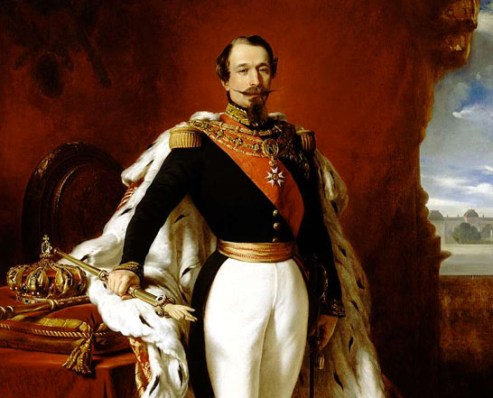
(French Emperor, Louis Napoleon III)

Peraino’s chapter that deals with Louis Napoleon III’s unfortunate attempt to revisit French holdings in the new world by placing Austrian Arch Duke Maximlian on a Mexican throne has little if any relationship to Lincoln’s issuance of the Emancipation Proclamation.  The author’s discussion of Louis’s ego and delusions concerning French power is spot on though there is an over reliance on Jasper Ridley’s dual biography of Louis and his wife, Eugenie in cataloguing his life before he seized power.*  Louis never believed that the North could force the South to return to the federal union so he decided to take advantage of the Mexican debt situation to rekindle his long held goal of reestablishing French colonies in the new world.  What is most interesting is that Louis’ actions fostered a movement to bring the Confederacy back into the fold through a joint expedition to evict the French from Mexico.  This actually led to a meeting between Lincoln, Seward, and Alexander Stephens, the Confederate Vice President on February 2, 1865 that came to naught.  These types of details make Peraino’s narrative exciting, but overall his linkage to Lincoln’s emancipation announcement on January 1, 1863 does little to foster historical accuracy.  The key for Lincoln and the Union was success on the battlefield, which Sherman’s March through Georgia provided, leading to Lincoln’s reelection which forced Louis’ to reduce his support for his Mexican venture.  In fact, by this time Louis had almost totally abandoned Maximilian as he began to withdraw French troops, and ultimately the Austrian Arch Duke was captured and shot by Mexican forces.

(Lincoln and his secretary and confidante, John Hay)

Peraino’s final chapter is a misnomer, Lincoln v. Lincoln is a summary of Lincoln’s legacy through the post Civil War career of John Hay.  The chapter examines John Hay’s career in some detail and concludes with Hay’s belief that the roots of American power lay in a healthy economy and a brisk trade,” an idea that was consistently held by Henry Clay, Abraham Lincoln, and of course William McKinley’s Secretary of State.  My one suggestion for Mr. Peraino would be to consult the latest biography of Hay written by John Taliaferro, ALL THE GREAT PRIZES: THE LIFE OF JOHN HAY FROM LINCOLN T0 ROOSEVELT  for the latest analysis  concerning Hay’s growth as a diplomat and foreign policy thinker.

Lincoln’s handling of the Mexican fiasco reflects his command of the diplomatic game.  Peraino’s analysis is accurate as he points out that there was a natural tension in “Lincolnian foreign policy.  On the one hand, Lincoln’s moral vision represented American idealism” as he realized that slavery diminished American prestige abroad.  But at the same time he instituted a patient and cautious approach, a middle ground in his pursuit of diplomatic advantages.  Lincoln was a diplomat who knew when to threaten and then soften his pronouncements.  He knew when to be magnanimous, but at the same time putting his foot down and letting his opponent know what he would not continence as in his dealing with Louis Napoleon III.  Lincoln was the consummate balancer, effectively controlling domestic interference in the conduct of his foreign policy by members of his own party and the copperheads who sought to make peace with the south enabling them to maintain slavery.  Lincoln did an excellent job taking the measure of and preparing the American public for changes that were about to take place in administration actions, i.e., dealing with Palmerston over the Trent Affair or dealing with the French incursion into Mexico.  Lincoln should be a role model for future presidents to study how to deal with domestic and foreign policy crises and to Peraino’s credit he provides a narrative that would allow our politicians to study and learn from.

*Peraino also relies heavily on Jasper Ridley’s LORD PALMERSTON for background on the English Prime Minister.

ON HIS OWN TERMS: A LIFE OF NELSON ROCKEFELLER by Richard Norton Smith

Original caption: 9/16/1976– Binghamton, NY- Vice President Nelson Rockefeller gives a crowd of young hecklers an upraised middle finger gesture at the Broome County Airport during a brief stop here Sept. 16, while on a campaign trip with Vice Presidential candidate Bob Dole (L, Background, out of focus)

Today the term “Rockefeller Republican” is still considered a negative characterization to most members of the Republican Party.  The term stands for moderate republicanism that calls for fiscal prudence, but also a social conscience.  In the current political environment when a large number of Republicans are calling for the disassembling of major components of the federal government and are trying to limit people’s voting rights the ideas of Nelson Rockefeller fall on deaf ears.  For the former four time governor of New York bipartisanship and an all inclusive party were a major part of his political agenda for most of his time in office.  As most of the Rockefeller platform is unacceptable today, it suffered a similar fate in 1964 as Barry Goldwater became the Republican standard bearer against Lyndon Johnson.  Many would argue that the hatred for “Rockefeller Republicanism” by Goldwater voters was the precursor of today’s Tea Party.  If so a number of important questions must be asked.  First, how did Rockefeller’s brand of moderate Republicanism come to the fore? Second, why was it so successful in New York and rejected nationwide? Lastly, why did it provoke such an extreme reaction in 1964 that continues to this day?  In his new book, IN HIS OWN TERMS, a major new biography of Nelson Rockefeller, Richard North Smith attempts to answer these and other questions as he explores a career that included the governorship of New York, the Vice Presidency, coordinator of Inter-American affairs under Franklin Roosevelt, and one of the most generous and widely renown philanthropists of his era.

(New York Governor Nelson Rockefeller trying to address the 1964 Republican National Convention)

The portrait that Smith presents is a complex one.  Rockefeller comes across as an ideological follower of Franklin D. Roosevelt’s New Deal for a major part of his political career.   Later he would adopt a more conservative political agenda as he continued to seek the presidency on at least three separate occasions.  He comes across as a generous individual who uses his wealth to reward and assist others, but at the same time he could be a stubborn vindictive person who set out to get even with those who disagreed with him.  Domestically, Rockefeller pursued a liberal agenda, but in foreign policy he was a cold warrior, fearful of the communist threat he supported the Vietnam War for most of his political career.  On a personal level Smith describes a man who could be a caring father, but at the same time he appears as a serial philanderer.  His first marriage failed after thirty years, and after remarrying, he seemed to dote on the children of his second marriage angering those of his first.  The author explores in detail these aspects of the Rockefeller persona and career, and has written an almost encyclopedic biography of one of the most interesting political figures of the twentieth century.

Smith describes his thirteen year odyssey in writing this biography.  Its coverage is impressive as he conducted numerous interviews and thoroughly mined the attendant secondary and primary sources.  The result is extensive coverage of his subject that brings the reader into the Rockefeller family dating back to its founder John D. Rockefeller.  We witness the wealth that was available to Nelson Rockefeller and how he employed it to satisfy his almost obsessive need to acquire art, design and build numerous residences and public buildings, caring for his many associates and friends when they were in need, and of course, procure his own election as governor on four separate occasions.  Rockefeller was a “serial” believer in forming committees and/or commissions made up of the leading experts on whatever topic was of interest to him.  Each role he was tasked, be it, as coordinator for Latin American affairs under FDR, an emissary for Richard Nixon to Latin America, a study to ascertain the best way to rebuild Albany, NY, develop a way to improve the welfare system in New York as well as well as nationally, along with numerous others, Rockefeller in most cases funded these activities with his own money and many of the solutions that emerged, i.e., revenue sharing and enhancing John F. Kennedy’s Alliance for Progress were adopted by different presidential administrations.

In a book of this length there are many themes and storylines.  One that seems to dominate is the evolution of Nelson Rockefeller from a liberal approach to social policy, whereby he was willing to push through increases in taxes, fees and other sources of revenue to implement them.  Rockefeller supported a myriad of social programs from improvements in Medicaid, purification of water resources, women’s rights, the first state minimum wage law, to the implementation of civil rights legislation.  Rockefeller’s approach to executive leadership and legislative tactics are reviewed as well as his philosophy of government.  What emerges is the type of governor that New York hadn’t seen since FDR.  With the message of taking responsibility for developing problems for the future, he would tackle issues in the present so they would not become problems down the road.  The issue was his overly ambitious approach to executive leadership always risked alienating conservatives west of the Hudson River.  With a strategy that would evolve from a “pay as you go” philosophy that would bring revenues into line with expenditures, “thereby eliminating costly borrowing and setting the stage for renewed economic growth,” Rockefeller evolved into to a governor who blew up the state budget to meet the needs of his massive infrastructure and building expenses in addition to the budget shortfalls of New York City by borrowing and floating different bond proposals.  By the time Rockefeller reached the end of his third term in office and was elected to his fourth term he became increasingly fiscally conservative as he faced opposition from the state legislature and probably realized that the political current of the late sixties and early seventies would not help any presidential ambitions he might have if he did not change.  Another major storyline that dominated Rockefeller his entire life that permeates the book was his life long battle with dyslexia.  The governor was not aware that he suffered from this affliction, but whether he was attending the Lincoln School in New York, Dartmouth College, or just trying to keep up with the massive amount of reading that a state executive engaged in it was always a battle.  With his wealth as a cushion, Rockefeller was able to employ numerous individuals to assist in this process whether in preparation of legislation or developing auditory strategies to overcome his reading difficulties.

There are a number of fascinating aspects to Smith’s approach to his subject as he prepared  expansive footnotes at the bottom of each page providing the reader with ancillary information that was not available in the text.  Rockefeller’s private opinions of the likes of John Lindsay and Richard Nixon emerge in a very “colorful” fashion which made the mining of these footnotes quite entertaining.  Smith’s discussion of deeply personal issues is not blanched over.  The breakup of Rockefeller’s marriage to Mary Todhunter Clark (Tod) was detailed and very fair as was the coverage of his remarriage to Margaretta “Happy” Murphy.  The loss of his son Michael during an expedition to collect primitive art in a remote part of New Guinea shows a father who has to deal emotionally with a loss of a son.  The relationship of the Rockefeller brothers and their children receives a great deal of attention and produces many interesting insights into the dynamic of such a public family.  Importantly, Smith does not mince words or coverage in dealing with Rockefeller’s numerous extracurricular activities with numerous women throughout his marriages.  In fact we witness a scandal at the site of Rockefeller’s death as to how his body was treated by those who were with him and the medical papers that were prepared to spare the family any embarrassment.

Aside from the personal aspects of the Rockefeller story, Smith devotes a great deal of effort in explaining what drove Rockefeller.  He was an avid and meticulous collector of modern and primitive art and he set as a goal the creation of a museum to house modern art that he would proudly help establish with the creation of the Museum of Modern Art (MoMA).  The second area that fascinated Rockefeller was politics and how it could be used to help people and better his country, a career path that would dominate his life for over forty years.  The fact that Rockefeller realized that as a scion of wealth he did not have to worry about “ordinary things,” therefore he was motivated to pursue the extraordinary.  Rockefeller’s battles to create MoMA were his trial by fire, a learning course in the art of political infighting.  This would also be the case in the creative process and building of Rockefeller Center as he would take lessons  learned from these confrontations and apply them in the future in his fights with the legislature, opponents such as New York Mayors John Lindsay and Robert Wagner, as well as national political battles.  In dealing with transit and garbage strikes, prison issues including the riots and death at Attica, infrastructure and other building projects, Rockefeller’s learning curve was applied to many crises.

Rockefeller’s other area of interest was foreign policy, and Latin America in particular.  His approach to western hemispheric issues was ahead of his time.  It began as a strategy to block Nazi Germany’s inroads in Mexico and South America.  He agreed with FDR that hemispheric solidarity was the key to changing the perception that the United States was seen as a colonizer in the region.  In 1942 Rockefeller unveiled his “Basic Economy Program” that called for improvement in the region’s public health problems.  Rockefeller arranged training for hundreds of professional nurses to assist in creating medical clinics in outlying areas.  Further,  he worked to export penicillin to offset disease in the region.  “In four years, Rockefeller agents trained more than ten thousand in-service workers, nurses, doctors, midwives, sanitary engineers, and home demonstration agents.”(164)  Rockefeller engaged in a fierce bureaucratic battle with “Wild” Bill Donavan, the head of the Office of Strategic Services at the end of the war over policy toward Latin America.  After the war facing the fight against communism, Rockefeller was a proponent of foreign aid to the region, but his approach was geared to offset the sensibilities of the countries receiving it to avoid the charactiture of “Yankee Imperialism” that OSS policy seemed to engender.  Rockefeller’s sensitivity toward third world countries should not take away from his fervent anticommunism, particularly in dealing with Vietnam where he was a strong supporter of Lyndon Johnson and was able to develop a close working relationship with the president.

Smith does yeoman’s work in describing Rockefeller’s campaigns for governor and president.  In both areas Rockefeller’s wealth and ability to obtain the necessary support for his candidacies was ever present.  The elective success he experienced in New York could not be replicated on the national stage as the Republican Party shifted to the right throughout the nineteen sixties.  His battle against Goldwater in 1964 made him an enemy to conservative republicans and his indecision in 1968 cost him any hope of wresting the republican nomination away from Richard Nixon, which also destroyed any candidacy for 1972.  His hopes improved after he was chosen vice-president by Gerald Ford following the resignation of Richard Nixon, but any hope of influencing the Ford presidency was offset by major disagreements with Ford’s Chief of Staff, Donald Rumsfeld who would block Rockefeller at every turn over policy and political decisions.  Any hope of higher office was dashed in 1976 as Rockefeller’s support for civil rights and the Voting Rights Act made him a political liability with conservative republicans in the south and resulted in the candidacy of Robert Dole for Vice-President on the 1976 Republican presidential ticket.

Overall, Nelson Rockefeller enjoyed an amazing life.  Art connoisseur, benefactor to countless individuals, a mostly progressive governor, and an influential and sometimes polarizing national figure for decades.  Richard Norton Smith gives attention to all these aspects of Rockefeller’s life and has written an in depth and informative biography that I am certain will be the definitive work on an illustrious career for many years to come.

BLACK OUT by John Lawton

(British Prime Minister Winston Churchill surveying damage to London caused by Nazi bombers on September 10, 1940)

I have been a fan of Alan Furst for years.  His evocative approach to espionage and his character development made his World War II noirs exciting and hard to put down.  Now, I have discovered another master of that genre, John Lawton.  The first book in Lawton’s Frederick Troy series entitled BLACK OUT features the intrepid Frederick Troy and his cohorts in Scotland Yard and an amazing array of individuals, who live in London in February, 1944, and a number of them who will also turn up in Berlin during the 1948 airlift  The mystery opens with a dog digging around in the trash and seizing an object, then runs with it in its mouth and drops it in front of a boy, the object is a human arm.  The night before this incident an American soldier gets his throat cut at Trafalgar Square.  Once an investigation begins Detective Sergeant Troy starts to connect a murder that took place a year earlier to the “arm” victim and the American soldier.  Troy is friends with another “copper” from Scotland Yard, George Bonham who lives in a house that rents apartments, and a Peter Wolinski, who worked at the George V dockyard, has turned up missing for unknown reasons.  Wolinski supposedly had taught college in Germany until Hitler forced him to leave and was a close friend of Bonham.  Once the investigation commences we begin to meet a series of interesting characters that include Ladislaw Kolankiewicz, who since 1934 had been the senior pathologist in Herndon.  Cooperating with Kolankiewicz, Troy pieces together the possibility that the two deaths and another missing person are all linked.  Troy, whose uncle Nikolai Rodyonavich worked with a team of scientists at the Imperial College in the Applied Physics Department provides a photograph to augment Troy’s suspicions.  When a socialite, Diane Ormond-Brack is seen leaving Wolinski’s apartment with a copy of the same photograph that Nikolai had shown Troy, suspicions are further aroused.  What Troy gathers is that these individuals may have been developing “lightweight alloys, tough, non-corrodable, and thin.  And they were also on to what that is-on to chemical propulsion,” rockets.(88)  When Troy visits N.A.G. Pym at MI5, and a Colonel Zelig at American headquarters in London to obtain answers he is stonewalled by both and gets nowhere, reaffirming his suspicions that all three incidents are linked to rocket development by the Germans.  In laying out the plot Lawton has drawn the reader into his web of British accents and language, espionage, and a case that is definitely beyond Inspector Troy’s pay grade.

Frederick Troy is a wonderful character to build a World War II and post war noir around.  His family emigrated from Russia after Stalin took control.  Troy’s older brother is an RAF pilot and in 1936 Troy was a raw recruit from the countryside who was taken in my George Bonham and his wife and shown the ropes concerning survival in London and pursuing police work in a city that had been ravaged by the Luftwaffe for five years.  What Troy strongly suspects is that after a fourth murder that an American Major Jimmy Wayne, an Office of Strategic Services (OSS-precursor to the CIA) agent is involved with all of them.  His investigation seems reflect Wayne’s guilt,  but evidence is circumstantial.  Troy is joined by his protégé Jack Wildeve, and his commander at Scotland Yard, Stan Onions in seeking the truth.  Two women are also present to confuse and cajole Troy.  First, we revisit Diane Ormond-Brack,  a girl friend of Major Wayne who later will become Troy’s lover.  Second, is M/SGT Larissa Tosca, seemingly Colonel Zelig’s secretary, but even while she is bedding Troy has an interesting shadow life that he is unaware of.  The novel places the reader in the heart of London right before D Day, June 6, 1944.  Characters have to deal with shortages of food and other staples.  In addition, we witness the underground community that lives beneath London subways to escape years of bombing, and English resentment of American soldiers who seem to have taken over their country and especially their women.  At this time the United States and the Soviet Union, realizing that the end of Nazi Germany will soon be at hand engage in a race to bring out of Germany as many scientists and intelligence assets that they can.*  The story changes focus once the war ends and shifts to post war Berlin which is enduring the 1948 air lift.

The novel is exceptionally written and Lawton’s integration of events is very helpful for the reader in developing historical context.  Throughout the narrative the author merges his own opinion of certain historical figures that are not only humorous at times, but very accurate.  For example, Lawton references General Dwight D. Eisenhower as Troy has grown increasingly frustrated when OSS Colonel Zelig claims that the D Day commander that a meeting with Major Wayne was an alibi to block Troy’s suspicions. Describing Zelig and Eisenhower, Lawton writes, “The rain was beginning to soak through his overcoat.  He went quickly back to the car.  Was it worth a try?  One bald-headed American was probably much the same as any other bald-headed American.  The only difference lay in the amount of scrambled egg on the cap.  Though, being fair, Troy felt Ike had better table manners.”(106)  Along with numerous astute observations, Lawton regales the reader by placing certain literary figures throughout the narrative as an intellectual tease.  The relationship between the OSS and MI5 is explored in detail and British distrust for that “pernicious organization” is readily apparent.  For the Americans they had had it with British, “procedure and protocol.”  Lawton also introduces Soviet espionage in the last part of the novel that reorients both Troy and the reader.

Troy  finds himself in the middle of turf battles of allied intelligence agencies throughout the book.  His investigation is blocked by both agencies and his fight to solve, what he thinks are four murders in the shadowy background of D Day and after is fascinating.  The author’s conclusion tying pre and post war espionage is calculating and keeps the reader guessing.  Lawton first installment of Detective Troy is a great read and I look forward to engaging the entire series.

  • See “The Nazis Next Door,” by Eric Lichtblau reviewed by Deborah Lipstadt,  New York Times  October 31, 2014.