BLITZED: DRUGS IN THE THIRD REICH by Norman Ohler translated by Shaun Whiteside

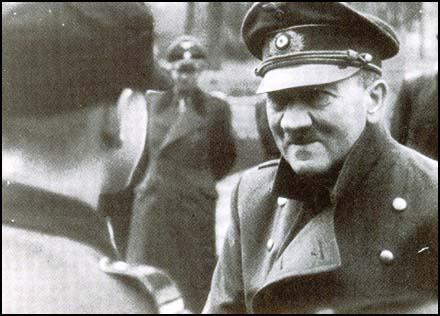
Image result for photo of Adolf Hitler in 1945

(Adolf Hitler in March, 1945)

With thousands upon thousands of books written about Nazi Germany and its “Fuhrer,” Adolf Hitler, one wonders if there is a relevant area of research that has not been mined thoroughly.  The appearance of Norman Ohler’s BLITZED: DRUGS IN THE THIRD REICH provides an affirmative answer.  A regime that prided itself on its anti-drug mantra was led by a man usually pumped full of drugs by his personal physician Dr. Theodor Morell.  The premise of Ohler’s work, first published in Germany in 2015, is that the Nazis provided the world with a chemical legacy that remains a major problem today – opioid – methamphetamine addiction.  The Nazis allowed the use of Volksdroge, “the people’s drug” unencumbered until the passage of the Reich Opium Law in 1941.  Today, the substance is known as “crystal meth,” and is consumed by over 100 million people worldwide, though in most places it is illegal or strictly regulated.

Ohler’s thesis presents the Nazi dichotomy.  It publicized and demanded that all should possess a constitution pure of drugs that could affect the mind and body.  Hitler, was portrayed as a vegetarian teetotaler who would not allow any foreign bodies to enter his system.  On the other hand, the Furhrer would become dependent on a series of short-term stimulants from 1936 on that would progress to an intravenous diet of animal extracts, and after 1943 hard drugs like Eukodal, whose active ingredient is oxycodone.  These pseudo medications were administered by Dr. Theodor Morell, a specialist in skin conditions and sexually transmitted diseases who would pollute the Nazi leadership with his concoctions and use Hitler’s dependency on his treatment to try and construct a “hormonal” industry called the Ukrainian Pharma-Works” in areas seized by the Wehrmacht.

Image result for dr. theodor morell photos

(Dr. Theodor Morell, Hitler’s private physician)

According to Ohler, the original rise of crystal meth took place in Nazi Germany.  The German chemical industry received a major boost in the 1930s under the direction of Dr. Fritz Hauscheld, the head of pharmacology at the Temmler Chemical Works who job was to discover a “performance enhancing drug” for the Third Reich.  The discovery of morphine made a different scale of war possible as men too injured to fight could now return to the battlefield. Temmler’s research would patent the drug Pervitin (“speed”), Germany’s first methamphetamine that produced feelings of euphoria, energy, self-confidence, and strength.  Temmler’s successful marketing campaign would result in the drug as a panacea for a number of issues from fatigue to a low sex drive.  The drug became a fixture in German society in the late 1930s.

The drug was a perfect match for the spirit of the age.  By 1936 Hitler had successfully overcome many of the limitations placed on Germany by the Versailles Treaty.  Unemployment was a thing of the past and by 1938 Germany had seized the Rhineland, achieved Anschluss with Austria, and stolen the Sudetenland from the Czechs at Munich.  For Hitler his burgeoning popularity was like a drug addict who could not give up his expansionist drug and by mid-1939 had moved on to Danzig.  The German people had to maintain this pace of change.  Fresh demands were made on the labor force and the military – the slogan “Germany Awake” needed methamphetamines for the country to “stay awake.”  According to Ohler, “spurred on by a disastrous cocktail of propaganda and pharmaceutical substances people became more and more dependent….Pervitin allowed the individual to function in the dictatorship.  National Socialism in pill form.” (39)

Ohler raises a number of questions; did civilian use of Pervitin carry over to the military?  Did German soldiers need the drug to fight effectively?  Did the addictive drug influence the course of World War II?  The answer in all cases seems to be yes.  Relying on a significant amount of research, particularly Dr. Morell’s patient notes Ohler traces the development, production, and dissemination of Pervitin as World War II approached.  He describes how it was employed in achieving the Blitzkrieg against France and the Low Countries in April and May, 1940.  The speed of the German military was key, and commanders would not tolerate rest or fatigue. Pervitin, is at a minimum partly responsible for the German success.  Dr. Otto F. Ranke, the Director of the Research Institute of Defense Physiology was completely on board with making these pills available to commanders and their soldiers.  With no real guidelines as to how Pervitin was to be used they were distributed in the millions to German soldiers.

Image result for dr. theodor morell photos

(Hitler with Dr. and Mrs. Theodor Morell)

Ohler weaves the course of the war effectively as he traces drug use as it related to Germany’s progress on the battlefield, and how, after 1942, mounting German problems affected Hitler.  Ohler weaves the Holocaust and the Nazi ideology of blaming Jews for the lack of purity of the German population that he had described in Mein Kampf, major battles and military decisions, and Hitler’s interaction with people throughout the narrative.  Further he describes the chemical changes in the nervous system of German soldiers through the ingestion of the drug as they went into battle.  What was clear is that the energy and euphoria could last only so long before fatigue set in and German advances were hindered by the need to rest their soldiers.  The same can be said of Hitler, as Morell developed a vitamin concoction called Vitamultin which he injected the Fuhrer with daily, resulting in similar after effects that German soldiers suffered from.  Morell was able to convince the General Staff of its benefits and a number of them would soon become his patients, as did many other Nazi officials.

Image result for photos of german drugs during WWII

Hitler’s medical decline began in the autumn of 1941 as the war began to turn against the Reich.  Germany had invaded the Soviet Union on June 22, 1941 and it was supposed to take three months to complete the action.  “As soon as he encountered genuine Russian resistance that couldn’t be removed with a sweep of the hand, ‘the greatest commander of all time’ retreated further and further into his world of make believe.  The microcosm of the Wolf’s Lair (Hitler’s eastern command center) was nothing more than a hubble made of concrete and steel.” (111)  For the first time in the war Germans suffered great losses in a very short period of time – even the doping that had been deployed for Operation Barbarossa was ineffective as once the Pervitin wore off, troops had to rest.  Hitler fell ill for the first time in years in August, 1941 and when Morell’s concoctions of vitamins and glucose failed to work he raised the ante by injecting steroids and other opiates.  He did prevent another illness, but in the future Morell resorted to prophylactic injections of new hormonal substances.  “From autumn 1941 onward, more and more concentrated animal substances began to circulate in his bloodstream” in order to reinforce his body’s defenses.  The result was that “Hitler’s natural immune system was soon replaced by an artificial protective shield.” (114)  From then on Hitler’s military directives parted company from reality as he would not accept rational arguments from his generals.

Image result for photos of german drugs during WWII

As the war continued to go against Hitler’s “alternative reality” he became more and more dependent on opioid drugs.  Hitler was dependent on Dr. Morell, who was dubbed the “Reich Injection Minister” by Hermann Goring.  “The medication kept the supreme commander stable in his delusion….Any doubts were swept away by his chemically induced confidence.  The world could sink into rubble and ashes around him, and his actions cost millions of people their lives – but the Fuhrer felt more than justified when his artificial euphoria set in.” (163)

Ohler describes the period after 1943, as Hitler’s heavy opiate phase.   As the war turned increasingly bad for Germany, the Merck and Company facility in Darmstadt was destroyed in December, 1944, so Merck could no longer produce Eukodal.  Hitler’s health would deteriorate and to survive he took strong narcotics which erected a pharmacological barricade around himself.  The delusional system that Hitler created for himself, would not allow him to remain clear of drugs.  “Under no circumstance did Hitler want to come down from his megalomaniac Fuhrer trip, in spite of the disastrous military situation.” (174)  By the spring of 1945, Morell no longer had any potent substances to administer as he had done in the past.  As time evolved the Fuhrer most certainly went through a period of withdrawal.  Some historians believe he was suffering from Parkinson’s disease, but in retrospect it is hard to determine a definitive diagnosis.

A part from Hitler the drug crutch influenced German naval policy.  Admiral Hellmuth Heye argued for one man torpedoes and two man submarines to inflict damage on allied shipping.  To accomplish this task drugged men were required as these were kamikaze missions.  Ohler describes the drug mixtures created that would have been fine for an addict like Hitler, but could not be tolerated by the average soldier.  Medical experiments to prepare Germans to carry out their weapons pipe dreams were carried out in Sachsenhausen and Auschwitz concentrations camps resulting in the death of numerous victims.  Ohler describes in detail Hitler’s deterioration once drugs were not available and he would succumb to a nasty withdrawal like most drug addicts.

A number of important historians support what Ohler’s research has unveiled.  The late Hans Mommsen, one of the leading German historians of the Nazi era, Ian Kershaw, the foremost Hitler biographer, and Anthony Beevor, the well-known military historian all recognize that Ohler, a German journalist, novelist, and filmmaker has written “a serious piece of scholarship,” and one that is very well researched.” (“The Very Drugged Nazis,” by Anthony Beevor, New York Review of Books, March 9, 2017)
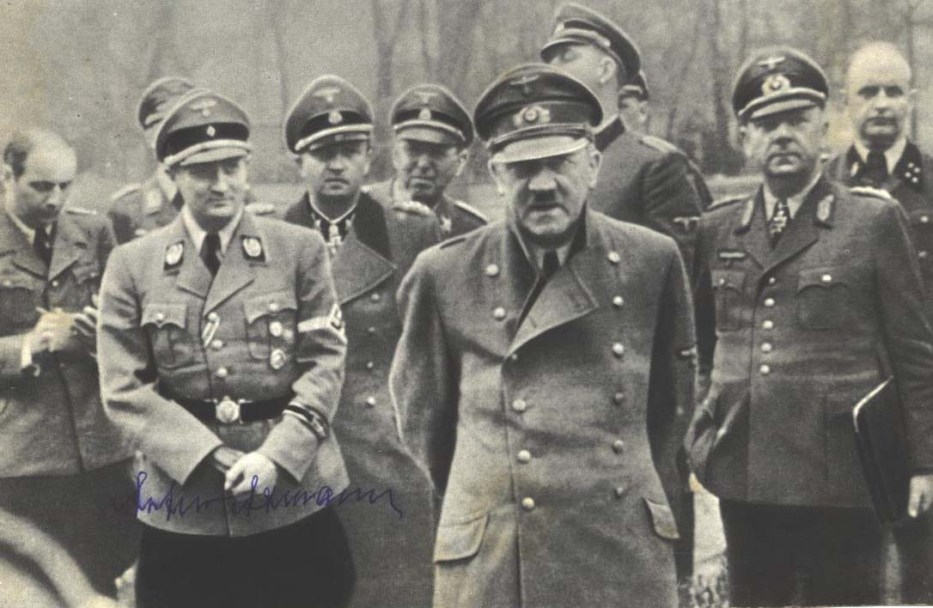
Image result for photo of Adolf Hitler in 1945

(Hitler in early 1945)
 

THE PLOTS AGAINST HITLER by Danny Orbach

Image result for july 20, 1944 photo of damage from plot to kill hitler

(July 20, 1944, bomb damage from a plot to kill Adolf Hitler)

One of the most consistent questions asked by historians about watershed historical events is “what if?”  Counterfactual history may be an interesting intellectual exercise, but speculating when an “Adolf Hitler” could have been stopped, thus avoiding the carnage of World War II does not alter events.  However, reviewing and analyzing actual attempts to kill or overthrow the German Fuhrer is not counter factual but a valid attempt to see how close conspirators actually came to removing Hitler.

There are many other questions that are associated with attempts to remove individuals who are deemed to be dangerous to society.  At what point do people turn against their government?  What motivates people to resist?  Is it ideological, moral, or some other reason that drives individuals to say enough is enough and resort to violence to unseat an existing regime?  These questions are very important when applied to the opponents of Adolf Hitler.  Why did certain people oppose Nazism?  Why did they wait so long to try and depose Hitler?  Did some plotters of the resistance to Hitler actually participate and support genocide against the Jews and other inhumane actions?  Did they try and rid the world of Hitler when they realized that the war was lost?  Finally, did they find Nazism morally repugnant so they decided to strike?  These questions and a discussion of those who tried to remove Hitler are examined fully in Danny Orbach’s new book THE PLOTS AGAINST HITLER.  Orbach examines the full breath of available documents in a number of languages and argues that the answers to these questions are complex and conclusions cannot be considered black or white.

By late 1934 Hitler and his henchmen having taken advantage of the Reichstag fire were the sole masters of Germany.  After crushing the Communist Party, the Social Democratic Party, and centrist parties, the most important source of legal opposition to the Nazis ceased to exist.  The Nazi Gleichschaltung (bringing into line) would swallow local governments, trade unions, and any possible opposition as they cemented their hold over Germany.  Even military leaders who looked down on the former corporal supported a regime whose rhetoric promised to fulfill their goals of rearmament and a more aggressive foreign policy.  A number of military leaders did question the idea of Hitler in power, but they, like the politicians felt they could control him.  Any dissenters were silenced or forced to retire, and Hitler sealed the deal with the military by destroying the SA, his private army during the “Night of the Long Knives” (also known as the Roehm putsch) when the SA leadership was massacred.  With the accession of the SS and the Gestapo, all opposition ceased.

Image result for photo of lt col hans oster

(Lt. Col. Hans Oster)

Orbach traces the origins of the most famous attempt to remove Hitler on July 20, 1944 to the purge of the military leadership in late 1937 and early 1938.  It began with the removal of Field Marshall Werner von Blumberg, the Nazi Minister of War, and General Werner von Fritsch, the commander of the army.  Both were brought down through the machinations of Heinrich Himmler and Hermann Goering as one was married to a former prostitute, the other was framed as a homosexual.  The vacuum was filled by lackeys like General Wilhelm Keitel who were deemed loyal to Hitler,  but an outgrowth of these events was the development of a network that opposed Nazism and wanted to change the government led by Lt. Colonel Hans Oster, an anti-Nazi and a rising star in the Abwehr; Hans Bernd Gisevius, a Gestapo agent who became Oster’s eyes and ears inside the Nazi Security Service; and Dr. Carl Friedrich Goerdeler, the former land mayor of Leipzig who resigned his office when a statue of Felix Mendelssohn was removed from the town square.  These men and others eventually found the violence against the Jews repugnant, were distraught over the persecution of the church, and felt that Hitler’s dangerous foreign policy would lead to war and the destruction of Germany.

Orbach outlines clearly the characteristics of a strong network or clique to foment a coup.  He points to the recruitment of members based on previous friendship and acquaintances.  Further, they must be relatively autonomous and protected from suspicion by the security services, i.e., the officer corps was autonomous from civilian authorities.  Lastly, they are dependent upon networks of kinship, marriage, social ties, joint schooling and military service.  This would lead to the evolution from being a social network to a conspiratorial one.

Image result for photo of colonel ludwig beck

(Colonel Ludwig Beck)

The network would expand to include Ulrich von Hassel, the former ambassador to Italy, Ewald von Kliest, an aristocrat and major land owner, Colonel Ludwig Beck, the Chief of the General Staff, General Erwin von Witzleben, the commander of greater Berlin, and on the periphery Colonel Wilhelm Carnaris, the head of German intelligence.  This network is described in one of Orbach’s most interesting chapters as he describes how they organized and planned a coup de tat for September 28, 1938.  For Orbach this was one of the best chances for success because following the Anschluss with Austria, Hitler ordered Operation Green, the invasion of Czechoslovakia to obtain the mineral rich Sudetenland, an area of over three million Germans.  If this could be achieved then the Czech state would effectively be destroyed.  A number of leading military and civilian figures opposed the operation believing that Germany was not ready for war and would be defeated.  The coup was set, but the conspirators did not count on the fecklessness of British Prime Minister Neville Chamberlain and the intercession of Benito Mussolini that brought about the Munich Conference and the ceding of the Sudetenland to Germany peacefully.  Once the fear of war with Britain and France was off the table, the conspirators were finished.  However, Hitler would continue his aggressive actions that eventually resulted in the events of early September, 1939 with the invasion of Poland and the official beginning of World War II.

The Oster, Goerdeler, and Beck network was too small to stage a successful coup especially with higher echelons of the Nazi regime intoxicated with events up to the invasion of the Soviet Union in June, 1941.  The expansion of the German resistance movement was a direct reaction to Operation Barbarossa, and with it the only option seemed to be the assassination of Hitler.  The movement expanded and its tentacles reached further into the army, foreign office with improved connections between cells.  Many like Hermann Kaiser, a former history teacher, and reserve officer; and Lt. Col. Henning von Tresckow, a senior operations officer in the Army Group Center on the eastern front reacted to the carnage and slaughter in the east perpetrated by SS Einsatzgruppen.  In 1941 and 1942 there was little that could be done to stop it, but with the fall of Stalingrad the resistance was emboldened and a number of assassination attempts against Hitler were planned but failed due to a change in the Fuhrer’s schedule, bad luck or other unforeseen problems.

Image result for photo of wilhelm canaris

(Admiral Wilhelm Carnaris)

One of the most surprising aspects of the book was Orbach’s discussion of the role of Admiral Wilhelm Carnaris, a conservative nationalist who could not accept the brutality of the Nazi regime.  Carnaris disgusted by what he saw in Warsaw worked to save over 400 people including Rabbi Joseph Schneersohn, the Lubacitche Rabbi.  Carnaris worked further to smuggle Jews out of Germany using the excuse he was planting spies abroad.

Image result for photos of july 20, 1944 attempt to kill hitler

(Count Claus von Stauffenberg, attempted to kill Hitler with a bomb on July 20, 1944)

By 1943 leadership of the resistance fell, almost, by default to Count Claus von Stauffenberg, a romanticist and elitist whose career would bring him to Hitler’s General Staff.  Orbach presents an in depth chapter dealing with von Stauffenberg’s evolution in finally becoming the leader of the movement and deciding that only he had the courage and position to kill Hitler.  Orbach carefully explains the organization of the conspirators, how they planned, communicated, recruited, and compartmentalized their networks from each other.  Orbach’s analysis included the personality clashes within the movement and the shadow government that was created designed to govern Germany after the Nazis were removed.  All their plans failed as Hitler survived the July 20, 1944 bomb blast and Orbach explains that none of the conspirators had any training in the art of the coup de tat which in part explains why it was not successful.  Orbach drills down in reviewing mistakes that were made and the fate of the perpetrators once the plot was uncovered.

Orbach’s conclusions are well supported by his ambitious scholarship and research.  I believe the most important question explored in the narrative is what led people to oppose Hitler.  Was is a combination of their hostility toward murder, genocide, fear that Germany could not win a world war, opportunism, or the dechristianization of Germany?  Orbach further argues that it “perhaps comes down to the elements composing motive, the aggregate of psychological processes and factors pushing one across the Rubicon into the shadowy world of revolutionary conspiracy.  It may well be difficult to define the elusive mix that constitutes such an imperative.  The best I can do is to suggest three necessary components: its foundation, substance, and impetus.”  The foundation seems to be empathy, the substance is a system of values, and the impetus was exceptional courage.

Orbach’s narrative, at times, reads like a murder mystery, as well as a historical monograph. Orbach should also be given credit for presenting then debunking numerous myths associated with events which makes the book a useful contribution to the increasing number of studies dealing with the German resistance.  Because of Orbach’s approach and smooth writing those who are interested in the topic should not be disappointed.

Orbach compares the recent attempted coup against President Recep Tayyip Erdogan of Turkey with those against Hitler in the Israeli newspaper Haaretz, November 28, 2016.  http://www.haaretz.com/middle-east news/turkey/.premium-1.755427

Related image

(July 20, 1944, bomb damage from a plot to kill Adolf Hitler)

FIELDS OF BATTLE: PEARL HARBOR, THE ROSE BOWL, AND THE BOYS THAT WENT TO WAR by Brian Curtis

Image result for photo of the 1942 Rose Bowl game

(1942 Rose Bowl Game in Durham, NC)

Last Monday the University of Southern California and Penn State University met in one of the most thrilling Rose Bowl games in history with the Trojans winning on a last second field goal 52-49.  Before the game, in keeping with the remembrance of the 75th anniversary of the Pearl Harbor attack, one remaining player from the 1942 Rose Bowl, and survivors of December 7, 1941 were honored.  In the wake of the attack the game was moved from Pasadena to Durham, NC.  Oregon State University, the underdog, played Duke University and the Blue Devil campus opened its arms to their opponents who had to travel across America by train in the wake of the Japanese action.  As players practiced for the game British Prime Minister Winston Churchill and President Franklin D. Roosevelt met to discuss preparations for war, and allied strategy that would greatly impact these Rose Bowl participants.  Brian Curtis’ new Book, FIELDS OF BATTLE: PEARL HARBOR, THE ROSE BOWL, AND THE BOYS THAT WENT TO WAR catalogues a little known slice of American history describing what took place on the grid iron, the battlefields of World War II, and how many of these football players readapted to civilian life after the war.  Curtis’ style reminds one of John Feinstein’s approach in A CIVIL WAR: ARMY VS NAVY: A YEAR INSIDE COLLEGE FOOTBALL’S PUREST RIVALRY  as he delves into the personalities and military careers of the coaches, players, and many of the faculty at Oregon State and Duke.

Image result for photo of the 1942 Rose Bowl game

Wallace Wade who hailed from Gibson County, TN played football at Brown, enlisted in World War I, and after missing out on combat in 1918 returned to civilian life and became a football coach at the University of Alabama.  He was successful and had the reputation of getting the most out of his players, and after winning a national championship moved to coach Duke in 1930.  By September, 1941 the Duke’s football team was down to 49 players as with war in the air, 6 players had already enlisted.  Alonzo “Lon” Stiles, Jr. the Oregon State University coach grew up in Nebraska and was able to turn a small agricultural school into a major football power. However, by March, 1941 OSU was still seen as one of the weaker teams in the Pacific Coast Conference.  Curtis provides a history of the football programs at both schools and introduces the reader to the important players ranging from Don Durdan, the son of a banana farmer in Eureka, CA; Bob Dethman from Hood River, OR, a person who had it all, good looks athletic talents, and strong academically for OSU to Frank Parker, a rambunctious and driven person; to Jack Yoshihara, the only Japanese –American on the Duke squad.

Image result for photo of Wallace Wade Sr

(Wallace Wade, Sr.,  Coach of the Duke Football Team)

After reviewing the 1930s and the eventual war in Europe, the American role in the world before Pearl Harbor, the author focuses on how the United States evolved into “the arsenal of democracy.”  Curtis integrates OSU and Duke into his discussion of military preparedness with new courses oriented to technological innovation and military needs, bringing in soldiers to take specialized courses to enhance their military training, along with the standard ROTC programs.

Curtis describes the football season for both teams in detail and is able to use certain players and place them in their historical context, i.e., Jack Yoshihara, a Duke player that was interned along with his entire family after Pearl Harbor was attacked.  By the first week in December both schools were invited to participate in the Rose Bowl and began practicing and making plans when the Japanese attacked.  Lt. Gen. John L. DeWitt was Commander of the 4th Army and responsible for protecting the west coast.  DeWitt was an intolerant individual and a racist and the author should have delved into DeWitt’s actions and policies in greater detail, particularly when he opposed moving the Rose Bowl east, and had the FBI arrest Jack Yoshihara in front of his teammates, banned him from playing in the bowl game, eventually moving his entire family from “internment camp,” to “internment camp.”  Curtis does present the standard history of how the internment camp policy was implemented, describing conditions in the camps and how Japanese-Americans adjusted.  Curtis does detail the plight of the Yoshihara family, as US citizens they still lived in demeaning conditions, having lost their possessions and being separated from Jack.

Related image

(Minidoka internment camp, Oregon)

Curtis integrates wartime events into his narrative and how they affected the game and the players once it was moved to the Duke campus.  Curtis describes team preparation, the game itself, and what happened to the players following its conclusion.  Once the game was completed the author does a nice job dealing with how the war affected each campus.  College administrators sped up graduation requirements to allow men who were enlisting or being drafted to complete their education.  Further, scientific research became a staple as Nobel Prize winning scientists like Enrico Fermi and Arthur Compton worked on a “uranium weapons program,” the early stages of the Manhattan Project” which had ties to Duke facilities and faculty.

As he watched his players join the services, Wade, age 49 decided to reenlist as he wanted to do what he had always asked his players to do, ending his coaching career.  Eventually receiving command of the 272nd Artillery Battalion, Wade saw action in France after Normandy.   Stiner was too old to enlist, but he followed his players avidly putting a map up in his home and using stick pins to follow their progress in Europe, North Africa, and the Pacific.   However, the 1942 football season continued as Washington viewed it as a useful distraction from the war.  OSU and Duke would lose a significant number of players to graduation and the military.  They would present weaker rosters and their poor performance did not match fan expectations.  One of Duke’s former players, Walter Griffith who served in the 8th Marines, Second Division was the first Rose Bowl participant killed in the war at Guadalcanal, a battle that provided evidence to the allies how fierce the fighting would be to defeat Japan.  The former players would soon find out that “war was hell,” from the outset.  One of those was Wallace Wade, Jr. who had enlisted before his father and as an officer with the 9th Division Artillery made his way across Algeria and Tunisia, later crossed the channel into France through Belgium and Germany where he was close to breaking down.  With all his combat experience, Wade, Jr. concluded that “Sherman’s description of war was a great understatement.”

Image result for photo of Lt.  Gen. John L. DeWitt

(Lt. Gen. John L. DeWitt)

Through the eyes of former players Curtis effectively describes the course of the war and the major battles these men participated in.  As he does this, Curtis places their experiences in the full context of the war, i.e., when Charles Haynes, leader of the Second Platoon, Easy Company, 349th Regiment, 88th Division deployed to Italy, an allied strategy designed to weaken Nazi defense of Germany by having them pick up the pieces after Mussolini was captured.  In fact, Charles Haynes of Duke would run into Frank Parker of OSU on the battlefield, then later Parker would carry the severely wounded Haynes to a medical station.   Later in the war Lt. Colonel Wallace Wade, Sr. would come across OSU’s Stanley Czech, a field artillery observer, and of course Czech offered the “old man” a cup of coffee.

By constructing his narrative in this manner for the final third of the book, Curtis offers a bird’s eye view of what these football players experienced during the war; fighting in the Ardennes Forest, the Battle of the Bulge, Iwo Jima, Normandy, Guadalcanal, Sicily, and numerous other historical battles, and why the 70 players and coaches that played or coached in the 1942 Rose Bowl who served in the armed forces, less 4 of which had been killed, were treated as heroes upon their return.  What truly enhances Curtis’ work are the personal stories he tells concerning how these men readapted to civilian life after the war.  Some dealt with the effects of the war well, others not so, but all in all these men made a tremendous contribution to their country.

Image result for photo of the 1942 Rose Bowl game

(1942 Rose Bowl Game, Durham, NC)

COUNTDOWN TO PEARL HARBOR: THE TWELVE DAYS TO THE ATTACK by Steve Twomey

Image result for pictures of pearl harbor attack with color

(December 7, 1941)

Steve Twomey is a superb writer whose new book COUNTDOWN TO PEARL HARBOR: THE TWELVE DAYS TO THE ATTACK is a useful addition to the list of books recently published commemorating December 7, 1941.  Employing numerous primary source documents, memoirs, interviews, and a mastery of secondary materials Twomey has recreated the tension filled days leading up to the Japanese attack. The reader is provided a front row seat from which to witness the debates within the Roosevelt administration, the work of the intelligence community, and the approach the American military took in responding to the Japanese threat.  In addition, the author explores the Japanese perspective on all events.

Twomey, a Pulitzer Prize winning reporter for the Washington Post incorporates numerous biographical sketches of the major figures and these sketches include Japanese as well as American figures.  Prominent on the Japanese side are Admiral Isoroku Yamamoto, the Vice Minister of the Imperial Navy, the architect of the attack; Kichisaburo Nomura, the Japanese Ambassador to the United States; Takeo Yoshikawa, a Japanese spy who took a job as a dishwasher at Pearl Harbor;  Admiral Harold Starks, Chief of Naval Operations; Admiral Husband Kimmel, Commander of the Pacific Fleet; Joseph J. Rochefort, Head of the Combat Intelligence Unit; William Knox, Secretary of the Navy; General George C. Marshall, Chief of the Army, and General Walter Short, Army Command in Hawaii, among others.

Image result for yamamoto photo pearl harbor plan

(Admiral Isoroku Yamamoto, the Vice Minister of the Japanese Navy who planned the attack)

Twomey follows the week and a half leading to the attack, providing context and analysis as he brings to the fore a number of issues.  The role of the Washington bureaucracy and its communications with military commanders is especially important, as is the flow of intelligence that was made available.  The intelligence issue is paramount because the United States had broken Japanese diplomatic and naval codes referred to as MAGIC and these intercepts had a limited dissemination.  The preparation taken by commanders in the Philippines and Hawaii receives a great of attention as does the inability of Washington to supply the numbers of planes and pilots for reconnaissance to provide a warning to deal with the Japanese threat.  Marshall and Stark had a limited ability to supply the Pacific theater, and even reduced Pearl Harbor’s forces by 25% to assist in the Atlantic war against Germany.

Image result for yamamoto photo pearl harbor plan

Twomey deals with those who were supposedly the most culpable for the lack of preparation at Pearl Harbor, and unlike Anthony Summers and Robbyn Swan’s recent book he finds Admiral Kimmel guilty of a lack of judgement in preparing his command and presents him as a person who had little contact with Japan, and believed they might bluff but would not be reckless enough to attack the United States.  Twomey also dissects the intelligence community concentrating on the cryptographic miracles that occurred in the “dungeon,” the nickname for Rochefort’s office.  Men like Lt. Commander Edwin T. Layton, a Lt. Commander of the intelligence division who held a strong knowledge of Japanese culture and language, and Capt.  Arthur H. McCollum, Chief of the Far Eastern Section of Naval Intelligence who assisted in the breaking of the MAGIC code are discussed in detail in an enlightening chapter entitled, “Their Mail Open and Read.”

A number of telling things emerge in dissecting the lack of preparation at Pearl Harbor.  Twomey’s critique of Stark is very accurate as during the course of 1941 up until the collapse of diplomatic negotiations with Japan at the end of November, his warnings to the Pacific fleet were like a “yo-yo.”  On January 13, 1941 he informed Kimmel that war “may be in a matter of weeks.”  On October 17, 1941 he told Kimmel that “I do not believe the Japs are going to sail into us,” but on November 7, 1941 he stated the situation was “worser and worser and in a month may see literally most anything.”  The problem as the author correctly points out is that Stark did not put himself in the minds of a commander with his double bind messages.  Further, Stark kept the Japanese intercepts away from Kimmel and General Short, and when messages that were forwarded did not include a threat to Pearl Harbor as it emphasized the Philippines.

Image result for yamamoto photo pearl harbor plan

(FDR: “A Day that will go down in infamy”)

Another interesting chapter that Twomey presents deals with Army-Navy relations at Pearl Harbor.  The lack of trust, poor communication, and little or no training together by the two services before the arrival of Kimmel and Short is damning to say the least as is their lack of coordination of reconnaissance flights, the destination and location of naval forces, and other issues.  The situation does improve once the new command is in place, but it took a long time to try and undo the past relationship.

The role of Joseph Grew, the American Ambassador to Japan and his attempts at reaching a settlement between the two adversaries is interesting as is Secretary of State Cordell Hull’s negotiations with the Japanese in Washington.  The Japanese process was simple in its application of diplomacy, stall and create a charade of amiability until their navy was in place, then move quickly to the deadline date.  Another important component in Twomey’s narrative is his accurate portrayal of American racist views.  This deprecation of Japanese culture led to ridiculous views of the abilities of Japanese naval forces and their pilots.  Our view of their inferior technology, intelligence and decision making also contributed to the disaster of December 7th.   Another fascinating area is Twomey’s discussion of how American naval intelligence lost sight of Japanese aircraft carriers weeks before the attack.  They went silent and intelligence analysts could not determine its true meaning for the near future.  But, by December 3rd intercepts showed that Japanese diplomats were destroying their code machines and documents and they feared for their seizure once the attacks in the Pacific took place.  If Stark was convinced this was a prelude to war why didn’t he make firmer warnings to Kimmel?

In the final analysis Twomey argues American readiness for an attack on Pearl Harbor was an outright gamble.  After sifting through all the documentation the author can make the case that certain steps should have been taken by Stark, Kimmel, Short and others to prepare American forces for a Japanese attack.  However, those in charge in Washington and Pearl Harbor held the belief that the Japanese would not be ignorant enough to hit Pearl Harbor so distant from their home base.  The Philippines was most likely to be attacked, but for government officials, civilian and military, Pearl Harbor should not have been a target.  The question who is responsible for the disaster that followed, the blame could be spread around and should not be focused on one or two individuals.

Image result for pictures of pearl harbor attack with color

(December 7, 1941)

A MATTER OF HONOR: BETRAYAL, BLAME AND A FAMILY’S QUEST FOR JUSTICE by Anthony Summers and Robbyn Swan

Image result for pearl harbor attack photos in color

December 7 , 1941, Japanese attack on Pearl Harbor)

This week Americans commemorate the 75th anniversary of the December 7, 1941 bombing of Pearl Harbor and the United States’ official entrance into World War II.  The date has fostered the appearance of a number of recent books dealing with the Japanese attack and its repercussions.  Among these monographs are JAPAN 1941: COUNTDOWN TO INFAMY by Eri Hotta, PEARL HARBOR: FROM INFAMY TO GREATNESS, by Craig Nelson, COUNTDOWN TO PEARL HARBOR: THE TWELVE DAYS TO THE ATTACK by Steve Twomey, SEVEN DAYS OF INFAMY: PEARL HARBOR ACROSS THE WORLD by Nicholas Best that concentrate on the overall attack, what lay behind it, its repercussions, and A MATTER OF HONOR: BETRAYAL, BLAME AND A FAMILY’S QUEST FOR JUSTICE by Anthony Summers and Robby Swan which focuses in on the role of Admiral Husband Kimmel who was relieved of his command and accused of dereliction of duty due to the success of the Japanese attack.  The focus of this review is the narrative exploration and defense of Admiral Kimmel who Washington officials made one of the major scapegoats for the losses at Pearl Harbor, and his fight, during his lifetime to clear his name, and the continued battle with the Washington bureaucracy by his sons to absolve their father and restore his reputation.  The book is presented in two parts.  The first section, about two thirds of the book explores events, decisions, intelligence, and personalities leading up to the attack.  The last third deals with the charges against Kimmel, his defense, and the families attempt to restore his reputation and absolve him of total responsibility for the failures that led to December 7th.

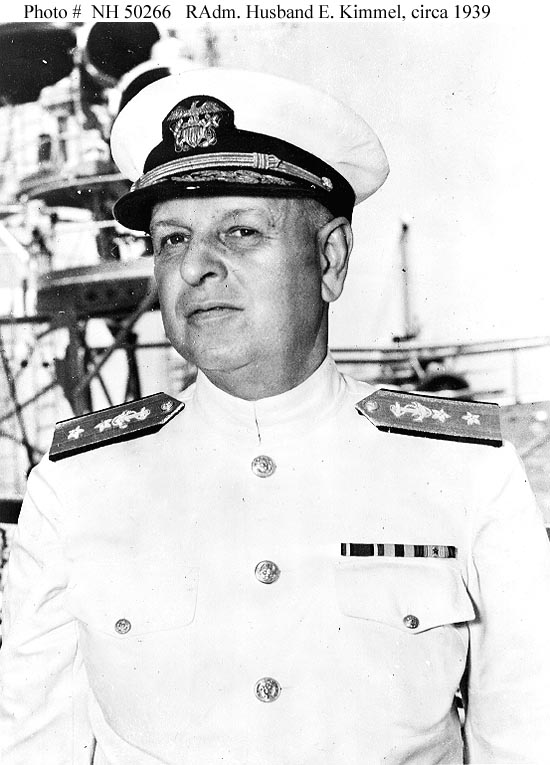
Image result for photo of Husband Kimmel

After putting to bed some of the conspiracy theories pertaining to the reasons behind the Japanese success at Pearl Harbor the authors move on to deal with the issue of culpability that stands on firmer ground.  In terms of whether the accusations leveled at Kimmel hold water Summers and Swan point to the change in US strategy for the Pacific in January, 1941.  Under Admiral Harold R. Stark’s direction “Plan Dog” was implemented to restrain Japan by using the fleet operating out of Pearl Harbor as a bulwark against Japanese aggression.  Stark was very concerned that a sudden attack in Hawaiian waters would be very problematical and he asked the War Department to provide additional equipment and protective measures, i.e., increased air-born patrols, augment anti-aircraft patrols, newer and more efficient aircraft, increase the lack of aircraft detection devices among a number of requests.  It was clear that the naval command at Pearl Harbor felt its defenses were inadequate.  In February, 1941, Kimmel who was made Commander and Chief of the Pacific Fleet also made requests to Army Chief of Staff General George C. Marshall who was not forthcoming with materials and planes as he remarked that the country was “tragically lacking in material…we cannot perform a miracle.”  Letters to Secretary of War Henry L. Stimson and Navy Secretary Henry Knox reflected the position that the army would be unable to assist at Pearl Harbor and that materials were not available.  This at a time, based on earlier exercises going back to 1928, as well as a number of other warnings from well-placed individuals who claimed to know Japan’s plans, it seems obvious that the US military was fully aware of the Japanese threat, including an accurate prediction by Knox as to what could occur in the future.

Image result for Photo of Henry L. Stimson

(Secretary of War Henry L. Stimson)

Summers and Swan discuss many facets of the attack on Pearl Harbor.  They have mined the communications between London and Washington, including the political and intelligence sharing components.  They explore the important meetings in Washington involving the president, his cabinet and military officials as they evaluated intelligence information, negotiations with the Japanese, and military readiness and strategy should Tokyo strike.  The coverage of a number of interesting components of intelligence operations, human and non-human are excellent, in addition to the dissemination of information learned.  Portraits of the key characters and decision makers are integrated into the narrative, i.e., President Franklin D. Roosevelt, Secretary of the Navy Henry Knox, Secretary of State Cordell Hull, Chief of Staff George C. Marshall, Secretary of War Henry L. Stimson, Chief of Naval Operations Harold R. Stark, US Military Commander responsible for Hawaii Walter C. Short, FBI Head, J. Edgar Hoover, Japanese Ambassador to the United States Kichisaburo Nomura, and the Japanese Admiral in command of the attack on Pearl Harbor Isoroku Yamamoto, among many more.

Image result for photo of Harold Stark

(Chief of Naval Operations Admiral Harold R. Stark)

There were many interesting aspects to Summers and Swan’s description leading up to December 7th.  Their discussion of spies such as Ulrich von der Osten, a German spy stationed in Shanghai who ran a leather goods salesman, Kurt Ludwig in gathering intelligence for Japan is fascinating.  The role of British double agent, Dusko Popov and Hoover and other officials refusal to take his warnings seriously sheds light on the dysfunctional relationship between US and British spymasters before the attack on Pearl Harbor.  The authors zero in on the negotiations between the US and Japan the last week of November, 1941, including MAGIC and PURPLE intercepts since the US had broken Japanese codes. Other intercepts include the November 27th warning to US bases overseas and the intelligence assessments as of November 30, all pointing to a number of conclusions.  First, the Japanese were acting out a charade in conducting negotiations, Kimmel was not party to intelligence and the analysis of the ongoing talks that had reached a standstill, and Hawaii/Pearl Harbor was left out of any warnings and intelligence pertaining to a Japanese attack.  It was pretty clear that officials were much more concerned with the Philippines than Pearl Harbor.

The first damning action taken was the creation of the Roberts Commission a week after the attack.  The commission headed by Supreme Court Justice Owen Roberts provided its report on January 24, 1942 and concluded that Marshall and Stark had sent appropriate warnings to Hawaii.  Further, it vindicated senior members of the government including naval and army commanders.  It argued that Kimmel and Short did not respond appropriately and charged them with “dereliction of duty,” a failure to “properly evaluate the seriousness of the situation,” and errors in judgement.”  Interestingly, Kimmel was never asked if he received MAGIC intercepts, and the senior officials who said he received them were not under oath at the time.  The result Kimmel was relieved of command on December 16, 1941, was coerced into retiring, and was the subject of hate mail, death threats, denunciations in Congress, and was told that a court martial could take place in the future.  This for a man who gave over forty years to his country.  First he was not allowed to have a lawyer present with him before the commission, and secondly, he was not allowed to question his accusers.  According to commission member William Standley, a retired admiral the result was a self-fulfilling prophecy as the investigation “precluded any investigations into the activities of high civilians in Washington….Army and naval officers and high civilian officials equally more culpable.”  In addition, he points out based on the information available to them Marshall and Stark did not serve with distinction to say the least.  The only way to exonerate Kimmel was to make parts of MAGIC intercepts public, but that would be a threat to American national security.  Finally, a congressional investigation did take place in late 1945 after FDR’s death and it concluded that MAGIC intercepts should have been sent to Kimmel.  He may have been guilty of “errors in judgement,” but not “dereliction of duty.”  This was not enough and Kimmel would spend the rest of his life trying to restore his honor.

Image result for pictures of george c. marshall

(Chief of Staff, General George C. Marshall)

Following his death, Kimmel’s sons, grandchildren, and other family members worked to restore his correct place in history by trying to get the the Defense Department, Congress and the President to restore his naval rank as it existed before December 7, 1941.  The authors examine this effort and its results, a quest that continues to this day.  A MATTER OF HONOR is a fascinating look at the inner workings of our defense, diplomatic, and intelligence policies leading up to the war and its effect on one person who is aptly described as “an American Dreyfuss” because of what he went through.  Summers and Swan have written a cogent narrative and their conclusions dealing with FDR, Marshall, Stark and other government officials are dead on.

Image result for pearl harbor attack photos in color

(December 7, 1941, Japanese attack on Pearl Harbor)

HITLER: ASCENT 1889-1939 by Volker Ullrich

Image result for photos of hitler

The public’s fascination with Adolf Hitler remains strong even sixty years after his suicide in the Fuhrer bunker in April, 1945.  To date over 120,000 books have been written about Hitler and Volker Ullrich’s new biography, HITLER: ASCENT 1889-1939 is a welcome addition to this ever increasing bibliography.  Up until now Ian Kershaw’s two volume work was the recognized standard in this genre replacing earlier volumes by Alan Bullock, and Joachim Fest as the most comprehensive works on Hitler.  Kershaw argued that Hitler was motivated by two obsessions as he pushed Germany toward war; the removal of the Jews, and German expansion to the east.  Overall, Ullrich agrees with Kershaw’s thesis, but what makes his book so important is his ability to synthesize the vast material that has already exists, his access to a great deal of new primary materials, and it has been almost twenty years since Kershaw’s work was published.  Ullrich should be commended for his voluminous research supported by his extensive endnotes.  These endnotes contain a treasure-trove of information for scholars of the Nazi regime, their leaders, and their rise to power.

Image result for photo of Kristallnacht

(A burned out synagogue during Krystallnacht, November, 1938)

Many wonder what the keys were to Hitler’s success.  Ullrich correctly depicts a man who was able to conceal his real intentions from friends and foes alike as one of the keys to his success.  He had the ability to instantly analyze political situations and exploit them, including his political opposition.  His success rests on his improvisational style of leadership where he created numerous internal conflicts from which he emerged as the indispensable man.  Ullrich breaks the myth that Hitler lacked personal relationships arguing that he was able to separate his political and private spheres which impacted his pursuit of power greatly.  Another key that Ullrich stresses in understanding Hitler is examining the reciprocal nature of his relationship with the German people that contributed to his enormous popularity.  It was not a forgone conclusion that Hitler would come to power, but domestic opposition leaders underestimated his abilities, as would foreign leaders after he consolidated power in 1934.  Ullrich’s aim “is to deconstruct the myth of Hitler, the ‘fascination with monstrosity’ that has greatly influenced historical literature and public discussion of the Fuhrer after 1945.  In a sense, Hitler will he ‘normalised’—although this will not make him seem more ‘normal.’  If anything, he will emerge as even more horrific.”

Ullrich’s study is extremely comprehensive.  He does not spend a great deal of time concerning Hitler’s childhood and upbringing, just enough to explore a few myths associated with Hitler’s childhood which he debunks, i.e.; he did not grow up in poverty as his father Alois had a good pension; he did not blame the Jews for the death of his mother from cancer; and he did not blame the Jews for his inability to be admitted to the Academy of Fine Arts  The biography becomes detailed as the Ullrich explores the effect  Fin-de-Siècle Austria on Hitler and the author does an excellent job reviewing the historiography pertaining to Hitler’s intellectual development.  Hitler is presented as an autodidact who was self-educated which explains how he acquired his anti-Semitic prejudices and German nationalist ideas.  But it is Hitler’s experience in World War I that shaped the man, without which he would have remained “a nobody” with pretensions of being an artist.

Image result for photos of hitler

(Adolf Hitler with his second in command, Hermann Goering)

Ullrich’s work successfully shifts the focus of his study on to Hitler the person as is evidenced by an excellent chapter, “Hitler the Human Being.”  It is here that Ullrich delves into Hitler’s behavior and personality and tries to lift the mask that makes it difficult to penetrate Hitler’s shifting persona.  Hitler’s personality is a compilation of dichotomies.* He was a dictator who kept people at a distance, but sought company to avoid being alone with himself.  He could be caring and empathetic at times, but at the same time he could commit or order brutal acts.  Ullrich is correct in pointing out that Hitler was an actor and chameleon who was able to manipulate others who did not see through him as he overcame his personal insecurities and was able to shift many of them on to the German people in order to seize power.

Other important chapters include “Month of Destiny: January 1933,” where Ullrich details Hitler’s path to the Chancellorship by taking the reader through the numerous elections, the strategies pursued by Hitler and his cohorts, the approach taken by the opposition, and the political infighting on all sides of the political spectrum.  January 30, 1933 became the turning point in the history of the twentieth century, but at the time Ullrich correctly points out leaders and the German public were not totally aware of its significance because most power brokers believed that the Franz von Papen-Paul von Hindenburg-Alfred Hugenberg alliance would be able to control Hitler.  As is repeatedly pointed out in the narrative it was just another example of people underestimating the new German Chancellor.  When examining if there were opportunities to stop Hitler’s ascent, Ullrich recapitulates the ideas of Karl Dietrich Bracher’s THE GERMAN DICTATORSHIP published in 1972.  Further, no one should have been surprised by Hitler’s actions after he rose to power, because his speeches, other public utterances, and his book MEIN KAMPF carefully delineated what he proposed to do.

Image result for photo of joseph goebbels

(Nazi Minister of Propaganda, Joseph Goebbles)

In the realm of what he did do it is carefully reconstructed in the chapters, “Totalitarian Revolution,” and “Eviscerating Versailles.”  After achieving power on January 30, 1933 over the next year we witness the Nazi consolidation of power through the creation of the first concentration camp at Dachau; the passage of the Enabling Act, or “The Law to Remedy the Distress of the People and the Reich,” which was used to create a dictatorship in the hands of the Chancellor as Hitler could now formulate laws without the approval of the Reichstag; and lastly, The Night of the Long Knives which destroyed the SA and the last vestige of political opposition.   As far as Hitler’s foreign policy was concerned the enemy was the Bolshevik-Jewish conspiracy and the key to its destruction was the step by step dismantling of the Treaty of Versailles.  Ullrich takes us through this process and the tactic Hitler employed throughout the period was to simultaneously appear as conciliatory and presenting his adversaries with a fait accompli, i.e., German military rearmament and the occupation of the Rhineland in March, 1936.   The response of the west was one of appeasement and Hitler recreated a strategy that worked so effectively domestically – implementing policy that fostered foreign diplomats to underestimate him.   Overall, there is little that is new in this part of the narrative, but Ullrich’s clear analysis and Jefferson Chase’s excellent translation make events and policies easy to understand, particularly the historical implications that would result in World War II.

After reading Ullrich’s narrative I am not certain he has met his goal of “humanizing” Hitler because no matter how the material is presented he remains the historical monster that his actions and belief system support.  To Ullrich’s credit he has written a carefully constructed biography that should be seen as the most comprehensive biography of Hitler to date, and I look forward to the second volume that will carry us through the end of World War II.

*To explore Hitler from a psychological perspective you might consult:

Binion, Rudolph. HITLER AMONG THE GERMANS

Langer, Walter. THE MIND OF ADOLF HITLER

Waite, Robert. HITLER THE PSYCHOPATHIC GOD

Image result for photos of hitler

HIS FINAL BATTLE: THE LAST MONTHS OF FRANKLIN ROOSEVELT by Joseph Lelyveld

Image result for photos of FDR's last days

(President Franklin Roosevelt circa late 1944)

A number of years ago historian, Warren Kimball wrote a book entitled THE JUGGLER which seemed an apt description of Franklin D. Roosevelt’s approach to presidential decision making.  As the bibliography of Roosevelt’s presidency has grown exponentially over the years Kimball’s argument has stood the test of time as FDR dealt with domestic and war related issues simultaneously.  In his new book HIS FINAL BATTLE:  THE LAST MONTHS OF FRANKLIN ROOSEVELT, Joseph Lelyveld concentrates on the period leading up to Roosevelt’s death in April, 1945.  The key question for many was whether Roosevelt would seek a fourth term in office at a time when the planning for D-Day was in full swing, questions about the post war world and our relationship with the Soviet Union seemed paramount, and strategy decisions in the Pacific needed to be addressed.  Lelyveld’s work is highly readable and well researched and reviews much of the domestic and diplomatic aspects of the period that have been mined by others.  At a time when the medical history of candidates for the presidency is front page news, Lelyveld’s work stands out in terms of Roosevelt’s medical history and how his health impacted the political process, war time decision making, and his vision for the post war world.  The secrecy and manipulation of information surrounding his health comes across as a conspiracy to keep the American public ignorant of his true condition thereby allowing him, after months of political calculations to seek reelection and defeat New York Governor Thomas Dewey in 1944.  Roosevelt’s medical records mysteriously have disappeared, but according to Dr. Marvin Moser of Columbia Medical School he was “a textbook case of untreated hypertension progressing to [likely] organ failure and death from stroke.” The question historians have argued since his death was his decision to seek a fourth term in the best interest of the American people and America’s place in the world.

Image result for photo of Daisy Suckley

(Roosevelt confidante, Daisy Suckley)

Lelyveld does an exceptional job exploring Roosevelt’s personal motivations for the decisions he made, postponed, and the people and events he manipulated.  Always known as a pragmatic political animal Roosevelt had the ability to pit advisors and others against each other in his chaotic approach to decision making.  Lelyveld does not see Roosevelt as a committed ideologue as was his political mentor Woodrow Wilson, a man who would rather accept defeat based on his perceived principles, than compromise to achieve most of his goals.  Lelyveld reviews the Wilson-Roosevelt relationship dating back to World War I and discusses their many similarities, but concentrates on their different approaches in drawing conclusions.  For Roosevelt the key for the post war world was an international organization that would maintain the peace through the influence of the “big four,” Russia, England, China, and the United States.  This could only be achieved by gaining the trust of Soviet dictator Joseph Stalin and making a series of compromises to win that trust.  The author will take the reader through the planning, and decisions made at the Teheran Conference in November, 1943, and Yalta in February, 1945 and the implications of the compromises reached.  Lelyveld’s Roosevelt is “the juggler” who would put off decisions, pit people against each other, always keep his options open, and apply his innate political antenna in developing his own viewpoints.  This approach is best exemplified with his treatment of Poland’s future.  In his heart Roosevelt knew there was little he could do to persuade Stalin to support the Polish government in exile, but that did not stop him from sending hopeful signals to the exiled Poles.  Roosevelt would ignore the Katyn Forest massacre of 15,000 Polish officers by the Russian NKVD in his quest to gain Stalin’s support, and in so doing he fostered a pragmatic approach to the Polish issue as Roosevelt and Churchill were not willing to go to war with the Soviet Union over Poland.

Image result for picture of fdr churchill and stalin

(Yalta Conference, February, 1945)

While all of these decisions had to be made Roosevelt was being pressured to decide if he would run for reelection.  Lelyveld’s analysis stands out in arguing that the president did not have the time and space to make correct decisions.  With his health failing, which he was fully aware of, and so much going on around him, he could not contemplate his own mortality in deciding whether to run or not.  The problem in 1944 was that Roosevelt would not tell anyone what he was planning.  As he approached 1944 “his pattern of thought had grown no less elusive….and the number of subjects he could entertain at one time and his political appetite for fresh political intelligence had both undergone discernible shrinkage.”  By 1944, despite not being not being totally informed of his truth health condition by physician Admiral Ross McIntire, Roosevelt believed he was not well.  Lelyveld relies a great deal on the diaries of Daisy Suckley, a distant cousin who he felt comfortable with and spent more time with than almost anyone, to discern Roosevelt’s mindset.   Lelyveld raises the curtain on the Roosevelt-Suckley relationship and makes greater use of her diaries than previous historians.  She describes his moods as well as his health and had unprecedented access to Roosevelt.  In so doing we see a man who was both high minded and devious well into 1944 which is highlighted by his approach to the Holocaust, Palestine, and Poland.

Lelyveld spends a great deal of time exploring Roosevelt’s medical condition and the secretiveness that surrounds the president’s health was imposed by Roosevelt himself which are consistent with “his character and methods, his customary slyness, his chronic desire to keep his political options open to the last minute.”  He was enabled by Admiral McIntire in this process, but once he is forced to have a cardiologist, Dr. Howard G. Bruenn examine him the diagnosis is clear that he suffered from “acute congestive heart failure.”  Bruenn’s medical records disappeared after Roosevelt died and they would not reappear until 1970.  Roosevelt work load was reduced by half, he would spend two months in the spring of 1944 convalescing, in addition to other changes to his daily routine as Lelyveld states he would now have the hours of a “bank teller.”  Despite all of this Roosevelt, believing that only he could create a safe post war world decided to run for reelection. But, what is abundantly clear from Lelyveld’s research is that by the summer of 1944 his doctors agreed that should he win reelection there was no way he would have remained alive to fulfill his term in office.

Image result for photo of eleanor roosevelt

(First Lady, Eleanor Roosevelt)

Since awareness of Roosevelt’s health condition could not be kept totally secret Democratic Party officials were horrified by the prospect that Roosevelt would win reelection and either die or resign his office after the war, making Henry Wallace President.  Party officials had never been comfortable with the Iowa progressive and former Republican who was seen as too left leaning and was no match for Stalin.  Roosevelt entertained similar doubts, but using his double bind messages convinced Wallace to travel to Siberia and Mongolia over fifty-one days that included the Democratic Convention.  Lelyveld explores the dynamic between Roosevelt and Wallace and how the president was able to remove his vice president from the ticket; on the one hand hinting strongly he would remain as his running mate, and at the same time exiling him to the Russian tundra!   For Roosevelt, Wallace did not measure up as someone who could guide a postwar organization through the treaty process in the Senate, further, it was uncovered in the 1940 campaign that Wallace had certain occult beliefs, he was also hampered by a number of messy interdepartmental feuds over funding and authority, and lastly, Roosevelt never reached out to him for advice during his four years as Vice-President.  The choice of Harry Truman, and the implications of that decision also receive a great deal of attention as the Missouri democrat had no idea of Roosevelt’s medical condition.  Lelyveld provides intricate details of the 1944 presidential campaign which reflects Roosevelt’s ability to rally himself when the need arose to defeat the arrogant and at times pompous Dewey.  Evidence of Roosevelt’s ability to revive his energy level and focus is also seen in his reaction to the disaster that took place at the outset of the Battle of the Bulge, and finally confronting Stalin over Poland.   In addition, the author does not shy away from difficulties with Churchill over the future of the British Empire, the Balkans and other areas of disagreement.  In Lelyveld portrayal, Roosevelt seems to be involved through the Yalta Conference until his death in April, 1945.

Lelyveld is correct in pointing out that Roosevelt’s refusal to accept his own mortality had a number of negative consequences, but he does not explain in sufficient detail how important these consequences were.  For example, keeping Vice President Truman in the dark about the atomic bomb, Roosevelt’s performance at Yalta, and a number of others that made the transition for Truman more difficult, especially in confronting the Soviet Union.  Overall, Lelyveld’s emphasis on Roosevelt’s medical history adds important information that students of Roosevelt can employ and may impact how we evaluate FDR’s role in history.

Image result for photos of FDR's last days

(President Franklin Roosevelt towards the end of his life)

GHOST STORIES: THE FORGOTTEN EPIC STORY OF WORLD WAR II’S MOST DRAMATIC MISSION by Hampton Sides

Image result for photos of US POWS at Cabanatuan pow camp

After reading Hampton Sides’ GHOST STORIES: THE FORGOTTEN EPIC STORY OF WORLD WAR II’S MOST DRAMATIC MISSION that deals with the treatment of American POWs by the Japanese during World War II it fosters the bizarre wonderment about people’s inhumanity toward people.  Hampton Sides, the author of numerous books that include IN THE KINGDOM OF ICE and HELLHOUND ON HIS TRAIL, concentrates on the January, 1945 rescue of 513 American and British POWs from the hellish Japanese POW camp at Cabanatuan in the Philippines.  Sides has done a significant amount of research interviewing survivors, those that rescued them, and mined the memoirs and secondary material dealing with this amazing operation.  Sides immediately sets the tone of his narrative by describing through Private First Class Eugene Nielson’s eyes the mass burning of POWs on Palawan Island by the Japanese.  The goal was to burn alive 150 POWs, of which, after a number escaped, eleven survived.

After General Douglas MacArthur had landed on the island of Leyte he dispatched General Walter Krueger, the Commander of the US Sixth Army toward Manila.  As his forces neared the city of Cabanatuan he came across Major Robert Lapham who led a band of Filipino insurgents against the Japanese.  Krueger learned there were roughly 500 POWs, many survivors of the Bataan Death March and Corregidor, remaining in the Cabanatuan camp.  Lapham also learned there were 8-9,000 Japanese soldiers around the city.  Army intelligence understood Japanese contempt for POWs in general and feared that the remainder of these men who would suffer a horrible death at the hands of the Japanese if nothing was done.  With 27% of all POWs killed by the Japanese, Krueger needed little convincing to attempt a rescue mission, an action that forms the basis of Sides intimate and at times horrific narrative.

Image result for photos of US POWS at Cabanatuan pow camp

(After the successful US Army Ranger liberation of POWs from the Cabanatuan camp)

Sides introduces all the major characters involved in the mission from Lt. Colonel Henry Mucci, the Commander of the Ranger Battalion that would carry out the rescue, Captain Robert Prince, the assault commander and the man who implemented the strategy needed, to Dr. Ralph Emerson Hibbs who did his best to keep the POWs alive.  American soldiers had no concept of the Japanese cultural view of surrender.  They had never been trained in the concept or how to behave as a POW.  Since the Japanese culture saw surrender as cowardice and dishonorable their treatment of those who did surrender was appalling.

Sides structures the narrative by alternating chapters between the plight of the POWs from their capture, the Bataan Death March, their treatment at Camp O’Donnell, to their incarceration at Cabanatuan; with the training and implementation of the Army Ranger assault on the camp, and the resulting freeing of the POWs.  The Japanese Commander, Lt-General Masaharu Homma actually believed that 25,000 POWs could be taken to Cabanatuan.  He believed that they could march to the camp, however he had little knowledge of their health and strength, and that the prisoner figure was closer to 100,000 resulting in a murderous calamity.

Image result for photos of US POWS at Cabanatuan pow camp

(US Army Ranger, Capt. Robert Prince)

Sides does a superb job describing the recruitment and training of the Army Rangers.  He provides a number of character profiles of the men and allows the reader to feel as if they know them.  They would move out on January 28, 1945 along with their Filipino allies, without whom the mission would have been doomed.  These Filipinos led by Captains Eduardo Joson and Juan Pajota knew the topography of the region as well as having important insights into Japanese strategy.  Side’s offers intimate details of the inhuman conditions that existed at Cabanatuan.  The POWs lacked food leading to malnutrition and starvation, suffered beheadings, bayoneting, and torture and human cruelty that was unimaginable.  Sides takes us back to 1942 and describes the three years of captivity.  Food became an obsession to the point where POWs actually traded recipes, and perhaps their happiest moment occurred on Christmas day, 1942 when Red Cross packages arrived.  For the POWs, who had learned to rely on themselves during the Great Depression “self-reliance” became their mantra as “stealing, hoarding and scheming” dominated their behavior.  The key for the Rangers was to complete the rescue before the Japanese killed all of their prisoners.  The Rangers were “flying blind” because no amount of training could have prepared them for what they were about to attempt.

Image result for photos of US POWS at Cabanatuan pow camp

(Lt. Colonel Henry Mucci)

As the narrative progresses Sides introduces many important individuals.  One of the most interesting was Clara Fuentes, a.k.a. “High Pockets,” a.k.a. Madame Isubaki, a.k.a. Claire Phillips, an American spy who ran a night club that was a clearing house for information and used the proceeds of her business to supply medicine, clothing and whatever supplies could be smuggled into the camps.  Her story was one of the many amazing ones that Sides offers.

Sides places the reader next to the Army Rangers as they crawl a good part of the thirty miles to reach their target.  We witness the thought processes of Captain Prince and his Filipino allies as they approach the camp and begin the assault. The stories that Sides conveys as he takes us through the assault are heartwarming as they reflect the suffering that these men endured.  At first when the Rangers entered the camp, prisoners were confused, fearful, suspicious, and in shock to the point where the Rangers had to forcefully remove a number of them.  The rescuers were appalled at what they saw, in particular the condition of the POWs as many were emaciated and sickly.  What is interesting is that once the escape takes place and the men have to march miles and miles to freedom they take on a different persona as their pride is somewhat restored and they dig deep down and find strength and emotions that they thought that the Japanese had beaten out of them.

Image result for photos of US POWS at Cabanatuan pow camp

(Many of the American soldiers rescued from the Cabanatuan POW Camp in 2/1945)

Sides follows the narrative with an epilogue that touches the heart as he describes the voyage on the USS Anderson through enemy waters to return to the United States and a hero’s welcome.  Sides then summarizes how a number of the US Army Rangers and the men they freed lived the remainder of their lives.   GHOST WARS is a triumph of the human spirit that I recommend to all.

Image result for photos of US POWS at Cabanatuan pow camp

(American POWS liberated from the Cabanatuan camp in the Philippines in 2/1945)

SPAIN IN OUR HEARTS: AMERICANS IN THE SPANISH CIVIL WAR, 1936-1939 by Adam Hochschild

(Anarchist workers in the Spanish revolution)

Years ago I saw the film, The Prime of Miss Jean Brodie about a teacher in a Scottish girl’s school who strayed from the school curriculum by praising Adolf Hitler and Benito Mussolini while romanticizing the Spanish Civil War.  The arguments she used in her classroom reappear in Adam Hochschild’s new book SPAIN IN OUR HEARTS: AMERICANS IN THE SPANISH CIVIL WAR, 1936-1939 as the author presents the positions of multiple sides engaged in the fight for Republican Spain.  The title leads one to believe that the books main focus is on the American experience, but in reality Hochschild paints a much wider canvas that includes Spaniards, French, Italian, German, Russian, in addition to American actors.  Hochschild is a prolific author whose work includes KING LEOPOLD’S GHOST, BURY THE CHAINS, and the award winning TO END ALL WARS.  He begins his latest effort in striking style as two naked American volunteers fighting for the Spanish Republic against the fascists emerge from the Ebro River as they flee Francisco Franco’s forces.  Fortunately for them, they run into Herbert Matthews, a New York Times reporter and Ernest Hemingway, who at the time is a free-lance writer for a newspaper syndicate covering the civil war.  The reader is immediately hooked as Hochschild begins to narrate a conflict that many historians describe as the precursor of World War II as Nazi Germany and Fascist Italy allied with Franco’s forces as a testing ground for new weapons and allowing their soldiers to gain significant combat experience.  It became very difficult for the Republican government to gain support outside of Spain.  England and France were in the midst of appeasement after allowing Hitler’s troops to seize the Rhineland.  In the United States, Franklin D. Roosevelt facing reelection refused to provide aid as not to anger isolationist forces who preached neutrality.  This left only Stalin’s Soviet Union as a source of weapons and soldiers which for the Republican government became a “devil’s bargain” with the Russian dictator.

(Fascist dictator Francisco Franco)

Hochschild does a superb job describing all the major aspects of the war.  He details the ideological conflicts that exited in Republican ranks; those who supported the Comintern, better described as the Communist Party of the Soviet Union; anarchists who were to the left of the communists; and the Partido Obrero de Unificacion Marxista, or Spanish communists.  The conflicts between these groups greatly hindered creating a united front against Franco’s forces. Aside from the ideological battle on the left, another existed among the journalists who covered the war.  Among New York Times reporters was William P. Carney who admired Franco and his reports from the front mirrored fascist propaganda.  Herbert Matthews a Times colleague sparred with Carney repeatedly as he refused to give up on the Republican cause.  Another important journalist was Louis Fischer, married to a Russian woman, was in the Stalinist camp, even after witnessing the purges in the Soviet Union.  Literary figures abound in the narrative as we encounter George Orwell, who would be wounded fighting for the British Battalion, in addition to Virginia Cowles, Ernest Hemingway and others.  The actual fighting is covered in detail as Hochschild describes the enormity of the conflict.  The amount of aid and troops poured in by Hitler and Mussolini is staggering and as a portent for the future the author describes the new weaponry that is tested that will be staples for the Nazi Germany and Fascist Italy during World War II.  Franco never could have been victorious without the aid of Germany and Italy.

(Male and female militia fighters who fought against Franco)

The title of the book intimates the role of Americans in the war and here Hochschild does not disappoint.   We meet a number of Americans, married couples and single individuals who played a prominent role in the war and provided new sources of material for the author.  The story that Hochschild narrates from the battle front and operations in the rear and the efforts to end American neutrality come from Charles and Lois Orr, economics instructors in California who as socialists believed that democracy could be attained peacefully, not like in the Soviet Union.  They will arrive in Barcelona in September, 1939 and help describe the disaster that will eventually evolve in that Catalonian city.  Bob and Marion Merriman, had lived in the Soviet Union, and witnessed the disaster of collectivization and would have a major impact on the International Brigade, particularly the Lincoln-Washington Brigade of American soldiers.  The intensity of the fighting is often told through the eyes of Bob Merriman who became one of the commanders of the International Brigade.  One of the most important documents that turned up at least fifty years after the fighting was a diary kept by James Neugass, an American ambulance driver for Dr. Edward Barsky, an American surgeon who seemed to operate twenty-four hours a day.  Neugass’ diary depicts the paucity of medical supplies and physicians that attended to American volunteers.  The diary also describes the International Brigades’ retreat as Franco’s forces split the Republicans in two as they reached the Mediterranean Sea.  Another important aspect of the war that Hochschild presents his description of the fighting in and around Madrid that will end up as a siege of the Spanish capitol.  Hochschild places the reader inside the city and is witness to the horrors that ensued.

(International volunteers for the Republic)

Perhaps the most disturbing part of the book aside from the horrors of war was the role played by Texaco and the blinders that the Roosevelt administration employed in order to not make political waves that could endanger elections.  Texaco was headed by the Norwegian born Torkid Rieber who rose from very little to become the top executive of the oil company.  Rieber was an admirer of Hitler and early on in the fighting switched supplying oil from the Republican government to Franco’s armies.  Further, Rieber allowed Franco to purchase the oil on credit.  This violated American law and if Roosevelt had wanted to he could have almost stopped the fighting by enforcing US statutes. Roosevelt, fearing a catholic backlash in the 1936 election refused to do so.  Not only did Texaco supply the oil for Franco’s victory, they also supplied over 12,000 trucks and Firestone tires that were extremely scarce as well as providing important shipping intelligence to Franco pertaining to oil deliveries to Republican forces.  All told Texaco provided over $200 million worth of oil in over 300 deliveries. (343)  the role of the papacy in the war gains Hochschild’s attention as Spanish priests with the approval of the Pope supported Franco’s war to the hilt.  Many Spanish priests supported the execution of their brethren who did not support Franco in addition to the execution of Republican soldiers.  Further, they were apoplectic when the Republican government implemented land reform and church properties were given to peasants, a major reason for their support of the Spanish dictator.

The civil war itself exhibited the Spanish class struggle and Hochschild delves into the economic and moral implications of Spanish land policies.  One of the most important points the author puts forth is that “while much [the civil war] of that feels distant now, other aspects of the 1930s Spain still seem all too similar to many countries today; the great gap between rich and poor, and the struggle between an authoritarian dictatorship and millions of powerless people long denied their fair share of land, education, and so much more.  These things make Spain of the 1930s, a crucial battleground of its time, a resonant for ours as well.” (xix-xx)  Hochschild has written an important book that revisits the Spanish Civil War integrating a number of new sources that previous authors had not uncovered.  For those interested in the topic, you will not find a better read.

(Workers who supported the Republic)

THE RIGHT WRONG MAN: JOHN DEMJANJUK AND THE LAST GREAT NAZI WAR CRIMES TRIAL

(Sobibor Death Camp)

As Lawrence Douglas, an Amherst College law professor describes in his new book, THE RIGHT WRONG MAN: JOHN DEMJANJUK AND THE LAST GREAT NAZI WAR CRIMES TRIAL, the former Ford Motor employee was “little more than a peon at the bottom of the Nazis exterminatory hierarchy.”  However, what makes him important is the legal odyssey he navigated from 1975 to his death in 2012.  Demjanjuk survived a number of major trials; denaturalization hearings in the United States, prosecution in Israel, and his final legal confrontation in Germany.  Throughout the process Demjanjuk lied, acted, obfuscated, as he tried to avoid conviction.  The end result was finally being found guilty of “crimes against humanity” in 2011, after having previous convictions overturned because of prosecution errors and the failure of memory on the part of Holocaust survivors.

Demjanjuk’s biography is quite amazing.  During the outset of the war Demjanjuk was a soldier in the Red Army.  After being captured by the Germans he volunteered to be a guard at the Sobibor death camp.  Once the war ended, he was able to immigrate to the United States by lying on his application associated with the Truman administrations 1948 Displaced Persons Act.  He settled in Cleveland and became a machinist at a Ford Motor plant, and was able to hide his Holocaust related activities for years, until 1975 when American officials first learned of his possible wartime activities.

(Demjanjuk’s wartime pass placing him in Nazi occupied Poland; discovered in 2002 by the United States)

Douglas provides intricate detail and analysis of Demjanjuk’s legal journey.  He dissects the strategies pursued by defense attorneys, prosecutors, and judges as they try to convict Demjanjuk of being Ivan Grozny, “Ivan the Terrible” for his sadistic acts at Treblinka.  Further, Douglas explores the gaps in the legal systems that tried to bring him to justice and how previous trials, Nuremberg, and Eichmann in particular impacted legal strategies.  The problem that emerges is that Demjanjuk was misidentified and was not Ivan Grozny, but a man who served at Sobibor and contributed to the death of thousands of Jews for which he was finally convicted.  Demjanjuk’s legal battles began in 1975 and continued until later in the decade when he would be identified as the former Treblinka guard, “Ivan the Terrible.”  Demjanjuk was stripped of his citizenship and extradited to Israel.  In 1988 he was convicted and sentenced to death by an Israeli court.  After numerous appeals and the emergence of new evidence, the Israeli Supreme Court ruled that the government had the wrong Ivan.  He was returned to the United States and his citizenship was restored.

Demjanjuk may not have been at Treblinka, but earlier testimony seemed to place him at Sobibor, another Nazi death camp.  In 2001 he lost his US citizenship for a second time and in 2009 he was dispatched to Germany for trial.  On May 12, 2011 he was found guilty by a German court for assisting in the murder of 28,060 Jews.  Before his death sentence could be carried out he died, ending one of the last prosecutions of perpetrators of the Holocaust.  Douglas’ book is an important contribution to the legal issues that have surrounded the prosecution of Nazi war criminals.  Douglas raises many important subjects including; the justice of trying old men for superannuated crimes, the nature of individual responsibility in the orchestration of state-sponsored crimes, the nature and causes, and possible justifications of collaboration in the perpetuation of atrocities, and how three different legal systems went about creating legal alloys to master the challenges posed by the Nazi genocide.

(Demjanjuk stated he was too ill to sit up at his trial in Munich)

Douglas points out that Nazi crimes were so great that retributive justice based on didactic exercises organized around survivor testimony was not enough.  What was needed was to use trials as a means of historical education, present history through the eyes of survivor memory as what done at the Eichmann trial.  However, even this noble ideal was fraught with holes as was seen in the prosecution of Demjanjuk.  What was needed according to Douglas was to develop the role of historians to assist in the preparation and prosecution of Nazi crimes.  One of the major drawbacks in the prosecutorial process was the lack of historical context that only historians could provide.  This gap was overcome in Demjanjuk’s Munich case as historians came into play in every aspect of the case from drafting of the indictment to the core of the court’s judgement.  For the first time a new type of Holocaust trial emerged: the Holocaust as History.

These developments overcame many of the obstacles that were evident in earlier prosecutions. In the United States turf battles between the Justice Department and other agencies, difficulties handling atrocity cases with routine prosecutory tools, the lack of linguistic skills on the part of lawyers, and little or no training in historical research all hindered the development of sound cases against war criminals.  Douglas traces the evolution of new techniques and approaches to these types of cases beginning with the Nuremberg Trials, the Eichmann Trial, and the prosecution of the real Ivan Grozny, Fedor Fedorenko that culminated in the final conviction of Demjanjuk.

(At his trial in Munich, Demjanjuk claimed that file #1627 in the Russian archives would prove his innocence)

Douglas asks the important question as to the benefits to mankind that emerged from the Demjanjuk case.  “First, it yielded a modified theory of culpability, directly ‘connected to the exterminatory process.’  This disposed once and for all of the defense ‘I was no more than a cog in the machine…I was obeying orders.’  A machine cannot run without its small constituent parts.”  As a result it was now enough to prove that a defendant worked in a death factory to obtain a conviction because without the numbers of these types of defendants the Holocaust could not have reached the magnitude that it did.  Further, this allowed for the further prosecution of lower-level war criminals and permitted three separate judicial systems to learn from past errors and instill confidence in this type of judicial process.  (New York Times, February 26, 2016)

Douglas astute dissection of the Demjanjuk case and the application of his analysis to the overall problem of culpability for war crimes is a major contribution to this type of literature.  Though at times it is written in legalese, overall it should be easily understood by the layman resulting a satisfying reading experience.

(October 14, 1943, Sobibor Death Camp following a failed revolt)