WRITER, SAILOR, SOLDIER, SPY: ERNEST HEMINGWAY’S SECRET ADVENTURES, 1936-1961 by Nicholas Reynolds

Image result for photos of ernest hemingway in Spain

(Ernest Hemingway in Spain during the Civil War)

In Nicholas Reynolds new book, WRITER, SAILOR, SOLDIER, SPY: ERNEST HEMINGWAY’S SECRET ADVENTURES, 1935-1961, the author, the CIA Museum’s historian poses the question as to why Hemingway, who tried all forms of spying, before and during World War II would sign on with Stalin’s henchmen at the NKVD.  Reynolds relates that he had been working on an OSS (Office of Strategic Services) exhibit at the museum when he came across the links between Soviet intelligence and Hemingway and wondered how this could have happened, and what it means for Hemingway’s legacy.  Reynolds thesis is clear; Hemingway’s relationship with the NKVD was impactful, and this chapter in his life has often been overlooked.  According to the author it influenced Hemingway’s decision making the last fifteen years of his life and played a role in his eventual suicide in 1961.  With the Cold War/Red Scare all around him, it is Reynolds contention that Hemingway felt he was losing control of his life, something that he could not tolerate, so he ended it as a means of self-control.

The thesis that Reynolds lays out is not really dealt with in a substantive manner until the latter stages of the narrative.  Before the onset of the Cold War we are exposed to Hemingway’s contacts with various Soviet operatives in Washington, Spain, Cuba and Europe which did not seem to amount to a great deal except it put the author on the NKVD’s radar for the future.  Soviet spymasters liked Hemingway’s public condemnations of the New Deal, England and France before World War II, particularly in relationship to allied neutrality during the Spanish Civil War.  Hemingway was a firm believer in small government and resented Roosevelt’s domestic policy, especially when he sent so many “poor bonus marchers” (American veterans of World War I) to work in the Florida Keys during the 1935 hurricane season, resulting in many of their deaths.  Hemingway’s life is a testament to controlling his environment to do the things he wanted to do whether it was in the Keys, Cuba, Spain, or the battlefields of Europe.  This theme is dominant as Hemingway needed the stimulus of adventure and danger to get the most out of his life.

Image result for photos of ernest hemingway and Gellhorn in Spain

(Ernest Hemingway and Martha Gellhorn, his mistress then his second wife)

The first few chapters concentrate on Hemingway’s experiences in Spain between 1937 and 1939, the heart of the civil war.  Reynolds describes Hemingway’s transformation to support the Republican cause with almost a religious enthusiasm.  The author makes a number of interesting observations as to why Hemingway became so obsessed with Spain. Hemingway wanted to be the dominant “war writer” of his generation, and viewed the civil war as a dress rehearsal for the coming European conflict, therefore his participation was an imperative.  At this point Hemingway had a low opinion of the Soviet Union and felt that Joseph Stalin with his “show trials” (particularly the trial and execution of his friend Lev Kamenev) and collectivization policies was no better that Nazi Germany.  Hemingway’s experience in Spain was impactful as he was his own “commissar,” as he ignored Comintern attempts to recruit him and saw himself as a humanitarian, military advisor, and most of all a writer in support of the Republican cause.  If he had any affinity for the Soviet Union it was because they were the only ones who provided weapons and financial support for Republican forces against Franco.  Even though he respected what Moscow was doing he realized the split in “communist” forces and the bloody purges and executions they carried out under orders from Stalin.  Hemingway would come into contact with a number of important links to the NKVD in Spain including German Communist Gustav Regler, who would turn against “the stink of Moscow,” Jacob Golos, an NKVD operative in New York who recruited Hemingway in late 1940, and Alexander Orlov, the NKVD Station Chief in Spain (who is the subject of a new biography that just was published, STALIN’S AGENT: THE LIFE AND DEATH OF ALEXANDER ORLOV) who would give Hemingway carte blanche to carry out operations against Franco’s forces as he viewed Hemingway as a true believer in the Republican cause, not a man under Soviet control.  Hemingway’s experiences in Spain would form the basis of his classic novel, FOR WHOM THE BELL TOLLS.
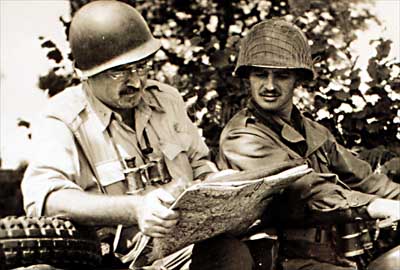
Image result for photo of ernest hemingway during wwii in europe

(Ernest Hemingway and his army driver outside Paris in 1944)

After Franco’s victory and the outbreak of World War II Hemingway was given the NKVD codename of “Argo.”  For Hemingway, any cooperation with Soviet intelligence would be based on his abhorrence of fascism, and by the summer of 1941 he believed that Russia was the bulwark against Nazi Germany as France surrendered and the British were rescued at Dunkirk.  Hemingway viewed Russia through that lens, and since his own country had ignored his warnings about what was about to take place, he would act in secret.  “Hemingway was looking for that leeway in politics and war.  He loved things military and being around soldiers, but did not want to join any man’s army.  His preference was a lose affiliation with other irregulars, especially guerillas, which made him feel like he was part of the action but left him free to come and go as he pleased.  He was not a communist, or even a fellow traveler.” There is no evidence that he was a Russian spy during the war, just a general commitment to fight fascism. (88-89)

Reynolds does a workman like job following Hemingway’s journey throughout World War II.  From his August, 1942 offer to spy for the United States in Havana and employ his boat, the Pilar to search for German U-Boats; his witnessing of the D-Day landing; gathering intelligence for the safest route to liberate Paris; almost being court martialed for exercising command, stockpiling weapons, and fighting to liberate the French capital; to his attachment to the US Army 22nd Infantry Regiment as it slogged through Belgium into Germany. Throughout the war Hemingway did prove to be an American asset, despite a number of controversies.   Hemingway’s last hurrah was during the Battle of the Bulge, but by March, 1945 he was spent and returned to Havana to write down his wartime experiences in a new novel.

Image result for photo of ernest hemingway during wwii in europe

(Ernest Hemingway’s visa as a journalist to cover World War II)

Hemingway formed many important relationships in Spain and Europe, but none are more important than his friendship with Colonel Charles T. “Buck” Lanham who he fought with in France and Belgium, a relationship that would last a lifetime.  Reynolds zeroes in on Hemingway’s persona in explaining that the thing Hemingway loved the best was “when he was risking his life, all of his senses fulling engaged, putting his well-developed field and military experiences to good use…..he also relished the comradeship that jelled in combat.” (183)  The friendships he formed on the battlefield be it the patrician spy David Bruce, or Lanham, the thoughtful soldier were more important to him than anything.  No one in the NKVD ever connected with Hemingway in this manner, and to this point Reynolds has not really laid the basis for his thesis which he finally delves into as the Cold War evolves after World War II.

Finally, in the last fifty pages of the book the author returns to his thesis and reargues that Hemingway’s experiences in Spain and Havana would greatly affect his behavior for the last fifteen years of his life.  Hemingway grew very concerned with the House Un-American Activities Committee investigations, McCarthy hearings, Rosenberg Trials and the entire domestic paranoid atmosphere in American politics after the Second World War.  He grew increasingly anxious that his contacts with the NKVD in the 1930s and during the war might one day place him in front of a congressional committee.  Hemingway swore off “causes” of any kind, including helping with an International Brigade Parade in New York City.  Hemingway kept his distance from anything that could create difficulties for him.  He reached the conclusion that it was more important to write books than be an activist, that could result in being blacklisted from publishing his works.  As far as any contact with the NKVD after the war, Reynolds examines internal NKVD documents about re-contacting with Hemingway, but by 1950 this was never done, and for the remainder of his life he had no contact with Soviet intelligence.  No matter what the reality was after the war, Hemingway realized that he had agreed to work with the NKVD in its war against fascism in Spain in the 1930s, and after the winter of 1940-41, even though he was clear he would not betray his country and only cared about defeating the Nazis.

Image result for hemingway in cuba in the 1950s photo

(Ernest Hemingway at his home outside Havana during the unrest that brought Castro to power)

Reynolds brings his narrative to a close as he explores Hemingway’s relationship to the Cuban Revolution of the late 1950s until his death.  For Hemingway the Cuban Revolution could be the unrealized hope of the 1930s Spanish Republic.  For him “supporting Castro was the equivalent to fighting Franco and Hitler in Spain.” (250)  However, the United States was pressuring him to make a choice, his country or his home, particularly when Castro ramped up his invective against Washington, and singled out Hemingway for praise.  By this time Hemingway was a man in decline, with depression and paranoia resulting in “shock treatments” at the Mayo Clinic.  With the failure of the Bay of Pigs, increasing fear of FBI surveillance and the loss of his home outside Havana, Hemingway would take his own life.  Reynolds theory pertaining to Hemingway is well argued and researched, but I believe that Paul Hendrickson’s HEMINGWAY’S BOAT: EVERYTHING HE LOVED IN LIFE, AND LOST, 1934-1961 is a better study of the same period and is a bit more nuanced with a smoother narrative flow than Reynolds’ effort.

Image result for photos of ernest hemingway in Spain

(Ernest Hemingway in Spain during the Civil War)

LUMEN by Ben Pastor

Image result for photo of Krakow during WWII

(Cracow, Poland, 1939)

The key figure in Ben Pastor’s excellent historical mystery LUMEN seems to be a murdered nun.  Mother Matka Kazimierza was not just any nun.  Known as the “Holy Abbess,” Kazimierza was considered a visionary who could supposedly predict the future.  In early October, 1939 her body is found in a convent in Cracow, Poland by a German officer who was surreptitiously meeting with her as he tried to cope with the approaching death of his four year old son.  The Germans were slowly wrapping up control of Cracow following their invasion of Poland on September 1, 1939.  In addition they were implementing joint occupation of the country, as per the Nazi-Soviet Pact of August 26, 1939, as the Soviet Union had invaded Poland in mid-September to seize their half of the country.  The German Commander, Lt. Colonel Emile Schenck appoints Captain Martin Bora to head up the investigation into the nun’s death.

LUMEN is the first in Pastor’s well received series of historical mysteries that take place during World War II that Capt. Bora, a well-educated Ph.D from the University of Leipzig, and veteran of the Spanish Civil War is the main character.  For the investigation of the “Holy Abbess” Bora, a Jesuit himself must collaborate with Father John Malecki, an American priest from Chicago who had been sent by the Archbishop to study the phenomenon of Matka Kazimierza.  Once she was murdered he was instructed to remain in Cracow and assist in the investigation with the German authorities.

Image result for photo of Krakow during WWII

(Nazis marching through Cracow, Poland during World War II – a city that made it through the war unscathed)

Bora faced a number of difficulties in dealing with the case.  First, his roommate Major Richard Retz had a very productive love life that made Bora very uncomfortable as he was expected to stay away from their apartment for Retz’s liaisons.  Second, were his personal values.  Though only in Cracow for a short period of time he witnessed a number of things that more than troubled him.  The use of Jewish slave labor; executions; beatings; revenge killings; rape; massacres; seizure of private property; enforcement of racial laws; and the destruction of books and documents from university libraries all went against his moral code.  Third, he resented the constant lectures from his commander concerning what was expected of the pure blooded Aryan male – propagate the Reich for the next generation.  Lastly, trying to work with Father Malecki whose loyalties and values seemed to conflict with his own.  As the story evolves Bora’s moral confusion no longer controls him as he witnesses what Nazism has brought to Poland.  Bora’s consciousness raising awareness stems from seeing Ukrainians hanged, and “Polack farmers” shot, and while some remained alive locked in a barn to be burned to death.

Pastor has an excellent grasp of historical events that are woven into her story.  German-Russian distrust is on full display over boundaries and accusations that each side is engaging in atrocities.  The action of the German SD, or secret police reflect everything Bora finds reprehensible about Nazi rule.  The competition between the Wehrmacht and the SS for control of certain investigations, jurisdiction, and territorial oversight is analyzed carefully.

Image result for photo of Krakow during WWII

(Main Square, Cracow, Poland, 1948)

The core of the story involves why the “Holy Abbess” was murdered?  Was it a result of her predictions for the future?  Did she help the Polish underground?  These questions factor into the investigation as does the Abbess’ predictions as to whether they were apocalyptic or political.

Pastor does a remarkable job developing her characters, particularly the relationship that grows between Bora and Father Malecki.  The author also develops the characters of a number of Polish actresses, especially Ewa Kowalska and her daughter Helena Sokora who were both involved with Bora’s roommate.  There are numerous other characters from the Polish Archbishop, SS Captain Salle-Weber, Lt. Colonel Nowotny, the German coroner, among others who greatly impact the plot.

Pastor’s novel is a combination of the Catholic faith, politics, ethics, as some are conflicted by events, while others seem to enjoy what ultimately will lead to the Holocaust and murder of countless Poles.  Lumen (light) and darkness are in conflict with each other throughout the story and through Bora’s quest for truth the reader should have a satisfactory read.  If you are a fan of Philip Kerr’s Bernie Guenther series you will especially enjoy Pastor’s work.   I look forward to enjoying, LIAR MOON the next installment of the Martin Bora series.

Image result for photo of Krakow during WWII

(Cracow, Poland, during World War II)

BLITZED: DRUGS IN THE THIRD REICH by Norman Ohler translated by Shaun Whiteside

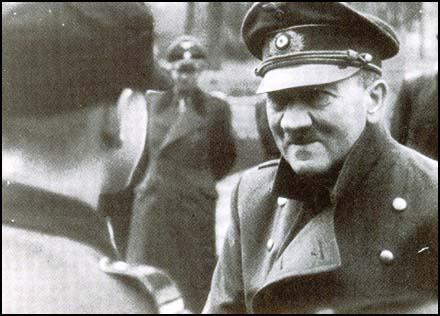
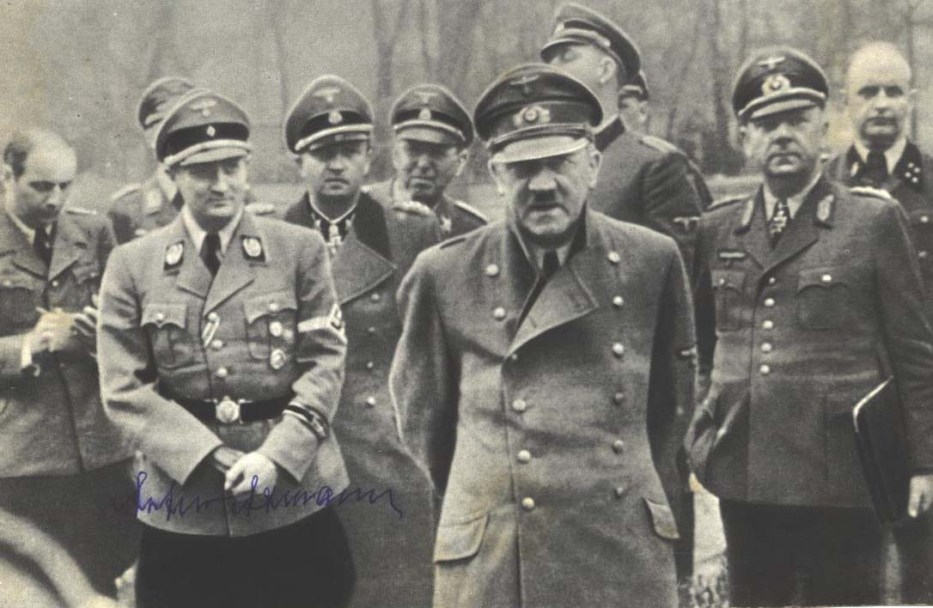
Image result for photo of Adolf Hitler in 1945

(Adolf Hitler in March, 1945)

With thousands upon thousands of books written about Nazi Germany and its “Fuhrer,” Adolf Hitler, one wonders if there is a relevant area of research that has not been mined thoroughly.  The appearance of Norman Ohler’s BLITZED: DRUGS IN THE THIRD REICH provides an affirmative answer.  A regime that prided itself on its anti-drug mantra was led by a man usually pumped full of drugs by his personal physician Dr. Theodor Morell.  The premise of Ohler’s work, first published in Germany in 2015, is that the Nazis provided the world with a chemical legacy that remains a major problem today – opioid – methamphetamine addiction.  The Nazis allowed the use of Volksdroge, “the people’s drug” unencumbered until the passage of the Reich Opium Law in 1941.  Today, the substance is known as “crystal meth,” and is consumed by over 100 million people worldwide, though in most places it is illegal or strictly regulated.

Ohler’s thesis presents the Nazi dichotomy.  It publicized and demanded that all should possess a constitution pure of drugs that could affect the mind and body.  Hitler, was portrayed as a vegetarian teetotaler who would not allow any foreign bodies to enter his system.  On the other hand, the Furhrer would become dependent on a series of short-term stimulants from 1936 on that would progress to an intravenous diet of animal extracts, and after 1943 hard drugs like Eukodal, whose active ingredient is oxycodone.  These pseudo medications were administered by Dr. Theodor Morell, a specialist in skin conditions and sexually transmitted diseases who would pollute the Nazi leadership with his concoctions and use Hitler’s dependency on his treatment to try and construct a “hormonal” industry called the Ukrainian Pharma-Works” in areas seized by the Wehrmacht.

Image result for dr. theodor morell photos

(Dr. Theodor Morell, Hitler’s private physician)

According to Ohler, the original rise of crystal meth took place in Nazi Germany.  The German chemical industry received a major boost in the 1930s under the direction of Dr. Fritz Hauscheld, the head of pharmacology at the Temmler Chemical Works who job was to discover a “performance enhancing drug” for the Third Reich.  The discovery of morphine made a different scale of war possible as men too injured to fight could now return to the battlefield. Temmler’s research would patent the drug Pervitin (“speed”), Germany’s first methamphetamine that produced feelings of euphoria, energy, self-confidence, and strength.  Temmler’s successful marketing campaign would result in the drug as a panacea for a number of issues from fatigue to a low sex drive.  The drug became a fixture in German society in the late 1930s.

The drug was a perfect match for the spirit of the age.  By 1936 Hitler had successfully overcome many of the limitations placed on Germany by the Versailles Treaty.  Unemployment was a thing of the past and by 1938 Germany had seized the Rhineland, achieved Anschluss with Austria, and stolen the Sudetenland from the Czechs at Munich.  For Hitler his burgeoning popularity was like a drug addict who could not give up his expansionist drug and by mid-1939 had moved on to Danzig.  The German people had to maintain this pace of change.  Fresh demands were made on the labor force and the military – the slogan “Germany Awake” needed methamphetamines for the country to “stay awake.”  According to Ohler, “spurred on by a disastrous cocktail of propaganda and pharmaceutical substances people became more and more dependent….Pervitin allowed the individual to function in the dictatorship.  National Socialism in pill form.” (39)

Ohler raises a number of questions; did civilian use of Pervitin carry over to the military?  Did German soldiers need the drug to fight effectively?  Did the addictive drug influence the course of World War II?  The answer in all cases seems to be yes.  Relying on a significant amount of research, particularly Dr. Morell’s patient notes Ohler traces the development, production, and dissemination of Pervitin as World War II approached.  He describes how it was employed in achieving the Blitzkrieg against France and the Low Countries in April and May, 1940.  The speed of the German military was key, and commanders would not tolerate rest or fatigue. Pervitin, is at a minimum partly responsible for the German success.  Dr. Otto F. Ranke, the Director of the Research Institute of Defense Physiology was completely on board with making these pills available to commanders and their soldiers.  With no real guidelines as to how Pervitin was to be used they were distributed in the millions to German soldiers.

Image result for dr. theodor morell photos

(Hitler with Dr. and Mrs. Theodor Morell)

Ohler weaves the course of the war effectively as he traces drug use as it related to Germany’s progress on the battlefield, and how, after 1942, mounting German problems affected Hitler.  Ohler weaves the Holocaust and the Nazi ideology of blaming Jews for the lack of purity of the German population that he had described in Mein Kampf, major battles and military decisions, and Hitler’s interaction with people throughout the narrative.  Further he describes the chemical changes in the nervous system of German soldiers through the ingestion of the drug as they went into battle.  What was clear is that the energy and euphoria could last only so long before fatigue set in and German advances were hindered by the need to rest their soldiers.  The same can be said of Hitler, as Morell developed a vitamin concoction called Vitamultin which he injected the Fuhrer with daily, resulting in similar after effects that German soldiers suffered from.  Morell was able to convince the General Staff of its benefits and a number of them would soon become his patients, as did many other Nazi officials.

Image result for photos of german drugs during WWII

Hitler’s medical decline began in the autumn of 1941 as the war began to turn against the Reich.  Germany had invaded the Soviet Union on June 22, 1941 and it was supposed to take three months to complete the action.  “As soon as he encountered genuine Russian resistance that couldn’t be removed with a sweep of the hand, ‘the greatest commander of all time’ retreated further and further into his world of make believe.  The microcosm of the Wolf’s Lair (Hitler’s eastern command center) was nothing more than a hubble made of concrete and steel.” (111)  For the first time in the war Germans suffered great losses in a very short period of time – even the doping that had been deployed for Operation Barbarossa was ineffective as once the Pervitin wore off, troops had to rest.  Hitler fell ill for the first time in years in August, 1941 and when Morell’s concoctions of vitamins and glucose failed to work he raised the ante by injecting steroids and other opiates.  He did prevent another illness, but in the future Morell resorted to prophylactic injections of new hormonal substances.  “From autumn 1941 onward, more and more concentrated animal substances began to circulate in his bloodstream” in order to reinforce his body’s defenses.  The result was that “Hitler’s natural immune system was soon replaced by an artificial protective shield.” (114)  From then on Hitler’s military directives parted company from reality as he would not accept rational arguments from his generals.

Image result for photos of german drugs during WWII

As the war continued to go against Hitler’s “alternative reality” he became more and more dependent on opioid drugs.  Hitler was dependent on Dr. Morell, who was dubbed the “Reich Injection Minister” by Hermann Goring.  “The medication kept the supreme commander stable in his delusion….Any doubts were swept away by his chemically induced confidence.  The world could sink into rubble and ashes around him, and his actions cost millions of people their lives – but the Fuhrer felt more than justified when his artificial euphoria set in.” (163)

Ohler describes the period after 1943, as Hitler’s heavy opiate phase.   As the war turned increasingly bad for Germany, the Merck and Company facility in Darmstadt was destroyed in December, 1944, so Merck could no longer produce Eukodal.  Hitler’s health would deteriorate and to survive he took strong narcotics which erected a pharmacological barricade around himself.  The delusional system that Hitler created for himself, would not allow him to remain clear of drugs.  “Under no circumstance did Hitler want to come down from his megalomaniac Fuhrer trip, in spite of the disastrous military situation.” (174)  By the spring of 1945, Morell no longer had any potent substances to administer as he had done in the past.  As time evolved the Fuhrer most certainly went through a period of withdrawal.  Some historians believe he was suffering from Parkinson’s disease, but in retrospect it is hard to determine a definitive diagnosis.

A part from Hitler the drug crutch influenced German naval policy.  Admiral Hellmuth Heye argued for one man torpedoes and two man submarines to inflict damage on allied shipping.  To accomplish this task drugged men were required as these were kamikaze missions.  Ohler describes the drug mixtures created that would have been fine for an addict like Hitler, but could not be tolerated by the average soldier.  Medical experiments to prepare Germans to carry out their weapons pipe dreams were carried out in Sachsenhausen and Auschwitz concentrations camps resulting in the death of numerous victims.  Ohler describes in detail Hitler’s deterioration once drugs were not available and he would succumb to a nasty withdrawal like most drug addicts.

A number of important historians support what Ohler’s research has unveiled.  The late Hans Mommsen, one of the leading German historians of the Nazi era, Ian Kershaw, the foremost Hitler biographer, and Anthony Beevor, the well-known military historian all recognize that Ohler, a German journalist, novelist, and filmmaker has written “a serious piece of scholarship,” and one that is very well researched.” (“The Very Drugged Nazis,” by Anthony Beevor, New York Review of Books, March 9, 2017)

Image result for photo of Adolf Hitler in 1945

(Hitler in early 1945)


ALEXANDER HAMILTON by Ron Chernow

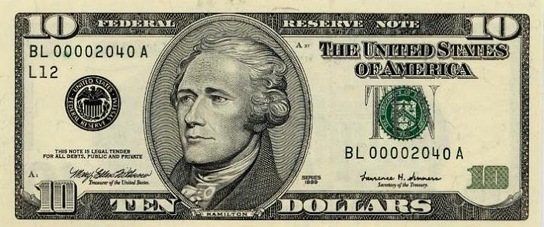
Image result for photos of alexander hamilton

(Alexander Hamilton)

The popularity of the Broadway musical “Hamilton,” has rekindled interest in Ron Chernow’s 2004 biography of our nation’s first Secretary of the Treasury.  I read the original when it was published and I found it to be an amazingly comprehensive study which included incisive analysis and a fairly objective approach to its subject.  Since I will be teaching a course entitled, “Hamilton: The Musical, Historically Accurate or Not” I decided to revisit Chernow’s work.   My opinion has not changed and I still find it to be the best study of Hamilton’s private and public life that includes the major events and issues that he experienced, discussions of his economic proposals and plans, evaluations of those who opposed him, and placing Hamilton in the proper historical context as the Founding Father most responsible for America’s economic development.  Since the publication of ALEXANDER HAMILTON, Chernow has written an excellent study of George Washington and should be considered one of America’s foremost biographers.

Image result

Reading a biography of Hamilton is like reviewing the history of the republic from its inception through the duel with Aaron Burr, as Hamilton seems to be involved in every major event or issue from the revolution until his death.  What becomes clear is that without Hamilton’s ideas the United States government would be unrecognizable today, as we are the heirs of his vision of America.    Chernow’s Hamilton is a man obsessed with his background dating back to questions surrounding his birth in the West Indies, his social standing, and matters of honor.  All three would influence his decision-making and causes he would engage in.  In covering Hamilton’s upbringing, self-education, and employment as a clerk at a mercantile house when he was in his teens Chernow does an excellent job showing how these experiences would create the basis for the policies he implemented when he was in a position to do so later in life. The turning point in Hamilton’s life seems to take place on July 6, 1774 as he spoke to a crowd near King’s College where he was enrolled.  Hamilton favored a boycott of English goods, raged against unfair taxation, deplored the closing of Boston Harbor, and called for colonial unity.  In answering Samuel Seabury’s Tory viewpoints Hamilton’s writings made him an anti-Tory hero.

Image result for photo of Eliza Hamilton

(Elizabeth [Eliza] Hamilton)

Chernow effectively delves into Hamilton’s philosophical development during the lead up to the American Revolution and during its evolution.  Hamilton always seemed to worry about the long term effect of constant disorder, particularly among the uneducated masses.  He feared that increased freedom would lead to increased disorder, and thereby a lack of freedom.  This became Hamilton’s lifelong dilemma; how to straddle and resolve this contradiction – balancing liberty and order.  Hamilton’s inner intellectual struggle is nicely played out throughout the biography as Chernow integrates Hamilton’s writings through his published essays in newspapers, public speeches, and position papers prepared for Congress and George Washington.  Hamilton’s internal debate is enhanced through Chernow’s portrayal of Washington.  According to Chernow both agreed on the main issues and the author’s examination of how and why two founding fathers from disparate backgrounds got along so well.  Their relationship forms a major core of the narrative and we can see their mutual dependency. Washington needed Hamilton’s intellect and his total commitment to his beliefs, and Hamilton needed Washington’s personal and political support in dealing with the many enemies he would make, a number of which was due to his irascible personality and approach to getting things done.  Hamilton became Washington’s “pen,” as well as his alter ego.

Image result for photo of george washington

(George Washington)

All of the major figures of the American Revolution and the early republic are on full display as is Hamilton’s personal life.  John Adams, Aaron Burr, James Madison, Lafayette, John Laurence, and of course Thomas Jefferson all make their appearance with their own personal agendas.  Also developed is Hamilton’s personal life particularly his relationship with Elizabeth (Eliza) Schuyler, his wife and her sister Angelica who would marry John Church, an English businessman.  Some authors present Hamilton as a philanderer after his marriage to Eliza, and Chernow does not downplay this character fault, however, after his disastrous affair with Maria Reynolds between  1791 and 1792, and dealing with the blackmail of her husband James, it seems Hamilton had learned his lesson and from that point on he was a devoted father and husband.  The affair would be a cloud hanging over his head for the remainder of his life, particularly when his reputation was so important to him. Chernow conjectures that evidence of the affair once in the hands of his political enemies, may have cost him the presidency.

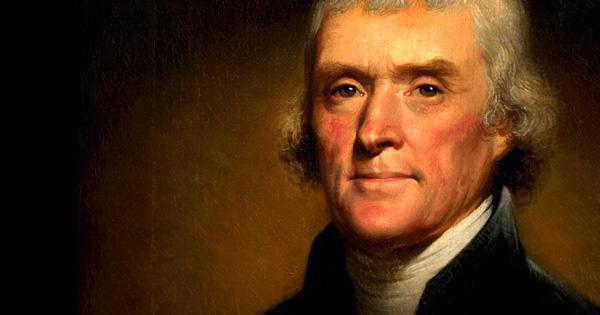
Image result for photo of thomas jefferson

(Thomas Jefferson)

Chernow is very incisive in his analysis of the politics of the period and the parochial interests of certain individuals.  For example, dealing with slavery which Hamilton ardently opposed due to witnessing the venal effects of the slave trade growing up in the West Indies.   Chernow condemns “the hypocritical critiques of his [Hamilton’s] allegedly aristocratic economic system [which] emanated from the most aristocratic southern slaveholders, who deflected attention from their own nefarious deeds by posing as populist champions and assailing the northern financial and mercantile interests aligned with Hamilton.” (211)  Hamilton’s role at the constitutional convention and preparation of the final document is fully discussed as is Hamilton’s commitment to do everything in his power to successfully implement the document when he was in public and private life.  Granted, Hamilton was able to expand the constitution when needed, by developing the concept of “implied powers,” but his loyalty to the constitution and his arguments in favor, particularly, the FEDERALIST PAPERS never wavered.

Image result for photo of James Madison

(James Madison)

Chernow asks a very important question in that why did this period spawn such extraordinary men, especially when we compare them to the new administration in Washington.  The behind the scenes machinations at the Constitutional Convention, its ratification, Washington’s cabinet debates, and the political wrangling over Hamilton’s program for the assumption of debt, the national bank and other components of his plans for the young republic all receive extensive coverage.  Perhaps the most fascinating aspect of the book is Chernow’s discussion of the development of the Federalist and Republican parties synonymous with Hamilton and Thomas Jefferson.  Chernow explores their writings, personal conversations, and the vitriol that existed between the two men.  Chernow’s portrayal of Jefferson is not a positive one seeing the author of the Declaration of Indolence and Secretary of State as a hypocrite in dealing with the problems of the young republic.  Chernow’s portrayal of the man who avoided the American Revolution with his posting to France, was rather cavalier when it came to shedding the blood of others, in addition to his sanctimonious views when it came to government and Hamilton’s economic program,  is not very flattering.  Chernow dives deep into the essays and communication between the two men, also bringing in Hamilton’s ally at the Constitutional Convention and co-author of the FEDERALIST PAPERS, James Madison into his discussion, concluding that fourth president and member of the “Virginia Dynasty” was a back stabber, and though brilliant in his own right, was a lackey of Jefferson.  Jefferson resented Hamilton’s encroachment into his sphere as the Secretary of the Treasury as he developed the Customs Service and the Coast Guard to protect American trade.  However, the issue that riled Jefferson the most was Hamilton’s opposition to honoring the 1778 alliance with France during its war with England, Spain, and Holland.  For Jefferson, Hamilton was a monarchist married to the English crown and economic system with pretentions of sitting on an American throne.

Image result for photo of Angelica Hamilton Church

(Angelica Schuyler Church)

In evaluating Hamilton, Chernow is spot on pointing out that many of Hamilton’s actions and behaviors demonstrated that beneath his invincible façade throughout his career he was still the hypersensitive boy from the West Indies.  His combativeness came from an obsession with matters of honor – a man of deep and, at times, ungovernable emotions; i.e.; involvement and threats dealing with duels, insulting remarks and commentary, and vindictive essays.

The role of Angelica Church, Hamilton’s sister-in-law is useful in discussing how politics and personal issues played out.  The questions of Hamilton’s relationship with her, and a possible affair is presented, as is her love for her brother-in-law.  Church who lived in England with her husband becomes a source of intelligence for Hamilton as men seemed enchanted with her, even Jefferson, who invited her to Monticello, seemed to fall for her.  The Jefferson that Chernow discusses is a lot different that of Dumas Malone or Jon Meacham.  He lives on credit and spends a great deal of money on his interests, whether wine, books, French furniture and as a result would leave his heirs to pay off his substantial debt.  Jefferson liked to present himself as above the fray, but he was down in the “mud” in dealing with the Constitution, the Genet Affair, the Jay Treaty and any other issue that could injure Hamilton.  What bothered Jefferson and Madison the most was that Hamilton’s economic program was setting precedents that would be difficult to undo in the future.  Hamilton acted speedily dealing with the debt from the revolution and making the United States a manufacturing power with a National Bank and other programs. What frightened them was that they saw a future that threatened their southern way of life.  To Chernow’s credit he does present Hamilton programs and rationale in detail, but he also develops the opposition’s point of view.  Today we think we are in the midst of one of the nastiest and bipartisan periods in American history, but it pales in comparison to what Hamilton had to deal with.

Whatever flaws one can detect in Hamilton’s private life and pursuit of power one must recognize his accomplishments.  When he left government service he could point to suppression of the Whiskey Rebellion, a flourishing financial base for the country and the economy in general, and had survived numerous investigations into his motives as Treasury Secretary and his private life.  “He prevailed in almost every major program he had sponsored – whether the bank, assumption, funding the public debt, the tax system, the Customs Service, or the Coast Guard – despite years of complaints and smears….Bankrupt when Hamilton took office, the United States now enjoyed a credit rating equal to that of any European nation.  He laid the groundwork for both liberal democracy and capitalism and helped to transform the role of president from a passive administrator to active policy maker….He demonstrated the use of government and helped weld the states irreversibly into one nation.” (481)

Image result for photo of burr hamilton duel

Once out of power it seemed as if Hamilton was a “shadow” member of Washington’s administration, but once Adams became president the animus between the two emerges, in part because of Hamilton’s behavior behind the scenes during the 1796 election, the result of which was that his influence waned as he was shut out of decision making.  Adams’ hated Hamilton and some of his comments seem delusional.  In fact, much of his critique of Hamilton was so full of vindictiveness it could have emanated from the mouth or pen of Jefferson.  Hamilton made two major errors after he left Washington’s cabinet.  The first, publishing “The Reynolds Pamphlet” designed to clear his name and reputation.  But, in reality it just dragged his family through the mud once more and provided fodder for the Republican press.  His second error was his “intemperate indictment” of John Adams.  This reflected his “genius for the self-inflicted wound and was capable of marching blindly off a cliff—traits most pronounced in the late 1790s.” (619)  The end for Hamilton would come when he supported Jefferson for the presidency and worked behind the scenes to deny Burr, a man he totally distrusted the any higher office in the election of 1800.  Later, he would work behind the scenes to deny Burr the governorship of New York which would lead to a number of poor decisions of Hamilton’s part resulting in his death in a duel on July 11, 1804.  In this particular instance the strength of Chernow’s work can be seen as he places the events, communications and previous historiography under a microscope to set the scene for the reader to digest all aspects of what took place.

Image result for photo of Eliza Hamilton

(Aaron Burr)

Burr ended the life of one of the most important individuals in American history and Chernow must be commended for his story telling ability, analysis based on comprehensive research in preparing his award winning biography.  Overall, Chernow sets the record straight on many controversial occurrences and has provided an alternative view of Hamilton that adds to the debate concerning the founding fathers.  But once you have read Chernow’s biography one cannot disagree with David Brook’s comment in his 2004 New York Times book review; “so there is no Hamilton monument in Washington, but at least we have Ron Chernow’s moving and masterly ‘Alexander Hamilton,’ which is by far the best biography ever written about one man.” (“Creating Capitalism” NYT, April 25, 2004)

Image result for photos of alexander hamilton

JUDAS by Amos Oz

Image result for photo of west jerusalem

(a neighborhood in West Jerusalem)

It is December, 1959, Shmuel Ash, an asthmatic university student preparing his thesis on “Jewish views of Jesus” decides to abandon his studies and leave the divided city of Jerusalem.  Ash’s girlfriend, Yardena has decided to breakup with him and marry a previous boyfriend. With his research stalling, and learning that his father’s finances have been ruined over a lost court case he can no longer support his student lifestyle, so he decides to embark on what he hopes will be a coping journey.  Shmuel is an overly sensitive and emotional individual who has doubts about his own virility and cannot avoid tears when he witnesses mundane events.  He loves to debate others, but does not have any interest when people present their views, and he now finds himself at the age of twenty-five in crisis.

Upon posting a notice of the sale of his possessions, Shmuel sees an ad for a companion to a seventy year old cultured invalid offering a room and some money.  Shmuel answers the ad in a house on the western fringe of Jerusalem and after speaking with Gershom Wald, a cantankerous intellectual who suffers a number of health issues, and his forty five year old daughter in law, Atalia Abravanel he decides to take the position.  We will learn that Wald and Abravanel are haunted by the memories of two other people; Shealtiel Abravanel, Atalia’s dead father, and Micha, Atalia’s late husband killed in the 1948 War of Independence, who was also Wald’s son.  Amos Oz’s new novel, JUDAS focuses on the three characters that are alive, but a number of those who have passed play a significant role in the story.  The major part of the book consists of dialogue between Wald, Atalia, and Shmuel as they discuss religion, the proper role of Zionism, the legacy of the 1948 War, and issues pertaining to their private lives.

Image result for photo of west jerusalem

David Ben-Gurion, the Jewish leader during the 1948 War and Israeli Prime Minister plays an important role, almost as a foil for Oz.  Shealtiel Abravanel, Atalia’s father had been a member of the Zionist Executive Committee and the Council of the Jewish Agency before and during the war and he was the only one who opposed Ben-Gurion’s approach toward the Palestinian Arabs, eventually being forced to resign from both positions.  Oz uses Gershon Wald to debate the justification of a Jewish state.  He presents Arab fears of the Jews through the words of Wald and in conversations with Shmuel he discusses his admiration for Ben-Gurion and his Zionist vision.    For Oz, Ben-Gurion stands for the justification of the founding of the Jewish state.  For the Palestinian people, the 1948 War is referred to as Al Naqba, or the Catastrophe.  For Atalia and Wald, the same term applies because one person lost a son, and the other a husband, and with that undercurrent seemingly always be in the background.

In a sense Oz’s characters make the book a referendum on Ben-Gurion’s leadership.  Wald and Shmuel debate whether Ben-Gurion was correct in his refusal to try and reach some sort of an accommodation with the Palestinians and forgo the concept of a Jewish state.  In addition, Ben-Gurion agreed to the Sevres pact with the British and French leading up to the 1956 Suez War.  A war that proved to be the death knell of Britain’s Middle East Empire, but it also linked Israel to two dying colonial powers (the French would eventually withdraw from Algeria in 1962), creating a schism with the United States, and elevated Nasser’s status at home and the Arab world to new heights.

Shmuel and Wald spend six hours each day talking, arguing, and listening to the news on the radio, and for Shmuel, he at times had to succumb to Wald’s soliloquies on numerous topics.  Be it Darwinism, the concept of love and hate, the validity of medieval critiques of Jesus, the Crusades, the plight of the socialist revolution following the disclosures by Khrushchev concerning Stalin in February, 1956, or Shmuel’s thesis “Jewish views of Jesus,” Wald would hold court, but gradually Shmuel would respond in his own thoughtful manner.  Further, Shmuel would listen each day as Wald would pontificate, sometimes with a malicious tone on the telephone for what seemed like hours on end to the two or three friends that he still maintained.  Despite what some would see as an ordeal, Shmuel developed affection for Wald and their relationship flourished.  But, what most gnawed at Shmuel was the secrecy that existed, particularly on the part of Atalia, with whom he develops a rather curious relationship.  He seems to be falling in love with a woman twenty five years older than himself, and she continues crawl out of her shell, then subsumes herself to a life of bitterness.

Throughout much of the novel Oz puts forth meditations concerning the life and death of Jesus zeroing in on the writings that focus on the validity of Christianity and its place in history.  Much of what Oz has to say emerges from Shmuel’s research, which centers on his understanding as to why the Jews rejected Christianity.  For Shmuel, Jesus was not a Christian, he was born and died a Jew and it never crossed his mind to found a new religion.  Christianity’s creation was the work of Paul and his cohorts and they invented its concepts and ceremonies.  Shmuel believes if only the Jews had accepted Jesus, their history of persecution would not have taken place.  The one thing Shmuel cannot come to terms with is why the Jews refused to accept him, since all Jesus wanted to do was “purify the Jewish faith of all sorts of self-satisfied cultic accretions that had attached themselves to it, all sorts of fatty protrusions that the priests had cultivated and that the Pharisees had burdened them with…. [The Jews] were groaning beneath the yoke of the rich, bloated priesthood in Jerusalem.” (113)

The concept of betrayal goes to the core of Oz’s thought process.  We witness it almost from the outset of the novel.  Shmuel fantasizes about replacing his parents with people he can relate to on a different level.  Shmuel’s grandfather may have been a double agent during World War II for the British.  Obviously, Judas’ actions toward Jesus. The entire discussion concerning Atalia’s father involving his “treasonous” acts against the creation of the state of Israel, Ben-Gurion, and the Jewish people.  Lastly, Atalia’s behavior for her job recounts a number of examples of betrayal as are her feelings for Shmuel, particularly as the novel comes to a close.

In summation, the novel is a journey for Shmuel Ash that takes him to a secluded place where he meets two individuals suffering from loss.  All three characters seem to be at different stages of the Eriksonian life cycle with different needs and roles to play in each other’s lives.  They argue, love each other in their own way and produce affection that will linger, in a sense love that each person could not fathom three months earlier as Shmuel enters Atalia and Gershon’s lives.  Oz orchestrates the journey, he begins it, and knows when to bring it to a conclusion.

Image result for photo of west jerusalem

(West Jerusalem, Israel)


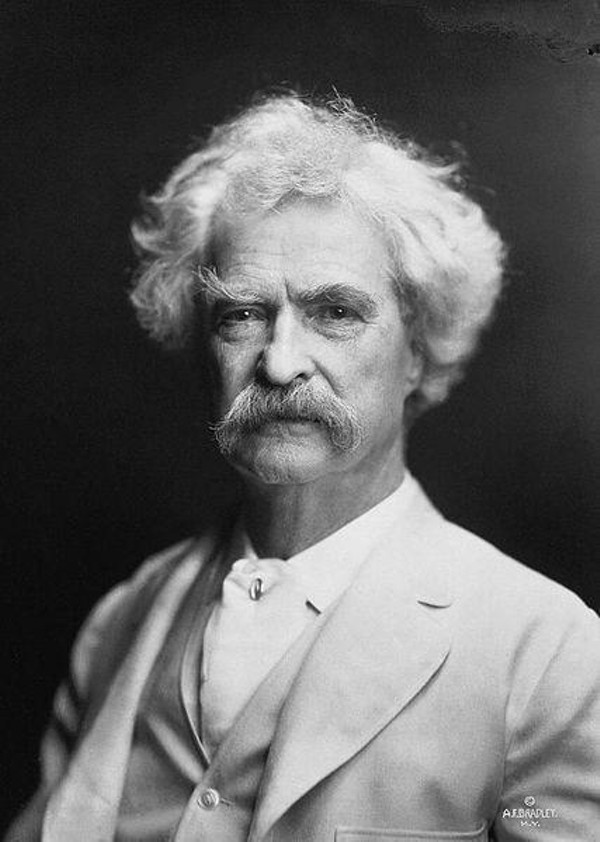
THE TRUE FLAG: THEODORE ROOSEVELT, MARK TWAIN, AND THE BIRTH OF THE AMERICAN EMPIRE by Stephen Kinzer

Image result for photo of theodore roosevelt and mark twain together

(Mark Twain)

Stephen Kinzer is a prolific writer and historian among whose books include ALL THE SHAH’S MEN an excellent study that explains the 1979 Iranian Islamic Revolution and the origins of our conflict with that country.  Other books; THE BROTHERS, a fascinating dual biography of Allen W. and John Foster Dulles, men who significantly impacted American intelligence gathering and foreign policy throughout the 1950s; and OVERTHROW, a study that explains how Washington conducted a series of coups from Hawaii to Iraq to install governments that it could control.  If there is a theme to Kinzer’s books it is that the United States has conducted a series of forays into foreign countries that reek of imperialism and have not turned out well.  His latest effort, THE TRUE FLAG: THEODORE ROOSEVELT, MARK TWAIN, AND THE BIRTH OF THE AMERICAN EMPIRE follows the same theme and tries to bring about an understanding of why and how the United States began its journey towards empire.

Image result for photo of theodore roosevelt

(President Theodore Roosevelt)

From the outset Kinzer describes a conflicted American approach toward foreign policy.  It appears that Americans cannot make up their minds on which course to follow: Should we pursue imperialism or isolationism?  Do we want to guide the world or let every nation guide itself?  This inability to decide has played itself out from the end of the nineteenth century until today as we try and figure out what avenue to take following the disastrous invasion of Iraq in 2003 and its ramifications.  Kinzer argues that “for generations every debate over foreign intervention has been repetition,” however, “all are pale shadows of the first one” that began in 1898 is developed in THE TRUE FLAG.  Kinzer zeroes in on one of the most far reaching debates in American history that was fostered by the Spanish American War, not the Second World War as most believe; should the United States intervene in foreign lands, a debate that is ever prescient today.

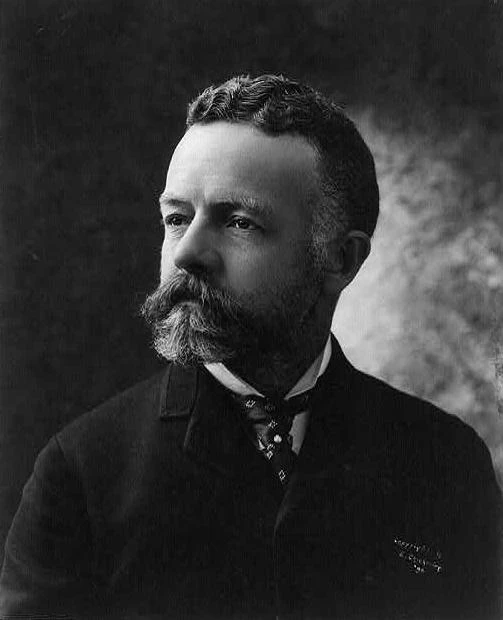
Image result for photo of Henry Cabot Lodge

(Henry Cabot Lodge)

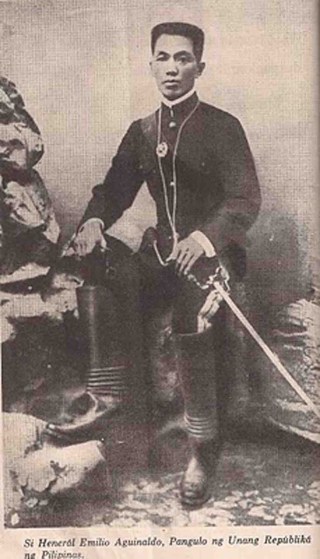
Following the results of the war against Spain, the United States found itself in possession of Cuba, the Philippines, Puerto Rico, and was about to annex the Hawaiian islands, leading to a fever of empire among many Americans in and out of government.  Kinzer traces the political machinations that resulted in the new American Empire.  He also takes the reader behind the scenes that resulted in decisions that led to what President McKinley termed “benevolent assimilation” for the Philippines, or a more accurate description, a race war to subdue Filipino guerillas led by Emilio Aguinaldo.  Kinzer has full command of the history of the period politically, militarily, and economically.  He has extensive knowledge of the secondary and primary materials, and writes with a clear and snappy prose that maintains reader interest.

What separates Kinzer’s narrative and analysis from other studies dealing with this topic is his focus on the debate over American expansionism that created the Anti-Imperialist League to offset the arguments of the imperialists in and out of Congress.  He provides a blend of both arguments integrating a great many heated speeches and articles that the protagonists engaged in and produced, even describing a fist fight in the Senate between the senators from South Carolina over a vote that ratified the Treaty of Paris.  Kinzer focuses on a number of important historical characters that include; Theodore Roosevelt who used the Spanish-American War as a vehicle to advance politically; Henry Cabot Lodge, a strong believer in the “large policy” of imperialism as the Senator from Massachusetts; William Randolph Hearst whose newspaper helped incite the war, and would later turn against imperialism as he sought a political career; President William McKinley who supposedly received divine guidance to pursue his expansionist agenda; Mark Twain, writer and satirist who initially favored expansion, then became the “eviscerating bard” against empire; William Jennings Bryan, the “free silver” commoner from the Midwest who was defeated three times for the presidency; Andrew Carnegie, the richest man in America, but opposition to imperialism for him was almost a religious cause; and Carl Schurz, a German immigrant who fought in the Civil War and served as Secretary of the Interior among many important positions during his career.

Image result for photo of Andrew Carnegie

(Andrew Carnegie)

Perhaps the strongest aspect of Kinzer’s narrative discusses the two opportunities that Bryan had to stem the imperialist tide.  Bryan was an avid opponent of expansion from the moral perspective, but he would cave to political ambition on two occasions.  The first, during the debate in Congress over the Treaty of Paris which would cap America’s territorial aggrandizement from the war.  At the last minute Bryan decided to support the treaty and America’s possession of the Philippines.  Second, as the Democratic candidate for president in 1900 he refused to leave out his “free silver” plank from the convention platform and concentrate on the anti-imperialist message.  By not doing so he scared away eastern business opponents of expansion and a number of allies in the Democratic Party.  The result was the passage of the treaty and the reelection of McKinley.

Image result for photo of wm mckinley

(President William McKinley)

Another fascinating aspect of the book is Kinzer’s treatment of Mark Twain.  Kinzer offers a detailed discussion of Twain’s arrival from Europe on October 15, 1900 in the midst of the imperialism debate and his transition to his anti-imperialism stance.  A number of Twain’s writings and comments are presented and analyzed and compared with those of Theodore Roosevelt, whose ascendancy to the presidency after McKinley is assassinated, effectively kills the Anti-Imperialism League.  Twain’s writings detail his disgust for events in the Philippines and the disaster that ensued.  Twain is presented along with other famous writers and poets whose anger at expansion and its results knew no bounds.   However, the work of Finley Peter Dunne and his Mr. Dooley character, written with an Irish workman’s accent is probably more important in that it reached the illiterate masses, while others appealed to the social and political elite.

Image result for photo of emilio aguinaldo

Kinzer’s narrative packs a great deal into 250 pages and it is a fast read.  However, do not   evaluate this book by its length because it presents an excellent synthesis and analysis of the important events, personalities, and policies of the 1898-1902 period as America debated if it should become an empire, the type of debate that was missing in the United States as we contemplated invading Iraq in 2003.  A war that we are still paying for today.  In the end many of the predictions set forth by the anti-imperialists have come to pass, just examine American foreign policy since the end of World War II.  We as Americans must answer the question: “Does intervention in other countries serve our national interest and constitute global stability, or does it undermine both?” (229)

Image result for photo of theodore roosevelt and mark twain together

(Mark Twain)

A GREAT PLACE TO HAVE A WAR: LAOS AND THE BIRTH OF A MILITARY CIA by Joshua Kurlantzick

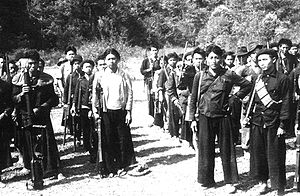
Image result for photos of the civil war in laos in the 1960s

(anti-communist Hmong tribe soldiers in Laos, 1961)

The majority of Americans of my generation are aware of the Vietnam War that resulted in the death of 58,315 soldiers and a 153,303 wounded, with the loss of between 1.1 to 3.2 million Vietnamese.  Further, they are aware of American bombing of Cambodia and various military incursions that helped bring about Pol Pot and the “Killing Fields,” that resulted in the genocide of over 3 million Cambodians.  However, that same generation was probably not aware of the civil war that raged in Laos and the American role in that conflict that witnessed 15-20 air sorties a day against that small Southeast Asian country between 1960 and 1968, that was raised to 300 sorties a day once Richard Nixon took office, resulting in the death of over 200,000 Laotians and 700 Americans.

Image result for photos of the civil war in laos in the 1960s

By January 1961 Laos appeared to be on the precipice of falling to communism.  Bill Lair, a ten year CIA operative flew up to the central highlands to inaugurate a bold plan labeled, Operation Momentum.  The plan called for the operation and training of Hmong tribesmen, led by Vang Pao, an anti-communist officer in the Laotian army who would lead these men against the Pathet Lao who were supported by North Vietnam.  The civil war in Laos had been raging on and off since the French were vanquished by North Vietnam in 1954, and Laos was declared a neutral country by the Geneva Convention of that year.  Even though Laos was a small country the Eisenhower administration, firm believers in the domino theory, and that a pro-western state in Laos could serve as a buffer between Vietnam and Thailand, an American ally.  Further, Laos would make it easier for the US to assist South Vietnamese forces that could help bleed Hanoi’s troops as they continued to fight the Vientiane government, and lastly it would block any communist threat to India and Southwest Asia.  Joshua Kurlantzick’s new book, A GREAT PLACE TO HAVE A WAR: AMERICA IN LAOS AND THE BIRTH OF A MILITARY CIA chronicles Operation Momentum and its impact on the region and the implications for American strategy to deal with communism for decades.  In addition, it raises the specter of a CIA run war through para military operators, something that continues today.

Operation Momentum was the first secret covert run war by the CIA in American history.   Laos provided the CIA with the opportunity to increase the agency’s powers.   According to Kurlantzick, it saw the Laotian situation as an inexpensive war in terms of money and lives to create a template for proxy wars around the world as presidents looked for ways to continue the Cold War without going to Congress for funding or involving American troops.  For the CIA, after Laos, paramilitary operations would become an essential part of the agency’s mission.

Image result for photos of the civil war in laos in the 1960s

(North Vietnamese troops fighting South Vietnamese troops on Laotian territory)

Kurlantzick presents a balanced and interesting narrative as he provides the background history that led to the Laotian civil war involving the Royal Laotian Army, smaller armies of different Laotian tribes, Vang Pao’s 30,000 strong Hmong army, North Vietnamese troops, and American bombing and supplying and training of anti-communist forces.  As the narrative is developed the reader is introduced to a number of important characters.  First of which is Bill Lair, a career CIA operative who believed the key to helping the fight for democracy in Indochina was to allow the Laotians, Cambodians, and Vietnamese to do their own fighting.  The US could assist them with equipment and training, but should not be out front and appear to replace the French as a colonial power.  Lair and his CIA cohorts were thrilled with the success of Vang Pao’s army in that they finally found an indigenous force that would take it to the communists.  Pao was a loose cannon, but Lair knew how to control him.  This relationship was successful until Washington decided to expand its operations in Laos and Vietnam under leadership of Ted Shackley who arrived as CIA Laos Station Chief in July 1966.  Lair was against an increased ground war with massive bombing as he correctly believed that it would be unsuccessful in interdicting North Vietnam’s supply efforts to South Vietnam through Laos.  The author’s presentation of Lair’s story is invaluable in understanding what transpires in Laos until he resigns from the CIA in August 1968.  Once Lair resigns no one can control Vang Pao, and his forces who pursue a reckless strategy that has grave consequences.

Related image

(North Vietnamese troops moving supplies through Laos to South Vietnam)

Other important figures that Kurlantzick introduces are Tony Poe, a career soldier who trained and recruited Hmong tribesmen going back to 1961.  After Lair resigned he developed his own 10,000 man force made up of an amalgam of tribes who he could not hold together because tribal ethnic conflict and as a result were not an effective fighting force.  Perhaps the most important character in this drama was Ambassador William Sullivan, an American Foreign Service career officer who was Ambassador to Laos between 1964 and 1969.  Sullivan was sent to Laos to organize the war against the Pathet Lao and became the first American ambassador to run a war from his office.  Sullivan reigned in the CIA and made all operatives report to him what their plan of action was.  He would approve, and even choose targets for the war, something no ambassador had ever done before.  If someone did not comply, because of his relationships in Washington, they would be transferred out.  Once Shackley came aboard, Sullivan supported an expansion of the war and a massive increase in bombing which was further expanded once Richard Nixon entered the White House, as Nixon had his own realpolitik for Indochina involving Communist China, and the Soviet Union in achieving the withdrawal of American troops from Vietnam.

Image result for photo of william lair

(William Lair, CIA operative in Laos after he retired)

Kurlantzick tells a fascinating story that at times reads like fiction.  There is some repetition of information, and a few factual errors, i.e.; the Viet Minh did not sign the 1954 Geneva Accords, and according to historian Fredrik Logevall, he misstates the number of American military advisors in Vietnam at the time of John F. Kennedy’s assassination, and he offers no evidence that Kennedy “repeatedly told aides he would not tolerate the loss of South Vietnam during his presidency. (Fredrik Logevall, “Laos: America’s Lesser Known Human Political Disaster in Southeast Asia,” Washington Post, February 2, 2017)

The most disturbing aspect of the war that Kurlantzick brings out has to do with the surreptitious American bombing of Laos.  According to the author by 1969 the United States had dropped more bombs on Laos than it had on Japan during World War II.  Further, by “1973, when the bombing campaign ended, America had launched 580,000 bombing runs in Laos.  A high percentage of these bombs were antipersonnel or fragmentation bombs—which exploded into hundreds of small, deadly metal pellets on impact—antipersonnel mines, and bombs that caused widespread fires.” (177)  Kurlantzick uses the massive bombing of the Plan of Jars during the summer of 1969 to highlight the devastation that resulted in the deaths and maiming of Laotian civilians.  The overall bombing campaign killed civilians in disproportionate numbers and what is even more damning was the American policy of dropping excess ordinance over Laos when they could not find targets in North Vietnam and did not want to return to Thai bases with undropped bombs.  In addition, Kurlantzick describes how Laos was used as a training site for bomber targeting and the indiscriminate dropping of bombs to be rid of them.  America’s disdain for the Laotians can also be seen in the Paris peace talks with North Vietnam as Henry Kissinger and company sacrificed its Laotian allies in order to achieve a semblance of peace with Hanoi.  By the time the Americans left Saigon, a similar withdrawal occurred in Vientiane, as by 1973 Washington had washed its hands of its former ally with devastating consequences for the tens of thousands of refugees and the poor people left behind.

Image result for photo of William Sullivan, US ambassador to Laos and Iran

(William Sullivan, American Ambassador to Laos, and later to Iran)

Despite the fact that it appears that Operation Momentum was a failure when the Pathet Lao was victorious, the CIA saw it as an unqualified success.  The CIA argued that the operation occupied over 70,000 North Vietnamese troops who might otherwise have fought Americans.  Further, it allowed the CIA to develop its war fighting skills to the point where paramilitary operations equaled intelligence gathering as its joint mission.  The paramilitary component could be seen during the Reagan years in arming the mujahedin against the Soviet Union in Afghanistan, and arming and training of the Contras to fight against the Sandinistas in Nicaragua.  After 9/11 paramilitary operations seem to have become the center of CIA activities.  Today these operations are involved in Yemen, Somalia, Afghanistan, Iraq, Mali, Syria, and Pakistan.  Whether through drone attacks under the aegis of the war on terror or training and supplying weapons, Operation Momentum created the CIA template for its paramilitary wars in the 21st century.

Kurlantzick offers a well-researched narrative that helps fill the vacuum of historical monographs pertaining to the war in Laos.  Recently, we were reminded of the cost of that war when Barak Obama became the first American president to visit Laos and announced an increased funding to clean up unexploded ordnance that is still plaguing the Laotian countryside.  Kurlantzick has written an important book that fills in a number of gaps when one thinks back to the events in Southeast Asia between 1960 and 1975 which sadly younger generations seem to be ignorant of.

Related image

(anti-communist Hmong tribe soldiers in Laos, 1961)

THE WEAPONS WIZARDS: HOW ISRAEL BECAME A HIGH TECH MILITARY SUPERPOWER by Yaacov Katz and Amir Bohbot

Image result for photos of Iran's nuclear reactor

(Iranian nuclear reactor)

On February 6, 2017 Israelis living in the south were once again reminded of the threat of Hamas rockets being launched from the Gaza Strip, when one landed in an uninhabited area.  During the summer of 2014 in its war against the Palestinian terrorist group Israel absorbed over 4000 rockets launched against its territory.  Since that time Hamas has been trying to replenish its stockpile and prepare itself for the next round of warfare against Israel which will surely come in the not too distant future. Along with Hezbollah’s stockpile of over 100,000 rockets provided by Iran and Syrian dictator, Bashir el-Assad the appearance of a new book entitled, THE WEAPONS WIZARDS: HOW ISRAEL BECAME A HIGH-TECH MILITARY SUPERPOWER by veteran Israeli military correspondence Yaakov Katz and Amir Bohbot is especially timely.  The authors provide a unique perspective on how threats and changes in the Middle East political and military landscape have impacted military research and development to try and bring about a degree of security for the Israeli public.  Katz and Bohbot discuss a number of weapons systems in detail and reflect how the dangerous neighborhood in which Israel lives influences policies and what had to be done to insure that the continued existence of the Jewish state.

We live in a world where technology continues to evolve at an amazing rate of speed.  This has impacted how wars have been fought recently and will continue to impact the battlefield in the future.  With the advent of satellites, drones, cyber warfare and other systems, Israel finds itself at the cutting edge of all of these new technologies because if it does not, it may not survive.  The question is how a small nation of 8 million people maintains its commitment and implementation of new military technologies on par with superpowers like the United States and Russia.  Today, Israel’s exports are electronics, software, and medical devices with weapon systems being 10% of all exports.  Israel invests 4.5% of its GDP in research and development, with 30% of that figure geared toward the military.

From its inception in 1948 Israel was forced to develop critical tools – the ability to improvise and adapt to changing realities to survive.  According to the authors, Israel is a country with an absence of structure and social hierarchy which spurs innovation.  This stems from mandatory service in the Israeli Defense Force (IDF), an army dependent upon its reservist system.  The end result is that defense company employees meet soldiers during their reserve commitments where they can examine new weapons designs and other ideas. Israeli engineers have battlefield experience, and their training in the reserves assists them in understanding what the IDF requires in the next war, and how to develop it.  Further, the IDF is a melting pot that allows for social integration and the development of an élan that does not necessarily exist in other countries.

Image result for photo of Israeli satellite

(Israeli satellite)

The authors do a good job in offering insights into Israeli attitudes toward technology as they relate developments to past events.  The psychological impact of the 1973 Yom Kippur War in which Egyptian and Syrian armies launched a preemptive war against Israel was a major catalyst in the Israeli defense community’s change in its military approach, thinking, and training.  For Israel “solutions that cross bureaucratic borders and technological limits” are the keys to survival.  For Israel certain things are a given; they are always in a state of conflict, combat experience is used to satisfy immediate operational needs, and they are an innovative people who do not stand on ceremony.

The authors recount major events and crises in Israel’s history dating back to the pre-1948 landscape.  They recapitulate what has transpired, then focus on how military planners  pursued critical self-examination, lessons learned, and how the strategy moving forward prepared the military for the next crisis that would surely come.  The Israeli military doctrine was fostered by its first Prime Minister, David Ben-Gurion in 1948 in that to offset the demographic disadvantage, Israel must seek a qualitative military advantage.  Israel had to make sure it always has superior quality weapons, not necessarily more of them.

Katz and Bohbot focus in on a number of important figures in the development of Israel’s military technology.  Individuals such as former Defense and Prime Minister Shimon Peres who began his career in the early 1950s procuring weapons from France is one of the individuals most responsible for Israel’s defense establishment over a career that ended with his death late last year.  Each technological success was fostered by Israelis who had the foresight to carry through with their ideas and beliefs no matter what bureaucratic obstacles lay before them.  IDF Major Shabtai Brill of the Military Intelligence Directorate was a driving force in the development of drone technology.  Lt. Colonel Effie Defrin an armored brigade commander was intricately involved in the development and upgrading of the Merkava tank program.  Colonel Haim Eshel helped foster the creation of Israel’s satellite program, and Brigadier General Danny Gold was a prime mover in bringing on line the Iron Dome Missile Defense System.  In all cases these individuals realized that Israel could not rely on other countries for their weapons systems, as procurement was influenced by geo-political strategies and events worldwide.

Image result for photos of hamas tunnels from gaza to israel bulldozers destroy

(Israeli soldier outside the entrance of a Hamas tunnel from Gaza on the Israeli side)

Israeli officials learned early on when to cooperate and develop joint programs with other nations and when to go it alone.  For example, the partnership with the United States in creating the Iron Dome Missile System dates back to the 1991 Gulf War when Iraq launched 39 Scud missiles into Israel.  Further impetus was provided as Hamas launched its first rocket attack against Israel in April, 2001, and the 2006 war with Hezbollah that witnessed over 4300 rocket attacks against the Jewish state.  This resulted in a joint effort with the United States, which provided most of the funding and some technology, as it used its financial support as a means of lessening Israeli security concerns by promoting the missile system in return for negotiations with the Palestinians.  This strategy was employed by the Obama administration early in its tenure in office, but since the Iron Dome went operational in March, 2011, with a 90% kill ratio, its peace strategy failed.

Image result for photo of israeli missile shooting down hamas rockets

(Iron Dome Missile on the way to shoot down Hamas rocket in 2014)

Recently cyber warfare has begun to dominate the news relating to Russian activity trying to influence the 2016 presidential election.  From Vladimir Putin’s perspective it has been very successful, and one wonders about the future of a full scale cyber war and what it portends.  The authors discuss one of the most successful cyber-attacks in recent years as Israel and the United States tried to derail Iran’s nuclear program.  Once the world learned of Iran’s Natanz facility that housed tens of thousands of centrifuges used to enrich uranium in August, 2002 Israel immediately began a program of killing Iranian scientists, sabotaging deliveries of important materials to Iran, and developing Stuxnet, a dangerous virus that would set back the Iranian nuclear program for about two years.  The Iranian threat fostered the reorganization of Israel’s cyber warfare capabilities creating Unit 8200, a military cyber command and resulted in the creation of over 100 high tech companies and startups as the military and the private sector allied to face the cyber threat.   The authors also explore how Israel destroyed the Syrian nuclear reactor in 2007, and the implications of Israeli Prime Minister Benjamin Netanyahu constant threats to destroy Iran’s nuclear facilities.

Image result for photos of Iran's nuclear reactor

Katz and Bohbot provide an excellent chapter dealing with the integration of Israeli military technology and diplomacy.  Since its inception defense ties and arms sales played a significant role in bringing billions of dollars into the Israeli economy.  Not only did weapons sales bring in enormous profits for the Israeli defense industry, it also furthered diplomatic ties with certain countries.  The authors detail arms diplomacy with China, India, and Singapore reflecting on its successes and failures.

The authors repeatedly reiterate that the key to Israel’s survival is its ability to innovate and solve problems during military conflict that was unexpected.  The most recent cases deal with Gaza and Russia.  During the 2014 war with Hamas, the major new problem was tunnels that were used to attack Israeli Kibbutzim.  Israel was aware of the tunnel problem, but not the sophistication and interlocking pathways underground.  It took Israel over 50 days and the death of dozens of Israeli soldiers and hundreds of Palestinians to solve the problem and shut down over 30 tunnels.   As new technology was applied to resolve the threat it showed “that Israel’s experience during the Gaza War showed the IDF that as prepared as it might think it is for war, it can always be surprised.”  Another situation evolved with Russia in applying the leverage of drone sales to Moscow to block the sale of sophisticated missiles to Iran that could protect their nuclear facilities.  Israel thought it had the situation in hand when more sophisticated missiles turned up in Syria as Putin did his best to retain Assad in power.  Once again showing that arms diplomacy and war cannot be totally predicted.

For Israel, the neighborhood they live in is not some virtual threat, but it’s a daily reality that the authors constantly focus upon as each official, scientist, or engineer are constantly concerned about what crisis is right around the corner.  Katz and Bohbot detail how Israel has achieved their preeminent position in the techno-warfare world, but also scenarios for the future, that are out right scary.

Image result for photos of Iran's nuclear reactor

(Iranian nuclear facility)

RASPUTIN: FAITH, POWER AND THE TWILIGHT OF THE ROMANOVS by Douglas Smith

The other day I heard a talking head quip that Steve Bannon was Donald Trump’s Rasputin.  Recently I have brought myself up to speed on Mr. Bannon and there really does seem to be some similarities, i.e., access to a person with autocratic tendencies, belief in alternative reality and truth, but the rumors of debauchery do not really match up.  All in all I decided that a read of Douglas Smith’s new biography RASPUTIN: FAITH, POWER AND THE TWILIGHT OF THE ROMANOVS was in order.

Grigory Yefimovich Rasputin’s life has produced numerous myths concerning his influence on the Romanovs; his religiosity, or lack of it; his sexual prowess, and his mystical hold on large segments of the Russian population.  According to Smith these myths have been formulated and put forth in numerous biographies that have created an echo chamber for their constant retelling.  Therefore, the question must be asked, why another biography?  The year 1991 is the key in that the Soviet Union collapsed and as a result the Russian archives have become more accessible which Smith takes wonderful advantage of by uncovering a number of documents that reformulate many storylines in Rasputin’s vita.  Smith cleverly points out that there really is “no” Rasputin without all the stories about him.  Smith’s goal is to uncover and investigate the most important myths, and to a large degree he is remarkably successful.  In achieving his goal Smith has written an almost encyclopedic narrative that seems to cover all aspects of his subject delivering the final word on every scrap of evidence in newspapers and memoirs.  The book will become a wonderful research tool because of Smith’s prodigious research and facility with a number of languages.  In creating his narrative, at times, Smith goes a little overboard the result is a book that is “overlong, overcrowded with names and details, serious and earnest (there are a few jokes), but a valuable corrective to the more sensational and fanciful biographies available in English.”*

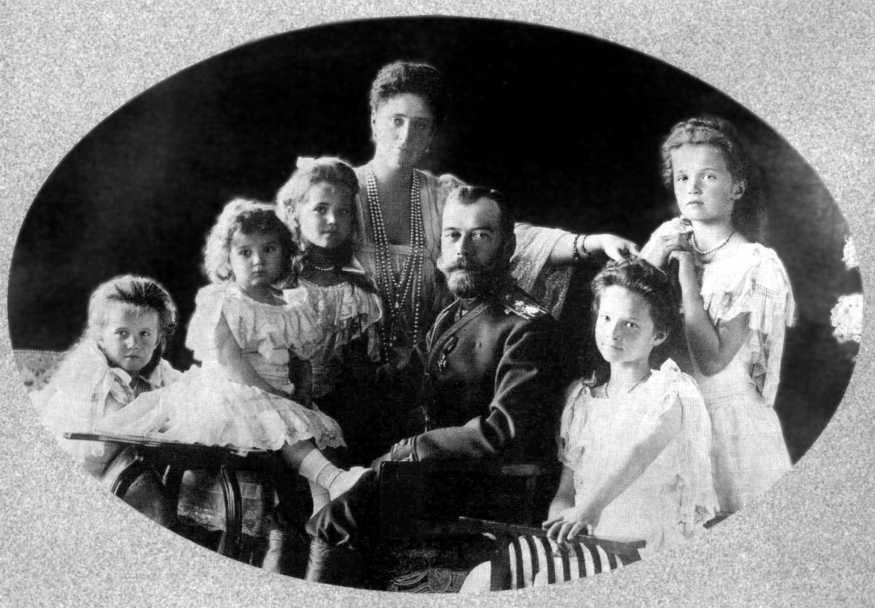
Image result for photos of Nicholas and Alexandra

(Nicholas and Alexandra, 1894))

The first thirty years of Rasputin’s life is like a black hole of which we know almost nothing, making it much easier to create myths.  Rasputin was never formally educated and remained illiterate until his early adulthood.  Up until the age of twenty eight, Rasputin appeared to be headed toward the life of a typical Siberian peasant; farming, church, and married with children.  In 1897 he seemed to have experienced some sort of vision and began a series of pilgrimages.  His religious quest appears sincere as local priests could not adequately answers his questions about God and religion.  He became a “Strannik,” a holy wanderer which was very common in Tsarist Russia.  Rasputin was atypical from most pilgrims in that he retained a home in Pokrovskoe, and was married with three children as he went about developing his own version of peasant religious orthodoxy.  According to Smith, Rasputin’s years of wandering were his university education and he developed a broad knowledge of the Russian social order and a strong understanding of human psychology, with a special talent for reading people.  Rasputin learned how to talk to people and he could “speak freely about Holy Scripture and the meaning of God in a way unlike the priests with their book learning.  His language was direct, personal, unmistakably alive, and earthy filled with references to daily life and the beauty of the natural world.” (27)  This talent goes a long way to explain how he developed his own personality cult.

Image result for photos of Nicholas and Alexandra

(Nicholas and Alexandra with their daughters)

Smith’s portrayal of Nicholas II and his German Tsarina, Alexandra is very perceptive and accurate.  One of Alexandra’s major shortcomings was that she needed to control her privacy and shut out everyone but her immediate family.  The feckless Nicholas could not get her to change her belief that the Russian people had an obligation to the Romanovs, not that the crown had an obligation to its subjects.  The royal couple had a long history of dealing with “mystical types” before Rasputin arrived on the scene.  The most important of which was Philippe Nazier-Vachot, or Monsieur Philippe a charlatan introduced to Alexandra by Militsa, who was married to a Grand Duke who was Nicholas’ cousin.  These two are just the tip of the iceberg of the characters who believed in mysticism and the occult that Smith introduces us to that influence how the Tsar governed his people. Nicholas had a firm belief in the medieval notion of the mystical connection between the Tsar and the masses.  Alexandra had been seeking a “holy man” before Rasputin arrived due to her own personal insecurity and perhaps awareness of her husband’s flaws which would undermine Nicholas’ power, prestige and effectiveness once Rasputin replaced Philippe.   Alexandra needed to have blind trust in a spiritual advisor who spoke of higher truths and prophecies that satisfied her inner religiosity, and help instruct Nicholas on how to rule.  This would lead to mistrust and machinations within the royal family, create intense gossip that tarnished the image of the monarchy, and repeated investigations into Rasputin life and actions as a number of people tried to open the Tsar’s eyes to what was transpiring right before his very eyes.Smith captures the intensity of Alexandra’s loyalty to Rasputin no matter what evidence investigations by the Duma (Russian parliament created by the October Manifesto during the 1905 Revolution) or the Ohkrana (Tsarist Secret police) produced.  Stories of lewdness, debauchery, rumors of unacceptable behavior on the part of Rasputin could not shake Alexandra’s confidence and dependence on her “friend.”  Historians have conjectured on how Rasputin was able to manipulate the Tsarina.  It has generally been accepted that it was due to his ability to help Tsarevitch Alexei who suffered from hemophilia.  It is agreed that Rasputin was able to calm the boy and get him to relax which allowed a decrease in capillary blood flow and aid the healing process.  There were a number of occasions when Alexei’s doctors made his condition worse by constant prodding, while Rasputin reassured the boy and calmed him.  However, Alexandra’s neurotic insecurity needs outweigh Rasputin’s calming effect on Alexei in explaining Rasputin’s hold on the monarchy.

Image result for photos of Nicholas and Alexandra

(the royal family)

Smith takes the reader through the intricacies of eastern orthodoxy and the characters it produced as some priests support Rasputin, but eventually most do not and see him as the devil and an anti-Christ.  The views of politicians and royal family members are examined and historical figures such as Prime Ministers Pytor Stolypin, Sergei Witte, and Vladimir Kokovstov are examined as they attempt to convince Nicholas of the effect Rasputin is having on the decline in popularity of his reign because of policy decisions that Alexandra’s “friend” influenced.  The narrative unveils numerous plots some perpetuated by Rasputin and some by former acolytes that have turned against him to the point that some of these stories could be from an FX cable channel drama.  The problem is many of them have a degree of truth and it reflects how low the Romanov dynasty had fallen in the eyes of its people.

Smith also delves into Rasputin’s battles with the press, the Duma and the Holy Synod.  He provides careful analysis of the strategies that were designed to separate Rasputin from the royal family and exile him to his home village in Siberia.  Official after official, religious leader upon religious leader, and family members all approached Nicholas about the damage that the rumors about Rasputin, including those linking him to an affair with Alexandra, were having on his reign, but he just brushed them off.  A number of high officials would lose their positions as Nicholas removed them upon the advice of Rasputin, and these battles would seal the break between the Duma and the Tsar.  Nicholas became increasingly frustrated as his officials could not control newspapers whose reporting was so damaging.  This problem was exacerbated once Russia was at war with Germany.  Once the war broke out Nicholas would leave St. Petersburg for the front a good deal of the time, leaving Alexandra alone under the influence of her “friend.”  As war news worsened, more and more rumors were publicized that Rasputin and the Tsarina were working with the enemy.  It wasn’t just peasants and soldiers who began believing these rumors as Smith points out but foreign diplomats who feared a separate peace between Russia and Germany, making a revolution against the Tsar a patriotic act.

Similar credence was given to the rumors of sexual scandals at court.  It was said that the Tsarina was the mistress of Rasputin and the lesbian lover of Anna Vyrubova, her lady in waiting, who took part in orgies with both of them.  Alexandra’s sexual corruption became a kind of metaphor for the diseased condition of the monarchy,” even though none of them had any bases in fact.**  Smith provides unparalleled detail in all areas that the narrative ventures, which separates his biography from all others.  But one must ask the question; is there too much detail, after all does the reader need to know the personalities, motivations, and actions of every scandal that existed?

Image result for photos of Prince Felix Yusopov

(Prince Felix Yusopov, Rasputin’s murderer)

The outbreak and conduct of World War I sealed the fate of Rasputin and the monarchy.  Perhaps Nicholas II’s worst decision was to replace Grand Duke Nikolai Nikolaevich as Commander and Chief.  Rumors persisted at court that Nikolaevich was the center of a movement to replace the royal couple and they feared he was providing the enemy Nicholas’ movements at the front.  However, once Nicholas II took command he was away from Alexandra a great deal of the time providing Rasputin greater access and would have greater influence on decisions.  Smith argues against this premise as the malleable Nicholas would be under greater influence by his officers and staff who were critics of Rasputin and the Tsarina.  As these events unfolded during the spring of 1915 newspaper attacks against Rasputin reached new heights of absurdity and with it the reputation of the monarchy reached new lows. As to whether Rasputin dominated the crown and possessed unlimited power, Smith maintains a large degree of that power only “existed in the minds of others.” (440)

The final third of the book deals with plots to kill Rasputin.  Many believed and historians have conjectured as to whether Rasputin and Alexandra were German spies.  Smith, as he does with many the myths he debunks puts this one to rest also arguing that there is no concrete evidence that Rasputin and Alexandra were tools of the Hohenzollerns.  Smith then details more scandals and the ministerial merry go round that Nicholas’ government became during the war, as those who opposed Rasputin were replaced by people he approved of.  This aggravated a number of people, most prominent of which was Price Felix Yusopov who organized a scheme to assassinate Rasputin, and with his co-conspirators carried out the murder during the evening of December 16-17, 1916.

The book is brought to a conclusion discussing the investigation of Rasputin’s murder and setting aside the myths associated with it.  Further, Smith explores the collapse of the Romanov dynasty which resulted in a wave of propaganda depicting Rasputin as the incarnation of evil and that the Russian people were finally set free.  Smith is to be credited with the most comprehensive and up to date biography of Rasputin.  At times difficult to plow through because of its detail, however, if you seek knowledge pertaining to Nicholas and Alexandra’s special “friend,” Smith’s effort will satiate you.

PS.   Rasputin was not as mean spirited as Steve Bannon seems to be!

*Orlando Figes. “A Very Close Friend of the Family,” New York Review of Books, December 8, 2016.

** Figes.

Image result for photos of rasputin

An Ode To Books

Image result for pictures of library bookshelves

This morning when I checked the weather forecast it called for another 18-24 inches on top of the 12 plus we got on Friday.  For me it calls for snuggling up with the New York Times and New York Post (let no one think I am one of those liberals) and reading the book review and sports sections.  In the NYT BOOK REVIEW I came across a wonderful article by James Atlas entitled, “Headed for the Graveyard of Books.”  In it I found one of the best answers to a question I have thought about for decades.  Three years ago my wife Ronni and I moved from the Hanover, NH area down to the seacoast.  I faced a major crisis, how do I move a personal library of over 8000 books.  After careful consideration and much prodding by the love of my life I gave 2000 away.  Today I am left with the remaining items, a blend of historical monographs, historical fiction, biography, literature, mysteries, and sports.  When people visit or hear about my collection the question always comes up, “have you read them all?”  Of course the answer is no, as there are only 24 hours in a day, and you must sleep for a significant block of that time.  The next question that arises is “why not go the library and/or why do you have so many?”

In Atlas’ article he quotes Anatole France, who is “asked if he has read all of the books in his library, [he] is said to have replied: “not one-tenth of them.  I don’t suppose you use your Sevres china every day?”*  This is the answer I have been searching for.  Friends will show off their Kindles or Nooks and say why not them?  Unfortunately, or perhaps fortunately I cannot adjust to the backlighting on these consumer items, and as a wanna be Luddite I will not use them.  I realize that my addiction to books whether it is their texture, the snap of their spines, or the type of print presented it is something I cannot or will not try and cure myself of.  I realize that when I travel or go to a doctor’s office or any number of places I carry extra pounds, but I do not question the wisdom of carrying a laptop, I pad, smart phone, large purses, attaché cases, and backpacks, so why should people question me?    Choosing a book from your own “stacks” or sharing them with friends, neighbors, and students is a behavior that never gets old.  So the next time someone asks the question, “have you read them all?” I will smile inwardly and contemplate my next journey that presents itself on the written page, because people continue to write wonderful books!


*https://www.nytimes.com/2017/02/10/books/review/headed-for-the-graveyard-of-books.

Image result for pictures of library bookshelves