MISSISSIPPI BLOOD by Greg Iles

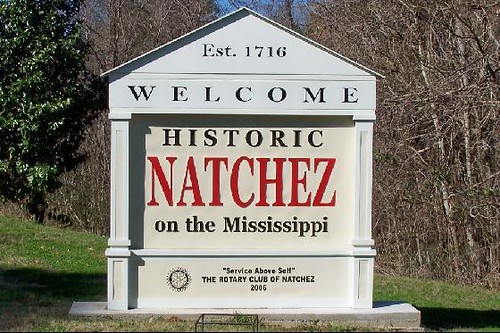
Image result for photo of natchez, Mississippi

When I finished reading Greg Iles’ THE BONE TREE the second volume of his Natchez Burning trilogy it was clear the third installment would be equally suspenseful and the type of book that I would not want to put down.  I was not disappointed as MISSISSIPPI BLOOD drew me in, grabbed my attention, and would not release me.  Iles begins the conclusion of the trilogy by using old newspaper articles as a vehicle to review or present material from the first two books.  It is 2006, and Penn Cage, the mayor of Natchez, Mississippi is dealing with the murder of his fiancé, and is deeply troubled by his father’s refusal to talk about his past, and defend himself at his upcoming murder trial.  Compounding his father’s actions is the effect it is having on the Cage family.  Lurking in the background, soon to reemerge as one of the keys to the novel is a KKK offshoot, the Double Eagles, led by Snake Knox, a racist sociopath who will stop at nothing to keep his actions and past secrets hidden.

Image result for photo of natchez, Mississippi

A number of characters from the previous novels reappear; Shadrack Johnson, the District Attorney who prosecutes Cages father as a means of furthering his career and reputation; Dr. Tom Cage, Penn’s father; Walt Garrity, a retired Texas Ranger who fought with Tom Cage in Korea; Sheriff Billy Byrd, who hates Penn and is in bed with the Double Eagles; Quentin Avery, the diabetic attorney who defends Dr. Cage; Lincoln Turner, Cage’s half-brother from Dr. Cage’s affair with his nurse, and Penn’s mother Peggy, eleven year old daughter Annie, and a number of others.  As the novel progresses Iles integrates material from the first two books refreshing the memories of those who have read them.

Iles does introduce a number of new characters who help bring the state of excitement to new levels.  Serenity Butler, writer, college professor, native of Mississippi, and an Iraq war veteran; Terry “Toons” Teufel, the muscle behind the VK (Varangian Vindred or Viking Justice) a racist biker group somewhat aligned with the Double Eagles; Dolores St. Denis, whose fiancé was murdered by the Double Eagles at the “Bone Tree” in 1966; Cleotha Booker whose son Sam was murdered by the Double Eagles in 1966; Aaron and Roosevelt Harvin the older brothers of Keisha Harvin, a reporter who was brutally attacked by a woman acting for the VK, and a few others.  What is clear to everyone that Penn questions as he tries to figure out what his father is hiding is that if you went against the Double Eagles you would die.

Related image

As the plot develops Iles takes the reader into the seamy underworld of racist terror from the Civil Rights era and the present.  What emerges is the depravity of southern racism that in many ways still remains today.  Through the relationship between the VK and the Double Eagles we see their world view and are exposed to the legal and political corruption that existed in Mississippi and Louisiana.   As Iles’ narrative progresses he provides the social texture that was Mississippi in the 1960s and some of which is contemporary.  Iles provides a number of important insights into southern culture by employing a realistic and engaging dialogue between his characters, particularly involving Penn, his father’s supporters, and those who want to convict Tom Cage and bury the past.

Related image

The problem that dominates the novel is that Penn’s father is hiding important information about his life and how it impacts his trial.  Further, his close friend and lawyer Quentin Avery refuses to disclose his strategy that seems remarkably weak.  It grows worse as Doris Avery, Quentin’s young wife and Penn come to the conclusion that perhaps there is a pact between the two men, that in return for making sure he is found guilty, Dr. Cage will provide him with a painless death and release from the diabetes that has already cost him both of his legs.  For Cage it seems likely his father wants to be convicted in order to save his family from the Double Eagles, or assuage his own personal guilt.  As Doris states; “I think we’re all hostages, even though we’re walking free.  Annie, you, me…all of us.”  In response Penn states; “You mean literally?  Hostages to the Double Eagles?”  They conclude that most of the world has moved past the racist hatred that permeated Mississippi during the Civil Rights era, but not the Double Eagles and too many others.

Once the plot is laid out, the reader is taken on an imaginative, but realistic ride where it seems that the intensity of the narrative increases as you turn each page.  The events of the novel are put forth through, at times, intense dialogue, conversations, newspaper articles, and courtroom testimony that is conveyed in detail. The book is an ode to Natchez as Penn tries to overcome the city’s past and provide optimism for its future.  The book is riveting and can be tackled on its own, but I would recommend reading the three books in order.  No matter how you approach Iles’ trilogy, which is quite an achievement, you will not be disappointed.

Image result for photo of natchez, Mississippi

The Desert Queen – A Film by Werner Herzog

Image result for photo of Gertrude Bell

(The Real Gertrude Bell)

Just watched Werner Herzog’s 2014 film, the “Desert Queen” staring Nicole Kidman as Gertrude Bell whose impact over British policy in the Middle East during and after World War I was quite impactful.  Hers was a rich life that reflected her work as a historian, archeologist, and later as a politician or pseudo diplomat.  The film is rather slow moving and dull in spots, however the cinematography is nicely portrayed.  The scenes with Churchill and T.E. Lawrence were poorly done, though we do get a sense of their egos.  Devoting over half the film to Bell’s love life as opposed to her research and work with the Bedouin and her influence over British policy is a misuse of time and “the Desert Queen’s” gifts.  Nicole Kidman masks a strong effort to accurately portray Bell, but overall the film could have learned a lesson from David Lean’s “Lawrence of Arabia,” though Herzog’s musical score does measure up.

Image result for photo of Gertrude Bell

(Picture is replicated in film, with Churchill, Bell and company)

One watches the film, and follows Bell/Kidman travel the desert and after two hours, she finally meets with the Sharif of Mecca’s son’s Faisal and Abdullah and she sees them as future kings.  Though true, this could have been presented in a bit more greater depth, though their pet falcons were a nice touch.  If one is looking to learn about Gertrude Bell and I would steer toward two books, GERTRUDE BELL: QUEEN OF THE DESERT, SHAPER OF NATIONS by Georgina Bell, and DESERT QUEEN: THE EXTRAORDINARY LIFE OF GERTRUDE BELL: ADVENTURER, ADVISOR TO KINGS, AND ALLY OF LAWRENCE OF ARABIA by Janet Wallach.

Related image

(Gertrude Bell)

THE ZOOKEEPERS WIFE: A WAR STORY by Diane Ackerman

Image result for photo of the warsaw zoo during wwii

(The Warsaw Zoo used in WWII to hide Jews, Polish resistance fighters, and others)

Recently I went see the film, “The Zookeeper’s Wife,” and I was taken by the story and the quality of the production.  The film was based on a book of the same name by Diane Ackerman, which was published in 2007.  Ackerman’s narrative history tells the story of Jan and Antonia Zabinski, who married in 1931, and shortly thereafter became the heads of the Warsaw Zoo located in the Praga district of the city.  The Zabinski’s were Christians who were horrified by the rise of Nazism in Germany, particularly the racial theories they expounded as they related to animals and humans.  The book replicated by the film tells the story of how the Zabinskis responded to the Nazi invasion of Poland in September 1939 and their final seizure of the entire country when they invaded the Soviet Union in June, 1941.  What makes the book somewhat different from the standard historical narrative is that Ackerman, a prolific nature writer by trade is able to apply her expertise in her field to a story that is horrific as well as heroic.

Jan Zabinski was a member of the Polish Underground (Home Army) and throughout the book he tries to maintain the remnants of the zoo, while Antonia sought to help her animals as best she could, while shielding their son Rys from the carnage that surrounded them.  The Zabinski’s role in rescuing over 300 individuals, Polish resistance activists and Jews during the course of the Nazi occupation is the core of the book as Ackerman explores how this was accomplished and their commitment to saving “humans” as well as animals.  The author’s narrative describes how the couple lived before the war in a world where their lives revolved around the internal clocks of their animals as well as humans.  Their daily routines were never quite the same because of the needs of the animals which made each day a novelty with welcome moments especially when the animals seemed to visit and live inside their dacha.  It appears that Jan and Antonia lived in synchrony with the animals and did their best to view the world and align their senses with how their “animal guests” as they were called, might view and experience their world.  As Jan points out, “its’ by living beside animals that you learn their behavior and psychology.”

Image result for photo of the warsaw zoo during wwii

(Antonia and Jan Zabinski)

The story is described through the daily rhythms and scents of the zoo’s resident animals.  The cacophony of sounds reflected animal life and the environment and care they were afforded by Jan and Antonia.  As war approached the matriarchal Antonia worried what would be the fate of her “animal republic,” since the zoo was located in Poland’s most populous city.  Her fears were justified as once the war began the German military slowly pinched off Warsaw from the rest of Poland, and the Nazis indiscriminately, whether through sport or just vengefulness, killed the animals.  Another character that looms large in the narrative is Lutz Heck, Director of the Berlin Zoo and a man obsessed with animal bloodlines whose research was designed to restore certain “pure blooded and extinct species.”  He was a powerful and ardent Nazi who supposedly arrived to borrow some of Jan and Antonia’s best animals and send them to Berlin, to be returned to them after the war.  Hermann Goring was Heck’s patron who also aspired to recasting Germany’s natural world, “cleansing it, polishing it, perfecting it.”

In order to try and save as many animals and people as possible Jan and Antonia came up with a proposal to feed Nazi troops by creating a “pig farm” at the zoo.  Heck approved and this provided Jan access to the Warsaw ghetto to obtain scraps to feed the pigs and fatten them up for slaughter. According to the Jewish Institute in Warsaw, Jan’s access to the ghetto allowed him to “bring out notes, bacon, and butter, and carry messages to friends.” It was an ingenious and dangerous plan, but it allowed Jan to use the zoo as a vehicle for the Polish Underground whose foothold in the Praga District helped protect 6,000 soldiers, the largest pool of saboteurs in the city.  Antonia was in a difficult position because Heck had designs on her apart from animals and she tried her best to play him to her advantage in order to protect her animals and her “human guests.”

Image result for photo of the warsaw zoo during wwii

Ackerman’s narrative is historically accurate and insightful.  Her discussion of natural history is enlightening, particularly as she describes the Zabinski’s zoo management as animals were not just housed in cages, but in “habitats meant to recreate their native wetlands, deserts, and woods.”  Once the zoo is destroyed by German bombing Ackerman examines Jan and Antonia’s survival strategies, in addition to saving the lives of as many people as possible.  Her story reflects the empathy and care the Zabinski’s had for their animals and the people that were hidden in closets, rooms, and even animal cages during the Nazi occupation.  Throughout this process, Antonia tried her best to maintain a “normal festive” atmosphere so her “guests” could feel at home despite the ever present threat that at any time the Nazis would bang on their door.  Signals and other strategies were implemented to make people as safe as possible.

Related image

(Cecylia Teodorowicz, the Zabinski housekeeper in the kitchen with an otter)

Jan’s plan was a simple one, hide Jews and ammunition in plain sight in the middle of the zoo.  He created a halfway house for Jews in hiding and in transit, “nomads, not settlers, they stopped briefly to rest and refuel in route to unnamed destinations.”  Like animals, these guests would blend into their surroundings.  Antonia was unaware of some of Jan’s Underground activities until after the war.  She did not know that he hid C13F, a water soluble explosive in a barrel, she was in the dark when it came to Jan as a leader of an Underground cell that specialized in sabotaging German trains by jamming explosives into wheel bearings, she did not know that he infected some pigs with worms, butchered them and slipped them into German soldier’s sandwiches.  These are the types of things along with details of how Jan smuggled people out of the ghetto to safety, and the overall danger he faced that Ackerman brings out in her narrative that is of the utmost importance.

Ackerman has the ability to blend her knowledge of the natural world with the historical tide.  Daily life in the Warsaw Ghetto, Himmler’s determination to destroy the ghetto to provide a birthday present for Hitler, the Polish Army’s rebellion against the Nazis as Stalin waited in the wings for its destruction, and numerous other events receive full consideration.  Integrating her “guests” into these events provides an even greater meaning to their intensity and importance.

Image result for photo of the warsaw zoo during wwii

(The Warsaw Ghetto)

Antonia maintained a diary throughout the war that Ackerman heavily relies upon and integrates into her narrative.  It is an excellent source as Antonia did her best to prevent more Holocaust victims, but also shows that the animal world was not to be romanticized as she felt it was very violent, and that one had to tread carefully when caring for animals.  As far as citations are concerned it appears much of the book is based on a few sources and it would have assisted the reader if detailed footnotes could have been provided, not just a sentence or two.  In addition, I would have liked further information about the postwar experience of the Zabinskis both of whom did extraordinary work during World War II.

As far as a comparison to the film is concerned, the story is segmented and the parts that are produced seem fairly accurate.  In the movie Jan comes across as a softer figure, in the book he has an extreme edge at times in dealing with Antonia.  Lutz Heck’s role in the film is somewhat crucial to the story, but less so in the book.  Events are accurate, but the book relies more on Antonia’s natural world of animals than is presented in the film.  Overall, the book is worth the read, and the film should be viewed.

Image result for photo of the warsaw zoo during wwii

(The Warsaw Zoo used in WWII to hide Jews, Polish resistance fighters, and others)

HAMILTON: THE REVOLUTION by Lin-Manuel Miranda and Jeremy McCarter

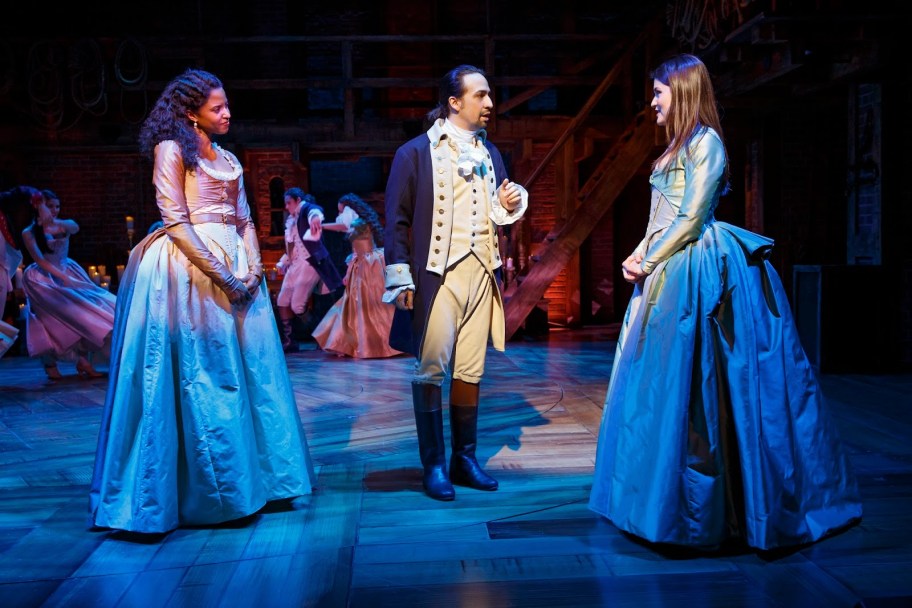
Related image

(Lin-Manuel Miranda as Alexander Hamilton)

Lin-Manuel Miranda and Jeremy McCarter’s HAMILTON: THE REVOLUTION is the perfect companion for those interested in an in depth look at the development, creation, and performance of the musical, “Hamilton.”  At the outset the authors make the cogent point that they believe that what Lin has gifted to the American people is more than just a Broadway show, it reflects two revolutions side by side.  The first being the an 18th century revolution that is the foundation of our country and society, and the second, a 21st century revolution  for American theater as the musical provides a glimpse into a more diverse America.  In 2008, Lin came up with the idea of a hip-hop concept album about Alexander Hamilton.  He would employ hip-hop to tell the story that had nothing to do with hip-hop – using its form not content.  Lin’s success has gone far beyond whatever he could have imagined and his book co-written with Jeremy McCarter provides the public many important insights about the musical itself, and our country.

The book is both a narrative and oral history of how Lin gave birth to the musical lyrics and overall concept of “Hamilton.”  It is important that he does not deify the founders and by creating cast of Latinos and African-Americans to act out our “white” early history provides a unique perspective that audiences would not have experienced with a traditional approach to casting.  We are a nation of immigrants and through Hamilton’s own immigrant story it should bring us together and encourage immigration, as opposed to the political rhetoric of our times.

Image result for photos of alexander and Betsy hamilton and

(Elizabeth and Alexander Hamilton)

Lin is a master of character development.  A case in point is how in Act II has the actors who portrayed the Marquis de Lafayette and Hercules Mulligan, friends of Hamilton in Act I, play Thomas Jefferson and James Madison, his enemies.  Further, Lin creates lyrics based on his vast research, apart from Ron Chernow’s masterful biography, that augments the historical players and delivers through the lens of artistic license a fairly accurate presentation of history.  As a former history educator I drool at the thought of using the musical in a classroom situation. With students role playing and singing their way examining primary documents to learn our history, using a strategy that will make them remember their experience and material without pressure, would have been very rewarding.  The outreach of the musical in New York, and with plans to do the same as the production expands across the country, as McCarter points out on any given day hundreds of classes might be studying our early history using “Hamilton” as an excellent educational tool.

 Related image

The book explores a range of topics that include the biography of Alexander Hamilton, but also the causes of the American Revolution, its outcome, the main characters involved, the political struggle (vicious at times) that ensued, and culminates with the duel that resulted in Hamilton’s death.  The reader will gain a greater understanding of the beliefs of Thomas Jefferson, James Madison, Aaron Burr, John Adams, and George Washington.  Lin explores the partisanship that existed through his lyrics as he does with the most important events of Hamilton’s lifetime.  Lin also delves into Hamilton’s family and the portrait of Elizabeth Schuyler Hamilton is important in trying to determine what type of person Hamilton really was.  Lin has the ability to convey issues, relationships, and individual personalities in a way that entertains and interprets history in a meaningful way.

Image result for photos of alexander and Betsy hamilton and

The book thoroughly examines each song and places it in its historical context and how Lin went about creating the lyrics.  In addition, the book explores the people behind the scenes from the production, choreography, and scene creation in detail.  Vignettes abound, as the reader is exposed to information that normally would not be revealed in this type of companion volume.  If you did not believe that Lin was a “genius” before; once you read this book and explore songs ranging from the opening number that deals with Hamilton’s early years taking forty pages of Chernow’s biography and condensing it into song, to “Non-Stop,” which details the need for a justification for the new constitution, or the lyrics that go with George III’s three numbers, you will now.  Hopefully, all will be able to witness the musical in person at some point, but your viewing will be totally enhanced with the material that Lin and McCarter offer.

Image result for photos of alexander and Betsy hamilton and

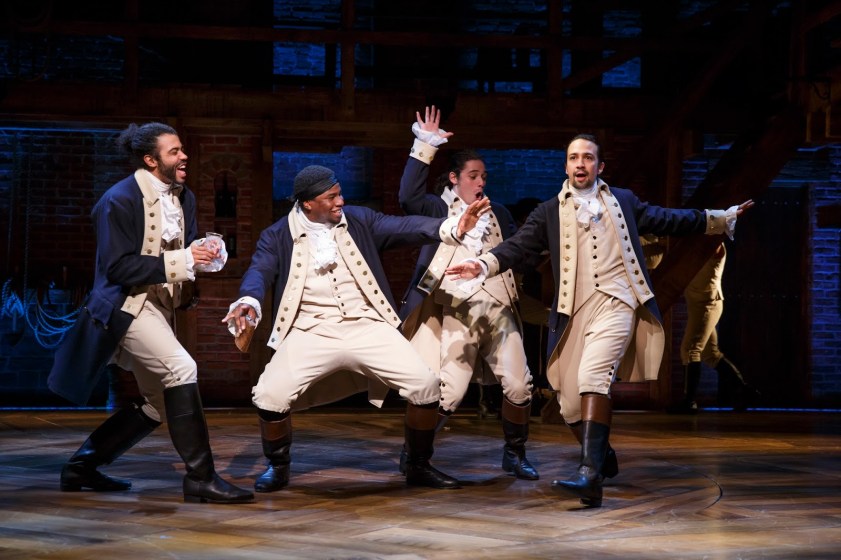
(Hamilton and the Schuyler Sisters)

WAR OF TWO: ALEXANDER HAMILTON, AARON BURR AND THE DUEL THAT STUNNED A NATION by John Sedgwick

Image result for Alexander Hamilton and Aaron Burr photos

If you are looking for a comparative biography of Alexander Hamilton and Aaron Burr I would avoid John Sedgwick’s WAR OF TWO: ALEXANDER HAMILTON, AARON BURR AND THE DUEL THAT STUNNED A NATION.  I would turn to Ron Chernow’s magisterial work on Hamilton and Nancy Isenberg’s excellent life of Burr.  To his credit Sedgwick makes no pretensions to have produced similar all-encompassing works, and states that his goal was to prepare a more personal and intimate portrait of Hamilton and Burr as they careened through the late 18th and early 19th centuries toward their eventual collision.  There is a great deal that is attractive in Sedgwick’s work, but his seeming obsession with his subject’s attitudes and actions toward women detracts from some substantive insights.  There is much that can be praised, but careless errors abound.  I guess the reader should keep in mind that Sedgwick is a novelist, which is reflected in his prose, and not a trained historian.

The title of the book is an apt description of the end of the Hamilton-Burr relationship that dated back to the American Revolution.  Sedgwick’s goal is to present an analysis and history of the two men and determine why their relationship soured.  Sedgwick’s quest is to determine the turning point that pushed them on to the dueling field in Weehawken, New Jersey in 1804.

Image result for Alexander Hamilton and Aaron Burr photos

(Aaron Burr and Alexander Hamilton, “Hamilton: The Musical”)

It is ironic that two men who had much in common ended up with such antipathy for each other.  On the one hand Hamilton was particularly vocal about his disdain for Burr that seemed to originate in the election of 1792 and continued as he successfully contributed to Burr’s failed quest for the presidency and the governorship of New York State.  Or perhaps it was Burr’s defeat of Hamilton’s father-in-law, Philip Schuyler for his New York Senate seat.  In either case it appeared that Burr could swallow Hamilton’s demeaning and insulting comments for over a decade, but once Hamilton blocked him from the New York governorship in 1804, it was the last straw, especially due to Hamilton’s remarks at an Albany dinner at the home of Judge John Tayler.  Also in attendance was Dr. Charles D. Cooper who passed along Hamilton’s remarks to the editor of the New York Post, William Coleman.  Once Hamilton’s words reached the public, Burr was pushed over the edge.

Image result for Alexander Hamilton and Aaron Burr photos

(The Duel)

Sedgwick recounts the most important aspects of the Hamilton-Burr association, mostly in a somewhat superficial manner.  Beginning with their upbringing and the fact that both grew up without parents, Burr, an orphan; Hamilton the son of an illegitimate pairing abandoned by his father, with a mother who was jailed for illicit behavior and passed away when Hamilton was a boy.  What sets Sedgwick’s narrative apart is the attention he offers to certain aspects of their lives that other biographers do not.  A case in point are Sedgwick’s ruminations concerning Burr’s attraction to women and resulting sex life, and Hamilton’s true lineage.  Sedgwick seems to hold a fascination with the sex lives of both men, noting the many affairs in which they were involved that are explored in detail.  As a novelist I guess he is drawn to tawdry aspects of his story and spends an inordinate amount of time on Hamilton’s idiotic pursuit of Maria Reynolds and the ruination of Hamilton’s career.

As previously mentioned, Sedgwick is prone to a number of historical errors.  As the eminent historian Gordon Woods points out;

He has Benjamin Franklin in Paris negotiating the peace all by himself.  He mistakenly           makes John Adams the minister to France when in fact Adams was never minister and was only a member of a peace commission.  He says that President Washington pardoned the rebels in Shay’s Rebellion when in fact it was Massachusetts governor John Hancock.  He has Washington selecting Hamilton to make the a ‘grand summation’ of the deliberations of the Constitutional Convention ‘at the end’ of the meeting, when actually Hamilton gave his six-hour speech on June 18 near the beginning, and it was not a summation at all but an effort to make the Virginia plan seem more moderate.  He says the Senate decided to call the chief executive the president, when actually it was the House of Representatives that overturned the more monarchial title suggested by the Senate.  (”Federalists on Broadway,” New York Review of Books, January 14, 2016)

I guess the reader should keep in mind that Sedgwick is a novelist, and at times is also prone to overstatement and hyperbole; for example, “When Laurens died, it was as if the true Hamilton died too.”

Image result for Alexander Hamilton and Aaron Burr photos

Sedgwick mostly alternates chapters between his two protagonists as he compares his subjects.  Burr is described as a man who was always short of money or in debt, charged the highest lawyer fees he could obtain, engaged in land speculation, and never committed to a position unless it could benefit him – a man without an ideology.  Hamilton, on the other hand maintained a consistent ideology and was not obsessed with wealth, though he was concerning his reputation and social station.  Sedgwick explores the marriages of both men in detail with Burr deeply in love with Theodosia, a widow of a British soldier he had had an affair with and was ten years his senior.  It was more of an intellectual relationship than a physical one and despite his meanderings he worshiped her.  Hamilton who suffered from his own peccadilloes, loved the “matronly” “Betsy,” but she was more of a traditional wife with womanly skills, and not a feminist.  Sedgwick also spends time comparing their approach to fatherhood.  Though away a great deal of the time Burr adored his daughter, also named Theodosia who was educated as if she was a male.  Hamilton was a good father who was thrilled with his large “brood” and was very involved in the lives of his children.

My concern with Sedgwick’s approach is that he does not provide enough information when he introduces a topic and fails to provide the necessary historical context for the many scenes he introduces.  For the novice his presentation is inviting, but I imagine too many times it is confusing.  Further, the author seems to spend more time on inconsequential aspects of the story rather than the more important events that surround his subjects.  A case in point is that he spends more time on why Federalists did not shake hands with each other, or even touch each other, than discussing the development and importance of Hamilton’s National Bank.  In addition, Sedgwick’s approach to citations is somewhat cavalier.  He presents a rationale for the approach he takes and it seems like a cop out.  Stating that the existence of Google provides the best sourcing for readers, Sedgwick does provide a short paragraph for each chapter reflecting a few main sources to let the reader know where the information originated.  Since he states that he used a myriad of sources it could not have overly taxed him to provide the proper affirmation.espite these shortcomings Sedgwick does provide some interesting insights particularly Washington’s disdain for Burr who he saw as arrogant, untrustworthy, unsoldierly, and one who would not conform.   Another is his remarks pertaining to Thomas Jefferson and James Madison’s view of Burr that he would do for them in the political world what Philip Freneau did in the newspapers by backing him for the Senate from New York State.  It was designed to “drive Hamilton to a frenzy of irritation, causing him to bring about his own ruin with no further help from them.”  Sedgwick is also insightful as he explores Burr’s machinations as vice president, after the duel with Hamilton, and his plot to create his own western empire.

Overall, Sedgwick’s work can be categorized as entertaining and as a stylized historical narrative the book seems to be a success, but as a work of history, it is rather weak.

Image result for Alexander Hamilton and Aaron Burr photos

“HAMILTON THE MUSICAL: HISTORICALLY ACCURATE OR NOT?” A MINI-COURSE

HAMILTON: THE MUSICAL, HISTORICALLY ACCURATE OR NOT

                             Steven Z. Freiberger, Ph.D

                                http://www.docs-books.com

                               szfreiberger@gmail.com

                                        603 580 5145

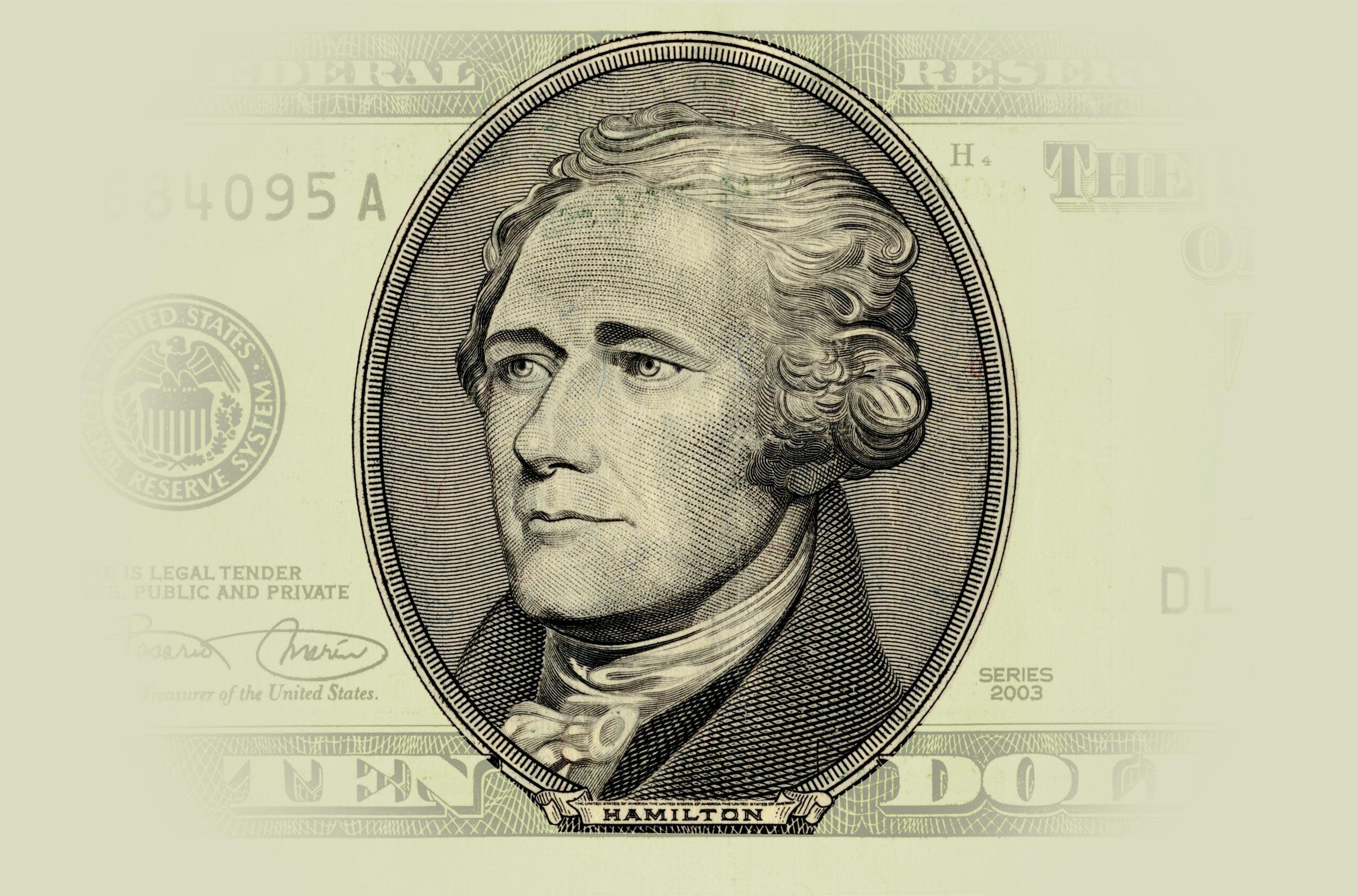
Image result for photo of alexander hamilton 

The course is designed to explore America’s early history through the eyes of Alexander Hamilton.  The class will be provided a series of lectures/discussion geared toward; background to the American Revolution; Hamilton’s life story; a study of how the musical “Hamilton” was created: and a class analysis of whether the story and lyrics are historically accurate.

All students will be expected to purchase the “Hamilton: An American Musical” by Lin-Manuel Miranda that includes the 2 CDs and a pamphlet with lyrics.  This is a necessity if students are to engage each other in discussion concerning the historical validity of the musical.

April 24, 2017  Life in Colonial America

May 1, 2017 Alexander Hamilton: A Life

May 8, 2017 Hamilton: An American Musical

May 15, 2017 Class discussion on the historical validity of the musical

Bibliography of some of the major players:

Appleby, Joyce THOMAS JEFFERSON

Beeman, Richard PLAIN, HONEST MEN: THE MAKING OF THE AMERICAN

CONSTITUTION

Brookhiser, Richard ALEXANDER HAMILTON: AMERICAN

Burns, James MacGregor; Susan Dunn GEORGE WASHINGTON

Bustein, Andrew; Nancy Isenberg MADISON AND JEFERSON

Cheney, Lynne JAMES MADISON: A LIFE RECONSIDERED

Chernow, Ron ALEXANDER HAMILTON

Chernow, Ron GEORGE WASHINGTON: A LIFE

Diggins, John Patrick JOHN ADAMS

Ellis, Joseph FOUNDING BROTHERS

Ellis, Joseph THE QUARTET

Ellis, Joseph HIS EXCELLENCY: GEORGE WASHINGTON

Ellis, Joseph AMERICAN SPHINX: THE CHARACTER OF THOMAS JEFFERSON

Ferling, John JEFFERSON AND HAMILTON: THE RIVALRY THAT FORGED A NATION

Ferling, John JOHN ADAMS: A LIFE

Ferling, John ADAMS VERSUS JEFFERSON: THE TUMULTUOUS ELECTION OF

1800

Ferling, John THE ASCENT OF GEORGE WASHINGTON

Flexner, James GEORGE WASHINGTON 4 VOLUMES

Hart, Gary JAMES MONROE

Hayes, Kevin THE ROAD TO MONTICELLO

Isenberg, Nancy FALLEN FOUNDER: THE LIFE OF AARON BURR

Ketchum, Ralph JAMES MADISON

Lomansk, Milton AARON BURR 2 VOLUMES

Maier, Pauline RATIFICATION: THE PEOPLE DEBATE THE CONSTITUTION 1787-

1788

Malone, Dumas THOMAS JEFFERSON 4 VOLUMES

McDonald, Forrest ALEXANDER HAMILTON: A BIOGRAPHY

McCullough, David JOHN ADAMS

McCullough, David 1776

Meacham, Jon THOMAS JEFFERSON: THE ART OF POWER

Miller, John C. ALEXANDER HAMILTON

Miranda, Lin-Manuel; McCarter, Jeremy

Stewart, David O. JAMES MADISON

Stewart, David O. THE SUMMER OF 1787: THE MEN WHO INVENTED THE

CONSTITUTION

Wills, Gary JAMES MADISON

Unger, Harlow Giles THE LAST FOUNDING FATHER

Vidal, Gore BURR

Image result for photo of alexander hamilton

BLACK CROSS by Greg Iles

Image result for photo of nazi medical research facilities

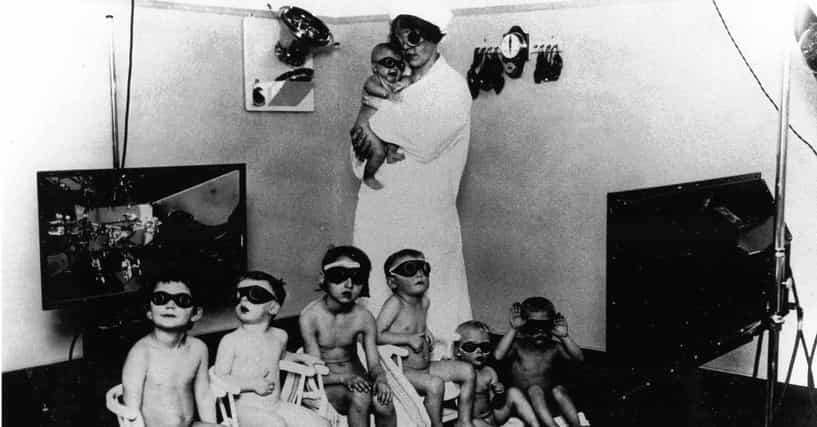
(Nazi medical facility conducting “research”)

While attending the funerals of his grandparents, Dr. Mark McConnell meets an old friend of his grandfather, Rabbi Leibovitz.  For years the Rabbi worked with McConnell’s grandfather who had difficulty coping with his experiences from World War II.  It seemed that his grandfather had been awarded a secret version of the Victoria Cross, England’s highest award for “unparalleled acts of valor and devotion in the face of the enemy,” kept many secrets from his son and grandson.  McConnell is stunned as the Rabbi begins to tell him a story that dates back to February, 1944 in a place called Totenhausen located on the Recknitz River in northern Germany.  After reading Greg Iles opening salvo in the historical novel, BLACK CROSS, the reader’s interest is captured.

The first Mark McConnell is an American educated at Oxford University with a medical degree and a master’s in chemical engineering who is asked by one of Winston Churchill’s senior advisors to join a British team to research poisonous gases.  It is 1940 and England is hanging on by a thread against Nazi Germany when McConnell agrees to join the British.  Fast forward to 1944 and McConnell is asked to head a group to develop a clear poisonous gas that was more toxic than Sarin (the gas that Hafez el-Assad recently used on the Syrian people).  McConnell is a pacifist, and agrees to work only on defensive weapons, but the issue has become immediate as Churchill and the allies believe that Hitler is about to deploy a deadlier version than Sarin called Soman, another clear toxic agent that short circuits the central nervous system to block any allied landing in France.  With Normandy planning already under way and scheduled for June the Nazi threat is immediate.  McConnell’s problem is that his father had been a victim of poison gas during World War I and he witnessed the physical and mental scars throughout his childhood.

Image result for photo of nazi medical research facilities

(General Reich Commissioner for Health and Sanitation, Dr. Karl Brandt)

The allied plan is designed to warn the Nazis that they have their own supply of Sarin and Soman by destroying Totenhausen, a Nazi camp that conducts medical experiments to develop these toxic gases.  Heinrich Himmler is in a race to show the Fuhrer the possibilities of using the gases to block the allies, before an allied demonstration influences his decision making.  The plot is not an imaginary one as during the war there was a race to develop toxic gases and a defense against them.  Iles creates a number of believable characters through which he tells McConnell’s wartime experiences.  Churchill proposes to Eisenhower that the allies develop a toxic agent and use it against the Nazis in limited fashion or bomb the Nazi stockpile.  The Supreme Allied Commander refuses, arguing that President Roosevelt would never allow the United States to be the first to deploy such a weapon.  Churchill never one to be dissuaded once he made up his mind decides to go ahead with a plot of his own.

Iles has created a scenario that is historically believable.  He presents a number of historical insights that reflect the low opinion the British have of American fighting capability, and British arrogance.  Further, the conflict between Himmler’s SS, the Gestapo, and the Wehrmacht for Hitler’s “blessing” is dead on.  Historical characters that are presented seem true to life, particularly Himmler, Eisenhower, and Churchill.  The fictional characters are also extremely realistic.  Dr. Mark McConnell’s evolution from a pacifist to an individual who is willing to kill innocent people in the name of saving the Normandy invasion is credible.  Brigadier General Duff Smith who is in charge of the secret British plan to destroy Totenhausen and steal Nazi research on Soman gas is right out of MI5.  Jonas Stern, is a Zionist guerilla fighter from Palestine who had served in the British army is captured and recruited as an integral part of the plan.  Stern agrees because he wants revenge as he is told that his father had been gassed at Totenhausen and as a partisan fighter witnessed four separate Nazi extermination camps.  Other important figures include Dr. Karl Brandt who headed the research at Totenhausen and conducted numerous medical experiments and selections that resulted in the death a large number of inmates.  Iles is accurate because the Nazi doctor, Karl Brandt did conduct medical experiments and was found guilty at Nuremberg and hanged in June, 1948.  Anna Kaas, a nurse at Totenhausen, Rachel Jansen, an inmate at the camp along with her two young children, Ariel Weitz, a collaborationist Jew, and a number of other characters play important roles in the story.

Image result for photo of Heinrich Himmler

(Heinrich Himmler)

The novel raises a number of difficult questions, especially when decisions have to be made regarding who should be protected as the plan is implemented.  The issue of people “playing God,” as people have to decide who shall live, and who shall die plays out throughout the novel.  Iles also explores the evolution of human relationships during the stress of war time.  The bonding that takes place between McConnell and Stern is very interesting, as is McConnell’s relationship with Anna Kaas.  The dilemma of Rachel Jansen brings to mind the decisions that had to be made in the book/film, SOPHIE’S CHOICE.  World War II was supposedly the good war, but as Iles’ characters confront evil, there is no such thing.

Iles’ novel is suspenseful, realistic, and engrossing.  These literary traits seem to characterize all of his books.  A few weeks ago his latest work, MISSISSIPPI BLOOD, the third installment of his NATCHEZ BURNING trilogy was released and I cannot wait to get a copy and plunge right in.

Image result for photo of nazi medical research facilities

(Totenhausen, conducted Nazi medical research on children)

JEFFERSON AND HAMILTON: THE RIVALRY THAT FORGED A NATION by John Ferling

Image result for photo of hamilton and jefferson

(Alexander Hamilton and Thomas Jefferson)

Before John Ferling delves into the background, philosophies, and careers of his subjects in his JEFFERSON AND HAMILTON: THE RIVALRY THAT FORGED A NATION he exposes the reader to a meditation on how the third president and the first Secretary of the Treasury have been evaluated by successive generations.  At the outset Jefferson was seen more favorably as he was deemed to be a democratic populist who defended the liberties of all, while Hamilton was viewed as the spokesperson for the rich upper class or “monarchical party.”  This characterization existed through most of the 19th century as Jeffersonian agrarianism fought off the evolution of industrialization.  Men like Andrew Jackson and William Jennings Bryan claimed Jefferson’s mantle, while Theodore Roosevelt and his adherents at the turn of the 20th century believed in Hamilton’s vision of American power, influence, and economic interests.  By the administration of Franklin D. Roosevelt, Jefferson’s legacy reemerges with the onset and effects of the Great Depression which was laid at the feet of “monied interests.”  Following World War II and the onset of the Cold War Hamilton was seen as the “patron saint” of the political right wing, and his service on behalf of the financial sector and free market economy is applauded.  Jefferson’s reputation was decried during the Civil Rights era and by time Ronald Reagan assumed the presidency many saw him as a hypocrite because of his stance on slavery and his vision for America suffered.  With the advent of neo-conservatism, Hamilton’s insights were more generally accepted and he was described as a creative genius.  It is interesting to contemplate the new Trump administration’s stance on the two founding fathers since they came to power based on a populist economic message.  It will be fascinating to speculate and somewhat scary to observe the evolution of the new regime in Washington.

Image result for photo of george washington

(George Washington)

It is obvious that Ferling has mined a significant amount of the voluminous secondary sources that exist on his subjects.  He offers a strong synopsis of their early years and provides penetrating insights into their future characters.  However, his discussion of Jefferson is presented in greater depth, in part because of the paucity of material related to Hamilton’s early years.  Further, his objectivity can also be questioned as it is apparent that he holds Jefferson in greater esteem than Hamilton.  Ferling claims to be more impressed with Hamilton than he thought he would be.  Though he admires Hamilton’s intellect and achievements, the narrative, despite pointing out a number of Jefferson’s flaws is decidedly in favor of “the Sage of Monticello.”

Image result for photo of monticello

(photo of Jefferson’s home at Monticello)

Jefferson comes across as self-absorbed in his private life as opposed to his public career before the American Revolution, particularly up to 1774 as he worked on his law career, married into a monied family, and served in the Virginia House of Burgesses.  His writing were sharp, clear, and radical, but only from a Virginian’s perspective.  Jefferson was more radical that most Virginians and interestingly his views dovetailed more with the north.  As Jefferson wrote in a meditative and philosophical manner, at the same time Hamilton’s approach was slash and burn.  His no holds barred approach would never change, be it answering Samuel Seabury or Aaron Burr.  What separated Hamilton’s writing from others is that he predicted why and how England would lose a war with the colonies.  Hamilton avoided criticizing George III and did not call for independence, as he blamed English ministers for the coming conflict, and therefore argued for reconciliation.

Ferling writes with a smooth prose that allows the reader to glide over his words, words that are full of insight and analysis.  Ferling’s comments are very measured throughout the narrative and his approach allows the reader to make up their own minds on the subjects at hand.  For example, Ferling holds Jefferson in high esteem, but he does not shirk from describing his self- indulgent nature as is seen when he describes Jefferson’s contribution to the Revolutionary War effort, his accumulation of debt because of his consumerism, his refusal to serve in Congress, the hypocrisy related to his future plans for slavery, and the life style when he lived in Monticello and Paris.  Ferling does balance his presentation by arguing that Jefferson’s non-military contributions to the revolution are as important as his “scripture,” the Declaration of Independence which crystallized the founding ideas of the new country by trying to diminish the power of the “patrician order” and laid the foundation of a truly republican government.  As for Hamilton no one had to goad him into service or exhibit courage.  However, Ferling does explore Hamilton’s motivations as he tries to overcome his family roots and achieve notoriety and success.  For Hamilton, it just seemed as his life progressed there was always a rich and powerful sponsor that helped him move forward.

Image result for pictures of the continental congress

(The Continental Congress)

Ferling tells the story of the American Revolution through the movements of Hamilton and George Washington.  Strategy is analyzed, personalities are explored, and the importance of Hamilton-Washington relationship is presented front and center.  Ferling makes the excellent point that Washington was very concerned about the quality of intellect in the Congress at Philadelphia.  Washington kept pointing out the weak financial state of the government that existed due to its inflated currency and speculation that threatened victory.  The Adams and Franklins that populated the original Congress were gone by 1781, leaving few men of ability; provoking Washington to say, “where are Jefferson and others in this time of need.”  A comment that may have been born of Washington’s close relationship with Hamilton.

Image result for picture of john adams

(John Adams)

Hamilton strongly believed that the major problem that the war effort confronted was its lack of a strong central power in government.  Hamilton came to the conclusion that “Europe will save us despite ourselves.”  Hamilton urged people to call for a Constitutional Convention to rectify the situation that had resulted in a military stalemate and create a National Bank in order to finance the war.  Hamilton also called for the use of black soldiers in order to defeat the British. Ferling reviews Hamilton’s writings and agrees with Ron Chernow’s magisterial study that Hamilton was developing his ideas and concepts that he would later apply to governing when he became Treasury Secretary.

Ferling’s approach to Jefferson’s two terms as governor of Virginia is very diplomatic.  He criticizes him for taking until 1779 to agree to serve, but has empathy for Jefferson as he tries to figure out how to defend Virginia from a British invasion, but also assist South Carolina from the attack.  In evaluating Jefferson as governor one might say he did try and rally his home state through leadership other than just employing his quill.  Ferling reviews the reasons for Jefferson’s abandoning his capital when the British threatened.  For the author Jefferson did “dilly dally” over his personal needs, and should have taken the warning of invasion more seriously.  Jefferson comes across as self-centered and it took a great deal of pressure to get him to act.  Overall, Jefferson’s governorship would become a political albatross around his neck until he could escape America and pursue his diplomatic mission in Europe that allowed him to avoid the post-revolution political fray as the new government gained its footing.

Ferling offers a number of important insights concerning the founding fathers that challenges the historical imagery that has surrounded them.  One of the most important is his exploration of Hamilton’ true feelings toward Washington, as he argues that Hamilton did not really care for his commander.  Hamilton’s feelings are colored by his frustration of not gaining a command, a path he believed was a necessity for post-war success.  He resented Washington for keeping him as his aide de camp and viewed his commander as “ill-humored….coarse and sometimes petty, vain, ill-tempered, inconsiderate, insecure, inelegant, and unoriginal in his thinking.”  But, Hamilton realized that Washington was honest and honorable and essential to the American cause that required a “fabricated Washington” for the American people to believe in.  Hamilton would eventually resign and Washington would finally appoint him to a command at Yorktown that sealed his reputation for bravery and leadership.  In stark contrast at the end of the war, Jefferson faced an investigation of his leadership as governor of Virginia.

Ferling’s treatment of the Washington-Hamilton relationship is enhanced because of the knowledge gained writing an excellent biography of Washington, THE ASCENT OF GEORGE WASHINGTON: THE HIDDEN POLITICAL GENIUS OF AN AMERICAN ICON.  This was apparent after the revolution when the issues of military back pay and pensions threatened to become a military revolt.  Both he and Hamilton agreed on the need to develop a program to pay off the government’s debt, but it did not stop Washington from seeing “menacing qualities in Hamilton that nudged him to assure that his former aide remained a loyal follower, not an enemy.”

Image result for photo of james madison

(James Madison)

The fundamental difference between Jefferson and Hamilton was clear early on.  Jefferson stressed the expansion of individual freedom and independence.  Hamilton emphasized the wellbeing of the nation.  Ferling is correct in arguing that “Jefferson had become a revolutionary largely in the hope of securing, enlarging, and sustaining personal liberties. Hamilton’s experience in the Revolutionary War led him to believe that liberty could never exist unless the nation was strong and secure.”  These world views would color their heated relationship for years.
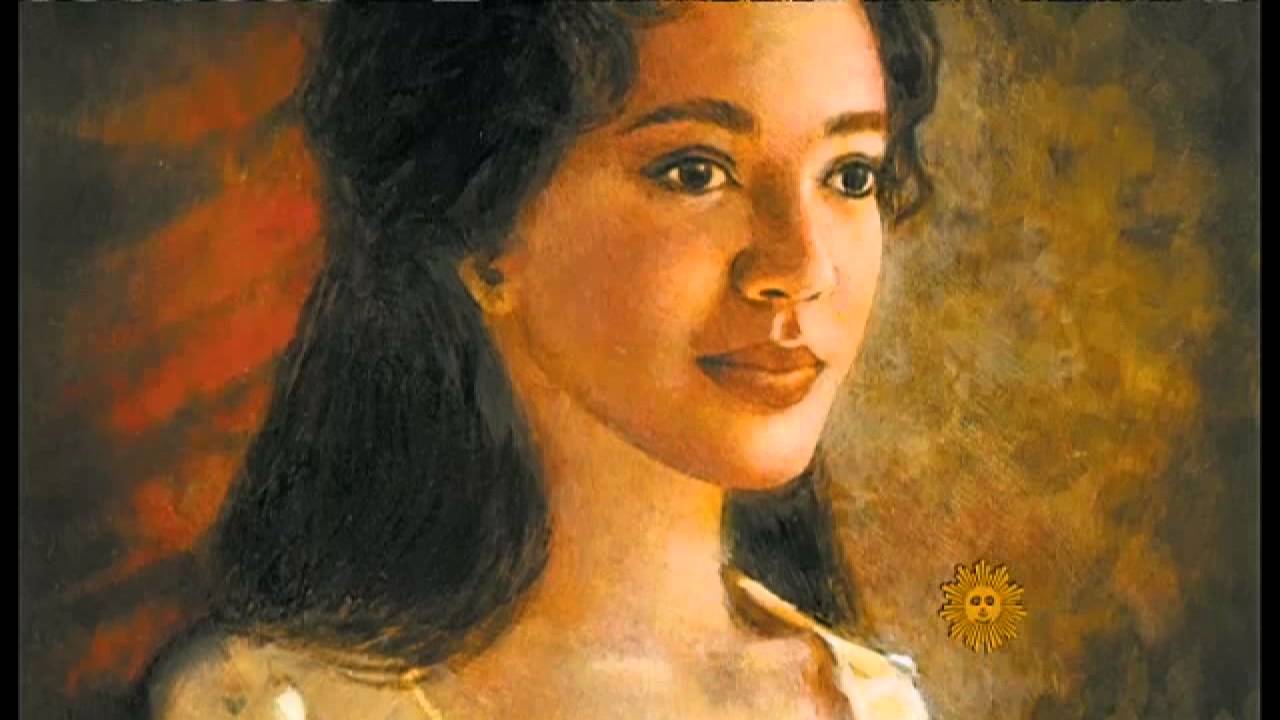
Image result for photo of sally hemings

(Salley Hemmings)

Ferling’s chapter on Jefferson’s life in Paris is important in gaining an understanding of his belief system and interaction with others.  The author’s description of his relationship with the John and Abagail Adams is very poignant in light of their later political feuds.  Jefferson’s loneliness is apparent as he still had not recovered from the death of his wife Martha.  Ferling explores the Maria Cosway affair and his budding relationship with Sally Hemmings as a means of explaining how desperate Jefferson was to fill the void in his life.  A part from personal issues, Ferling describes Jefferson’s views that encompassed his love for the French people, disdain for absolutism and monarchy, including his support for the events of 1789.  What is key is that the philosophy that Jefferson crossed the Atlantic with was reinforced in France and are an accurate guide as to how he would resume his public career once he returned to the United States.

While Jefferson was off in Paris, Hamilton was involved with the Constitutional Convention that replaced the Articles of Confederation.  For Hamilton the government’s indebtedness was the most important issue and the problem that he faced was that “while virtually every delegate came prepared to increase the powers of the national government at the expense of the states, none was willing to jeopardize the vital interests of his state.”  Hamilton’s philosophy became widely known from this process as Ferling describes how Hamilton pulled back the curtain that concealed the thoughts of conservative Americans.  They had not dreamed of sweeping social or political change.  For them, a powerful nation state should be created that would allow men of finance to be free from the shackles of England to invest, make money, and secure their wealth.  For Hamilton, inequality was just the nature of things and he was not inclined to remedy these disparities.  He was an elite who wanted to preserve his status and this anti-democratic belief would be the core of his thought for the remainder of his life.  Hamilton did work to gain passage of the new Constitution by taking on a high percentage of the burden to prepare THE FEDERALIST PAPERS, and once he became Secretary of the Treasury he was able to implement his plans to preserve and develop the new nation.  Ideas such as a National Bank, Assumption of debt by the government, building the Coast Guard, and contributing to a strong executive branch of government were all were major contributions that historians believe were Hamilton’s greatest achievements as our government and economy today follow the principles he developed.

The period following the inauguration of Washington reflects the true disdain that Jefferson and Hamilton felt for each other.  On issue after issue their disagreements reflected their hostility toward one another.  Ferling does a remarkable job explaining the basis for their disagreements and describes the political repercussions.  Today we dread the level of political partisanship, but when one looks back at the nastiness of the 1790s, one might argue that we are somewhat tame today in comparison.  The author provides wonderful anecdotes that reflect the chasm between the two men.  For example, during a visit to Jefferson’s residence in New York, Hamilton pointed to three pictures on the wall and asked who their subjects were.  Jefferson responded; “Bacon, Locke, and Newton” three of the greatest men of history.  Hamilton retorted that the greatest man in history was Julius Caesar.

Ferling seems to sympathize with Jefferson in that he believed that once the assumption of debt issue was settled in return for moving the capitol to the Potomac River region that there would be a few areas of disagreement.  However, once Hamilton launched the rest of his economic program Jefferson claimed to have been deceived.  It is unlikely that Jefferson was that naïve.  But once the Whiskey Tax, the National Bank, and Hamilton’s plan for manufacturing became public, Jefferson was pushed over the edge as he feared that the United States would be turned into a monarchical state that replicated England. As the war in Europe expanded with England joining the alliance against France, foreign policy would enter the equation with the Genet Affair and Jay Treaty that would further exacerbate tensions between Jefferson and Hamilton.

Image result for photo of aaron burr

(Aaron Burr)

The partisanship was further reflected in newspapers, one for each side that became the mouthpieces of the two men.  Hamilton and Jefferson’s cohort, James Madison would publish numerous essays that skewered their opponents.  Jefferson’s misreading of Washington’s views contributed to the problem in that he believed the president had an open mind.  Jefferson did his best to besmirch Hamilton in the eyes of Washington by providing as many damaging documents as he could.   However, Washington blamed Jefferson for the rise of the nasty political factionalism that had developed, in addition to the fact that the president supported Hamilton’s economic program and vision for the future.  Jefferson’s hatred of Hamilton is best seen in Jefferson’s comment to Washington, “Hamilton was a man whose history, from the moment at which history can stoop to notice him, is a tissue of machinations against the country which had not only received him and given him his bread, but its honors.”

Ferling carries the narrative through the end of Washington’s presidency, the Adams administration and the election of 1800.  What is clear in the last third of the book is that Ferling maintains a soft spot for Jefferson and doesn’t miss an opportunity to disparage Hamilton.  Once Hamilton became a private citizen he could not let go of influencing events easily.  He became more of a schemer to implement his grandiose ideas and his “Federalist agenda.”  Ferling’s narrative reduces Hamilton to an individual who worked behind the scenes to manipulate governmental policy, individual opinion, and events to achieve his nefarious goals.  A case in point is the election of 1800 where Hamilton worked overtly and covertly to undermine Adams’ reelection through pamphlets, newspaper articles, speeches, and private conversations defeat Adams.  In the end he would throw his support to Jefferson to block Aaron Burr as the election came to a vote in the House of Representatives.  Ferling believes that Hamilton suffered from a flawed temperament that dominated his actions which resulted in the end of the Federalist Party as he let his ego get in the way of the changing political culture that had developed.  As far as Jefferson is concerned he is raised to a level of respectability that does not exist in the first half of the book.  Jefferson may have cut a deal with the Federalists to gain the Presidency, but Ferling rationalizes that by doing so he saved the union.

It is interesting that one of the early songs in the musical “Hamilton,” “I am not going to throw away my shot,” it’s star, Lin-Manuel Miranda describes a man who would never give up an opportunity, however as Ferling describes the duel scene with Burr, that is exactly what he did.  Perhaps as Ron Chernow suggests, Hamilton had enough, and it was a respectable way of committing suicide.   Whatever one thinks of these two men, their impact on the creation of the republic, and the legacy that exits today,  it is important to remember the time period in which they lived, and how fervently they believed in their ideals and how they tried to do what they deemed best for the new nation.  Ferling’s book is a strong comparative study and it provides a true understanding of how America began and provides strong clues of what it was about to become.

Image result for photo of hamilton and jefferson

(Alexander Hamilton and Thomas Jefferson)
FAREWELL TO KABUL: FROM AFGHANISTAN TO A MORE DANGEROUS WORLD by Christina Lamb

Image result for photo of Christina Lamb in afghanistan

(author, Christina Lamb in Afghanistan)

Christina Lamb begins her heartfelt memoir of 27 years of reporting from Pakistan, Iraq, Afghanistan, and Washington in FAREWELL KABUL: FROM AFGHANISTAN TO A MORE DANGEROUS WORLD by describing the British withdrawal ceremony in Helmand province, Afghanistan that for her symbolized the transfer of power to the Afghan army.  It might have been a happy occasion, but for Lamb it reminded her of the numerous errors in British policy in the region, the 453 British soldiers who were killed, the hundreds who had lost limbs to roadside bombs, and those psychologically scarred for life.  Lamb also points to the tens of thousands of Afghans who had lost relatives, homes, and who had become refugees.  By October, 2014 England was ending its 4th war in Afghanistan dating back to the 19th century, but this was their longest and leadership was determined to remove all evidence that they were ever there.  What remained was a war that continues today, and it seems as if it has come full circle as there are current reports that the Russian government is supplying weapons to the Taliban, an organization who as mujahedeen had defeated the Soviet Union in the 1980s.

Lamb presents an excellent history of a period of Anglo-American foreign policy that is wrought with mistakes, ignorance, and doing too little too late.  In so doing, Lamb discusses an exceptional amount of information and analysis interspersed with her personal observations of her tenure in southwest Asia.  She follows the story from the Soviet invasion of 1979, their ultimate defeat, the failure of the United States to maintain interest in the area, the rise of the Taliban, the American invasion, the tragedy of Iraq, the resurgence of the Taliban, the Mumbai attack, the killing of Bin-Laden, and the final withdrawal of American and NATO troops by 2014.  What is amazing is that Lamb seems to be everywhere that major events are transpiring.  Further, her “army” of contacts and sources make her writing indispensable to understand the history of the region.

Image result for taliban retake parts of afghanistan photos

One of her most telling comments among many throughout her narrative is that the United States had spent more money in Afghanistan than it had on the Marshall Plan that helped rebuild Europe after World War II.  Lamb watched events in Afghanistan for over 13 years and wondered how a war could be fought when there was no real border with Pakistan, which provided the enemy with safe haven.  Further, she was incredulous when the United States fought a war on the “cheap,” committing few troops and soon becoming distracted by a new war in Iraq of its own making based on false information.  In addition, the US turned a blind eye to its “supposed” ally, Pakistan whose intelligence service, the ISI had created the Taliban and provided an escape route for Osama Bin-Laden when American Special Forces had him cornered in Tora Bora in December, 2001.  The entire operation and decision making can be summed up in one term, and I apologize if it insults some – a “cluster-fuck.”  Much of Lamb’s analysis reminds me of Francis Fitzgerald’s FIRE IN THE LAKE, as the United States seemed purposefully ignorant of the culture that they were up against and did little to rectify it until it was too late.

Throughout her memoir Lamb describes the beautiful landscapes that she experienced, be it the Hindu Kush or the flowers and beautiful kites of Kabul.  Despite all the tragedies that she witnessed she always seems to return to the joys that mother-nature afforded.  It seems to me the major tragedy was how the Bush administration brushed off all warnings concerning a possible al-Qaeda attack from CIA Director George Tenet, Richard Clarke, Clinton’s terror advisor, members of the Northern Alliance, and even from Russian President Vladimir Putin.  Bush advisors saw this as sour grapes since the Russians had been defeated in Afghanistan by Bin-Laden and Company and the result was 9/11.

Image result for pakistani president Musharraf photo

(Pakistani President Parvis Musharraf)

Lamb describes numerous characters who are germane to her story.  The first, is indicative of the myriad of types she ran across.  Wais Faizi, who managed the Mustafa Hotel and had lived in the United States, was known as “the Fonz of Kabul,” and drove around in a 1968 Chevy Camaro convertible.  More significant was her relationship with Hamid Karzai who at the outset warned that the ISI was funneling American aid money to the Taliban.  Lamb follows Karzai’s political career and his tenuous relationship with the United States and Pakistan throughout his presidency.  James Dobbins, the United States Special Negotiator for Afghanistan is introduced with his requests from Secretary of Defense Donald Rumsfeld for 25,000 American troops to stabilize Afghanistan once the Taliban were on the run.  His response sets the theme for US policy – they were already planning for Iraq by December, 2001 and stated that “we don’t do police work.”  CIA operative Gary Bersten is another character that is symbolic of American negligence in response to 9/11.  Bersten was with a small group of special operatives working with Afghan tribal forces trying to root out al-Qaeda and Bin-Laden from Tora Bora.  He requested troops to seal the Afghani-Pakistan border to block their escape.  Rumsfeld and the Bush administration refused as General Tommy Franks was already gaming the coming war in Iraq.  A 2009 Senate report reinforced Bersten’s view that the United States had passed on killing Bin-Laden – we can only conjecture how history might have been altered had we not done so.

Image result for photo of hamid karzai

(Afghanistan President Hamid Karzai)

Of course Lamb describes the duplicity of General Parvis Musharraf, the Pakistani leader who the US tried to convince to turn against the Taliban.  But he had his own difficulties with the Islamized leadership of his military and the ISI’s relationship with the Taliban.  Musharraf did his best to squeeze the United States and in the end both sides gained what it wanted.  Lamb’s explanations are clear, succinct, and easily understood with vignettes that are priceless, i.e., according to Undersecretary of Defense Richard Armitage on the topic of whether the Pakistanis could be trusted, “with Pakistan you get part of the story, never the whole story….How do you know when the Pakistanis are lying?  Their lips are moving.”

Lamb’s discussion of the ISI-Taliban relationship goes back to 1979 and is developed through the Taliban’s victory in 1994.  In a chapter entitled “Meeting Colonel Imam” Lamb lays out the history of the Russian invasion of Afghanistan and the development and training of the Taliban under the leadership of Amir Sultan Tamar, a Brigadier General in the Pakistani army who had trained with American Special Forces in 1974.  Tamar reviewed the history of ISI control of the Afghan war against the Soviets and how they trained and armed the Islamic resistance.  The ISI pulled the wool over American eyes as they controlled weapon distribution and strategy against the Soviets until they forced them out in 1989.  The American role and naïveté is plain for all to see.  Once the Soviets left, and the US turned away from Afghanistan, the ISI and its Taliban allies would achieve power in Kabul.  Lamb’s analysis and depth of knowledge contribute to an understanding of how the US was duped by the Pakistanis in the 1980s, a process that would continue for decades.

Image result for photos of kabul afghanistan

(Kabul, Afghanistan)

In reading Lamb’s memoir one can only become frustrated and angry.  She castigated British policy makers as on a number of occasions they placed their soldiers in untenable situations without the proper equipment.  Her discussion of Sangin, the world’s largest narco state, is unnerving and resulted in numerous deaths that could have been prevented.  Her comments at times are sarcastic and acerbic as she describes what was supposed to be the “post-Taliban world.”  Her access to Karzai allows her to pinpoint the problem that is Afghanistan; corruption, tribal rivalry, the lack of border control, and his relationship with Pakistani President Musharraf.  Lamb confronts Karzai repeatedly and receives the same tired answers dealing with security and trying to balance the different tribal interests.  The greatest problems seem to center on Islamic infiltration of the Pakistani military, and the radicalization of South Waziristan on the Pakistani border.  This created sanctuary and infiltration routes for the Taliban to return to Afghanistan.  By 2007 they had returned in full creating a renewed Afghani civil war.

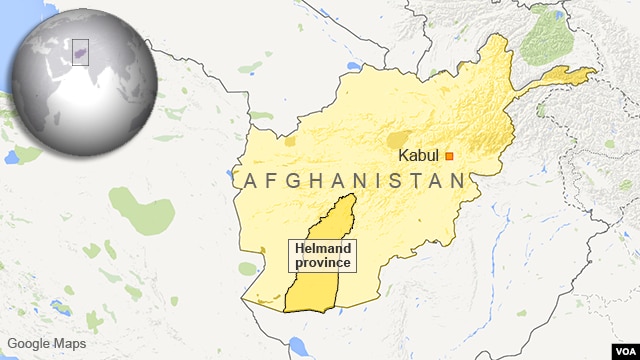
Lamb zeroes in on the British role in Helmand province and the problem created by the drug trade. Helmand produces 95% of the opium smuggled into Europe.  Further, since the opium poppies grown by Afghani farmers are their only source of income it becomes almost impossible to make positive inroads because there is no substitute to support their families.  Lamb’s discussion of the interrelationship between the drug trade, the warlords, government corruption, the Taliban, and plight of the farmers is excellent.

Image result for photos of helmand province

(Taliban fighter, Helmand Province)

One of the most poignant and aggravating chapters in the book deals with the murder of a young female poet, Nadia Anjuman by her husband.  Lamb uses her life story as a vehicle to describe the lives of women under the Taliban and Karzai regimes.  Using the Herat Literary Society to focus on the treatment of women, Lamb describes the lives of women from the lowliest wife, to a woman who created a factory to produce jam, to the only female prosecutor in Afghanistan, to an outspoken female member of parliament, all who lived in fear for their lives.  On paper it may have appeared that the plight of women improved once the Taliban was defeated, but today the reality is the opposite.

Lamb takes the reader through Afghan history since the 19th century by presenting an “assassination tour,” describing the deaths of most Afghani kings and presidents.  It is no wonder that Karzai is called the “mayor of Kabul.”  Violence in Afghanistan increased in 2006 as the Taliban began to adopt Abu Musab al-Zarqawi’s tactics from Iraq – ieds, suicide bombers etc.  Lamb also provides repeated examples of Pakistani duplicity by allowing rocket attacks from its territory, supplying weapons and safe haven for the Taliban, and the two-faced approach of President Musharraf, despite receiving $100 million in aid per month.  The end result is 2.6 million Afghani refugees in Pakistan.  Dealing with Musharraf was surreal, almost an alternate reality as the US tried to influence his actions.  For the Pakistani president it was more important to keep his border with Afghanistan calm so he could concentrate on Kashmir and India.  The assassination of Benazir Bhutto fit the pattern of violence that was growing worse within Pakistan under Musharraf.  Her return in 2007 angered the Pakistani military who saw her as a political and economic threat, ultimately causing her death.  The military denied complicity, but all the evidence seems to lead to their leadership.

According to British General Martin Carlton-Smith, by 2008 the goal of ending the insurgency in Helmand was giving way to reducing it sufficiently in order for the Afghan army to take control in some manageable way.  London realized that the only solution was by negotiating with the Taliban.  A political settlement was the only way to bring peace as it had done in Northern Ireland.  For Lamb it was the first time higher ups had admitted the war could not be won militarily.  When these comments went public, taken in association with British withdrawal from Basra in Iraq in September, 2007, and major disagreements between the US and British commands, Secretary of Defense Robert Gates saw it as defeatism.

However, by 2008 the Taliban controlled two-thirds of Afghanistan and grew increasingly daring as they set their sights on Kabul with a series of devastating suicide bombings and assassinations.  Evidence emerged that attacks on the Indian embassy and the Kabul Serena Hotel were directed by Pakistani handlers.  A CIA investigation led to the Haqqani network in North Waziristan, a group with strong ties to the ISI.  With the attacks the US could no longer ignore what their Pakistani ally was perpetrating.  For Washington it served as a wake up for the reality that was Pakistan.

By 2009 Lamb was transferred to Washington as she was fascinated by the new Obama administration.  What followed was the disjointed policy of a president who wanted to end America’s wars in Iraq and Afghanistan.  Obama was a conflicted president who had no desire to continue fighting.  He distrusted his military leadership and the feelings were reciprocated.  Lamb presents Generals Stanley McChrystal and David Petraeus and their larger than life personalities and strategies.  But the overriding concern was Obama’s view of wars that he had little interest in continuing.  In addition, Lamb is correct that the problem was not military but political, especially in Afghanistan where the government was the fifth most corrupt regime in the world and the people had no faith in “Karzai Incorporated.”  Petraeus knew early on that for counter-insurgency to work you needed local partners.  Instead he had Karzai and Musharraf’s successor, Asif Zardari, Benazir Bhutto’s widower.  Lamb concludes that Obama and Joe Biden, his Vice President were out of their league and despite agreeing to a surge of 30,000 troops he set a deadline for their return – telegraphing to the Taliban to hang on for two more years.  After accompanying Biden to Islamabad, US Senator Lindsay Graham summed it up best, “the whole fucking place is burning down here, pal!”

There is a sadness to Lamb’s account in that so many errors were made and so much duplicity existed as she encounters the myriad of factions that existed in the region.  By 2014 when her story ends things have grown increasingly worse, more so than they might have been before 9/11.  For Lamb, the region is like a magnet whose pull she could not escape.  Even when all seemed lost she is drawn to one final visit.  There have been many books written about events in Iraq, Pakistan, and Afghanistan, but Lamb‘s account must be placed very close to the top of the list, particularly because of her values and journalistic expertise.

Image result for photo of Christina Lamb in afghanistan

(author, Christina Lamb in Afghanistan)