
The title of Peter Bergen’s latest book ALL THE PRESIDENT’S WARS: TWENTY-FIVE YEARS OF THE WAR ON TERROR is a misnomer. The War on Terror did not begin on 9/11 as attacks against American interests took place long before planes flew into the World Trade Center and the Pentagon. The bombing of the Marine barracks in Beirut in 1983; the first attack on the World Trade Center in 1993, the Khobar Towers bombing in 1996; or the attack on the USS Cole in 2000 all come to mind. It seems that the United States has been involved in preventing terrorist attacks for decades before 9/11 and will continue to be involved in counter-terrorism for years to come. This being the case Peter Bergen’s book is important as it lays the foundation of what took place in the recent past, errors and successes, and what we can learn to be more effective in counteracting terrorism today as recently as last week when a possible attack against a military base in England that housed American bombers was thwarted, in addition to dealing with asymmetric warfare, an outgrowth of President Trump’s invasion of Iran.
In reviewing that past four administration’s policies toward Afghanistan, Iraq, and Iran Bergen immediately cuts to the crux of the problem – decision makers needed to frame, “what kind of war are we embarking on” in response to the attacks on 9/11. Each administration would answer the question quite differently with varying degrees of success. The Bush administration would come up with the vague term, “the War on Terror,” and it came to mean that the war would be fought globally and for decades into the future. This created a series of consequences that we are still dealing with today.

(President George W. Bush listens as White House Chief of Staff Andrew Card informs him of a second plane hitting the World Trade Center while Bush was conducting a reading seminar at the Emma E. Booker Elementary School in Sarasota, Florida)
The War on Terror precipitated great change in the Middle East, the sharp increase in sectarian violence between Shia and Sunnis and the rise of Iran as a critical player in the region. Bergen is correct in arguing that by overthrowing Saddam Hussein after the invasion of Iraq Washington inverted the power structure in Iraq allowing the Shia to come to power fostering a civil war that included the rise of ISIS and killed hundreds of thousands of Iraqis. Further, the true winners of the war were the Shia and their Iranian ally who would emerge as the dominant force in the region in part because of Bush’s invasion of Iraq and currently because of Trump’s invasion of Iran.
There have been some successes along the way, a surge of troops and a new counter-insurgency strategy after the invasion of Iraq fell apart, but in the end the Shia came to power. Another short term success was the capture of Osama Bin-Laden and his death resulting in a weakening of Al-Qaeda, however, eventually it reconstituted itself though it did not form a strong alliance with ISIS. Once Bin Laden was out of the picture President Obama shifted his focus away from Iraq to Afghanistan reinforcing his belief that the US should withdraw from that country as soon as possible. This led to a number of decisions that would eventually lead to Trump’s signing a withdrawal agreement with the Taliban.
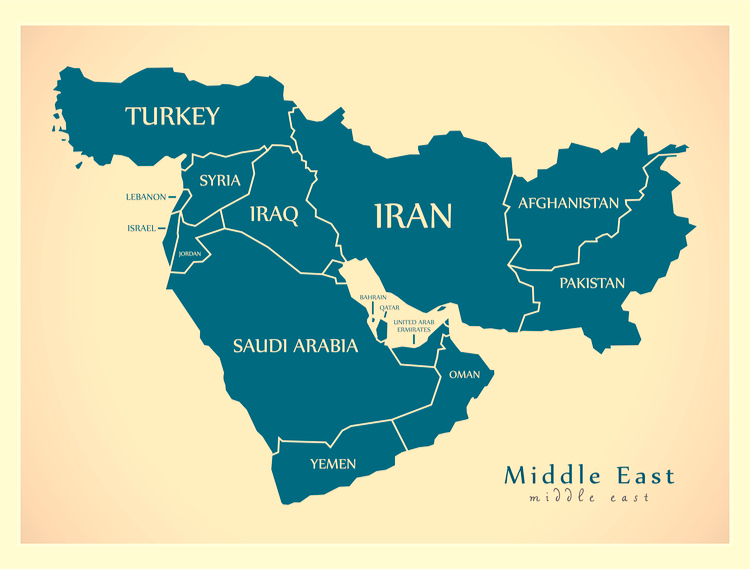
Bergen, a well-respected national security journalist and one of the leading authorities on his subject, has written a sobering, meticulously researched postmortem of U.S. foreign policy encompassing the 2001-2026 time frame. It is clear that American administrations had policy choices over the last two and a half decades and Bergen, not surprisingly focuses more on the poor decisions as opposed to the positive ones. He eviscerates the Bush administration, delving into the consequences for poor decisions leading up to the invasion of Iraq and its “occupation” of that country and setting the stage for the victory of the Taliban in Afghanistan. The dilly dallying of the Obama administration decision making, and Trump’s negotiations with the Taliban to end the war in Afghanistan, and his invasion of Iran are all discussed. These examples reflect the growing belief in foreign capitals that the United States had little idea as to what it wanted to accomplish or how to achieve it. This would lead to a change in the global order as the United States has gone from the upholder of a rule based system, to being seen as a destabilizing force as it pursued what Richard Haass describes in his excellent work, WAR OF NECESSITY, WAR OF CHOICE.
Bergen provides many insightful observations throughout the monograph. First, he points out that Al-Qaeda assassinated Ahmed Shah Masood, the leader of the Northern Alliance in Afghanistan, a mortal enemy of the Taliban, and a leader the United States was working with two days before 9/11. Bin Ladin did so to to mollify the Taliban as he realized that the United States would soon retaliate against the theocratic organization very harshly. In discussing the Arab Spring of 2011 Bergen interestingly describes it as “the Arab spring would soon turn into the Arab winter.” Bergen supports this assessment by exploring the overthrow of Muhammar Gahdaffi and the resulting civil war; the rise of ISIS and its expansion to control 33% of Syrian and 40% of Iraq before its “Caliphate” was defeated;
(A US Marine watches a statue of Saddam Hussein being toppled in Firdaus Square in downtown Baghdad on April 9, 2003)
Bergen reviews many important events and personalities of the period under discussion that have been dealt with elsewhere from his previous books and the works of Steven Coll, Craig Whitlock, Lawrence Wright, and the most recent monograph by Carter Malkasian, THE AMERICAN WAR IN AFGHANISTAN. The run up to the invasion of Iraq and Donald Rumsfeld’s approach to war and his refusal to provide the necessary assets to capture Bin Laden at Tora Bora, the incompetence of Peter Bremer’s de-Bathization and disbanding the Iraqi army that allowed the Shia to come to power after Saddam Hussein was captured and killed reflecting the self-righteousness of the Bush administration. The author examines the different approaches on fighting the war in Afghanistan focusing on the ideas of General Stanley McCrystal and Colonel H.R. McMaster and disagreements with President Obama in an excellent chapter entitled “We are out of Schlitz.” The role of Pakistan in harboring the Taliban fearing US withdrawal from Afghanistan and whether they hid Osama Bin Laden (Bergen argues decisively they were not aware of his presence in Abbottabad) are examined as is the lack of competence in the Afghani and Iraqi militaries after years of American training cutting and running from the Taliban and ISIS. Lastly, Ahmid Karzai’s relationship with American diplomats and US distrust of the Afghan president.
The Obama administration does not fare very well in Bergen’s analysis. He argues that Obama was obsessed with not getting into any more “stupid” wars. However, his inability to make up his mind about how many troops to commit in Afghanistan, whether to go along with a surge, his refusal to enforce his own “red line” pertaining to Assad’s use of chemical weapons in Syria, his administrations framing the Afghan War as a Taliban insurgency that was supported by Pakistan when in reality it was a three tiered conflict: inter-tribal, inter-ethnic, and inter-state, and for not taking ISIS seriously enough referring to them as the “B” team of terrorists and moving too slowly in confronting the terrorist threat many American felt they presented. Obama’s Vice-President Joe Biden is also criticized a great deal as he argued to withdraw US troops from Iraq even as the civil war exploded, he was a sceptic who believed little could be done to assist Afghanistan and opposed any surge and wanted to focus on Al-Qaeda, not the Taliban, and even went so far as claiming he supported the attack on Bin Laden’s compound resulting in his capture when in fact he argued against it. Later he would claim that the Pentagon did not counsel him to leave 2500 troops in Afghanistan as a means of blocking the Taliban and maintaining security as American troops withdrew. Generals have argued that Biden was not telling the truth especially when the evacuation turned into a disaster. All in all, it appears as if the administration was at times in disarray.
(A photo dated December 13, 2003 shows Hussein in what appear to be Flexi-cuffs after his arrest)
One policy that reflects Obama’s willingness to adapt to the new asymmetric warfare was his adoption of the use of drone warfare as a vehicle to avoid committing further US troops as he wanted to pivot American foreign policy toward Asia. American drone attacks increased substantially under Obama particularly in the tribal regions of Pakistan where the Taliban had sanctuary and Yemen where Muslim extremists were protected. The Obama administration even went after an American citizen, Anwar al-Awlaki who was the brains behind the failed “underwear bomber” attack on a Northwest flight on Christmas day 2009.
Bergen is correct when he points out despite Donald Trump’s bragging about how he would defeat ISIS and disparaged Obama’s approach, he pursued a policy that was developed over a two year period before he became president. Trump may have speeded up the process but they both deployed a relatively small number of American troops on the ground in Syria and Iraq who operated through local allies. In Iraq the Counter Terrorism Service, and in Syria with Kurdish fighters. The ultimate victory over ISIS was fostered by Iraqi and Kurdish troops. Trump’s Afghan policy was rather disjointed, represented by negotiations to withdraw American troops before the 2020 election. Bergen dissects negotiations to end the war and it is clear that all that Trump wanted was to get out and did not care about the carnage that would take place once the Americans left. This would take place under Biden who similarly wanted out of Afghanistan leaving many locals to be victims of Taliban retribution despite their services to America over the years.
If one were to sum up American foreign policy toward the Middle East since 9/11it would center around the fact that Washington creates a plan to get involved be it the invasion of Iraq, the overthrow of Saddam Hussein, the overthrow of Muhammar Gahdafi, or the invasion of Iran. All of these actions created unaccounted for consequences because the United States never seems to have a plan for “the day after.” Today, we are dealing with the fallout from Trump’s invasion of Iran with higher gas and diesel prices causing an increase in inflation that has resulted in incalculable damage for the American people.
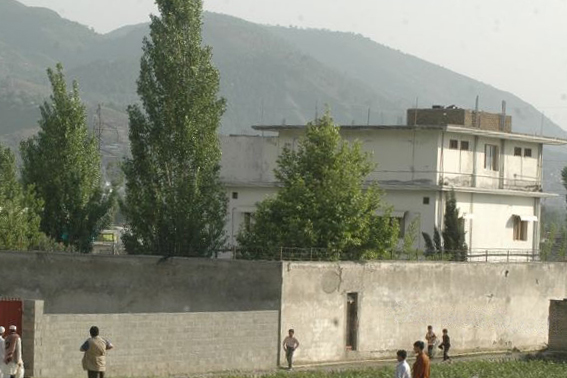
(Osama bin Laden’s compound in Abbottabad, Pakistan, is shown here, May 4, 2011, two days after he was killed)
As Scott Anderson points out in his September 6, 2026, New York Times review entitled, “Why the War on terror is Still Haunting Us,” “Quite early in “All the Presidents’ Wars,” the journalist Peter Bergen’s chronicle of the “war on terror,” the reader is likely to conclude that the groups of American officials who have presided over the past two and a half decades of conflict in the Middle East consist of idiots, fools or knaves. The further one progresses into this damning and meticulously researched book, the more this assessment seems confirmed.
In fairness, the war on terror hasn’t been an unmitigated catastrophe. The development of advanced weaponized drones facilitated the killing of Qaeda leaders at long range and with little risk. American military commanders also eventually adopted counterinsurgency tactics in Iraq that proved very effective, even if they failed to change the ultimate outcome of that conflict. And while it is difficult to get all hopped up over something that didn’t happen, the fact is that there hasn’t been a large-scale terrorist attack on American soil since Sept. 11.”
Still, at the cost of trillions of dollars, the lives of some 7,000 U.S. servicemen and women, as well as hundreds of thousands of Iraqi and Afghan civilians, and two failed war efforts — with a third in progress — one would hope for some more bright spots.
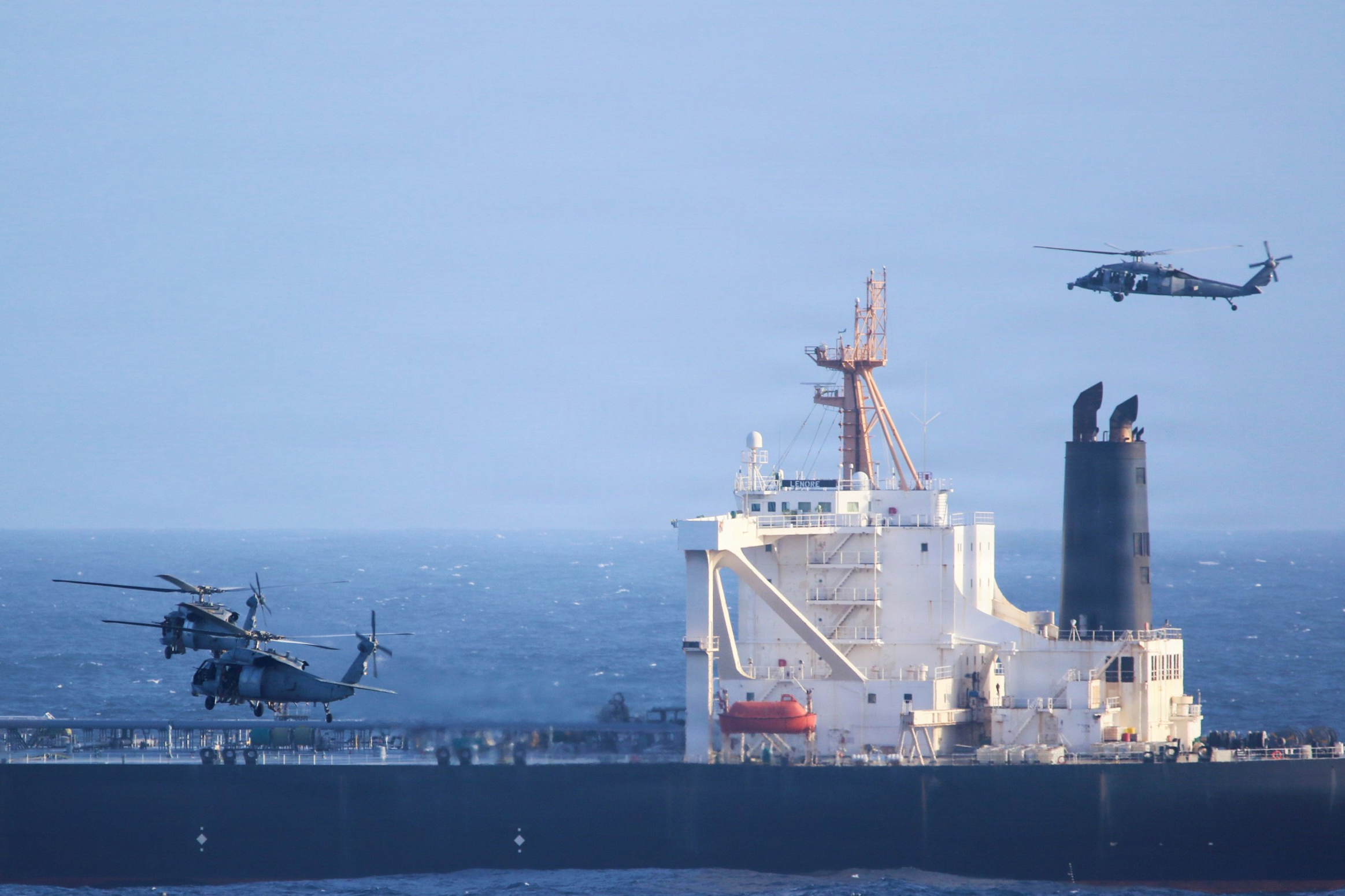
(U.S. forces carried out a maritime interdiction and right-of-visit boarding of the Davina, a sanctioned stateless oil tanker, in the Indian Ocean within the Indo-Pacific Command area of responsibility, June 4, 2026. The U.S. continues global maritime enforcement to disrupt illicit networks and interdict vessels providing material support to Iran, wherever they operate.)
Anderson goes on to write; “One might wish that “All the Presidents’ Wars” was coming out a few months from now, in time for the full magnitude of the stupidity attending Trump’s war of choice against Iran to be realized. As it is, Bergen’s last words were penned in mid-March 2026, just a few weeks into this latest American misadventure.
As has been the case so many times over the past 25 years, this folly, too, was peddled as part of the war on terror, but undertaken with even less forethought than its predecessors. Incredibly, Trump seemed to take no notice of how the weaponized drone has enabled Ukraine to keep the vastly larger Russian Army at bay for over four years. Nor did he seem to consider how this innovation might factor into a conflict with Iran, one of the world’s pioneers in the manufacturing of cheap and sophisticated drones..
A major theme of Bergen’s book is the repeated failure of American leaders to plan for “the day after” a military action is taken, but in Iran, he makes clear, Trump didn’t even plan for “the day of.” As a result, it is now all but certain that the United States is headed for another major defeat in its war on terror. For the gory details on that, though, one will have to wait for Bergen’s next book.”


