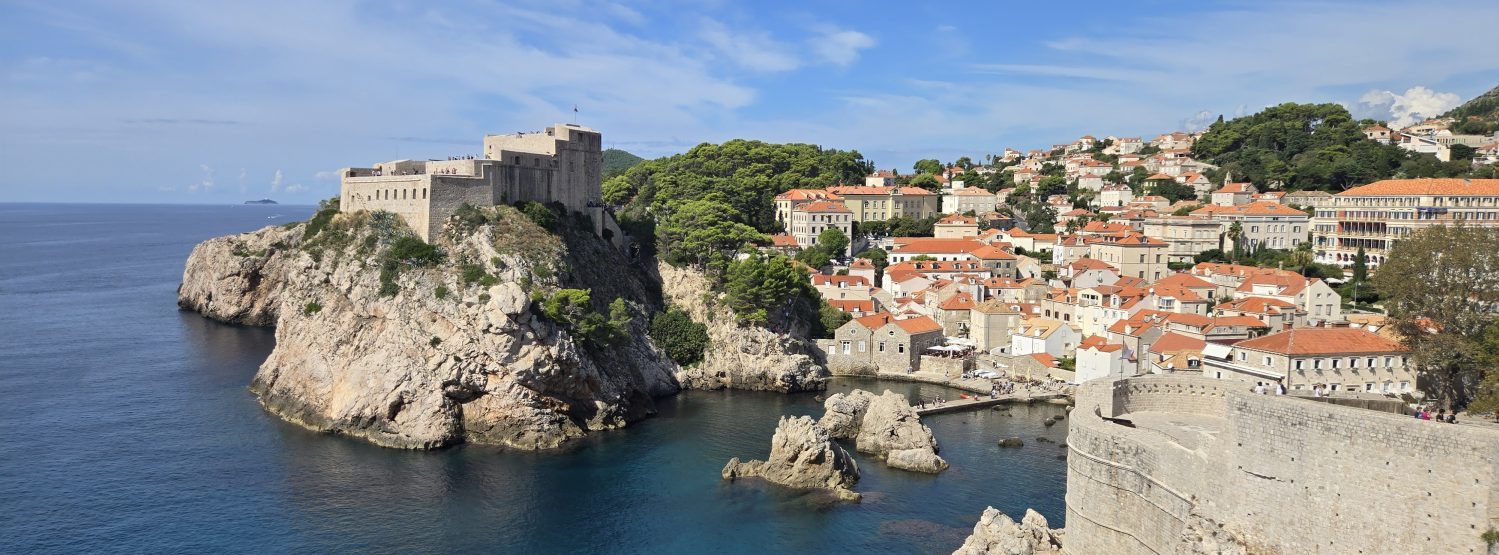

(Children’s toys and personal items lie on the bloodstained floor of a child’s bedroom, following a deadly infiltration by Hamas gunmen, in Kibbutz Beeri in southern Israel, October 17)
The role of the Gaza War which began with the Hamas massacres of October 7, 2023, plays an important role in our current political climate. The role of the Israeli response to Hamas’ barbarism has been referred to as genocide against the Palestinian people by elements in the progressive wing of the Democratic Party and their supporters. This has sparked a major debate into what should have been the American response to Israeli policy and military action in Gaza as the United States has funneled untold billions in aid and military weapons to the Tel Aviv government. Israel has become a pariah in the world community due to its destruction in the region and many countries have opposed the Biden administration’s response.
On the domestic political front in the United States as the 2026 Congressional elections approach the current state in Gaza has bifurcated the Democratic Party and created major disagreements among candidates running for office. Since margins for victory in House and Senate elections are so close, especially in a state like Michigan the issue may swing the election to one political party or another for the control of the two houses of Congress. In the 2024 presidential election, Vice President Kamala Harris lost Michigan to Donald Trump by roughly 1.5% of the vote in large part because of the significant Arab-American vote in that state. Today, the Democratic candidate for the Senate, Abdul al-Sayed has alienated a significant part of the Jewish community over his comments concerning Israel and Iran, in addition to his association with Hassan Piker and his supporters who have been accused of anti-Sematic positions on Israel. With so many “toss-up” states so close to the election an issue like Gaza can have a tremendous impact.

(Smoke and flames billow after Israeli forces struck a high-rise tower in Gaza City, October 7)
In this political environment Brett McGurk’s new book, BRINK: INSIDE THE RACE TO FREE THE OCTOBER 7TH HOSTAGES is important as it takes the reader inside negotiations transversing power centers in Washington and the Middle East, and inside a crisis that has reshaped the world, with consequences that we are still dealing with today. McGurk, who served in four presidential administrations, most recently as Assistant for National Security to President Biden where he coordinated policy for the Middle East and Africa was thrust into a situation where he tried bringing about the release of the 251 hostages seized by Hamas on October 7th. The task was extremely daunting and frustrating due to Hamas’ extreme positions and Israel’s goal of forcing the terrorist organization from its governing position in Gaza as well as disarming it. It would take fifteen months to reach an agreement to release the hostages, dead or alive making BRINK an important account of the negotiations that took place among President Biden, Israeli Prime Minister Benjamin Netanyahu, Saudi Crown Prince Mohammed bin Salman, and other leaders and diplomats in the region.
McGurk does more than take the reader inside the negotiations that finally led to the release of all hostages, the final twenty on October 13, 2025. The author delves into the minutiae of the talks, the strategies pursued by all sides, and the human physical and emotional cost to negotiators and the victims of Hamas’ brutal incursion into Israel. McGurk begins with the awkward relationship between President Joe Biden and Saudi Crown Prince Mohammed bin Salman who was responsible for the murder of Washington Post columnist and Saudi journalist Jamal Khashoggi on October 2, 2018, inside the Saudi consulate in Istanbul, Turkey, by a team of Saudi government agents. During the 2024 presidential campaign Biden had made a number of unflattering remarks regarding bin Salman making for a rather awkward relationship. Using Biden’s visit to Riyadh and other diplomatic interactions McGurk explains the complexity of the Saudi-American relationship that continues today.
The Saudi component in evaluating the Hamas attack is interesting. Before October 7th, the idea of an Israeli-Saudi reproachment added to the Abraham Accords of the first Trump administration gave credence that the diplomatic balance in the Middle East was changing. Perhaps Hamas launched the attack in part to block this reorientation, a subject that the author does not address. If one looks at motive McGurk is clear that Hamas wanted to launch a regional war that would destroy Israel and reap whatever benefit this would produce in the region.

(People carry the body of a Palestinian killed in Israeli strikes, in Jabalia refugee camp, in the northern Gaza Strip, October 9)
The goals of the Israeli response was clear – remove Hamas from power in Gaza and destroy its military capability. Secondly, free the hostages. McGurk does not delve into Israeli Prime Minister Benjamin Netayahu’s legal problems and its impact on his policy decisions. For Netanyahu, who was under indictment, war in Gaza would keep him in power and this along with keeping the right wing of his cabinet happy as not to cause the collapse of his government must factor into his obstinacy in negotiations. By exploring this component of the Israeli political situation, the reader would have greater understanding of Netanyahu’s “Reale politic.”
Apart from these issues McGurk’s memoir/summary of the crisis is well thought out, deeply analyzed, and an important contribution in the understanding of the crisis and its implications for the region. After describing the attack/massacre McGurk delves into empathetic portraits of the victims, including the murder of approximately 1,195 to 1,219 people, and over 3,400 wounded including Israelis, foreign nationals, and Americans of which 49 were killed. The author describes his personal relationships with some of the victims as well as their families and the bonds he developed.
The Biden administration was immediately placed in a sensitive position as the humanitarian crisis developed with the Israeli movement into Gaza. At the outset Israel was accused of killing hundreds in an attack on a hospital which turned out to be due to a missile fired inside Gaza not by the Israeli Defense Force. Throughout the crisis the Biden administration stressed caution, but a traumatized nation did not want to hear it particularly an Israeli coalition government which depended on extreme right wing politicians like Itamar Ben-Gavit, the Minister of National Security, and Bezalei Smotrich, the Finance Minister to remain in power. It was soon clear that the United States might delay, try, and shape Israel’s response at the margins, but it could not prevent it. As the Israeli invasion proceeded, Biden on the one hand was appalled by the rape and murder that Hamas perpetrated but was also faced with domestic opposition to the depth of the Israeli response. Many of Biden’s decisions had to balance these opposing forces but as he tried to satisfy each he would indirectly give Hamas what it wanted. A case in point, when it emerged that the Biden administration was threatening to cut off certain military sales to Israel or held up delivery of certain weapons it reinforced Hamas’ belief that the longer it stretched out the crisis the United States would force Israel into granting greater concessions.

(A rescuer reacts as he works with others to remove Palestinian casualties from under the rubble of a house destroyed in Israeli strikes, in Rafah in the southern Gaza Strip, October 9)
Concessions are a dominant theme in McGurk’s account as the negotiations were tortuous. Many times, it appeared agreements were reached when Hamas would go silent or increase its demands. The key issues revolved around the names of hostages to be released, dead or alive and how it related to a ceasefire and the lines Israeli troops would withdraw to. Agreement was reached early on, but Hamas ‘ strategy was to drag out talks as long as possible to force Israel to increase the number of Palestinian prisoners they would release and the type of prisoner they would release – convicted terrorists. Perhaps Yahya Sinwar’s evaluation led him to conclude that seizing individuals ranging from a 9-month old baby to an 85 year old woman would give Hamas the power to make major demands and protection from Israeli revenge as Israel was known to never leave a dead body behind, i.e., the Gilad Shalit case. This error in judgement was incalculable but based on Hamas’ actions bringing death was their only goal for which they would pay an incalculable price.
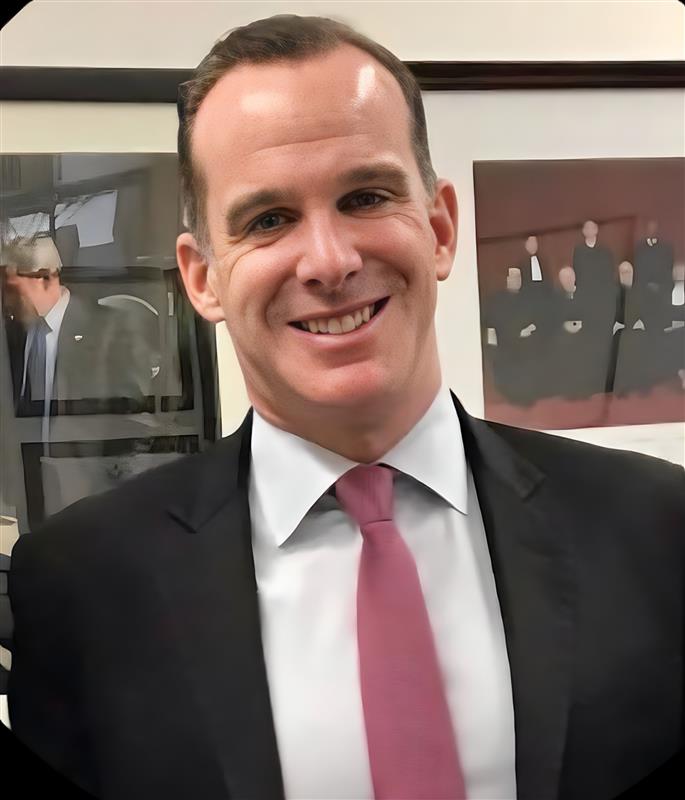
(Brett McGurk)
As excruciating maneuvering evolved McGurk lays out how talks are preceded by including the positions and impact of the negotiators. Some of the key players were Sheikh Mohammed bin Abdulrahman Al Thai the Prime Minister of Qatar, a country that hoisted Hamas leadership in Doha; Egyptian Major-General Ahmed Abdel Khalek who shaped Cairo’s policy toward Gaza for decades; and David Barnea, the Chief of the Mossad (Israel’s foreign intelligence agency), who served as the lead negotiator, and Gal Hirsch, a retired IDF Brigadier General appointed by Netanyahu as the official Coordinator for Captives and Missing Persons. There are many others including Jake Sullivan, Biden’s National Security Advisor, and Steve Witkoff whose role became important after Trump defeated Biden in the 2024 Presidential election.
A number of important conclusions can be drawn from McGurk’s memoir. First, no matter how close Israel came to accepting Hamas’ demands it was quite clear that Hamas’ leadership did not care about the plight of Gazans. Hamas’ leadership was also a major issue. If one examines the beliefs of Yahya Sinwar, who oversaw the planning and implementation of the massacre; his brother Mohammad Sinwar; and Ismail Haniyeh, Hamas political leader, along with key Hamas negotiating leaders and officials such as Khalil al-Hayya and Khaled Mashal who were centered in Doha negotiations would be a tortuous exercise. The structure of negotiations was part of the problem. Talks would take place in Doha and if agreement were reached it also had to be accepted by Sinwar and Haniyeh in Gaz. This allowed Hamas to fritter away any time component to an agreement. It took the deaths of senior Hamas leadership through Israeli assassinations to finally reach a final agreement after Trump took office.
McGurk graciously gives Steve Wytkoff credit for bringing the negotiations to a successful conclusion after Trump’s real estate compatriot got involved. It is interesting that it was a combination of Biden’s team and Witkoff who got the talks across the finish line, but Trump gave his usual public evaluation stating, “This EPIC ceasefire agreement could have only happened as a result of our Historic Victory in November, as it signaled to the entire World that my Administration would seek Peace and negotiate deals to ensure the safety of all Americans, and out Allies.”
( Sinwar holds up a child dressed as a Hamas terrorist in the Gaza Strip on May 24, 2021)
McGurk also includes the role of Iran and its proxies, the Houthis, Hezbollah, and groups in Syria and Iraq and their impact on the crisis and negotiations. Once the Trump administration became involved and assumed the presidency this grouping became paramount as coordinated attacks with Israel in June 2025 and September 2026 are still playing out.
Fintan O’Toole’s evaluation of McGurk’s memoir is spot on (New York Times, October 6, 2026, “What Went Wrong With the Effort to Free the October 7th Hostages?”) as he writes, “This reads as though the United States was merely a benign outsider, hoping for the best but powerless to prevent the worst. “Biden,” as McGurk concedes, “could not credibly explain how the war might end.” With no American vision of a decent solution, there is still no sense of an ending, just a pulverized population and an Israel whose international standing lies in the dust.
Biden’s own team was deeply divided. By the beginning of April 2024, according to McGurk, “Some advised him to simply tell Netanyahu the war was over. If Netanyahu refused, we’d cut Israel’s support.”
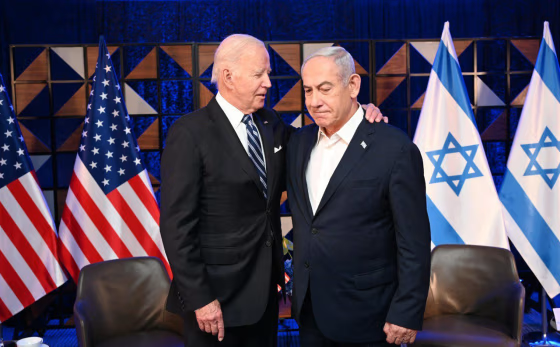
(President Joe Biden and Israeli Prime Minister Benjamin Netanyahu in Tel Aviv on Oct. 18)
McGurk himself was opposed to this strategy, believing that it would merely embolden Hamas and Iran, and Biden vacillated. The chaos of the president’s abortive re-election campaign and his replacement by Vice President Kamala Harris at the top of the Democratic ticket added to the uncertainty. After Trump defeated Harris in November, the national security adviser Jake Sullivan told McGurk that he “suspected that Netanyahu planned to wait us out, preferring to do the deal with Trump.”
While the carnage continued, McGurk did nonetheless manage to facilitate a deal in which over 100 hostages were freed in November 2023 and — working with Trump’s envoy Steve Witkoff — to secure the release of 33 more by February 2025.
He rightly takes pride in his contribution to the joyful return of a majority of the hostages to their families. Each life saved is a light in the unspeakable darkness. But if more and more innocent lives are not to be lost, there needs to be a much larger reckoning with America’s failures in the Middle East than McGurk feels able to provide.”

(Israeli military officers stand by a container in which bodies of the dead are stored before their relatives are called to identify them, in Ramla, Israel, October 13)

