BE CAREFUL WHAT YOU WISH FOR by Jeffrey Archer

Cruise ship in caribbean sea : Stock Photo

From Jeffrey Archer’s perspective why change an approach that seems to work very nicely.  The approach I am speaking off is his storytelling ability that produces a wonderful family saga in the CLIFTON CHRONICLES with each volume ending in a cliff hanger that gently encourages the reader to pick up the next installment.  In the present instance BEST KEPT SECRET ended with an automobile accident that resulted in the death of one of the passengers, but we are left wondering if Harry and Emma’s son, Sebastian has survived.  In the next novel in the series BE CAREFUL WHAT YOU WISH FOR, Archer’s plot revolves around the Barrington family and the machinations of Don Pedro Martinez, an international criminal who blames Harry Clifton for the death of his son, and Alex Fisher who attended boarding school with Giles Barrington and continues to seek revenge against Giles and his family dating back to their days in boarding school and the loss of a recent parliamentary election.

As is the case in the first iterations of the Clifton’s, Archer segments the story into chapters that focus on a given character and allows them to tell the story from their perspective.  Archer begins in the late 1950s with Harry and Emma taking the lead and moves on to Don Pedro Martinez, Cedric Hardcastle, a bluff Yorkshireman and dowdy old banker who plays a significant role, Major Alex Fisher, Giles Barrington, Sebastian and Jessica Clifton, and Don Pedro’s son Diego.  Each character has their own agenda and through a series of complex machinations Archer builds disparate segments of the story which come together in a rather dramatic fashion.

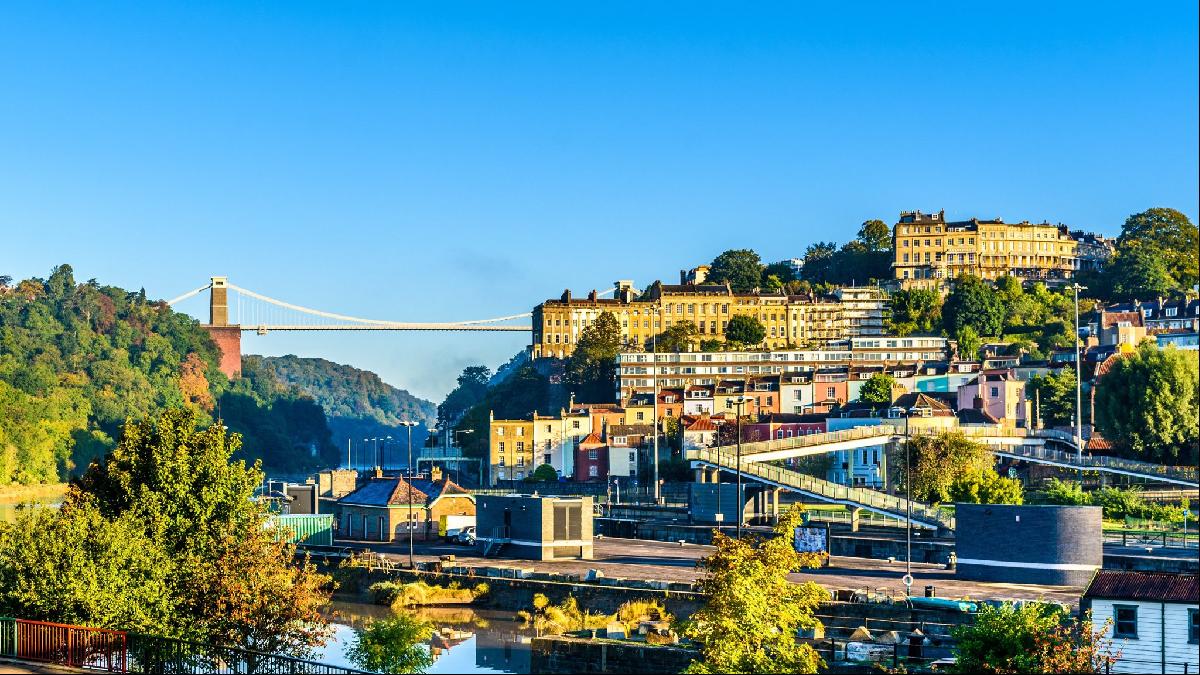
Bristol Harbour
(Bristol, England)

Aside from Hardcastle, there are a number of impactful characters like Robert Bingham, the fish paste king; Clive Bingham his son who wants to marry Jessica; Cabinet Secretary Alan Redmayne; Samantha Sullivan who has fallen in love with Sebastian; Susie Lampton, Alex Fisher’s wife who is somewhat of a double crosser; Karl Otto Lunsdorf, a former member of the Nazi SS and Martinez’s righthand man, among others.  Throughout the character development process, it seems that villains abound!  Historical characters and events make their appearance on a regular basis including a cameo by Nazi hunter Simon Wiesenthal and British Labour leader and future Prime Minister Harold Wilson.

The key addition that Archer makes is Cedric Hardcastle who is an example of how the author is able to shift the focus of the novel on a dime, a process that he repeats often.  Hardcastle is the Chairman of the Farthing Bank and he will join forces with the Barrington’s to try and thwart Don Pedro Martinez and his sons.  Martinez will never get over the death of his son despite the fact it is his own fault and seeks revenge against any and all Barrington’s.  As the story evolves Archer adds a new element corporate greed through stock manipulation and other machinations.  The British intelligence service is continually active in the novel as Sir Alan contemplates assassinating Martinez and is heavily involved in thwarting the Argentinian kingpin who likes to pose as an English gentleman.  Further Archer integrates the Irish Republican Army into the storyline as they with Martinez in toe to do as much harm to Britain as possible.  Another component that stands out is Jessica’s lineage as her adopted parents Harry and Emma have not made her aware of who her parents were which leads to complications.

Jeffrey Archer
(Author, Jeffrey Archer)

Archer has the knack of creating scenes where the expected result becomes the unexpected, i.e., the Barrington Shipping Company’s Board elections to replace Ross Buckingham by Emma when Susan Fisher surprises everyone.  Archer also continues to present an unremarkable prose, but one cannot take away from him his ability to surprise the reader over and over.  As per usual the novel ends in a cliffhanger with the reader calling for a fifth volume of the CLIFTON CHRONICLES which happens to be MIGHTIER THAN THE SWORD.

Aerial View Of Cruise Ship Sailing On Sea : Stock Photo

BEST KEPT SECRET by Jeffrey Archer

GREAT BRITAIN ENGLAND 5 POUNDS 2002 P 391 b UNC

Even before a person begins to read Jeffrey Archer’s third installment of the CLIFTON CHRONICLES, BEST KEPT SECRET he already has the reader in the palm of his hands.  The previous novel, THE SINS OF THE FATHER ends with a voting deadlock in the House of Lords with the Lord Chancellor set to cast the deciding vote that will determine who will be the heir to the Barrington family title and fortune and whether Harry Clifton and Emma Barrington are half sister and brother.  Clifton wants no part of the Barrington wealth and just wants to make Emma his bride and would be overjoyed if the Lord Chancellor would bequeath the Barrington family title and all of its trappings to Emma’s brother Giles.

Once the final announcement is made Archer reverts to the approach, he employed in the first two novels in the series.  Archer allows the major characters to explore their aspirations, beliefs, and identity separately, at times crossing each other’s paths chronologically.  In the present scenario Archer relies upon Harry Clifton, Emma Barrington, Sebastian Clifton, Giles Barrington, and Alex Fisher to narrate the novel as each individual puts forth their own agenda. 

Docks, Bristol, England, UK, Europe Stock Photo

(Bristol, England dock)

Apart from the returning characters just mentioned there are a number of new ones that Archer introduces.  The most important of which are Lady Virginia Fenwick, a rather stuck up, snobby individual who has captured Giles’ emotions and will lead him down a path he will regret; and Don Pedro Martinez, a nefarious character engaged in counterfeiting among other illegal activities.   Others who appear are Jessica the daughter of Giles’ father and his mistress who is adopted by Emma, her half sister and Harry Clifton; Sebastian Clifton, the precocious and rambunctious son of Emma and Harry Clifton, Gwyneth Hughes, Giles’ girlfriend, Ross Buchanan, Giles’ financial advisor, Mrs. Tibbet, who ran a small London hotel; Bruno Martinez, Don Pedro’s son, among others.

Alex Fisher will emerge as a key player as Archer develops his plot.  Fisher has been a thorn in the side of Harry and Giles since they all attended the same boarding school.  At Tobruk when Giles earned military honors, Fisher felt he was not rewarded and grew extremely jealous.  Finally, he will hook up with Lady Virginia to try and wreak havoc with the Barrington family and businesses.

Archer does a wonderful job making the past prologue as in the case of Lady Virginia, “the quintessential bitch” with a hearing over Giles’ mother, Elizabeth’s will that is contested.  The arguments and issues involved encompass a host of issues and relationships that are very entertaining.  The Parliamentary election campaign between Giles and Fisher takes the reader inside the English elective process and reflects a number of strategies on the part of both candidates and their supporters.

City skyline of Buenos Aires with urban buildings
(Buenos Aires, Argentina)

Archer does introduce a number of narcissistic and immoral characters as the plot develops, but he does allow for a number of relationships to be reestablished once the truth of certain machinations emerges.  Though this is important, Archer is rather simplistic in his approach at times and this aspect could have been better developed.  In his fast paced narrative Archer introduces a new angle that did not appear in the first two novels, corporate intrigue as Lady Virginia and Alex Fisher try and take over Barrington Shipping that brings a certain amount of drama to the story.

Sebastian inadvertently emerges as a major character as he becomes involved in a scheme developed by Don Pedro Martinez to smuggle millions of counterfeit pounds into England.  Though this aspect of the novel creates a sense of drama it is an abrupt shift in the course of the novel that does not transition well from the rest of the story.  Further, the absence of Bruno in the process makes little sense and Archer seems to force a shift of the novel to Sebastian’s role.

Archer provides an almost pitch-perfect continuation of the Clifton family saga; his shrewd twists are addictive from the outset and as usual he ends the novel as a cliff hanger leaving the reader to wonder how things will work themselves out.  The story continues in the next installment, BE CAREFUL WHAT YOU WISH FOR.

GREAT BRITAIN ENGLAND 5 POUNDS 2002 P 391 b UNC

THE SINS OF THE FATHER by Jeffrey Archer

(Bristol, England)

In his sequel to ONLY TIME WILL TELL, THE SINS OF THE FATHER, the second installment of his CLIFTON CHRONICLES novelist Jeffrey Archer picks up exactly where le left off.  Tom Bradshaw, the identity that Harry Clifton adopted after his ship was torpedoed by a German submarine finds himself accused of murder upon entering the port of New York.  Clifton believed by adopting his new persona it would solve his personal and family issues that remained at home in Bristol, England.  By the novel’s second page Archer has reengaged the reader with Clifton’s plight and for the next number of hours I found it difficult to put the book down.  Clifton had hoped to return to the United Kingdom and join the Royal Navy to fight the Nazis, but now found himself languishing in prison banking on his lawyer Sefton Jelks to obtain his freedom.

Archer continues to employ the literary technique of allowing his major characters to tell their side of the story as it unfolds.  Each character recounts how they see events and Archer allows their individual stories which are different to eventually come together.  Archer recapitulates important details from the first novel through Harry Clifton’s situation – six year jail term for desertion, instead of murder, and being left in the lurch by his lawyer who sold him out to the Bradshaw family.  Clifton remains madly in love with Emma Barrington, further he is obsessed to learn who his real father is, and what his role will be in the Barrington family hierarchy.

Bristol, Eng.

The backstory for the novel is World War II as Clifton has not lost the desire to enlist in the Royal Navy and Emma decides to travel to New York to find him.  As the novel unfolds, we are introduced to the New York branch of the Barrington family in the person of Emma’s Great Aunt Phyllis Stuart and her cousin Alistair who went after Jelks for the fraud he committed that resulted in Clifton’s imprisonment.  A number of characters reappear like Patrick Casey who had a relationship with Clifton’s mother Maisie; Hugo Barrington who continues his “sleazy” practices; Giles Barrington, Emma’s brother who has joined the Wessex Regiment and is a hero at Tobruk; Stanley Tancock, Clifton’s deranged uncle; Lieutenant Fisher who had harassed Clifton when they attended boarding school together; Walter Barrington, the fair minded head of the Barrington Shipping Company: Lord Harvey, Emma’s grandfather; Mr. Holcomb, Clifton’s former teacher, among a number of others.  New characters appear that enhance the plot; Sefton Jelks, a corrupt New York lawyer; Pat Quinn, Clifton’s cellmate; Terry Bates, who fought with Giles at Tobruk; Olga Piotrovska, Hugo Barrington’s lover; Mr. Guinzburg, editor at Viking Publishing; Max Lloyd, worked with Clifton in the prison library; Colonel Cleverdon, recruited Clifton for US Special Forces, Sebastian, Emma and Clifton’s son, and others who make for a fascinating read as Archer has the ability to develop his characters in such a way that the reader is drawn to them and for a few the reader can become emotionally involved with.

As Archer tells his story through Maisie Clifton, Hugo Barrington, Emma Barrington, and Harry Clifton the reader is drawn deeper and deeper into the story line.  As the novel progresses, Archer accurately introduces a number of shifts in the plot that relate to wartime events such as Pearl Harbor, Torbruk, Stalingrad, and German bombing of Bristol and London.  Over time Archer’s characters develop in a positive fashion like Maisie and Emma, and others like Hugo Barrington and Sefton Jelks deteriorate further through their narcissistic personalities.

Archer’s calculated plot twists keeps the reader totally engaged in the story.  He has the knack of setting the stage for events and reactions before they occur by dropping hints earlier in the story that come to fruition later.  The story has a series of highs and lows which the reader must adapt to, in addition Archer deftly is able to switch from scene to scene and character to character without detracting from the flow of the novel. 

Archer is obviously a master storyteller that has produced a collection of novels that form the CLIFTON CHRONICLES which are excellent beach, airplane, or plain escapist reading.  Archer’s unique conclusion should encourage his audience to read the next installment in the series, BEST KEPT SECRET.

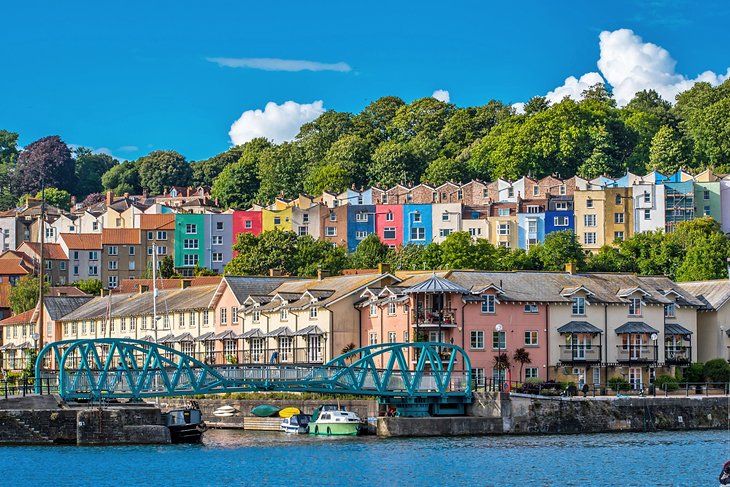
Colorful homes in the Harbourside area of Bristol
(Bristol, England)

ONLY TIME WILL TELL by Jeffrey Archer

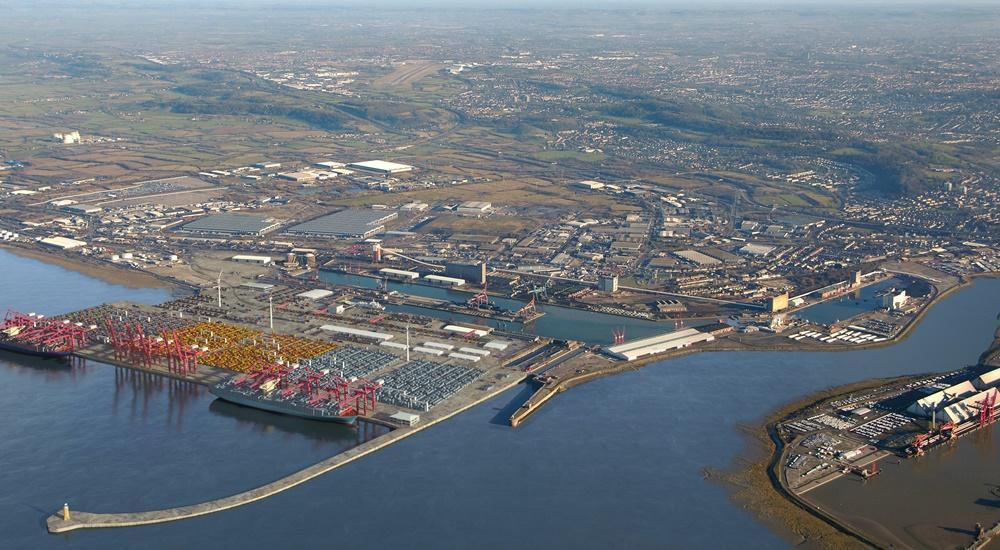
Port Avonmouth (England, UK) cruise port Bristol

(The dock area of Bristol, United Kingdom)

How did I go years without reading a Jeffrey Archer novel?  Periodically, friends would recommend his work, but it was not until I listened to a recent NPR interview with Archer that my interest was piqued.  The selection I chose was ONLY TIME WILL TELL the first installment of the CLIFTON CHRONICLES and it was a revelation. 

Archer has written a novel involving a series of relationships told through the voices of a number of characters.  Set in England from the end of World War I through the outbreak of World War II it involves two families; the Clifton’s, lower class and poor, the Barrington’s, upper class and rich.  Their interactions are based on a past history brought forward setting the tone and the course of the storyline.  Archer’s yarn is told through the differing perspectives of Maisie Clifton, a widow whose son has the great gift of voice, but the family is entrenched in poverty.  Hugo Barrington, a man whose one night fling has brought his hopes for his own family to a crisis despite their wealth.  Old Jack Tar, a man who has not gotten over his experience in the Boer War who knows everyone’s secrets and lives in a railroad car on Barrington property.  Giles Barrington, Hugo’s heir.  Emma Barrington, Giles’ sister who falls in love with his best friend.  Finally, Harry Clifton, whose hard work leads him to Oxford, but also to an unusual dilemma.

Archer does an accurate job presenting the class system that dominates English society.  The snobbery and deceit of the English upper class is on full display as characters interact driving the actions of a number of individuals.  Archer takes the reader through the experience of attending an English boarding school and the intense competition to gain entrance to premier schools like Eton and Oxford.  The plight of English labor is explored in detail concentrating on the docks of Bristol, England.

Video
(Oxford University)

The death of Arthur Clifton, Maisie’s husband forms the backstory of the novel.  Wounded in World War I Arthur would die a few years later.  The truth about his death is hidden because it could upend Hugo Barrington’s life plan and will have grave implications for his children.  Only a few people know the truth, and it is kept from Maisie’s son, Harry.  It seems that the Barrington Shipyard experiences an accident where Arthur, one of their workers is accidentally welded inside one of the companies ships where he perishes.  Archer has the knack of bringing two parallel stories told by separate characters that eventually come together creating an intense drama.

The story is full of anger and lies, but also the determination of a mother to allow her son to maximize his amazing talent despite the family’s poverty.  Archer writes as if he is creating a puzzle, and as the story unfolds the pieces seem to fit perfectly.  Each of the major characters has their own story that explains their actions.  For example, Old Jack Tar is really Captain Jack Tarrant who earned the Victoria Cross for saving over twenty of his compatriots during the Boer War, but he believes that he is responsible for the death of eleven Boer civilians.  His guilt controls his life and enforces a self-inflicted prison which dominates a good part of his behavior which includes developing a wonderful relationship with Harry Clifton from the time the boy was five years old.  He will become his mentor and greatly influence his life.

Hugo Barrington represents the seamier side of English society as he employs detectives, pays off witnesses, frames people who are then imprisoned and in general behaves like the spoiled “bastard” that he is.  He tries to control his family and the family Shipyard through intimidation and threats.  Hugo and other individuals reflect Archer’s ability to develop the personalities of his characters in a thoughtful and meaningful way.  As one reads on you feel that you know these people intimately and become emotionally entangled in their lives.

Archer possesses an excellent command of English history and integrates historical personalities like Lloyd George, Neville Chamberlain, and Winston Churchill along with important events leading to World War II very nicely.  After reading ONLY TIME WILL TELL I feel as if I have begun a journey with the Clifton’s and since there are six other volumes in the CLIFTON CHRONICLES, I have a great deal of reading pleasure on the horizon particularly since Harry Clifton made a rather unusual decision as the novel comes to an end.

File:Britain Delivers the Goods in Wartime- Dock Workers in Bristol, England, 1940 D1220.jpg
(Loading cargo from Bristol, England)

THE CITY IN DARKNESS by Michael Russell

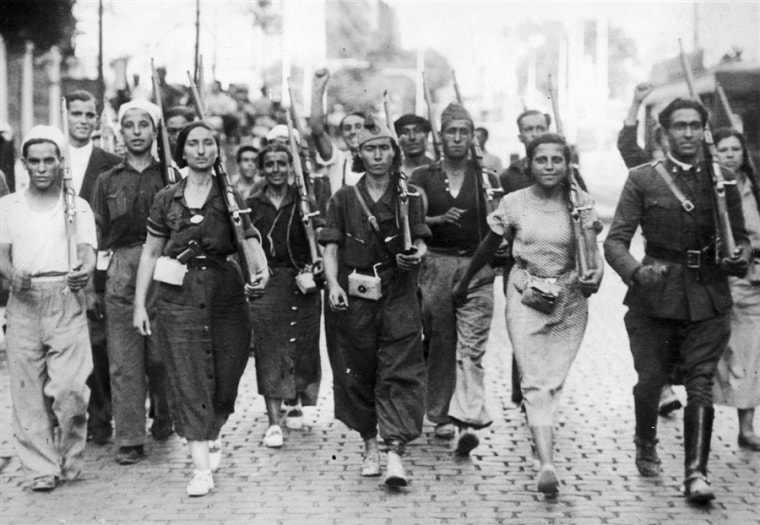
Male and female militia fighters march at the beginning of the Spanish Civil War in July of 1936.
(Militia fighters at the outset of the Spanish Civil War)

After reading Michael Russell’s first two renditions of his Stefan Gillespie series I must say I was hooked.  The third installment is entitled THE CITY IN DARKNESS and has reaffirmed my view that Russell has the unique ability to combine components of a thriller and spy novel in the context of historical fiction.  Russell easily captures the reader’s attention and thus far all of his books have been extremely satisfying.  The novel begins in 1932 as Stefan, his wife Maeve, and their three year old son, Tom are camping.  Maeve decides to take a swim and that is the last Stefan will ever see of her.  A childhood friend of Maeve sees her swimming in the lake and drowns her.  This scene fills in the gap from the first two novels as Stefan thought Maeve’s death was an accident, but Russell develops a plot line where Stefan comes across evidence that his wife’s death may have been murder.

The action immediately shifts to the Spanish Civil War circa 1937 as Francisco Franco and his forces are approaching Madrid in a final effort to destroy the Republican government.  Brigadier Frank Ryan, commander of the 15th International Brigade made up of 400 Englishmen and Irishmen are set to blunt Franco’s advance.  As his wont, Russell creates a multi-layered disparate set of sub plots that can never seem to have any commonality.  An IRA raid on the Magazine Fort in the Phoenix Park in 1939; the death of Stefan’s wife; events in the Spanish Civil War; the possibility that Stefan’s boss, Detective Superintendent Terry Gregory of the Special Branch might be in bed with the IRA; the actions of German Intelligence in trying to use Ireland against England; and the pending release of Frank Ryan from one of Franco’s prisons all are developed fully, but one wonders how they can all come together.  A hint, as usual they all do.

Adolf Hitler and Francisco Franco of Spain meet in Gare d'Hendaye in occupied France, October 1940 to discuss possible Stock Photo

(Adolf Hitler and General Francisco Franco)

Russell is extremely interested in atmospherics and everywhere that Stefan travels is fully explored.  The beauty of the Portuguese and Spanish countryside is on full display as are the streets of Lisbon, Madrid, Burgos, and Salamanca.  The comparison of the brightness of Christmas lights in Ireland in 1939 is juxtaposed to the darkness befalling Europe.  The damage caused by the civil war is evident when Stefan arrives in Madrid.  These and other descriptions provide a unique background for the novel.

THE CITY IN DARKNESS comes across as more of a spy novel than the first two installments in the series.  Ireland’s G2, the German Abwehr, and British MI5 all play an important role as Stefan’s assignments keep shifting as at first he was in charge of investigating the number of Irish men who left to fight for England against Germany, but after the murder of a post man he finds himself in a complex investigation which accidentally provides information for what really happened to his wife seven years earlier.

Apart from Frank Ryan who had ties to the IRA and fought against Franco’s army, a number of new characters are created that carry the novel.  .  Marie Duarte, Ryan’s partner.  Billy Byrnes, the post man who disappears.  Mikey Hagan, at fifteen fought in the Spanish Civil War whose life is saved by Ryan.  Jimmy Collins, the man who knows the truth concerning the murder of three women.  Simon Chillingham, a British diplomat turned spy.  Leo Kerney the Irish ambassador to Spain.  Florence Surtees, an artist who turns out to be someone completely different.  A number of German intelligence agents and a host of others.  Characters from the previous novels who reappear include Stefan’s parents and son, Katie O’Donnell, Stefan possible partner, Colonel Archer de Paor, head of Irish G2, Terry Gregory of Special Branch, and Stefan’s Garda partner, Dessie MacMahon.

(Lisbon was a spy center during WWII)

At times Stefan feels like a pawn in a game of chess between de Paor and Gregory.  As the novel evolves Stefan breaks away from his assigned tasks and strikes out on his own to accompany Ryan out of Spain once he is released, but more importantly to learn who was responsible for killing three women that include his wife Maeve.  The cruelty and death fostered by the Spanish Civil War is an important background to events as is the possible role of Ireland as a German ally against England as World War II has just begun.  Russell’s grasp of history is clear as he discusses the civil war and the role of Franco, as is his knowledge of the IRA and the politics that surround it.

Stefan is at a crossroads in his life as until he knew what happened to Maeve he could not move on.  He blames himself for accepting her death as an accident and he realized if he were to achieve closure, he would have to do it himself before he could develop a meaningful relationship with Kate.  The number of characters and the complexity of the story at times is hard to follow, but once you figure out where Russell is going with the plot it is engrossing and you wonder how it concludes.  Interestingly, the missing post man aspect of the story is drawn from the still unsolved true-life disappearance of postman Larry Griffin in the village of Stradbally on Christmas Day, 1929.

This is an ambitious novel that blends police procedures, a spy novel, and a historical mystery that is comparable to the writing of Alan Furst and John Lawton.  Obviously, I think a great deal of Russell’s approach to historical fiction as a thriller and I look forward to reading the next book in the series, A CITY OF LIES where Stefan finds himself on a dangerous mission in Berlin.

(The brutality of the Spanish Civil War)

THE CITY OF STRANGERS by Michael Russell

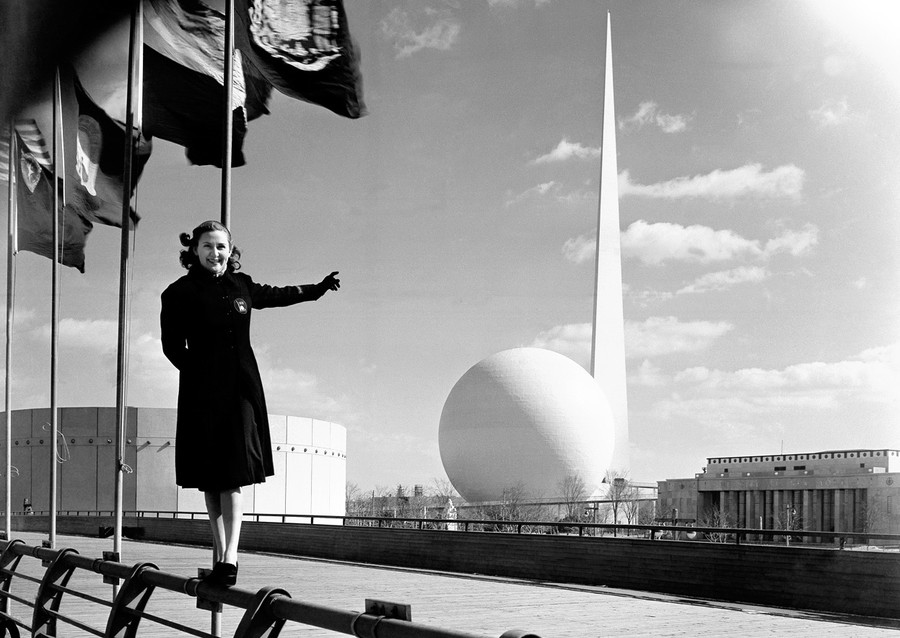
(Rosalie Fairbanks, a guide to the New York World’s Fair, points to the theme of the exposition — the Trylon and Perisphere — in New York on February 22, 1939, after the entire sheath of scaffolding was removed for the first time.)

As war approached between England and Nazi Germany throughout the spring and summer of 1939 Ireland did its best to remain neutral.  The Irish government had its own issues as segments of the Irish Republican Army refused to accept the Anglo-Irish Treaty of 1921 which created the Irish Free State in January 1922.  The result was a series of attacks by the IRA against England as well as the Irish Free State. The IRA’s goal was to try and undo the treaty and force the British out of Ireland for good creating a unified Ireland of Protestants and Catholics.  The role of the United States was ancillary as support for the IRA came from certain political factions and institutions as well as private citizens that resulted in the availability of weapons, munitions, and money for the IRA smuggled out of the United States.  The wild card in this process was the relationship of the IRA and Nazi Germany.  If war broke out between England and Nazi Germany, it would avail the IRA of the opportunity to conduct rear guard action against British interests to the benefit of the Hitlerite regime.  It is in this environment that Michael Russell’s sequel to THE CITY OF SHADOWS Detective Stefan Gillespie is placed in the untenable position of navigating the situation to carry out his mission for Irish military intelligence.

(BOAC Clipper Flying Boat)

Russell opens the second installment of his Stefan Gillespie series, THE CITY OF STRANGERS with a seven year old boy witnessing the revenge killing of his father by Free State soldiers who buried the body up to its neck in the sand at Pallas Strand.  As is his want, Russell leaves this introduction and moves on, however, the reader knows it is something significant that will turn up later in the novel.

Gillespie has enjoyed the last four years working on his parent’s farm in Kilranelagh with his nine year old son Tom.  He had given up working in Dublin, the reasons for which are explained in the CITY OF SHADOWS.  Gillespie is summoned by Dublin authorities to transport Owen Harris back from New York City for questioning as he is accused of brutally beating his mother to death and dumping her body into the sea.  What follows is a rather complex plot that at times even confuses Gillespie!

Russell has created a thriller that involves Nazis, the IRA, the NYPD, New York gangsters, Irish G2 (military intelligence and a host of interesting characters each with their own agenda.  Among those characters are Longie Zwillman, a Jewish New York gangster that seems to know everyone in the city; Dominic Carroll, the president of Clan na Gael in New York which hates Eamon de Valera, the president of the Free State –  in reality Carroll was a front for the IRA; Katie O’Donnell, Carroll’s sister-in-law; her sister Niamh Carroll, who is trying to escape from her husband, Captain Adam Phelan of the NYPD and his younger brother Michael also of the NYPD; Rudolph Katzmann, a German intelligence operative; Jimmy Palmer, a black trumpeter and taxi driver, gay actors, and a host of others.  A number of characters reappear from the earlier novel, chief of which is Captain John Cavendish, who enlists Gillespie into his web, in addition to Dessie MacMahon, Gillespie’s partner.  Historical figures abound including Father Charles Coughlin, the anti-Semitic pro-Nazi radio priest; Sean Russell, IRA Chief of Staff; Robert Montieth, one of Father Coughlin’s leaders in the Union of Social Justice; Duke Ellington, the band leader, and numerous others.

(Crowds march through the streets of Dublin to commerate the Easter Rising (1939). Getty Images. Image courtesy of the Independent.)

Russell has an excellent feel for New York City in 1939.  He paints a wonderful portrait of Harlem, jazz, the coming World’s Fair, the streets of Manhattan and the New York skyline, and the St. Patrick’s Day parade.   The reader feels as if they are in a time machine as he compares the wilds of County Wicklow with the buzz, glare, noise, and ambiance of the New York City, in addition to Gillespie’s flights on the flying boat from Dublin to New York and back.

As the plot unfolds Gillespie wonders how he went from trying to find an envelope containing IRA ciphers for Cavendish and take them back to Dublin with his prisoner to helping a gangster smuggle a wanted woman out of the United States, and trying to figure out how Katie O’Donnell fits in.  This is part of the beauty of Russell’s novels as disparate plots that appear unrelated seem to all come together, but over many chapters.  An escape for an IRA currier, the death of assorted characters, and an assassination plot of George VI are all key components of the novel.

Russell’s writing is clear, concise, always calm and never over-heated.  He also exhibits a strong command of history and knows how to maintain the interest of his readers.  His Gillespie series is an exciting and comfortable read and I look forward to the next book in the series, THE CITY IN DARKNESS where Gillespie wonders if his boss, Superintendent Terry Gregory, is working for the IRA.


(1939 World’s Fair, New York City)

THE CITY OF SHADOWS by Michael Russell

Thomas Street Colourised by Pearse.

(Thomas Street, Dublin, Ireland, 1930s)

Michael Russell’s THE CITY OF SHADOWS is centered in Dublin, the Free City of Danzig, and Palestine in the 1930s.  Russell, a reader of English at Oxford, in addition to a television producer and writer has written an engrossing first novel.  The first of six books centers on Stefan Gillespie, a Detective Sergeant out of Dublin’s Pearse Street Garda Station. The series revolves around the murder of two individuals two years apart found in the mountains outside Dublin.  The first question to be asked is are the murders related, the answer is yes but not in the traditional sense.  The novel itself is tightly written and well-conceived story encompassing murder, love, and rising nationalism in Europe epitomized by Nazi Germany reflected in strong character portraits placed accurately within the context of historical events.

The story begins as Vincent Walsh is searching for a priest who he has fallen in love with.  He was to meet his lover after the Eucharist Congress at Phoenix Park in Dublin attended by over one million people and three hundred priests.  When the priest does not show, Walsh walks to Carolan’s, a gay bar near the site.  Shortly after arriving Irish Blueshirts who fashion themselves after Mussolini’s Black Shirts arrive which brings about the demise of Walsh.  The second component that is explained involves another priest, Father Francis Bryce who is having an affair with Susan Field.  The young lady becomes pregnant and is last scene at Dr. Hugo Keller’s office to undergo an abortion.  Something goes wrong and she is taken to the Convent of Our Lady of Charity of the Good Shepard which supposedly cares for unmarried pregnant woman where Mother Superior Eustacia, appalled that the young lady is Jewish pronounces her dead.

(Danzig, Poland, 1930s)

Gillespie is called in to investigate and immediately is confronted by machinations employed by Detective Jimmy Lynch and Inspector James Donaldson of the Irish Special Branch and Lieutenant John Cavendish of G2 Military intelligence.  Both men seemed to have ties to the abortion doctor in addition to the Blueshirts.  Gillespie is appalled as is Hannah Rosen, Field’s closest friend he arrives from Palestine to learn about and seek justice for her friend.  Rosen is aware that Field was having an affair with Father Francis Bryce, a college professor of philosophy who arranged the abortion with Dr. Kelly, then disappeared from Dublin.  Gillespie and Rosen come together to try and solve the murder on their own, but they may have bitten off more than they can handle.

The hypocrisy of the Catholic Church is on full display as the story evolves.  Priests seem to enjoy sexual relationships going against their vows in addition to those whose egos dominate their actions.  A good example is Father Anthony Carey who does not believe that Gillespie is raising his four year old son Tom as a good Catholic.  Gillespie whose wife Maeve had died two years earlier was Catholic and Gillespie is an atheist/Protestant, but the detective is doing the best he can with Tom living with his parents.  Father Carey is appalled and after a series of threats tries to have the Church take Tom away from his father to live with an uncle’s family.

Russell provides a vivid description of life in Dublin and the surrounding countryside.  The author integrates each character’s personal history allowing the reader to understand the context of each in the story line.  A good example of this approach is how Russell explains why Susan Field’s family left the Ukraine and its anti-Semitism as her grandfather Abraham traveled across Europe for three years before arriving in Dublin 1899.  Susan’s father, Brian a cantor at the Adelaide Road Synagogue will contact Gillespie seeking help to find out how his daughter died.

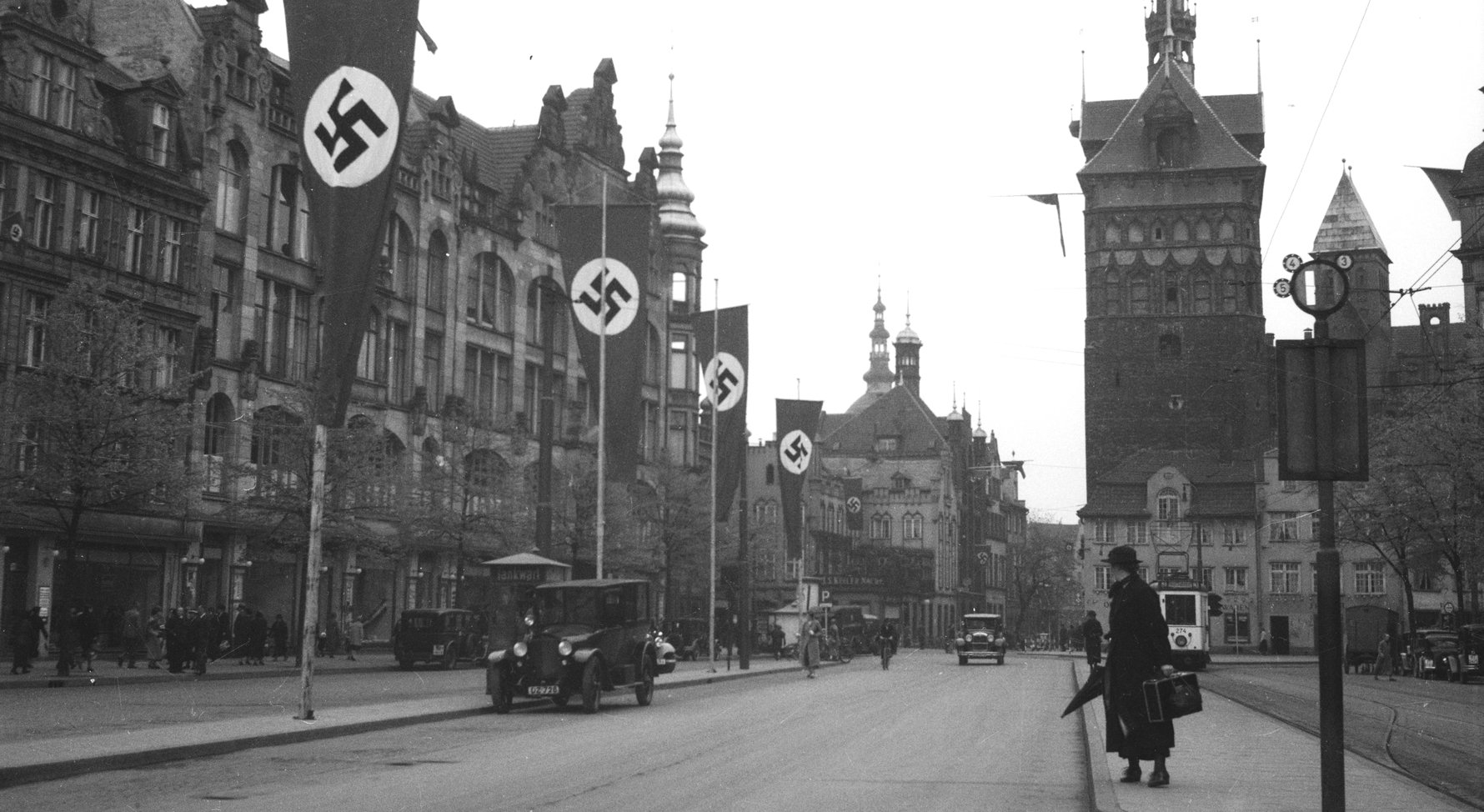
Street of Danzig in 1937 with Swastika banners
Swastika banners on the streets of Danzig (now Gdańsk) in 1937. Although Nazi Germany was yet to invade, the senate majority in the ‘Free State’ parliament were Germans with a Nazi allegiance.

Russell is on firm ground as his story progresses with certain historical events forming the background for the plot.  Whether discussing the history of the Irish Civil War, events in Palestine as Jews try to create their own state, or the Nazi drive to seize the Free State of Danzig Russell employs a strong knowledge base that allows him to introduce a number of important historical figures to make his story much more credible.  Figures such as Eamon de Valera, the first President of the Irish Free State; Joseph Goebbles, Nazi Propaganda Minister; Edward O’Rourke, the Bishop of Danzig; and Sean Lester, the League of Nations High Commissioner for Danzig; Arthur Geisler, President of the Free City of Danzig Senate; Albert Forster, Gauleiter of Danzig-West Prussia; Dr. Adolph Mahr, Director of the National Museum of Ireland and head of the Irish Nazi Party, along with a number of others are all portrayed accurately.  Fictional characters abound, the most important of which include Father Monsignor Robert Fitzpatrick, the head of the pro-Nazi Association of Catholic Strength, and Gillespie’s partner, Detective Garda Dessie MacMahon.

Russell provides the background for many of the historical controversies of the 1930s.  Religion, fascism, communism, the rise of Nazism, abortion, the division between urban and rural areas are among the topics explored.  His protagonist, Stefan Gillespie’s life is complex, particularly his budding relationship with Hannah Rosen, but Russell weaves a rich tapestry as he seems to compare the beauty of Ireland with the street of Dublin and the horrors of Nazism being played out in Danzig.  For a debut novel, Russell has done a fine job and I look forward to reading the second installment in the series,  THE CITY OF STRANGERS which transports the reader to New York in 1939 as World War II is about to break out.

View from front of Trinity College looking towards Bank of Ireland and diwn towards Westmoreland Street, Dublin Ireland History, Dublin, Vintage Ireland, Images Of Ireland, County Dublin, Eire, Dublin Street, Ireland Travel, Old London

(College Green, Dublin, Ireland, 1930s)

THE EVENING AND THE MORNING by Ken Follett

For a confessed bookaholic and fan of Ken Follet’s collective works what could be better than a new novel that is over 900 pages?  After having read and digested THE PILLARS OF THE EARTH, WORLD WITHOUT END, and A COLUMN OF FIRE I have long looked forward to Follet’s prequal to his Kingsbridge series, THE EVENING AND THE MORNING with great anticipation and I must confess I was not disappointed.  Set in England at the turn of the 11th century Follett, a master storyteller has conjured up a complex story of human greed, passion, slavery, clerical corruption, and political uncertainty.  The story commences from the east with a Viking raid on the village of Combe that results in devastation and loss for its inhabitants.

Follett’s new book continues the approach taken in PILLARS OF FIRE and other volumes in the Kingsbridge saga.  The reader is exposed to powerful personalities, some acceptable, others cruel and nasty. Of course, love and human emotion are factors and on full display. Even though the book takes place between 997 and 1007 AD competition, jealousy and other traits of the human condition are clear.  Follett describes what daily life was like in England and Normandy at the turn of the 11th century – the forests, castles, poor villages, ale houses, farms, whorehouses, and religious buildings.  The political machinations of the nobility and church figures dominate a good part of the plot.  During this historical period survival was key as most woman did not live past their thirties, many of which dying in childbirth, and men succumbing by their late forties.

England and her invaders in the century. 11th Century, Year 2, Coat Of Arms, Fashion History, Middle Ages, Vintage World Maps, British, England, Art

Follett immediately introduces a series of characters each with their own agenda and character flaws, some of which even have positive traits!  Follett is a master storyteller with an incredible ability to capture the reader’s attention only after a few pages.  Follet’s immediate focus is on a family that consisted of three brothers, Edgar, a ship builder and very bright, Erman, the eldest, and Eadbald both of which are common laborers with little skill.  The matriarch, Mildred has the final voice in family decisions since Pa succumbed during the Viking attack as did Edgar’s love, Sunni.  The family lost everything and is forced to accept working a rundown farm fifty miles away to survive.

Edgar emerges as one of the dominant characters that Follett creates along with a host of others.  Chief among them was another family with three brothers, Wilwulf, the ealdorman of Shiring, who held political power from the king, Wigelm the thane controls most of the forest and surrounding areas, and Wynstan, the Bishop of Shiring the leading figure in the corrupt church he rules, and of course, Gytha the deceitful mother who pulls strings behind the scene.  Follett, as in all of his novels is able to  create so many different threads and characters, weaving them together seamlessly in a story that eventually becomes clear. 

As the plot develops a number of other important individuals play important roles.  Aldred, a Monk concerned with books and learning who becomes involved in an investigation of the Bishop of Shiring, Lady Ragnhild, the daughter of Count Hubert of Cherbourg, known as Ragna who falls in love with Wilwulf when he visits Normandy to negotiate a treaty.  Ragna was kept in the dark about a number of important things after she marries Wilwulf and moves to England.  Two other people that appear over and over are Dreng, the owner of an ale house and his brother Degbert Baldhead, the Dean of Deng’s Ferry Minster and owner of numerous farms that are worked by tenant farmers and slaves.

Follett develops a number of plot lines that are important.  First, the plight of Edgar’s family following the Viking attacks.  Second, Aldred’s religious fervor and his suspicions concerning the minster in Deng’s Ferry.  Third, the relationship between Cherbourg and the English settlements in need of protection.  Fourth, the marriage of Wilwulf and Ragna.  Fifth, the corruption and deceit that seems to pervade every page.  Sixth, the machinations of church politics and the hypocrisy of monks, priests and bishops, a problem that would plague the church for centuries,  Lastly, the structure of England.  What is the relationship between a king, in this case Ethelred and the nobility who ignore his rulings?  What is the relationship between the Archbishop of Canterbury and a bishop who refuse to conform to the preaching’s of the church?  In the story that Follett conjures up we have Wilwulf the ealdorman of Shiring ignoring King Ethelred’s pronouncements, and Wynsan, the Bishop of Shiring ignoring the teachings of Elfric, the Archbishop of Canterbury.

MIDDLE AGES Collage Sheet with gryphon, unicorn and illuminations, by JUNKMILL Copyright Free Images, King Arthur, Digital Collage, Collage Sheet, Middle Ages, Renaissance, Medieval, Finding Yourself, Printables
(England during the Middle Ages)

Aside from the inherent political conflicts that exist in feudal England at the end of the dark ages Follett brings to the reader’s attention the issue of slavery.  In England during this period 10% of the population consists of slaves.  Among those classified as slaves are people in poverty who cannot provide for themselves, soldiers and ordinary people taken prisoner in war, or people punished for crimes.  These individuals consist mostly of people ages eleven to thirty who become servants, prostitutes, laborers, and any other activity their owners can think of.

As the story evolves plots seemed to be enveloped by subplots as Follett deftly springs numerous surprises on his readers.  Just when you think you know how things will play out; he shifts gears. Follett’s recreates a period fraught with the hazards, the harsh physical realities, the competing influences of politics and religion, detailed and convincing, providing a solid underpinning to the later installments of the Kingsbridge series. 

As Bill Sheehan points out in his review in the Washington Post that “Taken both individually and together, the Kingsbridge books are as comprehensive an account of the building of a civilization — with its laws, structures, customs and beliefs — as you are likely to encounter anywhere in popular fiction. Despite their daunting length, these novels are swift, accessible and written in a clear, uncluttered prose that has a distinctly contemporary feel. At times, the prose can feel a bit too contemporary, as when Ragna, ruminating on some conflict with her husband, wonders: “What was bugging him?” Mostly, though, Follett writes in a transparent style that rarely calls attention to itself, moving his outsized narratives steadily — and compulsively — forward.

Ken Follett with "Eisfieber" ("Whiteout").

While the Kingsbridge novels are in no way formulaic, they all rely on common narrative elements, such as multiple alternating story lines, a large cast of characters from all levels of society, the patient accumulation of precise period detail, and specific long-term goals, such as the building of a cathedral or, in “World Without End,” a bridge and hospital. But perhaps the key to Follett’s success is the way in which his gifts as a thriller writer have merged so seamlessly with the larger demands of historical fiction. Follett presents his worlds in granular detail, but the narratives never stand still. Something dramatic, appalling or enraging happens in virtually every chapter. Rape, murder, arson, infanticide and betrayals of every stripe follow one another in relentless succession. The result is a massive entertainment that illuminates an obscure corner of British history with intelligence and great narrative energy. THE EVENING AND THE MORNING is a most welcome addition to the Kingsbridge series. I hope it won’t be the last.”*  I agree wholeheartedly!

*Bill Sheehan, “Ken Follett’s PILLARS OF THE EARTH prequel is just as transporting – and lengthy – as his famous epic.” Washington Post, September 21, 2020.

Windsor Castle was built in the 11th century after the Norman invasion of England by William the Conqueror. King Edward III rebuilt the palace to  become "the most expensive secular building project of the entire Middle Ages in England". Edward's core design lasted through the Tudor period, during which Henry VIII and Elizabeth I made increasing use of the castle as a royal court and centre for diplomatic entertainment. Berkshire, England Stock Photo

(Berkshire, England, 11th century castle)

THE FOX by Frederick Forsyth

(Russian Cruiser)

According to John le Carre, Frederick Forsyth is among a group of spy thriller writers “that his works were the well into which everybody dipped.”  If that is the case based on the heights that le Carre has reached it is quite an endorsement of Forsyth.  A #1 New York Times bestselling author in his own right Forsyth is one of the most legendary and accomplished spy novelists of his time and the 82-year-old Englishman is considered one of the god fathers of the espionage genre.  In 1971 Forsyth then a freelance reporter published his first book, THE DAY OF THE JACKAL that brought him international success. Among his other sixteen novels is enormously successful THE ODESSA FILE and his newest and seventeenth novel, THE FOX continues his run of engrossing novels.

It begins in February 2019 as the American National Security Council computer where most of its secret data resides is hacked.  Washington asks the British government for assistance in locating the hacker.  Dr. Jeremy Henricks at the Government Communications Headquarters, the British National Security Center is brought in to assist and finds that the hacker has left no trace.  A few months later the same hacker has hit a major bank, but as in the first instance nothing was taken, however this time he has left a slight trace and is used by the SAS to locate him.  It turns out that the hacker is Luke Jennings is an eighteen-year-old autistic young man who suffers from Asperger’s syndrome.  Sir Adrian Weston a retired British spy chief is brought in by Prime Minister Marjory Graham as her unofficial security advisor to oversee the investigation.  What he learns is that Luke and three other family members live north of London in a small house where the cyber genius is ensconced in his attic with what appears to be ordinary computer equipment, but he possesses a devastating cyber mind and capability.

book, review, In Intrigue, Frederick Forsyth, Adam Helliker

If by this time Forsyth has not hooked you on his plot, he will when Luke is recruited by the British, in conjunction with Washington to work for the government in lieu of prosecution and extradition.  His first assignment is to hack a newly built Russian cruiser, the Admiral Nakhimov, the most powerful ship of its class in the world.  Moscow under the firm grip of Vladimir Putin is humiliated when the ship runs aground off the Straits of Dover because of Luke’s handiwork and seeks revenge.  The Russian autocrat places Yevgeni Krilov in charge of learning what has occurred.  Employing a series of former Spetsnaz, Albanian gangsters, and Russian billionaire oligarchs he learns of the Jennings family’s new location and proceeds to deal with the problem.  As Krilov tries to shut down Luke, the teenager under the auspices of Weston penetrates the data bases of Iran, North Korea, and Russia extracting priceless intelligence.

Forsyth’s tale has a ring of reality in our cyber infused world and the dangers to American and British national security.  He produces a series of probable characters from local Scotsman, British special forces, the Prime Minister, Russian billionaires in the grasp of Putin, gangsters, or former military types.  His commentary on world leaders is dead on particularly his recapitulation of Putin, who he refers to as “the former police thug’s” career and rise to power.  His analysis within the context of the novel is historically accurate and sounds like an analysis one would find in a monograph by Masha Gessen describing plutocratic gangsters who portray themselves as legitimate businessmen.  Part of the story line rests on the fear that Putin will use his vast resources of natural gas and a complex series of pipelines as a means of dominating Western Europe.  The British answer is to employ Luke, but Putin cannot allow this and will send Russia’s most lethal sniper, Misha to kill him. Kim Jong Un does not escape Forsyth’s scathing analysis describing the North Korean dictator as fat and ugly with a bizarre haircut who possesses a ruthlessness that is total and is obsessed with himself and absolute power.  Donald Trump also appears, but in this instance, he is seen as cooperating with the British despite Forsyth’s rather negative description of the American president.

Image:

(Kim Jong Un)

Forsyth’s knowledge of history is impeccable as his compendium of how American and British national security apparatuses work.  It is clear that Forsyth is also an authority on Russian spy tactics and its thought processes that include murder, intimidation, and intelligence gathering. Further the author has the uncanny ability to reproduce scenarios that seem real.  In addition, Forsyth’s recounting of Iranian and Israeli security needs and how they approach threats to their countries, along with information about the domestic situation in North Korea provides excellent background information.   In constructing his story Forsyth exhibits total command on contemporary events, personalities, diplomacy, weaponry, and the mysteries of spy craft.  In THE FOX, Forsyth as he does in all his novels lays out these details in a brilliant fashion and hopefully Forsyth has more novels left in his pen for the future. You will be on the edge of your seat as Sir Adrian tries to protect Luke and defeat Misha, thereby preserving world peace.


Russian missile cruiser makes call at port of Algiers in long distance deployment 925 001

(Russian Cruiser)

BLUFFING MR. CHURCHILL by John Lawton

During gas invasion test during WWII, all civilians and wardens wear gas masks (respirators). Location: London, United Kingdom Date taken: 1941 Photographer: Hans Wild Life Images London History, British History, Modern History, Women's History, Vintage London, Old London, Vintage Photos, Old Photos, The Blitz
(London, 1941, during the “Blitz”)

John Lawton’s BLUFFING MR. CHURCHILL (published in England as RIPTIDE) is the fourth installment of his Inspector Frederick Troy series and opens with a British retaliatory strike against Berlin as payback for the continued German blitz that was pounding London a year after Dunkirk.  At this point, Brigadefuhrer Wolfgang Stahl, a British spy realizes it is time for him to leave Germany as quickly as possible.

Stahl had joined the Nazi Party in 1929 and by 1934 he had wormed his way into the confidence of Reinhard Heydrich, a high-ranking SS police official and the architect of the Holocaust.  Stahl was in part able to get into his good graces because of his shared love of Mozart.  They would play together and discuss music for hours on end.  Once the bombing ended Stahl returned to his apartment house and found a body that was a similar to himself with its face blown off.  Stahl took the dead man’s identity and began to make his way out of Germany.  The problem for Stahl was that the suspicious Heydrich had the corpses hand shown to him and he realized that Stahl was not dead.  At this point Lawton has lured the reader into the story line and in true Lawton form provides historical fiction dealing with spy craft at its best.

(WALTER RICHARD) RUDOLF HESS German Nazi leader; flew to  Britain without Hitler's  knowledge in 1941 to attempt Stock Photo

(Rudolf Hess, Hitler’s Deputy)

Lawton will develop a number of plot lines.  The dominant story revolves around the search for Wolfgang Stahl who carries with him plans for the Nazi invasion of the Soviet Union. Obviously, the Nazis want him dead because he knew too much, and the British want him to learn what he knows.  A number of important characters emerge in the chase.  The most important are Lt. Colonel Alistair Ruthuen-Greene of the British Consulate, someone who had Churchill’s ear.  He convinces Captain Calvin M. Cormack III, an American stationed in Zurich who had been Stahl’s handler to accompany him to London to identify him.  Cormack was assigned to work with Walter Stilton, Chief Inspector at Scotland Yard to locate Stahl.  When they arrive in London, another thread that Lawton develops emerges, Hitler’s deputy, Rudolf Hess had flown from Berlin to Scotland and all wonder why he has done so.

Lawton has created a taught spy novel integrating fiction with historical fact.  Examples include the Bismarck  sinking the HMS Hood, disagreements between American intelligence and British MI5 over sharing German code information as well as the British hope that the United States would soon enter the war.  Further, the debate over whether to warn the Soviets that a German invasion was imminent is presented – but in reality, as early as April 1941 Stalin ignored British warnings as he did later the day before the actual invasion.

File:Winston Churchill 1941 photo by Yousuf Karsh.jpg

(Prime Minster Winston Churchill)

Lawton does an excellent job showing the reader the horrors of the blitz.  Descriptions of bombed out streets with only one building remaining abound as people shelter in the underground, and the Home Guard searches for bodies and civilians clear damage.  Lawton zeroes in on the English vernacular focusing on accents verbiage, and dialects.  It is easy for English characters to communicate with each other, but for men like Capt. Cormack he has difficulty understanding the British at times.

Real figures and events are inserted into the plot reflecting Lawton’s command of the historical information.  He accurately describes the British rationing system along with the death and destruction that Goering’s bombers reigned on England.  Winston Churchill, Lord Beaverbrook, H.G. Wells, and Robert Churchill, a distant cousin of the Prime Minister make appearances.

Many have argued that the war created an aura of commonality for the British people as all classes faced the Nazi terror.  Lawton examines this theme pointing out repeatedly it is more veneer than fact.  The core of the story revolves around Stilton and Cormack then joined by Sergeant Frederick Troy of Scotland Yard who refuse to share their own intelligence in the hunt for Stahl.  Once Stilton passes from the scene the Troy-Cormack relationship becomes very tricky when Cormack falls in love with Kitty Stilton, a police officer and daughter of Walter Stilton who also possesses a ravenous sexual appetite and is Troy’s former lover.  Further linking the two men is that both men have strong willed fathers, Cormack’s is a decorated general turned politician, and Troy’s a renown intellectual and diplomat who emigrated from Russia in 1910, as both men operate in the shadows of their fathers. Despite these issues the two men come together and foster a working relationship that is a key to solving the crimes at hand.

The novel slowly evolves into a tightly spun murder mystery with a number of victims.  It is an espionage thriller, but also a well thought out detective story.  The next book in the Troy series is FLESH WOUNDS where Kitty Stilton plays an interesting role and I have added it to the pile of books on my night table.

(Bomb damage in London during the “Blitz”)