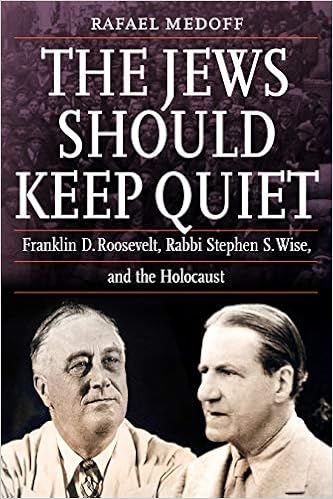
THE JEWS SHOULD KEEP QUIET: FRANKLIN D. ROOSEVELT, RABBI STEPHEN S. WISE, AND THE HOLOCAUST by Rafael Medoff

Image result for photo of FDR and Rabbi Stephen Wise

One of the questions that has been foremost in the minds of Holocaust historians and the Jewish community since World War II centers around the actions and policies of  President Franklin D. Roosevelt as the Nazi agenda became clear resulting in millions of Jews perishing in the death camps.  In his latest book, THE JEWS SHOULD KEEP QUIET: FRANKLIN D. ROOSEVELT, RABBI STEPHEN S. WISE, AND THE HOLOCAUST, Rafael Medoff, the founding director of the David S. Wyman Institute for Holocaust Studies augments traditional documentation of the Holocaust with recently discovered materials that fosters a reassessment of Roosevelt’s actions.  Building on Wyman’s work, particularly his PAPER WALLS: AMERICA AND THE REFUGEE CRISIS 1938-1941, THE ABANDONMENT OF THE JEWS: AMERICA AND THE HLOCAUST, 1941-1945 , and his documentary, THE AMERICAN EXPERIENCE: AMERICA AND THE HOLOCAUST, Medoff paints a very unflattering portrait of Roosevelt’s handling of the Jewish question during World War II along with his duplicitous treatment of Rabbi Stephen S. Wise and Jewish leadership during the war.

Image result for photo of peter bergson
(Historian, David S. Wyman)

This chapter in American immigration history is hard to ignore and Medoff’s work does a better job chronicling and analyzing US policy than previous historians in terms of Roosevelt’s private attitude toward Jews that motivated him to close America’s doors and shut down Jewish access to Ellis Island in the face of Nazi extermination.  The reader will be exposed to Roosevelt’s convictions as early as 1931 and it is obvious that Jewish leadership should have tempered expectations once the New York governor assumed the presidency.

Image result for photo of FDR and Rabbi Stephen Wise
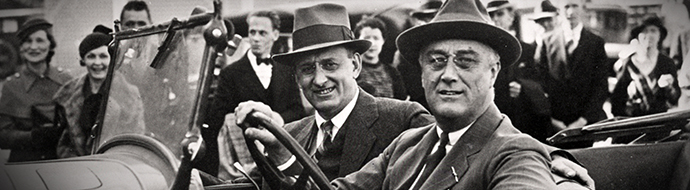
(President Franklin D. Roosevelt meeting with American Rabbis in March, 1943)

Medoff’s focus centers around Roosevelt’s relationship with the Jewish community in particular their titular leader Rabbi Stephen S. Wise, in addition to how the president’s State Department implemented an immigration policy that he totally supported.  What is clear is that Roosevelt played Wise like a fiddle.  The president described by numerous biographers and scholars as a “master manipulator” knew just what string to play upon in dealing with Wise in order to keep his true feelings about Roosevelt’s non-existent refugee policy out of the public eye.  The president would use dinner engagements, personal notes, oval office visits and other gestures to keep criticism to a minimum.  Medoff effectively argues that Roosevelt’s practice of “glad-handing” and making policy-related promises he had no intention of keeping was especially effective with Wise and Jewish leaders who were profoundly reluctant to press Roosevelt to follow through on his unfulfilled pledges. The dilemma for Jewish leadership was should they criticize a president whose domestic agenda they totally embraced.

Jews themselves realized their precarious position in American society.  High levels of anti-Semitism, accusations they were trying to drag the United States into war in Europe, and hardships from economic depression exacerbated Jewish concerns.  The publicity afforded Charles Lindbergh’s isolationist views and the anti-Semitic diatribes of Father Charles Coughlin who had over 3.5 million radio listeners unnerved the Jewish community.

Image result for photo of Breckinridge long
(Assistant Secretary of State Breckenridge Long)

The examples of Roosevelt’s vague promises, lack of interest, political calculations, and outright apathy presented by Medoff are many.  Each is based on sound research, mostly appearing in other monographs, but there is a new element of seriousness and commitment in the author’s arguments.  This is not to say that Wise and his cohorts should not share some of the blame for the lack of an American response.  Wise’s “tendency to embrace the likeminded and exclude those whom he felt politically and religiously uncomfortable ultimately weakened his hand as a national Jewish leader.”  However, no matter Wise’s faults it was Roosevelt who must accept the blame for America’s lack of empathy and his own political calculations when confronted by the Nazi horrors.

Examples of Roosevelt’s actions are many.  His support of Assistant Secretary of State Breckinridge Long who was in charge of the visa section of the State Department whose policy was to create as many obstructions as possible to thwart any attempt to lift barriers to Jewish immigration is clear in the documents.  Long’s strategy was clear, “put every obstacle in the way and require additional evidence to resort to various administrative devices which would postpone and postpone the grinding of the visas.”  In case after case the two men were on the same page to prevent any opportunity to allow numbers of Jews to enter the United States.  The possible use of the Virgin Islands as a haven for small numbers of Jews was rejected.  The ship, “The St. Louis” with 907 passengers was denied admission to the United States and turned back to Europe.  The Evian Conference in 1937 and the later Bermuda Conference of 1943 were farces to make it appear that something might be done when in fact nothing was offered.

Image result for photo of bermuda conference

When evidence of the extermination of Jews was being disseminated to London and Washington, Roosevelt administration policy was to delay and delay in not confronting Germany for its atrocities until the United States entered World War II.  Even after Kristallnacht in 1938 any American comments left out any criticism of Germany as well as references to Hitler, Goebbels, and others by name.    When Gerhart Riegner, the World Jewish Congress representative in Switzerland cabled allied leaders in August 1942 providing evidence of the depth of Nazi atrocities, which was followed by a second telegram from Yitzchak and Recha Sternbuch rescue activists in Europe, in addition to reports from the Jewish Agency in Palestine the following month saw the State Department try and keep the information from Wise to prevent what the Roosevelt administration was learning from reaching the public.  In fact, it took eighty-one days for Assistant Secretary of State Sumner Wells to get back to Wise that confirmed his greatest fears.  This was part of a pattern pursued by the Roosevelt administration who took advantage of Wise’s fear that if he pushed too hard it would create an anti-Semitic backlash that Jews were trying to push their own wartime agenda.  More and more Wise feared he was seen as Roosevelt’s “court Jew,” and Medoff points out that the Rabbi had a habit of embellishing Roosevelt’s responses of support in saving the Jews and the tragedy that befell them.
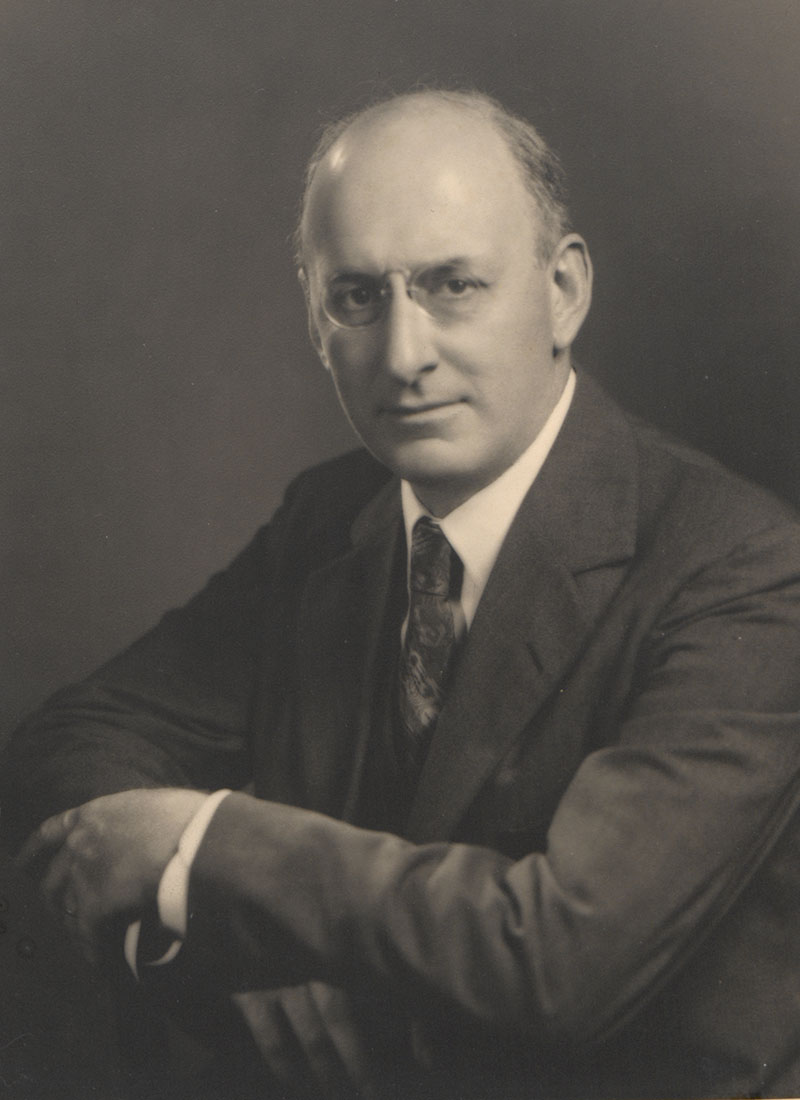
Image result for Hans Morgenthau, Jr. photo
(Secretary of the Treasury Hans Morgenthau, Jr.)

Medoff leaves no stone unturned in delineating Roosevelt’s deceitfulness.  He describes numerous examples of Roosevelt’s opposition to the rescue of Jews; not enforcing immigration quotas; talking out of both sides of his mouth depending on his audience; refusing to reign in the State Department; refusing to support the admission of Jewish children, but had no difficulty allowing the admission of British children who were endangered by Nazi bombing; refusing to consider bombing Auschwitz and other concentration camps, while at the same time assisting the Polish Underground through the air;  creating obstacles for the creation of the War Refugee Board and then underfunding it, are among many actions taken or not taken by President Roosevelt.  Medoff also explores what may have been Roosevelt’s motivations as he points to his family’s societal views which were decidedly anti-Semitic.  The author points to numerous statements by Roosevelt bemoaning the mixture of Jewish and Asiatic blood with American blood.  He wanted these groups to be spread out across America to reduce their impact on American society. He saw America as a “Protestant country” with the Jews and people of other backgrounds present only based “on sufferance.”  With these types of beliefs, it is not surprising that he was disposed to oppose the admission of too many Jews during the war.

Image result for photo of peter bergson
(Peter Bergson)

Wise does not emerge unscathed by Medoff’s analysis.  The author points to Wise’s own ego issues brooking little or no opposition by Jews to his leadership in the Jewish community.  Examples include Hillel Silver or groups outside the Jewish community like Peter Bergson and his group that was much more effective in pressuring Roosevelt to support the War Rescue Board.  Wise spent an inordinate amount of time dealing with his opponents’ criticism, time that could have been spent fighting to rescue Jewish refugees and pressuring the president.  Medoff is quite correct in pointing out that Wise was a flawed leader with his own powerful ego much like Roosevelt and perhaps that is in large part why he was able to swallow his own principles and do the President’s bidding in controlling negative Jewish commentary and actions against his “friend in the White House.”

Some might argue that Medoff’s monograph is too polemical in spots, but to his credit he provides supporting documentation for his viewpoints, integrates a great deal of the comments made by Wise and Roosevelt, and he tries to integrate differing viewpoints.  All in all, Medoff has written a serious analysis and though he has reached what some might consider a scathing indictment of Roosevelt, in many instances his commentary is dead on.
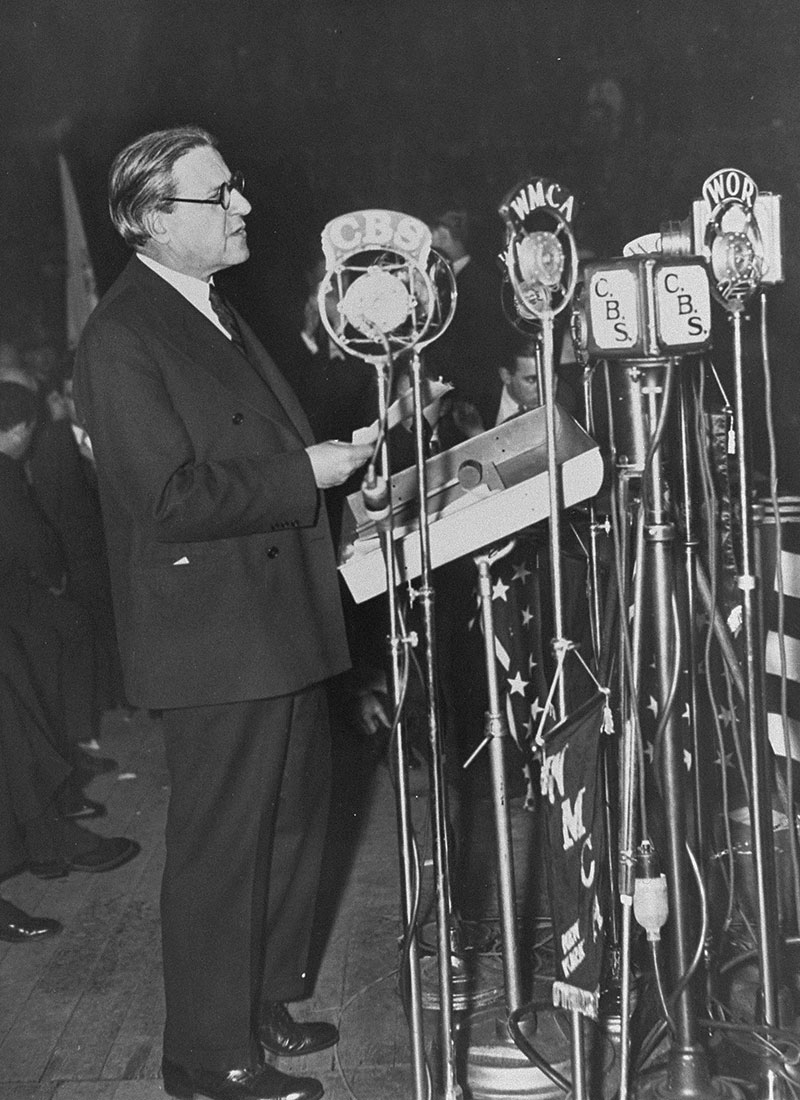
Image result for photo of FDR and Rabbi Stephen Wise
(Rabbi Steven S. Wise)


LINCOLN’S SPIES: THEIR SECRET WAR TO SAVE THE NATION by Douglas Waller

Image result for Photo of Lincoln and Grant
(President Abraham Lincoln and General U.S. Grant)

It goes without saying that intelligence gathering during the American Civil War was an inexact science.  Information was derived from a myriad of sources that included; newspaper articles, railroad passengers and riders, free blacks, runaway slaves, deserters, prisoners of war, local farmers and other non-combatants along with the Union’s use of hot air balloons during the first half of the war.  This menagerie of sources produced a great deal of conflicting information that needed to be sifted through and analyzed.  The key information rested on how many troops each side possessed and their location.  The end result was a decision-making process that at times was flawed and battlefield decisions that rested on a weak foundation.  If one was to compare the intelligence strengths of the Union and the Confederacy, the northern spy network had major advantages and, in the end, would create an intelligence service that would later develop into an effective organization that contributed to victory.

Effective studies of Civil War spying are few in number and Douglas Waller’s new book LINCOLN’S SPIES: THEIR SECRET WAR TO SAVE THE NATION is a wonderful addition.  Waller has previously shown himself to be adept at dissecting important aspect of the history of American intelligence in his previous works.  DISCIPLES: THE WORLD WAR TWO MISSIONS OF THE CIA, DIRECTORS WHO FOUGHT FOR WILD BILL DONOVAN, and WILD BILL DONOVAN: THE SPY MASTER WHO CREATED THE OSS AND MODERN AMERICAN ESPIONAGE are all thoughtful, well researched monographs with a strong element of analysis.  Waller has now shifted his focus to the Civil War and those interested in early American intelligence gathering and techniques should be very satisfied with the latest contribution to the topic.

Image result for image of allan pinkerton
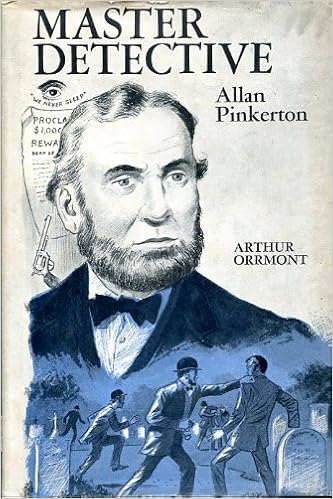
(Allan Pinkerton)

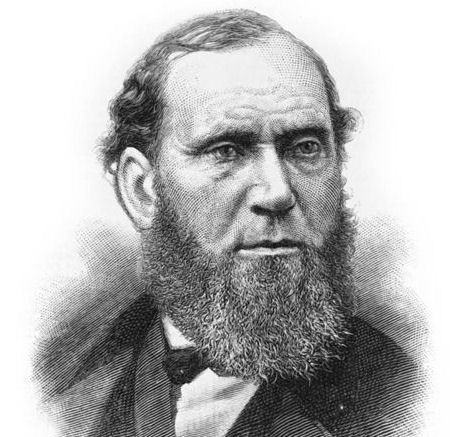
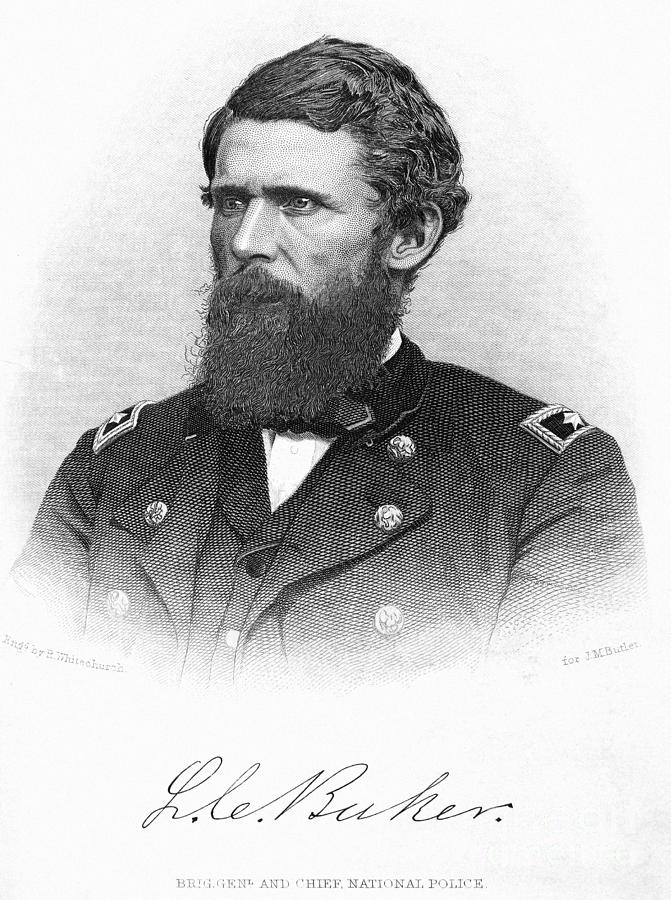
Waller focuses on the Civil War’s Eastern Theater, arguing that a comprehensive history of all theaters of the war would require a minimum of three volumes.  His approach includes Virginia, Maryland, Pennsylvania, West Virginia, and Washington, D.C. because some of the largest, costliest, and significant battles of the war took place in those states.  Waller zeroes in on a number of important characters but his main focus is on Allan Pinkerton, the founder of the Pinkerton Detective Agency, and a man whose ego knew no bounds and in the end was not a very effective head of Lincoln’s spy organization despite the reputation that he himself  cultivated.  Lafayette Baker is another individual who plays a significant role in Waller’s narrative.  Baker was a poorly educated aimless drifter who arrived in Washington after a rather questionable career as a detective in California.  He would eventually convince Secretary of War Edwin Stanton to employ him and set up a spy network for the military.  In the end the corruption, use of blackmail, coercion, and illegal means to extract information and bribes would lead to the end of Baker’s career as a wartime spy by 1864.  Next, Waller introduces the reader to George Sharpe, probably the most effective Union spy during the war whose intelligence was the most accurate and in the end after his network of detectives was able to assist General George Meade at Gettysburg would join with General Ulysses S. Grant in helping to achieve final victory.  With a background as a lawyer who inherited a great deal of money Sharpe never could conceive that he would become the war’s “preeminent spymaster.”  Lastly, Waller discusses the contributions of Elizabeth Van Law, a Richmond socialite who abhorred slavery and all the Confederacy stood for.  Using her “social contacts” inside the Confederate government she was able to tap into a great deal of useful information.  She would create the “Richmond Spy Ring” and was very helpful for the Union cause.  She provided accurate estimates of Confederate forces in and around Richmond, assistance for runaway slaves to reach Union lines, helped organize prison breaks, and hid political prisoners and those suspected of spying against the Confederacy.

Related image
(Lafayette Baker)

Waller, a stickler for detail, provides mini biographies of all his characters particularly those who were involved with the aforementioned four figures.  His discussion of the course of the war and its major players, be it Generals Robert E. Lee, George McClellan, George Meade Joseph Hooker, Ulysses S. Grant, President Lincoln, Secretary of Defense Edwin M. Stanton, and Jefferson Davis among many others echoes the comments of earlier historians.  Waller excels in describing the differences and dislikes that led to competitions and downright hostility among allies especially Sharpe and Pinkerton; Baker and Pinkerton; Meade and Sharpe; Lincoln and McClellan; Meade and Grant among many presented.  The strategies and geographical and economic conflicts are presented in a cogent fashion and are easily understood by the general reader.

Perhaps Waller’s best chapters include his analysis of the contribution intelligence made to the Union victory at Gettysburg which along with Grant’s triumph at Vicksburg was the turning point in the war.  Another fascinating chapter deals with Allan Pinkerton and how poorly he ran his intelligence operation for Lincoln and how incompetent he was.  A key to finally defeating the Confederacy was Sharpe’s relationship with Grant that Waller explores in detail.  Their mutual respect for each other’s skills and capacity in their fields of expertise was the foundation of their personal alliance.  Lastly, and throughout the book Waller discusses Civil War spy craft and how it evolved into an effective tool for victory.

Image result for pictures of elizabeth van lew
(Elizabeth Van Lew)

According to Waller intelligence gathering during the war also pioneered what today is called “all-source intelligence” under the leadership of George Sharpe.  The result was “merging espionage, cavalry reconnaissance, and signal intercepts with prisoner, deserter, and refugee interrogations to produce reports on Confederate strength and movement.  The phone tapping, human collection, and aerial snooping today’s U.S. spy community engages in can be traced to the Civil War.  It’s no wonder that the CIA tasked analysts to study era’s tradecraft for lessons learned.” (417)

The human side of the war is on full display as the carnage was unimaginable up until that time.  The book does not present itself as a history the war, but just a component that contributed to the northern victory.  An aspect of the war that has not been given enough treatment by historians.  The book itself does a remarkable job focusing on the Eastern front of the war and I recommend it to the general reader as well as Civil War aficionados.

Image result for Photo of Lincoln and Grant


BY GASLIGHT by Steven Price

Image result for photos of London in the 1880s
(Victorian London, 1880s)

When I approach a 700-page novel I do so with trepidation and expectation wondering if the effort will be worthwhile.  In the case of Steven Price’s BY GASLIGHT, a multi-generational biographical noir mostly set in late 19th century London one must conclude that Price has produced a fascinating story encapsulating a violent period in history with many original characters amongst actual historical figures.

Image result for photo of william pinkerton
(William Pinkerton)

Price, a Canadian poet and novelist has written a marvelous story set in London, Civil War America, and South Africa spanning the 1860s through the late 1880s.  The plot line is in part a biography of William Pinkerton, the son of Allan Pinkerton, Civil War spy and founder of the Pinkerton Detective Agency and the fictional Adam Foole, a man of questionable business interests that dates back to a diamond heist in Port Elizabeth, South Africa in 1863.  Each man possesses an agenda that was formulated in the past.  For Pinkerton it is the hunt for a criminal his father never apprehended, an elusive thief named Edward Shade.  On the other hand, Foole is seeking  a woman he has not seen for over ten years and realizes he has always been deeply in love with her.  The novel focuses on how each man searches for answers and the relationship they develop.

Image result for photos of London in the 1880s
(Victorian London, 1880s)

As Price unwraps his story the tastes and sounds of London form a backdrop of poverty that centers on thieves, dock workers, and the general underclass that permeates London’s houses for children, sewers and hovels.  Historical periods are clear as the author alternates from the American Civil War with its brutality and vengeance to London in the 1880s infected with a criminal element and poverty that seems to dominate everyday life.  This is further highlighted by Price’s ear for Victorian London and its underworld slang.

Character development is effective, particularly that of Foole, Shade, Charlotte Rickett, John Shore, the Pinkertons, the Uttersons, among many others.  A great deal of research is evident from Price’s work reflected by its historical accuracy and the authenticity of its characters.

Image result for pictures of allan pinkerton

The plot line moves slowly from the outset as each character is introduced.  The plot seems to center on Charlotte Rickett who from childhood was trained as a thief and a grifter in a London workhouse for indigent children.  She was rescued by a pseudo-uncle who furthered her education for a life of crime.  Charlotte’s life will take her to South Africa, India and back to London until her supposed death that resulted in dismemberment and mutilation.  Charlotte’s plight will become an obsession for Pinkerton and Foole.

Image result for pictures of allan pinkerton
(Allan Pinkerton, Lincoln’s master spy during the Civil War who laid the ground work for later American spy agencies)

The novel highlights the horrors of the American Civil War and the poverty that dominates post 1873 Depression London.  Scotland Yard and the Pinkerton Agency are developed as a dam to prevent further criminality and murder.  Aside from Charlotte’s horrible death, the novel zeros in on the fate of Edward Shade, a shadowy character surrounded by myth who may not even have existed.  Rickett and Shade foster an alliance between Pinkerton and Foole that allows Price the opportunity to create numerous subplots as twists and turns abound in each chapter.

Image result for photo of pinkerton's detective agency

According to Price in an interview with the Vancouver Sun, “I think of it as a novel about a detective, rather than a detective novel, ultimately Gaslight is about parents and children, and our inheritance of grief, and how we come to with the unfinished business of life.”  The course of the novel certainly reflects what Price wanted to achieve as each character is tied to their upbringing and how their socialization impacted the choices they made in later life.

Ian Weir writes in the Toronto Globe and Mail,

The narrative touches on themes relating to grief and loss, and the relationship of sons to fathers. There are nods as well to the nature of truth and storytelling, the unreliability of memory, and the conundrum of appearance and reality. But it is difficult to say what these add up to, in the end. The novel – for all of its force and ingenuity – struggles to reach beyond its own specifics.

But those specifics are splendid, nonetheless. And it is a tribute to Price’s skill and power that we never – well, almost never – pause to ask whether the novel really needed every last one of its nearly 750 exquisitely crafted pages.*

In creating the story, Price has written a book that is both challenging and rewarding for the reader due to its length, time periods that seem to turn on a dime, and its multiple characters.  If one works their way through, the time spent with BY GASLIGHT will be well worth it as Price has pulled out all the stops to capture the readers attention and maintain it for hours on end.

*Ian Weir, “Steven Price’s By Gaslight pulls out all the stops, Toronto Globe and Mail, August 19, 2016.

Image result for photos of London in the 1880s
(East End, London, 1880s)

THE LUDWIG CONSPIRACY by Oliver Potzsch

Image result for photo of Ludwig II of Bavaria
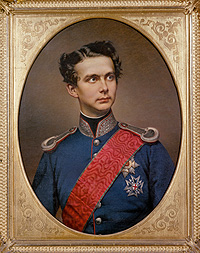
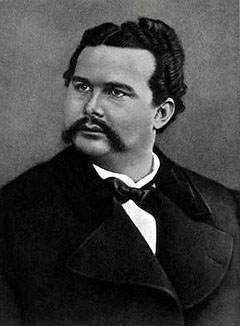
(King Ludwig II of Bavaria)

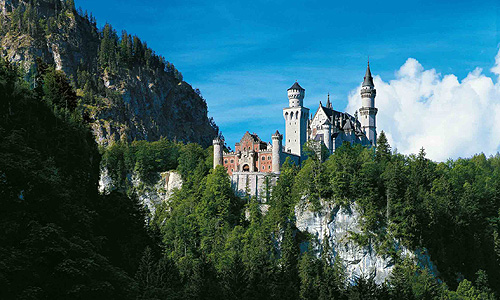
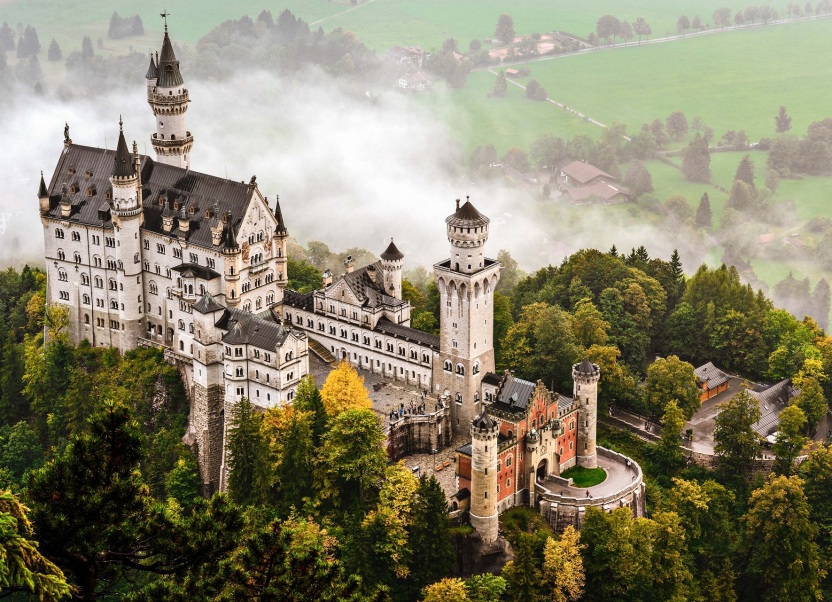
King Ludwig II of Bavaria is one of the most enigmatic figures in world history.  Assuming the throne in 1845 at the age of nineteen the monarch known as “mad King Ludwig” or the “fairy-tale king whose castle, Schloss Neuschwanstein was the model for Walt Disney’s company logo died on June 14, 1886 probably by suicide, but the actual cause of death remains a mystery.  Novelist Oliver Potzsch makes Ludwig II the centerpiece of his novel, THE LUDWIG CONSPIRACY, a historical thriller that centers on an encoded diary of one of Ludwig’s confidantes and a love story that follows diverse historical periods.

If you are a fan of Robert Harris, Steve Berry, William Martin and others of the genre that alternates between the past and the present providing historical lessons and context as a means of solving a contemporary mystery, Potzsch’s effort should be right up your ally.  Employing Dan Brown’s vehicle of ciphers and codes, and in this case German legends and poetry as literary tropes, Potzsch returns the reader to late 19th century Bavaria as he develops his story.

Image result for schloss neuschwanstein castle pictures
(Schloss Neuschwanstein Castle)

Potzsch is best known for his HANGMAN’S DAUGHTER series set in 17th century Bavaria, which is based on his ancestors, the Kuisls, a notorious dynasty of German executioners.  My favorite Potzsch book is THE CASTLE OF KINGS  set during the German Peasants Revolt of the 16th century which features an iconoclastic noblewoman with a flair for falconry.  Potzsch states he wrote the book to move away from torturing and killing and focus on castles, knights, secret chambers and hidden treasure .  In THE LUDWIG CONSPIRACY he delights his readers with a tale that deals with political machinations, monarchial intrigue involving Bismarckian Prussia and Bavaria under Ludwig II as he focuses on how the “mad monarch” may have died.

The format is a contemporary one in which Munich rare book seller, Steven Lukas becomes involved in a conspiracy related to Ludwig’s death when he becomes in possession of evidence that Ludwig may not have committed suicide.  As the story develops Lukacs becomes the target of the Cowled men, a secret order who are bent on proving that the monarch was in fact murdered.

Image result for schloss neuschwanstein castle pictures
(Schloss Neuschwanstein Castle)

Ludwig’s life is an ostentatious spectacle in which he lived in his own dream world.  This approach to life saw him build castles as his raison d’etre for living but resulted in bankrupting the Bavarian treasury and produced numerous enemies among the Council of Ministers who are out to depose him by declaring him insane.  When he died on June 14, 1886 probably by suicide, a method we cannot totally confirm numerous questions arose surrounding his passing.

Potzsch once again has proven himself to be a master of the historical thriller as Lukacs must navigate his possession of evidence that Ludwig did not commit suicide and the Cowled Men who seek to retain and purify the king’s historical reputation.  The vehicle for Lukacs’ involvement is the discovery in his bookshop of the memoirs of Theodor Morat, the assistant to Doctor Max Schleiss Lowenfeld, royal physician to Ludwig that is hidden on a shelf in his establishment.  The memoirs are located in a wooden box and once discovered the novel gains speed as the bookseller is teamed with Dr. Sara Lengfeld, an art historian and detective.  The author creates a mystery anchored in reality, sophisticated plotting, and makes good use of a real historical puzzle that is equal to the Da Vinci code.

Image result for photo of ludwig ii of bavaria
(Ludwig II, later in life)

As with any historical fiction one wonders how much is factual.  In the present case it is accurate to state that when it comes to Ludwig’s death nothing can be definitively proven.  His death is wonderful fodder for conspiracy theorists and Potzsch includes a separate glossary that is meant for those who like to delve into that arena.  Numerous characters are included, some figments of the author’s mind and others actual historical figures.  Among the wonderful individuals that are created include Theodor Morat, Maria, a peasant girl who is a servant and confidante of Ludwig, Albert Zoller, an eccentric expert on the Bavarian monarch, Luise Manstein, the mad industrialist, and of course Lukacs and Lengfeld.  Among hitorical personages is Otto von Bismarck, Chancellor of the recently unified German state, the Cowled Men, and Ludwig himself.

All in all, Potzsch has written a fascinating yarn with a firm grounding in history.  It is a fascinating story that should satisfy conspiracy theorists, and historical fiction aficionados.  It is a book that is worth picking up when one wants to become engrossed in a story and watch their reading pastime fly by.

Related image


RESCUE BOARD: THE UNTOLD STORY OF AMERICA’S EFFORTS TO SAVE THE JEWS OF EUROPE by Rebecca Erbelding

Image result for photo of fdr and henry morgenthau jr holocaust(President Franklin D. Roosevelt, and Secretary of the Treasury Henry Morgenthau, Jr.)
One of the most contentious debates pertaining to World War II deals with Franklin D. Roosevelt’s role in trying to mitigate the horrors of the Holocaust and the role of the American government in general. Many argue that Roosevelt was a political animal who based his position on the plight of world Jewry on political calculation and did little to offset Nazi terror; others argue that FDR did as much as possible based on conditions domestically and abroad.  Some authors reach the conclusion that FDR’s views were consistent throughout the war and according to historian, Richard Breitman he was “politically and emotionally stingy when it came to the plight of the Jews-even given that he had no easy remedies for a specific Jewish tragedy in Europe.”  Many authors argue that “FDR avoided positions that might put at risk his broader goals of mobilizing anti-Nazi opposition and gaining freedom to act in foreign affairs,” for example dealing with the refugee crisis, the issue of Palestine, immigration, and organizing the defeat of Nazi Germany.  Historians stress the fear of domestic anti-Semitism, especially in the State Department; the inability of American Jews to present a united front; the role of the War Department; and presidential politics.  Overall, this is an important issue that dominates the headlines today; what is the “appropriate response of an American president to humanitarian crises abroad and at home?”

Image result for photo of john pehle
(John Pehle, Head of the War Refugee Board)

The signature effort of the United States in dealing with the Holocaust and trying to mitigate Nazi deportations and saving Jews was the War Refugee Board which was created on January 16, 1944 which according to Rebecca Erbelding, an archivist and curator at the U.S. Holocaust Museum’s eye opening recent book,  RESCUE BOARD: THE UNTOLD STORY OF AMERICA’S EFFORTS TO SAVE THE JEWS OF EUROPE finally created an official government policy to rescue Jews.  Erbelding covers a great deal of material that has been mined previously by David Wyman, Richard Breitman, Henry Feingold, Martin Gilbert, Walter Laqueur and many others.  What separates her effort is her focus on American refugee policy from 1944 onward.  She mines over 19,000 documents dealing with the War Rescue Board as she displays the bureaucratic infighting, the ideological shifts, the out and out racism and anti-Semitism that existed in the State Department under the aegis of Secretary of State Cordell Hull and his minions like Breckenridge Long.  A number of heroes emerge from Erbelding’s narrative, the most important of which is John Pehle, the Assistant Secretary to Secretary of the Treasury Henry Morgenthau, Roswell MacLelland who ran the War Refugee Board in Switzerland, and Secretary of the Treasury Henry Morgenthau, Jr.

Image result for photo of john pehle
(John J. McCloy, Assistant Secretary of War, refused to consider bombing Nazi concentration camps)

The underlying theme of the monograph that has been portrayed by others was the bureaucratic war between the State and Treasury Departments over American immigration policy beginning in the 1930s.  By the summer of 1942 news of the ongoing massacre of European Jewry was known in Washington.  However, helping Jews escape Europe was never a priority for the American government nor its people.  Bigger problems loomed; the Great Depression, war in Europe, war in Asia, all stole the focus of most Americans.  Erbelding provides a nice synthesis dealing with the immigration battles throughout the 1920s and 30s that limited immigration under the Johnson-Reed Act of 1924.  She provides the link between anti-immigration sentiment that emerged during World War I, due in part as Daniel Okrent argues in his new book, THE GUARDED STATE to the role of eugenics, economic fears, and national security among other concerns.  By 1941 public opinion, Franklin D. Roosevelt’s proclivity to measure which way the political winds were blowing, anti-immigration sentiment in Congress, and out and out anti-Semitism in the State Department had already taken hold.

Image result for photo of Cordell Hull
(Secretary of State Cordell Hull)

By August 1942, Pehle concluded that it should be the role of the American government to try and save the Jews of Europe, and it was his responsibility as Director of Foreign Funds Control to do his best to achieve this momentous goal.  He was able to gain the cooperation of Morgenthau to liberalize the Treasury Department’s foreign funds policies to implement his strategy.  Erbelding spends a great deal of time narrating and analyzing how Pehle and his allies went about their task.  Pehle’s strategy focused on transferring funds to relief organizations that the State Department had blocked for two years; Gerhardt Riegner’s plan to save Jewish children, funding for the International Red Cross, assistance to the World Jewish Congress, assist underground movements, among many more.  Further, he created the protection of “paper,” issuing as many visas and passports with as much neutral power support as possible.  He instituted a licensing policy to satisfy the Nazis and their allies to consider releasing their captives.  He played a game of “charades” as a strategic approach to negotiations employing bluffs, lies or anything that might bring about the rescue of Hungarian Jews.  In addition, he was responsible for the creation of an Emergency Refugee Shelter in upstate New York, planting articles in newspaper and other publicity about the plight of refugees, and even went so far as trying to get the Goodyear Tire and Rubber Company to launder money through its Swedish headquarters.

Image result for photo of breckinridge long
(Assistant Secretary of State in charge of Refugee Affairs, Breckenridge Long)

Pehle and his allies’ work did not stop with these strategies.  He worked assiduously to purchase and/or lease shipping for Jews, locating safe havens, and considered the most outrageous possibilities to save lives.  Erbelding delves into the Brand Mission which involved a Nazi attempt to ransom the Jews of Hungary.  Brand was a member of the Zionist Relief and Rescue Committee in Budapest who was seen as a spy by the British who actually imprisoned him during negotiations with Adolf Eichmann.   The offer of Hungarian dictator Admiral Horthy to release Jews under his auspices, as well as the work of Raoul Wallenberg, Ira Hirschman and others was under Pehle’s purview.  As Erbelding correctly points out, the time and effort in most cases proved fruitless, but the War Rescue Board members at least tried.

Erbelding points to the British as a major roadblock because of its refusal to accept refugees in Palestine.  But London had company in creating obstacles or just plain refusal like Turkey, Spain, Portugal and others in trying to gain passage for Jews to safe havens.  They could all point to Roosevelt’s policies which after constant pressure from Jewish leaders and the State Department finally produced a declaration on March 24, 1944 warning Holocaust perpetrators and their axis allies of the punishment that awaited them once the war ended.  Pehle would employ that warning throughout Europe, but in most cases to no avail.

(Secretary of State Cordell Hull, Secretary of the Treasury Henry Morgenthau, Jr., Secretary of War Henry L. Stimson, War Refugee Board Head, John Pehle)

Erbelding goes along with numerous others in arguing no matter how many Jews the War Rescue Board might have saved had it been created two years earlier the end of the war was the only solution to the Nazi terror.  Despite its late creation the Board did save lives, how many is open to conjecture.  But the work of people like Daly Mayer, Iver Olsen, Peter Bergson, Florence Hodel and many others cannot be discounted as the United States for the first and only time in its history worked to save lives and endeavor to employ humanitarian approach to a worldwide refugee problem.    If there is a lesson to garnered from Erbelding’s work it is that even in the midst of war, governments can achieve humanitarian successes. Perhaps the current administration should shelve its political agenda and consider what the War Refugee Board accomplished at the end of World War II and create a humanitarian approach to the refugee crisis it now confronts at its southern border.

Image result for photo of fdr and henry morgenthau jr holocaust

(President Franklin D. Roosevelt and Secretary of the Treasury Henry Morgenthau, Jr.)
America and the Holocaust: Should the United States have done more? (a mini-course)

AMERICA AND THE HOLOCAUST: SHOULD THE UNITED STATES HAVE DONE MORE?

Steven Z. Freiberger, Ph.D.

szfreiberger@gmail.com

http://www.docs-books.com

One of the most contentious debates pertaining to World War II deals with Franklin D. Roosevelt’s role in trying to mitigate the horrors of the Holocaust. Many argue that Roosevelt was a political animal who based his position on the plight of world Jewry on political calculation and did little to offset Nazi terror; others argue that FDR did as much as possible based on conditions domestically and abroad.  Some authors reach the conclusion that FDR’s views were consistent throughout the war and he was “politically and emotionally stingy when it came to the plight of the Jews-even given that he had no easy remedies for a specific Jewish tragedy in Europe.”  Many authors argue that “FDR avoided positions that might put at risk his broader goals of mobilizing anti-Nazi opposition and gaining freedom to act in foreign affairs,” for example dealing with the refugee crisis, the issue of Palestine, immigration, and organizing the defeat of Nazi Germany.  Authors often describe the fear of domestic anti-Semitism, especially in the State Department; the inability of American Jews to present a united front; the role of the War Department; and presidential politics.  Overall, this is an important issue that dominates the headlines today; what is the “appropriate response of an American president to humanitarian crises abroad and at home?”

Schedule:

September 9, 2019      Introduction and Background for American immigration policy leading up to World War II

September 16, 2019     The Rise of and Implementation of Nazism and its impact on Jews and American immigration policy

September 23, 2019     America and the Holocaust/Role of Franklin D. Roosevelt

October 7, 2019 Film: The American Experience: America and the Holocaust and discussion

Brief bibliography:

Beir, Robert L.; Josepher, Brian, ROOSEVELT AND THE HOLOCAUST

Breitman, Richard; Lichtman, Alan, FDR AND THE JEWS

Erbelding, Rebecca, RESCUE BOARD: THE UNTOLD STORY OF AMERICA’S EFFORTS TO SAVE THE JEWS OF EUROPE

Feingold, Henry, THE POLITICS OF RESCUE: THE ROOSEVELT ADMINISTRATION AND THE HOLOCAUST           1938-1945

Feingold, Henry, BEARING WITNESS: HOW AMERICA AND ITS JEWS RESPONDED TO THE HOLOCAUST

Gilbert, Martin, AUSCHWITZ AND THE ALLIES

Laqueur, Walter, THE TERRIBLE SECRET: THE SUPRESSION OF THE TRUTH ABOUT HITLER’S FINAL SOLUTION

Leff, Laurel, BURIED IN THE TIMES: THE HOLOCAUST AND AMERICA’S MOST IMPORTANT NEWSPAPER

Lipstadt, Deborah, BEYOND BELIEF: THE AMERICAN PRESS AND THE COMING OF THE HOLOCAUST 1933-1945

Morse, Arthur, WHILE SIX MILLION DIED

Neufeld, Michael; Berenbaum, Michael, Eds., THE BOMBING OF AUSCHWITZ: SHOULD THE ALLIES HAVE ATTEMPTED IT?

Okrent, Daniel, THE GUARDED GATE: BIGOTRY, EUGENICS, AND THE LAW THAT KEPT TWO GENERATIONS OF JEWS, ITALIANS AND OTHER EUROPEAN IMMIGRANTS OUT OF AMERICA

Rolde, Neil, BRECKENRIDGE LONG, AMERICAN EICHMANN??? AN ENQUIRY INTO THE CHARACTER OF THE MAN WHO DENIED VISAS TO THE JEWS

Rosen, Robert N., SAVING THE JEWS: FRANKLIN D. ROOSEVELT AND THE HOLOCAUST

Rubinstein, William D. THE MYTH OF RESCUE: WHY THE DEMOCRACIES COULD NOT HAVE SAVED MORE JEWS FROM THE NAZIS

Shogan, Robert, PRELUDE TO Catastrophe: FDR’S JEWS AND THE MENACE OF NAZISM

Steinhouse, Carl, THE SHAMEFUL REFUSAL OF FDR’S STATE DEPARTMENT TO SAVE TENS OF THOUSANDS OF EUROPEAN JEWS FROM EXTERMINATION

Wallace, Gregory J. AMERICA’S SOUL IN THE BALANCE

Wasserstein, Bernard, BRITAIN AND THE JEWS OF EUROPE, 1949-1945

Wyman, David, THE ADANDONMENT OF THE JEWS: AMERICA AND THE HOLOCAUST 1941-1945

Wyman, David, PAPER WALLS: AMERICA AND THE REFUGEE CRISIS 1938-1941

THE UNWANTED: AMERICA, AUSCHWITZ, AND A VILLAGE CAUGHT IN BETWEEN by Michael Dobbs

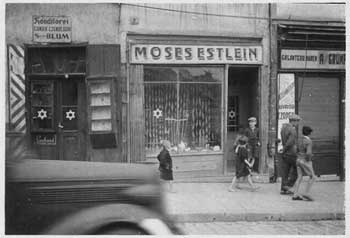
Image result for jewish stores ww2

“A piece of paper with a stamp on it meant the difference between life and death for thousands and thousands of people,” wrote American journalist Dorothy Thompson after Kristallnacht in late 1938.  Truer words were never written.  For Jews trying to escape the Nazi terror as the Final Solution approached the only avenue of escape seemed to be emigration from Germany to the United States.  But as Michael Dobbs describes in his remarkable new book, THE UNWANTED: AMERICA AUSCHWITZ, AND A VILLAGE CAUGHT IN BETWEEN victims of Nazi deportation policies ran into a stone wall in trying to gain entrance into the United States.  Whether it was the stonewalling of the State Department, the leadership, or lack of thereof of Franklin Roosevelt, or plain apathy or anti-Semitism, Washington could have done a great deal more. As Dobbs points out, “the wheels of the U.S. bureaucracy continued to turn, disconnected from the tragic events that had set them in motion.”  It seemed obstacle after obstacle was increasingly instituted to make it more and more difficult for Jewish refugees to gain entrance into America and avoid “transport to the east.”

Dobbs’ focus is on the small village of Kippenheim in Baden in western Germany with a population of 144 Jews out of a total population of 1800.  The author follows the plight of a number of families who lived through the events of Kristallnacht in November of 1938 and realized that they must try and leave Germany.  The families, the Valfers, Wertheimers, and Wachenheimers, among a number that Dobbs concentrates had varied experiences.  All are subject to Nazi violence and torture in some measure.  All are torn from their homes and deported to camps in France, all make valiant attempts to leave Germany by dealing with the US immigration system, first with the consulate in Stuttgart, and the result is many will escape through Marseilles or other avenues and cross the Atlantic, go to Palestine, while others will perish in Auschwitz.  The book focuses on the period of late 1938 to the fall of 1942 when the Final Solution is in full motion.  The narrative is poignant and elicits a great deal of anger on the part of this reader as the story of the US State Department’s immigration policy under the aegis of Breckenridge Long the Assistant Secretary of State for immigration becomes crystal clear, and the lack of action and empathy on the part of President Franklin D. Roosevelt whose excuses for not acting in any meaningful way is fully described.

Image result for the wachenheimer family photo in 1938 germany

(Wachenheimer family photo, circa 1938)

One of the most important questions remaining pertaining to the Holocaust is whether the United States could have done more to save lives be it bombing Auschwitz or allowing increased immigration.  In the recent past historian Richard Breitman focused on Franklin D. Roosevelt’s impact and David Wyman zeroed in on the US Department of State.  In both instances the president and the bureaucracy were found wanting.  In the case of Roosevelt political concerns about Neutrality legislation, fears of anti-Semitic backlash, enforcement of immigration law and isolationist elements in Congress along with his own inherent biases made it difficult for the President to come out in public and act.  As far as the State Department is concerned, they would enforce the restrictionist 1924 Johnson Act quotas that legally called for 27,370 Germans to immigrate to the US each year.  It is clear that in 1940-41 only 62.1% of the quota was filled, and the 1941-42 only 7.2% was filled – the period of greatest need for victims of the Baden deportations from 1938.  According to the historical record, officials in the State Department purposely created roadblocks to deny Jewish refugees admission to the United States, even women and children.

Image result for breckenridge long photos

(Breckenridge Long)

Dobbs empathetically describes in detail the damage, arrests, and fear in Kippenheim during Kristallnacht and uses the residents of the village as a microcosm of the overall crisis that Jews faced as the true intention of the Nazi regime came to the fore.  Dobbs explores the violence against the residents of Kippenheim and the attempts by families to try and emigrate to the US and the roadblocks they faced.  He delves into the State Department bureaucracy and how certain people created roadblocks to entry into America.  At times it seemed that some of these impediments could be overcome, but officials following orders from Washington created even more hoops to go through in order to obtain the necessary visas, or “more stamps” on further documentation which may not have been called for months before.  The consulate interview begins the process, but so many Jews wanted to emigrate there was a three year wait to begin the process.  The tragedy for many, like the Laflers is that when their numbers finally came up and the process for approval was gain, Freya and Hugo were already victims of the crematoria in Auschwitz.

Dobbs takes the reader through the transport of refugees from Baden to the internment camp of Gurs, through Marseilles and its poor living conditions, the bureaucratic run-a-around, and their final fate.  Vichy governmental collaboration with the Nazis led by Prime Minister Pierre Laval and French police is ever present.  The trauma of family members is plain as day as they deal with the daily attempts at survival and the highs and lows of believing they have the necessary paperwork to leave, and then have their hopes dashed by bureaucratic stalling, events like Pearl Harbor and the invasion of Russia.  Dobbs follows the families in detail based on assiduous research and interviews with survivors like Hedy Wachenheimer who at the age of fourteen became part of the Kindertransport program and left her parents to live with families in London, while eventually her parents would perish.

Image result for photo of Kippenheim Germany synagogue

(Kippenheim, Germany synagoge)

Perhaps the most poignant narrative describes Hedy’s visit to Germany and Kippenheim in particular after the war working for the US military and wearing a uniform, she must face people who harassed and demeaned her as a child.  Dobbs goes on to relate how people, both Jewish and non-Jewish worked to rebuild the synagogue in the village as a memorial to what occurred.  The process was long and difficult, but because of survivors like Kurt Maier and Mayor Willi Mathis the building was restored to its role as a true house of worship in 2003.

Dodd is to be commended for his effort in bringing to life the fate of the Kippenheim Jews, but more so at a time when immigration is such a hot controversial issue, perhaps politicians should review US immigration policy during WWII and contemplate whether at times history should force us as a people to open up our hearts, and let political partisanship recede into the background, at least for a short time.   At the outset of Dobbs ’narrative Hedy Wachenheimer rode from her home on her bicycle to school.  Upon arrival and seated in class for her lessons the usually gentle principal pointed at her and yelled, “Get out, you dirty Jew.”  This sounds like current political rallies and comments that tell “brown” people who are hear on legal visas and those legally seeking asylum to “get out and go home,” or ”send her home.”  Is this who we are as a people?

Image result for jewish stores ww2

(Boycott of Jewish Shops, Germany 1930s)

OUR MAN: RICHARD HOLBROOKE AND THE END OF THE AMERICAN CENTURY by George Packer

Image result for photo of Hoolbrooke in Vietnam

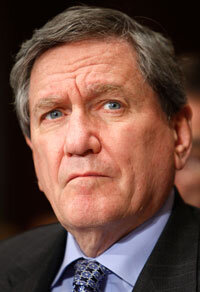
(Richard Holbrooke)

Perhaps the most colorful and able diplomat in American history has been Richard Holbrooke.  The possessor of an irascible personality who was not the most popular individual with colleagues and presidents that he served but was a highly effective strategic thinker and negotiator with a number of important accomplishments to his credit.  The success that stands out the most is his work that produced the Dayton Accords in 1995 that brought closure somewhat to the civil war that raged in the former Yugoslavia throughout the 1990s.  But he should also be given credit for his work as Ambassador to the United Nations, Assistant Secretary for East Asian Affairs, and his last position as Special Representative for Afghanistan and Pakistan for which he gave his life.

Holbrooke exhibited a powerful ego that did not always play well with others be they friend or foe, but in the end,  he was at the center of American strategic thinking throughout a career that spanned the beginning of US involvement in Vietnam through our continuing imbroglio in Afghanistan.  A self-promotor who saw his work and ideas as the key to American success, Holbrooke was a dominating presence in the American foreign policy establishment for decades and is the subject of George Packer’s important new study, OUR MAN: RICHARD HOLBROOKE AND THE END OF THE AMERICAN CENTURY.

Holbrooke owned many personality flaws for which he paid dearly.  His drive would in part destroy two marriages and his closest friendships.  His character defects would cost him any chance of being chosen Secretary of State, a position he craved,  for which he was eminently qualified.  If he had the capacity of introspection and a dose of self-restraint, he could have accomplished anything.  However, if he was able to tone himself down, he would not have been true to himself which is the core of why he was successful.

Image result for tony lake

(Anthony Lake)

For George Packer, Holbrooke was the embodiment of the American Century (or half century!) which encompassed Holbrooke’s life.  He was part of the belief that the US could accomplish anything, be it the Marshall Plan, remake Vietnam, bring peace to Bosnia, or make something out of the quagmire that is Afghanistan.  For Holbrooke to be part of great events and decisions was his life blood and that is why it is important to tell his story.

In many ways Packer’s narrative is a conversation with the reader as he imparts practically all aspects of Holbrooke’s private and public life.  He takes us inside his subject’s marriages and family life, his intellectual development, travels throughout the world and the important individuals who were his compatriots or enemies, and his obsession to create a foreign policy that would embody the liberal internationalism that was so effective following World War II.  Packer makes assumptions about how conversant the reader is with post-war history as it relates to Holbrooke’s career and to his credit, he offers a great deal of background information to make the reader’s task easier.  Packer prepares character sketches of all the major personages that Holbrooke shared the stage with; be it Edward Lansdale, the CIA psy-ops guru; Averill Harriman, a mentor and benefactor; David Halberstam, the New York Times reporter; Henry Kissinger, Zbigniew Brzezinski, Hillary Clinton, presidents Carter, Clinton, and Obama among many others.

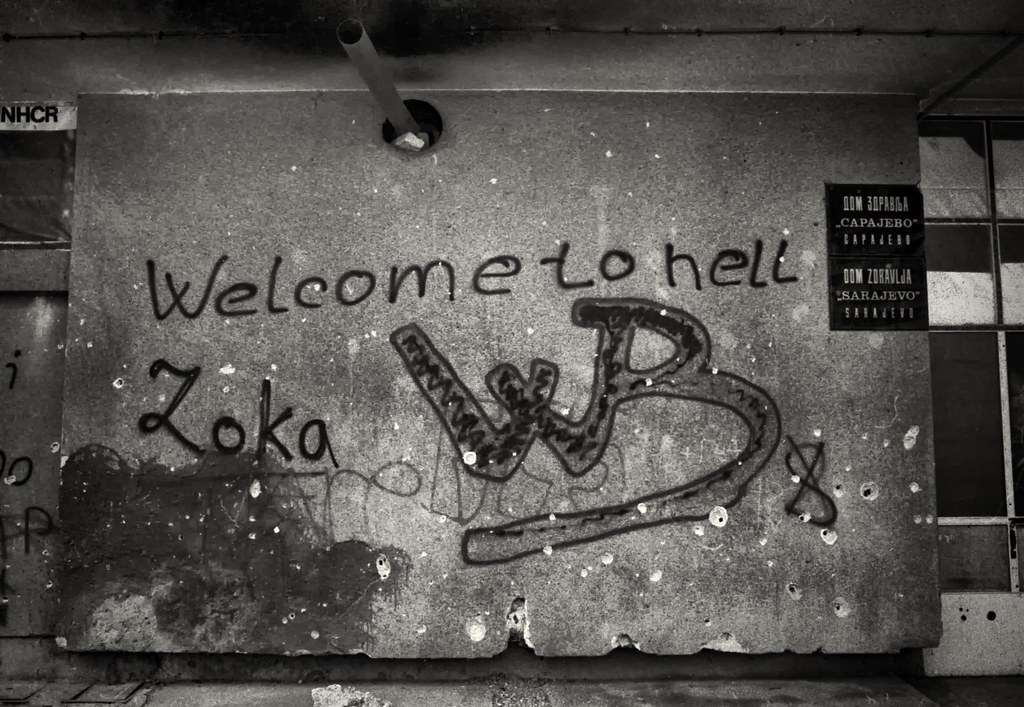
Image result for photo of sarajevo 1994

(Sarajevo, 1995)

Perhaps the most poignant relationship that Packer describes is that of Anthony Lake who was a close friend of Holbrooke in the early 1960s as they both entered the Foreign Service and served in Vietnam.  Packer follows their relationship and competition over the next five decades, they’re ups and downs on a personal level, policy disagreements all of which would ruin their friendship and turn them into bureaucratic enemies.  At times it feels like Packer has inserted Lake’s autobiography amidst the narrative as a means of comparing the two and providing insights into steps and positions Holbrooke might have taken which may have altered his career path.

Holbrooke’s Vietnam experience would stay with him throughout his career.  The military self-deception of Vietnam and the role of the national security establishment created doubts and reinforced the idea that Holbrooke himself knew what was best and would usually consider himself to be the smartest person in the room.  This is evident in Holbrooke’s writings which critique US policy as he integrates his personal life into the narrative.  Packer does an excellent job culling Holbrooke’s thoughts as he incorporates segments of his notebooks into his story.  When it came to Vietnam, Holbrooke was very astute as he saw the failure of the Strategic Hamlet program early on and that fighting the Viet Cong only from the air could only result in failure.  For Holbrooke the watershed date for the war was February, 1965 as the Pentagon issued an “evacuation order” for non-essential personnel and families as it brought an end “to the pretty colonial town of Saigon” and “was the beginning of sprawling US bases and B-52s and black market Marlboros and industrial scale-prostitution.”

Image result for henry kissinger

(Henry Kissinger)

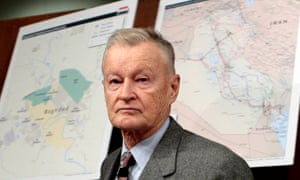
Packer’s discussion of Kissinger and Brzezinski are fascinating.  Both men despised Holbrooke and the feelings were mutual.  When three egos as large as theirs the result had to be intellectual and verbal fireworks.  For what it is worth, Holbrooke felt Kissinger was a liar, amoral and a deeply cynical man with an overblown reputation who had contributed to the culture of Watergate and the events that followed.  Kissinger described Holbrooke as possessing minimal intelligence and “the most viperous character I know around town,” which was something coming from Kissinger.  Holbrooke saw Brzezinski as another Kissinger type who would destroy Secretary of State Cyrus Vance and seize control of President Carter’s foreign policy through his role as National Security Advisor.  Brzezinski’s hard line view of the Cold War was born out with Russia, but “he did help destroy the last pieces of any postwar consensus, bringing viciousness and deception into the heart of the government.”  Both men loved the spectacle of power and wielded it for its own sake, bringing Vance to tell Holbrooke, “I still cannot understand how the president was so taken with Zbig.  He is evil, a liar, and dangerous.”

Image result for photo of zbigniew brzezinski

(Zbigniew Brzezinski)

Holbrooke’s greatest accomplishment was his work bringing a pseudo peace to Bosnia.  Packer delves into the Yugoslav civil war in great detail providing character studies of the major players and/or psychopaths from Slobodan Milosevic, the president of Serbia, Fanjo Tudjman, the president of Croatia, Alija Izetegovic, president of Bosnia and Herzegovina, and Radovan Karadzic, president of Republic Srpska, among many other “interesting individuals.”  Packer’s details of the Dayton negotiations are priceless and reflect Holbrooke’s doggedness and highlights the difficulties that he faced dealing with such diverse characters steeped in their own ethnic, religious, and nationalistic hatreds.  Packer describes Holbrooke’s negotiating tactics, ranging from bombasity, reasonable proposals, and Bismarckian type threats to achieve his goals.  In so doing he believed he was rectifying Bill Clinton’s disinterest, ignorance, or lack of gumption in dealing with the Balkans.  With the slaughter of Srebrenica and the siege of Sarajevo, Holbrooke was able to rally Clinton, foster NATO action by our European allies, who had done nothing to that point to bomb and coerce the participants to the negotiating table and foster a diplomatic agreement.

Holbrook always believed he should be Secretary of State, but his personality and poor judgement would turn off Presidents Carter, Clinton, and Obama in addition to his colleagues in the diplomatic arena whether it was Cy Vance, Madeline Albright, Susan Rice and a host of others. The bureaucratic battles behind the scenes and some in public are present for all to see, many of which Holbrooke won, but many of which he lost.  It was only Hillary Clinton who saw the positives in using Holbrooke’s talents as she made him the Special Representative for Afghanistan and Pakistan which Packer discusses in great detail as Holbrooke worked to try and bring about negotiations with the Taliban and gain Pakistani cooperation.

Image result for kati marton
(Kati Marton, Holbrooke’s third wife)

Packer delves into the personal side of Holbrooke particularly his marriages which resulted in two divorces and a decades long marriage to Kati Marton, who was more than a match for Holbrook in terms of ego, self-centeredness, and their own special type of charm.  Holbrooke’s feelings are explored when he failed to achieve the positions he desired and Packer provides numerous insights into policy and personal decision-making that affected himself, his family, and the professionals around him.

Packer’s effort is to be applauded as he seems to have captured Holbrooke, warts and all in conducting research that included over 250 interviews, the liberal use of Holbrooke’s notebooks, and a strong knowledge of American post-World War II foreign policy.  But one must remember that Packer and Holbrook were friends who strongly believed in a liberal-internationalist approach to foreign policy that encompassed a strong humanitarian component.  The importance of the book cannot be in doubt as it rests on the major impact that Holbrooke had on the conduct of US foreign policy over four decades.

Related image

THE VOLUNTEER: ONE MAN, AN UNDERGROUND ARMY, AND THE SECRET MISSION TO DESTROY AUSCHWITZ by Jack Fairweather

Related image

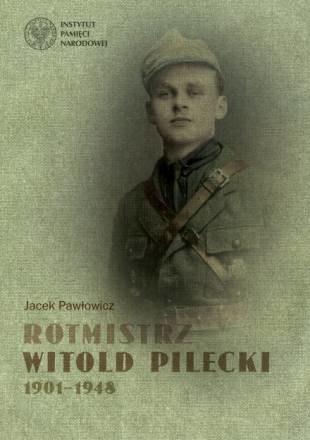
(Witold Pilecki, inmate at Auschwitz)

In 2003 my wife and I visited Krakow, Poland as part of a trip to locate where my father’s family lived before immigrating to the United States in the 1930s to escape the dark clouds that were descending upon Europe.  During our visit I hired a driver and spent hours visiting Auschwitz and Birkenau the resting place for many relatives that I never was fortunate enough to meet.  Seventy-five years after the conclusion of World War II, numerous questions abound concerning the then then “crown jewel” of Hitler’s extermination machine.  Books continue to proliferate, but what sets Jack Fairweather’s new book, THE VOLUNTEER: ONE MAN, AN UNDERGROUND ARMY, AND THE SECRET MISSION TO DESTROY AUSCHWITZ apart is his discovery of the role of Witold Pilecki, who volunteered to be imprisoned in Auschwitz in order to organize  an underground resistance that would be part of a major revolt against the Germans.

Image result for witold pilecki
(Pilecki and his wife, Maria, and their son)

Pilecki has become a national hero in Poland and his story remained unknown in the west until it was uncovered by historians in the 1960s and 70s.  Much of his writings were sealed by the Soviet Union after the war because as a Polish nationalist, Pilecki was deemed a threat to the state, placed on trial and executed by the Stalinist regime.  It wasn’t until the collapse of the Soviet Union in 1989 and the opening of the state archives in Warsaw that the academic Adam Cyra and Pilecki’s 60 year old son, Andrzej had access to his father’s writings and reports smuggled out of Auschwitz in order to alert the allies as to what was occurring in the crematoria and gas chambers, and argue for the west to bomb the camps.

Fairweather asks a number of important questions from the outset that impinge upon the role of England and the United States as it learned of the extermination camps.  He carefully develops a number of important themes that reverberate throughout the narrative.  First, despite Pilecki’s earnest efforts, that included being tortured, beaten, starved, suffering from typhus, he was able to employ the Polish underground network to smuggle out the truth as to what was occurring in Auschwitz to underground leaders in Warsaw who were able to convey part of his reports to the Polish government in exile, and hence to the Churchill government in 1942.  Much of this information was also communicated to the Roosevelt administration in Washington who was much more of a political animal in deferring any decisions to assist the Jews be it immigration by confronting State Department policies that was openly anti-Semitic under the auspices of Breckinridge Long, or approving bombing of the camp.

Image result for rudolf höß heinrich himmler
(Heinrich Himmler and Rudolf Hoss)

Second, was the mind set of British politicians in high circles who suffered from an “in-bred” anti-Semitism and saw Pilecki’s information as a distraction from the main war effort.  They would allow the dissemination of some information but would not endorse it.  As Richard Breitman and David Wyman have pointed out the British were obsessed by the Palestinian issue and they feared an Arab reaction if they approved further immigration because of their dependence on Middle Eastern oil and the Suez Canal.

Lastly, Fairweather’s narrative focuses on Pilecki’s attempt to educate the allies and get them to acknowledge the importance of what was occurring at Auschwitz.  On another level he concentrates on the allied response and the reasons for their “deafness” when it came to the extermination of European Jewry.   As he concludes, “the allied failure to Understand Auschwitz’s role as the epicenter of the Holocaust allowing officials to continue to characterize the German assault on the Jews ASA a diffuse phenomenon that could only be stopped by defeating Germany.”  Downplaying genocide could only inhibit further investigation.  Much of what Fairweather argues has been put forth by numerous historians, but the key is the personal story of Witold Pilecki that unfolds.

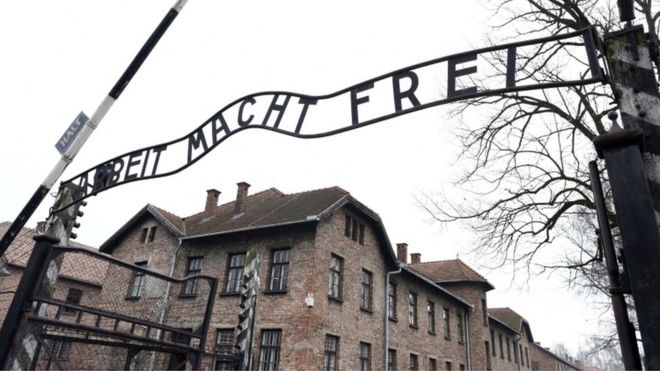
Image result for photo of auschwitz gate

(The gate as you enter Auschwitz)

Fairweather has written a deeply personal portrait of a man whose moral and ethical principles stood out in a deeply troubled period.  The narrative is based on assiduous research that included interviews with fellow inmates who the author had access, that provide insights into his character, his decision making, and the impact of his actions.  Fairweather traces Pilecki’s journey from his quiet family life who survived the Nazi onslaught on his country in September, 1939, experiences in Auschwitz, his methodology in organizing his underground network, strategies for smuggling out information, and how he tried to convince his superiors of the importance of destroying Auschwitz as it was a vehicle to exterminate millions of Jews as well as thousands of Polish Catholics.

Many of Pilecki’s compatriots like Dr. Wladyslaw Dering, a Warsaw gynecologist who faced the dilemma of how much he should cooperate with the Nazis as he tried to save as many inmates as possible, a Polish spy known as Napoleon, and Stefan Rowecki, the leader of the Polish underground in Warsaw are introduced as are the kapos, like Alois Staller who tortured the inmates, the SS Commander, Rudolf Hoss, who ran the camp, among many, and of course the victims who suffered unbearably.  Fairweather presents the unfathomable and grisly details that go along with any discussion of the Holocaust that have appeared in historical accounts since the end of World War II, but he delivers them in a concise manner, with much sensitivity and at the same time is able to convey to the reader the importance of Pilecki’s mission to expose what the Nazis were doing in Auschwitz, particularly once the decision for the Final Solution is made in January, 1942 at the Wannsee Conference.

Image result for photo of auschwitz gate

If there is a criticism that can be offered is that at times Fairweather is somewhat cavalier about his information, i.e. his description the Battle of the Bulge as a minor hinderance to the allied drive to end the war.  Further, he should be careful with his statistics stating that there were 2,000,000 Jews under Nazi control in Poland, the 3,300,000 would be more accurate.

Overall, Fairweather has written an important book because he uncovers the role of an important figure who did his best to alarm the world as to what was the end goal of Hitler’s racial war.  The fact that Witold Pilecki was kept hidden for so long is the result of another type of extermination, Stalin’s effort to eradicate any Pole who might have been given any credit for liberating their country.  Kudos to Fairweather for bringing Pilecki’s story to the fore.

Image result for rotmistrz witold pilecki

DEEP RIVER by Karl Marlantes

Image result for photo of the Columbia River

In DEEP RIVER, author Karl Marlantes moves on from his description of a company of Marines in Vietnam who tried to recapture a mountain top base that formed the basis of his award-winning book, MATTERHORN and his unique description of combat in his memoir, WHAT IT IS LIKE TO GO TO WAR.  In his latest effort he takes on a different type of warfare centering around the battle between labor and capitalists in the Pacific northwest at the turn of the 20th century through 1932.  Focusing on a Finnish immigrant family, the Koskis, Marlantes delves into the problems faced by immigrants as they arrived in Oregon and southern Washington, not far from the Columbia River as they struggled for survival as they are swallowed up by the lumber industry.  The result is a family epic that spans an important segment of American history as well as a fascinating read that you will look forward to each time you pick up the book.

Marlantes employs a literary epic approach to convey his story beginning with the difficulties that the Finnish people faced under Czarist rule in the 1890s.  As revolution began to permeate Finnish villages the Koski family found themselves caught up in the whirlwind that surrounded the oppressive rule of the Romanovs and attempts by revolutionaries to free their country and establish some sort of Socialist utopia.  Events resulted in the breakup of the Koski family as Taipo, the father is arrested and later dies in captivity, and the children Ilmari, Aino, and Matti immigrate to America.  Each chooses their own path, Ilmari leaves first and takes advantage of the 1862 Homestead Act in Knappton, Washington; Aino, who turned to socialism and organizing opposition to the Czarist regime is arrested, tortured, and raped as she is implicated in a plot to assassinate a Czarist bureaucrat and winds up in the same area  working in a logging camp near her brother; and the youngest of the three, Matti has visions of creating his own logging business after being exposed to the hard labor of the northwest forests.  The Koski family is not the only one fractured by the Czarist regime as the Langstrom brothers are torn from each other; Gunnar a socialist revolutionary facing arrest and his brother Askel, who fears the Okhrana, the Czarist secret police escapes to Sweden and later to America.

Image result for columbia and nehalem valley railroad
(Lumber industry in Pacific Northwest)

Marlantes develops many important characters to go along with the Koski siblings, including historical ones like the International Workers of the World (IWW) organizer and rabble rouser, Joe Hill and many others.  Each character is introduced in the context of the Koski family and how they fit into the growing conflict between labor and lumber management.  Aino is haunted by the love she left behind and her increasing radicalization throughout the book that leads her to organizing loggers for the IWW that results in splitting her family.  Ilmari is a deeply religious man who organizes a congregation for the church he builds, marries and focuses on family life.  Matti and Aksel will come together to try and take advantage of the increasing demand for lumber due to World War I.  The trials and tribulations of each gather force and capture the imagination of the reader throughout the over 700-page story.

Image result for lumberjack archive

Marlantes does a superb job explaining how the lumber industry functioned in the early 20th century and how cruel and dangerous it was for the loggers many of which were Finnish and Swedish immigrants.  Wages were low, living conditions appalling as labor exploitation by lumber barons led to strikes and violence created by the IWW as each demand; straw to sleep on or an eight-hour day created greater angst on the part of both sides.  Marlantes develops the tension in the narrative very carefully as he introduces the different characters and their families in the context of historical events.  The crisis for labor and the IWW is laid out and its impact is presented through strikes in Nordland and other areas and the role of government is explored.  Congress first gave the land to the Northern Pacific Railroad to build a transportation network in a rather corrupt bargain.  The railroad would sell the excess land for profit to lumber barons, who employed soldiers and police to break up any attempt at strikes or unionization.  As law enforcement wished to stifle dissent in the name of national security, it led to the Espionage Act of 1917,  which has a certain resonance to arguments made today by certain elements in Washington, DC.  Other important historical events are woven into the story including the Spanish flu, the Palmer Raids, and the onset and effect of the Depression.

Image result for lumber industry southern washington in early 20th century
(The wood economy in the Pacific Northwest)

Marlantes uses his family epic to convey a microcosm of American labor history focusing on lumber capitalists, loggers, the role of the federal government, the Red Scare that followed World War I, and the impact of the Stock Market crash of 1929.  His description of the plight of loggers as they try to better themselves and for some, like the Koskis and Aksel who try to make it on their own, the forces that try and keep them under control, and the wish of loggers and later fishermen to be successful capitalists is heart rendering and very complicated.

The authors grasp of Finnish culture and traditions is exemplary and adds a great deal to the story line.  He offers his own families past and his childhood memories as a motivation for pursuing his chronicle of the Koski family .  Marlantes has offered the reader a gift and having completed it I thank him greatly.

Image result for photo of the Columbia River

(Columbia River)