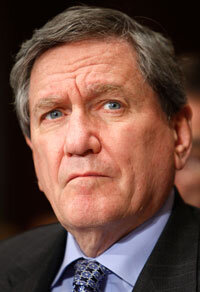
OUR MAN: RICHARD HOLBROOKE AND THE END OF THE AMERICAN CENTURY by George Packer

Image result for photo of Hoolbrooke in Vietnam

(Richard Holbrooke)

Perhaps the most colorful and able diplomat in American history has been Richard Holbrooke.  The possessor of an irascible personality who was not the most popular individual with colleagues and presidents that he served but was a highly effective strategic thinker and negotiator with a number of important accomplishments to his credit.  The success that stands out the most is his work that produced the Dayton Accords in 1995 that brought closure somewhat to the civil war that raged in the former Yugoslavia throughout the 1990s.  But he should also be given credit for his work as Ambassador to the United Nations, Assistant Secretary for East Asian Affairs, and his last position as Special Representative for Afghanistan and Pakistan for which he gave his life.

Holbrooke exhibited a powerful ego that did not always play well with others be they friend or foe, but in the end,  he was at the center of American strategic thinking throughout a career that spanned the beginning of US involvement in Vietnam through our continuing imbroglio in Afghanistan.  A self-promotor who saw his work and ideas as the key to American success, Holbrooke was a dominating presence in the American foreign policy establishment for decades and is the subject of George Packer’s important new study, OUR MAN: RICHARD HOLBROOKE AND THE END OF THE AMERICAN CENTURY.

Holbrooke owned many personality flaws for which he paid dearly.  His drive would in part destroy two marriages and his closest friendships.  His character defects would cost him any chance of being chosen Secretary of State, a position he craved,  for which he was eminently qualified.  If he had the capacity of introspection and a dose of self-restraint, he could have accomplished anything.  However, if he was able to tone himself down, he would not have been true to himself which is the core of why he was successful.

Image result for tony lake

(Anthony Lake)

For George Packer, Holbrooke was the embodiment of the American Century (or half century!) which encompassed Holbrooke’s life.  He was part of the belief that the US could accomplish anything, be it the Marshall Plan, remake Vietnam, bring peace to Bosnia, or make something out of the quagmire that is Afghanistan.  For Holbrooke to be part of great events and decisions was his life blood and that is why it is important to tell his story.

In many ways Packer’s narrative is a conversation with the reader as he imparts practically all aspects of Holbrooke’s private and public life.  He takes us inside his subject’s marriages and family life, his intellectual development, travels throughout the world and the important individuals who were his compatriots or enemies, and his obsession to create a foreign policy that would embody the liberal internationalism that was so effective following World War II.  Packer makes assumptions about how conversant the reader is with post-war history as it relates to Holbrooke’s career and to his credit, he offers a great deal of background information to make the reader’s task easier.  Packer prepares character sketches of all the major personages that Holbrooke shared the stage with; be it Edward Lansdale, the CIA psy-ops guru; Averill Harriman, a mentor and benefactor; David Halberstam, the New York Times reporter; Henry Kissinger, Zbigniew Brzezinski, Hillary Clinton, presidents Carter, Clinton, and Obama among many others.
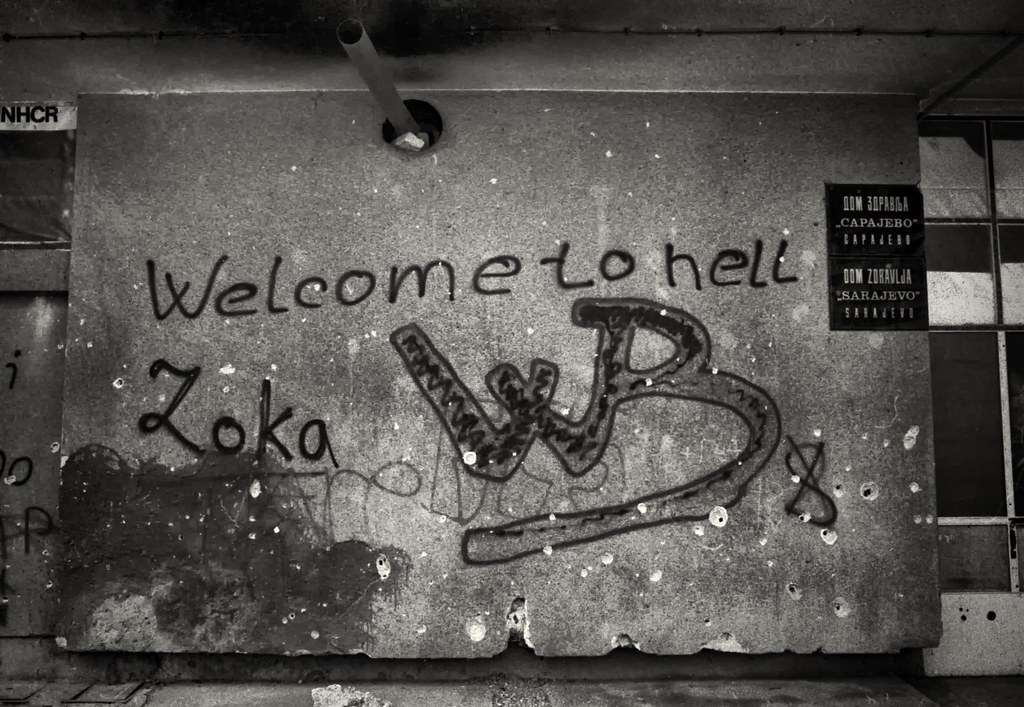
Image result for photo of sarajevo 1994

(Sarajevo, 1995)

Perhaps the most poignant relationship that Packer describes is that of Anthony Lake who was a close friend of Holbrooke in the early 1960s as they both entered the Foreign Service and served in Vietnam.  Packer follows their relationship and competition over the next five decades, they’re ups and downs on a personal level, policy disagreements all of which would ruin their friendship and turn them into bureaucratic enemies.  At times it feels like Packer has inserted Lake’s autobiography amidst the narrative as a means of comparing the two and providing insights into steps and positions Holbrooke might have taken which may have altered his career path.

Holbrooke’s Vietnam experience would stay with him throughout his career.  The military self-deception of Vietnam and the role of the national security establishment created doubts and reinforced the idea that Holbrooke himself knew what was best and would usually consider himself to be the smartest person in the room.  This is evident in Holbrooke’s writings which critique US policy as he integrates his personal life into the narrative.  Packer does an excellent job culling Holbrooke’s thoughts as he incorporates segments of his notebooks into his story.  When it came to Vietnam, Holbrooke was very astute as he saw the failure of the Strategic Hamlet program early on and that fighting the Viet Cong only from the air could only result in failure.  For Holbrooke the watershed date for the war was February, 1965 as the Pentagon issued an “evacuation order” for non-essential personnel and families as it brought an end “to the pretty colonial town of Saigon” and “was the beginning of sprawling US bases and B-52s and black market Marlboros and industrial scale-prostitution.”

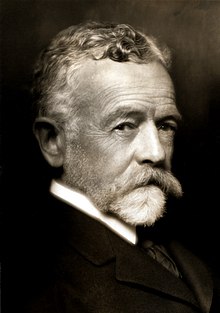
Image result for henry kissinger

(Henry Kissinger)

Packer’s discussion of Kissinger and Brzezinski are fascinating.  Both men despised Holbrooke and the feelings were mutual.  When three egos as large as theirs the result had to be intellectual and verbal fireworks.  For what it is worth, Holbrooke felt Kissinger was a liar, amoral and a deeply cynical man with an overblown reputation who had contributed to the culture of Watergate and the events that followed.  Kissinger described Holbrooke as possessing minimal intelligence and “the most viperous character I know around town,” which was something coming from Kissinger.  Holbrooke saw Brzezinski as another Kissinger type who would destroy Secretary of State Cyrus Vance and seize control of President Carter’s foreign policy through his role as National Security Advisor.  Brzezinski’s hard line view of the Cold War was born out with Russia, but “he did help destroy the last pieces of any postwar consensus, bringing viciousness and deception into the heart of the government.”  Both men loved the spectacle of power and wielded it for its own sake, bringing Vance to tell Holbrooke, “I still cannot understand how the president was so taken with Zbig.  He is evil, a liar, and dangerous.”

Image result for photo of zbigniew brzezinski

(Zbigniew Brzezinski)

Holbrooke’s greatest accomplishment was his work bringing a pseudo peace to Bosnia.  Packer delves into the Yugoslav civil war in great detail providing character studies of the major players and/or psychopaths from Slobodan Milosevic, the president of Serbia, Fanjo Tudjman, the president of Croatia, Alija Izetegovic, president of Bosnia and Herzegovina, and Radovan Karadzic, president of Republic Srpska, among many other “interesting individuals.”  Packer’s details of the Dayton negotiations are priceless and reflect Holbrooke’s doggedness and highlights the difficulties that he faced dealing with such diverse characters steeped in their own ethnic, religious, and nationalistic hatreds.  Packer describes Holbrooke’s negotiating tactics, ranging from bombasity, reasonable proposals, and Bismarckian type threats to achieve his goals.  In so doing he believed he was rectifying Bill Clinton’s disinterest, ignorance, or lack of gumption in dealing with the Balkans.  With the slaughter of Srebrenica and the siege of Sarajevo, Holbrooke was able to rally Clinton, foster NATO action by our European allies, who had done nothing to that point to bomb and coerce the participants to the negotiating table and foster a diplomatic agreement.

Holbrook always believed he should be Secretary of State, but his personality and poor judgement would turn off Presidents Carter, Clinton, and Obama in addition to his colleagues in the diplomatic arena whether it was Cy Vance, Madeline Albright, Susan Rice and a host of others. The bureaucratic battles behind the scenes and some in public are present for all to see, many of which Holbrooke won, but many of which he lost.  It was only Hillary Clinton who saw the positives in using Holbrooke’s talents as she made him the Special Representative for Afghanistan and Pakistan which Packer discusses in great detail as Holbrooke worked to try and bring about negotiations with the Taliban and gain Pakistani cooperation.

Image result for kati marton
(Kati Marton, Holbrooke’s third wife)

Packer delves into the personal side of Holbrooke particularly his marriages which resulted in two divorces and a decades long marriage to Kati Marton, who was more than a match for Holbrook in terms of ego, self-centeredness, and their own special type of charm.  Holbrooke’s feelings are explored when he failed to achieve the positions he desired and Packer provides numerous insights into policy and personal decision-making that affected himself, his family, and the professionals around him.

Packer’s effort is to be applauded as he seems to have captured Holbrooke, warts and all in conducting research that included over 250 interviews, the liberal use of Holbrooke’s notebooks, and a strong knowledge of American post-World War II foreign policy.  But one must remember that Packer and Holbrook were friends who strongly believed in a liberal-internationalist approach to foreign policy that encompassed a strong humanitarian component.  The importance of the book cannot be in doubt as it rests on the major impact that Holbrooke had on the conduct of US foreign policy over four decades.

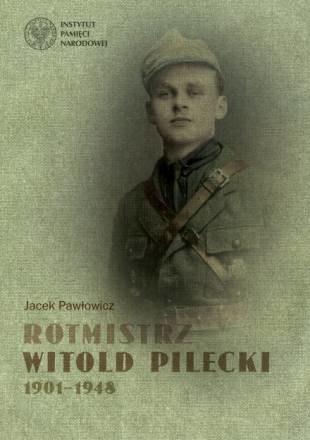
Related image

THE VOLUNTEER: ONE MAN, AN UNDERGROUND ARMY, AND THE SECRET MISSION TO DESTROY AUSCHWITZ by Jack Fairweather

Related image

(Witold Pilecki, inmate at Auschwitz)

In 2003 my wife and I visited Krakow, Poland as part of a trip to locate where my father’s family lived before immigrating to the United States in the 1930s to escape the dark clouds that were descending upon Europe.  During our visit I hired a driver and spent hours visiting Auschwitz and Birkenau the resting place for many relatives that I never was fortunate enough to meet.  Seventy-five years after the conclusion of World War II, numerous questions abound concerning the then then “crown jewel” of Hitler’s extermination machine.  Books continue to proliferate, but what sets Jack Fairweather’s new book, THE VOLUNTEER: ONE MAN, AN UNDERGROUND ARMY, AND THE SECRET MISSION TO DESTROY AUSCHWITZ apart is his discovery of the role of Witold Pilecki, who volunteered to be imprisoned in Auschwitz in order to organize  an underground resistance that would be part of a major revolt against the Germans.

Image result for witold pilecki
(Pilecki and his wife, Maria, and their son)

Pilecki has become a national hero in Poland and his story remained unknown in the west until it was uncovered by historians in the 1960s and 70s.  Much of his writings were sealed by the Soviet Union after the war because as a Polish nationalist, Pilecki was deemed a threat to the state, placed on trial and executed by the Stalinist regime.  It wasn’t until the collapse of the Soviet Union in 1989 and the opening of the state archives in Warsaw that the academic Adam Cyra and Pilecki’s 60 year old son, Andrzej had access to his father’s writings and reports smuggled out of Auschwitz in order to alert the allies as to what was occurring in the crematoria and gas chambers, and argue for the west to bomb the camps.

Fairweather asks a number of important questions from the outset that impinge upon the role of England and the United States as it learned of the extermination camps.  He carefully develops a number of important themes that reverberate throughout the narrative.  First, despite Pilecki’s earnest efforts, that included being tortured, beaten, starved, suffering from typhus, he was able to employ the Polish underground network to smuggle out the truth as to what was occurring in Auschwitz to underground leaders in Warsaw who were able to convey part of his reports to the Polish government in exile, and hence to the Churchill government in 1942.  Much of this information was also communicated to the Roosevelt administration in Washington who was much more of a political animal in deferring any decisions to assist the Jews be it immigration by confronting State Department policies that was openly anti-Semitic under the auspices of Breckinridge Long, or approving bombing of the camp.

Image result for rudolf höß heinrich himmler
(Heinrich Himmler and Rudolf Hoss)

Second, was the mind set of British politicians in high circles who suffered from an “in-bred” anti-Semitism and saw Pilecki’s information as a distraction from the main war effort.  They would allow the dissemination of some information but would not endorse it.  As Richard Breitman and David Wyman have pointed out the British were obsessed by the Palestinian issue and they feared an Arab reaction if they approved further immigration because of their dependence on Middle Eastern oil and the Suez Canal.

Lastly, Fairweather’s narrative focuses on Pilecki’s attempt to educate the allies and get them to acknowledge the importance of what was occurring at Auschwitz.  On another level he concentrates on the allied response and the reasons for their “deafness” when it came to the extermination of European Jewry.   As he concludes, “the allied failure to Understand Auschwitz’s role as the epicenter of the Holocaust allowing officials to continue to characterize the German assault on the Jews ASA a diffuse phenomenon that could only be stopped by defeating Germany.”  Downplaying genocide could only inhibit further investigation.  Much of what Fairweather argues has been put forth by numerous historians, but the key is the personal story of Witold Pilecki that unfolds.

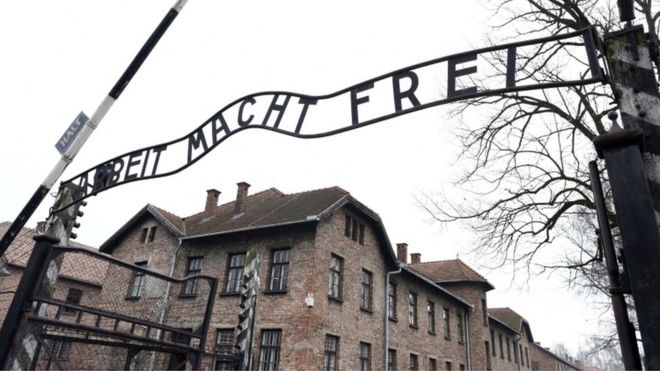
Image result for photo of auschwitz gate

(The gate as you enter Auschwitz)

Fairweather has written a deeply personal portrait of a man whose moral and ethical principles stood out in a deeply troubled period.  The narrative is based on assiduous research that included interviews with fellow inmates who the author had access, that provide insights into his character, his decision making, and the impact of his actions.  Fairweather traces Pilecki’s journey from his quiet family life who survived the Nazi onslaught on his country in September, 1939, experiences in Auschwitz, his methodology in organizing his underground network, strategies for smuggling out information, and how he tried to convince his superiors of the importance of destroying Auschwitz as it was a vehicle to exterminate millions of Jews as well as thousands of Polish Catholics.

Many of Pilecki’s compatriots like Dr. Wladyslaw Dering, a Warsaw gynecologist who faced the dilemma of how much he should cooperate with the Nazis as he tried to save as many inmates as possible, a Polish spy known as Napoleon, and Stefan Rowecki, the leader of the Polish underground in Warsaw are introduced as are the kapos, like Alois Staller who tortured the inmates, the SS Commander, Rudolf Hoss, who ran the camp, among many, and of course the victims who suffered unbearably.  Fairweather presents the unfathomable and grisly details that go along with any discussion of the Holocaust that have appeared in historical accounts since the end of World War II, but he delivers them in a concise manner, with much sensitivity and at the same time is able to convey to the reader the importance of Pilecki’s mission to expose what the Nazis were doing in Auschwitz, particularly once the decision for the Final Solution is made in January, 1942 at the Wannsee Conference.

Image result for photo of auschwitz gate

If there is a criticism that can be offered is that at times Fairweather is somewhat cavalier about his information, i.e. his description the Battle of the Bulge as a minor hinderance to the allied drive to end the war.  Further, he should be careful with his statistics stating that there were 2,000,000 Jews under Nazi control in Poland, the 3,300,000 would be more accurate.

Overall, Fairweather has written an important book because he uncovers the role of an important figure who did his best to alarm the world as to what was the end goal of Hitler’s racial war.  The fact that Witold Pilecki was kept hidden for so long is the result of another type of extermination, Stalin’s effort to eradicate any Pole who might have been given any credit for liberating their country.  Kudos to Fairweather for bringing Pilecki’s story to the fore.

Image result for rotmistrz witold pilecki

DEEP RIVER by Karl Marlantes

Image result for photo of the Columbia River

In DEEP RIVER, author Karl Marlantes moves on from his description of a company of Marines in Vietnam who tried to recapture a mountain top base that formed the basis of his award-winning book, MATTERHORN and his unique description of combat in his memoir, WHAT IT IS LIKE TO GO TO WAR.  In his latest effort he takes on a different type of warfare centering around the battle between labor and capitalists in the Pacific northwest at the turn of the 20th century through 1932.  Focusing on a Finnish immigrant family, the Koskis, Marlantes delves into the problems faced by immigrants as they arrived in Oregon and southern Washington, not far from the Columbia River as they struggled for survival as they are swallowed up by the lumber industry.  The result is a family epic that spans an important segment of American history as well as a fascinating read that you will look forward to each time you pick up the book.

Marlantes employs a literary epic approach to convey his story beginning with the difficulties that the Finnish people faced under Czarist rule in the 1890s.  As revolution began to permeate Finnish villages the Koski family found themselves caught up in the whirlwind that surrounded the oppressive rule of the Romanovs and attempts by revolutionaries to free their country and establish some sort of Socialist utopia.  Events resulted in the breakup of the Koski family as Taipo, the father is arrested and later dies in captivity, and the children Ilmari, Aino, and Matti immigrate to America.  Each chooses their own path, Ilmari leaves first and takes advantage of the 1862 Homestead Act in Knappton, Washington; Aino, who turned to socialism and organizing opposition to the Czarist regime is arrested, tortured, and raped as she is implicated in a plot to assassinate a Czarist bureaucrat and winds up in the same area  working in a logging camp near her brother; and the youngest of the three, Matti has visions of creating his own logging business after being exposed to the hard labor of the northwest forests.  The Koski family is not the only one fractured by the Czarist regime as the Langstrom brothers are torn from each other; Gunnar a socialist revolutionary facing arrest and his brother Askel, who fears the Okhrana, the Czarist secret police escapes to Sweden and later to America.

Image result for columbia and nehalem valley railroad
(Lumber industry in Pacific Northwest)

Marlantes develops many important characters to go along with the Koski siblings, including historical ones like the International Workers of the World (IWW) organizer and rabble rouser, Joe Hill and many others.  Each character is introduced in the context of the Koski family and how they fit into the growing conflict between labor and lumber management.  Aino is haunted by the love she left behind and her increasing radicalization throughout the book that leads her to organizing loggers for the IWW that results in splitting her family.  Ilmari is a deeply religious man who organizes a congregation for the church he builds, marries and focuses on family life.  Matti and Aksel will come together to try and take advantage of the increasing demand for lumber due to World War I.  The trials and tribulations of each gather force and capture the imagination of the reader throughout the over 700-page story.

Image result for lumberjack archive

Marlantes does a superb job explaining how the lumber industry functioned in the early 20th century and how cruel and dangerous it was for the loggers many of which were Finnish and Swedish immigrants.  Wages were low, living conditions appalling as labor exploitation by lumber barons led to strikes and violence created by the IWW as each demand; straw to sleep on or an eight-hour day created greater angst on the part of both sides.  Marlantes develops the tension in the narrative very carefully as he introduces the different characters and their families in the context of historical events.  The crisis for labor and the IWW is laid out and its impact is presented through strikes in Nordland and other areas and the role of government is explored.  Congress first gave the land to the Northern Pacific Railroad to build a transportation network in a rather corrupt bargain.  The railroad would sell the excess land for profit to lumber barons, who employed soldiers and police to break up any attempt at strikes or unionization.  As law enforcement wished to stifle dissent in the name of national security, it led to the Espionage Act of 1917,  which has a certain resonance to arguments made today by certain elements in Washington, DC.  Other important historical events are woven into the story including the Spanish flu, the Palmer Raids, and the onset and effect of the Depression.

Image result for lumber industry southern washington in early 20th century
(The wood economy in the Pacific Northwest)

Marlantes uses his family epic to convey a microcosm of American labor history focusing on lumber capitalists, loggers, the role of the federal government, the Red Scare that followed World War I, and the impact of the Stock Market crash of 1929.  His description of the plight of loggers as they try to better themselves and for some, like the Koskis and Aksel who try to make it on their own, the forces that try and keep them under control, and the wish of loggers and later fishermen to be successful capitalists is heart rendering and very complicated.

The authors grasp of Finnish culture and traditions is exemplary and adds a great deal to the story line.  He offers his own families past and his childhood memories as a motivation for pursuing his chronicle of the Koski family .  Marlantes has offered the reader a gift and having completed it I thank him greatly.

Image result for photo of the Columbia River

(Columbia River)

CEMETERY ROAD by Greg Iles

Image result for photo of Bienville, MS
(Bienville, MS)

Bienville, Mississippi is the site of Greg Iles latest novel.  Fresh off the success of his NATCHEZ BURNING trilogy, Iles’ latest effort CEMETERY ROAD describes a town of about 36,000 people which is about to further its recovery from the economic downturn in the early 1990s and the 2008 collapse as it appears a Chinese conglomerate is about to build a paper mill in town.  Azure Dragon Paper Company will provide numerous jobs, many high paying, in addition to a new interstate highway that will run from El Paso, Texas to Augusta, Georgia that will pass over a new Bienville bridge.  All seems to be positive until one individual, an archeologist named Buck Ferris is murdered.  It seems that Ferris has found evidence of an ancient Indian civilization at the site of the new factory complex and if his discoveries pan out then the area could be declared a UNESCO historical preserve thereby threatening Bienville’s economic future.

Related image

When one begins a Greg Iles’ novel there are certain expectations.  In his latest effort they are all met.  An intense plot that delves into the characters past history, a crime that is hidden amongst many layers, the Mississippi landscape that encompasses the 1960s to the present, and a flawed protagonist, this case, Marshall McEwan, a newsman and commentator from Washington who returns home to Bienville.  McEwan is a brilliant reporter who carries a great deal of personal baggage ranging from guilt of his brother Adam’s drowning when he was fourteen, the death of his own son, also named Adam at two years old in a swimming pool, divorce, numerous affairs, and a dying father who still blames him for the death of his eldest son.  McEwan returns home to try and ease his mother’s burden with the approaching death of her husband, and possibly bringing to resolution the void in his relationship with his father.

McEwan takes over his father’s newspaper the Bienville Watchman and has written an article that the town’s elite, known as the Poker Club, find extremely uncomfortable as it explores Ferris’ work and findings and what it might signify.  Once Ferris, who helped McEwan deal with his brother’s death and became his surrogate father when his own father shut him out is murdered Iles’ begins to unpack a powerful plot that feeds numerous tributaries.

Image result for Photo of Greg Iles

(Greg Iles, author)

Ile’s is an expert at blending past relationships and the history of his characters with contemporary events. Ile’s talent also extends to his character development and how individuals interact as the story unfolds.  The author has created a number of interesting personages as events build upon each other.  The Matheson family, the powerful timber baron patriarch Max, and his son Paul who had saved McEwan’s life while both were in Iraq, who now suffers from PTSD.  Jet Matheson, Paul’s wife also happens to be McEwan’s lover, a rekindling of a relationship they began as teenagers.  Denny Allman, a fourteen-year-old technology “genius” who operates his own drone and has latched on to McEwan as a surrogate father when his own has abandoned him and his mother.  Nadine Sullivan, bookstore owner, lawyer, and longtime friend of McEwan’s. Byron Ellis, the Tenisaw County Coroner.   Members of the towns ruling cabal called the Poker Club, Tommy Russo, Casino owner; Wyatt Cash, Prime Shot Camping Gear owner; Claude Buckman founder of Bienville Sothern Bank; Blake Donnelly, oil baron; Arthur Pane, former county attorney; and Avery Sumner, former circuit judge and current US Senator.  This group is described as a “predatory banker, an old-time oil tycoon, a newly minted US senator, an entrepreneur with ties to the US military, and a sleazy lawyer,” all very accurate descriptions.

It seems that a number of characters face moral and ethical dilemmas as the story unfolds.  The situation revolves around the future of Bienville.  How should Jet Matheson divorce her husband and still keep custody of her son as she is up against the power of her father-in-law?  What should Matthew McEwan publish concerning the murder of Buck Ferris and the dirt surrounding members of the Poker Club?  After the murder or possible suicide of the spouse of a Poker Club member, how should the accused be defended in court and what are the ramifications of the case for the town?  How does one keep a family together when dark secrets rip it a part?  Lastly, how does one deal with corporate interest versus the needs of the local population?

Image result for Photo of Greg Iles

There is an important contemporary aspect to Iles’ approach.  He frames his dialogue well and uses it to inform the reader of important opinions that he holds.  His digression dealing with the state of the newspaper and media industry is important as he chronicles its decline as it now seems to only resort to entertainment and certain types of news anchors.  Further, he repeatedly skewers the Trump administration for its moral and ethical decay and voices his concern for the future because of the damage emanating from Washington.

Iles develops all of these concerns very carefully as he builds the tension as the diverse interests of his characters come into conflict.  The storyline will keep the reader riveted to their seats as they press on, and the final resolution of the issues raised will come as a surprise.  In reading Iles’ work from his NATCHEZ BURNING trilogy and now with CEMETERY ROAD I am reminded of the work of Pat Conroy.  In this new book Iles has delivered an absorbing novel that displays the grief, betrayal and corruption of a small southern town, a story that I highly recommend.

Image result for Photo of Greg Iles

THE GUARDED GATE: BIGOTRY, EUGENICS, AND THE LAW THAT KEPT TWO GENERATIONS OF JEWS, ITALIANS, AND OTHER EUROPEAN IMMIGRANTS OUT OF AMERICA by Daniel Okrent

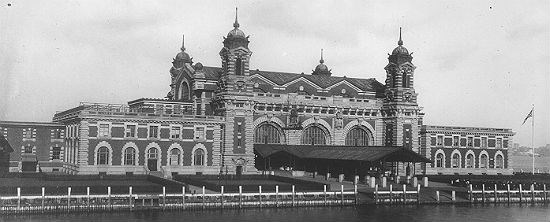
Image result for photo of ellis island circa 1910

(Ellis Island, NY)

Recently I learned that the Trump administration finally concluded a tariff deal with Mexico which had a number of components related to illegal immigration into the United States.  Apart from Trump’s stupefying rhetoric surrounding his “wall” and other asinine comments like, “why are we having so many people from these shithole countries come here,” immigration and race have become litmus tests for certain politicians.  This political atmosphere in the United States makes Daniel Okrent’s new book, THE GUARDED GATE: BIGOTRY, EUGENICS, AND THE LAW THAT KEPT TWO GENERATIONS OF JEWS, ITALIANS, AND OTHER EUROPEAN IMMIGRANTS OUT OF AMERICA an important contribution to the background history of our current views of people who are trying to escape tyranny and poverty and come to the United States.  Okrent focuses on what he describes as the “perverse form of ‘science’ [that] gave respectability to the drastic limits Imposed on the number of Jews, Italians, Greeks, Poles, and various other eastern or southern Europeans seeking to come to America between 1924 and 1965.”  It is during this period that some of the arguments and attitudes concerning immigration were formed that still impact us today.

Image result for photo of henry c lodge circa 1890

(Massachusetts Senator, Henry Cabot Lodge)

Okrent’s narrative is scary as it points to the pseudo-science and ignorance employed from the late 19th century that is still exists today.  His history of the eugenics movement and its role in passing the Johnson-Reed  Act of 1924 is very disconcerting as it reflects the racism and bigotry that dominated American thought throughout the period, including historical figures ranging from Margaret Sanger to Woodrow Wilson.  Okrent points out that the key to the development of these ideas was the growing belief that the United States was being overrun by immigrants from southern and eastern Europe who brought certain traits and attitudes that would blend negatively with the American population.  As millions poured into the United States between 1890 and 1910 politicians like Massachusetts Senator Henry Cabot Lodge, the epitome of Brahmin superiority led the fight to keep these people from entering the United States through legislation that featured literacy tests and other obstacles.  This movement which fostered the Immigration Restrictive League (IRL) which came about in 1894 rested on the works of other Boston types who would come up short in passing their agenda until after World War I.  Once the war ended fears of these immigrants centered on labor union unrest, political radicalism, and racial conflict.  In the end it was Senator Albert Johnson with the assistance of eugenics and anti-immigration elements who was able to gain the passage of restrictive legislation in 1924 that would stem the tide.

In providing a general history of the eugenics movement and its marriage to immigration restriction from 1890 onward, Okrent zeroes in on the development of their convoluted ideas and the diverse personalities who came to be at the forefront of the movement.  A number of individuals emerge that moved the process forward.  In addition to politicians like Lodge who stoked American xenophobia from the 1890s onward as he took on the role of evangelist and propagandist from anti-immigration forces, Presidents Theodore Roosevelt and Woodrow Wilson also became proponents of many of the racial theories related to Hungarians, Italians, Jews, Poles and others that were propagated.

Image result for photo of charles davenport eugenics movement

(Charles Davenport)

What is fascinating is how people bought into these ideas and concepts of racial breeding and how the United States was committing “racial suicide” by allowing these ethnic groups to enter. Okrent’s narrative provides a who’s who of those who advocated the selective breeding of human populations to improve their genetic composition.  Okrent reviews the ideas of Francis Galton who coined the term eugenics in 1883, Charles Darwin, the French anti-Semite Count Arthur de Gobineau, Houston Stewart Chamberlain a proponent of Aryan superiority, and William Z. Ripley, all popular authors in the late 19th century.

Okrent takes it further as he traces the further development of these ideas through the works and ideas of Charles Davenport, a prominent biologist and leading spokesperson for the eugenics movement who set up his “racial laboratory” in Cold Harbor, NY, funded at the outset by Mary Harriman, the heir to the railroad fortune.  In addition, +he focuses on James H. Pattern, an effective congressional lobbyist for the IRL;  Edward A. Ross, the author of THE OLD WORLD AND THE NEW that merged eugenics and xenophobia doubling down on the inferiority of Slavs;  Madison Grant, zoologist, lawyer and author of THE RACIAL BASIS OF EUROPEAN HISTORY;  Henry Goddard’s famed Kallikak study convinced thirty states to pass legislation to impose forced sterilization on the “feebleminded;” and lastly Harry H. Laughlin who directed the Eugenics Records Office who advocated for the “involuntary sterilization of defectives.”

Image result for photo of Harry Laughlin eugenics

(Harry Laughlin)

What is even more disconcerting is the list of the pillars of society Okrent uncovers that supported these ideas.  The reputable publishing company, Charles A. Scribner’s editor Maxwell Perkins helped publish the works of a coterie of eugenicists that included Lothrop Stoddard’s THE RISING TIDE OF COLOR AGAINST WHITE WORLD SUPEREMACY, that became a best seller and went through fifteen reprints (interestingly Scribner’s published Okrent’s history).  Samuel Gompers the head of the American Federation of Labor.  The Saturday Evening Posts editor  George Horace Lorimer published stories of the pariahs that threatened American society, even Eleanor Roosevelt, reflecting her aristocratic origins held negative racial views until she grew more intellectually mature and worldly.

Okrent’s work is punctuated with documentary excerpts of the work of prominent eugenicists and their opponents.  He has drilled down in his analysis of their “quackery” and has a firm handle on his source material.  The narrative is excellent considering the topic, particularly how the Johnson-Reed Act became law, especially Johnson and company manipulated census and immigration figures to create quotas and the resulting impact on American history for decades to the detriment of millions. Historian, Linda Gordon writes; “previous immigration restrictions targeted particular groups — notably people from Asia — but this comprehensive law aimed not just to limit immigration but to preserve white Protestant dominance in America. It assigned a quota to each nation, ranging from 51,000 for Germany to 2,000 for Russia to 1,100 for the entire African continent.” (New York Times, “The Last Time a Wall Went Up to Keep Out Immigrants,” by Linda Gordon, May 20, 2019)

Image result for photo of Fairfield H. Osburn eugenicist

(Fairfield H. Osborn)

What is shocking throughout the book is Okrent’s ability to explore the ideology of eugenics providing primary evidence of their views.  For example, Fairfield H. Osborn, paleontologist and teacher of Mary Harriman told delegates to the National Immigration Conference held in New York City in 1923 that army testing of soldiers during World War I showed 6,346,856 immigrants were “inferior or very inferior.”  He commented further that “if the army tests served to show clearly to our people the lack of intelligence in our country, and the degrees of intelligence of different races who are coming to us [then] I believe those tests were worth what the war cost, even in human life.”  Erwin Baur, Eugen Fischer, and Fritz Lenz, the authors of the definitive text on German eugenics, HUMAN HEREDITY AND RACE HYGIENE argued further that the “Nordic race marches in the vanguard of mankind.”  Interestingly in 1924 Adolf Hitler, then an inmate at Landsberg Prison in Bavaria found the book useful “jailhouse reading.” (322)

The title of Okrent’s narrative, THE GUARDED GATE was inspired by an 1895 poem by the Boston patrician Thomas Bailey Aldrich, a leading restrictionist. Aldrich would have none of Emma Lazarus’s words, chiseled into the Statue of Liberty, welcoming “the wretched refuse of your teeming shore.” Writing in a mode more like Donald Trump, Aldrich warned:

Wide open and unguarded stand our gates,

And through them passes a wild motley throng ...

O Liberty, white Goddess! Is it well

To leave the gates unguarded? (Washington Post, “When the Government Used Bad Science to Restrict Immigration,” by David Hollinger, May 24, 2019)

Related image

(Maxwell Perkins)

Okrent has taken on an important historical topic as George Santayana has warned “those who cannot remember the past are condemned to repeat it.”  It took the rise and fall of Nazi Germany discredit eugenics in the United States, but even in 1952 with the McCarran-Walter Act Washington continued to show its preference for people from northwestern Europe.  It would take until 1965 to drop that preference.  With a president who calls for the immigration of whites from countries like Norway as opposed to Hispanic types one must wonder where American immigration is headed for today – is race still the major qualification?

Image result for photo of ellis island circa 1910


Bucket List Met! Normandy 1944-2019

cropped-img_7423-4.jpg

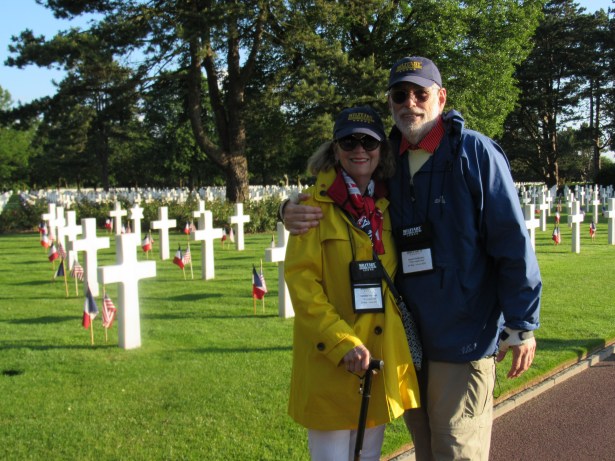
Last week my wife and I were part of a crowd of over 10,000 people that assembled at the American Military Cemetery above Omaha Beach in Normandy to commemorate the 75th anniversary of the D-Day landing on June 6, 1944 that began the slow arduous process of defeating Hitler’s fortress Europa.  Our presence was part of a long sought after “bucket list goal” of visiting the Normandy beaches that I had hoped to achieve during an over forty-year career as a historian.  Our visit to France, which also included Belgium and Luxemburg encompassed the battlefields of World War I and II, but the highlight for us was speaking with and watching the countless D- Day survivors (about 35) who were on the stage during the June 6th ceremonies.

IMG_6424

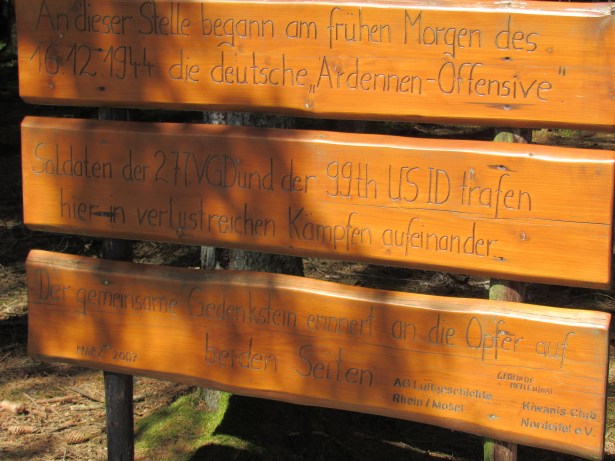
(The spot where the Battle of the Bulge was launched by the Germans)

We spent over two weeks on our journey which began in Paris and Giverny visiting the home of French Impressionist, Claude Monet’s garden and numerous paintings.  From that point on we transversed the battlefields of World War I with our historical guides Rich Yoder and Dave Wall of Military Historical Tours out of Woodbridge, Va.  Though I was familiar with much of the history, our guides excellent commentary made what I had studied and taught come alive.  We visited sites that included the Oie-Aise American Cemetery and Memorial where 6,012 Americans are buried who lost their lives in the vicinity in 1918, and Chateau-Thierry, scene of two critical battles in 1914 and 1918.  The First, the Battle of the Marne was one of the opening campaigns of the war that blunted the German drive on Paris,  and the second marked the turning point of the war as the American Expeditionary Force with 250,000 troops played key roles resulting in the death of 30,000 American soldiers.  Next, was the June-July 1918 battlefield at Belleau Wood a “mecca” for US Marines whose victory possibly saved Paris and proved to the Germans America’s tenacity on the battlefield.

IMG_6866

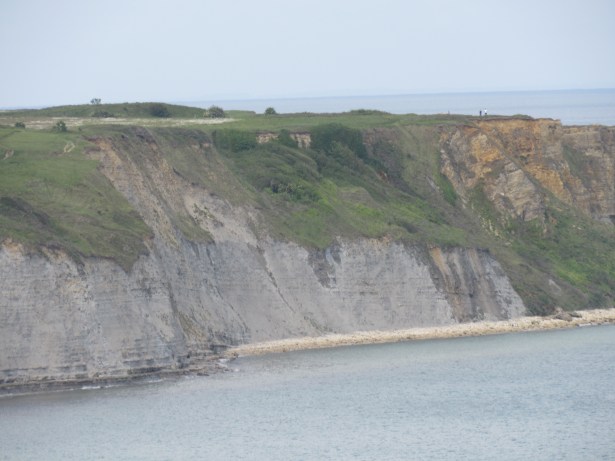
(Cliffs scaled by Army Rangers at Pointe du Hoc)

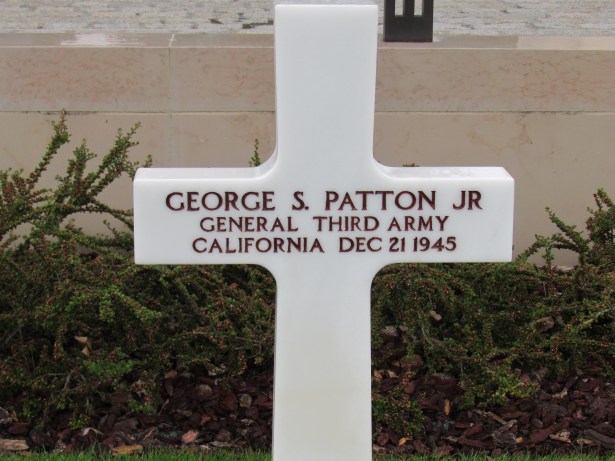
World War II was next on our agenda as we traveled through the beautiful French countryside that once was a shell-scarred wasteland crisscrossed with French and German trench lines.  After the Great War the French constructed a fortification known as the Maginot Line to provide a defense against any future German invasion.  The problem was that it only ran up to the Belgium border and the Germans had no difficulty marching around it.  One of the highlights of our visit was spending a few hours inside the Maginot Line at the Hackenberg Barracks and seeing how the 1000-man French garrison lived and prepared to offset any German penetration.  From there we moved on to Batstone, Belgium which served as our focal point for our study of the Battle of the Bulge which was Hitler’s last attempt to defeat the allies as the Nazis engaged in a last-ditch effort pouring through the Ardennes Forest in December 1945.  If you have watched the HBO film, The Band of Brothers you witnessed the tenaciousness and brutality of the fighting that finally resulted in the American victory led by General George S. Patton.

IMG_6929

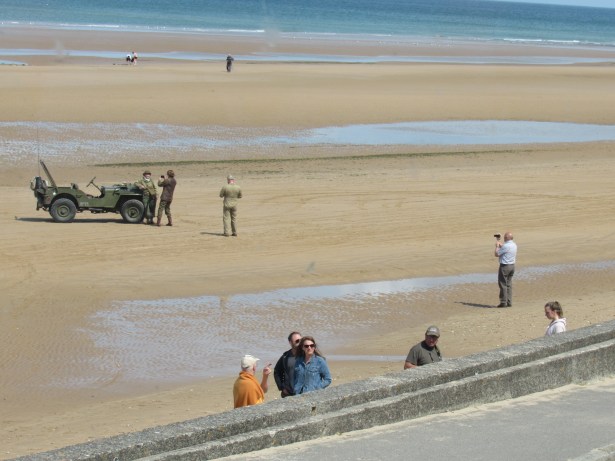
(Omaha Beach)

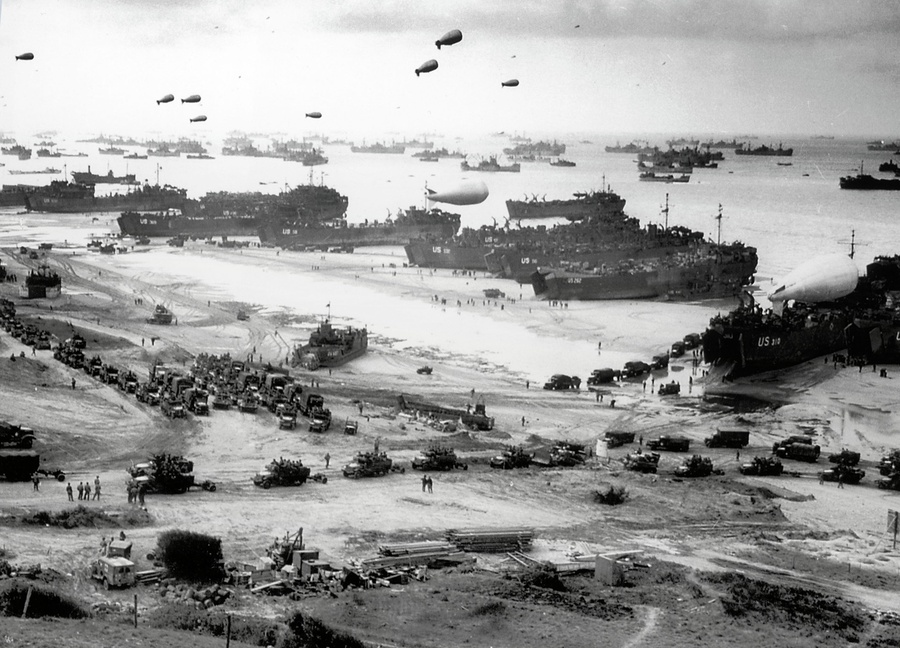
The highlight into our foray into World War II was the visit to Normandy.  We were exposed to all the beaches that comprised the allied invasion that included over 23 million acres of material transported across the Atlantic Ocean, 6939 vessels, including over 4000 landing craft, over 200,000 service personnel, and close to 10,000 aircraft.  The tour focused on Omaha Beach which suffered the greatest number of casualties on D-Day as compared to Utah, Gold, Sword, and Juno beaches that included our British and Canadian allies.  For the men who took part, it seemed to be a “suicide mission” that included gliders, C-47 transports for paratroopers, and the armada that filled the English Channel.

IMG_6388

We arrived at Omaha Beach and our first reaction was awe and emotion as we could not fathom how men landed on the beaches knowing full well that the odds of survival from German artillery and fields of fire were almost nil.  Their bravery and fortitude can only be imagined until you see the cliffs.   Pointe du Hoc was key as the 2nd Army Ranger battalion scaled the 100-foot cliffs to eliminate the guns that threatened Utah and Omaha Beach.  Ste Mere Eglise was amazing as it was portrayed in the film “The Longest Day,” and is the site of the American paratrooper who hung from the church spire.  The many museums were a history buff’s dream including the Airborne Forces Museum, the Batstone Barracks Museum among many.  The historical reenactors were everywhere providing a realism that was hard to imagine.  There was no aspect of the trip that could be improved, except perhaps more time at certain locations.  As a historian, the lessons are clear, allies and a shared belief to fight tyranny are the key to success, and a sense of history that must be conveyed to succeeding generations are of the utmost importance.

IMG_7388

(American Military Cemetery above Omaha Beach, June 6, 2019)


CHUMPS TO CHAMPS: HOW THE WORST TEAM IN YANKEE HISTORY LED TO THE ’90S DYNASTY by Bill Pennington

Related image

(Jorge Posada, Mariano Rivera, Derek Jeter, and Andy Pettitte, the “Core Four”)

Bill Pennington describes his new book as a story of “resurrection and rebirth.”  It is the story of a once proud dynasty, the envy of sports franchises worldwide, so why use the terms just mentioned.  Pennington’s book, CHUMPS TO CHAMPS: HOW THE WORST TEAM IN YANKEE HISTORY LED TO THE 90S DYNASTY begins with a bad omen.  Yankee pitcher, Andy Hawkins, a career journeyman who was about to be released pitches a no-hitter against the Chicago White Sox.  However, an asterisk is called for because he lost the game 4-0, an occurrence that had never occurred in baseball history.  Such was the plight of the Yankees; attendance was down 35%, the farm system was bare, from 1989-1992 they had the worst record in team history, and the owner, the bombastic George Steinbrenner was banned from baseball.  At a time when the gloried franchise has returned as a major force it is interesting to turn the clock back and see how it emerged from its doldrums to become the last dynasty of the 20th century.

Image result for photo of Gene Michael

(Gene Michael)

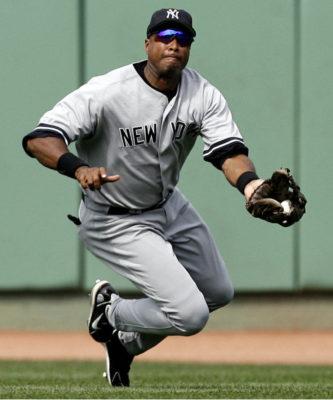
Pennington is on the top of his “game” throughout the narrative.  A former beat writer who covered the Yankees, and sportswriter for the New York Times he had unparalleled access to the organizations executives as well as the players.  He engaged in hundreds of interviews including the major characters including George Steinbrenner, Gene Michael, Buck Showalter, Don Mattingly, Mariano Rivera, Derek Jeter, Bernie Williams, Paul O’Neill, and Andy Pettitte.  Pennington takes the reader on a year by year journey in Yankee history culminating in their resurgence winning the World Series in 1996 against the Atlanta Braves.  During that journey the major issues that confronted the franchise are presented in detail concentrating on how the team fell into the abyss of the 1980s and early 90s.

Related image

(Buck Showalter on Seinfeld)

Pennington does a great job setting the scene of how far the resurgence traveled by exploring the depths of the 1980s.  It seemed the Yankees did well in the 1980s, but in reality they were on a slow decline as its petulant owner, George Steinbrenner constantly interfered in “baseball” decisions; signing over the hill expensive free agents, trading away numerous prospects, and firing managers at the rate of one per year, in addition to rehiring and firing the same people multiple times.  Pennington provides biographical sketches of the important individuals involved including Major League baseball officials, executives of the Yankee organization, and numerous players.  In so doing the reader acquires insights from all points of view and gains an understanding as to what went wrong, and later what went right.

Image result for picture of george steinbrenner

(George Stiernbrenner)

The key factor in the Yankee resurgence involves the arrogance and stupidity of George Steinbrenner.  The Yankee owner who had previously been suspended from baseball because of illegal campaign contributions to Richard Nixon found himself in hot water once again in the early 90s.  Steinbrenner had been at war with one of his high-priced free agents, David Winfield who he felt had lied about his contract and did not measure up to the standards that the Yankee owner expected.  The disagreement involved donations to the Winfield Foundation, the paying of hush money to a convicted felon that Steinbrenner hired, and in the end Baseball Commissioner, Faye Vincent banned the Yankee owner for life, though it would be reduced to a two-year suspension after a year.  During that time Steinbrenner was prohibited from being involved with major decisions involving the team.  This allowed General Manager Gene Michael, Manager Buck Showalter, and the rest of the organization to set the Yankees on a new path.

Related image

(Paul O’Neill)

The change in strategy including the early use of analytics, keeping their own prospects as the farm system began to blossom, creating a new culture in the clubhouse by acquiring certain types of players, and developing a consistent organizational philosophy that would be implemented  throughout their minor league system up through the major league level.  As Brian Cashman, then Assistant General Manager has pointed out, the success the Yankees would achieve in 1993 and 1994 while Steinbrenner was away from the team allowed for the implementation of the new approach.  Once Steinbrenner’s suspension ended, he came back and allowed his baseball people to make decisions rather than himself.  The key point is that if Steinbrenner had not been exiled the success of the late 1990s would not have occurred.

Image result for images of bernie williams

(Bernie Williams)

It is one thing to change philosophies it is another to have the management and players to implement it.  Pennington is correct in arguing that Michael knew how to deflect Steinbrenner’s urges, as Cashman would also do once he took over as General Manager.  Further, Pennington describes how effective the scouting department was uncovering players like Bernie Williams, and the core four of Mariano Rivera, Derek Jeter, Jorge Posada, and Andy Pettitte.  These players were supplemented by many others, but a climate of winning and accountability was created, that proved successful.

Image result for images of david cone

(David Cone)

Perhaps the best chapters in the book deal with the relationship between Michael and Showalter and how they built the Yankees and dealt with Steinbrenner.  As in all relationships there is a watershed moment that alters the course of history.  Pennington does a superb job describing the events of 1994 and how the Yankees felt robbed by the baseball strike when they were on the cusp of winning a championship, and the loss to Seattle in the 1995 playoffs.  At the conclusion of that series Michael and Showalter did not return as General Manager and Manager for 1996 and Don Mattingly retired never to appear in a World Series.  Later, Steinbrenner admitted that not bringing Showalter back was his greatest mistake, and on a positive note it taught him to leave the team to his baseball people for the remainder of his life as he morphed into the realm of a benevolent patriarch.  It is ironic that in 2001, Showalter would be attending game seven of the World Series as an ESPN analyst where the two teams he helped build, the New York Yankees and Arizona Diamondbacks would play for the championship.

Old Yankee Stadium From the Upper Deck Behind Home Plate

As a Yankee fan since the 1950s I have witnessed a great deal of Pennington’s narrative from my own observations and reading newspapers on a daily basis.  The author hits all the major points, develops the most important personalities, and reaches the correct conclusions in explaining the remaking of the New York Yankees from a declining power to a constant force in major league baseball over the last three decades.  If you are a baseball fan you will love this book.  If you are a general reader it presents a story of redemption and change that has benefited millions of people and shows if you take a thoughtful approach to an endeavor and leave out impatience and bombast you can be very successful.

Related image

SOLDIER, SAILOR, FROGMAN, SPY, AIRMAN, GANGSTER, KILL OR DIE: HOW THE ALLIES WON ON D-DAY by Giles Milton

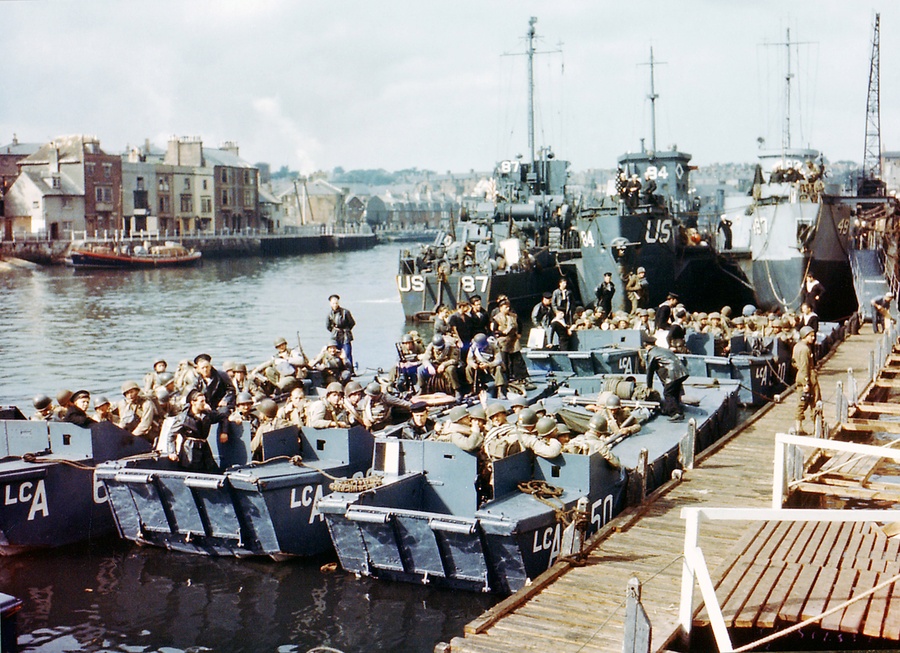
(US troops waiting to leave southern England)

Next month will be the 75th anniversary of the allied landing in Normandy.  As with most major historical commemorations people will flock to the beaches off the French coast.  In addition, the anniversary has produced a plethora of new books to go with the classic works that have been written in the past, including;  Cornelius Ryan’s THE LONGEST DAY, Max Hasting’s OVERLORD,  John Keegan’s SIX ARMIES IN NORMANDY, Carlo D’Este’s DECISION IN NORMANDY, Anthony Beevor’s D DAY and Stephen Ambrose’s D DAY:JUNE 6TH 1944.  New books published in the last two months include COUNTDOWN TO D DAY: THE GERMAN PERSPECTIVE by Peter Margaratis, NORMANDY ’44: D DAY AND THE EPIC 77 DAY BATTLE FOR FRANCE by James Holland, SAND AND STEEL: D DAY AND THE LIBERATION OF FRANCE by Peter Caddick-Adams, THE FIRST WAVE:THE D DAY WARRIORS WHO LED THE WAY TO VICTORY IN WORLD WAR II by Alex Kershaw, and SOLDIER, SAILOR, FROGMAN, SPY, AIRMAN, GANGSTER, KILL OR DIE: HOW THE ALLIES WON ON D DAY by Giles Milton.  For this review I will focus on Milton’s new narrative.  What sets the book apart from the others is that he approaches events from a different perspective by focusing on the stories of survivors from all sides including; a teenage Allied conscript, the crack German defender, and the French resistance fighter among many others.  It is important to remember that each book mentioned has made an important contribution to the growing historiography related to the allied landing in June 1944.

(US troops bound for Omaha Beach)

Milton’s approach is very anecdotal as he introduces numerous characters.  Some are important historical figures like General Dwight David Eisenhower, the Supreme Allied Commander, General Omar T. Bradley, the most senior American commander at D-Day, and Nazi Field Marshall Erwin Rommel who Hitler placed in charge of preparing and thwarting any allied invasion across the English Channel.  The strength of Milton’s book is how he conveys the experiences of allied soldiers who bore the brunt of the carnage and eventual success of the invasion, but also French civilians who were caught in the crossfire between allied bombing and German artillery.  In addition, Milton gives voice to many individuals who have not been heard before; the Panzer Commander’s wife, the chauffeur to the General Staff, women who worked in in Southwick, the nerve center for Operation Overlord, and those teenagers forced into service as nurses at Portsmouth caring for German prisoners of war.

(German plane, Omaha Beach)

The narrative explores the difficulties in organizing such a massive undertaking that involved transporting 23 million acres of material across the Atlantic, 6939 vessels including 4000 landing craft,  200,000 service personnel, and close to 10,000 aircraft.  Milton has an excellent eye for detail be it weather forecasting, the personalities involved, the strategies employed by both sides, and in particular those stories that we do not necessarily think of when examining the insanity of war.  In this case Milton describes the experiences of paratroopers behind German lines who wound up caught in trees serving as a shooting gallery for German snipers, the mission of Howard Vander Beek who commanded an LCC 60, a small boat designed to lead American safely toward the beaches, or Wally Blanchard, an eighteen year old frogman whose job was to defuse the minefield that Rommel’s forces laid in front of Gold beach.

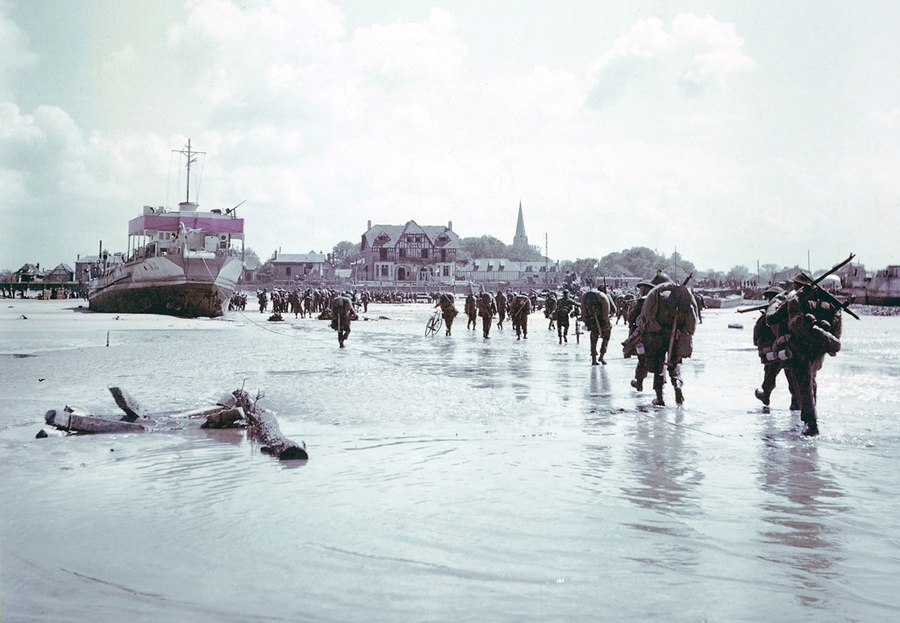
(The British landing at Juno Beach)

Milton’s work is chocked full of stories of heroes, individual acts of courage, and remarkable examples of bravery on the part of allied soldiers as they confronted Rommel’s Atlantic Wall as they hit the beaches and were subject to German artillery and mortars.  It was of immense importance that the German guns be knocked out so the landing zones could be built up to support the invasion.  Men like James Rudder, and his unit would be successful in knocking out the big German guns situated on top of Pointe du Hoc where six 155mm cannon could lob huge shells a distance of 25,000 meters covering Omaha and Utah beaches.  Others include  General Norman “Dutch” Cota and Colonel Charles Canham would help break the deadlock that existed on Omaha Beach, or Simon Fraser, a Highland Chief and the 15th Lord Lovat, “the mad bastard” would lead his men to link up with John Howard, an Oxford shire policeman’s unit to save the Benouville Bridge that was a key to allied advance after the landings.  The stories that Milton conveys are chilling as events unfolded on June 6th, as death became a game of chance.  The author points out that “for most the landings were petrifying, for a few it was intoxicating.”  The vivid description of death is difficult to deal with at times and in the end 37,000 allied soldiers died with 209,000 casualties and roughly 17,000 deaths in the air.
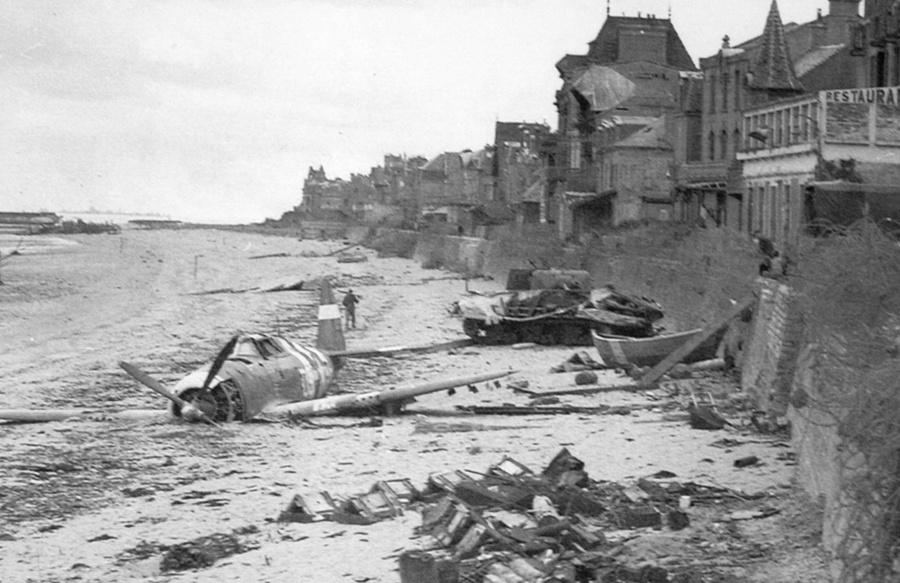
(Canadian troops on Juno Beach)

The German side of the invasion is also covered in detail as Milton introduces the reader to German soldiers like Franz Gockel and Josef Shroder whose weapons would meet the allied invaders.  They could not believe the bloodshed they were causing as they were picking off allied soldiers as they hit the beaches.  The arrogant and exceptional Panzer Commander Colonel Hermann von Oppeln-Bronikowski is introduced as he tries to drive a wedge with his tanks as he saw an opening between British troops on Sword Beach and Canadians on Juno. Rommel’s headquarters is also explored in addition to his surprise when the invasion took place – he was visiting his wife in Germany.  The disagreements between Nazi higherups, Hitler, and commanders on the ground is related and if they would have been in better sync with each other, the task for allied soldiers would have been much more difficult and the resulting casualty figures much higher.

(American troops on Omaha Beach after the landing)

Milton has skillfully woven a very complex narrative that allows the general audience to understand the violence and utter devastation that occurred on June 6th.  He has written a remarkable account through the eyes of the participants providing the reader with insights and an experience that is not always conveyed as well by historians.  After reading Milton’s account one but one cannot escape the fact of the willingness of so many on both sides to fight to the death. In the end despite the the difficulties involved, the importance of the allied success resulted in ultimate victory against the Nazi war machine.

(June 6, 1944, D-Day)

MAD ENCHANTMENT: CLAUDE MONET AND THE PAINTING OF THE WATER LILIES by Ross King

Related image

(Claude Monet)

The work of artists who enter their declining years is not usually positive fodder for biographers, but Claude Monet’s later years is one of the exceptions as depicted in Ross King’s book, MAD ENCHANTMENT.  King who has written a number of interesting books dealing with art history, including, BRUNELLESCHI’S DOME, MICHELANGELO AND THE POPE’S CEILING, and LEONARDO AND THE LAST SUPPER begins his narrative by pointing out that once Monet reached his sixties and seventies, he had achieved great wealth, notoriety, and produced numerous career defining works.  For years rejected by conservative critics and the new Avant Garde Cubists, Monet would find himself producing his Grande Decoration, consisting of eight waterlily murals during the World War I period.

King does an exceptional job reviewing Monet’s life and career up to 1914 when the French artist decided to return to painting after a four-year hiatus due to a series of tragedies.  First, his loving second wife, Alice passed away in 1908, then in 1914 his son Jean died, in addition, he began to suffer from cataracts and in 1912 his vision began to decline. During this period a group of his friends also passed, including; Manet, Renoir, Rodin, Pissarro, and Cezanne.  Monet still had a number of friends remaining who he could lean on, chief among them was Georges Clemenceau, the French journalist, politician, and man of letters.  Clemenceau would support Monet emotionally throughout his life and encouraged him to renew his painting after a visit in early 1914.

Image result for pic of claude monet
(Water Lilies, Water Lilies)

One of the most important components of the book is King’s quasi-biography of Clemenceau within the larger narrative of Monet’s life.  The later French Prime Minister nicknamed “the Tiger” helped lead France to victory in World War I and would become their voice at the Paris Peace Conference in 1919.  King uses Clemenceau as a vehicle to integrate French history with Monet’s life story and career and provides the reader the context of how major events affected Monet, how he responded, and their results.

There are a number of turning points in Monet’s life that King delves into.  The first is the purchase of Le Pressair in the village of Giverny in 1890, a transaction that did not go over well with local farmers who resented his plan to divert the River Ru and purchase adjoining land to create the large pond on which to plant his water lilies providing him with his subject to paint. The locals saw no commercial benefit in these paintings and resented him as an outsider.  Monet’s cantankerous personality also did not endear him to the locals.

Image result for pic of claude monet

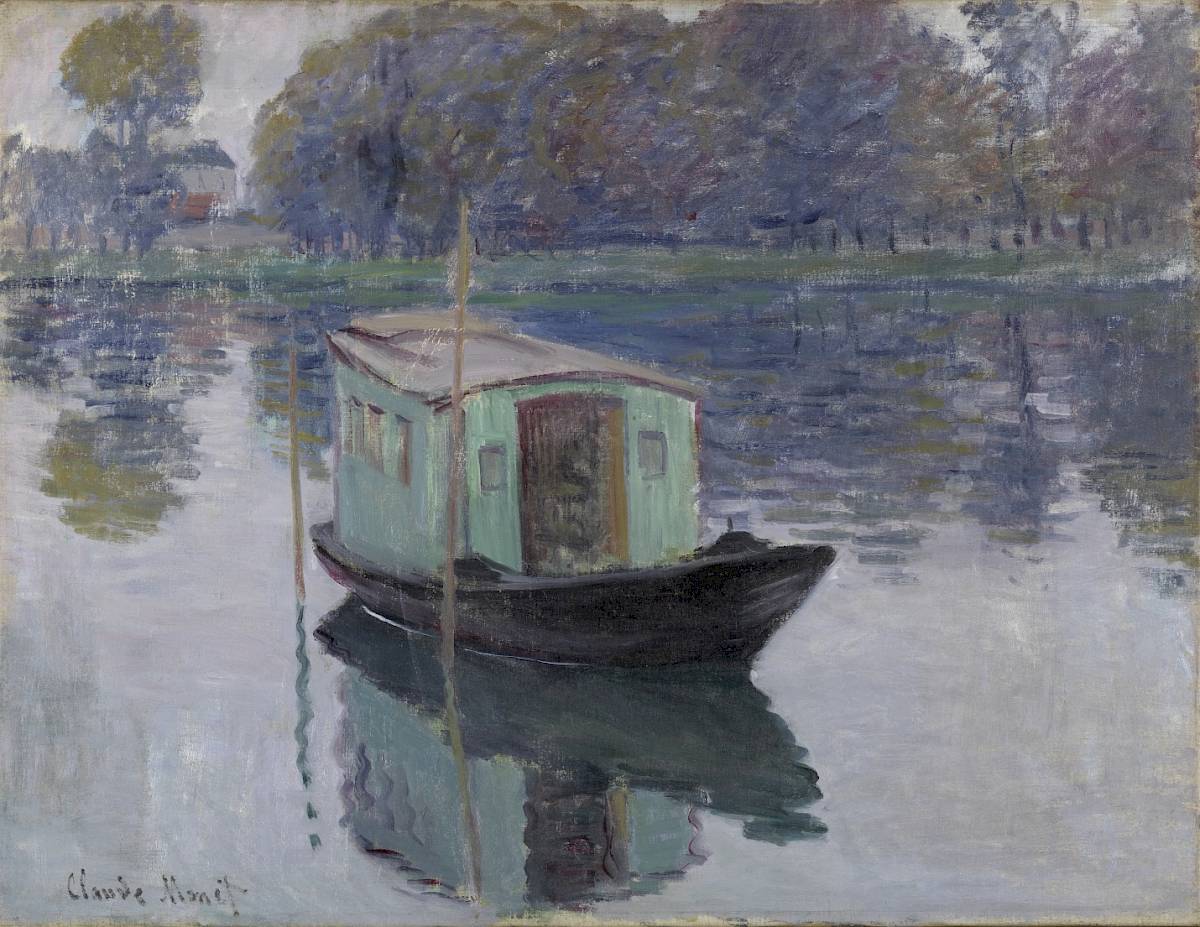
(The Studio Boat, 1874)

The second turning point for Monet was his reaction to the Dreyfus Affair in 1898.  Up until that point, Monet’s paintings depicted rural France, deemed as a patriotic message through his art.  Along with his friends, Emile Zola, Georges Clemenceau, and other Dreyfusards he rejected and criticized the rise in right-wing French anti-Semitism throughout the 1890s, as well as the unjust conviction of Captain Dreyfus, a Jewish officer in the French Army for spying for Germany.  Monet decided he would no longer paint rural scenes that could be interpreted as patriotic and concentrate on developing his gardens and canvases.

King accurately points out a number of contradictions when it came to Monet as an artist.  First, he wished to work in warm, sunny, and calm conditions, yet much of his career his place of choice to paint was Normandy whose weather was cool and damp for long periods of time.  Second, he loved to paint, yet he claimed to find it, “unremittingly torture.”  But this torture, friends pointed out was the key that drove him to perfection.  King does a wonderful job describing Monet’s methodology and philosophy of painting throughout the narrative, I.e. Monet would paint twelve separate canvases at a time while preparing his Grande Decoration and rotate them on wheels  according to the light in order to capture what he hoped to represent.  Monet’s health greatly impacted his work in his later years as he was a victim of fatigue and neurasthenia even though to outsiders, he appeared hale and hearty most of the time.  His maladies were greatly affected by the weather, which many times he refused to give into resulting in a negative impact on his health.

Related image

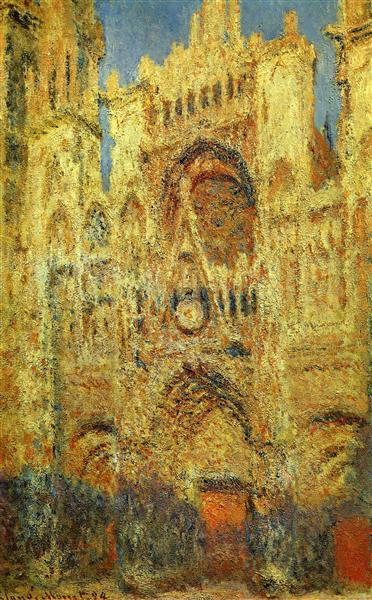
(Rouen Cathedral, 1894)

King approaches his explanation of Impressionism very carefully arguing that Impressionist artists  “conspicuously called attention to their brushes and paints.  They fragmented their brushstrokes into flickering touches of color that seemed to dissolve their painted worlds into shimmering mirages.”  Canvases were not meant to be viewed at close range.  King’s discussion of Monet’s painting of the Rouen Cathedral in 1894 with the proposed commission by the state of France to paint the damage caused by German shelling to the Cathedral at Rheims is illustrative of this point.  Monet’s Impressionist approach would not be the best way to depict the savagery of German artillery on the cathedral for a government which wanted to heighten French distaste for the “barbaric Germans.”  But, for Monet who always wished to receive a commission by the government this was not an acceptable argument, despite the “fuzzy envelope” that seemed to surround the objects that were represented.

Image result for pic of claude monet

(Monet’s Gardens at Giverny)

The most important event that impacted Monet’s later years was World War I.  Monet’s travel and work would have to consider the effects of the war.  Art supplies, food, petrol was all rationed and in short supply.  A further reason for a state commission would allow Monet to receive coal, food, and materials for his canvases that others could not obtain.

King takes the reader to the Louvre which housed many of Monet’s and his fellow Impressionist friend’s paintings.  He reviews the political and economic considerations involved and how German bombardment of Paris, and at times fears of a German attack on the city affected these artists.  King provides a unique description and perspective  of Paris during the war.  Interestingly the fighting produced a war of words between German and French intellectuals over wartime accusations of barbarism.  Monet was even recruited to lend his name to these efforts as French intellectuals produced a book entitled, THE GERMANS: DESTROYERS OF CATHEDRALS AND THE TREASURES OF THE PAST.

Image result for pic of claude monet

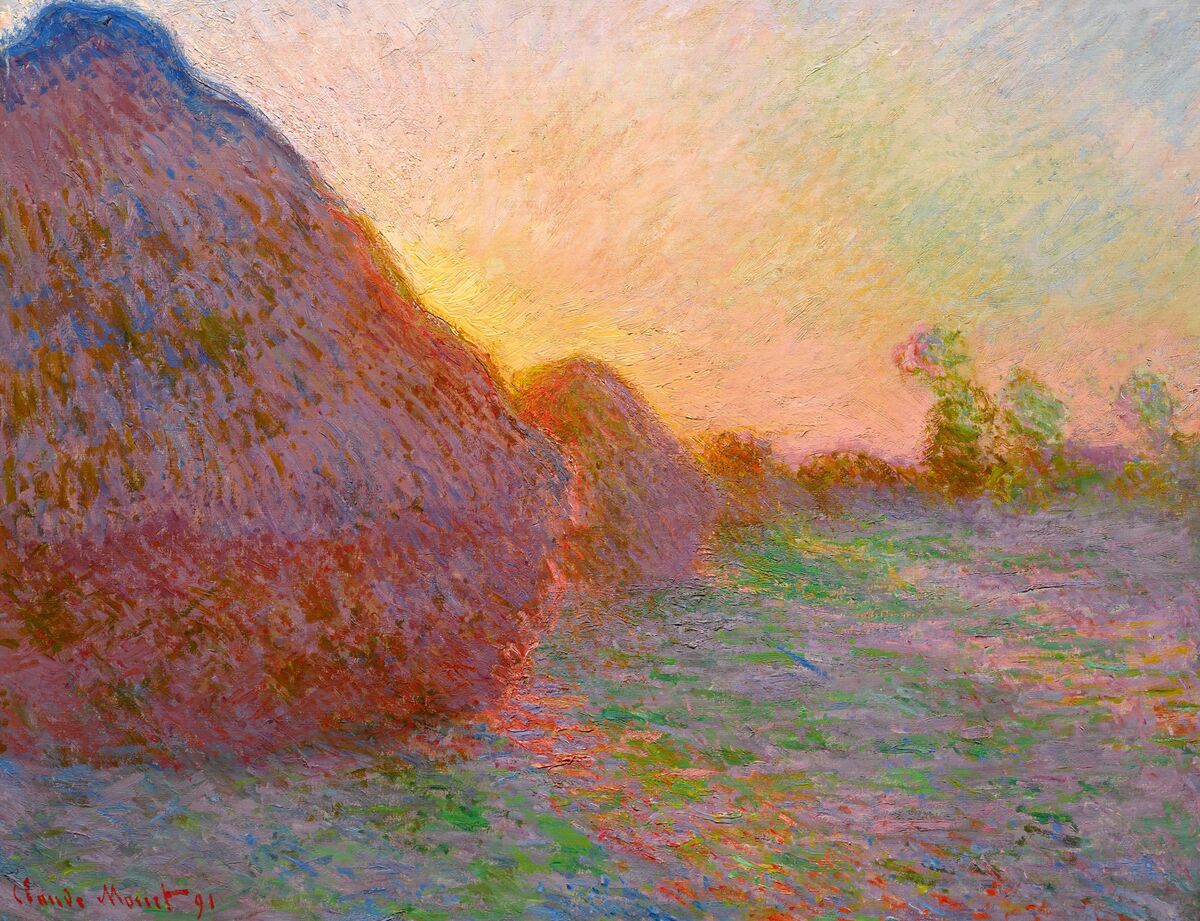
(Haystack Painting 1890/91)

The war also impacted Monet’s personal life, particularly his anguish over his paintings and his family.  Monet refused to leave Giverny during the war as he stated he would rather die among his canvases and life’s work than depart.  He also feared for his son Jeanne-Pierre who was in the army as was his son-in-law Albert Salerou.  His son Michel would not enter the army until later in the war and would participate in the fighting.  It easy for the reader to follow the course of the war as King describes Monet’s life and his interactions with his close friend Georges Clemenceau, I.e., the two battles of the Marne, and the Battle at Verdun, along with its overall impact on Monet and France in general.

Image result for pic of claude monet

(Portrait of a Painter)

The war also galvanized Monet, with a friendly push from Clemenceau to complete the Grande Decoration which according to Kathryn Hughes writing in The Guardian (3 September 2016) there was nothing remotely optimistic or even particularly French about the massive painting that stretched to over 300 feet.  It is as Deborah Solomon points out in the New York Times (December 2, 2016) among art history’s greatest last acts as “the water lilies dispense with contours and boundaries and veer toward abstraction.”  It is important to note that the subject of Monet’s painting was a garden and pond that was man made and contained hothouse cultivars from South America and Egypt and not a natural outcrop of rural France.

King introduces an important discussion of how tastes in art changed because of the war and the impact of the death of over 300 artists.  According to art historian Kenneth Silver, the public and the painters would turn their backs on daring innovation.  For many Frenchmen, Cubism and other forms of pre-war art were wild experiments and adventures that were seen as specifically German, and therefore, not to be replicated after the war.  At the end of the war Monet offered to donate some of his paintings to the people of France and eventually the lily paintings were installed on specially constructed, curved walls at the Musee de l”Orangerie in Paris. The donation and the negotiations exacerbated by Monet’s need to control how the building would be prepared to receive and maintain his paintings are an integral part of the narrative as King relates his subject’s state of mind and physical health, particularly issues with his vision that led to a number of painful operations.

Image result for photo georges clemenceau

(Monet’s close friend and supporter, Georges Clemenceau)

Solomon sums up her review by arguing that “the book is short on analysis and fails to definitively explain the role played by Monet’s illness in the development of his late style.”  But overall King has written a useful book that shatters the myth that Monet painted his Grande Decoration in seclusion when in fact people surrounded him.  A staff of gardeners, his granddaughter Blanche, and others all impacted his life, and no one can take away anything from the gift that Monet has produced for posterity.

Related image

(Monet working on his Grande Decoration)

THE TRUTH ABOUT TRUMP by Michael D’Antonio

Image result for photo of donald trump

This morning I spent an inordinate amount of time reading the MUELLER REPORT.  It is not my purpose to recount what was divulged, but what concerns me most is the dysfunction that exists at the pinnacle of our government.  What does it say about us as a people, and what does it say about the man who is responsible for trying to block American citizens from learning about Russian penetration of our elections, his refusal to even accept that it occurred, and the fact that his administration refuses to take any action to secure our elections for the future.  Denial is one thing, but outright deception and overt lying is another.  So, one must ask what type of individual would use the American electoral process as a “branding opportunity,” and upon learning of the appointment of the Special Counsel from then Attorney-General Jeff Sessions responds that “Oh my god, this is terrible.  This is the end of my presidency.  I’m fucked.”*  The answers to these questions are provided in Michael D’Antonio’s book, THE TRUTH ABOUT TRUMP.

Image result for photo of donald trump and his children

To D’Antonio’s credit his narrative is based on thorough research and he even had access to Donald Trump  until he started interviewing people who were critical of him.  He has written an entertaining and fair biography and has created the foundation for several books that have followed his publication which repeatedly cite his work.  Whether you have read TRUMP REVEALED by Michael Kranish and Marc Fisher, THE MAKING OF DONALD TRUMP by David Cay Johnston, or TRUMP NATION: THE ART OF BEING THE DONALD, by Timothy L. O’Brien they all tell similar stories and anecdotes and all seem to agree on their characterization of Trump’s early life, career, business practices and philosophy, personal life including his marriages and affairs. However, what sets D’Antonio’s book apart is the detail provided and his ability to integrate the political and economic history of New York City and its unique personalities like Mayors Ed Koch, Abe Beame, and John Lindsay as well as Trump’s mentor Roy Cohn among many other fascinating characters throughout his narrative.  In addition, the author places the Trump family and wealth in the context of American history, going as far as comparing the post 1980s to the Gilded Age of the 19th century as he discusses Trump’s life in the context of broader social, psychological and technological trends throughout the 20th century.

As part of his discussion of New York’s economic crisis of the post 1960 period, D’Antonio describes the urban decay and blight that began to affect Brooklyn, the home base of Trump’s father’s wealth and operations.  Trump was very perceptive as he witnessed white flight to the suburbs, civil rights violence, and the poverty endemic to New York’s economic collapse.  Trump realized that this situation depressed real estate values and that a move to Manhattan could be very profitable.  Trump would be at the forefront of trying to displace the poor and middle class in Manhattan who lived in rent-controlled apartments as he sought to turn buildings into expensive condominiums which he will accomplish over a period of years greatly enhancing his wealth into the 1980s.

Image result for photo of coney island during the 1960s

(Coney Island – Brooklyn, NY)

If there is a failing in D’Antonio’s approach is that in addition to the amount of detail pertaining to Trump’s lifestyle and accumulation of wealth are his constant tangents.  The author will be describing any one of many complications associated with Trump’s business dealings and other affairs and then will turn to a full accounting of the lives of other individuals’ attendant to the original discussion I.e., Liz Smith, the gossip columnist, Ed Koch’s biography, or discussing what made a man sexy in the 1980s according to Playgirl magazine or any number of other seemingly  irrelevant digressions.

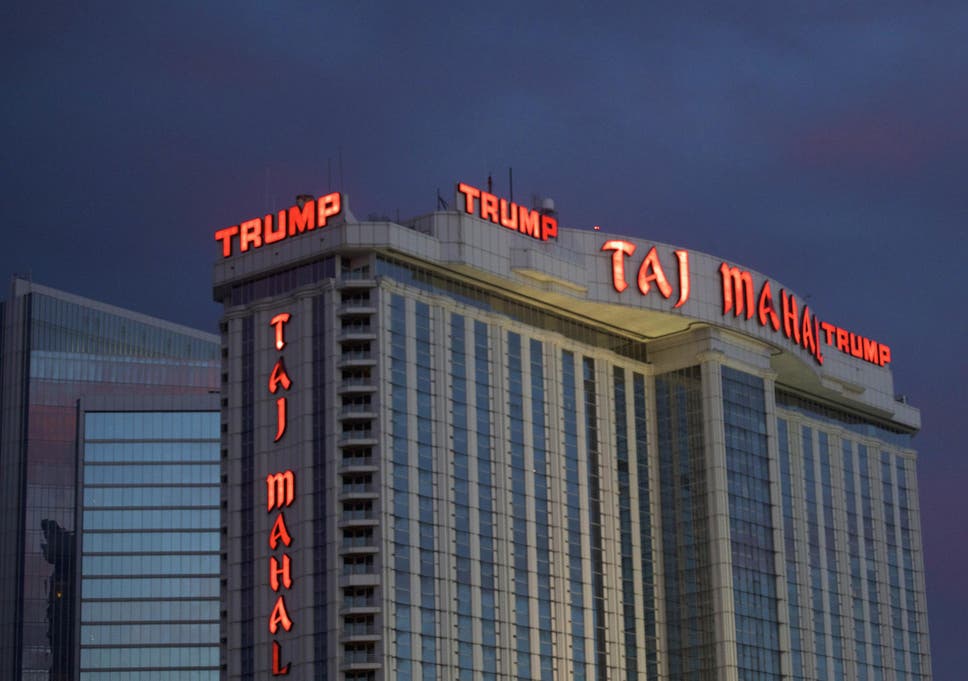
One of the more interesting aspects of D’Antonio’s methodology is his dissection of Trump’s financial dealings, the creation of his fortune, his dance with insolvency and bankruptcy, and his economic recovery.  D’Antonio delves into various financial transactions dating back to Fred Trump and how he took advantage of Lehrenkrouss and Company, a Brooklyn Mortgage Company in the 1930s; Donald Trump’s manipulation of New York bankers, politicians, and others to acquire various properties including the Commodore and Plaza Hotels; how Trump was able to wedge himself into the casino industry in Atlantic City and the fallout from those  transactions; and his success in branding so many buildings with his name.  Other interesting chapters deal with Trump’s battle with author Tim O’Brien over his book TRUMPNATION that argued that “the Donald’s” wealth was far below what Trump stated.  What follows is a detailed description of the legal battle that ensued.  In similar fashion D’Antonio relates the battle over Trump University that would lead to a financial settlement for many of the students that were fleeced.

Image result for photo of the west side of NYC with trump buildings

D’Antonio describes Trump’s early years, most importantly the impact his father had upon him and how he wanted to mirror Fred’s business tactics.  Another important component of Trump’s upbringing was his experience at the New York Military Academy, where under the auspices of Major Theodore Dobias cadets were instilled with a feeling of confidence that would propel them through life with a sense that they deserved great success because the academy made them better than everyone else.  Trump took his father’s lessons and his experiences under Dobias to heart to create the foundation of the narcissistic personality that would dominate his adulthood that emphasized winning at all costs and avenging those who were critical of him.  Further lessons were learned from Roy Cohn, Trump’s lawyer for many years who believed in stalling, duplicity, threats, law suits, and never admitting that you made an error.   In dealing with the origin of and later manifestation of Trump’s need to be the best at everything, no matter how insignificant, D’Antonio is correct in arguing that it is not important that Trump lies per say, but he actually believes the lies that he tells and then acts upon them – the mark of a truly disturbed personality.

Image result for photo of the west side of NYC with trump buildings

What is clear from D’Antonio’s biography and numerous other books pertaining to Trump’s journey in life is that he spent a lifetime constructing his personal image.  When that façade is threatened by a negative comment or something or someone, he perceives to be untoward he goes ballistic and seeks revenge employing the “Roy Cohn/Roger Stone” strategy.  What is interesting today as Trump fumes and derides people who worked in his administration who testified for the Special Counsel, the White House is filled with fear from presidential retribution.  If one compares his behavior today with the collapse of his casino empire and fear of bankruptcy in the early 1990s it is the same, even to the point of blaming his financial debacle on three of his executives who were killed in a helicopter crash who had helped administer the Atlantic City hotels and casinos.

Image result for photo of trump casino

Trump is the master of self-promotion and much of his wealth is tied to his brand not his ability to make “deals.” Trump figured out that fortune and fame go together, and superficiality is more important than substance, the result is that he is the epitome of both concepts.  As other authors have also argued D’Antonio is clear that Trump is a classic case of narcissism.  Narcissists enjoy conflict and will exaggerate or obfuscate to gain the upper hand, a strategy that Trump has pursued in political, business, and personal conflicts that he has either caused or exacerbated when the opportunity presented itself as he views publicity whether good or bad, as good.

Related image

No one should be surprised at the type of President Trump is, the signs were clear long before he ran for the White House and we are now experiencing the fallout from the admonitions of authors, reporters, and Trump associates  about before the 2016 election. Perhaps D’Antonio is correct as he portrays Trump in the context of what Christopher Lasch developed in his 1979 book, THE CULTURE OF NARCISSISM: AMERICAN LIFE IN AN AGE OF DIMINISHING EXPECTATIONS – “Trump represented….the pathology of our age.”  Our society, in part may be responsible for the creation of a Trumpian character as it evolved over the decades, now we reap its benefits!

Image result for photo of donald trump