
(Turkish-backed Syrian rebels stand on the back of a truck at Manbij countryside, December 29, 2018. Turkey-backed rebels have been mobilizing for an attack on Manbij in nearby areas that have been under Turkey’s control since it swept into northern Syria in 2016, part of its effort to roll back the YPG).
Syria is a country that has been at war with itself for almost fifteen years. It survived the Assad family which ruled Syria for more than five decades. Hafez al-Assad seized power in a 1970 military coup, creating a brutal, authoritarian regime. Following his death in 2000, his son Bashar al-Assad assumed the presidency. Bashar, who was educated in England raised hopes that his reign would be more liberal than his father. But that was not to be. He callous rule would foster the brutal suppression of the 2011 protests which triggered a civil war. This resulted in a government that sought to retain power at any cost and committing incalculable atrocities against its own people including the use of chemical weapons. There were a number of rebel groups that sought to overthrow Assad, including extremist factions and the rise of ISIS. In his new book, journalist Anand Gopal creates a far reaching, disturbing, and novelistic account of the Syrian Civil War entitled; DAYS OF LOVE AND RAGE: A STORY OF ORDINARY PEOPLE FORGING A REVOLUTION.
_02_(cropped).jpg)
(Bashar al-Assad in 2018)
Gopal focuses the northern Syrian city of Manbij and a small group of people who developed a movement to try and overthrow the Bashir al-Assad dictatorship. The author collected over 2000 interviews, viewed hundreds of war-time videos and read a myriad of books to tell the story of six ambitious people from a remote provincial town that many Syrians have never heard of until these rebels helped unleash a war and the revolution that encompassed it. Among the rebels are a pair of best friends torn apart by political polarization, a mother who stands up to a misogynistic culture, and a worker who risks everything in the hope of establishing a democracy.
Gopal’s work provides the reader an insightful approach to the horror that was Syria as people tried to overthrow the Assad regime, the ensuing civil war that created many factions, many of which turned against each other, and produced another brutal dictatorship in the form of the Islamic State of Syria. Gopal focuses on a group of individuals who lived in Manbij, a strategic city in the northeast Aleppo Governorate of northern Syria, located roughly 30 kilometers west of the Euphrates River and 12 kilometers from the Turkish border. Historically an ancient and diverse hub, the city became part of the battleground that was Syria during this period. The fighting produced a Revolutionary Council to govern the city made up of elites which led to an opposition under the heading of the Revolutionary Youth Movement (RYM) which believed that the needs of the masses were not being addressed. The factionalism that eventually evolved pitted friends and relatives against each other as the fabric of the city fell to extreme poverty and violence.
The key characters include Ibrahim Kasem, who originated from the village of Little Hyena where his family worked on the land until they learned of the construction of a dam that would submerge his farm and fostered a rage within. Kasem and his family would move to Manbij as a laborer where his anger increased against far away forces he did not understand. Nasan Fefi, lived in Manbij and loved to read and write poetry. He would be arrested and tortured by the Assad regime and was sent to the notorious Palmyra Prison where he was offered his freedom in return for spying for the regime. Abdul Qader Oseb, a Kurd who lived in a hamlet near Manbij was known as Abel O. A laborer and karate expert he left home very young and returned when his father died taking over his business. He would be sucked into dealing with loan sharks who got the regime police to pressure him. Mina Saba , a teacher would try and improve the condition for women within an Islamist society and will eventually create a women’s freedom movement. Gopal offers wonderful chapters describing these characters and how their experiences eventually brought them together to overthrow the regime in Manbij. Gopal explains the dual nature of Syrian society where a small rich class centered in Damascus supported Assad and the smaller cities and villages throughout the country that resented the regime. Over the years poverty and drought were not dealt with by the regime resulting in a lack of bread and other necessities. By 2008 and the world economic crisis would devastate the Syrian economy.
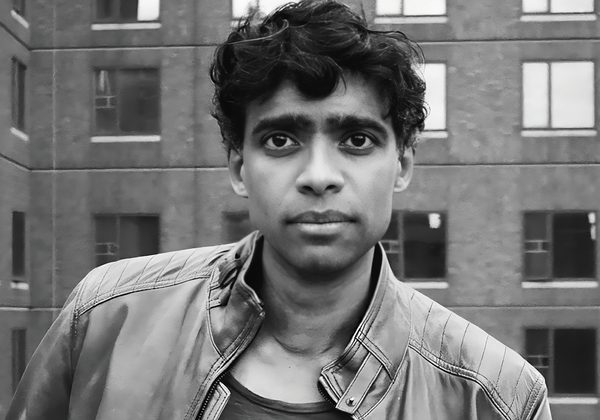
(Anand Gopal)
In February 2011, the Arab Spring had broken out in Tunisia and would spread to Egypt giving people in Syria false hope for a better life. Men like Oday al-Hema had always supported Assad because of the government’s modernization program and services it offered. However, when the masses in the south did not experience any benefits torture, beatings, and murder on the part of the regime turned Oday against the government. Soon demonstrations against the Baath Party headquarters in Damascus broke out.
Gopal does an effective job weaving aspects of Syrian history into his narrative to highlight contemporary events. For example, the massacre of demonstrators at Daraa is juxtaposed against Hafez el-Assad’s destruction of Hama were 50-60,000 people were killed. By 2012 a massacre in Homs and reports of other massacres and shootings by regime soldiers helped radicalize many who had been supporters of Asad. Among those are Oday and Abel O. These men would ally with others to create “flash demonstrations” against the government resulting in their arrest. Gopal goes on to describe in detail the horrors faced by these men in Assad’s Gulag and how prisoners were forced to depend on each other for survival.
As the narrative continues Gopal introduces more characters who greatly impacted the overthrow of the regime in Manbij. Abdul Hadi Bisher, a former promising soccer player was convinced by Abel O. and Oday to join a protest movement against the government. Another ally of this developing group was Abdul Hadi would be arrested by security forces as was Oday and others were they would be tortured and forced to admit they were terrorists to gain their release. Increasingly, more protests developed and a burgeoning military component against the regime was formed. The end result is the regime is over in Manbij is overthrown leading to the 2011 Syrian uprising in the city. Gopal will chronicle a remarkable 18-month democratic experiment before being torn apart by political polarization and economic inequality.
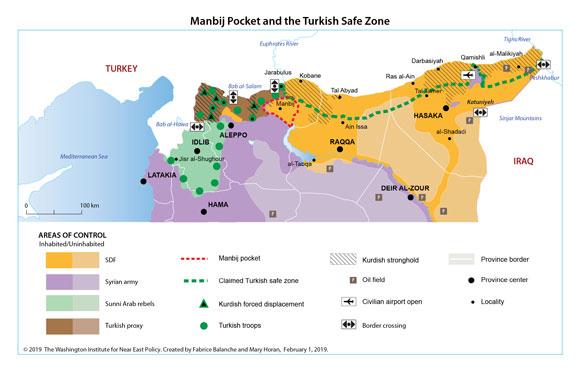
When the citizens of Manbij overthrew the regime, they created their own grassroots system from the ground up. For a brief window, this included citizen assemblies, free civic organizations, and local newspapers to replace forty years of authoritarian silence. The problem that developed was that people grew tired of waiting for things to improve as bread prices skyrocketed and the masses blamed the new Revolutionary Council as being elitist and not addressing the economic needs of people and focusing too much on creating overly democratic institutions. This will spark an opposition which will split Manbij and create an opening for the arrival of ISIS by 2013.
Gopal will trace the fighting against the Assad regime and the horrors it perpetrated against the Syrian people. The situation was exacerbated by the defacto embargo on weapons by the Western powers who feared radical Islamists and terrorist groups benefiting from their aid as opposed to damaging Assad. With the Arab Spring, the Gulf states feared for their own regimes. As Iran sent Hezbollah to fight to save the Assad government the situation in the small cities and villages deteriorated further. Finally, Jordan and Turkey would begin to arm the rebels. The Obama administration did little and even after he announced a “Red Line” if Assad resorted to chemical weapons – once sarin gas was used Obama did nothing. This was after a period when the CIA worked to make sure rebel groups did not acquire lethal weapons.
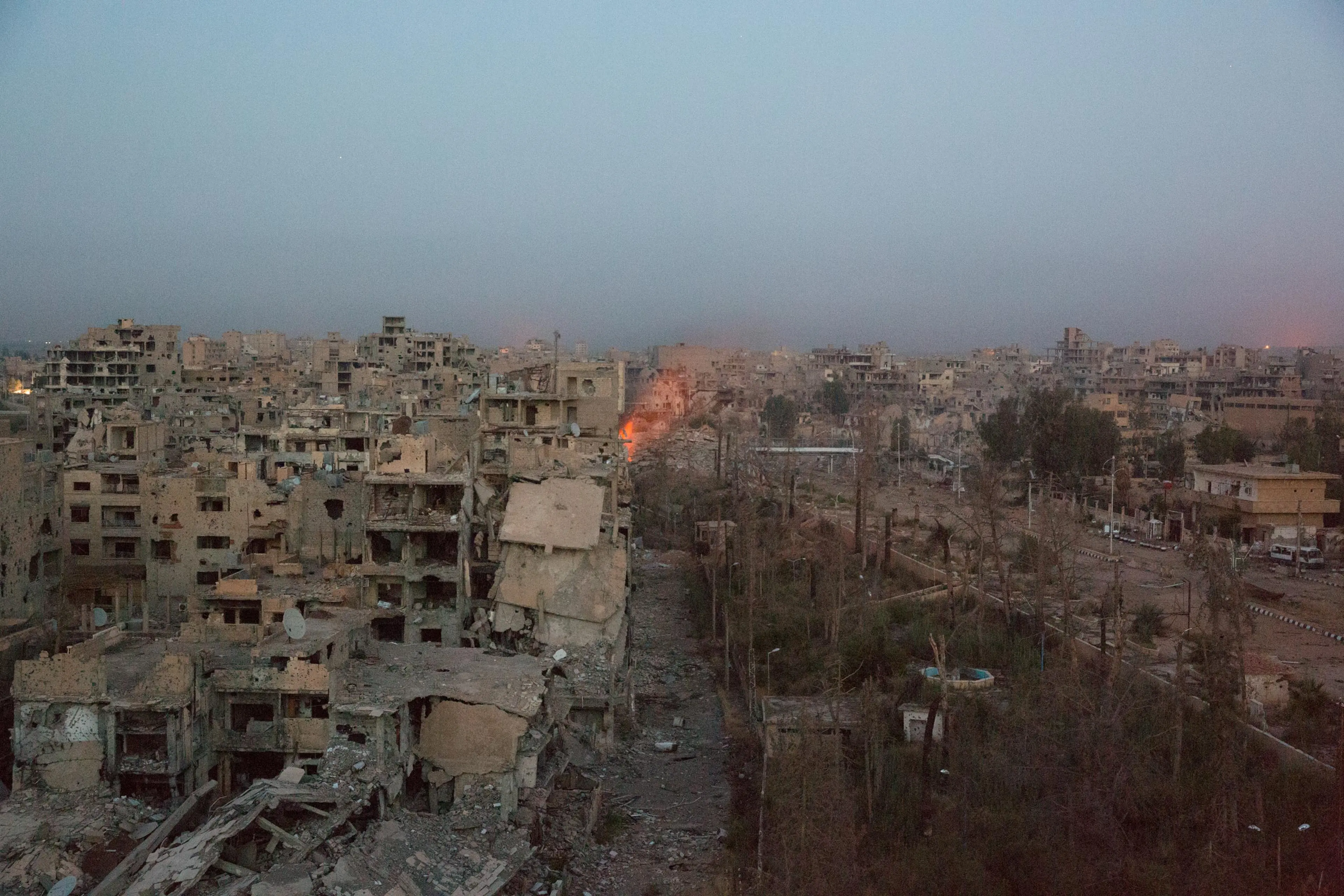
(The ISIS-controlled area of Deir-ez Zor appears to be greatly damaged by artillery and aerial bombing, while the government section of the city has suffered relatively minor damage. An explosion was possibly caused by a rocket-propelled grenade fired from a government position, May 24, 2015)
Within Manbij a civil war of its own broke out between elements of the Revolutionary Council and the RYM over who was in charge of the city. Both sides were guilty for intransigence in trying to reach a settlement in what can be seen as a class war as Abel O upon reflecting on events compared life in prison to life dealing with the split between the Revolutionary Council and the RYM. The debate according to Gopal centered on what type of government Manbij should have. The author develops the arguments over democracy, freedom, and a more authoritarian rule. The issues of secularism on Islamism come center stage as Islamists argue that secularism is what led to the brutal Assad regime and an inability of the Revolutionary Council to meet the needs of the people.
As these debates and conflict proliferate Gopal does an exceptional job discussing how ISIS was able to ingratiate itself into the Manbij community. However, once some of their efforts emerged the people of Manbij threw them out only having them return a month later taking over the city as the price of bread skyrocketed. ISIS would take over the RYM and the result was a split between Abdul Hadi and Oday and their followers highlighting the convoluted political situation in Manbij that was in the background throughout 2012 and 2014. The factionalism that was on display is a major theme of the book and a reason for the devastation caused by the Assad regime and the arrival of ISIS.
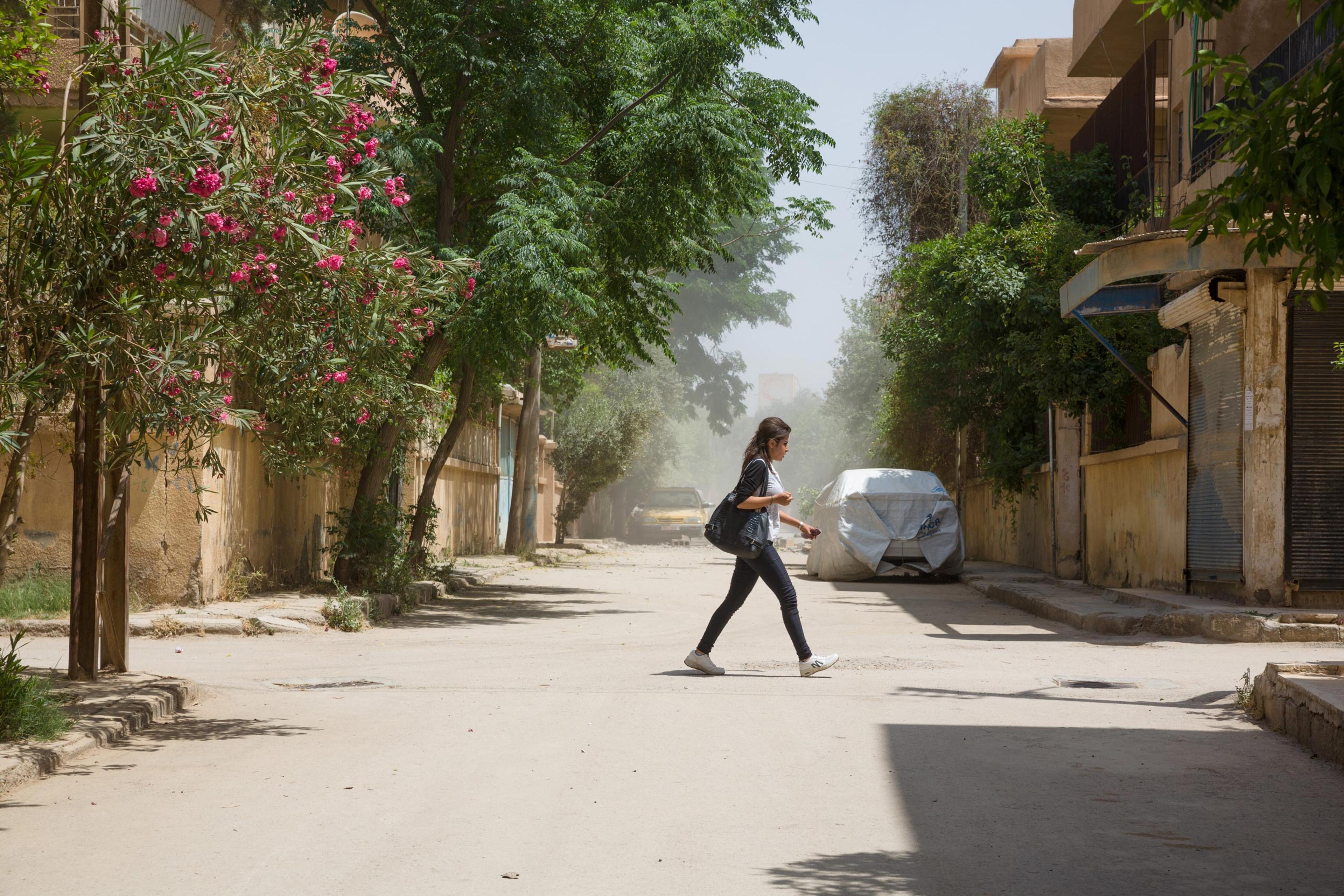
(A young woman crosses a street in Ghazi Ayaash, a residential neighborhood of Deir-ez Zor a few hundred feet from the frontline, after a mortar attack from an ISIS position. The city is an outpost of modernity surrounded by ISIS-controlled areas where strict Islamic law is enforced, May 20, 2015.)
One of the many strengths of Gopal’s work is his description of what it was like to live under ISIS rule. He is particularly effective employing Mina’s experiences in dealing with day to day life under extreme Islamist rule i.e., the almost hourly arrival of trucks with loudspeakers blaring the rules that one must live by under the new ISIS regime. Gopal explained that people came to follow ISIS because they needed security and were willing to trade for freedom. The Islamic State achieved what the Revolutionary Council could not. For Oday, people succumbed to a collective delusion.
As Gopal describes the fighting for Manbij in 2014 as American backed Kurdish forces and other rebel groups fought ISIS he delves into Oday’s seizure. Once he is taken he is tortured by ISIS which is emblematic of the split between the old revolutionary embodied in Oday and his former compatriot, Abdul Hadi. The author describes Oday’s courage and unshakeable commitment to freedom which eventually results in ISIS’ defeat which at the same time chronicle’s Abel O’s fight for survival under a reign of bombs. The most interesting character at this point is Abdul Hadi who founded the RYM and morphed into an ISIS leader. As the slaughter and bombs he experiences extreme guilt for his life’s path because of his belief in the Caliphate. Gopal portrays these friends on different sides of the revolution who have come full circle. It is a morose description of what war can do to friendship and commitment to the same cause.
Charles Glass’ review in the March 5, 2026, entitled, “This Story of Ordinary Syrians Who Fought Tyranny is a Masterpiece” in the New York Times captures the essence of what Gopal achieved in his excellent monograph that at times reads like a novel. As Glass writes he captures the dichotomy the people of Manbij faced; “As Gopal follows his characters around the city streets, he interlaces personal dramas with political conflicts, hopeful gatherings of aspiring democrats with the torture of young idealists, citizens uniting for liberty with families torn apart, the poor fighting for a share of resources against extortionate merchants, of government apparatchiks switching allegiances to join the revolution, of local soccer and karate heroes finding themselves on opposite sides of the barricades, of hope as much as despair. Many of the young people who emerged as revolutionary leaders were at first loyal followers of Assad, of whom they said, “Our president is a good man.” Government attacks on peaceful protesters requesting simple reforms turned them into rebels determined to rid the country of a leader and a system they blamed for the wretchedness of their lives. Gopal plays fair, pointing out that Baathist rule provided the peasants of Manbij with electricity, education, roads, health care and land reform that took them out of feudal bondage. In exchange for security, all they sacrificed was freedom.”

(Demonstrators in Daraa rally in celebration after Bashar al-Assad’s collapse in December 2024)
Glass accurately evaluates Gopal’s monograph as he brings Manbij to its present situation; “As they had fought Assad, the people of Manbij turned against ISIS and, with the assistance of the Free Syrian Army and the U.S.-backed Syrian Democratic Forces (S.D.F.), expelled it in 2016. The largely Kurdish S.D.F. proved as repressive in Manbij as Assad had been. “The Syrian Democratic Forces were democratic in name only,” Gopal writes. “There was no freedom of speech or assembly, no free and fair elections. The government in Manbij was a dictatorship.”
Politics can be a dirty business, but in Days of Love and Rage, Gopal makes the enduring optimism of his subjects movingly clear. For 40 years, everything from labor unions to chess clubs had been subject to the dictatorship. “Yet when the people of Manbij overthrew the government, independent councils and assemblies and newspapers and charities and unions appeared overnight,” Gopal writes. “In other words, the people of Manbij started doing politics.”
Despite falling under tyranny again, the city’s inhabitants learned from their mistakes and banished the subservience to power inherited over four centuries of Ottoman rule, 26 years of French occupation and, since 1949, local dictatorship.
When Assad fled to Moscow in December 2024, ending the civil war, Gopal and many of the town’s exiles returned to Manbij. A new council, Gopal writes, “appointed officials who had been tainted by corruption allegations during the revolution.” The people protested, marching and chanting in the streets and squares. “They came out simply because it is who they are,” Gopal concludes, “because of what has been awakened, because of the fire that cannot be put out.”

[4/20]
(A woman holds a bag on her head at a souk in Manbij city, December 29, 2018. Manbij has changed hands three times since the Syrian conflict began in 2011. Free Syrian Army rebels seized it from President Bashar al-Assad’s government early in the conflict. Then it fell to Islamic State which declared it part of its ‘caliphate’)

